Black Tie Winter Wedding: What to Wear Without Freezing
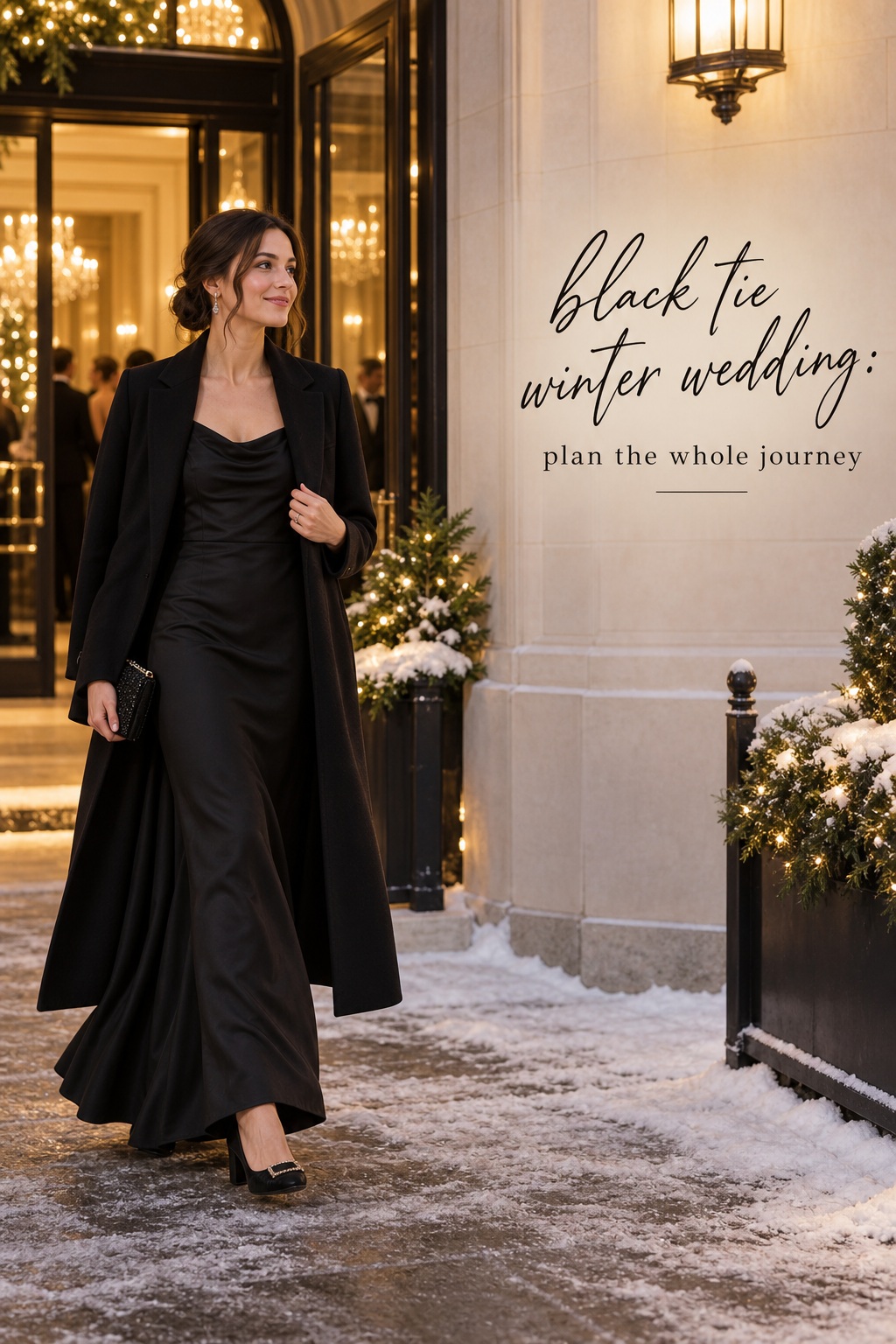
A black tie winter wedding creates a very specific outfit problem: you need to look unmistakably formal while crossing a cold sidewalk, waiting for a rideshare, or walking from a parking lot to the venue. The answer is not piling a casual sweater over an evening look. It is building the outfit in layers, starting with the dress code and ending with the practical details that make the whole night comfortable.
Use this guide to decide how formal to go, choose substantial fabrics, plan an elegant coat or wrap, and make your shoes and accessories work from arrival through the last dance. The goal is simple: a black tie winter wedding outfit that feels intentional indoors and sensible outdoors.
Diagnose the Invitation Before You Shop
Start with the exact language on the invitation. “Black tie” is a clear request for evening formality. For women, that usually means a floor-length gown or another exceptionally polished formal look. For men, it means a tuxedo, formal white shirt, black bow tie, and appropriate formal shoes. A black suit can look handsome, but it does not create the same visual line as a tuxedo, especially when the wedding is explicitly black tie.
“Black tie optional” gives guests more flexibility, but it does not mean casual. A tuxedo remains the strongest choice for men, while a dark, formal suit and tie can be acceptable when a tuxedo is not practical. Women can generally choose a floor-length gown, a formal midi with evening fabric, or a sophisticated jumpsuit, depending on the venue and the couple’s tone. If you are unsure, dress toward the more formal interpretation and keep the styling restrained.
Your wedding look is only the beginning.
Keep your guest list, vendors, timeline, and every important detail together with Zarellea — so your day feels as considered as your style.
Next, read the venue as a practical clue rather than a substitute for the dress code. A grand hotel ballroom, historic museum, or evening country club reception will support a more traditional black tie look. A winter ceremony in a city loft may still require the same level of polish but can allow a cleaner, less embellished silhouette. A destination celebration may involve a long outdoor walk, uneven ground, or a dramatic temperature change between ceremony and reception.
- Strict black tie: choose a gown or tuxedo first, then solve warmth around it.
- Black tie optional: keep the outfit formal, but use the venue and time of day to decide how traditional it should feel.
- Creative black tie: add personality through texture, color, a refined print, or one memorable accessory, not several competing statements.
- Unclear wording: ask the couple or planner rather than guessing from the season alone.
Timing matters too. A late-afternoon ceremony followed by an evening reception can begin in daylight and end in formal evening surroundings. That is a good reason to select a look that does not depend on a light summer palette or visibly casual accessories. For a black tie winter wedding, the most reliable visual language is evening color, elegant texture, clean tailoring, and a deliberate outer layer.
Finally, check whether the invitation names a wedding color palette or cultural attire expectation. Complementing the palette is usually more graceful than matching it exactly. White and bridal ivory should remain off the list unless the couple has specifically requested them. If you are close to the wedding party, avoid choosing a color that could make you look like a bridesmaid or family member when the palette is known.
Build the Outfit Around Warmth Without Losing Formality
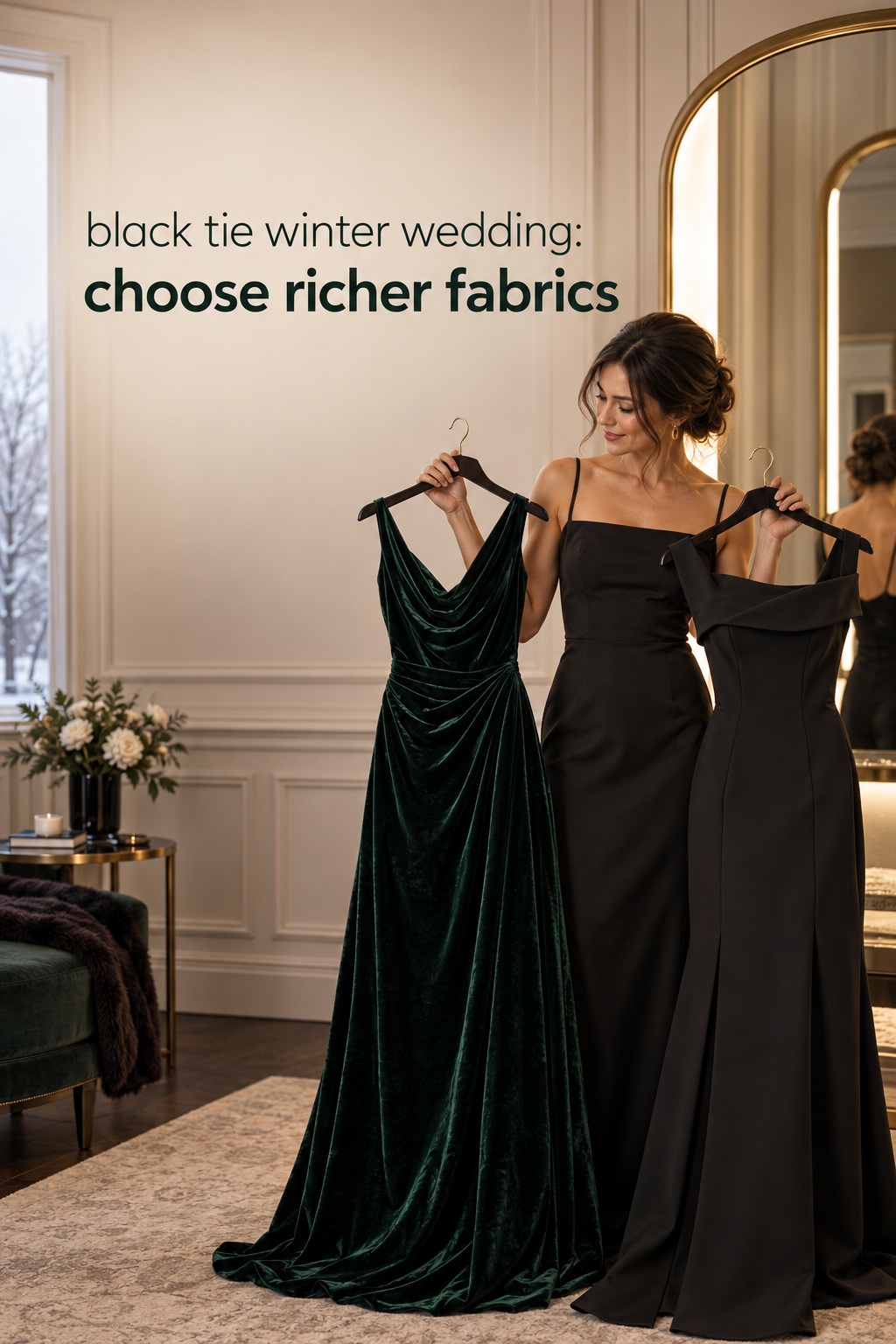
The most common winter formalwear mistake is treating warmth as an emergency addition. A casual cardigan, bulky puffer, or visible thermal layer can interrupt an otherwise elegant outfit. Instead, choose the formal base and the warm layer together. Look for velvet, heavier satin, lined crepe, wool suiting, or another fabric with enough body to hold its shape in cold weather.
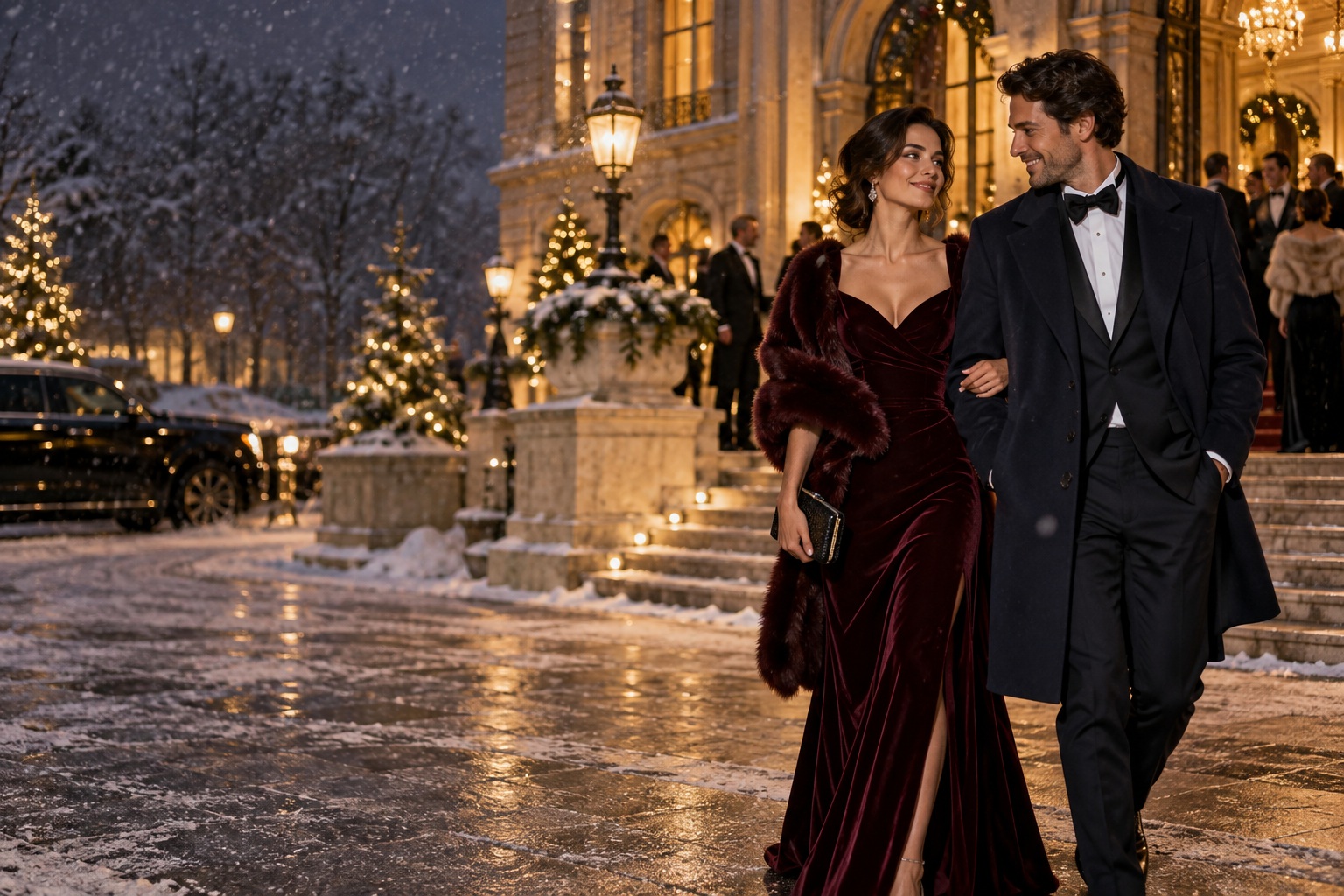
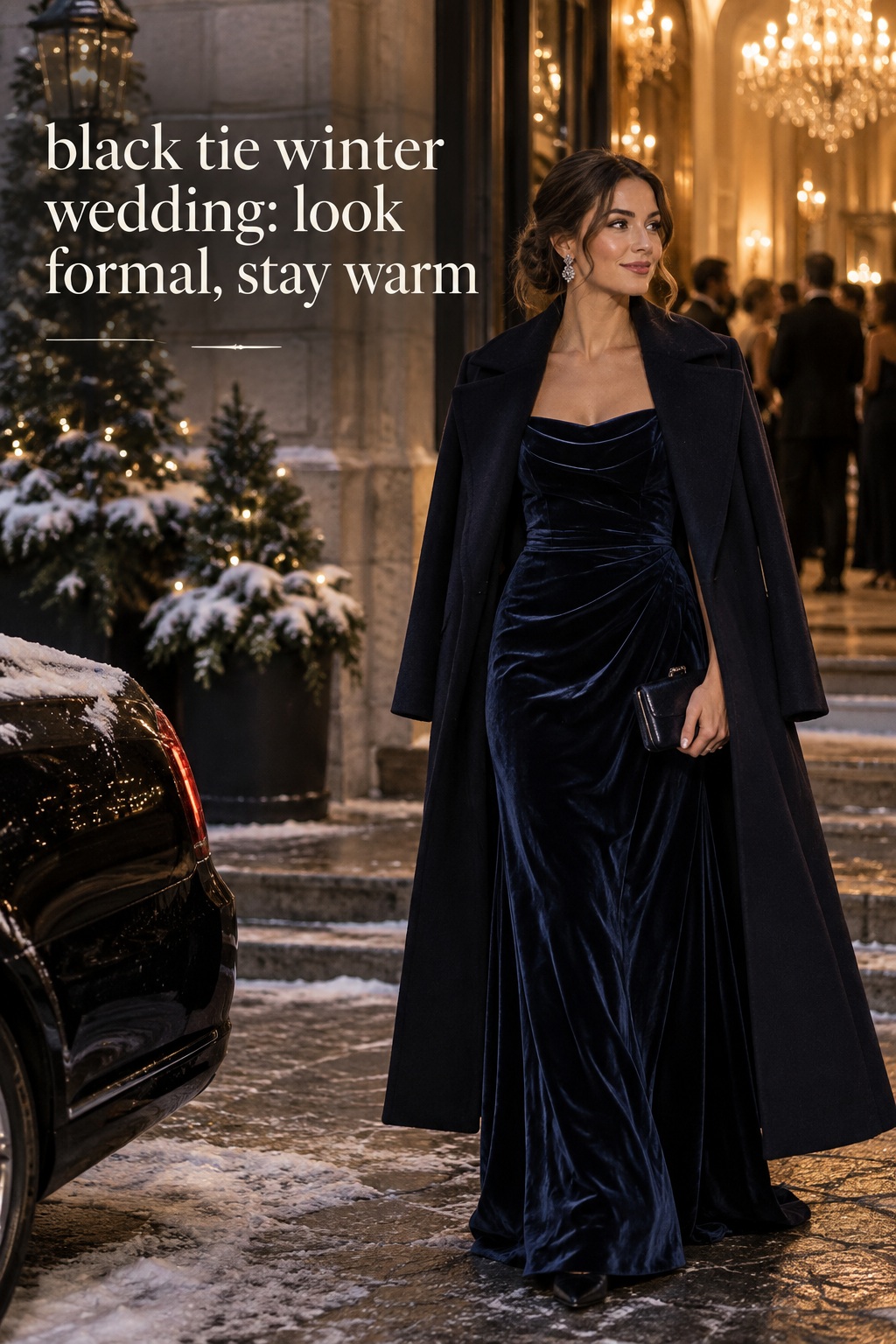
For a woman’s black tie winter wedding look, a long velvet gown is an easy starting point because the fabric feels seasonal without requiring novelty. A long-sleeve crepe gown offers a cleaner, more tailored line. Satin can be beautiful under evening lights, but consider the lining and the route to the venue because thin satin may feel chilly and show every crease after travel. A structured bodice, elegant draping, or a controlled slit can add interest without relying on excessive sparkle.
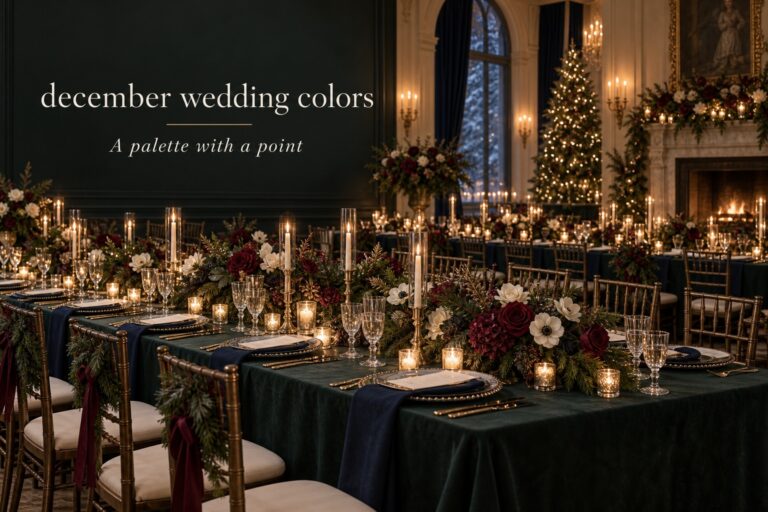
Color can carry the winter mood. Black, midnight blue, deep green, burgundy, plum, and rich brown all read naturally at an evening celebration. Metallics can work when the finish is sophisticated and the rest of the look is quiet. If you prefer a lighter shade, choose a clearly non-bridal color and add formal depth through texture, a dark coat, or polished accessories. The dress should look like an evening choice, not a daytime dress made winter-ready with a few add-ons.
Sleeves are useful, but they are not the only route to warmth. A sleeveless gown with a lined formal wrap can be more comfortable than a thin long-sleeve dress that leaves your arms covered but your shoulders cold. A tailored jumpsuit can also work for black tie when the fabric, neckline, trouser length, and accessories feel genuinely evening-ready. Keep the proportions long and fluid, and avoid anything that resembles office suiting.
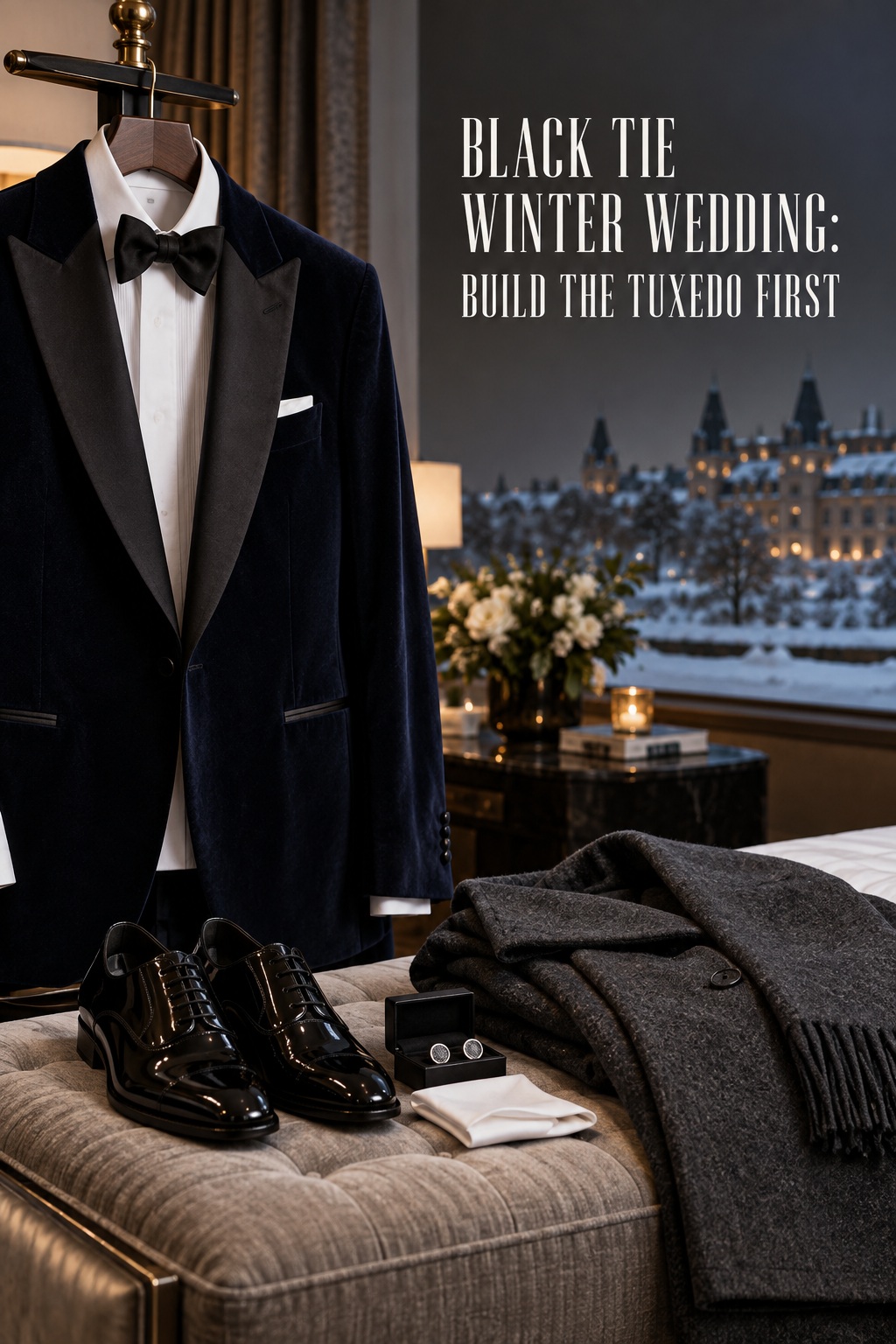
For men, begin with the tuxedo rather than a winter coat. A classic black tuxedo is the safest interpretation, while midnight blue can look especially rich in evening light. A wool or wool-blend tuxedo can feel more seasonally appropriate than an ultra-light rental fabric. Pair it with a formal white shirt, black bow tie, black tuxedo trousers, and polished black formal shoes. A cummerbund or low-profile waistcoat can complete the line, but it should sit comfortably under the jacket.
Do not solve the cold by replacing the tuxedo shirt with a casual dark shirt unless the invitation clearly invites creative black tie. A fine undershirt can add comfort beneath the formal shirt, provided it does not show at the collar or cuffs. If your venue is genuinely cold, improve warmth through the overcoat, socks, gloves for transit, and transportation plan rather than changing the most visible elements of the dress code.
- Choose one substantial main fabric, such as velvet, wool, lined crepe, or heavy satin.
- Keep the silhouette long, clean, and evening-appropriate.
- Use a formal wrap, cape, or overcoat instead of a casual indoor layer.
- Check the lining, closures, and movement before committing to a look.
- Pack a compact backup layer only when it can stay hidden at the venue.
Comfort also comes from fit. A gown that is too tight across the ribs will feel colder because you cannot move naturally. A tuxedo jacket that restricts the shoulders makes the wearer tense and less polished. Try sitting, walking, raising your arms, and wearing the intended outer layer before the wedding. Black tie should look composed because it feels controlled, not because you are enduring it.
Choose Outerwear and Shoes for the Whole Night
Outerwear is part of the black tie winter wedding outfit, even if it is removed at the coat check. The walk into the venue is often the first impression guests photograph, and the wrong coat can make a formal outfit look suddenly casual. Choose a long wool coat, tailored topcoat, elegant cape, formal wrap, or evening coat that respects the shape underneath.
For a gown, a wrap or cape should sit cleanly at the shoulders without hiding the neckline in every photo. Velvet, wool, cashmere, satin-backed fabric, and refined faux-fur details can all work when the finish looks formal. A long coat is often the most practical choice for city venues because it protects the hem and creates a continuous vertical line. Avoid a short sporty jacket unless the event is explicitly creative and the jacket is part of the intended styling.
For a tuxedo, select a dark wool overcoat or formal topcoat that is long enough to cover the jacket. A black or charcoal coat is easiest, while deep navy can coordinate with a midnight tuxedo. The coat does not need to repeat the tuxedo fabric. It simply needs clean shoulders, a controlled length, and enough room to close comfortably over the jacket. A scarf for the journey is sensible, but remove it before entering the ceremony if it looks casual against the formal outfit.
Shoes need a separate plan. The most elegant shoe is only useful if you can walk in it across the actual route. For women, pointed pumps, refined slingbacks, dressy closed-toe shoes, or sleek evening boots can all be considered when the silhouette remains formal. A boot works best when it is slim, polished, and largely concealed by the hem. Chunky soles, casual ankle boots, and visibly weatherproof hiking shapes will change the message of the outfit.
For men, polished black oxfords, patent leather formal shoes, or another traditional tuxedo-appropriate style are the reliable choice. If snow or rain is possible, wear a practical pair for the journey and change at the venue, or use discreet overshoes that can be removed before the ceremony. Avoid arriving in wet shoes and hoping the coat check will solve the problem. A small shoe-care cloth and a spare pair of formal socks can be surprisingly useful.
Think through the coat-check moment. Can you carry your clutch, phone, and essentials while removing the outer layer? Will your wrap slide off during dinner? Does the coat have a pocket for gloves? Can you safely store a change of shoes? These details are not glamorous, but solving them ahead of time keeps the formal look intact and prevents you from spending the reception managing your clothing.
Use a Complete Formula for Your Wedding Setting
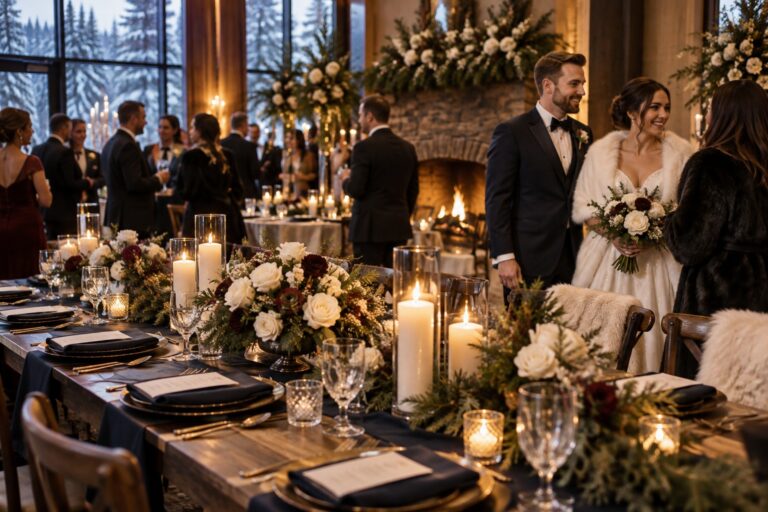
A black tie winter wedding in a ballroom calls for the most classic route. For women, try a floor-length velvet or lined crepe gown, a small evening bag, one strong jewelry detail, and a long wool coat or formal wrap. For men, use a black or midnight tuxedo, formal white shirt, black bow tie, polished shoes, and a dark overcoat. The ballroom is the easiest setting for traditional black tie because the indoor environment supports the full evening silhouette.
A city wedding requires more attention to transit. Choose a gown that will not drag through slush, or select a clean formal jumpsuit with a long coat. Wear practical shoes to the venue if the route is wet and bring the formal pair in a structured bag. A guest in a dark velvet dress and pointed pumps can look perfectly formal once inside, even if the journey required sensible footwear. For men, a covered car service or short walking route may let you wear the formal shoes from the start, but keep a backup plan for bad weather.
An outdoor ceremony followed by an indoor reception needs flexible layering. A long-sleeve gown under a formal coat can handle the ceremony, while a wrap or small evening jacket can remain available for the reception. For men, a warm overcoat, formal gloves for the outdoor portion, and a wool tuxedo can make the transition easier. Do not assume that heaters will make an outdoor ceremony comfortable. Build warmth into the look and ask about seating, duration, and walking surfaces when those details are not provided.
A destination winter wedding may involve luggage limits and a climate different from home. Select one formal base that can be steamed, one outer layer that works for arrival and departure, and accessories that change the mood without taking up much space. Pack the gown or tuxedo in a garment bag, bring the intended shoes, and leave enough time for pressing. A beautiful outfit that arrives wrinkled and unwearable is not a successful travel plan.
- Ballroom: lean classic with a gown or tuxedo, formal shoes, and one elegant outer layer.
- City venue: prioritize hem protection, transport, and a coat that looks polished at curbside.
- Outdoor ceremony: plan a real warm layer, formal gloves, and shoes suited to the ground.
- Destination: reduce the outfit to a dependable base, a versatile coat, and compact accessories.
There is no need to make the outfit visually “winter themed.” Snowflakes, novelty sparkle, and holiday colors are optional. The season can show through fabric weight, depth of color, a beautiful coat, and practical elegance. This approach also makes the pieces easier to rewear after the wedding.
Quick Fixes Before You Leave
If the look feels underdressed, fix the structure before adding more decoration. Upgrade the fabric, lengthen the silhouette, improve the shoe, or replace a casual coat. More jewelry will not turn a daytime dress into black tie. A simpler gown with a formal coat almost always looks more convincing than a casual dress overloaded with sparkle.
If the look feels too cold, add warmth where it will not disrupt the formal line. Try a lined gown, a long coat, a formal wrap, opaque tights that disappear under the hem, or a discreet base layer. Do not add visible athletic thermals, bulky knitwear, or a casual puffer inside the reception unless there is a genuine health or access need.
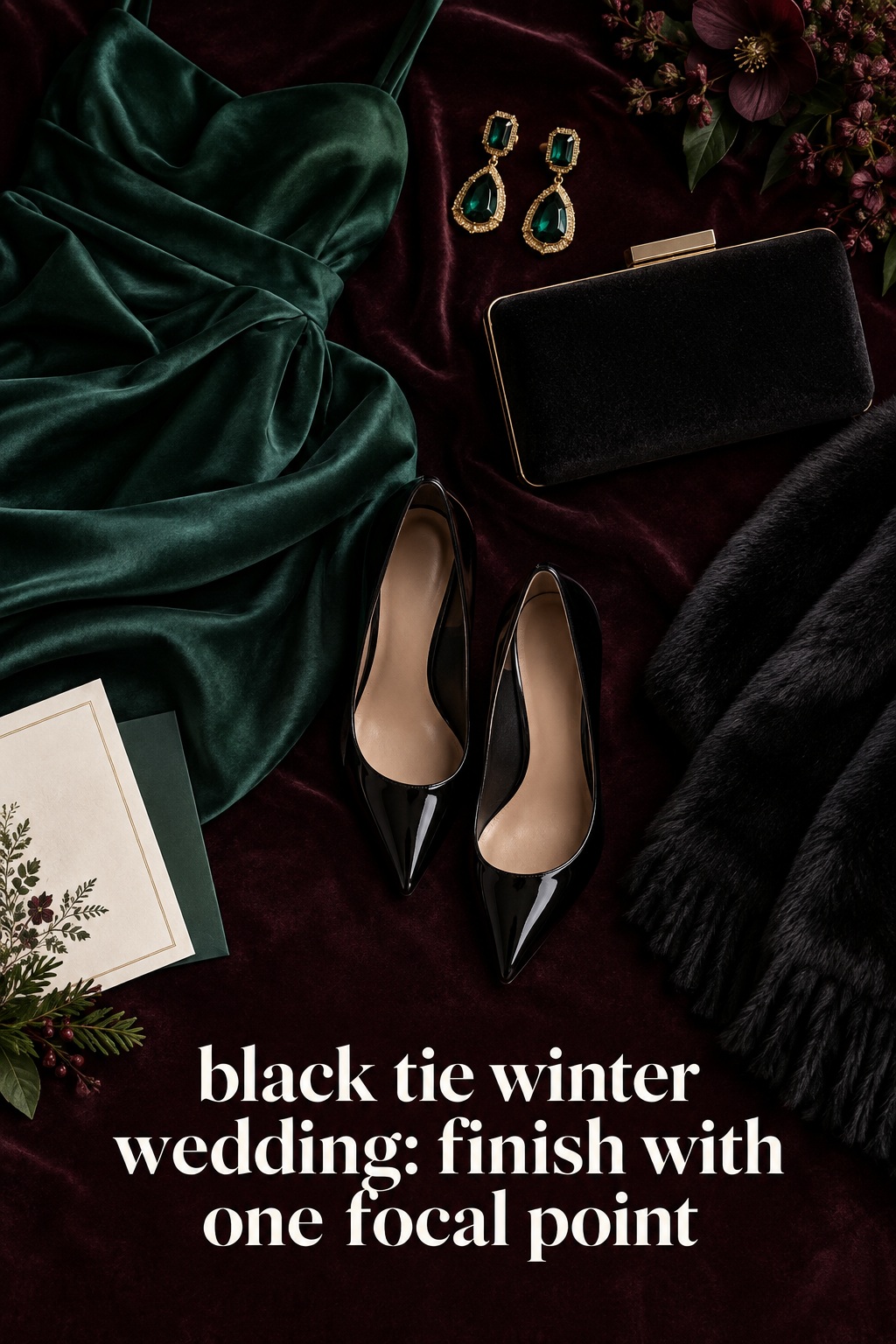
If the look feels too plain, choose one focal point. That might be a sculptural earring, a satin shoe, a jewel-toned gown, a velvet bow tie, or a beautiful clutch. Black tie rewards editing. The outfit should look finished from a few feet away and interesting when someone notices the details up close.
If you are worried about standing out, remember that formal does not mean theatrical. Avoid white, bridal ivory, and anything that appears designed for the wedding party. Avoid a train so dramatic that it creates a practical problem unless the invitation and venue clearly support that level of evening drama. Your goal is to honor the couple’s formality while remaining a guest.
Before leaving, sit down in the full outfit, test the coat, walk in the shoes, and take a photo under indoor and outdoor lighting. Check that straps, shirt cuffs, and hems stay in place. Put a small repair kit, tissues, lip color, and any needed medication in the clutch or coat pocket. These small preparations make the night feel easier and let the outfit do its job.
FAQ
What should a woman wear to a black tie winter wedding?
A floor-length gown in velvet, lined crepe, satin, or another formal fabric is the safest choice. Add polished evening shoes, a small bag, and a long coat, cape, or elegant wrap for warmth. Deep colors, black, and sophisticated metallics can all work, provided the outfit does not resemble bridalwear.
Does black tie always require a floor-length dress?
Floor length is the clearest traditional choice, especially when the invitation says black tie rather than black tie optional. A formal jumpsuit or exceptionally polished evening midi may work in a modern setting, but the fabric, tailoring, accessories, and venue should all support the same level of formality.
What coat should I wear over a black tie wedding outfit?
Choose a long wool coat, tailored topcoat, formal wrap, cape, or evening coat that covers the outfit and has a clean, polished shape. For a gown, select a layer that sits smoothly over the shoulders. For a tuxedo, choose an overcoat long enough to cover the jacket.
Can I wear boots to a black tie winter wedding?
Yes, when the boots are sleek, polished, and formal enough for the setting. Slim evening boots can work under a long gown, especially for a city or cold-weather venue. For snow or rain, consider wearing practical shoes during travel and changing into formal footwear once you arrive.
What should a man wear to a black tie winter wedding?
The traditional answer is a black or midnight-blue tuxedo, formal white shirt, black bow tie, tuxedo trousers, and polished black formal shoes. Add a dark wool overcoat for the journey. A black suit is more suitable for black tie optional or another formal dress code unless the couple gives different guidance.
Are jewel tones appropriate for a black tie winter wedding?
Yes. Deep green, burgundy, plum, navy, and similar jewel tones can look elegant at a winter evening wedding. Keep the fabric and silhouette formal, and check the invitation for a wedding-party palette so your color complements the celebration without appearing to match the attendants.
How can I stay warm without looking casual?
Plan warmth into the outfit through substantial fabric, a lined base, a formal coat or wrap, and shoes suited to the route. Use discreet layers that disappear under the formal pieces. The most polished solution is usually one deliberate outer layer rather than several visible casual items.