Bridal Shower Outfit for Guest: 5 Looks That Work
The invitation arrives with a time, an address, and perhaps a line about brunch. Your closet suddenly seems split between everyday clothes and outfits that belong at a wedding. A good bridal shower outfit for a guest sits in the useful middle: thoughtful enough for a celebration, comfortable enough for several hours, and suited to the actual room where it will happen.
Start with the invitation rather than a shopping search. Its dress code, theme, start time, and venue usually tell you more than a generic rule about what every guest should wear. From there, choose one outfit anchor, such as a printed dress, a soft suit, or a polished pair of trousers, then check that you can sit, walk, and join the day’s activities in it. You do not need a brand-new look or a complicated formula to look as if you understood the occasion.
The invitation gives the first clues
Think of getting dressed as reading a small set of clues in order. First follow any explicit dress code. Then notice whether the invitation names a theme or activity. Next consider the venue and time of day. Only after those clues should you fill in the gaps with your own sense of style. The Knot’s bridal shower guest attire guide likewise recommends checking the invitation for dress-code requests before choosing an outfit.
Start with words the host actually used
If the invitation says cocktail attire, garden party, tea, or Sunday best, treat that wording as the clearest direction. A stated request for a color or pattern also matters, but it does not mean you have to copy the bridal party’s exact look. A garden-party note can be as simple as a floral skirt with a neat blouse, while cocktail attire may call for a more structured dress and dressier shoes. When an invite asks for a specific theme, echo one detail, such as a color or accessory, instead of dressing like a costume.
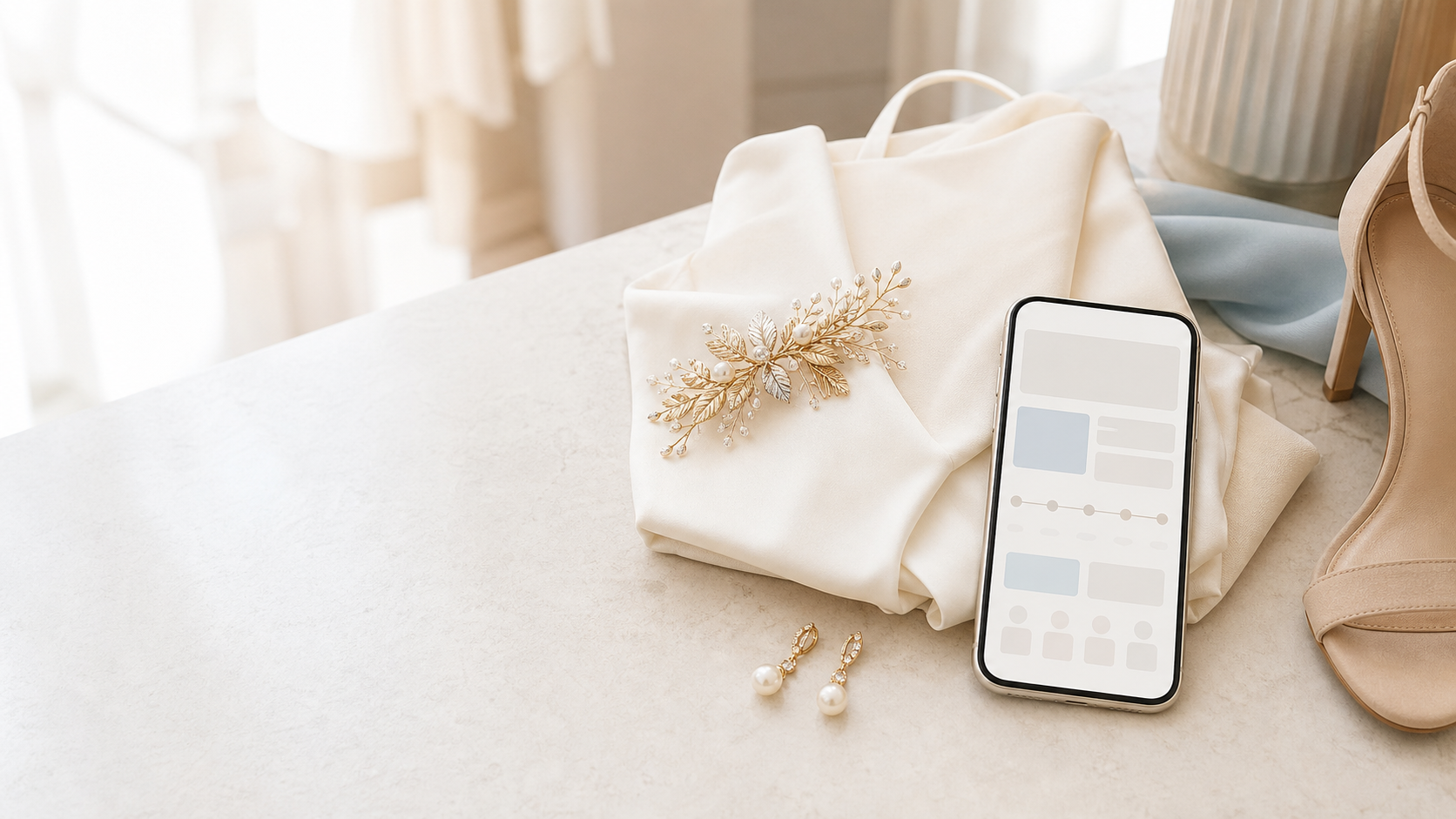
Your wedding look is only the beginning.
Keep your guest list, vendors, timeline, and every important detail together with Zarellea — so your day feels as considered as your style.
If there is no dress code, do not assume that silence means formal or that it means casual. A shower at a friend’s home, a restaurant lunch, and a hotel tea are different settings. The time is useful too: a daytime gathering generally calls for a daytime outfit, while a later event may lean more polished. These are clues, not strict laws. If you still cannot tell, a short note to the host is more reliable than trying to decode the invitation from a photograph.
Use the venue as a practical guide
A restaurant private room often feels a little more finished than a backyard lunch. A home shower may involve moving between rooms or helping with a small task. A garden setting changes the shoe question before it changes the dress question. Imagine arriving, finding a seat, greeting relatives, and appearing in a few photos. What outfit would feel natural across those moments? That small mental rehearsal can narrow the choices quickly.
When the invite leaves the dress code open, you can ask the host without making it a production: “I’m looking forward to Saturday. Is the shower more casual brunch or dressy lunch, and will we be outside?” This gives the host an easy way to answer both formality and footwear questions. If you are close to the bride, you can ask whether guests have been given a color request. Otherwise, keep the question practical and let the host handle the details.
Build the outfit around the part you will wear all day
Once you understand the setting, pick one piece you already like wearing and build around it. A dress is only one option. Tailored trousers, a skirt and blouse, a coordinated set, or a jumpsuit can all look right when the fabric, fit, and accessories suit the event. The best anchor is one that stays comfortable through a meal, conversation, photographs, and possibly a game or gift opening. Here are five starting points, each with a different feel.
A printed midi for brunch or a garden table
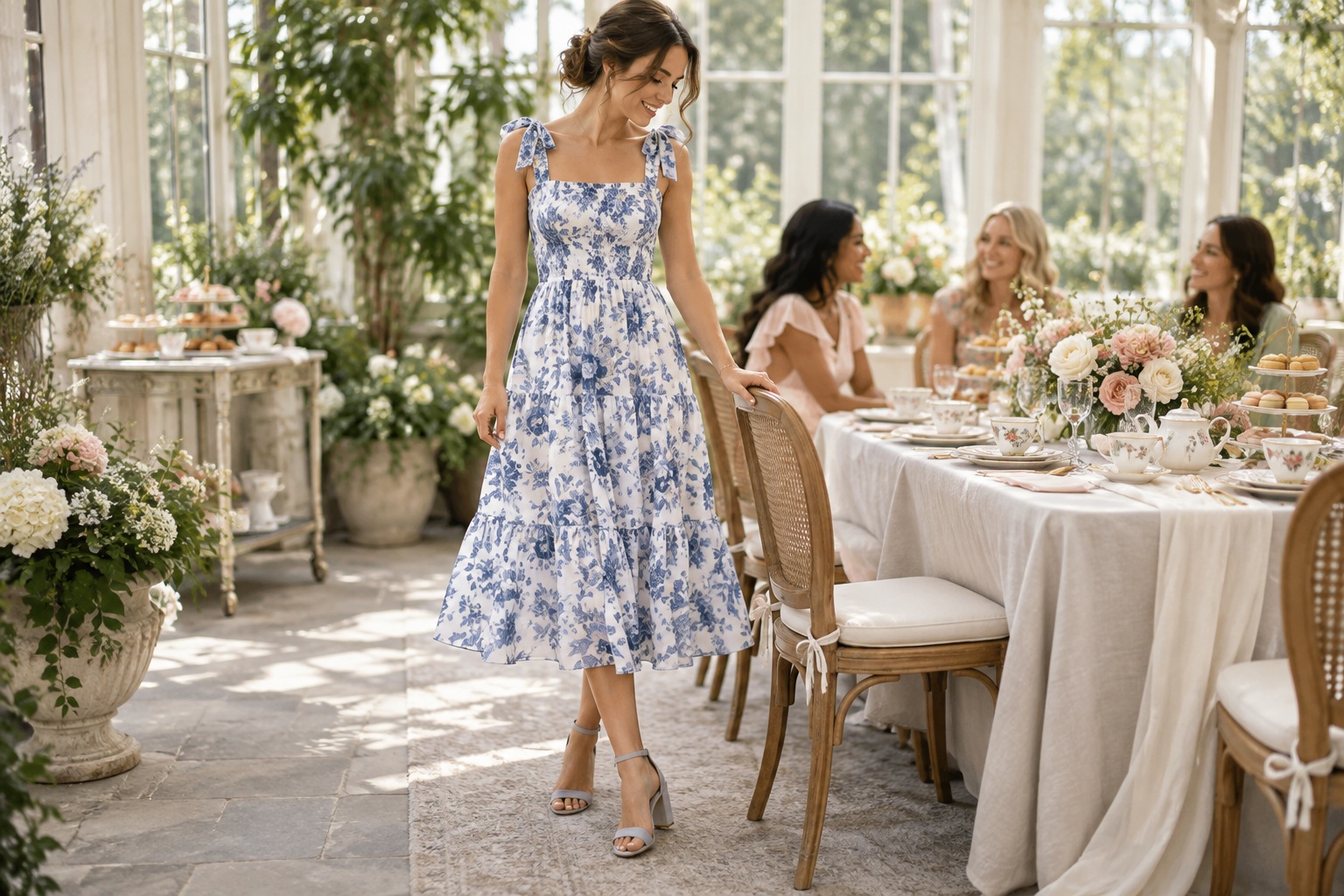
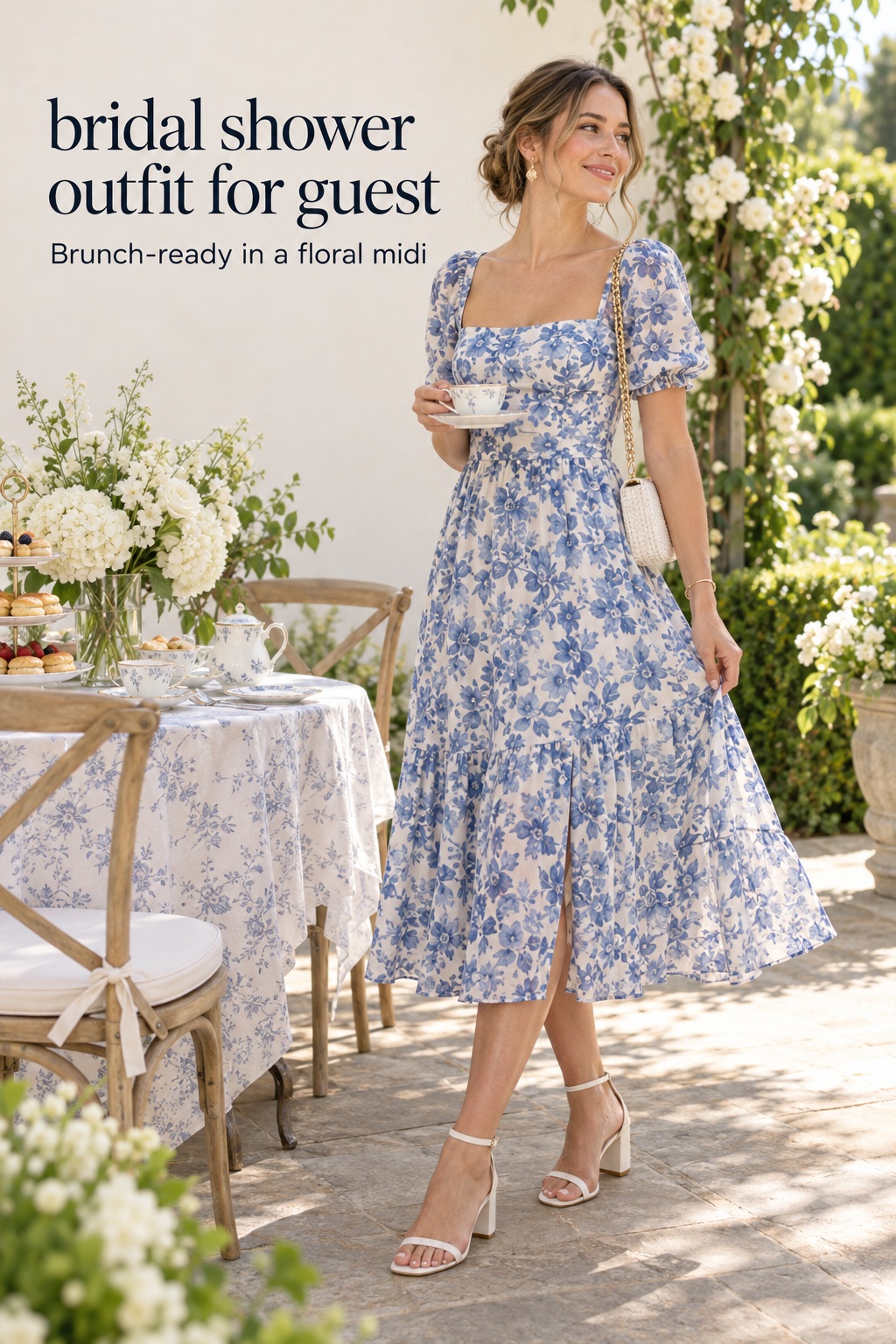
A printed midi dress is an easy choice when you want a finished look in one piece. Choose a scale of print that feels like you, from small florals to painterly shapes, and pair it with shoes that suit the surface. A flat sandal, low block heel, or espadrille can feel more grounded outdoors than a narrow heel. Indoors, a ballet flat or a simple pump may be comfortable. Add a small bag and one piece of jewelry if the neckline needs a finishing touch.
Check where the hem falls when you sit and whether the fabric catches on a chair or bunches at the waist. If the event includes a long meal or a series of photos, a dress that does not need frequent smoothing will let you pay attention to the people around you. A cardigan or light jacket can make the same outfit work when the room is cool. Use color in the print rather than adding several competing accessories.
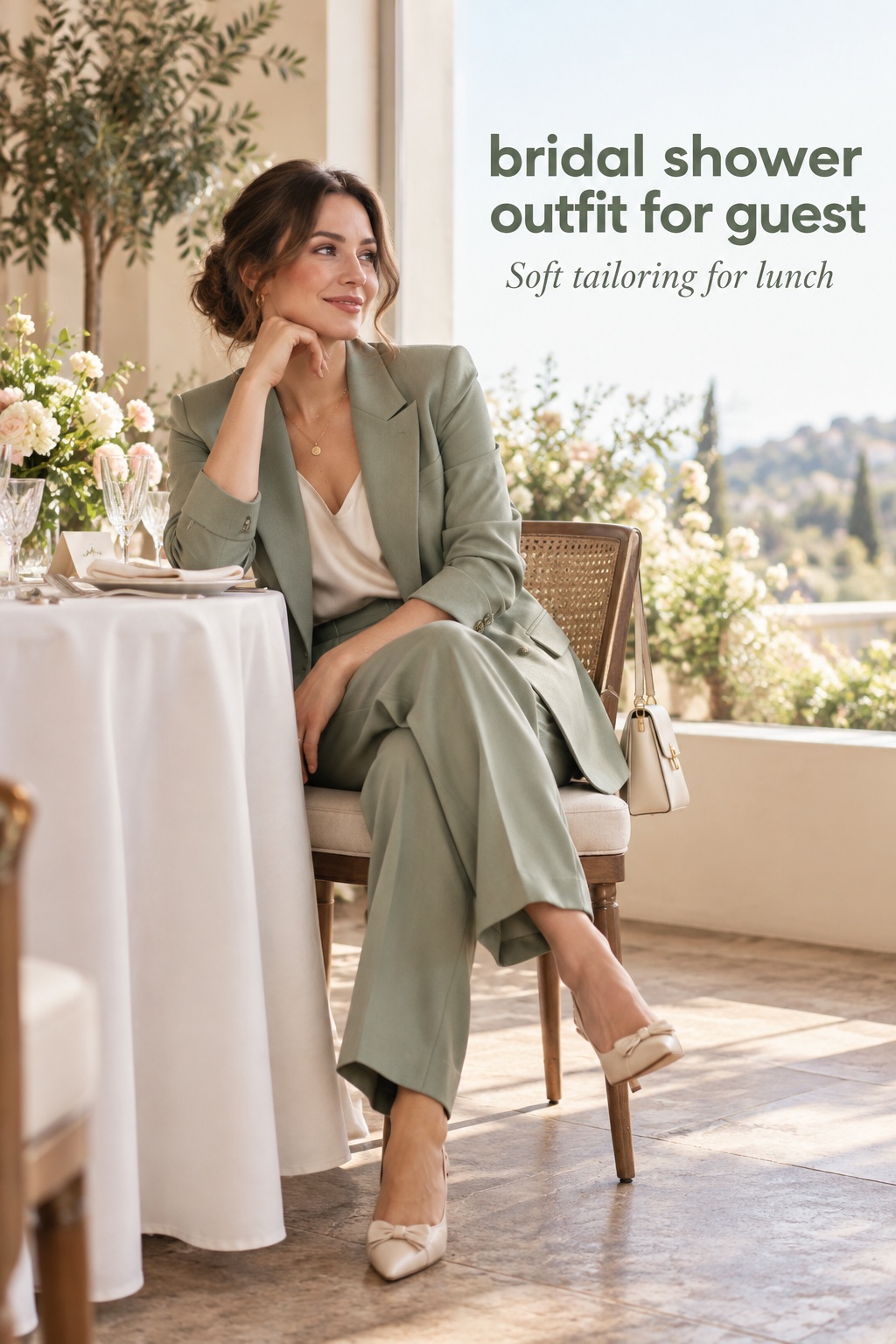
Soft tailoring for a restaurant or hotel
A softly tailored suit or a blazer with a fluid skirt gives a more polished impression without moving into eveningwear. It can work well for a restaurant, a private club, or a hotel room where the surroundings feel dressier. Look for a jacket you can remove comfortably once you sit down. A blouse, fine knit, or simple shell underneath should still feel complete on its own, so the outfit does not depend on keeping the blazer buttoned all afternoon.
Use a color, texture, or small accessory to keep the tailoring from feeling like office clothes. A blouse with a gentle drape, a textured bag, or a pair of refined earrings can make a familiar suit feel occasion-ready. The trouser hem should clear the floor with your chosen shoes, and the jacket should let you reach forward without pulling at the shoulders. If the venue is relaxed, skip a matching jacket and try a neat blouse with tailored trousers instead.
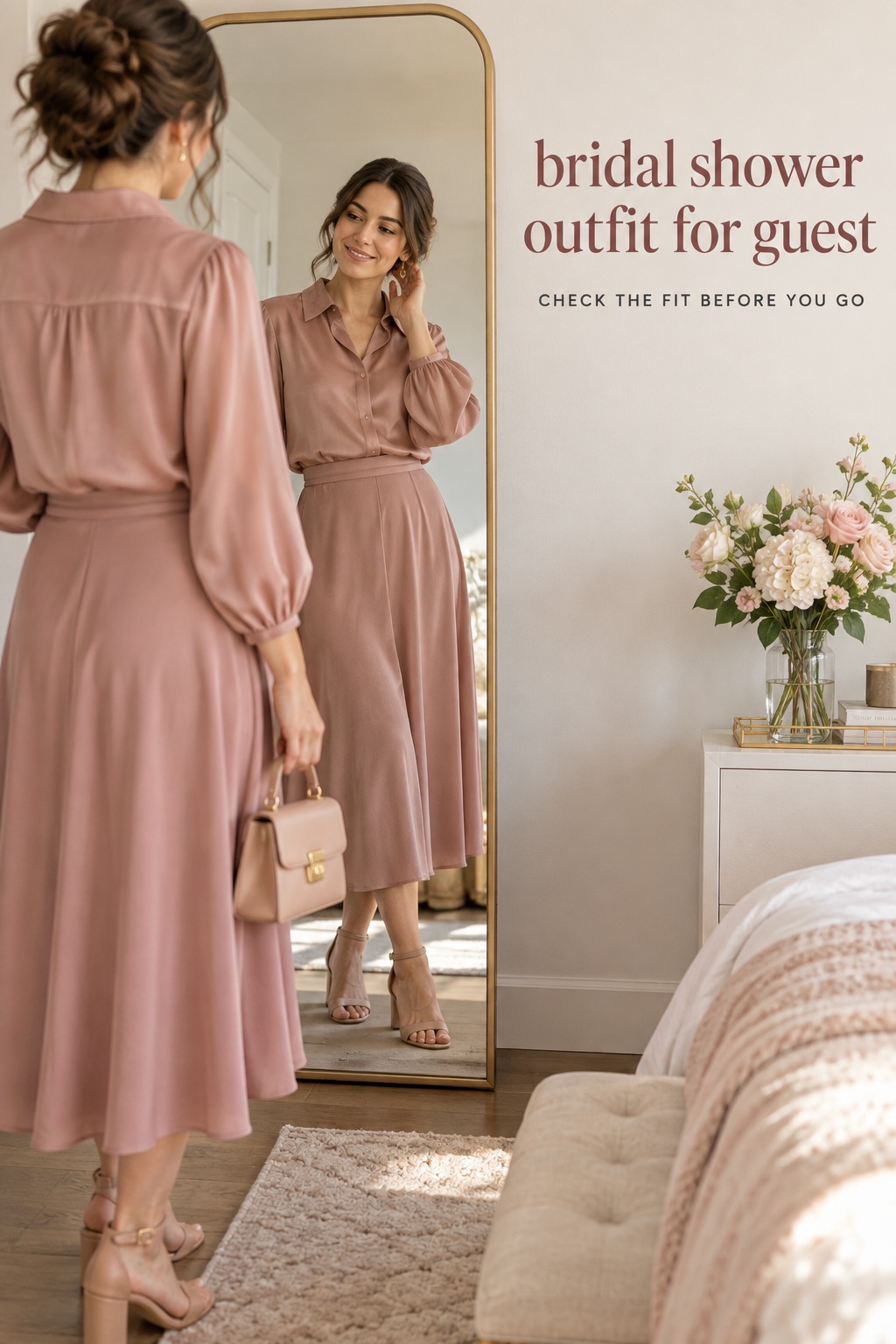
A skirt and blouse when you want separates
Separates make it easier to dress for changing temperatures or to repeat pieces later. A swishy skirt with a simple blouse feels festive, while a straighter skirt with a soft top can read more refined. Choose a waistband that feels good when seated and a blouse that stays in place when you move. Tucking, a half tuck, or a cropped top can each define the waist, but the right choice is the one that does not need constant readjustment.
When mixing colors and textures, let one item lead. If the skirt has a bold print, keep the top quiet. If both pieces are solid, a subtle texture or a colored shoe can add interest. This is also a useful route if you are unsure whether a dress will feel too formal: separates can be as polished as a dress while staying a little more relaxed. Bring a layer only if it works with both pieces and can be carried easily.
A jumpsuit for a one-piece alternative
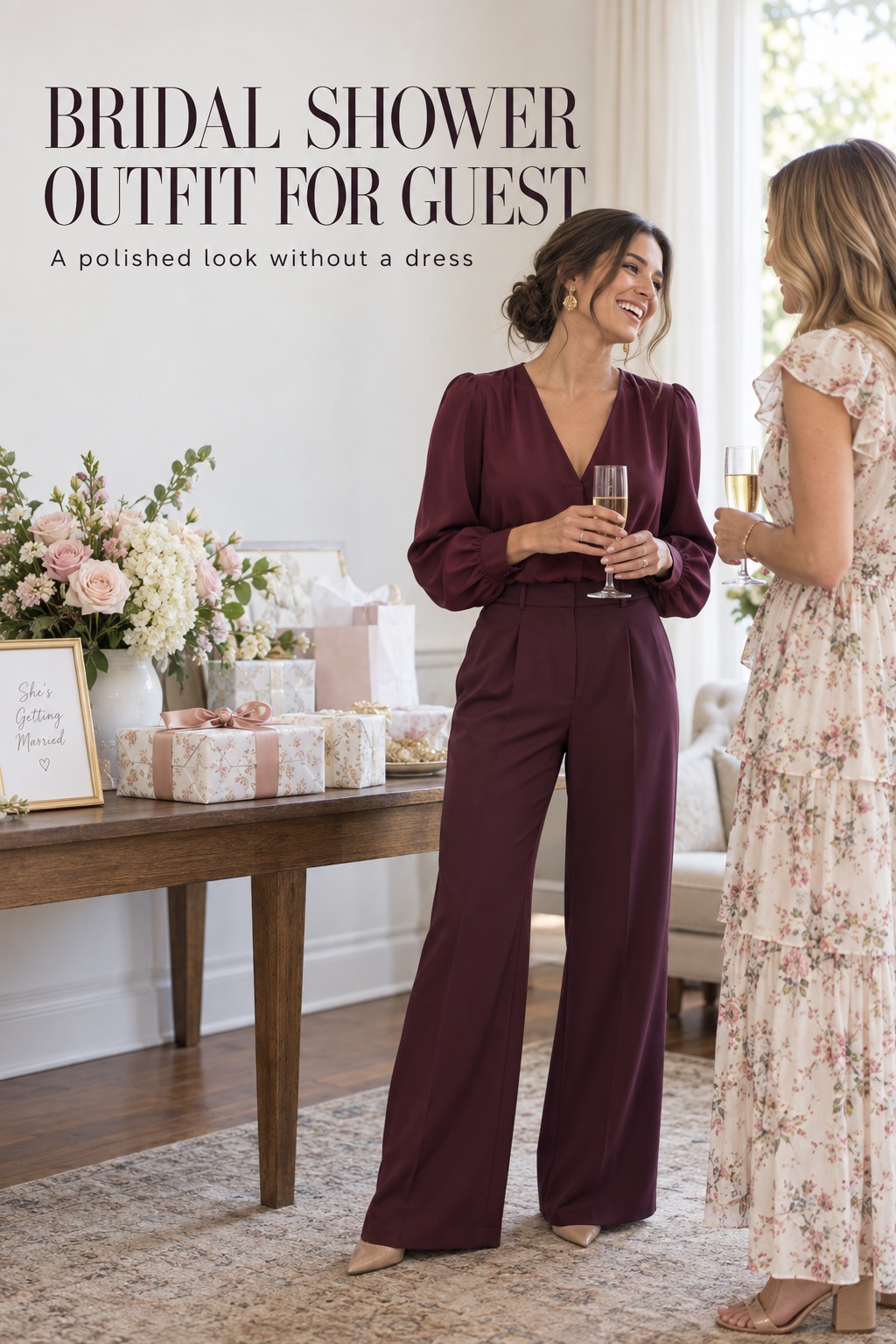
A jumpsuit offers the ease of a one-piece outfit with a different silhouette. For a shower, a clean line, a comfortable waist, and a fabric that drapes rather than clings can make it feel polished. A defined waist can be created by a seam or a belt, but the belt should not make sitting uncomfortable. Try the full look at home, including shoes, and check the bathroom routine before choosing a style with complicated fastenings.
A cropped or ankle-length leg can work with flats or a low heel, depending on the cut. Keep jewelry simple if the neckline or sleeves already draw attention. If the invitation describes a casual home gathering, choose a softer fabric and relaxed shoes. For a more formal restaurant, add a structured bag and a jacket that complements rather than hides the shape. The idea is not to make a jumpsuit imitate a dress. Let it look intentional on its own.
A dressy knit or coordinated set for comfort
A fine-gauge knit dress or a coordinated top-and-skirt set can be a thoughtful choice for a cooler room or a long afternoon. Look for a fabric that holds its shape, does not feel heavy, and is comfortable across the shoulders and waist. A neat knit with a midi skirt can look more relaxed than a suit but more deliberate than everyday separates. If you prefer trousers, a matching top and pant set gives a similar effect.
Consider the event’s temperature and whether you will move between indoors and outdoors. A light layer should fit over the outfit without catching on its sleeves. If the knit is close-fitting, check that it remains comfortable when seated; if it is loose, make sure it does not drag or require pinning. A simple shape in a rich color or quiet texture is often enough. You can add a small celebratory detail through earrings, a hair accessory, or a colorful shoe.
Adjust the look to the room, ground, and schedule
The same outfit can feel right in one setting and awkward in another. Instead of buying a separate look for every kind of shower, make a small adjustment for the room, the ground, and the activity. Think about where you will sit, whether you will walk on grass or stairs, and whether the host expects guests to pitch in. A practical change in shoe, layer, or bag can make a familiar outfit feel deliberately chosen.
At home or in a relaxed backyard
For a home shower, aim for neat daytime clothes rather than clothes that feel ready for errands. A casual dress with a cardigan, a printed skirt with a blouse, or tailored pants with a cheerful top can all fit. Choose shoes that you can take off easily if the host asks guests to remove them, and avoid a long hem that sweeps the floor. If you know you will be helping arrange chairs or carry something, pick a look that lets you bend and reach comfortably.
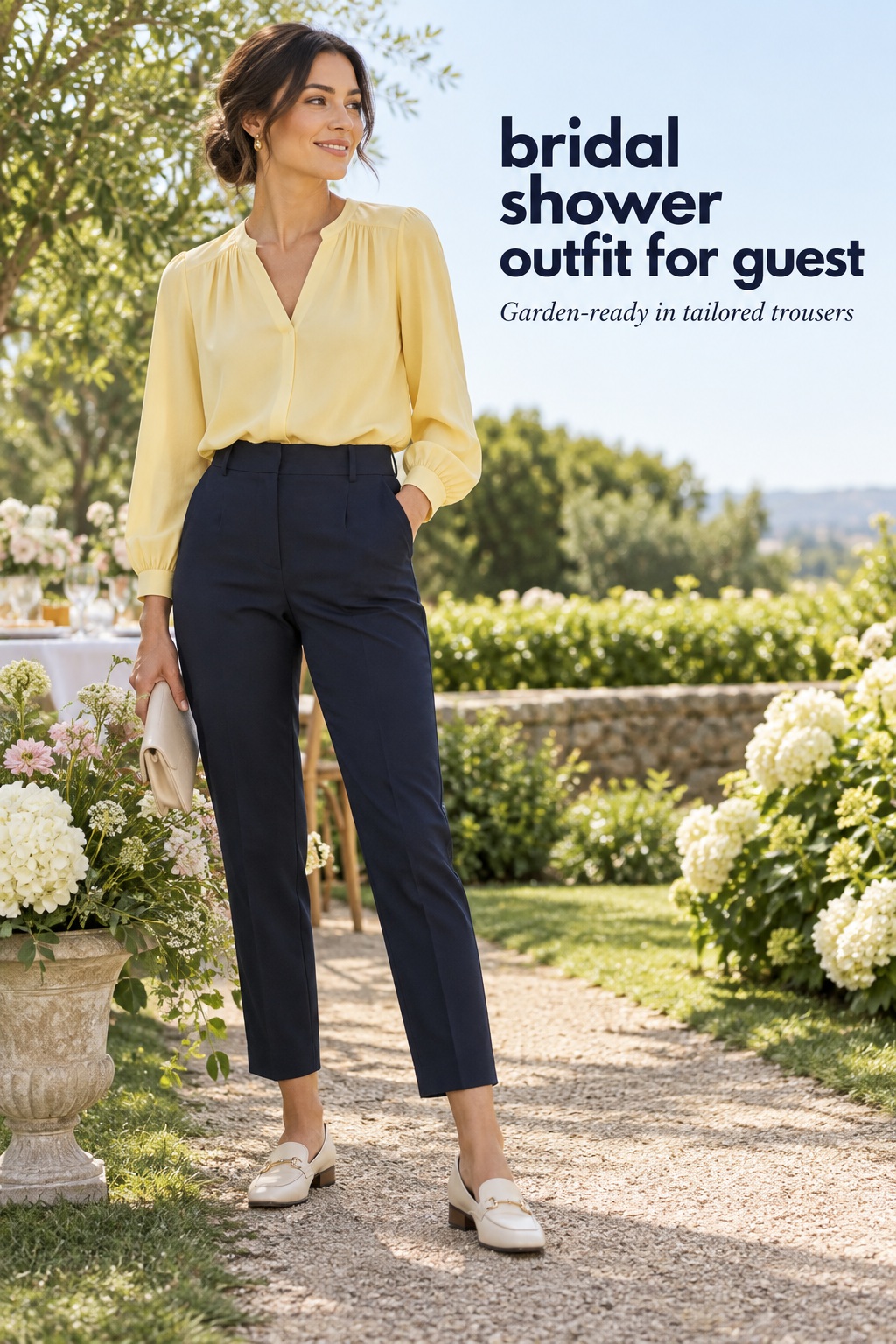
For a backyard, check the ground before deciding on a heel. Grass, gravel, a deck, and a paved patio each feel different underfoot. A block heel, wedge, dressy flat, or polished sandal can be easier than a thin heel on soft ground. Bring a layer if the event may continue outside after the sun moves or the temperature drops. A compact crossbody or small shoulder bag can keep your hands free while you greet people or carry a plate.
At brunch, a restaurant, or a tea
For a restaurant brunch, a midi dress, a blouse with a skirt, or tailored trousers with a soft top will usually feel more considered than everyday casual clothes. Make sure the outfit works while seated at a table. A skirt should not ride up in a way that makes you uncomfortable, and a neckline should stay in place when you lean forward. Choose a bag small enough to tuck near your chair, and avoid accessories that catch on table linens or another guest’s clothing.
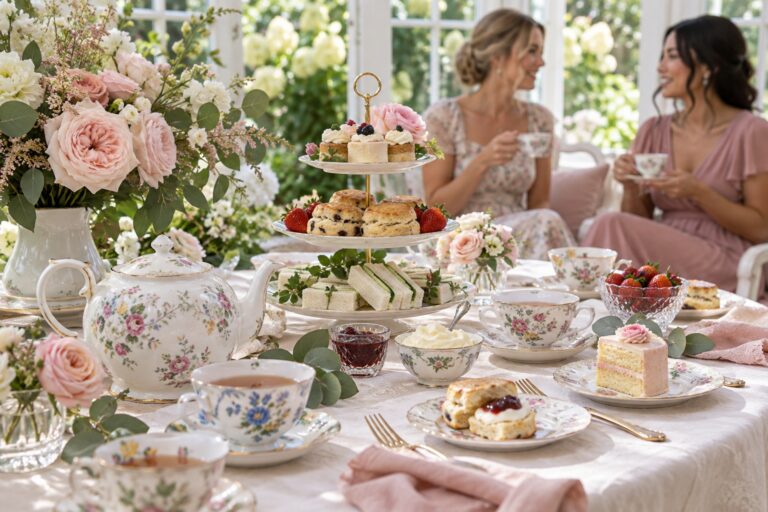
A tea or a themed lunch may invite a little more detail, such as a print, a delicate collar, or a polished hair accessory. Take the invitation’s language seriously without turning it into a costume brief. If the theme requests hats or a particular color, follow it as comfortably as you can. If there is no request, a single nod to the setting is enough. The goal is to join the celebration, not to guess a hidden test.
For a long event, photos, or a helping role
If you are part of the bridal party or helping the host, choose clothing that will remain comfortable while you move around. A shoe you can stand in, a bag that stays out of the way, and sleeves that do not fall into food or decorations are small but useful details. You do not need to dress like event staff. Just choose a version of your outfit that does not make you reluctant to help when an extra hand is needed.
For photos, consider how the outfit looks beside the people you expect to stand with. A print can be lively without being oversized, and a bright color can feel festive without matching the bridal party. Check the garment in natural light if possible, especially if it is a very pale color or has a sheen. Sit down, stand up, and move your arms while trying it on. The mirror check should include movement, not only a still pose.
Make the final call without second-guessing every detail
When you have an outfit candidate, run a short, practical check. Does it follow the invitation? Does it suit the place? Can you sit and walk comfortably? Does it feel like a guest outfit rather than a wedding gown or a night-out look? If the answer is yes, you have likely done enough. You do not need to predict every other guest’s clothes or build an outfit around an unconfirmed color palette.
Keep color etiquette simple and considerate
White, ivory, and cream are often avoided at wedding-related celebrations unless the invitation explicitly asks guests to wear them. If you like a pale color, choose a shade that reads clearly as something other than a bridal white, or add a stronger print or contrasting pieces. When in doubt, ask the host. This is a courtesy, not a reason to panic over a small white detail in a patterned outfit. Let the actual request and the overall look guide you.
Other colors do not need a complicated rulebook. Black can work when the fabric and styling suit the daytime setting, while a bright or jewel tone can feel cheerful. If the invitation requests a color, try to include it in a way you will wear again. Unless the host has asked for a coordinated look, there is no need to match decorations or the bridal party. Your outfit can feel personal while keeping the attention on the person being celebrated.
Use accessories to finish, not rescue, the outfit
Start with shoes that work for the venue and a bag that holds what you need. Add jewelry only if it feels comfortable and complements the neckline or print. A light wrap or jacket is useful if the room is cool, but it should not be the only thing making an outfit feel appropriate. If you keep pulling at a hem, adjusting a strap, or changing shoes in your mind, the fit may need one more check before event day.
You can try the outfit on with the undergarments and shoes you plan to wear. Sit as you would at lunch, lift your arms, and take a few steps. If something shifts or pinches, choose another piece or make a simple alteration. This is more reliable than deciding from a product image or a mannequin. Comfort is part of looking put together because it lets you stay present with the bride and other guests.
Finally, pause before buying something new. If you already own a suitable dress or set, a different shoe, a layer, or a small accessory may be all it needs. If you do need a new piece, think about where you could wear it after the shower. A useful outfit is one that makes sense for this invitation and still belongs in your wardrobe later. Once the invitation, venue, and comfort checks agree, stop searching and enjoy the day.
Sources and methodology
This guide combines a review of current US bridal shower attire results with practical outfit decisions for different venues and activities. The invitation remains the best source for a specific dress code or theme. The Knot’s guest attire guide was used to check common attire questions; outfit examples here are general styling suggestions, not a claim that one dress code fits every celebration.
FAQ
What is the safest bridal shower outfit for a guest?
Choose a neat daytime outfit that follows the invitation and suits the venue. A printed midi, a blouse with tailored trousers, or a coordinated set can each work. Prioritize comfortable shoes and a fit that stays easy when you sit, walk, and take photos.
Can a guest wear pants to a bridal shower?
Yes. Tailored trousers with a blouse, a polished jumpsuit, or a coordinated pants set can look appropriate. Choose fabric and shoes that match the invitation’s level of formality, and check that the outfit feels finished without depending on a jacket you may remove indoors.
Should a bridal shower guest avoid white?
Many guests avoid white, ivory, and cream so the bride can choose whether to wear those shades. Follow an invitation that explicitly asks for an all-white theme. If no request is given and you are unsure about a pale outfit, ask the host or choose a clearer color.
Is a floral dress appropriate for a bridal shower?
A floral dress is often an easy daytime option, especially for a garden or brunch setting. Match the print’s scale and the dress’s formality to the event, then choose shoes for the actual ground. A floral pattern is not required, so wear one only if it suits your style.
What shoes should I wear to an outdoor bridal shower?
Check whether the event is on grass, gravel, a deck, or pavement. A dressy flat, wedge, block heel, or sandal may be easier to walk in than a narrow heel on soft ground. Choose a pair you can wear comfortably for the full event.
What should I wear if the invitation has no dress code?
Use the venue, time, and any theme as clues, then choose a polished daytime look. If the setting still feels unclear, message the host and ask whether guests should dress casually or more formally. A direct, friendly question is better than guessing based on generic rules.
Can I wear black to a bridal shower?
Black can work when it suits the venue and time of day. A daytime fabric, lighter accessory, or colorful detail can make it feel less like eveningwear. Follow any dress code or color request from the host, and choose a look that feels celebratory to you.
How formal should a bridal shower guest outfit be?
Follow the invitation first. Without a stated code, let the location and schedule set the level: a home lunch may call for neat separates, while a hotel tea may feel dressier. Aim for an outfit that is more considered than everyday errands but does not compete with wedding attire.