
Bridal Shower Gifts: A Thoughtful Guest Guide
Choosing bridal shower gifts can feel oddly complicated when the invitation, registry, wedding plans, and your own budget all seem to be asking for different things. Start with one simple rule: the gift should respond to what the couple has actually said, while staying within what you can comfortably spend. You do not need to prove affection through a particular price tag or surprise the room with the most original object. A useful registry choice, a shared contribution, or a sincere card with a modest present can all communicate care when they fit the couple and the occasion.
Modern couples may already share a home, keep a small registry, prefer a honeymoon contribution, or invite different groups to separate showers. That means the best choice is less about following a universal gift formula and more about reading the clues in the invitation and gift list. This guide walks through that decision in order, including what to do when the list is empty, an item is gone, or another shower is on your calendar.
What a bridal shower gift needs to do now
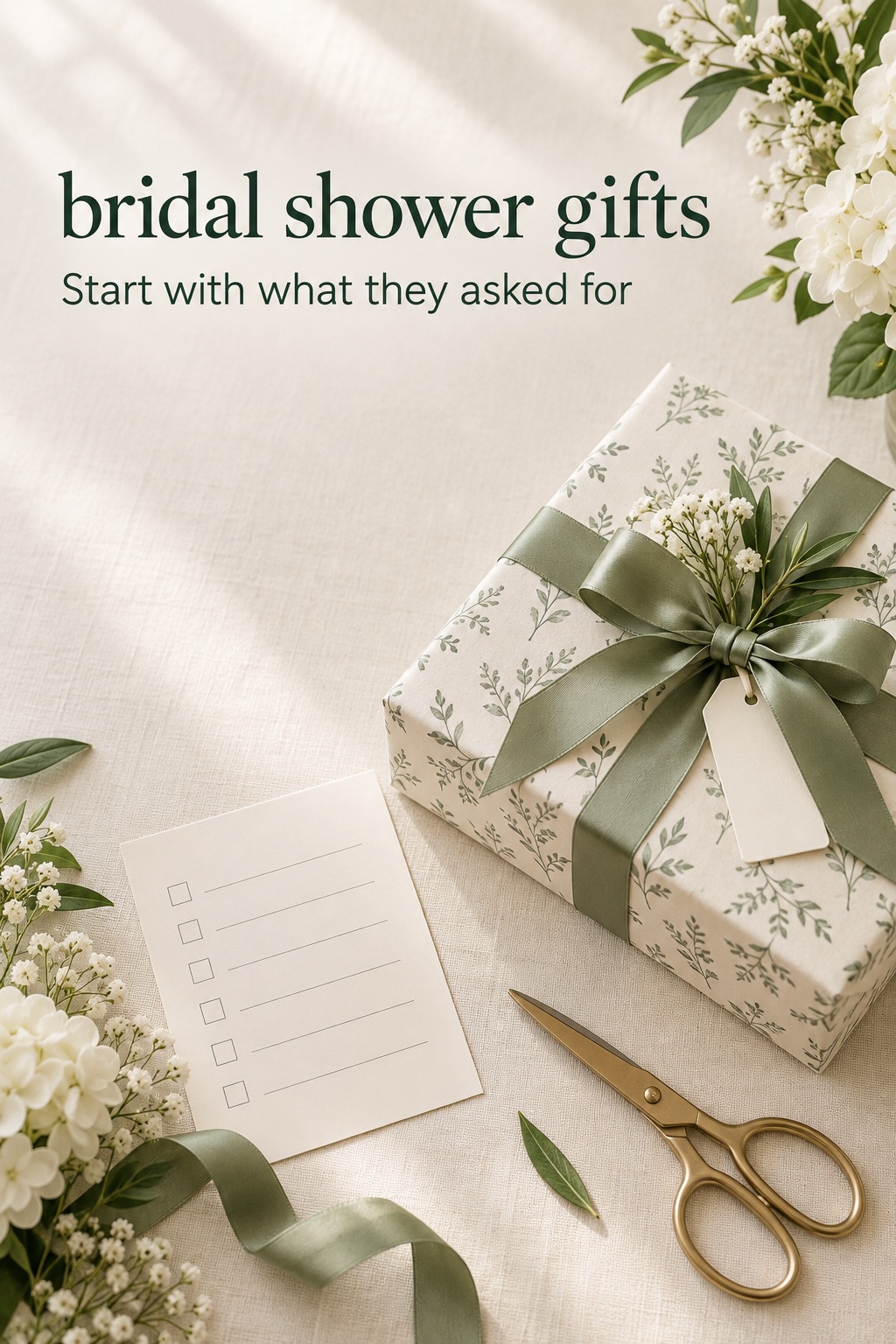
A shower gift has a social purpose: it marks the gathering and offers something the honoree or couple has welcomed. It does not have to furnish an entire household. Many couples build a registry around a mix of practical items, upgrades, experiences, and contributions, while some already have most everyday basics. Guests should not assume that marriage means a couple needs a matching set of kitchen equipment. Their list, if they have one, is more helpful than a stereotype about what newlyweds ought to own.
This shift changes the guest’s task. Instead of asking, “What is a proper bridal shower present?” ask, “What has this couple invited me to contribute, and what can I give with ease?” The answer may be a small item from the registry, a share of a group purchase, a contribution to a named fund, or a thoughtful choice that suits a clear shower theme. It may also be a card when the invitation says gifts are not expected. The occasion sets the context; the couple’s preferences and your means set the boundaries.
Your wedding look is only the beginning.
Keep your guest list, vendors, timeline, and every important detail together with Zarellea — so your day feels as considered as your style.
Etiquette sources sometimes express the registry’s role differently, but the useful middle ground is straightforward: a registry is strong guidance, not an invoice. Emily Post describes the list as a suggestion and notes that a guest does not have to select from it. That leaves room for a personal choice, while still making the registry the least risky place to start when you do not know the couple’s preferences. If you want to choose something else, use a real clue about their life rather than the desire to make your gift look more creative.
Keep the event’s purpose in mind, too. Some showers still include a gift-opening moment; others focus on conversation, a meal, or a shared activity. A present should not create a task the couple did not ask for, such as a bulky object they must carry across town or a custom item with details they have not confirmed. The gift feels current when it is both generous in spirit and considerate of how people actually live and celebrate.

Read the invitation and registry in a calm order
Before browsing products, read the invitation from top to bottom. Look for a clear no-gifts request, a theme, a registry link, a named fund, or a note about bringing a wrapped present. These details carry more weight than assumptions about what guests are supposed to do. A “stock the bar” or recipe shower, for instance, gives you a useful category. A note that says gifts are optional removes the need to bring one. If the invitation is unclear, ask the host a short, practical question rather than guessing publicly in a group chat.
Use the list to find a comfortable fit
Open the couple’s registry and scan the full range before choosing. Note whether there are lower-cost items, several people can contribute to a larger item, or the couple has named a specific fund. Select something you can pay for without borrowing, delaying bills, or comparing yourself with another guest. A practical way to set your limit is to decide your total celebration budget first, taking into account travel and other wedding events, then choose a shower gift within that limit. There is no need to calculate a fixed percentage or match what you imagine another person will spend.
If the only remaining items sit above your limit, pause before assuming that you have to stretch. Check whether the registry supports group gifting, ask a trusted co-guest whether they would like to contribute together, or choose a modest alternative that you know the couple would appreciate. A registry’s remaining list is a menu of preferences, not a measure of your friendship. If the list is genuinely outside your means, a card and a smaller personal choice can still be gracious.
Separate your shower choice from imagined price rules
Search results often offer exact spending ranges by relationship, but those numbers cannot account for local costs, income, travel, family expectations, or the number of celebrations on your calendar. Treat any published range as one editor’s reference, not a rule that applies to you. A coworker, cousin, close friend, or member of the wedding party can each give thoughtfully at different amounts. Closeness can affect the kind of note or memory you include, but it does not create a debt to spend beyond your budget.
Also keep shower and wedding gifts in view together. Some guests prefer one larger present for the wedding and a small shower gift; others split their total across both occasions. Make that decision according to your finances and the couple’s instructions. You do not need to make the shower gift look like a separate contest. When planning a group present, agree on the contribution privately and clearly so no one feels pressured to join or to disclose what they can spend.
Finally, check whether an item has already been purchased and whether delivery timing works. Registry systems can change quickly as guests shop. If an item disappears, avoid buying a near-duplicate from another retailer unless you are certain the couple still wants it. Return to the list and choose a different available item, or ask the host for a current suggestion. The goal is to make the couple’s selection easier, not to solve an inventory puzzle at any cost.
Choose a gift form that fits the actual situation
Once you know the couple’s preference and your budget, decide what form the present should take. A physical object is only one option. The invitation or registry may point toward a cash fund, an experience, a group purchase, or a themed contribution. Each works best under different circumstances. The key is to follow an expressed preference where possible, rather than treating one format as automatically more thoughtful than another.
If there is no registry
First check the couple’s wedding website or invitation insert, since a registry may be linked there rather than printed on the invitation itself. If you still find no list, ask the host whether there is a theme or a preference the couple has shared. Keep the question open-ended and easy to answer: “Is there a registry or type of gift they would especially welcome?” A host can often clarify without sharing private details. If no guidance exists, choose something modest and broadly useful only if you know it will fit, or write a warm note and give a gift card to a place the couple uses.
A no-registry situation does not automatically mean the couple wants cash. It can mean they have not set up a list, prefer guests to choose freely, or have simply shared the information elsewhere. Avoid interpreting silence as a hidden request. If you are comfortable asking the couple directly, do so in a low-pressure way. Otherwise, make a restrained choice and include a note that explains the thought behind it without asking them to praise or display the item.
If the couple requests money or a fund contribution
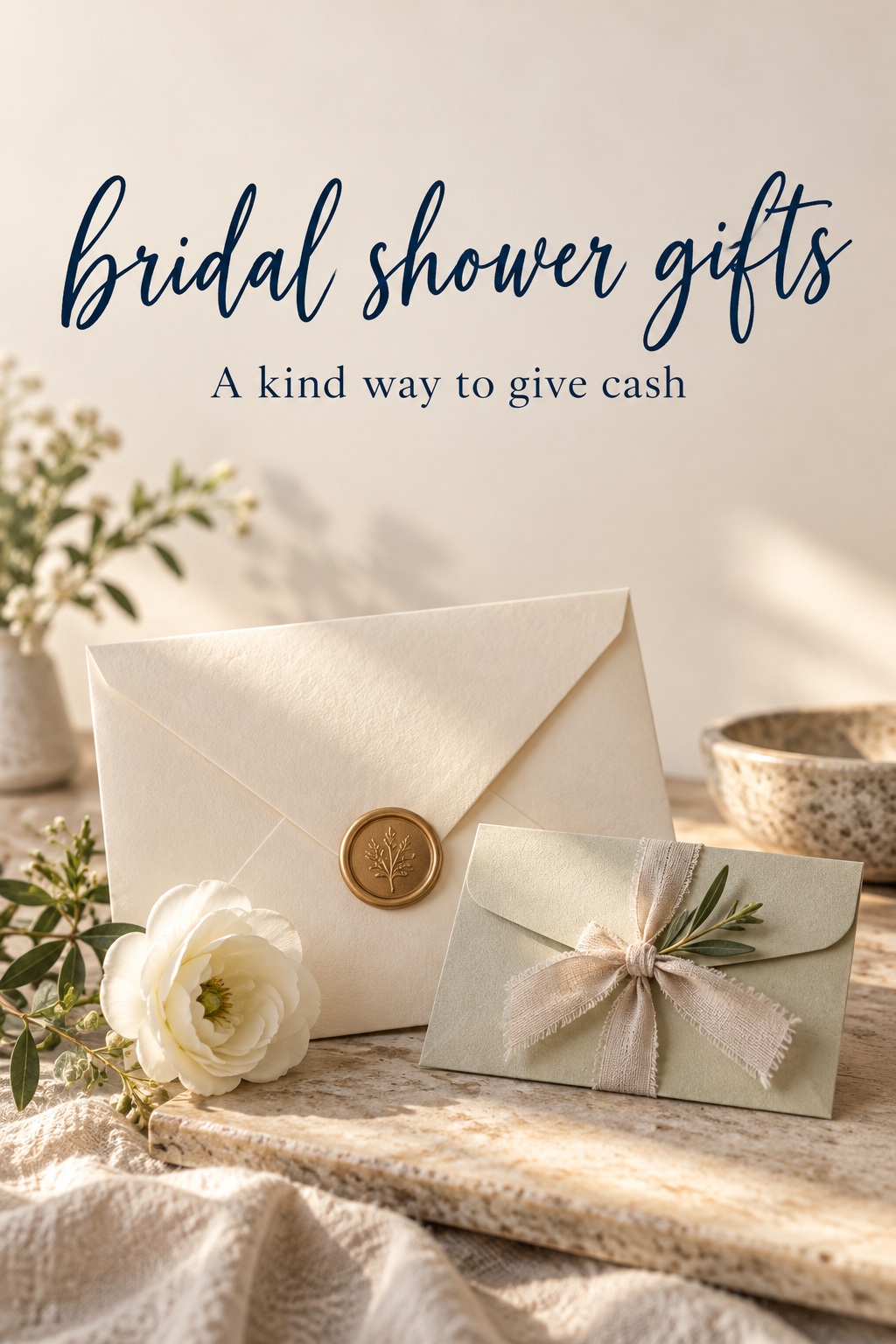
When a registry names a honeymoon, home, or experience fund, contributing through that option is a clear way to honor the request. Add a note that connects your gift to the purpose if you like, such as wishing them a wonderful first meal on their trip. If they have explicitly requested monetary gifts, cash or a check in a card can be appropriate as well. Use the method the couple has offered and confirm the names and payment details before sending. Do not assume that every couple prefers cash just because their list contains a fund.
If a cash gift feels impersonal to you, presentation can make it warmer without changing the gift itself. Write a few sincere lines, mention a quality you appreciate in the couple, and wish them well. Avoid making a contribution conditional on how it is spent. A gift is not a request for a progress report, and the couple should not have to explain whether a fund paid for a flight, dinner, or something else.
If a larger registry item suits a group
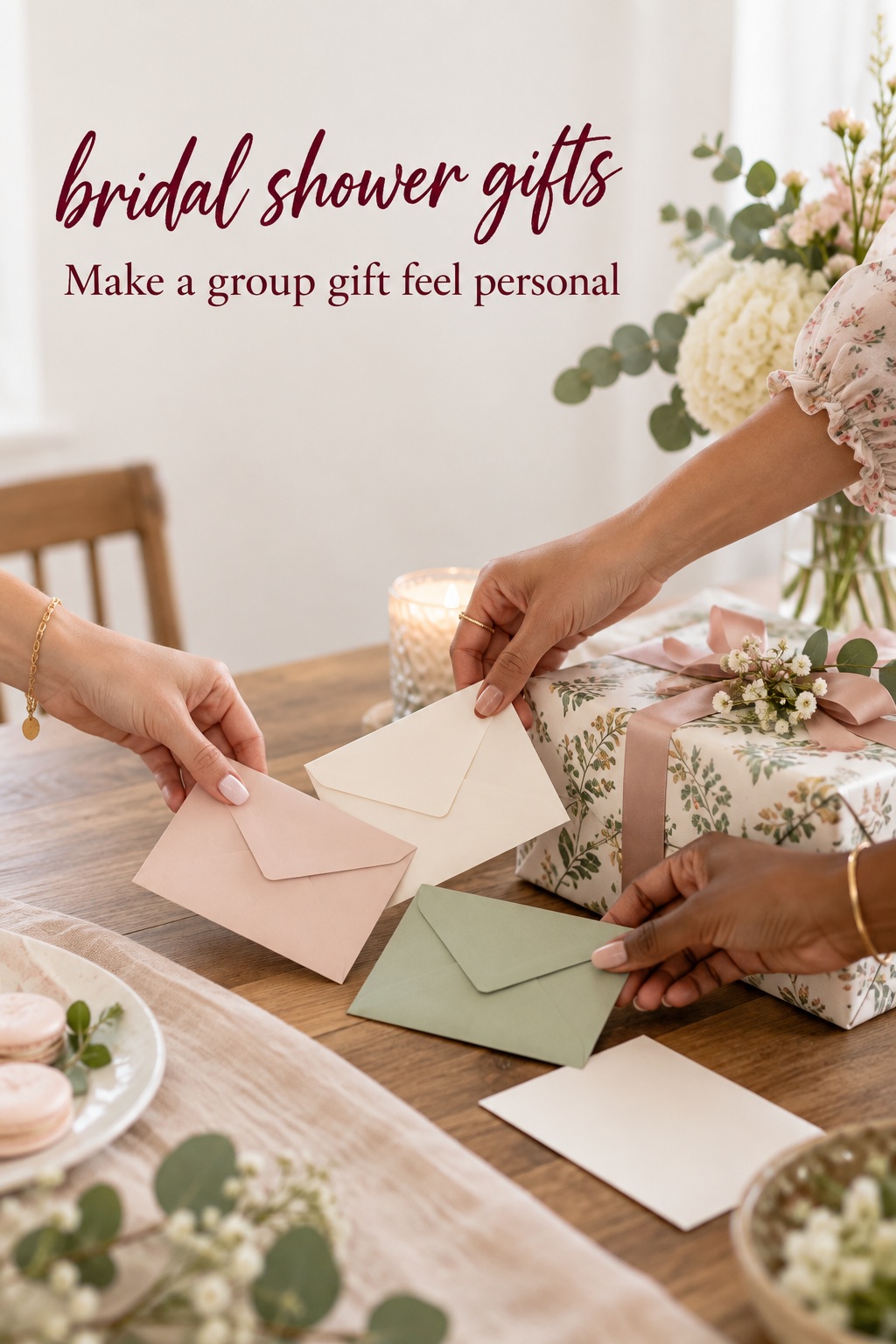
Group gifting can let several friends contribute to an item that no one person planned to buy alone. It works best when the couple has listed the item, each participant knows the contribution amount, and one person takes responsibility for ordering and including everyone’s names. Agree on a deadline and a backup plan in case someone changes their mind. No one should be drafted into a group purchase because the others have already decided. If the registry has a built-in group option, use its directions and confirm when the gift is fully funded.
For friends who prefer individual gifts, the same shared goal can be met through separate smaller items. Do not buy duplicates as a surprise if the registry tracks purchases. If a group gift is being presented at the shower, make sure the card lists all contributors so the couple knows whom to thank. That small coordination step prevents a lovely shared present from becoming an awkward guessing game.
If you are invited to more than one shower
Multiple invitations can create the feeling that you owe a separate present at every event. Emily Post’s shower guidance says that a guest invited to more than one shower needs to bring a gift to the first one only. If you attend a second gathering and want to bring something, a small token is optional, not another major purchase. The guest lists and family customs may vary, so use the host’s guidance if the couple has set a specific no-gifts or contribution plan for a later event. A second invitation should not require you to double your budget.
If the first shower is a themed event and the second is a couple’s shower, choose one gift that aligns with the clearest request or ask the host how the couple is handling gifts. You can also make a single registry purchase and explain that it is your shower present, even if you will attend more than one gathering. The point is to make your choice understandable, not to turn every invitation into a separate accounting exercise.
If you cannot attend
Respond to the invitation promptly and send warm wishes. If you are close to the couple and would like to give a present, a registry item shipped to their home is convenient. If you are not close or cannot comfortably add another gift expense, a thoughtful card may be enough for your relationship and circumstances. There is no need to send a last-minute object simply to demonstrate that you noticed the event. A clear note is more considerate than an unsuitable parcel.

Make the gift easy to receive and remember
Choosing well is only part of gifting. Think about what happens after checkout: where the gift will arrive, whether the couple plans to open presents at the shower, and how your name will be associated with it. Registry shipping often sends a package to the couple’s address and saves guests from carrying a large box to a venue. If the event explicitly includes gift opening, a small wrapped item or a printed note about a shipped present can help the couple include it in the moment without managing an oversized package.
Match delivery to the event plan
Do not assume gifts must be opened in front of everyone. Ask the host if the schedule is unclear, especially when the event is at a restaurant, rented space, or a home with limited room. If gifts will be opened, label the package clearly and include a card inside or attached securely. If the couple prefers no opening, shipping directly is simple. For a bulky or fragile registry item, delivery is usually easier than asking a host to store it, transport it, or find a place for it during the party.
If you bring a present in person, make it manageable. Use wrapping that can be opened without a complicated set of ribbons or layers, and avoid packaging that sheds glitter or requires extra cleanup. Include the card where it will not be separated from the gift. If you contribute through a fund, a card with a short explanation can stand in for a physical package during a gift-opening moment, if the couple wants one.
Keep personal touches low risk
A personal note is usually safer than personalizing the object itself. A name change may not be planned, a monogram can be wrong, and a custom item may arrive after the event. If the couple has put a customized item on the registry, use the exact spelling and options they supplied. Otherwise, think twice before adding names, dates, photos, or inside jokes. A handwritten message can make a practical registry choice feel specific without creating a keepsake the couple has to display.
Consider the context of the shower before choosing humor, alcohol, intimate items, food, or anything that needs special storage. A lively group of close friends may welcome a playful present, while a family gathering or workplace event may call for something more neutral. If you are unsure, follow the registry, ask the host, or choose a note that conveys your personality. The couple should be able to enjoy the present without explaining it to every guest in the room.
Make thank-you details simple
Write your name in the card and, if useful, identify the gift in one line. This matters when the present is shipped, when several people contributed, or when a package arrives before the shower. If you are part of a group gift, list the contributors legibly. You do not need to ask the couple to open the gift immediately or to send a message as soon as they receive it. Let them enjoy the event and handle thank-yous in their own time.
Above all, do not make the host responsible for a complicated handoff. Confirm delivery details yourself, tell the host only what they need to know, and avoid last-minute requests to hide, refrigerate, or transport an item unless they have agreed. Good gifting respects the couple and the people helping them celebrate.
Sources and methodology
This guide draws on current U.S. wedding and shower gift guidance, including Emily Post’s shower etiquette advice on registry choice and repeated invitations, and Zola’s bridal shower gift guide for the questions guests commonly raise about budgets, group purchases, cash, and delivery. The recommendations above are decision prompts, not fixed spending rules. Because couples and hosts set different expectations, the invitation and the couple’s own registry take priority.
FAQ
What are good bridal shower gifts if the couple has a registry?
Choose an available item within your comfortable budget, or ask other guests whether they want to contribute to a listed group gift. The registry gives you direct information about what the couple wants. You can include a personal note without replacing the requested gift with an uncertain surprise.
How much should I spend on bridal shower gifts?
Spend an amount that fits your finances and overall celebration budget. There is no single price that applies to every guest. Consider travel and other wedding events, then choose a gift you can give freely without borrowing or comparing your purchase with another person’s.
Is cash an appropriate bridal shower gift?
Cash or a fund contribution can be appropriate when the couple has asked for it or listed a fund. Follow the payment method and purpose they shared. If no preference is stated and you are unsure, check the registry or ask the host before deciding that cash is wanted.
Do I need to bring a gift to every shower I attend?
No. Emily Post’s guidance says a guest invited to multiple showers needs to give a gift at the first one only. You may bring a small token to another gathering if you wish, but do not feel you must make a second major purchase unless the hosts have explained a specific plan.
What if there is no bridal shower registry?
Check the couple’s wedding website or ask the host whether a registry or theme exists. If there is no further guidance, choose something modest that you know fits the couple, give a suitable gift card, or send a warm card if a present is not feasible. Do not assume that no registry means the couple is requesting cash.
Should I buy a gift if I cannot attend the shower?
Reply to the invitation and send your congratulations. If you are close to the couple and want to give a present, arrange delivery from the registry. A card is also a considerate response when the relationship is more distant or your budget does not allow another gift.
Should I take the gift to the shower or ship it?
Use the event plan as your guide. Shipping is convenient for bulky, fragile, or registry gifts, while a small wrapped present can work when the couple plans to open gifts at the gathering. Include your name either way and check with the host if the venue has limited space.