Bridal Shower Games: A Guide to Choosing the Right Mix
The best bridal shower games are the ones your guests can understand quickly and enjoy without feeling put on the spot. Before you print a stack of cards or buy supplies, decide how you want people to take part: quietly at their seats, through conversation, as a team, or by adding something to a keepsake. Then choose a small mix that fits the room and the guest of honor. This guide compares the formats, explains when each one works, and gives you a simple way to host them.
You do not need to fill every pause with a game. A shower can include a relaxed activity, a short group round, or no formal games at all if that suits the bride. The goal is to create a few easy openings for guests to connect, while leaving room for food, conversation, and the moments the host has already planned.
1. Start with the kind of participation your guests will enjoy
Choosing a game starts with the people in the room, not the game title. A lively team challenge can be a poor fit for a brunch where guests want to talk, while a quiet worksheet may feel flat at a small gathering of close friends who already know one another. Think about what guests will be comfortable doing, how much space you have, and whether the bride enjoys being the center of attention.
Consider how well the guests know one another
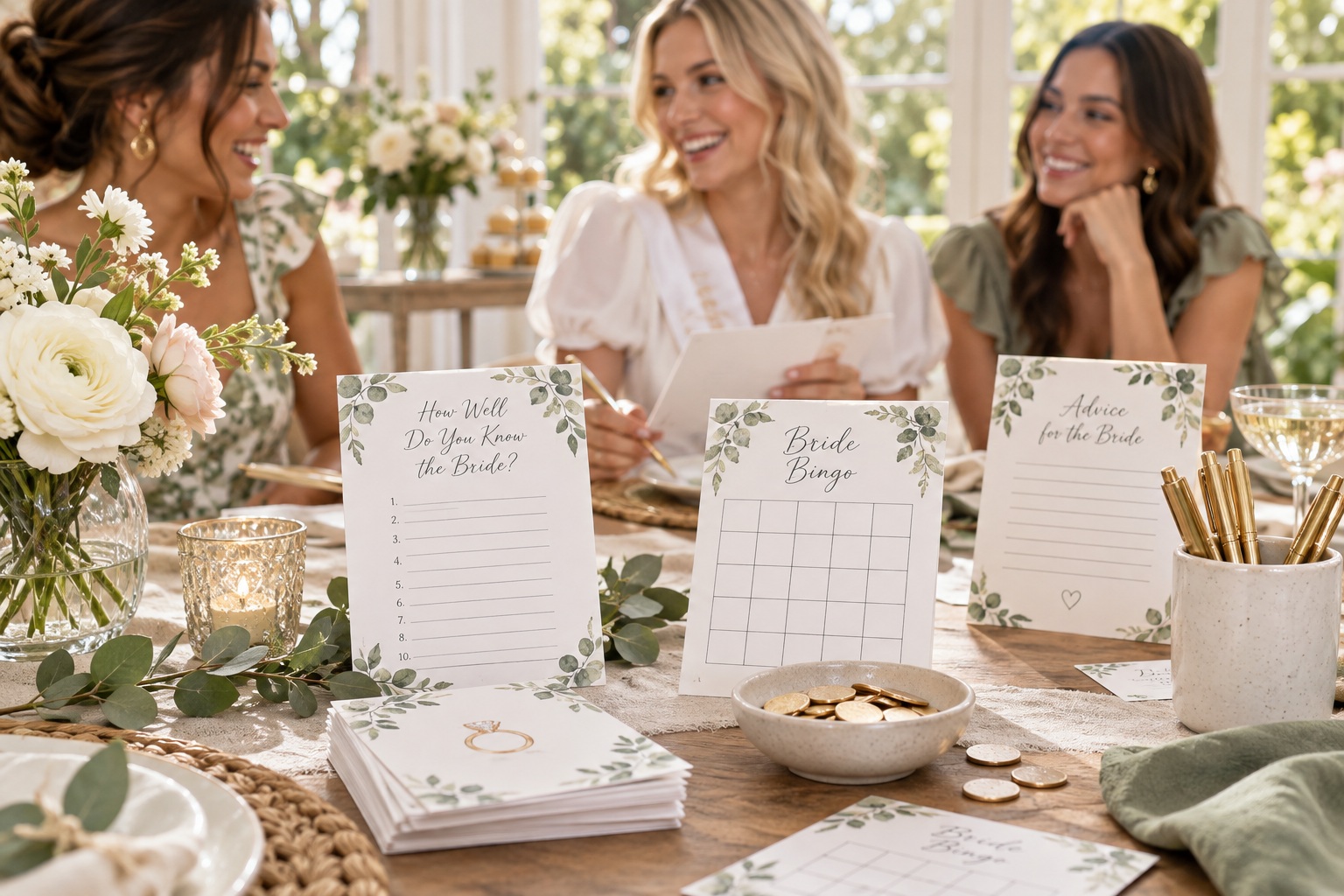
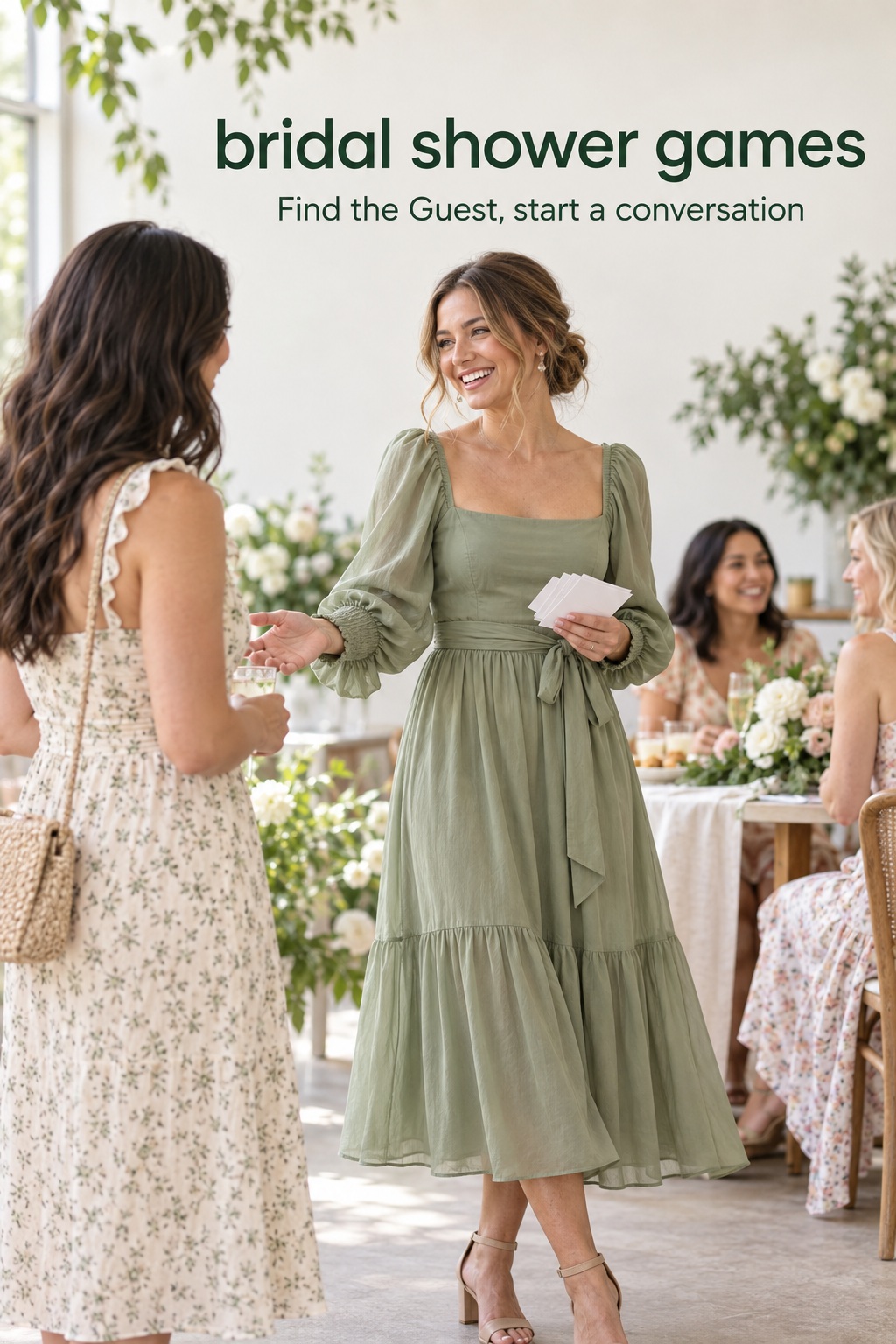
If guests are arriving from different parts of the bride’s life, choose a game that gives them a natural reason to speak. Find the Guest Bingo is a simple option: put prompts such as “has known the bride since school” or “has traveled with the couple” on a card, then invite guests to find someone who matches each square. Keep prompts easy to answer and avoid asking anyone to reveal private details. Another low-pressure option is a table card with a friendly question about a favorite meal, trip, or shared memory. Guests can answer when conversation reaches them.
Your wedding look is only the beginning.
Keep your guest list, vendors, timeline, and every important detail together with Zarellea — so your day feels as considered as your style.
When nearly everyone knows one another, use shared knowledge for a stronger game. Couple trivia works well when the host can gather accurate answers in advance. Ask the couple a short set of questions, print the answer key, and let guests guess. If only a few people know the couple well, play in small teams so the game does not reward one friend group at everyone else’s expense.
Check comfort, mobility, and room layout
Some guests love acting, drawing, or racing to find an item. Others would rather stay seated. Choose movement games only when the room has a safe, clear route and participation does not depend on standing, bending, or moving quickly. You can make a scavenger hunt a seated observation game by asking teams to spot details in a room or on a photo board. For a make-a-dress challenge, let guests design on paper or build a small model at the table instead of dressing a person.
Also ask whether the bride wants to perform, answer personal questions, or be judged by the room. A shoe game or couple quiz puts the couple in front of everyone. If that sounds uncomfortable, have guests play a private guessing round about favorite foods, travel preferences, or wedding details, then let the couple reveal answers from their seats. Make passing an option. A host can say, “Join in if you’d like, or just enjoy watching,” before any activity that asks people to speak or move.
Decide what the game should add
Choose one purpose for each game. An icebreaker helps guests begin talking. A trivia round gives people a shared topic. A gift-opening game fills a naturally slower stretch. A keepsake activity collects notes the bride can read later. A creative challenge can double as a favor or part of the shower’s entertainment. If a game does not support one of those purposes, it may be extra work without improving the gathering.
It is also fine to choose a noncompetitive activity. Advice cards, a recipe exchange, or a small flower-arranging station can create participation without scores or prizes. Martha Stewart’s roundup treats these hosted activities alongside conventional games, including floral arranging and painting, which is a useful reminder that “entertainment” does not have to mean a contest (Martha Stewart’s bridal shower games and activities).
2. Compare bridal shower games by format, setup, and group fit
Once you know the mood you want, compare games by what guests will actually do. The table below focuses on participation and setup, so you can choose a format before settling on a theme or printable. These are practical planning estimates. Adjust them to the size of your group and the pace of the event.
- Seated paper game: Best for a calm activity or compact room. Prepare cards, pens, and an answer key. Keep sheets short so they do not replace conversation.
- Conversation game: Useful when guests need an easy way to mingle. Use prompt cards or simple bingo squares, and avoid questions that invite private stories.
- Team challenge: Fits a group that enjoys playful competition. Gather supplies, set clear teams, and use a timer. Make roles accessible and rules brief.
- Gift-opening game: Works when opening gifts is already part of the plan. Use blank bingo cards or a prediction sheet, and check that the bride wants gifts opened at the shower.
- Keepsake activity: Suits a bride who values notes, recipes, or memories. Set out cards and a collection box, then give her the finished materials after the event. Guests should not have to read private messages aloud.
Seated paper games: simple, contained, and easy to explain
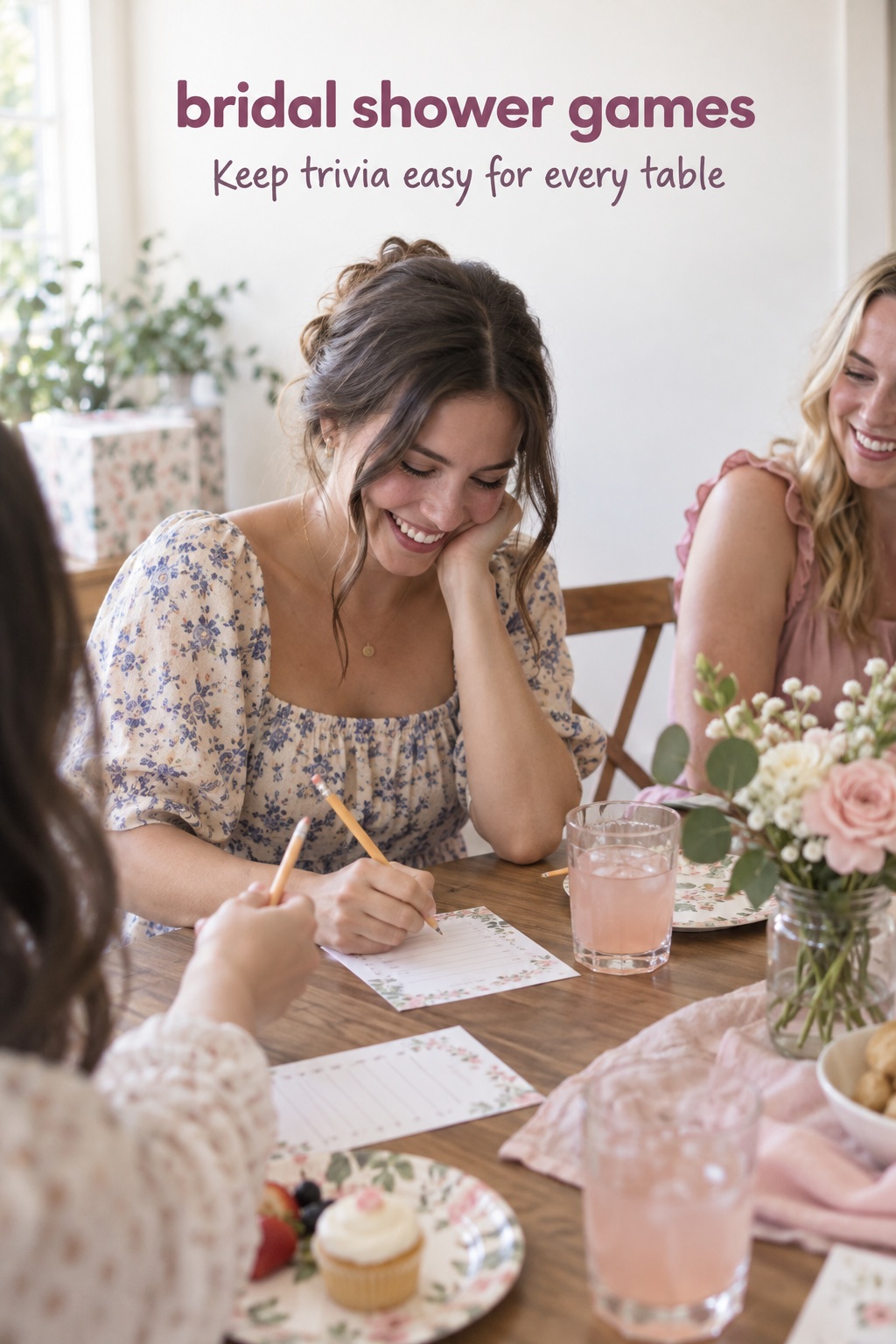
Word scrambles, emoji pictionary, Would She Rather, and couple trivia are familiar choices because guests can play at a table with a pencil. They suit a small dining room, a restaurant, or a shower with a set meal. Put the instructions at the top of the sheet, use a readable font, and set a clear stop time. A five-minute round is often enough for a short puzzle; a personalized quiz may need a few extra minutes for the answer reveal and stories.
Paper games can also give quieter guests a way to participate without speaking to the whole room. Keep the sheet short, and avoid obscure facts that only one or two friends would know. For a mixed-age group, use questions with several ways into the answer, such as a shared trip, a familiar food, or a broad preference. The aim is to make the reveal enjoyable, not to prove who has the longest history with the bride.
Conversation games: useful when guests need introductions
Find the Guest, a memory match, or a table prompt can give people a reason to start talking. For Find the Guest, write statements that are easy to verify without putting anyone on the spot: “has attended a concert this year,” “knows the couple’s pet,” or “is visiting from another state.” Ask guests to find a different person for each prompt, and make it clear that a blank square is acceptable if no one fits.
A memory game can be warm when guests share stories with the bride, but it needs gentle boundaries. Ask guests to write a short, kind memory on a card. The bride can read them later, or the host can read a few with permission and invite the room to guess the author. Skip this format if the guest list includes people who do not know the bride well, or if guessing could expose something personal.
Team and movement games: higher energy with more logistics
Charades, a bouquet pass, a drawing challenge, or a timed craft can bring a group together when guests want visible, playful action. These formats need more room and a host who can explain the rules, keep time, and help teams reset. Choose an activity that works with the venue’s furniture and avoids spills near food. If you want a craft, use a small kit at each table and let people make something at their own pace rather than turning every project into a race.
Make team sizes small enough for each guest to contribute. A large team can leave people watching while two confident guests take over. Offer roles such as clue reader, artist, timekeeper, or materials helper, and let guests choose a role that suits them. If a game uses music, test the speaker and volume before guests arrive. A playlist can be ready without being loud enough to interrupt conversation.
Gift-opening games and keepsake activities: fit them to the bride
Gift bingo asks guests to fill a grid with gifts they think the bride may receive, then mark matches during opening. It gives guests a light task, but only makes sense if gift opening is already part of the plan. Ask the bride before organizing it. If she prefers to open gifts privately, use a different game and keep the shower’s schedule centered on the celebration she wants.
Advice cards and recipe cards are not games in the strict sense, but they work well as low-pressure participation. Place them near the entrance or on tables with a box for finished cards. Add a simple prompt such as “A meal we hope you make together” or “A small ritual worth keeping.” Guests can contribute at their own pace. This format is especially useful when some people will arrive late or leave early.
3. Match the game to your guest list and event moment
There is no single best game for every shower. Use the guest list and the event’s natural pauses to make a short plan. The examples below show how the same host can choose different formats without changing the celebration into a full schedule of activities.
For a small group of close friends
Choose one shared story game and one easy seated round. Guests who know the bride well can play “Who said it?” with short quotes or preferences collected from the couple, then follow with a two-truths-and-a-wedding-lie round. Keep the questions kind and specific enough to spark a story. You can skip scoring altogether and let the bride pick a favorite answer if a competitive finish feels forced.
For an intimate group, avoid a long quiz that tests details some friends may not know. Mix questions about the couple with broad, answerable prompts, and let teams discuss before responding. The conversation is often the point. If the bride is not comfortable speaking about the relationship in front of everyone, have her complete a private answer sheet in advance and let the host read only the answers she approves.
For mixed ages or guests meeting for the first time
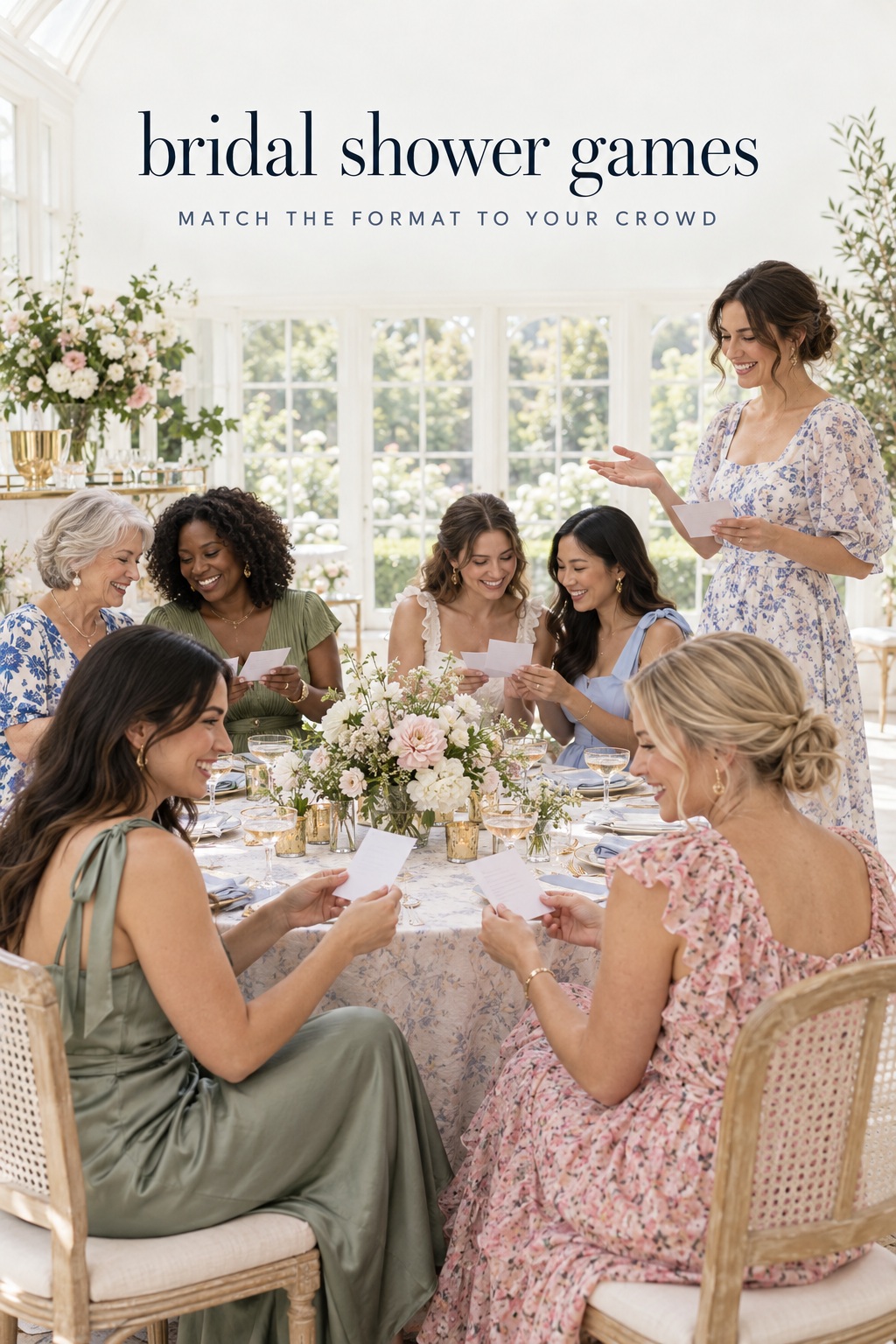
Favor rules that can be explained in one sentence and do not depend on a niche reference. Bridal bingo, a short word puzzle, or Find the Guest can work across different levels of familiarity. Use larger print for table cards and read any prompts aloud. If guests are not comfortable moving around, let them answer from their seat or pair with another guest. Avoid questions that assume everyone uses the same apps, follows the same celebrities, or shares the same family structure.
For a co-ed shower, choose games that involve the couple or the whole group rather than assigning activities by gender. A couple quiz, collaborative drawing prompt, or prediction card can include friends and relatives equally. Before selecting a funny question, imagine how it will land with grandparents, coworkers, children, and new in-laws in the same room. Keep the humor affectionate and easy to opt out of.
For a large group or a venue with limited room
Use formats that scale without asking every guest to take a long individual turn. Table teams can answer trivia together, guests can fill out a bingo card while they mingle, or a host can run one short all-room round. For more than one team, prepare duplicate materials and decide how answers will be collected before the game begins. A single microphone or visible answer board can help in a large space, while a compact restaurant room may call for a seated format.
Large groups need clear movement rules. If a game involves searching the venue, set boundaries and keep private rooms off limits. If you use a pass-the-item game, check that everyone can reach it or offer a table version. Do not make speed the only way to win. A points-based version or team turn gives guests with different mobility and reaction times a more comfortable way to participate.
For brunch, gift opening, or a relaxed afternoon
At brunch, set a quiet activity at the table for guests who finish eating at different times. A short “Would She Rather” card or a question about the couple lets the group participate in small conversations instead of stopping the meal. If gifts will be opened, decide whether one gift-related game is enough. You can hand out blank bingo cards as guests arrive and explain that playing is optional.
For an informal afternoon with no gift opening, try one group game after people have settled in and one keepsake activity that stays available throughout the event. If the shower includes a craft, food station, or photo moment, that may already be the main activity. A planning FAQ from SignUp.com suggests two to four activities for many showers and placing them around natural breaks, which is a helpful starting point to adjust for your schedule (SignUp.com’s shower activity guidance).
4. Build a short run of show and make hosting feel easy
A host does not need a script for every minute. A short run of show helps you avoid explaining a game while guests are eating or searching for supplies. Choose two or three activities at most as a starting point, then leave space for arrival, food, conversation, photos, and any planned gift opening. The right number depends on the length and feel of the gathering.
Use a simple sequence
- As guests arrive: Put an optional, self-guided prompt or bingo card at each place. Let people join as they settle in.
- After everyone has had time to mingle: Run one short icebreaker or team round. Explain the goal, show an example, and confirm how long it will take.
- During a natural pause: Add a gift-opening game only if the bride wants to open gifts at the shower. Otherwise, use the time for food or conversation.
- Before guests leave: Collect advice or recipe cards, announce any winner, and give the bride the keepsake materials.
For a shorter event, remove a round instead of speeding through everything. If the schedule is running late, keep the activity that best fits the bride and let the optional game remain optional. A shower still feels complete when guests have time to talk.
Prepare the materials and the answer key
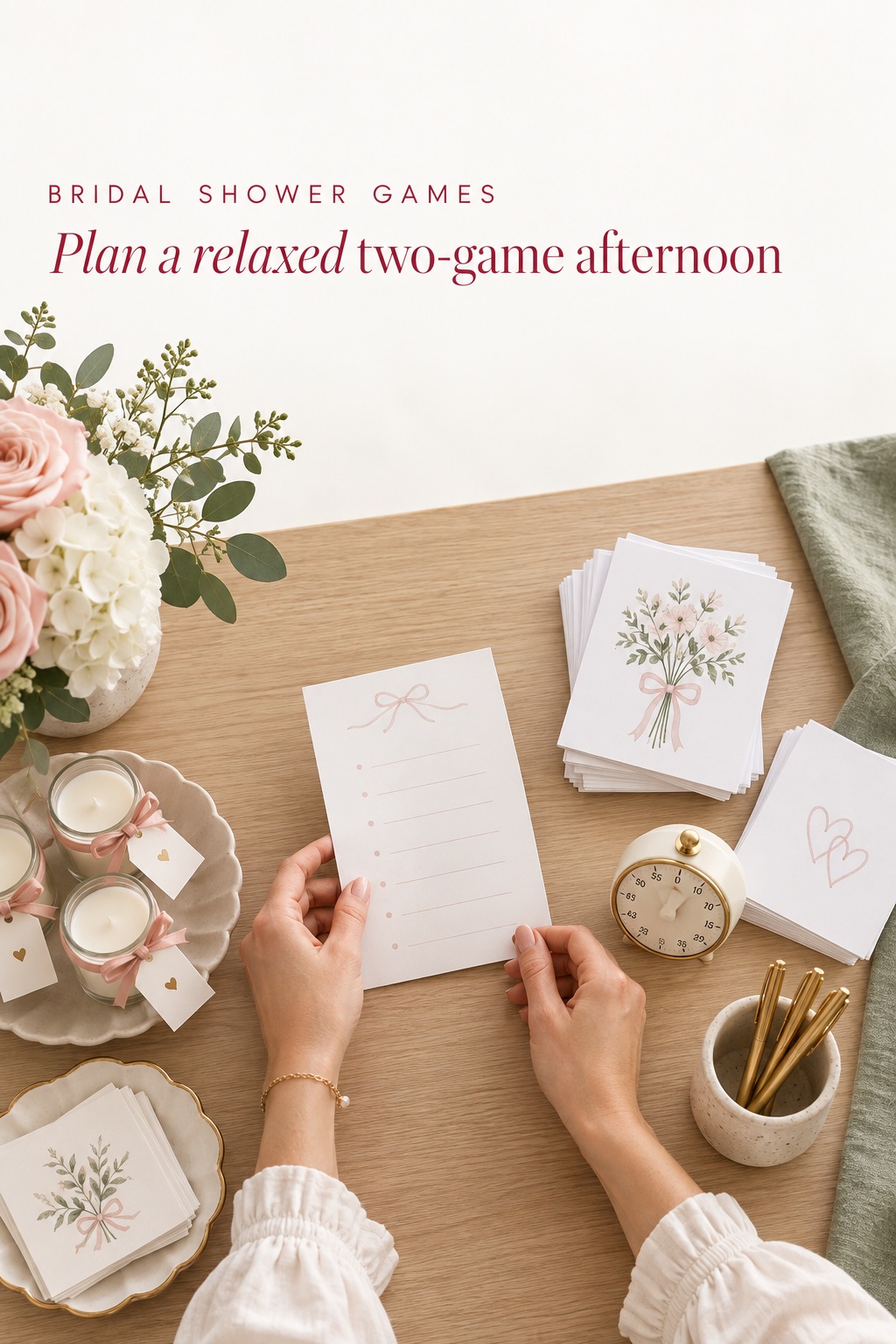
Gather all supplies in one labeled envelope, tray, or tote. Print a few extra cards, bring working pens, and keep the answer key with the host. If a game depends on the couple’s answers, confirm those responses before the event and check that the bride is comfortable sharing them. For a team challenge, prepare a visible timer and a clear place to leave completed answers. Test any audio or phone-based game on the venue’s Wi-Fi or cellular connection before guests arrive.
Make instructions brief. Tell guests what to do, how long they have, and whether there is a winner. Demonstrate one sample question rather than reading a paragraph of rules. If people look unsure, repeat the first step and start a practice round. A host can say, “You can play alone or with the person next to you; we’ll compare answers in five minutes.” That gives guests a clear choice and a finish line.
Keep prizes small and participation welcoming
Prizes are optional. If you use them, choose a small treat that is easy to carry, such as tea, a candle, or a favorite snack. Offer the same prize to a winning team or draw a name among participants if one person taking home an item feels awkward. Do not let prize value become the reason a game dominates the schedule.
Tell guests they may watch, pass, or join later. Avoid games built around embarrassing stories, body measurements, or assumptions about marriage and gender. If a prompt feels too personal when you read it aloud, replace it. A useful game gives people a shared moment without asking them to ignore their own comfort.
Choose a backup that does not need a reset
Have one low-prep option ready in case the planned game takes too long or the room is not in the mood. A short question card, a jar-guessing activity, or an optional advice prompt can stay on a side table. You can quietly skip it if guests are already enjoying themselves. The best hosting plan is flexible enough to follow the group rather than forcing every prepared activity into the afternoon.
FAQ
How many bridal shower games should you plan?
Start with two or three short activities for a typical gathering, then adjust for the length of the shower and the bride’s preferences. Arrival prompts can remain optional, so they do not need a formal slot. Leave room for conversation, food, and the event’s other plans.
What are good bridal shower games for guests who do not know each other?
Find the Guest Bingo, table prompts, and simple team trivia can give guests an easy reason to talk. Use questions that are quick to answer and do not ask for private information. Pairing guests is another option if some people are more comfortable participating with a partner.
Can a bridal shower be fun without games?
Yes. Conversation, a meal, a craft, a flower station, or a shared keepsake activity can be enough. Ask the bride what she wants the gathering to feel like, then plan around that preference rather than adding games out of obligation.
What bridal shower games work for a large group?
Choose a format many people can play at once, such as table-team trivia, bingo, a short word puzzle, or a host-led question round. Keep instructions visible, prepare enough materials, and avoid a long sequence of individual turns that leaves most guests waiting.
Do you need prizes for bridal shower games?
No. A prize can add a playful finish, but the game works without one. If you offer a prize, keep it modest and easy to take home. You can also give a winning team bragging rights or let the bride choose a favorite answer.
What are easy no-print bridal shower games?
Try a spoken round of couple trivia, two truths and a wedding lie, or a collaborative story game using a phone note or a few blank cards. Explain the rules aloud and keep turns brief. If guests prefer not to speak in front of the room, offer a written version or let them pass.
How do you make bridal shower games inclusive?
Use clear rules, readable materials, flexible roles, and an easy way to opt out. Avoid relying on stereotypes or assumptions about age, gender, relationships, or mobility. Offer seated participation and choose prompts guests can answer without disclosing personal details.