Western Wedding Ideas That Feel Personal and Polished
A western wedding can feel warm, elegant, and unmistakably yours without turning every surface into a cowboy prop. Start with the setting and the details that carry meaning for you, then repeat a small number of western cues across the day. A pair of boots, a weathered wood sign, a wildflower arrangement, or a favorite song can say more than a room full of hats and wagon wheels.
The most useful western wedding ideas do two jobs: they establish the look and help the event work for real guests. A sign should guide people. A boot choice should suit the ground. A table detail should leave room for dinner. Use the guide below to decide what belongs, where it belongs, and how to keep the whole celebration personal rather than costume-like.
Why western wedding ideas work when they feel like you
Western style has a broad visual vocabulary. It can draw on ranch life, regional landscapes, music, family history, or a relaxed way of hosting. That range is useful because no couple has to reproduce one fixed look. A city couple can add a quiet leather detail to a modern venue, while a family with ranch roots can make the land, animals, and shared traditions part of the day.
Begin by asking why the style appeals to you. Maybe you grew up riding, you love the open landscape, you want to wear boots, or you want a celebration that feels unbuttoned and social. Your answer helps you sort meaningful choices from decorations that only look western in a catalog. A wedding can acknowledge a place, a memory, or a shared interest without making every detail literal.
Your wedding look is only the beginning.
Keep your guest list, vendors, timeline, and every important detail together with Zarellea — so your day feels as considered as your style.
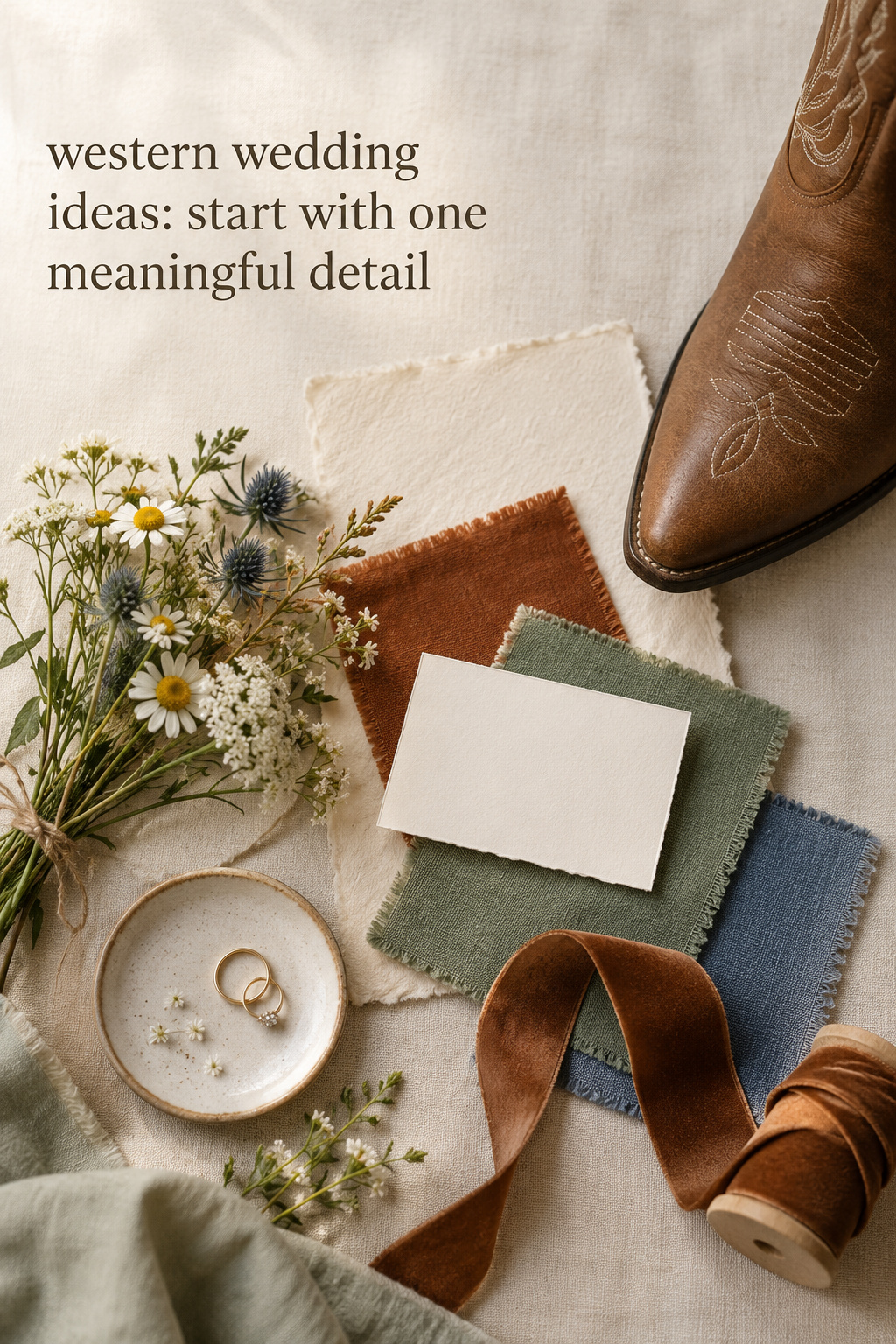
Think of the look as a small visual language. Materials such as worn wood, leather, denim, cotton, metal, and natural greenery can provide texture. A restrained color direction might pair ivory or cream with a warm brown, rust, sage, or denim blue. You do not need all of them. A venue with timber walls may already supply the wood, while a garden can supply greenery. Add only the pieces that help the setting read clearly.
That restraint also gives your personal details room to matter. A family quilt over a chair, a bandana in a bouquet wrap, or a song that brings your friends to the floor can feel more specific than a generic western sign. Let one or two details tell the story, then allow the rest of the day to support them.
Choose the western details that matter to you
Before ordering decor, agree on a short description of the celebration. You might choose refined ranch, desert dinner, modern country, dance hall, or intimate backyard western. These are working descriptions, not rules. Each one points toward a different balance of textures, formality, and activity. Write down what the phrase means to both of you, then use that note when making decisions with family, vendors, or a wedding party.
Next, choose a few recurring cues. A practical set might include one material, one motif, and one accent color. For example, leather could appear on a menu tie, a bouquet wrap, and a seating card. A small horseshoe shape could show up once on stationery and once in a keepsake. A rust accent could connect flowers, napkins, and a ribbon. Repetition creates a visual connection, while changing the scale keeps the pieces from looking like a matching party kit.
Use a simple test for each idea: Does it say something about us? Does it suit the venue? Does it make a moment easier, warmer, or more memorable for a guest? If the only answer is that it looks western, pause before adding it. A western wedding can have no horseshoes at all. It can have a western reference in the music, a family object, a pair of boots, or the way dinner is served.
Keep a short decision list with three columns: the detail, its job, and who will handle it. “Canvas welcome sign, points guests toward the ceremony, planner installs it” is more useful than “rustic sign.” “Boots for the couple, personal style and comfortable dancing, confirm heel and sole with the ground” is more useful than “western outfits.” This list helps your choices stay connected to the day instead of turning into a collection of unrelated purchases.
Use the venue as your first design decision
Look at what guests will see when they arrive, where they will pause, and where the ceremony and meal will happen. A ranch may have a strong landscape and existing timber, so a few flowers and clear signs can be enough. A modern venue may need one or two tactile pieces, such as a wood ceremony structure or linen with a woven edge, to introduce the theme. A backyard may benefit from practical lighting and a well-marked path more than extra decorative objects.
Sketch the main guest route from arrival through the ceremony and into the reception. Note where a person could hesitate, where a line could form, and where the ground changes. This walk-through can reveal useful design jobs: a directional sign at a fork, a water station near an outdoor ceremony, a clear transition from cocktails to dinner, or a mat where a path is uneven. The event’s needs should guide the styling.
Build the ceremony and arrival around the venue
Arrival is the first chance to set the tone. A welcome sign can pair an easy-to-read message with a small western reference, such as a leather cord, pressed flower, or simple line drawing of the landscape. Place it where guests can see it before they need to choose a direction. If ceremony and reception spaces are separate, use a matching sign or marker to show the route. The design can be beautiful, but its first job is to be understood.
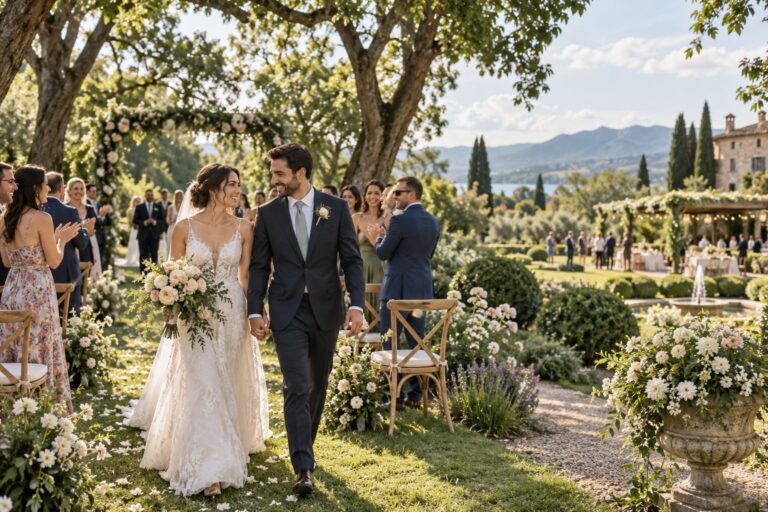
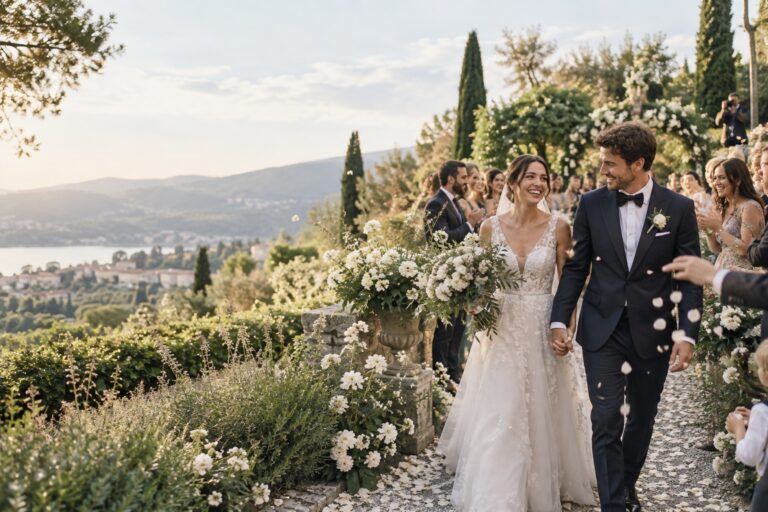
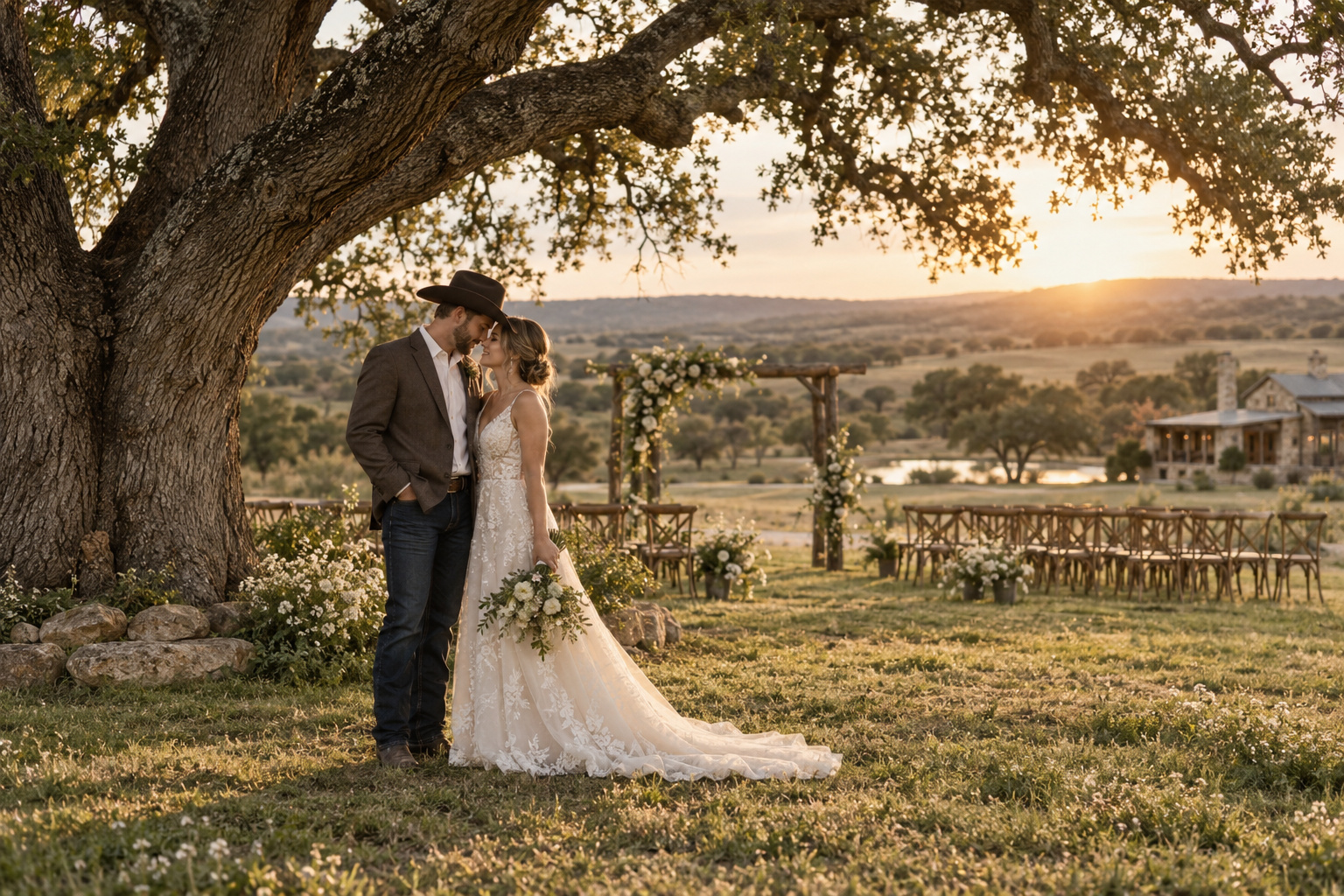
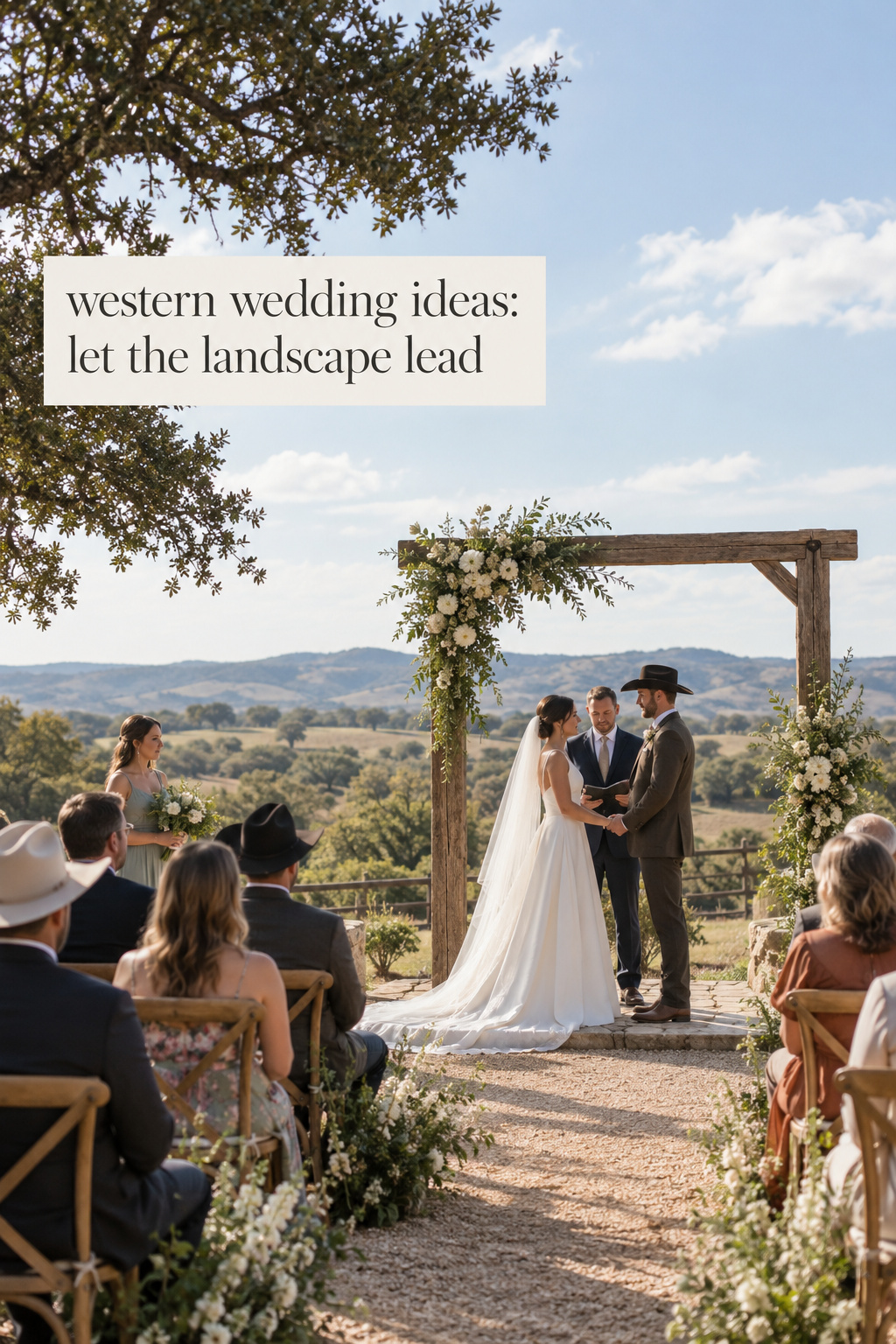
For the ceremony, choose one focal point and let the landscape do some of the work. A timber arch, a simple fabric drape, or arrangements of local-looking greenery can frame the couple without hiding the view. At a barn, a pair of arrangements at the entrance may be enough. In an open field, a defined aisle and a sturdy ceremony structure can help the space feel intentional. Keep flowers and fabric secure, and ask the venue or florist what will hold up in the actual setting.
Use the aisle and seating to create a calm approach. Small floral clusters tied to the first few chairs can establish a rhythm without decorating every row. A patterned runner, a strip of vintage textile, or a few grounded lanterns can bring texture where it will be noticed. If you use a rug, test that it lies flat and will not catch a heel. If you want hay bales for seating or photos, cover them with a stable, comfortable layer and keep a conventional seating option available.
For an outdoor celebration, plan the practical details alongside the ceremony look. Think about shade, water, a sheltered alternative, lighting for the return path, and a place for guests to set down a bag or wrap. At a working ranch, the venue may need additional rentals or staffing, so ask early about restrooms, power, parking, accessibility, and weather plans. The Knot’s ranch wedding guide also recommends planning for weather and the venue’s infrastructure when you choose a ranch setting. Translate those checks into a short list for your own site rather than assuming every property offers the same services.
The ceremony can carry a personal western detail without making the entire setup themed. You might attach a family ribbon to the bouquet, display a meaningful saddle or quilt, or choose an aisle song that connects to home. Give each object a clear place and purpose. If a detail is important to a family member, agree who will bring it, position it, and take it home after the event so it does not become an unclaimed prop.
Make wayfinding part of the styling
Guests may be unfamiliar with a ranch, field, or multi-building venue. Use legible signs at decision points instead of placing one decorative sign where it looks good in a photograph. A small western motif can appear on the sign, but keep the type large enough to read from a few steps away. If guests will walk on grass, gravel, or a dark path after sunset, coordinate lighting and route markers with the venue team. These details are hospitality, and they can still match the visual plan.
Make the reception feel western through texture and activity
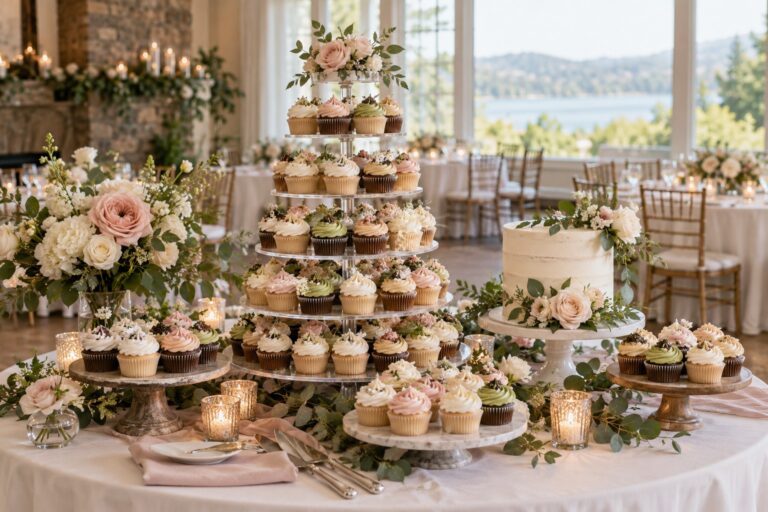
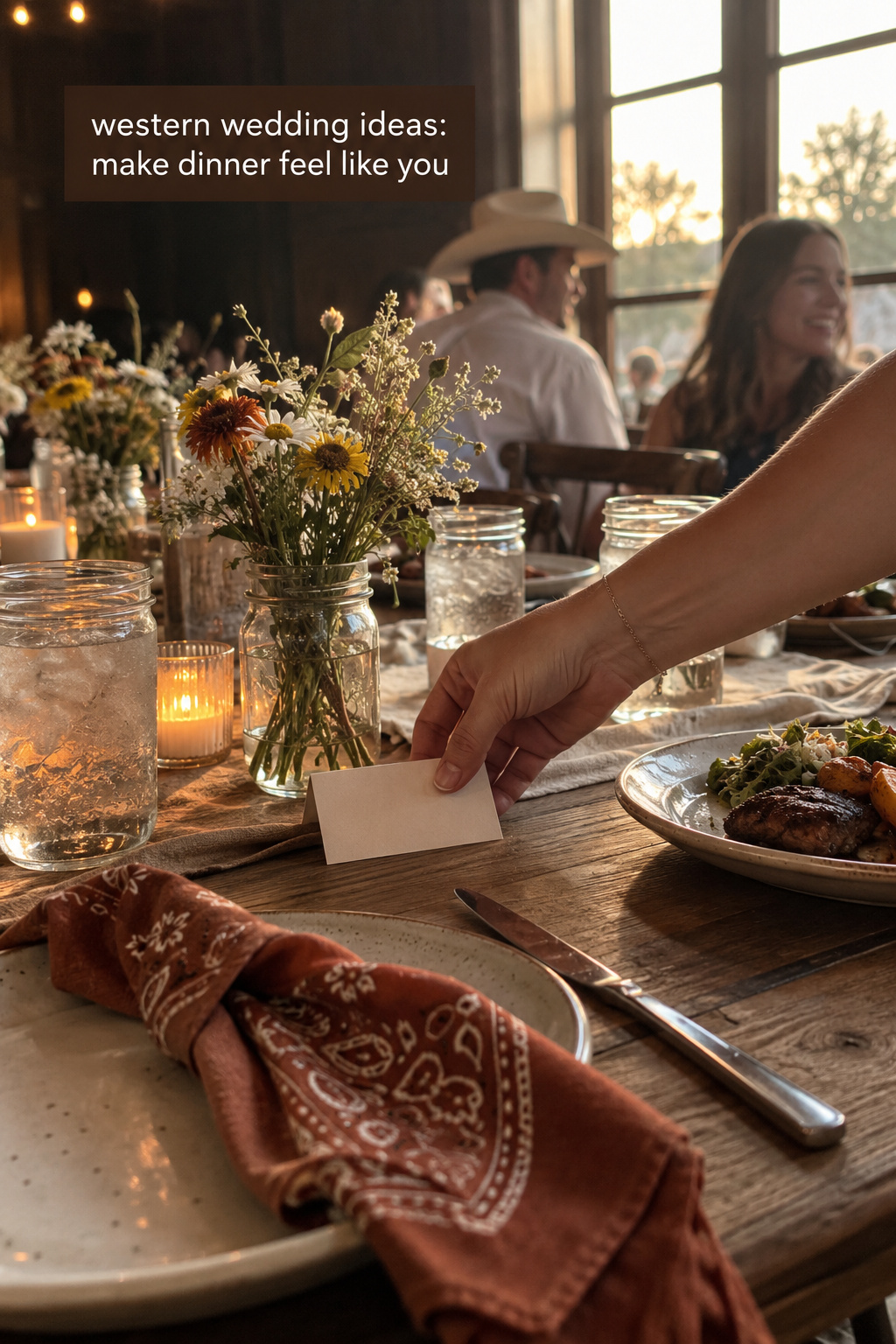
At the reception, use tables to bring the chosen materials closer to guests. A linen runner, a leather menu tie, a small wildflower arrangement, or a metal candle holder can add texture without filling the table. If the venue already has strong wood grain, choose softer fabrics and flowers instead of adding more wood. If tables are simple, one patterned textile or a few vintage vessels can supply character. Leave room for plates, glasses, and conversation.
Mix heights and shapes carefully. A low arrangement helps guests talk across the table, while a taller feature may work at the bar or welcome table. Bandanas can become napkins, bouquet accents, or favor wraps, but using the same print everywhere can make the room feel busy. Select one or two places where a pattern will be seen, then repeat its color or texture more quietly elsewhere.
Let food and drink reflect the way you want to host. A family-style meal, a relaxed buffet, a dessert table with pies, or a polished plated dinner can all fit a western setting. The menu does not need to imitate a stereotypical ranch meal. If a favorite local dish, family recipe, or late-night snack matters to you, give it a simple sign or short note so guests understand why it is there. Offer appealing nonalcoholic drinks with the same care as the bar menu.
Music can carry a western mood with little decor. A live country band, folk musicians, or a playlist that moves from acoustic songs into dance music can shape the evening. If you want line dancing, ask whether a short lesson would help guests join in. A dance-floor cue card or a friend who invites people onto the floor can make an unfamiliar activity easier to try. If your guests prefer conversation, keep the music at a level where people can still hear one another at dinner.
Choose one optional activity rather than building an amusement park. A portrait station with a few hats, a short dance lesson, a fire-side s’mores table where permitted, or a guest book using a western object can create a memorable pause. Pick an activity that suits your crowd and venue. A mechanical bull, for example, needs space, supervision, and venue approval; if those conditions do not fit, a simple photo backdrop or live music may work better. The point is to give guests a way to participate, not to make every part of the evening a performance.
Think about the transition from dinner to dancing. Lower the lights where guests gather, clear the route to the dance floor, and place any activity where it will not block service. A western-style lounge can use rugs, stools, and a few cushions if they are safe for the venue and easy to move. If your reception is outdoors, make a plan for lighting and a sheltered option before adding delicate decor that depends on calm weather.
Make the guest experience comfortable
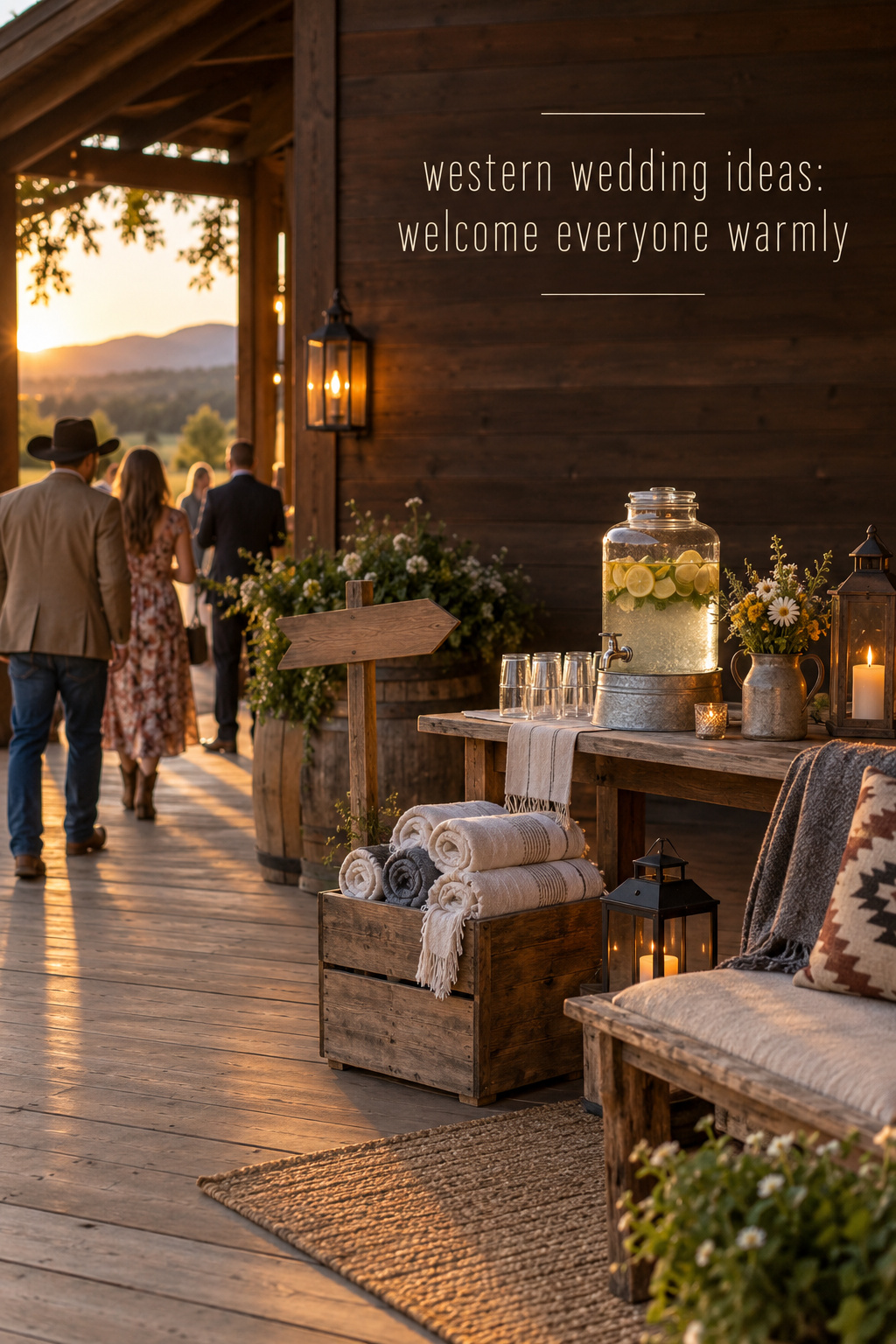
Comfort is one of the most overlooked western wedding ideas because the photographs often focus on the scenery. Consider the walk between spaces, temperature changes, shade, seating, and the length of time guests will stand. Place water where people can find it. If evenings may cool, a basket of wraps can be both useful and visually integrated. If the ground is soft or uneven, tell guests what shoes will work in a practical note rather than leaving them to guess from the theme alone.
Add western touches to attire and keepsakes
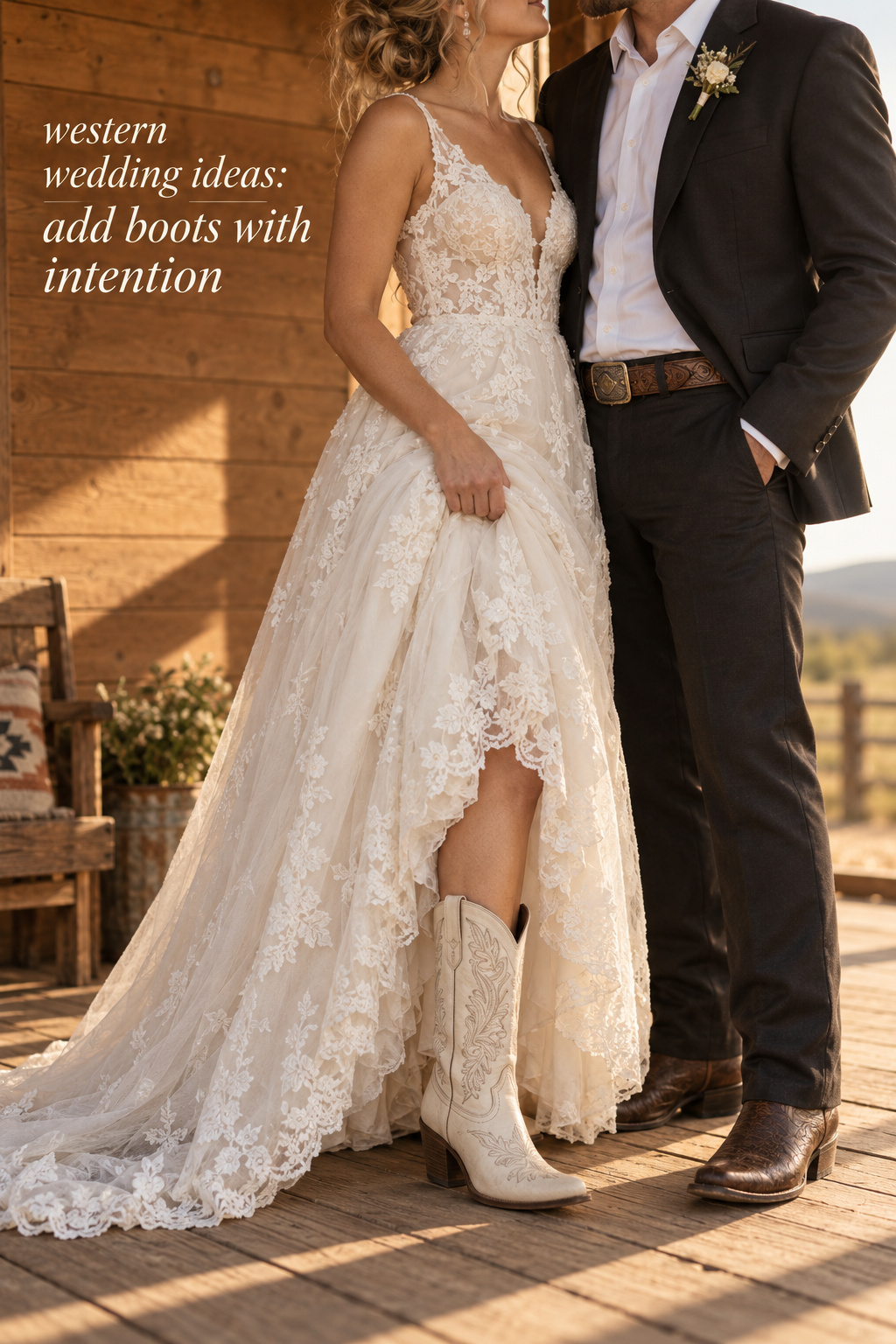
Attire can signal the theme while still feeling like the people wearing it. A couple might choose boots with a familiar silhouette, a bolo tie, a belt with a personal buckle, or a denim layer for a later part of the day. Each person can decide how visible that reference should be. A western detail can sit beside a classic suit or a simple dress; it does not have to dictate the full outfit.
If you are inviting guests to dress western, say what the phrase means for your event. “Boots and one western accent welcome; cocktail attire otherwise” is clearer than “cowboy chic.” Let guests know whether hats are encouraged, whether denim is appropriate, and whether the ceremony is formal. Give the wedding party options that suit the setting and the people in the clothes. Avoid asking anyone to buy an expensive item they may never use again.
For the couple, test shoes on a surface like the one you will walk across and wear them long enough to check movement. If the ceremony is on grass or gravel, consider a second pair for dancing or a heel protector. These are small preparations, but they can help you enjoy the event without needing to think about every step. Keep a backup pair and a place to store it with the person managing your day-of items.
Make keepsakes useful or personal. Guests might take home a small jar of honey from a family source, a printed recipe, a seed packet, or a bandana they would actually wear. A custom mark, date, or short note can connect the gift to the day without adding a long slogan. Put favors where people can collect them on their way out, and assign someone to take any extras home. If the couple would rather skip favors, a thank-you note at each place can still make the table feel thoughtful.
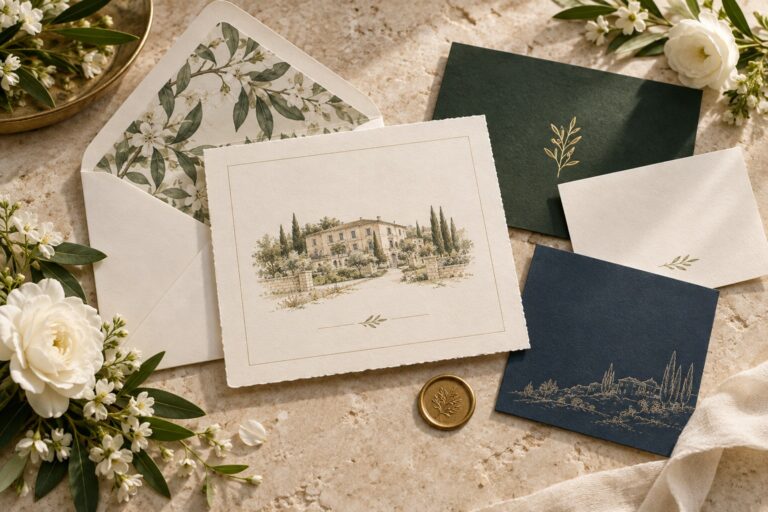
Stationery and paper goods can introduce the theme before guests arrive. Use a map or venue sketch if it helps people find the location. A warm paper tone, simple botanical illustration, or clean type treatment can suggest the setting without relying on a novelty font. Keep essential information easy to scan, especially the address, start time, dress guidance, and transportation details. The invitation is a useful place to establish expectations; the reception can then reveal the more personal parts of the look.
Mistakes to avoid with western wedding ideas
Adding every recognizable symbol. Boots, hats, horseshoes, rope, cowhide, wagon wheels, mason jars, and hay bales can all be appealing, but using them together may make the decor feel like a set. Choose a few strong references, then repeat them with restraint. A venue or a personal heirloom may already supply the most memorable detail.
Forcing a rustic look onto the venue. A ballroom, city courtyard, or modern greenhouse does not need to pretend to be a ranch. Translate the theme through a material, a song, an outfit detail, or a menu choice that belongs in the actual space. Let the room’s existing architecture remain visible.
Choosing decor before solving the route. A welcome sign is less helpful if guests reach a fork in the road with no direction. Walk the route at the time of day the event will happen. Decide who places and removes signs, who checks lighting, and who will help guests if the weather changes. A short setup sheet prevents useful items from becoming beautiful objects in the wrong place.
Assuming outdoor details will take care of themselves. Open-air settings can involve sun, wind, changing temperatures, uneven ground, or a long walk between buildings. Ask the venue about its actual facilities and plans. Keep a backup location or tent decision in the schedule, and choose decor that can be secured or moved. Do not depend on candles, textiles, or paper staying in place without checking the conditions.
Giving guests a vague dress code. The word “western” can mean boots with a formal outfit to one person and denim and a hat to another. Explain the level of formality and give one or two examples. You can also say what is optional. Guests should be able to make a comfortable choice from clothes they already own.
Leaving setup and collection unassigned. Handmade signs, borrowed family pieces, lanterns, and guest book objects need someone responsible for them. Make a short inventory with a setup location and a return plan. The couple should not have to pack decor into a car after the reception. Assign the work to a trusted helper or vendor who knows what belongs where.
Buying a look before agreeing on its meaning. If one partner wants a polished dinner and the other imagines a dance-hall party, the difference is worth discussing before deposits are paid. Select a shared description, then decide which details are must-haves and which are optional. A clear point of view can make the budget, decor, music, and attire choices easier to review together.
FAQ
How do you make a western wedding feel elegant?
Choose a clean visual direction and limit the number of literal western props. Pair natural materials such as wood, leather, linen, or metal with considered flowers and clear signage. A polished outfit, comfortable lighting, and an uncluttered table can make the setting feel refined while keeping the western character.
What are the easiest western wedding ideas to add?
Start with one detail that is easy to manage, such as a welcome sign, a favorite song, boots for the couple, a wildflower accent, or a bandana used as a menu tie. Choose something that fits the venue and has a clear place in the schedule. Add another cue only if it helps the celebration feel more personal or welcoming.
Can you have a western wedding without a ranch venue?
Yes. A barn, garden, backyard, city venue, or private home can all support western references. Use the venue’s existing features as a starting point, then add a few details through attire, music, stationery, food, or texture. The style comes from how the choices connect, not from a particular address.
How do you keep a western wedding from feeling like a costume party?
Use a small number of recognizable western elements and combine them with the level of formality you want. Offer clear attire guidance rather than asking guests to dress in a vague theme. Make the personal meaning visible through a song, object, place, or family detail, and keep novelty props to one optional activity if they suit your guests.
What colors work well for western wedding ideas?
Warm neutrals such as cream, tan, and brown can connect naturally with wood and leather. Rust, sage, denim blue, muted red, or turquoise can provide an accent. Choose colors that work with the venue and flowers you want, then repeat them in a few places instead of assigning a new color to every detail.
What should guests wear to a western wedding?
Guests should follow the stated dress code and use western details at the level that feels comfortable. Depending on the invitation, that might mean a polished outfit with boots, a belt, a bolo tie, or a subtle western accessory. The couple should explain whether the event is formal, cocktail, or casual and whether hats or denim are welcome.
How can you make an outdoor western wedding comfortable?
Ask the venue about shade, shelter, restrooms, lighting, parking, walking surfaces, and a weather backup. Make water easy to find and tell guests what shoes will work. If temperatures may change, plan a wrap or blanket option and a place to store it. Confirm who will communicate any change of plan to guests and vendors.