Wedding Card Box Ideas With a Story to Keep
A guest arrives with a card tucked under one arm and a drink in the other. They pause near the reception entrance, looking for a place to leave it. A little card collector can make that moment feel easy, but it can also say something about the couple before anyone reads a note inside it.
The most memorable wedding card box ideas often begin with an object or ritual the couple already shares: a recipe kept in one family, a favorite used-book shop, postcards sent from separate cities, or a drawer of old letters. Start there, then adapt the story into a clear place for cards. The result feels more personal than a generic box chosen only to match the linens, while still doing its simple job well.
When the envelope arrives
A card table can be a quiet interlude in a busy room. Guests may have just found their seats, greeted relatives, or looked for the bar. The card in their hand is a message for later, but the place they leave it is a small part of the celebration happening now.
That is why the container deserves one clear idea. It does not need to compete with the flowers or become a miniature attraction. It can carry a memory, a habit, or a shared interest in a way that makes a guest smile and still tells them what to do. A wooden recipe file from a family kitchen, for example, has a different feeling from an ornate glass box, even if both sit on the same table.
Your wedding look is only the beginning.
Keep your guest list, vendors, timeline, and every important detail together with Zarellea — so your day feels as considered as your style.
Think of the card holder as a small story with a practical ending. The opening is the object and why it matters. The middle is the guest’s easy, obvious action. The ending is a stack of cards the couple can take home together. Every design choice can serve one of those beats.
Choose a story before choosing a shape
Before looking at boxes, ask what the couple would enjoy seeing in a photograph years from now. It might be an ordinary object from the first apartment, a family habit that both partners adopted, or a shared pastime that naturally gathers written notes. The source does not have to be grand or sentimental. A familiar detail usually feels more convincing than a theme added just for the reception.
Next, name the quality of the story in a few words: handwritten, collected, curious, local, or playful. This gives you a simple design filter. A handwritten story might suggest paper, a file drawer, or visible notes. A collected story could use labels or tabs. A playful story may allow a more unexpected form, but the slot and instructions still need to be easy to understand.
Finally, separate the meaningful part from the decorative part. If the story is a shared love of cooking, the meaningful part could be a recipe file that belonged to a relative. The decorative part might be a sprig of herbs or a handwritten label. You do not need to surround the object with extra spoons, cookbooks, and kitchen props. One recognizable cue is often enough to make the idea land.
There is also room to borrow a story without using a fragile heirloom. A new box can take the shape, color, or labeling style of a meaningful object, while the original stays safely at home. That approach lets the couple honor a person or place without asking a delicate keepsake to hold a crowded stack of envelopes.
Wedding card box ideas drawn from shared rituals
These concepts are starting points, not shopping specifications. Each one links a collecting vessel to an activity or object the couple might already love. Keep the reference understandable from a few feet away, and use a sturdy inner container whenever the decorative shell has gaps, delicate parts, or an opening that is not designed for envelopes.
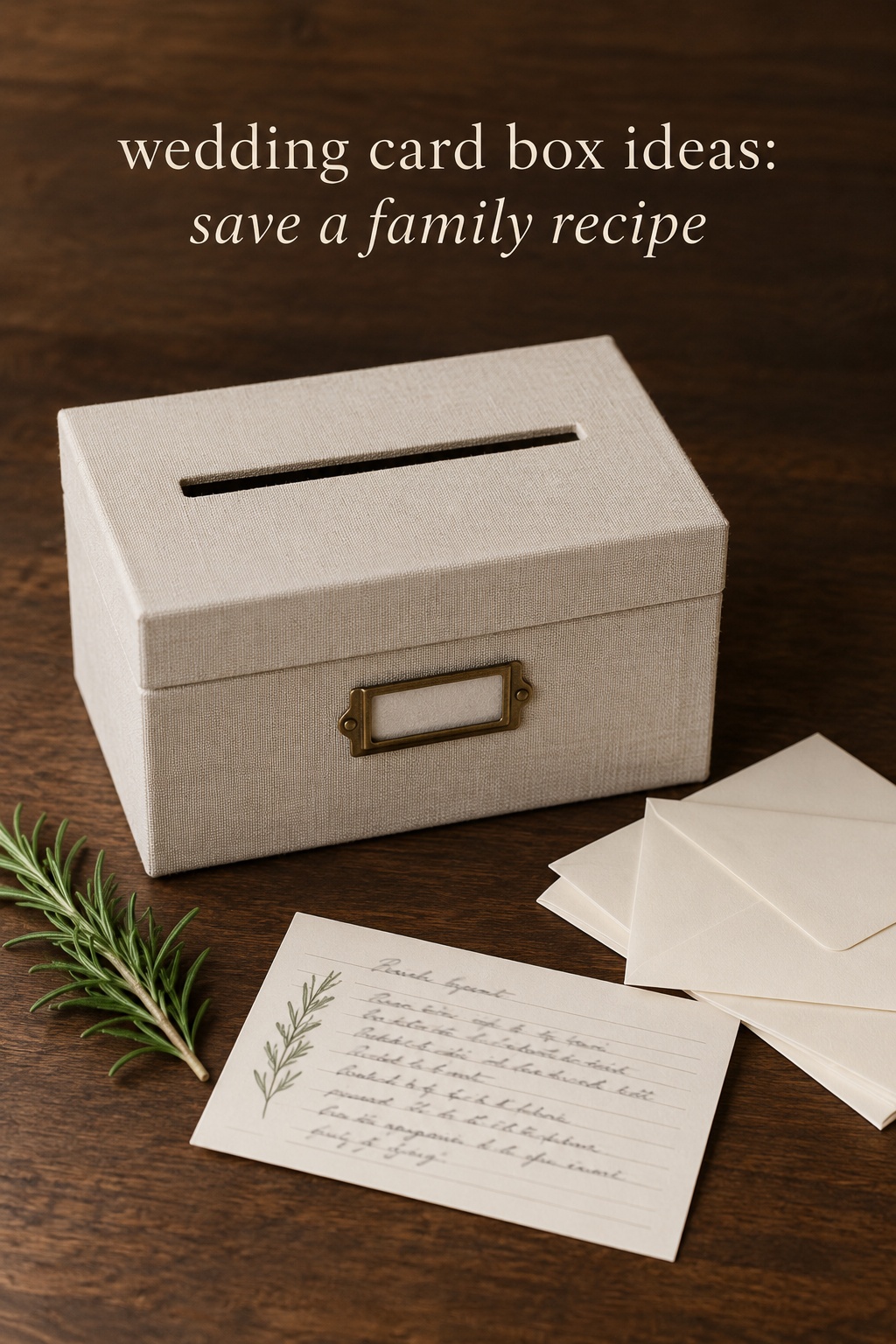
A recipe file for a family kitchen
For a couple who cooks together or shares a beloved family dish, adapt the look of a recipe-card file. A low wooden organizer with labeled dividers can sit inside a deeper box, or a plain secure box can be decorated with a recipe-card motif on its sign. Write a short line such as “A note for our next chapter” in a style that resembles the handwritten cards kept at home.
Keep the reference gentle. A small card listing one meaningful family recipe can explain the idea, but it should not ask guests to write a recipe instead of leaving their own message. Make the opening wide enough for the envelopes you expect, and keep food props away from the card slot so the display remains easy to use.
A library return for a pair of readers
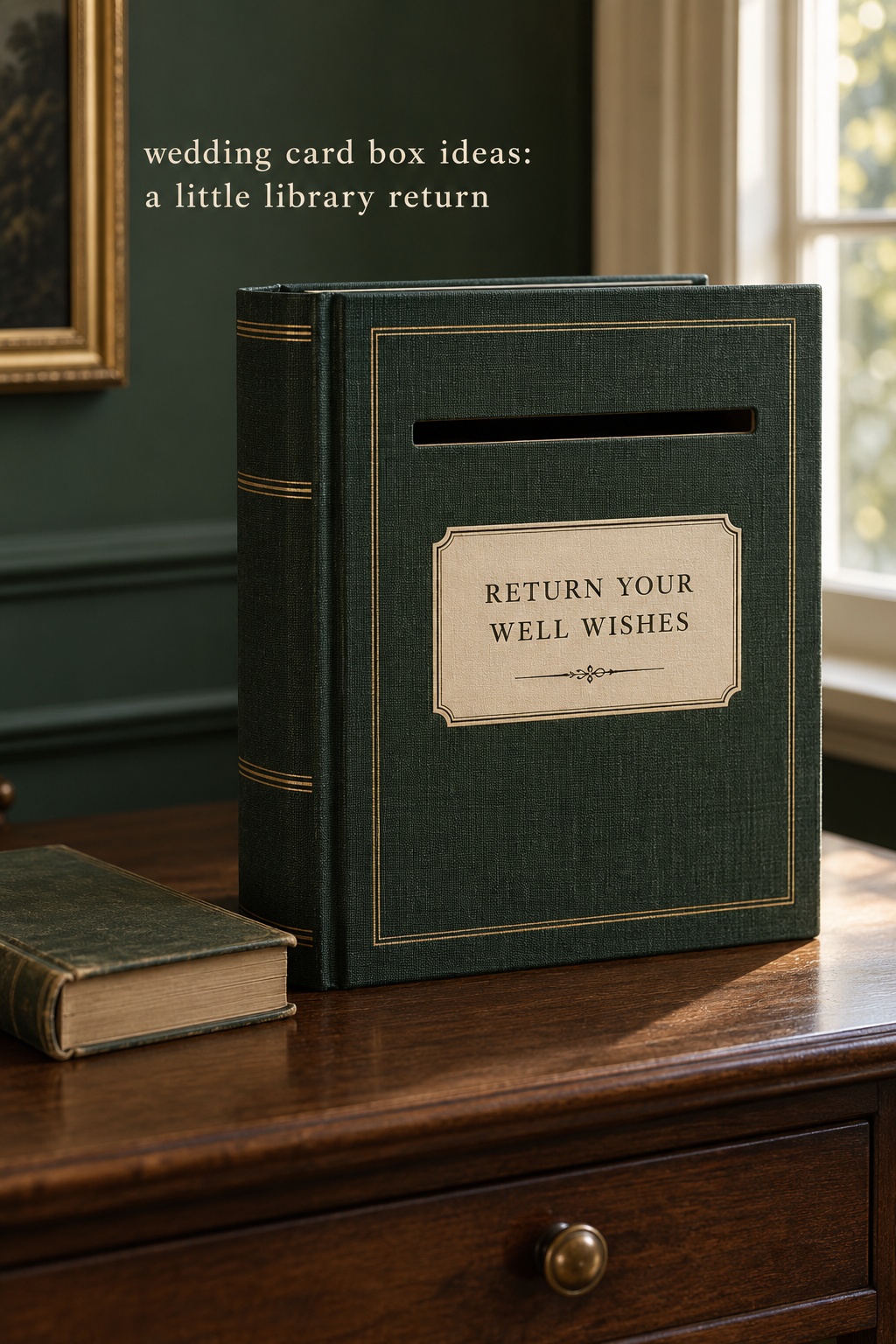
If books brought you together, borrow the visual language of a library return rather than stacking novels around a box. A compact card collector can be faced with book cloth, labeled like a favorite shelf, or set beside one or two marked-up paperbacks. A small “Return your well wishes here” sign turns the reference into a clear instruction without requiring guests to guess.
For a literal book form, use a purpose-built hinged box or a rigid container wrapped in a book jacket. Do not cut up a cherished edition. Give the container a stable base, protect the slot edge from fraying paper, and keep the design simple enough that it reads as a card holder rather than a stack of table decor.
A correspondence cabinet for long-distance love
For partners who once wrote across a time zone, a small cabinet of labeled envelopes can nod to that chapter. Use a single secure box with shallow decorative pockets on the outside, each carrying a city name, month, or brief phrase from the years apart. The actual wedding cards go through one central slot into a closed compartment. That keeps the display story-rich without asking guests to sort or file their envelopes.
A few handwritten details will do more than a large collage. One copy of an old return address, a date, or a fragment from a saved letter can give the piece a point of view. If the originals are private, recreate the look with new paper rather than displaying personal correspondence for the room to read.
A postcard archive for the places you share
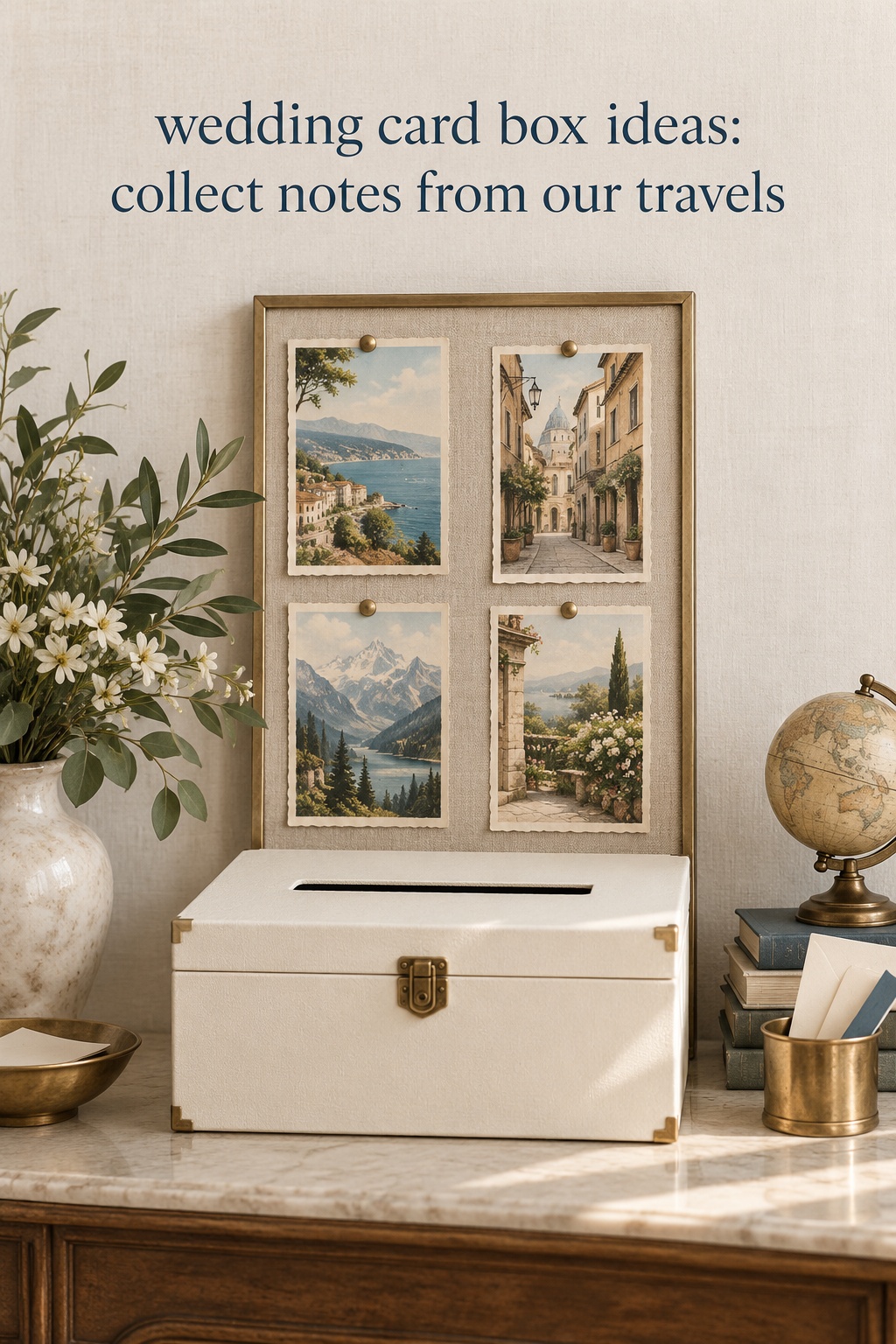
Postcards can tell the story of visits, road trips, or the place where the couple first met. Arrange a small set in a shallow frame or a clipped display around one closed card box. Choose a few locations that matter instead of trying to chart every trip. Guests can see the journey at a glance, while the secure box stays plain and accessible underneath.
A second version uses the back of a postcard as the sign. Keep the main label large and direct, then let one short line explain the connection. Avoid placing several open card-shaped containers around the table. Guests should have a single clear destination for their envelope, even when the display includes several memories.
A neighborhood archive for a shared local ritual
Some couples have a place-specific routine: Saturday walks to the farmers market, a coffee shop where they meet after work, or a regular route through a neighborhood park. An archival drawer or shallow display box can echo that map of everyday life. Use a simple outline, street names, or a small printed route as a background for the card box, with the collection point clearly labeled in the foreground.
This idea works best when the detail is recognizable to the couple but does not require guests to know local history. A small note can name the place and say why it matters. If you are celebrating far from home, the display can carry the reference without asking the venue to recreate the location or add a full travel theme.
Give the idea a clear place at the reception
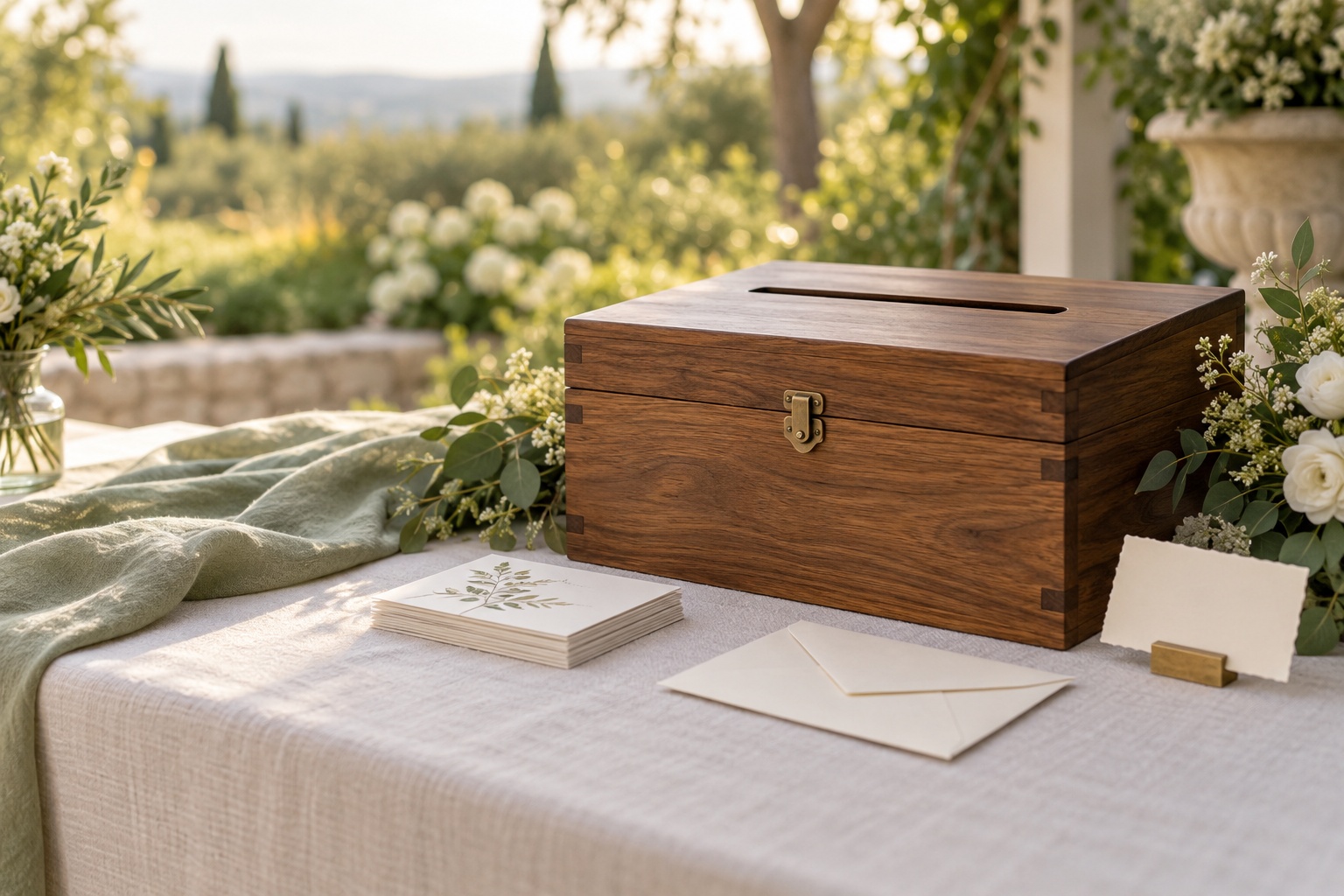
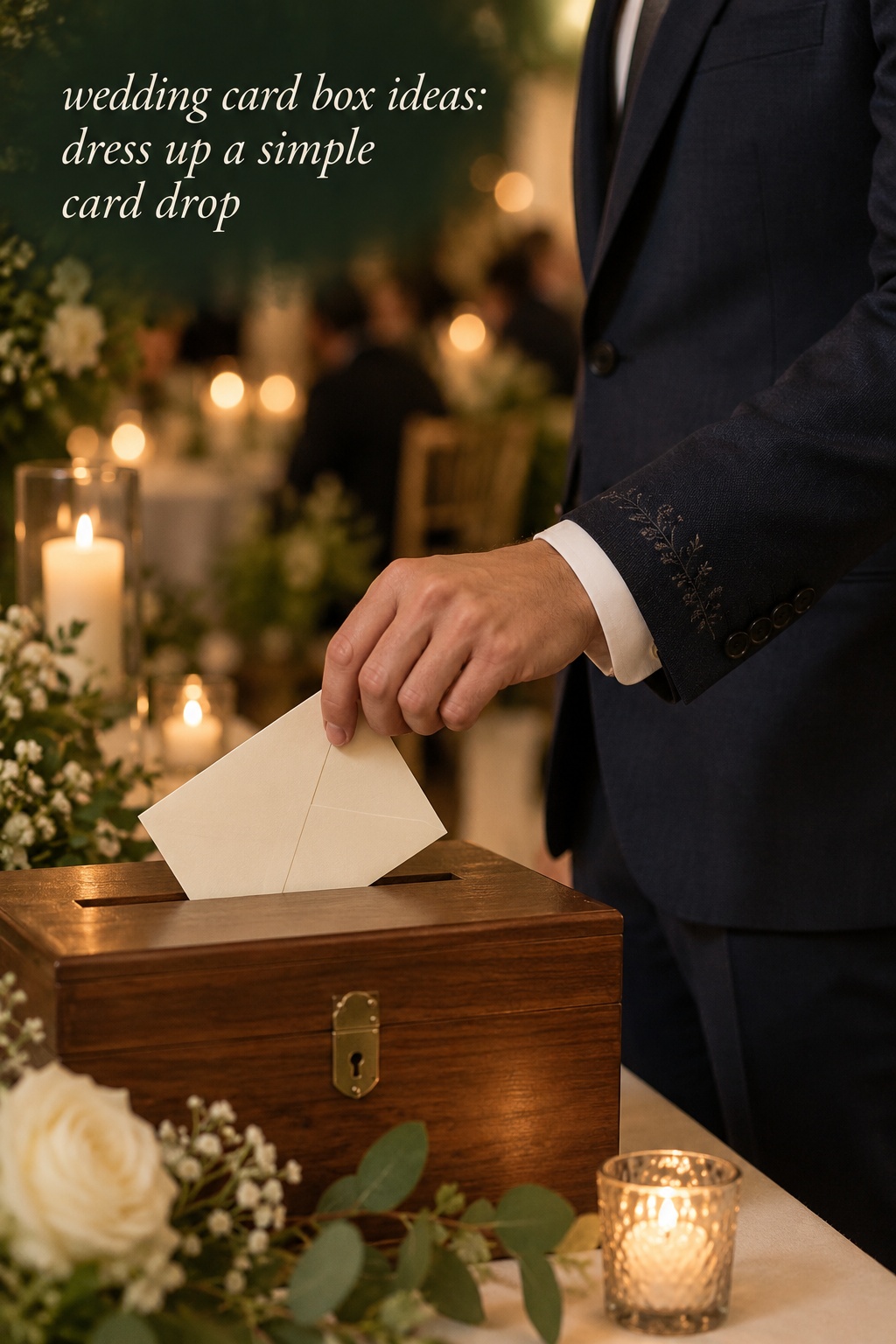
The story should reward a closer look, but guests should understand the task at a glance. Put the card holder where people can reach it as they enter or pass a natural pause in the reception. Keep the slot facing outward and leave enough space for someone to set down a drink while placing an envelope inside. A sign with the word “Cards” can be direct; the personal explanation can sit beneath it in smaller type.
Choose one visual clue that connects the story to the wedding. That might be the same paper stock as the invitations, a color repeated from the menu, or a small object associated with the ritual. The card holder itself can remain distinctive. Matching every finish, flower, and label exactly can make a personal item look like a purchased package instead of something the couple chose.
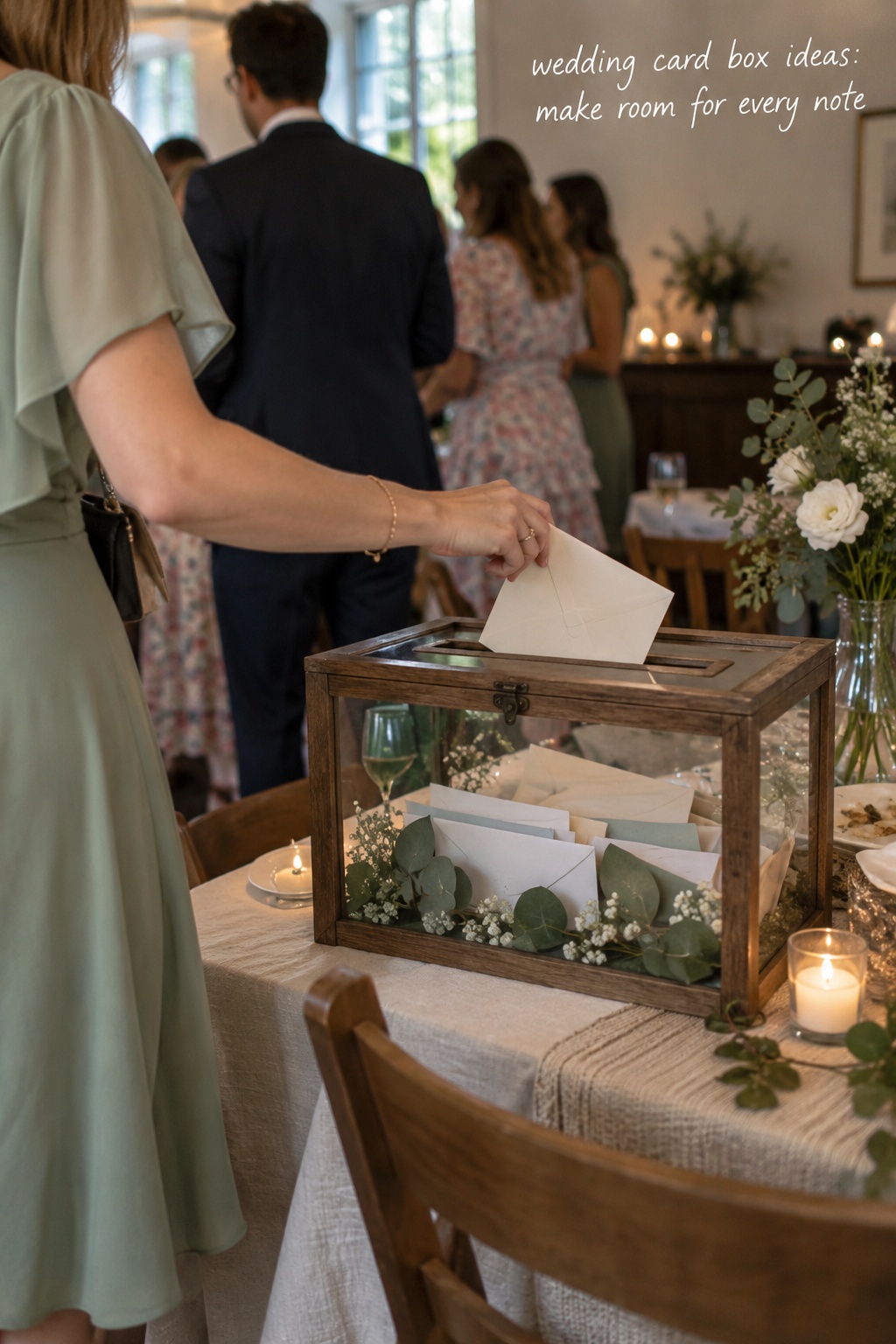
Try the guest action before the wedding. Put an envelope through the slot, check that it falls inside rather than catching on a divider, and make sure the box can be opened by the person assigned to collect it. If the concept uses a cabinet, file box, or display shell, place a closed container inside it. Keep any sentimental original, loose note, or fragile decoration separate from the part guests will touch.
For a display with several pieces, edit down to the object, the instruction, and one supporting detail. A recipe story might need the file, a label, and a single herb stem. A reading story might need the box, a clear sign, and one favorite book. Anything that crowds the opening or makes guests wonder which pocket to use is working against the idea.
Make the collection plan just as simple. Decide who will take the full box at the end of the evening and where it will be stored. A trusted family member or coordinator can handle that handoff while the couple is occupied. The display can stay calm and personal because its practical job has already been assigned.
Keep the story after the wedding
Cards often arrive folded, sealed, or tucked inside a larger envelope. Once they are home, keep the notes together before deciding how to display them. Remove any clips or labels that could mark the paper, and place the cards in a clean archival box or sleeve away from damp areas and direct sun. If there are keepsakes inside, store them with the card rather than separating them during a rushed cleanup.
Add a simple note to the collection with the wedding date and the name of the person who packed it. That small label can make the stack easier to revisit later. Couples who want to make an album can photograph or scan favorite messages, but there is no need to turn every card into a project. The first step is simply to keep the envelopes in one place.
If the vessel itself was made for the wedding, it can be stored with the cards or repurposed once the paper has been removed. A recipe-inspired box can hold family notes; a bookish design can live with a home library; a cabinet inspired by letters can store future correspondence. A borrowed display object can be returned to its owner with the cards already collected and the story explained.
The strongest keepsake is not always the most elaborate one. It may be a plain box whose label recalls a shared habit, or a new container that protects an old family story. Let the object remain useful, let the notes remain together, and let the design keep a little of the couple’s ordinary life inside the wedding day.
FAQ
What are some personal wedding card box ideas?
Start with a shared ritual or meaningful object, such as a family recipe file, a library motif for readers, or a correspondence display for a couple who wrote letters. Adapt the reference around one closed container with a clear slot so guests know where to leave cards.
How large should a wedding card box be?
Choose a size that fits the envelopes you expect and can still be carried by one person when full. Test the slot with a standard card and any larger envelopes you plan to invite, then leave enough room inside for them to fall without catching.
What should a wedding card box sign say?
Use a direct label such as “Cards” or “Cards and well wishes.” Add one short sentence about the personal story underneath if you like, but make the purpose readable before guests stop at the table.
Can we make our own wedding card box?
Yes. Begin with a sturdy container that opens securely, test the slot with an envelope, and personalize the outside with a label, paper, or one keepsake-inspired detail. Use an inner box if the decorative form has openings or delicate parts.
Can we use something other than a box for wedding cards?
Yes. A lidded file, drawer, or rigid basket can collect cards if it has a clear opening and keeps envelopes together. For cash or checks, use a closed inner container and ask a trusted person to take it away at the planned time.
How can we keep wedding cards together after the reception?
Assign one person to collect the box, then store the cards in a clean archival container away from dampness and direct sun. Add the wedding date and a short note about the collection so the messages remain easy to identify later.