Wedding Mirror Ideas: A Small, Useful Styling Set
Wedding mirrors can be beautiful in photographs and surprisingly awkward in a real venue. A welcome message may vanish into a bright window. A seating chart may look elegant until guests crowd around to find their names. Three small mirror signs can feel charming on a styling table and confusing when they all appear at the same entrance. The useful question is not how many reflective pieces you can add. It is what each one should do for the people moving through your wedding.
The most reliable wedding mirror ideas start with a small set. Choose one anchor mirror with a clear job. Add a seating or information piece only where guests need it. Leave space for an optional portrait or tabletop detail if the venue suits it. This approach lets a single frame shape, lettering style and floral treatment connect several moments without making every surface reflective. It also makes setup easier to explain to the people who will move the pieces on the day.
Start With One Anchor Mirror
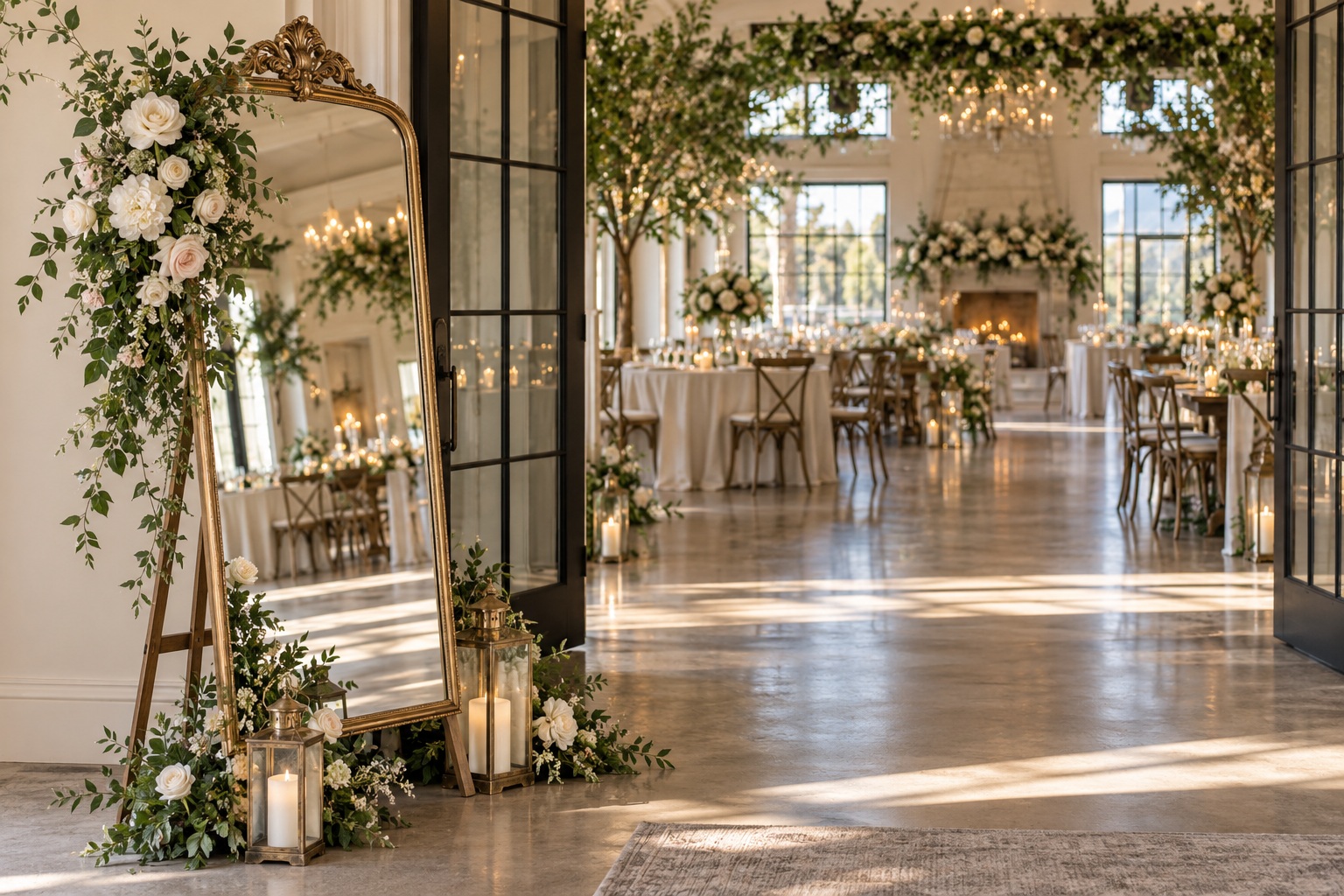
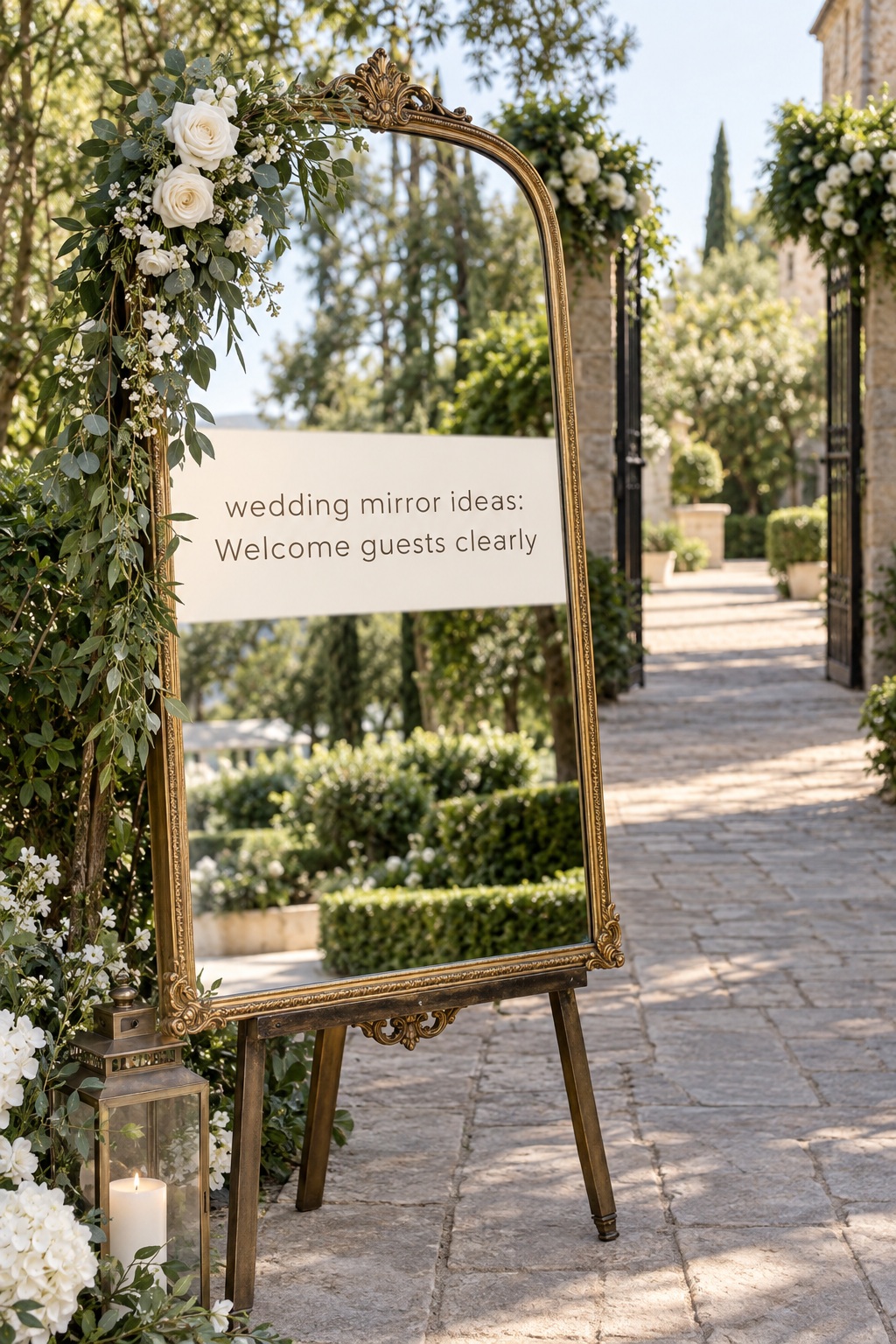
The anchor mirror is the piece that guests will notice first or use most. For many weddings it is a welcome sign. For others, the seating display is the better centerpiece because guests actively need its information before dinner. Decide which task matters more at your venue. A mirror that welcomes people at a garden gate has a different job from one that has to hold a long guest list at the reception entrance.
Give the anchor a single primary job
Write the job in one sentence before choosing a frame: “Confirm that guests have arrived at our celebration,” or “Help every guest find a table without asking staff.” This protects the design from too much wording. A welcome mirror usually needs names or a brief greeting and perhaps a date. A seating mirror needs clear organization, names and table assignments. A full schedule, a sentimental quotation, and directional arrows compete with either job. Put information that needs frequent updating on a separate card or sign.
Your wedding look is only the beginning.
Keep your guest list, vendors, timeline, and every important detail together with Zarellea — so your day feels as considered as your style.
The right size comes from the text and viewing distance. A dramatic full-length frame can carry a short welcome message beautifully but still be too narrow for a large seating list. A smaller mirror may be enough for a bar menu that people can read at arm’s length. Before sourcing one, print a rough paper mockup at the intended size. Stand where guests will stand. If the words are difficult to read on paper, reflections will not improve them.
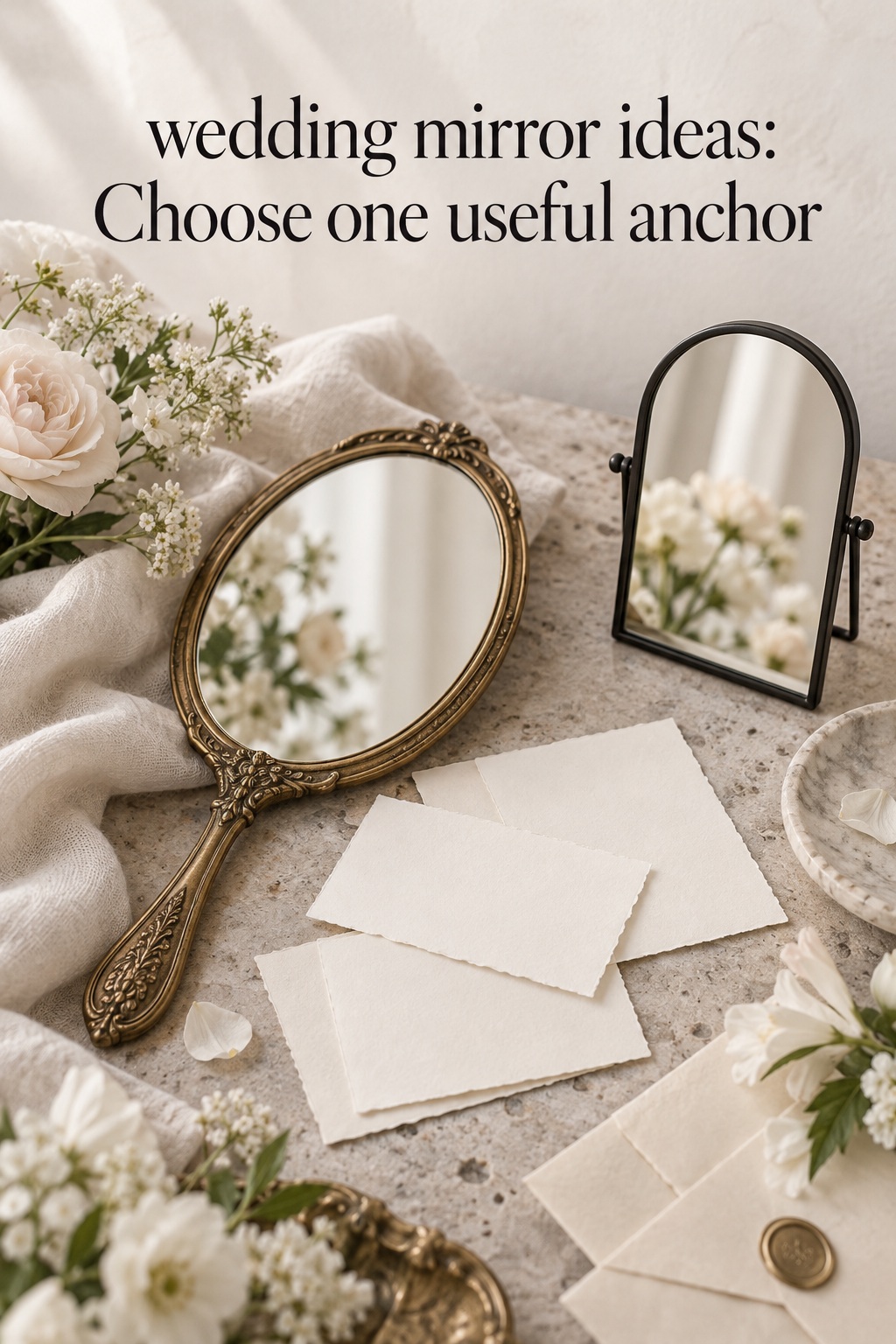
Think of the frame as the visual anchor and the glass as working space. An ornate gold frame can suit a garden, historic room or candlelit restaurant. A slim dark frame can be strong in a modern city venue. A pale wood frame may feel relaxed in a courtyard. You do not need every small mirror to match exactly, but one family of finish or shape helps the set feel intentional. For instance, a curved main mirror and small curved table pieces can relate without being identical.
Decide whether welcome or seating deserves the best position
Arrival is a good place for a welcome mirror when there is a clear pause before guests enter. Put it where people can approach without blocking a door or path. If guests are moving quickly from parking to ceremony, the greeting should be visible from that route. Avoid placing the mirror where its reflection points at bright sky or a distracting service area. The image guests see behind the lettering is part of the composition.
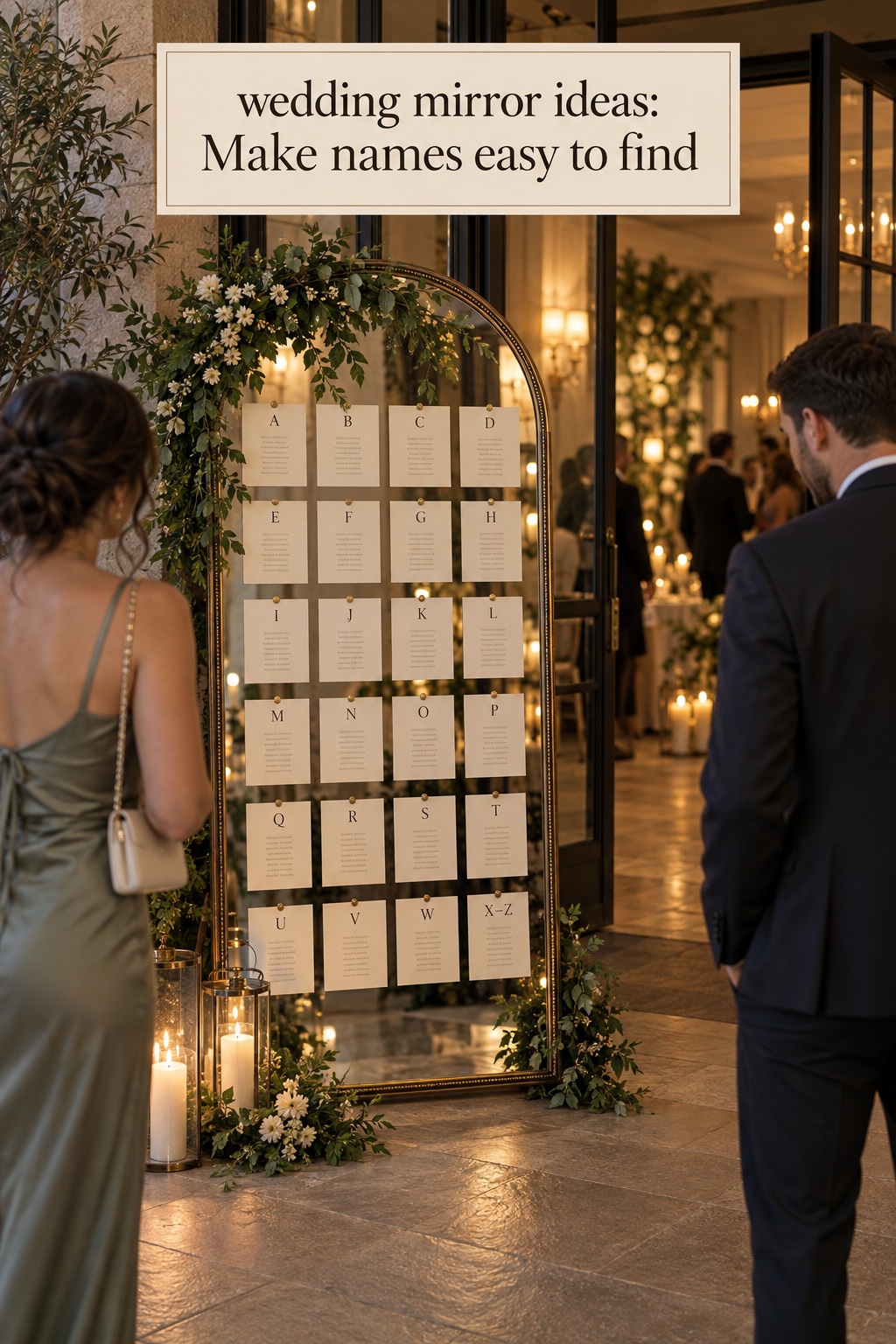
A seating mirror works best near the transition into dinner, with enough room for several people to read at once. Organization matters more than decorative flourish. A specialist calligrapher’s discussion of mirror seating charts distinguishes alphabetical lists from lists grouped by table. If the display is large, alphabetical organization may make it easier for someone to locate a name without scanning every table. Whatever method you choose, put the heading and grouping labels where a guest can find them immediately.
If the venue has only one useful display position, let the seating chart take it before dinner and use a modest welcome cue elsewhere. Do not ask one mirror to be two things at the same time unless the change is simple, timed and assigned to a specific person. A welcome phrase cannot remain in the middle of a seating list without consuming valuable space. Removable paper cards on the glass can make a change possible, but the move still needs a real plan.
The anchor should also have an exit plan. Ask who is responsible for transporting it, setting the easel, checking the angle and removing it after the event. A beautiful rented frame that is too heavy for the intended room or too fragile for a windy outdoor entrance is not the best anchor. The item has to work beyond the photograph.
Make a Mirror Suite That Moves With the Day
Once the anchor is chosen, look at the guest journey. People arrive, find the ceremony, move to drinks, find dinner, and gather at tables. Not every point needs a mirror. A useful suite places one expressive piece where the day begins and one clear information piece where a decision must be made. Optional smaller mirrors can repeat the style at a bar, guest book or portrait corner without carrying essential instructions.
The welcome and seating pairing
For a venue with separate ceremony and reception spaces, pair a simple welcome mirror near arrival with a practical seating display at the dinner entrance. They can share the same frame finish and lettering color. The welcome piece may have generous open glass; the seating piece needs more opaque backing or cards so names stay readable. Related design does not mean the same layout.
If you prefer to use one large mirror twice, decide exactly when it moves and who moves it. Take a photograph of the proposed second position before the wedding. Check whether the route has stairs, narrow doorways or furniture that will be in use. Prepare the second set of cards or lettering ahead of time. A complicated transformation during cocktail hour can turn a simple styling idea into a job no one owns.
Consider guest volume. A small intimate reception might be served by one mirror with a short list. A larger gathering may need a broad display, multiple columns or a separate printed list nearby. The mirror is still the visual anchor, but guests should not have to wait in a single line to read it. If names are on attached cards, proof every spelling and assignment against the final seating plan. Leave room for the kind of late change that can happen close to the wedding.
Add a bar or guest-book mirror only when it answers something
A small mirror at the bar can show a short signature-drink menu. Keep the drink names, ingredients and any practical note large enough to read while guests wait. If the bar already has a clear menu, a second reflective sign adds visual repetition without doing useful work. The same test applies at a guest-book table. A short prompt can invite participation; a sentimental quotation may be better left to the couple’s stationery or speech.
Miniature framed mirrors can work as table numbers when the table design is spare. Keep the number dominant and the frame stable. A mirror laid flat beneath flowers or candles changes the visual texture, but it can also collect clutter and reflections. Use it as a considered material choice, not a requirement for every centerpiece. At dinner, people need the table number first. The mirror should help them recognize the table, not make them lean over decor to decipher it.
The advantage of a small set is that the pieces can talk to each other. A warm metal frame at the entrance can return in two small bar mirrors or a few table numbers. The lettering can use one expressive style for greetings and a plainer style for names and directions. The flowers can touch one corner of the anchor and appear as a modest stem near the second sign. Each repeat is enough to establish a connection. Covering every mirror in identical garlands would make the day feel less edited.
Leave one space for a portrait moment
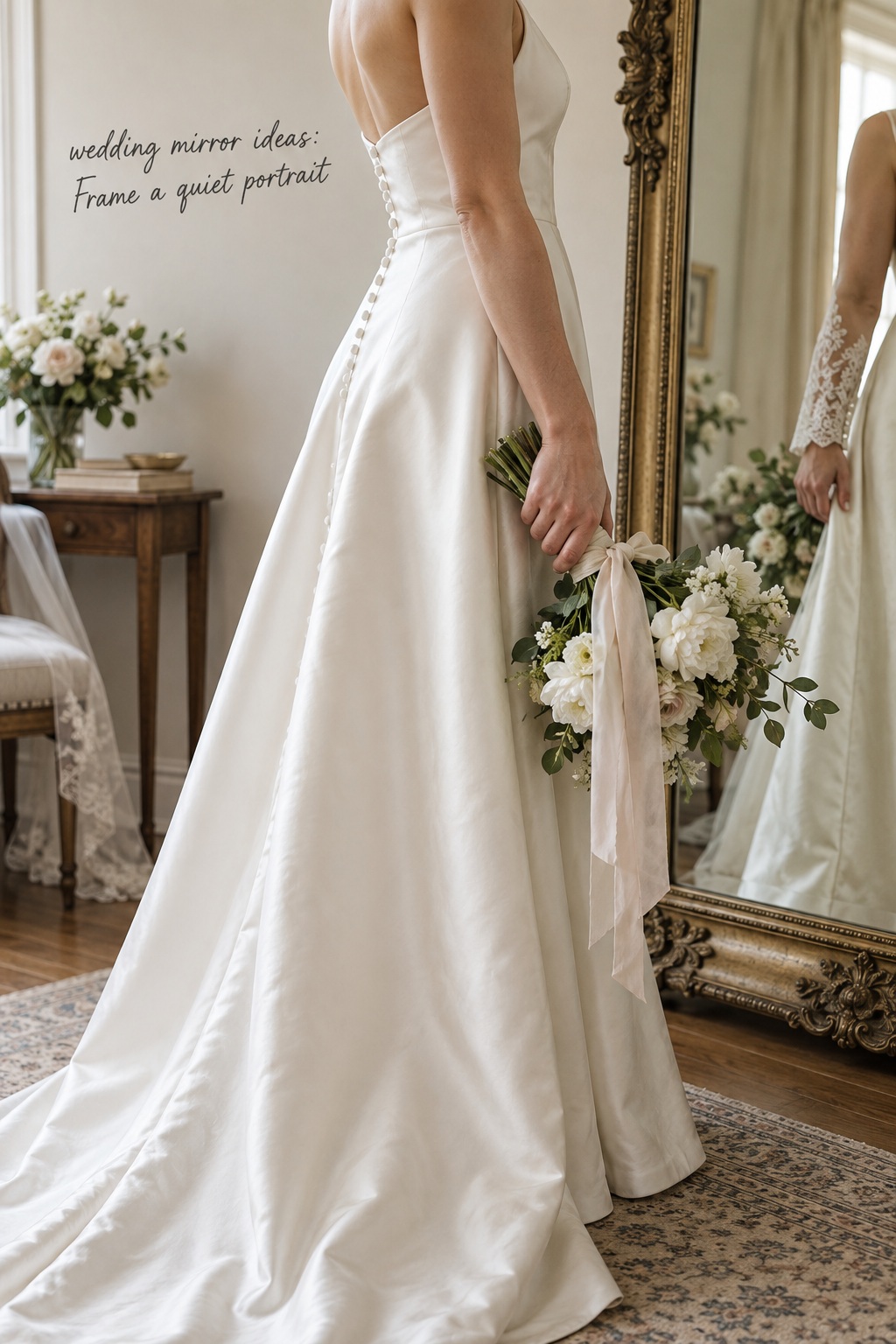
A mirror can frame a photograph without carrying any text. In a getting-ready room, a reflection may show a gown’s back, a cuff, a bouquet ribbon or a quiet interaction outside the main frame. At the venue, a welcome mirror can double as a guest photo opportunity when its reflected background is attractive and there is space to step aside. A real wedding account describes positioning a welcome mirror so palm trees appeared behind guests in photographs. The useful lesson is to consider what the glass shows, not only what is attached to it.
Do not force a portrait function onto the seating chart while people are trying to read it. If the mirror is central to the guest route, photographs can create a bottleneck. A separate quiet mirror already present in the venue may be a better portrait setting. Ask the photographer whether the angle, light and surrounding space suit the moment. The goal is a natural opportunity, not a staged obligation for everyone who passes.
Choose Pieces Worth Carrying and Keeping
The capsule needs more than glass and a pretty frame. It needs readable lettering, an appropriate support, a method for updates and a clear handoff. Put effort into those essentials before buying miniature mirrors for every table. One well-resolved anchor can be more memorable than many small objects that are difficult to place and pack.
Prioritize the frame, support and lettering surface
Start by measuring the site. Record the clear width of the entrance or alcove and the height at which guests will read. A tall mirror on an easel needs floor space behind it as well as in front of it. Check that the support is stable on the actual surface, whether stone, carpet, grass or a temporary floor. Do not lean a heavy mirror where someone could brush past it or where a door might strike it. Ask the venue about placement rules before committing to a rental.
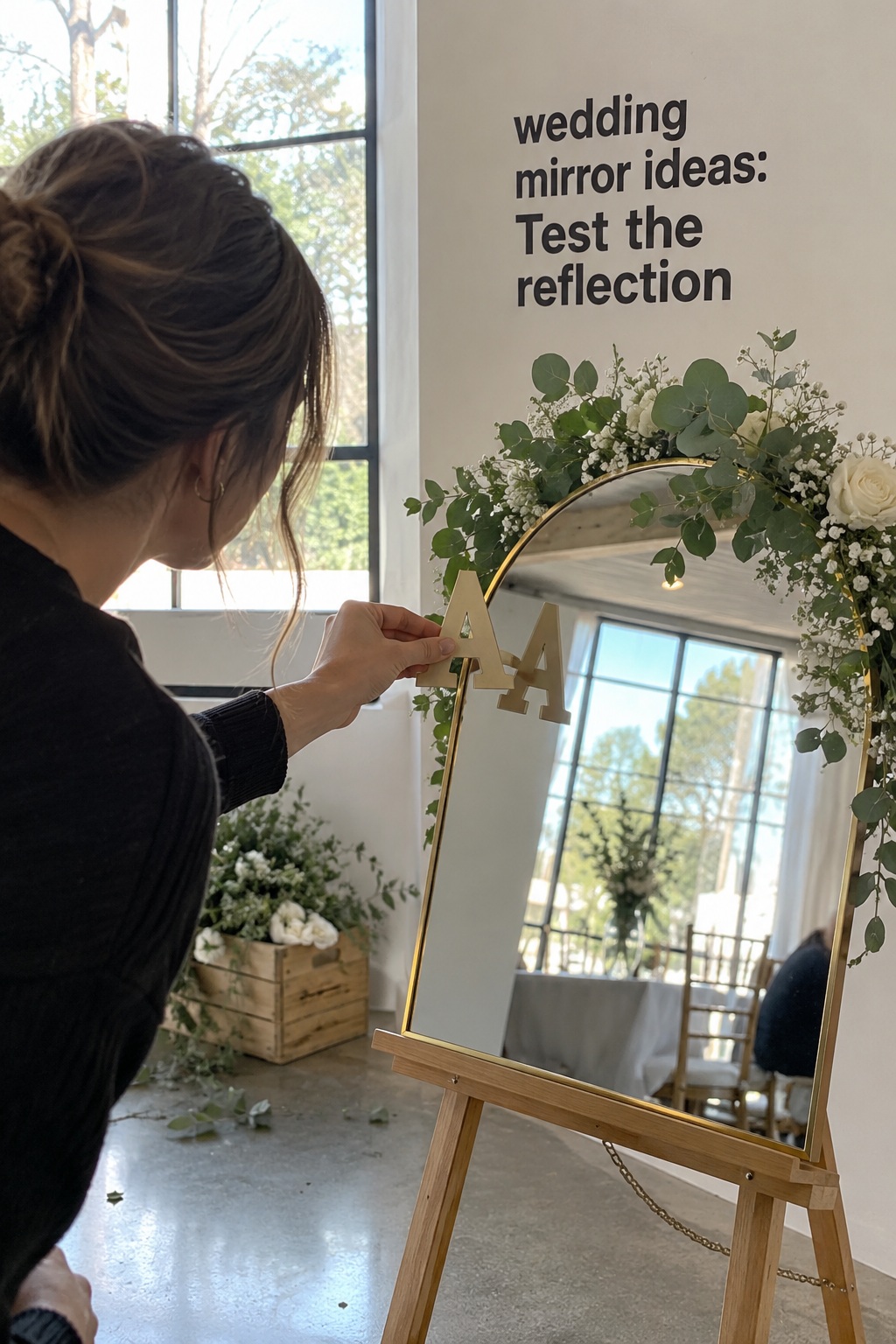
Next, decide whether the words go directly on the glass, on removable vinyl or on cards fixed to the surface. Direct lettering can look graceful and keeps the glass open. Cards can create a more readable field behind many names and may be easier to update. Vinyl can give consistent shapes but may be harder to adjust once applied. None is automatically best. The choice depends on amount of text, timing of seating changes, the mirror finish and the maker’s process.
Do a full-scale test, not only a digital proof. Print the text in roughly the planned size or have the calligrapher show a sample on similar glass. Look at it with a real background behind your reflection. Thin strokes can disappear when a window or busy room is reflected. A day-of signage guide notes this contrast problem for mirror calligraphy and recommends looking at the direction the mirror faces. A readable design may use thicker letters, an opaque backing or a quieter angle. Small adjustments can keep the elegance while letting guests use the sign.
Frame condition matters. A vintage mirror may have charming patina but a weak backing, chipped edge or unstable hanger. Inspect it before the wedding week. If renting, ask what is included: easel, transport, installation and removal may be separate arrangements. If buying, consider whether the frame has a place in your home afterward. Reuse is a pleasant reason to choose a piece you truly like, but it should not excuse a mirror that is inconvenient on the day.
Let flowers support, not bury, the message
A floral corner can soften a frame and connect it to bouquets or ceremony arrangements. Keep flowers away from the part guests need to read. A seating display with names pressed into foliage may look lush in a close photograph and become frustrating at the actual entrance. Choose one side or corner for the strongest decoration. This gives the sign visual weight without reducing the working area.
If the mirror sits outside, consider wind, sun and the path of people entering. Paper cards should be secured, but the attachment should suit the surface and the maker’s advice. Delicate stems near a narrow walkway may be bumped. A low floral arrangement may work better than a tall one when the mirror is already a strong vertical object. A few candles can be attractive nearby if the venue permits them, but keep flame and heat away from flowers, paper and crowded routes.
The outfit and mirror can share a visual language without literal matching. An antique gold frame may complement warm jewelry or a champagne ribbon. A slim black frame may suit a tailored city look. A soft wood frame can echo the texture of a garden setting. These are styling connections, not purchasing requirements. If the frame is already expressive, let the dress and bouquet remain themselves. A reflection can capture their details without turning them into props for signage.
Make ownership of setup explicit
Write a short handoff note for the person setting the display. Include the exact location, a photograph of the intended angle, which cards or wording go on it, the support it uses, and the time it needs to be ready. If it moves, name the mover and destination. Include who takes it home. This is especially helpful when the couple will be occupied and cannot answer placement questions at the entrance.
Proof names, dates and table assignments separately from the visual design. A sign can be beautiful and still send someone to the wrong table. Keep a final approved copy of the text and ask one person to compare the finished mirror to it. This is a better use of planning time than refining another decorative flourish. The practical information is what guests will remember when it fails.
Fit the Set to Light, Space and Guest Flow
The last test happens in the venue, or as close to its real conditions as you can get. A mirror reflects a changing scene. At noon it may show windows and sky; at dusk it may show lamps and guests; after dark it may catch bright points of light. The lettering that looked clear in a studio can fade into any of those backgrounds. Bring a sample or temporary paper proof to the proposed location and view it from the guest approach.
Check the reflection from the guest’s position
Stand where someone will first see the sign. Does the glass show a pleasant part of the venue, a window, a blank ceiling, or the traffic behind the viewer? Move a few steps sideways. A minor change in angle can transform the reflected background. Check the text while standing and while approaching. A beautiful close-up photograph cannot substitute for the view from several feet away.
If the sign is outdoors, check it at the approximate event time. Direct sun on the surface can make letters harder to distinguish, while shade can make a dark frame look heavier. For an indoor evening reception, ask what lights will be on when guests read the seating chart. You do not need a perfect lighting simulation. You need to know whether the combination of reflection, letters and distance is workable.
Notice where guests will stop. A seating chart should not block a doorway or force the line across the bar entrance. A photo mirror should have space for a person to stand without interrupting service. A small bar mirror should not sit behind tall bottles that obscure it. The best location is the point where the mirror’s job and the room’s movement agree. If they conflict, move the sign or change its job.
The style can also adapt to the room. In a bright garden, let a mirror frame act as a warm accent with spare flowers. In a dark restaurant, use stronger lettering and a clear light field for names. In a modern hall with reflective walls, a plain frame may be calmer than another ornate surface. In a historic room, a vintage mirror can feel natural, but its patina should not obscure essential words. These changes preserve the small set while making it belong to the actual venue.
Finally, test the complete capsule in order: welcome, direction if needed, seating, and optional details. Imagine arriving without knowing the plan. Is it immediately clear where to go? Can you find a table quickly? Are the smaller mirrors adding something useful or simply repeating the same flourish? Remove a piece if it has no distinct job. A wedding does not need mirror decor everywhere to have a memorable mirror moment. It needs one or two reflective pieces that look deliberate and work for the people who encounter them.
FAQ
What is the best use for one wedding mirror?
Choose between a welcome sign and a seating display according to your venue. A welcome mirror works when guests pause at an entrance. A seating mirror earns its place when it helps people find dinner tables quickly. Give the single mirror one main job and make its text readable from the approach.
Can one mirror be both a welcome sign and a seating chart?
It can if the change is prepared and someone is assigned to make it. Removable cards can simplify the second use, but the mirror still needs a safe route, a second position and a clear time for the switch. For a busy venue, separate pieces may be easier.
How do I make writing on a wedding mirror readable?
Use strong contrast, sufficiently large letters and a quiet reflected background. Test the design at its real position and viewing distance. Thin decorative strokes can disappear over bright windows or busy rooms, so keep functional names and numbers simpler than a greeting.
Should I put a mirror seating chart in alphabetical order?
Alphabetical order can help guests scan a long list quickly. Grouping by table can work well when the number of tables is modest and headings are obvious. Choose the arrangement that lets someone find their name with the least searching, then proof every assignment.
Are small mirrors useful as table numbers?
They can be if the number is clear and the frame stands securely among the flowers, candles and place settings. Test one complete table before ordering a set. If guests must lean over decorations to read it, use a simpler card or larger number.
Where should a wedding photo mirror go?
Place it where the reflection includes an appealing background and where people can step aside without blocking the entrance, seating chart or bar. A getting-ready room can also offer a quiet mirror portrait that focuses on outfit details rather than signage.
What should I check before renting a large mirror?
Confirm its dimensions, weight, frame condition, support, delivery, setup and pickup arrangements. Ask the venue where it can stand safely and whether it may be moved. Check that the glass gives enough usable area for the planned words.