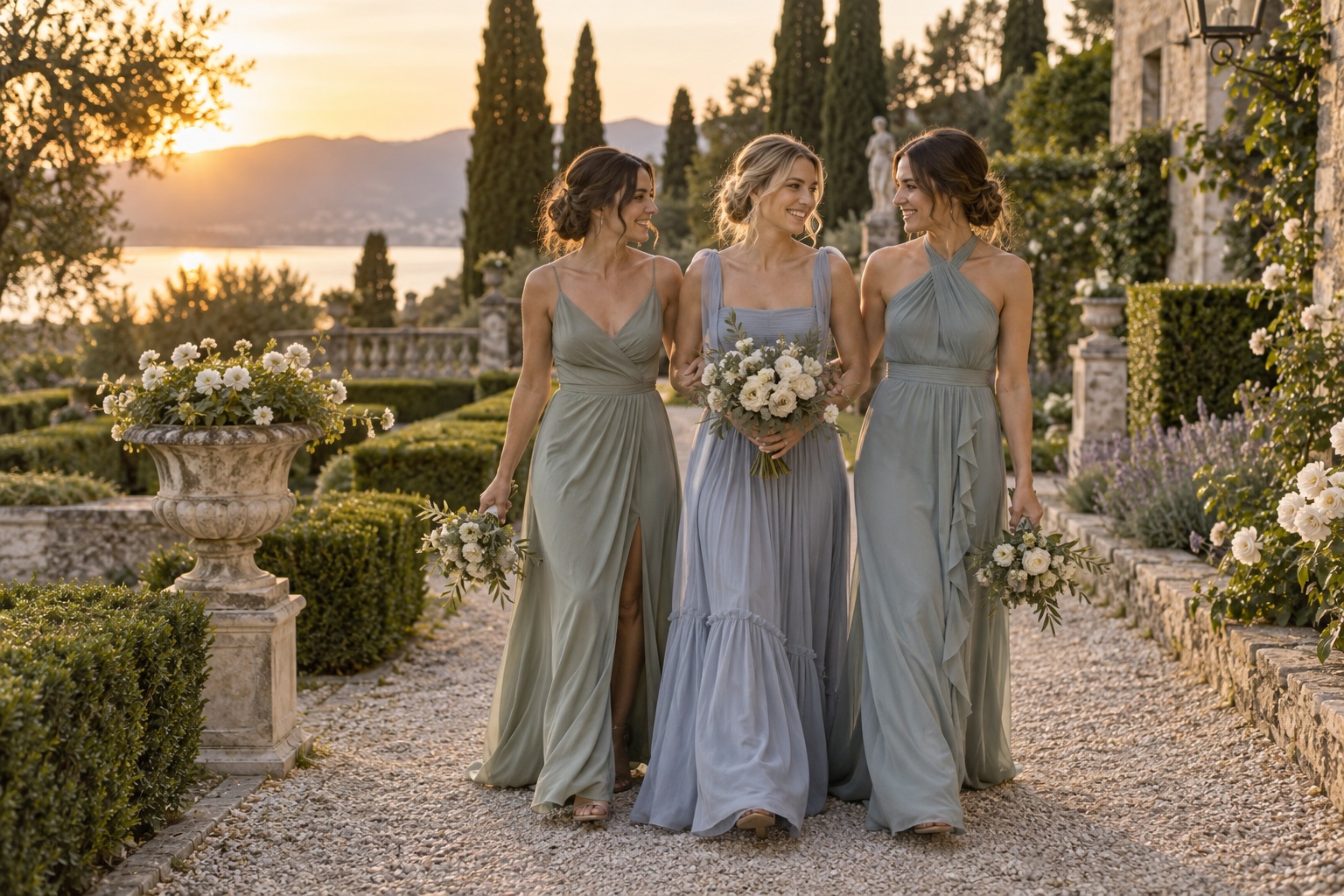
Wedding Dress Ideas for Sisters: A Capsule Plan
Shopping for wedding dress ideas for sisters can turn into a familiar wardrobe problem: several people need outfits for the same photographs and schedule, yet they may have different roles, preferences, budgets, and comfort needs. A bride and her sister do not need the same dress. Two sisters serving as attendants do not need identical necklines. Sisters attending as guests can look connected without appearing to be part of the wedding party.
Think of the outfits as a small capsule. A capsule is a handful of pieces that work together because they share a clear visual idea. For sisters at a wedding, that idea can be one color family, one fabric direction, or one level of formality. Keep the other choices personal. This gives the group a recognizable thread without asking everyone to wear a uniform.
Start with the relationship, then set the dress brief
Begin with the event itself. Write down the dress code, ceremony location, season, and the parts of the day when everyone will be photographed together. Then list each person’s role: bride, bridesmaid, maid of honor, family member, or guest. Ask the bride what she wants the overall photographs to feel like and whether there are colors or styles she wants family members to avoid. A quick conversation is easier than shopping twice.
Keep the brief concrete. “Soft and romantic” is a mood, not a shopping instruction. Translate it into choices such as floor-length dresses, muted colors, and light movement in the fabric. “Modern garden wedding” might mean midi or maxi lengths, polished shoes for grass, and a wrap or jacket for an evening temperature change. The dress code still sets the level of formality, so a capsule should support it rather than replace it.
Your wedding look is only the beginning.
Keep your guest list, vendors, timeline, and every important detail together with Zarellea — so your day feels as considered as your style.
Build a sister capsule around one shared anchor
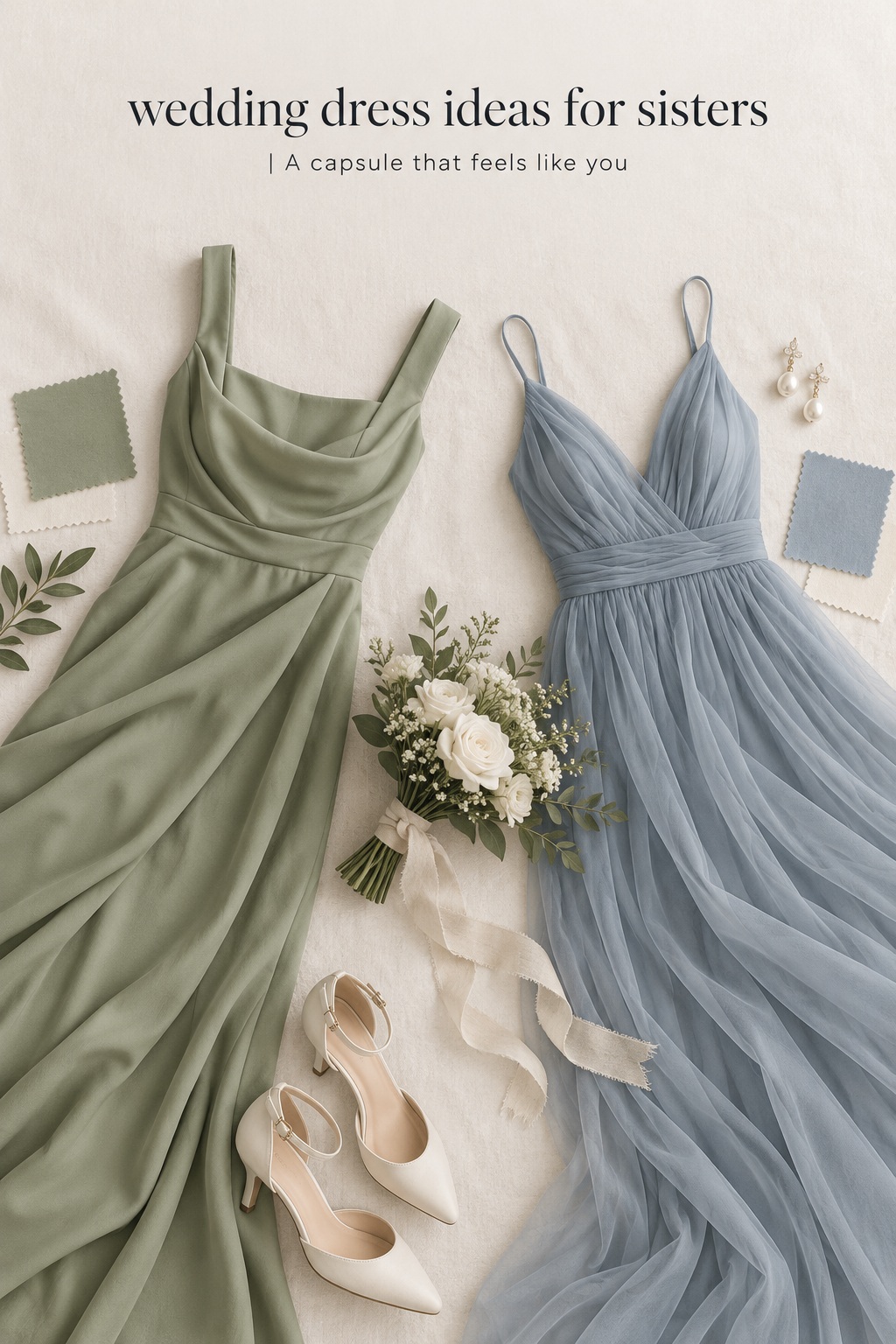
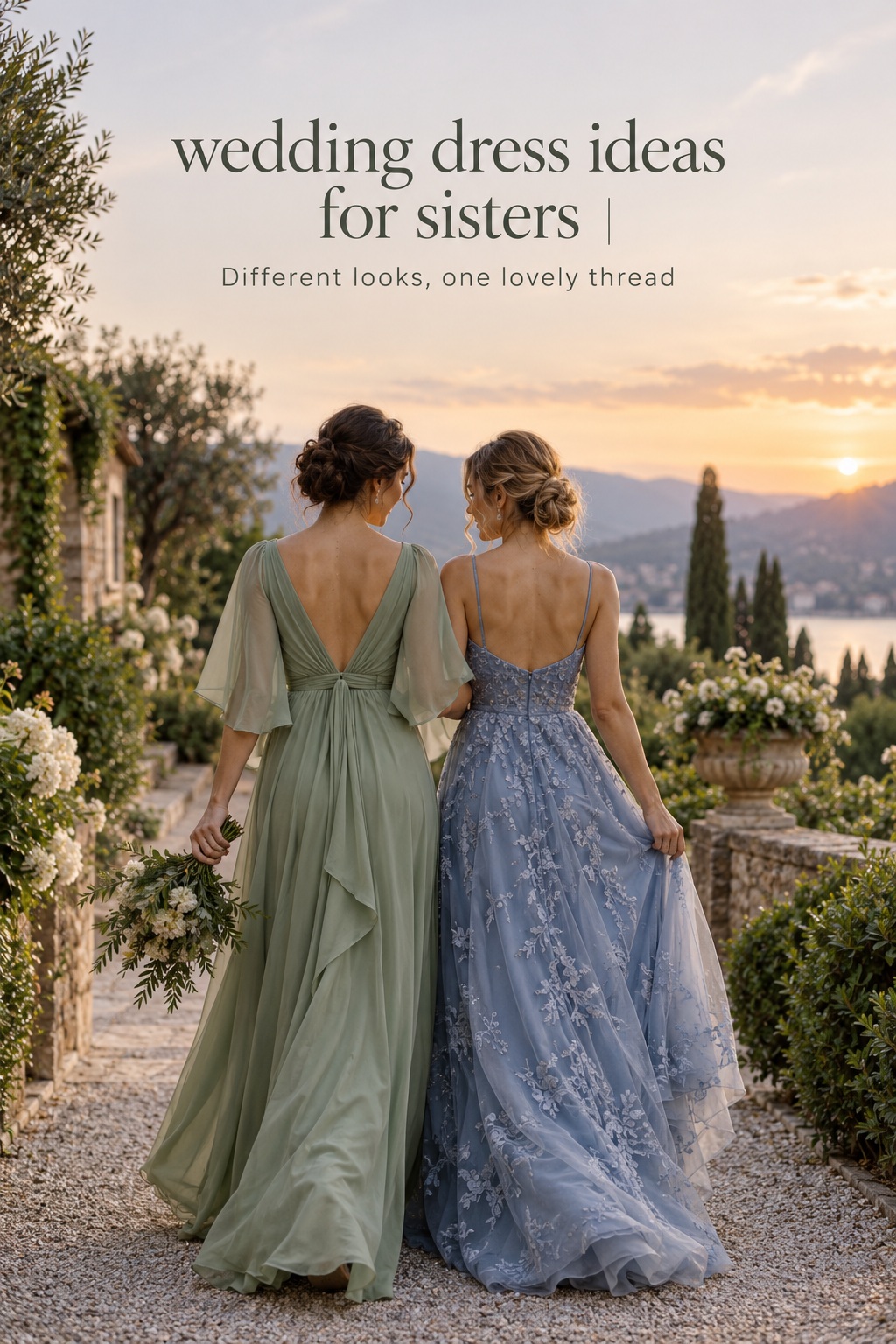
Choose one anchor before anyone orders a dress. A shared color family is the easiest option: dusty blue with slate blue, rose with mauve, or sage with deeper green. A shared fabric can work when the wedding party is small, such as crepe, chiffon, or satin with different necklines. A shared formality anchor is more flexible for sisters who are not in the same role: both dresses may be floor length for a black-tie event, while color and fabric remain individual.
Only one element needs to match closely. If the color is exact, allow silhouettes and accessories to vary. If the fabric is the common thread, let each sister choose a different shade in the wedding palette. If the sisters have different roles, keep the dress code and level of polish consistent while allowing the bridal party color to belong to the attendants. Choosing multiple matching rules can make the result feel overly coordinated and limit the options that will actually fit.
Color as the shared thread
A single color in different silhouettes is reliable for attendants because it is easy to explain and usually easy to photograph. It also makes room for a sister who prefers sleeves, a higher neckline, or more movement in the skirt. If a precise shade is difficult to find, agree on a narrow family rather than a broad list. Three neighboring shades of blue have a clear relationship. Blue, lavender, and coral may need a stronger shared element, such as fabric or accessory color, to look intentional together.
Before ordering, compare fabric swatches in natural light and under the venue’s lighting if possible. The same color name can look different on matte crepe, shiny satin, and sheer chiffon. Put the swatches beside one another, then view them from several feet away. The goal is a related palette, not a claim that every textile will match perfectly.
Fabric as the shared thread
A common fabric finish can connect dresses with different colors and cuts. Matte crepe creates a quiet, clean line. Chiffon brings softness and movement. Satin reads more reflective and polished. These are visual tendencies rather than rules, so compare the actual garments and the formality of the event. A dramatic shine may feel at home in an evening ballroom but too dressy for a casual afternoon celebration.
Fabric should also work for the wearer’s plans. Consider how it feels when sitting, walking, and dancing, and whether it needs special undergarments or careful steaming. Ask about lining and stretch before ordering. A coordinated photograph is not worth spending the full day adjusting a strap or worrying about a fabric that feels uncomfortable.
Formality as the shared thread
For a bride and a sister, formality often gives the pair a natural connection without making the sister look bridal. At a formal evening celebration, a structured gown for the bride can sit comfortably beside a floor-length, richly colored dress for her sister. At a relaxed daytime wedding, a simple bridal dress and a refined midi for the sister may feel more appropriate. The wedding’s dress code should guide both choices, while the bride’s silhouette and color remain distinct.
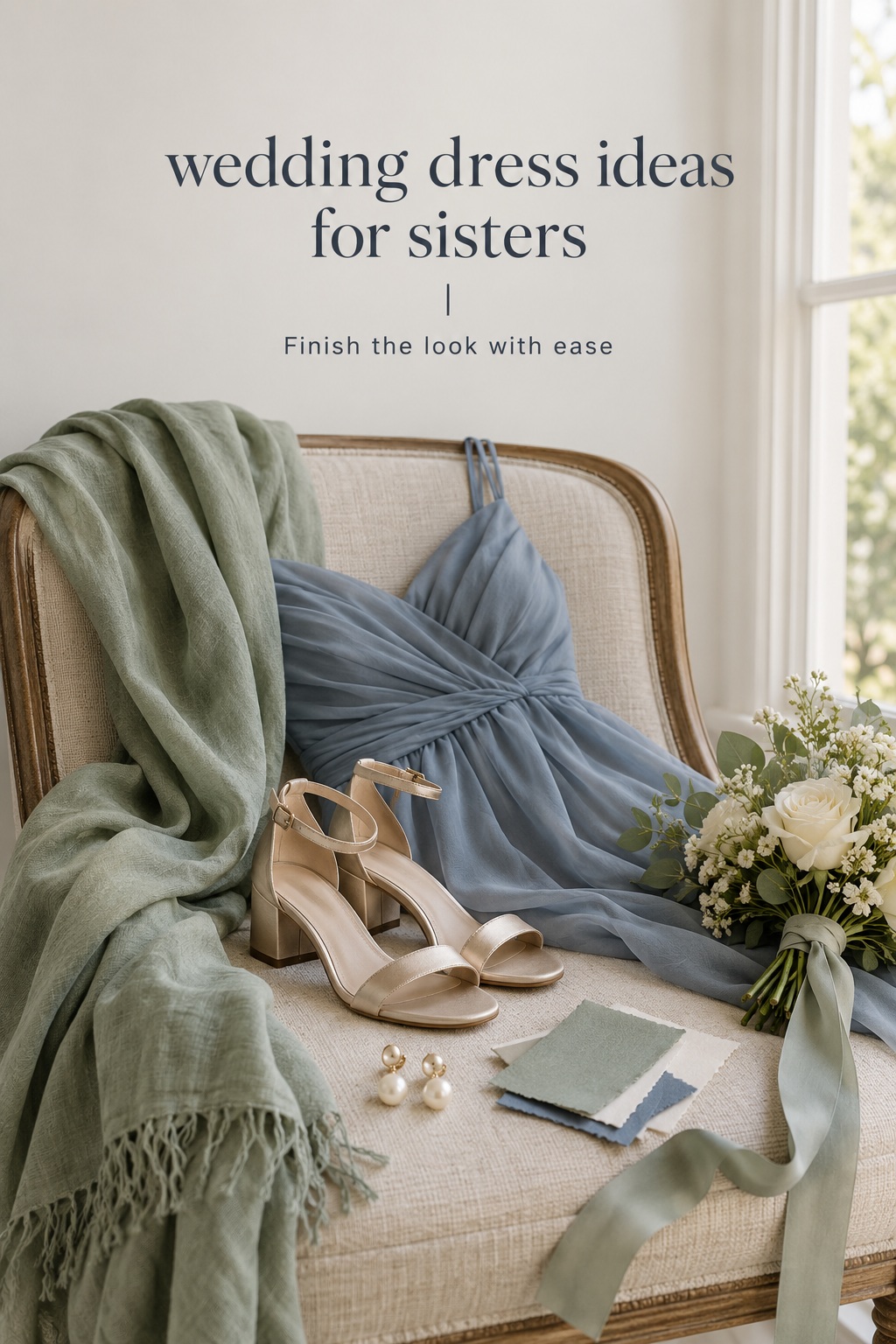
Accessories can finish the connection. Sisters might carry bouquets in the same palette, wear similar metallic jewelry, or choose shoes with a similar level of formality. Treat these as small repeating notes. Matching every accessory can add effort without improving the overall result.
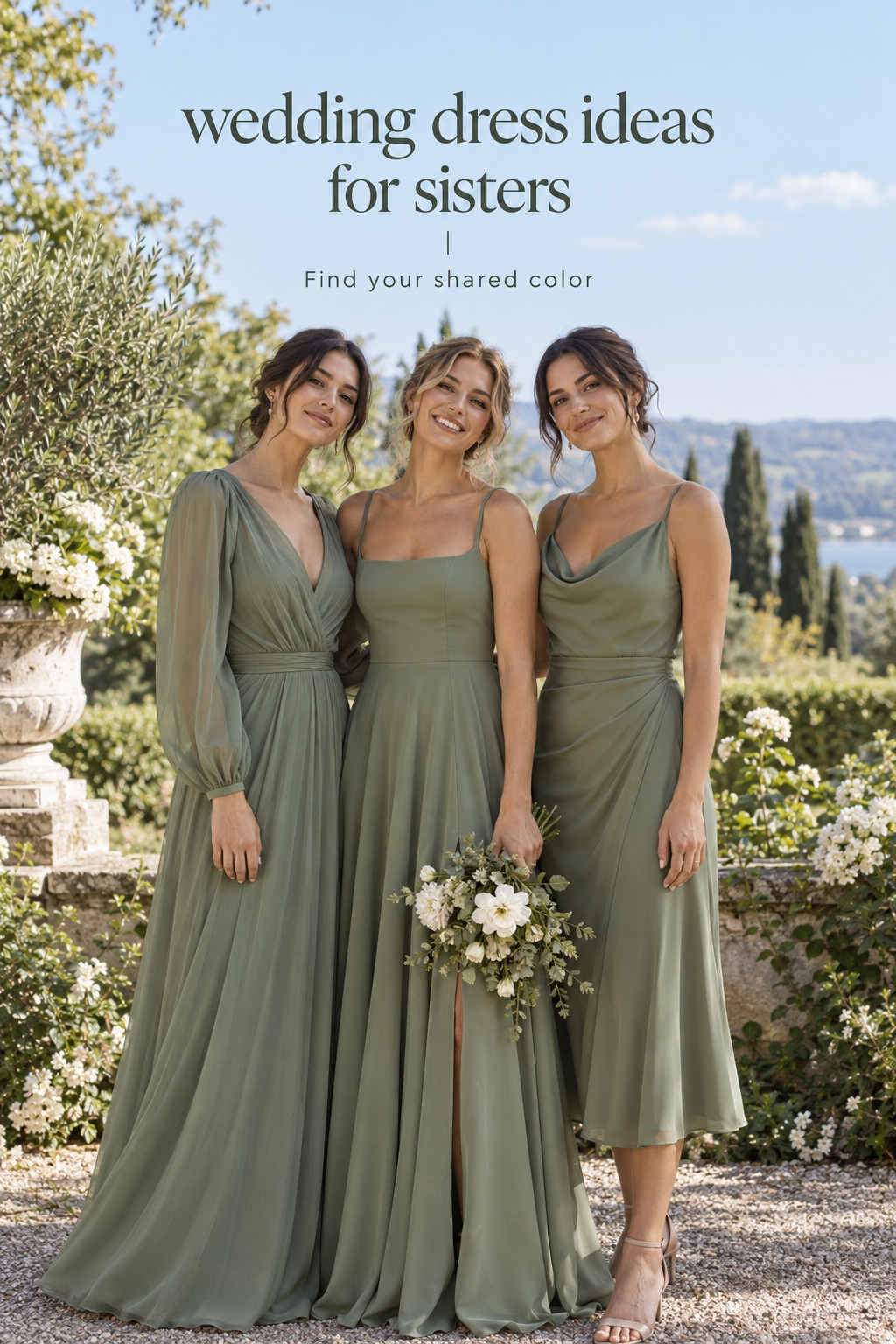
Wedding dress ideas for sisters by role
The most useful dress formula depends on who is wearing what. Start with role, then apply the capsule anchor. The examples below are starting points, not rules; adjust them to the couple’s dress code, culture, venue, and comfort needs.
The bride and her sister
Let the bride’s wedding dress lead. Her sister can choose a color that belongs to the wedding palette but is visibly distinct from the bridal look. A floor-length sage, navy, rose, or soft blue dress can feel considered beside an ivory gown without competing for the same visual space. If the bride prefers a more traditional white palette for portraits, choose the sister’s look with her first and make the distinction clear through silhouette, fabric, and styling.
For a sister who is also maid of honor, a different neckline or slightly more detailed bodice can mark her role while keeping the same bridesmaid color. If she is not in the wedding party, she does not need to wear that color at all. A related neutral or a deeper shade from the flowers can bring her into the family photographs without suggesting that she is an attendant.
Consider the day’s schedule as well. The sister may help the bride get ready, appear in family portraits, give a toast, or join the dance floor. A secure neckline, a bra-friendly back, and shoes she can stand in make the look easier to wear through those moments. If the dress needs a second look for dancing, a removable overskirt, a change of shoes, or a lighter wrap may solve the issue without buying a second gown.
Two or more sisters in the wedding party
If all sisters are bridesmaids, pick a shared color or narrow palette and let each person select a silhouette from a short approved set. Offer a range of necklines, sleeve lengths, and skirt shapes. Ask each sister to check the size chart and alteration timeline herself, and avoid treating one sample size as the standard for the group. Different body shapes and fit preferences are normal; the visual plan can accommodate them.
A useful shopping brief might read: “Choose a floor-length dress in dusty blue, matte or softly draped fabric, with a neckline you feel comfortable wearing. Send a photo and fabric detail before ordering.” This gives enough direction to maintain cohesion while leaving the individual choice meaningful. If the dresses come from different retailers, check the fabric colors together and avoid assuming that a color name guarantees a match.
When one sister is maid of honor, distinguish the role with a bouquet, a different accessory, or a small change in shade. A completely different dress is not necessary unless the couple wants that distinction. The choice should make the party easy to read in a photograph, not create a hierarchy among siblings.
Sisters attending as guests
Guest sisters can coordinate quietly through a color family or level of formality. For example, one might wear a deep green wrap dress and the other a floral dress with green in the print. Or they might choose different colors in similarly polished fabrics. If they will be in many family portraits, a repeated accessory or a shared neutral shoe can provide a subtle connection.
Check the invitation before choosing a look. Avoid colors the couple has asked guests not to wear, and do not assume that a bridesmaid shade is open to every guest if the wedding party color is meant to be distinct. For an outdoor venue, consider the ground underfoot and the likely temperature. For a religious ceremony, check whether shoulders or hemlines need extra coverage and plan a layer that works with the dress.
If one sister is in the wedding party and the other is a guest, the attendant’s dress brief should take priority for the palette. The guest can coordinate through a complementary color and similar formality, leaving the designated wedding-party color easy to recognize.
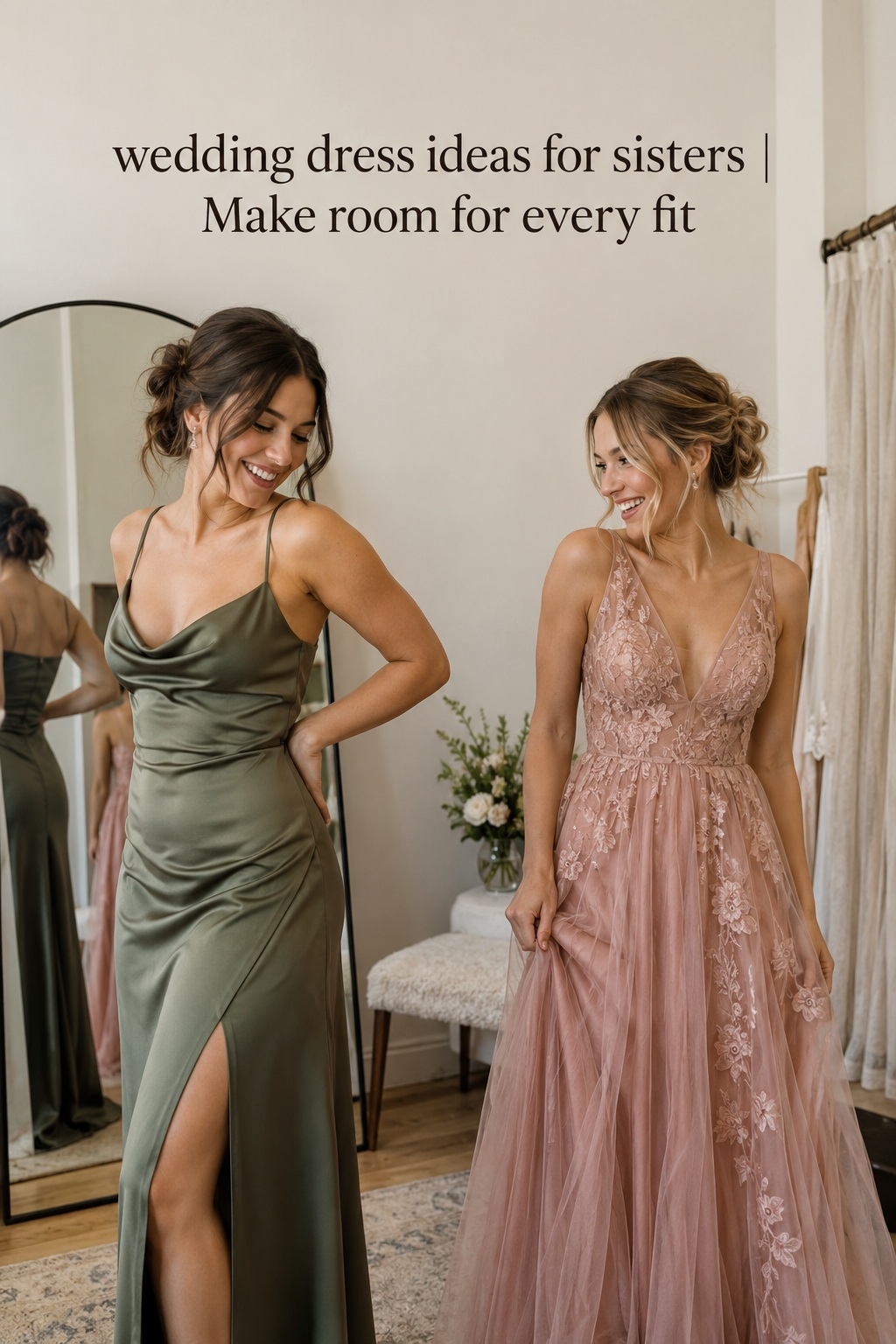
Make the capsule work from portraits to the last dance
A dress should suit more than the first portrait. Look at the full schedule and identify the moments that matter: getting ready, the ceremony, outdoor photographs, dinner, speeches, and dancing. The same dress may work for every part of the day, but footwear and layers often need a plan.
For an outdoor ceremony, choose shoes that are stable on grass, gravel, or sand. Bring a second pair for dancing if the first pair is formal. If the ceremony and reception are in different places, select a wrap, jacket, or shawl that can travel easily and does not snag the dress. In warm weather, prioritize breathable lining and a neckline that feels secure in heat. In cooler weather, consider sleeves, a tailored layer, or a wrap in a related color. Avoid buying a cover-up that hides the part of the dress that makes the outfit feel personal.
Sisters do not need to wear matching shoes. They do need shoes that suit the venue and are comfortable enough for the hours they will be standing. A shared metallic tone or similar heel height can connect the outfits if that matters to the photographs. If one person needs flats or supportive shoes, include them in the plan from the start. A discreetly different shoe will not break the capsule.
Accessories can repeat the anchor in a light way. A blue stone, pearl detail, gold finish, or bouquet ribbon can link outfits that use different shades or fabrics. Keep the scale in proportion to the dress. A heavily embellished neckline may need little jewelry, while a plain dress can support a more noticeable earring. Coordinate at the level of mood and finish rather than asking every sister to wear the same necklace.
Shop, fit, and photograph the looks as a pair
Set the order of decisions so the group does not buy dresses that later prove difficult to combine. Confirm each role and the dress code first. Select the shared anchor second. Choose silhouettes third. Then check availability, sizing, delivery dates, alterations, shoes, and layers. This order leaves room for individual preferences while helping the group notice a mismatch before anyone commits.
Agree on a budget range early, including alterations, undergarments, and shipping. If sisters shop at different price points, the shared color or fabric can still carry the visual connection. A dress that needs extensive tailoring may cost more after purchase, so include the likely alteration in the comparison. Check return and exchange deadlines before ordering and keep a note of the final size and color for each person.
Try the dresses with the shoes and undergarments planned for the wedding. Sit, reach, walk, and turn. Check that hems clear the ground and that straps stay in place. Take a quick group photo in similar lighting to the venue, then look at the image from a distance. Do the outfits read as related? Can each sister move comfortably? Is the bride clearly distinct from the attendants? If one answer is no, adjust one shared element instead of replacing every dress.
Send the group a short written brief with the palette, formality, any colors to avoid, the preferred order date, and who approves the final choice. Keep the brief friendly and practical. It should help sisters shop independently, not make anyone feel that their body or budget is a problem to solve.
Seasonal adaptations for the same sister capsule
A capsule can work across seasons if the shared anchor remains stable and weight, coverage, and accessories respond to the weather. For spring, soft colors and light layers can connect floral or garden settings. A compact wrap can help with a cool evening without forcing every sister into the same sleeve length. In summer, lighter layers and secure, breathable construction matter more than adding a second accessory for the photographs.
For fall, deeper tones and richer textures can suit an evening celebration. If sisters use different fabrics, repeat the palette and the level of formality so one velvet or satin look does not feel disconnected. For winter, long sleeves, a tailored coat, or a wrap can add coverage. Plan where outerwear will be worn and whether it will appear in family photographs. Choose a layer that complements the dress rather than a last-minute coat that changes the outfit’s color story.
Weather is unpredictable, especially at outdoor venues, so each sister should have a practical option that still fits the brief. A coordinated capsule does not require identical protection from the elements. It requires that each person can stay comfortable while the shared visual thread remains visible when the layers come off.
FAQ
Do sisters need to wear matching dresses to a wedding?
No. One shared element, such as a color family, fabric direction, or level of formality, is usually enough to make the outfits feel connected. Different silhouettes allow each sister to choose a dress that suits her role and comfort.
What should the sister of the bride wear?
Start with the dress code, venue, and the bride’s preferences. A polished dress in a color that complements the wedding palette can work well, whether or not the sister is a bridesmaid. Keep the bride’s look distinct and choose shoes and layers for the full schedule.
Can sisters wear different colors and still coordinate?
Yes. Choose related shades or colors that already appear in the wedding palette, then repeat another element such as fabric, formality, or an accessory finish. Compare the actual dresses together because fabric can affect how a color appears.
What should the sister of the groom wear?
She can follow the same guest or wedding-party dress code as everyone else. Ask the couple about colors reserved for the attendants and choose a complementary look that feels comfortable for the venue and photographs.
Can a sister wear white to the wedding?
Ask the bride before choosing white, ivory, or a dress that could read as bridal in photographs. If the bride wants a white family look for a specific portrait, follow her direction. Otherwise, a color from the wedding palette makes the sister’s role visually clear.
How can sisters coordinate when their budgets are different?
Set the shared anchor first, then shop within each person’s budget. Compare the total cost, including alterations, shoes, undergarments, shipping, and any required layer. Similar color or formality can connect dresses from different stores.
When should sisters order their dresses?
Order early enough to receive the dress, check its fit, and complete alterations before the wedding. The right timing depends on the retailer, delivery estimates, and the complexity of alterations, so check those dates before purchase and leave time for a fitting.