Christian Wedding Ideas That Carry Meaning
A Christian wedding can feel deeply rooted in faith without making every choice a symbol or turning the reception into a themed set. The most memorable celebrations often have a clear thread: a belief the couple shares, a moment in the ceremony that gives it shape, and a few considerate details that help guests understand the day. That thread might be gratitude, hospitality, service, joy, or a commitment to keep faith at the center of married life.
Instead of collecting every idea you see, try a simple framework: choose an anchor value, a ceremony practice that expresses it, and one or two expressions that carry the same intention into the rest of the celebration. These Christian wedding ideas are options to discuss and adapt. Christian communities do not all follow the same service, and the officiant or church may have specific guidance about readings, music, rituals, or setting.
Start With One Value You Want the Day to Express
Before choosing décor or a unity ritual, finish this sentence together: “We hope our wedding helps us remember…” The answer does not need to sound grand. You might choose patience, welcome, faithful companionship, generosity, or joy. The point is to name something that already matters to you, rather than borrowing a theme because it looks good in photographs.
Then connect the value to a moment. If hospitality is your anchor, you could ask a trusted family member to welcome guests, make the ceremony program easy to follow, or leave time to greet people at the reception. If gratitude is central, a prayer or brief acknowledgment of the people who supported you may feel more personal than a wall of printed quotations. If service matters to you, invite guests to contribute to a cause you already support, with a clear, optional explanation.

Your wedding look is only the beginning.
Keep your guest list, vendors, timeline, and every important detail together with Zarellea — so your day feels as considered as your style.
This method gives you a useful filter when opinions arrive from family, social media, or vendors. Ask whether an idea expresses the value you chose, fits the service your officiant can lead, and feels comfortable for both of you. If it fails those tests, it can be left out. A Christian wedding does not need to display every possible symbol to communicate sincere faith.
Write down the anchor in plain language. Then list one moment for the ceremony and one for the reception. A short list makes it easier to protect the meaning of the day while still leaving room for the music, food, clothes, flowers, and celebration you love.
Choose Ceremony Ideas With Your Officiant
Begin with a conversation, not a finished script. Ask your officiant what parts of the service are fixed, where you can make choices, and when decisions are due. If you are marrying in a church, ask about its process for readings, music, décor, photography, and participation. For Catholic couples, the USCCB describes parish and diocesan preparation and liturgy guidance that can vary by local policy, so the couple should start with their own parish. Other Christian communities have their own practices too. A general online list cannot tell you what your congregation permits.
The USCCB’s marriage-preparation overview is useful context for Catholic couples, but it is not a substitute for your parish’s instructions. Ask early, especially if you have a date, location, or family circumstance that may affect the ceremony.
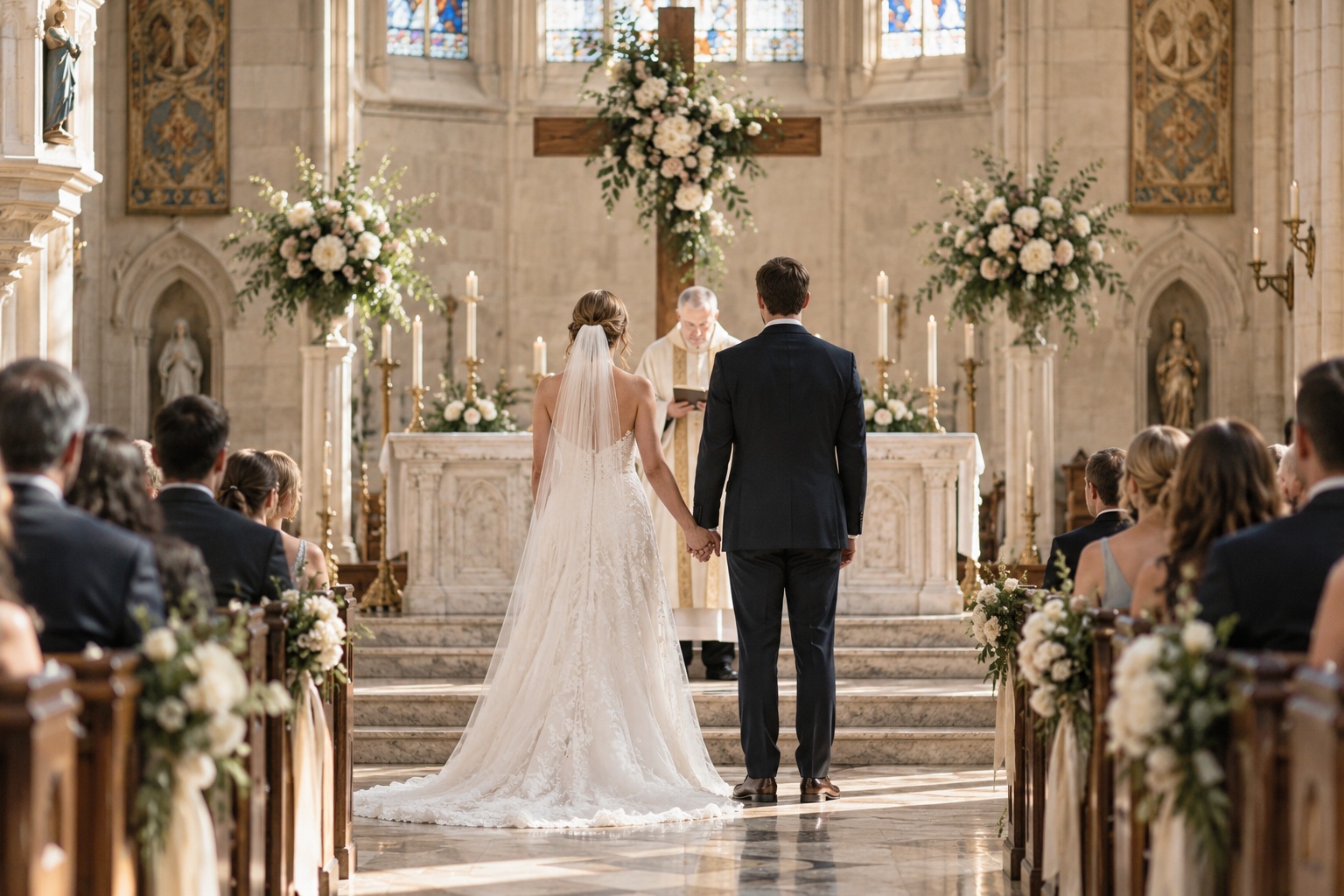
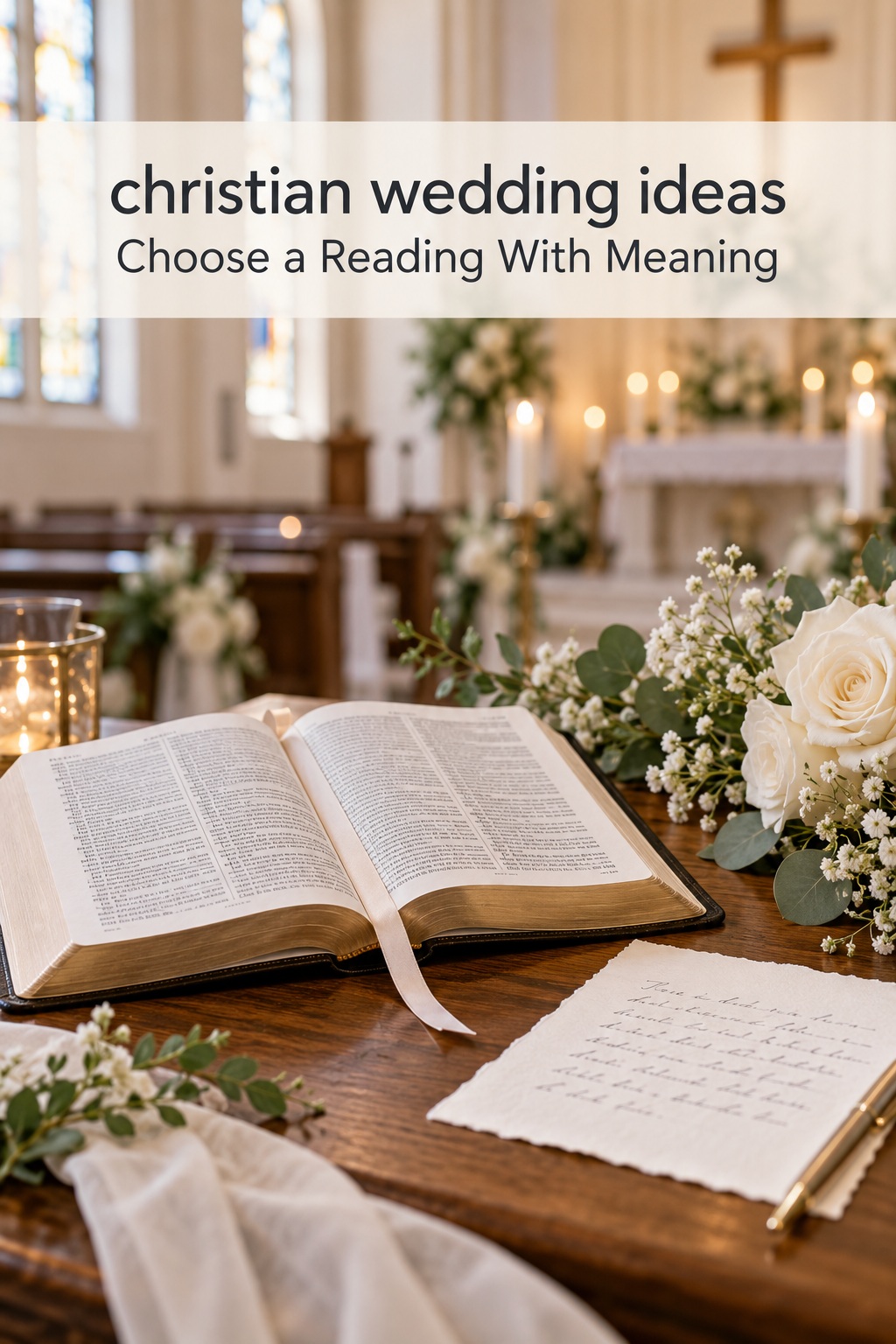
Within the choices available to you, a Scripture reading can be a strong anchor. Choose a passage because its meaning matters to you, not only because it appears on wedding lists. Read the full passage together and consider what it says about love, patience, faithfulness, humility, or community. Ask the officiant how it fits the service and whether a friend or relative may read it. If some guests are unfamiliar with the passage, a sentence of context in the program can make the moment easier to follow.
Music can carry the same intention. You might choose a hymn, a worship song, an instrumental piece, or a mix that suits the ceremony and your congregation. Confirm the available musicians, sound equipment, licensing expectations, and any restrictions with the venue before printing a program. If you want guests to sing, select a familiar piece and make the words available in a permitted format. Participation should feel welcoming, not like a test of who knows the song.
Prayer is another option, whether it is part of the service, offered by the officiant, or shared by someone close to you if that fits your tradition. You can also ask whether the congregation may offer a response, sing together, or quietly hold the couple in prayer. A wedding-planning checklist from the Calvin Institute of Christian Worship raises the value of active participation and preparation for marriage as questions for couples and churches to consider. Treat it as a resource for discussion, not a universal order of service.
Give Symbolic Rituals a Clear Purpose
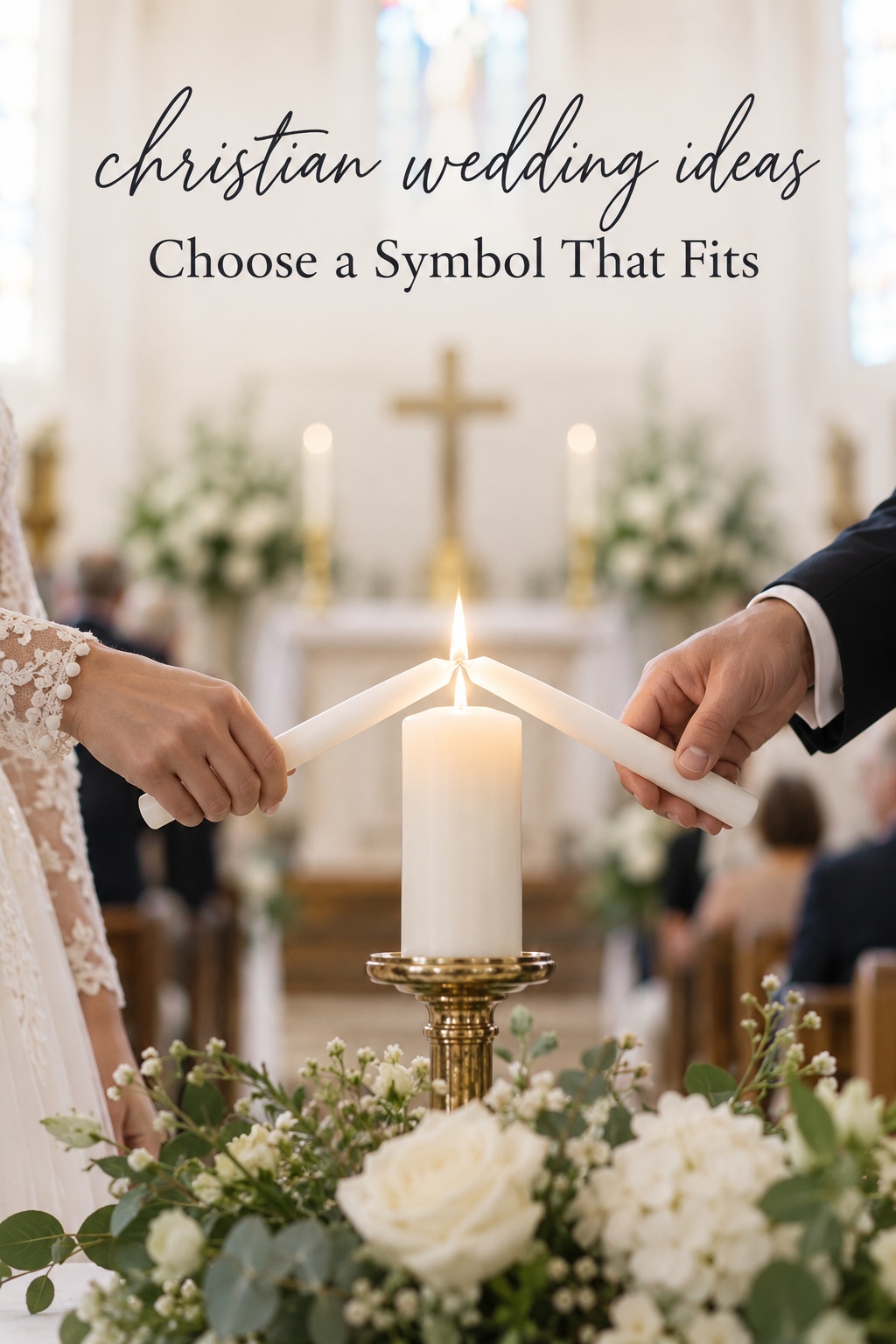
Candles, braided cords, communion, hand washing, and family blessings are among the ideas couples encounter while researching Christian weddings. They do not all mean the same thing, and they are not interchangeable. Some belong to particular traditions or communities; others are personal symbols that a couple may discuss with an officiant. Before adding one, ask what it means to you, who will lead it, what guests will see, and whether it belongs in your service.
A ritual works best when its meaning can be said simply. For example, if a candle is approved and meaningful to you, the program might explain that its light represents a commitment you want to carry into married life. If a family blessing matters, decide whether you want it spoken by parents, offered by the officiant, or shared by the community. If the idea needs a long explanation to make sense, it may be better suited to a private conversation or reception toast than to the ceremony itself.
Consider practical details too. Is there enough time in the service? Will a flame be allowed in the space? Can the couple reach the table without disrupting the aisle? Will the ritual be visible from the back of the room? Who will set up and clear the items? These questions are not unromantic. They help the moment feel calm and intentional rather than rushed.
You are also free to have no added ritual. Vows, a reading, music, and a prayer may already say what you want to say. Avoid stacking symbolic moments simply to prove that the wedding is faith-centered. Choose one that fits your beliefs and your church’s guidance, or let the ceremony’s existing words carry the meaning.
Carry the Same Intention Into the Reception
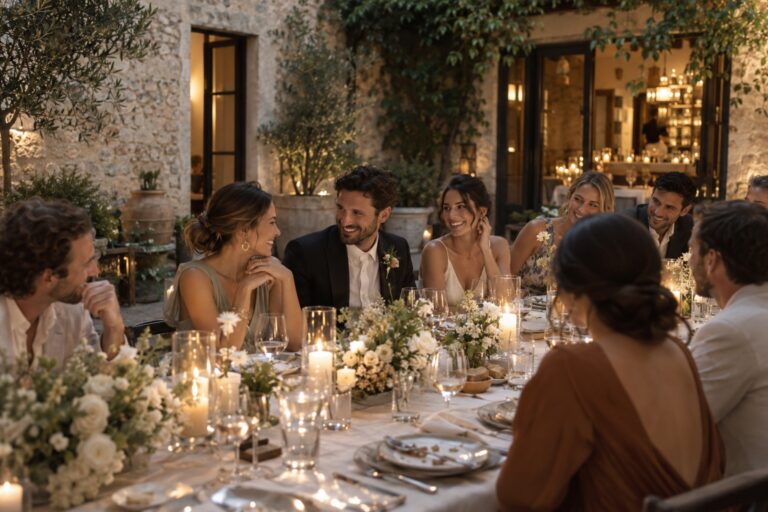
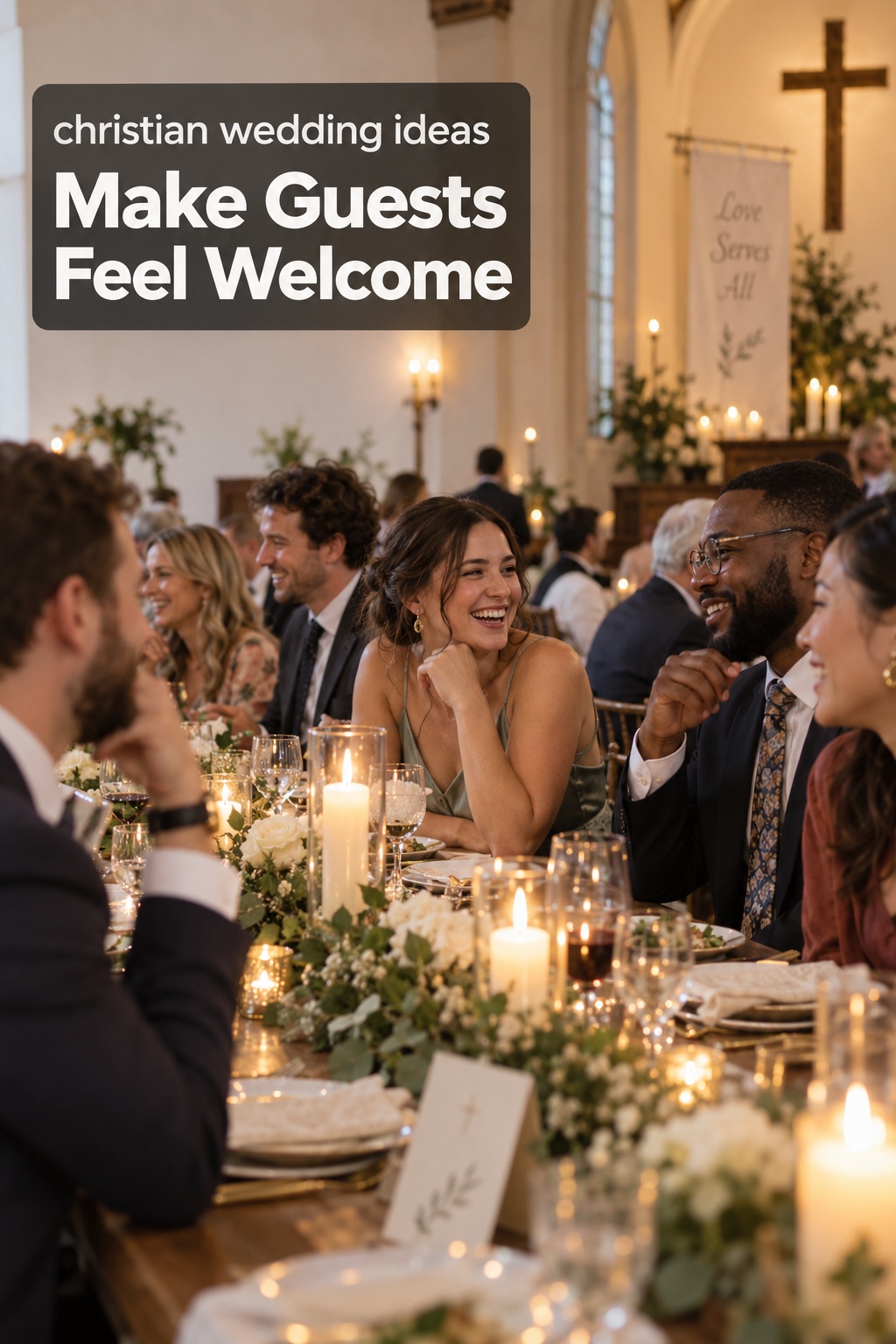
The reception can continue the spirit of the ceremony without becoming a second service. Think about what your anchor value looks like when people arrive, find their seats, eat, listen, and celebrate. Hospitality might mean clear signs, a thoughtful welcome, a meal that accounts for guests’ needs, and enough time for conversation. Gratitude might appear in a short toast, a note to family, or a quiet moment with the people who helped you get there.
If you want to pray before the meal, decide who will lead, how long it should be, and whether you want to explain that guests may join in a way that feels comfortable to them. A gracious invitation can be clear about your faith while respecting guests from different backgrounds. You can also speak with the emcee about the tone of introductions and toasts. A warm celebration does not have to ask anyone to perform a belief they do not hold.
Music and dancing are personal choices, and couples and communities approach them differently. Talk openly with one another about what feels joyful, what fits your beliefs, and what your venue allows. If you prefer a quieter reception, consider live instrumental music, a longer dinner, conversation tables, board games, or a photo area. If dancing is part of your celebration, choose the playlist and schedule together. Do not assume another couple’s approach is a rule for yours.
Some couples include a service project or charitable giving. Keep it specific, voluntary, and connected to work you actually care about. A small card can explain the organization and how to learn more, without making guests feel that a gift or donation is required. Another option is to make a donation yourselves and mention it briefly in a thank-you note after the wedding.
Plan the pace with guests in mind. A full day of formal moments can leave little room to connect. If you include a prayer, testimony, blessing, or family tribute, coordinate transitions with your planner or emcee and keep the program readable. The aim is not to squeeze a religious message into every interval. It is to let the celebration reflect what matters to you while giving everyone a comfortable way to be present.
Make the Visual Details Feel Personal
Faith can be visible without covering every surface with a verse or symbol. Choose a small number of details that support your anchor: a line in the program, a simple sign at the entrance, a favorite hymn reflected in the printed order, or a family Bible placed where it has a practical role. If you use a cross or other religious object in the ceremony space, ask who owns it, where it may be placed, and whether the venue has guidelines.
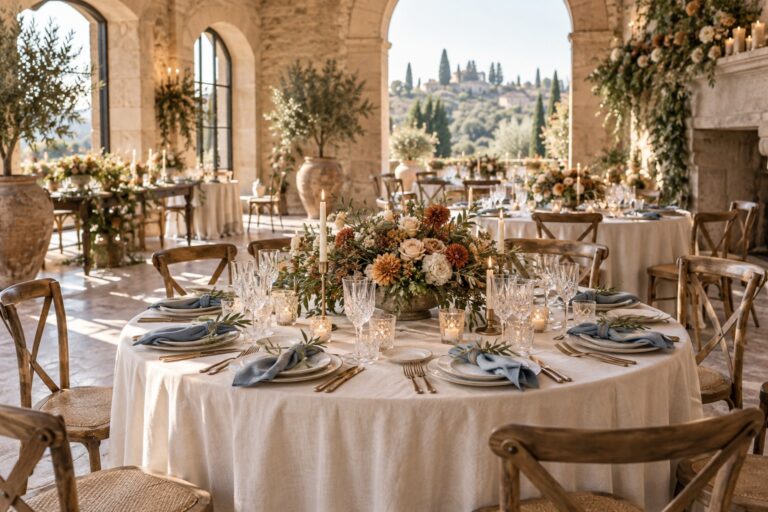
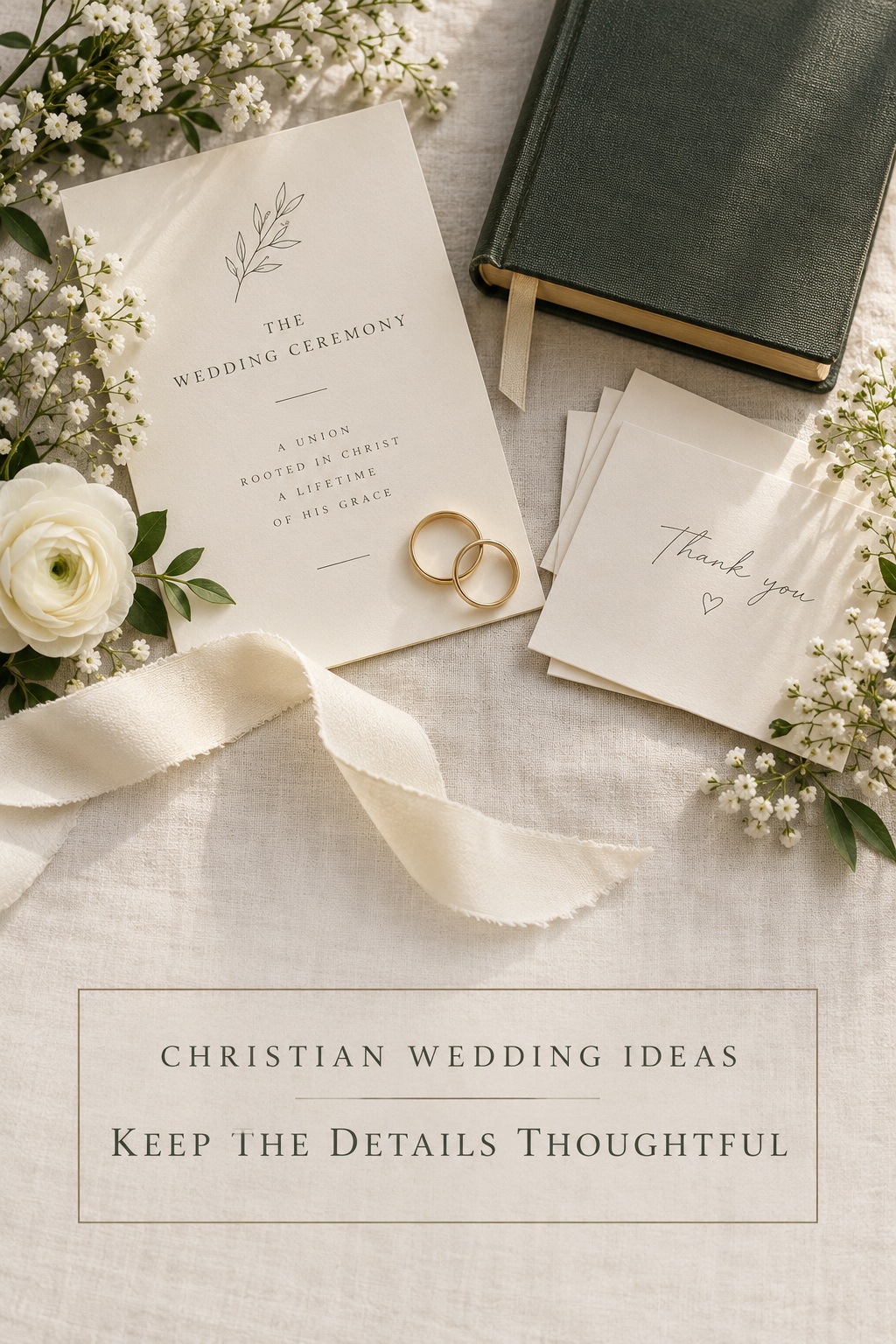
Typography and materials can keep the design elegant. A reading excerpt can sit beside the service details in the program; it does not need to appear on every menu, napkin, and favor. Florals can frame the ceremony rather than compete with its focal point. For table numbers, you might use names that reflect meaningful places, people, or passages, if those references feel personal and are easy for guests to understand.
Think about accessibility and readability before approving printed pieces. Use contrast that guests can see, type large enough to read, and wording that explains unfamiliar elements in plain language. If a passage is read aloud, print the reference and a short note about why you chose it. Check translation permissions with the publisher or church when reproducing Scripture in print. A digital program can hold extra context while the printed version stays concise.
For favors, choose something guests will actually use or enjoy. A handwritten thank-you, locally made treat, seed packet, or small keepsake can express gratitude without requiring a religious message. If a devotional item is meaningful to you, offer it as an optional resource rather than assuming every guest wants one. The visual experience can be beautiful and faith-aware while remaining considerate of the people sharing the day with you.
Plan for Different Beliefs and Family Expectations
Families may have different expectations about what makes a wedding appropriately Christian. One relative may want more Scripture, another may prefer a familiar service, and you may be balancing two church backgrounds or different levels of religious practice. Start by asking your partner what they want the day to communicate. Then identify which decisions belong to the couple, which require the officiant’s guidance, and which are simply preferences you can hear without adopting.
When you need to explain a choice, keep the language warm and specific. You could say, “We chose this reading because it reflects the patience we hope to practice,” or “Our officiant is guiding us on which music fits the service.” This explains the reason without opening every decision to a vote. If family participation matters, invite a relative to read, welcome guests, or share a blessing only if the role is appropriate to your service and comfortable for the person.
For a couple with different Christian traditions, ask each community what can be shared and what should remain distinct. For an interfaith couple, speak honestly about the beliefs each person wants represented and the boundaries that matter to both. A neutral planner can help with timing and logistics, but religious questions are best discussed with the leaders who know your traditions. Do not rely on a generic wedding article to resolve a question of doctrine or eligibility.
Also consider guests who may not know when to stand, respond, sing, or remain seated. Your officiant or program can provide gentle cues. You may briefly describe a custom before it begins, or simply invite guests to observe. Clarity keeps participation welcoming and lets the couple celebrate their faith without putting anyone on the spot.
Use a Simple Planning Worksheet
Before your next vendor or church meeting, answer these prompts together. Keep the answers in one shared document so the ceremony, planner, and reception team are working from the same decisions.
- Our anchor: What value or belief do we hope the wedding will express?
- Our ceremony practice: Which reading, prayer, song, vow, or approved ritual gives that value a place in the service?
- Our reception expression: What is one welcoming or celebratory detail that carries the same intention?
- Our boundaries: What feels personal and sincere, and what would feel performative or uncomfortable?
- Our questions: What must the officiant or venue approve, and when do they need our decision?
Bring practical questions too: Who leads the prayer? Who introduces a reading? What music is permitted? Are candles or other objects allowed? Can guests participate, and how should the program explain it? What happens if the ceremony runs late? These details are easier to settle before invitations and programs are printed.
Finally, check that the day still sounds like the two of you. Read the ceremony outline aloud. Look at the reception schedule as a guest would experience it. If a meaningful choice has become crowded by extra additions, simplify. A calm, coherent wedding can communicate faith through its promises, its hospitality, and the way you care for the people around you. Start with one value, choose the moments that express it honestly, and let the rest of the celebration feel like your own.
FAQ
What are some meaningful Christian wedding ideas?
Choose a meaningful Scripture reading, prayer, hymn, family blessing, or approved unity ritual, then carry one shared value into a welcoming reception detail. Ask your officiant which options fit your service.
Do Christian weddings require a unity candle?
No single online list can define every Christian tradition. A unity candle is an optional symbol in some ceremonies. Ask your officiant whether it is appropriate and choose it only if its meaning matters to you.
Which Bible verse should we use at our wedding?
Read a few passages in context and choose one that speaks to your understanding of marriage and shared faith. Confirm the selection with your officiant, who can advise on the service and any church guidelines.
How can we include guests who are not Christian?
Explain unfamiliar moments briefly, provide gentle cues, and invite guests to participate without pressure. They can respectfully observe a prayer or song without being asked to affirm beliefs they do not hold.
Can we have Christian wedding ideas at an outdoor venue?
Possibly, depending on your community, officiant, and venue. Ask the religious leader about ceremony requirements and the venue about sound, weather plans, décor, and any restrictions before booking or printing details.
How do we make the reception feel faith-centered without overwhelming guests?
Choose one or two sincere moments, such as a brief prayer, a gratitude toast, or a service-minded gesture. Keep them clear and welcoming, then give guests plenty of room to eat, talk, and celebrate.