Wedding Hair Ideas: Choose a Look That Feels Like You
Wedding hair ideas are easy to collect and surprisingly hard to choose. One saved photo has polished curls, another has a low bun, and a third has the veil placed in a way that may not work with the dress you bought. The problem is not a shortage of inspiration. It is that each picture may be solving a different styling problem.
Start with what you want your hair to do for you. Maybe you want it off your face, want your natural texture to stay recognizable, want an open-back gown to remain visible, or need a veil to sit securely for the ceremony. Choose that priority first. Then look for a hairstyle family that supports it, with room to adjust the details to your hair and comfort.
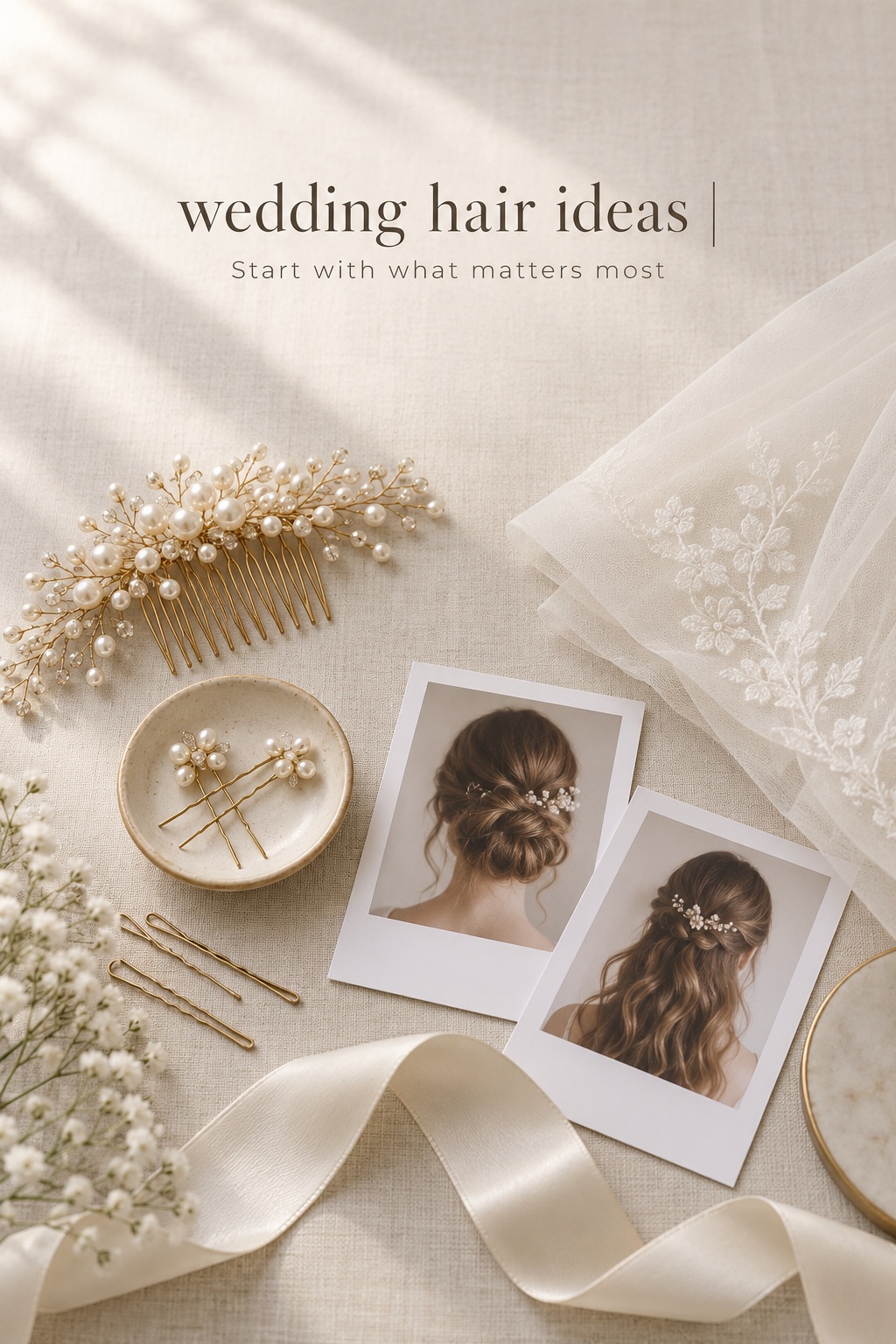
Why the inspiration folder stops helping
An inspiration photo is a finished result, not a complete plan. It rarely shows what the hair looked like before styling, what accessories are holding it, how the back is secured, or how the look changes when the veil is removed. Two images can both feel romantic while requiring very different amounts of structure. Saving more pictures does not resolve that difference by itself.
There is also a difference between liking a hairstyle in a picture and wanting to wear it for several hours. A sleek bun may look beautiful but feel unfamiliar if you usually wear your hair loose. Long curls may suit your everyday style, yet cover the back detail you chose your dress for. A high updo may show earrings and shoulders while asking you to feel comfortable with more height than you usually wear.
Your wedding look is only the beginning.
Keep your guest list, vendors, timeline, and every important detail together with Zarellea — so your day feels as considered as your style.
Treat this as a choice between needs, not a test of whether you have found the single perfect style. Pick one non-negotiable, then let the other details flex. If the veil matters most, choose a shape and anchor point that allow for it. If feeling like yourself matters most, begin with a familiar texture or part. The strongest reference is one you can describe in a sentence, not simply one that looks pretty on someone else.
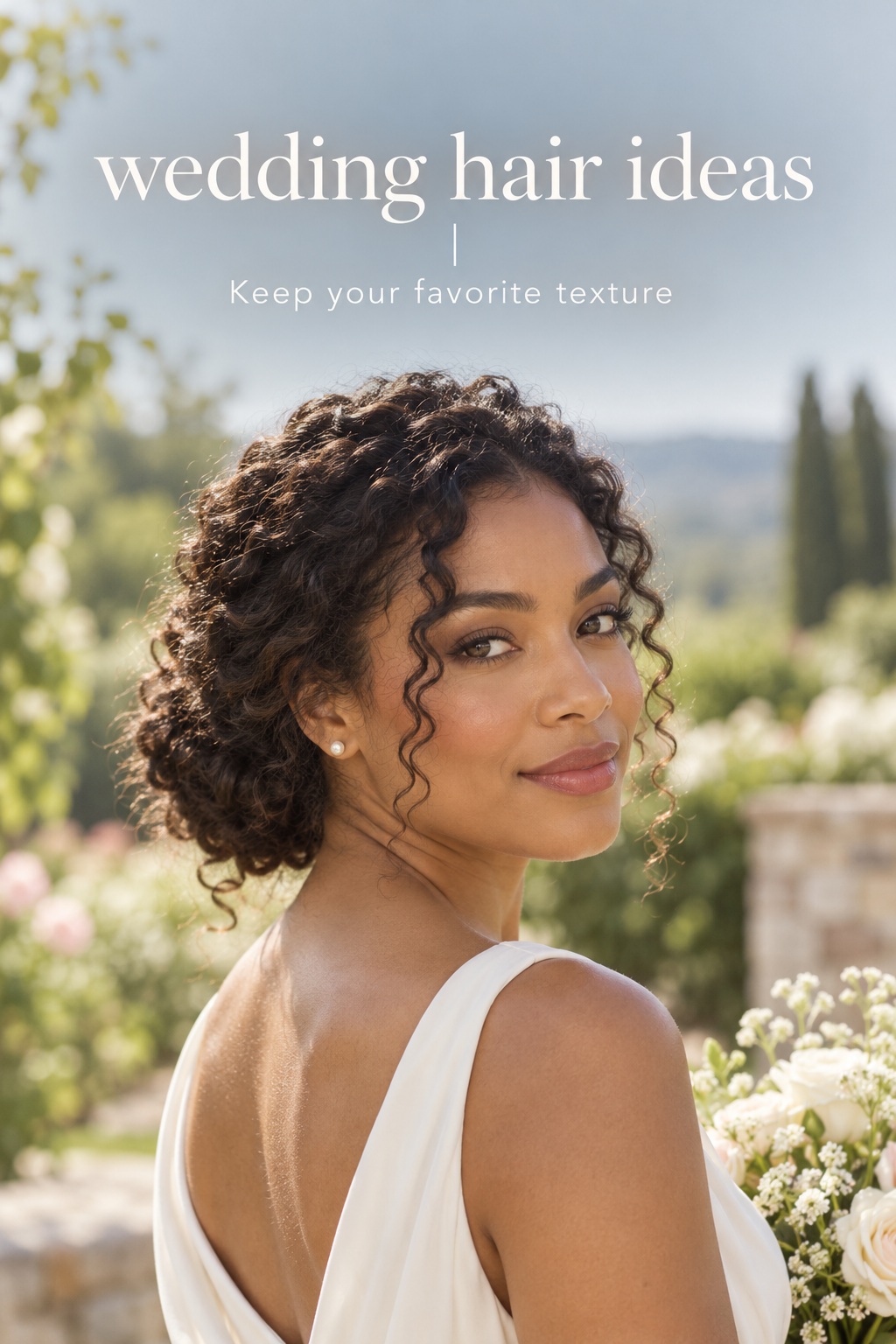
Choose the problem your wedding hair must solve
Before you settle on an updo, waves, a braid, or a ponytail, write down the wedding-day concern you want the style to handle. Pick one primary concern and one secondary preference. This keeps the decision clear without pretending that hair, dress, accessories, and comfort can be considered separately.
“I want my hair out of my face”
A low bun, a smooth ponytail, a braided updo, or a half-up shape can pull the front sections away while leaving different amounts of length visible. Decide how much hair you want to feel around your shoulders. If you want almost none, look at fully gathered styles. If you want some movement, a half-up shape may give you a more familiar compromise.
“I want to look like myself”
Use a photo of your usual hair on a day when you like how you look. Note what feels familiar: the part, curl pattern, volume, length, or whether your hair is worn up or down. Ask for a polished version of those features instead of changing several things at once. If you rarely wear a slick style, a soft part or a few natural pieces can help an updo feel less like a costume.
“I want the dress to be part of the portrait”
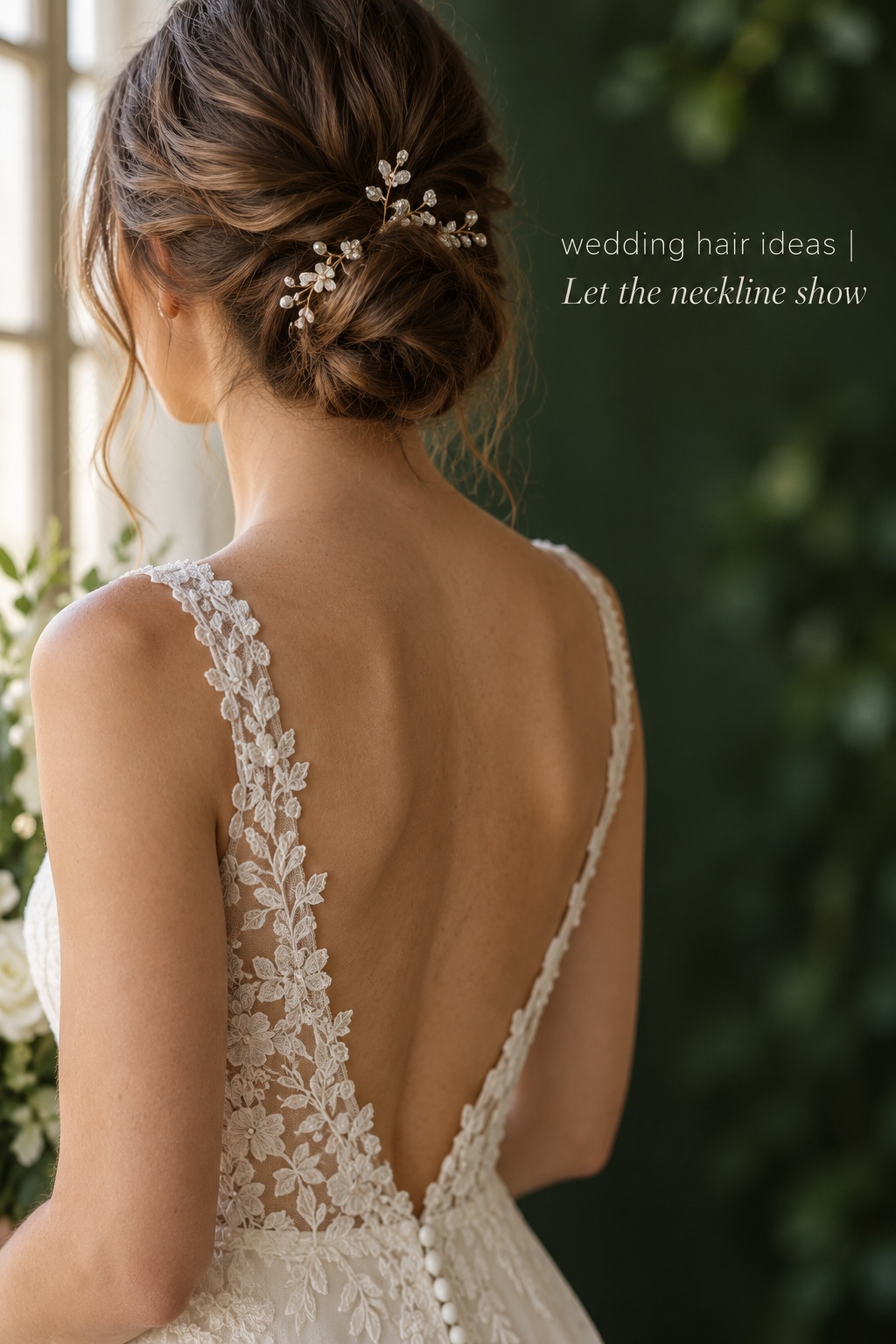
Think about what you want the camera to see. An open back, detailed neckline, statement collar, or shoulder embellishment may become more visible when the hair is gathered or swept to one side. A strapless or simple neckline can leave more room for loose hair, a headpiece, or a wider silhouette. Your dress neckline is one useful input for a style conversation, as Hair.com also recommends considering how the hair works with the gown. See Hair.com’s wedding hairstyle guide.
“I need a veil or an accessory to work”
Choose the veil or statement hairpiece before the final trial if possible. Its comb, weight, placement, and removal may affect where the hair needs support. Bring the actual piece, or a close stand-in, so the stylist can show where it sits and what the hairstyle looks like afterward. Some brides wear the veil over a gathered style, while others keep their hair loose and place the veil higher. Vogue’s veil hairstyle gallery shows both directions, which is a helpful reminder that wearing a veil does not dictate one single hairstyle. Browse Vogue’s veil and hairstyle examples.
“I want the style to move with me”
If you are picturing hugs, a long walk outdoors, a first dance, or a late reception, say so during the appointment. You might prefer a low ponytail, soft half-up look, or a secure bun with some movement around the face. Make sure the chosen shape feels comfortable when you turn your head, sit, and move your shoulders. A style should support the parts of the day you are looking forward to, not only the first portrait.
Wedding hair ideas by the concern behind them
Once you know the main concern, compare a few related shapes rather than browsing every category. The following formulas give you a practical starting point. They are not promises that every style works for every hair length or texture. A stylist can adapt the silhouette after seeing how your hair behaves and what you want to wear with it.
For a clear face and visible earrings
Try a low chignon with a defined part, a tucked low ponytail, or a smooth French twist. Each gathers hair away from the sides of the face and gives earrings space to show. If a very sleek finish feels unlike you, keep the crown softer or leave a small amount of face-framing hair. Ask the stylist to show the back and both sides so you can compare the shape from more than the front.
For a romantic look that still feels relaxed
Try a textured low bun, a loose braid that feeds into a bun, or a half-up style with softly pinned sides. These can offer some movement without leaving every section loose. If you save references with tendrils, notice how many pieces are left out and where they sit. Bring one image with a similar amount of detail rather than asking for every romantic feature at once.
For hair that you love wearing down
Brushed-out waves, a side part with soft bends, or a half-up style can keep the length visible while adding a little structure. If you are worried that a completely loose style will fall into your face, ask about securing only the front sections. You do not have to choose between a full updo and hair that is entirely untouched.
For natural curls or coils you want to keep recognizable
Start with reference images that show a similar texture and a similar length to yours. Consider a defined curly updo, a half-up shape that keeps the curl pattern visible, or curls worn down with a small accessory. Describe which parts of your texture you want to preserve and whether you like your usual volume. Avoid selecting a reference only because the hair color or accessory matches your vision if the texture and shape are quite different.
For short hair that cannot form a traditional updo
Look at a polished bob, a sculpted wave, a side-swept shape, or a short cut styled with a comb or barrette. A veil can still be part of the look, but the attachment may need a different approach than a long-hair bun. Bring a picture of your current cut and discuss what can be done with its actual length. The aim is not to make short hair imitate long hair. It is to make the silhouette intentional from the front and back.
For a veil ceremony and a different reception mood
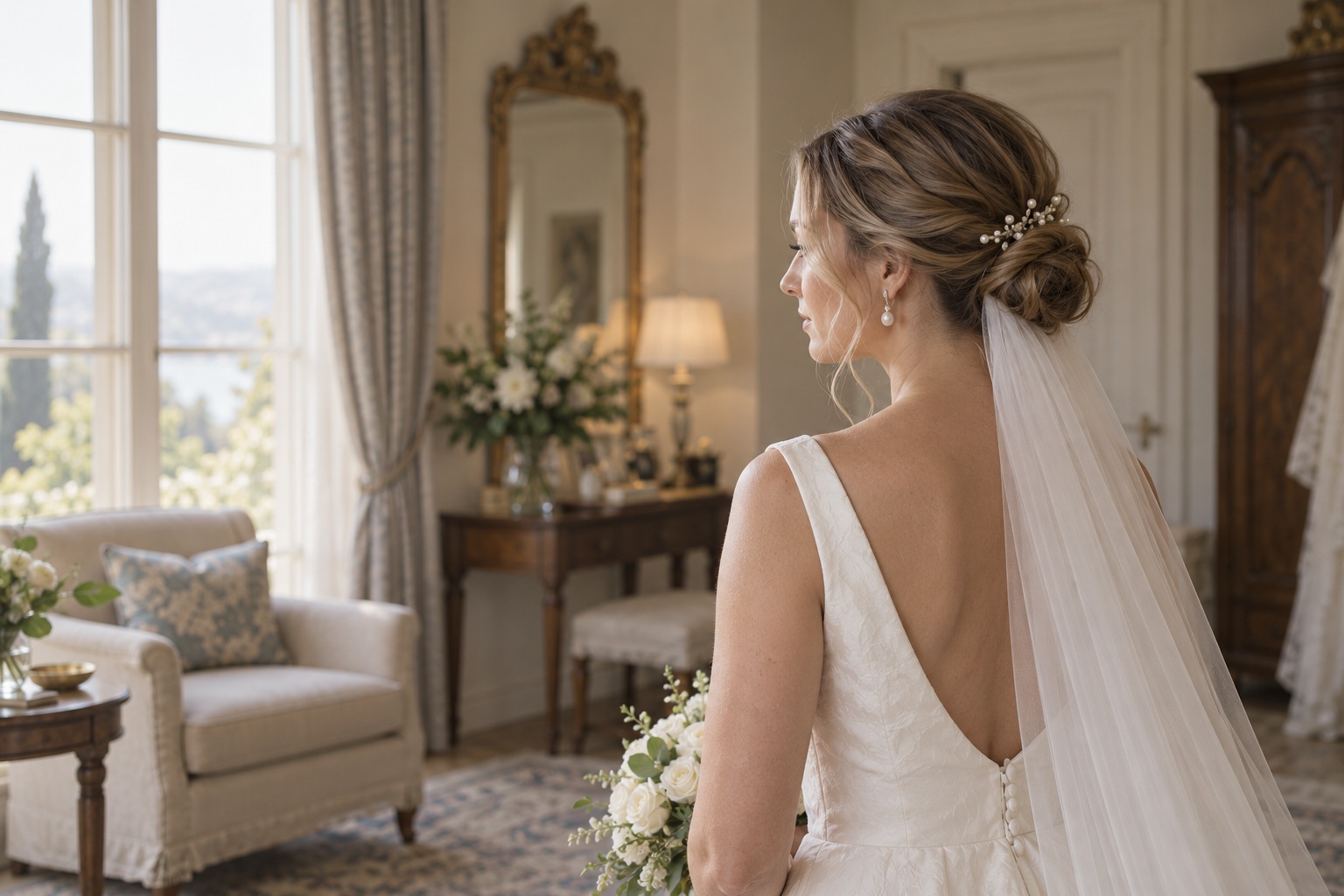
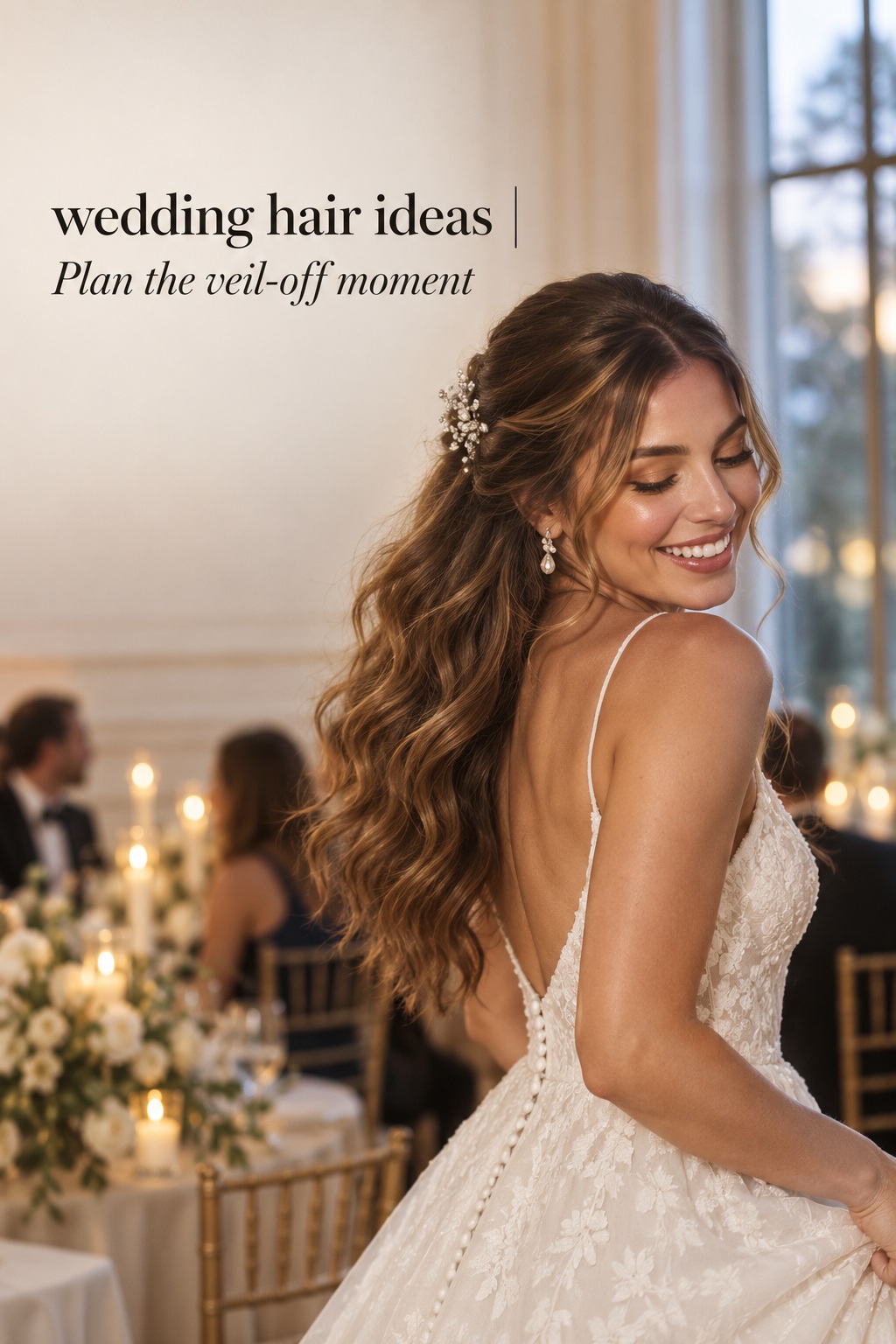
Choose a base style that looks complete without the veil. Then ask the stylist to show where the veil attaches and how it can be removed without disturbing the hair. A low bun may offer one clear attachment point, while a comb or pin may work with a different shape. If you plan a second look, decide whether a simple accessory change will create enough contrast. A separate style is optional, and the transition should fit the time available in your schedule.
For a neckline or back detail you want to reveal
A gathered hairstyle can expose an open back or detailed collar, while a side-swept shape can reveal one shoulder and leave some length visible. If you want the front of the dress to stay central, test the hairstyle with a top that has a similar neckline or wear the gown at the trial if that is practical. Take one picture from the front and one from behind. That makes it easier to see whether the hair and outfit are competing for the same visual space.
Turn the favorite into a testable stylist brief
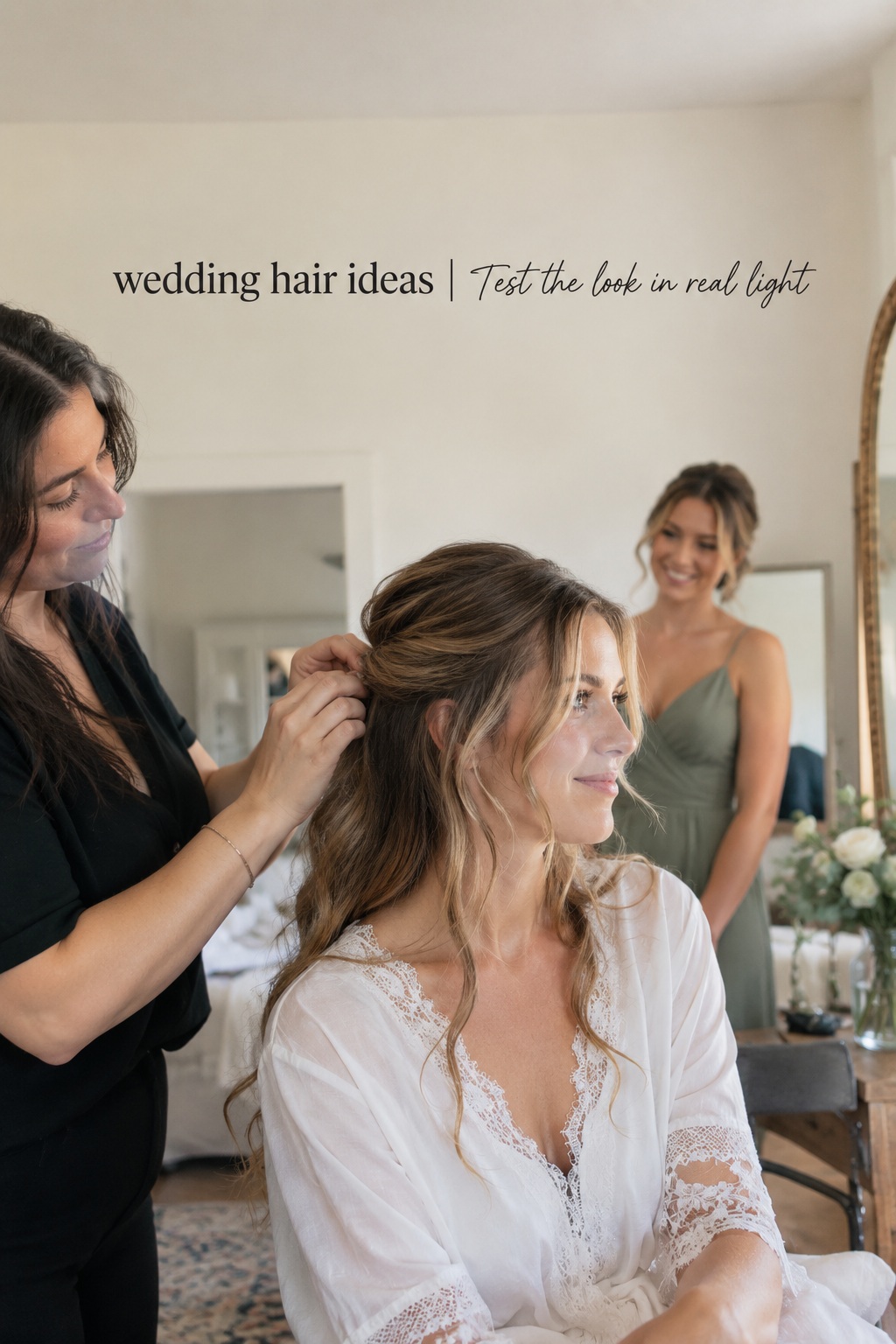
After you find a direction, reduce your references to two or three that share the same main shape. One photo can show the front, another the back, and a third the texture or accessory you like. Then add a short note explaining what you want to preserve and what can change. For example: “I like the low, soft shape and the visible curl texture. I want my hair off my face, but I do not need the exact tendrils in this photo.”
Bring the accessory that matters most. If you are wearing a veil, bring it. If a comb, barrette, or family pin is part of the plan, bring that too. If the dress is not available for the trial, bring a clear photo of its neckline and back. The stylist can make a more useful recommendation when they can compare the hairstyle with the actual objects and lines that will appear together.
Look at the result from the front, side, and back. Ask for photographs in ordinary room light, then move your head and shoulders. Sit down, stand up, and check whether anything feels too tight, heavy, or loose. If the veil is being used, see it both in place and removed. These small checks can reveal a problem that a front-facing mirror does not show.
End the appointment with a plain-language brief: the shape, the part, the amount of texture, the accessory placement, and any part you want changed. Ask which products or tools you should bring on the wedding morning, if any. Do not rely on remembering every step from a long appointment. A few written notes or photos can make it easier to repeat the look later.
Fix common wedding-hair trial disappointments
A trial is useful even when the first version does not feel right. Identify the part that is bothering you, then change that part before replacing the whole idea. A small adjustment to height, part, texture, or accessory placement can change the impression while preserving the feature you liked.
The style looks beautiful but does not feel like you
Name the unfamiliar element. Is the part too sharp, the bun too high, the crown too smooth, or the face too exposed? Ask the stylist to adjust one variable at a time. You can keep the general shape while softening the finish, moving the part, or adding a familiar texture. If the overall shape still feels wrong after a few adjustments, return to the priority you wrote down and choose a different family of looks.
The veil or clip competes with the hairstyle
Try moving the accessory or reducing another detail. A large comb, pearl pin, floral piece, and veil all draw attention to the same area when used together. Decide which one you want people to notice first, then let the rest support it. If the piece does not stay where you want it, discuss a different anchor point with the stylist rather than forcing it into a style that does not hold it comfortably.
The front looks right but the back is unfinished
Show the back of the reference to the stylist, or ask for a photo of the finished back during the trial. A gathered style should have a clear shape from behind, especially if your ceremony includes a processional or a back-facing portrait. If the detail feels too plain, consider a small accessory or braid detail. If it feels too ornate, remove one decorative element before changing the full hairstyle.
The hair looks too different from the reference
Compare the silhouette rather than every strand. The original model may have different length, density, texture, or accessories. Identify which one or two features matter most to you, such as a low placement or visible curl, and ask the stylist to preserve those. A reference is useful when it communicates the direction, even if the finished version is adapted to your hair.
The style feels uncomfortable while you test it
Say so as soon as you notice pressure, pulling, pins, or a piece that feels unstable. The stylist can adjust placement or tension before the wedding day. You should be able to turn your head and sit comfortably while wearing the style. If the accessory or hairstyle cannot be made comfortable, take that as useful information and test another way to meet your main goal.
FAQ
How do I choose between an updo and wearing my hair down?
Start with your main priority. Choose an updo if you want most of your hair gathered away from your face or need to show a dress detail. Choose a down style if wearing your length and familiar texture matters most. A half-up shape can be a middle option when you want both structure and movement.
Can I wear a veil with my hair down?
Yes. Ask your stylist to test the veil with your chosen shape and bring the actual veil or a close stand-in. Placement and support depend on the piece and hairstyle, so confirm how it looks in place and how it looks after removal.
What wedding hairstyle works for short hair?
A bob, sculpted wave, side-swept look, or accessory-led style can feel intentional on short hair. Bring a photo of your current cut to the stylist and discuss what can be achieved at its actual length.
Should I choose my hairstyle before my dress?
You can collect ideas at any point, but compare the hairstyle with the dress neckline, back, and accessories before finalizing it. If the dress is not available for the hair appointment, bring clear photos of those details.
What should I bring to a wedding hair trial?
Bring a small set of references that show the shape you like, your veil or main accessory, and a photo of the dress neckline and back. Also bring notes on what feels familiar or uncomfortable to you.
How many hairstyle photos should I show my stylist?
A small set of two or three related references is easier to discuss than a large folder of conflicting looks. Choose pictures that clarify the front, back, or texture, and explain which details matter most to you.
Can natural curls be styled for a wedding without hiding the texture?
Yes. Show references with a similar curl pattern and explain how much of your natural texture and volume you want to keep visible. A stylist can discuss an updo, half-up shape, or down style around that preference.