Black Tie Optional Wedding Guest Dress, Styled Right
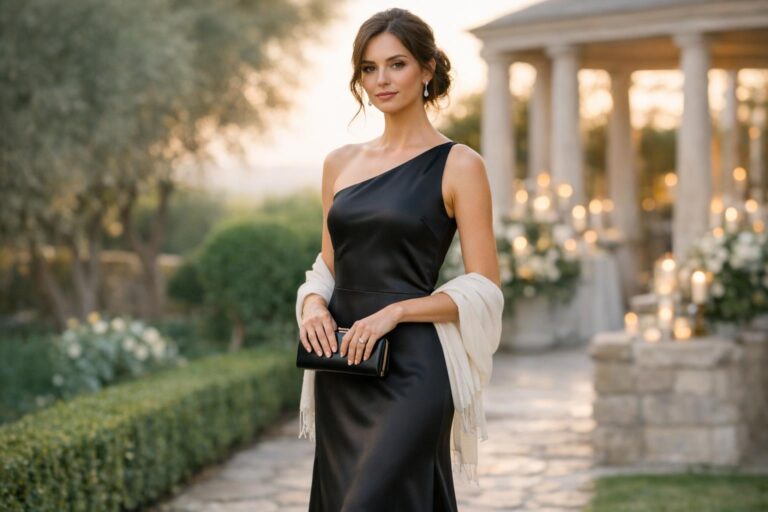
Candlelit ballrooms, polished city venues, and romantic evening ceremonies all ask for a certain kind of presence: refined, celebratory, and visually assured without feeling overdone. That is the allure of a black tie optional wedding guest dress. The mood sits between classic formalwear and modern ease, allowing wedding guests to lean into glamour through silhouette, fabric, and accessories while still leaving room for personal style.
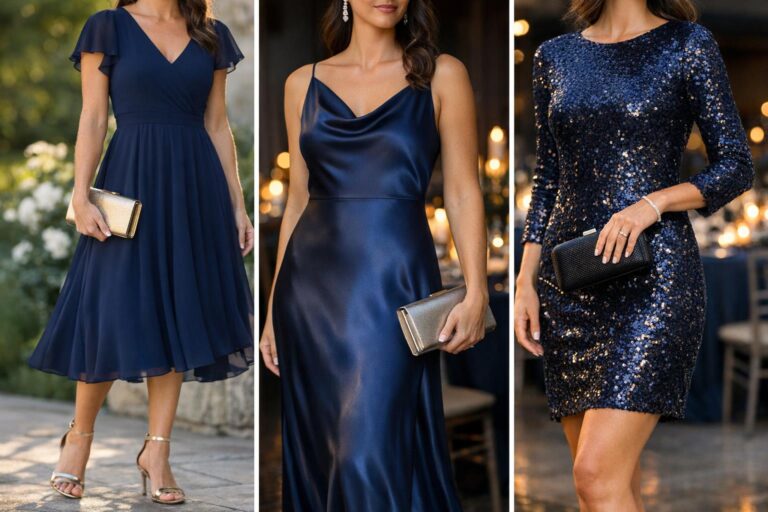
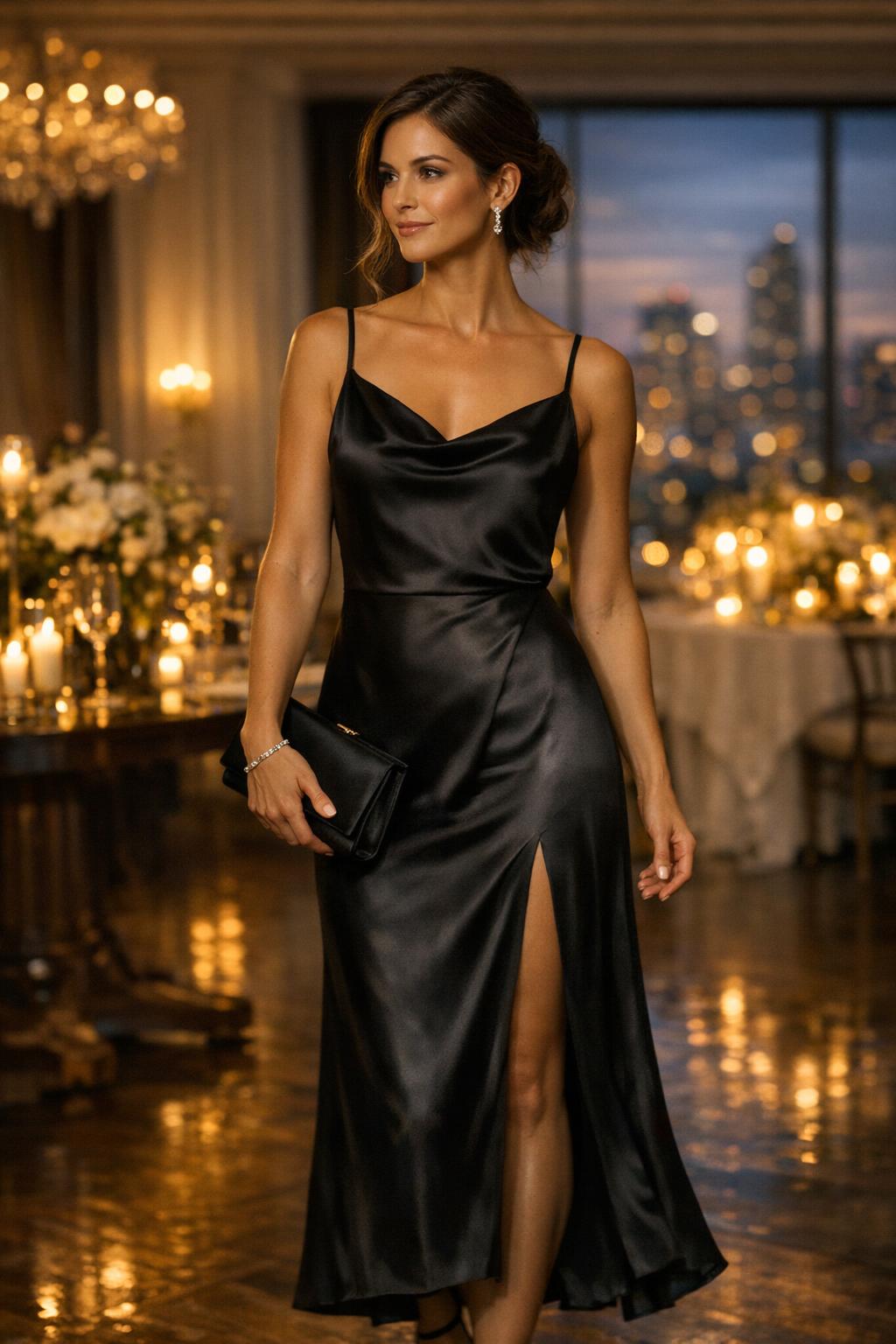
The aesthetic is elegant but not rigid. It can be a satin gown that catches soft evening light, a crepe midi with sculptural lines, or a cocktail dress elevated with heels, jewelry, and a tailored clutch. For black tie wedding guests, the appeal is obvious: the dress code feels polished and photo-ready, yet more flexible than strict black tie. It is especially popular for weddings where the setting, timing, and atmosphere call for a dressed-up look that still feels wearable from ceremony through reception.
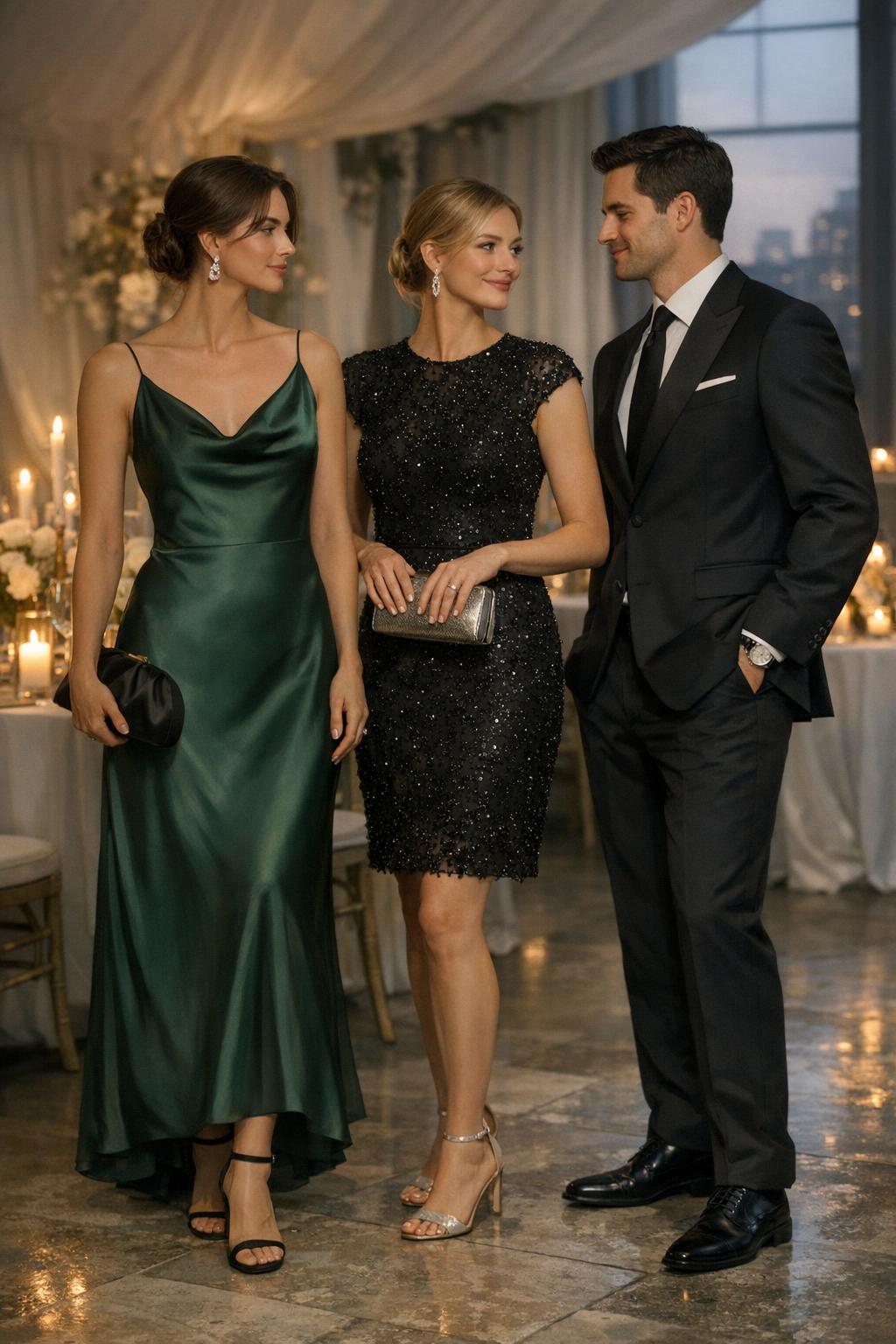
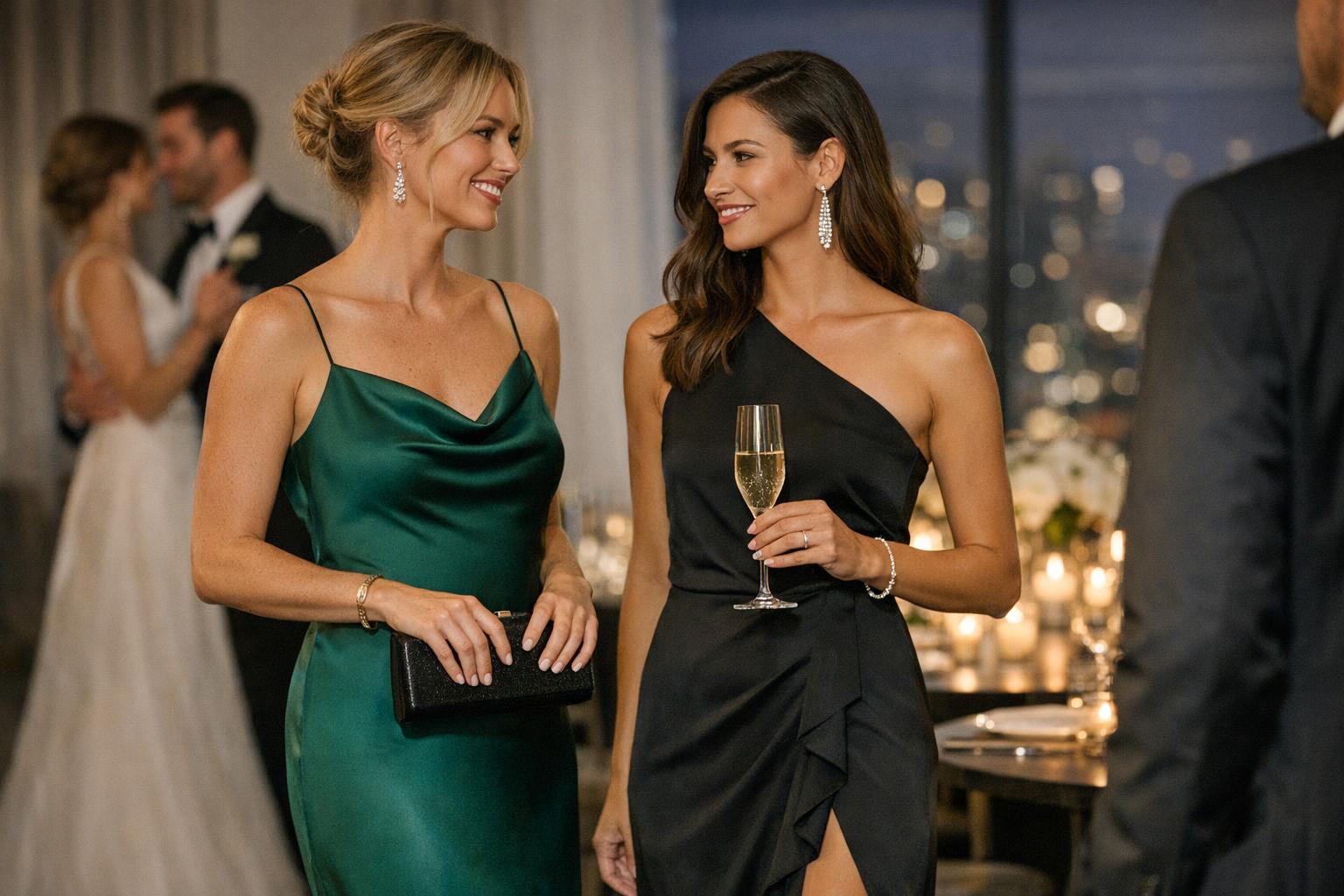
In practice, this style identity appears at formal weddings, destination celebrations, city receptions, and any event where the invitation suggests elevated attire without requiring the most formal possible interpretation. The beauty of the look lies in balance. You are dressing with intention, choosing pieces that feel unmistakably special, and letting texture, drape, and detail communicate elegance.
What black tie optional really asks of wedding guests
Black tie optional means the event is formal, and it is wiser to err on the side of sophistication rather than simplicity. For a wedding guest, that usually translates to gowns, formal midi dresses, polished cocktail dresses, or modern separates that read elevated. The visual standard is evening wear, even when the exact silhouette is not floor length. A black tie wedding guest dress may overlap with this category, but the optional phrasing creates room for interpretation.
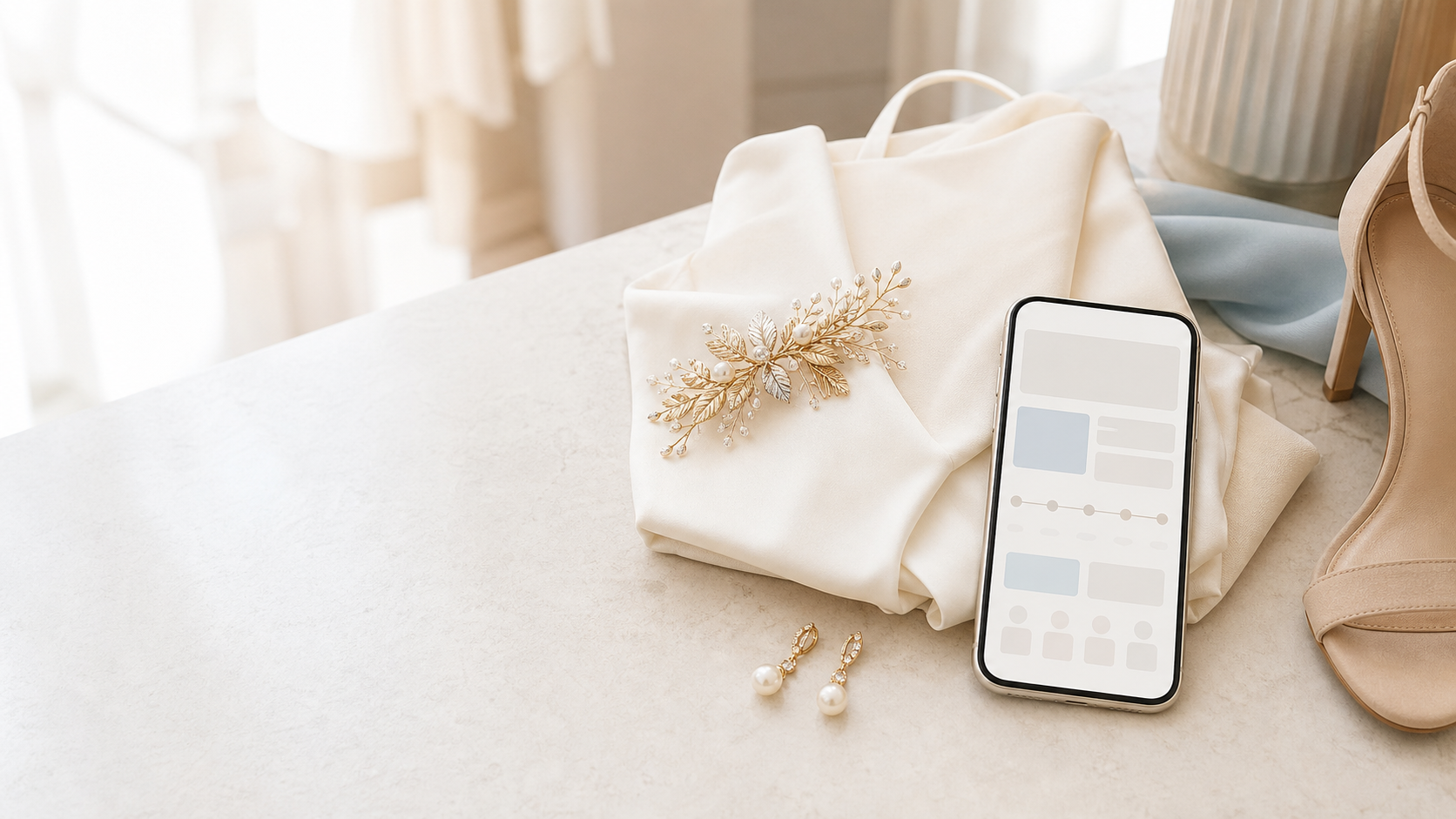
Your wedding look is only the beginning.
Keep your guest list, vendors, timeline, and every important detail together with Zarellea — so your day feels as considered as your style.
The most reliable way to read the code is to start with atmosphere. An evening reception in a grand venue tends to support richer fabrics and a more dramatic finish. A daytime formal wedding may still invite elegance, but lighter textures and a slightly softer silhouette can feel more appropriate. This is where practical judgment matters. If you are deciding between a very simple semi-formal dress and a satin gown, the more polished option usually aligns better with black tie optional.
Editorial guidance across fashion and wedding publications consistently circles back to the same idea: dress more formal than not. Vogue frames the dress code through visual nuance, while Elle emphasizes evening fabrics and accessorizing to raise the look. The Knot approaches it through clear interpretation and shopping guidance, and Lulu’s connects that guidance to specific dress categories. Together, that style language points toward one conclusion: elegance is expected, even when flexibility is built in.
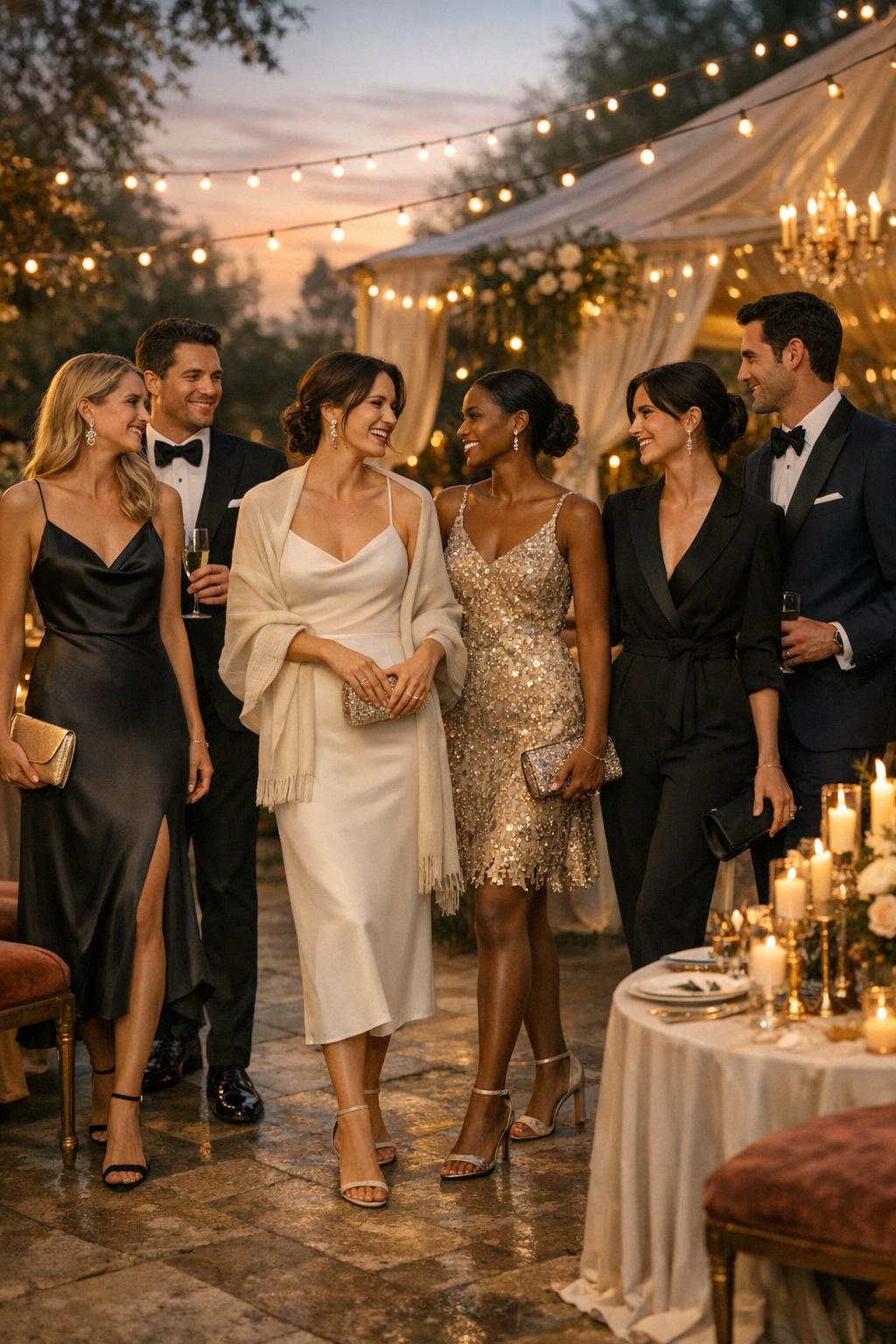
Choosing the silhouette: where formality meets personal style
The most successful black tie optional outfits feel cohesive before they feel trendy. Silhouette sets the tone first. Once that is in place, fabric, color, and accessories do the refining. If you are wondering what to wear to a black tie wedding women often have the widest range of choices here: floor-length gowns, cocktail dresses, midi styles, and even suit-inspired options all belong in the conversation, provided the finish is formal.
Look: Floor-length polish in silk, satin, or velvet
This is the most traditionally formal interpretation, and it never feels misplaced at an evening wedding. A full-length silhouette immediately signals occasionwear, especially in a ballroom, hotel reception, or candlelit city venue. The mood is graceful and composed, with movement in the hemline and enough structure through the bodice or neckline to feel intentional in photographs.
Silk, satin, and velvet are the fabrics that most clearly carry this look. Satin reflects light beautifully and gives even simple lines a luxurious finish. Silk feels refined and fluid. Velvet introduces depth and richness, especially when the wedding leans evening and atmospheric. Crepe can also work well for guests who prefer cleaner, more minimal lines over shine. Small embellishments such as crystal details or beading can add an editorial edge, but the overall effect should remain balanced rather than costume-like.
This look fits the aesthetic because it does not need much explanation. It is naturally aligned with formalwear, and it answers the dress code with confidence. For black tie wedding guests attending a more elevated celebration, a gown is often the easiest way to feel both appropriate and at ease.
- Key garments: satin gown, silk slip-style dress, velvet column gown, crepe floor-length dress
- Footwear: heels that feel polished enough for evening wear
- Accessories: tailored clutch, statement jewelry, refined evening bag
Look: The elevated midi with cocktail energy
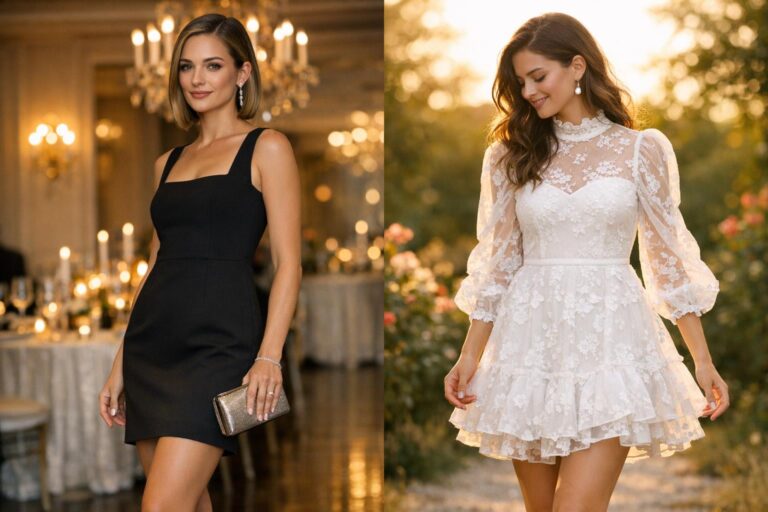
There is a version of black tie optional that feels modern, city-minded, and slightly less ceremonial than a gown. That is where the polished midi or cocktail dress comes in. The silhouette is slimmer, sharper, and often easier for guests who want formality without full-length drama. It suits rooftop receptions, stylish urban weddings, and events where the invitation signals elegance with a contemporary mood.
The difference between a cocktail dress that feels merely nice and one that reads black tie optional usually comes down to fabrication and styling. Satin, silk, and crepe make a stronger statement than casual jersey or cotton-like finishes. A midi hemline, well-cut bodice, and graceful drape instantly elevate the dress. Jewelry, heels, and a dressy clutch complete the visual message. If the dress is simple, texture should do the work. If the texture is quiet, then the accessories should add impact.
This is one of the clearest answers to what to wear to a black tie wedding women often search for when they want elegance without feeling overdressed. It honors the dress code while preserving freedom of movement and a slightly lighter formal attitude.
Look: Suit-inspired separates for a modern formal mood
Separates are the most directional option in the black tie optional space. Done well, they feel modern, powerful, and deliberately styled. Think of a skirt suit or pantsuit with evening fabric and a clean line rather than office tailoring. This interpretation suits guests who are less interested in romantic drape and more drawn to architectural polish.
The key is formality in fabric and finish. A suit-inspired look in a refined material can stand comfortably alongside gowns and cocktail dresses, especially at an urban wedding where style language is slightly more fashion-forward. Accessories matter more here because they help translate the outfit fully into occasionwear. Heels, jewelry, and a sleek clutch are less optional in this context; they are what shift the mood from tailored to celebratory.
This look fits the aesthetic because black tie optional is not only about tradition. It is also about polished interpretation. A guest who wants an updated answer to the dress code can absolutely find it in separates, as long as the overall impression remains formal.
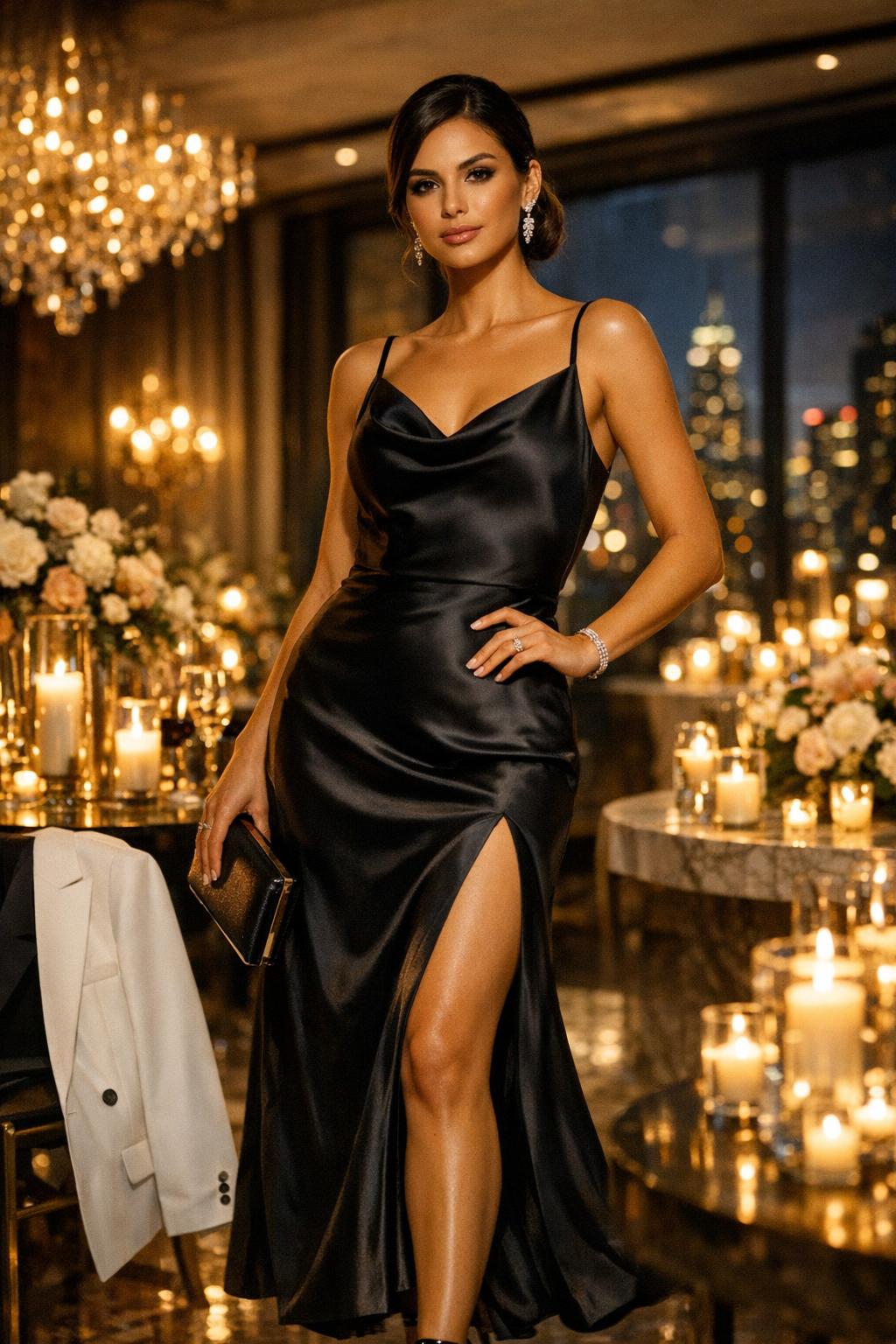
Fabrics that make a black tie optional wedding guest dress feel unmistakably formal
If silhouette provides the outline, fabric provides the mood. This is one of the most important decisions in black tie optional dressing because it changes how a look performs under daylight, golden hour, and evening lighting. It also shapes whether a dress feels festive enough for a wedding reception rather than simply pretty.
Silk, satin, crepe, and velvet as the core formal fabric palette
Silk and satin remain the clearest visual shorthand for occasionwear. They reflect light softly, photograph beautifully, and immediately communicate an evening sensibility. Satin, in particular, appears repeatedly in black tie optional guidance because it can make even a minimalist silhouette feel dressed up. Silk offers similar elegance with an especially fluid drape.
Crepe is a quieter but highly useful option. It does not rely on shine, which makes it ideal for guests who prefer understated sophistication. It works especially well in tailored midi dresses, gowns with clean lines, and modern silhouettes that need structure without heaviness. Velvet adds depth and richness, making it most at home in evening settings where the atmosphere is more dramatic.
Together, these fabrics create the backbone of the aesthetic. They are the materials most likely to help a dress feel wedding-ready within this dress code, and they offer enough variety to suit different comfort levels and style identities.
Color and texture for day, evening, and venue
Color guidance for black tie optional is less about strict rules and more about matching the mood of the celebration. Evening weddings naturally support richer, deeper, and more luminous tones. Daytime events can carry a softer palette, especially when the fabric still reads formal. Texture also matters. A smooth satin finish will often feel more evening-oriented, while crepe can adapt beautifully across ceremony times.
Venue should influence the final edit. A city reception, a formal hotel celebration, or a glamorous ballroom often welcomes bolder evening textures and stronger visual contrast. A resort or destination wedding may call for the same level of formality but with a lighter overall expression. The point is not to flatten the dress code into one identical look, but to interpret it in a way that feels coherent with the setting.
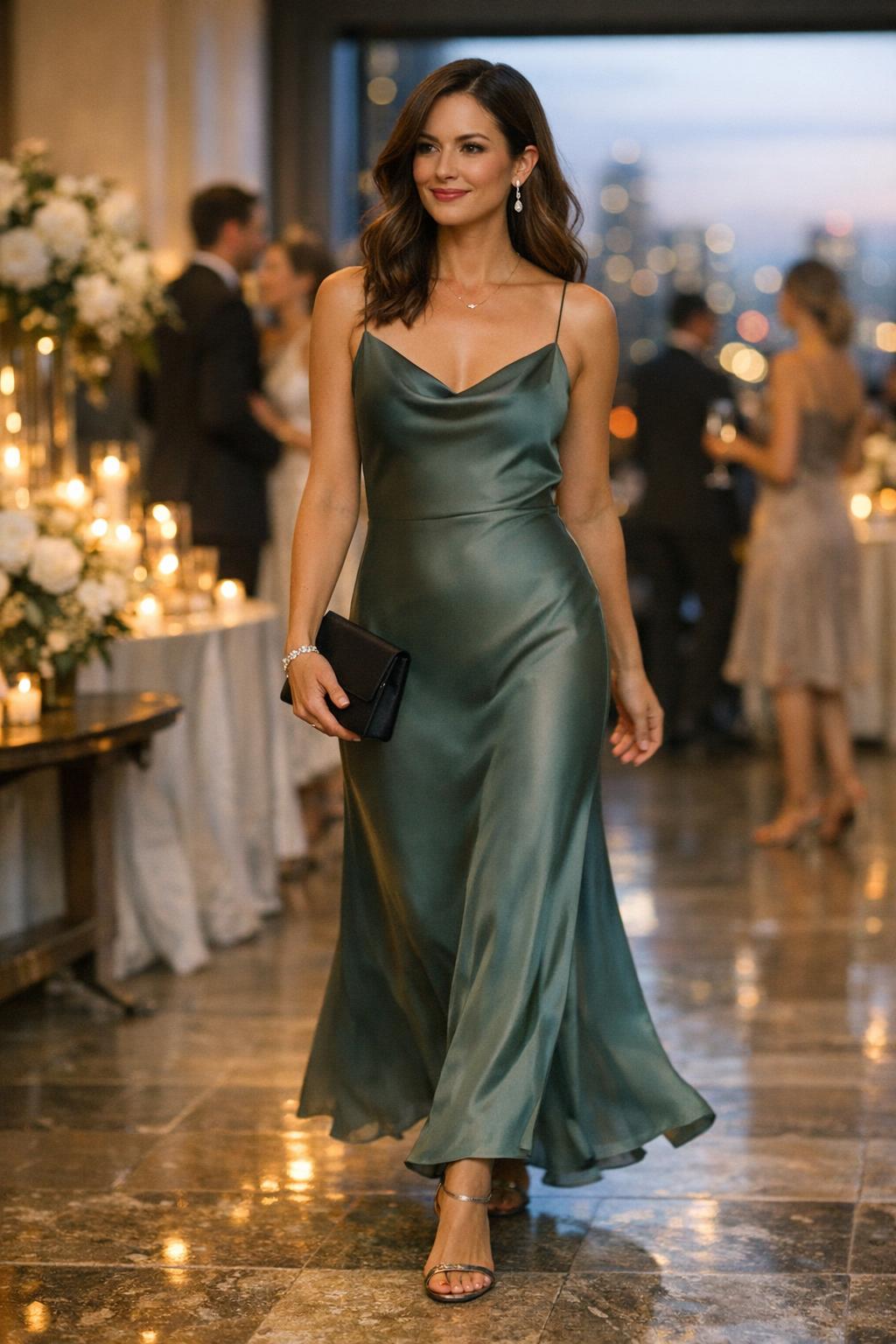
Look: Minimal evening glamour for a city reception
Some of the most memorable black tie optional dressing comes from restraint. A clean, elongated silhouette in satin or crepe can feel more modern than a heavily embellished gown, especially in a sleek New York or Los Angeles setting where sharp styling often wins over excess. The mood here is cool, elegant, and quietly assured.
A column dress, bias-cut satin midi, or streamlined full-length gown creates the foundation. Accessories should stay disciplined: pointed heels, a structured clutch, and jewelry with one focal point rather than several. This kind of look echoes the editorial sensibility often associated with Vogue, where shape and finish are allowed to speak clearly. It also translates easily for guests who want to look sophisticated without chasing trend-driven details.
The reason this look works so well is that black tie optional is already a balance. Minimal styling respects that balance. It keeps the outfit formal, leaves room for comfort through a long reception, and often feels especially strong in photographs where clean lines hold their own.
Look: Romantic formalwear for a candlelit ballroom
When the celebration leans grand and atmospheric, romance can take center stage. This interpretation is softer than strict minimalism but still polished. It belongs in venues with chandeliers, evening receptions, and an unmistakably festive mood. The silhouette can be fluid, draped, or subtly embellished, with enough movement to feel special from ceremony through dancing.
Satin and silk are especially compelling here, but velvet can be striking for a richer finish. A floor-length gown with light beading, crystal details, or delicate embellishment brings dimension without moving outside the boundaries of formal guest dressing. Heels and a clutch complete the look, while jewelry should echo the dress rather than compete with it. The final impression should feel harmonious and celebratory, not overworked.
This is the sort of look often reflected in editorial galleries and magazine-style occasionwear features. It aligns naturally with the formal spirit of the dress code and gives guests a graceful, unmistakably wedding-ready answer.
Look: black tie wedding guest dress spring with a lighter formal touch
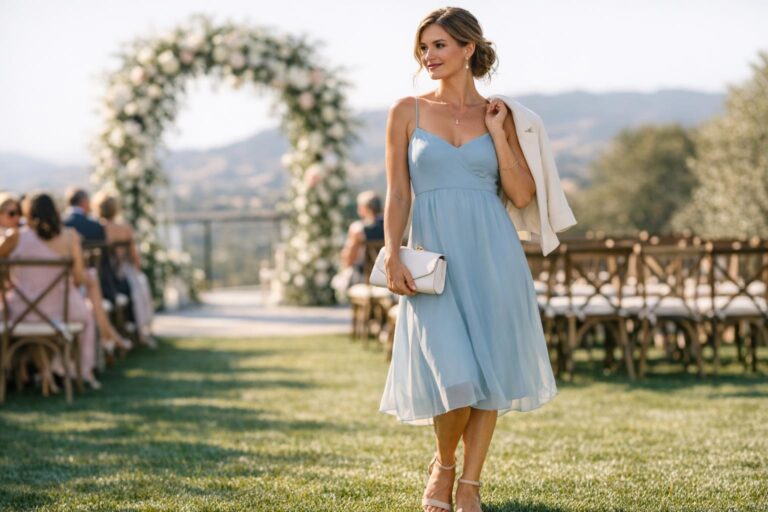
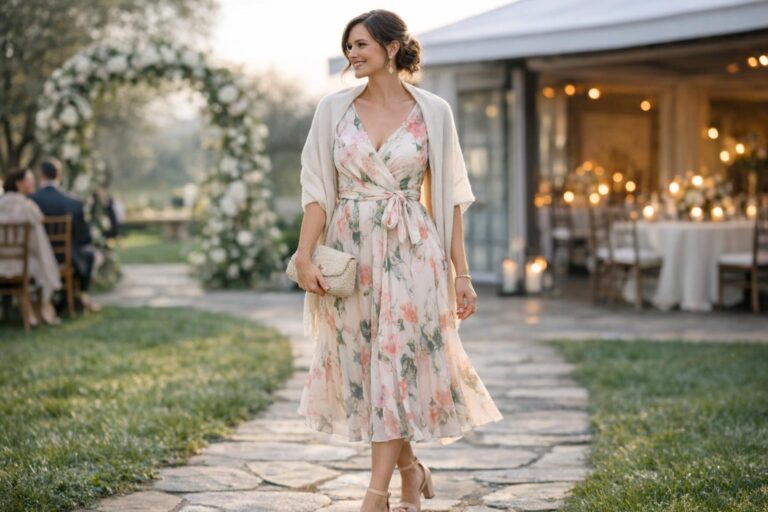
Spring formalwear asks for a slightly different kind of polish. The atmosphere is often brighter, the light softer, and the celebration may move between indoor ceremony spaces and outdoor cocktail hours. A black tie wedding guest dress spring choice should still feel formal, but it can do so with fluid fabrics, breathable structure, and a lighter visual hand.
Silk, satin, and crepe all work beautifully in this season, especially in midi or full-length silhouettes that move easily. A softer color palette can feel especially at home here, though the dress should still carry enough presence through its finish and tailoring. If the wedding begins in daylight and continues into the evening, this is where a polished midi in satin or a crepe gown with elegant accessories becomes especially effective. It transitions naturally as the event grows more formal through the day.
The appeal of this interpretation is its balance of freshness and occasionwear. It answers the dress code while respecting spring’s lighter mood, making it ideal for garden ceremonies, destination events, or venue settings that feel airy rather than dramatic.
Accessories that elevate the entire look
Accessories are not an afterthought at this dress code level. They are often the difference between a nice dress and a black tie optional wedding guest dress that feels complete. This is especially true for cocktail and midi silhouettes, which rely on styling to reach full formal impact.
Shoes that support the mood and the evening
Heels remain the most common choice because they sharpen the line of a gown or midi and support the eveningwear feel. Dressy flats can work when the rest of the outfit is strong enough, but they need to look intentional rather than purely practical. The best approach is to think beyond the ceremony. Weddings are long events, and comfort matters. A beautiful pair of shoes loses its appeal if it undermines your confidence before the reception even begins.
For venue-based practicality, consider flooring and movement. A sprawling resort setting, a garden path, or a dance-heavy evening may shape your choice just as much as the dress itself. Formal dressing works best when elegance and wearability stay in dialogue.
Bags and jewelry that finish the story
A tailored clutch, refined evening bag, or sleek small handbag is much more in step with the dress code than an oversized day bag. Jewelry can either be restrained and sculptural or softly statement-making, depending on the dress. If the gown already has texture, embellishment, or shine, simpler jewelry often feels more sophisticated. If the dress is minimal, one defined piece can give the look dimension.
Elle’s style language around clutches, heels, and evening fabrics makes sense because accessories should amplify, not distract. The most polished black tie optional dressing always feels edited. Every piece supports the same visual mood.
A practical shopping path: where formal style meets real decision-making
Shopping for this dress code usually falls into two categories: inspiration-led browsing and purpose-led searching. Some guests want to explore the silhouette first, while others already know they need a gown, a midi, or a polished cocktail dress. The strongest shopping resources tend to combine dress-code guidance with product examples, which is why names such as The Knot, Lulu’s, Anthropologie, OGLmove, and Oh Hello Clothing appear naturally in this space.
Lulu’s is often useful for guests who want wearable, event-specific options shown within a styling context. The Knot approaches the search from a wedding-planning perspective, which can be helpful if you want a clearer framework for what counts as appropriate. Anthropologie enters the conversation as a recognized shopping reference for occasionwear, while collection-based pages from retailers like Oh Hello Clothing or guidance pages like OGLmove can be useful when you are narrowing by event type rather than trend.
For guests balancing budget, convenience, and sustainability, rental and resale options deserve serious consideration. Rent the Runway is a particularly relevant name in this category because formalwear is exactly where rental can make practical sense. A black tie optional dress may be highly specific to one event, and renting allows you to access a more elevated fabric or silhouette without building your wardrobe around infrequent occasions.
- If you want the easiest route to formality, shop gowns first.
- If you prefer versatility, look for satin or crepe midi dresses that can be styled up.
- If the wedding is highly venue-driven, shop by fabric before color.
- If budget matters, compare purchase options with rental and resale paths.
Style tip: how to decide between a gown and a cocktail dress
This is one of the most common sticking points, and the answer is rarely abstract. Start with the invitation tone, the time of day, and the venue. If the wedding is evening-based and the atmosphere sounds clearly formal, a gown is the safer and often stronger choice. If the event is black tie optional with a modern venue, daytime ceremony, or less ceremonial mood, a cocktail or midi dress may work beautifully when it is styled with real intention.
The trade-off is straightforward. A gown gives immediate formality and usually requires less styling effort. A cocktail dress offers versatility and ease, but it needs stronger fabric and accessories to fully meet the moment. This is why so many black tie optional guides return to the same comparison: floor-length versus cocktail is less about rules than about how convincingly the finished look reads formal.
Look: editorial cocktail dressing with polished accessories
This variation feels especially right for guests who enjoy a fashion-forward but accessible approach. Picture a cocktail dress or midi with a sharp line, elegant drape, and a fabric that catches movement rather than shouting for attention. The setting might be a stylish evening wedding, an intimate city ceremony, or a reception where modern tailoring feels just as natural as classic romance.
The dress itself should lead with quality of finish. Satin and crepe are ideal here. Add heels, a clutch, and jewelry that feels deliberate. The styling can be inspired by editorial galleries or occasionwear roundups, but the goal is still wearability. This look should move with you through dinner, dancing, and late-night photographs without losing its shape or elegance.
It fits the aesthetic because it captures the freedom of black tie optional at its best. You are not dressing down the code. You are interpreting it through precision and confidence.
What stylists often notice first: common mistakes that shift the look off course
The most frequent black tie optional misstep is not underdressing in an obvious way. It is choosing something that sits in an uncertain middle ground: a dress with the right shape but the wrong fabric, or a nice midi paired with casual accessories that dilute the mood. Because this dress code allows flexibility, it can tempt guests into going too relaxed. The result is often an outfit that feels disconnected from the formality of the event.
Another issue is overcomplicating the look. If the dress already has shine, embellishment, or texture, too many competing accessories can make the outfit feel less refined. Formalwear benefits from editing. One of the clearest signs of experience in occasion dressing is knowing when to stop adding.
- Do not rely on casual fabrics when the invitation calls for formalwear.
- Do not assume a short dress is enough on its own; accessories and fabrication matter.
- Do not ignore venue and timing when choosing color and texture.
- Do not wait until the last minute to assess fit, length, and shoe comfort.
How to recreate the aesthetic without overbuying
A strong black tie optional wardrobe does not need endless options. It needs a small number of pieces that can carry a formal mood in different ways. One gown, one elevated midi or cocktail dress, and a reliable set of evening accessories can cover a surprising range of wedding invitations. This is especially true if you choose fabrics like satin, silk, crepe, or velvet, which immediately create a more formal visual language.
If you are building around versatility, start with accessories. A refined clutch, polished heels, and jewelry with presence can transform a simpler dress. Then focus on fit. A well-tailored silhouette almost always looks more expensive and more appropriate than a dramatic shape that does not sit properly. For weddings, this matters because you will be moving, sitting, standing, and dancing for hours. The best formal looks do not just photograph well; they hold up through the whole celebration.
Look: destination-ready elegance with a lighter hand
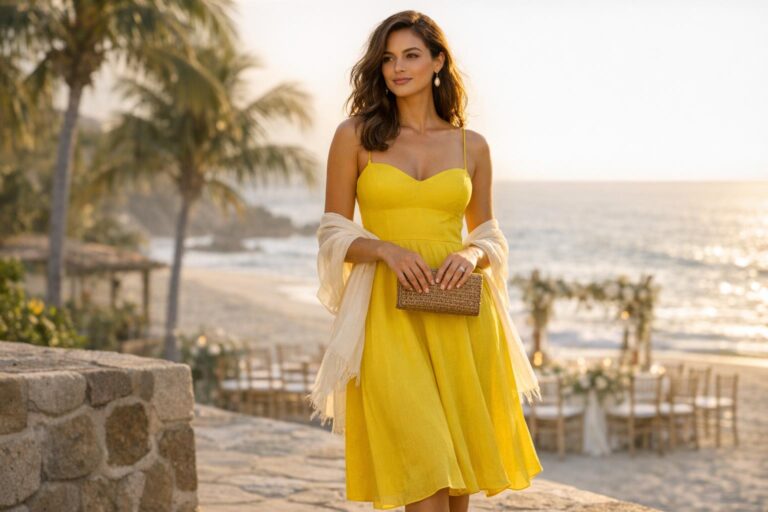
Destination weddings and resort settings often call for the same level of polish with a slightly softened expression. The aesthetic remains formal, but it breathes more. There is often natural light, movement between spaces, and a setting that benefits from fluidity rather than heaviness. This is where a silk or satin dress with graceful drape can feel especially right.
A full-length silhouette still works beautifully, but a refined midi can be just as successful if the fabric and accessories are convincing. The palette can feel lighter, the line can feel easier, and the overall mood can sit somewhere between celebration and vacation elegance. This is one of the most useful examples of how black tie optional adapts to context without losing its formal core.
For guests asking what to wear to a black tie wedding women can often benefit from thinking in scenes rather than categories. In a destination setting, the right answer is not merely a formal dress. It is a formal dress that moves beautifully in that particular atmosphere.
Brand and editorial cues that shape the black tie optional mood
Different fashion and wedding platforms frame this dress code through slightly different lenses, and that can be useful when refining your own style direction. Vogue often highlights the visual language of formal dressing through galleries and dress-code explainers, giving guests a stronger sense of silhouette and fashion context. Elle brings in guidance from a fashion director perspective, with references to fabrics, accessories, and a more formal-than-not mindset. The Knot translates the code into practical shopping and wedding etiquette language.
Even named references like Zhang or the “Dear Alex” format matter because they reinforce that black tie optional is not a random category. It is part of a larger formalwear conversation shaped by editors, occasionwear curation, and wedding-specific styling logic. For readers, that means there is room for personality, but there is also a clear standard of polish to aim for.
Before the wedding day: a guest’s final edit
The final day-before check is less about fashion fantasy and more about polish. Try the full outfit on together, including shoes, jewelry, and bag. Confirm the hemline works with your footwear and that the dress still feels comfortable when seated and moving. A black tie optional look should feel secure from the first photograph to the last dance.
This is also the moment to assess whether the styling actually supports the dress code. If the outfit looks more like semi-formal than eveningwear, elevate one or two elements. Often a better heel, a more formal clutch, or a richer fabric is all it takes. The strongest wedding guest looks are usually the result of thoughtful editing, not excess.
FAQ
What does black tie optional mean for a wedding guest dress?
It means the wedding is formal and your outfit should reflect that level of occasion, even if the dress code allows more flexibility than strict black tie. Gowns, elegant midi dresses, polished cocktail dresses, and formal separates can all work when the fabric, styling, and accessories feel elevated.
Can I wear a cocktail dress to a black tie optional wedding?
Yes, a cocktail dress can be appropriate if it is made from a formal fabric such as satin, silk, or crepe and is styled with heels, jewelry, and a dressy bag. The key is making sure the overall impression reads polished enough for a formal wedding rather than simply semi-formal.
Is a floor-length gown better than a midi dress for black tie optional?
A floor-length gown is usually the easier and more traditionally formal option, especially for evening receptions and grand venues. A midi dress can still work beautifully, but it often needs stronger styling and a clearly formal fabric to meet the same standard.
What fabrics work best for a black tie optional wedding guest dress?
Silk, satin, crepe, and velvet are the most reliable choices because they communicate eveningwear and formal polish. Satin and silk add softness and shine, crepe offers cleaner structure, and velvet brings richer depth for more dramatic evening settings.
What to wear to a black tie wedding women if they do not want a gown?
If a gown does not feel right, choose a refined midi or cocktail dress in a formal fabric and finish it with elegant accessories. A suit-inspired look can also work if it feels clearly occasion-ready and is styled with the same care you would give an evening dress.
How should I accessorize a black tie optional dress?
Focus on pieces that make the outfit feel complete rather than crowded. Heels, a tailored clutch, and thoughtful jewelry are the most effective finishing elements. If the dress is minimal, accessories can carry more of the statement; if the dress is already textured or embellished, keep the accessories more restrained.
Where can I shop for black tie optional wedding guest dresses?
Common shopping references in this category include Lulu’s, Anthropologie, The Knot’s style guidance, OGLmove, and occasionwear collections such as Oh Hello Clothing. If you prefer not to buy a highly specific formal look, rental options like Rent the Runway can be a smart alternative.
How do I choose a black tie wedding guest dress spring style?
For spring, keep the silhouette formal but allow the overall look to feel lighter through fabric and movement. Satin, silk, and crepe work especially well, and a polished midi or fluid gown can transition nicely from a daylight ceremony to an evening reception.
What to wear to a black tie wedding women when the venue is a destination or resort?
Choose a dress that keeps the formal standard intact while feeling appropriate for the setting. Fluid silk or satin gowns and elevated midi dresses usually work well because they offer polish, movement, and comfort across different spaces and climates.
What is the biggest mistake to avoid with black tie optional dressing?
The most common mistake is choosing a dress that feels too casual in fabric or styling. Even when the silhouette is acceptable, the wrong accessories or a less formal material can weaken the overall look. When in doubt, lean slightly more formal and edit carefully.