
Spring Cocktail Dress Wedding Guest That Feel Polished
Some wedding dress codes sound straightforward until you stand in front of your closet and realize how many interpretations exist between polished, festive, romantic, and overdone. That is exactly why the cocktail dress wedding guest category creates so much hesitation. It sits between casual ease and full formalwear, and it overlaps with terms like cocktail attire, semi-formal dressing, wedding guest outfits, and even more trend-led choices such as two-piece sets or tiered silhouettes.
For a guest dressing for a city reception, a garden ceremony, or a candlelit evening celebration, the challenge is not simply finding a pretty dress. It is understanding which style language communicates the right level of refinement. Below, the focus is on comparing the most common approaches within cocktail attires for weddings: classic cocktail dresses versus formal-leaning options, and traditional dress silhouettes versus newer interpretations such as tiered and two-piece styles. Along the way, you will see how brands including David’s Bridal, Rebecca Vallance, MESHKI, StyleWe, Carlyna, Petal & Pup, and Couture Candy frame these looks for the U.S. wedding guest market.

This comparison is designed to help you read the room before you shop. Whether you are searching for dresses for spring wedding guest styling, considering a cocktail dress spring wedding palette with soft florals and even yellow peonies in mind, or trying to decide between a sleek satin midi and a more playful tiered silhouette, the key is understanding how each style behaves visually and socially at a wedding.
The two style families guests confuse most often
In wedding guest dressing, the most frequent confusion happens between true cocktail attire and styles that edge toward formal eveningwear. A second point of overlap appears within cocktail dressing itself: the difference between a classic, refined cocktail dress and a trend-forward interpretation such as a tiered dress, a two-piece set, or a highly directional designer look.
Your wedding look is only the beginning.
Keep your guest list, vendors, timeline, and every important detail together with Zarellea — so your day feels as considered as your style.
These categories belong to the same occasion space, which is why they are often discussed together. They share event relevance, polished presentation, and a celebratory mood. Yet their proportions, fabrics, and styling priorities can lead to very different results once you arrive at the venue.
Style overview: classic cocktail wedding guest dressing
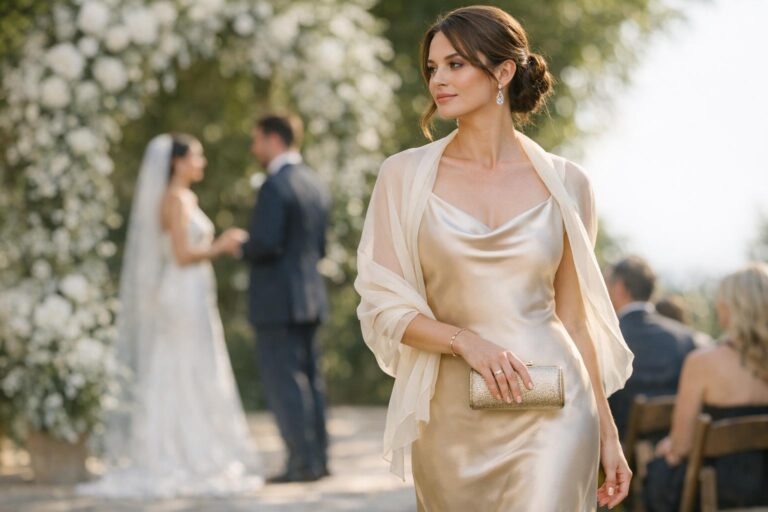
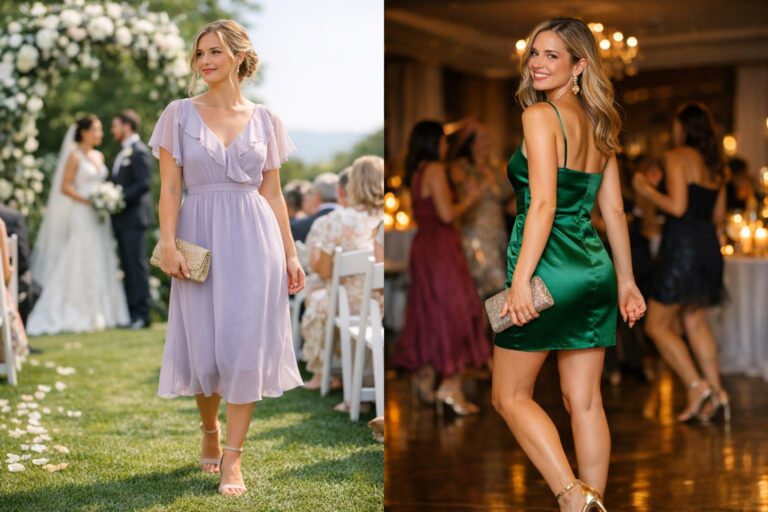
The classic cocktail wedding guest look is built around balance. It usually favors knee-length or midi hemlines, clean lines, and fabrics that feel special without becoming red-carpet dramatic. Satin, chiffon, lace, and crepe all fit naturally into this category because they offer movement, texture, or polish without automatically pushing the outfit into black-tie territory.
The mood is elegant and social rather than theatrical. Think of the sort of silhouette that transitions comfortably from ceremony to dinner to dancing. David’s Bridal emphasizes this broad and practical range with midi to floor-length options, while StyleWe places similar focus on fabrics such as chiffon, satin, lace, and jersey, all tied to a cocktail-attire interpretation for wedding guests.
Style overview: formal-leaning cocktail and elevated occasion dressing
Formal-leaning cocktail dressing stays within the wedding guest world but carries more visual weight. That can mean richer fabric presence, sharper construction, more pronounced craftsmanship, or a longer line. Rebecca Vallance approaches this space through modern elegance, material quality, fit, and day-to-night sophistication. Some dresses in this category remain cocktail-appropriate, but they read more elevated, especially at evening receptions or more polished urban venues.
Floor-length styles can appear in this area, particularly when a retailer presents a wider collection under the wedding guest cocktail umbrella. The distinction is not that floor-length is forbidden or that midi is mandatory. Rather, the question is whether the dress still feels like wedding guest attire within cocktail expectations, instead of drifting into full black-tie or gala language.
Style overview: trend-forward cocktail dressing
The third family is trend-forward cocktail dressing. Here, the base dress code remains cocktail, but the expression becomes more directional. MESHKI’s assortment, Couture Candy’s tiered and two-piece categories, and editorial brand roundups such as Elle’s designer-focused selections all show how wedding guest fashion now includes silhouette experimentation, day-to-night versatility, and stronger trend cues.
This style family includes tiered dresses, two-piece sets, sharper designer lines, and modern partywear framing. The overall mood is fashion-conscious and contemporary. It can be ideal when the wedding atmosphere feels stylish, youthful, or especially celebratory, but it requires more judgment to ensure the look still aligns with the invitation.

What cocktail attire really means at a wedding
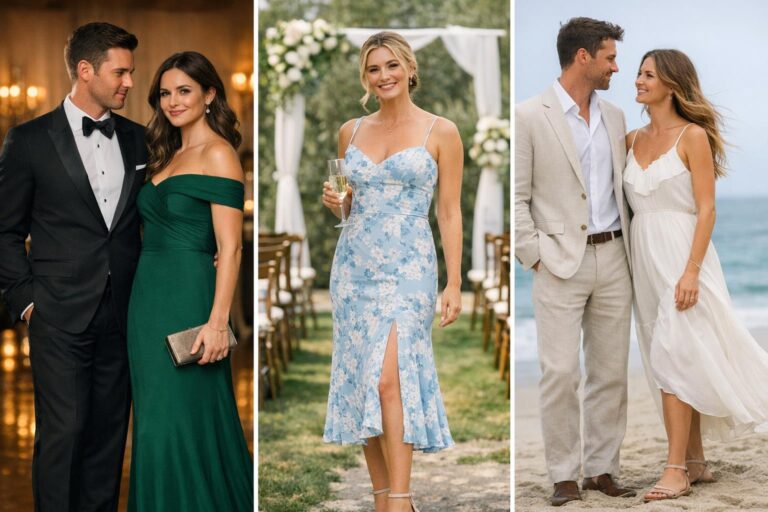
Cocktail attire for weddings is best understood as a polished middle ground. It asks for more intention than daywear and more restraint than full formal dressing. The guest should look occasion-ready, but not as though she is competing with an evening gown dress code unless the venue, timing, and couple’s styling make that level of dressiness feel natural.
That is why the same category can hold both a satin midi and a more dramatic lace piece. The governing principle is not one exact hemline or fabric but a combination of proportion, finish, and event sensitivity. Wedding guest fashion rewards subtle reading: a ballroom reception at night may support a more structured, elevated silhouette, while a daytime garden wedding often feels more natural in chiffon, softer drape, and gentler movement.
Editorial roundups and shopping collections consistently return to the same core markers: flattering silhouettes, fabrics with occasion value, and styles that feel celebratory yet wearable. In practice, cocktail attires are less about one strict uniform and more about controlled elegance.
Silhouette comparison: midi, knee-length, floor-length, tiered, and two-piece
The clearest way to compare wedding guest styles is through silhouette. Shape determines not only how a dress looks in photos, but also how formal it reads from a distance, how it moves between ceremony and reception, and how comfortable it remains through several hours of standing, greeting, dining, and dancing.
Midi and knee-length: the classic cocktail center
Midi and knee-length dresses form the core of classic cocktail dressing. They feel composed and versatile, and they adapt easily to different venues. A chiffon midi catches movement beautifully at an outdoor ceremony, while a satin or crepe version has enough structure for a more polished indoor setting. These lengths are often the easiest to style because they naturally support the balance cocktail attire calls for.
For many guests, this is also the safest choice when the dress code says “cocktail” without additional detail. It leaves room for elegant shoes, jewelry, and a clutch without the outfit depending on one dramatic statement.
Floor-length within the cocktail category
Some retailers place floor-length styles within wedding guest cocktail collections, and that reflects how modern shopping categories can stretch around real customer demand. David’s Bridal includes midi to floor-length options, showing that the market does not always treat hemline as a fixed border. Still, a floor-length dress should be chosen carefully if the invitation specifically names cocktail attire.
A long silhouette can work when it remains relatively streamlined, not overly embellished, and clearly designed as wedding guest wear rather than full evening formalwear. The styling should stay light and controlled. If the dress already has strong visual impact, keep accessories quieter so the final effect remains aligned with cocktail expectations.
Tiered silhouettes: romantic movement with more fashion presence
Tiered wedding guest dresses, as presented by Couture Candy across designer assortments including labels such as Jovani, Ieena Duggal, Mac Duggal, and Cinderella Divine, create a softer and often more expressive profile. Tiering introduces texture, shape, and visible movement, which can feel especially charming in festive settings.
Compared with a clean sheath or slip-inspired silhouette, tiered dresses feel more decorative. They can be wonderfully suited to weddings that have a romantic or lively atmosphere, but they also draw more attention. That makes them less minimal and slightly less universal than a classic midi. Their strength is personality; their limitation is that not every venue needs that much visual volume.
Two-piece wedding guest styles: modern, directional, and more selective
Two-piece wedding guest dresses occupy one of the most modern corners of this category. Couture Candy’s two-piece assortment highlights this contemporary direction through multiple designers and color options. The appeal is clear: a two-piece set can look fresh, intentional, and trend-forward, especially for a fashion-conscious celebration.
Yet this is also one of the styles that requires the strongest etiquette judgment. A two-piece outfit may be perfectly at home at a stylish reception, but it can feel too fashion-driven for a more traditional ceremony. The difference often lies in proportion and finish. A coordinated set in refined fabric with a polished line reads more wedding-ready than a look that appears too close to partywear.

Fabric tells the story before color does
If silhouette establishes the outline, fabric determines the tone. Across leading wedding guest categories, satin, lace, chiffon, and crepe appear repeatedly because they each communicate a distinct version of occasion dressing. The right choice depends not only on aesthetics, but also on how much structure, movement, and shine you want in the final look.
Satin: sleek, reflective, and evening-friendly
Satin brings immediate polish. It tends to look more elevated than casual textures, which makes it a strong choice for evening receptions or more refined venues. In a cocktail dress spring wedding setting, satin can also feel seasonally appropriate when the color remains soft or fresh rather than overly heavy. The styling logic is simple: because satin already carries shine, the silhouette usually benefits from clean restraint.
Chiffon: soft movement for ceremonies with air and light
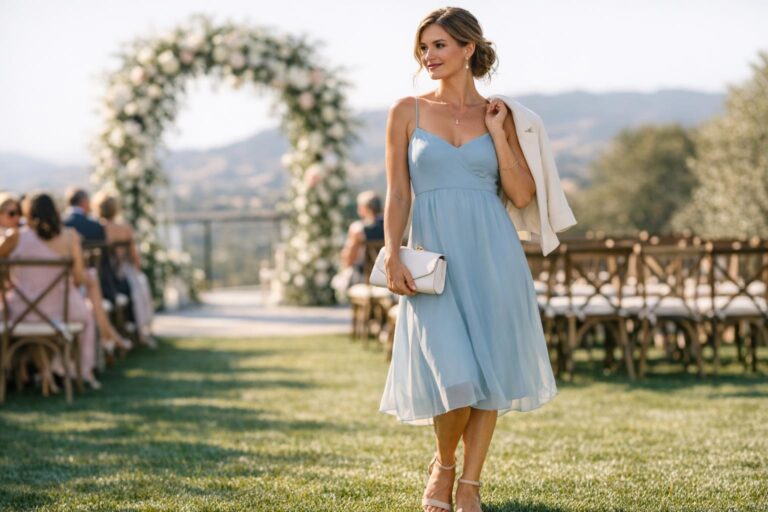
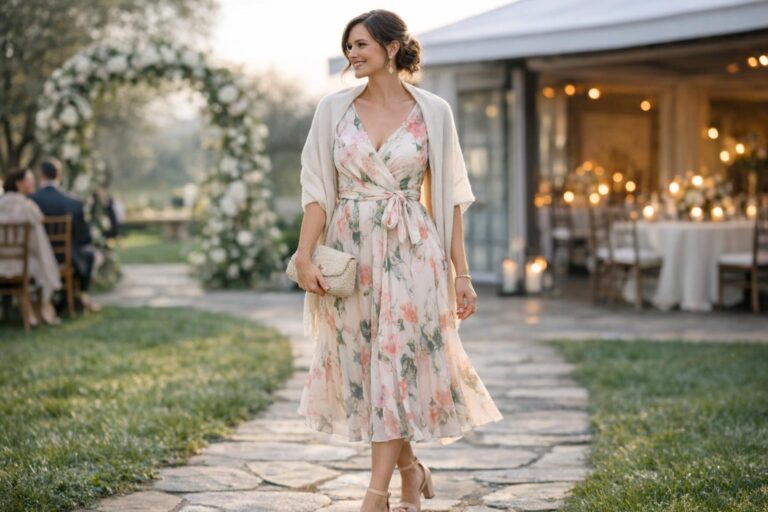
Chiffon belongs naturally in wedding guest dressing because it moves beautifully and photographs gently. It often suits daytime receptions, outdoor ceremonies, and dresses for spring wedding guest wardrobes where softness feels right. A chiffon midi at golden hour in a garden or vineyard-like setting conveys a lighter form of elegance than a sharper satin style.
Lace: decorative and romantic
Lace introduces visible texture and a more traditionally romantic mood. It can shift a simple shape into something more occasion-specific. For cocktail attire, lace works best when the silhouette remains disciplined. Too much volume plus lace plus ornate accessories can start to feel overly elaborate. The charm of lace lies in its detail, so the rest of the outfit can stay composed.
Crepe and similar polished fabrics: understated structure
Crepe is useful when you want refinement without shine. It supports sheath, shift, and streamlined silhouettes particularly well, making it one of the strongest fabric choices for guests who prefer a quieter form of elegance. If satin feels too luminous and chiffon too airy, crepe often becomes the most balanced middle ground.

Color direction: subtle romance versus statement dressing
Many wedding guest articles and collections focus more on product availability than on nuanced color strategy, yet color remains one of the easiest ways to distinguish between classic and trend-forward cocktail dressing. In practical terms, the question is whether you want your dress to feel quietly integrated into the celebration or visually assertive within it.
Soft palettes often pair best with chiffon, lace, and spring weddings. This is where a dresses for spring wedding guest approach can feel especially intuitive: lighter tones, floral sensibility, and an atmosphere that suggests fresh arrangements, daylight, and garden settings. Even a reference point like yellow peonies helps clarify the mood many guests are trying to capture—romantic, bright, and celebratory without becoming loud.
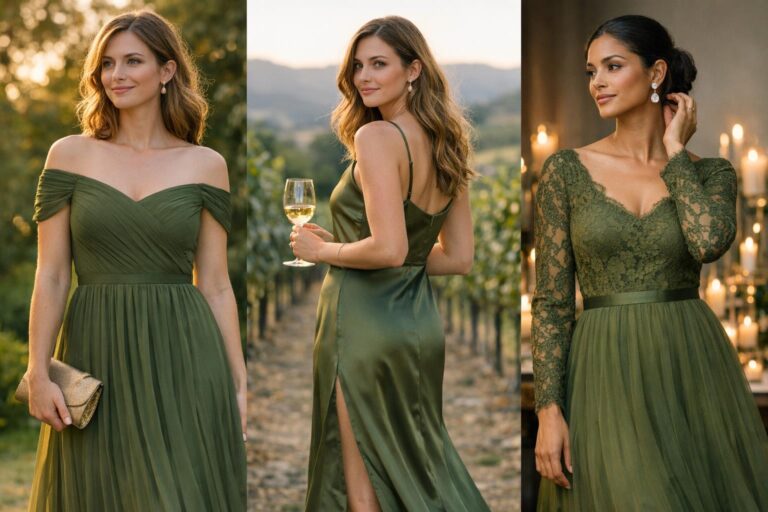
By contrast, deeper or more saturated color stories often align with evening receptions, satin finishes, and more fashion-forward cuts. The silhouette then matters even more. A strong color in a sleek Rebecca Vallance-inspired line or a modern MESHKI style can look striking and polished, while the same depth paired with heavy volume may read more formal than cocktail.
How leading brands frame the cocktail wedding guest look
Brand positioning helps clarify not just price and availability, but style philosophy. Although these collections all serve the same broad occasion category, they approach the cocktail wedding guest dress from noticeably different angles.
David’s Bridal, StyleWe, and Carlyna: breadth, practicality, and accessible variety
David’s Bridal presents wedding guest cocktail dresses with emphasis on variety, figure-flattering shapes, lengths, and craftsmanship. The appeal here is broad relevance: many types of guests, many wedding styles, and a practical path to finding something that works. StyleWe similarly leans on fabric variety and cocktail-attire framing, which is particularly helpful for guests who think first in terms of material and finish rather than designer names.
Carlyna adds another practical layer through U.S. sizing, customization options, and shipping emphasis. For guests balancing style with fit concerns, this can make a meaningful difference. In real dressing terms, customization matters because cocktail attire only looks effortless when proportions actually sit correctly on the body.
Rebecca Vallance and MESHKI: modern polish with stronger fashion identity
Rebecca Vallance centers luxury, craftsmanship, material quality, and fit. The mood is modern elegance rather than basic occasionwear. This approach suits guests who want a sharper, more editorial silhouette while still respecting wedding context. MESHKI, meanwhile, leans into contemporary partywear energy, color options, and catalog depth, making it useful for shoppers who want cocktail attire with a more current edge.
The difference between these two is subtle but important. Rebecca Vallance suggests refinement through construction and elevated simplicity; MESHKI often feels more overtly trend-aware. Both can work beautifully for weddings, but they suit different personalities and different receptions.
Couture Candy and Petal & Pup: category-driven exploration versus curated outfit mood
Couture Candy’s strength lies in its themed categories, especially tiered and two-piece wedding guest dresses. This is valuable for guests who already know the silhouette direction they want and are comparing designers such as Jovani, Ieena Duggal, Mac Duggal, Ava Presley, or Rachel Allan. Petal & Pup, by contrast, frames the category as cocktail wedding guest outfits, which subtly shifts the mindset from just buying a dress to building a complete look.
That distinction matters. Some shoppers are selecting by silhouette taxonomy; others are selecting by overall outfit feeling. The first approach is technical. The second is visual and scenario-based.
Key differences between classic cocktail and trend-forward wedding guest dressing
The divide between these approaches is not about right versus wrong. It is about how much visual attention the outfit claims and how tightly it aligns with the broadest understanding of wedding cocktail attire.
- Silhouette and structure: classic cocktail relies on cleaner lines, while trend-forward styles introduce tiering, stronger shape play, or two-piece construction.
- Fabric mood: classic dressing often uses satin, chiffon, lace, or crepe in a balanced way; trend-driven looks may use those same fabrics with more emphasis on statement impact.
- Formality reading: classic cocktail is easier to place correctly across many venues, while trend-forward looks may read either exceptionally chic or slightly too directional depending on the setting.
- Styling philosophy: classic dressing seeks harmony; trend-forward dressing embraces personality.
- Wardrobe longevity: a streamlined midi often repeats well across seasons, while a two-piece or pronounced tiered silhouette may feel more specific to one fashion moment or type of wedding.
For most guests, the safest path is not the most minimal one but the most context-aware one. If the invitation is vague, classic cocktail usually offers more flexibility. If the event is stylish, contemporary, and clearly celebratory, then a stronger silhouette may feel entirely natural.
Visual style breakdown: how these looks appear in real wedding settings
A useful way to choose between styles is to imagine them in motion rather than on a product page. At a candlelit reception, a structured satin midi with restrained jewelry reads sleek and composed. It catches light in a refined way and leaves space for the room itself to feel special. This is classic cocktail at its most dependable.
Now picture a tiered dress moving through an outdoor celebration as guests gather after the ceremony. The visual language is softer and more expressive. The dress creates shape even before accessories are added. That can be gorgeous in a festive setting, but it also means the garment becomes the conversation point of the outfit.
A two-piece set shifts the balance again. It usually looks more fashion-conscious from the first glance, especially if the top and skirt create contrast in line or proportion. For some weddings, that modernity is welcome. For others, it may feel less timeless than a single-piece cocktail dress. The styling choice should respond to the celebration’s atmosphere, not just to what looks current in isolation.
Accessories, proportion, and overall balance
Classic cocktail dresses generally work best with a controlled accessory story: elegant shoes, refined jewelry, and a clutch. Trend-forward silhouettes often need even more editing. A tiered dress usually wants cleaner accessories so the volume remains the focus. A sleek satin sheath can handle a slightly stronger earring because the dress itself is simpler. A two-piece set benefits from polished restraint so the separation in the garment does not become visually busy.
The goal is always balance. Wedding guest dressing rarely improves when every element tries to be the main event.
Scenario styling: the same wedding interpreted two different ways
Garden ceremony at golden hour
A classic approach would favor a chiffon midi or lace-trimmed silhouette with gentle movement and a soft palette. This is where a cocktail dress spring wedding interpretation feels especially natural. The atmosphere suggests lightness, and the styling can quietly echo floral details, even the romantic mood associated with yellow peonies, without turning literal.
A trend-forward interpretation might choose a tiered dress with more volume or a modern MESHKI silhouette in a fresh seasonal tone. It creates more visual presence in photographs and while moving through the outdoor space. The trade-off is that the guest becomes slightly more fashion-forward within the scene, which can be lovely if the celebration itself has that energy.
City wedding with evening reception
The classic version here is a satin or crepe midi with a clean line, perhaps the kind of modern elegance associated with Rebecca Vallance’s wedding guest cocktail dresses. It feels polished, urban, and confident, and it transitions beautifully from ceremony seating to dinner service to the dance floor.
The more directional version would be a two-piece set or a sharper body-conscious silhouette from a trend-driven collection. This reads contemporary and deliberate, particularly in a stylish metropolitan setting. The caution is that the outfit should still retain wedding guest softness rather than veering into nightclub partywear.
Large festive reception with a statement atmosphere
For a joyful, high-energy reception, a classic cocktail guest might still select a sleek sheath or fit-and-flare shape but introduce richer fabric or color. A guest wanting more personality could move into Couture Candy’s tiered categories or a bolder cocktail-weddings option from MESHKI. In this setting, movement, volume, and stronger styling can feel entirely appropriate so long as the overall look still respects the event’s dress code.
Fit, sizing, and why personalization changes the final impression
Among all the style decisions, fit is the one that most directly affects whether a dress reads polished or uncertain. A beautiful fabric cannot compensate for poor proportion, and even the most versatile silhouette loses elegance when the bodice, waist, or hemline sits incorrectly. This is one reason sizing and customization details matter so much in the cocktail wedding guest category.
Carlyna’s emphasis on U.S. sizing and customization points to a practical reality: wedding guests are often shopping for a very specific event on a very specific timeline. Adjustability and fit support can be just as important as trend or brand name. A dress that aligns with your proportions will always look more considered than a more expensive option that never settles properly on the body.
In style terms, simpler silhouettes are often less forgiving of imperfect fit because there is nowhere for the eye to go except the line itself. Tiered dresses can disguise some fit issues through movement and volume, while sheath and slip-inspired dresses depend on precision. That does not make one category better than another, but it does explain why some guests feel more comfortable and confident in certain shapes.
Tips for choosing the right fit before styling the rest
- Start with silhouette comfort, not just trend appeal.
- If you want a clean satin or crepe dress, prioritize precise fit from the beginning.
- If you are uncertain about proportion, a midi length often gives more styling flexibility than an extreme mini or a dramatic floor-length option.
- Use customization-friendly retailers when fit is likely to determine whether the dress feels truly wedding-ready.
Where dresses for spring wedding guest styling differ from year-round cocktail dressing
Spring wedding guest dressing tends to highlight the softer side of cocktail attire. The same category rules still apply, but the visual emphasis often shifts toward lighter fabrics, fresher palettes, and movement. This is where chiffon, delicate lace, and airy midi lengths come into their own.
A cocktail dress spring wedding look usually feels most convincing when it reflects the season through texture and mood rather than novelty. Instead of forcing a theme, choose details that naturally support spring’s atmosphere: softness, lightness, and a celebratory freshness. A floral sensibility, a romantic color direction, or a dress that moves gently through an outdoor setting all contribute more effectively than an outfit overloaded with decorative ideas.
For readers searching dresses for spring wedding guest inspiration, this often means resisting the urge to overcomplicate. A beautifully cut midi in satin, chiffon, or lace can feel more memorable than a trend-heavy look that does not suit the venue. If the wedding mood suggests yellow peonies, garden florals, and daylight elegance, the strongest response is usually subtle harmony rather than costume-like interpretation.
An editorial note on shopping strategy: product page thinking versus outfit thinking
One of the most useful distinctions in this category is whether you are shopping like a stylist or like a shopper. Product-page thinking focuses on individual attributes: colorways, price ranges, quick-view details, listed fabrics, and availability. That is the language used by many e-commerce collections, from MESHKI to StyleWe to Petal & Pup.
Outfit thinking begins somewhere else. It starts with the wedding atmosphere, then asks what silhouette, fabric, and level of fashion presence would feel appropriate there. Both approaches matter. But guests who begin with outfit logic often make more cohesive choices because they are not selecting a dress in isolation from the celebration.
For example, a guest might admire a trend-forward two-piece set on a product grid, but once she imagines it at a more traditional ceremony, a refined one-piece cocktail dress may make more sense. Another guest may begin certain she wants a safe midi, then realize a festive tiered silhouette is entirely suitable for the event she is attending. Context clarifies everything.
When to choose each style approach
The most successful wedding guest wardrobe is not built around one universal silhouette. It is built around matching style language to occasion language.
- Choose classic cocktail dressing when the invitation is brief, the venue is mixed-use or unfamiliar, or you want the broadest possible correctness across ceremony and reception.
- Choose elevated formal-leaning cocktail dressing for evening events, polished city receptions, or celebrations where craftsmanship and a more refined line feel appropriate.
- Choose trend-forward tiered or two-piece styles when the wedding atmosphere is modern, festive, and fashion-aware, and when the silhouette still reads respectful within the guest context.
- Choose softer spring-led styling for daytime ceremonies, garden settings, and dresses for spring wedding guest moments where airiness and romance suit the environment.
The practical test is simple: if someone saw your outfit without explanation, would it immediately read as polished wedding guest attire? If yes, you are likely in the right territory. If it reads more like party dressing alone or full evening formalwear alone, reassess the balance.
Small styling mistakes that change the dress code impression
Most wedding guest outfits miss the mark not because the dress is entirely wrong, but because the styling pushes it too far in one direction. A satin midi can become overly formal with heavy accessories. A tiered dress can become too busy if paired with equally expressive shoes and jewelry. A two-piece set can lose wedding polish if the finish feels too casual or too bare.
Another common mistake is treating all cocktail weddings as identical. The same dress can feel effortless at one venue and slightly off at another. This is why wedding guest fashion is always part etiquette, part visual instinct. The best-dressed guests do not simply wear a category. They interpret it.
Tips for keeping the look wedding-appropriate
Let the dress lead the outfit. If the silhouette has strong personality, simplify the accessories. If the fabric is quiet, you can introduce more interest through jewelry or shoes. If the event appears more traditional, move closer to classic cocktail lines. If the celebration feels contemporary and festive, a more directional silhouette may be exactly right. The most elegant guests are rarely the ones wearing the most complicated look; they are the ones whose outfit feels most attuned to the moment.
Bringing both aesthetics together
The strongest wedding guest style often borrows from both sides of this comparison. You might choose a classic midi length but in a modern designer-inspired fabric finish. You might select a trend-aware silhouette from MESHKI or Couture Candy but style it with the restraint usually associated with classic cocktail attire. You might shop accessible collections from David’s Bridal, StyleWe, Carlyna, or Petal & Pup yet still build a look that feels elevated and deeply considered.
That is the real distinction at the center of cocktail dressing for weddings. Classic cocktail style prioritizes timeless balance. Trend-forward cocktail style prioritizes visual personality. Both belong in the modern wedding guest wardrobe. The key is understanding which one best serves the celebration in front of you, the atmosphere around you, and the version of elegance you want to bring into the room.

FAQ
What does cocktail attire mean for a wedding guest?
For a wedding guest, cocktail attire usually means a polished, celebratory outfit that sits between casual daywear and full formal eveningwear. In most cases, that includes refined dresses in flattering silhouettes, often in midi or knee-length proportions, with fabrics such as satin, chiffon, lace, or crepe.
Can a floor-length dress still work for a cocktail wedding?
It can, but it should be chosen carefully. Some collections place floor-length styles within wedding guest cocktail dressing, yet the dress should still feel light enough in attitude and not overly formal. A streamlined long dress with restrained styling is usually more appropriate than a dramatic evening-gown effect.
Are tiered wedding guest dresses too much for cocktail attire?
Not necessarily. Tiered silhouettes can work beautifully for cocktail weddings, especially in festive or romantic settings, because they add movement and visual interest. The key is to keep the overall styling balanced so the outfit still reads as elegant wedding guest attire rather than an overly statement-driven look.
Can I wear a two-piece outfit to a cocktail wedding?
Yes, if the set feels polished and occasion-appropriate. Two-piece wedding guest styles are more modern and trend-forward, so they tend to work best for contemporary celebrations. Refined fabric, thoughtful proportion, and controlled accessories help keep the look aligned with cocktail dress code expectations.
Which fabrics are best for a cocktail dress wedding guest look?
Satin, chiffon, lace, and crepe are among the most useful options because each offers a different expression of occasion dressing. Satin feels sleek and elevated, chiffon feels soft and airy, lace adds romance and texture, and crepe gives clean structure with understated polish.
What works best for dresses for spring wedding guest styling?
Spring wedding guest styling often looks best in softer fabrics and lighter visual moods. Chiffon midis, lace details, and fresh cocktail dress spring wedding colors tend to suit the season well, especially for outdoor ceremonies or daytime receptions where movement and lightness feel natural.
How do I choose between classic cocktail and a trend-forward style?
Start with the wedding atmosphere. If the invitation is simple or the setting feels traditional, a classic cocktail silhouette is usually the safest and most versatile choice. If the celebration feels modern, stylish, or more fashion-led, a tiered dress, designer-focused silhouette, or two-piece set may feel more at home.
Do sizing and customization matter that much for wedding guest dresses?
Yes. Fit has a major effect on whether a dress appears polished and intentional. Retailers that emphasize U.S. sizing or customization can be especially helpful because even a simple cocktail dress looks more elegant when the proportions sit correctly at the shoulders, waist, and hem.
Is it better to shop by brand or by silhouette?
Both approaches can work, but silhouette is often the better starting point because it determines the dress code impression most immediately. Once you know whether you want a classic midi, a tiered style, or a two-piece look, brands such as David’s Bridal, Rebecca Vallance, MESHKI, StyleWe, Carlyna, Petal & Pup, and Couture Candy become easier to navigate.