Fall Wedding Nails: Build Your Bridal Manicure Capsule
Fall wedding nails do not need to choose between traditional bridal polish and a full autumn costume. The most convincing manicure usually works like a small capsule wardrobe: a dependable neutral base, one seasonal color decision, a finish that behaves beautifully in photographs, and a shape you can comfortably wear through a long weekend. This approach is useful because a bouquet, ring, dress fabric, venue, and candlelight can all change how the same polish reads. Instead of hunting for one perfect inspiration image, build a manicure whose parts belong together.
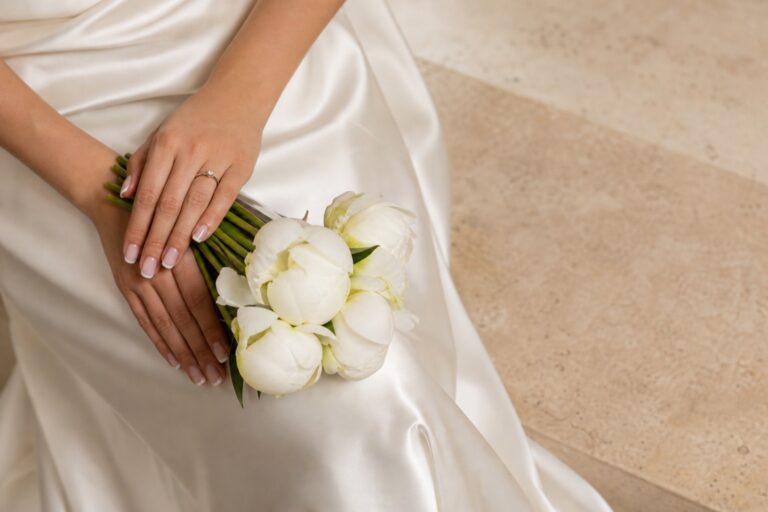
Think about the close-ups that actually happen. Your hands will hold flowers, fasten a dress, pass a glass at dinner, and sit beside a new ring. A good autumn manicure should make those moments look considered without asking for attention in every photograph. Deep burgundy, cocoa brown, muted plum, warm taupe, soft rust, and creamy nude all have a place; the question is how much contrast, shine, and detail your wedding can carry. The capsule below turns that question into a calm, salon-ready plan.
The base layer: choose the color family first
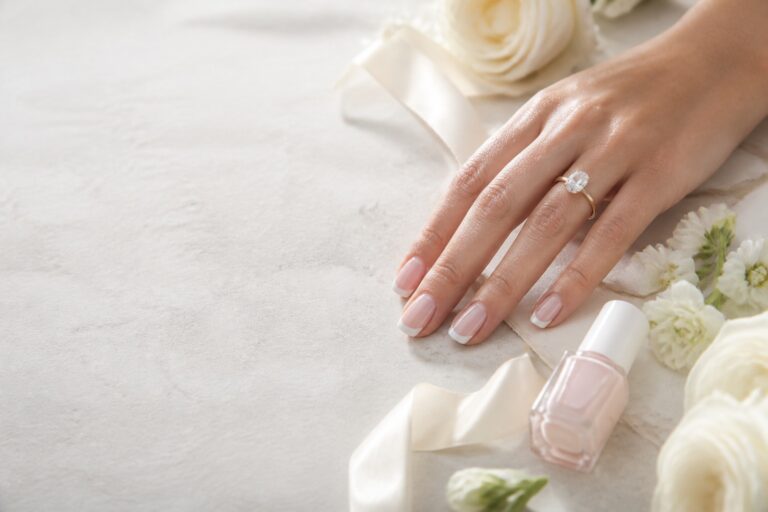
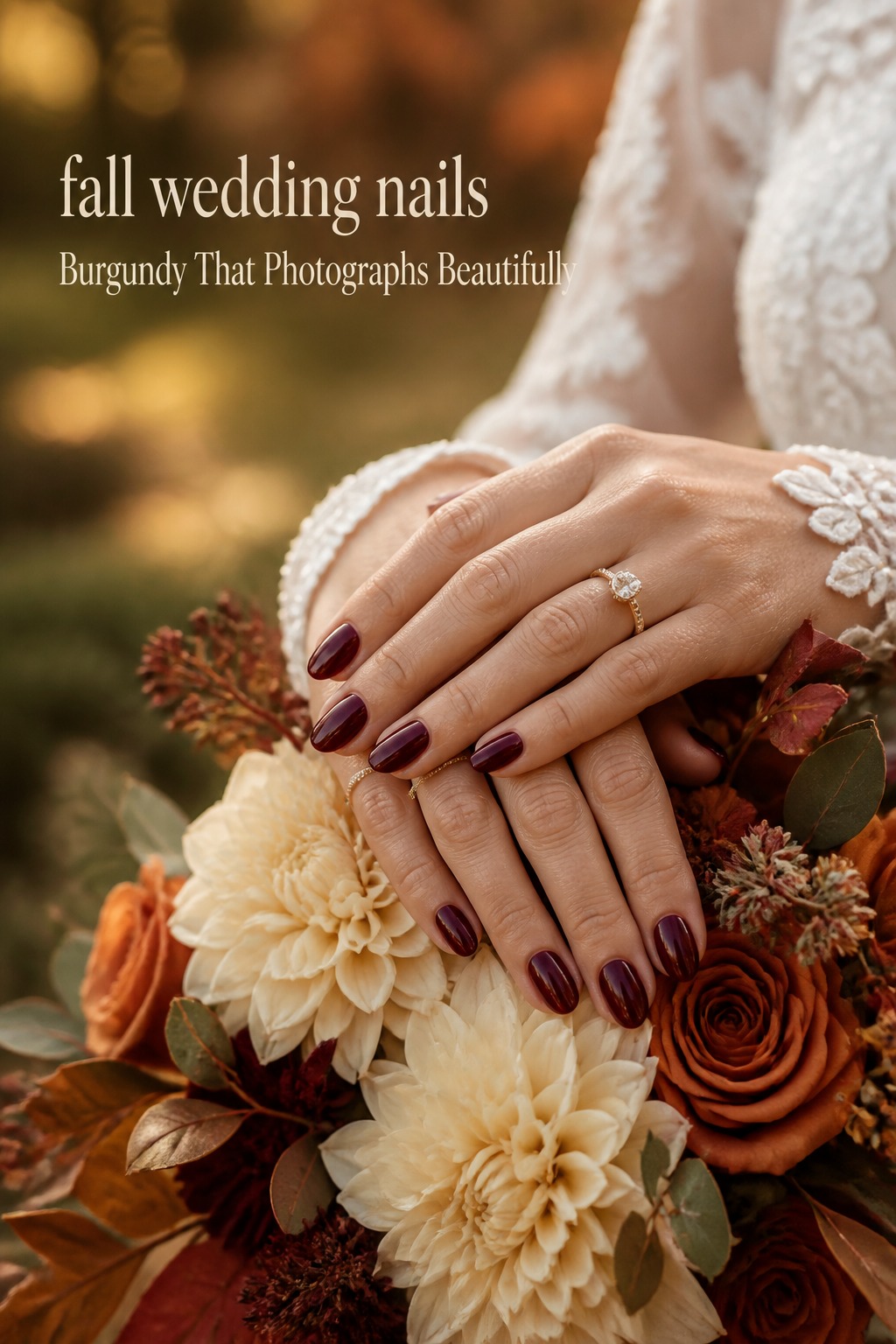
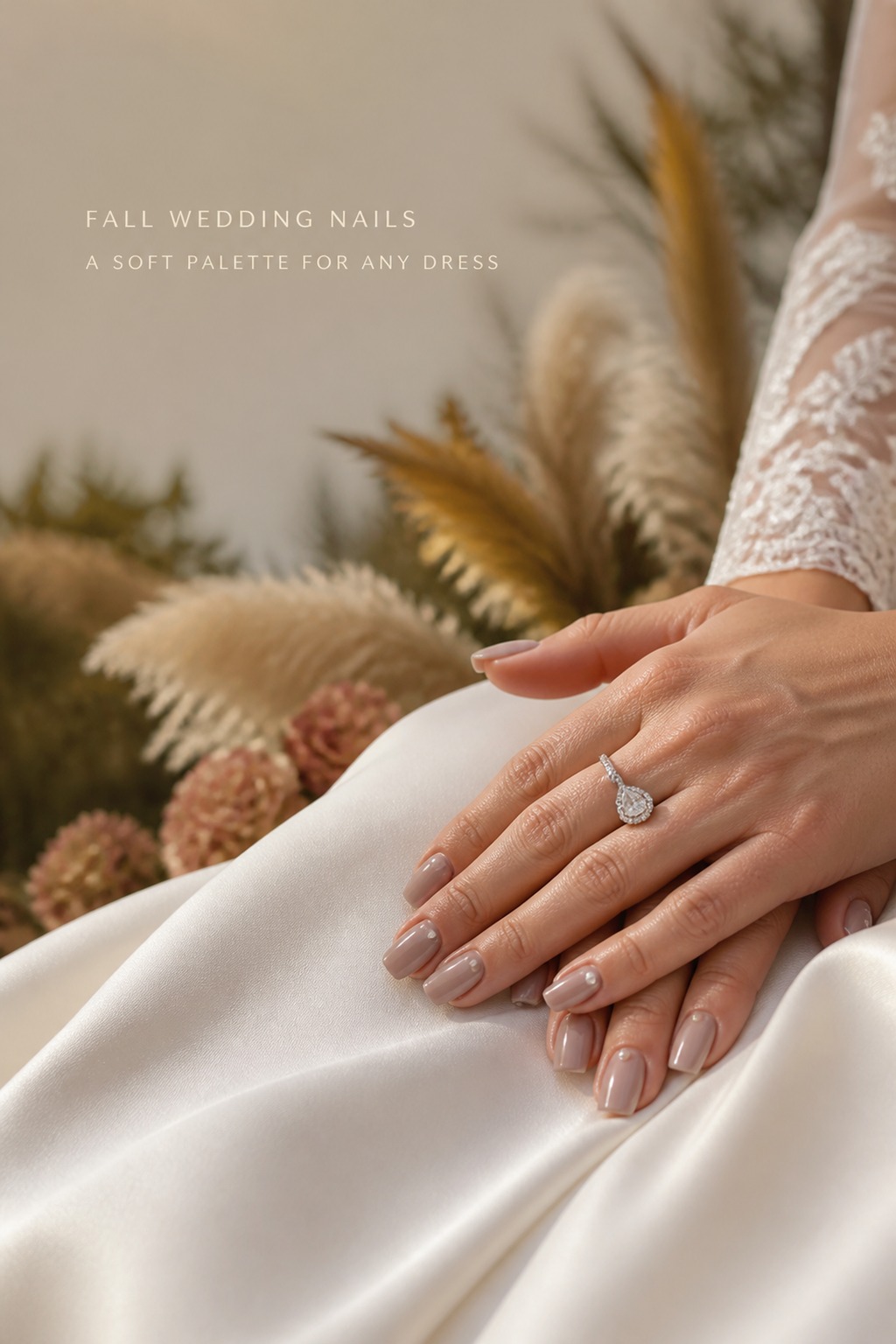
Every strong manicure begins with a color family, not a complicated design. For a bride who wants her nails to feel quietly seasonal, start with a toasted nude, mushroom taupe, soft caramel, or milky beige. These shades work as the anchor of the capsule because they keep the hand light and let a ring or bouquet lead. Look for a neutral with the same temperature as the dress: cream and champagne fabrics often prefer a warm beige, while bright white, silver jewelry, and cool-toned flowers can support a pink-beige or gray taupe.
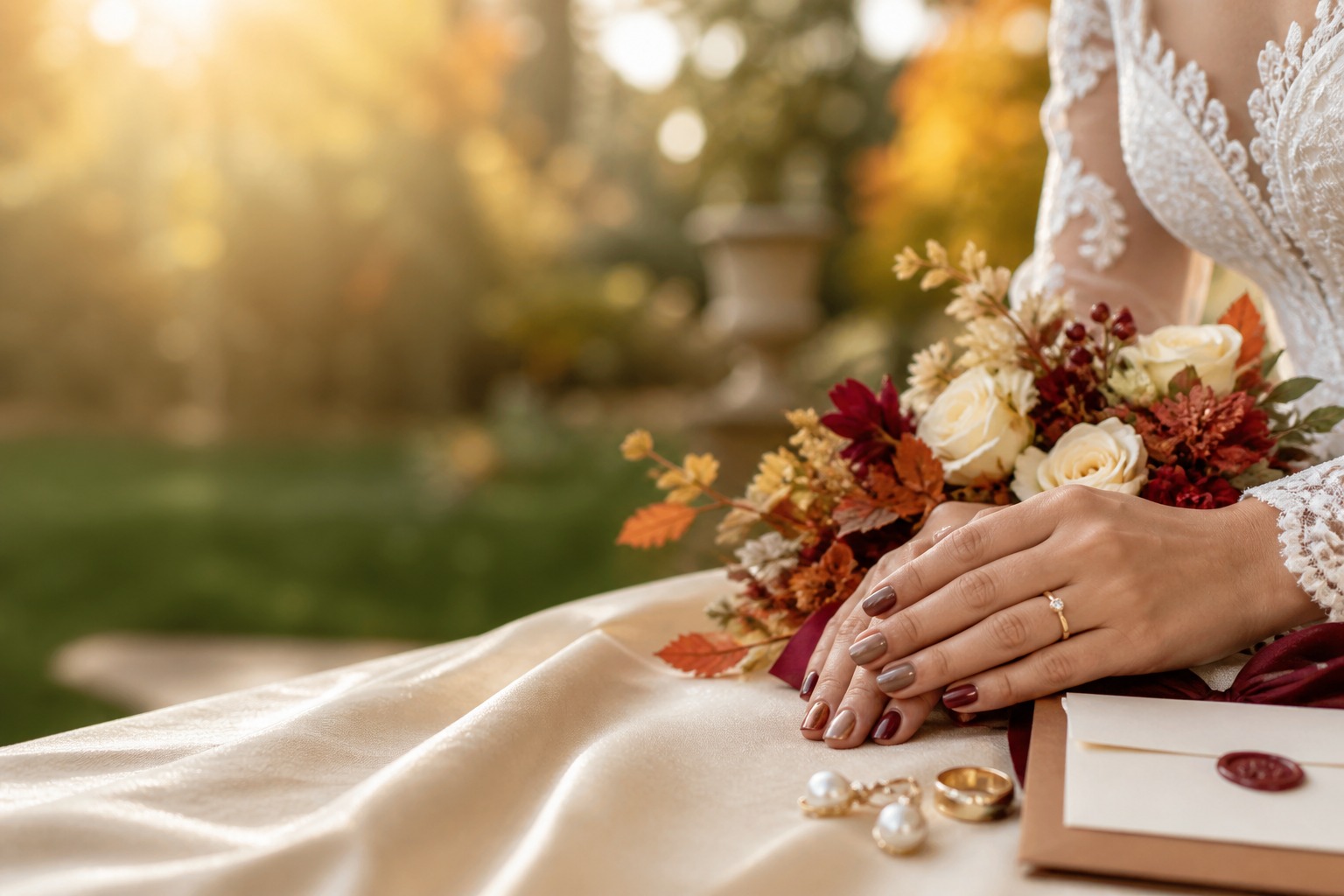
Richer fall shades work best when their undertone has a reason to be there. Burgundy is a classic choice for wine, berry, black-tie, or candlelit palettes; it offers visible contrast against ivory and photographs clearly around a diamond. Plum feels a little softer and more evening-oriented, especially with mauve flowers, antique gold, or velvet. Chocolate brown and espresso can look remarkably refined beside gold hardware, cinnamon florals, or a minimalist satin gown. Rust and terracotta are the warmest choices, so use them when the floral palette already contains clay, copper, marigold, or changing leaves.
Your wedding look is only the beginning.
Keep your guest list, vendors, timeline, and every important detail together with Zarellea — so your day feels as considered as your style.
Do not dismiss a sheer pink or milky neutral simply because the wedding is in October or November. A barely there base can be the most elegant part of a fall wedding nails capsule when you want one seasonal accent rather than ten. It also gives your nail artist a forgiving surface for a French tip, chrome powder, leaf-inspired line, or pearl detail. In other words, the neutral is not the absence of a decision. It is the piece that makes a stronger color look intentional rather than disconnected from the rest of the day.
- Warm ivory or champagne dress: caramel, beige nude, warm taupe, or brown-based burgundy.
- Bright white or silver jewelry: pink-beige, cool plum, berry, or a fine pearl finish.
- Rust, terracotta, or dahlia flowers: creamy neutral base with one copper, rust, or wine accent.
- Black-tie evening setting: burgundy, deep plum, espresso, or a very polished neutral French.
The accent piece: decide how seasonal you want to look
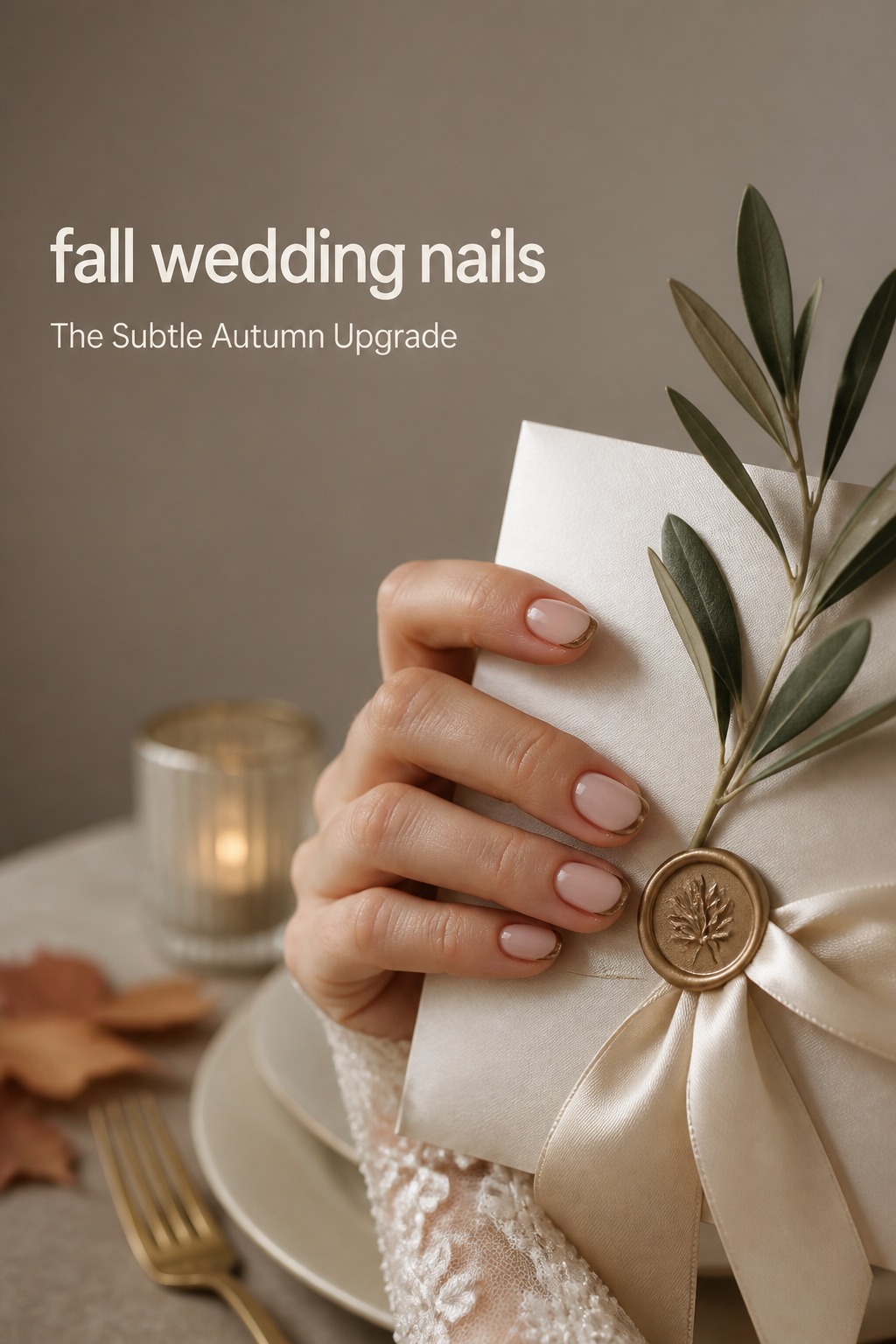
The second piece of the capsule is the seasonal accent. It can be a full color, a tip, a single nail, or a narrow line. The point is to choose one level of autumn expression and stop there. A full burgundy manicure is bold but still timeless when the shape is clean and the surface is glossy. A burgundy micro-French feels lighter, making it a strong option for someone who normally wears neutral nails. A single wine-colored ring finger, a thin bronze smile line, or a tiny gold leaf motif gives the season a place in the design while leaving the overall look bridal.
For a capsule that photographs easily, pair an obvious color with a quiet structure. Burgundy chrome needs no additional rhinestones. A brown French tip needs a sheer, even base instead of a second painted motif. If you love rust, let it appear in a very slim tip or one abstract sweep rather than mixing it with orange glitter, plaid, and leaves at once. The restraint is what makes the manicure feel tailored to a wedding rather than to a themed party. It also keeps the set flexible if your flowers or bridesmaid dresses shift during planning.
Use your ring metal as a final filter. Yellow gold makes caramel, chocolate, rust, and warm burgundy feel especially cohesive. Rose gold can soften a berry or mauve plum. Platinum and white gold support cool berry tones, mushroom taupe, and a faint silver-pearl sheen. This is not a rule about matching every surface. It is a way to avoid an accidental clash when the camera zooms in. Hold a cured sample or a press-on swatch beside the ring before your final appointment, preferably in daylight and again under warm indoor light.
The finish: control how the manicure catches light
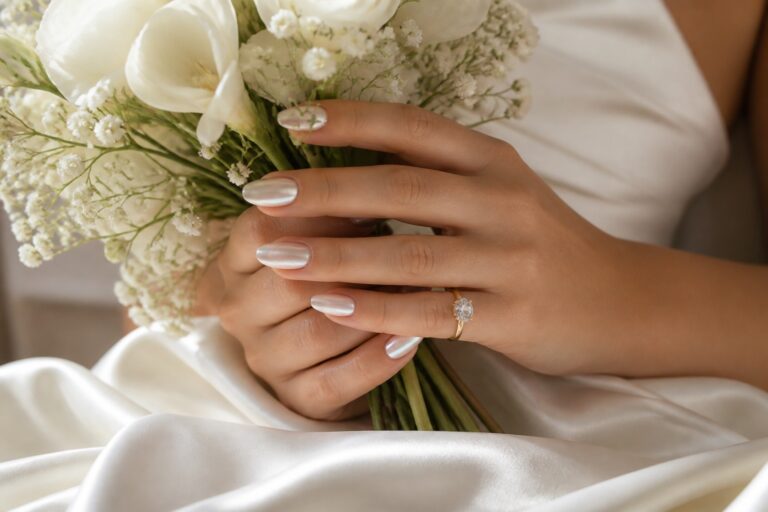
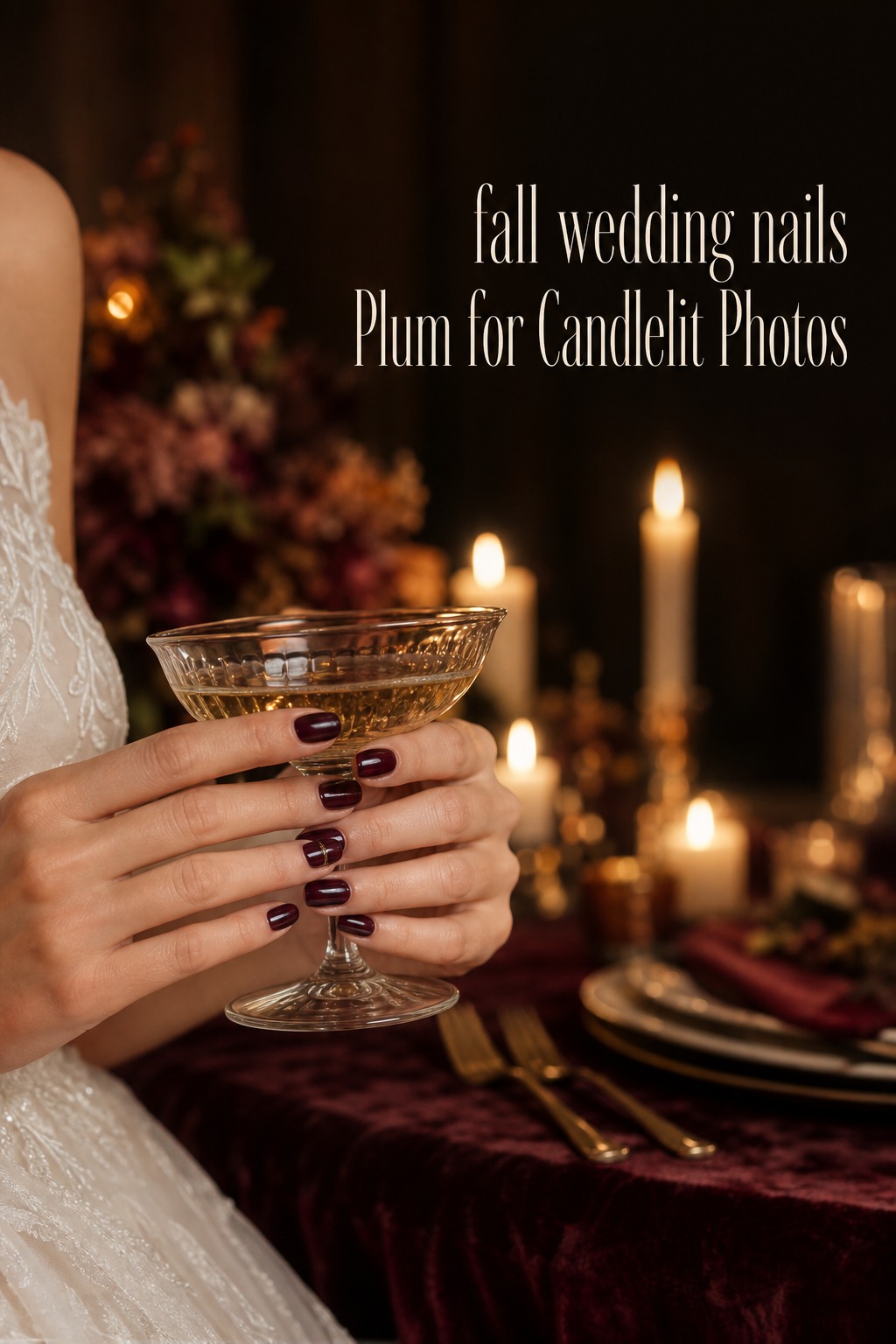
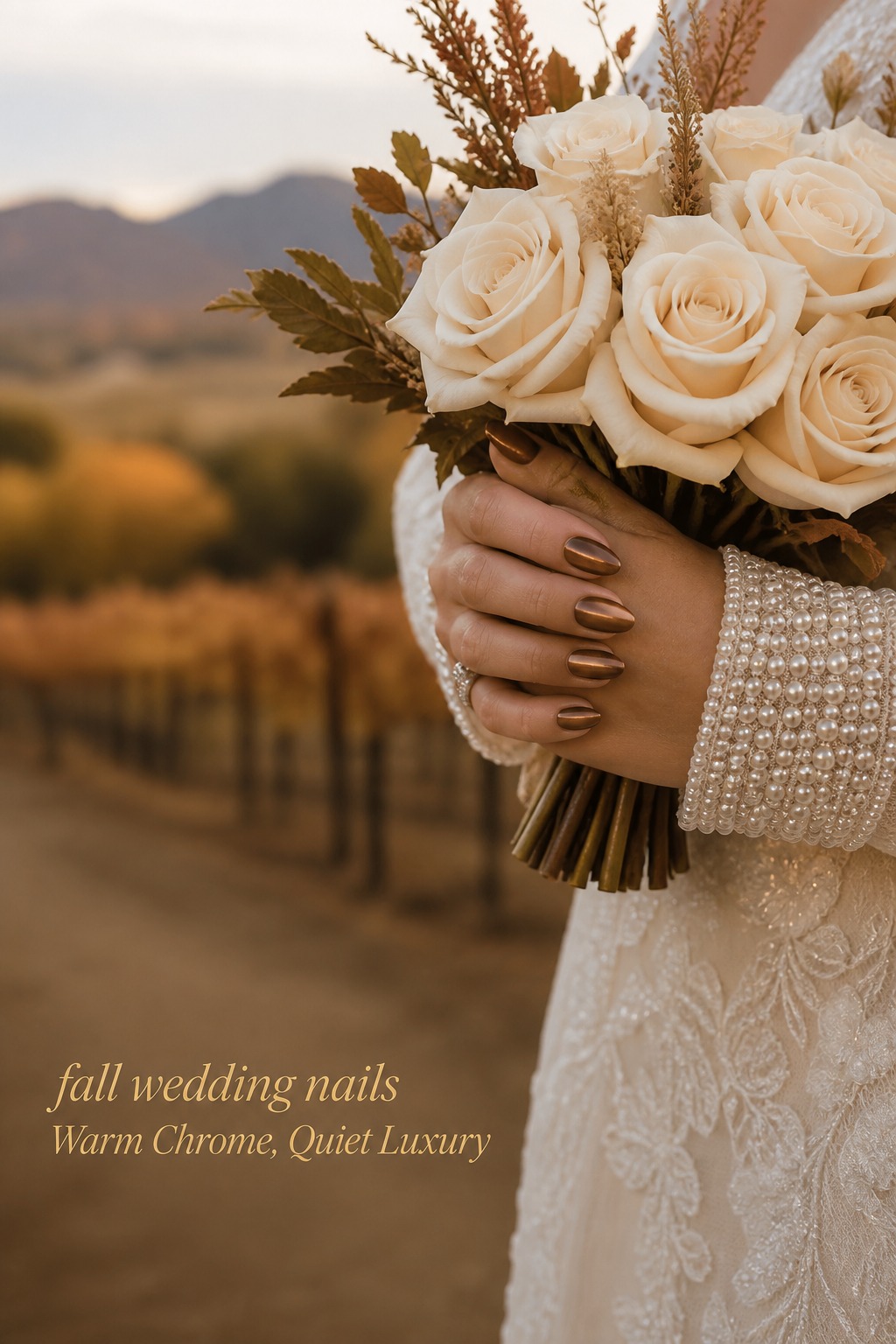
Finish changes the personality of fall wedding nails as much as color. High gloss is the most reliable choice when you want the manicure to look healthy, clean, and legible in photographs. It gives a deep wine polish a glassy, jewel-like quality and makes a sheer nude look cared for rather than unfinished. A fine pearl or chrome layer adds more reflection, but it should be selected for the mood of the event. Ask for a soft, diffused glow when the dress has lace, pearls, or a romantic texture; ask for a warmer chrome when the styling is sleek, modern, or evening-focused.
Velvet and cat-eye effects can be beautiful in autumn, particularly over burgundy, espresso, green, or plum. Their movement shows up best in reception lighting, though, so make sure you also like the way the color looks still. A magnetic shimmer that photographs as a dark stripe may not suit a bride who wants an understated ring shot. If you choose it, keep the magnetic line soft and centered and do a trial under flash. A fine bronze or champagne chrome often offers a safer way to add warmth because it reads as a surface glow rather than a graphic pattern.
Matte polish deserves extra thought. Matte burgundy, cocoa, or plum can look fashionable and tactile against velvet, but it makes every small imperfection more visible and can appear flatter in low light. A useful compromise is a glossy base with one matte accent, or a matte color with a tiny gloss French line. Whatever you choose, name the finish in the salon brief. Saying only “brown nails” leaves too much room between creamy espresso, mirror chrome, dense glitter, and softly glazed caramel.
- Gloss: best all-around choice for ring and bouquet photos.
- Soft pearl: useful for creamy neutrals, mauves, and gentle bridal light.
- Warm chrome: suited to caramel, cocoa, and bronze details.
- Velvet or cat-eye: richest for evening weddings when the rest of the design is simple.
- Matte: dramatic and modern, but test it in the actual wedding light.
The proportion: match shape and length to your real day
Shape is the practical component of the capsule. It decides whether a design looks delicate, graphic, or dramatic, and whether you can fasten earrings or handle a bouquet without thinking about your nails. Short squoval nails make warm neutrals, micro-French tips, and tiny metallic details look neat and modern. Oval softens a deeper color and is comfortable for most natural nail lengths. Medium almond gives burgundy, plum, and chrome more room to breathe, but it should still be short enough that you do not need to learn a new way to use your hands during the wedding weekend.
Let the color influence the proportion. The deeper and more opaque the polish, the more a clean shape matters. A wine red can look expensive on a short oval when the edge is symmetrical and the cuticles are hydrated. A brown French tip benefits from a slightly longer nail bed or a very thin line; a large, dark tip can shorten the hand. Chrome works especially well on almond and oval shapes because the curved surface carries the reflection. Raised embellishments work best on one or two nails, where they do not interfere with sleeves, hosiery, invitations, or flowers.
Consider your own style history. If you regularly wear a short neutral manicure, the wedding version can be a glossy short neutral with a bronze micro-French. If you love dark polish, a full burgundy gel is more authentic than a pale pink you chose because it seemed bridal. The best result is a recognizable version of you, refined for the occasion. A wedding manicure does not have to be invisible; it simply needs enough balance that the eye sees the hand, the ring, and the flowers as one composition.
Build five fall wedding nail combinations
1. The wine-and-ivory capsule. Start with a creamy sheer base, add a narrow burgundy French tip, and finish with high gloss. This combination is ideal for a bride who wants seasonal color but is wearing an ivory dress, carrying white flowers, or planning a formal ceremony. The neutral base keeps the tip from feeling heavy, while the wine shade picks up the mood of the season. On short nails, request a micro-French; on almond nails, ask for a gently curved smile line rather than a thick block of red.
2. The caramel-and-gold capsule. Choose a translucent beige or caramel base, then add a restrained warm chrome finish or one ultra-thin gold line near the cuticle. This is a natural companion to yellow gold jewelry, champagne fabric, dried floral arrangements, and soft fall daylight. It feels seasonal without using literal leaf art. Keep the chrome fine and glazed rather than mirror-like, and do not add glitter if the manicure already catches light. The result should look like warm silk, not a holiday manicure.
3. The plum-and-pearl capsule. Use a sheer rosy nude on most nails, a deep plum accent on one nail per hand, and a soft pearl veil over the neutral nails. This formula suits a romantic late-afternoon ceremony, mauve or berry flowers, and antique-inspired styling. The plum gives the set depth; the pearl prevents it from feeling too dark. It is also an excellent compromise for a bride who loves autumn color but wants the ring finger to remain light in close-ups. Avoid raised pearls unless you have tested their comfort.
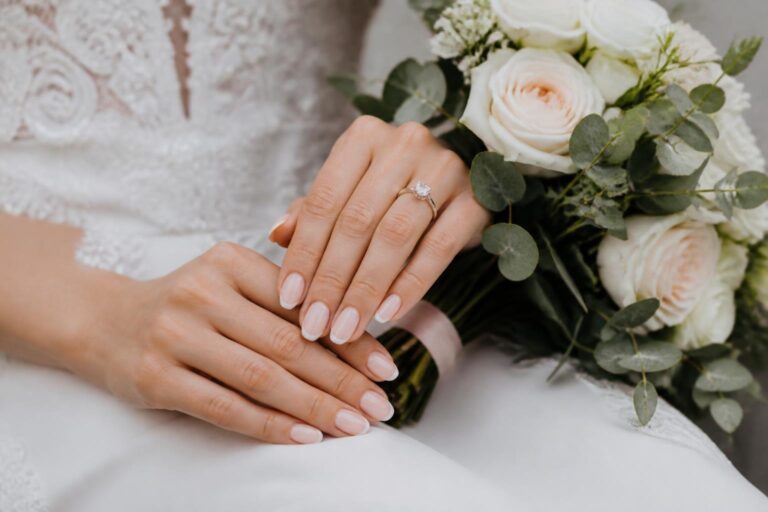
4. The cocoa French capsule. Begin with a pink-beige or milky nude base and place a thin chocolate-brown French tip over an oval or short squoval shape. Add high gloss, not matte, to keep the color polished. Cocoa is especially striking with ivory satin, a modern minimal dress, or a black-tie venue where traditional white tips might disappear. This is one of the easiest styles to wear after the wedding too. The key is choosing a brown with enough warmth that it reads intentionally brown, not black, under reception lighting.
5. The muted-rust capsule. Keep four nails in a warm nude and use rust only as a slim diagonal sweep, tiny negative-space detail, or single accent nail. Match it to a clay vase, marigold stem, terracotta ribbon, or copper jewelry already present in the day. Rust is the most literal autumn shade in this group, so it benefits most from restraint. A crisp full-rust set can be beautiful for a courthouse or destination celebration, but a lighter application will feel more versatile for a classic ceremony and remain easier to pair with the bouquet.
Buying priorities and the salon brief
Spend your planning energy on the variables the camera and your comfort will notice: nail condition, shape, color temperature, and finish. Do not spend it on collecting dozens of nearly identical photos. Save two or three references with a purpose. One should show the base color in daylight. One should show the preferred shape and length. One can show an accent or finish. Bring a photo of the dress fabric and, if you have it, the ring. Those materials tell your technician much more than a collage of heavily edited social images.
A clear brief might sound like this: “I want fall wedding nails built around a sheer warm nude base, a thin cocoa French tip, and a glossy finish. I want short oval nails and no glitter or raised details.” Or: “I want a deep burgundy gel on medium almond nails, high gloss, with no accent art because my ring and bouquet already have detail.” State the service too: natural nails, builder gel, gel polish, or extensions. A well-made manicure is only elegant if it survives packing, rehearsal events, travel, and the next morning.
Schedule a trial six to twelve weeks before the wedding if you are changing shape, artist, extension system, or finish. Photograph the result by a window, under warm indoor light, and with flash. Notice whether the deep color is still readable, whether the chrome turns too silver, and whether the nail length affects normal tasks. For the final appointment, one to three days before the wedding is usually a practical window, depending on travel and your technician’s advice. Keep cuticles hydrated, wear gloves for cleaning, and bring a small file and cuticle oil for peace of mind.
FAQ
What color nails are best for a fall wedding?
Burgundy, plum, cocoa brown, caramel, warm taupe, and creamy nude are all strong choices. Select the one that works with your dress undertone, ring metal, bouquet, and how much contrast you want in photographs.
Can a bride wear dark fall wedding nails?
Yes. A glossy burgundy, plum, or espresso manicure can look very bridal when the shape is neat and the rest of the design is restrained. Test the shade next to the dress and ring before the final appointment.
Are chrome nails appropriate for an autumn wedding?
They can be. Choose a fine pearl, bronze, or warm caramel chrome rather than an extreme mirror finish if you want a softer bridal result. Pair it with a simple color and skip competing embellishments.
What nail shape is best for wedding photos?
Short squoval, oval, and soft almond all photograph well. The right choice is a comfortable length with a symmetrical edge and hydrated cuticles, not a dramatic shape you do not normally wear.
When should I get my fall wedding manicure?
Plan a trial several weeks ahead, then book the final manicure roughly one to three days before the wedding. Adjust for travel, pre-wedding events, and the durability of your chosen service.
How do I make a seasonal manicure feel timeless?
Use one seasonal cue at a time: a rich color, a warm French tip, a fine chrome, or a small accent. Keep the base, shape, and finish clean so the manicure still feels like you after the season changes.