Old Money Wedding Guest Dress: Quiet Luxury, Venue by Venue
Old money wedding guest dress: an atmosphere, not a logo
The invitation says wedding, but your mind jumps to the setting: a church aisle washed in morning light, a garden ceremony framed by hedges, or a ballroom reception where candlelight turns every satin edge into a soft gleam. In those rooms, an old money wedding guest dress isn’t about chasing attention—it’s about looking unquestionably appropriate. The goal is subtle luxury: silhouettes that hold their shape through a long ceremony, fabrics that move with restraint, and accessories that feel collected over time rather than bought for one night.
The most compelling “old money” wedding guest style reads like quiet confidence. You’ll see it in a navy sheath that doesn’t tug when you sit, a cream midi that photographs like a vintage portrait at golden hour (without drifting into bridal territory), or an evening gown that’s unmistakably black-tie without relying on loud embellishment. This guide brings that aesthetic into real wedding scenarios—garden, church, ballroom, winter—while anchoring inspiration in the names and references that consistently signal the look: Victoria Beckham, Vampire’s Wife, Watters, and Old Money Collection pieces like the Setai Gown and The Bridal Party Mini.
What “old money” means in wedding guest attire (and why it works)
Old money style is best understood as refined dressing with restraint. Instead of trend-led details, it favors classic proportion, polished finishing, and a timeless palette—navy, cream, charcoal, deep emerald, and occasional metallics used with intention. The effect is “expensive” not because it’s flashy, but because every element looks considered: the neckline aligns with the venue, the hem length respects the ceremony setting, and the accessories are pared back—often pearls, small diamonds, or minimal gold.
In wedding guest terms, this aesthetic solves a familiar problem: you want to look elevated without competing with the couple or the bridal party. Old money cues—structured sheath lines, tea-length movement, a column silhouette—create elegance that feels calm in photographs and comfortable across a full day of events, from formal afternoon weddings to late receptions.
Your wedding look is only the beginning.
Keep your guest list, vendors, timeline, and every important detail together with Zarellea — so your day feels as considered as your style.
The “subtle luxury” checklist a stylist uses before approving a look
Before you commit to a dress, step back and read the outfit the way a venue will read it. If the first impression is “trend,” it won’t feel old money. If the first impression is “composed,” you’re on the right track.
- Silhouette first: sheath, column, midi/tea-length, or a long gown for formal venues
- Fabric with intention: silk, satin, crepe, or chiffon, chosen for season and movement
- Color with restraint: navy, cream, charcoal, deep emerald, and selective metallics
- Accessories that whisper: pearls, small diamonds, minimal gold; a simple clutch
- Finish matters: a clean hem, smooth fit at the waist/hip, and comfortable support for long hours
Silhouettes that consistently read “old money” at weddings
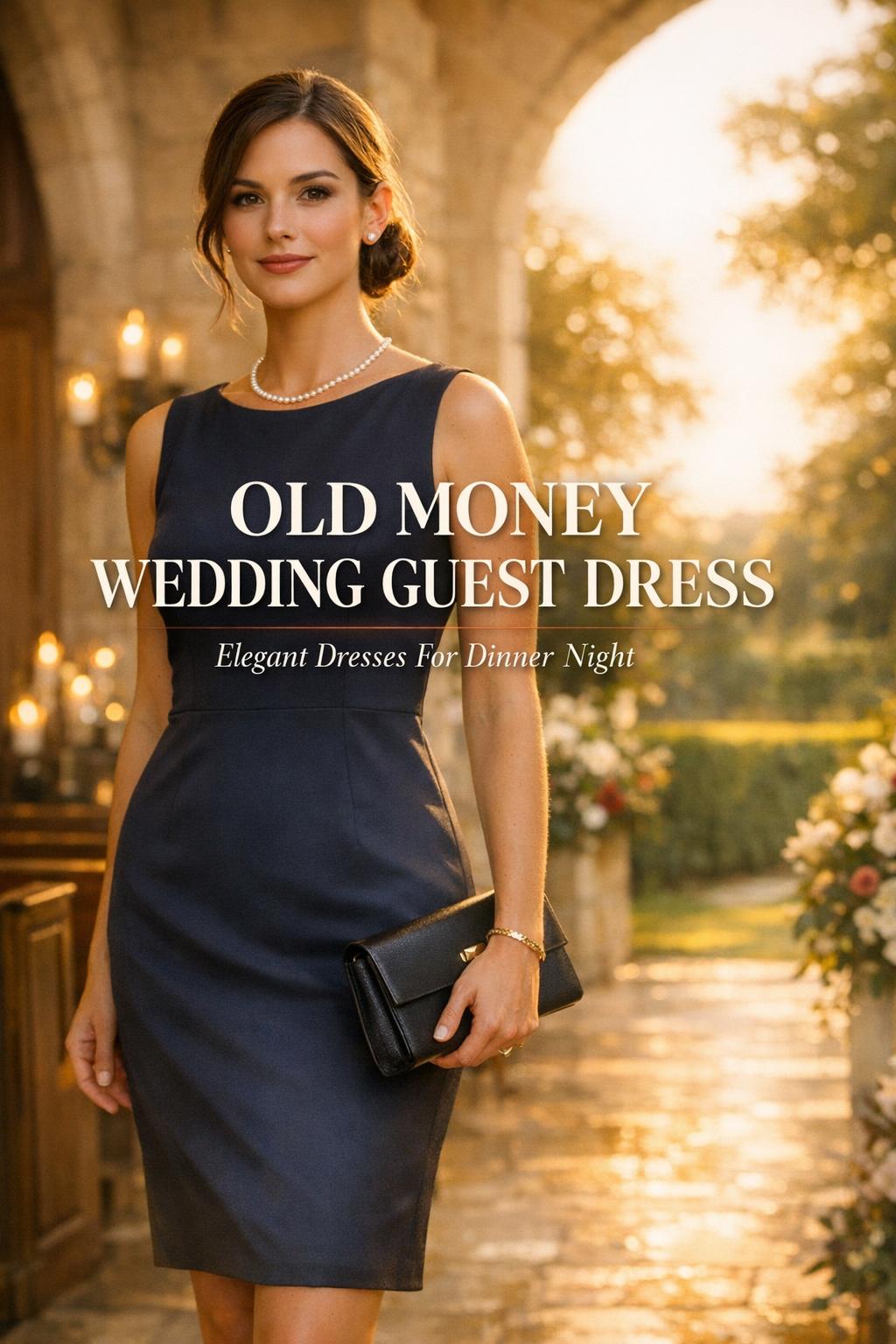
Silhouette is where timeless elegance becomes visible. Even a simple fabric can look elevated when the cut is disciplined—especially in the photos that matter: walking down a gravel path to the ceremony, standing in line for greetings, sitting through vows, and moving through a crowded reception.
Sheath and column dresses: the quiet backbone of wedding guest style
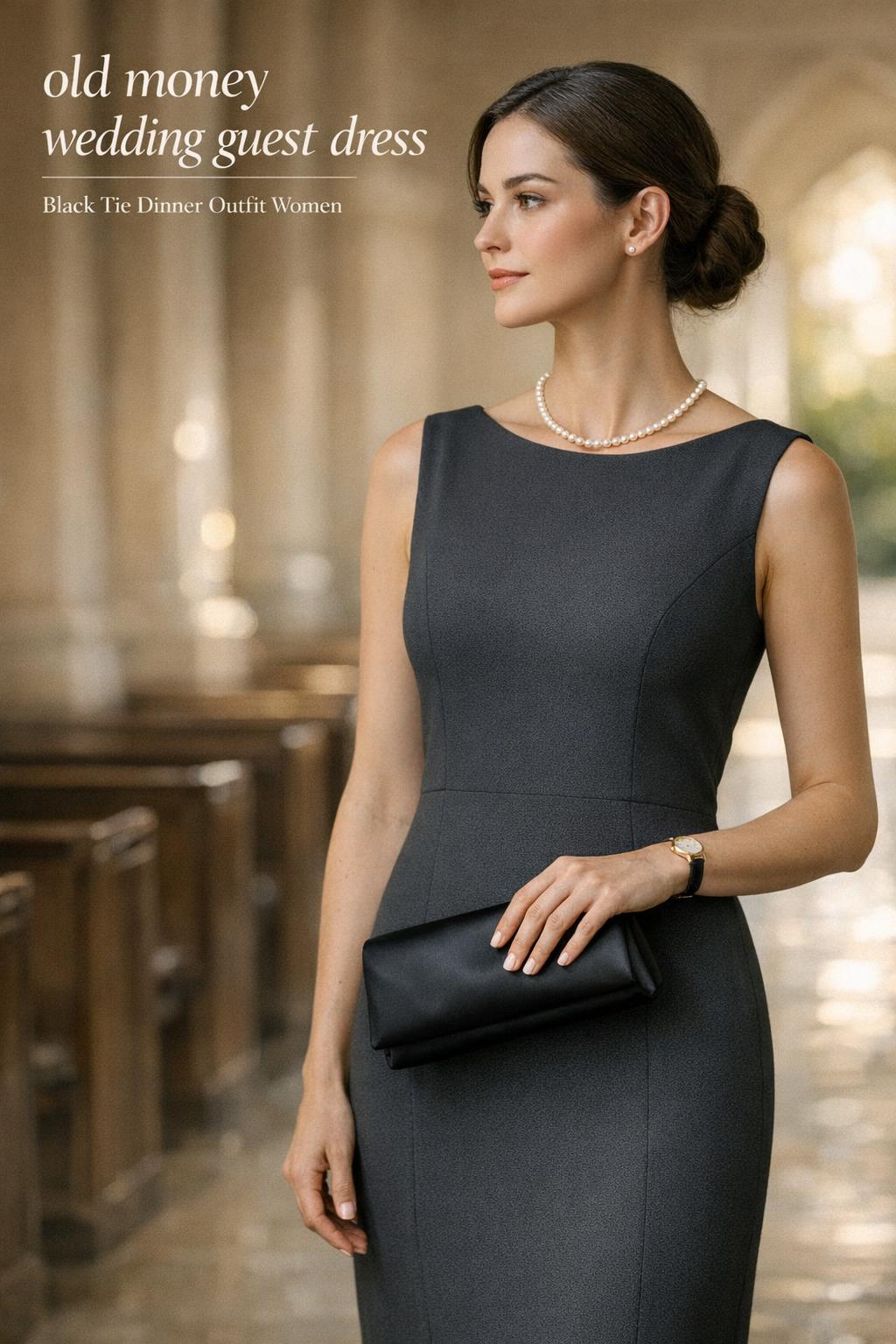
A sheath or column dress is old money in its purest form: clean lines, minimal interruption, and a shape that looks composed whether you’re standing for cocktails or seated at dinner. In navy or charcoal, these silhouettes feel inherently “classic wedding guest dress,” and they translate across venues—especially church ceremonies and formal afternoon weddings where polish matters more than drama.
For styling, keep the neckline and finish measured. A more modern approach can nod to celebrity styling—Victoria Beckham’s sleek, label-led minimalism is a useful reference point—while still keeping the overall impression understated. The balance is key: if the dress is smooth and sculpted, accessories should be simpler, not louder.
Midi and tea-length: the garden-to-church sweet spot
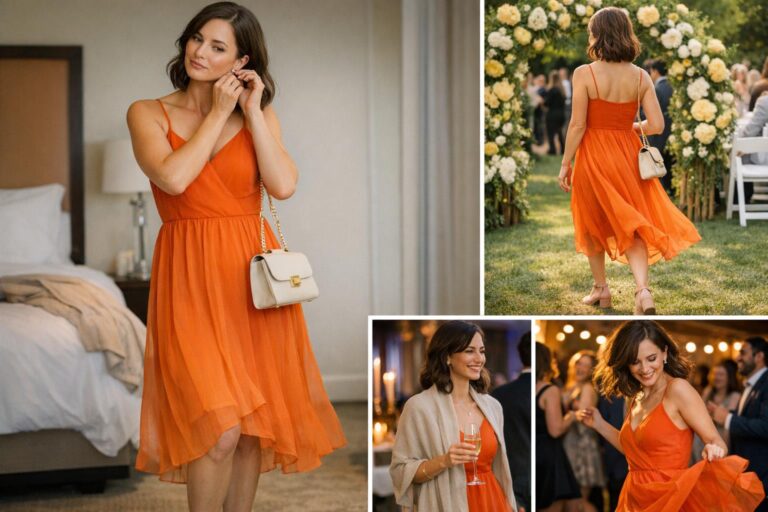
Midi and tea-length options are often the most wedding-flexible. They move beautifully in a garden breeze, feel respectful in a church, and stay practical when your day includes walking across lawns, climbing stairs at a heritage venue, or standing for extended mingling. In chiffon, they look romantic; in crepe, they look sleek; in satin, they catch light at golden hour in a very controlled way.
Where this silhouette shines is in its built-in etiquette: it naturally avoids extremes. It’s not nightclub short, not black-tie long, and not overly bridal—provided you’re thoughtful about color selection.
Evening gowns for ballroom and black-tie venues
For a true formal evening reception—especially a ballroom setting—an evening gown becomes appropriate, and “old money” becomes even more visible. The difference is in restraint: a long line, a clean finish, and a fabric that looks luxurious without heavy decoration. A satin gown with subtle shine can feel impeccable under candlelight; a crepe gown reads more matte and quietly commanding.
If you’re also shopping for a black tie dinner outfit women can wear beyond weddings, this is where overlap is strongest. A refined long gown, paired with a minimal clutch and pearl or small diamond details, can serve as both a wedding guest look and one of your most reliable elegant dresses for dinner night events.
Fabrics, colors, and textures that communicate timeless elegance
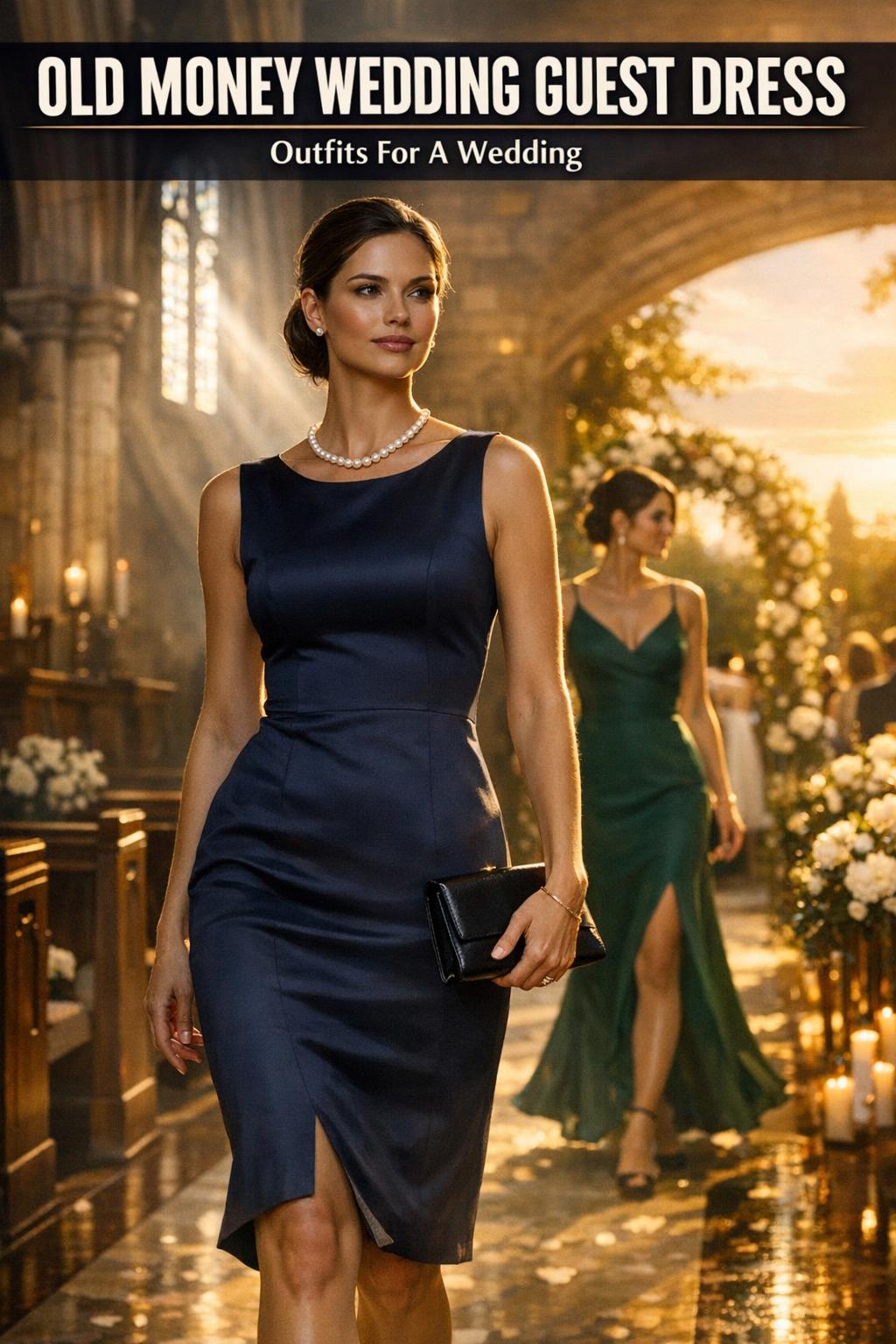
Old money dressing is often described as timeless, but what makes it feel timeless in real life is fabric behavior. How a textile drapes, reflects light, and holds structure determines whether a dress looks composed at noon, photographs well at golden hour, and still looks polished after hours of wear.
Fabrics: silk, satin, crepe, chiffon
Silk and satin are the classic “understated luxury” choices, particularly for evening receptions and winter weddings where richer textures suit the mood. Crepe is the quiet workhorse—less reflective, often more forgiving in photos, and naturally refined for sheath and column silhouettes. Chiffon brings softness for garden ceremonies and warm-weather celebrations, especially in midi lengths where movement reads romantic rather than dramatic.
In practice, fabric choice is also comfort strategy. A long wedding day—ceremony, travel, reception—demands breathability and ease of movement. If you love satin’s glow but worry about it feeling too “high shine” in daylight, choose it for evening timing or look for a subtler finish. If you want a consistent, matte elegance from ceremony to last dance, crepe is often the safest path.
Colors: navy, cream, charcoal, deep emerald, and selective metallics
Navy is the perennial old money wedding guest color: refined, photogenic, and appropriate across seasons. Charcoal carries similar sophistication with a slightly more modern edge. Deep emerald reads formal without feeling severe, making it especially strong for evening receptions. Cream can be stunning—soft, expensive-looking, and vintage in tone—but it requires careful etiquette judgment because it can drift close to bridal on certain days and in certain lighting.
Metallics appear in the old money world as accents rather than headlines. A metallic tone in a navy gown, or a discreet metallic accessory, can feel festive without becoming statement dressing. This is the same logic you’ll see in editorial wedding guest inspiration that leans classic and celebrity-referenced rather than trend-saturated.
Matte vs. subtle shine: choosing the right texture for the venue
Texture is your secret tool for matching the room. A candlelit ballroom welcomes subtle shine; a bright garden ceremony can make shine feel louder than intended. Matte crepe reads controlled and “heritage” almost anywhere, while satin and silk create a more cinematic look that’s best when the setting supports it—winter weddings, evening receptions, and formal venues where light is softer.
Jewelry and accessories: pearls, small diamonds, minimal gold
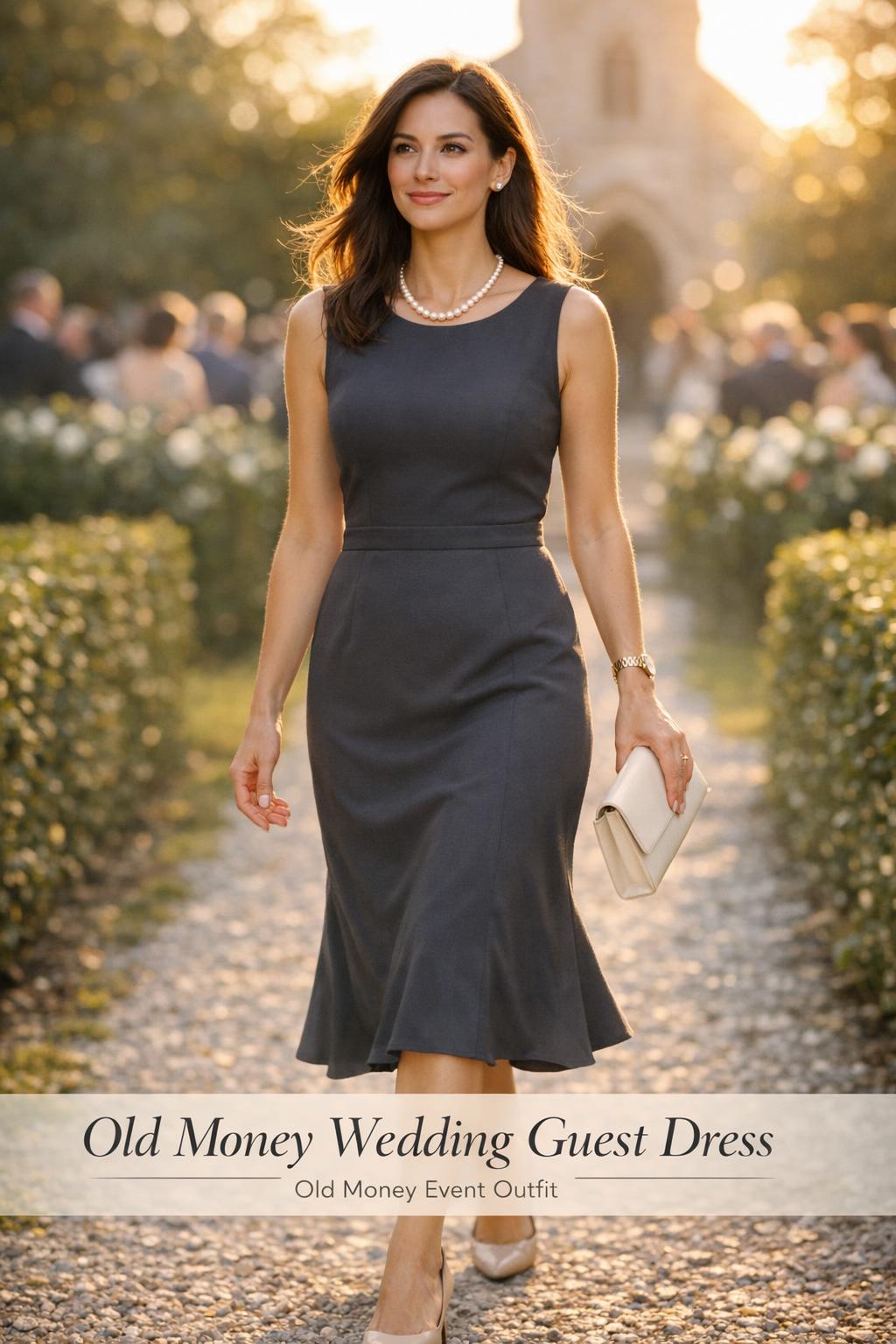
The fastest way to lose an old money effect is to over-accessorize. Wedding guest outfits that feel timeless usually follow a simple rule: choose one quiet focal point, then let everything else recede. That focal point is often pearls (earrings, a delicate necklace), small diamonds, or a single minimal gold piece—details that read “collected” rather than “costume.”
Pearl details for ceremony-to-reception polish
Pearls align naturally with wedding environments because they echo the romance of the day without pulling focus. They also bridge dress codes: a navy sheath with pearl earrings looks correct at a church ceremony; the same pearls still look appropriate when the evening turns into a formal dinner. When guests ask how to dress like old money for a wedding, pearls are often the simplest, most reliable answer.
Handbags and clutches: understated elegance, not trend theater
A clutch is less about making a statement and more about keeping the silhouette clean. For a refined look, opt for simple lines and minimal hardware. In editorial inspiration, you’ll often see a sleek clutch paired with a gown—an echo of celebrity wedding guest styling—because it reads polished without demanding attention.
Tips for shoes that survive a long wedding day
Old money style is never at war with comfort; it simply hides the work. Consider where you’ll walk—lawns for a garden wedding, stairs in older venues, long corridors in ballrooms—and choose shoes that maintain posture and ease. A refined dress loses its impact if your movement looks strained. If you’re committing to a sleek column silhouette, prioritize stable footing so you can move through the day with the same composure you had at the ceremony entrance.
Brand and designer signposts: classic codes and modern interpretations
Old money style isn’t defined by a single brand, but certain names consistently appear in wedding guest conversations because they embody restraint, clean tailoring, and a polished mood. In editorial contexts, Victoria Beckham is often referenced for sleek minimalism that feels expensive without ornament. Vampire’s Wife appears as a different kind of old money signal—timeless glam with a slightly romantic edge, the sort of piece that can look immortal in photographs.
In bridal-adjacent discussions of the aesthetic, Watters shows up as an example within the old money conversation—proof that the “refined elegance” code can be translated across wedding categories, from bridal to guestwear. And for guests shopping with a specific product in mind, Old Money Collection anchors the aesthetic directly with pieces like the Setai Gown and The Bridal Party Mini—names that are already positioned around the idea of wedding guest styling.
How to use celebrity inspiration without looking like you’re wearing a costume
Celebrity references work best when you borrow the principle, not the exact look. Victoria Beckham’s wedding guest inspiration is less about replicating a specific gown and more about adopting the discipline: one strong silhouette, one refined accessory direction, and an overall palette that reads intentional. Princess Beatrice’s wedding guest moments—often discussed with nods to timeless glam, pearls, and understated luxury—are helpful for understanding how to look formal without going loud, especially when the setting leans classic.
Venue and season: the old money dress code atlas
Two guests can wear equally “old money” looks and still be wrong for the wedding if they ignore venue and season. The best outfits for a wedding are those that harmonize with the setting: a garden ceremony needs breathable movement; a church wedding favors measured coverage and a respectful hem; a ballroom reception welcomes richer fabric and deeper color.
Garden weddings: breathable elegance that still photographs polished
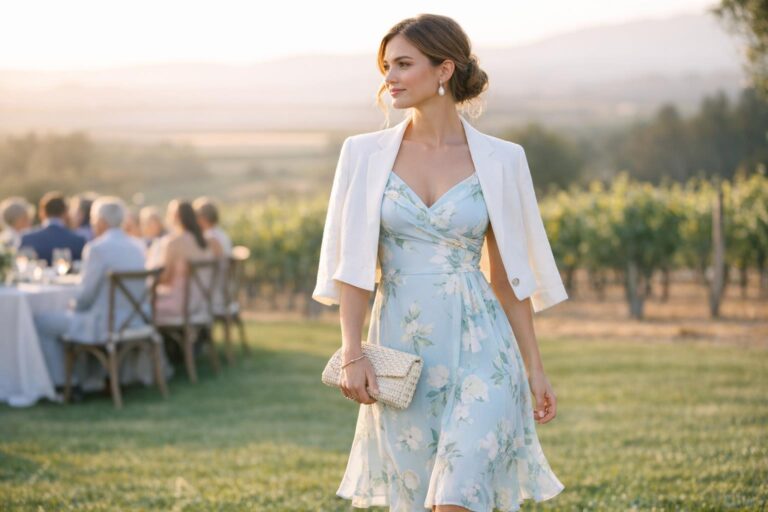
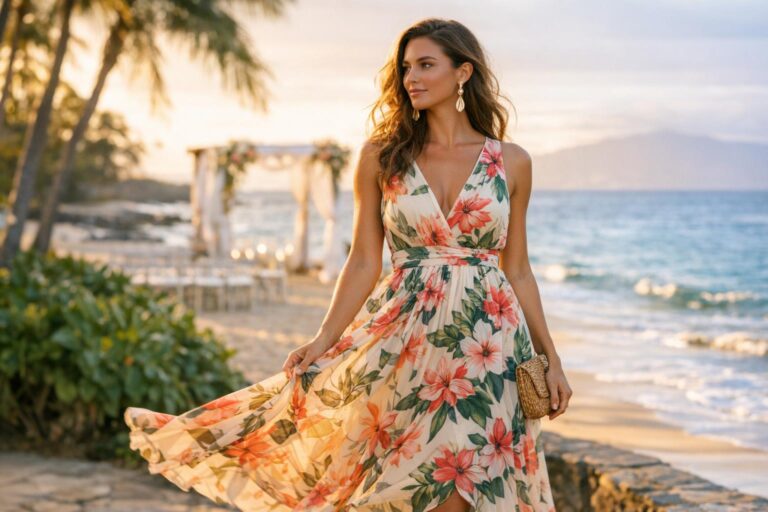
A garden wedding is where chiffon and midi lengths earn their keep. The atmosphere is romantic—sunlight, greenery, golden hour—and the styling should feel soft without becoming overly casual. A tea-length silhouette keeps you comfortable on grass and prevents a hem from dragging. Choose colors with depth—navy, deep emerald, or a carefully selected neutral—so the dress doesn’t wash out in bright outdoor light.
Church weddings and formal afternoon ceremonies: refined lines, respectful proportions
For church settings, old money codes align naturally with etiquette: a sheath or structured midi in crepe or satin, with minimal jewelry and a simple clutch. This is where conservative chic wedding attire feels less like a “rule” and more like a stylistic advantage—your look appears calm, composed, and venue-aware.
Ballrooms and winter weddings: richer textures and controlled drama
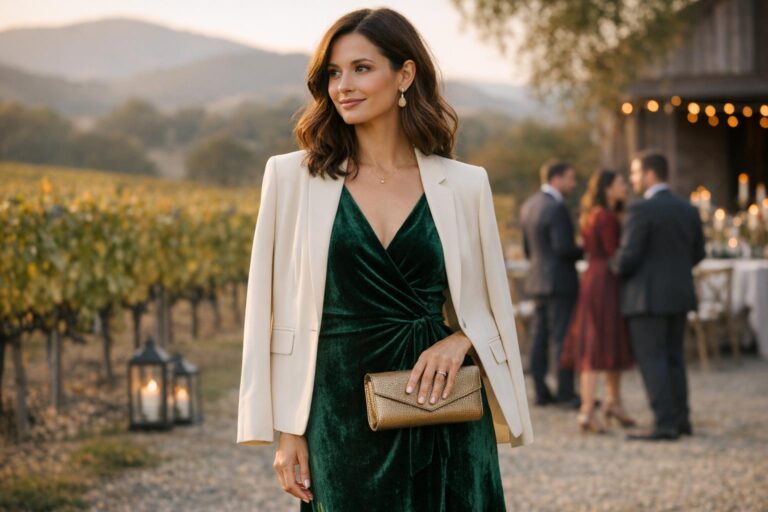
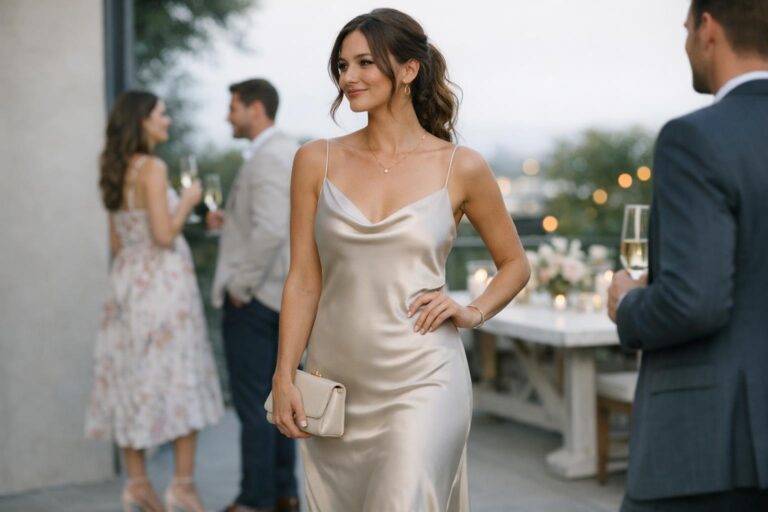
Winter wedding guest attire often benefits from satin, silk, and deeper tones, because the event lighting tends to be softer and the mood more formal. Editorial inspiration frequently highlights this: a plunging satin gown, a sleek clutch, and a wrap-like layer for warmth create a complete, coherent story. If you’re attending a reception that feels like a black tie dinner, your wedding guest dress can double as an old money event outfit—one that transitions seamlessly into formal dinner settings later in the season.
Destination energy, without losing the old money restraint
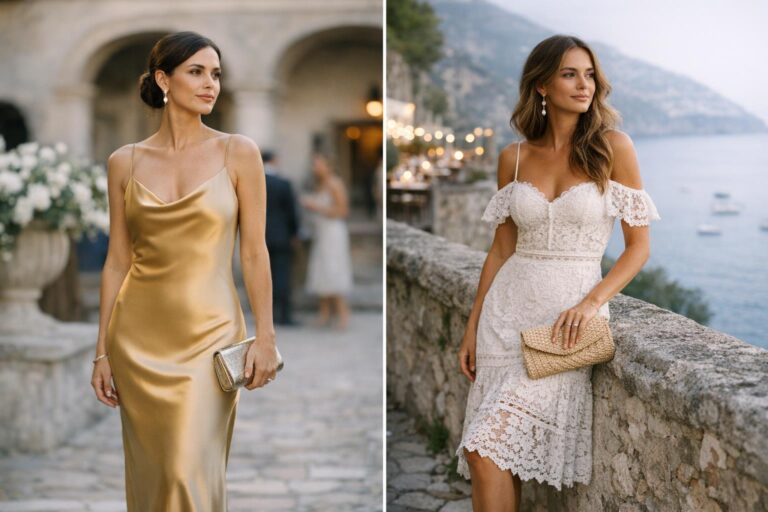
Not every wedding is a ballroom; some are airy, bright, and transportive. In those cases, keep the old money effect by focusing on fabric quality and silhouette clarity rather than extra details. A flowing chiffon midi can feel “destination” while still reading refined, especially when accessories stay minimal—pearl earrings, a clean clutch, and a palette that remains classic rather than neon.
Outfit stories you can actually wear: from ceremony light to reception glow
Old money wedding guest style is often described in broad strokes—timeless, elegant, understated—but it becomes useful when you can picture it in motion. Below are a few scene-ready outfit directions built around the silhouettes and palettes that consistently signal subtle luxury, with styling logic that holds up across a full wedding day.
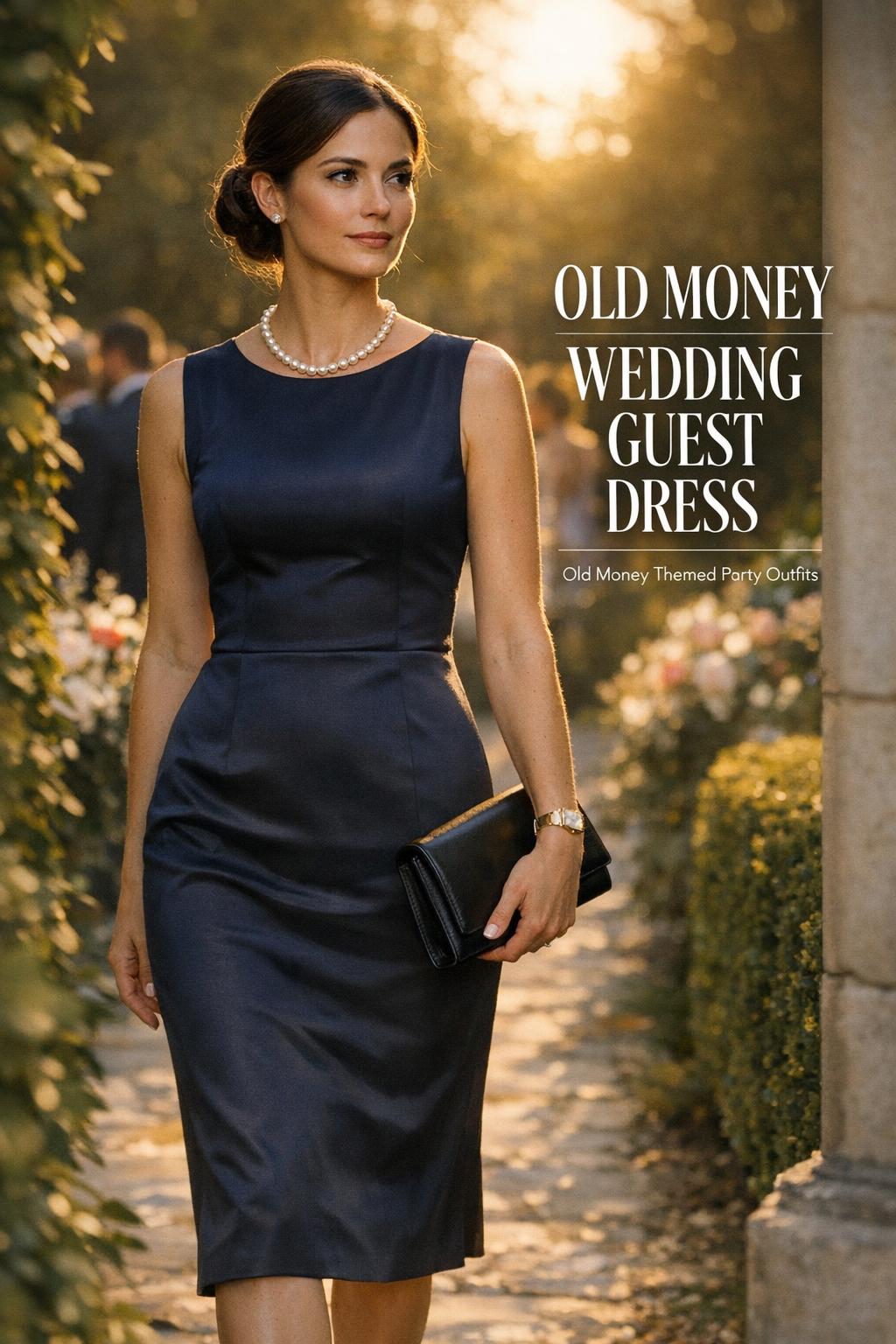
Navy sheath + pearls: the most reliable classic wedding guest dress formula
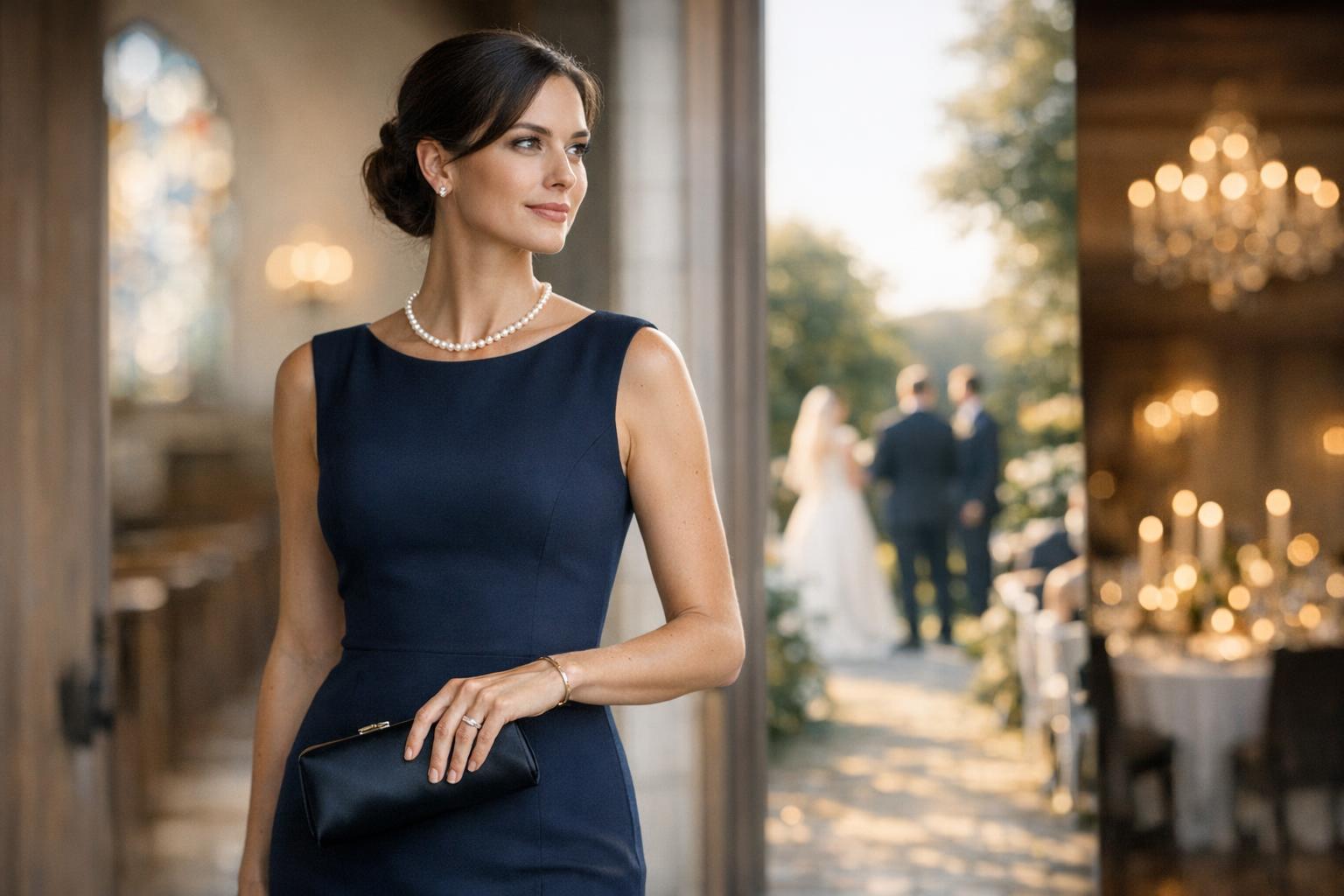
Imagine a formal afternoon wedding where the ceremony begins under soft daylight and transitions into a warm, early-evening reception. A navy sheath feels grounded and graceful in that timeline. Add pearl earrings (or a simple pearl detail) and keep the clutch understated. The navy anchors you in photos, pearls add a bridal-adjacent romance without stealing the moment, and the sheath shape keeps you comfortable through seated portions of the day.
This is also the look that adapts fastest if the invitation language is vague. When in doubt, a navy sheath with quiet accessories reads “I understood the assignment” at nearly any venue type mentioned in wedding guest style guides.
Cream midi + minimal gold: elevated, but requires etiquette awareness
A cream midi dress can look exquisitely old money—especially in crepe or a restrained satin finish—but it’s the one direction that demands the most discretion. In some lighting, cream can photograph close to bridal. If you choose it, ensure the tone is clearly not white and keep the styling minimal and mature: subtle gold accents rather than sparkle, and a silhouette that reads “guest” rather than “ceremony gown.”
For a garden ceremony at golden hour, cream can be breathtaking against greenery. For a formal church wedding, it can be risky depending on the couple’s preferences and the bridal party palette. When you’re unsure, pivot to navy or charcoal and keep the same silhouette.
Deep emerald column + small diamonds: reception-ready sophistication
Deep emerald is one of the most naturally “expensive-looking” shades in wedding guest attire because it carries depth without shouting. A column silhouette in emerald feels especially right for evening receptions, where candlelight enriches the color. Finish with small diamonds (or similarly minimal sparkle) and a sleek clutch for a look that belongs in a ballroom without feeling theatrical.
Satin gown + winter layers: a black-tie dinner outfit women can reuse
For a winter wedding or formal evening venue, a satin gown becomes the main character—yet it still fits the old money code when the lines remain clean and the accessories remain quiet. Pair with a simple clutch and a warm layer that feels intentional. This is the kind of wedding guest dress that later becomes one of your elegant dresses for dinner night events, because its appeal isn’t tied to a single theme or season.
Old money themed party outfits vs. wedding guest outfits: how to keep it respectful
There’s overlap between old money themed party outfits and what you’d wear as a wedding guest—but weddings require a tighter filter. A themed party invites a little theatrical nod; a wedding asks for deference to the couple and the room. If you’re translating your old money party instincts to a wedding, reduce the “costume” elements and keep the elegance clean.
Think of it as editing: keep the refined silhouette and heritage mood, but remove anything that feels like it’s trying to be a character. At a wedding, understated luxury should read as your personal style, not a performance.
Tips for dialing down a themed look into wedding-appropriate subtlety
- If you love statement details, choose just one: a dramatic sleeve or a rich fabric, not both
- Let one element signal “old money” (pearls, a sheath silhouette, a restrained palette) and keep the rest simple
- Avoid overly bright colors when the invitation suggests formal or classic dressing
- Prioritize fit and finishing—those details look more “heritage” than extra embellishment
Shopping with intention: building a wardrobe of wedding guest staples
Shopping for an old money wedding guest dress is easiest when you focus on a small set of pieces that can reappear across invitations: a sheath for formal afternoons, a midi for gardens and churches, and a long gown for black-tie venues. This is where a product-first approach can help—especially if you’re considering styles positioned explicitly around the aesthetic, such as Old Money Collection’s Setai Gown or The Bridal Party Mini—because it keeps your search aligned with the mood you’re trying to achieve.
On the editorial side, designer references can clarify direction. Victoria Beckham signals sleek minimalism; Vampire’s Wife signals timeless glam with romance. Even when you’re not buying those exact pieces, the references help you assess whether a dress belongs in the old money world: clean lines, refined color, and accessories that don’t compete.
A practical “try-on” approach for wedding guest dressing
When you try on at home, test the dress the way the day will test you. Sit, walk, raise your arms, and imagine holding a clutch through cocktails. Old money style depends on composure; if the dress restricts you, the elegance will look forced. If you’re choosing satin, check it in bright light and softer light to see whether the shine feels subtle or dominant.
Common missteps that break the old money spell
Most “misses” happen when guests focus on a single idea—like a fancy fabric or a trendy cutout—without considering the whole story. Old money is holistic: fabric, silhouette, and accessories should agree with one another and with the venue. If any element shouts, the outfit stops feeling timeless.
- Overly shiny fabric in bright daylight, where it can read louder than intended
- Accessories that compete: too much sparkle alongside satin, or too many statement pieces at once
- A hemline that doesn’t suit the setting (too long for lawns, too short for formal ceremonies)
- Choosing cream without thinking through bridal adjacency and photography
- Ignoring the dress code differences between a garden wedding and a black-tie venue
Tip: the “one-elevated-thing” rule
If you want a foolproof old money effect, elevate only one element and keep the rest restrained. Make the fabric luxurious (silk or satin) and keep the jewelry minimal. Or choose pearls as the focal point and keep the dress matte and clean. This keeps the outfit looking intentional rather than assembled.
How to translate wedding guest polish into dinner and event dressing
One reason the old money wedding guest dress approach is so appealing is that it doesn’t live only in the wedding world. The same silhouettes—sheath, column, midi, long gown—are foundations for elegant dresses for dinner night plans, formal celebrations, and the kind of evening events where you want quiet confidence. A gown that works for a black-tie reception often becomes your go-to black tie dinner outfit women can rely on, simply by adjusting accessories.
If you build your closet around timeless colors like navy, charcoal, and deep emerald, you’ll notice how easily your outfits for a wedding can transition into other invitations. The old money event outfit isn’t a separate category; it’s a continuation of the same philosophy: refined, subtle, and venue-aware.
FAQ
Can I wear white or cream as an old money wedding guest dress?
Cream can read old money because it feels soft and expensive, but it requires discretion: make sure it doesn’t photograph close to white and doesn’t resemble a bridal look in silhouette or styling. If there’s any doubt about how it will be perceived in the venue’s lighting or in photos, choose navy, charcoal, or deep emerald and keep the same refined silhouette.
What silhouettes feel the most “old money” for wedding guests?
Sheath and column dresses are the most consistent old money signals because they rely on clean lines and restrained elegance. Midi and tea-length dresses are equally strong for garden and church settings, while a long evening gown becomes appropriate for black-tie venues and formal winter receptions.
Which fabrics look luxurious without being flashy?
Silk, satin, crepe, and chiffon are the core fabrics that repeatedly appear in refined wedding guest styling. Crepe is often the most quietly elegant across different lighting, satin and silk bring controlled shine for evening settings, and chiffon offers romantic movement for warm-weather and garden ceremonies.
How do I style jewelry for the old money aesthetic at a wedding?
Keep jewelry minimal and classic: pearls, small diamonds, or minimal gold are the most aligned choices. Let one element lead—such as pearl earrings—then keep the rest understated so the overall impression stays refined and appropriate for the couple’s celebration.
What should I wear to a winter wedding to keep the look timeless?
Winter weddings often suit deeper colors like navy, charcoal, and deep emerald, paired with richer fabrics such as satin, silk, or crepe. A long gown or a sleek column silhouette can look especially polished in candlelit venues, and a simple clutch plus a warm layer helps you stay comfortable without disrupting the refined line.
How do I dress old money for a garden wedding without looking overdressed?
Choose a midi or tea-length silhouette in chiffon or crepe so the look moves easily outdoors and stays practical on grass. Keep the palette classic—navy or deep emerald are especially reliable—and limit accessories to subtle pieces like pearls, which add polish without feeling heavy in daylight.
Are celebrity-inspired looks like Victoria Beckham or Princess Beatrice appropriate references for wedding guest style?
Yes, as long as you borrow the principles rather than copying a dramatic moment: Victoria Beckham-style minimalism emphasizes clean tailoring and restrained accessories, while Princess Beatrice references tend to highlight timeless glam and pearl-friendly elegance. Use these as direction for silhouette, palette, and polish, then adjust for the specific wedding venue and dress code.
What makes a dress work for both weddings and formal dinners?
A timeless silhouette in a classic color—like a navy sheath, deep emerald column, or a refined long gown—can transition from wedding guest attire to evening occasions simply by changing accessories. This is why an old money approach often doubles as a dependable black tie dinner outfit women can rewear, and why these pieces also serve as elegant dresses for dinner night events.
How can I avoid looking like I’m wearing old money themed party outfits to a wedding?
Edit the look down to restraint: keep the silhouette classic, limit accessories, and avoid overly theatrical details that feel like a costume. Weddings reward subtle luxury—pearls, clean lines, and refined fabrics—so your outfit reads as personal elegance rather than a themed interpretation.