Pakistani Bridal Makeup: Compare Your Best Looks
Pakistani bridal makeup is rarely a single look worn from the first ceremony to the last photograph. A Mehndi may call for fresh color and movement, while a Barat often supports more defined eyes, a stronger lip, and a regal finish. Nikah makeup may need to feel polished in daylight, and Walima makeup can be softer, luminous, and quietly glamorous. The best choice is the one that works with your event, outfit, skin, lighting, jewelry, and comfort level at the same time.
This comparison guide helps you choose between four useful directions: classic Barat glam, colorful Mehndi beauty, refined Walima softness, and modern skin-first bridal makeup. It also explains when HD, airbrush, or traditional application makes sense, how to test a look, and what to confirm before booking an artist. Use the options as a decision framework, not a rulebook. Pakistani bridal beauty is most successful when tradition and personal style can share the same face.
Start With the Real Decision: One Bride, Several Events
The first question is not “Which Pakistani bridal makeup look is prettiest?” It is “Which version of my bridal style belongs to this event?” That shift makes planning easier. A look can be beautiful in isolation and still feel wrong beside a heavily embroidered red lehenga, a bright Mehndi outfit, or a delicate Walima gown. Think about the visual volume of the whole outfit before choosing the intensity of your makeup.
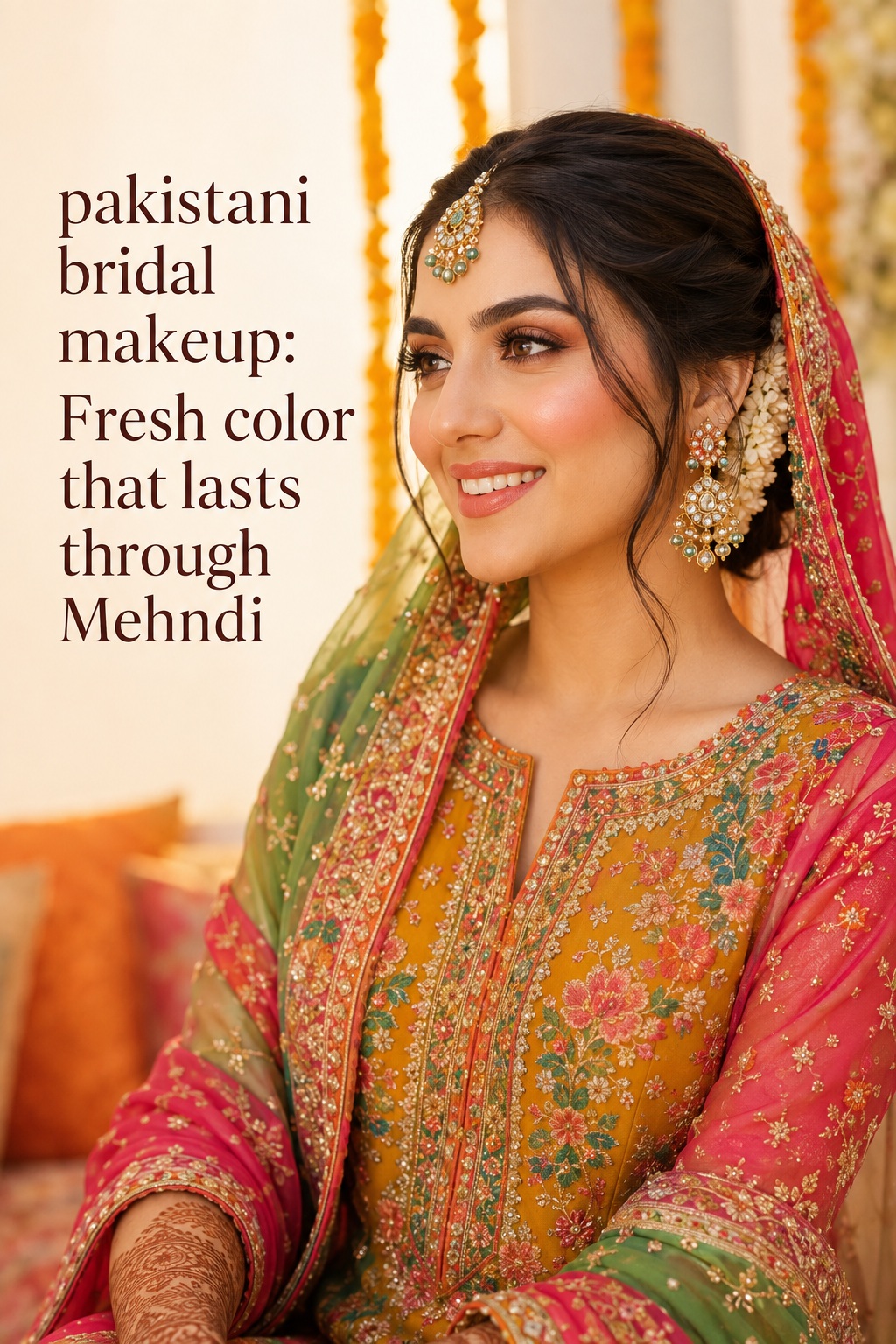
Mehndi usually gives you the most freedom to use color. Green, yellow, orange, pink, or multicolored embroidery can support warm blush, glossy lips, softly smoked liner, and a little more play around the eyes. The makeup does not have to compete with the outfit. Instead, choose one or two colors from the clothing and repeat them in a controlled way. A fresh base and comfortable lashes keep the result festive rather than heavy.
Your wedding look is only the beginning.
Keep your guest list, vendors, timeline, and every important detail together with Zarellea — so your day feels as considered as your style.
Nikah often rewards restraint, especially when the ceremony takes place during the day or in a smaller setting. That does not mean looking unfinished. It means using a carefully matched base, softly defined brows, a veil-friendly eye look, and a lip shade that still gives the face structure. If your dupatta covers part of the forehead or frames the cheeks, ask your artist to check the look with the actual draping rather than relying on a salon mirror alone.
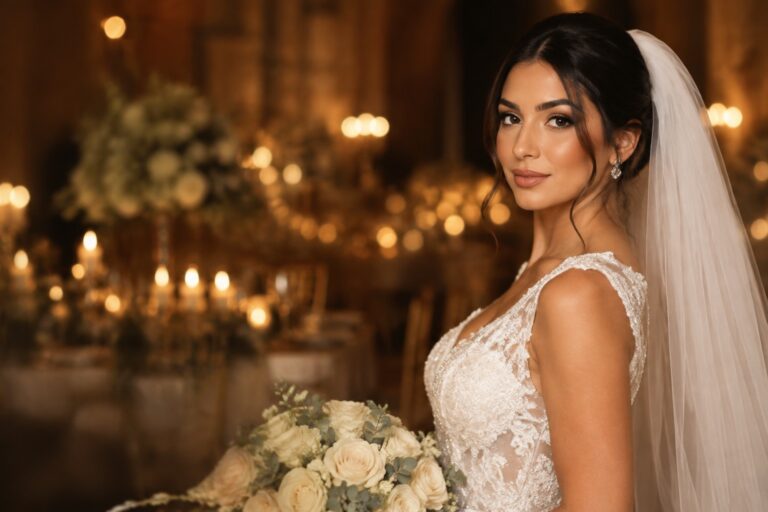
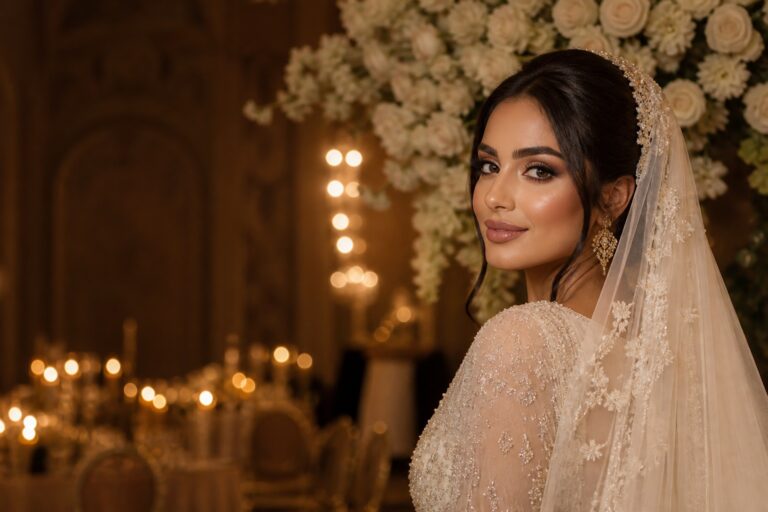
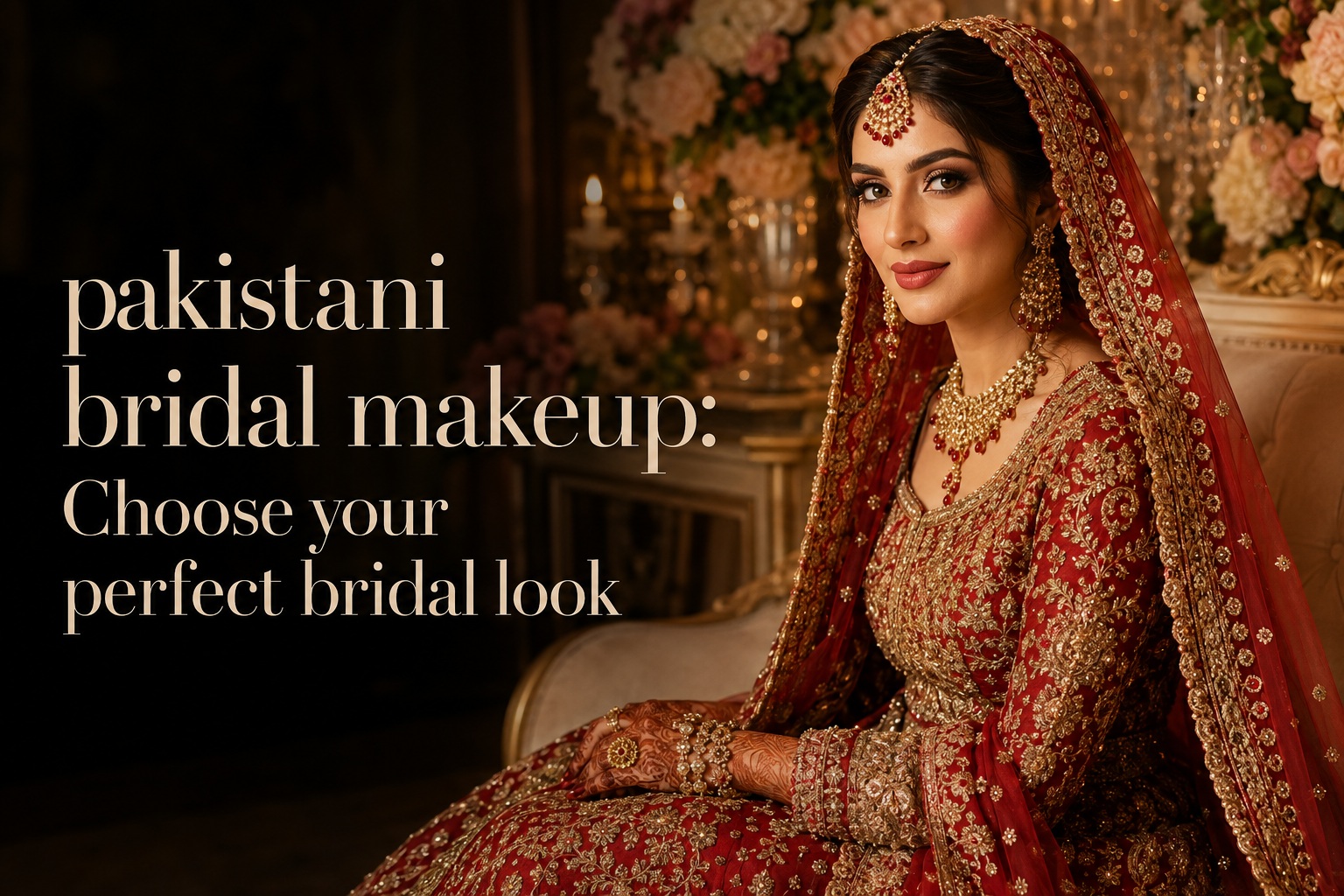
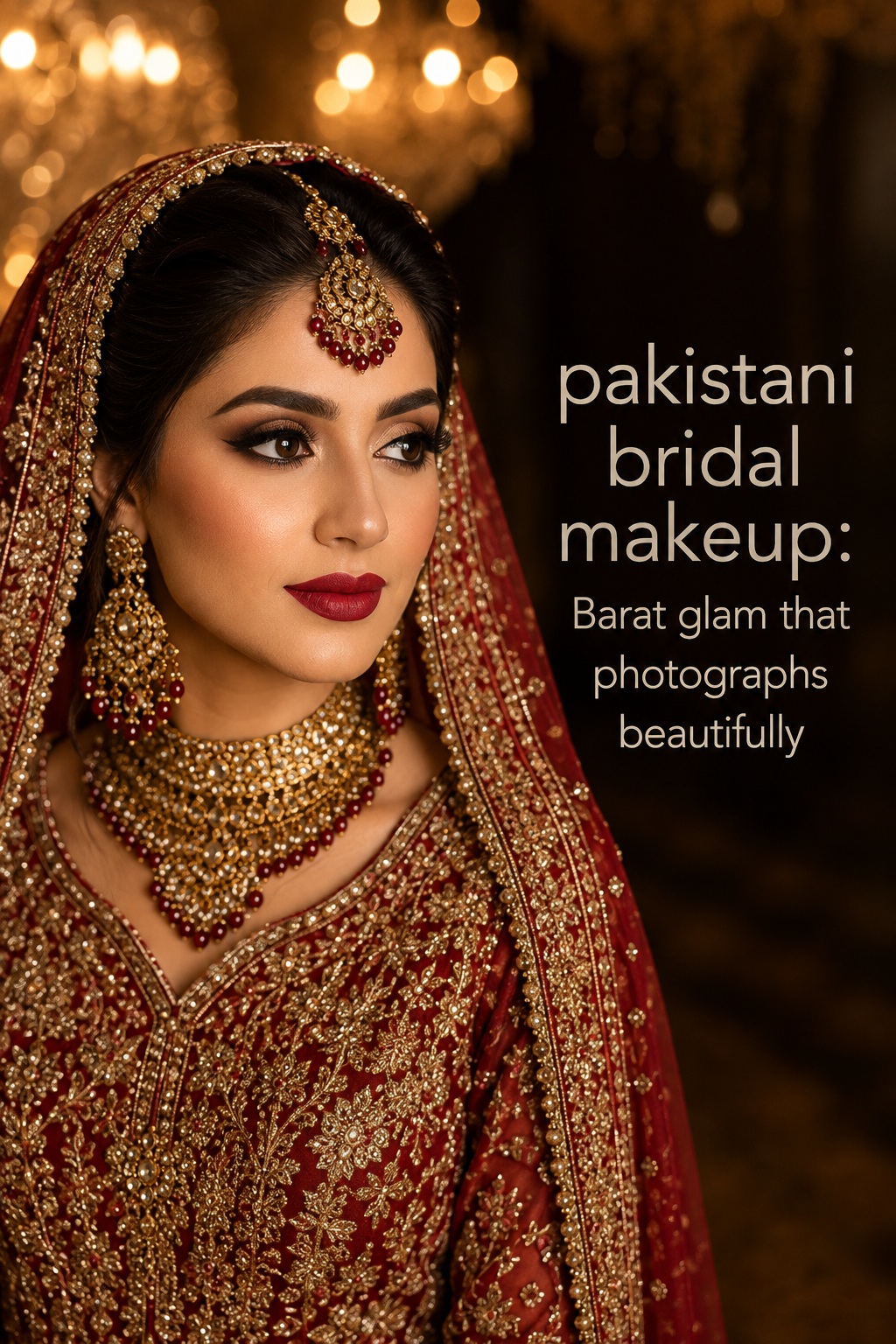
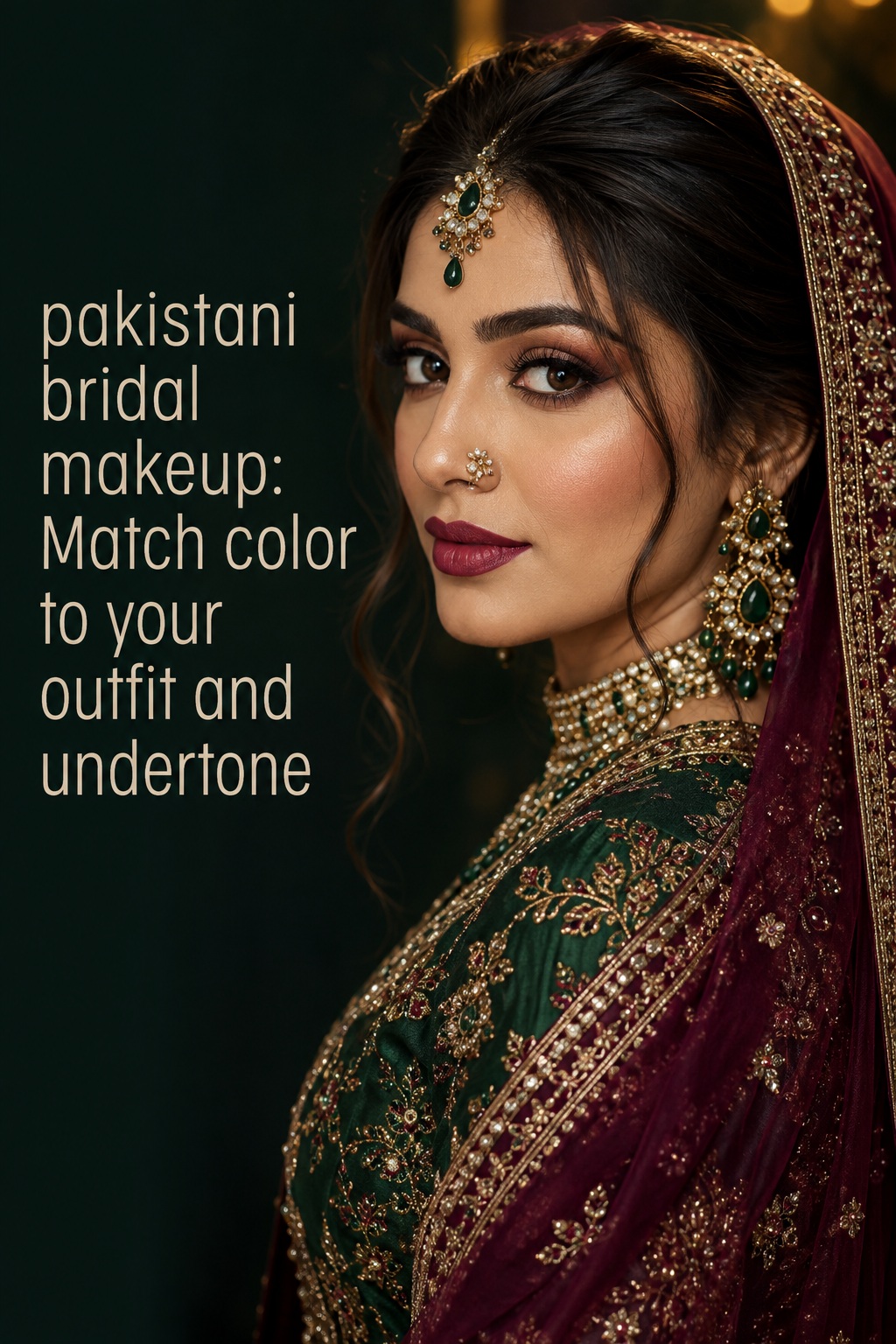
Barat is the clearest home for classic Pakistani bridal glam. Stronger definition can hold its own against statement jewelry, a red or jewel-toned outfit, stage lighting, and hours of photography. Smoky brown or plum eyes, shimmer placed with intention, full lashes, shaped brows, a dimensional base, and a red, berry, or deep rose lip are all viable. The balance matters. If the eyes are highly dramatic, a more controlled lip may photograph better, and the reverse is also true.
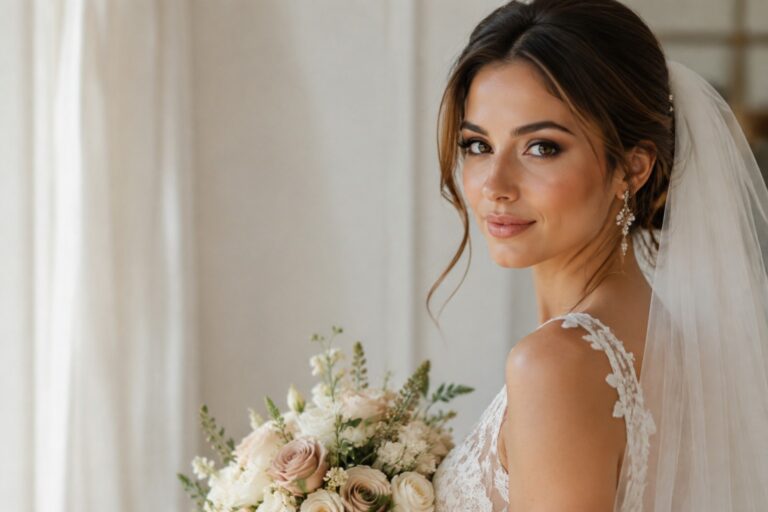
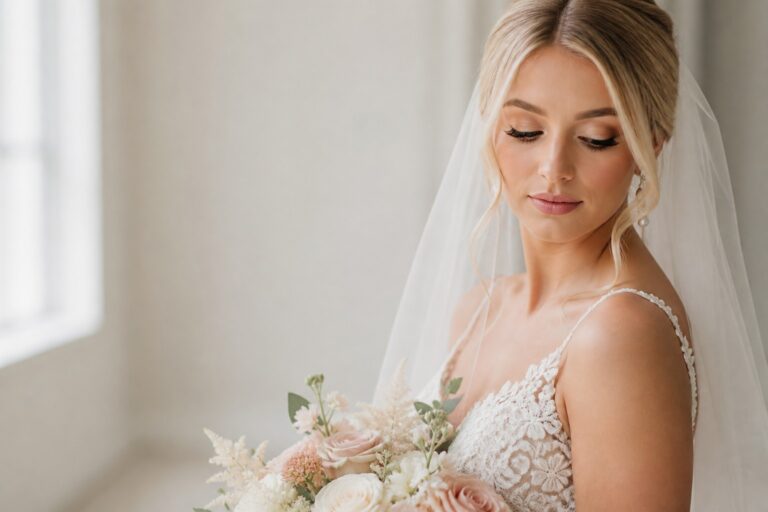
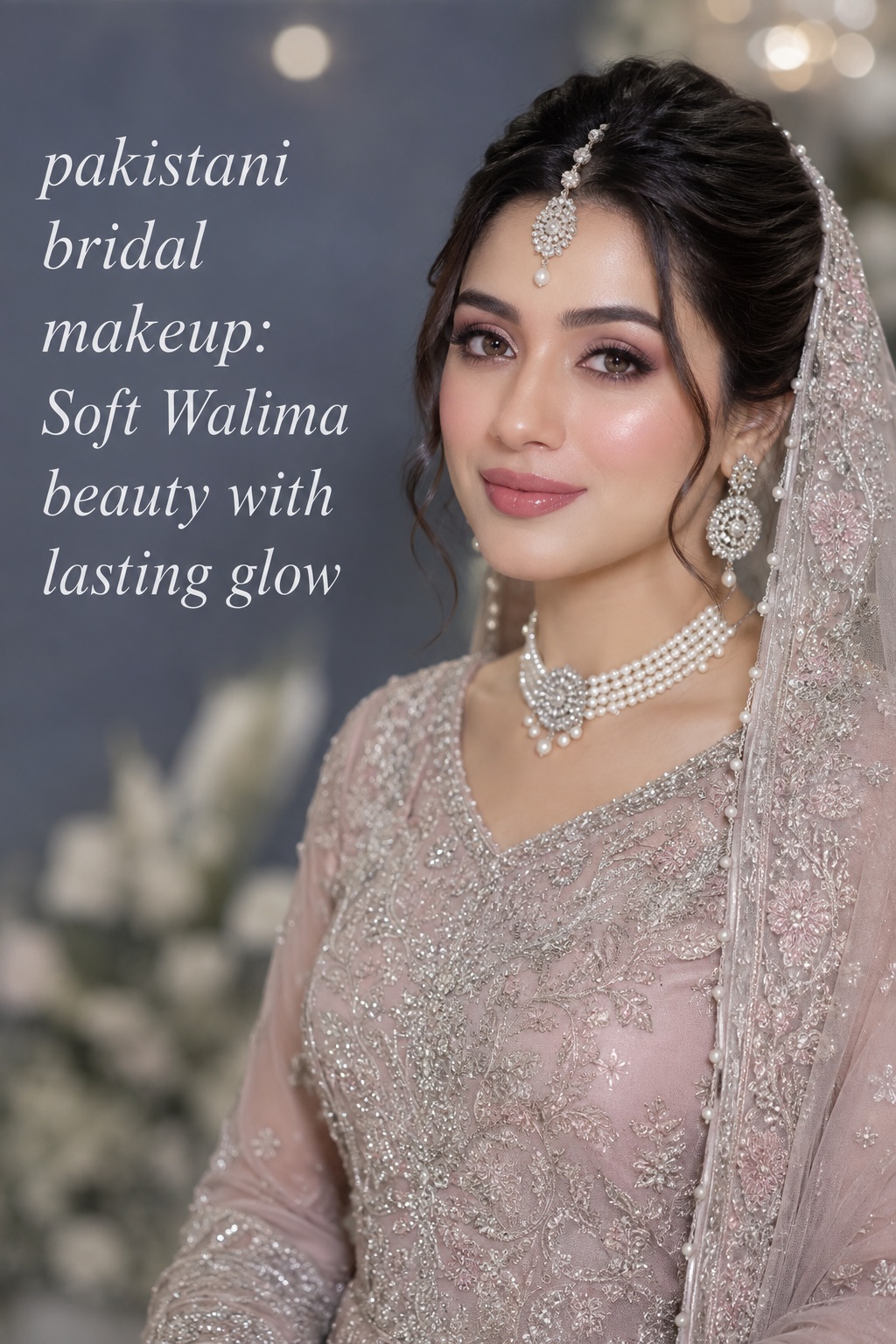
Walima often works beautifully as a visual exhale after the Barat. Satin skin, softer contour, rose or mauve tones, less graphic liner, and a lighter lip can feel modern without losing bridal presence. This is especially effective with pastel clothing, silver jewelry, cooler lighting, or an evening outfit that is detailed but not traditionally red. You can still wear lashes and shimmer. The difference is that each element is blended so the face looks elegant from close range as well as from a distance.
- Choose intensity by ceremony and lighting, not by a saved photo alone.
- Match the base to your neck and chest, then check it in daylight and flash.
- Bring the actual dupatta, jewelry, or a close substitute to the trial.
- Decide which feature should lead: eyes, lips, skin, or overall color.
Compare Four Pakistani Bridal Makeup Approaches
These four approaches overlap, but each has a different job. Comparing them side by side helps you explain your preferences to an artist without saying only “I want it natural” or “I want it glamorous.” Those words mean different things to different people. A clear description should include finish, eye intensity, lip depth, contour level, and how much of your real skin should remain visible.
Classic Barat glam
Classic Barat glam is the most traditionally regal option. It usually combines a polished long-wear base, softly sculpted cheeks, defined brows, kajal or liner, shimmer or a smoky eye, lashes, and a lip with enough saturation to stay visible in photographs. Brown, bronze, copper, plum, red, and berry families are flexible because they can echo embroidery without making the face look monochromatic.
Choose this direction when your outfit and jewelry have significant visual weight, your ceremony includes extensive stage photography, or you genuinely enjoy a more finished face. The main trade-off is that it requires careful blending and restraint. Too much powder, an untested pale foundation, or very sharp contour can look disconnected from your neck and hands. Ask for dimension rather than a mask, especially around the cheeks and under-eyes.
Fresh Mehndi color
Fresh Mehndi color is lively, wearable, and easy to personalize. The base can be satin or lightly dewy, with peach, apricot, rose, terracotta, or berry blush. Eyes may use warm neutrals plus one brighter accent, while the lip can be a stain, gloss, or comfortable rose shade. The goal is not to make every detail bright. It is to let the face participate in the energy of the event.
This approach suits daytime ceremonies, outdoor settings, colorful clothing, and brides who want movement rather than formal symmetry. Be deliberate with shine if the event is hot or humid. Cream products can create a seamless finish, but set the areas that crease or become oily. A waterproof or tubing mascara, secure lashes, and a small touch-up kit are more valuable than adding another layer of highlighter.
Refined Walima softness
Refined Walima softness is not bare makeup. It is a lower-contrast version of bridal makeup, with radiant skin, softly shaped eyes, diffused blush, and a rose, nude, mauve, or pink lip. The lashes may be lighter, the contour less visible, and the highlight placed only where it catches light naturally. This gives the face a calm, modern quality that works well with pastel, pearl, silver, or cool-toned styling.
The risk is asking for “soft” and receiving a flat or washed-out result. Keep enough brow definition, cheek color, and lip contrast for the face to read in photographs. A softly lined lip can be more important than a high-shine gloss. If your outfit is simple, add presence through a satin base, individualized eye shape, or a refined lash rather than making every feature dramatic.
Modern skin-first balance
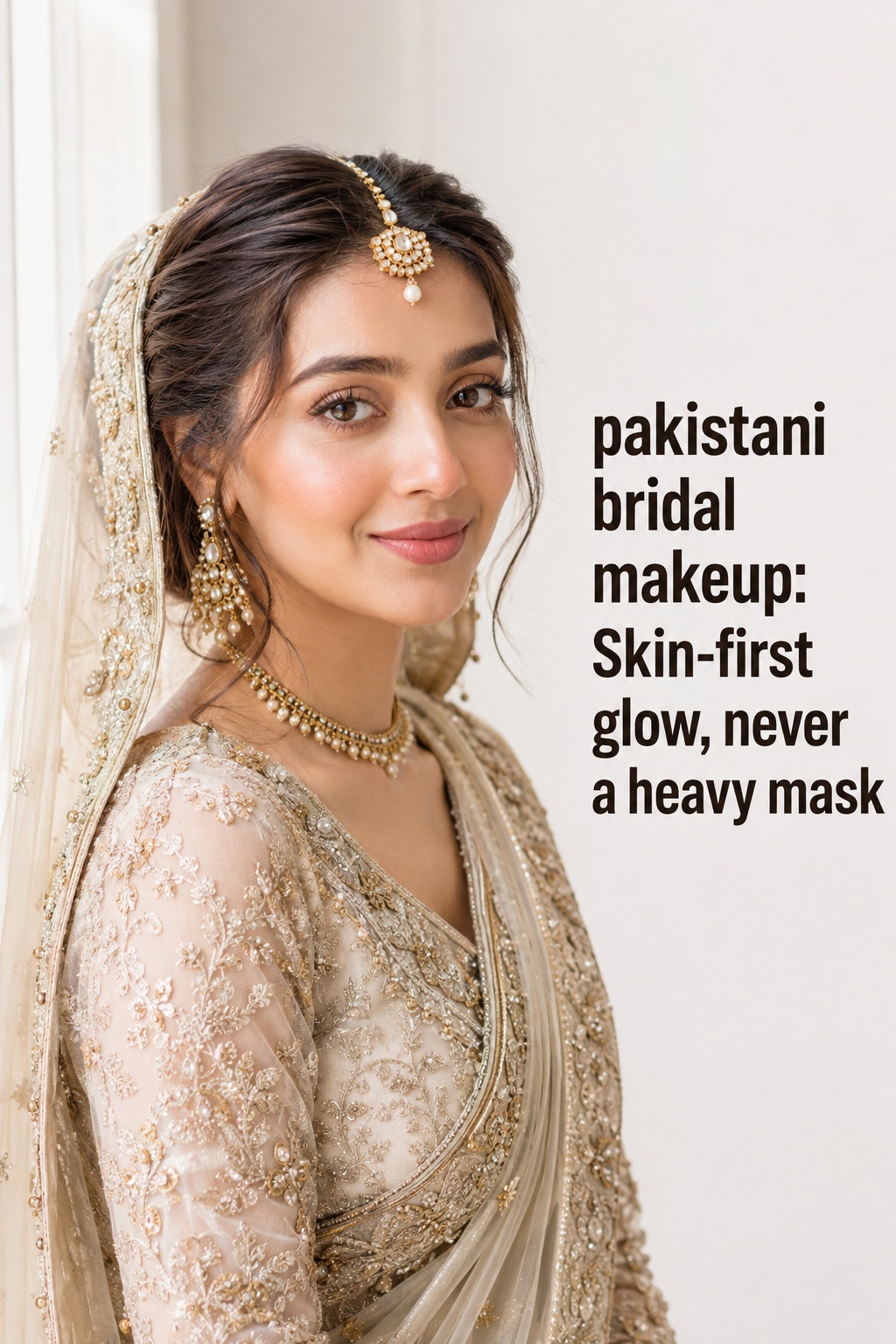
Modern skin-first balance keeps the recognizable elements of Pakistani bridal makeup while making the finish feel lighter and more personal. Skin preparation comes first, coverage is placed where you need it, and cream blush, cream contour, or liquid highlighter can melt into the complexion before selective powder is added. The T-zone may be controlled while the cheekbones retain a natural-looking radiance.
Choose this direction if you dislike a heavy mask, want your freckles or skin texture to remain believable, or need one adaptable foundation plan across multiple events. It can still include defined eyes, lashes, coordinated tones, and a strong lip. The key is controlled layering. Ask your artist to show how the base looks in daylight, direct flash, and a phone photograph taken from several feet away.
Make the Choice Fit Your Skin, Outfit, and Finish
Skin tone and undertone are useful starting points, but they should not become rigid color rules. Warm or olive undertones often harmonize with gold, bronze, terracotta, warm red, plum, and copper. Fair or cooler complexions may enjoy rose, mauve, soft pink, berry, and neutral taupe. Deeper complexions can carry rich jewel tones, copper, bronze, wine, and bold reds with beautiful depth. The best test is always the color on your own skin beside your outfit.
Foundation should match the neck and upper chest, not only the center of the face. This matters when the face is photographed beside bare shoulders, a neckline, or hands decorated with henna. Ask the artist to let the shade settle before deciding. Oxidation, stage lighting, flash, and the color temperature of a venue can change how the base appears. Never accept a much lighter shade simply because someone describes it as “bridal.”
Use your outfit to decide where contrast belongs. A red or deep maroon lehenga may support a neutral smoky eye and a red lip, but it can also look sophisticated with bronze eyes and a rose lip. A green outfit can work with copper, plum, champagne, or a soft neutral eye. Gold jewelry usually welcomes warm dimension, while silver or pearl details may look more coherent with mauve, taupe, rose, or cooler shimmer. Coordination means conversation between colors, not exact matching.
Jewelry and draping change the visible architecture of the face. A jhoomar or matha patti draws attention upward. A nath, earrings, and a heavily decorated neckline increase detail around the lower half of the face. A dupatta may soften the forehead, cast a shadow, or cover part of the hairline. During your trial, take front, three-quarter, and side photographs with the accessories in place. A look that feels balanced in a bare salon chair may need small adjustments once everything is worn together.
Finish is a separate decision from coverage. HD makeup can give a highly perfected result, but it still needs to be thin and well matched. Airbrush makeup can feel light and even, especially for long or warm events, but it is not automatically right for every skin type or desired texture. Traditional makeup is flexible and buildable. The correct option is the one your artist can execute well on your skin, under your venue lighting, with the level of coverage you actually want.
- Dry or textured skin may need hydration and flexible cream layers before powder.
- Oily or humid conditions call for strategic setting, not necessarily a completely matte face.
- Dark circles or pigmentation may need targeted correction rather than a lighter foundation.
- Eye shape should guide liner, shimmer placement, and lash length more than a trend photo.
- If you wear glasses, a veil, or contact lenses, test the full combination before the wedding.
Use the Trial to Test the Artist and the Plan
A bridal trial is a rehearsal, not a formality. Schedule it early enough to make a change, ideally several weeks before the wedding, and arrive with clean information about your events. Bring reference images that show the eye shape, base finish, lip depth, or overall mood you like. One image is rarely enough. Tell the artist what you want to borrow from it and what you do not want copied.
Ask to see the result in natural light, indoor light, and flash. Take close photographs and photographs from a normal guest distance. Check the shade against your neck, the transition at the jaw, the texture around the nose, the under-eye creasing, and whether the blush and lip retain color after an hour. If the artist refuses a reasonable trial question or cannot explain the products and timing, treat that as useful information before you book.
Test the moments that cause real wedding-day friction. Smile, speak, eat, drink, hug someone, and place the dupatta where it will sit. If you plan to wear a nath or heavy earrings, check comfort and balance. Ask how lashes will be secured, how the base will be touched up, and what happens if you become emotional or warm. A durable plan includes blotting, powder, lip color, cotton buds, and a person who knows how to help without disturbing the makeup.
When comparing artists or packages, look beyond the headline price. Confirm whether the booking covers one event or several, whether hair and draping are included, whether family makeup is separate, and whether travel, an early start, extensions, nails, or touch-ups cost extra. If you want one artist for Mehndi, Barat, and Walima, ask how they will create three related but distinct looks. Repeating the same face may save time, but it can make the wedding series feel visually flat.
Write down the final plan after the trial. Record the foundation shade, correction approach, eye colors, lash style, lip combination, blush family, setting method, and the order of services. Save photographs in the same lighting conditions. This protects your preferences when a larger team is working on the wedding morning. It also prevents last-minute changes based on a rushed social media trend or a well-meaning relative who has not seen the complete outfit.
- Bring the outfit neckline, jewelry, dupatta, and veil or close substitutes.
- Confirm the start time, service duration, travel plan, and touch-up responsibility.
- Ask which products are used for complexion, eyes, lips, and setting.
- Take photos after the makeup has settled, not only immediately after application.
- Choose the final look based on comfort, identity, and reliable wear as well as beauty.
Pakistani Bridal Makeup Mistakes to Avoid
The most common mistake is choosing a look because it is impressive on someone else. Face shape, eye shape, undertone, outfit color, venue, and personal tolerance for makeup all change the result. Use inspiration images to communicate direction, then let the artist adapt the placement. A copied crease or lip can look disconnected when it was designed for different features.
Another mistake is trying a new treatment or aggressive skincare routine too close to the wedding. Irritation, peeling, or unexpected dryness can make even a talented application difficult. Keep your pre-wedding routine consistent, discuss professional treatments with a qualified provider, and allow enough recovery time. Makeup can refine the surface, but it cannot responsibly solve every sudden skin problem on the morning of the event.
A pale foundation is not a bridal requirement. It can create a gray cast, a visible jawline, and a mismatch with the hands and chest. Correct color matching may feel less dramatic in the salon than a lighter shade, but it will look more believable in photographs. Similarly, a completely matte face is not the only way to achieve longevity. Strategic powder and a tested setting method can control shine while keeping dimension.
Do not leave the lip decision until the end. Lips give the face structure when the veil, jewelry, or soft lighting reduces contrast. Test the color after eating and drinking, and choose a formula that can be reapplied without disturbing the base. If you want a very bold eye and bold lip together, ask for a complete trial. Sometimes the combination is striking. Sometimes one element needs to be softened so the whole look remains intentional.
Finally, avoid booking a package without understanding its boundaries. “Bridal makeup” may or may not include hair, draping, lashes, extensions, nails, travel, family services, or touch-ups. Ask for a written schedule and a clear list of inclusions. The best Pakistani bridal makeup plan is not simply the most elaborate one. It is the plan that matches your events, gives your artist enough time, and lets you feel recognizable, comfortable, and beautifully prepared.
FAQ
What is the best Pakistani bridal makeup look for a Barat?
Classic Barat glam is a strong starting point because it has enough definition for a detailed outfit, statement jewelry, stage lighting, and long photography sessions. Consider smoky brown, bronze, plum, or copper eyes, a dimensional base, shaped brows, lashes, and a red, berry, or deep rose lip. Adjust the intensity to your comfort and keep the foundation matched to your neck and chest.
Should Mehndi and Walima makeup be different?
They can be different because the events often have different clothing, lighting, and mood. Mehndi makeup can use fresher color, lively blush, and a glossy or stained lip, while Walima makeup often suits satin skin, softer eyes, and rose or mauve tones. The looks can share a base philosophy while changing intensity and color so the wedding series feels coordinated rather than repetitive.
How do I choose between HD and airbrush makeup?
Choose based on the finish, coverage, skin needs, venue, and your artist’s strongest technique. HD makeup can look highly perfected in photographs when applied in thin, well-matched layers. Airbrush can feel lightweight and even, but it is not automatically better for every skin type. Ask for a trial, test the result in daylight and flash, and judge the actual wear rather than the label.
Which makeup colors suit Pakistani skin tones?
Warm and olive undertones often work well with gold, bronze, terracotta, copper, plum, and warm reds. Cooler or fair complexions may enjoy rose, mauve, berry, pink, and neutral taupe. Deeper skin tones can carry rich jewel shades, wine, bronze, copper, and bold reds beautifully. These are starting points, not restrictions. Test each color beside your outfit and in the lighting where you will be photographed.
When should I schedule a Pakistani bridal makeup trial?
Schedule the trial several weeks before the wedding, early enough to adjust the look or change artists if necessary. Bring reference photos, the outfit neckline, jewelry, dupatta, and information about the venue and ceremony time. Let the makeup settle before taking photographs. A useful trial tests color, texture, comfort, longevity, lashes, and how the face looks with the complete bridal styling.
How can I stop bridal foundation from looking lighter than my neck?
Ask your artist to match the foundation to your neck and upper chest rather than only the center of your face. Check the shade in daylight, allow it to settle, and take a flash photograph before approving it. Do not choose a lighter shade simply because it appears more bridal. Correct undertone, careful blending, and a compatible powder or setting method will look more natural and consistent.
What should a Pakistani bridal makeup package include?
Confirm the number of events, makeup finish, hair styling, lashes, draping, extensions, nails, accessory placement, travel, early-start fees, family services, and touch-ups. Ask how long each service takes and who is responsible for keeping the schedule. If you are booking several events, make sure the artist has a plan for distinct Mehndi, Nikah, Barat, and Walima looks rather than repeating one formula.