Arabic Bridal Makeup: What Is Changing Now
Keep the lip in proportion to the eye. A caramel nude, rosy beige, muted rose, or soft terracotta can look sophisticated with a strong liner. A deeper berry or brick lip can work when the eyes are simplified. Lip liner is practical as well as decorative because it gives the artist a clean edge and creates a base for a comfortable lipstick or stain. The best shade is the one that remains visible after a veil, jewelry, flash, and the bride’s natural flush are all part of the picture.
Four Usable Interpretations for a Modern Bride
Instead of bringing a single screenshot and asking for an exact copy, choose a direction. A good reference tells the makeup artist what you want to feel, where you want definition, and how much contrast you enjoy. These four interpretations offer a starting point without turning Arabic bridal makeup into a rigid template.
Soft Arabic glam
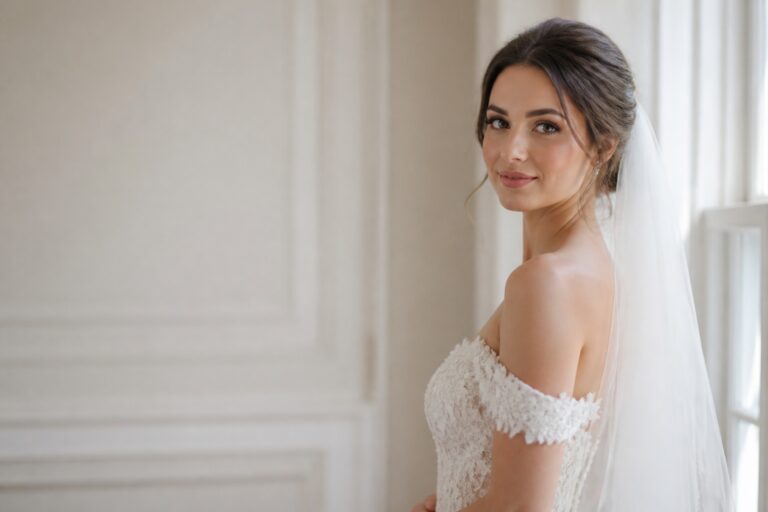
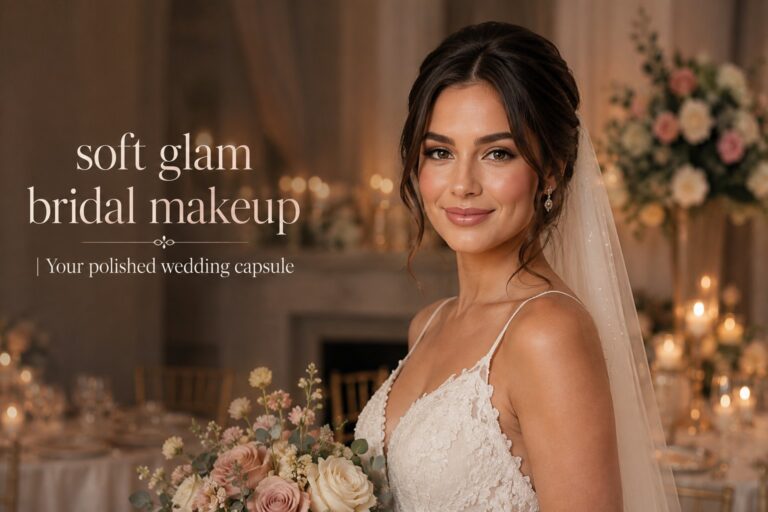
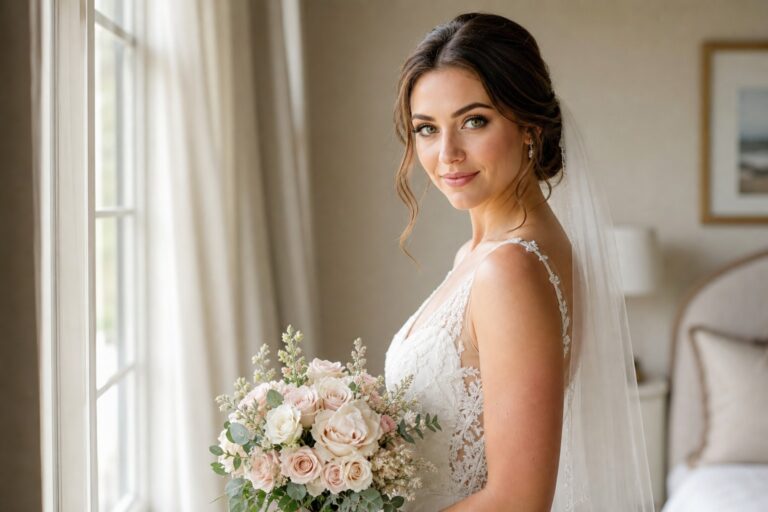
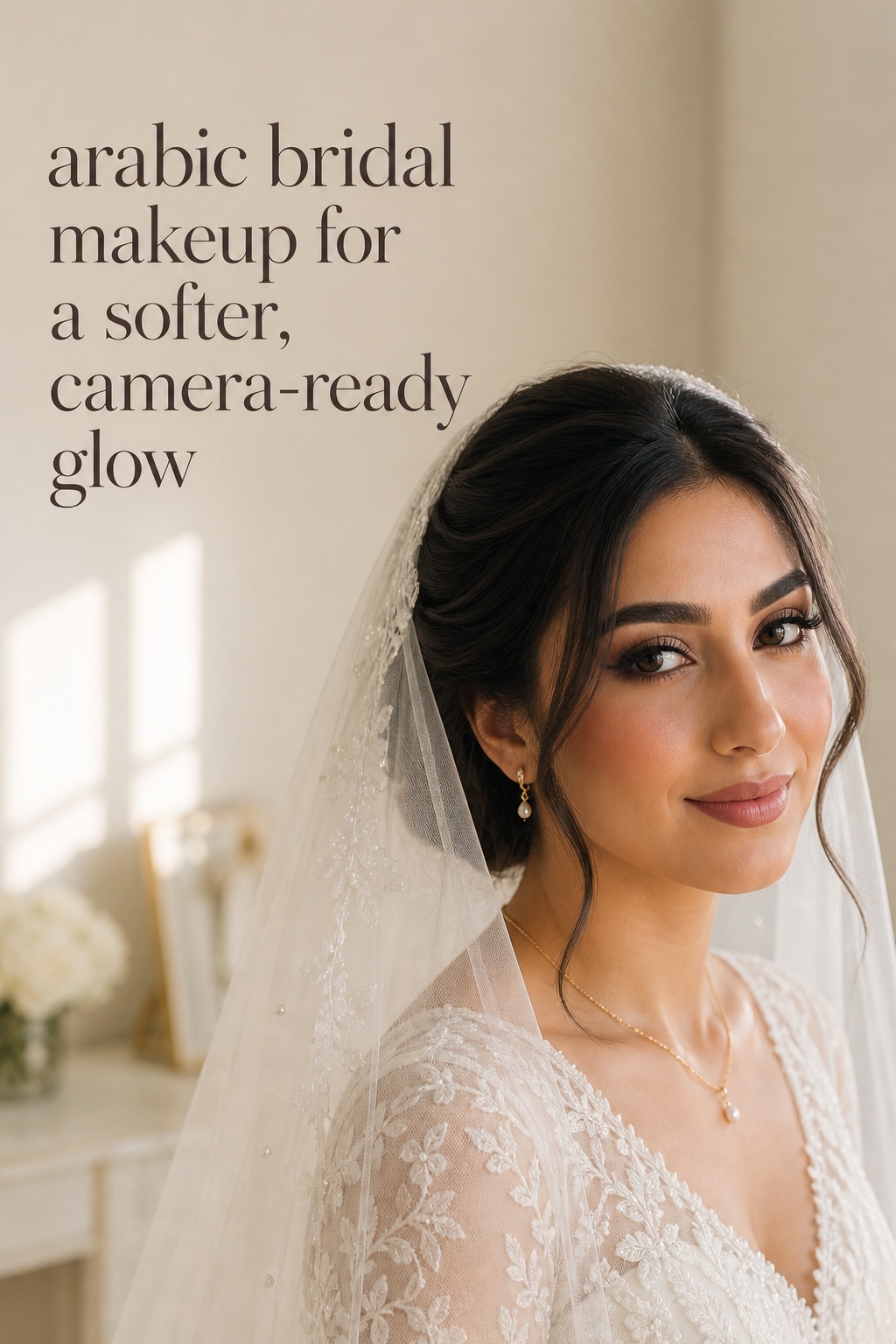
Soft Arabic glam keeps the familiar lifted eye, shaped brow, gently sculpted cheek, and polished nude lip, but lowers the contrast. Use cocoa, taupe, bronze, or warm rose around the eye instead of building a deep black halo. The liner can be thin at the inner corner and slightly extended at the outer corner. Choose a satin or soft-matte complexion with cream blush and a controlled highlight on the high points of the face.
This version works well for a daytime ceremony, a garden venue, a simple gown, or a bride who wants her jewelry and veil to remain visible. It is also a useful compromise when one partner loves full glam and the other prefers a more recognizable version of the bride. The look still has enough structure for photographs, but it feels approachable in person.
Your wedding look is only the beginning.
Keep your guest list, vendors, timeline, and every important detail together with Zarellea — so your day feels as considered as your style.
Classic kohl and smoky definition
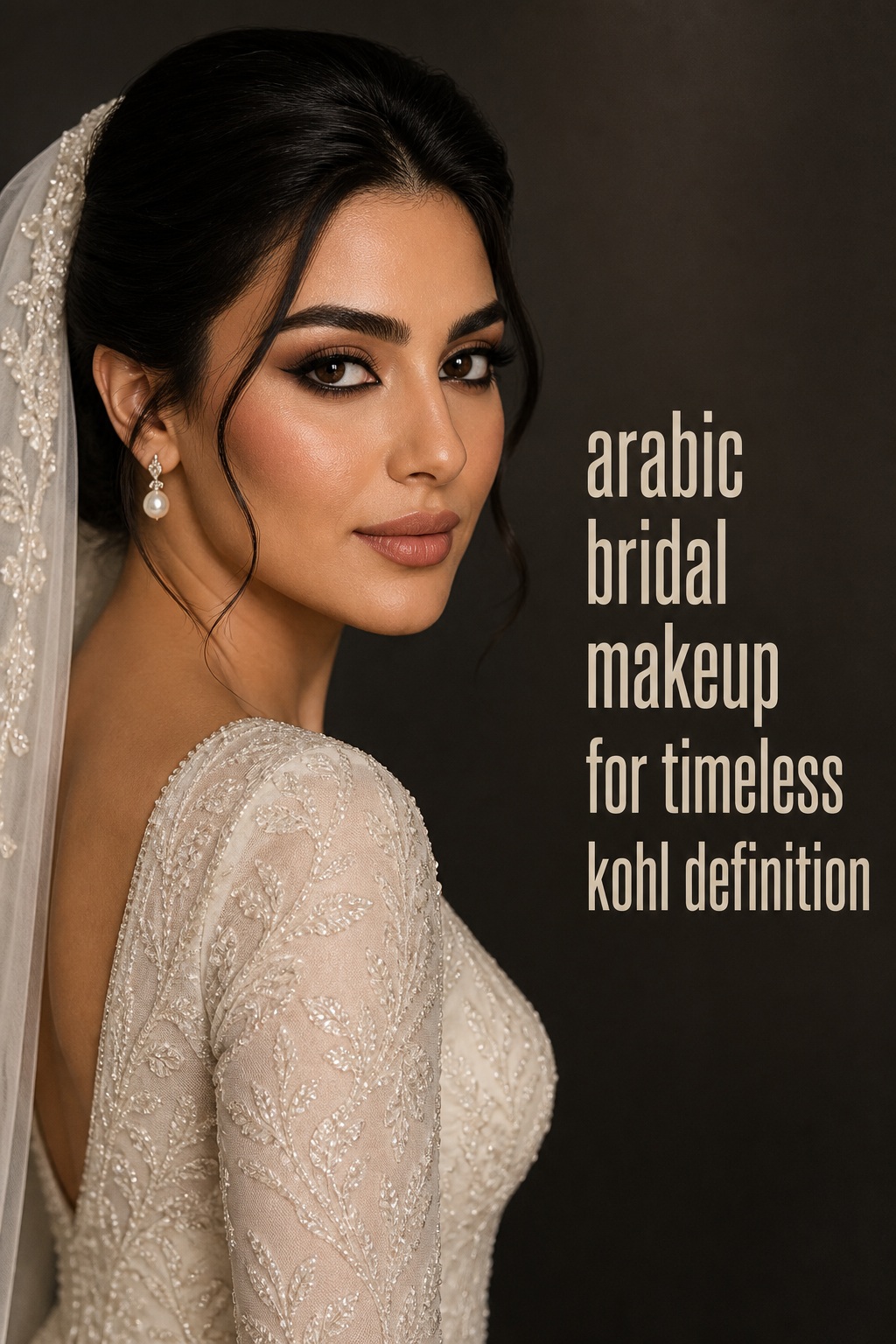
This is the most recognizable direction for many brides. The eye is elongated with kohl or liner, then softened with layered shadow so the edge is expressive rather than harsh. Brown-black, espresso, bronze, and antique gold create depth while leaving room for the artist to adapt the intensity to the eye shape. Keep the rest of the face balanced with a clean brow, softly sculpted cheek, and a defined but not competing lip.
Bring this look to life by explaining what you mean by smoky. Some brides mean a diffused outer corner. Others mean a crisp wing surrounded by deep shadow. Show two or three references and point to the specific features you want to keep. A talented artist can combine the lifted direction from one photo with the softer texture from another.
Gold editorial glam
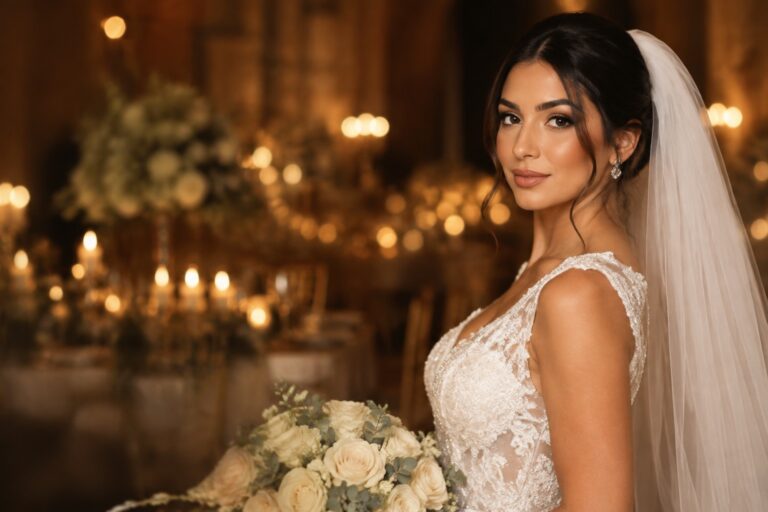
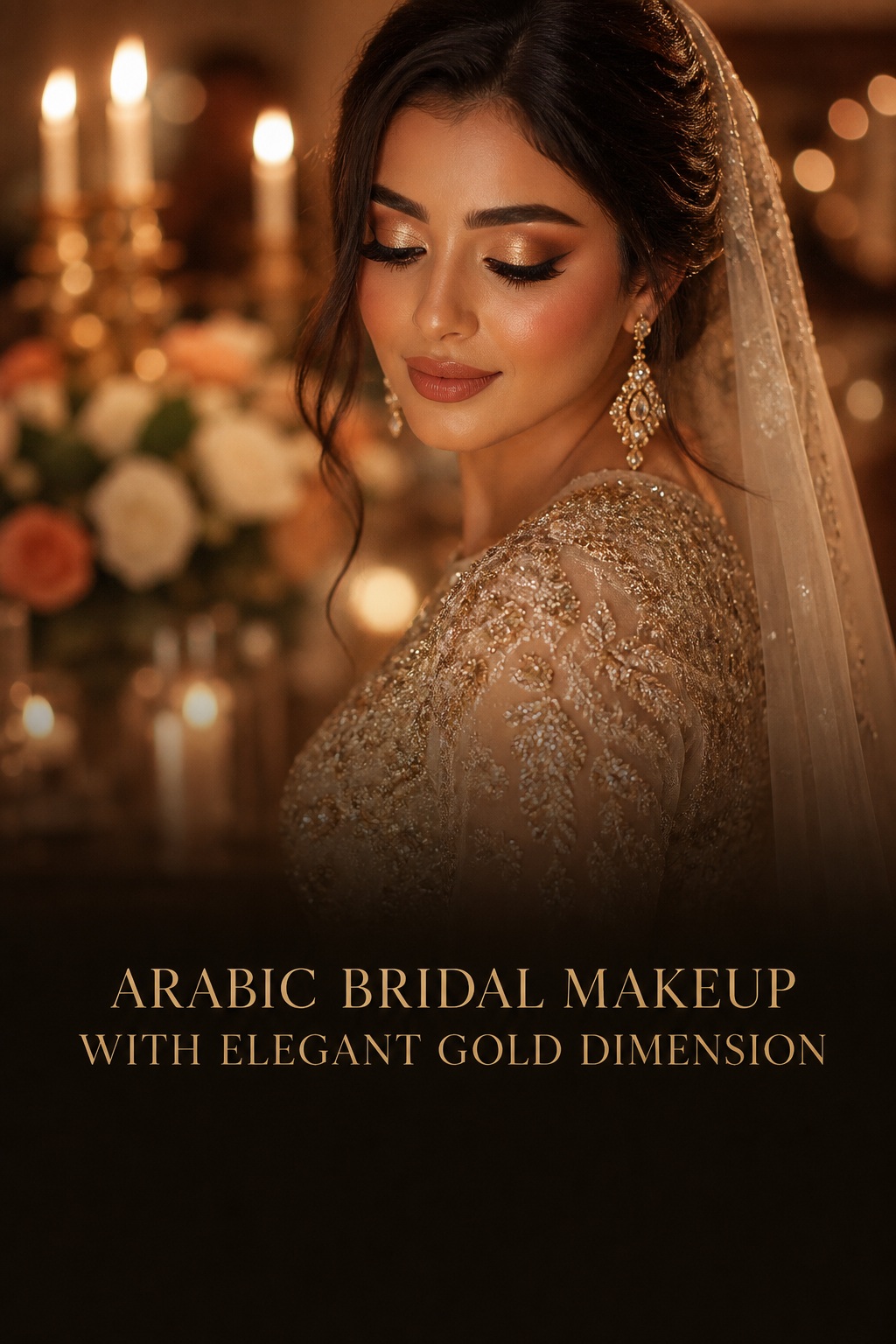
Gold editorial glam uses light as part of the design. Champagne, antique gold, bronze, or pale copper can sit on the lid or inner corner, while the crease and outer corner provide the structure. The complexion may be more luminous, but it should still be set in the areas where flash or heat can create unwanted shine. Pair the look with warm blush and a caramel, peach, or cinnamon lip.
This direction suits ornate fabrics, gold jewelry, candlelit receptions, and evening portraits. Be careful with glitter size. Large particles can catch light unevenly and may travel under the eye. A finely milled shimmer or a cream shadow pressed onto a tacky base usually gives a more refined result. Ask for a close-up photo in direct flash before deciding that the sparkle is right.
Arabic-Western fusion
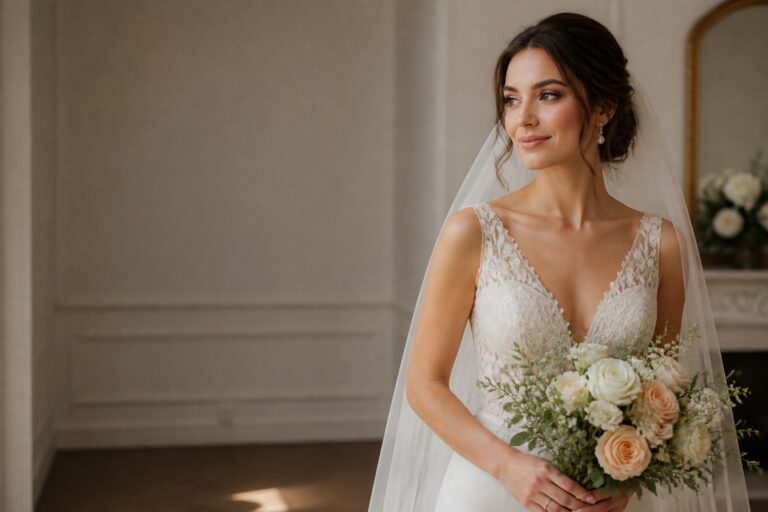
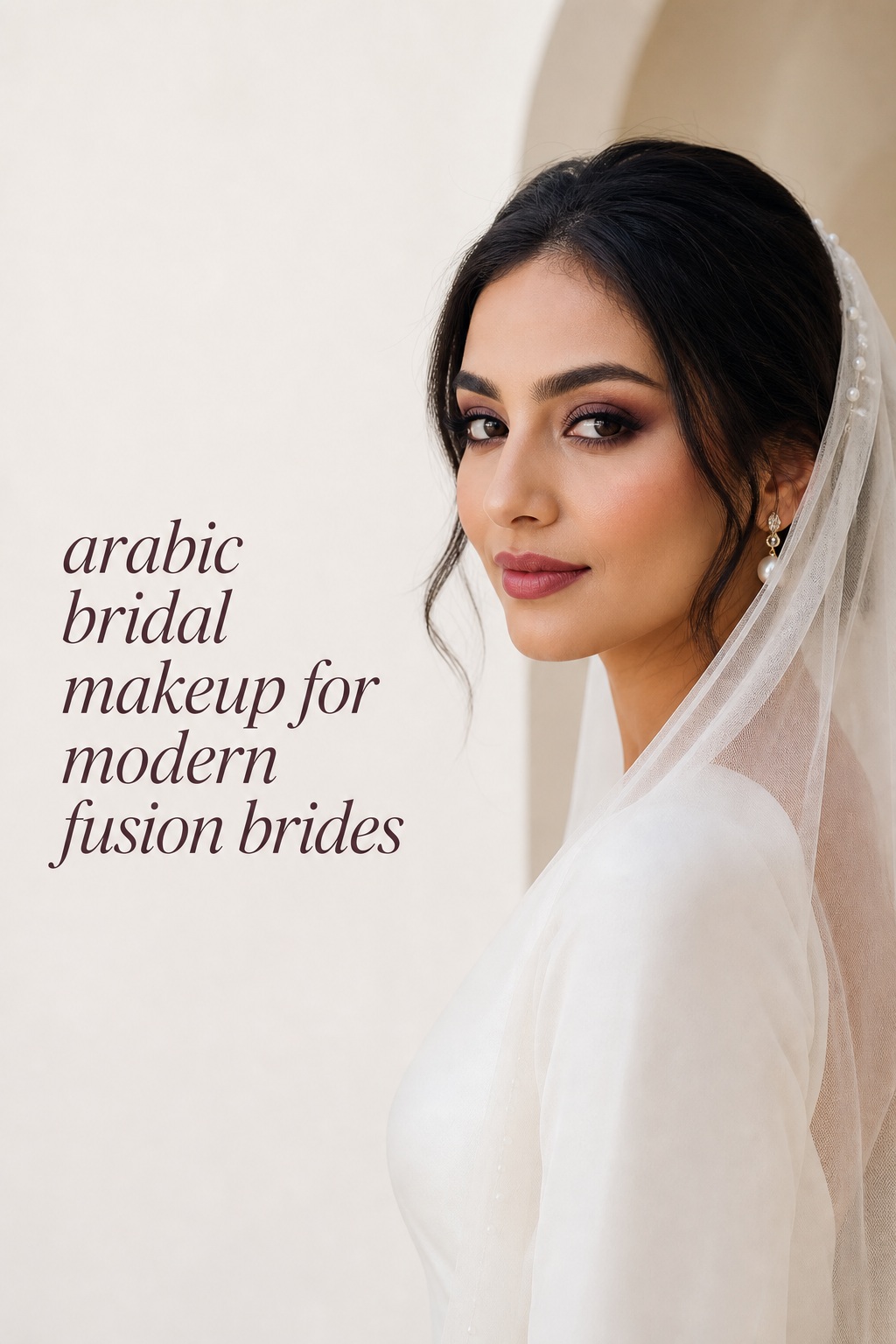
Fusion makeup is not a diluted version of Arabic bridal makeup. It is a deliberate combination. You might pair a Western-style fresh skin finish with a lifted Arabic liner, use a clean monochromatic rose palette with a defined lower lash line, or keep the eye soft and let a sculpted brow and precise lip provide the structure. The outfit, veil, and ceremony can determine which tradition leads.
Fusion is especially useful for a bride planning several events or blending family expectations. Keep one recognizable thread across the looks, such as the same eye shape, lip undertone, or cheek color. Then vary the finish from soft and breathable to more dramatic and reflective. This makes the beauty plan feel intentional instead of like unrelated makeup changes.
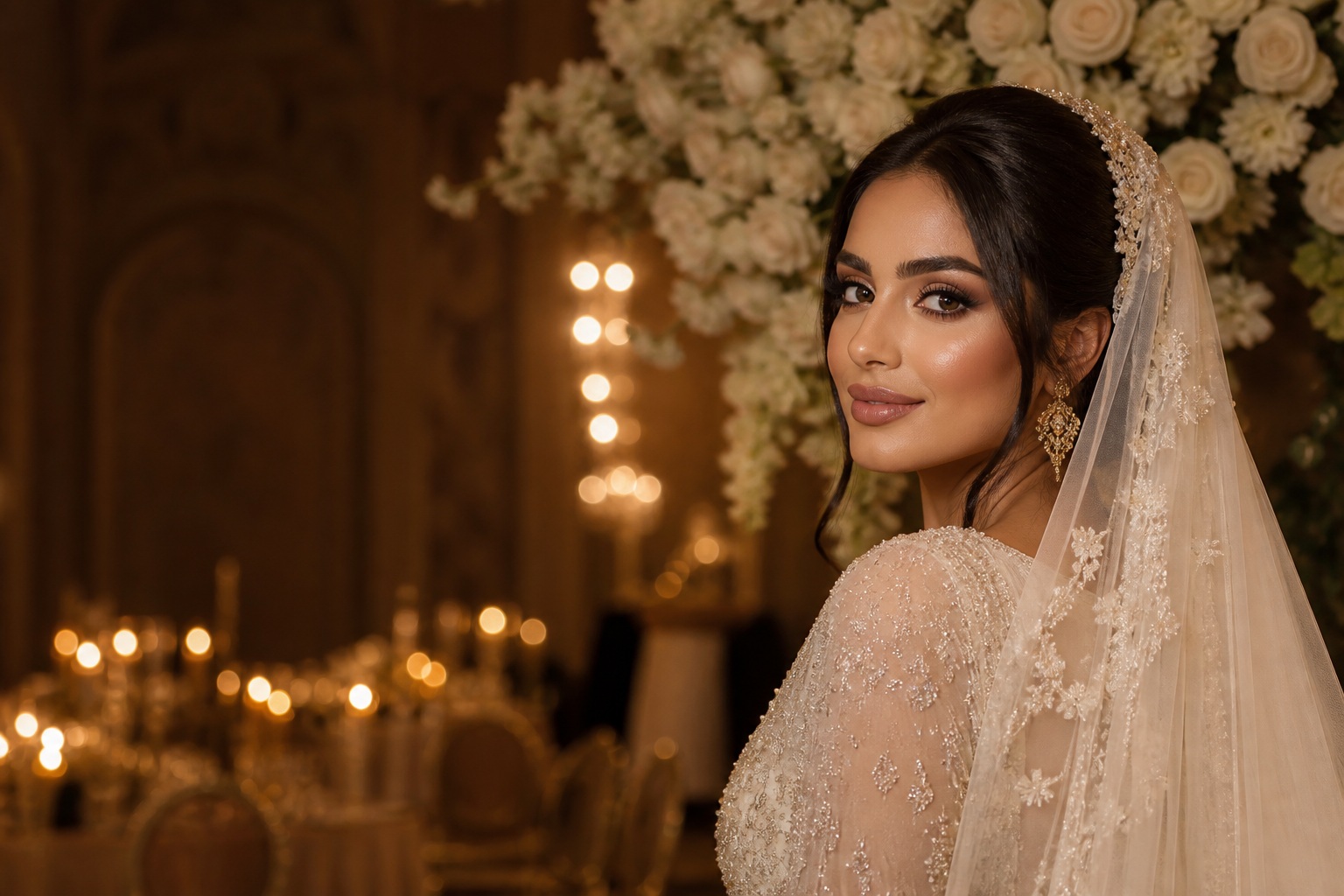
Arabic bridal makeup is often reduced to one familiar picture: a flawless base, a long black wing, dramatic lashes, and a sculpted cheek. Those elements can be part of the look, but they are not the whole story. Today, Arabic bridal makeup is better understood as a family of visual languages shaped by region, ceremony, clothing, lighting, and personal taste.
The current shift is not a rejection of glamour. It is a move toward more intentional glamour. Brides are keeping the definition, polish, and eye emphasis that make Arabic bridal beauty so recognizable while adjusting the finish to feel lighter, more individual, and easier to wear for a full wedding schedule. That may mean a soft brown smoky eye instead of dense black, radiant skin instead of a flat matte mask, or a refined Arabic-Western fusion that works with a minimalist gown.
What Is Changing in Arabic Bridal Makeup
The most useful way to read the current trend is as a change in balance. The eyes still matter, but every feature no longer needs maximum intensity. A defined lash line can sit beside fresh skin. A luminous cheek can balance a softly smoked eye. A nude lip can let embellished clothing or jewelry carry more visual weight. The result is still polished enough for a large celebration, but it does not have to look identical to every other bridal face in the room.
Recent bridal beauty coverage places healthy-looking skin, soft sculpting, warm neutrals, cream blush, and reflective details at the center of the conversation. That direction fits Arabic bridal makeup particularly well because it preserves the look’s structure while making the complexion feel more alive. Rather than hiding the face beneath layers, the modern approach uses coverage where it is useful, dimension where it photographs well, and restraint where extra product would compete with the bride’s features.
Another change is the acceptance of multiple wedding looks. A bride may choose a softer face for a daytime nikah, a more luminous version for a henna night, and stronger eyes for an evening reception. The makeup does not need to be repeated exactly across every function. It can keep a shared identity through the same undertone, brow shape, lip family, or liner direction while changing its intensity for the setting.
- More skin awareness: the base is matched to texture, undertone, climate, and photography rather than treated as a universal full-coverage layer.
- More eye-shape adaptation: liner, crease depth, shimmer placement, and lashes are adjusted for the bride’s actual eyelid and brow structure.
- More regional nuance: Emirati, Khaleeji, Lebanese, Egyptian, Moroccan, Levantine, and fusion references can be discussed without pretending they are interchangeable.
- More flexibility: the bride can keep the drama she loves and remove the parts that feel costume-like or uncomfortable.
Why the Look Still Works for a Wedding
Arabic bridal makeup remains compelling because it is designed around visual definition. Wedding photography includes bright windows, flash, video close-ups, group portraits, and long stretches of movement. A softly structured base, carefully placed contour, intentional blush, and defined eyes give the face shape across all of those conditions. The look reads as finished without relying only on a bold lip or a heavy layer of foundation.
The eyes are usually the anchor. Kohl, pencil, gel, or liquid liner can create different kinds of emphasis. A smoked brown edge feels softer and more forgiving than solid black. A lifted outer corner can make the eye look longer without requiring a very thick wing. Gold, champagne, bronze, or rose shimmer can connect the eyes to jewelry, embroidery, or warm venue lighting. The important decision is not whether the eye should be dramatic. It is where the drama should sit.
Lashes also deserve a more thoughtful conversation. A dense strip can look beautiful in a wide, evening portrait, but it may overwhelm a smaller eye or cast a shadow in daylight. Wispy clusters, an outer-corner half lash, or a well-curled natural lash can preserve the lifted effect with less weight. Ask the artist to show the lash from the front, from a three-quarter angle, and with the eyes relaxed. A lash that looks perfect with the eyes closed is not automatically the right lash for photographs.
The base is where modern Arabic bridal makeup can become especially elegant. The goal is not a blank surface. It is evenness, controlled shine, comfortable coverage, and dimension that survives movement. Underpainting can help when used selectively: cream concealer or sculpting product is placed first, then blended and refined with foundation. The technique is useful because it builds shape beneath the complexion rather than drawing obvious stripes on top of it.
Keep the lip in proportion to the eye. A caramel nude, rosy beige, muted rose, or soft terracotta can look sophisticated with a strong liner. A deeper berry or brick lip can work when the eyes are simplified. Lip liner is practical as well as decorative because it gives the artist a clean edge and creates a base for a comfortable lipstick or stain. The best shade is the one that remains visible after a veil, jewelry, flash, and the bride’s natural flush are all part of the picture.
Four Usable Interpretations for a Modern Bride
Instead of bringing a single screenshot and asking for an exact copy, choose a direction. A good reference tells the makeup artist what you want to feel, where you want definition, and how much contrast you enjoy. These four interpretations offer a starting point without turning Arabic bridal makeup into a rigid template.
Soft Arabic glam
Soft Arabic glam keeps the familiar lifted eye, shaped brow, gently sculpted cheek, and polished nude lip, but lowers the contrast. Use cocoa, taupe, bronze, or warm rose around the eye instead of building a deep black halo. The liner can be thin at the inner corner and slightly extended at the outer corner. Choose a satin or soft-matte complexion with cream blush and a controlled highlight on the high points of the face.
This version works well for a daytime ceremony, a garden venue, a simple gown, or a bride who wants her jewelry and veil to remain visible. It is also a useful compromise when one partner loves full glam and the other prefers a more recognizable version of the bride. The look still has enough structure for photographs, but it feels approachable in person.
Classic kohl and smoky definition
This is the most recognizable direction for many brides. The eye is elongated with kohl or liner, then softened with layered shadow so the edge is expressive rather than harsh. Brown-black, espresso, bronze, and antique gold create depth while leaving room for the artist to adapt the intensity to the eye shape. Keep the rest of the face balanced with a clean brow, softly sculpted cheek, and a defined but not competing lip.
Bring this look to life by explaining what you mean by smoky. Some brides mean a diffused outer corner. Others mean a crisp wing surrounded by deep shadow. Show two or three references and point to the specific features you want to keep. A talented artist can combine the lifted direction from one photo with the softer texture from another.
Gold editorial glam
Gold editorial glam uses light as part of the design. Champagne, antique gold, bronze, or pale copper can sit on the lid or inner corner, while the crease and outer corner provide the structure. The complexion may be more luminous, but it should still be set in the areas where flash or heat can create unwanted shine. Pair the look with warm blush and a caramel, peach, or cinnamon lip.
This direction suits ornate fabrics, gold jewelry, candlelit receptions, and evening portraits. Be careful with glitter size. Large particles can catch light unevenly and may travel under the eye. A finely milled shimmer or a cream shadow pressed onto a tacky base usually gives a more refined result. Ask for a close-up photo in direct flash before deciding that the sparkle is right.
Arabic-Western fusion
Fusion makeup is not a diluted version of Arabic bridal makeup. It is a deliberate combination. You might pair a Western-style fresh skin finish with a lifted Arabic liner, use a clean monochromatic rose palette with a defined lower lash line, or keep the eye soft and let a sculpted brow and precise lip provide the structure. The outfit, veil, and ceremony can determine which tradition leads.
Fusion is especially useful for a bride planning several events or blending family expectations. Keep one recognizable thread across the looks, such as the same eye shape, lip undertone, or cheek color. Then vary the finish from soft and breathable to more dramatic and reflective. This makes the beauty plan feel intentional instead of like unrelated makeup changes.
How to Make the Choice Last Through the Wedding
A beautiful reference is only the beginning. Arabic bridal makeup has to survive emotions, hugs, heat, long ceremonies, changing rooms, and repeated photographs. The strongest plan is built during the trial, not improvised on the wedding morning.
- Start with skin behavior: note where you become dry, oily, textured, or sensitive after several hours. Tell the artist what happens in real life, not only what products you currently own.
- Patch test new products: especially adhesive, lash glue, fragrance-heavy skincare, strong actives, and complexion formulas you have never worn for a full day.
- Schedule a realistic trial: wear the makeup for at least several hours, take photos in daylight and indoor light, and test it after normal facial movement.
- Test the order: many artists prefer to complete the eyes before the base so fallout can be cleaned without disturbing the complexion. Confirm the order that works for your products and timing.
- Match the environment: a humid outdoor venue, a warm ballroom, a winter hotel, and a bright mosque interior may call for different levels of powder, glow, and setting spray.
- Prepare a small kit: include lip color, cotton swabs, blotting sheets, a small powder, tissues, and the lash adhesive or liner your artist recommends.
When discussing color, describe your undertone and your clothing rather than asking for a shade that looks good on someone else. A yellow gold outfit may support bronze and caramel, while silver embroidery can make taupe, rose, plum, or champagne feel more connected. Deeper skin tones can carry rich gold, copper, berry, and espresso beautifully, but the base still needs accurate undertone matching. Fairer skin can take strong contrast too, provided the liner and contour are blended for the actual face.
Ask for the artist’s plan for the lower eye. A fully dark lower lash line can look striking, but it is not the only way to create definition. A brown pencil softened with shadow, a small amount of shimmer at the inner corner, or a clean lower lash line with strong upper lashes may be more flattering for your eye shape. This is a small choice with a major effect on whether the final look feels open, lifted, soft, or intense.
Finally, decide what you want the makeup to communicate. Regal, romantic, cinematic, understated, luminous, or bold are more helpful words than simply saying natural or dramatic. Bring photos that show a similar skin tone, eye shape, and lighting situation. The goal is not to reproduce another bride. It is to give your artist enough information to translate the idea into your face, your clothes, and your day.
Common Mistakes and the Better Modern Alternative
The first mistake is treating Arabic bridal makeup as a single regional standard. Arabic communities have distinct traditions, and individual brides may draw from several of them. Use regional references as inspiration, then ask what feels connected to your own celebration. Respectful specificity produces a better beauty brief than a generic request for an Arabian look.
The second mistake is choosing intensity before considering scale. A very bold eye may be perfect for a large evening hall and too heavy for a small daytime ceremony. Think about the distance between the bride and the camera, the amount of jewelry, the color of the outfit, and how often guests will see you up close. Makeup can be adjusted for visual scale without losing its identity.
The third mistake is trying unfamiliar skincare or foundation immediately before the wedding. A new active, facial, peel, or long-wear base can create irritation, dryness, or unexpected texture. Keep the final week calm. Your wedding makeup should be a tested system, not a product experiment.
The fourth mistake is judging the look only in a mirror. Take photos with your eyes open, relaxed, smiling, and looking slightly away. Check the face in window light, overhead indoor light, and flash. If the base disappears in person but looks balanced in photos, that may be acceptable. If the contour looks like a stripe in every setting, it needs adjustment.
The better alternative is to choose a signature element and build around it. That element might be elongated liner, softly smoked kohl, glowing skin, a defined brow, a gold lid, or a refined nude lip. Once the signature is clear, keep the surrounding features supportive. This creates a cohesive face that feels glamorous without becoming visually crowded.
FAQ
What makes Arabic bridal makeup different?
It commonly emphasizes structured eyes, defined lashes or kohl, shaped brows, balanced sculpting, and a polished complexion. The exact finish varies widely by region and personal preference, so there is no single required Arabic bridal face.
Can Arabic bridal makeup look soft and natural?
Yes. Use warm neutral shadow, a thinner lifted liner, lighter lashes, fresh skin, and a softly defined lip. The eye direction and balance can remain recognizable while the contrast and coverage become more subtle.
Which eye makeup works best for hooded eyes?
A makeup artist can place matte transition color slightly above the natural crease, keep the visible lid lighter, and use a lifted outer-corner shape rather than a thick line across the whole lid. Lashes should be tested with the eyes open and relaxed.
Should the base be matte or glowy?
Choose a finish based on skin behavior, climate, and lighting. Soft matte can be reliable in heat and flash, while controlled radiance can look beautiful in person. Many modern looks combine a natural or satin center of the face with targeted glow on the high points.
How early should I book an Arabic bridal makeup trial?
Book early enough to compare artists and complete a full trial before the final weeks. The exact timing depends on the artist and your wedding schedule, but the trial should leave room to change the lash, lip, base finish, or eye intensity without stress.
How can I explain the look to my makeup artist?
Bring a small group of references and identify what you like in each one. Mention your eye shape, skin finish, comfort level, outfit, jewelry, venue, ceremony length, and the features you want to emphasize. Ask the artist to translate those elements rather than copy one face exactly.
Can I use different Arabic bridal makeup looks for multiple events?
Yes. Keep a consistent thread such as a brow shape, lip undertone, or liner direction, then change the glow, shimmer, lash weight, or depth for each event. A softer nikah look and a stronger reception look can feel like parts of one thoughtful beauty plan.