Quiet Elegance or Romance: Elegant Wedding Guest Dress Tips
Elegant wedding guest dress: the difference between “quiet elegance” and “statement romance”
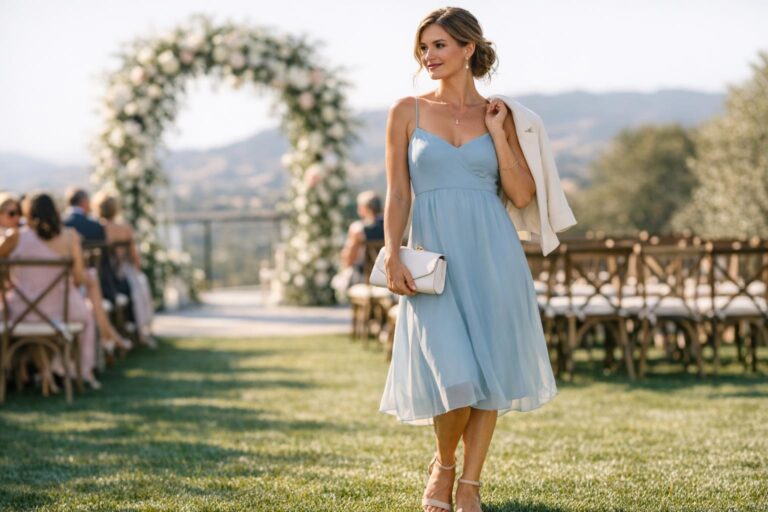
The invitation arrives, and with it comes a familiar styling dilemma: you want an elegant wedding guest dress that looks considered in photographs, feels comfortable through a long ceremony and reception, and respects the couple’s moment. Yet “elegant” is often interpreted in two very different ways—either as a refined, understated look (clean lines, minimal shine, controlled color) or as romantic, expressive polish (lace, florals, richer texture, and a little drama).
These aesthetics are frequently discussed together because both can read as sophisticated wedding guest attire, and both can work across dress codes like black-tie, formal, cocktail, and garden wedding settings. The confusion usually starts when a dress that feels elevated on a hanger behaves differently under ballroom lighting, or when a floral midi that looks romantic in daylight feels too casual once the dress code shifts toward formal wedding guests.
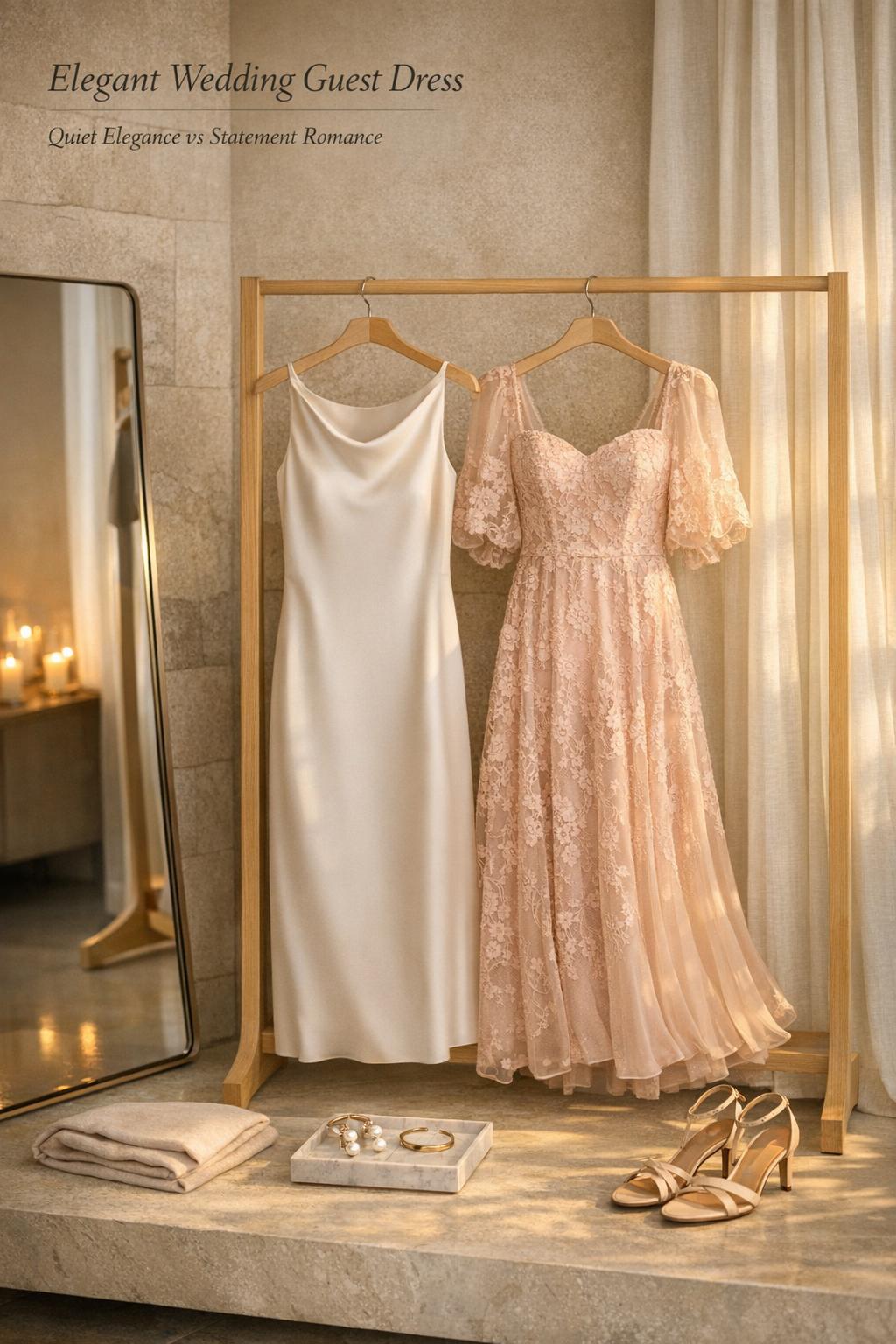
This comparison breaks down the two most common “elegant” directions—quiet elegance versus statement romance—then translates them into real wedding scenarios: maxi, midi, and knee-length choices; sleeves and necklines; satin, chiffon, lace, crepe, and velvet texture; and how to shop the look across brands like Jovani, Lulus, Alice + Olivia, Ever-Pretty, Emprada, Couture Candy, Sophie & NY, plus editorial-inspired moments tied to Rixo, Nobodys Child, and celebrity references like Eva Mendes and Lili Reinhart.
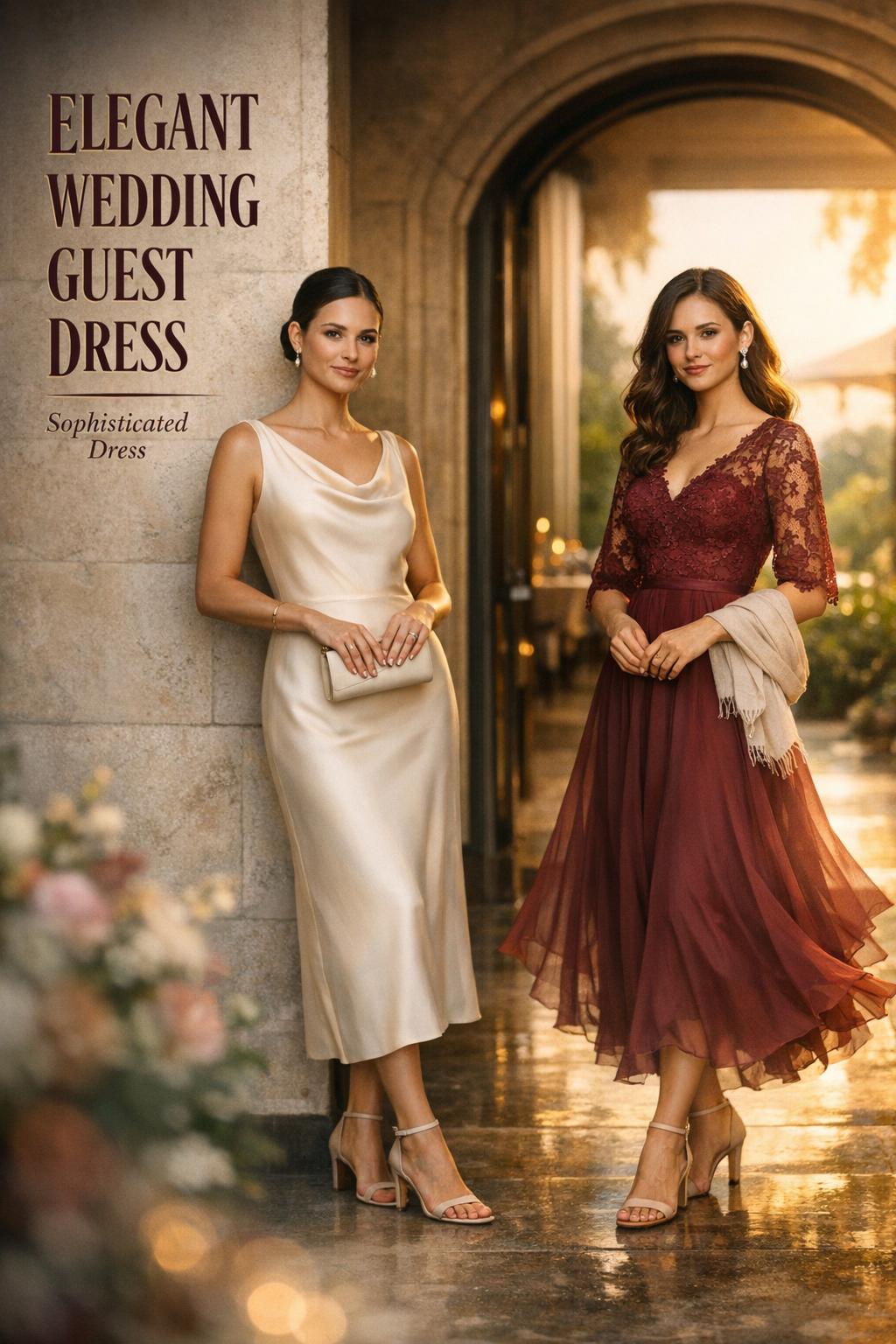
Style overview: quiet elegance (minimal, tailored, “effortlessly sophisticated”)
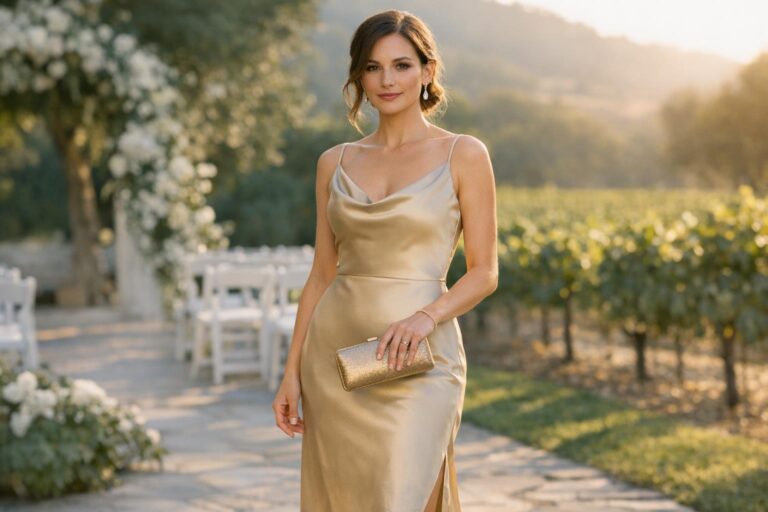
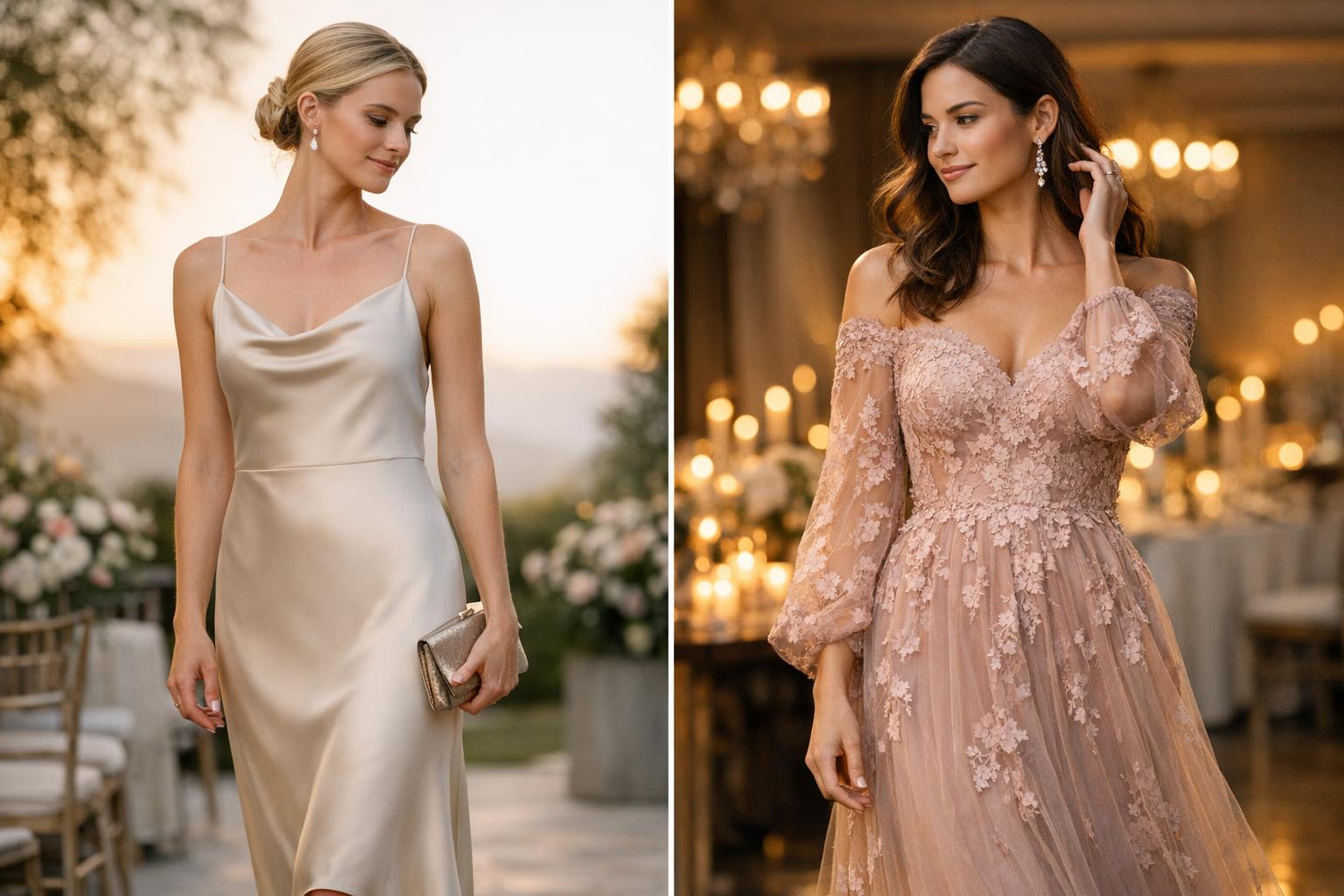
Quiet elegance is the wedding-guest version of restraint done beautifully. The defining characteristic is clarity: a silhouette that’s easy to read at a glance, fabric that moves cleanly, and details that feel intentional rather than busy. This is the aesthetic many people mean when they search for a sophisticated dress—polished, timeless, and never competing with the wedding’s visual story.
Your wedding look is only the beginning.
Keep your guest list, vendors, timeline, and every important detail together with Zarellea — so your day feels as considered as your style.
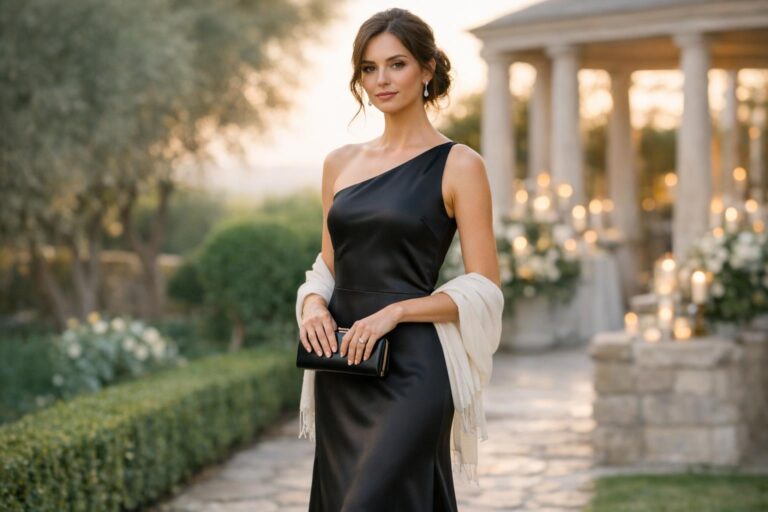
Typical silhouettes include streamlined midi dresses, floor-length gowns with minimal embellishment, and sleek cocktail shapes that hold their structure. In terms of dress lengths, quiet elegance often looks strongest in midi and maxi because the longer line gives immediate formality; knee-length can work, but usually needs a sharper silhouette and elevated fabric to stay in the “elegant wedding guest dress” category rather than drifting toward everyday.
The color palette leans toward timeless neutrals and deep, composed shades—black and navy are classic anchors, while jewel-toned directions like emerald and burgundy keep the mood formal without needing heavy decoration. Fabrics and textures tend to be smooth or softly matte: satin for a clean glow, crepe for tailored drape, and chiffon for movement that stays refined rather than overtly playful.
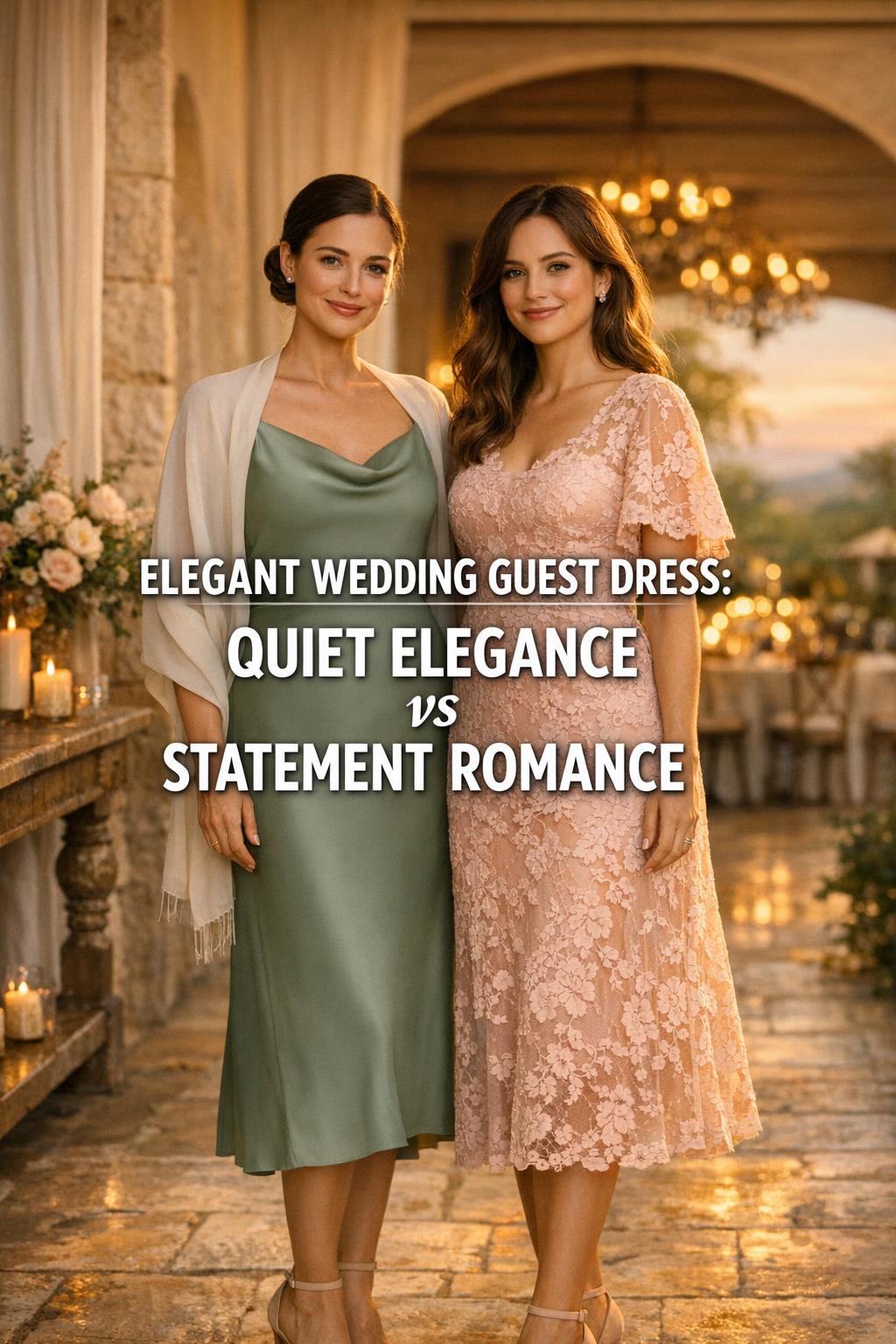
Style overview: statement romance (lace, florals, and editorial energy)
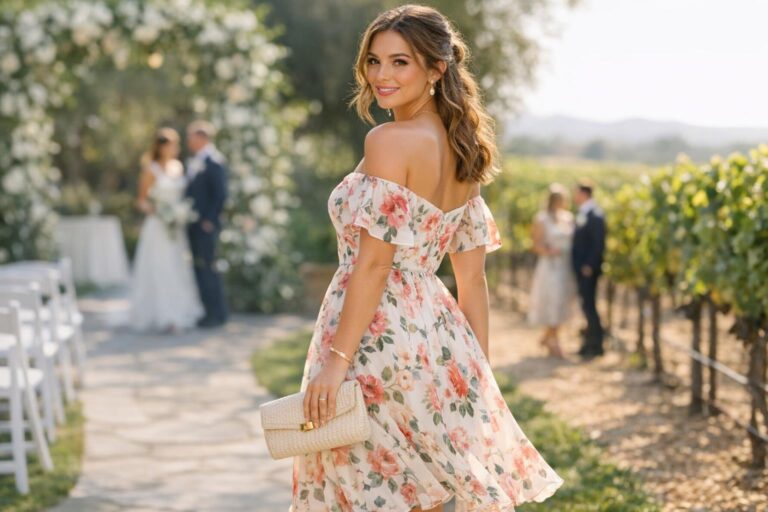
Statement romance is elegance with a point of view. Instead of minimizing visual detail, it uses it strategically: lace as texture, florals as a mood, and color that feels celebratory. The overall effect is still wedding-appropriate, but it’s more expressive—an aesthetic that makes sense when the venue is a garden ceremony, a destination resort, or an evening reception where the room is candlelit and the photography rewards texture.
Silhouettes can be equally refined—midi and maxi still dominate—but the impression is softened by print, lace overlays, or a romantic sleeve. This is where “midi wedding guest dress with sleeves” becomes more than a search phrase; it’s a styling formula. Statement romance also plays well with subtle metallic notes (kept understated) and lace that reads elegant rather than costume-like.
The palette is broader, often built around florals and color-forward moments. Editorial inspiration helps decode it: Eva Mendes in a Rixo wedding guest dress frames florals as grown-up and intentional, while a green lace moment associated with Lili Reinhart underscores how a single color-and-texture pairing can feel modern, romantic, and formal-leaning when the silhouette is controlled.
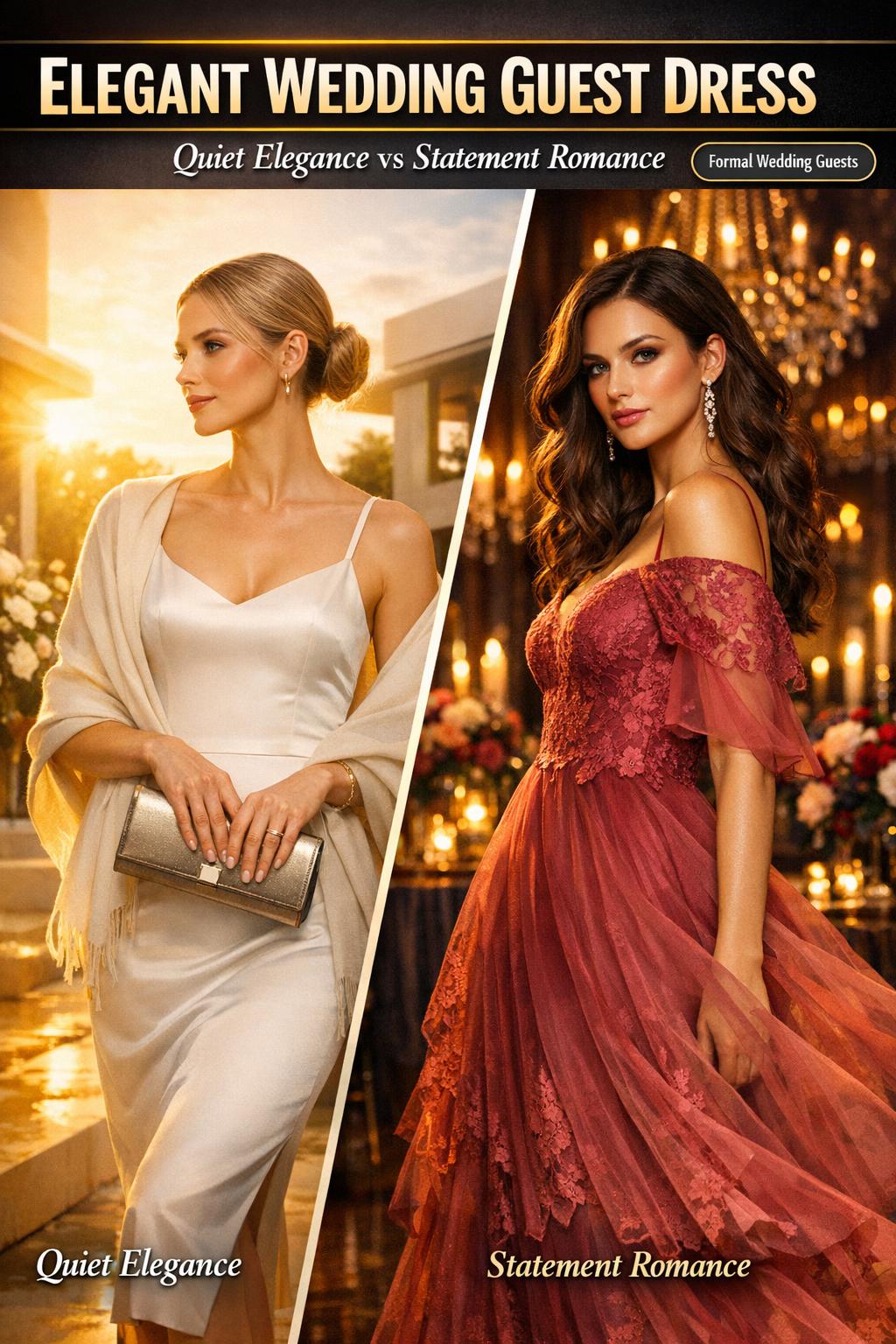
Key differences that matter at real weddings
Silhouette and structure: clean line versus textured line
Quiet elegance prioritizes the line of the body and the garment’s architecture—how a maxi gown falls, how a midi hits mid-calf, how a neckline frames the face. Statement romance can share those shapes, but the “line” becomes textured: lace breaks up the surface, florals soften the outline, and sleeves become part of the visual rhythm. If you’re attending a formal evening wedding, the quiet approach often reads immediately formal; statement romance needs a crisp silhouette (not overly loose) to keep the look elevated.
Color palette: composed neutrals versus celebratory color
Quiet elegance tends to live in black, navy, and other timeless neutrals, with jewel tones like emerald and burgundy used as an alternative to high contrast. Statement romance welcomes more obvious color stories—especially in florals—though the most elegant versions keep the palette cohesive rather than noisy. If your wedding setting is a garden wedding, romantic palettes feel natural in daylight; in a ballroom, deeper tones and cleaner color blocks typically photograph more formal.
Level of formality: “black-tie logic” versus “garden logic”
Quiet elegance maps easily to black-tie and formal because the aesthetic shares the same vocabulary: gowns, smooth fabrics, and simplified detail. Statement romance often excels in cocktail dress codes and garden wedding settings, but it can absolutely work for black-tie optional if the dress is maxi length, the fabric is elevated (satin, lace used thoughtfully), and the print remains refined rather than casual.
Styling philosophy: blend in beautifully or stand out softly
Quiet elegance is about blending into the wedding’s atmosphere while still looking impeccably finished—an approach that pairs well with the etiquette reminder many brands note: aim for elegance without outshining the bride. Statement romance is not about stealing attention, but it does invite more personality. The difference is subtle: quiet elegance whispers; statement romance glows. Your choice should be guided by venue, dress code wording (formal versus cocktail), and how comfortable you feel in prints and texture.
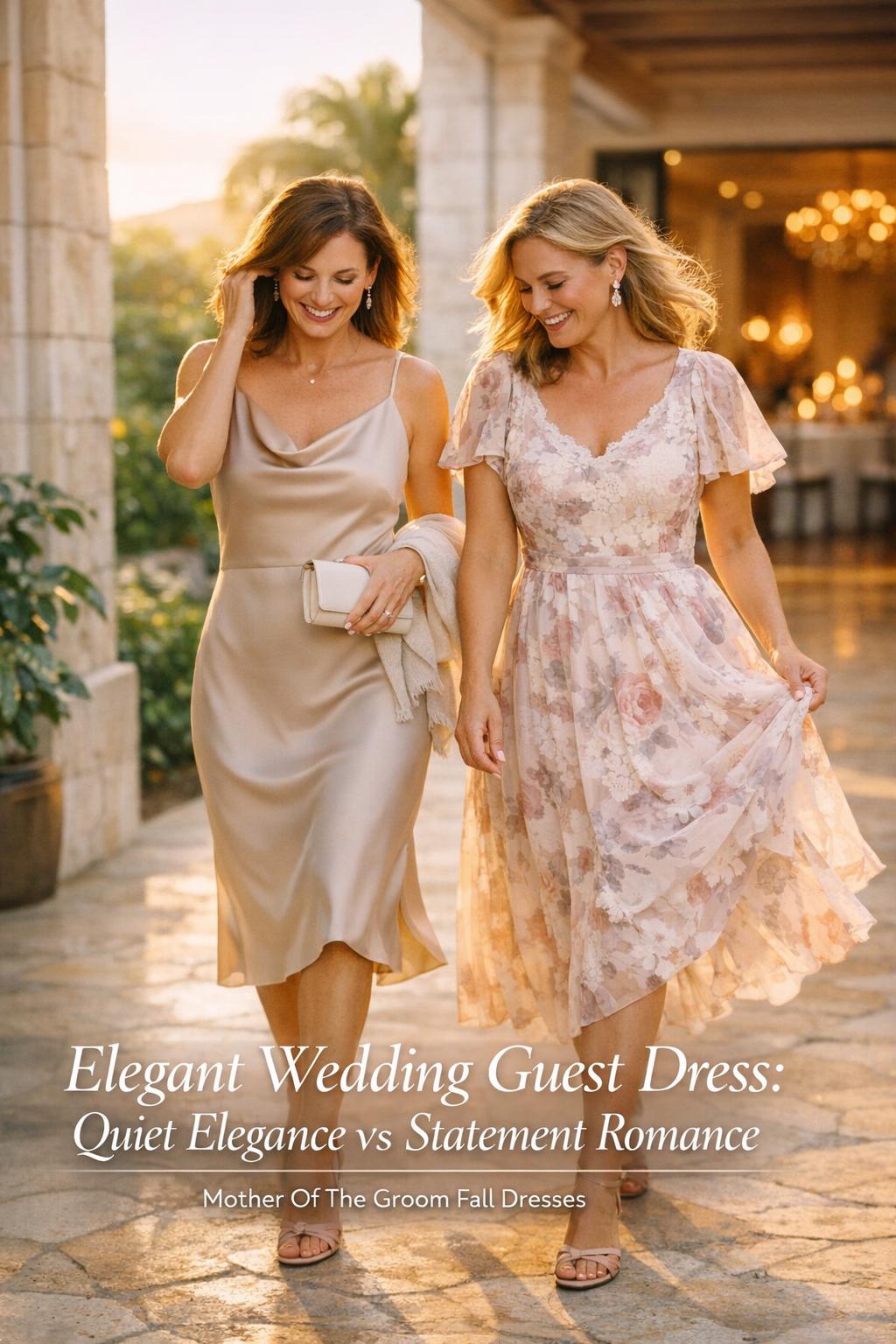
Visual style breakdown: how these aesthetics look from ceremony to reception
Imagine the full arc of a wedding day: arriving during golden hour, moving from a ceremony space to cocktail hour, then settling into a longer reception. Quiet elegance tends to hold its shape through every phase because it relies on proportion, drape, and a composed palette. Statement romance changes with the light—lace becomes more dimensional, florals read more vivid in daytime, and color becomes a styling feature rather than an afterthought.
Layering approach: outerwear that doesn’t interrupt the dress
Quiet elegance favors outer layers that keep the line uninterrupted—think a wrap or a clean, minimal top layer that mirrors the dress’s simplicity. Statement romance often benefits from a layer that frames rather than covers: a light wrap over chiffon, or a soft layer that keeps sleeves and lace visible. The goal in both cases is comfort through temperature changes without losing the look’s intention.
Proportions: where the hem and sleeve do the work
Quiet elegance uses hem length and neckline to signal dress code: a maxi is the straightforward formal move; a midi can be elegant for cocktail or semi-formal if the fabric looks elevated. Statement romance uses sleeves, lace placement, or floral scale to keep the dress from feeling overly sweet. A midi with sleeves, for example, can read sophisticated for a garden ceremony if the sleeve shape feels intentional rather than casual.
Accessories and footwear: restrained shine versus romantic detail
In quiet elegance, accessories are quieter by design—chosen to support, not compete. In statement romance, accessories tend to echo the story: a delicate finish that complements lace or a color note that ties back to a floral print. In both aesthetics, footwear matters because weddings demand hours of standing and walking between venues; elegance is hard to maintain if you’re uncomfortable by the first dance.
Dress codes, but make them practical: black-tie, formal, cocktail, and garden
Dress code language is often brief, yet the expectation is specific. The cleanest way to interpret it is to connect length, fabric, and overall finish to the venue and time of day. Many wedding guest dress collections—like those from Jovani, Lulus, Alice + Olivia, Ever-Pretty, Emprada, and Couture Candy—organize their assortment by dress code or by lengths like gowns, midi dresses, and cocktail dresses, which mirrors how guests actually shop.
Black-tie and formal wedding guests: when a gown does the heavy lifting
For black-tie and formal wedding guests, quiet elegance is the simplest route: a floor-length gown in satin, crepe, or a refined lace. Statement romance can work here too, but the dress must feel “evening”—maxi length, controlled silhouette, and prints that read elevated rather than casual. In practice, Jovani’s formal gown direction and Alice + Olivia’s fashion-forward occasion wear offer two ends of the same formal spectrum: classic event polish versus designer energy.
Cocktail: the sweet spot for midi and a sophisticated dress
Cocktail attire often rewards the midi dress: it’s elegant without the full commitment of a gown, and it transitions beautifully from ceremony to reception. Quiet elegance leans into a sleek midi with minimal embellishment; statement romance chooses a midi with lace texture or a floral print that still feels refined. Lulus and Emprada are often shopped specifically for this “elegant but not overdone” cocktail zone, while Couture Candy’s curation makes it easier to compare short versus long options within the same dress code.
Garden wedding: where chiffon, florals, and sleeves feel natural
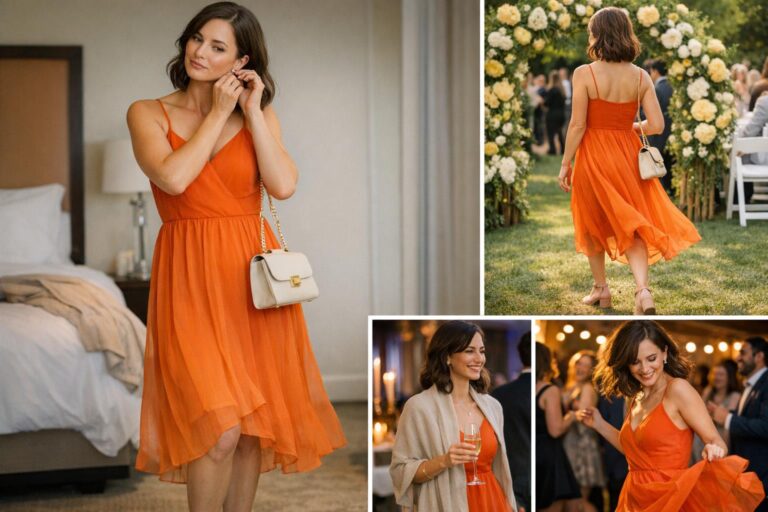
A garden wedding invites movement: chiffon that catches a breeze, florals that echo the venue, and sleeve options that make the look feel polished without heavy layering. Statement romance is at home here, especially through floral and lace stories (a space where Sophie & NY collections frequently sit), but quiet elegance can be equally striking in a clean midi or maxi that lets the setting provide the ornamentation.
Fabric and texture comparison: satin vs chiffon vs lace vs crepe vs velvet
Two dresses can share the same silhouette and still read completely differently because of fabric behavior. Texture determines how the dress photographs, how it moves during a long event, and whether it feels “daytime” or “evening.” If you’re deciding between quiet elegance and statement romance, fabric is often the deciding factor.
Satin: controlled glow for modern elegance
Satin is the quiet-elegance hero when you want sleekness with a gentle sheen. In maxi or midi lengths, it signals “occasion” immediately, which is why it’s common across elegant wedding guest dresses in brand collections. Satin also supports statement romance when used in a clean shape with a romantic color; the key is keeping the silhouette precise so the shine looks intentional rather than loud.
Chiffon: movement that suits garden and destination settings
Chiffon is the fabric that understands weddings: it moves well through long celebrations, feels comfortable when you’re traveling to a destination event, and looks romantic in photos—especially outdoors. It naturally aligns with statement romance, but it can read quietly elegant when the color is composed and the dress isn’t overly layered. Many collections highlight chiffon alongside sleeves and floral elements because the fabric supports that lighter, breathable mood.
Lace: texture that can look timeless or trend-led
Lace is where the two aesthetics overlap most. In a simple silhouette, lace can be quietly elegant—textured, refined, and formal-leaning. In a colored lace (a green lace moment is a perfect example of how modern this can feel), it becomes statement romance with editorial energy. The difference is in density and styling: lace looks most elegant when the overall outfit stays balanced, with accessories kept deliberate.
Crepe and velvet: polish through weight and drape
Crepe leans quiet: it drapes cleanly and suits tailored silhouettes, especially for cocktail or formal. Velvet—while less common in the core wedding guest catalog language than satin, chiffon, and lace—belongs to the same “texture elevates” idea; it reads richer and more evening-leaning. The practical trade-off is comfort and temperature: heavier textures can feel perfect for a cooler reception, less ideal for a sunlit garden ceremony.
Brand comparison: where each aesthetic tends to live
Brands and retailers organize wedding guest dresses in ways that reveal their styling DNA. Some lean heavily into formal and black-tie options; others build their identity around elegant, wearable cocktail dresses, and some sit between—offering a range of silhouettes and price tiers that make it easier to match the dress to the event.
Quiet elegance anchors: Jovani, Emprada, and formal-forward edits
If your dress code reads formal or black-tie, Jovani’s wedding guest dresses and gown categories naturally align with quiet elegance: the focus is on formal wear, lengths like maxi gowns, and clear dress-code mapping. Emprada’s guidance often emphasizes looking elegant without outshining the bride, which fits the quiet approach—especially in evening gowns and refined cocktail dresses where the silhouette stays composed.
Statement romance homes: Sophie & NY, Rixo energy, and floral/lace stories
For guests drawn to florals and lace, Sophie & NY’s collection framing (floral dresses, lace dresses, maxi dresses) sits naturally in statement romance territory. The editorial world reinforces the appeal: Eva Mendes wearing a Rixo dress makes a case for florals that feel elevated rather than overly sweet. When the print is refined and the silhouette is intentional, romance can still read formal enough for many weddings.
The versatile middle: Lulus, Ever-Pretty, Couture Candy, and Alice + Olivia
Lulus is a consistent destination for “elegant wedding guest dresses” because it’s easy to filter by length, sleeve, and fabric—useful when you’re choosing between a quiet satin midi and a romantic lace option. Ever-Pretty brings a value-oriented angle that still speaks to elegant silhouettes and inclusive wedding guest needs like sleeves, lace, and satin, often organized around seasonal edits. Couture Candy’s retail curation makes comparisons straightforward across long dresses, short dresses, and embellished options, while Alice + Olivia adds fashion-forward structure—ideal if your version of elegance includes a sharper statement in cut rather than print.
Prom dress vs elegant wedding guest dress: the fine line (and how to cross it gracefully)
A prom dress and an elegant wedding guest dress can share the same category language—gowns, satin, lace, statement color—yet the styling philosophy differs. Prom dressing is designed around spotlight energy; wedding guest dressing is designed around harmony with the event, the venue, and the couple’s photographs.
If you love a prom dress silhouette for a black-tie wedding, the adjustment is usually in details: choose a gown with fewer competing elements (less embellishment, less overt drama), and keep accessories deliberate. Quiet elegance makes this transition easier because its core is restraint. Statement romance can still work, but it’s most wedding-appropriate when the drama comes from texture (lace) or refined print rather than excessive shine.
Wedding-party adjacent dressing: robes mère de la mariée and mother of the groom fall dresses
Even if you’re “just a guest,” you may be dressing adjacent to the immediate family—especially at smaller weddings where everyone is in close photographs. The language of robes mère de la mariée and mother of the groom fall dresses points to a similar goal: elegance that photographs beautifully, feels respectful, and holds up through a long day.
Quiet elegance is often the most seamless way to align with family-of-the-couple formality without looking like you’re trying to match the wedding party. A crepe midi, a satin maxi, or a refined lace dress in a composed palette (navy, deep jewel tones) reads polished. Statement romance can be appropriate too—particularly in fall when deeper tones like burgundy feel seasonally grounded—so long as florals remain refined and the silhouette stays tailored rather than overly casual.
Tips from the fitting room: what stylists watch for in elegant wedding guest dresses
The most successful elegant looks aren’t just chosen; they’re edited. In practice, the difference between “pretty” and “elegant” is often one small decision: the hem length that works with your shoes, the sleeve that eliminates the need for constant adjusting, or the fabric that stays comfortable through photos, dinner, and dancing.
Tips for choosing the right length (maxi, midi, knee-length)
- Maxi is the safest translation for black-tie and formal wedding guests, especially in satin or crepe.
- Midi is the cocktail workhorse; it reads elegant when the fabric is elevated and the silhouette is intentional.
- Knee-length can work for cocktail, but it needs a refined finish—avoid anything that feels overly casual in fabric or shape.
Tips for sleeves, necklines, and “all-day comfort”
Sleeves are as much about practicality as modesty: they can make an outdoor ceremony more comfortable and reduce the need for a separate layer. A midi wedding guest dress with sleeves also tends to look polished in photos because it creates a defined frame. Necklines should feel secure enough for movement—weddings involve hugging, standing, and dancing—so “elegant” often means not having to adjust your dress every few minutes.
Tips to avoid outshining the bride without fading into the background
Elegance lives in balance. If your dress has a bold element—like lace texture, a floral print, or a color-forward choice such as green lace—keep the rest of your look quiet. If your dress is minimal, allow a single refined detail to finish it: a carefully chosen bag, subtle jewelry, or a sleek shoe. This is the same logic that makes both quiet elegance and statement romance wedding-appropriate when styled thoughtfully.
Outfit examples as comparisons: same wedding, two elegant approaches
Rather than treating outfits like a checklist, it’s more helpful to picture the same wedding through two styling lenses. Each comparison below shows how quiet elegance and statement romance solve the same brief—dress code, venue, and comfort—using different visual strategies.
Example comparison: black-tie optional evening reception in a ballroom
Quiet elegance would lean into a satin or crepe maxi gown with a clean line—think the kind of formal wear you’d naturally find in a Jovani occasion edit or a refined Emprada evening gown section. Statement romance would still choose maxi length, but introduce texture: lace that reads formal under evening lighting, or a controlled floral that feels more “editorial” than casual—an approach echoed by the way Rixo-style florals are framed in wedding guest inspiration.
Example comparison: garden ceremony with a semi-formal to cocktail dress code
Quiet elegance would choose a midi in chiffon or a smooth satin that doesn’t fight the setting—simple, breathable, and polished. Statement romance would treat the venue as part of the look: a floral midi or lace-accented silhouette, possibly with sleeves to keep the styling cohesive without extra layers. This is where collections organized by florals and lace, like those highlighted in Sophie & NY edits, feel naturally aligned.
Example comparison: destination or resort wedding where packing matters
Quiet elegance would prioritize a fabric that travels well visually and functionally, such as chiffon or a clean satin that can be styled with minimal pieces. Statement romance might choose a print or lace detail that creates impact with fewer accessories—so your dress carries the mood, even if you’re packing light. In both cases, midi and maxi lengths tend to be the most versatile for moving from daytime ceremony to evening dinner.
When to choose each style (and how to blend them)
Choose quiet elegance when you want the dress code to read instantly
If the invitation signals formal, black-tie, or even a more traditional venue tone, quiet elegance minimizes risk. It’s also ideal if you prefer a sophisticated dress that doesn’t require much styling to feel complete. A clean maxi or an elevated midi lets the venue—ballroom, formal reception space, or evening setting—do some of the visual work.
Choose statement romance when the venue is part of the outfit story
Garden weddings, destination settings, and daytime ceremonies often reward romance: chiffon movement, lace texture, florals that feel celebratory. This style is also for guests who want an “occasion” feeling without relying solely on length. The key is refinement—romance becomes elegant when the silhouette stays controlled and the overall look is edited.
Blend the two if you want elegance with personality (without the visual noise)
The most modern wedding guest outfits often live between the extremes: a quiet silhouette in a romantic fabric (lace on a sleek midi), or a floral print in a composed palette paired with minimal styling. Celebrity-inspired references—like the way a single green lace dress can read both romantic and polished—highlight how one focused detail can carry the look while the rest remains restrained.
Common styling missteps that can quietly undermine an elegant look
Most wedding guest outfits miss the mark for small, fixable reasons. The dress may be beautiful, but the styling doesn’t match the event’s rhythm—outdoor to indoor transitions, long hours, and the need to feel comfortable while remaining polished.
Misstep: choosing detail without a “resting place”
If your dress is lace, floral, and shiny all at once, elegance can tip into overload—especially in photographs. Statement romance needs one hero element (lace texture or a refined floral), while quiet elegance can carry one strong color. The simplest edit is to let one feature lead and keep the rest calm.
Misstep: treating comfort as separate from elegance
Comfort is not an afterthought at weddings; it’s part of the look. A dress that rides up, sleeves that require constant adjusting, or shoes that make you move cautiously will change how you carry yourself. Elegant wedding guest attire should allow easy movement from ceremony seating to reception dancing—this is why sleeve choices, fabric movement (chiffon versus stiffer textures), and hem length relative to footwear matter so much.
Misstep: misunderstanding “elegant” as “formal,” or vice versa
Elegant doesn’t always mean a gown, and formal doesn’t always mean heavy embellishment. A midi in satin can be elegant for cocktail; a maxi in a refined lace can be appropriate for formal. The strongest approach is to map the dress code to length and fabric first, then decide whether your aesthetic is quiet elegance or statement romance.
Shopping strategy: how to narrow choices quickly across popular brands
Many shoppers get overwhelmed because “wedding guest dresses” pages are intentionally broad. A cleaner strategy is to decide your dress code and aesthetic first, then use length and fabric as filters. This is especially effective on sites that organize by categories like formal gowns, midi dresses, and cocktail dresses.
A quick decision filter you can use in minutes
- Start with dress code: black-tie/formal vs cocktail vs garden wedding.
- Choose your line: maxi for formal, midi for cocktail, either for garden depending on time of day.
- Pick your fabric family: satin/crepe for quiet elegance; chiffon/lace/floral stories for statement romance.
- Use brand strengths: Jovani for formal orientation, Lulus for “elegant” edits with filters, Ever-Pretty for affordable elegance, Alice + Olivia for fashion-forward tailoring, Couture Candy for curated comparisons, Emprada for elegance-focused guidance, Sophie & NY for floral/lace categories, and editorial cues from Nobodys Child, Rixo, and Who What Wear-style celebrity inspiration.
This method also helps when your calendar includes multiple events. A refined midi can cover cocktail weddings and other occasion wear; a minimal maxi can be the reliable formal option. Even if you’re browsing a prom dress-style gown, these filters keep the result wedding-appropriate.
FAQ
What makes an elegant wedding guest dress feel “elegant” instead of just dressy?
Elegance usually comes from a controlled silhouette, an elevated fabric (like satin, chiffon, crepe, or refined lace), and a cohesive styling approach that fits the dress code—formal, black-tie, cocktail, or garden—without relying on excessive embellishment.
Can I wear a midi dress to a formal or black-tie optional wedding?
A midi can work for black-tie optional in many cases if it reads “evening” through fabric and finish—think satin or refined lace and a polished silhouette—though a maxi gown is the simplest way to communicate formal wedding guest attire.
How do I choose between quiet elegance and a more romantic, statement look?
Use the venue and dress code as your guide: ballrooms and formal receptions often favor quiet elegance (clean lines, composed colors), while garden and destination weddings naturally suit statement romance (florals, lace, chiffon movement) as long as the silhouette stays refined.
Are lace wedding guest dresses appropriate for evening weddings?
Yes—lace can look especially elegant for an evening wedding when paired with a controlled silhouette and minimal styling; colored lace can feel more statement-driven, while classic lace in a sleek shape reads quietly sophisticated.
What colors feel timeless for an elegant wedding guest look?
Timeless neutrals like black and navy are reliable, and deeper tones like emerald and burgundy can feel equally refined; statement romance often adds florals or color-forward moments, but the most elegant results keep the palette cohesive.
How do sleeves change the overall look for a wedding guest dress?
Sleeves can make a dress feel more polished and ceremony-appropriate, reduce the need for extra layering, and help the outfit look consistent from day to night; a midi dress with sleeves is a particularly versatile option for garden and cocktail weddings.
How do I make a prom dress-style gown wedding-appropriate?
Choose a more restrained version of the silhouette—less competing detail, a cleaner fabric story like satin or crepe, and minimal accessories—so the look reads formal and elegant without the spotlight energy associated with a prom dress.
Which brands are commonly associated with elegant wedding guest dresses?
Shoppers often compare brands and retailers such as Jovani, Lulus, Alice + Olivia, Ever-Pretty, Emprada, Couture Candy, and Sophie & NY, with additional inspiration coming from editorial features referencing Nobodys Child, Rixo, and celebrity style moments like Eva Mendes or Lili Reinhart.