How to Choose a Satin Flower Girl Dress for the Aisle
There is a very specific kind of pressure that comes with choosing a satin flower girl dress. It has to look polished in photographs, coordinate with the wedding palette, and still feel manageable for a child who will be walking, sitting, twirling, and staying dressed far longer than a bridal portrait session lasts. The sheen that makes satin so elegant can also make the decision more complicated: some styles feel formal but stiff, others look sweet but lack enough structure, and many families are left wondering whether they should choose satin alone, satin twill, or satin paired with tulle.
The challenge usually is not finding a dress called “satin.” It is finding the right satin flower girl dress for the setting, the age of the child, and the tone of the wedding. A ballroom celebration asks for a different silhouette than a garden aisle, and a toddler’s comfort needs are not the same as those of an older child. This guide approaches the decision the way a wedding stylist would: by looking at fabric behavior, silhouette, color, embellishment, fit, and the real-world details that matter on the day itself.
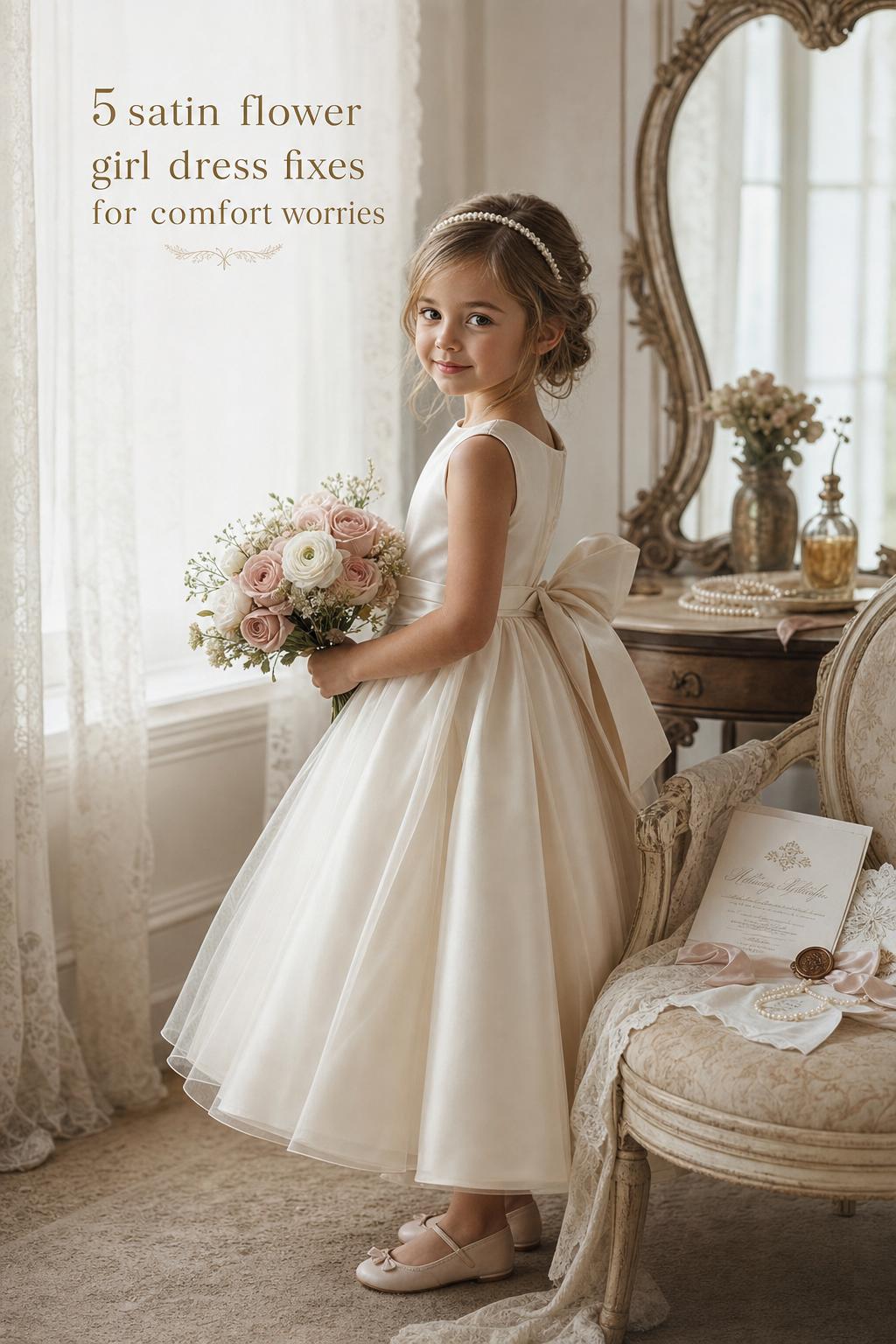
Whether you are comparing an ivory satin twill style from Dessy, a satin-and-tulle option from David’s Bridal, a tea-length dress from Mia Princess, or a catalog of choices from JJ’s House and FlowerGirlDresses.com, the goal is the same: a dress that feels classic, photographs beautifully, and works for the child wearing it.
Why this choice becomes harder than it seems
Satin carries a wedding-day formality that many families want immediately. It reflects light, holds shape well, and gives even a simple flower girl silhouette a ceremonial finish. But those same strengths create the usual decision points. Structure can affect movement. Shine can make color differences more noticeable. A fuller skirt can look lovely in photos yet feel heavy if the event is long, especially when layered with crinoline or a petticoat.
Your wedding look is only the beginning.
Keep your guest list, vendors, timeline, and every important detail together with Zarellea — so your day feels as considered as your style.
Venue and atmosphere matter, too. In golden-hour outdoor light, ivory and champagne satin often read softly and romantically. In an evening reception with richer lighting, a princess line dress with bows or beading can feel especially at home. The practical issue is balancing that visual impact with a child’s comfort, because a flower girl still has to move naturally through the ceremony and reception rather than simply pose for a product image.
There is also the coordination question. Bridesmaids may be wearing matte fabrics, the bride may be in ivory, and the family may be deciding between white, ivory, blush accents, or champagne. Satin is forgiving in some ways, but because it is reflective, details like a sash, colored petals, or a removable bow become more prominent. That is why the best decision tends to come from understanding fabric and shape before focusing on decorative extras.
The styling logic that makes satin work
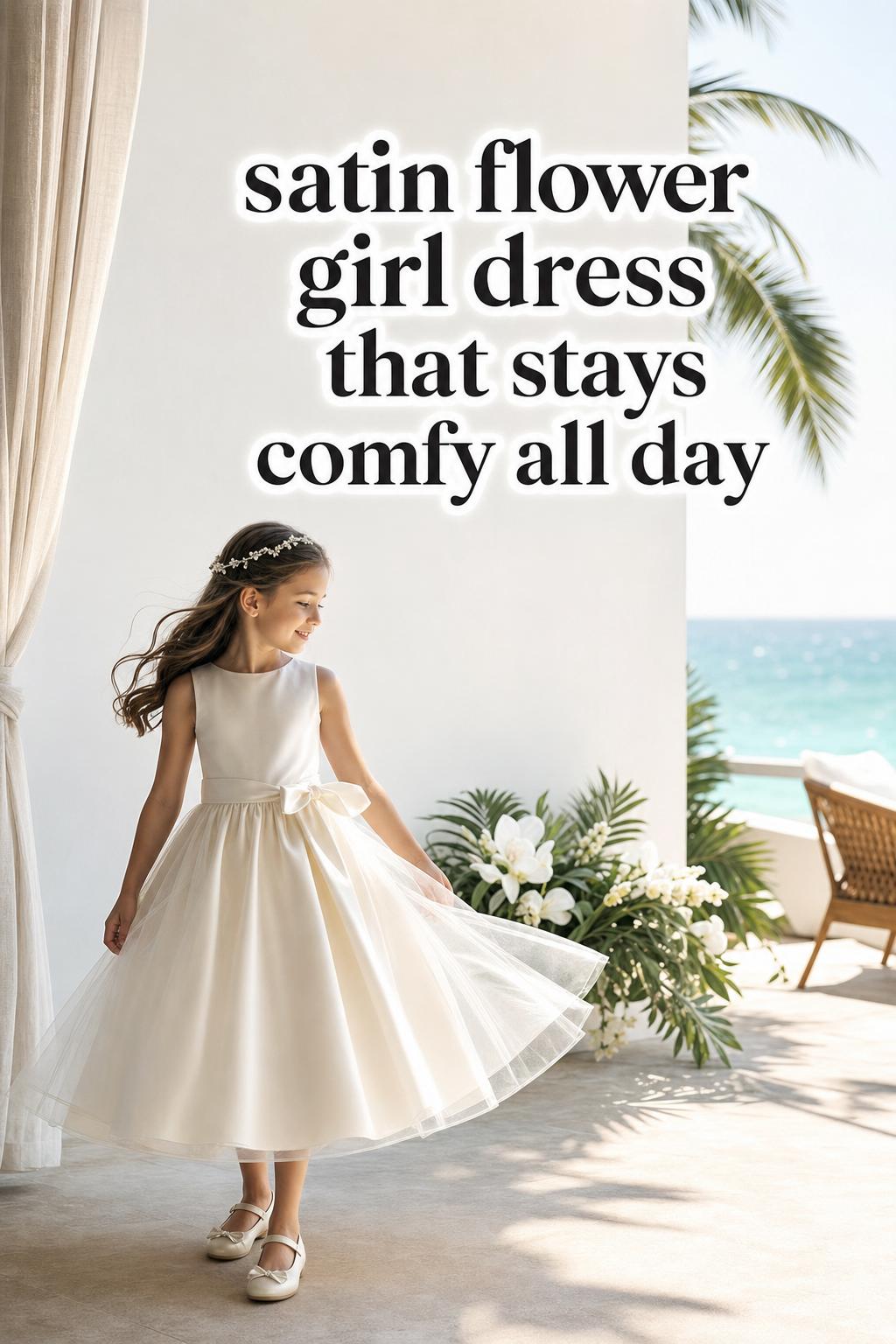
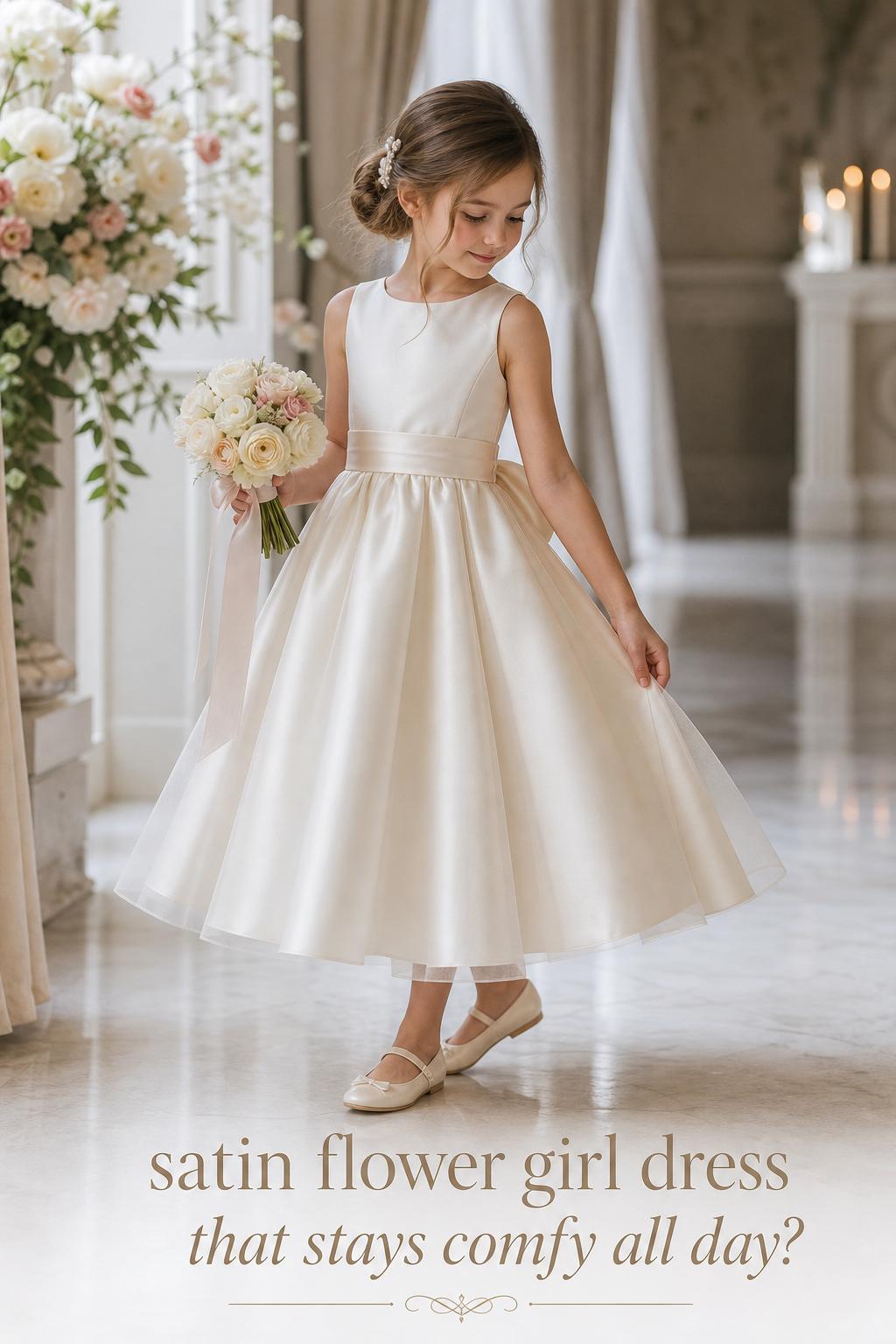
A successful flower girl look starts with one principle: the fabric should support the role, not overpower the child. Satin is most effective when the silhouette is matched to the setting and the age of the wearer. A princess line or ball gown shape can feel wonderfully traditional, but it works best when the child is comfortable walking in volume. Tea-length styles are often easier for movement and can still feel formal when done in satin.
The second principle is visual balance. Satin already brings sheen and structure, so embellishments such as bows, sashes, beading, or colored petals should be chosen with restraint. A clean satin bodice paired with a soft tulle skirt creates one kind of romance; a satin twill dress with bows creates another. Both can be beautiful, but they communicate different moods.
Finally, comfort should be treated as part of the styling rather than an afterthought. Lining, layered petticoats, crinoline, and back closures all affect how a dress feels during a long celebration. The most polished choice is usually the one that allows the child to move confidently from aisle to photos to reception without constant adjustment.
Reading the fabric correctly: satin, satin twill, and satin with tulle
Satin for a classic, light-catching finish
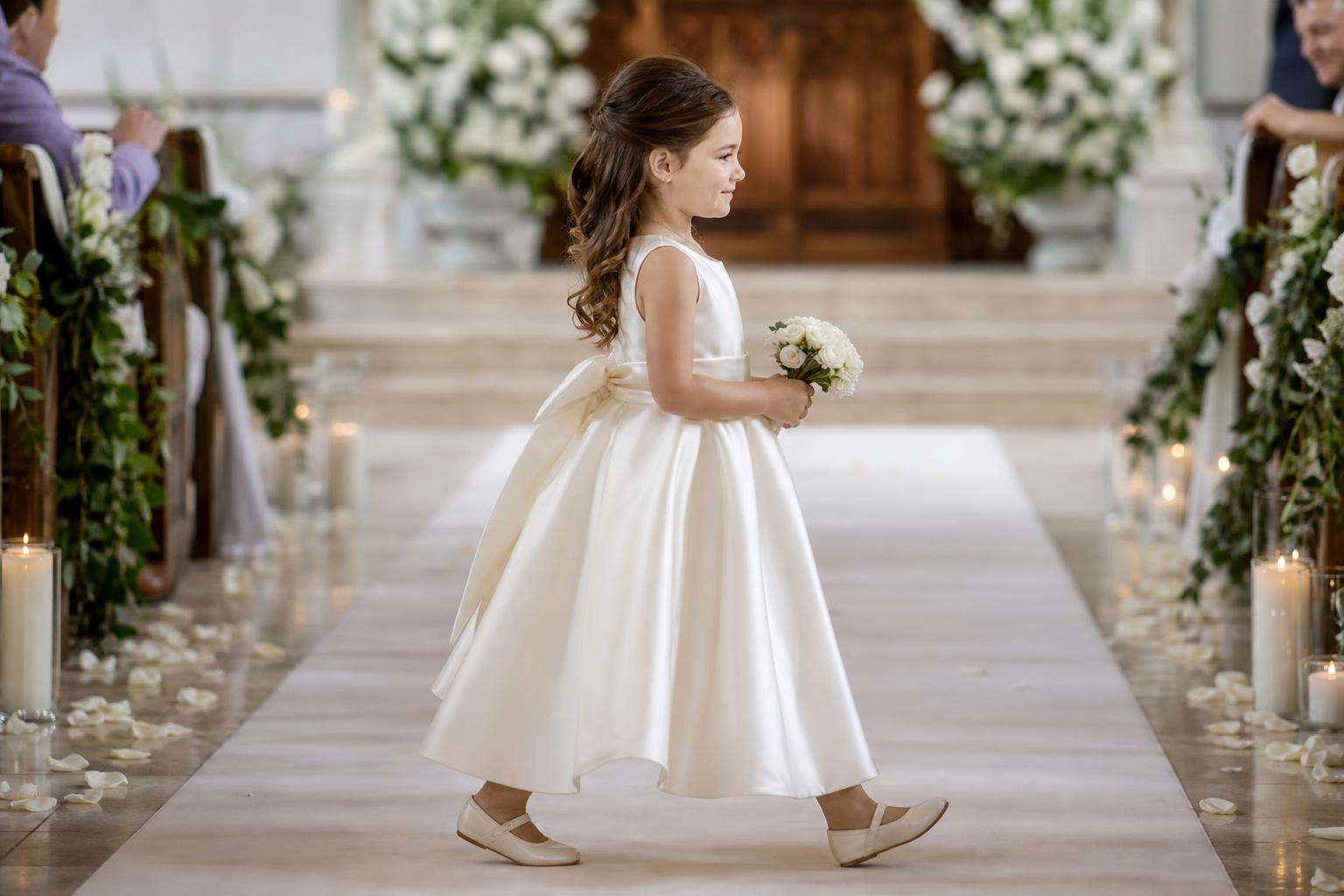
Standard satin is the reference point for this category: smooth, dressy, and clearly suited to wedding attire. It tends to suit simple silhouettes especially well because the fabric itself already creates visual interest. A cream satin flower girl dress with a satin sash, like the style presented by JoJo Maman Bébé on its U.S. site, shows how satin can carry the look with only a few supporting details such as a bow or layered petticoat.
If your wedding is formal, traditional, or centered on a refined bridal palette, satin on its own often gives the cleanest result. It works particularly well in ivory, white, and champagne tones, all of which appeared repeatedly across leading styles.
Satin twill for structure and a tailored feel
Satin twill introduces a slightly more structured interpretation of the look. On Dessy’s princess line satin twill flower girl dress with bows in ivory, the fabric supports a more architectural silhouette. This is useful if you want the skirt and bodice to hold shape through a ceremony and formal portraits. It is also an elegant choice when the wedding style leans classic rather than airy.
The trade-off is that a more structured fabric can feel less fluid than softer satin or satin mixed with tulle. For a child who likes to move freely, that difference matters. For a very polished church or ballroom setting, however, satin twill can look especially composed.
Satin with tulle for softness and movement
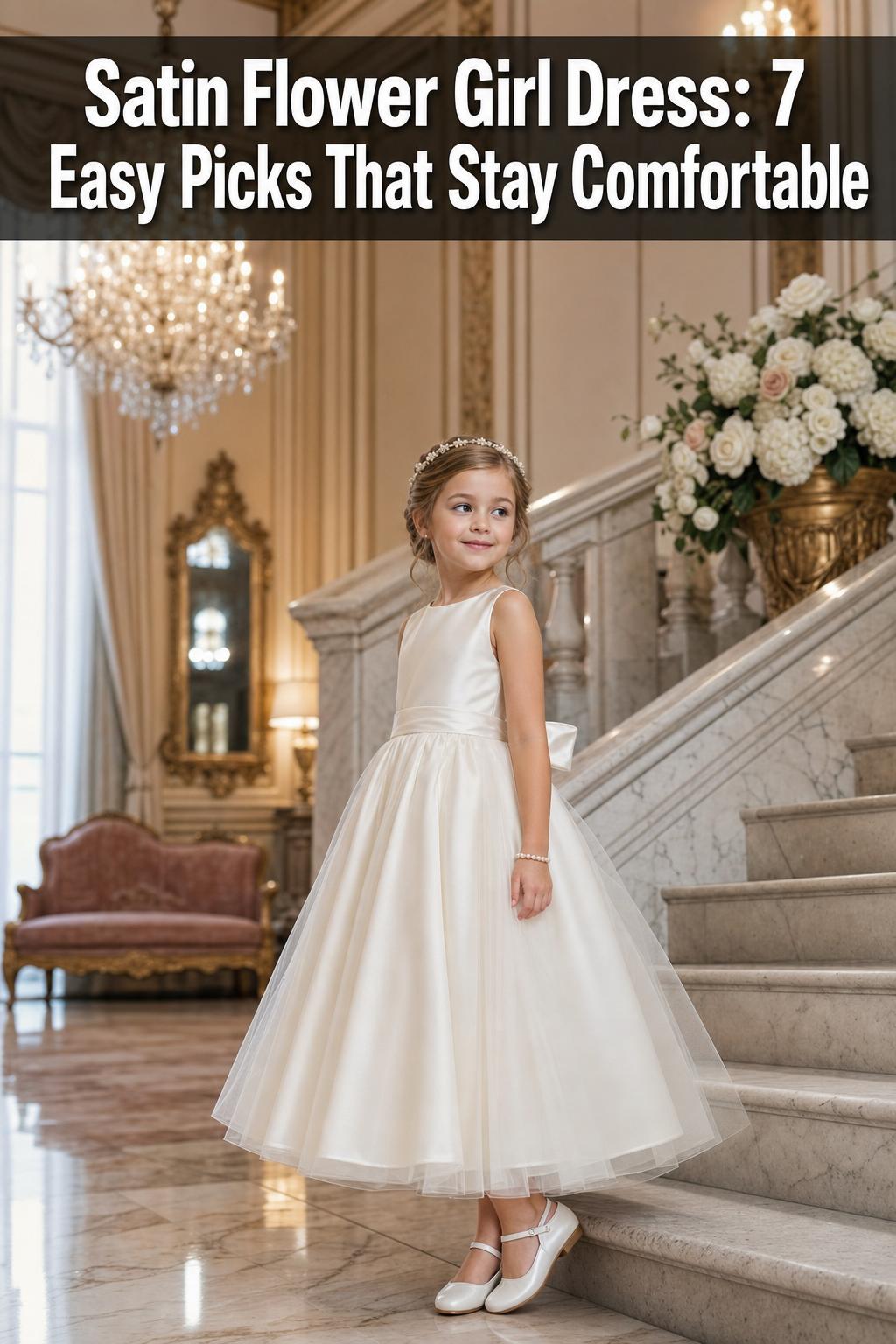
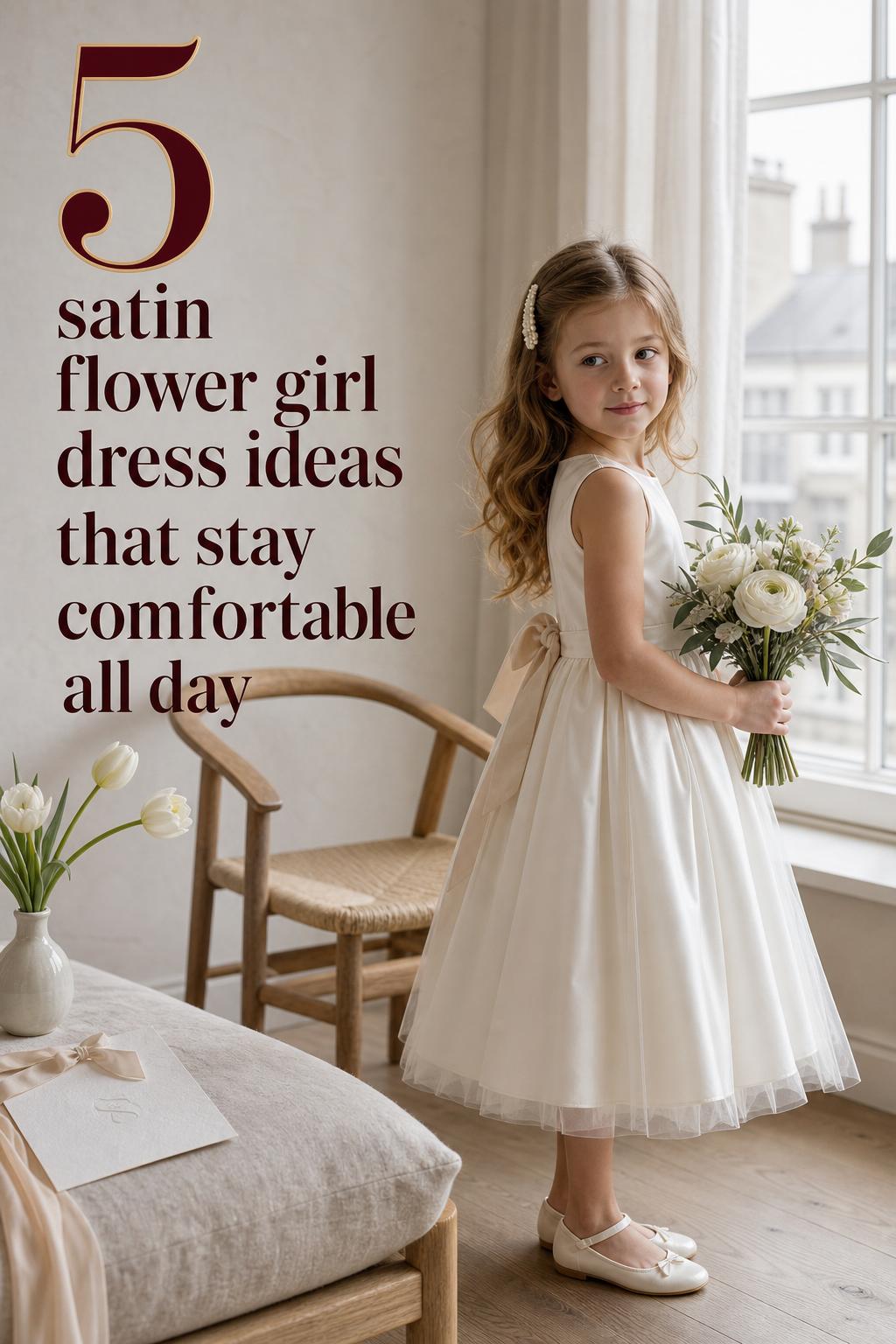
Satin and tulle combinations solve one of the most common styling problems: how to keep the wedding formality of satin while softening the overall effect. David’s Bridal offers a satin tulle flower girl dress with colored petals, while InWeddingDress features a satin tulle flower girl dress with sash and a bow at the back. Both point to the same styling logic. Satin gives definition at the bodice or waist, and tulle brings lightness, volume, and easier movement in the skirt.
This mix often suits romantic outdoor ceremonies, softer bridal palettes, and families who want a little fullness without the more formal finish of a fully structured satin gown. It can also be easier visually when incorporating accent colors, because petals, sashes, and overlays read delicately against tulle.
Silhouettes that solve different wedding-day needs
The silhouette is where style and practicality finally meet. Two dresses can both be satin flower girl dresses and behave completely differently on the day. That is why selecting by shape is often more useful than selecting by embellishment first.
- Princess line: A polished option for formal weddings, especially when paired with satin twill or bows. It creates a distinctly occasionwear look and photographs beautifully in processional moments.
- A-line: A balanced choice when you want enough structure for ceremony polish without the fullness of a ball gown. This silhouette tends to be easier for varied ages.
- Ball gown: Best when the wedding atmosphere is notably grand and the child is comfortable with more volume. It creates impact but can be more demanding over a long event.
- Tea-length: One of the most practical satin options. Mollys Hanger and Mia Princess both highlight tea-length styles, which help with walking, dancing, and avoiding a hem that feels too formal for an active child.
For younger wearers, tea-length can be especially useful because it preserves the sweetness of a flower girl look without introducing too much fabric around the ankles. For older children, a princess line or fuller silhouette may feel more appropriate to the wedding’s formality, particularly if the bridal party is very dressed up.
Color decisions that feel bridal, not accidental
Color is rarely just about preference. With satin, it shapes the entire mood of the dress because the fabric reflects light differently from matte materials. Ivory is a perennial favorite because it feels bridal without always reading as starkly bright as white. Dessy’s ivory satin twill style and Mollys Hanger’s ivory satin dress both show how naturally ivory works with bows, tea-length hems, and classic wedding styling.
Champagne offers warmth and can feel especially beautiful in candlelit receptions or golden-hour ceremonies. Mia Princess leans into this mood with its champagne princess tea-length satin flower girl dress. It is a fitting choice when the wedding palette includes warm neutrals or when the family wants a subtle point of difference from a white or ivory bridal gown.
Then there are accent-led options: colored petals in the skirt, a sash, beads, or a removable bow. These details work best when they echo something already present in the wedding, such as bridesmaid tones or floral notes, rather than introducing a new color direction. Satin is elegant enough on its own, so accents should usually support the bridal palette rather than compete with it.
A simple way to narrow the palette
- Choose ivory if the wedding mood is classic and soft.
- Choose white if the styling calls for a crisp, traditional finish.
- Choose champagne if the atmosphere is warm, romantic, or evening-leaning.
- Use blush, petal, bead, or sash accents only when they connect clearly to the wider wedding palette.
Brand spotlights: where different satin flower girl dress styles stand out
Each brand tends to solve the satin flower girl dress question in a slightly different way, and noticing those differences makes shopping faster and more focused.
Dessy for structured bridal polish
Dessy’s princess line satin twill flower girl dress with bows in ivory is a strong reference point for families who want a highly bridal, polished silhouette. The emphasis here is structure, clear lines, and a classic bow detail rather than softness alone. It suits formal ceremonies and coordinated bridal party styling.
David’s Bridal for satin softened with tulle
The satin tulle flower girl dress with colored petals from David’s Bridal takes a more romantic route. It is useful when you want satin in the look, but you do not want the result to feel too crisp or rigid. The petal motif also introduces a gentle decorative element for weddings that lean whimsical rather than strictly traditional.
JJ’s House for broad satin category browsing
JJ’s House appears as a fabric-based shopping destination, with satin flower girl dresses organized as a category and supported by filters for size, style, and color. For families still comparing silhouette directions, this kind of catalog can be helpful because it keeps the fabric constant while allowing the shape and details to vary.
FlowerGirlDresses.com for gown-focused variety
FlowerGirlDresses.com presents satin options both within children’s wedding dresses and flower girl gowns. That distinction matters. Some shoppers are looking for a sweet, straightforward dress, while others want a more gown-like effect with princess line cues, fuller skirts, or bow accents. This is where category breadth becomes useful.
JoJo Maman Bébé for soft classic details
On the U.S. site, JoJo Maman Bébé offers a cream satin flower girl dress with satin sash, removable bow, and layered petticoat. It is a good example of satin styled in a way that still feels child-appropriate rather than overly formal. The removable detail also adds a practical element for families who want options.
Mia Princess and Mollys Hanger for tea-length practicality
Mia Princess features a champagne princess tea-length satin flower girl dress, while Mollys Hanger offers an ivory satin dress with bow, tea-length hem, back zipper, and crinoline underlayer. These are useful reference points for a common real-world need: preserving wedding formality while making movement easier. Tea-length satin often lands in the sweet spot between occasion dressing and comfort.
Outfit solution: the formal aisle look for a ballroom or church setting
For a grand interior, candlelit ceremony, or classic bridal processional, choose a princess line satin twill dress in ivory with bows. This is where a Dessy-style direction excels. The structured fabric holds its shape, the bow detail reads traditional rather than busy, and the overall effect feels aligned with a polished wedding party.
This combination solves the problem of looking appropriately formal without needing many extra details. Because the dress already carries a strong bridal identity, it is better to keep accessories understated. The beauty of this approach is its clarity: one elegant silhouette, one soft bridal tone, and enough structure to stand confidently in portraits.
Outfit solution: the romantic garden ceremony look
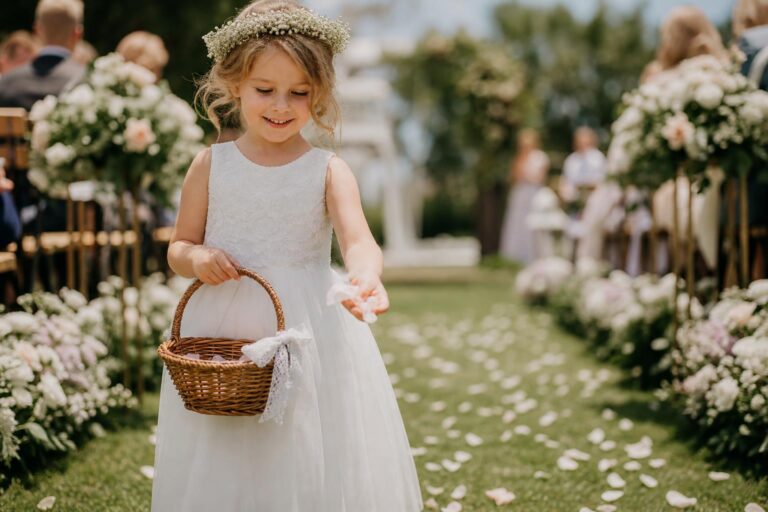
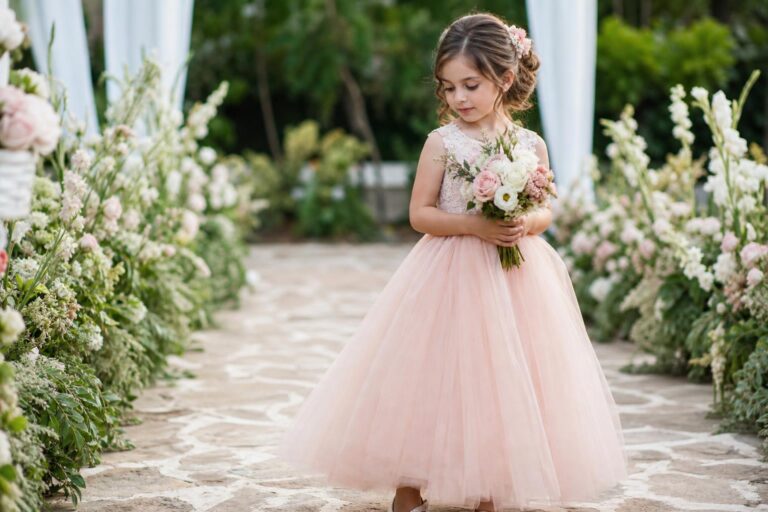
In outdoor light, satin with a tulle skirt or overlay often feels more natural than a fully structured gown. A satin bodice with tulle, a sash, and a bow at the back creates softness while preserving enough polish for the aisle. This direction reflects the styling seen at David’s Bridal and InWeddingDress, where satin and tulle are paired for visual balance.
The appeal here is movement. The tulle softens the formality of satin, catches light beautifully in motion, and tends to look especially lovely during garden portraits or a late-afternoon ceremony. If the wedding flowers or bridesmaid dresses include blush or another accent tone, petal details or a colored sash can echo that palette delicately.
Outfit solution: the reception-friendly tea-length choice
For children who are likely to stay active through photos, dinner, and dancing, tea-length satin is one of the smartest choices. A tea-length dress from Mia Princess in champagne or an ivory tea-length style from Mollys Hanger with a waist bow and back zipper gives the right ceremonial finish without a floor-skimming hem.
This styling direction works particularly well for a long wedding day because it reduces the fuss factor. A child can walk more easily, sit comfortably, and still look dressed for the occasion. If you want a hint of volume, a crinoline underlayer or petticoat can provide that shape without requiring a much longer skirt.
Outfit solution: the soft classic look for younger flower girls
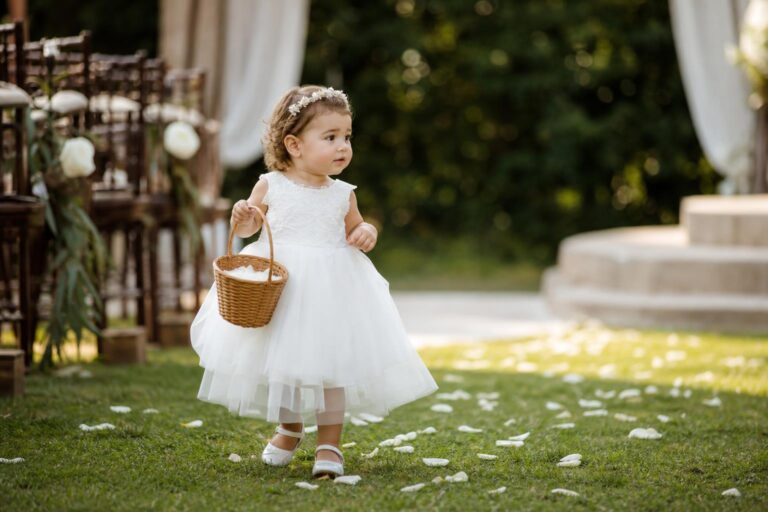
For toddlers and younger children, simplicity usually reads best. A cream satin flower girl dress with satin sash, removable bow, and layered petticoat, like the JoJo Maman Bébé approach, balances sweetness and occasion dressing without pushing too far into miniature ball gown territory.
The reason this works is proportion. Younger children often look most comfortable in dresses that keep the decorative emphasis at the waist or back rather than adding too many surface details. A removable bow is also practical. It allows the family to adjust the look depending on how formal the ceremony feels versus how comfortable the child remains later in the event.
Fit, sizing, and comfort: the details that matter after the photos
Most satin flower girl dress pages emphasize size options, fit notes, and care for a reason. This is a category where tiny differences in fit have a major effect on comfort. A waistband placed correctly can make the dress feel secure and polished. A back zipper can make dressing easier. A petticoat or crinoline can improve shape, but only if the child still moves comfortably.
Catalog-driven brands like JJ’s House and FlowerGirlDresses.com make it easier to compare size and style combinations across multiple dresses, while product-led brands such as Dessy, David’s Bridal, JoJo Maman Bébé, Mia Princess, Mollys Hanger, and InWeddingDress allow you to evaluate specific construction details. In practice, both shopping styles can be useful. One helps you narrow the silhouette; the other helps you judge the final wearability of an individual dress.
Tips for choosing fit with comfort in mind
- Check whether the dress includes a layered petticoat or crinoline, as these change the feel as much as the appearance.
- Notice closures such as a back zipper, which can make dressing smoother on a busy wedding morning.
- If deciding between a fuller gown and a tea-length style, think about how long the child will wear the dress rather than choosing only for the ceremony.
- Use size and color options as a narrowing tool, not just an afterthought, because the best style still needs to work practically on the day.
Care, longevity, and what satin asks of you
Care instructions appear again and again across satin dress listings because this fabric rewards caution. Satin’s polished surface is part of its appeal, but that means families should pay attention to care guidance before the wedding rather than afterward. Product pages from brands such as Dessy, David’s Bridal, JoJo Maman Bébé, and Mia Princess all frame care as part of the purchase decision, not an afterthought.
That matters for two reasons. First, weddings involve long wear, movement, sitting, and often multiple locations within the same day. Second, many flower girl dresses are chosen with the hope that they will still look presentable after the event. The safest approach is to treat care instructions as part of dress selection: if a family wants lower fuss, a simpler satin silhouette may be easier to manage than one with multiple layers, beads, or petal accents.
Tip: choose decoration according to how much upkeep you can handle
A plain satin dress with a sash or bow is often easier to maintain than a design with layered details, colored petals, or beading. Decorative features can be lovely, but they add complexity to both handling and long-day wear. If ease matters, let the satin and silhouette do more of the visual work.
Where shoppers often go wrong
The most common mistake is shopping by decoration before shopping by silhouette. A family falls in love with bows, beads, or colored petals, only to realize later that the skirt is too full for the child or the overall look does not match the tone of the wedding. With satin, the fabric already contributes elegance, so the better order is silhouette first, fabric variation second, embellishment third.
Another frequent misstep is treating all satin as interchangeable. Satin twill, standard satin, and satin paired with tulle do not create the same result. Satin twill is more structured. Satin with tulle is softer and more romantic. A dress labeled simply as satin can still vary widely in how formal or easy-moving it feels.
The final mistake is ignoring the event timeline. A ceremony-only choice may be very different from a ceremony-plus-reception choice. If the child will remain dressed through the full celebration, tea-length hems, lighter volume, and thoughtfully placed details often prove more successful than the most dramatic option.
A practical buying checklist before you commit
- Confirm the fabric direction: satin, satin twill, or satin with tulle.
- Choose the silhouette based on the venue and the child’s movement needs.
- Decide the color in relation to the bridal palette: ivory, white, champagne, or accent-led.
- Review whether bows, beads, petals, or a sash enhance the look or overcomplicate it.
- Check size and fit guidance carefully, especially for fuller skirts and layered understructures.
- Read care information before ordering, not only after purchase.
- Compare whether a single product page or a broader category page gives you the clearest view of options.
Finding the right satin flower girl dress with confidence
The most reliable approach is not chasing the most elaborate dress, but matching the dress to the wedding and the child. Satin remains a classic choice because it offers sheen, drape, and a naturally ceremonial finish. Once you understand whether you want the structure of satin twill, the softness of satin with tulle, or the clean elegance of satin alone, the rest of the decision becomes easier.
From Dessy’s ivory princess line satin twill dress to David’s Bridal’s satin-tulle style with colored petals, from JJ’s House and FlowerGirlDresses.com category browsing to JoJo Maman Bébé’s cream satin sash dress and the tea-length practicality of Mia Princess and Mollys Hanger, the best option is the one that balances formality, comfort, and coordination. That is what makes the dress feel not just beautiful in theory, but right for the wedding day itself.
FAQ
Is satin a good fabric for a flower girl dress?
Yes, satin is a classic choice because it brings sheen, drape, and a clearly formal finish that suits wedding attire. It works especially well when the silhouette and level of structure are chosen carefully for the child’s age, comfort, and the formality of the event.
What is the difference between satin and satin twill in a flower girl dress?
Satin twill generally gives a more structured, tailored feel, which is why it suits formal princess line styles such as the ivory Dessy dress. Standard satin can feel smoother and more fluid, while satin with tulle adds softness and movement to the overall look.
Are tea-length satin flower girl dresses easier for children to wear?
Often, yes. Tea-length satin styles from brands like Mia Princess and Mollys Hanger show why this hemline is popular: it maintains wedding formality while making it easier for children to walk, sit, and move through a long ceremony and reception.
How do I choose between ivory, white, and champagne satin?
Ivory usually feels soft and bridal, white feels crisp and traditional, and champagne brings warmth that suits romantic or evening settings. Satin reflects light noticeably, so it helps to choose the shade that best matches the bridal palette and overall atmosphere of the wedding.
Is satin with tulle better than satin alone?
Neither is automatically better; they simply create different results. Satin alone looks polished and clean, while satin with tulle softens the dress and adds airy movement, as seen in styles from David’s Bridal and InWeddingDress.
What details should I look for if comfort is a priority?
Pay close attention to layered petticoats, crinoline, back zippers, and how full the skirt is, because those details affect comfort as much as the outer fabric. Dresses with manageable volume and practical closures are often easier for long wedding days.
Which brands are useful to compare when shopping for a satin flower girl dress?
Dessy, David’s Bridal, JJ’s House, FlowerGirlDresses.com, JoJo Maman Bébé, Mia Princess, Mollys Hanger, and InWeddingDress each represent slightly different approaches, from structured satin twill and satin-tulle combinations to category browsing and tea-length satin options.
Should I choose bows, beading, petals, or a sash?
Choose embellishments after deciding on the silhouette and fabric direction. Satin already brings visual elegance, so bows, beads, petals, or a sash are best used to support the wedding palette and style rather than carry the entire look.
What should I check before ordering online?
Review size options, color choices, care instructions, and construction details such as skirt volume and closures. Category pages from JJ’s House or FlowerGirlDresses.com can help compare broad options, while individual product pages make it easier to assess the practical details of a single dress.