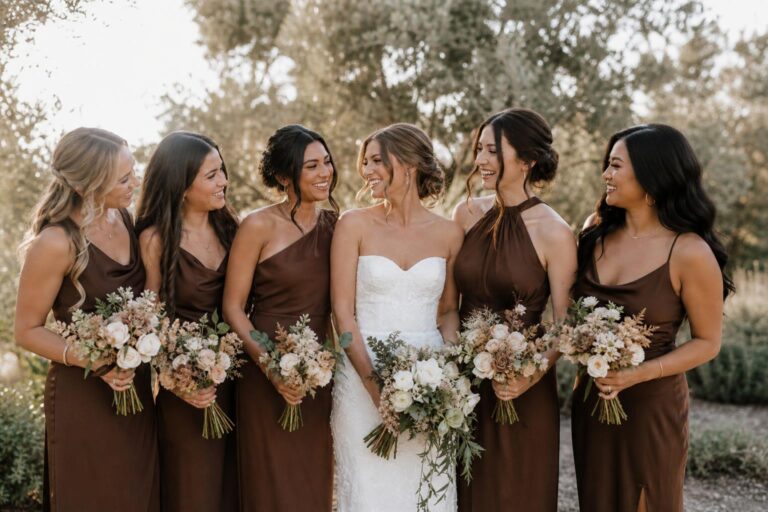
Rose Bridesmaid Dresses for a Romantic Wedding Party
The right rose bridesmaid dresses can solve several styling decisions at once: they feel romantic without being overly sweet, photograph softly in natural light, and offer enough range to suit very different venues, body types, and levels of formality. The challenge is that “rose” does not mean one single shade. A bridal party pinned around dusty rose, English Rose, or rose gold can create completely different moods, especially once satin, chiffon, crepe, lace, or sequin enter the picture. Choosing well means looking at color, texture, silhouette, and logistics together rather than treating the dress as a single isolated choice.
For a garden ceremony, a dusty pink palette in chiffon may read airy and effortless. For a candlelit ballroom, satin or metallic rose gold can feel richer and more formal. For a mixed bridal party, a softer English Rose can bridge pastel romance with practical wearability. This guide walks through those distinctions in a way that is useful for planning, shopping, styling, and actually getting everyone dressed with confidence.
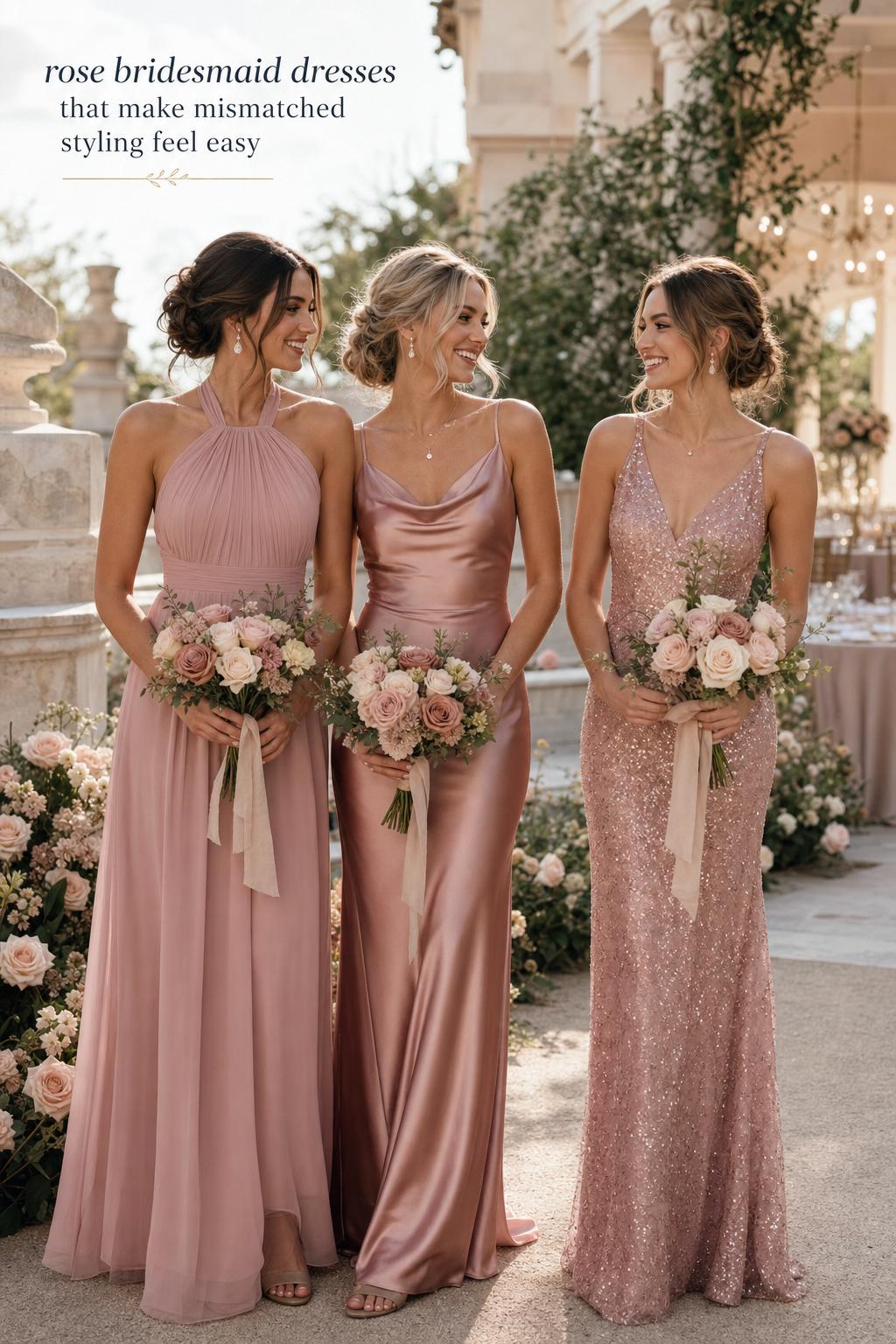
Start here: choose the rose family before you choose the dress
One of the most common mistakes with rose bridesmaid dresses is shopping by silhouette first and color second. In practice, the shade sets the tone of the entire bridal party. It affects florals, jewelry, shoes, venue styling, and how the dresses read in photography. Once the rose family is clear, the right fabric and shape become much easier to narrow down.
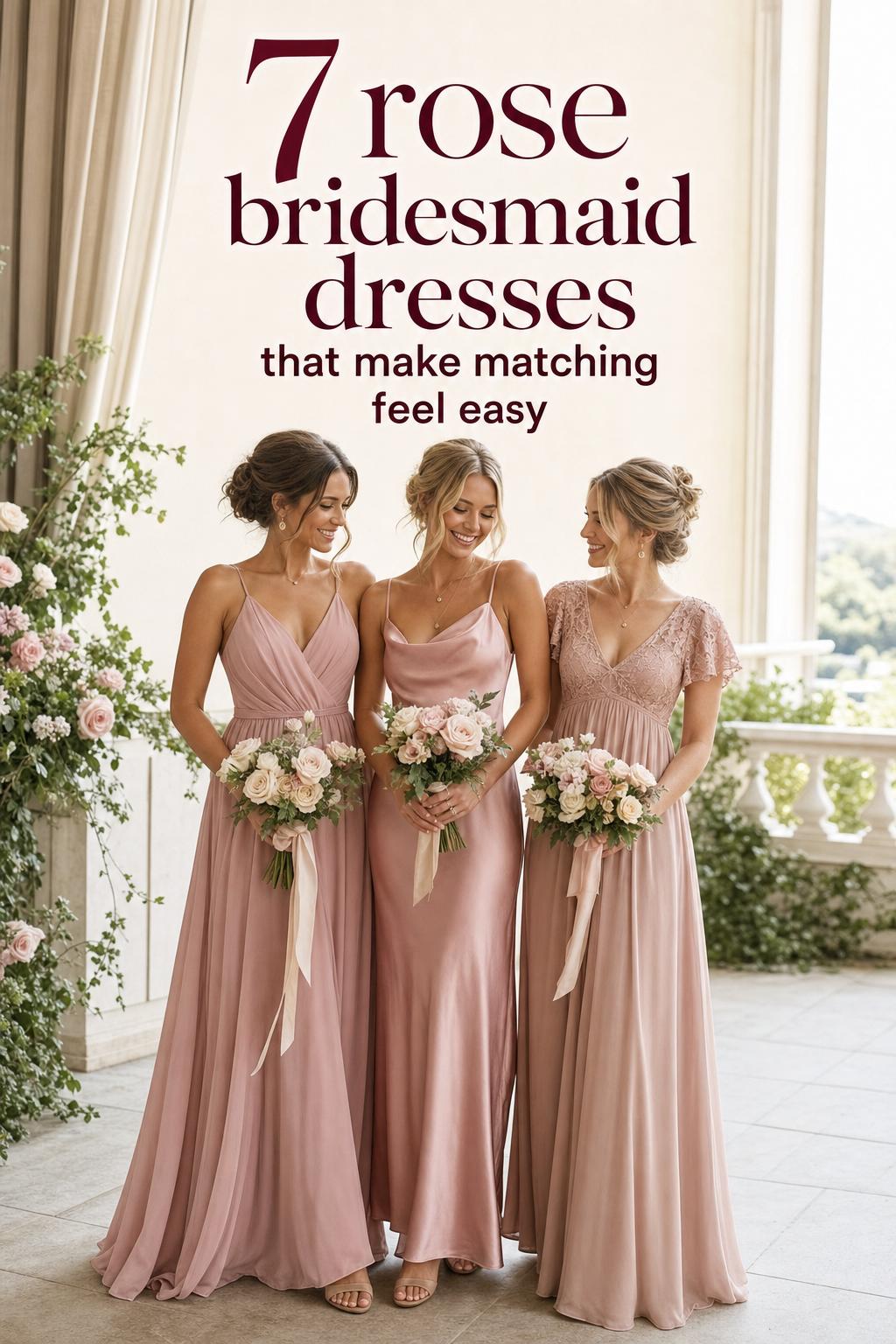
Dusty rose for soft, versatile romance
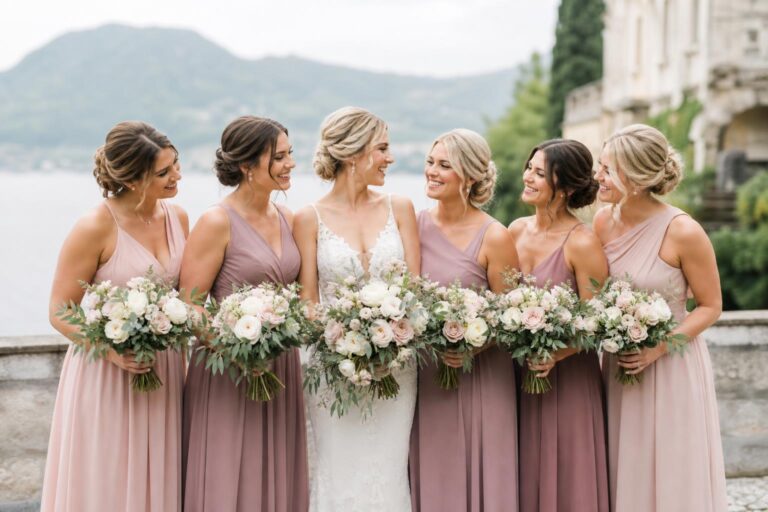
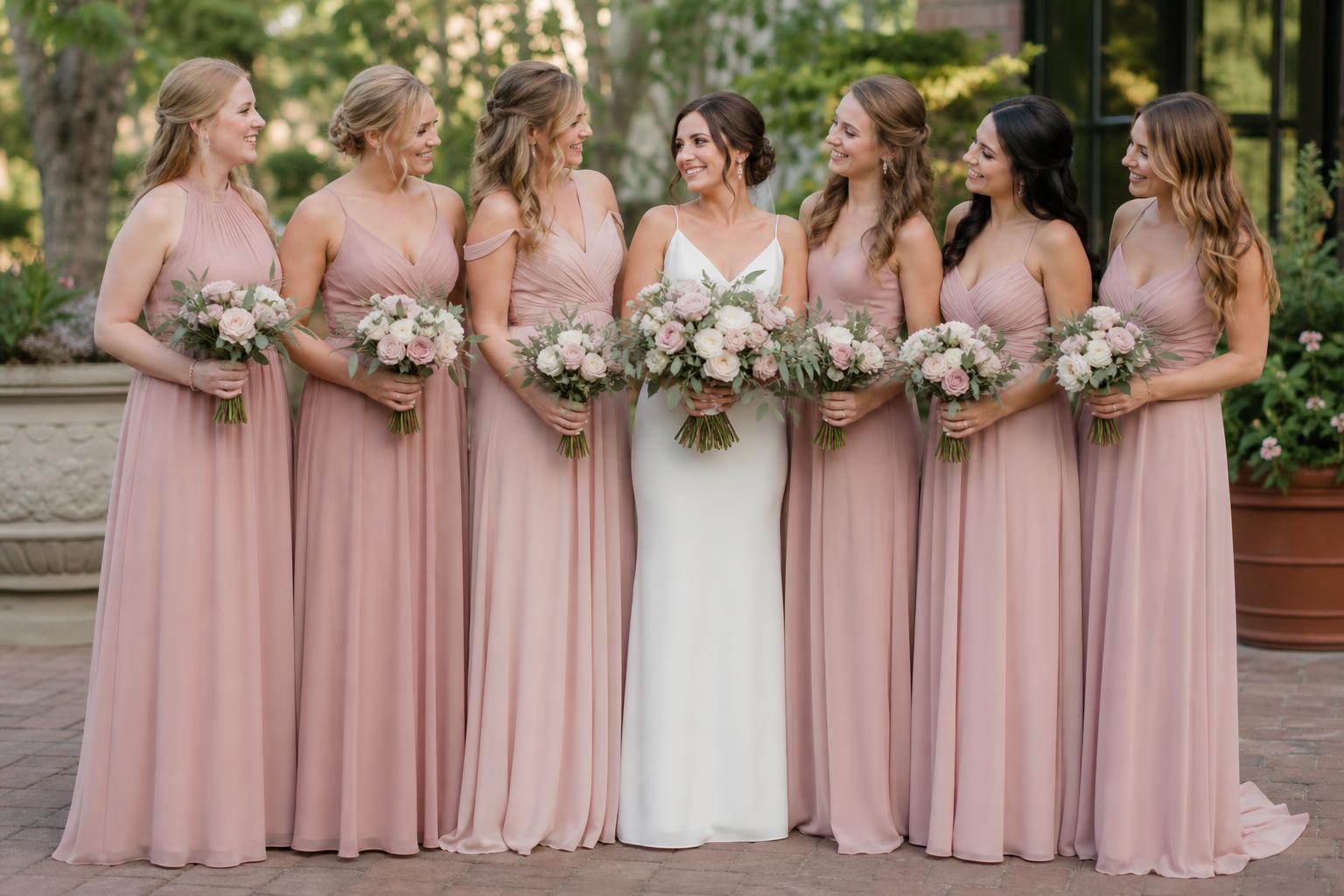
Dusty rose is the most adaptable member of the rose family. It sits in that flattering space between pink and muted neutral, which is why it appears so often across David’s Bridal, Birdy Grey, JJ’s House, and other color-led collections. It works especially well when you want a romantic palette that still feels grounded. In photos, it tends to look softer than a brighter pink, and it pairs naturally with chiffon, satin, tulle, and crepe.
Your wedding look is only the beginning.
Keep your guest list, vendors, timeline, and every important detail together with Zarellea — so your day feels as considered as your style.
Best for: mixed venue styles, broad bridal parties, and weddings where you want color without excessive sweetness.
Works especially well with: taupe accents, rose gold accessories, and floral palettes with blush tones.
Choose this if: you want a shade that feels current but not overly trend-driven.
English Rose for a polished dusty pink look
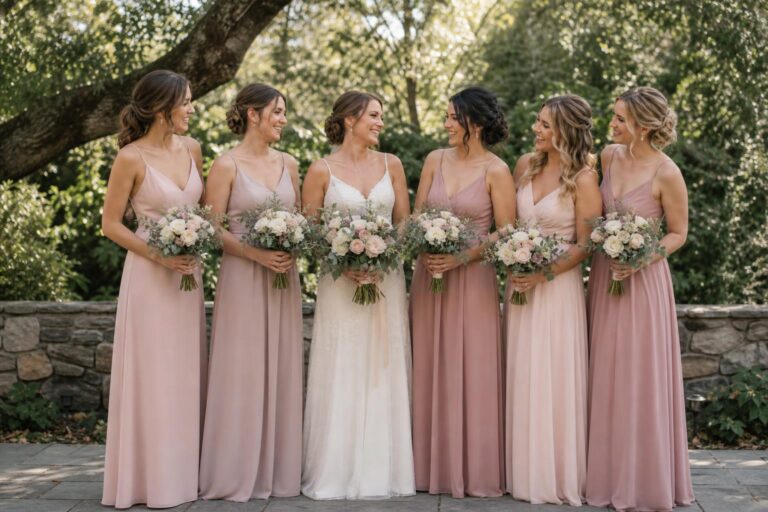
English Rose, as presented by Birdy Grey, leans into a dusty pink mood with a refined softness that feels especially strong in mix-and-match bridal parties. It is a useful option when you want the warmth of rose but with a slightly lighter, more pastel appearance than some dusty rose collections. This shade works beautifully in coordinated but not identical bridesmaid styling, especially when different silhouettes need to coexist without the color looking fragmented.
Style tip: English Rose is particularly effective when you want visual consistency across several dress cuts, because the color itself brings cohesion.
Avoid this: expecting it to behave the same way in every fabric. A satin finish and a chiffon finish can shift how the shade appears.
Rose gold for shimmer and evening formality
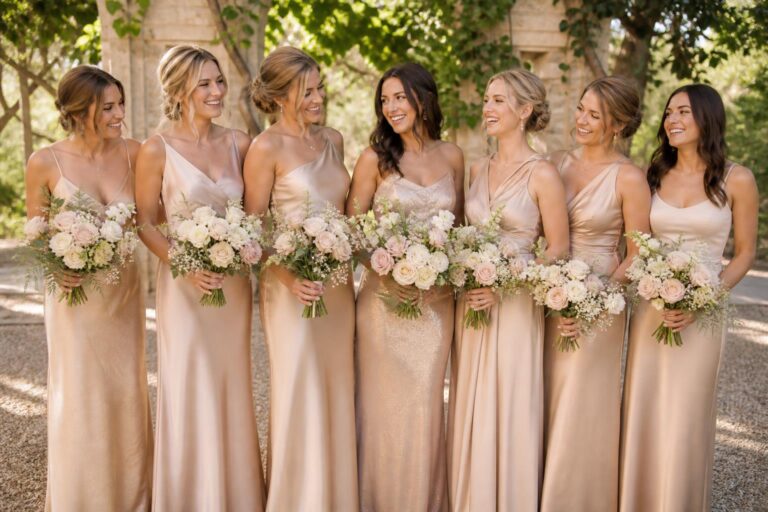
Rose gold moves the palette in a more directional, party-ready way. The Knot’s editorial focus on rose gold bridesmaid dresses makes clear how strongly this shade connects with metallic finishes, sequin textures, and statement styling. Rose gold is less about quiet softness and more about glow, texture, and reception impact. It suits formal weddings, evening celebrations, and bridal parties where a little shine is part of the visual brief.
Best for: black-tie or formal receptions, glamorous venues, and metallic accessory stories.
Pinterest-worthy idea: a candlelit reception with long rose gold dresses catching warm light across the room.
Choose this if: your wedding style leans polished, dramatic, or festive rather than understated.
How to decide between dusty rose, English Rose, and rose gold
The easiest way to choose is to think in scenes rather than swatches. Picture the ceremony space, the light, and the overall mood you want from the bridal party. A rose tone that looks beautiful on a pinned collage may behave differently in an outdoor aisle, a vineyard dinner, or a ballroom reception. Texture matters just as much as hue.
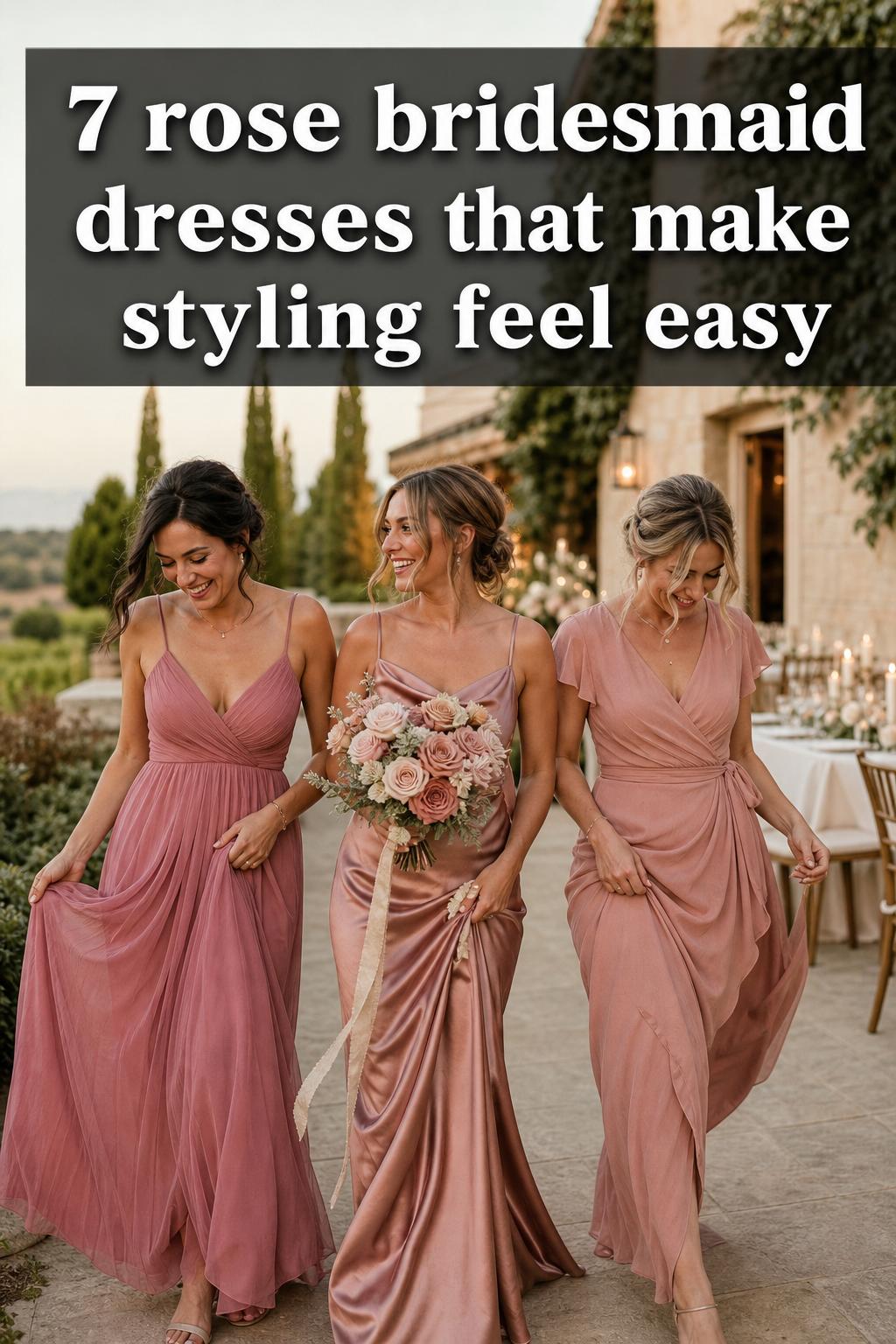
- Choose dusty rose if you want broad versatility across seasons, fabrics, and silhouettes.
- Choose English Rose if you want a dusty pink effect with a softer pastel presence and easy mix-and-match coordination.
- Choose rose gold if you want shimmer, evening energy, and a more fashion-forward formal statement.
A practical way to think about it is emotional temperature. Dusty rose feels balanced and romantic. English Rose feels light, polished, and gentle. Rose gold feels celebratory and elevated. If you are torn between two of them, use the venue and dress code as your tie-breaker. The more relaxed or outdoor the event, the better matte and airy finishes tend to perform. The more formal or evening-based the event, the more room there is for satin and metallic texture.
Fabric changes everything in rose palettes
Two dresses in the same shade family can look surprisingly different once fabric enters the conversation. That is why top color-led collections consistently divide rose bridesmaid dresses by material as well as by hue. Fabric affects movement, shine, comfort, and how a color reads on camera.
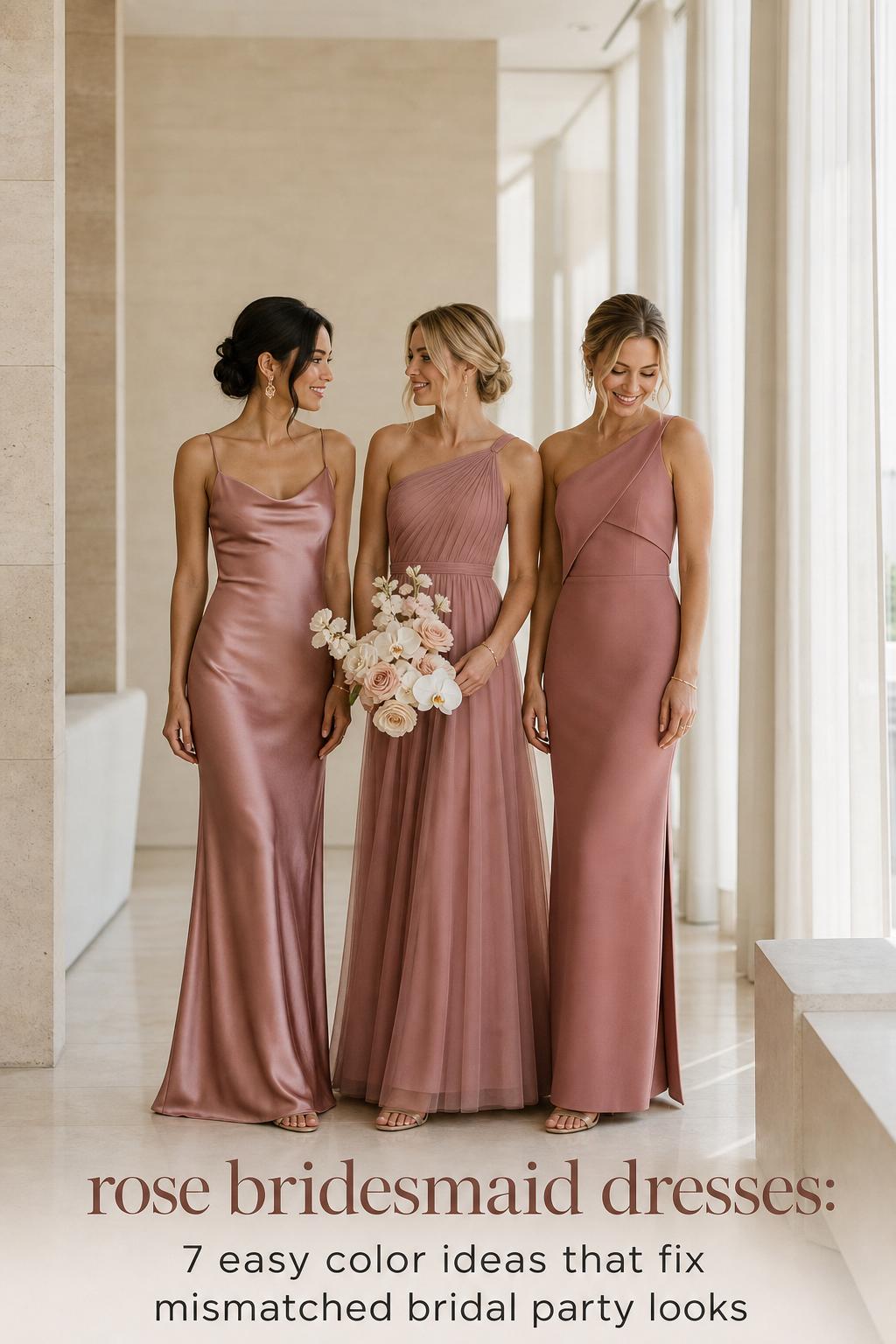
Satin for depth, shine, and a dressier finish
Satin is especially strong in dusty rose and rose-forward palettes because it brings out the richness of the color. David’s Bridal leans into dusty rose satin bridesmaid dresses for exactly this reason: the combination feels modern, romantic, and clearly occasion-specific. Satin has a more reflective surface, so the dress catches light and feels naturally elevated. In a formal setting, that polish can be beautiful.
The trade-off is that satin is less forgiving in terms of fit and can read more structured than airy. It works well when you want a sleek bridal party and when alterations are part of the plan. It is also worth remembering that shine intensifies color, so dusty rose satin may appear richer than the same shade in chiffon.
Best for: evening weddings, formal receptions, and polished silhouettes.
Style tip: keep jewelry refined so the fabric remains the visual focus.
Avoid this: choosing satin purely for trend value if your venue is very casual or hot.
Chiffon for softness, movement, and broad wearability
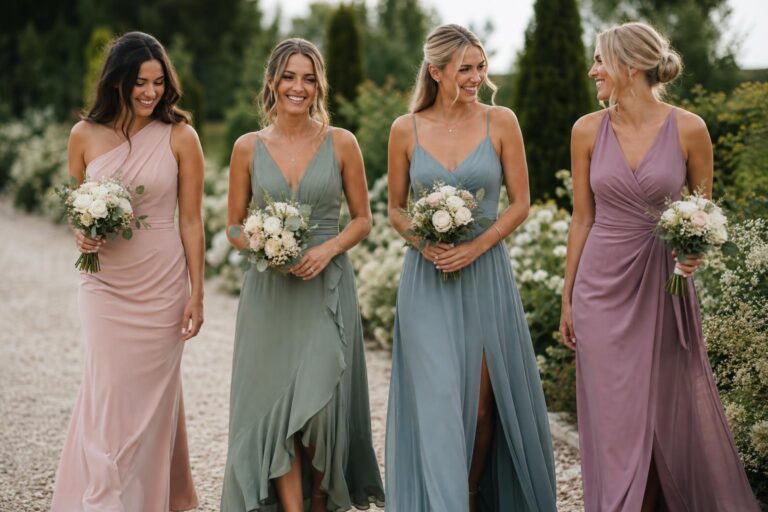
Chiffon is one of the safest and most bridal-party-friendly choices in dusty rose and English Rose. It moves beautifully in outdoor ceremonies, works across many body types, and creates that floating effect people often save to Pinterest boards. In a soft rose tone, chiffon feels romantic without looking heavy. It also helps color read a little lighter and more diffused.
This fabric is especially useful when you want multiple silhouettes in one lineup. Since chiffon has an easy drape, it allows variation in sleeves, necklines, and skirts without making the group feel visually inconsistent. That is one reason it aligns so well with the mix-and-match styling approach seen in Birdy Grey collections.
Crepe and lace when you want texture without high shine
Crepe offers a cleaner, quieter finish than satin while still feeling formal. For bridesmaids who prefer something modern and less floaty, it can be a very smart route in dusty rose. Lace adds detail and softness, particularly when the wedding aesthetic is more romantic or traditional. Neither fabric overwhelms the color, which makes them useful for readers who love rose tones but do not want too much sheen or shimmer.
Sequin and metallic textures for rose gold
Rose gold is where sequin and metallic finishes come alive. These textures do not simply support the shade; they define it. On a formal wedding day, especially one moving into an evening reception, rose gold sequins can feel striking and celebratory. The visual effect is strongest in low, warm light, where the dresses catch movement and create a luminous bridal-party line.
That said, this is a more specific choice. If the ceremony is very understated or the venue is rustic and low-key, too much shine can pull attention in a way that feels mismatched. Rose gold works best when the event itself can support that level of visual energy.
The silhouettes that work best in rose bridesmaid dresses
Once color and fabric are decided, silhouette becomes the tool that makes the bridal party feel comfortable and flattering rather than uniform for the sake of it. The strongest rose bridesmaid dress collections typically include a range of cuts for exactly this reason. A thoughtful bridal party lineup usually looks better with some shape variation than with one dress forced on everyone.
A-line for the easiest all-around choice
If you need one silhouette that works across the widest range of bridal parties, A-line is the most dependable place to start. It creates shape without clinging, works in chiffon and satin, and suits everything from garden ceremonies to hotel receptions. In dusty rose or English Rose, an A-line dress gives that softly romantic outline people often imagine for bridesmaid styling without becoming overly formal.
Mermaid and fitted shapes for a more fashion-led bridal party
Mermaid and other fitted silhouettes can be very effective in satin, crepe, or rose gold finishes when the wedding calls for a sleeker look. They feel more directional and can elevate the overall styling of the bridal party, especially in formal venues. The main consideration is comfort. A long celebration means sitting, walking, standing through photos, and moving into the reception, so the silhouette should feel manageable beyond the ceremony itself.
Choose this if: the dress code is elevated and the bridal party is comfortable in more fitted shapes.
Avoid this: assuming a more fitted look automatically photographs better. Ease of movement affects posture and confidence.
Empire and ballgown-inspired shapes for softness and drama
Empire silhouettes can feel light and romantic, especially in chiffon, while fuller ballgown-inspired skirts bring more presence and formality. These shapes can be beautiful when you want the bridal party to feel more dressed than minimalist. In softer rose shades, fuller silhouettes keep the look romantic rather than severe. In rose gold, they can feel especially statement-making.
Where to shop rose bridesmaid dresses and what each brand does well
Different retailers approach rose palettes in different ways. Some are strongest in fabric-and-color specificity, while others are best for mix-and-match silhouettes or broad catalog range. Understanding that difference can save time and make comparisons more realistic.
- David’s Bridal: especially useful for dusty rose collections and dusty rose satin bridesmaid dresses, with strong practical information around sizing, shipping, alterations, and pricing.
- Birdy Grey: a go-to for English Rose bridesmaid dresses and dusty rose bridesmaid dresses with a clear mix-and-match feel, including color pairing ideas such as taupe, sage, and rose gold.
- JJ’s House: helpful when you want a large dusty rose category with broad filtering by silhouette, fabric, and price bands.
- Azazie: relevant for adjacent pink-led options such as Petal Pink and other color-variant product pages when you are comparing the wider rose family.
- The Knot: especially useful as an editorial source for rose gold direction, designer references, and shopping inspiration rather than one single catalog experience.
- Dessy, Sorella Vita, Adrianna Papell, and Jenny Packham: notable names that appear in rose gold and editorial-style roundups when you are exploring a more brand-aware or designer-led aesthetic.
If logistics matter just as much as look, David’s Bridal and JJ’s House tend to be helpful starting points because the practical shopping details are part of the experience. If your main challenge is curating a coordinated but varied bridal party, Birdy Grey’s color storytelling around English Rose and dusty rose is particularly useful. If the mood board is more glamorous and metallic, The Knot’s rose gold curation helps clarify what that category can look like across brands.
How to style rose dresses so the whole wedding feels cohesive
Rose dresses rarely stand alone. They bring their best effect when the surrounding styling supports the tone rather than competing with it. Accessories, florals, and the venue palette all affect whether the bridal party feels polished or visually confused.
Accessory pairings by shade
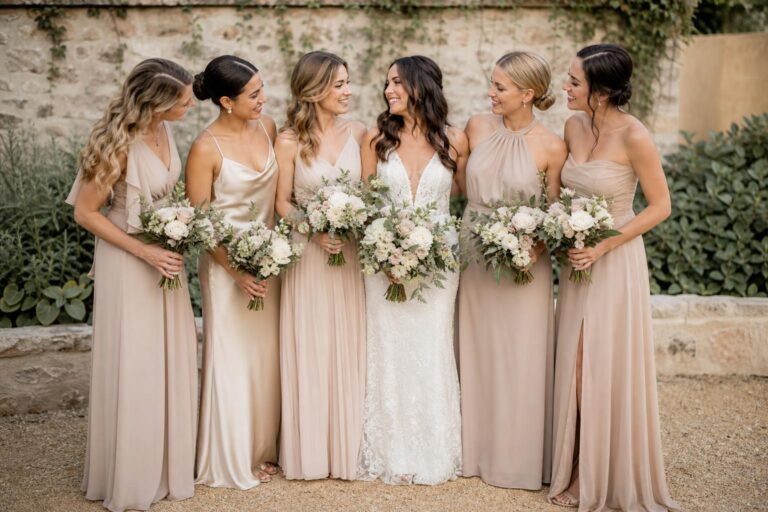
Dusty rose is easy to style because it behaves almost like a softened neutral. It sits comfortably with rose gold jewelry, soft metallic footwear, and understated finishing pieces. English Rose also pairs well with taupe and rose gold, particularly when you want a light, cohesive, pastel-facing bridal party. Rose gold dresses call for more restraint elsewhere; once the dress has shimmer, accessories should support rather than multiply the shine.
Works especially well with: taupe shoes, rose gold jewelry, and bouquets that echo blush and rose tones.
Pinterest-worthy idea: matte dusty rose chiffon dresses with warm metallic earrings and bouquets in layered blush shades.
Florals and color pairing without overloading the palette
Rose palettes are at their most elegant when there is tonal variation rather than perfect color matching in every detail. A bridal party in dusty rose does not need every flower, ribbon, and accent to repeat the exact same shade. Instead, use neighboring tones such as blush-inspired florals and soft neutrals to give the palette depth. Birdy Grey’s emphasis on pairings like taupe, sage, and rose gold shows how helpful contrast can be inside a rose-led wedding story.
Avoid this: forcing every wedding element into one exact rose tone. The result can feel flat rather than romantic.
Style tip: let the dresses anchor the color story, then add supporting shades that soften or elevate them.
Venue and lighting considerations that change how rose reads
Lighting is one of the most practical and most overlooked parts of choosing rose bridesmaid dresses. A soft dusty rose can look muted and elegant in daylight but richer in evening light, especially in satin. Rose gold becomes more dramatic as the light warms and lowers. This matters for photography, but also for how the dresses feel in the room. An outdoor ceremony, a coastal setting, a candlelit reception, and a ballroom all pull different qualities from the same color family.
For day weddings and open-air venues, chiffon and matte finishes often keep rose shades looking gentle and effortless. For formal interiors and evening receptions, satin and metallic textures tend to look more intentional and luxurious. If your day includes both environments, think about how the fabric transitions from ceremony to reception rather than focusing only on a single moment.
Seasonality, dress code, and the wedding setting
Rose tones are often described as universally wearable, but they still perform differently depending on season and setting. The shade may be stable, yet the fabric weight, finish, and styling can make the difference between a bridal party that looks effortlessly placed and one that feels slightly off.
Garden, vineyard, and outdoor ceremonies
A garden ceremony calls for soft silhouettes and breathable fabrics. Dusty rose and English Rose are especially strong here because they complement natural surroundings without competing with them. Chiffon and lighter constructions help the dresses move beautifully during walking shots and outdoor portraits. The overall effect is romantic, polished, and easy to imagine against florals and greenery.
Formal evening receptions and ballroom weddings
For a more formal evening setting, richer textures and higher shine generally feel more at home. Dusty rose satin bridesmaid dresses offer elegance without going full metallic, while rose gold adds unmistakable glamour. A candlelit ballroom or refined hotel reception can support those dressier surfaces in a way that an ultra-casual venue may not.
Mixing seasons with rose palettes
One reason dusty rose and English Rose remain so useful is that they do not lock you into one narrow seasonal look. Their muted quality makes them easier to adapt with fabric, accessories, and styling changes. Rose gold is more specific, but that specificity can be an advantage when the event leans celebratory and formal. If the season is shifting or the weather is unpredictable, prioritize comfort and movement first, then use accessories to tune the level of formality.
How to make mixed bridal party styling look intentional
Many bridal parties no longer want identical dresses, and rose palettes are especially well suited to that approach. The key is to vary one element while keeping the others stable. In practice, that usually means holding the color family steady and allowing silhouette changes, or staying within a tight fabric group and letting tone shift slightly across the rose spectrum.
- Keep everyone in one color family such as dusty rose or English Rose, then vary necklines and sleeve details.
- Use one fabric, especially chiffon, if you want several silhouettes to feel cohesive.
- Reserve high-shine satin or sequin for all dresses or just one clear styling direction rather than mixing too many surface finishes at once.
- Coordinate accessories lightly so the bridal party looks connected but not rigidly matched.
This is where Birdy Grey’s mix-and-match approach is especially instructive. A bridal party can look more modern and more flattering when each person has some autonomy over cut and fit, while the color tells the common story. That balance tends to feel elegant in person and more natural in photos.
Fit, sizing, shipping, and alterations: the practical side that affects the final look
Even the most beautiful rose palette will fall short if the planning side is rushed. The strongest product pages in this category consistently include sizing, shipping, returns, and alteration guidance because these details shape the success of the bridal party as much as color does. A dress that arrives late or fits poorly does not become easier to manage simply because the shade is right.
David’s Bridal and similar retailers make this especially clear through shipping and alteration information, while broad catalog sites like JJ’s House foreground filters, lead times, and customization options. For U.S. shoppers comparing brands, those practical differences matter. A satin dress may need more careful tailoring than chiffon. A fitted silhouette may be less flexible than A-line if measurements shift. Large bridal parties should make these choices early enough for adjustments rather than treating alterations as an afterthought.
Best for: organized planning timelines and bridal parties with varied sizing needs.
Style tip: decide color and fabric before ordering, then use silhouette and fit to personalize within those boundaries.
Avoid this: mixing very different retailers too late in the process without checking how their sizing and shade names compare.
A few styling mistakes to avoid with rose bridesmaid dresses
Rose is forgiving, but it still benefits from editing. Most missteps happen when too many competing ideas are layered together: too many finishes, too much exact color matching, or a dress style that suits the mood board more than the actual venue.
- Do not confuse soft color with casual formality. A dusty rose dress can still look formal in satin or structured crepe.
- Do not ignore fabric behavior. The same shade in chiffon and satin can feel like two different colors.
- Do not over-style rose gold. If the dress has metallic or sequin impact, the accessories should stay disciplined.
- Do not force one silhouette on every bridesmaid. Rose palettes look strongest when the fit feels confident and comfortable.
- Do not treat photography as an afterthought. Lighting and venue tone influence how the rose family reads throughout the day.
Real-world rose palette scenarios that help narrow the choice
Sometimes the easiest way to decide is to imagine the bridal party in a fully formed setting rather than in a product grid. A few realistic style scenarios can make the differences between these options feel much clearer.
The soft outdoor wedding
Picture an outdoor ceremony with natural daylight and a romantic floral setting. Dusty rose chiffon dresses in varied A-line and empire silhouettes create movement, comfort, and a gentle wash of color. Rose gold jewelry and soft bouquets complete the look without pulling focus. This setup is ideal when you want classic romance and broad wearability.
The modern mix-and-match bridal party
In this version, English Rose becomes the anchor. Some bridesmaids choose sleeves, others a cleaner neckline, but the color keeps the group cohesive. Taupe footwear and restrained accessories help everything feel quiet and editorial. This works especially well when personal fit and comfort are priorities and the bridal party wants individuality without visual clutter.
The formal evening celebration
For a candlelit reception or dressier venue, dusty rose satin or rose gold dresses create more impact. A sleek line of satin gowns can feel refined and luxurious, while rose gold sequins push the aesthetic into full evening glamour. This is where surface finish becomes part of the atmosphere itself, reflecting warm light and adding energy to the room.
Pinterest-worthy ideas to save for later
If you are building a mood board, save combinations rather than isolated dress images. The most useful references show color, fabric, accessories, and venue mood working together. That is what helps translate inspiration into a cohesive wedding day look.
- Dusty rose satin bridesmaid dresses with minimalist rose gold jewelry for a formal reception.
- English Rose chiffon dresses in mixed silhouettes with taupe shoes for a polished pastel bridal party.
- Dusty rose and soft blush-inspired florals for an outdoor ceremony with natural light.
- Rose gold sequin bridesmaid dresses for a glamorous evening reception.
- One color family, several neckline options, and coordinated bouquets for a modern mix-and-match lineup.
- Matte fabrics for the ceremony and warm metallic accents for the reception transition.
Pinterest-worthy idea: create one board for color swatches, one for fabric texture, and one for full bridal party scenes. Looking at all three together is often what reveals whether your preferred rose direction is airy, polished, or high-glamour.
Final checklist before you choose
Before placing an order, pause and check whether the dresses truly fit the wedding you are planning, not just the image you first saved. Rose bridesmaid dresses work best when color, fabric, silhouette, and logistics support one another.
- Is your chosen rose family right for the venue and level of formality?
- Does the fabric make sense for the season, lighting, and comfort of a full wedding day?
- Are you allowing enough silhouette flexibility for a mixed bridal party?
- Do accessories and florals support the dresses rather than duplicate them too literally?
- Have you checked shipping, sizing, and alteration timing across the retailer you chose?
If you want the safest all-around option, dusty rose in chiffon or a soft A-line shape is difficult to regret. If your priority is a refined pastel look with mix-and-match potential, English Rose is a beautiful direction. If the wedding calls for shimmer and stronger evening presence, rose gold has a clear place. The most stylish choice is the one that looks cohesive in the room, flattering on the people wearing it, and practical enough to carry through the entire celebration with ease.

FAQ
What is the difference between dusty rose and English Rose bridesmaid dresses?
Dusty rose usually reads as a muted, versatile rose tone that can lean richer or softer depending on fabric, while English Rose is often presented as a dusty pink shade with a lighter, more pastel-facing feel. Both are romantic, but English Rose tends to feel slightly softer and especially useful for mix-and-match bridal party styling.
Are rose gold bridesmaid dresses too flashy for a wedding?
Not necessarily, but they are best when the venue and dress code support a dressier look. Rose gold works particularly well for formal ceremonies, evening receptions, and glamorous settings where metallic or sequin finishes feel intentional rather than out of place.
Which fabric is best for rose bridesmaid dresses?
The best fabric depends on the wedding setting and the look you want. Chiffon is one of the easiest and most broadly flattering choices for soft movement and comfort, satin gives rose shades more depth and polish, crepe offers a cleaner formal finish, and sequin or metallic textures are especially effective in rose gold.
Do rose bridesmaid dresses work for different body types?
Yes, especially when the bridal party is allowed some silhouette flexibility. Rose tones themselves are adaptable, and shapes such as A-line, empire, and selected fitted styles can all work well depending on comfort, fabric, and the level of structure each person prefers.
Which brands are popular for rose bridesmaid dresses in the U.S.?
David’s Bridal, Birdy Grey, JJ’s House, and Azazie are all relevant names for color-led bridesmaid dress shopping, while The Knot is a useful editorial source for rose gold inspiration and designer roundups. Designer and brand references such as Dessy, Sorella Vita, Adrianna Papell, and Jenny Packham also appear in rose-focused shopping inspiration.
How do I style accessories with dusty rose bridesmaid dresses?
Dusty rose pairs especially well with rose gold jewelry, taupe footwear, and bouquets in blush-inspired tones. The shade is soft enough to support metallic accents without feeling overdone, which makes it one of the easiest rose options to coordinate across shoes, jewelry, and flowers.
Are satin rose bridesmaid dresses harder to fit than chiffon?
Satin often requires a little more attention to fit because its surface and structure can make tailoring details more noticeable. Chiffon is usually more forgiving and easier for mix-and-match bridal parties, while satin offers a dressier finish that may be worth the extra precision for formal weddings.
What shade of rose photographs best?
That depends on lighting and fabric, but dusty rose is often one of the easiest shades to photograph because it feels soft and balanced in many settings. Satin can make any rose tone appear richer, while chiffon tends to soften the effect. Venue light, natural daylight, and evening warmth all influence the final result.
Can I mix dusty rose, English Rose, and rose gold in one wedding?
Yes, but it works best when one shade leads and the others support. For example, dusty rose or English Rose can anchor the dresses while rose gold appears in jewelry or accents. Mixing all three as equal dress colors can become visually busy unless the palette is tightly controlled.