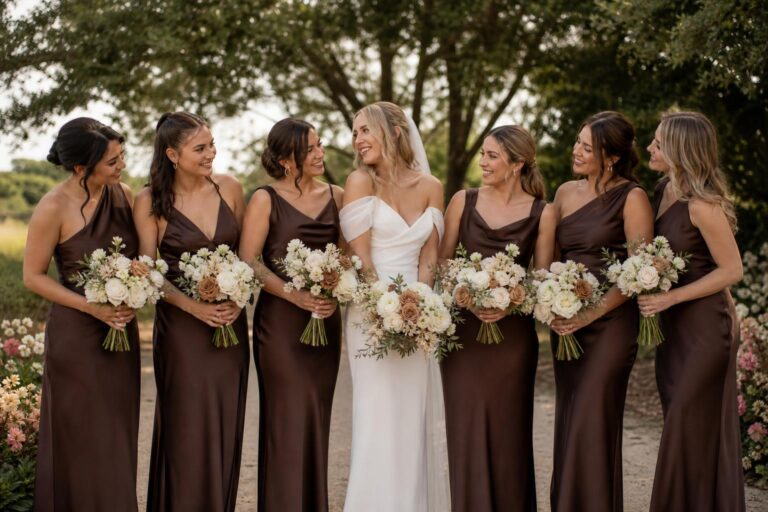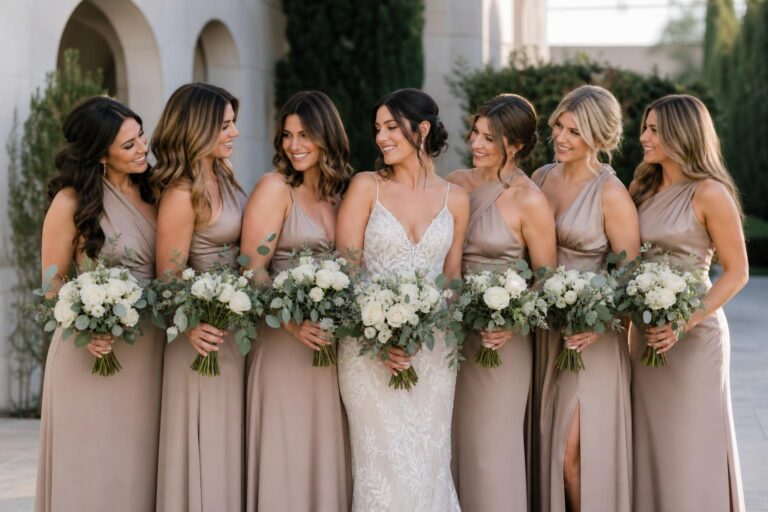

Why Vintage Bridesmaid Dresses Feel Timeless Now
Scroll through wedding inspiration long enough and the phrase vintage bridesmaid dresses begins to mean several different things at once. Sometimes it points to true vintage pieces found through resale or consignment. Sometimes it describes new gowns with Art Deco beading, Old Hollywood drape, 1950s tea-length charm, or 1960s clean lines. That overlap is exactly why vintage and vintage-inspired bridesmaid style are so often discussed together, and so often confused.
For a bridal party, the distinction matters. A candlelit ballroom reception asks for a different interpretation of vintage than a garden ceremony at golden hour. Fabric, silhouette, color, and even how a dress moves through a full day of celebrations can change whether a look feels authentically romantic or simply costume-like. The best styling choices tend to be the ones that understand both the reference and the reality of a modern wedding day.
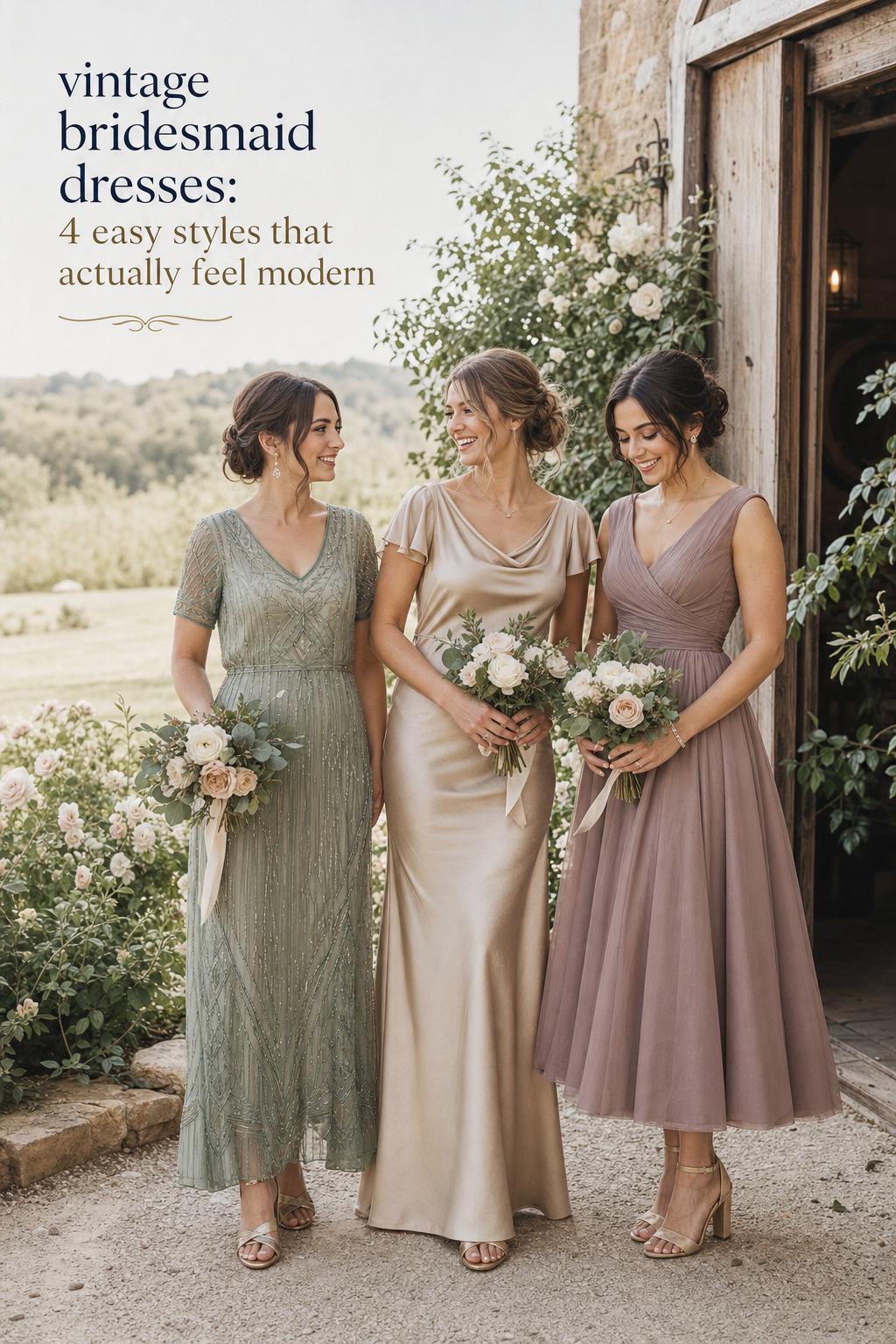
This comparison breaks down the major approaches to vintage bridesmaid dressing: true vintage versus vintage-inspired, and within that, the visual language of 1920s Art Deco, 1930s and 1940s glamour, 1950s tea-length romance, and 1960s mod restraint. Along the way, it also compares how brands such as JJ’s House, Azazie, Dessy, ModCloth, Deco Weddings, The RealReal, and vintage-forward names like Tab Vintage, Happy Isles, and Unique Vintage fit into the picture.
Two meanings of vintage: true vintage vs. vintage-inspired
The first and most useful comparison is not between decades but between sourcing approaches. True vintage generally refers to pre-owned dresses and resale finds, an area associated with platforms such as The RealReal and with the broader conversation around sustainability and circular fashion. Vintage-inspired, by contrast, refers to newly made dresses that borrow recognizable details from earlier eras. In the current U.S. bridal market, many shoppers encounter this second category through retailers like JJ’s House, Azazie, Dessy, ModCloth, and Deco Weddings.
Your wedding look is only the beginning.
Keep your guest list, vendors, timeline, and every important detail together with Zarellea — so your day feels as considered as your style.
They belong in the same conversation because they can create a similar mood, but they behave differently in practice. A true vintage dress can feel singular, emotionally resonant, and aligned with a more sustainable bridal wardrobe. A vintage-inspired dress is usually easier to source in coordinated sizes, fabrics, and colors for a full bridal party. For bridesmaids, that difference often decides the direction long before anyone settles on accessories.

Style overview: true vintage bridesmaid dressing
True vintage is defined by originality, character, and a sense of fashion history. Depending on the era, silhouettes may be beaded and fluid, bias-cut and refined, tea-length and structured, or mod and minimal. Color can range from soft bridal-adjacent shades such as ivory, champagne, sage, and mauve to deeper or more unusual tones discovered through resale. The mood is often personal rather than perfectly uniform, which is part of its appeal.
Its strongest visual qualities are authenticity and nuance. Lace may look more delicate, satin may carry a different depth, and embellishment may feel less standardized than it does in mass retail. But that beauty comes with variables: condition, sizing differences, tailoring needs, and limited quantities.
Style overview: vintage-inspired bridesmaid dressing
Vintage-inspired style translates the romance of earlier decades into dresses made for contemporary shopping habits and group coordination. This is where chiffon, satin, lace, familiar bridesmaid silhouettes, broad color ranges, and standardized size guides become especially useful. Brands like Azazie, JJ’s House, and Dessy tend to present vintage as a filter or theme, while ModCloth leans into a more retro, personality-led presentation and Deco Weddings focuses more tightly on 1920s-inflected glamour.
The aesthetic mood is polished and adaptable. A dress can nod to Art Deco or Old Hollywood without requiring historical precision. That flexibility is ideal when one bridal party needs multiple sizes, venue-specific practicality, and a cohesive visual story across ceremony, portraits, dinner, and dancing.
How the vintage eras compare in bridesmaid style
Once the sourcing question is clear, the next comparison is visual. Vintage bridesmaid dresses are often grouped together, yet the difference between a 1920s reference and a 1950s reference is substantial. The silhouette alone changes the atmosphere of the wedding party.
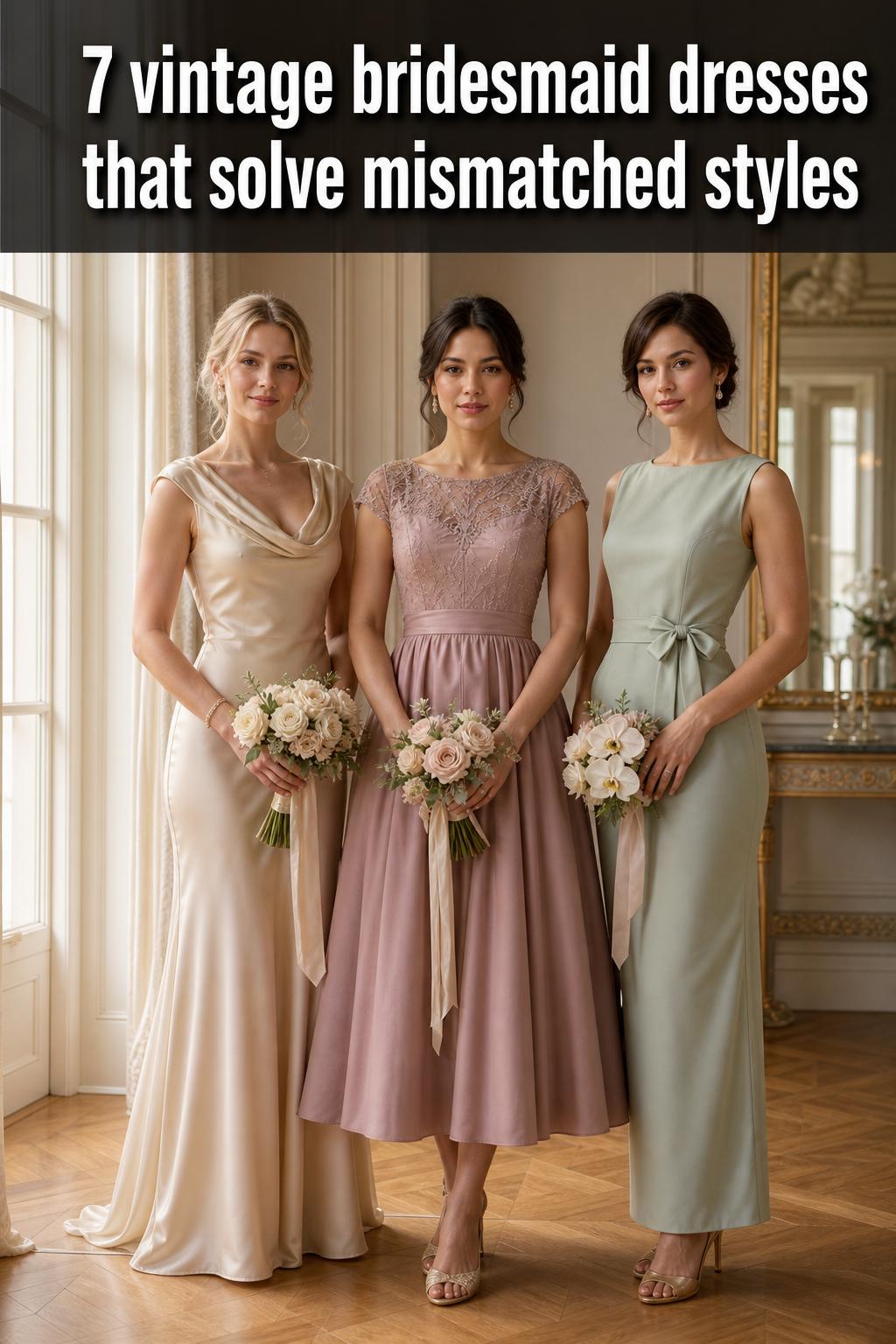
1920s Art Deco and flapper influence
This is the most decorative branch of vintage bridesmaid style. The signature details are beading, embellishment, fringe, and a clear Art Deco sensibility. The mood is glamorous, graphic, and evening-focused rather than pastoral. Deco Weddings sits closest to this niche, offering a more direct route into 1920s-inspired bridesmaid dressing.
Visually, this style tends to feel strongest in formal venues. Think historic interiors, ballroom settings, or receptions that come alive under candlelight. A dropped-waist or beaded gown can look exquisite in motion, but it needs restraint elsewhere. Hair, jewelry, and shoes should support the era reference without overwhelming it.
1930s and 1940s glamour
This is a softer, sleeker version of vintage. The key idea is elegance through line rather than embellishment. Bias-cut influence, fluid drape, and a more refined silhouette define the mood. Compared with 1920s styling, 1930s and 1940s glamour reads quieter and more cinematic, with less sparkle but more shape.
For bridesmaids, this approach works beautifully when the bride wants vintage without overt costume cues. Satin and chiffon become especially important here because drape does much of the visual work. It is often the easiest vintage direction to adapt for modern formal weddings because it still feels timeless rather than theme-driven.
1950s tea-length romance
The 1950s interpretation brings more structure and more sweetness. Tea-length hemlines, fuller skirts, and defined waists create a look that feels charming, celebratory, and unmistakably romantic. Vintage Dancer’s historical framing around mid-century bridesmaid style helps clarify why this era remains so appealing: it is legible at first glance and still easy to wear when thoughtfully chosen.
This is a particularly attractive option for daytime weddings, garden ceremonies, and venues with a lighter atmosphere. It carries presence in photographs without relying on heavy embellishment. The trade-off is that proportion matters. If the skirt volume, shoe choice, and accessories are not balanced, the result can skew overly theatrical.
1960s mod and mid-century modern restraint
The 1960s branch is cleaner, sharper, and less overtly romantic on first impression. Shift-like shapes, simpler lines, and a more edited silhouette define the look. Compared with the 1950s, there is less emphasis on a cinched waist and more attention to graphic balance and ease.
In a bridal party, this style suits couples who want vintage references without softness dominating the visual story. It can work especially well in urban settings and contemporary venues where an overtly nostalgic look might feel out of place. The overall effect is still vintage, but in a more disciplined and less decorative way.
Modern reinterpretations from current brands
Most bridesmaids are not dressing for historical reenactment; they are dressing for real weddings with timelines, budgets, weather shifts, and photographs in mind. That is why modern reinterpretations matter. JJ’s House and Azazie present vintage through searchable themes, silhouettes, fabrics, and color filters. Dessy brings a designer-led perspective, including color stories like Vintage Primrose Sage. ModCloth offers a more retro personality, while Deco Weddings narrows in on period mood more specifically.
These interpretations borrow the most wearable parts of a decade and soften the rest. That usually makes them easier for mixed-size bridal parties, easier to coordinate across venues such as garden and ballroom settings, and easier to rewear after the wedding.
The key differences at a glance
- Silhouette and structure: 1920s looks are more embellished and fluid; 1930s and 1940s styles rely on drape; 1950s dresses emphasize shape and tea-length romance; 1960s styling is cleaner and more linear.
- Color palette: soft vintage palettes such as ivory, champagne, sage, and mauve appear across many vintage-inspired collections, while resale and consignment may offer less standardized but more distinctive options.
- Level of formality: Art Deco beading and Old Hollywood satin often suit formal receptions, while tea-length mid-century styles can feel more natural at daytime celebrations and gardens.
- Styling philosophy: true vintage values individuality and history; vintage-inspired values coordination, availability, and practical consistency for bridal parties.
- Typical pieces: beaded gowns, bias-cut satin, lace dresses, chiffon silhouettes, and tea-length shapes all live under the vintage umbrella, but they create very different bridal party moods.
The most common mistake is to treat all vintage references as interchangeable. A bridal party in sage chiffon with subtle retro lines communicates something completely different from one in heavily embellished flapper-inspired dresses. Both are vintage-adjacent, but they belong to different visual stories.
Fabric tells the story before accessories do
When vintage bridesmaid dresses work beautifully, fabric is usually doing more than readers first notice. Chiffon, satin, and lace appear again and again because they are the clearest shorthand for romance, softness, and period influence. Yet they do not communicate the same version of vintage.
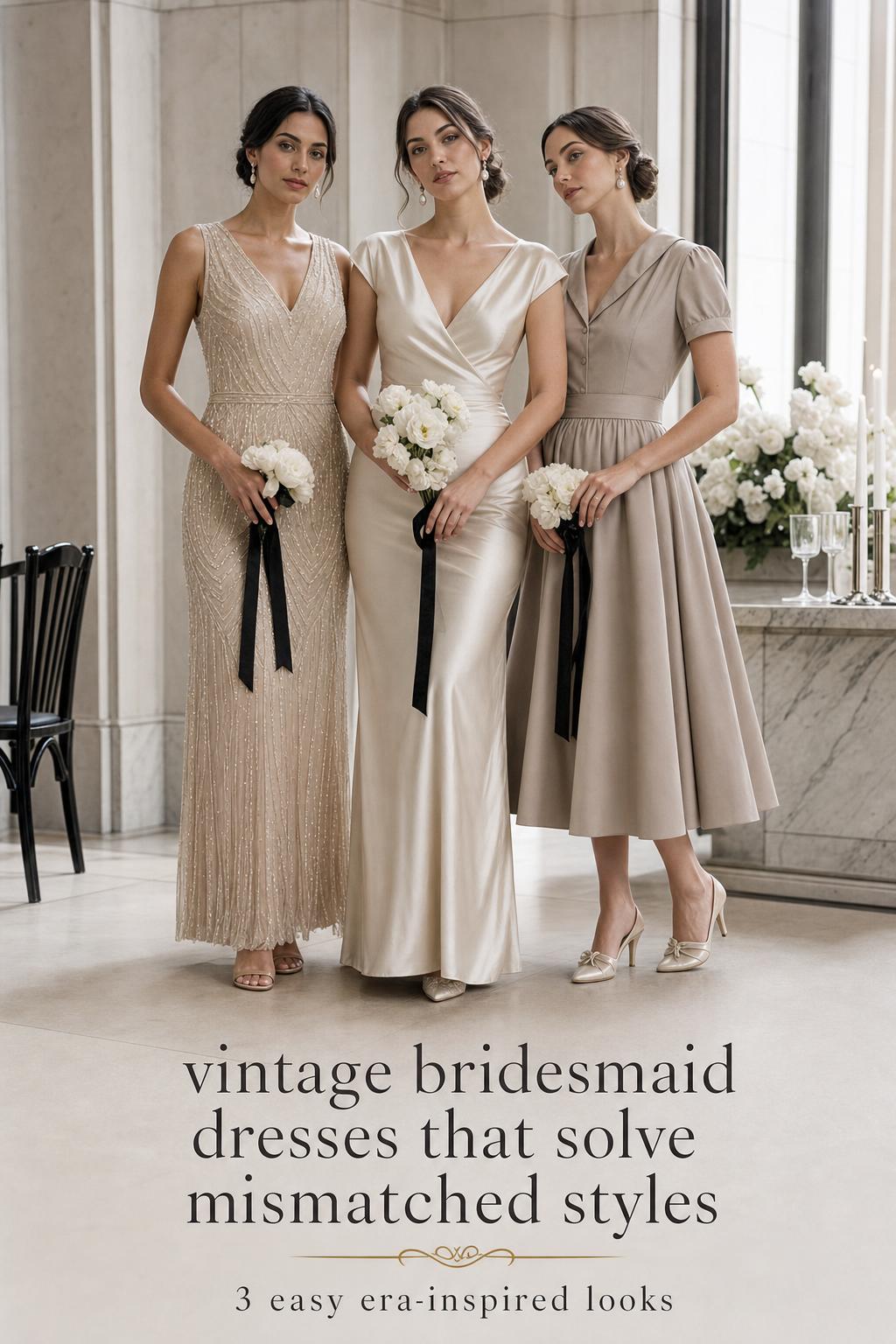
Chiffon: the easiest route to a softer vintage mood
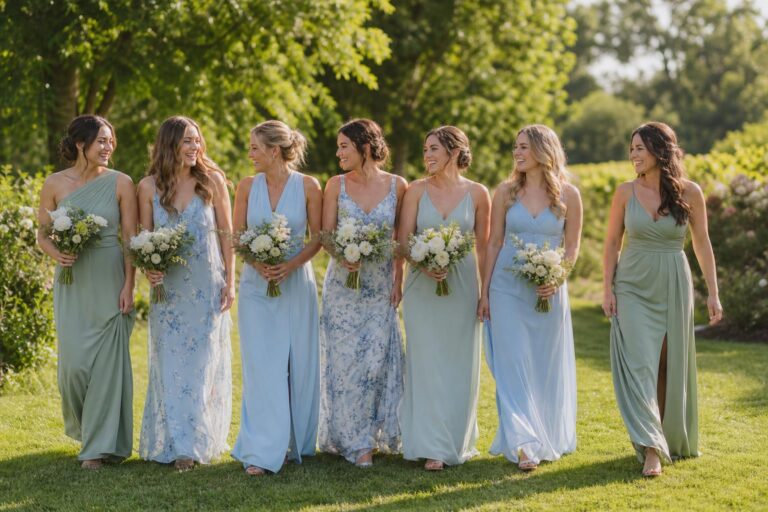
Chiffon is especially effective when the bridal party wants movement and lightness. It suits garden ceremonies, outdoor portraits, and warmer-weather weddings where breathability matters. In vintage-inspired collections from retailers like JJ’s House and Azazie, chiffon often acts as the bridge between a nostalgic silhouette and modern comfort.
Compared with satin, chiffon reads less formal and more ethereal. It is often the better choice for bridesmaids who need ease over a long day, especially if the wedding includes outdoor transitions or a relaxed reception atmosphere.
Satin: vintage glamour with more polish
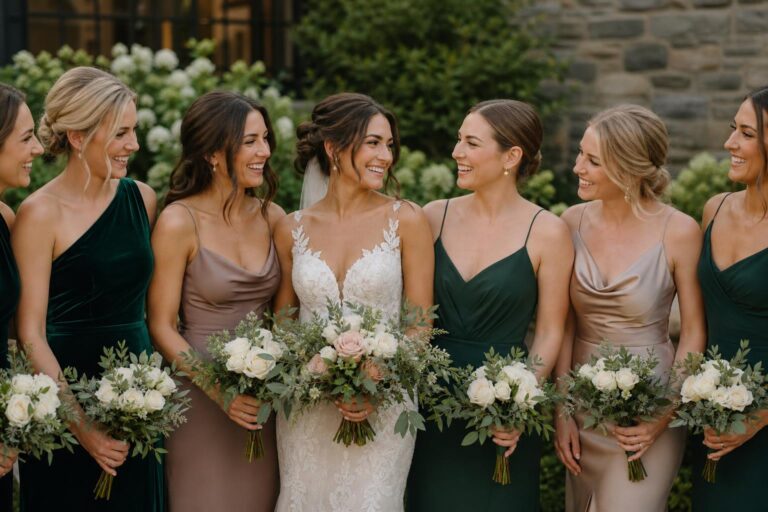
Satin carries more weight visually, which makes it ideal for 1930s and 1940s-inspired glamour or for a more elevated interpretation of vintage at an evening wedding. It reflects light in a way that feels refined in ballrooms and indoor receptions, where structure and sheen read especially well in photographs.
The trade-off is that satin can feel less forgiving in fit and movement. For bridesmaids, that means tailoring and proper sizing become more important. It is often worth the effort when the wedding mood is polished and formal, but less essential for a breezier countryside or garden setting.
Lace and embellishment: where vintage becomes more explicit
Lace, beading, sequins, and decorative details move a dress closer to a clearly recognizable vintage reference. Weddingomania’s editorial approach reflects this well, often connecting vintage style to 1920s sparkle or 1950s lace romance. These details can be beautiful, but they require editing. The more decorative the dress, the more disciplined the rest of the styling should be.
For bridal parties, embellishment works best when used with intention. One historic mansion or formal ballroom may invite it. A sunlit outdoor ceremony may call for a lighter hand, where the dress still nods to the past without competing with the setting.
Color comparison: soft vintage palettes vs. richer retro tones
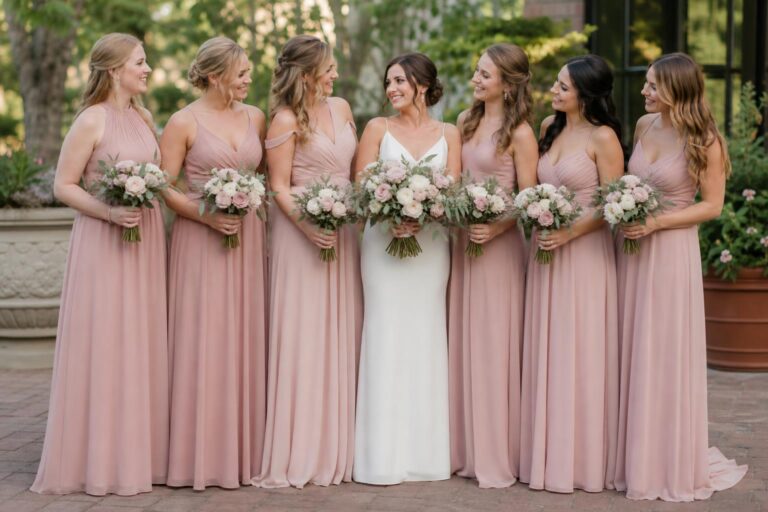
Color is one of the most practical ways to separate a romantic vintage look from a stronger retro statement. Across current collections, softer shades such as ivory, champagne, sage, and mauve recur because they translate vintage ideas into a bridal context with ease. These tones feel harmonious in weddings and work especially well across chiffon, satin, and lace.
Dessy’s Vintage Primrose Sage direction shows how color alone can carry part of the vintage message. It suggests nostalgia without requiring a heavily stylized silhouette. That is useful for brides who want a timeless bridal party rather than a literal period reference.
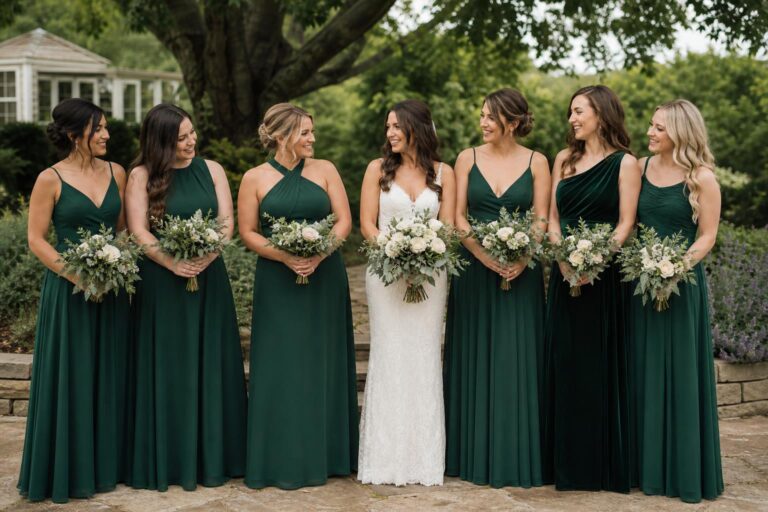
Richer or more characterful tones can lean more retro, especially when paired with stronger silhouettes or embellishment. ModCloth’s sensibility often sits comfortably here: expressive, vintage-aware, and less purely bridal in mood. The result can be memorable and full of personality, though it may feel less universally formal than a softer palette.
Visual style breakdown: how these looks read in real wedding settings
On a rack, the differences between vintage styles can seem subtle. In a wedding setting, they become obvious. The venue, the light, and the rhythm of the day all reveal whether a look was chosen with care.
In a garden ceremony
Garden weddings tend to flatter softer vintage interpretations. Chiffon, lighter lace, sage and champagne tones, and silhouettes with fluid movement feel natural among florals and open air. This is where a vintage-inspired approach from Azazie or JJ’s House often makes more sense than a highly embellished true-vintage statement. The dresses need to move gracefully, photograph well in daylight, and remain comfortable through outdoor transitions.
In a ballroom reception
A ballroom can support more drama. Satin, beading, and stronger evening references suddenly feel at home under chandeliers and lower light. Deco Weddings’ 1920s spirit and a more Old Hollywood direction become more persuasive here. This setting rewards finish and structure, so dresses that may look too formal outdoors often come fully to life indoors.
In a rustic or countryside venue
Rustic settings often benefit from restraint. Vintage can still work beautifully, but the most successful version is usually less glossy and less heavily ornamented. Tea-length shapes, chiffon, lace accents, and a romantic rather than theatrical mood tend to sit more comfortably in this environment. The goal is to let nostalgia feel organic, not imposed.
Accessories, hair, and overall balance
The stronger the dress reference, the lighter the accessory hand should be. A beaded Art Deco gown may need only understated jewelry and polished hair. A simpler satin or chiffon dress can carry more of the vintage mood through jewelry, a soft hair accessory, or a carefully chosen cover-up. Balance matters because bridesmaids are supporting the wedding visual story, not competing with it.
Outfit comparisons for common wedding scenarios
Golden-hour garden wedding: true vintage vs. vintage-inspired
A true vintage approach might lean toward a one-of-a-kind tea-length dress with lace or a softer mid-century shape sourced through resale. The charm is unmistakable, but coordination across multiple bridesmaids can be difficult. Hem lengths may vary, fabric tone may shift from dress to dress, and tailoring may become part of the plan.
A vintage-inspired interpretation would likely choose chiffon or satin styles in a unified color family such as sage, champagne, or mauve, perhaps from Azazie or JJ’s House. The visual result is more cohesive, and the ease of ordering by size and color makes it far more manageable for a bridal party. The nostalgia remains, but it is streamlined for a modern event.
Candlelit evening reception: Art Deco glamour vs. Old Hollywood refinement
An Art Deco version embraces embellishment. Think beading, sequins, or a stronger 1920s line, with Deco Weddings as the clearest shopping reference among specialty sources. It creates atmosphere instantly and works beautifully in a dramatic space.
An Old Hollywood or 1930s-inspired interpretation is quieter but often more timeless. A satin gown from a retailer like Dessy, chosen in a vintage-leaning shade and with a cleaner silhouette, can feel just as elegant with less overt styling. One is statement-first; the other is line-first. The right choice depends on whether the wedding vision leans theatrical or refined.
Mixed bridal party needs: individual expression vs. coordinated harmony
If the bridal party values individuality, true vintage and resale create room for dresses that feel discovered rather than assigned. The RealReal fits naturally into this conversation because it supports both the vintage aesthetic and the sustainability angle. The challenge is consistency. Different brands, decades, and fabric wear can create visual unevenness if the palette and silhouette family are not controlled carefully.
If the bridal party needs simplicity, modern catalogs are more practical. JJ’s House, Azazie, Dessy, and ModCloth each offer different interpretations of vintage style, but all make coordination easier than piecing together separate resale finds. This route is especially sensible when the wedding timeline is tight or alterations need to be predictable.
Where each approach works best in a real wardrobe
Bridesmaid dresses are not chosen in a vacuum. Rewearability, comfort, and versatility matter, especially when the bridal party is investing in a style that should feel meaningful rather than single-use.
- Choose true vintage when uniqueness is the priority, the bridal party is small, the wedding mood is characterful, and there is time for tailoring and sourcing.
- Choose vintage-inspired when coordination matters, color matching is important, and the bridal party needs dependable size ranges and easier ordering.
- Choose 1920s or Deco-led dressing for formal receptions, glamorous venues, and celebrations where embellishment feels at home.
- Choose 1930s and 1940s-inspired glamour for timeless evening elegance and a more understated form of vintage.
- Choose 1950s tea-length style for daytime weddings, gardens, and cheerful romantic settings.
- Choose 1960s-inspired simplicity for urban ceremonies, more modern venues, and bridal parties that prefer cleaner lines.
In practical terms, many of the most successful bridal parties use a hybrid approach. They borrow the visual vocabulary of vintage but source in a modern way. That balance usually offers the best mix of romance, reliability, and comfort over a long wedding day.
The sustainability conversation: where resale changes the comparison
Vintage style is not only an aesthetic preference; for many shoppers it is also a sustainability choice. Editorial discussions around the rising appeal of vintage bridal fashion frequently connect that appeal to uniqueness and more thoughtful consumption. The RealReal represents one clear pathway into this conversation because it frames bridesmaid dressing through pre-owned fashion, condition, authenticity, and resale context.
That said, sustainable choices are not always the simplest choices. True vintage and resale may require more patience, more tailoring, and more flexibility around availability. A bridal party that values consistency above all else may still find a vintage-inspired collection more practical. The environmentally conscious choice is most realistic when the group is aligned on what compromises are acceptable.
The wider vintage movement also gains meaning from the designers and founders associated with it. Voices such as Alexis Novak of Tab Vintage and Lily Kaizer of Happy Isles help explain why vintage fashion has become more than nostalgia. In cities like Los Angeles and New York, that point of view has become part of a broader bridal conversation around individuality, sustainability, and style with a stronger sense of origin.
An editor’s note on where to shop by style mood
Not every source serves the same bride or bridesmaid. The clearest shopping strategy is to choose the mood first, then the retailer or platform that supports it.
For broad vintage-inspired coordination
JJ’s House and Azazie are useful when a bridal party needs options across silhouettes, colors, and sizes. Their category and theme structures make them practical starting points for brides who know they want vintage influence but have not yet committed to a single era reference.
For designer polish and color-led styling
Dessy suits a more refined and edited bridal party vision. The Vintage Primrose Sage example shows how a color story can carry a nostalgic note without requiring overtly historical styling. This is often the right direction for a formal wedding that wants timelessness over novelty.
For retro personality and expressive charm
ModCloth brings more character to the conversation. It can appeal to bridal parties who want vintage references with individuality and a less standardized bridal feel. This works especially well when the wedding style is playful, creative, or less conventionally formal.
For specialty era dressing and resale-minded sourcing
Deco Weddings is the clearer niche destination for 1920s-inflected bridesmaid looks, while The RealReal is the natural option for those prioritizing pre-owned fashion and a sustainability lens. Tab Vintage, Happy Isles, and Unique Vintage also matter as part of the broader vintage ecosystem, especially when the wedding vision is led by fashion history rather than by standard bridesmaid conventions.
Tips that make vintage bridesmaid styling look intentional
A vintage bridal party does not need to be rigid, but it does need clarity. The most polished results usually come from limiting the number of variables in play.
- Choose one main reference point: era, fabric, or color. Trying to emphasize all three equally can make the bridal party look scattered.
- If dresses vary, keep the color family controlled. Sage, champagne, ivory, or mauve can unify different silhouettes.
- Match the level of embellishment to the venue. Ballrooms can support more beading; gardens often reward softer finishes.
- Plan for movement. Bridesmaids sit, stand, walk outdoors, and dance. A dress that looks beautiful but restricts motion rarely feels right by the end of the night.
- Use accessories to support the dress, not rescue it. If a look needs heavy styling to read vintage, the dress may not be the right starting point.
One more practical note: vintage-inspired dresses are often the wiser choice for larger bridal parties simply because group coordination can become complicated very quickly. True vintage is at its best when the wedding aesthetic welcomes nuance and when the planning process allows time for adjustments.
The clearest way to identify each style
If a dress feels singular, slightly less standardized, and rooted in fashion history, you are likely looking at a true vintage or resale-driven direction. If it offers broad size availability, color consistency, and a familiar bridesmaid shopping experience while still borrowing from earlier decades, it belongs to the vintage-inspired camp.
Among the eras, 1920s reads decorative and graphic, 1930s and 1940s read sleek and glamorous, 1950s reads romantic and shaped, and 1960s reads clean and pared back. Once readers learn to spot those differences in silhouette and finish, the broader category of vintage bridesmaid dresses becomes far easier to navigate.
The strongest wedding styling often blends the two worlds. A bridal party may use contemporary dresses from Azazie, JJ’s House, Dessy, or ModCloth, then borrow inspiration from Art Deco, Old Hollywood, or mid-century romance. Or it may introduce one or two true vintage elements through resale, consignment, or specialty boutiques such as Tab Vintage and Happy Isles. The result is not a costume, but a considered wedding look with memory, mood, and modern wearability.
FAQ
What is the difference between vintage and vintage-inspired bridesmaid dresses?
Vintage usually refers to original pre-owned pieces found through resale, consignment, or specialty vintage sources, while vintage-inspired refers to newly made dresses that borrow details from earlier eras such as the 1920s, 1950s, or 1960s. For bridesmaids, vintage-inspired is often easier to coordinate in matching colors and sizes.
Which vintage era works best for a formal wedding?
For a formal wedding, 1920s Art Deco and 1930s to 1940s glamour are often the strongest choices. Art Deco adds beading and decorative drama, while 1930s and 1940s-inspired satin or fluid silhouettes create a more understated elegance that suits ballroom settings especially well.
Are vintage bridesmaid dresses suitable for garden weddings?
Yes, but the softer versions tend to work best. Chiffon, lighter lace, and gentle palettes such as sage, champagne, and mauve usually feel more natural in a garden ceremony than heavily embellished evening styles. A 1950s tea-length influence or a soft vintage-inspired silhouette often photographs beautifully outdoors.
Where can I buy vintage-inspired bridesmaid dresses in the U.S.?
Current U.S.-facing options commonly associated with this style include JJ’s House, Azazie, Dessy, ModCloth, and Deco Weddings. For pre-owned or resale-focused shopping, The RealReal is a notable option, while names such as Tab Vintage, Happy Isles, and Unique Vintage sit within the wider vintage bridal conversation.
What fabrics look most convincingly vintage for bridesmaids?
Chiffon, satin, and lace are the most consistently associated fabrics. Chiffon gives a softer and more romantic vintage mood, satin leans more glamorous and formal, and lace or embellishment creates a clearer period reference, especially for 1920s or 1950s-inspired looks.
How do I coordinate a bridal party if everyone wants a slightly different vintage look?
Keep one element consistent, most often the color family or the general silhouette mood. Bridesmaids can wear different dress shapes if the palette stays controlled in shades like sage, champagne, mauve, or ivory. This allows individuality without losing the visual harmony that a wedding party needs.
Is buying pre-owned bridesmaid dresses a practical option?
It can be practical for smaller bridal parties or weddings that value individuality and sustainability, but it usually requires more flexibility. Availability, condition, and sizing can vary, so alterations and a longer planning window are often necessary compared with ordering from a standard retailer.
Do vintage styles usually need alterations?
They often do, especially true vintage pieces and more structured satin silhouettes. Even modern vintage-inspired dresses may need tailoring to achieve the right drape or hem length. Alterations matter because vintage references rely heavily on proportion, and a slightly off fit can change the entire effect.
Can vintage bridesmaid dresses still feel modern?
Absolutely. Many of the most elegant bridal parties use modern dresses that reference vintage eras through fabric, silhouette, or color rather than through full historical styling. That approach keeps the romance and character of vintage while making the look easier to wear at a contemporary wedding.