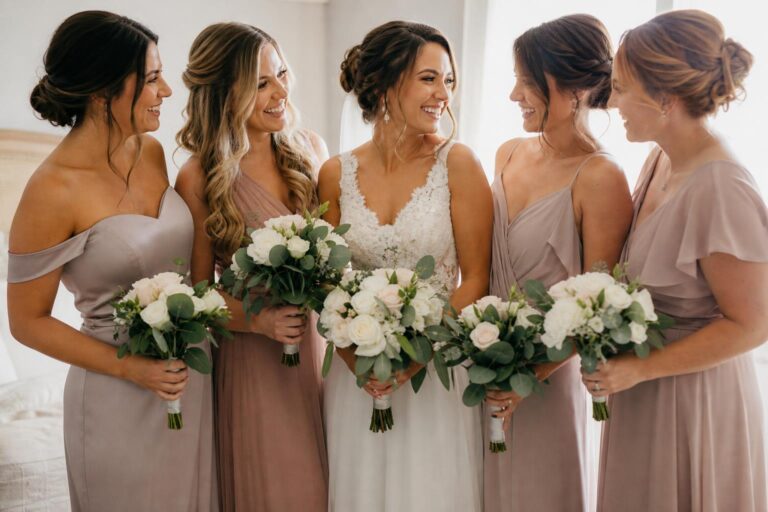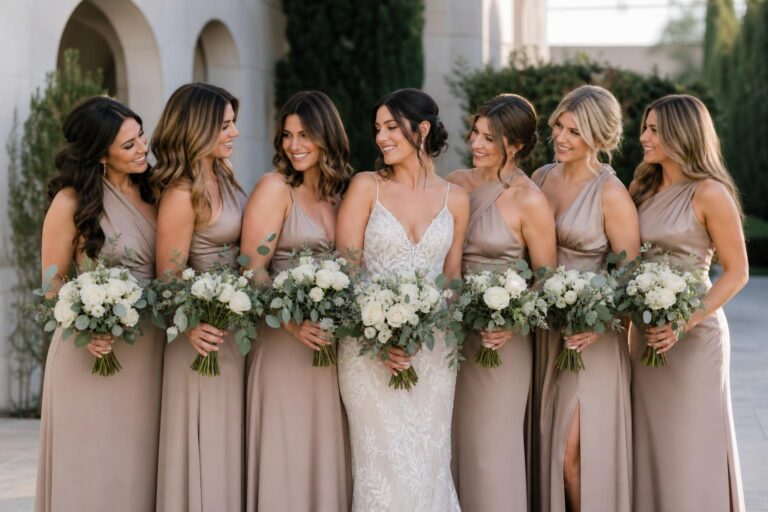
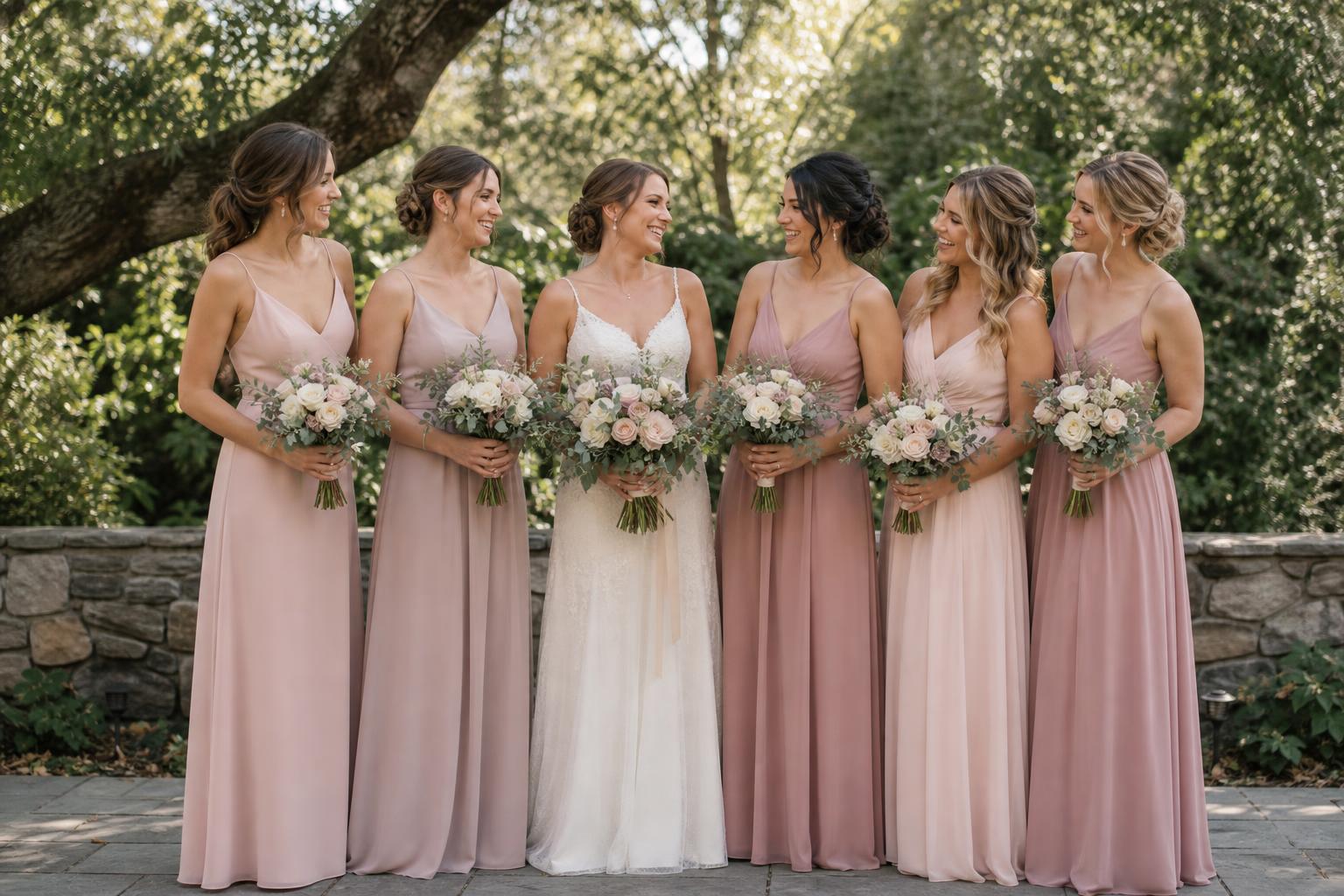
Elegant Bridesmaid Dresses for Every Wedding Setting
The moment a bride starts saving images of elegant bridesmaid dresses, the real challenge usually appears right after the inspiration board looks perfect: how do those polished satin, chiffon, and velvet looks translate into a real wedding day with different body types, changing weather, a set budget, long hours of standing, and photos that need to feel timeless years later? The answer is rarely one single dress. It is a thoughtful balance of fabric, silhouette, color palette, and styling direction so the bridal party looks cohesive without feeling stiff or overmatched to the setting.
An elegant bridesmaid look is less about excess and more about intention. Floor-length chiffon moves beautifully in a garden ceremony. Satin catches candlelight at a formal evening reception. Velvet brings depth to a fall or winter wedding, especially in rich wine or navy. Whether you are choosing dresses for a black-tie ballroom, a destination celebration, or a romantic outdoor ceremony in the United States, the most successful choices feel refined on camera, comfortable through the reception, and aligned with the bride’s overall wedding atmosphere.
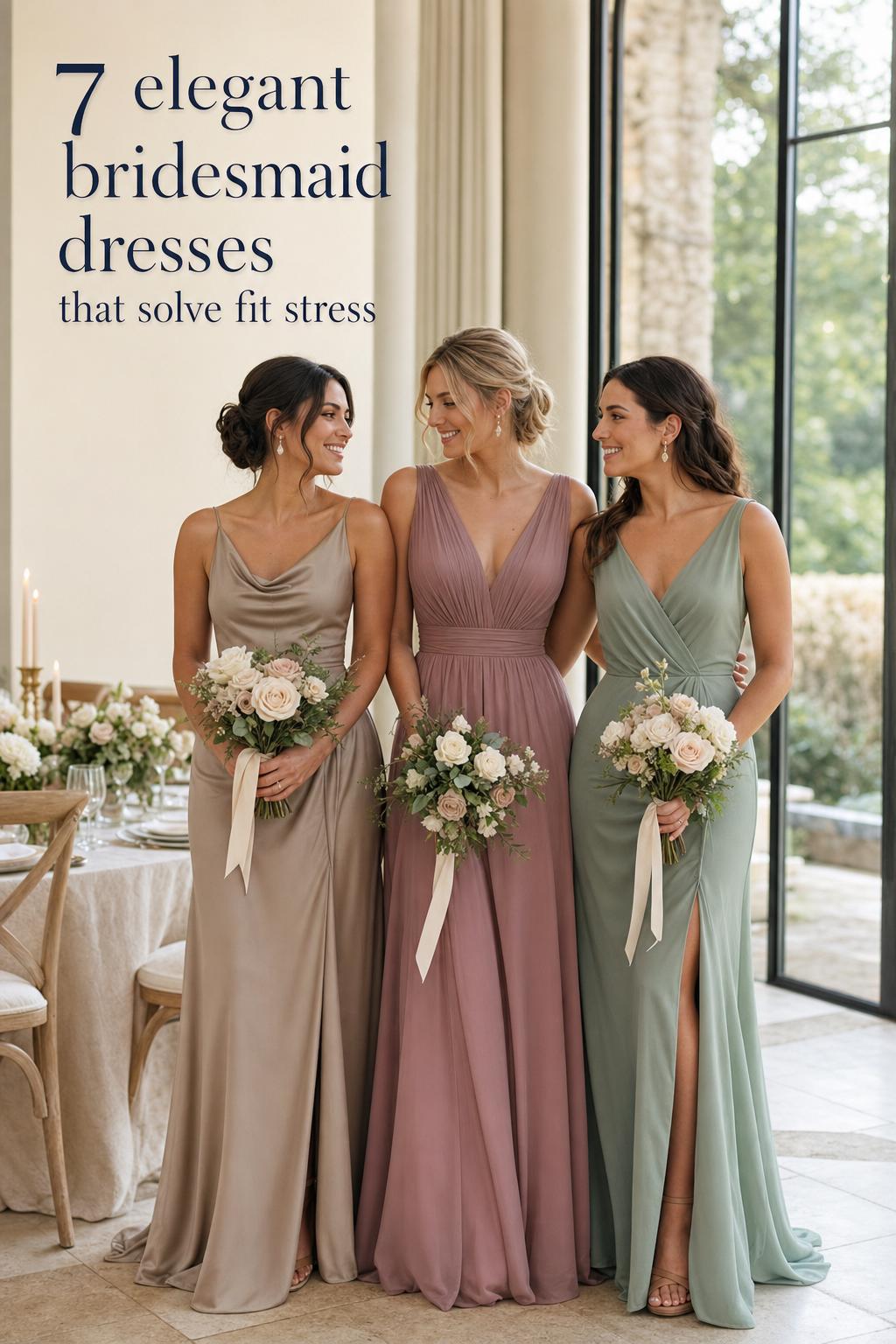
What elegance really means in bridesmaid dressing
In practical styling terms, elegance usually comes from three things working together: fabric drape, a flattering silhouette, and restrained detail. That is why satin, chiffon, velvet, and crepe appear so often in bridesmaid collections from Azazie, Windsor, JJ’s House, Lady Black Tie, and Pronovias. These fabrics signal formality in different ways, but they all have visual presence. They read clearly in portraits, create movement in group photos, and support a polished bridal party rather than a casual one.
Silhouette matters just as much. A-line shapes are consistently associated with timeless style because they create definition without looking severe. Floor-length gowns generally feel more formal than shorter hems, which is why they remain a strong choice for elegant wedding party dressing. Trumpet and mermaid styles can look striking and refined as well, particularly when the wedding leans black-tie or evening-focused, though they usually require more attention to comfort and movement.
Your wedding look is only the beginning.
Keep your guest list, vendors, timeline, and every important detail together with Zarellea — so your day feels as considered as your style.
Small details quietly shape the final result. A V-neck, sweetheart neckline, or bateau neckline can change the mood of the same fabric entirely. A soft neckline in chiffon may feel romantic and effortless. The same neckline in satin can feel sleek and more architectural. Elegant style is often about editing rather than adding: a strong silhouette, one beautiful fabric, a confident color story, and accessories that support rather than compete.
Best for: brides who want a wedding party that feels timeless rather than trend-dependent.
Style tip: if you are unsure where to begin, start with fabric and length first, then narrow the silhouette and neckline.
Start with the wedding setting, not the dress rack
The easiest way to avoid mismatched bridesmaid styling is to begin with the ceremony and reception atmosphere. A ballroom celebration under evening lighting asks for different dress behavior than a breezy daytime garden wedding. Pinterest boards often mix these settings together, but in real life, fabric and color react very differently depending on light, season, and venue.
For a candlelit reception or formal indoor venue, satin and velvet naturally rise to the surface. Satin reflects light beautifully and gives the bridal party a more elevated finish. Velvet adds depth, especially in jewel tones such as wine and navy. Windsor’s emphasis on velvet, floor-length gowns, and formal styling reflects that connection clearly: tactile fabrics often read as more luxurious in evening settings.
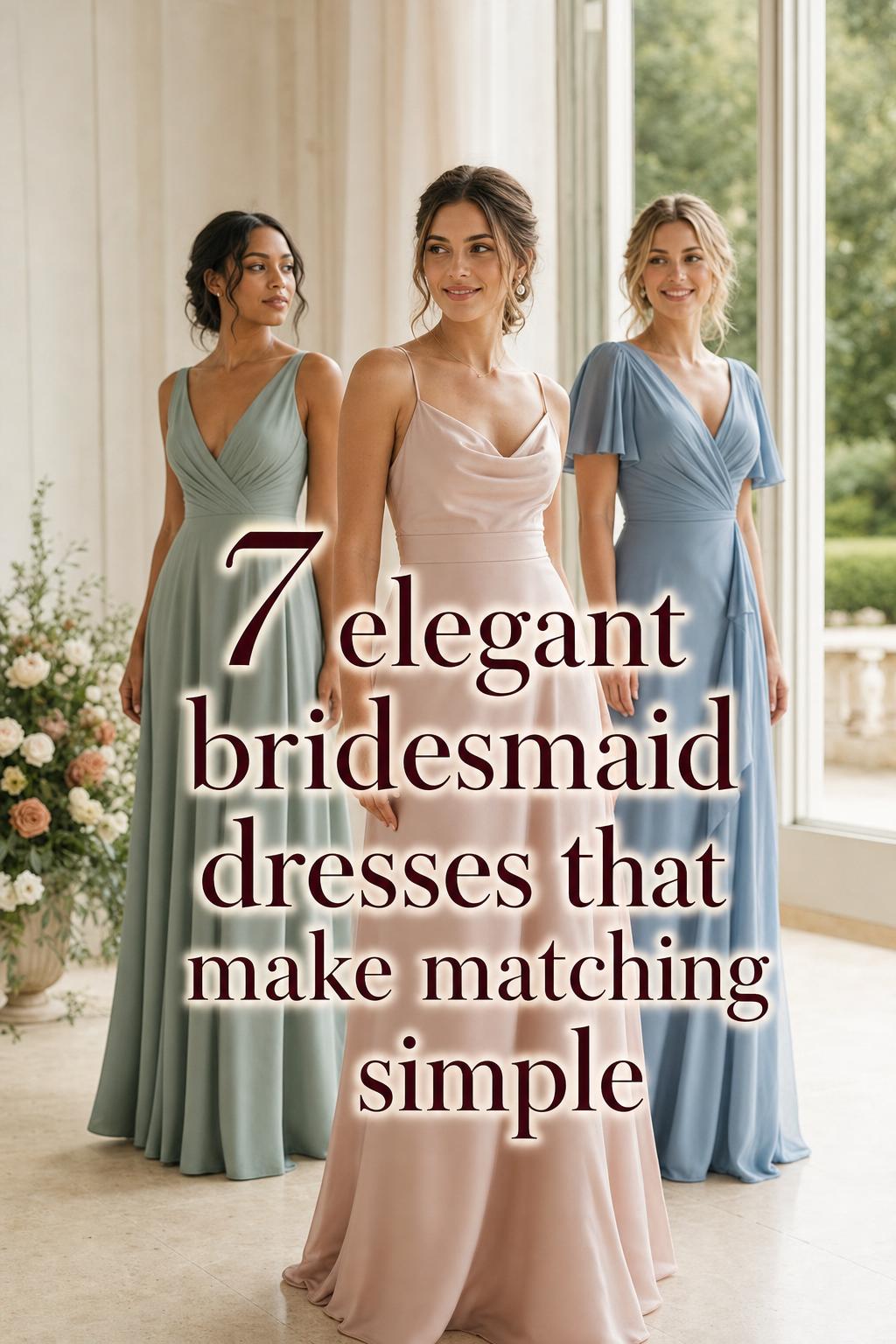
For an outdoor celebration, chiffon usually feels more intuitive. It moves gently in photos, layers well, and often looks softer against floral settings and natural light. Chiffon also suits mixed bridesmaid styling because it can keep a group looking coordinated even when necklines vary. That is one reason it appears repeatedly across elegant collections from Azazie, JJ’s House, and Lady Black Tie.
Choose this if: you are building the bridesmaid look around a venue mood rather than a single pinned dress image.
Avoid this: selecting heavy velvet for a warm-weather daytime ceremony or ultra-light chiffon for a setting that calls for stronger structure and richer formality.
Fabrics that create a luxurious bridesmaid look
Satin for sleek formality and soft light reflection
Satin bridesmaid dresses are often the first choice for brides seeking a sophisticated, polished finish. The appeal is visual but also practical: satin tends to photograph with a clean surface and subtle sheen, which helps a bridal party look more unified. In champagne, blush, navy, or black, satin can shift from romantic to modern depending on the silhouette.
Structured satin works especially well for formal weddings, evening receptions, and spaces with candlelight or dramatic interiors. It can also hold minimalist shapes beautifully, making it useful when the goal is elegance without too much embellishment. The trade-off is that satin tends to feel more revealing of fit, so alterations matter. A poorly fitted satin gown can lose the effortless look very quickly.
Works especially well with: floor-length gowns, clean A-line silhouettes, and refined necklines such as V-neck or sweetheart.
Chiffon for movement, softness, and bridal party versatility
Chiffon remains one of the most reliable choices for elegant bridesmaid dresses because it creates motion without heaviness. In group photos, chiffon adds softness and creates a romantic line across the bridal party. That quality makes it especially appealing for outdoor ceremonies, spring and summer weddings, and venues where the overall atmosphere is airy rather than formal in a strict black-tie sense.
Chiffon is also forgiving when bridesmaids have different comfort preferences. One attendant may prefer sleeves, another a V-neck, another a softer A-line shape. As long as color and fabric remain consistent, chiffon often allows that variety while keeping the party visually connected. This is one reason it appears so frequently in collections that focus on bridal party coordination.
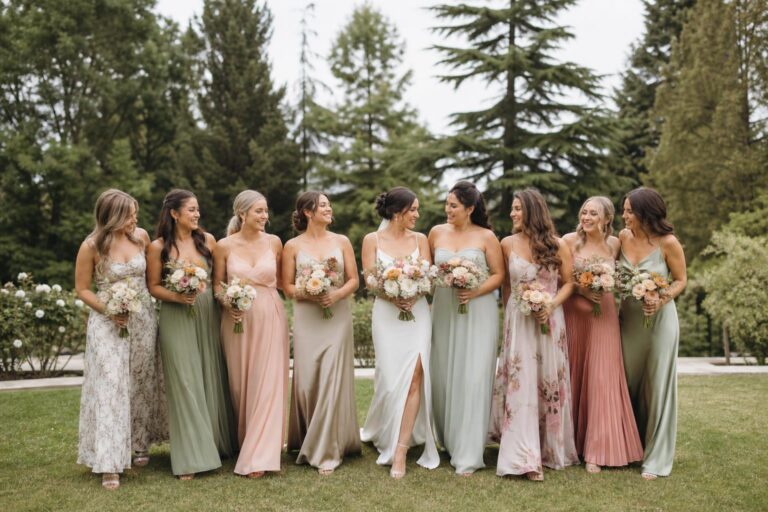
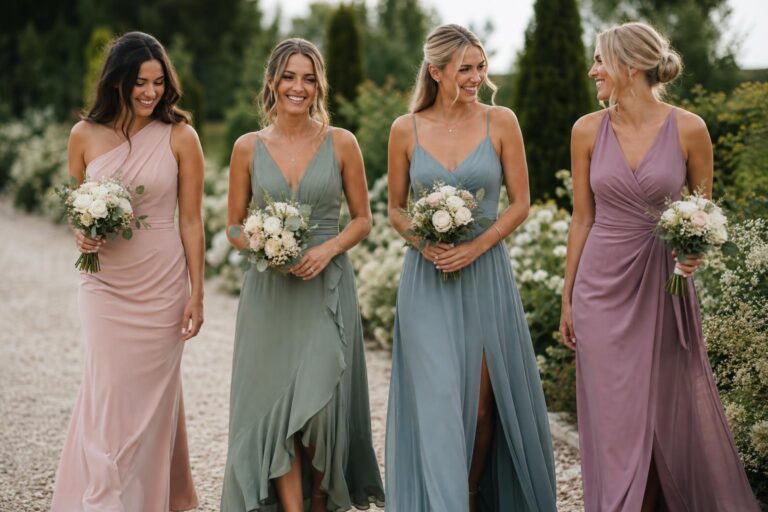
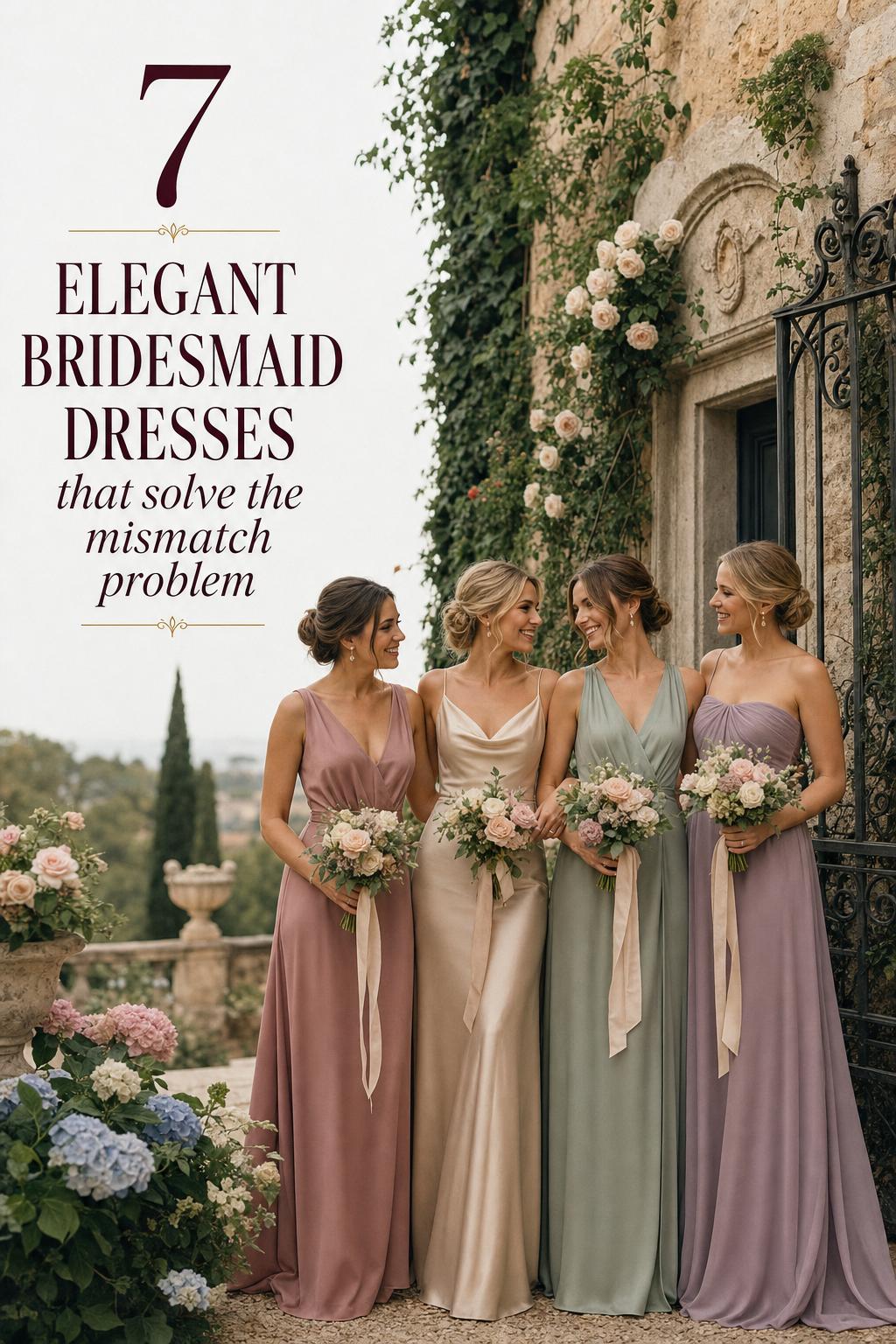
Pinterest-worthy idea: a row of floor-length chiffon gowns in sage or dusty rose moving through golden hour portraits in a garden or vineyard-like setting.
Velvet for depth and rich seasonal elegance
Velvet feels instantly more atmospheric. It carries color in a deeper way than many lighter fabrics, which is why wine, navy, and other jewel-toned bridesmaid dresses often look so compelling in velvet. For a fall or winter wedding, this fabric can make the bridal party feel elevated without relying on sparkle or ornate details.
Velvet is best reserved for settings where that richness feels natural. It is ideal for evening ceremonies, formal interiors, and cooler-weather celebrations. It is less suited to hot outdoor conditions or destination weddings where breathability becomes a priority. Elegant dressing always looks best when comfort supports the look rather than fights it.
Crepe for understated elegance
Crepe belongs in the conversation for brides who want refinement without sheen. It can feel slightly more restrained than satin and more structured than chiffon, which makes it useful for minimalist weddings or bridal parties leaning modern and clean. Crepe does not ask for much; it simply rewards good tailoring and a confident color choice.
Style tip: if your wedding mood is quiet luxury rather than overt romance, crepe can be the bridge between softness and structure.
Silhouettes that flatter without losing the formal mood
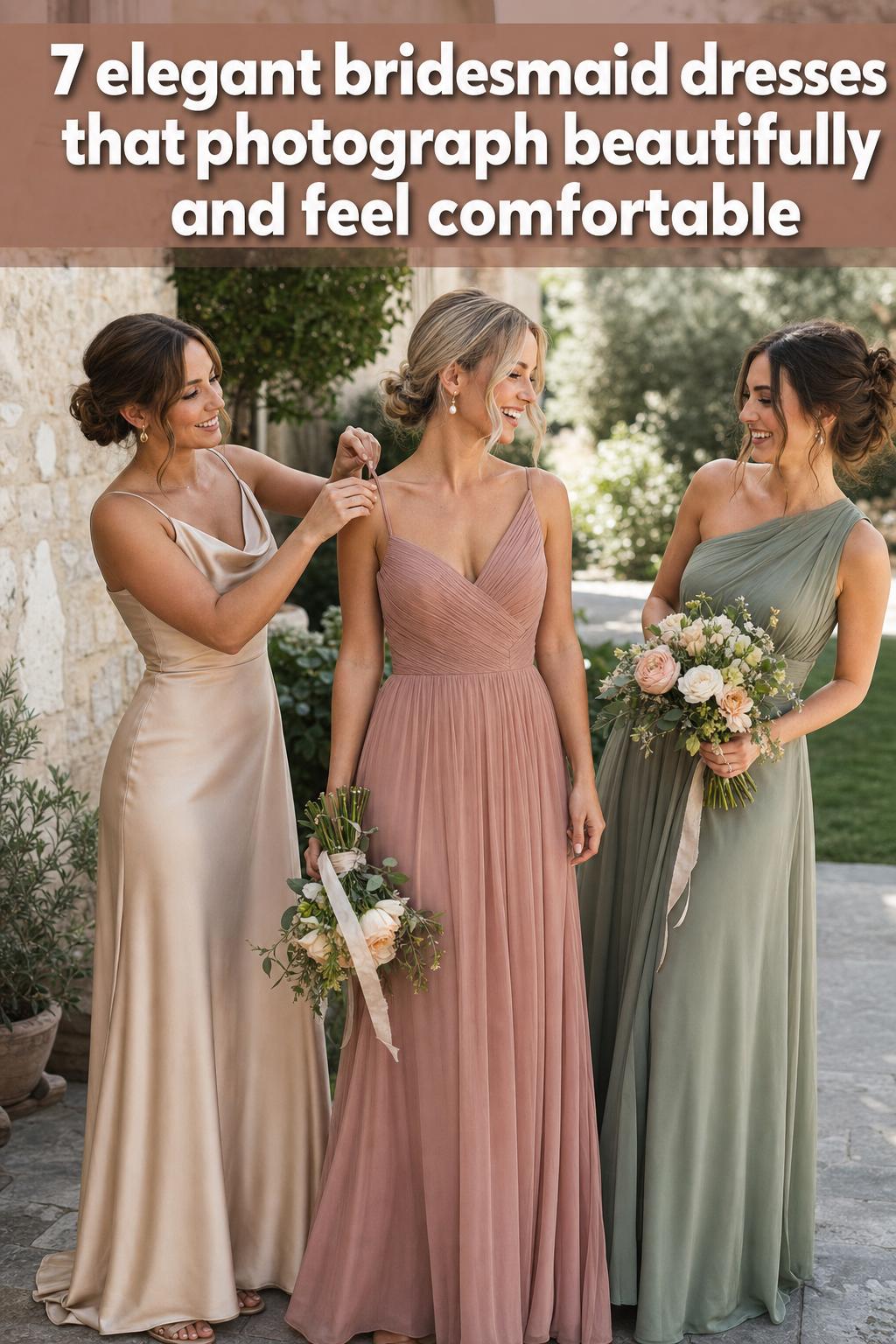
The most elegant silhouette is not always the most dramatic one. Bridesmaid styling works best when it considers movement, comfort during a long celebration, and how the full group looks together from multiple angles. Ceremony processional photos, standing at the altar, seated dinner moments, and dancing all reveal different strengths and limitations in a dress shape.
A-line: the most flexible timeless choice
A-line bridesmaid dresses remain the safest and often the most stylish choice for a reason. They define the waist, skim over the hips, and create a graceful line that works across many body types. For brides planning a mixed-size bridal party, A-line shapes reduce the need for everyone to fit into one rigid style idea. They are classic, comfortable, and adaptable.
In satin, an A-line gown feels polished and formal. In chiffon, it becomes softer and more romantic. That flexibility is what makes A-line such a valuable anchor when building a cohesive wedding party. Lady Black Tie and Azazie both reflect this logic through their emphasis on A-line, satin, and chiffon as core expressions of elegance.
Floor-length gowns for instant formality
Floor-length bridesmaid dresses immediately communicate occasion. Even a simple cut can feel elevated when the hemline reaches the floor, especially in a refined fabric. This is particularly important for black-tie or evening weddings, where shorter lengths may feel visually lighter than the setting requires.
The practical advantage is that floor-length gowns create continuity in group photos. The bridal party looks visually elongated and more coordinated, especially if the dresses share one fabric or one color family. The practical consideration is hem length. Bridesmaids wearing different heel heights will need alterations planned early.
Trumpet and mermaid for a more sculpted bridal party look
Trumpet and mermaid silhouettes can be incredibly elegant, especially for formal receptions or wedding styles that lean glamorous. JJ’s House and Azazie both feature trumpet and mermaid shapes as part of the elegant category for good reason: these silhouettes create a defined, dramatic line that feels special occasion-ready.
They are not the easiest choice for every group, however. These shapes usually require more precise fit and may be less comfortable for extended movement, travel between ceremony and reception, or a long evening of dancing. For some bridal parties, a single sculpted silhouette for everyone can look striking. For others, allowing trumpet or mermaid as one option within a shared fabric and color family is the more realistic route.
Best for: formal evening weddings, statement photography, and bridesmaids who feel comfortable in a more body-skimming fit.
Color palettes that feel elegant in photos and in person
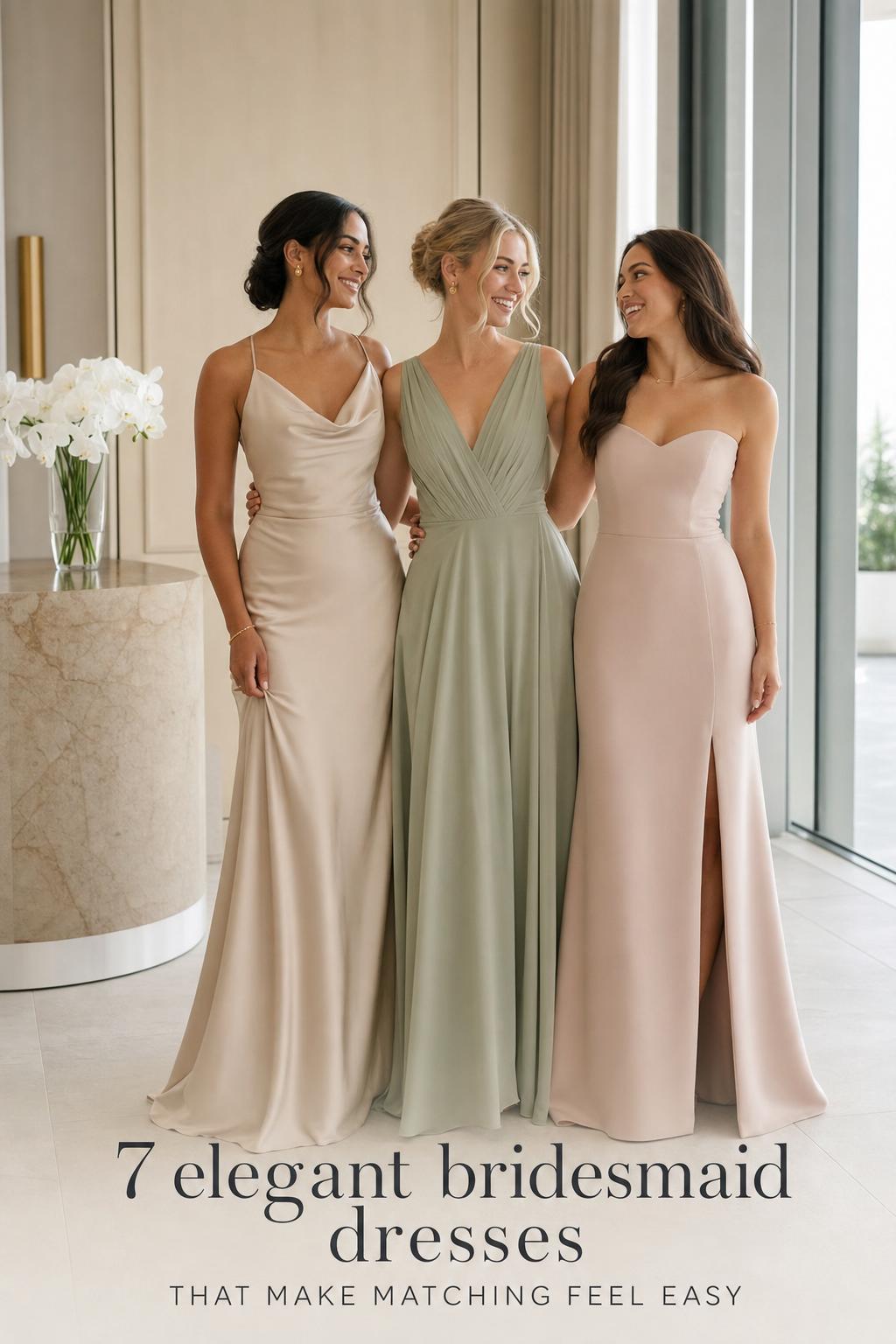
Color is where many elegant bridesmaid plans either come together beautifully or begin to look too literal. The strongest palettes have depth, restraint, and a clear relationship to the wedding environment. Neutrals such as blush, champagne, nude, and dusty rose feel timeless because they are soft, cohesive, and easy to layer into many bridal aesthetics. Richer tones such as navy, wine, black, and emerald create more contrast and formality.
Soft neutrals for romantic and timeless weddings
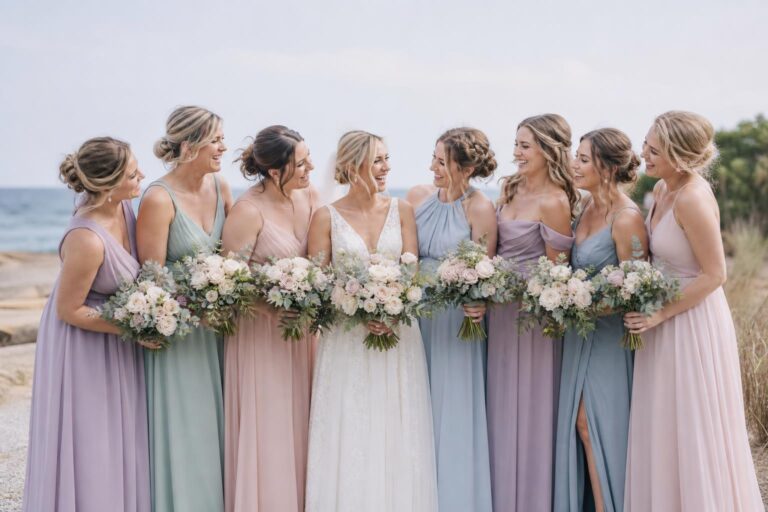
Blush and champagne remain elegant because they are flattering in many lighting conditions and feel naturally bridal without competing with the gown. They work especially well in satin and chiffon, where the softness of the palette balances the richness of the fabric. Dusty rose and sage offer a similarly refined effect, particularly for garden and daytime celebrations.
These shades are especially effective when the wedding mood is romantic, floral, or softly formal. They also make mix-and-match styling easier, since tonal variation feels intentional rather than distracting. A bridal party in champagne, blush, and dusty rose can look dimensional while still reading as one unified palette.
Navy and wine for deeper, more formal elegance
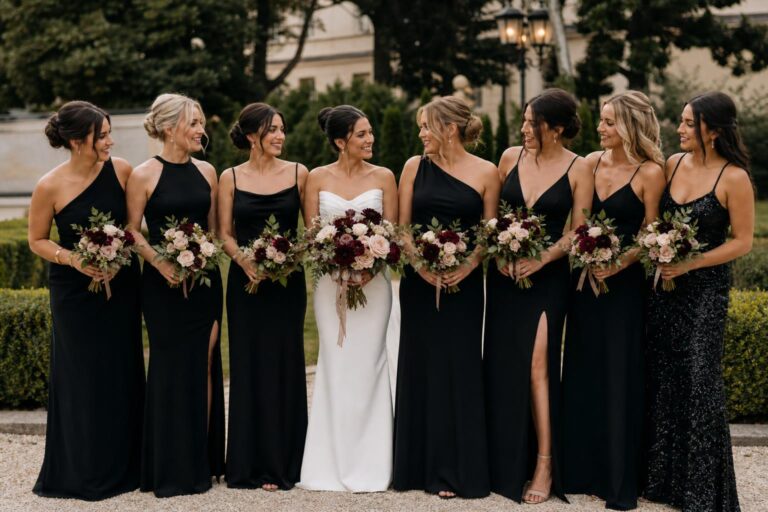
Navy bridesmaid dresses are among the most reliable formal choices because the color feels classic without the intensity of black. In chiffon, navy reads graceful and polished. In satin or velvet, it becomes richer and more evening-focused. Wine carries similar authority but with a more romantic, jewel-toned depth. Windsor’s focus on elegant wine bridesmaid dresses captures how powerful a single rich shade can look in a formal bridal party.
These darker colors work especially well for fall and winter weddings, candlelit receptions, and spaces with architectural detail. They also tend to create stronger contrast in photos, which many brides prefer when the bouquet palette is soft or neutral.
How to think about seasonal palettes
Seasonality matters because elegant color does not exist in isolation. Sage, blush, and champagne tend to feel natural in spring and summer, especially with chiffon and softer silhouettes. Wine, navy, and emerald feel more grounded in fall and winter, particularly when paired with velvet or heavier satin. The goal is not to follow a rule rigidly, but to let the wedding atmosphere support the color choice.
- Spring: blush, champagne, sage, dusty rose in chiffon or soft satin.
- Summer: sage, blush, nude, navy in breathable fabrics and lighter styling.
- Fall: wine, navy, emerald, dusty rose in satin or velvet-forward combinations.
- Winter: navy, wine, black, champagne in velvet, satin, or more structured floor-length gowns.
Avoid this: forcing a trendy color that fights the venue, lighting, or overall wedding mood. The most elegant palette usually feels integrated, not announced.
How to build a cohesive bridal party without making everyone look identical
A cohesive bridal party does not require perfect uniformity. In fact, many of the most polished wedding parties combine consistency with controlled variation. The smartest way to approach this is to choose one or two non-negotiables and allow flexibility elsewhere. For example, keep everyone in one color family and one fabric, but allow different necklines. Or keep the dresses floor-length in one silhouette family, but let bridesmaids choose between satin and chiffon only if the overall look remains balanced.
This is where well-known bridal retailers are useful reference points. Azazie, Windsor, Pronovias, JJ’s House, and Lady Black Tie all present elegant bridesmaid dressing through filters such as silhouette, fabric, color, neckline, and length. That mirrors how real decisions are made. Brides are rarely deciding only between “pretty” and “not pretty.” They are balancing visual consistency with practicality, price sensitivity, and fit across a group.
A simple decision framework that actually works
- Choose the wedding mood first: romantic garden, formal evening, destination, or classic indoor ceremony.
- Select one lead fabric: satin, chiffon, velvet, or crepe.
- Choose the hemline: floor-length is usually the easiest route for elegance.
- Narrow the palette to two or three related shades, such as champagne and blush or navy and wine.
- Decide where flexibility is allowed: neckline, sleeve preference, or silhouette.
- Plan alterations early so the dresses look intentional rather than just similar.
Choose this if: you want a bridal party that feels collected and personal, not overly standardized.
Works especially well with: mixed body types, mixed comfort preferences, and weddings where the bride wants visual dimension in photos.
Fit, size, and alterations: where elegant styling is truly decided
Even the most beautiful bridesmaid dress loses its elegance if it does not fit properly. This is especially true with satin, trumpet silhouettes, and floor-length gowns, where every proportion becomes more visible. Pronovias is often associated with a more polished, prestige-driven design language, and part of that elegant effect comes from the importance of fit. High-end styling always looks more convincing when the dress works with the wearer rather than against her.
Inclusive sizing is an important part of elegant bridesmaid dressing because a bridal party rarely shares one shape. Plus sizes, petite proportions, taller bridesmaids, and different heel heights all affect how a dress falls. A-line silhouettes tend to be the easiest across a range of sizes. Trumpet and mermaid cuts may require more tailoring to achieve the same ease and polish.
Alterations are not a sign that a dress choice failed; they are often what finishes the look. Hemming, adjusting straps, refining the waist, and improving overall proportion can transform a gown from acceptable to beautifully intentional. For tall bridesmaids, length needs special attention, especially with floor-length formal gowns. For petites, a dress with too much volume can overwhelm the frame if not tailored correctly.
Style tip: schedule fitting conversations before accessories are finalized, since shoe height changes the hem and posture.
Best for: bridal parties prioritizing a polished, editorial finish in photographs.
The detail layer: necklines, sleeves, and the quiet signals of elegance
Once fabric, silhouette, and color are chosen, the details refine the mood. Necklines are particularly important because they frame the face and shape the overall impression in portraits. A sweetheart neckline often softens the look. A V-neck can feel elongating and slightly more modern. A bateau neckline reads refined and understated. None is inherently more elegant than the others; the success depends on how the neckline supports the wedding style and the bridesmaid’s comfort.
Sleeves can also shift the balance of a dress. For a more formal or seasonal wedding, an elegant A-line bridesmaid dress with sleeves can feel both polished and practical. It offers coverage, can suit cooler temperatures, and often introduces a sense of structure. For warmer settings, sleeveless or lighter neckline options may feel more natural, particularly in chiffon.
The key is to make these details serve the whole picture. If the color is rich and the fabric already has visual weight, a simpler neckline may be enough. If the palette is soft and the fabric is light, a more distinctive neckline can create just enough definition.
Accessories that complete the look without competing with the dress
Accessories should reinforce the dress fabric and wedding mood. Elegant bridesmaid styling rarely needs too many separate statements. Shoes, wraps, jewelry, clutches, and hair accessories work best when they act like a finishing layer rather than a second focal point. The dress remains central; the accessories simply support the line, color, and formality.
For satin dresses, keep the accessory direction clean and refined. The fabric already catches light, so overly busy additions can feel excessive. For chiffon, more delicate finishing pieces often feel right because they echo the movement and softness of the dress. Velvet pairs well with richer accessories, but restraint still matters, especially when the dress color is already dramatic.
Hair styling is part of this conversation as well. Bridesmaid hairstyles help create bridal party cohesion, especially when necklines vary. An updo or softly gathered style can highlight bateau, sweetheart, and V-neck shapes differently. The goal is not exact matching but a shared sense of polish.
- Shoes: choose with hem length and venue surface in mind, not just color.
- Wraps: useful for evening transitions, especially with satin or velvet in cooler weather.
- Jewelry: keep it supportive, especially if the neckline is already a focal point.
- Hair accessories: best when subtle and tied to the overall wedding mood.
- Clutches: practical for personal items, but should not distract from the dress line.
Pinterest-worthy idea: champagne satin gowns, understated jewelry, softly styled hair, and a tonal bouquet palette under candlelight for a look that feels luminous rather than overdone.
Where different brands fit into the elegant bridesmaid conversation
Not every bride shops in the same way, which is why brand positioning matters. Azazie is closely associated with broad selection across fabrics, silhouettes, lengths, and colors, making it useful when cohesion and variety need to exist together. Windsor brings a more obvious formalwear energy, especially with velvet, wine shades, and floor-length styles that suit evening weddings.
JJ’s House offers a wide range of elegant silhouettes and chiffon-forward options, which can be practical for brides exploring many shape and neckline possibilities. Lady Black Tie leans into premium-feel bridesmaid styling, often through satin, chiffon, and strong A-line choices. Pronovias brings a more prestige-led perspective, where polished design language, flattering fits, and inclusive sizing become part of the appeal. In editorial roundups, brands such as Reformation and ASOS also appear in the broader bridesmaid shopping conversation, especially for readers comparing style directions and online availability in the U.S.
This does not mean one brand is the answer for every wedding. It means brides should be clear on what they need most: size range, color breadth, a specific fabric, a more formal mood, or a fashion-forward yet timeless finish.
Season, comfort, and long-day wear: the part Pinterest rarely shows
A beautiful bridal party image captures only one moment. Real bridesmaid dressing has to survive an entire wedding day. That includes travel, waiting before the ceremony, weather shifts, standing through photographs, sitting during dinner, and moving comfortably at the reception. Elegant styling becomes far more convincing when comfort is planned in from the beginning.
For spring and summer weddings, chiffon and lighter satin options tend to be easier, especially for outdoor settings and destination celebrations. They create elegance without unnecessary heaviness. For fall and winter, velvet, richer satin, and deeper palettes often feel more harmonious and physically practical.
There is also an important difference between ceremony elegance and all-night elegance. A trumpet gown may look extraordinary for portraits, but an A-line may be easier for a full evening of movement. A floor-length hem may appear formal and graceful, but only if it is tailored to the right shoe height. Real-world refinement always comes down to these details.
Avoid this: choosing a dress solely because it photographs well in one staged image while ignoring weather, movement, or the reception timeline.
A brief style note on tradition and modern bridesmaid dressing
Bridesmaid style carries tradition as well as trend. The role itself has deep wedding history, and even historical references such as Queen Victoria often appear in broader conversations about how bridal fashion evolved. Modern bridesmaid dressing, however, has become more flexible. Today’s elegant approach is less about strict sameness and more about curated harmony: coordinated color palettes, intentional fabrics, and silhouettes that suit both the wedding and the individual.
That shift is helpful. It allows brides to preserve a formal, refined bridal party while adapting to real needs such as size inclusivity, different neckline preferences, seasonal practicality, and a more personal sense of style.
Mistakes that can make elegant dresses look less refined
Most styling missteps are not dramatic. They are usually subtle disconnects between dress, venue, and practicality. The dresses may be beautiful on their own, but the full bridal party image loses cohesion or ease.
- Choosing too many variables at once, such as multiple fabrics, multiple lengths, and unrelated colors.
- Ignoring alterations, especially with satin, floor-length gowns, and sculpted silhouettes.
- Using a heavy fabric for a hot-weather outdoor setting.
- Selecting a trendy shade without checking how it works with the venue and bouquets.
- Forgetting that shoes and hems need to be planned together.
- Over-accessorizing dresses that already have strong color, sheen, or texture.
Style tip: if something feels slightly off in a bridal party fitting, it often is. Elegant styling depends on harmony, and small inconsistencies become more visible in group photographs.
Pinterest-worthy ideas to save for later
Some bridesmaid combinations repeatedly feel beautiful because they balance visual impact with realism. These are the kinds of looks that translate well from a saved image to an actual wedding day.
A row of champagne satin floor-length gowns in a candlelit reception space feels luminous, polished, and formal without being severe. Softly styled hair and minimal jewelry keep the focus on the clean line of the dresses.
Sage or dusty rose chiffon dresses in varying necklines create a romantic, movement-filled bridal party for a garden or outdoor ceremony. The palette photographs softly, and the fabric works beautifully in natural light.
Wine velvet gowns for a fall evening wedding deliver immediate atmosphere. The richness of the fabric and color gives the bridal party presence, especially in portraits against darker interiors or twilight light.
Navy A-line gowns in satin or chiffon offer one of the safest and most enduring formal options. They suit a wide range of weddings, flatter many skin tones, and maintain elegance without depending on a fleeting trend.
Choose this if: you want ideas that are both visually striking and easy to adapt to different bridal party needs.
Final checklist before you choose
- Does the fabric suit the venue, season, and time of day?
- Will the silhouette work for a long ceremony and reception timeline?
- Is the color palette elegant in both natural light and indoor lighting?
- Have you decided which details must match and where variation is allowed?
- Does the dress plan account for plus sizes, petite needs, and taller bridesmaids?
- Are alterations built into the timeline and budget?
- Do the accessories support the dress rather than distract from it?
The safest choices are usually the ones with the strongest balance: satin or chiffon, floor-length hems, A-line or similarly flattering silhouettes, and a palette rooted in blush, champagne, sage, navy, or wine depending on season and formality. The most stylish choices are the ones that feel aligned with the venue and wedding mood. The most comfortable choices are the ones that respect movement, weather, and fit. When those three things meet, the result is exactly what brides are usually hoping for when they start saving inspiration in the first place: a bridal party that looks elegant, feels confident, and still looks beautiful in the photos years from now.
FAQ
What makes bridesmaid dresses look elegant?
Elegant bridesmaid dresses usually combine refined fabrics such as satin, chiffon, velvet, or crepe with flattering silhouettes, floor-length hems, and thoughtful details like a well-chosen neckline. The overall effect comes from cohesion, good fit, and a color palette that suits the wedding setting.
Are satin or chiffon bridesmaid dresses better for an elegant wedding?
Both can look elegant, but they create different moods. Satin feels sleeker and more formal, especially for evening receptions and indoor venues, while chiffon feels softer and more romantic, making it especially strong for garden ceremonies, spring weddings, and bridal parties that want graceful movement in photos.
What are the best colors for elegant bridesmaid dresses?
Champagne, blush, dusty rose, sage, navy, wine, and black are among the strongest options because they consistently read as polished and occasion-appropriate. Softer neutrals suit romantic weddings, while deeper jewel tones often feel more formal and seasonal for fall or winter celebrations.
Do elegant bridesmaid dresses need to be floor-length?
Not always, but floor-length gowns usually create the clearest sense of formality and visual cohesion. They are especially effective for black-tie weddings and evening receptions. Midi lengths can work in some elegant settings, but floor-length remains the most reliable choice when a refined bridal party look is the priority.
How can a bridal party look cohesive without wearing identical dresses?
The easiest approach is to keep one or two elements consistent, such as fabric, color family, or hemline, while allowing variation in neckline or silhouette. This creates a coordinated look that still accommodates different body types, comfort preferences, and individual style.
Which silhouettes are most flattering for a mixed bridesmaid group?
A-line silhouettes are usually the most flexible because they define the waist and create an easy, graceful line across many body types. They also adapt well to fabrics like satin and chiffon, making them a strong choice for bridal parties that need elegance and comfort at the same time.
Are velvet bridesmaid dresses appropriate for elegant weddings?
Yes, especially for fall and winter weddings, evening ceremonies, and more formal venues. Velvet adds depth and richness, particularly in shades like wine and navy. It is less practical for hot-weather outdoor weddings, where lighter fabrics usually feel more comfortable and seasonally appropriate.
How important are alterations for bridesmaid dresses?
Alterations are extremely important, especially for satin, trumpet or mermaid silhouettes, and floor-length gowns. Hem length, strap adjustment, waist shaping, and overall proportion can make the difference between a dress that simply fits and one that looks polished in person and in photographs.
Which brands are often considered for elegant bridesmaid dresses?
Azazie, Windsor, JJ’s House, Lady Black Tie, and Pronovias are all commonly associated with elegant bridesmaid styling through their emphasis on fabrics, silhouettes, color palettes, and formal wedding options. Editorial brand roundups also often include names such as Reformation and ASOS when readers are comparing online shopping destinations.
How do I choose elegant bridesmaid dresses for different seasons?
For spring and summer, lighter fabrics and softer shades such as blush, sage, champagne, and dusty rose usually feel most natural. For fall and winter, richer fabrics and deeper tones such as velvet, satin, navy, wine, and emerald tend to create a more seasonally grounded and formal result.