Wedding Girl Looks For Garden, Beach, and Ballroom Weddings
The phrase wedding girl can feel unexpectedly hard to pin down. On Pinterest, it often sits at the crossroads of flower girl inspiration, romantic styling ideas, stock-photo-perfect moments, and the wider visual world of weddings. That broadness is exactly why so many readers get stuck: they are searching for one clear, beautiful direction and instead find a swirl of unrelated images. The smartest way to approach it is to treat wedding girl style as a focused visual role within the celebration, then choose details that feel intentional, comfortable, and photograph beautifully from ceremony to reception.
A polished wedding look always starts with context. A garden ceremony asks for softness and ease. A beach setting needs practicality as much as charm. A candlelit evening reception can support richer texture and a more dressed-up mood. Whether your inspiration leans toward flower girl styling or a more general feminine wedding aesthetic, the strongest choices are the ones that connect mood, movement, and setting. That is what makes an idea feel elevated rather than random.
Start with the one decision that changes everything
Before choosing colors, fabrics, or accessories, decide what role the look is meant to serve. In a wedding setting, broad search terms create confusion because the styling needs for a flower girl are very different from those for a guest-inspired visual, a fashion mood board, or a stock-imagery concept. The most useful first question is simple: is this look meant for participation in the ceremony, for visual inspiration, or for general occasion dressing within a wedding atmosphere?
That distinction matters because practical needs change immediately. Ceremony participants need ease of movement, comfort through long hours, and details that remain neat in photos. More editorial wedding inspiration can be dreamier and less tied to logistics. If your goal is a look that translates from Pinterest to a real event, prioritizing wearability early prevents disappointment later.
Your wedding look is only the beginning.
Keep your guest list, vendors, timeline, and every important detail together with Zarellea — so your day feels as considered as your style.
A simple way to narrow your direction
- Choose ceremony-first styling if comfort, movement, and photo cohesion matter most.
- Choose aesthetic-first styling if you are building inspiration boards and mood references.
- Choose venue-first styling if the wedding location is the clearest part of your vision.
- Choose color-first styling if your main challenge is matching the wedding palette.
Best for: readers who have saved dozens of images but still cannot explain what they actually want. Style tip: once you identify the role of the look, most styling decisions become much easier. Avoid this: mixing sweet daytime details with formal evening elements without a clear reason.
Why flower girl styling often becomes the center of the search
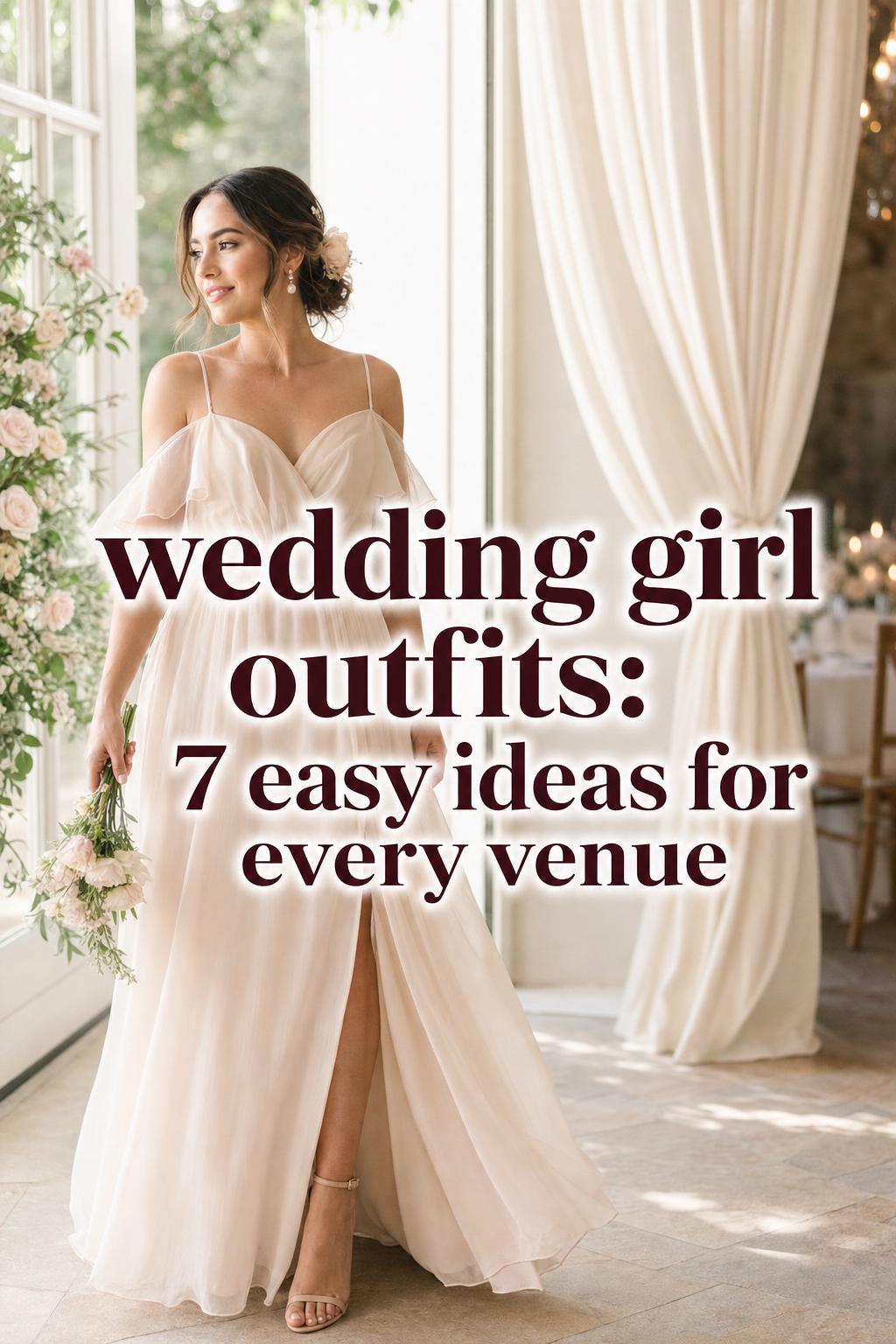
Because wedding girl is such a broad phrase, flower girl inspiration naturally becomes one of the clearest and most useful interpretations. It offers a recognizable purpose, a visual identity, and a strong place in the ceremony. For many readers, that is where the search becomes actionable. The challenge is making the look feel romantic without becoming fussy, and special without creating discomfort.
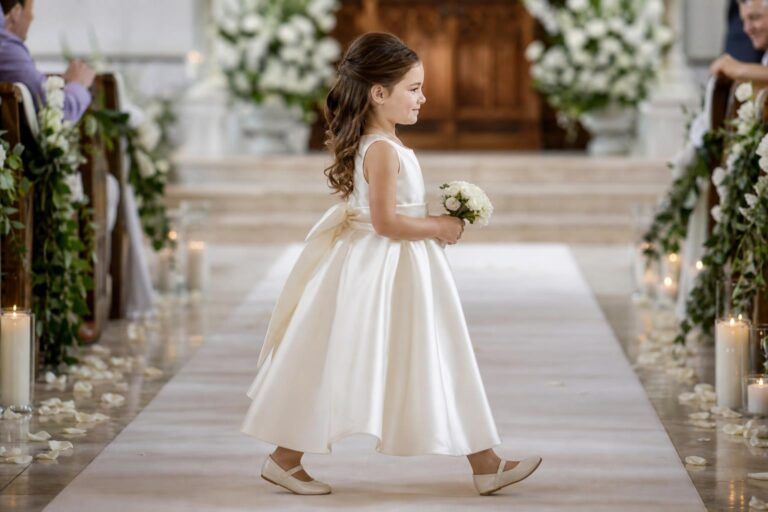
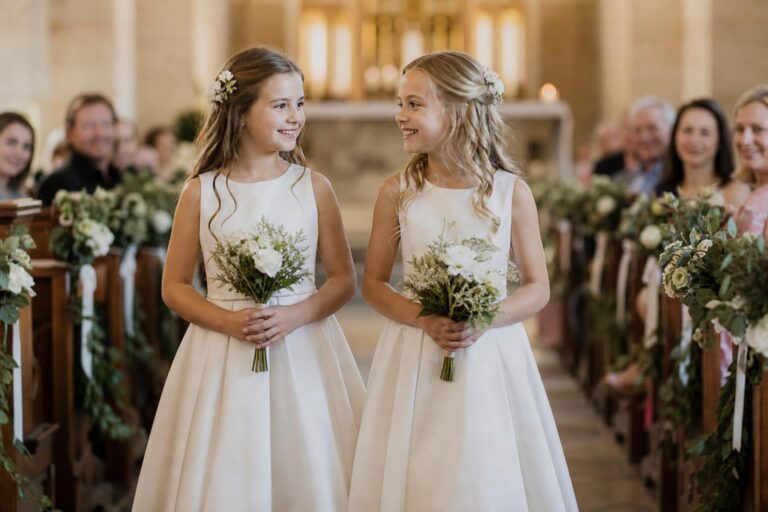
The most memorable flower girl styling has a certain lightness to it. It feels connected to the wedding palette, but not overly matched. It photographs beautifully walking down the aisle, but still allows natural movement. In practical terms, that usually means choosing softer silhouettes, easy fabrics, and accessories that do not require constant adjustment. A flower girl should look part of the wedding story, not burdened by it.
What makes a flower girl look feel timeless in photos
Timelessness usually comes from restraint. Soft texture tends to read better than excessive decoration, especially in close-up photographs and aisle shots. A dress with gentle volume, light fabric movement, and a clear shape often looks more elegant than a heavily embellished style. The reason is simple: weddings already contain visual richness through flowers, décor, and attire. A quieter silhouette gives the overall scene more balance.
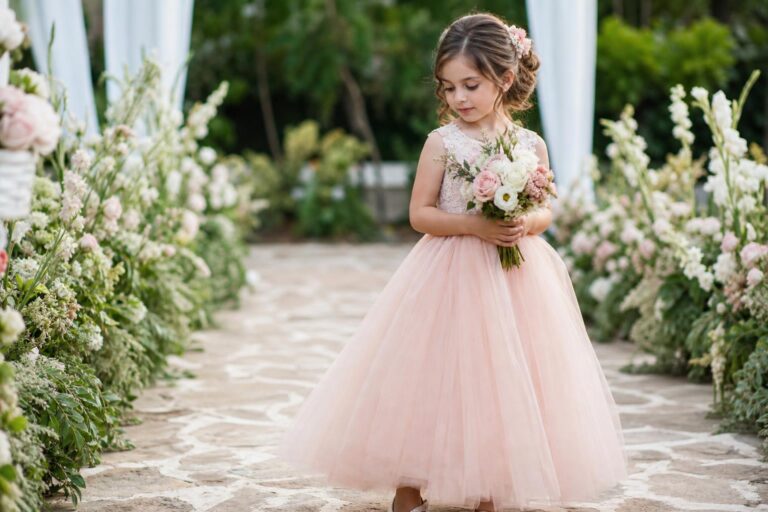
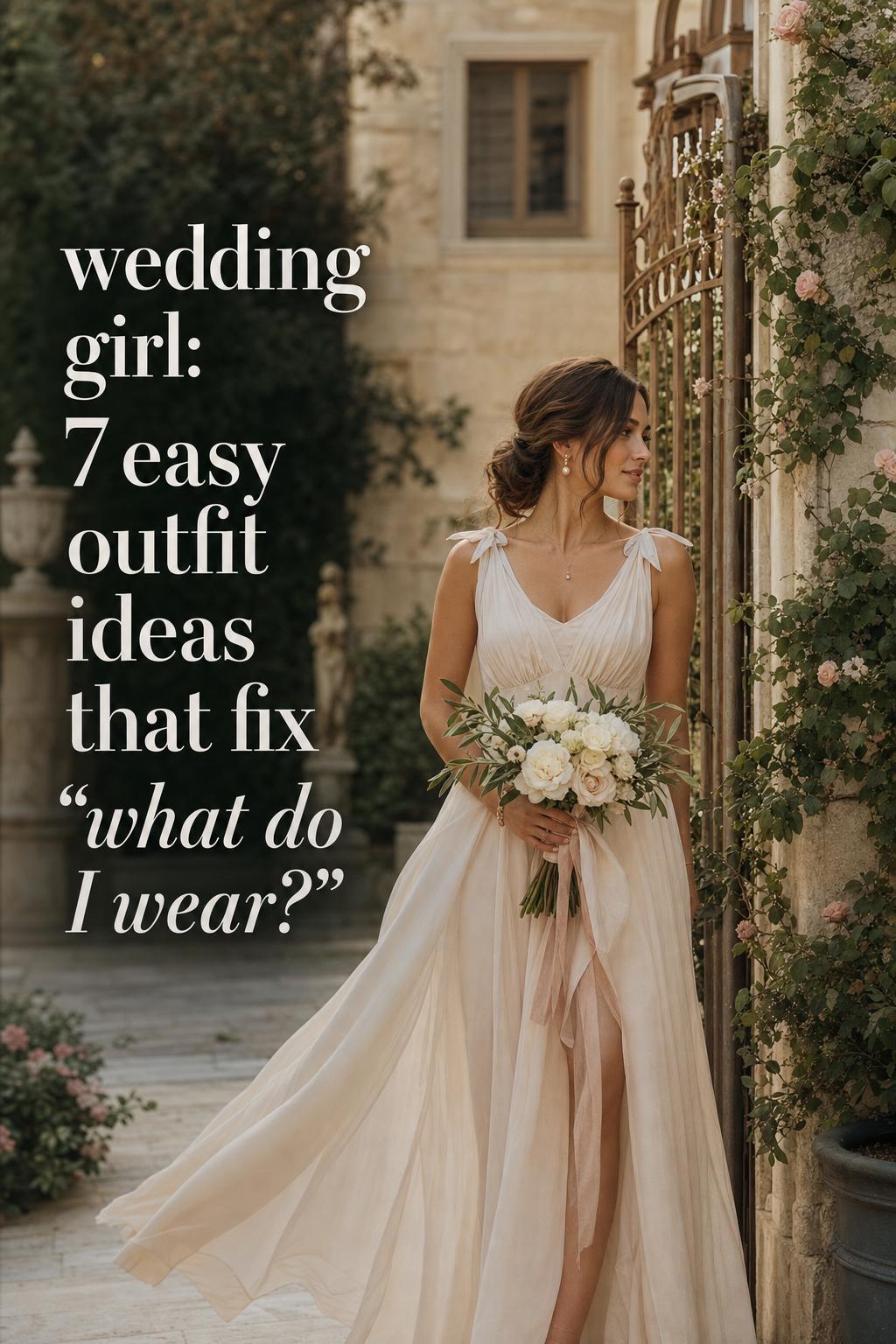
Pinterest-worthy idea: imagine a flower girl in a softly flowing dress walking through a garden path at golden hour, carrying petals that echo the wedding flowers rather than competing with them. Works especially well with: romantic ceremonies, outdoor venues, and celebrations with an airy, natural atmosphere.
How to choose the right look by venue mood
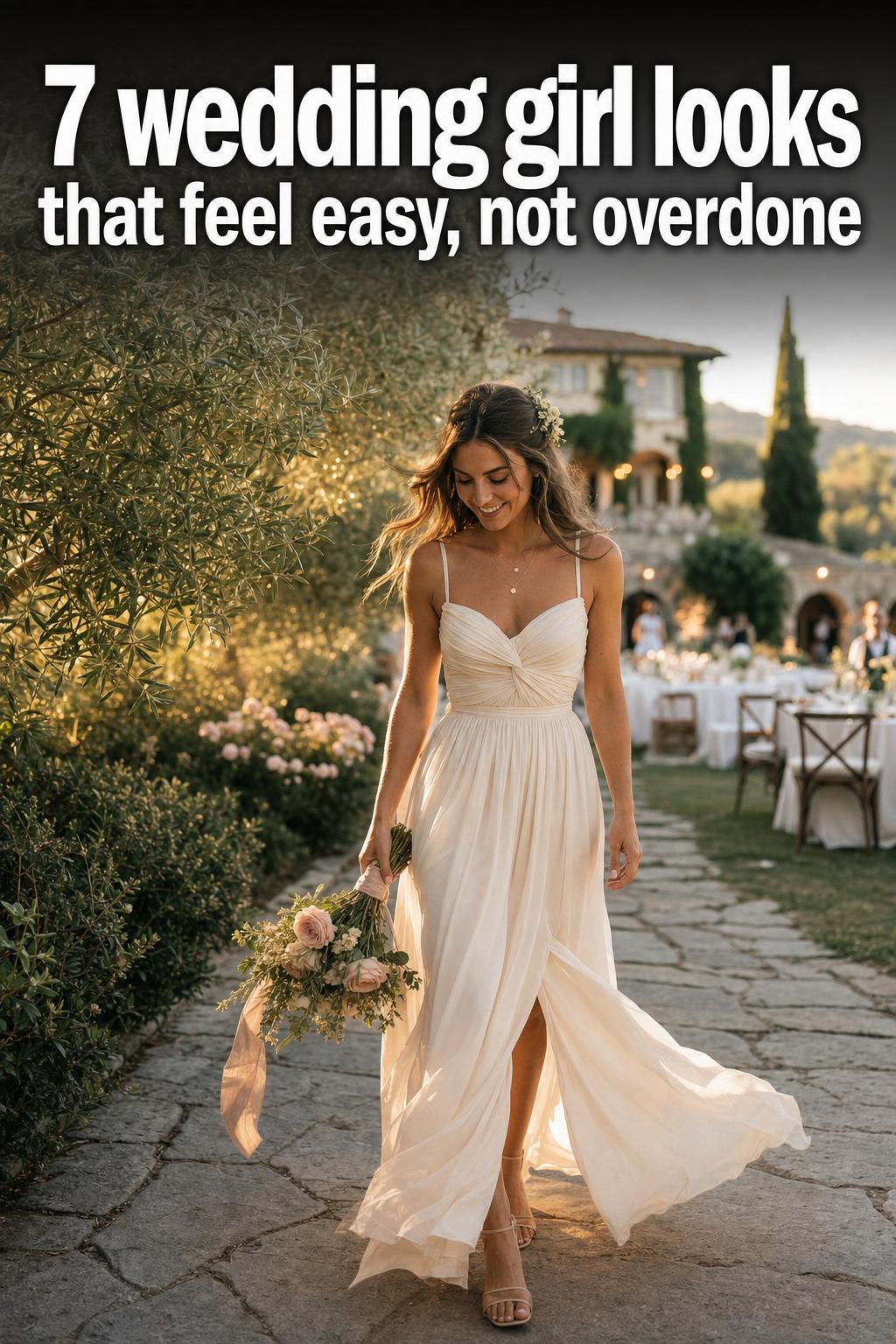
Venue is often the fastest way to make the right styling decision. Even a beautiful dress can feel out of place if it ignores the setting. The goal is not to copy the venue literally, but to choose colors, textures, and details that belong there naturally. When a look harmonizes with location, every photograph feels more intentional.
Garden weddings: soft movement and a light romantic finish
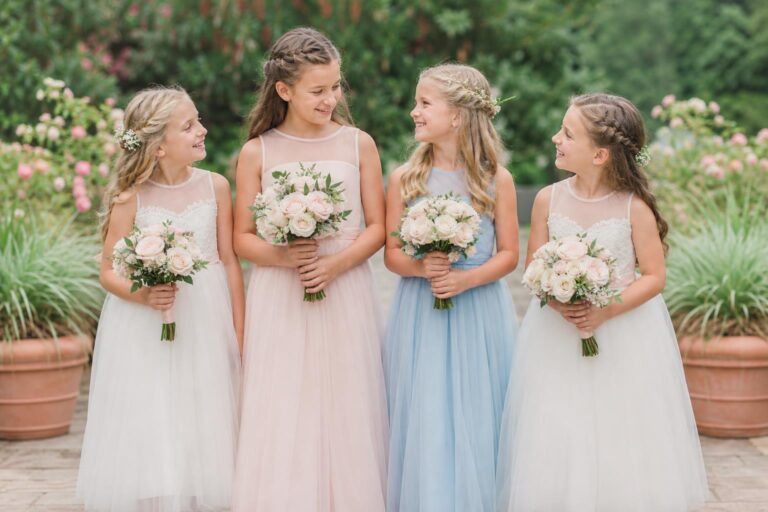
A garden ceremony calls for softness in every sense. Flowing silhouettes, lighter fabrics, and delicate details complement florals, greenery, and natural light. Sharp structure can feel too severe in this setting, especially during daytime ceremonies when the atmosphere is airy and open. A softer look moves beautifully in outdoor photography and tends to feel comfortable across changing temperatures.
Choose this if: the ceremony is surrounded by flowers, open lawns, or a landscaped estate. Style tip: details should feel gently blended rather than high-contrast. Avoid this: overly stiff materials that read heavy against a natural backdrop.
Beach ceremonies: comfort matters as much as beauty
A beach wedding looks effortless in photos, but the practical challenges are real. Wind, sand, heat, and glare all affect how a look performs. In this setting, lighter fabrics and simpler shapes tend to work best because they move naturally and require less fixing. Overly layered pieces can feel heavy and uncomfortable very quickly, especially during a long ceremony.
For a flower girl or wedding-inspired feminine look, the beach favors understated styling. This keeps the mood polished while respecting the relaxed atmosphere of the location. In pictures, movement is part of the charm, so a look that responds well to breeze often appears more elegant than one that tries to stay perfectly still.
Ballroom weddings: a more polished silhouette can carry the setting
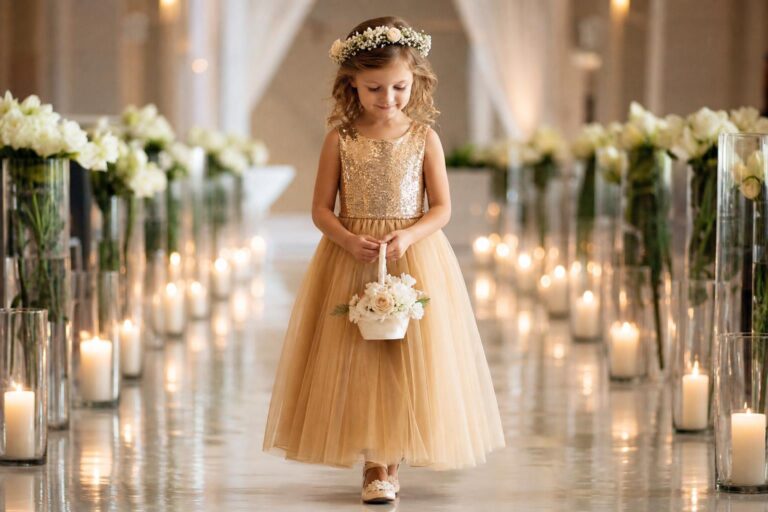
Formal indoor venues support more refinement. Candlelit receptions, polished floors, and evening ambiance allow a richer visual tone. That does not mean the look should become overly ornate. It means the silhouette can hold a little more structure and the finishing details can feel slightly more elevated. In a ballroom, lighting tends to deepen texture, so clean lines and thoughtful finishing become especially important in photos.
Best for: formal celebrations, evening weddings, and elegant hotel or ballroom settings. Works especially well with: classic wedding palettes and a more composed ceremony style.
Rustic countryside venues: balance sweetness with practicality
Rustic venues often look charming on Pinterest, but they are not always forgiving in real life. Paths can be uneven, weather can shift, and the celebration may move between outdoor and indoor spaces. This is where the most successful styling balances softness with practicality. A look should still feel romantic, yet stable enough for walking, sitting, and moving through a longer event.
The visual language here tends to be relaxed and textured rather than highly polished. That makes comfort an essential part of the styling, not an afterthought. When comfort is handled well, the look remains graceful all day and appears more natural in candid photographs.
Color choices that feel beautiful in wedding photography
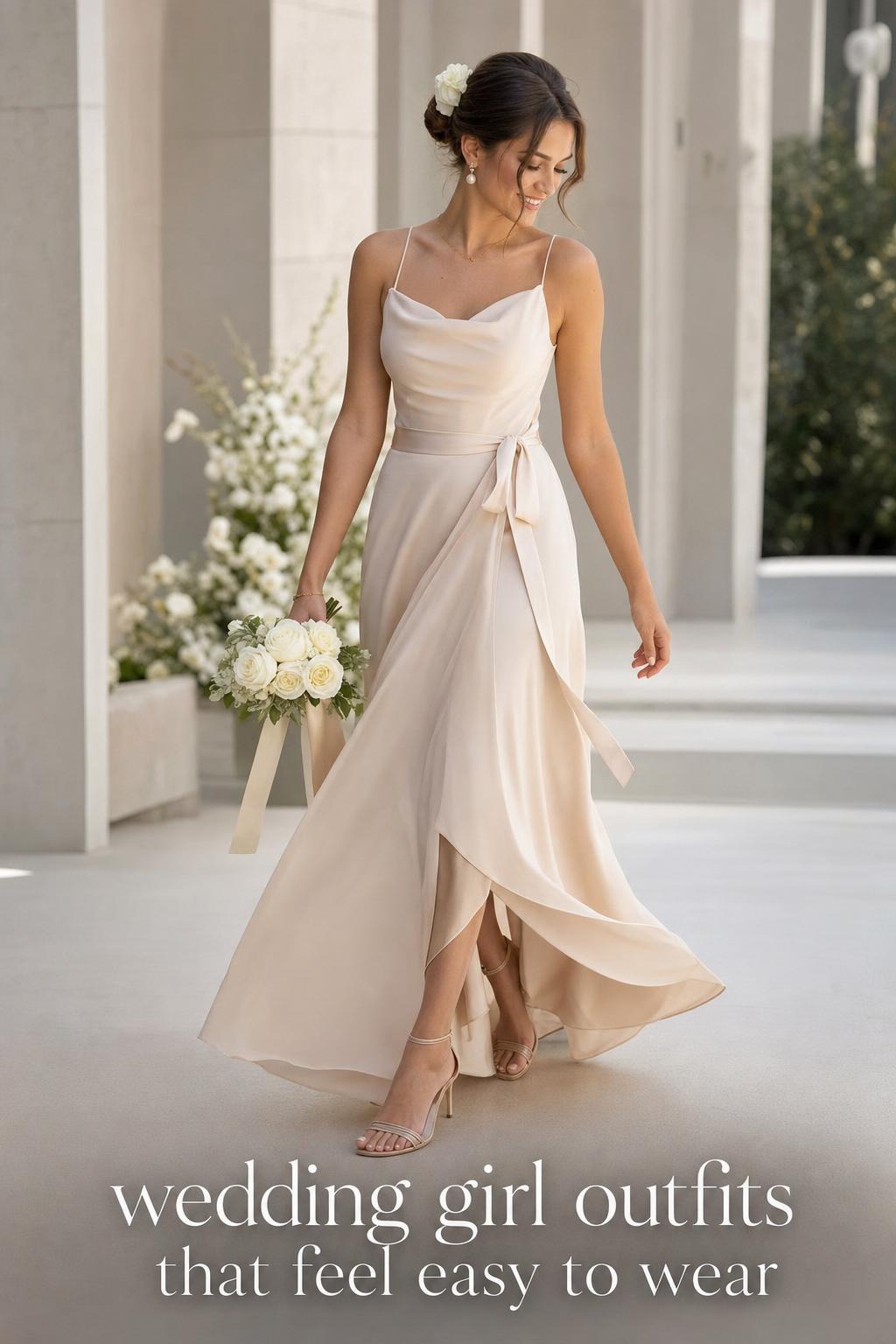
Color often decides whether a wedding look feels harmonious or distracting. In the broad visual world of wedding girl inspiration, softer palettes are usually easier to integrate because they sit comfortably beside flowers, bridalwear, and venue décor. The reason is not that stronger tones are always wrong, but that weddings already contain many focal points. A gentler palette helps a supporting look contribute to the whole scene.
For Pinterest-minded styling, think about how colors behave in natural light, against florals, and in group photography. A tone that feels pretty on its own can sometimes appear too stark or too busy next to the rest of the wedding palette. When in doubt, visual cohesion is more elegant than contrast for its own sake.
How to make the palette feel connected, not overly matched
The most polished wedding styling rarely looks copied directly from one color chip. Instead, it feels related. If flowers, décor, and fashion details all match exactly, the result can look flat in photographs. A more sophisticated approach is to echo the mood of the wedding rather than duplicate every shade. This gives the look dimension while still feeling intentional.
- Choose colors that sit comfortably beside the wedding flowers.
- Let one element lead, such as the dress or the petals, and keep the rest softer.
- Use texture to add richness if the palette itself is quiet.
- Think about group photos, not only individual close-ups.
Pinterest-worthy idea: a romantic palette rendered through airy fabric, soft florals, and a venue that catches golden hour light. Avoid this: choosing a color solely because it stands out on a pin, without considering how it will look in the actual wedding environment.
Fabric, movement, and why comfort is part of the styling
In wedding imagery, fabric does more than cover the body. It creates motion, softness, and atmosphere. The right fabric can make even a simple silhouette feel cinematic. The wrong one can wrinkle awkwardly, feel too rigid, or become uncomfortable halfway through the day. That is why experienced styling decisions usually begin with behavior, not decoration.
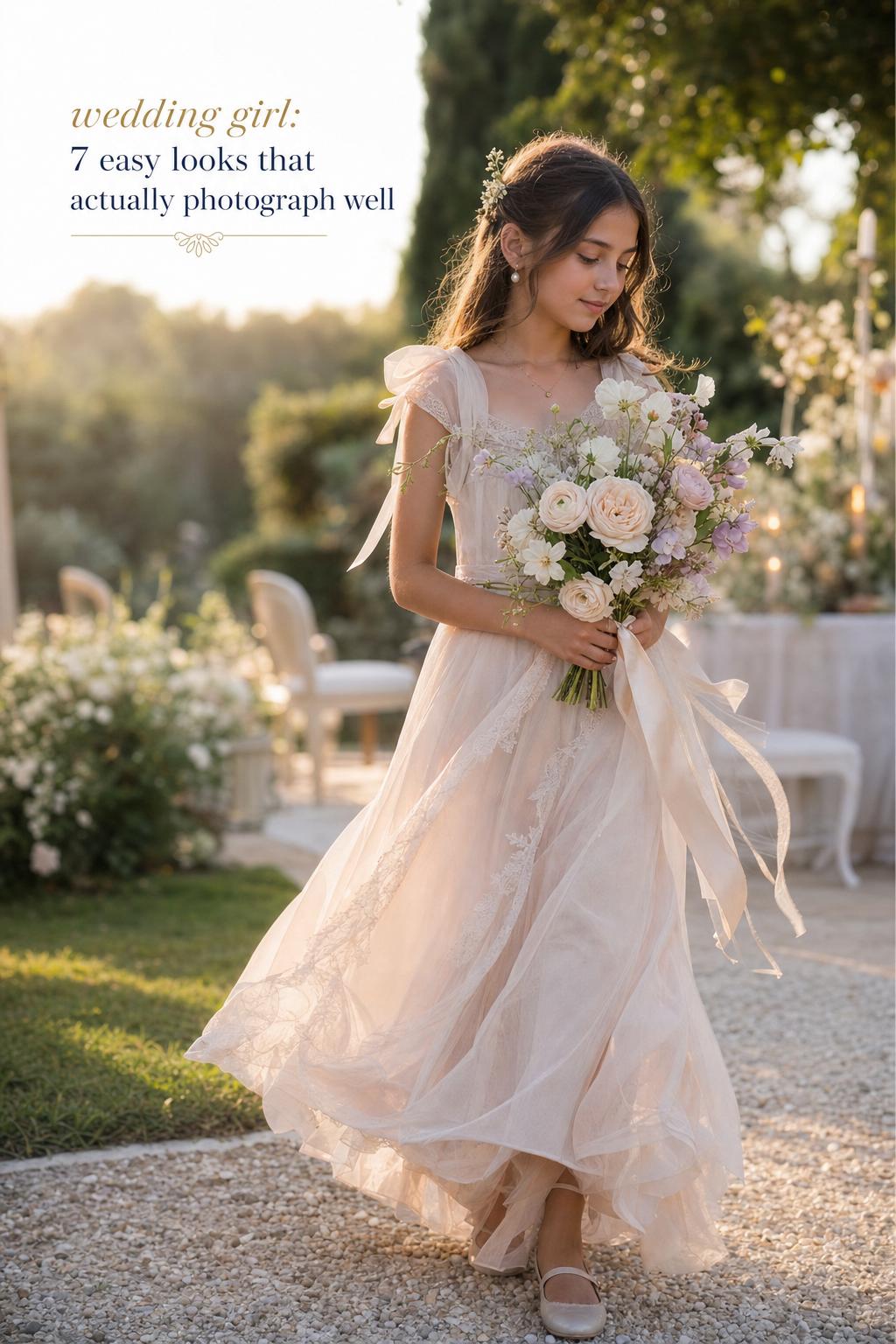
For wedding looks associated with flower girl or soft feminine ceremony styling, movement is usually the detail that elevates everything. A fabric that catches air gently in an outdoor setting or falls elegantly in indoor light tends to photograph beautifully from every angle. This is especially important for aisle walks, portrait moments, and candid reception shots.
What to think about before choosing a lighter fabric
Lighter fabrics often look the most romantic, but they need context. In wind, they may shift more than expected. In heat, they can be a welcome relief. In cooler weather, they may need an added layer to feel practical. The key is not avoiding lighter fabrics, but choosing them with the venue and weather in mind. A wedding look should still feel good after standing, walking, and sitting through the full celebration.
Choose this if: you want softness in photos and ease of movement. Style tip: test the look while walking, sitting, and turning, not only while standing still in front of a mirror. Avoid this: selecting a delicate fabric that looks beautiful in one still image but becomes hard to manage in motion.
Accessories that complete the look without taking it over
Wedding accessories work best when they sharpen the mood rather than compete for attention. In broad searches around wedding girl inspiration, accessories are often what tip a look from sweet into overdone. The solution is editing. One or two thoughtful details usually create a more memorable result than many decorative additions layered together.
For ceremony styling, accessories should support movement and comfort. If something slides, pinches, distracts, or needs repeated adjustment, it will likely become a problem before the reception even begins. This is especially true for children in flower girl roles, but it also applies to any wedding-inspired feminine look meant to hold up over several hours.
How flowers, hair details, and finishing touches work together
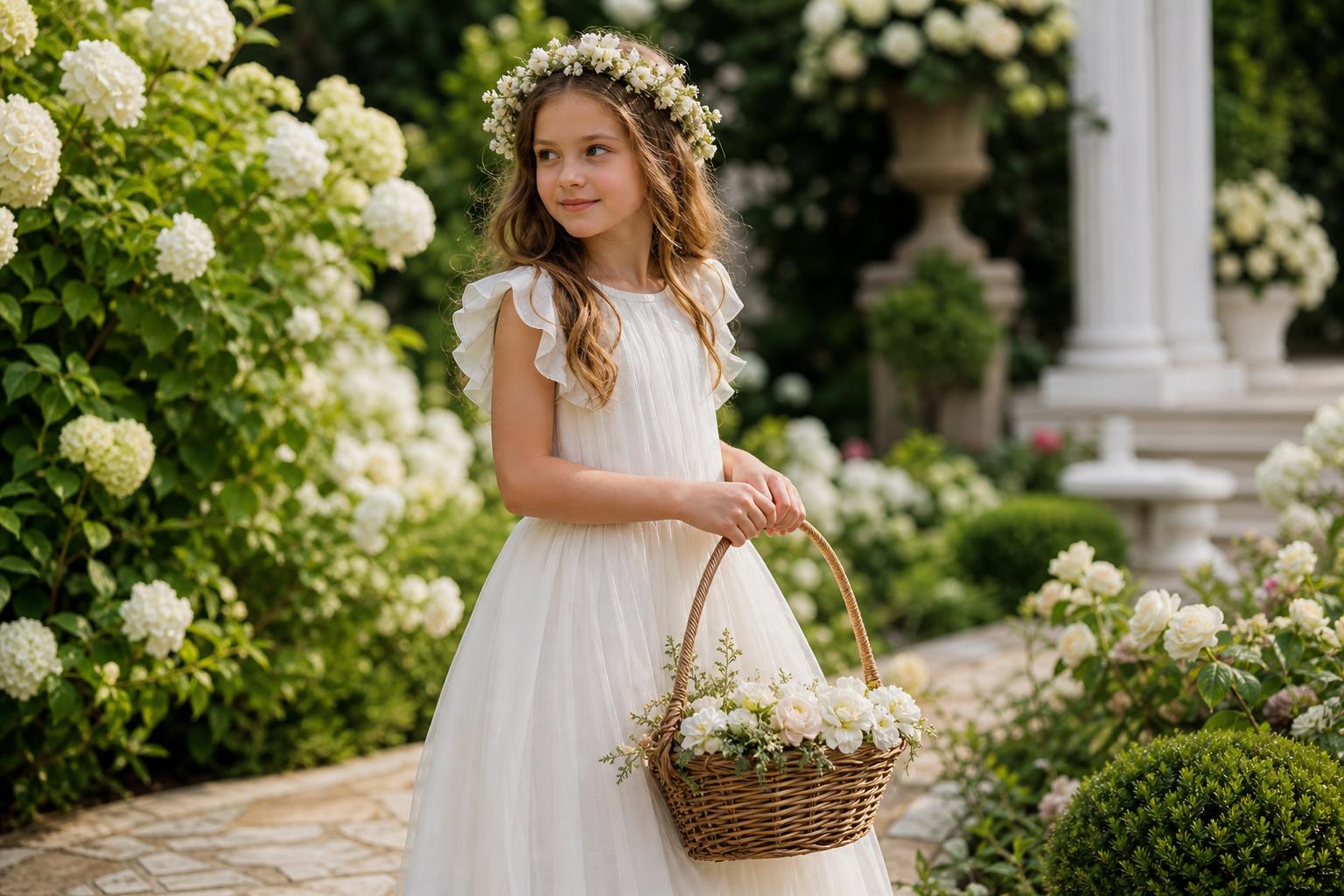
Flowers instantly connect a look to the wedding itself, which is why they remain such a strong visual reference in Pinterest styling. But they need proportion. A floral detail should feel like a continuation of the wedding atmosphere, not an unrelated statement. Hair accessories, soft ribbons, and petal details are often strongest when they echo the scale and tone of the wedding flowers rather than trying to outshine them.
Works especially well with: garden weddings, romantic outdoor ceremonies, and softer wedding aesthetics. Best for: readers who want that unmistakable wedding feeling without making the look too formal. Avoid this: stacking multiple decorative ideas in one small look.
How to style for the season without losing the romance
Season should quietly guide almost every styling choice. It affects fabric weight, layering, color mood, comfort, and how a look behaves throughout the day. The mistake many people make is treating season as only a color story. In reality, it is also about temperature shifts, venue conditions, and the length of time the outfit needs to feel good.
The strongest wedding styling keeps the romance intact while making seasonal adjustments that are nearly invisible in photos. That is the ideal balance: a look that appears effortless because it has been planned properly.
Warm-weather weddings
In spring and summer settings, lighter fabrics and breathable construction matter. Outdoor ceremonies, destination weddings, and daytime celebrations often involve more movement and longer stretches in sun or heat. The look should feel airy rather than weighed down. In photographs, that also tends to produce the soft, floating effect many readers save on Pinterest.
Cooler-weather celebrations
For fall and winter weddings, styling often benefits from slightly richer visual texture and more thoughtful layering. The practical need here is warmth, but the aesthetic opportunity is depth. Candlelight, indoor receptions, and moodier weather can support a more composed finish. The key is making sure added layers still feel part of the look rather than a last-minute necessity.
Style tip: plan the full ceremony-to-reception experience, not only the first photo moment. Choose this if: your wedding day includes changing temperatures or more than one venue area.
Common styling mistakes that make a wedding look feel less polished
Even beautiful pieces can miss the mark when the styling logic is off. In wedding-focused dressing, polish usually comes from editing and coherence rather than from adding more. A look starts to feel less refined when details fight each other, ignore the setting, or create discomfort that shows in posture and movement.
- Choosing a look for a pin image without considering the actual venue.
- Overdecorating a small silhouette with too many accessories.
- Ignoring weather and then trying to solve discomfort on the day.
- Selecting a fabric that photographs well in still images but not in motion.
- Forgetting that comfort affects expression, confidence, and posture in photos.
One of the most common errors is focusing only on the dress and leaving everything else unresolved. Weddings are long. Shoes, hair details, temperature, movement, and transitions between ceremony and reception all shape how the final look reads. When those elements are handled thoughtfully, the outfit appears effortless. When they are not, even a pretty look can feel unsettled.
A realistic way to build a beautiful look on a budget
Budget-conscious styling works best when the focus stays on shape, softness, and cohesion. In wedding dressing, expensive-looking does not necessarily come from heavy decoration. It often comes from fit, fabric behavior, and a restrained visual story. That makes this category especially well suited to thoughtful, practical decisions.
If you are building a flower girl look or a wedding-inspired feminine outfit without overspending, invest attention where it shows most in photos: silhouette, movement, and one elegant finishing detail. Those three elements usually create more visual impact than a long list of decorative extras. This approach also reduces the risk of buying pieces that feel special online but impractical in real life.
Best for: readers who want a polished look without a high-cost feel. Pinterest-worthy idea: keep the palette soft, the silhouette simple, and let natural light, flowers, and texture do much of the visual work. Avoid this: spending heavily on embellishment while neglecting comfort and fit.
Pinterest-worthy ideas to save for later
The most saveable wedding images tend to share a certain quality: they tell a whole story in one frame. The dress, flowers, light, and setting feel connected. If you are building your own inspiration board, look for combinations rather than isolated items. A single accessory may catch your eye, but the full effect usually comes from how the pieces interact.
- A flower girl look with soft movement, petal details, and a garden aisle at golden hour.
- A beach ceremony style with airy fabric and a simple silhouette that responds beautifully to wind.
- A formal ballroom moment with a cleaner, more polished shape under candlelit evening lighting.
- A rustic countryside look that balances romance with comfortable movement and practical wear.
Save images that show the look in motion, not only posed portraits. Walking shots, ceremony moments, and wide venue photos reveal whether a style really works. They also help you understand how color and fabric interact with the wedding setting, which is far more useful than relying on one tightly cropped image.
Quick styling tips before you decide
Sometimes the final choice comes down to a few practical questions. These are the details that stylists often think through instinctively, but readers can use them just as effectively when narrowing options.
- Will this still feel comfortable after several hours?
- Does the look belong to the venue and time of day?
- Will the fabric move well in ceremony and reception photos?
- Are the accessories helping the look, or crowding it?
- Does the color feel connected to the wedding rather than separate from it?
If the answer to most of those questions is yes, you are likely close to the right choice. If not, simplify. Wedding styling almost always improves when the look becomes more coherent, more comfortable, and more connected to the event itself.
Final checklist before you choose
The safest and most stylish wedding girl direction is the one that feels beautiful in photos and believable in real life. Whether you are focusing on flower girl styling or a softer wedding-inspired feminine look, the strongest options share the same qualities: they suit the venue, respect the season, move well, and avoid unnecessary fuss. A garden setting usually favors softness and lightness. A beach wedding rewards simplicity and comfort. A ballroom can hold a more polished shape. A rustic venue asks for romance with practicality.
When deciding between two options, choose the one that looks easier to wear. At weddings, comfort is not separate from elegance. It supports posture, expression, confidence, and the natural grace that makes a look memorable. Build around silhouette, movement, and a restrained finishing touch, then let flowers, light, and the atmosphere do the rest. That is what makes a saved image feel just as lovely when brought into a real celebration.
FAQ
What does wedding girl usually mean when people search for it?
It is a broad phrase that often overlaps with flower girl inspiration, feminine wedding styling, and general wedding visuals. In practical use, it is most helpful to narrow it by role, such as ceremony styling, flower girl ideas, or venue-based inspiration.
How do I choose a flower girl look that feels special but still comfortable?
Start with ease of movement, soft fabric behavior, and minimal-fuss details. A look feels more elegant when it allows natural walking, sitting, and participation in the ceremony without constant adjusting.
Which venue has the biggest impact on wedding girl styling?
Beach, garden, ballroom, and rustic countryside venues all shape the styling in different ways. Beach settings need practicality and lighter movement, gardens favor softness, ballrooms support a more polished finish, and rustic venues require comfort that still feels romantic.
Should the look match the wedding colors exactly?
No, it usually looks better when the palette feels related rather than identical. Echoing the mood of the flowers and décor often creates more dimension and looks more natural in photographs.
What matters more: decoration or fabric?
Fabric usually matters more because it affects comfort, movement, and how the look appears in photos. A simple silhouette in a well-chosen fabric often feels more refined than a heavily decorated look that does not move well.
How can I make a wedding look feel Pinterest-worthy without overdoing it?
Focus on one clear mood, a cohesive palette, and details that suit the venue. The most beautiful images usually rely on softness, atmosphere, and harmony rather than on many dramatic elements at once.
What is the most common mistake with flower girl or soft wedding styling?
Overstyling is the most common problem. Too many accessories, too much decoration, or a look that ignores weather and movement can make the final result feel less polished than a simpler, more intentional choice.
Can a wedding girl look still feel elegant on a budget?
Yes. Elegance often comes from silhouette, fit, comfort, and a restrained visual story. Prioritizing movement and one thoughtful finishing detail usually creates a more elevated result than spending heavily on embellishment.
What should I save on Pinterest before making a final choice?
Save images that show the full story: venue, lighting, flowers, and movement. Walking shots, ceremony moments, and wider wedding scenes are more useful than close-up images because they reveal how the look truly works in context.