Flower Girl Aesthetic for a Romantic, Storybook Wedding
There is a particular charm to a flower girl aesthetic that feels almost cinematic: soft movement, delicate detail, and a sense of innocence styled with intention. In weddings, this look often lives somewhere between romantic tradition and modern visual storytelling, where a small dress, a floral crown, a basket, or a simple hairstyle becomes part of the larger wedding aesthetic rather than an afterthought.
Its appeal comes from balance. A flower girl can echo the bridal party without looking too formal, bring whimsy to a garden aisle without feeling costume-like, or add a boho note to a rustic celebration with tulle, lace overlays, and earthy color palettes. Whether the venue is an outdoor garden, a city reception, a beach ceremony, or a classic formal setting, the most successful styling feels cohesive, comfortable, and age-appropriate.
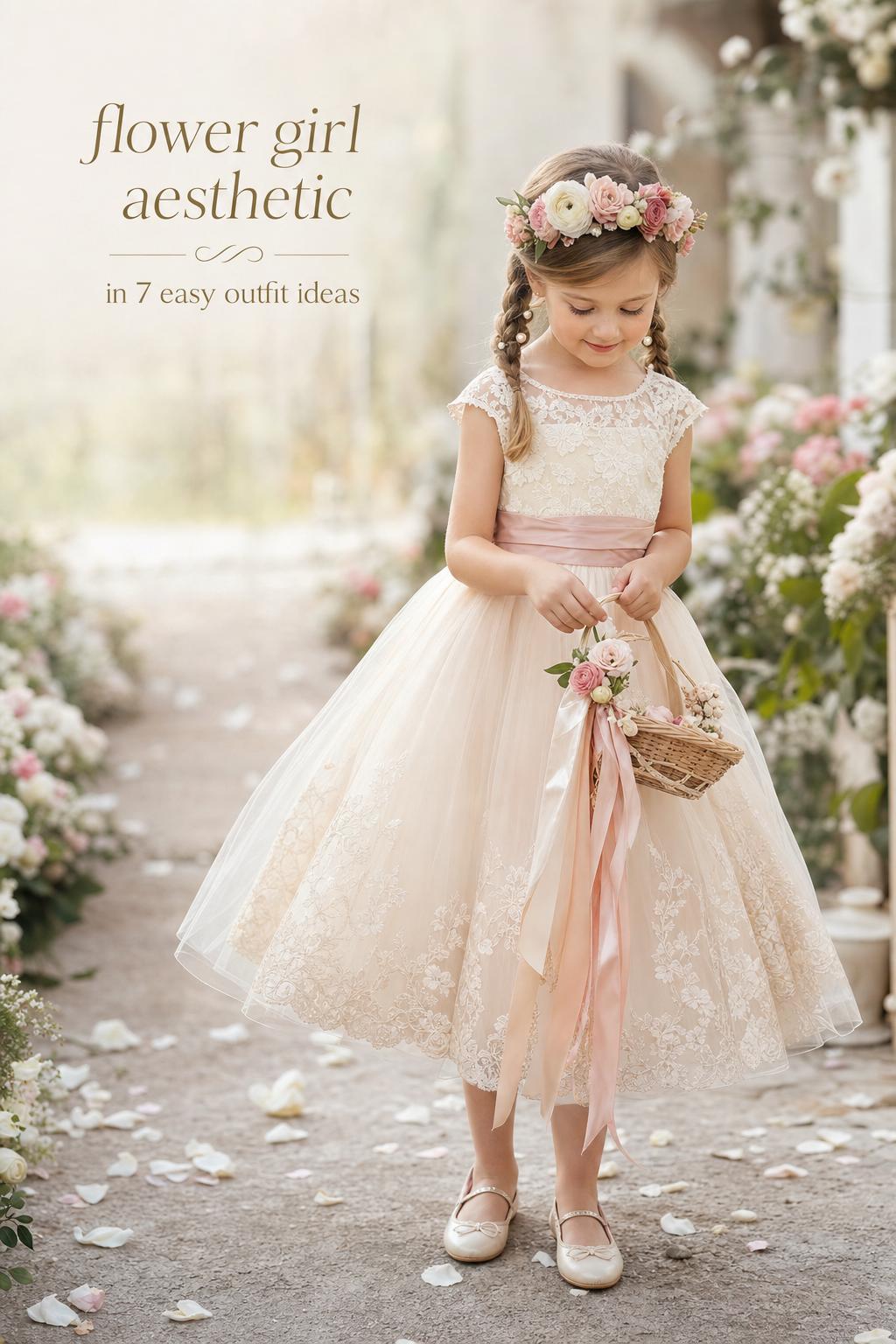
That is why the flower girl aesthetic remains so popular in U.S. wedding planning. It brings together dress silhouettes, fabrics, accessories, and color coordination in a way that photographs beautifully and supports the mood of the day. From romantic wedding styling to boho chic details, the look works best when every element is chosen with both visual harmony and practical movement in mind.
What defines a flower girl aesthetic
A flower girl aesthetic is the complete visual language of how a flower girl fits into the wedding ceremony. It includes the dress style, color palette, fabric choice, hair, accessories, and even the small details like baskets or floral adornments. More than a single outfit, it is a styling approach that connects the child’s look to the wedding aesthetic, whether that mood is garden romance, boho ease, classic formality, or something more whimsical.
Your wedding look is only the beginning.
Keep your guest list, vendors, timeline, and every important detail together with Zarellea — so your day feels as considered as your style.
The strongest versions of this style usually begin with coordination, not exact matching. Bridesmaids may wear one color while the flower girl wears white, ivory, blush, or another complementary shade. A romantic wedding may lean into soft pastels and lace details, while a rustic or garden wedding flower girl look may rely on tea-length silhouettes, airy tulle, and flower crowns. In more formal celebrations, satin-inspired smoothness, classic shapes, and restrained accessories often feel more polished.
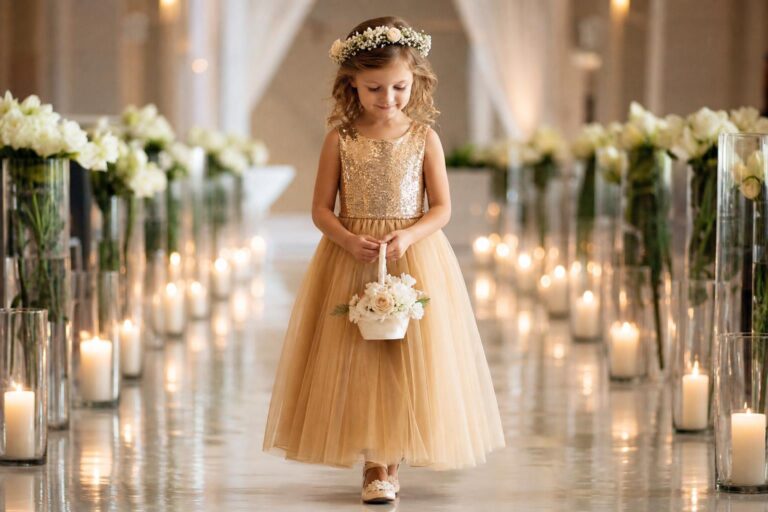
What makes this aesthetic memorable is that it supports the ceremony atmosphere. In golden outdoor light, lace overlays and floral hairpieces feel gentle and natural. In a candlelit reception setting, richer textures and deeper tones can look more intentional. The point is not to over-style a child, but to create a look that feels integrated with the event, easy to move in, and visually soft in photographs.
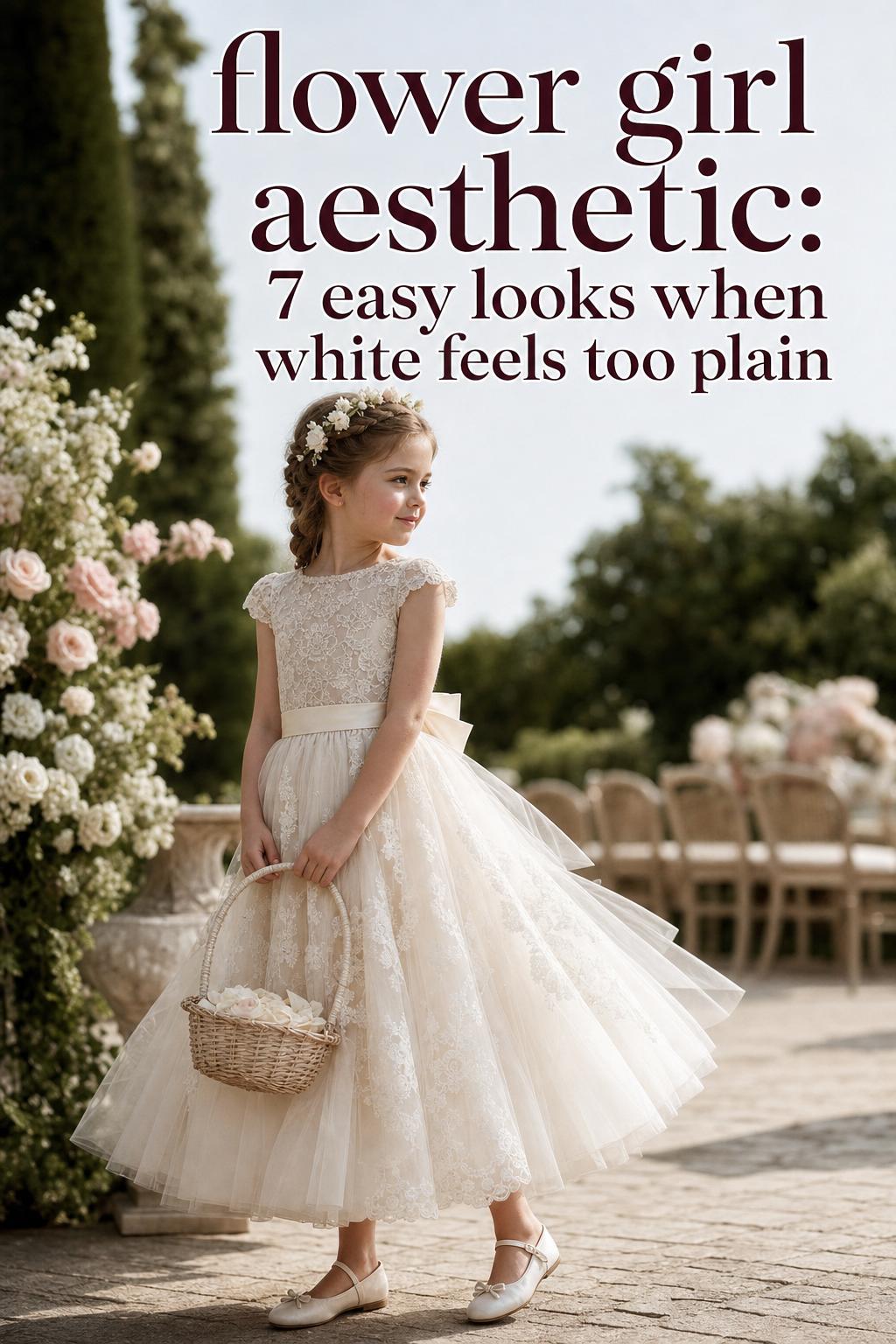
The mood board behind the style: romantic, boho, classic, and whimsical
Most flower girl styling falls into a few recurring aesthetic families. Romantic and garden-led looks are especially common, often built around soft fabrics, floral accents, and a gentle palette. Boho flower girl styling usually brings in more relaxed movement, earthy or muted tones, loose braids, and natural-looking accessories such as a flower crown or hair vine. A classic wedding aesthetic favors simplicity, refined color coordination, and timeless silhouettes that will not distract from the ceremony.
Whimsical interpretations often overlap with the floral side of the role itself. Petal baskets, soft volume, and delicate embellishment can all work here, especially when the ceremony has a playful or storybook quality. Florists’ Review leans naturally into this connection, highlighting how floral storytelling and basket choices reinforce the overall visual theme of the wedding.
Wedding media and bridal brands frequently circle the same core ideas. The Knot focuses strongly on color coordination and how the flower girl supports the wedding palette. Wedding Forward expands the conversation with dresses, long sleeve styles, hairstyles, and baskets. Estelle Bridal gives more attention to outdoor garden aesthetics, lace detailing, and color direction, including a regional note through Houston. Together, these approaches show that the flower girl aesthetic is not just about one pretty dress; it is a carefully styled supporting role in the visual composition of the day.
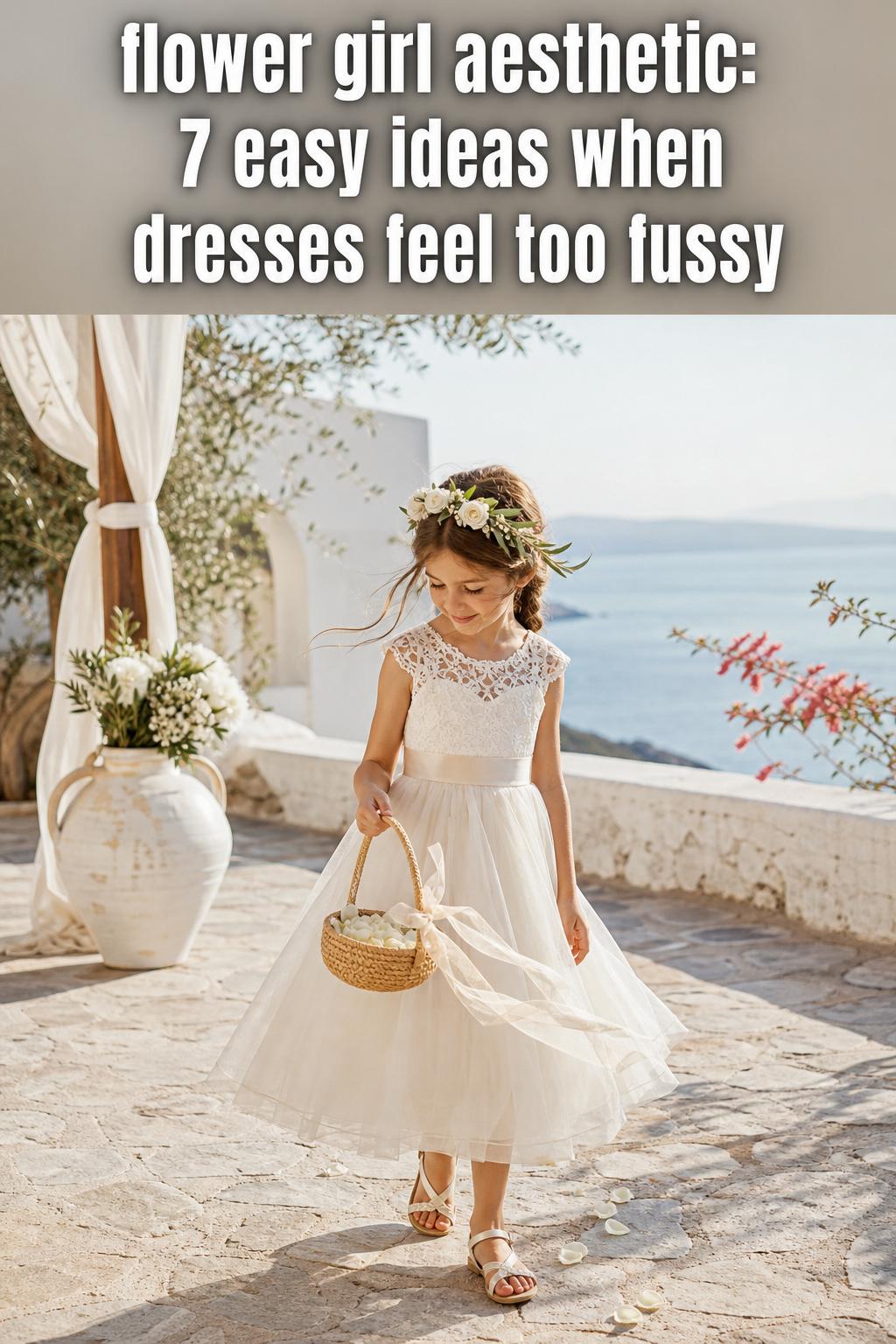
Color and fabric set the tone before any accessory does
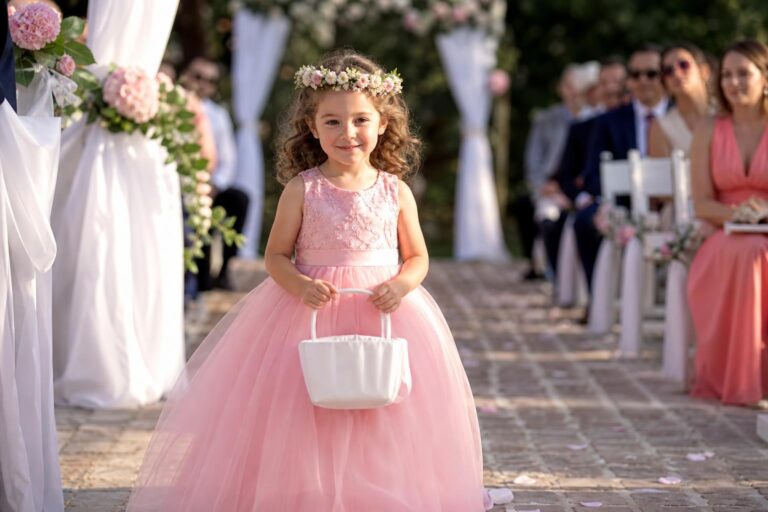
Color is often the first decision because it determines whether the look reads traditional, modern, romantic, or nontraditional. White remains a familiar and traditional choice, but ivory, blush, pale blue, pastel tones, earthy neutrals, and even bolder shades can all work when they complement the broader wedding colors. The Knot frames this clearly: the question is not simply what a flower girl should wear, but how her dress fits into the wedding aesthetic and relates to the bridal party.
Fabric then shapes the mood of that color. Lace overlays immediately bring softness and a garden feel. Tulle creates airy volume and a more dreamy silhouette. Organza offers lightness with a touch of structure, while smoother fabrics can feel more formal and polished. In trend-focused coverage from Aylu Bebe, fabrics and silhouettes are central because they influence how current or timeless the overall look appears.
When choosing among these options, practicality matters as much as appearance. Tulle can feel magical in photos, but too much volume may be difficult for a very young child to manage. Lace details can elevate the look, but heavy embellishment may irritate sensitive skin or restrict movement. The most successful fabric choices are the ones that still allow the child to walk comfortably down the aisle and sit, move, and celebrate without constant adjustment.
- Pastels create a romantic wedding mood and pair naturally with garden venues.
- Earthy tones work especially well in boho chic and rustic settings.
- White or ivory often suits classic and formal ceremonies.
- Lace overlays support a soft floral aesthetic.
- Tulle and organza add movement that reads beautifully in wedding photography.
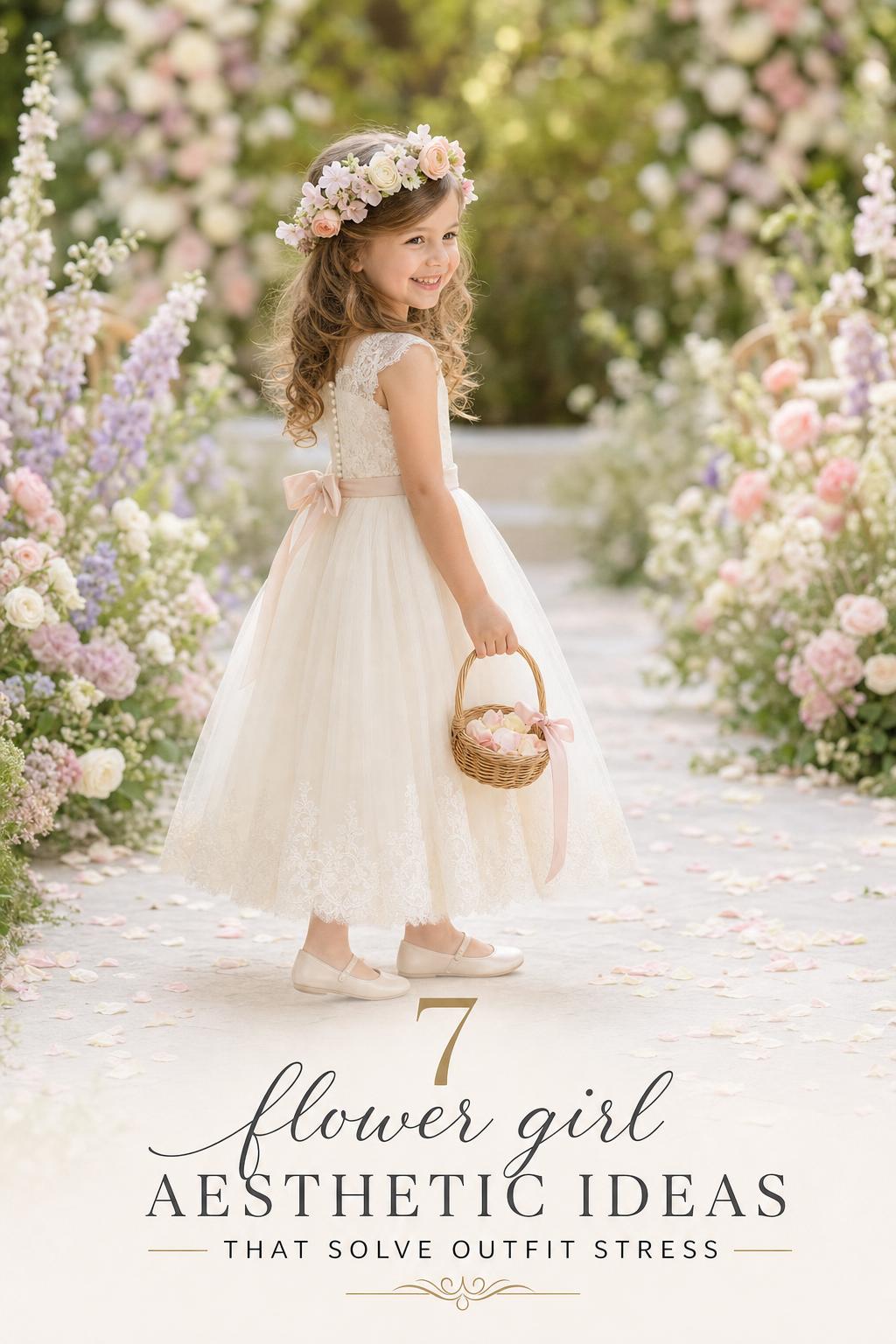
Look: garden romance in lace and soft pastels
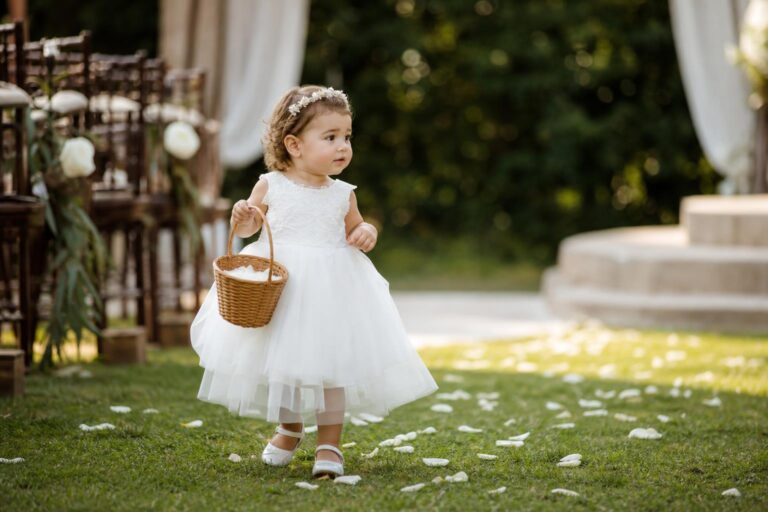
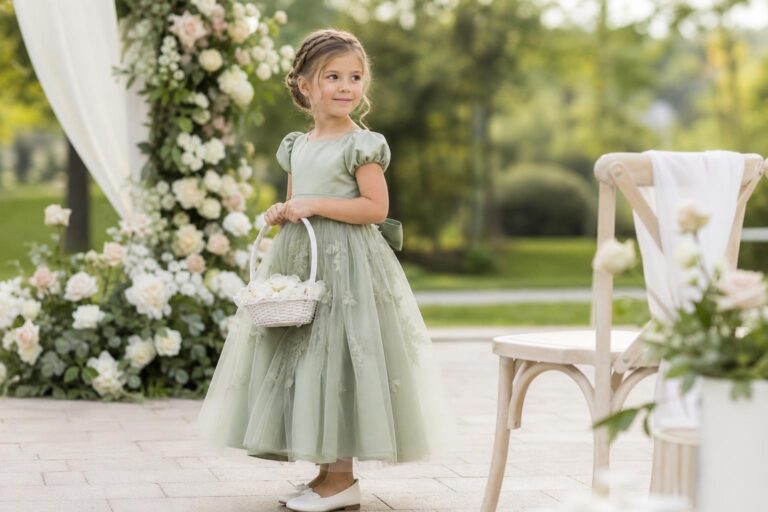
This interpretation of the flower girl aesthetic feels as though it belongs in an outdoor ceremony framed by fresh blooms and filtered sunlight. The silhouette is gentle rather than dramatic, with a light skirt that moves easily and a shape that feels sweet without becoming overly formal. It is one of the most recognizable flower girl looks because it aligns so naturally with a romantic garden wedding.
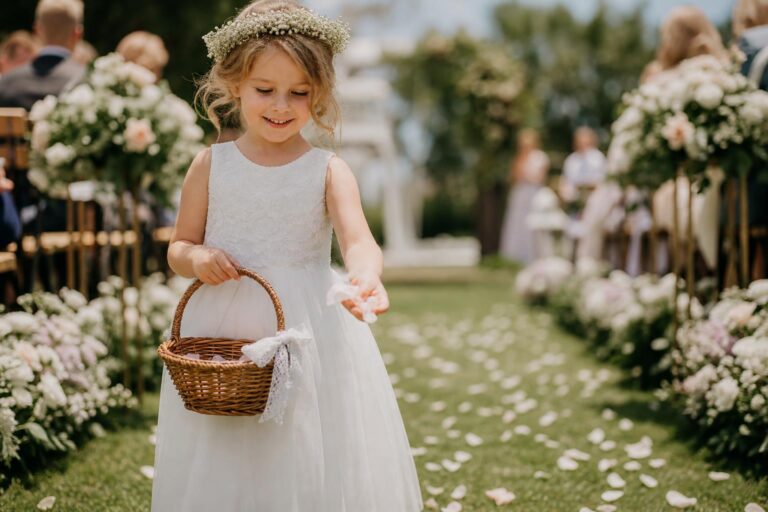
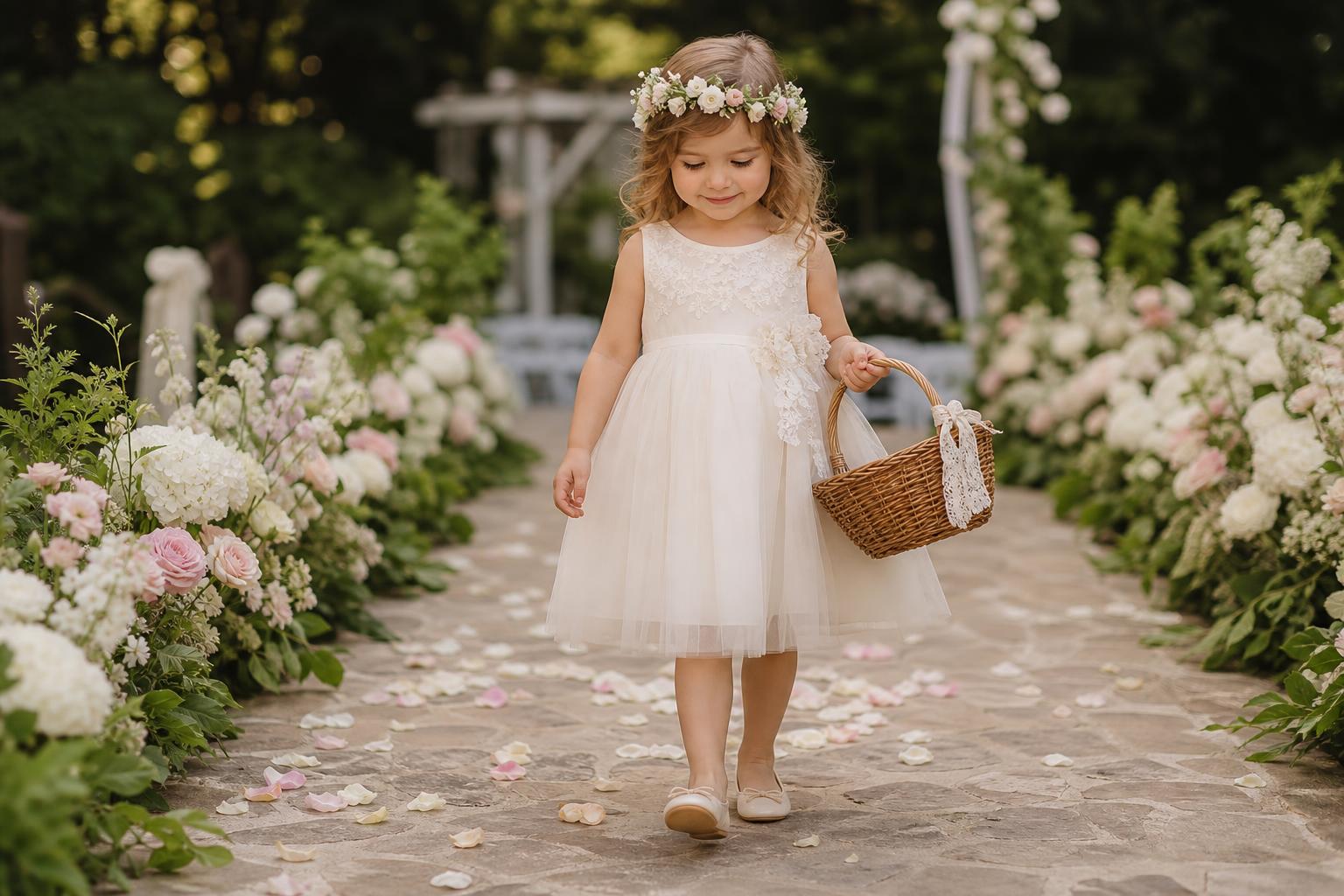
A lace overlay dress in white, ivory, or blush creates the visual center. Tulle underneath can add softness without excessive fullness, and a subtle sash can tie the look back to the wedding colors. Hair is best kept soft as well: loose waves, a half-up style, or a simple braid finished with a floral crown or delicate pins. A petal basket works here because it reinforces the floral storytelling of the aisle moment.
The reason this look works so consistently is that every detail supports the venue and light. Estelle Bridal’s emphasis on outdoor garden aesthetics and lace details reflects a practical styling truth: in natural settings, textured fabrics and restrained color often feel more elegant than anything overly embellished. The look appears polished in photos but still childlike and comfortable.
Look: boho softness with earthy color and easy movement
For weddings with a more relaxed mood, the boho flower girl interpretation feels effortless and warm. This is the version that suits rustic venues, open-air ceremonies, and celebrations where the bridal styling leans organic rather than traditional. The silhouette should float rather than structure, with enough movement to keep the child comfortable through the ceremony and early reception moments.
Earthy tones, muted neutrals, or soft dusty shades bring the palette into boho territory. Tulle can still be used, but with less volume and a looser drape. Lace remains useful here, though it often looks best when paired with simpler lines. Hair accessories should feel natural instead of formal, so flower crowns, hair vines, and understated floral pins tend to work better than rigid pieces. Wedding Forward and The Knot both connect crowns and hairstyle direction closely to this romantic-boho mood.
This look succeeds when it avoids looking too styled. The best boho flower girl outfit is not crowded with too many accents at once. A soft dress, a single floral accessory, and a basket or ribbon detail are usually enough. The result feels aligned with a boho chic wedding aesthetic while still honoring the age and ease of the wearer.
Look: classic formal elegance for a timeless ceremony
Some weddings call for a quieter kind of beauty. In a formal ceremony or a traditional venue, the flower girl aesthetic often shifts away from whimsical abundance and toward cleaner lines. The visual mood here is neat, polished, and understated, with an emphasis on timelessness over trend. This is especially effective when the bridal party itself is dressed in a more refined, coordinated palette.
A classic silhouette such as A-line or a softly structured dress shape keeps the look elegant without becoming stiff. White or ivory is especially suited to this direction, though a complementary tone can work if the wedding colors call for it. Accessories should remain minimal: perhaps a simple sash, polished shoes, or a small hairpiece rather than a fuller flower crown. Bridal Guide’s focus on fit, comfort, and accessory coordination is especially useful in this setting because polished styling can quickly feel uncomfortable if the proportions are off.
The beauty of this look is restraint. Rather than competing with the bride or bridesmaids, it quietly echoes the formality of the event. In photos, that restraint often translates as elegance. It also tends to age well, which matters when families want the wedding album to feel timeless rather than tied to one passing trend.
Look: whimsical floral storytelling with baskets and petal details
There are weddings where the flower girl’s role is meant to feel especially visible and ceremonial. In those moments, a whimsical floral interpretation can be beautiful. The silhouette remains child-friendly, but the styling leans into the symbolic side of the role: petals, baskets, floral adornments, and soft texture that feels almost storybook in tone.
A dress with gentle volume, floral accents, or layered texture works well, especially when paired with a flower basket that feels intentionally chosen rather than generic. Florists’ Review emphasizes that baskets and floral design concepts are not simply props; they reinforce the theme and carry the aesthetic forward. Hair can include a floral crown, while the color palette can mirror the wedding flowers, particularly in romantic or traditional celebrations.
The key is keeping the look coherent. If the basket is floral and expressive, the dress can stay relatively simple. If the dress has lace overlays and visible texture, then accessories should soften rather than multiply the visual effect. This is one of the easiest places to lose balance, so thoughtful editing matters.
Choosing silhouettes that suit both the wedding and the child
Silhouette often determines whether a flower girl outfit feels easy or difficult to wear. A-line styles are generally versatile because they move well and suit many wedding aesthetics, from classic to romantic. Tea-length options can be especially practical for outdoor venues, where very long skirts may drag or catch. Fuller shapes can look charming in formal or whimsical settings, but they require more care if the child is very young or active.
Robe Marie’s guidance on dress styles for every wedding theme speaks directly to this decision. It is not enough to choose a silhouette because it looks beautiful on a hanger. The shape should support the ceremony setting, the child’s age, and how much movement the day will require. A silhouette that works in a ballroom may be less practical for a beach path or a garden lawn.
Long sleeve flower girl dresses can also shift the tone of the aesthetic. In cooler weather or more formal celebrations, sleeves add polish and seasonality. Wedding Forward includes this styling angle because sleeves change both the visual balance and the practical wearability of the outfit. They can be lovely, but they should still allow ease through the shoulders and arms.
Style tip: let venue conditions guide the hemline
A hemline that looks perfect in a boutique photo may behave very differently on grass, uneven stone, or sandy pathways. For outdoor weddings, a slightly shorter or tea-length silhouette often gives a cleaner result both visually and practically. It keeps the flower girl more comfortable and reduces the risk of constant tugging or tripping during the ceremony.
Hair and accessories are where the aesthetic becomes unmistakable
Hairstyling is often what gives a flower girl look its final identity. The Knot’s flower girl hairstyles coverage and related wedding content consistently position hair as a bridge between dress styling and theme. A boho braid, a soft updo, or loose hair with pins can shift the entire mood of the outfit even when the dress itself is simple.
Flower crowns are among the strongest visual signals in this category. They immediately push the look toward romantic, garden, or boho styling. Hair pins and smaller floral pieces feel quieter and can work well in classic or formal weddings. The choice depends on scale. If the dress has a lot of texture, a more restrained hair accessory may look more refined. If the dress is minimal, a crown or more expressive floral element can add enough personality.
Accessories beyond hair should still feel age-aware. A basket, sash, or a few pearl-inspired details may be enough. More is not always better. In wedding styling, especially for children, accessories are most successful when they reinforce the wedding aesthetic without overpowering the person wearing them.
- Flower crowns suit boho, garden, and romantic wedding themes.
- Hair pins and delicate headpieces fit classic or more formal styling.
- Baskets reinforce floral storytelling and ceremony tradition.
- Sashes are useful for tying the look back to bridesmaid or wedding colors.
- Minimal accessories often create the most polished result.
Look: soft hair, delicate crowns, and romantic finishing details
Some of the most beautiful flower girl styling starts with the headpiece rather than the dress. Imagine a soft hairstyle with a gentle braid or half-up shape, finished with floral accents that echo the ceremony flowers. The overall mood is airy and sweet, ideal for a garden aisle or an outdoor golden-hour moment.
Here, the dress can stay relatively simple in tulle, lace, or organza while the crown or hair accessories carry the visual theme. Baby’s breath-style accents, floral pins, or a modest crown all fit comfortably within this romantic direction. The result feels considered without looking overworked, which is why this combination appears so often across flower girl hairstyles inspiration.
This approach works especially well when the wedding itself uses abundant floral décor. The child becomes part of the visual rhythm of the event, rather than a separate styling moment. It is one of the clearest examples of how a flower girl aesthetic should support the larger celebration.
Age-appropriate styling is not separate from good style
Several bridal and design-focused sources place age-appropriateness and comfort near the center of flower girl styling, and that emphasis is justified. A beautiful outfit that a child dislikes wearing rarely reads as elegant in real life. Fussing with fabric, slipping shoes, scratchy lace, or oversized accessories can quickly turn a charming ceremony role into a difficult one.
Susanne Lively’s perspective and similar guidance from Robe Marie underline an important point: style decisions should match the child’s age and the event demands. Younger flower girls typically need simpler silhouettes, softer fabrics, and fewer accessories. Older children may comfortably wear more detail, but comfort still matters, especially during long wedding days that include waiting, walking, photos, and the reception.
Footwear is part of this conversation too. The prettiest dress can lose its effect if the child cannot walk easily. Movement-friendly choices matter more than perfect matching. In practical terms, that often means choosing a dress with enough ease through the waist and skirt, a hemline suitable for the venue, and accessories that stay in place without constant adult adjustment.
Common styling mistake: prioritizing the photo over the full day
Wedding photography is important, but a flower girl outfit has to perform beyond one posed image. Dresses that are too heavy, too long, or too ornate may photograph well for a moment yet become uncomfortable by the time the ceremony begins. The best flower girl aesthetic always considers how the child will move, sit, and participate throughout the day.
Venue-first styling: where the wedding happens changes the look
A thoughtful flower girl look is often venue-led. Garden settings invite soft color palettes, floral details, and lighter textures. Rustic venues naturally support boho chic elements, earthy tones, and relaxed silhouettes. Beach ceremonies ask for lighter movement and practicality, while city or formal indoor venues often favor cleaner lines and polished accessories. This venue-based approach helps keep the outfit visually coherent with the rest of the wedding.
Estelle Bridal’s attention to outdoor garden aesthetics offers a useful example of how location influences style. A Houston wedding, for instance, may place more emphasis on breathable fabrics and ease of movement while still maintaining bridal elegance. Even without becoming heavily regional, that kind of local context sharpens the styling logic and keeps the look realistic.
Season matters in the same way. Long sleeves, richer fabrics, and deeper tones can suit cooler celebrations or evening ceremonies. Lighter fabrics, simpler layers, and softer silhouettes often work better in warmer outdoor settings. Matching the aesthetic to the environment is one of the clearest signs of experienced wedding styling.
Look: outdoor garden softness with lace overlays and tea-length ease
This variation is especially persuasive because it merges beauty with movement. It is made for an outdoor ceremony where the flower girl will walk across grass, stone, or a garden path, and where the styling needs to look graceful from every angle. The silhouette is usually tea-length or slightly shorter than a formal full-length dress, keeping the line airy and practical.
Lace overlays give the look its romantic texture, while a soft pastel or ivory palette keeps it connected to the wedding colors. A small basket, low-key sash, or modest hair accessory completes the outfit without making it feel busy. Estelle Bridal’s preference for garden styling and lace detail is particularly relevant here because this combination tends to perform beautifully in natural light.
The advantage of this look is its reliability. It photographs well, suits many wedding themes, and allows a child to move with confidence. For planners and parents trying to balance aesthetics and comfort, it is often one of the easiest directions to get right.
How trends shape the modern flower girl aesthetic
Trend-focused flower girl content often returns to three themes: silhouettes, fabrics, and color palettes. Aylu Bebe’s couture-style trend framing reflects how contemporary bridal styling increasingly treats the flower girl as part of the total wedding fashion picture. That means even subtle updates in volume, texture, or color can influence how current the final look feels.
One shift within the broader aesthetic conversation is a stronger emphasis on visual coordination rather than strict matching. Instead of mirroring bridesmaids exactly, flower girl styling often borrows a fabric mood, a complementary shade, or a detail like lace or floral accessories. This creates a more layered and editorial result. It also gives greater flexibility across age ranges and venue types.
Another useful observation is that trend does not have to mean novelty. The most enduring flower girl aesthetic still relies on familiar elements such as tulle, organza, crowns, baskets, and soft hairstyles. What changes is how these details are edited together. A trend-conscious wedding may use a more muted palette or a less traditional silhouette, but the visual language remains rooted in romance, ceremony, and cohesion.
An overlooked layer: sustainable and ethical choices
One of the less developed areas in flower girl styling is the conversation around sustainable flower girl dress choices and ethically made flower girl clothing. Yet this consideration fits naturally into the category because fabrics, production choices, and longevity all matter when selecting occasion wear for children. If a family or planner values a more thoughtful wardrobe approach, fabric quality and production transparency become part of the aesthetic conversation as well as the practical one.
This does not mean compromising on beauty. It means looking more closely at fabric behavior, construction, and how often a dress may realistically be worn again or passed along. Since many articles focus heavily on visual inspiration, this is an area where a more considered decision can stand out. A dress that balances softness, durability, and a timeless silhouette may feel more worthwhile than one chosen purely for trend appeal.
When sustainable considerations are part of the decision, simpler accessories and versatile color palettes often become even more appealing. They allow the dress to remain relevant across different events and photographs, while still preserving the romantic quality expected of a flower girl look.
Designer and brand notes that shape the conversation
Within flower girl style coverage, a few names help frame authority and visual direction. The Knot remains central for etiquette-minded styling questions such as color coordination and hairstyles. Wedding Forward broadens the practical inspiration with dresses, baskets, hairstyles, and expert-style guidance. Bridal Guide reinforces the importance of fit, comfort, and balanced accessorizing.
On the brand side, Arabella and Rose appears through Wedding Forward, with Chelsea Benson adding expert perspective on style. Estelle Bridal contributes a garden-forward, lace-aware point of view with a Houston connection. Aylu Bebe focuses on trend and couture-inspired direction, while Robe Marie offers a more practical style-guide approach. Susanne Lively brings a designer-led editorial voice centered on wearability and wedding alignment.
Taken together, these names matter because they reflect the way flower girl styling is typically discussed in the wedding space: part inspiration, part planning, and part practical dressing. Each emphasizes a slightly different aspect, but all return to the same core idea that the flower girl should feel connected to the wedding aesthetic without sacrificing comfort or age-appropriateness.
A practical styling blueprint for a cohesive flower girl look
When the choices start to feel overwhelming, it helps to build the look in order. Begin with the venue and wedding mood, then choose the color palette, then the silhouette, and only after that add accessories and hairstyle. This prevents over-styling and keeps every decision tied to the event itself.
- Identify the wedding aesthetic first: romantic garden, boho chic, classic formal, or whimsical floral.
- Choose a color family that complements the bridal party rather than copying it exactly.
- Select a fabric that supports the mood and the weather, such as lace, tulle, organza, or a smoother formal finish.
- Pick a silhouette based on age, venue surface, and comfort during a long celebration.
- Add only one or two defining accessories, such as a flower crown, sash, or basket.
- Finish with a hairstyle that supports the overall mood without requiring constant upkeep.
This sequencing matters because it mirrors how successful wedding styling usually works. The strongest flower girl aesthetic is rarely the result of one dramatic detail. It is the result of many small, compatible choices made with the full event in mind.
How to recreate the look without overcomplicating it
If you are trying to simplify the process, choose one leading aesthetic signal and build around it. For example, if the wedding is garden-romantic, start with lace overlays. If the wedding is boho, begin with a looser silhouette and a floral crown. If the event is classic, choose ivory and a clean A-line shape. Once that anchor is set, every other choice becomes easier and the final result feels more intentional.
Why the flower girl look matters in wedding photography
Flower girl styling is often remembered through photographs, which is one reason the aesthetic receives so much attention. Soft fabrics like tulle and organza catch movement beautifully, lace adds detail without needing heavy ornamentation, and coordinated color palettes keep the image cohesive with the rest of the bridal party. Even a simple basket or crown can become visually meaningful when it echoes the ceremony flowers or venue mood.
At the same time, the camera tends to reveal imbalance quickly. Accessories that are too large, colors that clash with the wedding palette, or silhouettes that overwhelm the child can look less elegant than expected. That is why proportion matters so much. The goal is not only a beautiful portrait but a look that sits naturally within the visual story of the wedding day.
For this reason, many stylists prefer softness over excess. Gentle volume, coherent color, and one or two signature accessories often create the strongest result. The flower girl then appears as part of the celebration’s atmosphere, not a disconnected style moment.
Final thoughts on creating a flower girl aesthetic with depth and ease
The most successful flower girl aesthetic feels both lovely and believable. It draws from the wedding colors, the venue, the mood, and the ceremony role itself, then translates those elements into a look built around soft fabrics, thoughtful silhouettes, and measured accessories. Whether the direction is boho, garden-romantic, classic, or whimsical, the best styling always balances beauty with comfort.
That balance is what makes the aesthetic so enduring. It can be adapted to many weddings, many regions, and many personal tastes without losing its core identity. Start with the atmosphere of the celebration, keep the child’s comfort central, and let the details support the mood rather than compete with it. That is where the look becomes memorable.
FAQ
What is a flower girl aesthetic?
A flower girl aesthetic is the overall visual style of the flower girl’s look, including dress silhouette, color palette, fabric, hairstyle, and accessories. It is most successful when it feels coordinated with the wedding aesthetic rather than chosen in isolation.
Should a flower girl wear white?
White is a traditional choice, but it is not the only one. Ivory, blush, pastels, earthy tones, and other complementary colors can work beautifully when they align with the wedding colors and the overall bridal party styling.
How do I match a flower girl dress to the wedding theme?
Start with the venue and mood of the wedding, then choose a color and fabric that support that atmosphere. Garden weddings often suit lace overlays and soft pastels, boho celebrations lean toward relaxed silhouettes and floral accessories, and formal ceremonies usually look best with cleaner lines and restrained details.
What accessories work best for a flower girl?
Flower crowns, hair pins, baskets, and sashes are the most common choices because they reinforce the ceremony role and wedding style. The best accessory selection is usually minimal and proportional, especially when the dress already has visible texture or detail.
What fabrics are most popular for a flower girl aesthetic?
Lace, tulle, and organza appear frequently because they create softness, movement, and a romantic finish. These fabrics work across many wedding styles, though the exact balance should depend on comfort, season, and how formal the event feels.
How important is comfort when choosing a flower girl outfit?
Comfort is essential because the child needs to walk, stand, sit, and participate throughout the day. A dress that looks beautiful but restricts movement or feels uncomfortable can quickly become impractical, especially during longer celebrations.
What hairstyle is best for a flower girl?
The best hairstyle depends on the wedding aesthetic and the child’s age, but soft braids, half-up styles, and simple updos are especially versatile. Floral crowns and small pins can elevate the look while still keeping it gentle and age-appropriate.
Are long sleeve flower girl dresses a good idea?
They can be a strong choice for cooler seasons or more formal weddings because they add polish and coverage. The main consideration is fit through the arms and shoulders, since sleeves should still allow the child to move comfortably.
How can I make the flower girl look more sustainable?
Focus on a timeless silhouette, quality fabric, and a color palette that could be worn again or passed along. A more thoughtful approach to materials and overall wearability can make the outfit feel both beautiful and more practical beyond a single event.
Does the flower girl need to match the bridesmaids exactly?
No, exact matching is not necessary and often is not the strongest visual choice. A coordinated look usually feels more polished, with the flower girl borrowing from the wedding palette, fabric mood, or accessory style while keeping a distinct, age-appropriate identity.