Spring Wedding Guest Hairstyles with a Polished Feel
Some wedding invitations answer every style question at once. The venue is clear, the dress code is precise, and your outfit falls into place. Hair is usually where the hesitation begins. Among the most searched wedding guest hairstyles, the same comparisons appear again and again: updos versus half-up styles, polished buns versus soft waves, braided looks versus sleek ponytails. They are discussed together because they solve similar problems while creating very different moods.
A candlelit ballroom reception, a breezy beach ceremony, and a late-summer garden wedding may all call for elegant hair, but not the same kind of elegance. The best choice depends on movement, texture, neckline, accessories, and how long the style needs to last once the dancing starts. This guide compares the main wedding guest hairstyle approaches in a way that is practical rather than abstract, so you can see how each look behaves, where it shines, and when one styling direction makes more sense than another.
The hairstyle families most guests compare
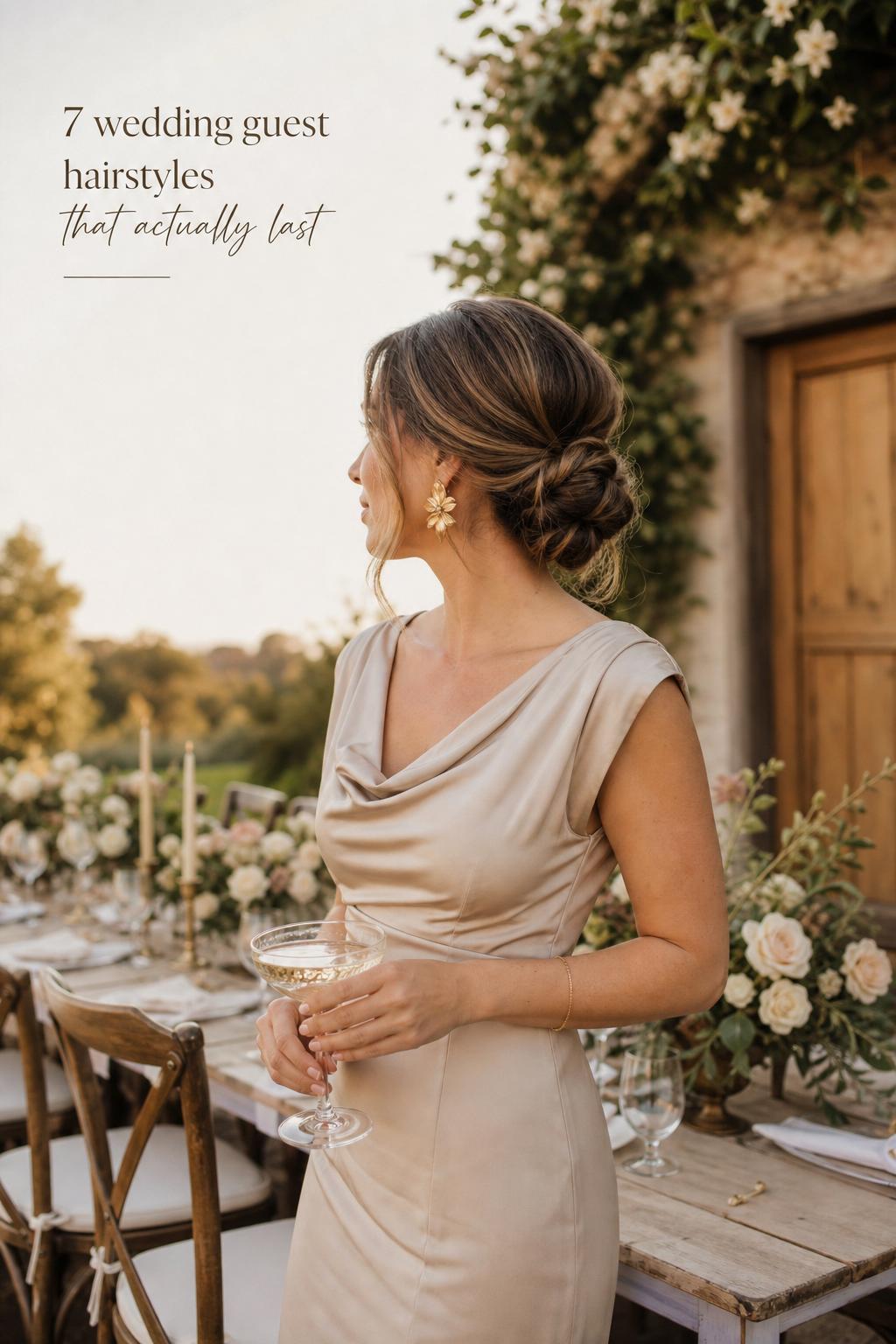
Most wedding guest hairstyles fall into a few clear style families. Updos, half-up-half-down styles, waves, braids, and ponytails dominate wedding hair ideas because each one balances beauty and function differently. Some hold shape through humidity and long receptions. Others feel softer, more romantic, and less structured. Understanding those distinctions makes the final decision easier than scrolling through endless inspiration photos.
Style overview: updos and buns
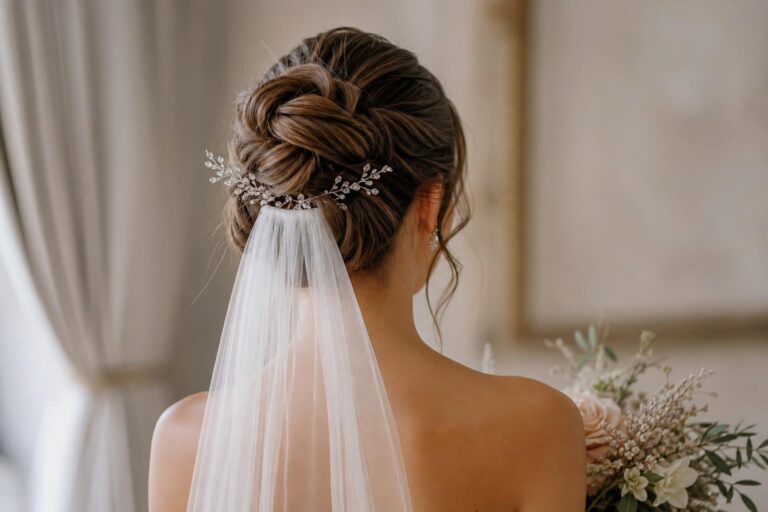
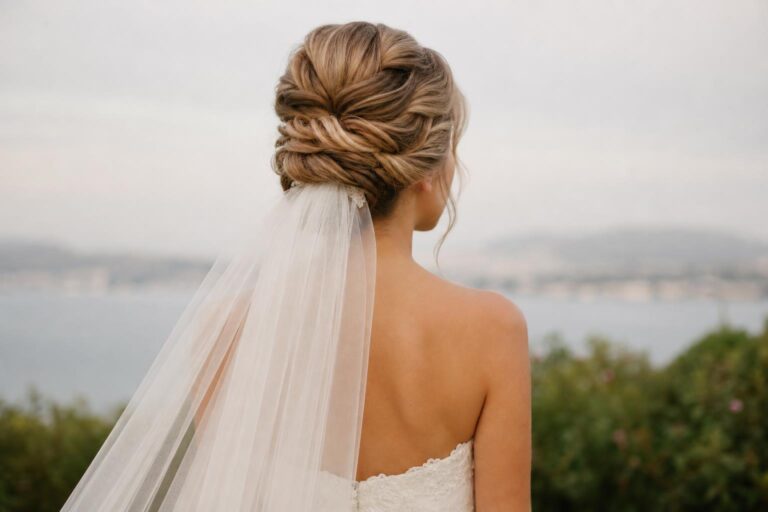
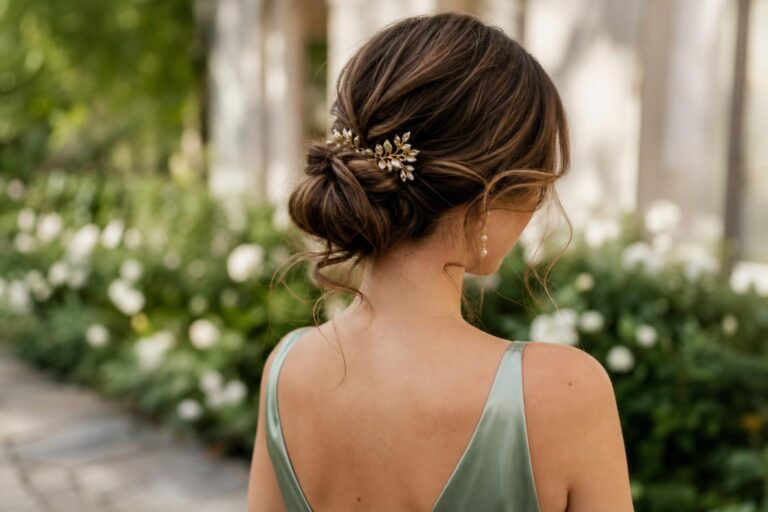
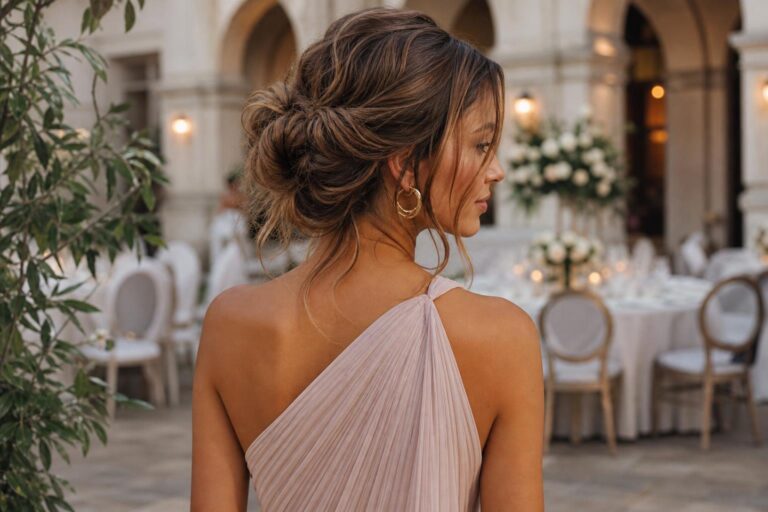
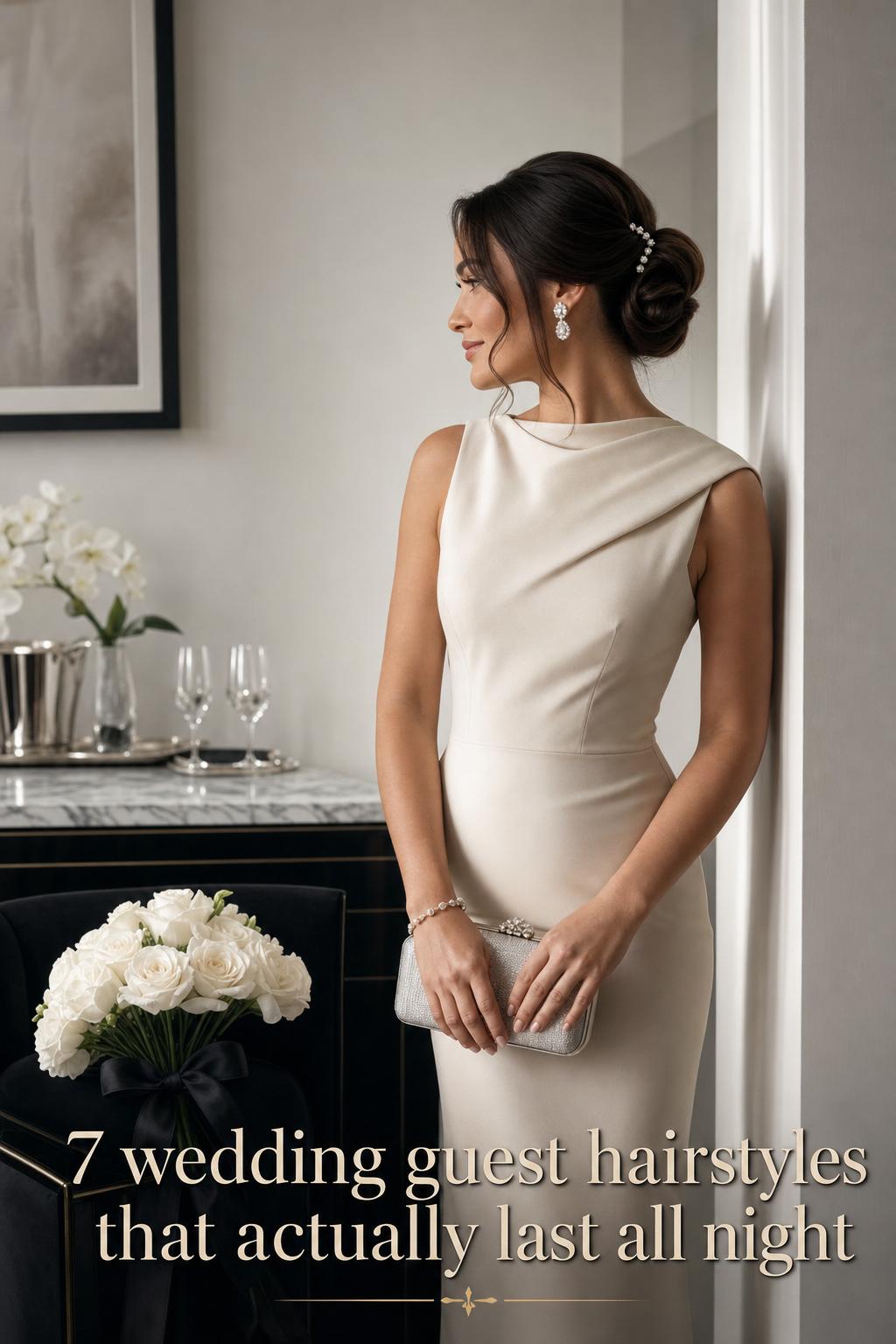
Updos include twisted buns, loose buns, sculptural updos, soft sculpted buns, and more formal pinned styles. Their defining characteristic is control: the hair is lifted, secured, and shaped away from the face or neck. The silhouette can be sleek or textured, but the overall mood is polished and occasion-aware. These styles are often associated with ballroom weddings, city venues, and dressier celebrations where longevity matters as much as appearance.
Your wedding look is only the beginning.
Keep your guest list, vendors, timeline, and every important detail together with Zarellea — so your day feels as considered as your style.
Style overview: half-up-half-down looks
Half-up styles sit between relaxed and formal. Part of the hair is pinned or twisted back while the remaining length falls in waves, curls, or a smooth finish. The aesthetic is romantic and balanced, especially for guests who want softness around the shoulders without sacrificing structure. This category often works well for medium-length hair and long hair because it frames the face while still feeling wedding-ready.
Style overview: waves and curls
Soft waves, over-the-shoulder curls, tousled waves, full and curly looks, and perfect curls for medium-length hair belong to the most visually fluid family. These styles rely on movement, texture, and shine rather than pinning. Their mood can range from effortless to glamorous depending on the parting, polish level, and volume. They are especially popular for garden weddings, destination celebrations, and settings where a more relaxed elegance feels right.
Style overview: braids and braided hybrids
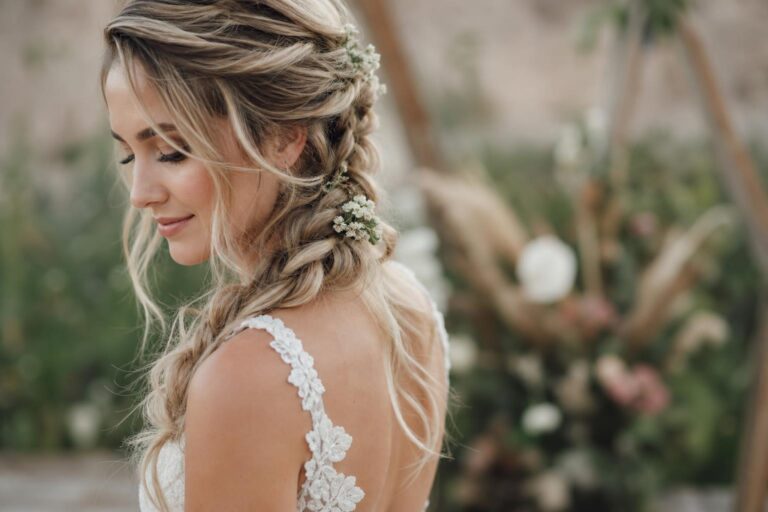
Braided wedding guest hairstyles include thick braids, braided crowns, and braided accents worked into buns or half-up styles. Braids introduce texture and shape at the same time, which is why they appear so often in modern wedding hair ideas. They can feel bohemian, refined, or quietly dramatic depending on scale and placement. A braid can also act as structure, making softer styles feel more intentional.
Style overview: ponytails and sleek pulled-back styles
Pulled-back styles such as the cascading ponytail and sleek side part have a cleaner visual language. They depend on line, shine, and proportion more than volume. A ponytail can read modern rather than casual when the crown has lift or the lengths are softly styled. These looks are often linked to fashion-forward dressing, especially when paired with minimalist silhouettes or a sharper city-wedding mood.
Updos versus half-up styles: structure against softness
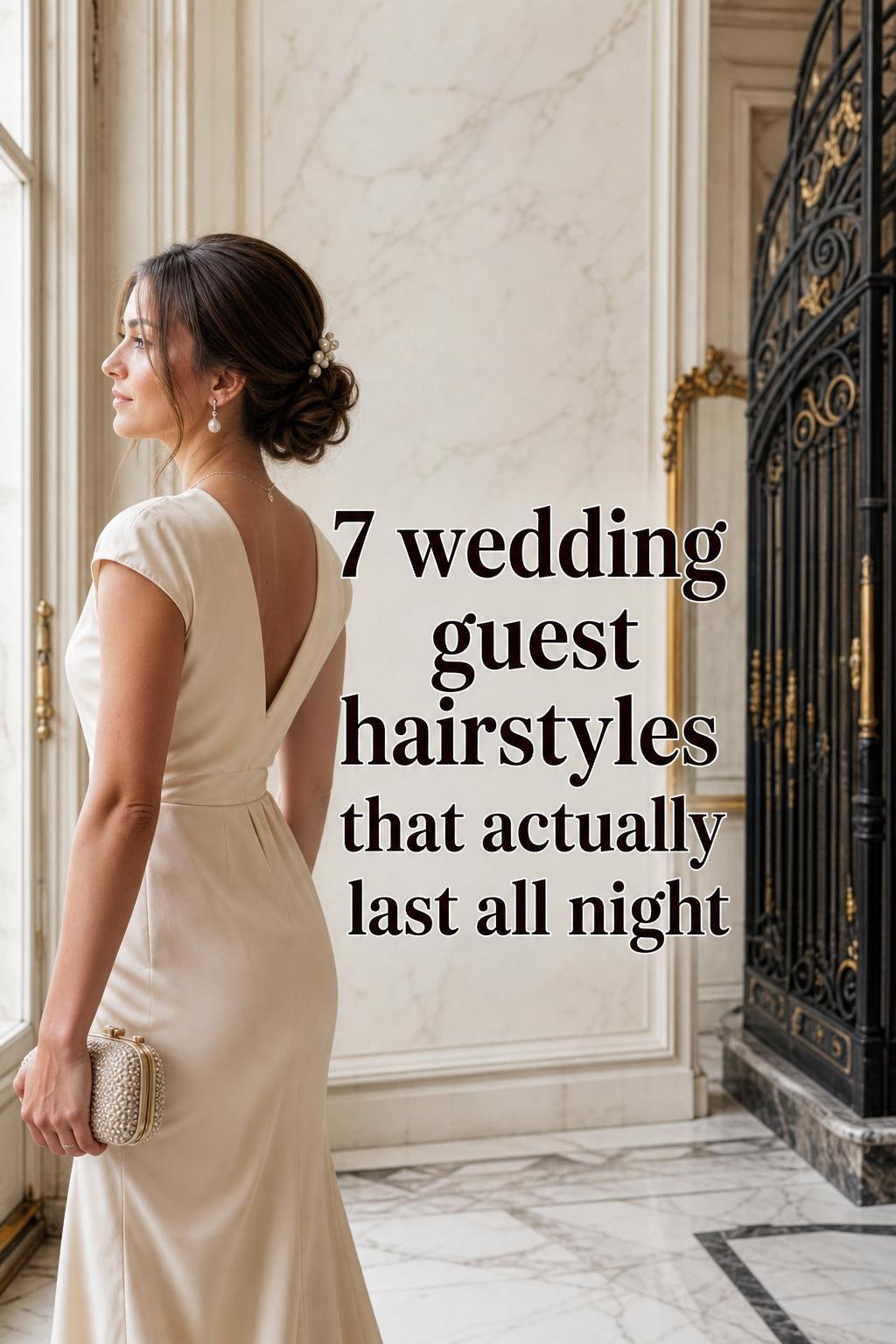
This is one of the most common wedding guest hairstyle decisions because both options feel celebratory, yet they create different outcomes. Updos prioritize hold, clean lines, and comfort through a long event. Half-up styles preserve length and movement, which often feels more romantic and less formal. Neither is universally better; the distinction lies in how much structure you want your hair to carry.
Silhouette and formality
An updo changes the silhouette immediately by exposing the neck, shoulders, and often the back of the dress. That creates a more formal profile, especially with sleek finishes or sculpted pinning. A half-up look keeps the vertical line of the hair visible, so the effect is softer and usually a touch less formal. If the outfit already has strong structure, an updo often sharpens it; if the outfit is floaty or romantic, a half-up style tends to echo it.
Comfort over a full day
For a wedding that starts in sunlight and ends on a crowded dance floor, buns and twisted updos usually ask less of you. Hair is off the neck, less likely to fall into the face, and easier to maintain. Half-up styles offer more softness but can require occasional adjustment, especially if the hair is very smooth or fine. Guests who dislike fussing with their hair during a reception often lean toward a bun for this reason alone.
Best hair lengths for each
Medium-length hair often performs beautifully in half-up styles because there is enough length for waves while still keeping shape in the pinned section. Long hair can support either direction, though it makes dramatic updos and cascading ponytails especially striking. Short hair can absolutely work with small updos or pinned-back detail, but half-up looks may rely more on sculpted sections and accessories than on length.
Soft waves versus sleek styles: romantic movement or modern polish
Another useful comparison is not where the hair sits, but how it behaves visually. Soft waves and curls create motion. Sleek styles create precision. Both can be elegant wedding guest hairstyles, yet they speak different style languages.
The visual mood of waves
Waves tend to feel atmospheric. At a vineyard or garden ceremony during golden hour, soft waves or over-the-shoulder curls look natural in motion and photograph with ease. They pair beautifully with less rigid dressing and can make a simple guest outfit feel more dimensional. A textured finish also suits guests who want their hair to feel dressed up without appearing overly formal.
The visual mood of sleek hair
A sleek side part or polished pulled-back style has a different effect. It reads intentional, urbane, and clean. At a city wedding or formal evening reception, that restraint can feel especially chic. The emphasis shifts from movement to line: the parting, the shape of the hair against the cheekbone, the finish at the crown. This is often the better direction when the dress, jewelry, or neckline deserves a stronger frame.
Where humidity changes the decision
Practicality matters here. Research around top wedding hair guidance repeatedly returns to humidity and long-wear considerations. Soft waves can be beautiful outdoors, but they may expand, soften further, or lose definition in heat. Sleeker styles, buns, and more secured looks typically manage these conditions better. For guests heading to a beach or summer garden wedding, the most realistic decision may be choosing a controlled textured style rather than very loose curls.
Braids versus buns: texture-led elegance against classic refinement
Braids and buns are often grouped together because both can be practical and event-appropriate, yet they create very different kinds of polish. A bun is classic because it simplifies the silhouette. A braid stands out because it adds pattern.
How a bun reads at a wedding
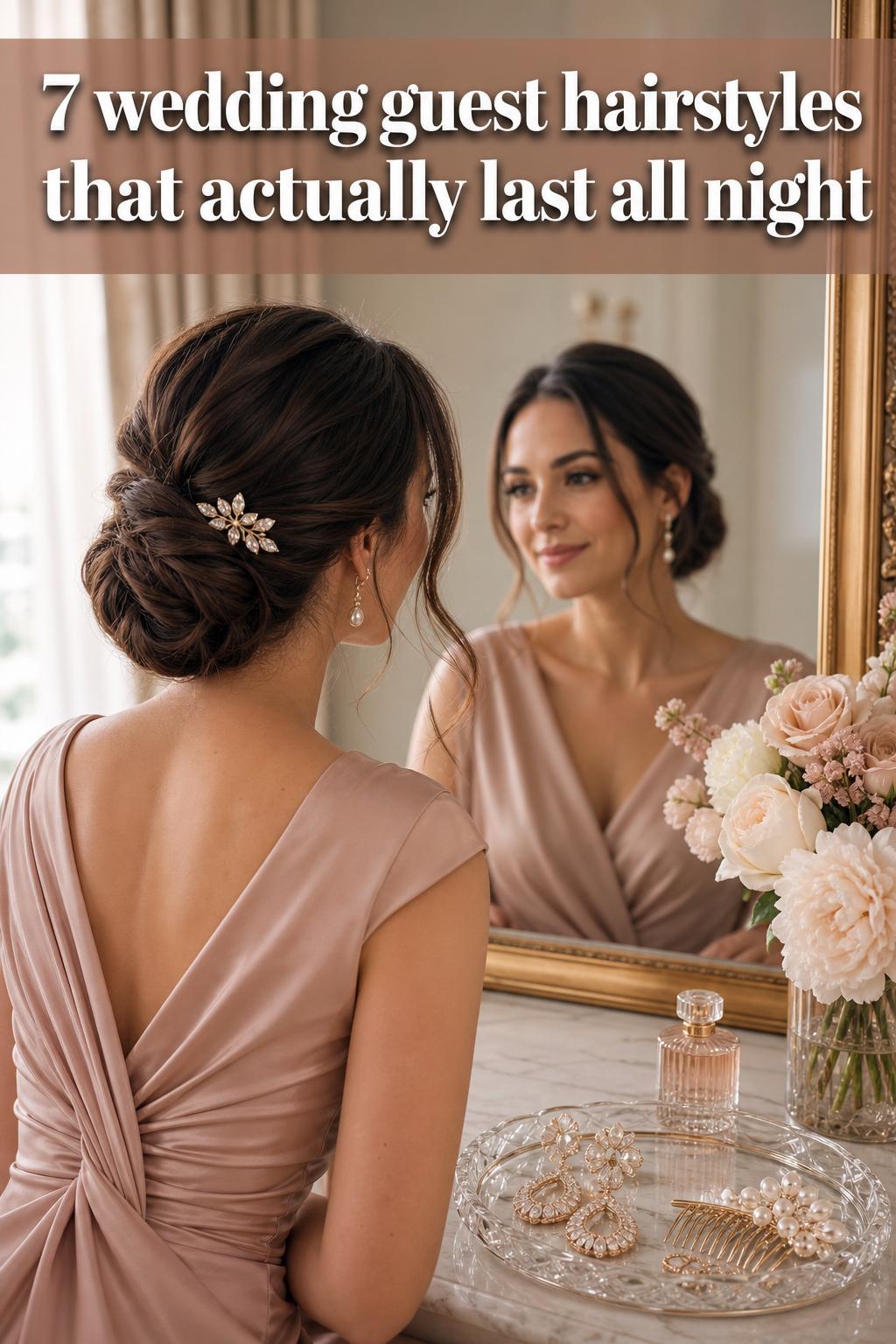
The twisted bun, messy bun, loose bun with long strands, and soft sculpted bun all work from the same logic: gather the hair, shape the volume, and finish with either sleekness or softness. Buns are especially useful when the dress code is formal or when the ceremony setting is traditional. They also leave more space for statement earrings, an open-back dress, or a high neckline.
How a braid changes the mood
A thick braid or soft braided crown introduces visible detail even before accessories are added. Braids can feel more relaxed than a bun, but not necessarily less polished. In a garden wedding or destination setting, they often strike the right note between romance and function. Braids also help textured and curly hair look intentional rather than overworked, because they build shape from the hair’s natural visual richness.
Which one lasts better
The answer depends on construction. A tightly built bun generally holds longest. A braid, however, often wears gracefully as the day goes on, especially if the mood of the event is softer. That makes braided styles appealing to guests who want a look that can loosen slightly without seeming undone. If you want immaculate structure until the last song, a bun is usually the safer choice. If you prefer texture that ages naturally, a braid may be more forgiving.
Choosing by hair length and texture, not just inspiration photos
Many gallery-style wedding guest hairstyles are shown as visual inspiration first, but the better choice starts with hair length and texture. This is where a style can move from aspirational to realistic.
Short hair: sculpted detail over excess volume
Wedding guest hairstyles for short hair often work best when they lean into precision rather than trying to imitate long hair. A sleek side part, sculpted waves, or a short style finished with pins or a fascinator can look more elevated than forcing a tiny updo that lacks shape. The visual goal is definition. In a formal room, that controlled finish can be every bit as dressed up as a larger style.
Medium-length hair: the most versatile category
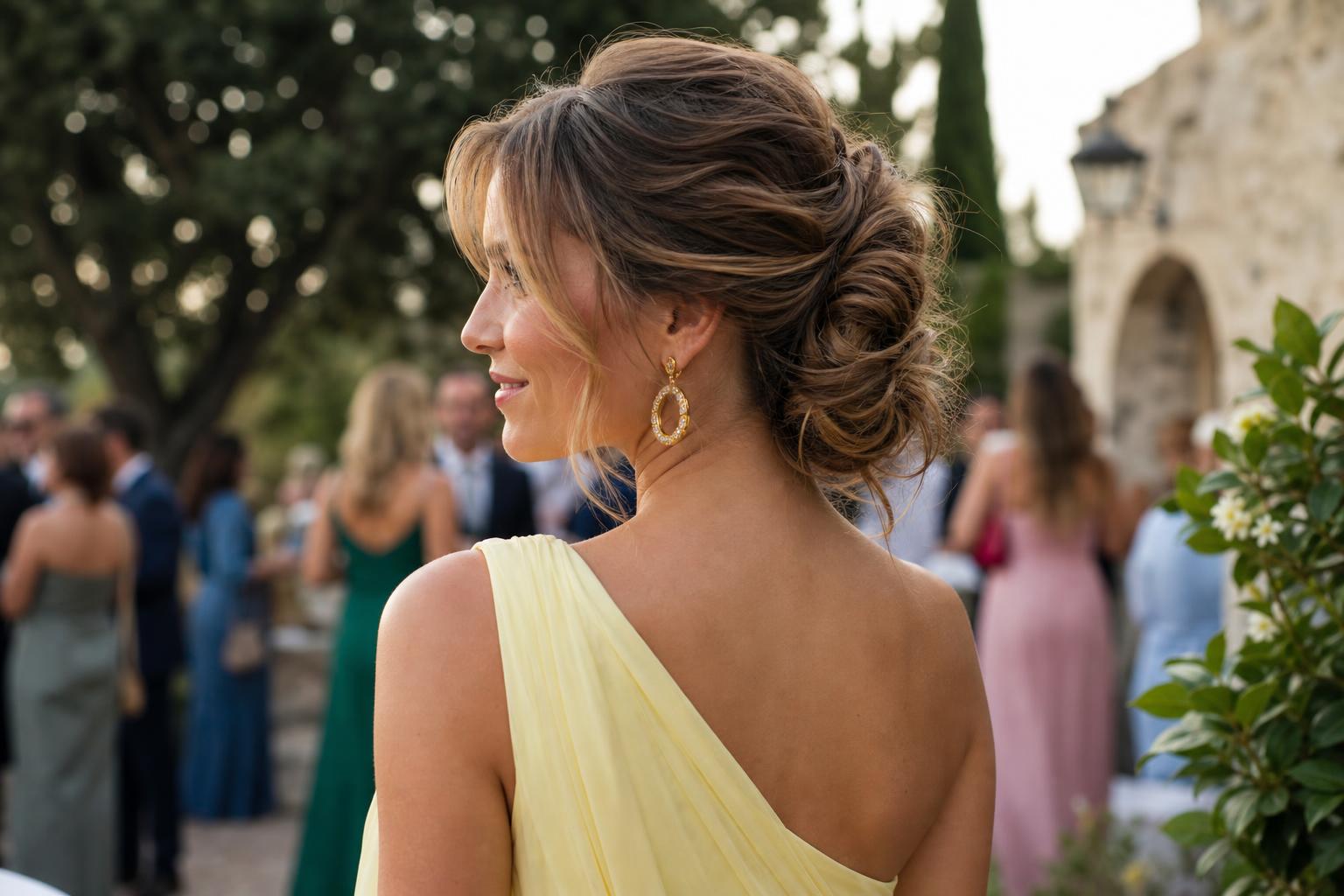
Medium-length hair sits in the sweet spot for many easy wedding guest hairstyles. It supports perfect curls, half-up looks, soft buns, and polished ponytails without requiring dramatic pinning. If you are unsure what direction to take, this length gives room to compare texture and structure honestly. A medium style can be romantic with curtain bangs and loose movement, or more refined with a tucked bun and cleaner parting.
Long hair: dramatic shape or controlled movement
Easy wedding guest hairstyles for long hair often divide into two camps: keep the length visible or use it to create volume in an updo. A cascading ponytail, over-the-shoulder curls, or half-up style emphasizes length as part of the look. A twisted bun or textured bun uses that same length to produce fullness and shape. If the wedding outfit has minimal embellishment, long hair can become the statement. If the dress is already elaborate, an updo may offer better balance.
Curly and wavy hair: definition matters more than control
Curly and wavy textures should not automatically be pushed toward sleekness. Full and curly styles, teased-out curls for thick hair, voluminous braids, and defined textured buns can look deeply elegant because they work with the hair’s natural movement. The aim is usually definition and shape rather than flattening texture away. For a guest attending an outdoor wedding, a curly updo or pinned style can preserve volume while reducing the need for constant touch-ups.
Venue changes everything
The same hairstyle can feel perfectly judged in one setting and slightly misplaced in another. Wedding guest hairstyles are not separate from venue context. They respond to weather, light, formality, and how the celebration unfolds over time.
Beach and garden weddings
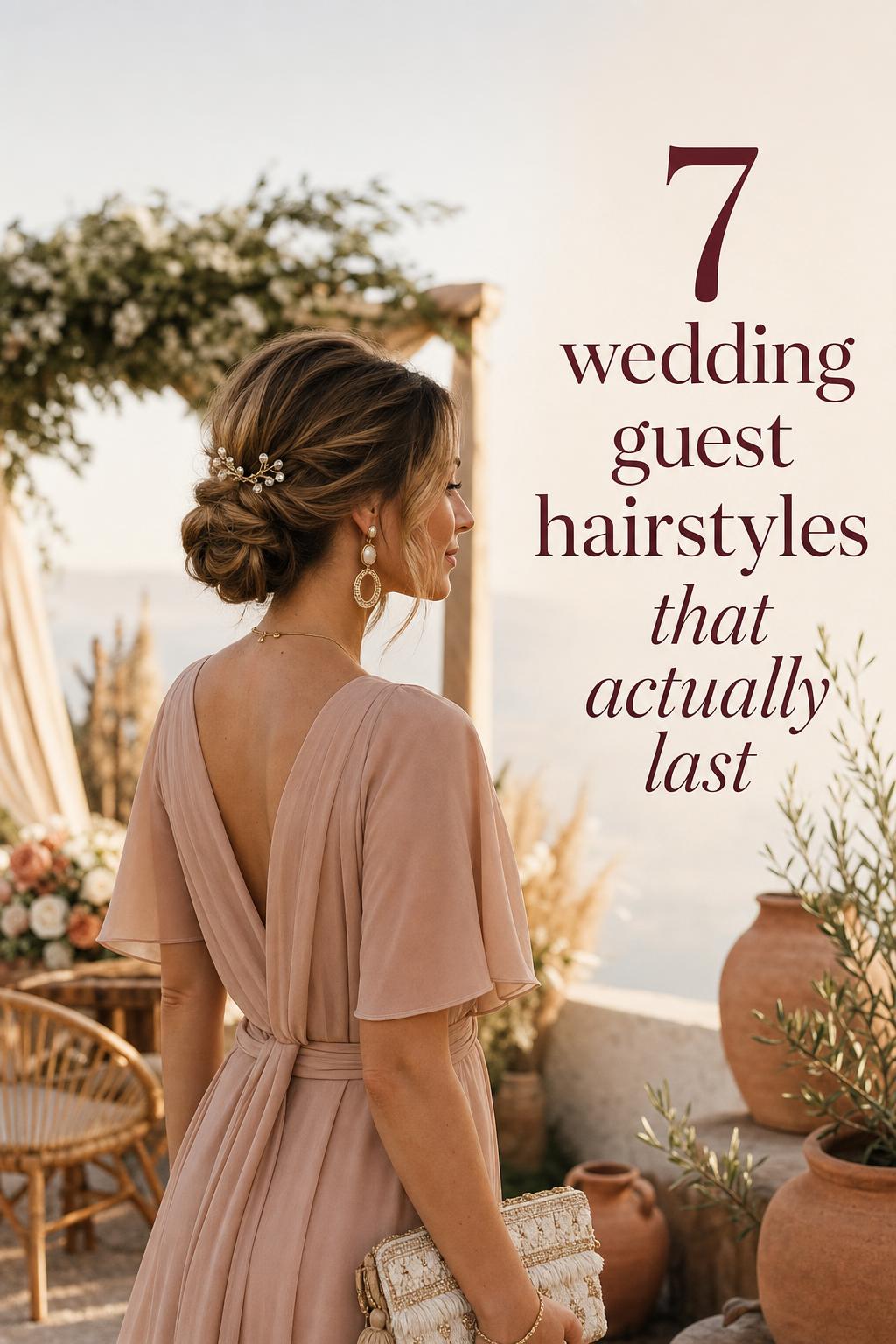
Outdoor settings call for movement, but also realism. Beach wedding hairstyles and garden wedding hair often look best when they acknowledge breeze and humidity instead of fighting them entirely. Textured buns, braided styles, half-up waves, and softly secured ponytails usually make more sense than extremely rigid finishes or very delicate curls that may collapse quickly. The mood is romantic, but the engineering behind it should still be practical.
Ballroom and city venues
Formal interiors invite more structure. Sculptural updos, sleek side parts, polished buns, and controlled curls feel at home in candlelit rooms and black-tie leaning spaces. These venues also support accessories more easily because the setting itself is often richer. If your dress has architectural lines or a cleaner silhouette, a sleek wedding guest updo often reinforces that sophistication.
Destination weddings
Destination weddings usually require a different kind of practicality. Hair may need to survive travel, variable weather, and limited styling time. That is why easy wedding guest hairstyles remain so popular in this category. Braided hybrids, low buns, and ponytails with texture tend to travel better conceptually than highly sculpted styles. They can be recreated with fewer tools and usually remain beautiful even if they soften slightly through the evening.
The accessory question: when simple hair needs an occasion finish
Accessories are one of the clearest distinctions between hairstyle approaches. A simple hairstyle can become wedding-appropriate through thoughtful finishing, while an already intricate style may need very little added detail.
Fascinators, pins, combs, and headbands
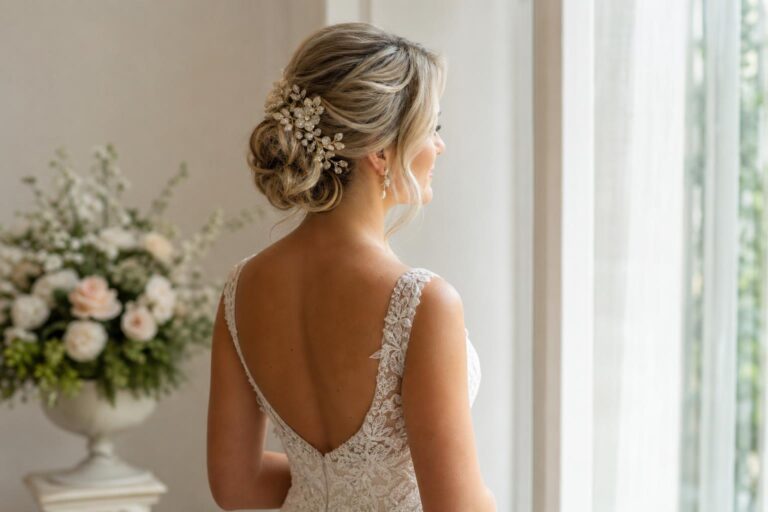
Fascinators immediately shift the look toward occasion dressing and are especially effective with shorter hair or sleek side-parted styles. Hair pins and combs work best when they echo the style’s structure rather than interrupt it. A jeweled updo can feel formal without becoming heavy, while a headband can sharpen a softer wave or half-up look. The more intricate the hairstyle itself, the more restraint usually helps with the accessory choice.
Accessory compatibility by hairstyle
- Updos and buns pair especially well with pins and combs because the style already provides a secure anchor.
- Half-up styles suit smaller embellishments that sit near the pinned section without competing with the loose hair.
- Sleek short hair can carry a fascinator or headband beautifully because the accessory becomes part of the silhouette.
- Braids often need minimal adornment; too much added detail can make the style feel visually crowded.
Celebrity and stylist reference points: what the inspiration really tells you
Celebrity images are often used as shorthand in wedding guest hair inspiration, but the useful takeaway is not simply to copy a face or red-carpet moment. It is to understand what each example demonstrates about proportion, finish, and occasion.
Halle Berry, Selena Gomez, Gina Rodriguez, Tyra Banks, Kim Kardashian, Jennifer Lopez, Dua Lipa, and Hailey Bieber frequently appear as reference points because their hairstyles illustrate strong categories clearly: sleek structure, soft volume, curtain bangs, polished buns, and statement curls. In the same way, stylist names such as Lacy Redway and Narad Kutowaroo serve as signals for an approach. Lacy Redway is associated with polished, fashion-aware shape and braided detail, while Narad Kutowaroo is cited in wedding hair conversations where technique and finish matter.
The key is to translate the inspiration into styling logic. If a Selena Gomez-style updo appeals to you, ask whether you are drawn to the clean silhouette, the softness around the face, or the level of shine. If a Hailey Bieber reference catches your eye, it may be the restraint of the look rather than the exact style. That distinction helps you choose a hairstyle that works for your own hair length, texture, and venue rather than chasing a photo too literally.
Visual style breakdown in real wedding dressing
It helps to picture hairstyles not on a blank background, but with dresses, accessories, and evening light. The same guest outfit can be transformed by the hair styling direction.
Layering and proportion
With hair, layering is less about garments and more about visual distribution. A full curly style or tousled wave adds volume around the shoulders, which can soften a stronger dress line. A bun removes that volume, making the neckline and jewelry more prominent. A ponytail creates a focused line that works particularly well with clean tailoring or minimalist occasion wear. In practical terms, the hair should support the outfit’s proportions rather than compete with them.
Balance through accessories
Accessory balance matters just as much. If earrings are substantial, a sleek side part or updo often allows them space. If the dress has ornate detail at the shoulders, wearing the hair fully down can sometimes make the upper half feel too busy. By contrast, a simpler dress often benefits from more visible hair texture, whether that arrives through waves, braids, or a fuller ponytail.
Footwear and movement
Even footwear has an indirect role. If you are wearing shoes meant for standing, walking on grass, or dancing late into the night, your hairstyle should feel equally workable. That is why easy wedding guest hairstyles remain relevant even for elegant settings. Beauty that asks for constant adjustment rarely feels luxurious by the final hour of a reception.
Outfit and hairstyle comparisons for common wedding scenarios
Garden ceremony at golden hour
A soft floral or flowing midi silhouette naturally pairs with movement. In this setting, waves, a half-up style, or a textured braid usually feel more integrated with the atmosphere than a severe finish. The styling logic is harmony: the air is lighter, the venue is open, and the hair should move with that softness. An updo can still work, but it is often best when loosened slightly with face-framing pieces or curtain bangs.
Formal evening reception in a ballroom
For an evening dress code with a polished dress silhouette, a bun or sleek side-parted style tends to look more deliberate. Here, structure is part of the elegance. A soft sculpted bun or jeweled updo complements candlelight, formal table settings, and richer fabrics in a way that very beachy waves may not. The comparison is not about one being prettier than the other, but about which styling language suits the room.
Destination celebration with travel in the middle
If luggage space, weather uncertainty, and timeline are all factors, easy wedding guest hairstyles become more attractive than salon-dependent looks. A cascading ponytail, braided crown, or low textured bun can still feel editorial while being simpler to refresh. The logic here is resilience. A style that remains elegant after a car ride, warm weather, and an outdoor ceremony is often the wiser choice than one that is only perfect for the first half hour.
A practical DIY lens: what is actually manageable
Many of the most popular wedding guest hairstyles are appealing because they can be done at home. Good inspiration is only useful if execution is realistic, and the difference between a manageable style and a frustrating one usually comes down to how much precision it demands.
Most forgiving DIY categories
- Textured low buns, because softness can hide minor irregularities.
- Half-up waves, since the look benefits from natural movement rather than exact symmetry.
- Braided accents, which add detail without requiring a full formal updo.
- Ponytails with volume, especially when the crown and lengths provide the interest.
Styles that ask for more precision
Sleek side parts, sculptural updos, and very polished buns usually demand more careful pinning and product control. They can be stunning, but they are less forgiving if your timing is tight. If you are styling your own hair before a morning ceremony or while traveling, choosing a look that accepts a bit of natural texture is often a more graceful strategy.
Tools that matter more than trends
Across wedding hair advice, some tool categories appear consistently: curling irons, heat protectant, hairspray, texturizing spray, pins, and combs. Product mentions such as Tresemmé and tools like Dyson appear in some inspiration sources, but the more important point is function. You need hold, heat protection, and enough grip for the style to last. The category matters more than chasing a specific branded routine if your goal is reliable results.
Tips for longevity, comfort, and better decision-making
The prettiest hairstyle in the mirror is not always the best wedding guest hairstyle in practice. Longevity, temperature, and comfort determine whether a style still feels polished by the reception.
- Match the hairstyle to the dress code first, then to the trend. A formal invitation usually benefits from more structure, while a relaxed venue can support softer texture.
- Use neckline as a decision tool. Hair up showcases shoulders and back detail; hair down softens strapless or simpler lines.
- Be realistic about humidity. For outdoor weddings, secured texture often outperforms loose, highly defined curls.
- Let your texture guide you. Naturally curly or wavy hair often looks better with definition than with heavy smoothing.
- Reserve the most intricate accessories for simpler hairstyles. When the hair already has braids, twists, or sculptural shape, restraint keeps the look elegant.
A final tip worth remembering: the best wedding guest hairstyles do not just suit the outfit in static photos. They suit the full arc of the event, from ceremony seating to cocktail hour to the final dance. A style that can soften beautifully is often more successful than one that only looks perfect while untouched.
Common mistakes guests make when choosing wedding hair
One of the easiest mistakes is selecting a hairstyle based only on trend images without considering venue or weather. Very loose waves for a humid outdoor ceremony may be lovely in theory and disappointing in reality. Another common issue is forgetting the relationship between hairstyle and outfit detail. If a dress already has movement, sparkle, and shoulder embellishment, adding maximum volume in the hair can overwhelm the look.
There is also a tendency to classify certain styles too narrowly. Some guests assume buns are always severe, ponytails always casual, or short hair always limited. The more useful view is that finish changes everything. A messy bun and a soft sculpted bun are both buns, yet they communicate different levels of formality. A cascading ponytail is not the same visual statement as a gym ponytail. Wedding hair decisions become easier once you compare styling approaches, not just hairstyle names.
When to choose each wedding hair direction
If your priority is endurance, choose an updo, twisted bun, or polished ponytail. If your priority is softness and visible length, choose waves or a half-up style. If you want texture that feels intentional in an outdoor setting, choose a braid or textured bun. If your outfit is minimalist and modern, sleek hair often completes it best. If your dress and venue lean romantic, movement in the hair usually feels more harmonious.
There is also room to combine approaches. Some of the most successful wedding guest hairstyles blend categories rather than choosing one rigidly: a braided bun, a half-up style with curls, a sleek crown with a soft ponytail, or an updo with curtain bangs. These hybrids work because they solve more than one styling need at once. They offer structure where it matters and softness where it flatters.
FAQ
What are the most versatile wedding guest hairstyles?
The most versatile options are soft buns, half-up-half-down styles, textured ponytails, and polished waves because they can be adjusted for different dress codes, hair lengths, and venues without losing their occasion-ready feel.
Are updos better than wearing hair down for a wedding guest?
Updos are often better for long wear, dancing, and humid conditions, while hair-down styles usually create a softer, more romantic effect; the stronger choice depends on the venue, weather, neckline, and how much maintenance you want during the event.
Which wedding guest hairstyles work best for short hair?
Short hair often looks most elevated with a sleek side part, sculpted waves, pinned-back detail, or an accessory such as a fascinator, headband, or decorative pins, since these approaches emphasize shape and finish rather than length.
What are easy wedding guest hairstyles for long hair?
Long hair suits easy styles such as a cascading ponytail, a loose textured bun, over-the-shoulder curls, or a half-up look, all of which make the length part of the final effect while still being practical enough for a full celebration.
How should I choose a hairstyle based on wedding venue?
Outdoor venues such as beach and garden weddings usually favor textured, secured styles that handle breeze and humidity, while ballroom and city venues support sleeker, more sculpted looks that align with a more formal atmosphere.
Do curly hair textures need different wedding guest hairstyle planning?
Yes, curly and wavy hair often looks best when the style emphasizes definition and shape rather than excessive smoothing, which is why full curls, textured buns, and voluminous braids can be more successful than forcing a very sleek finish.
Can I do wedding guest hairstyles myself at home?
Many easy wedding guest hairstyles are realistic for home styling, especially textured buns, half-up waves, braided accents, and ponytails with volume, while highly sleek or sculptural styles usually require more precision and preparation.
What accessories work best with wedding guest hair?
Hair pins, combs, headbands, and fascinators all work well, but the best choice depends on the hairstyle’s complexity; simpler styles can support stronger accessories, while braided or highly detailed updos usually look better with restraint.
How do I make my hairstyle last through the reception?
Choose a style that suits the weather, use practical categories such as heat protectant, hairspray, pins, and texturizing products, and favor secured shapes over very loose finishes if the wedding includes outdoor time, humidity, or a long evening of dancing.