Bridal Makeup for Blue Eyes: A Capsule Guide
Choosing bridal makeup for blue eyes can feel strangely complicated. There are endless palettes, dozens of inspiration photos, and plenty of advice that treats one shade as a universal answer. Your wedding look needs a better system. It should make your eyes look clear and expressive, coordinate with your skin and hair, survive a long day, and still feel like you when you see the photographs years from now.
The most useful way to plan is to build a small capsule rather than chase a single trend. Think of five decisions: the skin finish, a transition shade, a lid light, an eye-defining color, and a lip or cheek balance. Once those pieces are chosen, you can make the makeup softer for a daytime ceremony, warmer for a garden setting, or more defined for an evening reception without starting over.
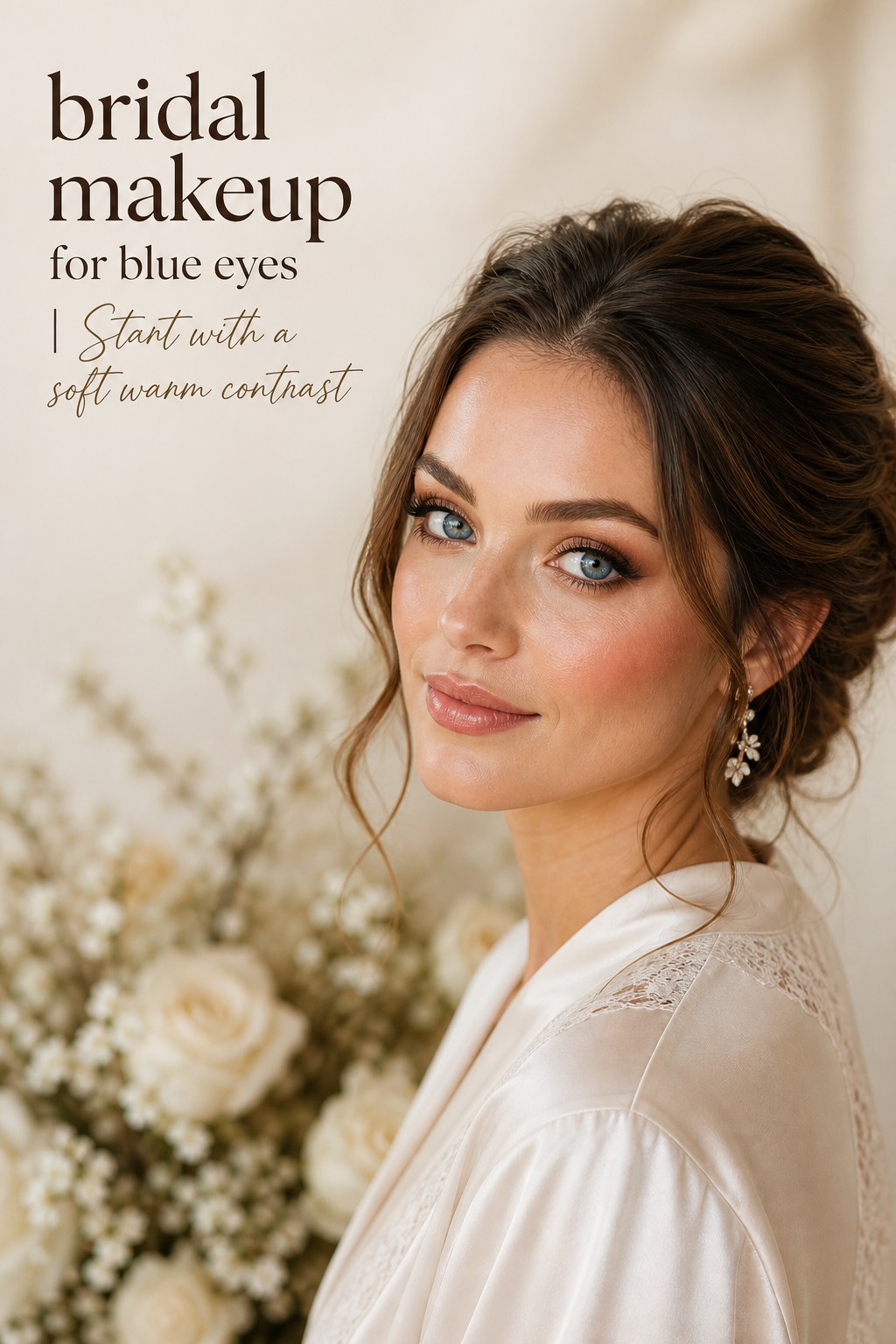
The five building blocks of a blue-eye bridal makeup capsule
A capsule keeps your decisions connected. Instead of asking, “Which eyeshadow makes blue eyes pop?” ask, “Which small group of shades will make my eyes look brighter while supporting the whole face?” Blue irises already have visual clarity. The makeup should create contrast and structure, not cover that clarity with a heavy block of color.
1. Choose the complexion finish first
Start with the skin because the eyes will be judged beside it. A satin finish is the most flexible wedding option: it gives the face life in photographs without competing with shimmer on the lids. If you love a dewy look, keep the glow controlled around the forehead, nose, and upper lip so flash photography does not turn it into distracting shine. If you prefer matte makeup, leave a little natural dimension on the tops of the cheeks and the bridge of the nose.
Your wedding look is only the beginning.
Keep your guest list, vendors, timeline, and every important detail together with Zarellea — so your day feels as considered as your style.
Match foundation in daylight and check it near the neckline, not only on the hand. Blue eyes can look cooler or warmer depending on the surrounding skin, so the right complexion match makes your chosen bronze, peach, mauve, or taupe look intentional. A thin, well-set base usually photographs more naturally than a thick layer designed to hide every trace of skin.
2. Pick one transition family
Your transition shade creates the soft architecture of the eye. Warm taupe, caramel, peachy beige, or muted terracotta can all work, but the best choice depends on your skin depth and undertone. Fair skin often needs a light beige-taupe or soft peach. Medium and olive skin can carry caramel, bronze-brown, or terracotta. Deep skin can use rich cocoa, chestnut, warm plum, or cinnamon as the first visible crease color.
Use a matte or softly satin texture for this step. A transition color with large glitter particles makes blending harder and can look uneven when the eye is open. Sweep it slightly above the natural crease if you have hooded eyes, and blend the outer edge toward the temple only as far as the shape still looks balanced.
3. Add a lid light that supports the venue
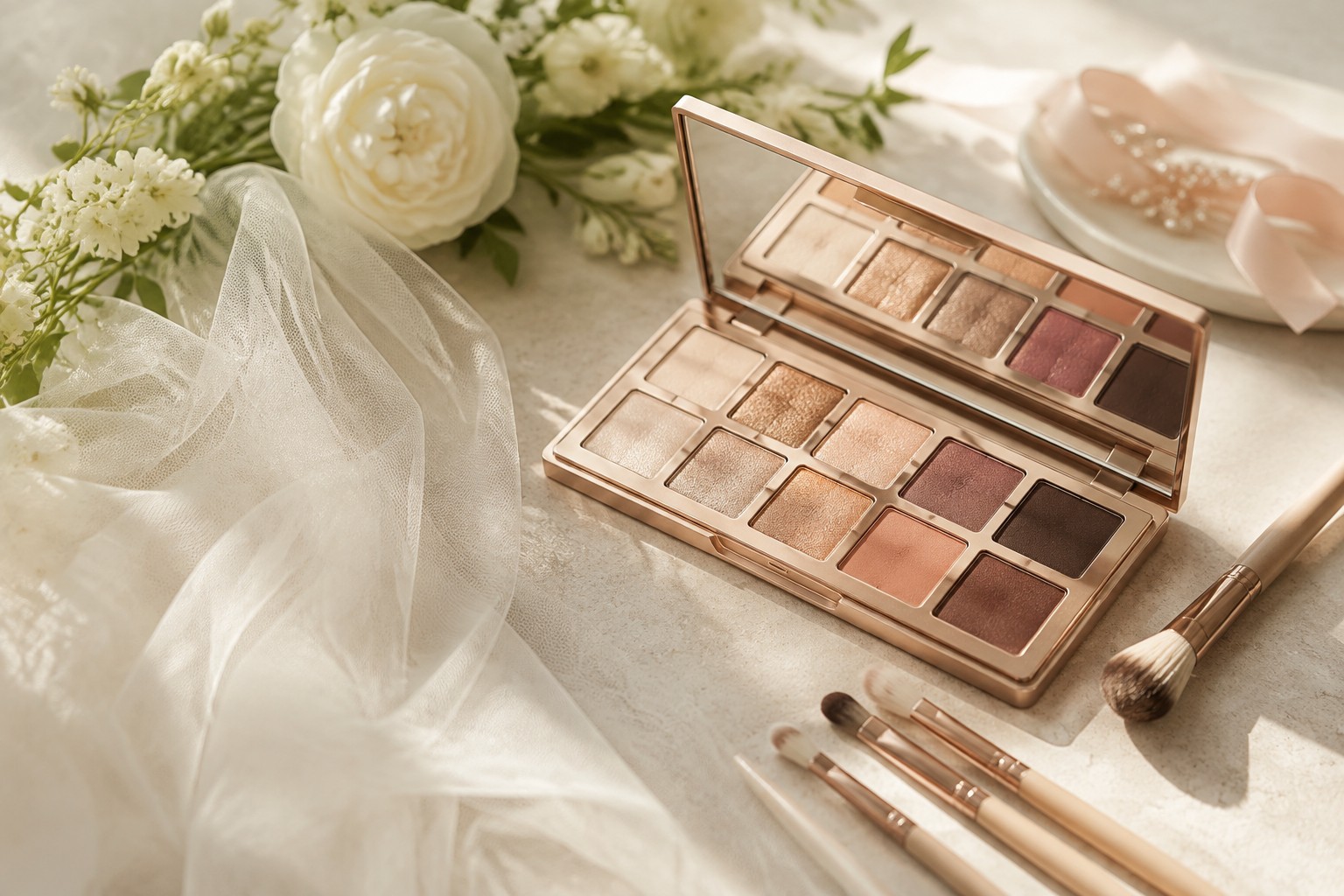
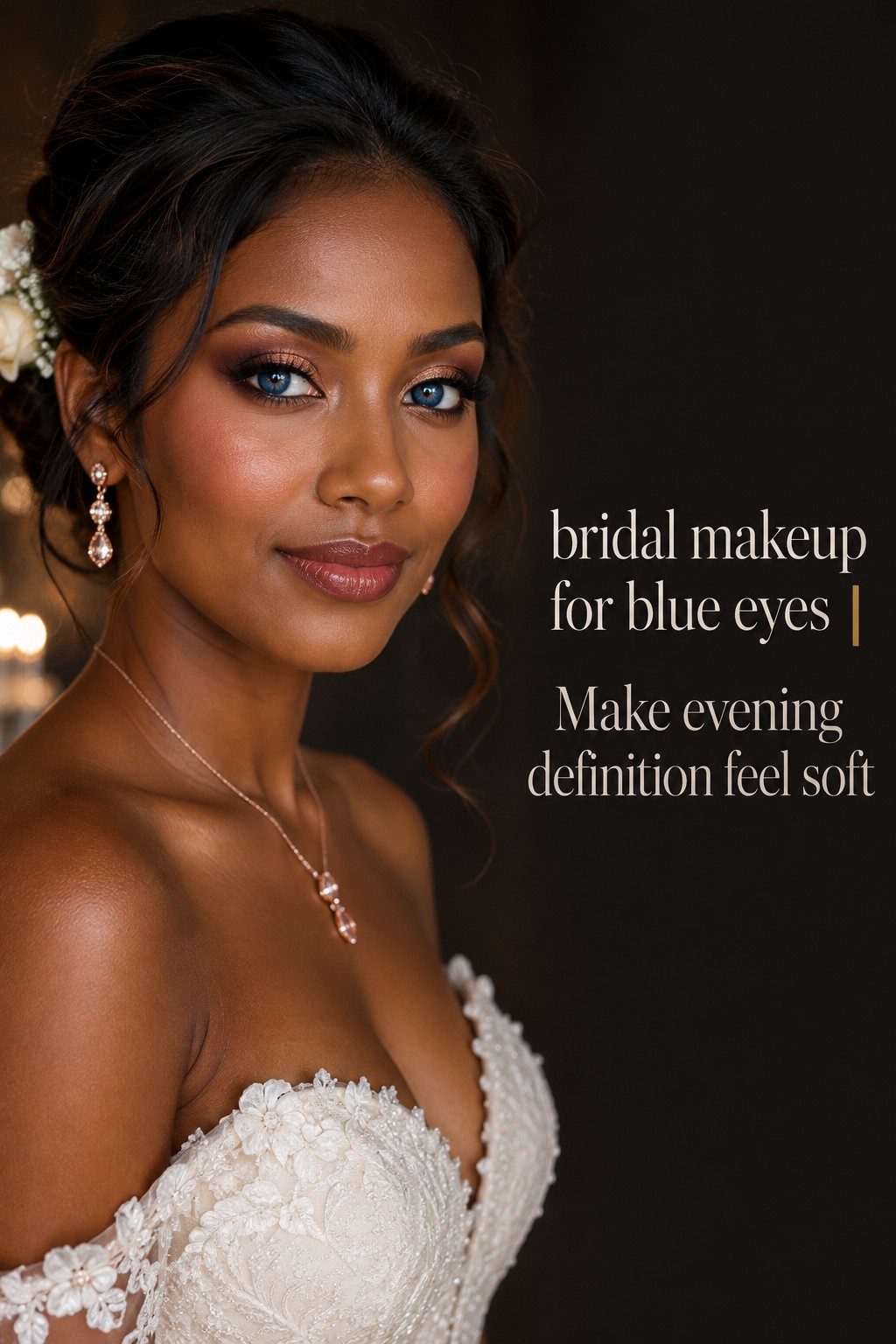
For a classic bridal capsule, champagne, soft gold, rose gold, peach satin, and pale bronze are dependable lid lights. They reflect enough light to open the eyes without turning the look into party makeup. If your skin is very fair or cool, a neutral champagne may be more flattering than yellow gold. If you have medium, olive, or deep skin, richer gold, copper, and bronze can create beautiful contrast with blue irises.
Use shimmer where you want the eye to catch light: usually the mobile lid and a small touch in the inner corner. Keep the brow bone mostly matte or softly luminous. A highly reflective formula can emphasize texture, so press it on with a fingertip or flat brush and remove loose particles before complexion makeup is finalized.
4. Define with softness and precision
Brown, chocolate, bronze, deep plum, navy, and charcoal can define blue eyes without making them look smaller. Chocolate-brown liner is the easiest everyday bridal choice because it gives depth while keeping the expression gentle. Black liner can be beautiful for a formal evening wedding, but use it as a thin lash-line accent or a carefully blended outer corner rather than a thick ring around the eye.
If you want a wing, draw it with your eyes open and relaxed. This shows where the line will actually sit when you are talking, smiling, and looking at guests. For hooded eyes, a short lifted flick usually looks cleaner than a long graphic wing. For round eyes, extending the outer third can create elegant length. For deep-set eyes, keep the darkest color close to the lashes so the lid does not look receded.
5. Balance the eyes with cheeks and lips
The final capsule piece is the color story around the eyes. A peach or apricot blush repeats the warmth of bronze and copper. Soft pink works with champagne, mauve, and rose-toned shadows. A neutral rose or muted berry lip supports a smoky eye, while a blue-based red can make blue eyes look especially crisp if a more classic look feels like you.
Do not make every feature equally intense. If the lid is luminous and the lash line is defined, keep the lips softly shaped with a satin or long-wear formula. If the eyes are barely there, a stronger lip can provide the structure. This balance is more timeless than matching the lipstick exactly to the bridesmaid dresses or flowers.
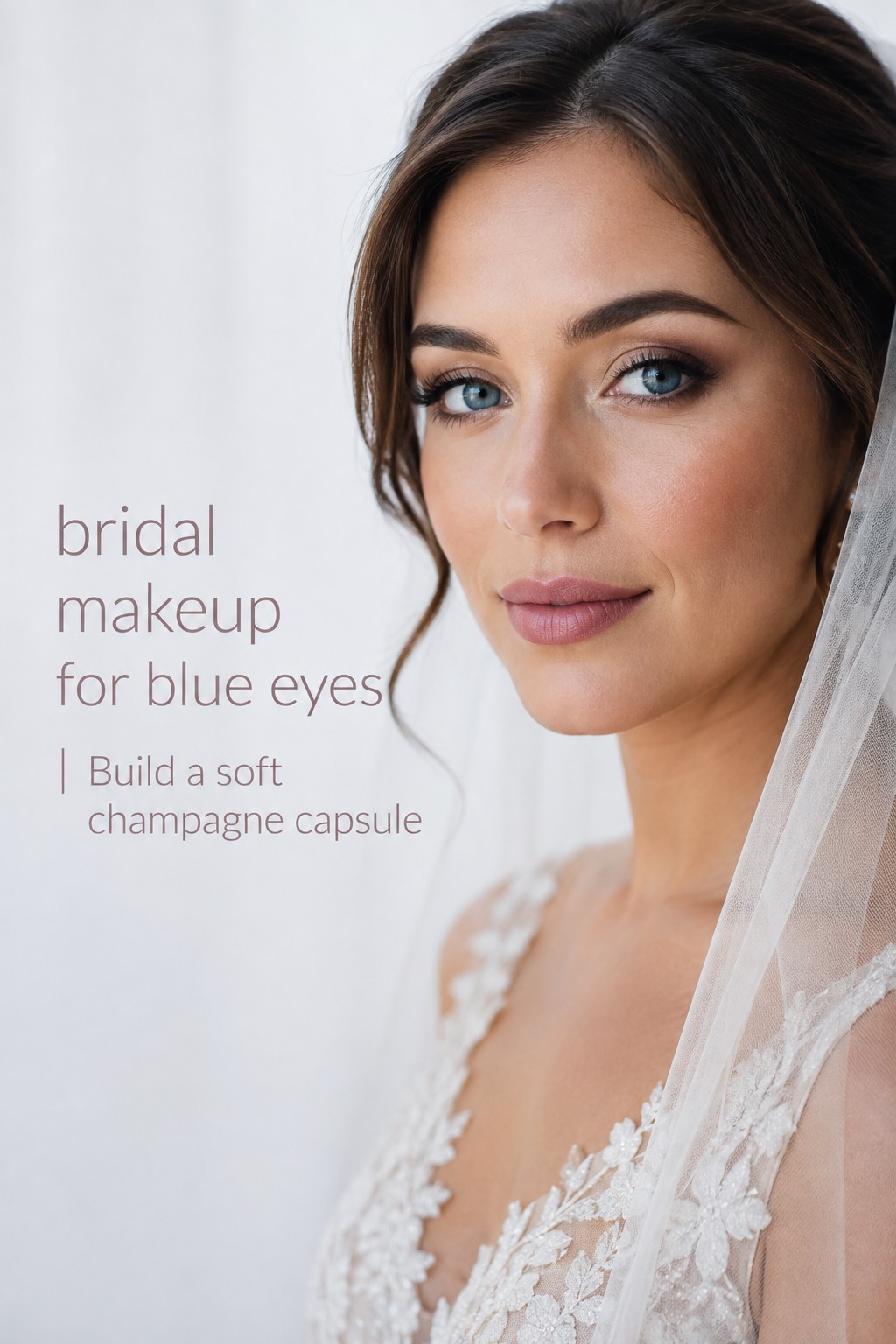
Five combinations for different wedding moods
Once the capsule is in place, choose a combination based on the setting and the version of yourself you want to see in the album. The shades below are starting points, not strict rules. Adjust their depth and finish to your complexion, eye shape, dress, jewelry, and comfort level.
Natural daytime: taupe, champagne, and brown
Use a soft taupe or beige transition, a sheer champagne lid, and a chocolate-brown pencil pressed into the upper lashes. Add brown-black or navy mascara, soft pink blush, and a rose-nude lip. This combination is especially effective for a morning ceremony, outdoor photographs, or a bride who rarely wears dramatic eye makeup. It gives the blue iris a frame while leaving the face fresh.
Warm romantic: peach, bronze, and glossy rose
Blend a peach-beige matte through the crease, add bronze or copper to the lid, and soften the outer corner with warm brown. A small amount of brown liner, peach blush, and a glossy rose lip make this look glow without becoming orange. It suits garden weddings, golden-hour portraits, and dresses with ivory, champagne, warm lace, or gold accessories.
Classic formal: champagne, cocoa, and a clean lash line
Choose a neutral matte transition, champagne on the lid, and cocoa at the outer corner. Add a very thin black or deep-brown line close to the lashes and finish with individual lashes or a fluttery strip. Keep the cheeks softly sculpted and the lip in a satin rose, nude, or blue-based red. The result reads polished in a ballroom or black-tie setting without relying on a heavy smoky eye.
Cool and luminous: silver, mauve, and slate
For a cooler palette, use mauve or purple-gray in the crease, silver-champagne on the lid, and slate or deep plum along the outer lash line. Keep the blush neutral pink and the lip a cool rose. This works well with platinum jewelry, winter light, gray bridesmaid dresses, and a bride who wants the blue in her eyes to look icy and bright rather than warm and sun-kissed.
Evening smoky: bronze, espresso, and soft contrast
Begin with a warm brown transition, press bronze onto the lid, and deepen only the outer third with espresso. Smudge the upper lash line and leave the lower lash line lighter than the top. Finish with waterproof mascara, a peachy-bronze cheek, and a muted nude or mauve lip. This gives evening definition while preserving the openness that makes blue eyes distinctive.
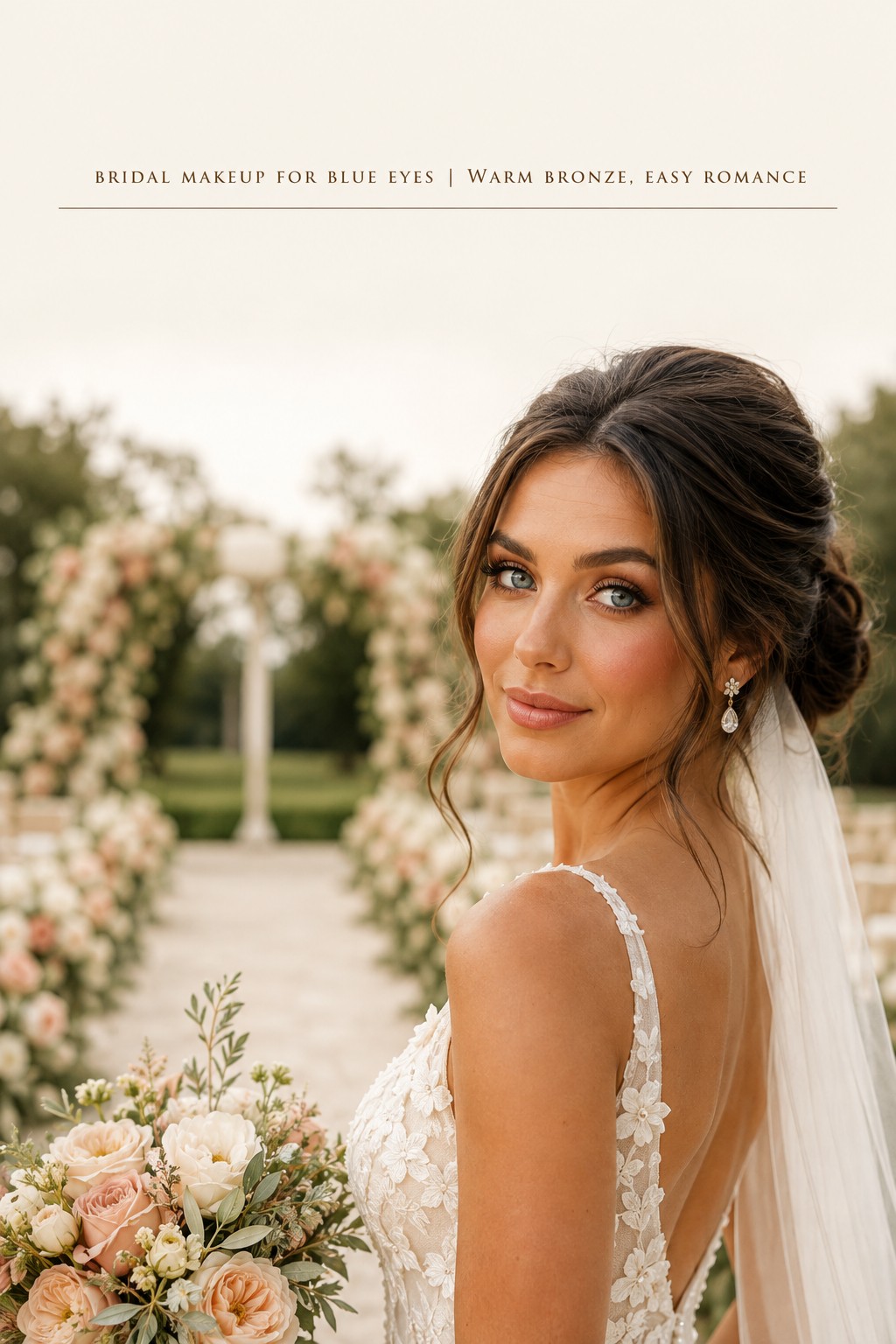
Buying priorities and the makeup-trial checklist
A wedding makeup capsule does not require a huge shopping list. Spend first on the products that affect wear, color matching, and photographs. If you are hiring an artist, bring the same decision framework to the trial so you can discuss the finish and balance rather than asking for a vague “natural glam” look.
- Skin preparation: choose hydration that absorbs fully and does not leave a slippery film. A trial should show how your base behaves after several hours, not only immediately after application.
- Eye primer: select one that controls creasing without making the lid too dry. Test it with both matte transition shades and shimmer.
- Core palette: buy or request one transition, one lid light, one deepening shade, and one liner family. More colors are useful only if they solve a clear problem.
- Formula performance: use waterproof mascara and a long-wear liner, especially if you expect tears, humidity, heat, or outdoor photographs.
- Tools and lashes: decide whether you prefer individual lashes, a half strip, or your natural lashes enhanced with mascara. Comfort matters during hugs, dancing, and a long reception.
- Touch-up kit: pack lip color, a small powder, cotton swabs, and a clean sponge or tissue. Ask a trusted person to carry it.
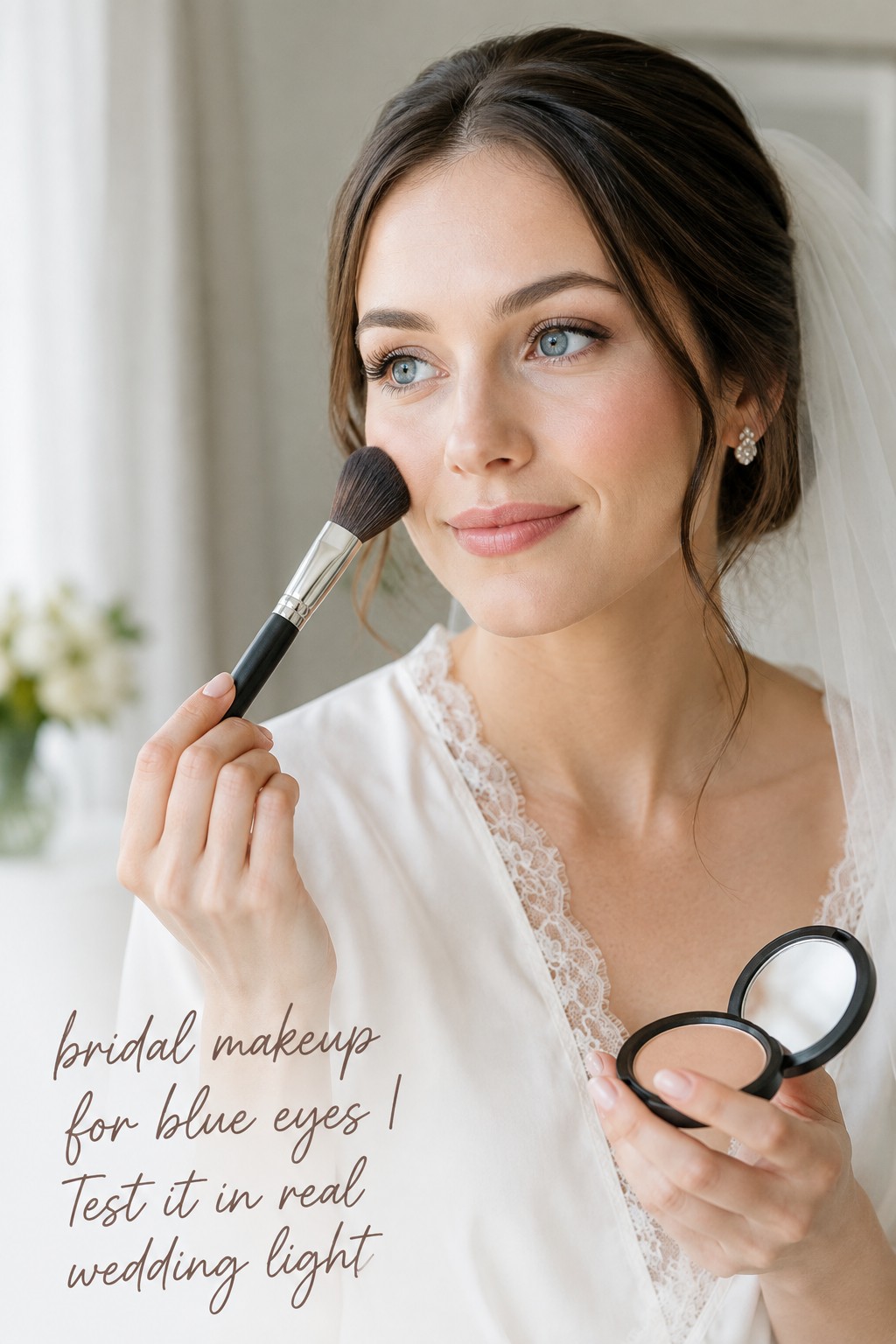
Take trial photographs in window light, shade, direct sun, and with flash if possible. Look at the full face rather than zooming in on the eye. A shade that seems understated in a mirror may be exactly right at a distance, while a very dark liner can dominate the image even when it feels glamorous up close. Also photograph yourself smiling and looking down. Those angles reveal whether the liner, lashes, and shimmer stay where you intended.
Give your artist useful information about your eye shape, allergies, contact lenses, and normal makeup habits. If you never wear false lashes, ask for a light option and wear it for at least an hour during the trial. If you usually prefer a bare face, a full-coverage base may make you feel unlike yourself even if it looks technically flawless. Your wedding makeup should be refined, not unfamiliar.
Seasonal adaptation and the final wedding-day plan
The same blue-eye palette can behave differently in July heat, dry winter air, or a dim indoor venue. Keep the color capsule consistent and change the preparation and texture. This makes your look recognizable across the ceremony, portraits, dinner, and dance floor.
Spring and summer weddings
Use lightweight layers, a reliable eye primer, and waterproof formulas. Warm weather is a good time for peach, bronze, champagne, and soft coral, but apply shimmer with restraint if you will be photographed in direct sun. Blot before adding powder, and keep a small cotton swab available for the outer corner if humidity causes movement.
Fall and winter weddings
Richer cocoa, copper, mauve, plum, and burgundy can echo the season without making the eyes look heavy. In dry air, use a comfortable moisturizer and avoid over-powdering the under-eye area. Candlelight and indoor warmth can absorb color, so a softly defined lash line and a little satin on the lid may photograph better than an ultra-matte look.
Make the capsule easy to repeat
Write down the products, shades, and order used at your trial. Take a photo of the finished face and a close-up of each eye. On the wedding morning, keep the order simple: prep, base, brows, eyes, complexion refinement, cheeks, lips, and setting. If your artist is working with a team, this record helps everyone reproduce the intended level of softness and definition.
The most flattering bridal makeup for blue eyes is not one fixed color combination. It is a controlled relationship between contrast, light, definition, and longevity. Build that relationship with a small capsule, test it in the conditions that matter, and choose the version that still feels like your face when the camera is not in front of you.
FAQ
What eyeshadow colors make blue eyes stand out for a wedding?
Warm bronze, copper, peach, champagne, rose gold, and soft brown create flattering contrast with blue irises. Mauve, plum, slate, and silver can also work when you want a cooler effect. Choose the depth and undertone that fit your skin, hair, dress, and lighting rather than using the brightest shade available.
Can I wear blue eyeshadow with blue eyes?
Yes. Use a deeper or clearly different blue, such as navy, indigo, slate-blue, or a blue-gray, and keep it focused on the lash line or outer corner. A blue that nearly matches the iris can reduce contrast, while a deeper shade can make the eye color look intentional and vivid.
Is brown or black eyeliner better for bridal makeup for blue eyes?
Brown or chocolate liner is usually the softer, more versatile choice, especially for daytime and natural makeup. Black liner is appropriate for a formal evening look when applied close to the lashes and balanced with the rest of the face. Test both in photographs because the better option is the one that gives definition without shrinking the visible eye.
What mascara color looks most natural with blue eyes?
Brown-black and navy mascara can enhance blue eyes while looking softer than a very dense black. Black waterproof mascara is still a reliable choice for stronger definition and evening photographs. Whichever color you choose, test the formula for smudging, flaking, and comfort before the wedding day.
How should fair skin change blue-eye bridal makeup?
Fair skin often benefits from lighter transition shades such as beige-taupe, soft peach, muted rose, and pale bronze. Build depth gradually and be careful with very dark gray or black, which can look stark in daylight. A brown liner, soft pink blush, and champagne lid can create definition without overpowering the face.
Should I do a makeup trial if I already know the look I want?
Yes. A trial confirms the foundation match, eye-shape placement, lash comfort, shimmer level, wear time, and performance in photographs. It also gives you time to adjust anything that feels unlike you. Bring reference photos, but use them to communicate the mood and balance rather than expecting an identical result on a different face.