Natural Bridesmaid Makeup: Fresh, Photo-Ready Ideas
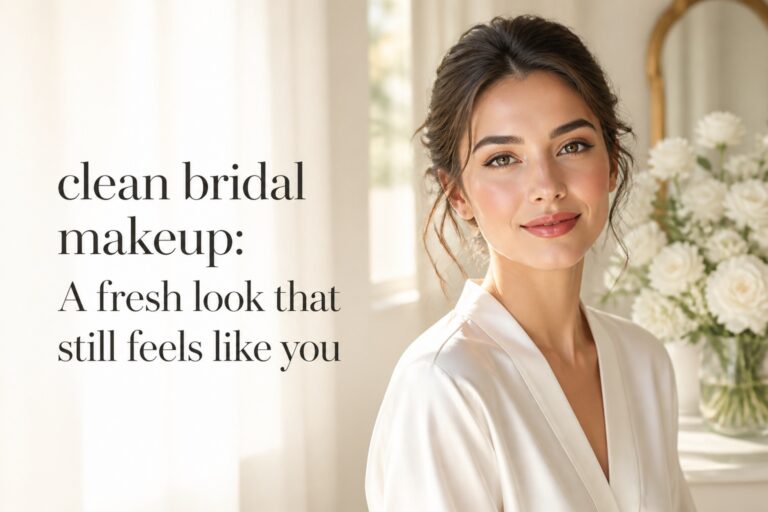
Natural bridesmaid makeup is moving away from one rigid definition of “matching.” The modern version looks fresh, softly polished, and recognizable as the person wearing it. Skin can still look like skin. Brows can keep their natural shape. A bridesmaid with deep, warm coloring does not need the same blush or lip shade as someone with fair, cool coloring to look beautifully coordinated.
The most useful way to think about this trend is not “less makeup at any cost.” It is intentional makeup that gives the face enough shape, color, and contrast for a long wedding day and a full photo gallery, while avoiding a heavy mask. The goal is a comfortable, camera-aware look that supports the dress, flowers, lighting, and the bride without making every member of the wedding party look interchangeable.
What is changing in natural bridesmaid makeup
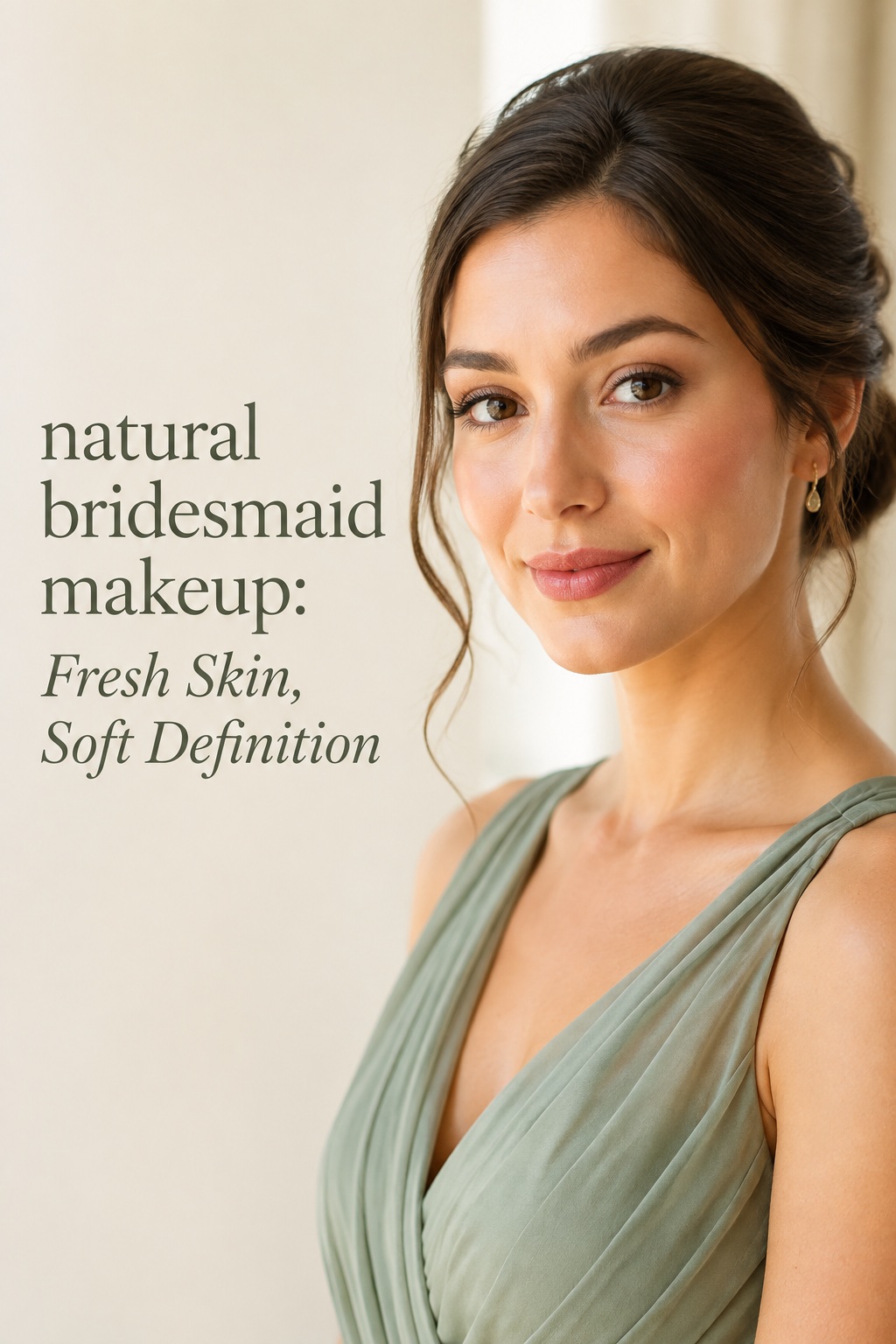
The current direction combines skin-first technique with selective definition. Instead of applying full coverage everywhere, makeup artists are using lightweight layers where the complexion needs evening out, then adding precise concealer only where extra correction is useful. The finish is often satin or softly luminous rather than wet and glossy. This matters because strong shine can become distracting in flash photography, while an overly matte base can flatten the face and emphasize texture.
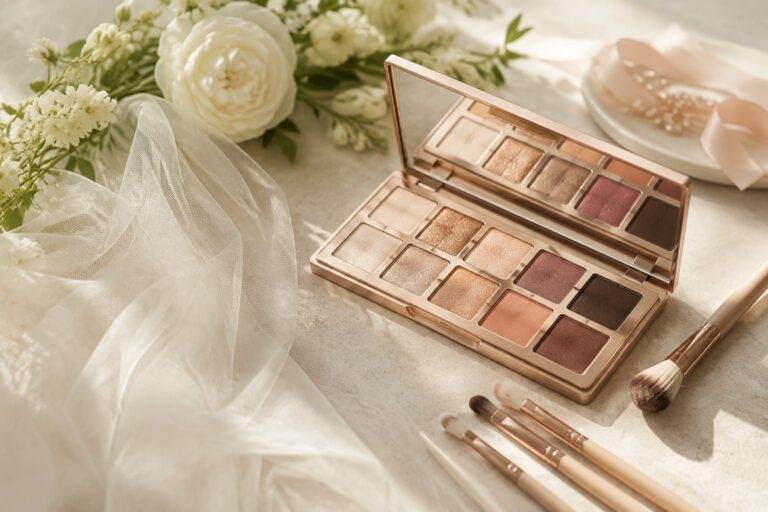
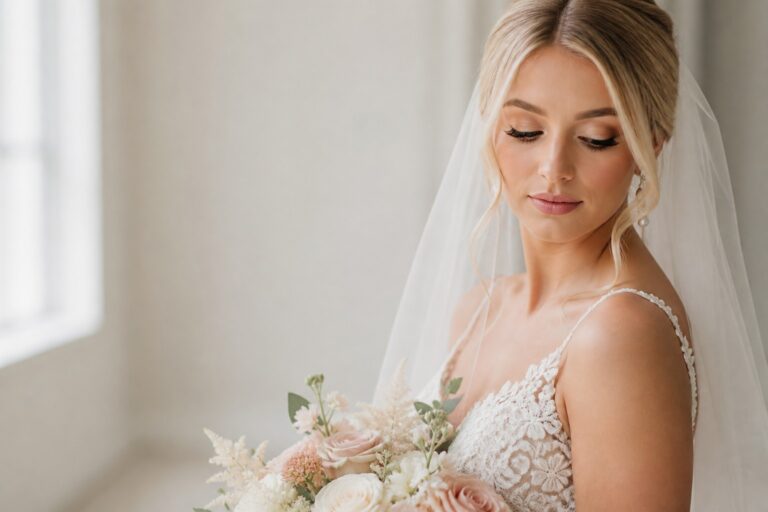
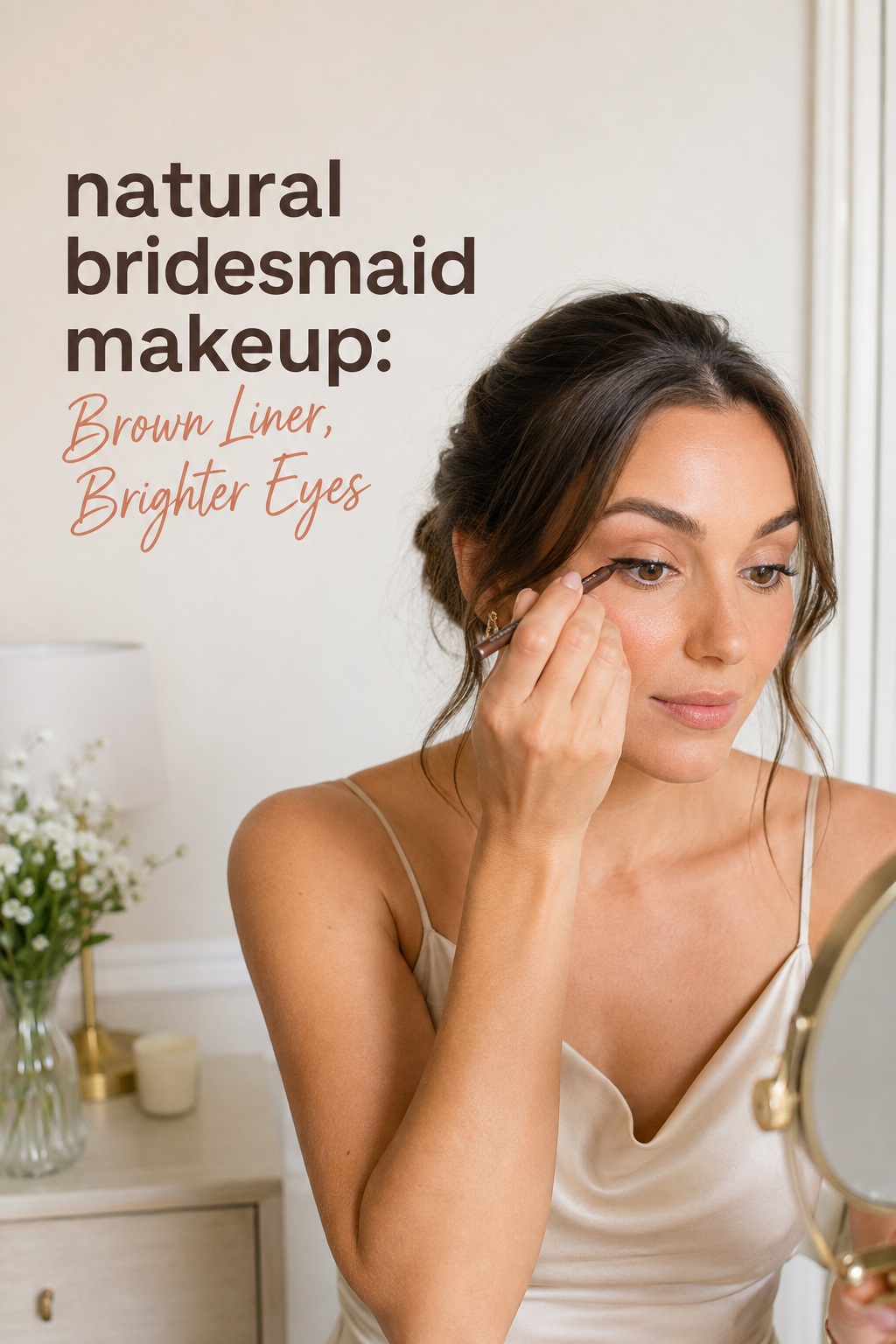
Eyes are also becoming more adaptable. A natural bridesmaid makeup look may include a wash of taupe, soft brown, champagne, rose, bronze, or plum, but the application is blended close to the eye’s structure. Brown liner can define the lash line without the graphic intensity of a black wing. Mascara or individual lashes add enough contrast for photographs without taking over the face. The look feels finished because each feature has a clear role, not because every feature is heavily emphasized.
Your wedding look is only the beginning.
Keep your guest list, vendors, timeline, and every important detail together with Zarellea — so your day feels as considered as your style.
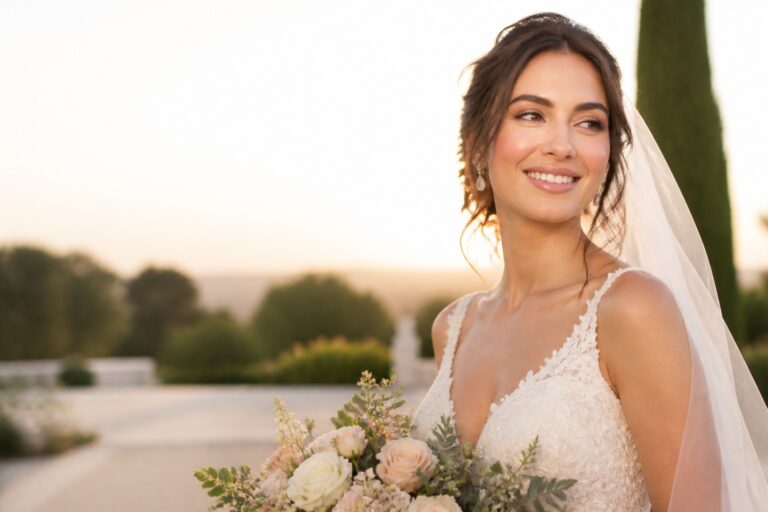
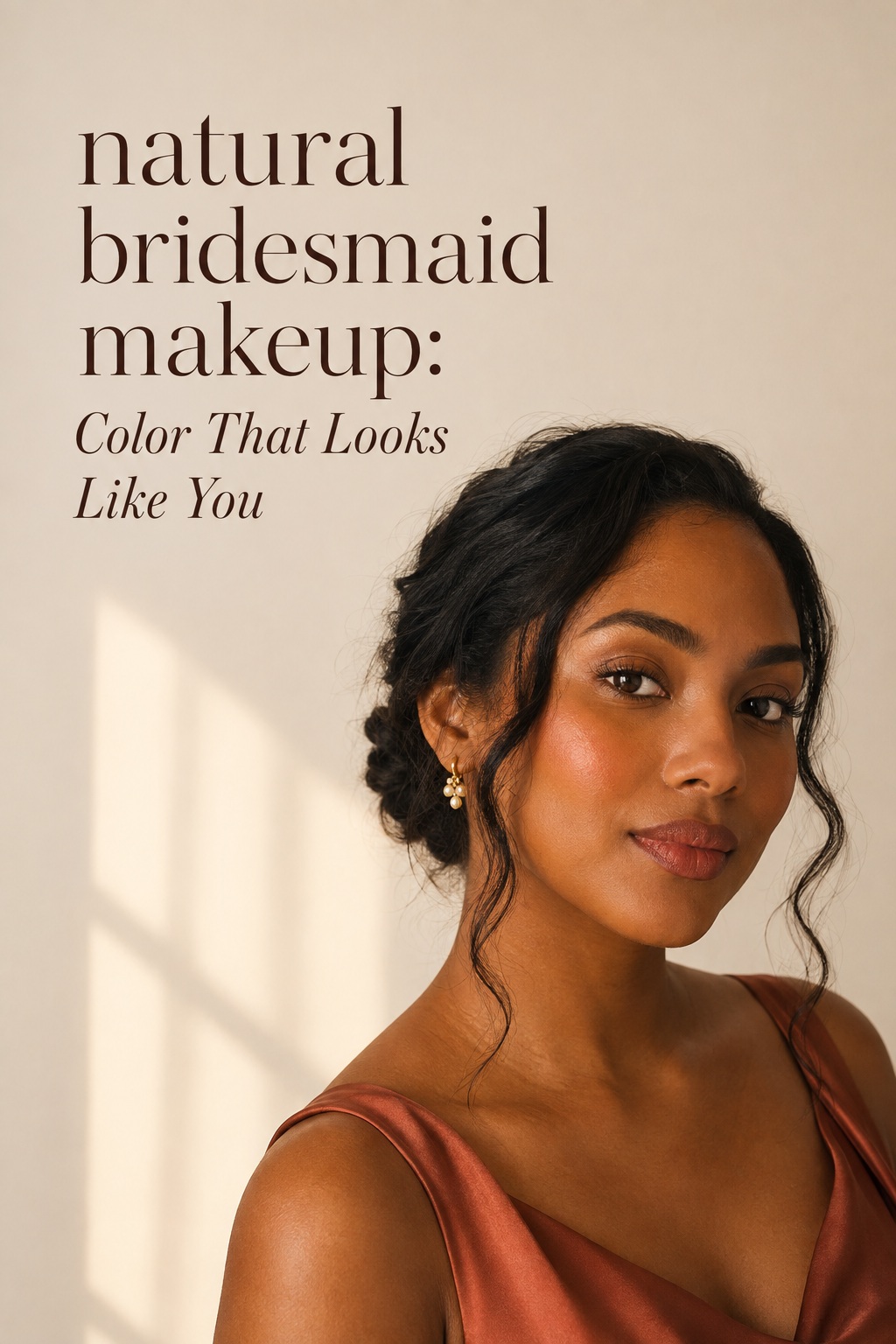
Cheeks are carrying more of the fresh, healthy effect. Cream blush and softly diffused powder blush can create dimension that looks believable in daylight. The exact color should respond to the wearer’s undertone and the dress palette. Peach, apricot, warm coral, rose, mauve, berry, terracotta, and muted plum can all feel natural when applied with a light hand and balanced with the rest of the face.
Lips are following the same principle. Neutral pink, rosy beige, soft brown, peach, mauve, or sheer berry can look polished without reading as a dramatic statement. A stain or long-wearing pencil under a comfortable balm helps the color stay visible after talking, eating, smiling, and photographs. The result is not necessarily “no makeup.” It is makeup with a quieter visual volume.
Why the natural direction works for a bridal party
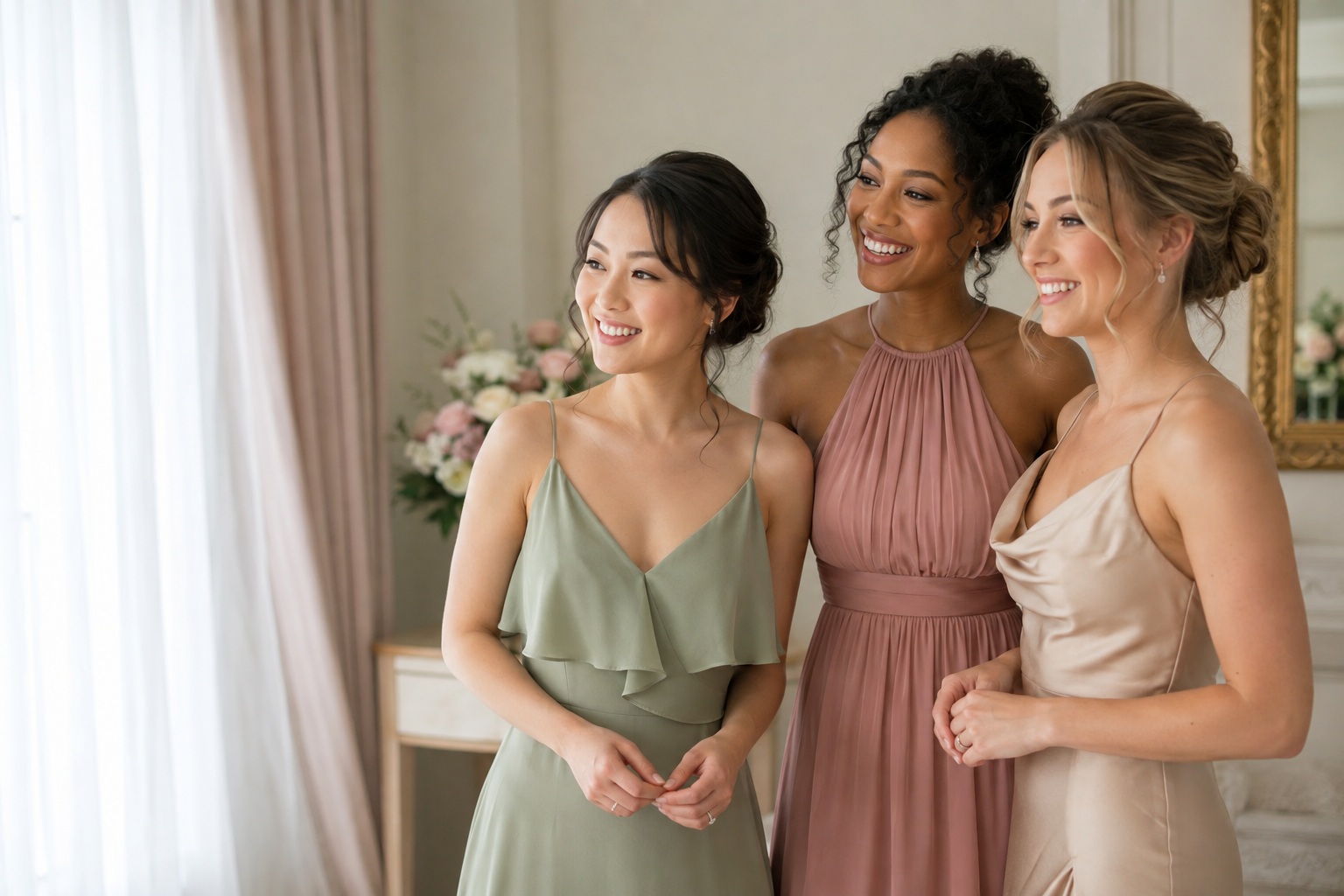
A bridal party usually includes people with different skin types, facial features, comfort levels, and makeup habits. One person may wear foundation every day, while another may prefer tinted moisturizer. One may love a defined lash, while another feels most like herself with mascara. A shared natural direction gives the group a visual connection without forcing an identical face onto everyone.
The shared elements can be simple: softly evened skin, groomed but not overdrawn brows, a defined lash line, fresh cheeks, and a lip family that relates to the flowers or dresses. The individual elements can then change. Coverage can be sheer on one person and light-to-medium on another. Blush can shift from peach to rose. Brown liner can be adjusted for eye shape. Highlight can be satin on textured skin and a little more luminous on smoother areas.
This flexibility is especially valuable in group photography. When every face has the same strong contour, lip, and eye shape, the makeup can become the first thing a viewer notices. When the team shares a level of polish but keeps personal coloring visible, the images tend to feel more natural and emotionally connected. The bridal party looks like a group of people celebrating together, not a row of identical beauty filters.
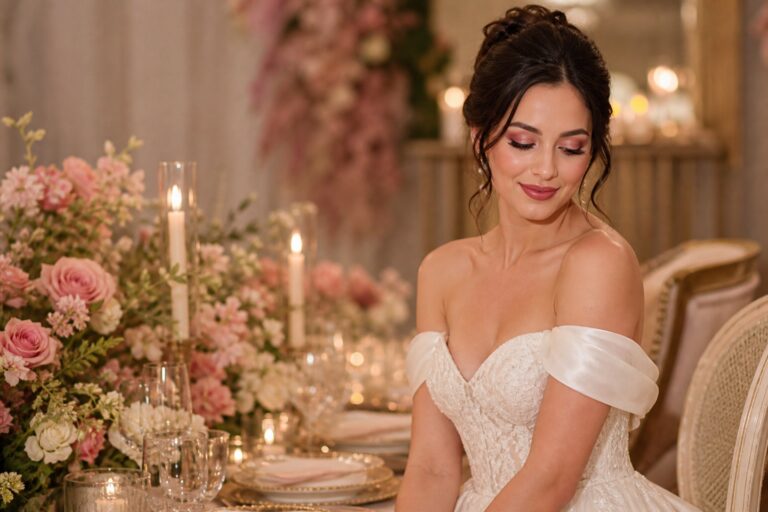
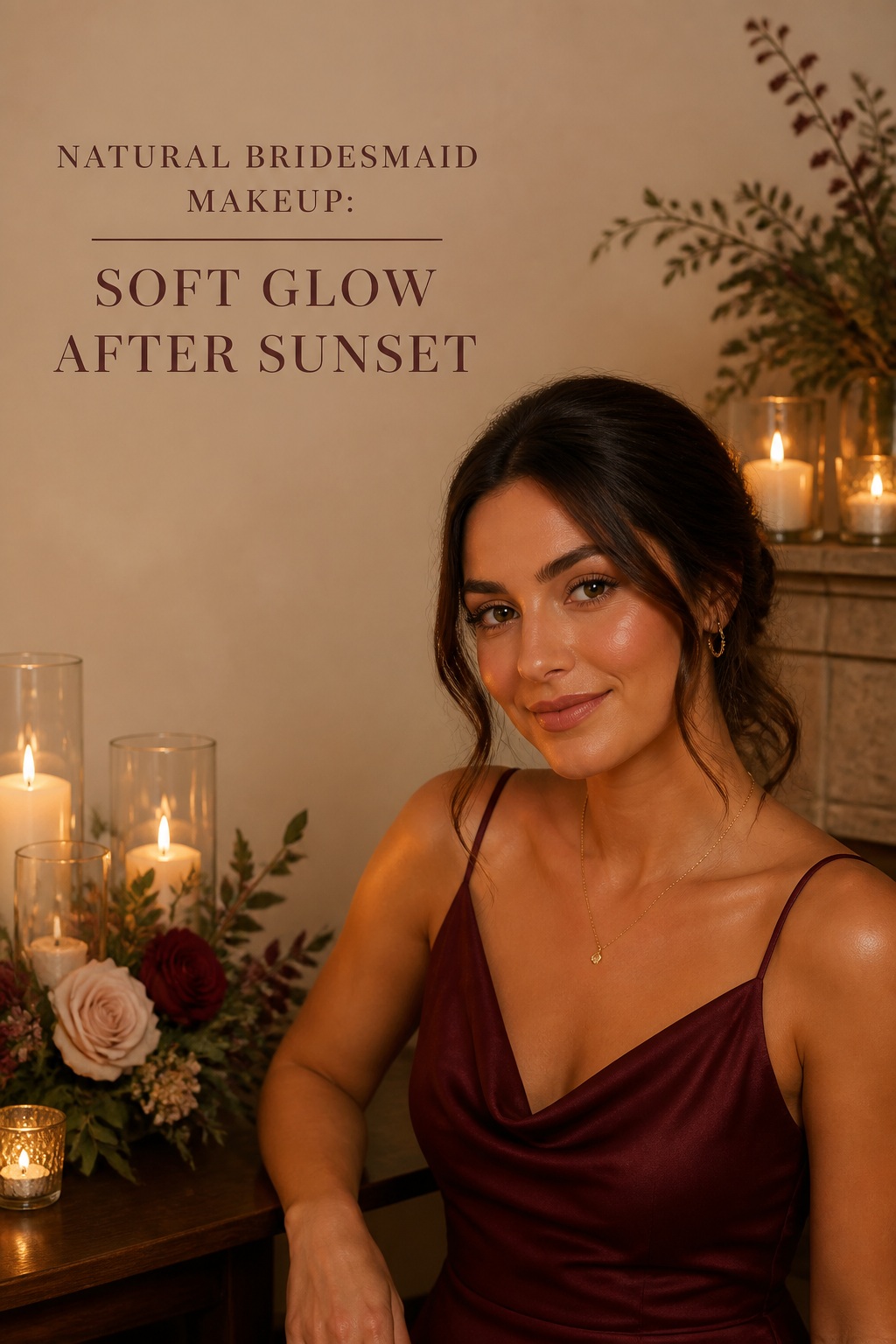
Natural bridesmaid makeup also works across more wedding settings. It can support an outdoor garden ceremony, a bright daytime city wedding, a candlelit dinner, a formal ballroom, or a relaxed courthouse celebration. The difference comes from finish and intensity. A daytime look may need less powder and softer contrast. An evening look can add a slightly deeper crease shade, more defined lashes, or a richer lip while keeping the skin believable.
There is a practical benefit, too. Comfortable makeup is easier to wear for ten or more hours. When the base is not overloaded, there is less product to separate around the nose, crease into expression lines, or feel uncomfortable as the day warms up. A thoughtful natural look still requires skill, but its success comes from placement, texture, and preparation rather than simply adding more layers.
How to build a fresh, photo-ready look
Start with skin preparation that matches the individual rather than applying the same heavy routine to everyone. Clean, comfortable, well-moisturized skin gives makeup a more even surface. Oily skin may need lightweight hydration and targeted mattifying primer around the center of the face. Dry skin may benefit from a nourishing moisturizer applied early enough to settle. Sensitive skin needs familiar products, not a last-minute experiment.
- Use thin layers and allow each layer to set before adding more.
- Keep foundation where it is needed, then spot-conceal instead of building coverage everywhere.
- Check the complexion near a window and under the wedding venue’s likely lighting.
- Use powder strategically around the nose, under the eyes, and wherever shine breaks through.
- Keep the high points softly luminous, not coated in glitter or wet-looking balm.
Next, create structure with brows and eyes. Brows should look intentional but still belong to the face. Fill only sparse areas, brush the product through, and set the hairs without making the front blocky. For eyes, a matte or satin neutral shade can gently shape the crease. A lighter shade on the lid can brighten without obvious shimmer. A soft brown pencil or shadow pressed into the upper lash line adds definition that will show in pictures while remaining softer than a solid black line.
Lashes should be chosen for comfort and proportion. A coat or two of waterproof mascara may be enough for someone with naturally dark lashes. Individual clusters can add density without the visible band of a strip lash. If a strip lash is preferred, a flexible, natural style usually fits this direction better than an exaggerated fan. The test is simple: the eyes should look more open and expressive, not like the lash is arriving before the person.
For cheeks, place blush where the wearer naturally flushes, then blend toward the temples so the color connects with the rest of the face. A little bronzer can warm the complexion, but it should not replace blush or create a hard stripe. Soft contour is optional. If used, it should be placed according to the face rather than copied from a diagram. The most believable sculpting is usually a gentle shadow under the cheekbone, at the hairline, or along the jaw, with no obvious edges.
Finish the lips in a way that supports real wedding behavior. A lip liner close to the natural lip color can create a clean border and help color last. Add a stain, lipstick, or tinted balm, then blot and reapply as needed. Avoid choosing a shade only because it is labeled nude. A nude that is too pale can make the face look washed out, while a deeper rose, caramel, or berry may look more natural against a richer complexion.
How to adapt the look across complexions and situations
The phrase natural bridesmaid makeup should never mean one universal color palette. Natural is a relationship between the product, the skin, and the amount applied. A shade that disappears beautifully on one complexion may look gray, orange, or chalky on another. The most useful question is whether the color creates believable life and definition without competing with the person.
On fair skin, soft pink, peach, neutral rose, and muted apricot can add freshness. Very pale complexions may need a lighter bronzer or a sheer taupe contour so the result does not turn muddy. Brown liner can look especially soft and flattering, while a cool mauve or rose lip can create definition without overwhelming the face.
On medium and olive skin, rose, peach, terracotta, warm pink, and bronze often create natural dimension. Undertones matter more than broad shade labels. A blush that looks coral in the pan may become a fresh apricot on warm skin and a bright orange on a cooler complexion. Testing the product on the cheek, not just the hand, helps reveal the real balance.
On deep skin tones, saturated color often reads more natural than a pale neutral that disappears or leaves a gray cast. Berry, brick, warm rose, terracotta, plum, red-brown, and rich coral can all be softly applied. A luminous highlight should have enough depth to reflect rather than leave a silvery stripe. Complexion products need to match both depth and undertone, especially around the jaw and neck.
Skin type changes the order and finish. For dry skin, apply hydration in measured layers and keep powder concentrated. For oily skin, preserve glow on the high points while setting the areas that actually become shiny. For mature or textured skin, avoid treating texture as a problem that requires thick coverage. Thin layers, flexible formulas, and careful powder placement usually look better than trying to erase every line.
Eye shape and sensitivity deserve equal attention. Hooded eyes may benefit from a softly lifted shadow shape and liner that remains visible when the eye is open. Deep-set eyes can use brightness on the lid and inner corner without excessive shimmer. Watery eyes need tested waterproof products and a plan for removing tears without rubbing away the base. Glasses wearers may want extra attention to lash curl, bridge-area shine, and the way frames change the balance of the face.
Coordinating a group does not require everyone to wear the same shade. Choose a shared visual rule instead. That rule might be skin-like coverage with softly defined eyes and fresh cheeks. It might be neutral eyes with a rosy lip family. It might be a satin finish with no visible glitter. Once the rule is clear, each person can choose colors that belong to her complexion and comfort level.
Wedding-day timing, touch-ups, and mistakes to avoid
A natural look lasts best when the schedule supports it. Skin prep should happen early, followed by makeup on clean, settled skin. If the ceremony is outdoors, account for heat, wind, humidity, or cold. If photos begin before the ceremony, the makeup needs to be ready earlier than the final getting-ready moment. Build in time for a quick expression check, lip adjustment, and small corrections around the eyes.
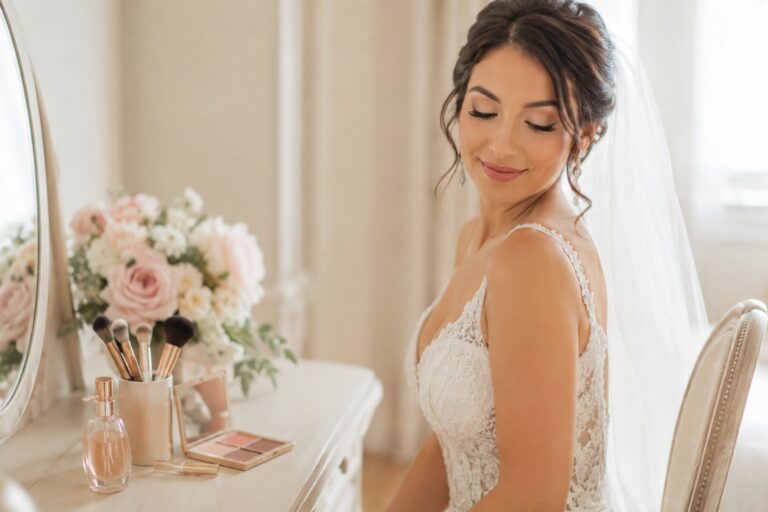
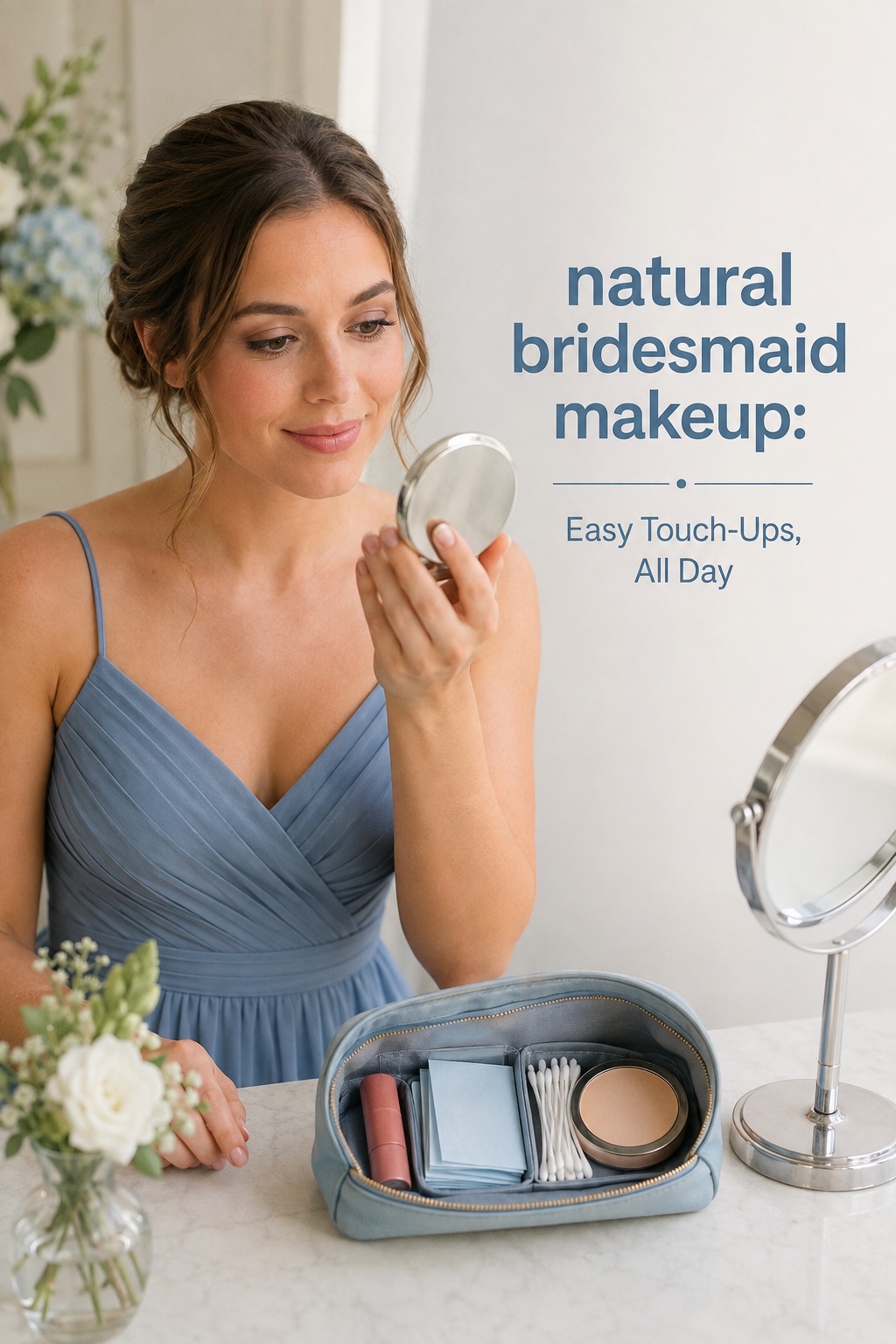
A compact touch-up kit can include the lip product, cotton swabs, a small powder or pressed blotting product, tissues, a tiny concealer, and a mirror. Blot first when possible. Adding powder over oil can create a thicker surface, so remove excess shine before pressing in a small amount. Lip color is usually the first thing to need attention because of drinks and food. The goal is maintenance, not rebuilding the face.
- Do not test a new skincare active, self-tanner, lash adhesive, or foundation the night before.
- Do not choose one foundation shade for a group with different complexions.
- Do not confuse dewy skin with an unpowdered face that reflects every light source.
- Do not use a pale “nude” lip that removes all contrast from the face.
- Do not copy a social-media filter or a makeup chart without considering face shape and lighting.
- Do not wait until the wedding morning to decide whether lashes, liner, or strong contour feels comfortable.
The best trial is not only a close-up mirror check. Take photos in daylight, indoor light, and with flash if the wedding photographer is likely to use it. Look at the face from a normal conversation distance as well as a selfie distance. Natural bridesmaid makeup should feel pleasant in person and retain enough contrast to look alive in photographs.
Finally, remember that “natural” is not a promise that makeup will be invisible. It is a promise of proportion. Skin still looks like skin, features still look like the wearer, and the group looks connected without being uniform. That balance is what makes the style current, practical, and likely to age well in the wedding album.
FAQ
What is natural bridesmaid makeup?
It is a softly polished makeup style that evens the complexion, defines the eyes and brows, adds believable cheek color, and finishes with a wearable lip while keeping the face recognizable and skin-like.
Will natural bridesmaid makeup show up in photos?
Yes, when it includes enough contrast in the brows, lashes, cheeks, and lips. Thin complexion layers, strategic powder, and softly defined features usually photograph more naturally than heavy coverage applied everywhere.
How can bridesmaids match without wearing identical makeup?
Agree on a shared finish and intensity, such as satin skin, softly defined eyes, and fresh cheeks. Then adapt foundation depth, blush, bronzer, lip color, and liner shade to each person’s complexion and comfort level.
Is dewy makeup a good choice for a wedding?
Dewy makeup can work well when glow is placed on the high points and shine-prone areas are set. A satin finish is often easier to maintain than an entirely wet finish, especially in warm weather or flash photography.
What lip colors look natural on bridesmaids?
Rosy beige, peach, rose, mauve, soft brown, warm coral, and sheer berry can all look natural. Choose by undertone and depth rather than relying on the word nude, and use a liner or stain for longevity.
How do you make natural bridesmaid makeup last all day?
Use familiar skincare, thin layers, targeted primer, waterproof eye products, strategic powder, and a setting spray suited to the skin. Carry lip color, blotting supplies, cotton swabs, and a small mirror for simple maintenance.