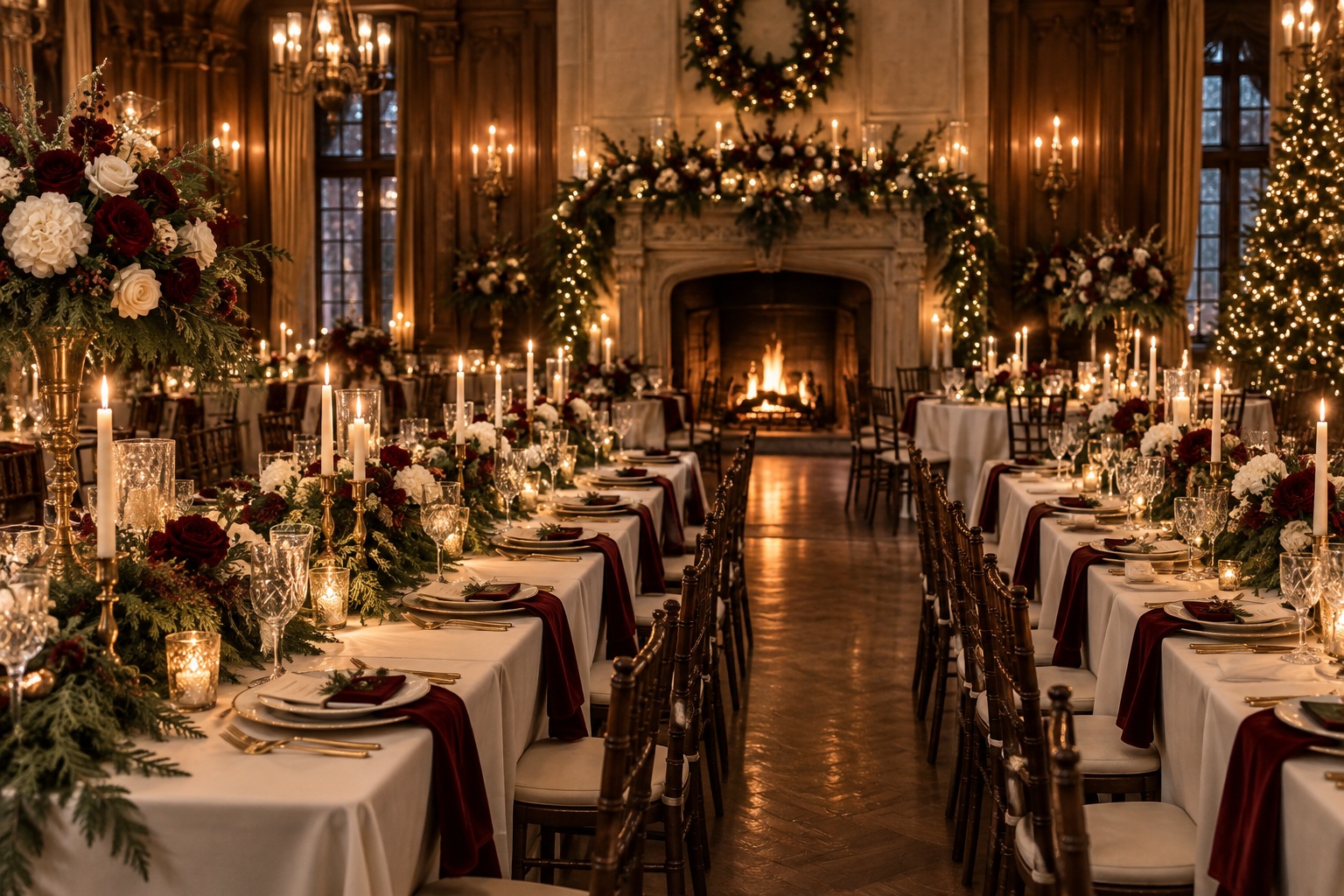
Christmas Wedding Table Decor: A Polished Plan
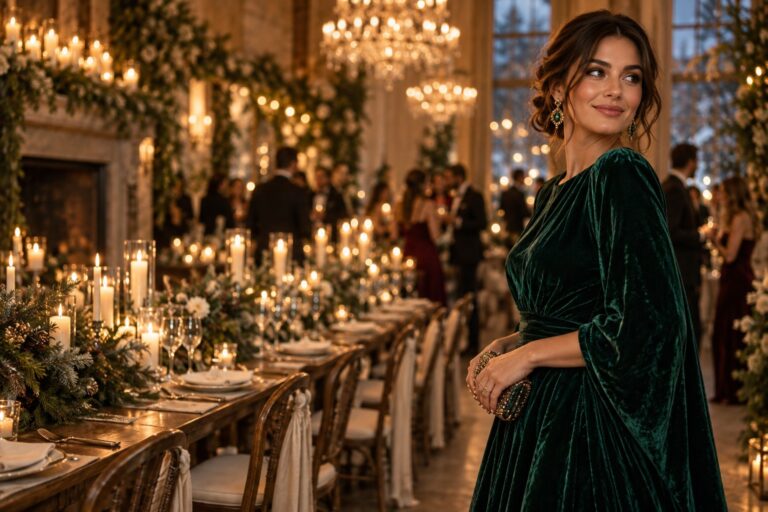
Christmas wedding table decor should feel festive at first glance and unmistakably like a wedding once guests sit down. The goal is not to recreate a family holiday dinner or fill every inch with ornaments. The goal is to create a visual rhythm: a seasonal foundation, a centerpiece that supports conversation, and personal details that make the reception feel made for your guests.
Start with one guiding sentence for the room. You might want a candlelit evergreen dinner, an ivory and gold winter table, a classic red and green celebration, or a modern holiday look with glass, silver, and white flowers. That sentence becomes a filter for every choice, from the table linen to the escort card. It keeps Christmas wedding table decor from becoming a collection of unrelated seasonal props.
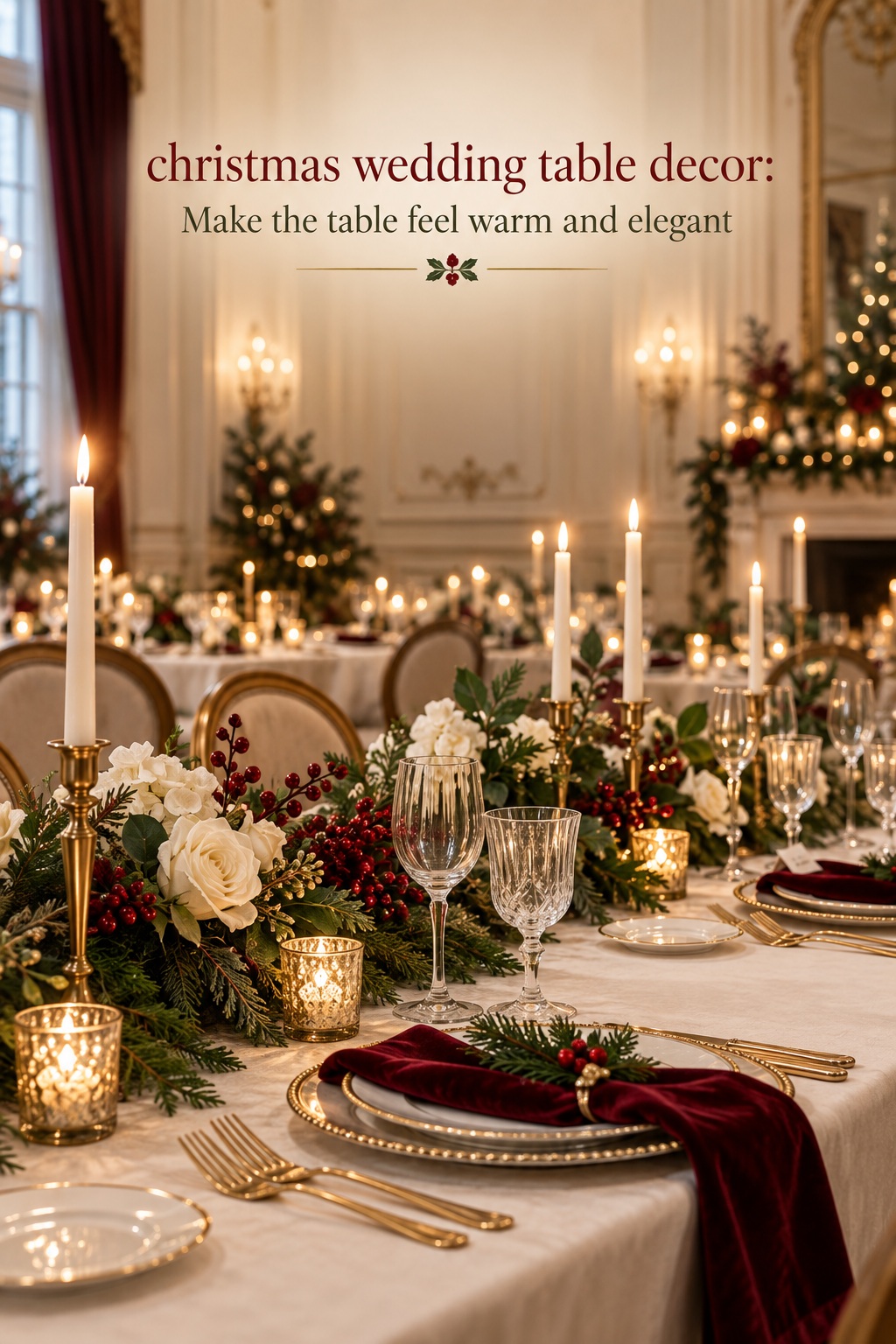
This practical guide takes the decisions in the order they affect the final room. You will learn how to set the table’s foundation, choose a centerpiece system for each table shape, add useful personal details, and protect the budget and guest experience. The most polished result usually comes from repeating three or four seasonal cues with restraint.
1. Decide what your Christmas wedding table decor needs to do
Before choosing flowers or buying candleholders, look at the table as a working space. Guests need room for plates, flatware, glassware, menus, place cards, and shared food if you are serving family style. They also need to see one another. A centerpiece that looks impressive in a styled photograph can feel frustrating when it blocks a conversation or leaves no space for a water glass.
Your wedding look is only the beginning.
Keep your guest list, vendors, timeline, and every important detail together with Zarellea — so your day feels as considered as your style.
Measure the table length and width, then note where guests will sit. For a long banquet table, the design usually needs a repeated line or a sequence of low clusters. For a round table, one central composition or a balanced group of smaller vessels is easier to read. A sweetheart table can take a slightly fuller arrangement because it is viewed from the front, but it still needs room for dinner and photographs.
Assess the reception room at the hour when dinner will begin. December light changes quickly, and a palette that feels airy at two in the afternoon may look much darker after sunset. Warm candlelight can soften navy, burgundy, and evergreen. Cool venue lighting can make silver and white look crisp but can also drain warmth from wood, linen, and skin tones. Ask for photographs from a similar season or visit near your reception time.
- Set the holiday intensity. Decide whether Christmas appears through greenery and candlelight, a recognizable red and green palette, or literal details such as ornaments and ribbon.
- Choose one base neutral. Ivory, white, natural linen, charcoal, or deep green makes accent colors easier to control.
- Limit accent colors. Two strong seasonal colors plus one metallic are usually enough for an elegant reception.
- Protect the sightline. Keep low centerpieces below eye level, or use tall arrangements with narrow bases and open space beneath them.
- Check venue rules. Ask about open flames, hanging greenery, natural materials, glitter, confetti, adhesives, and setup responsibility.
A useful design formula is one foundation, one texture, one light source, and one personal cue. Natural linen can be the foundation, velvet napkins the texture, taper candles the light source, and handwritten place cards the personal cue. Another version might use ivory linen, evergreen garland, glass votives, and tiny ornament favors. The formula creates cohesion without requiring every object to match.
Use the venue’s fixed elements as part of the plan. A room with dark wood may already provide enough depth for ivory linens and soft greenery. A bright hotel ballroom may benefit from burgundy napkins or brushed brass to keep the tables from disappearing. If the venue has patterned carpet, ornate chairs, or a decorated fireplace, simplify the tabletop so the room does not compete with itself.
Decide what guests should feel when they take their seats. Cozy, formal, nostalgic, modern, and playful are all possible. Cozy may call for candlelight, wood, and soft textiles. Formal may need crisp linens, polished glassware, and fewer rustic details. Nostalgic styling can use vintage ornaments or family silver. Modern styling may reduce the palette and let shape, spacing, and reflection carry the seasonal message.
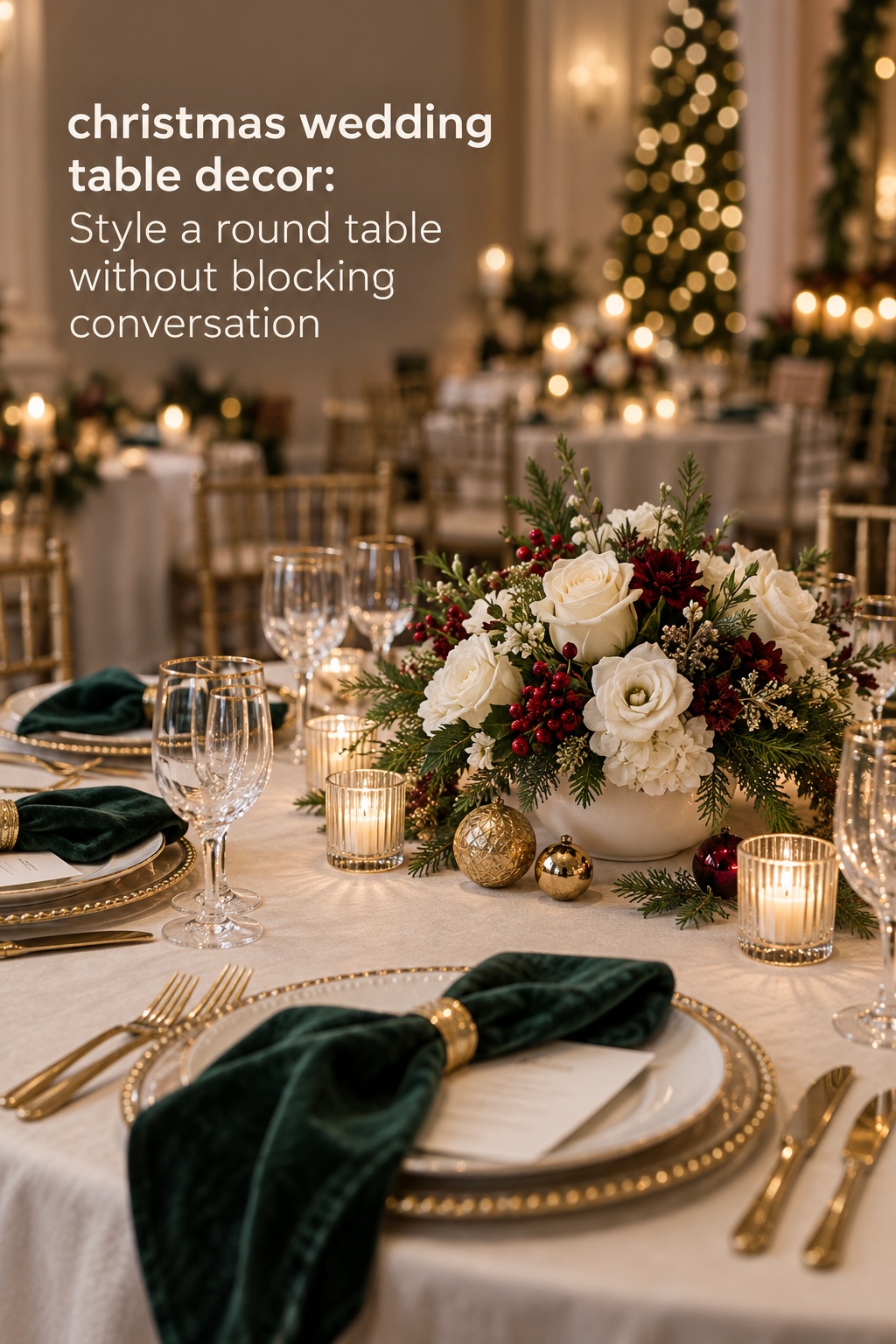
2. Build the foundation with linens, place settings, and paper details
The foundation determines whether Christmas wedding table decor feels refined or crowded. Begin with the linen plan, because the tablecloth or runner occupies more visual area than any individual ornament. Full white or ivory linens create a classic base and let greenery, candles, and flowers provide the seasonal character. Natural linen adds texture and works well for a barn, estate, or outdoor-adjacent venue. A deep green or burgundy cloth makes a stronger statement, so keep the centerpiece simpler.
Runners are helpful on long tables when you want movement without covering the entire surface. Choose a width that leaves enough room for place settings on both sides. A narrow velvet runner can make a formal table feel warm. A gauze or raw linen runner can support a relaxed look. Plaid can be beautiful, but use it as one controlled pattern. If the runner is bold, choose solid napkins and quiet plates.
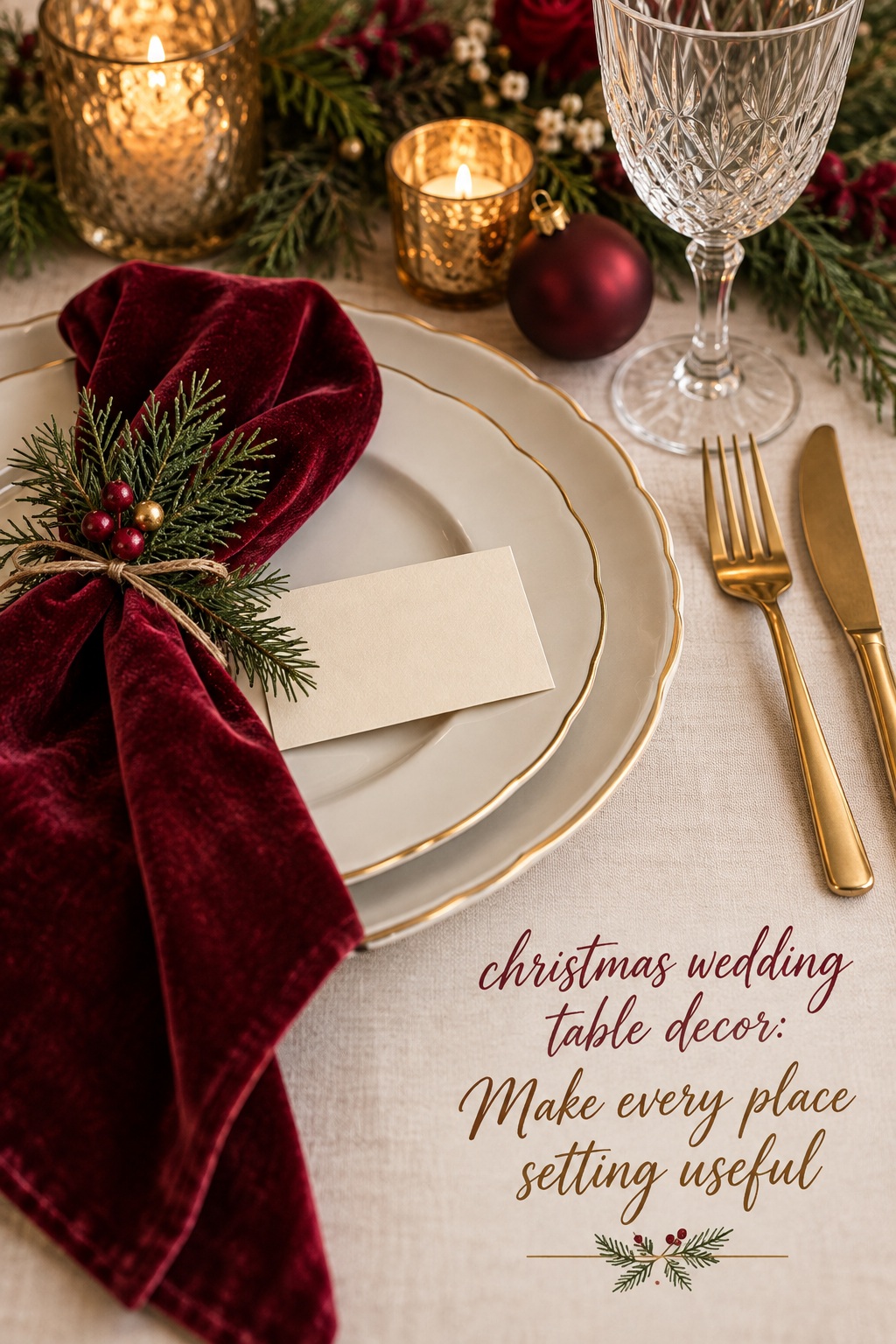
Layer the place setting from largest to smallest. A charger can define each guest’s space and add a metallic or natural edge. The dinner plate provides the main neutral. The napkin is where you can introduce burgundy, pine, ribbon, a monogram, or a small sprig of rosemary. Keep the napkin treatment comfortable to handle. A beautiful knot that makes the napkin difficult to unfold is a styling problem, not a finishing touch.
- Classic ivory and gold: Ivory linen, gold-rimmed chargers, white plates, cream napkins, warm glass votives, and antique gold candleholders.
- Evergreen and natural: White or natural linen, wood chargers, clear glass, forest green napkins, and a cedar or fir runner.
- Burgundy and brass: Cream linen, burgundy napkins, brushed brass flatware, amber glass, and pale flowers to keep the palette bridal.
- White and silver: White linen, silver chargers, icy gray napkins, crystal details, and white flowers with restrained greenery.
Glassware adds light and height without requiring more flowers. Clear glass keeps a colorful table from feeling heavy. Amber or smoke glass brings warmth to an ivory and green design. Colored glass is best used selectively, especially when the venue lighting is already dramatic. Ask the caterer what pieces are included and whether rentals can be mixed without creating a mismatched look.
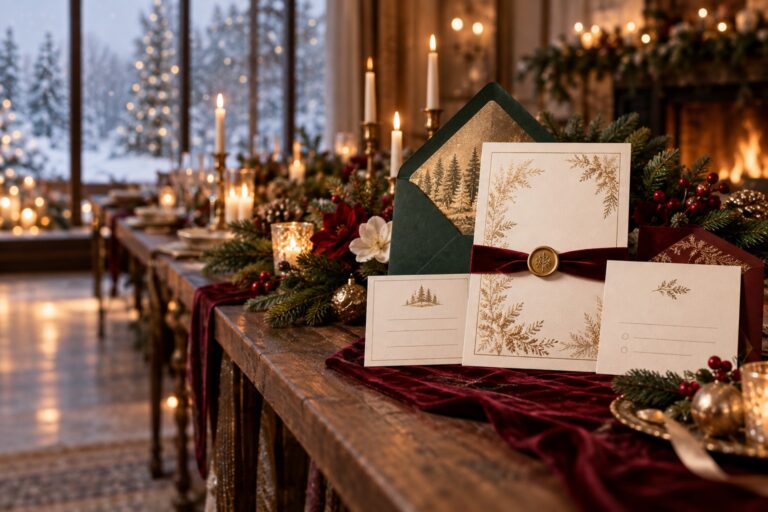
Table numbers and menus should belong to the same visual system. A small gold number on cream card stock can disappear against a pale arrangement, while a dark green card can be hard to read in a dim room. Use high contrast and place the number where it can be seen from the room entrance. For a long table, consider a clear table name or number at both ends if the center is difficult to approach.
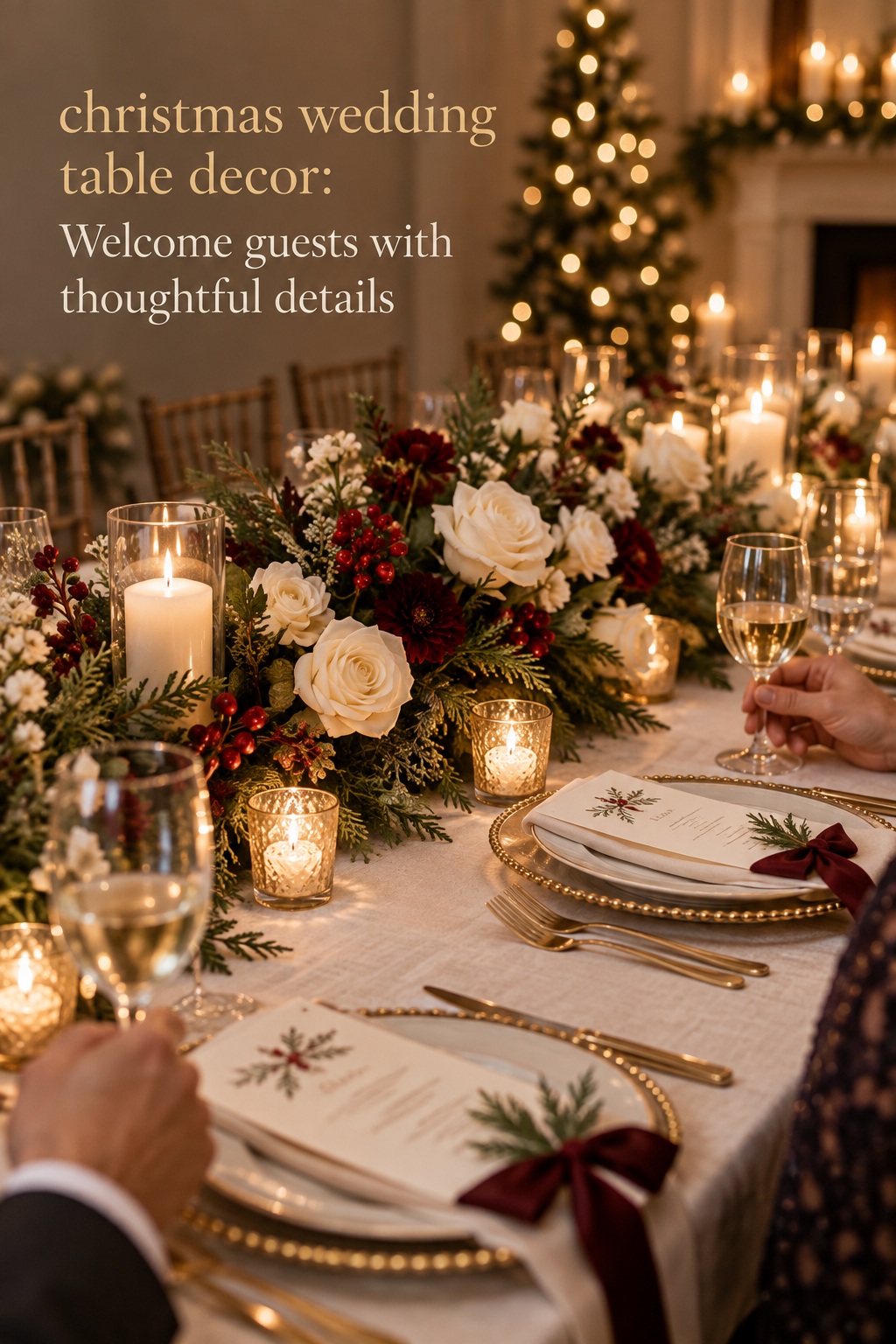
Personalization works best when it has a job. A place card helps guests find a seat. A menu card explains the meal. A small ornament with the guest’s name can serve as both a place card and a favor. A sprig of rosemary can mark the setting and add fragrance, but confirm that no guest has a sensitivity. A handwritten note at each seat can be lovely for an intimate dinner, while printed cards are more practical for a large guest count.
Do a full mock-up before ordering every item. Place a dinner plate, flatware, glasses, menu, place card, napkin, and centerpiece on a table with the planned spacing. Then sit down. Check whether your elbows have room, whether the menu can be read, and whether the centerpiece blocks the person across from you. Photograph the mock-up in daylight and in the planned evening lighting. This test catches more problems than a mood board can.
3. Choose a centerpiece system for each table shape
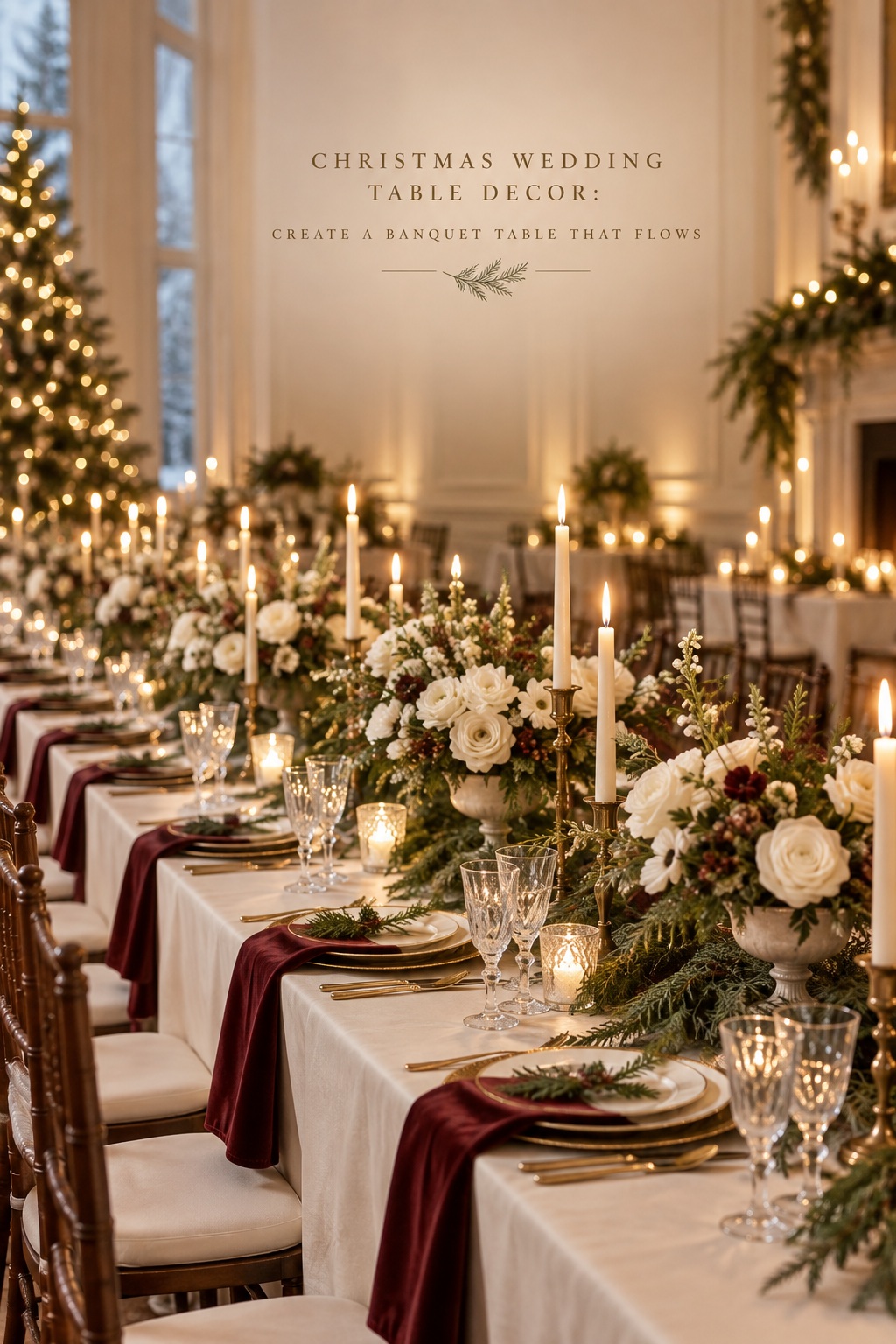
Centerpieces should repeat a simple idea across the room rather than force every table to be identical. The right system depends on table shape, table length, venue formality, and how much your florist or event team can install in the available setup window. Think in systems, not isolated arrangements. A system gives you a repeatable recipe for adding or removing tables.
Long banquet tables: create a continuous seasonal line
Long tables are ideal for Christmas wedding table decor because greenery can create a visual journey from one end to the other. A loose garland of cedar, fir, eucalyptus, or olive can run down the center, with flowers and candles added at intervals. Keep the line slightly irregular so it feels organic, but repeat the spacing of the major elements so the table does not look accidental.
Use vessels under the garland when the table is large or the room is warm. Small water sources help flowers and foliage stay fresh, and individual bud vases make it easier to move pieces after dinner. For a formal look, alternate low floral compotes with pairs of taper candles. For a relaxed look, use clusters of clear votives, pinecones, berries, and small ceramic vessels. Leave open spaces where servers need to place shared dishes.
Round guest tables: build a readable central composition
Round tables need a centerpiece that reads from every direction. A low floral bowl, a ring of greenery, or a cluster of three vessels can work well. Use an odd number of containers when you want a natural composition, but keep the combined footprint compact enough for shared plates and bottles. A centerpiece that takes over the center makes guests feel like they are dining around a display.
For a more dramatic round table, use a tall arrangement with a slim stand and an open base. This creates height while preserving eye contact. Confirm that the stand is stable and that flowers do not extend into seated guests’ faces. Tall designs need a clear plan for speeches and service, since a server should not have to reach around an unstable arrangement.
Sweetheart and head tables: frame the couple without hiding them
A sweetheart table is a natural place for a fuller seasonal statement, but the arrangement should frame the couple rather than cover the front. Place a low floral cluster to one side, a narrow garland along the front edge, or two asymmetrical arrangements that leave the chairs visible. Repeat a few guest-table details so the sweetheart table feels connected to the room.
At a head table, protect the sightline between attendants and guests. A sequence of small arrangements can be more practical than one continuous mass of flowers. If you use candles, choose holders with secure bases and keep flames away from sleeves, menus, and greenery. The table will be photographed often, so hide water containers, mechanics, and cords before guests enter.
Use seasonal objects as accents, not a theme overload
Ornaments, pinecones, berries, miniature trees, ribbon, and lanterns can make a wedding feel unmistakably seasonal. Assign each object a role. Ornaments can sit in a shallow bowl, hang from a branch, or become guest favors. Pinecones can add texture at the base of a floral arrangement. Lanterns can anchor a long table or frame the sweetheart table. You rarely need all of these at once.
Choose a finish that matches your mood. Clear glass ornaments feel light and modern. Vintage baubles feel nostalgic and personal. Matte ceramic ornaments feel calm and editorial. Bright shiny ornaments bring energy but need a limited palette. If you use family ornaments, photograph and label them before delivery so the setup team knows which pieces are precious and where they belong.
4. Add guest-friendly details and protect the budget
The final layer should make the dinner easier, warmer, or more personal. Start with light. Candles create the most immediate holiday atmosphere, but use several small sources rather than one oversized display. Votives can fill gaps in a garland. Tapers can add height to a formal table. Flameless candles may be best when the venue has strict rules, children will be present, or heavy fabric sits close to the tables.
Ask the venue about flame height, candle enclosures, battery requirements, and who lights the candles. A safe plan should include stable holders, a setup check, and a method for extinguishing or collecting them. Keep dried foliage, ribbon, paper, and loose pine needles away from open flame. Candles should enhance the table, not create a risk or an extra task no one has been assigned to handle.
- Make comfort visible. Add wraps, heaters, or a warm drink station if guests spend time outside or move between spaces.
- Make the table accessible. Leave room for mobility devices, service, and comfortable reach based on the venue layout.
- Make names readable. Use strong contrast and a placement that does not hide behind flowers or glassware.
- Make favors useful. Consider a small ornament, local treat, candle tin, or handwritten recipe guests can take home.
- Make cleanup simple. Use labeled boxes for rentals, family pieces, favors, and items returning to the florist.
To control the budget, spend first on elements guests see for the longest time. For many receptions, that means linens, lighting, and the centerpiece line rather than a separate novelty item for every place setting. Use the same candleholder style across tables instead of buying many different shapes. Choose seasonal foliage as volume, then use focal flowers in smaller quantities. Ask the florist where a less expensive flower can preserve the color, shape, or texture of the original choice.
Repurposing can make a large difference. Ceremony aisle clusters can move to the bar or welcome table. Welcome arrangements can frame the sweetheart table. Bridesmaid bouquets can sit in water-filled vessels around the reception. A floral arch can be repositioned behind the couple or near the dance floor if the mechanics allow it. Decide who will move each item and how much labor it requires before assuming repurposing is free.
DIY is most useful for details that can be made well in advance. Printed menus, place cards, ribbon tags, ornament favors, table numbers, and simple candle clusters are realistic projects. Fresh garlands, complex floral mechanics, and large installations are better left to a professional unless you have a trained team, proper storage, and a clear setup window. Your wedding day should not depend on a dozen people arranging greenery in formalwear.
Before final approval, ask for a setup map. It should show each table type, centerpiece count, number of candles, table-number placement, and any items needing careful handling. Include a photograph or sketch of the finished place setting. This gives the venue and planner a common reference and reduces the chance that beautiful pieces are packed away because no one knows where they belong.
Walk through the room as a guest. Can you see the couple from the back table? Can you find your name? Can you read the menu? Is there enough space for a glass and a plate? Does the seasonal color appear in the ceremony, reception, and stationery without being repeated mechanically? The best Christmas wedding table decor feels generous and memorable because it serves the people around it.
Final checklist for Christmas wedding table decor
- Write your one-sentence table design direction and choose the holiday intensity.
- Confirm table shapes, sizes, guest count, service style, and venue restrictions.
- Choose a base neutral, two seasonal colors, and one metallic or reflective finish.
- Build one complete mock-up with the exact plate, glassware, menu, place card, napkin, and centerpiece scale.
- Choose a centerpiece system for long tables, round tables, and the sweetheart or head table.
- Confirm candle safety, lighting responsibilities, setup time, teardown, and storage.
- Ask your florist about seasonal availability, substitutions, vessel rentals, and repurposing.
- Label personal ornaments, favors, rentals, and pieces that need to return home.
- Review the room from seated eye level in daylight and evening light.
- Leave a simple setup map with the planner or venue team.
Christmas wedding table decor does not need to be elaborate to feel special. When the foundation is calm, the centerpiece is functional, and the seasonal details are repeated with intention, the tables become part of the celebration instead of competing with it. Choose the atmosphere first, make every decorative layer earn its place, and give the setup team a plan they can actually execute.
FAQ
What colors work best for Christmas wedding table decor?
Ivory and gold, evergreen and natural linen, burgundy and brass, white and silver, and classic red and green can all work well. Choose one base neutral, two seasonal colors, and one metallic or reflective finish. Tonal shades such as burgundy, forest green, cream, and brushed gold usually feel more polished than several bright holiday colors at once.
What is the best centerpiece for a Christmas wedding?
The best centerpiece depends on the table shape and the room. A low garland with candles works well on long banquet tables. A compact floral bowl or grouped vessels suit round tables. A low asymmetrical arrangement can frame a sweetheart table. Choose the option that preserves conversation, leaves room for service, and can be installed safely within the venue’s setup window.
Can I use real candles on wedding reception tables?
Often, but confirm the venue’s rules first. Ask about flame height, protective holders, placement near foliage and fabric, lighting responsibilities, and cleanup. Stable votives or enclosed lanterns are usually easier to manage than exposed flames. Flameless candles can provide a similar glow when open flame is not permitted or when the room has many combustible details.
How can I decorate long wedding tables for Christmas?
Create a continuous line with greenery, then repeat low flowers, candles, bud vases, or small seasonal objects at measured intervals. Leave clear space for place settings and service. A garland does not need to be dense from end to end. Strategic gaps can make the table feel lighter and give the eye room to notice the plates, menus, and guests.
How do I make Christmas wedding tables feel elegant instead of overly themed?
Use seasonal cues through texture, light, and a controlled palette rather than decorating every surface with literal holiday objects. Choose velvet, greenery, candlelight, berries, or one ornament style, then let the rest of the table remain wedding-focused. Avoid mixing bright red, bright green, plaid, glitter, snowflakes, and multiple metallics unless the entire event intentionally embraces a playful holiday theme.
What are budget-friendly Christmas wedding table decor ideas?
Use seasonal greenery for volume, repeat one candleholder style, choose bud vases instead of large arrangements, and personalize paper details rather than adding expensive objects to every setting. Ask your florist about in-season substitutions and repurpose ceremony flowers at the reception. A small ornament favor can also serve as a place card, combining two purchases into one useful detail.
What should I consider when decorating round wedding tables?
Choose a centerpiece that reads from every direction and leaves room for shared food, bottles, and conversation. A low bowl, a ring of greenery, or a cluster of compact vessels usually works well. Tall designs can be effective when they have a stable base and open space beneath the flowers. Test the arrangement from seated eye level before finalizing the rental order.