Christmas Wedding Reception Ideas for a Warm, Elegant Night
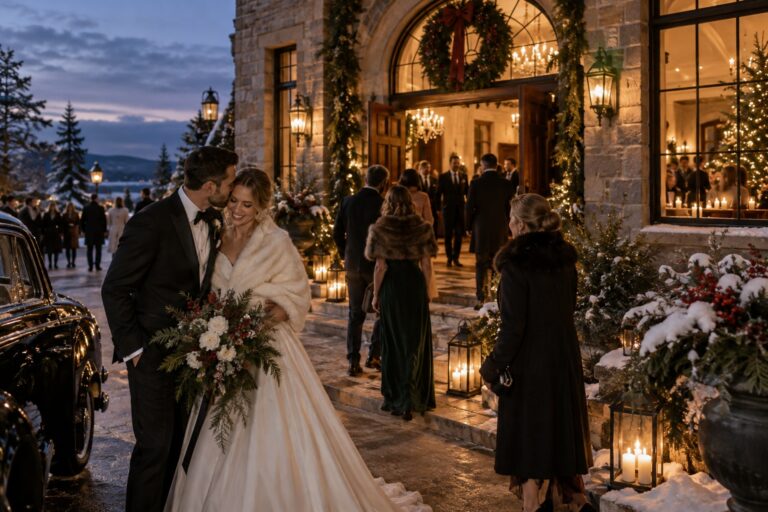
The room is already glowing when your guests arrive. Evergreen catches the candlelight along the bar, a string quartet is moving through a familiar melody, and someone at the welcome table is pouring a drink that smells faintly of orange and spice. Nothing feels like a holiday office party. Nothing feels like a generic winter wedding, either. The room feels like your wedding, made warmer and more memorable by the season.
That balance is the heart of the best Christmas wedding reception ideas. You do not need to cover every surface with red bows, ornaments, or novelty signs. Instead, choose a few seasonal signals and let them support the things a reception must do well: welcome people, make dinner comfortable, encourage conversation, create beautiful photographs, and give the evening a rhythm guests can feel.
Use the ideas below as an editorial plan rather than a shopping list. First decide what you want the room to say. Then layer in decor, food, drinks, music, and personal details that make the celebration yours. The most successful Christmas wedding reception ideas are not necessarily the most elaborate. They are the ones that make the season feel intentional.
Your wedding look is only the beginning.
Keep your guest list, vendors, timeline, and every important detail together with Zarellea — so your day feels as considered as your style.
1. Let the reception tell one seasonal story
Imagine the reception from a guest’s point of view. They enter with a coat over one arm, perhaps after traveling through cold weather or dark streets. What do they notice first? It might be warm lighting, a wreath on the door, a coat check that actually works, a seating display, or the sound of music drifting from the main room. That first impression gives you a useful design question: what should guests understand about the evening before they sit down?
Choose a sentence that describes your atmosphere. “A candlelit evergreen dinner” creates a different plan from “a glamorous winter ballroom” or “a nostalgic Christmas at home.” You might want a palette of ivory, cedar, and antique gold. You might prefer burgundy velvet with soft blush flowers. You might choose white, silver, and glass for a quieter winter look. Each direction can be beautiful when the details repeat with intention.
- Classic and warm: ivory linens, evergreen, red berries, brass, taper candles, and a deep red accent.
- Modern and luminous: white flowers, clear glass, silver, pale gray, warm white lights, and restrained greenery.
- Old-world and nostalgic: vintage ornaments, velvet ribbon, candlelight, family photographs, brass frames, and handwritten paper goods.
- Rustic and relaxed: natural linen, wood, pinecones, cedar, pottery, plaid used sparingly, and comfort-food details.
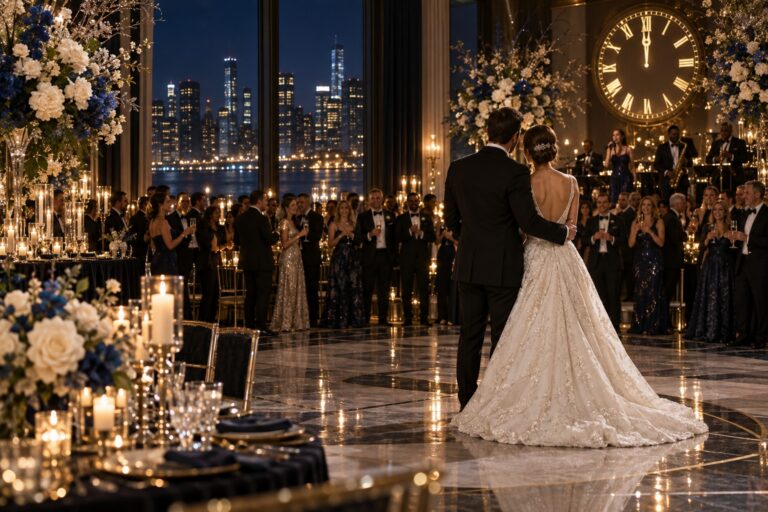
- Glamorous and dramatic: dark green or burgundy, reflective glass, metallic accents, abundant candlelight, and one strong floral installation.
Keep the holiday intensity under control. A reception can be Christmas-inspired without being Christmas-themed in a literal way. Greenery and candlelight may be enough. If you add ornaments, use the same finish or color family across the room. If you use a bold plaid, let it appear on napkins or escort cards rather than competing with a patterned linen, busy floral arrangement, and statement cake.
Lighting deserves an early decision because December darkness arrives before many receptions begin. Ask your venue what lighting remains in the room after sunset, then plan layers: ambient lighting for safe movement, focused light for dinner tables, and decorative light for atmosphere. Candlelight is beautiful, but it should not be responsible for illuminating menus, steps, or a buffet. Use warm bulbs, lanterns, pin spots, or concealed fixtures where guests need to see clearly.
Also plan for the physical season. A beautiful entrance loses its welcome if guests have nowhere to put wet coats. A ceremony-to-reception transition feels less generous when people wait outside in formalwear. Offer a staffed coat check, clear directions, umbrellas if the forecast suggests rain, and a warm place to gather. Guest comfort is part of the design, not a separate administrative task.
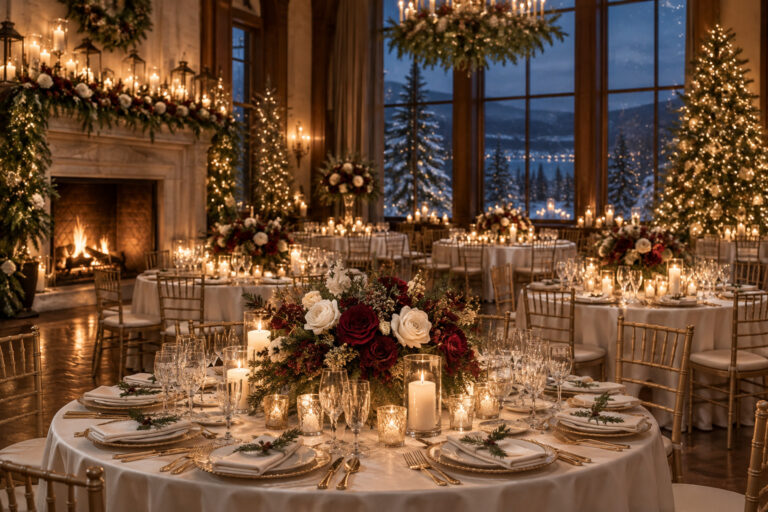
Before you approve any rental or floral order, walk through the room and mark the fixed elements: fireplace, staircase, windows, bar, dance floor, buffet, restrooms, and exits. A venue that already has a decorated tree may need only a few coordinating details. A blank ballroom may need a stronger focal point. The goal is to make the room feel complete without paying to decorate every corner.
2. Build a reception room in layers guests can feel
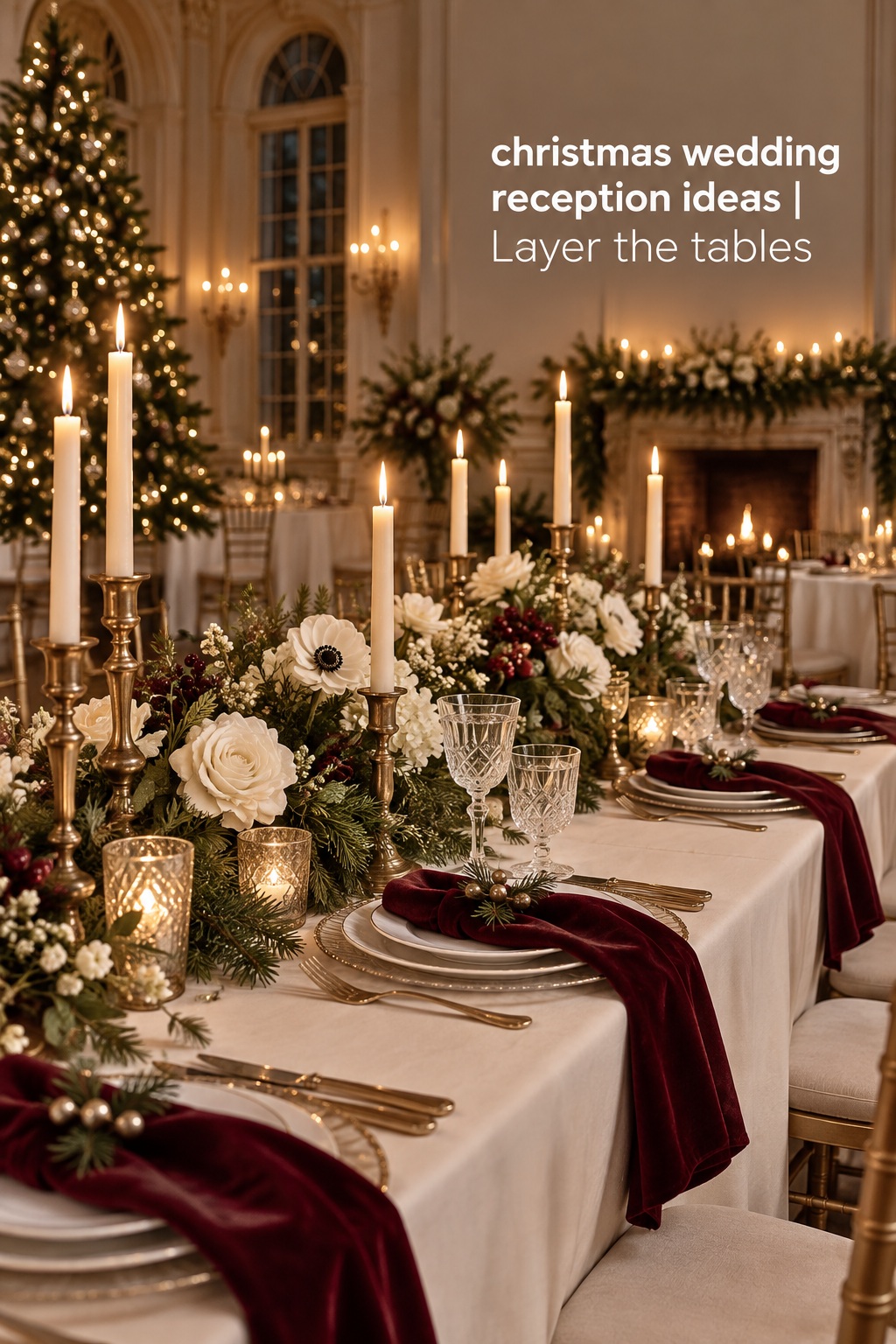
Once the mood is clear, create a visual path through the reception. Guests should encounter a series of related moments rather than one crowded burst of holiday decor. Start at the entrance, continue to the seating display, let the tables carry the central rhythm, and finish with one or two memorable areas such as the bar, cake table, dance floor, or photo backdrop.
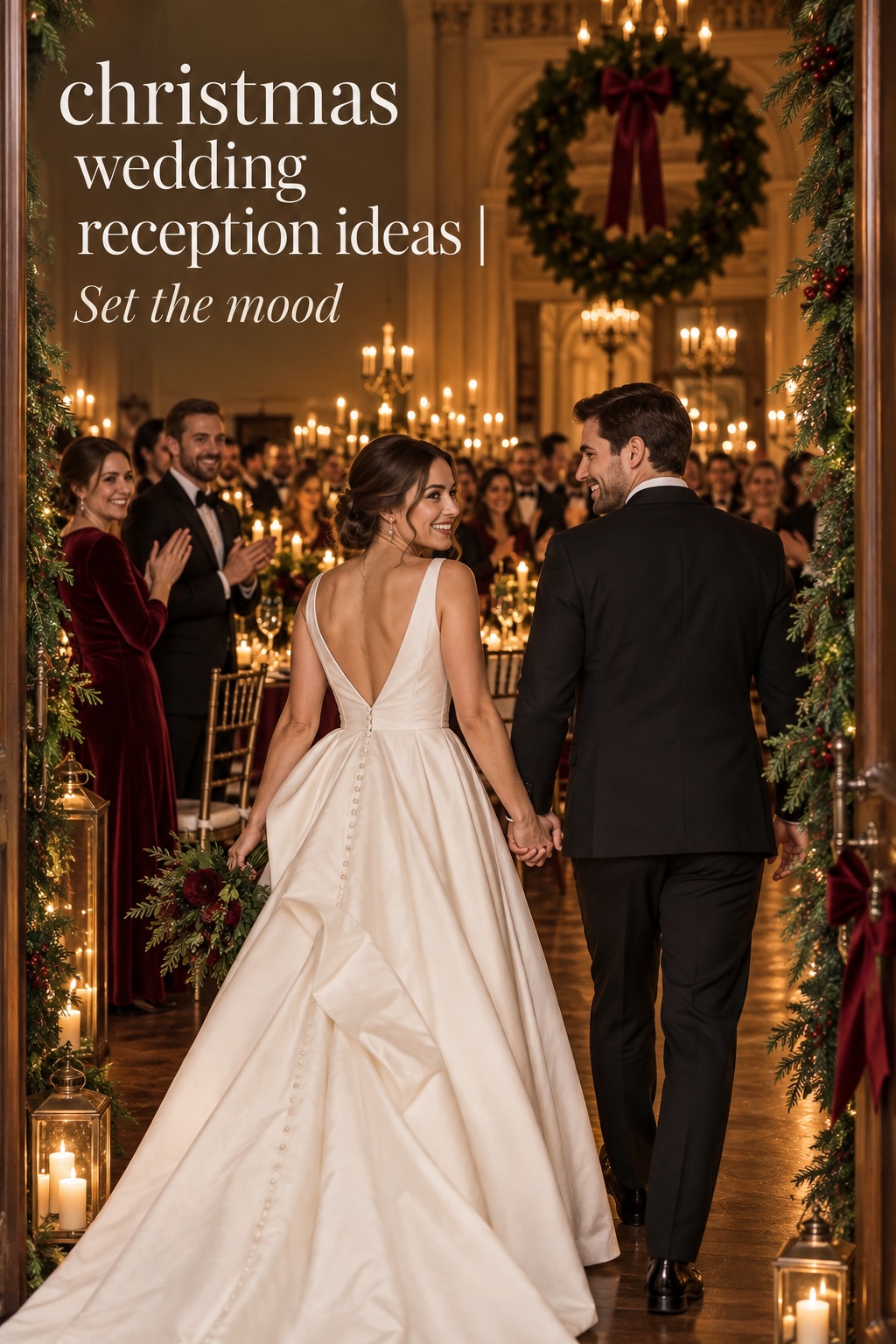
At the entrance, choose one welcoming gesture. A wreath, a small arrangement of fir and berries, a candlelit sign, or a basket of warm wraps can establish the season without overwhelming the doorway. If the venue already has elaborate holiday decor, photograph it before adding anything. Match one existing color or material so your wedding looks integrated rather than layered on top of someone else’s plan.
The seating display can do more than direct guests to a table. Use escort cards shaped like ornaments, tags tied with velvet ribbon, place cards tucked into a sprig of rosemary, or a wall of handwritten cards framed by greenery. Keep the lettering large enough to read in low light. If the display is outdoors or near a drafty entrance, choose a material that will not curl, blow away, or absorb moisture.
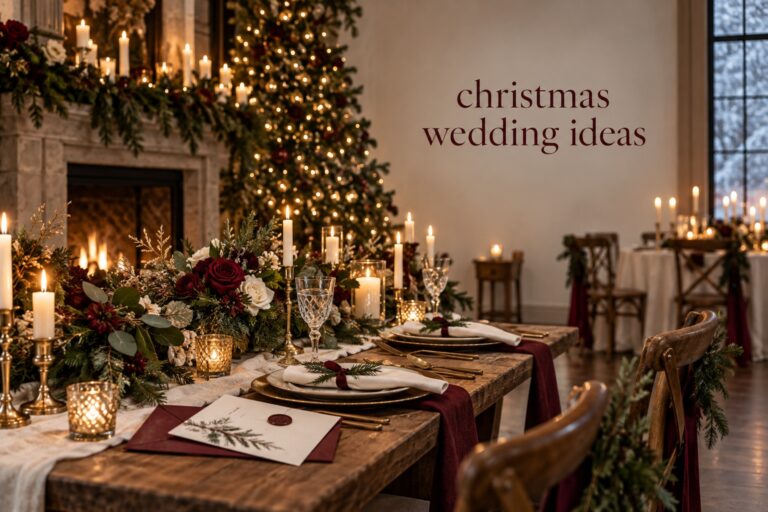
For dinner tables, begin with the surface that will occupy the most space. Ivory or white linens create a bridal base and let seasonal accents speak. Natural linen gives relaxed texture. A deep green or burgundy cloth creates drama, so balance it with lighter flowers and simpler place settings. A runner can bring movement to long tables, but leave enough room for plates, glassware, shared dishes, and guests’ hands.
- Long banquet tables: repeat low greenery, candle clusters, and small floral vessels so the design reads as a line rather than one oversized centerpiece.
- Round tables: use one central arrangement or a compact group of vessels with enough negative space for conversation and serving pieces.
- Sweetheart table: add a fuller arrangement or a fabric treatment because it is viewed from the front, but keep dinner space clear.
- Family-style tables: reduce the centerpiece footprint and confirm where shared plates will land before finalizing the design.
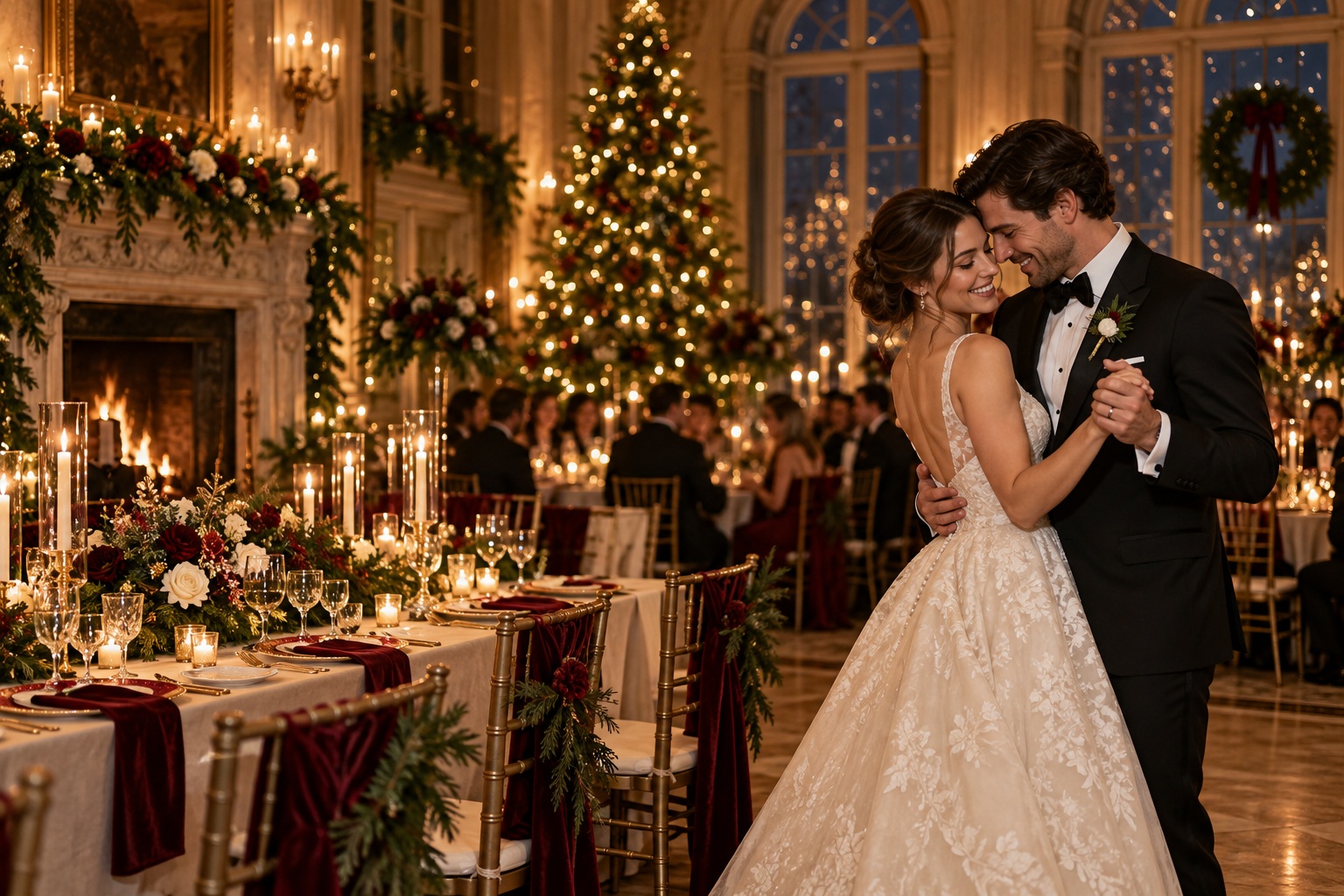
Evergreen garland is an efficient way to create a seasonal foundation, especially on a long table or fireplace mantel. Ask your florist how much it will shed, how it will be secured, and whether it needs water or special handling. Add candles in clear glass, brass holders, or hurricane vessels rather than scattering loose flames. Berries, pinecones, and ornaments should be accents with a clear home, not filler distributed randomly.
A Christmas tree can be a lovely reception feature when it serves a purpose. Decorate it with family ornaments, cards from loved ones, escort tags, or small notes guests can write during the evening. You can also use a tree near the guest book or lounge as a backdrop for portraits. Keep it away from narrow walkways and confirm that the venue permits live greenery, water containers, and the type of lights you want.
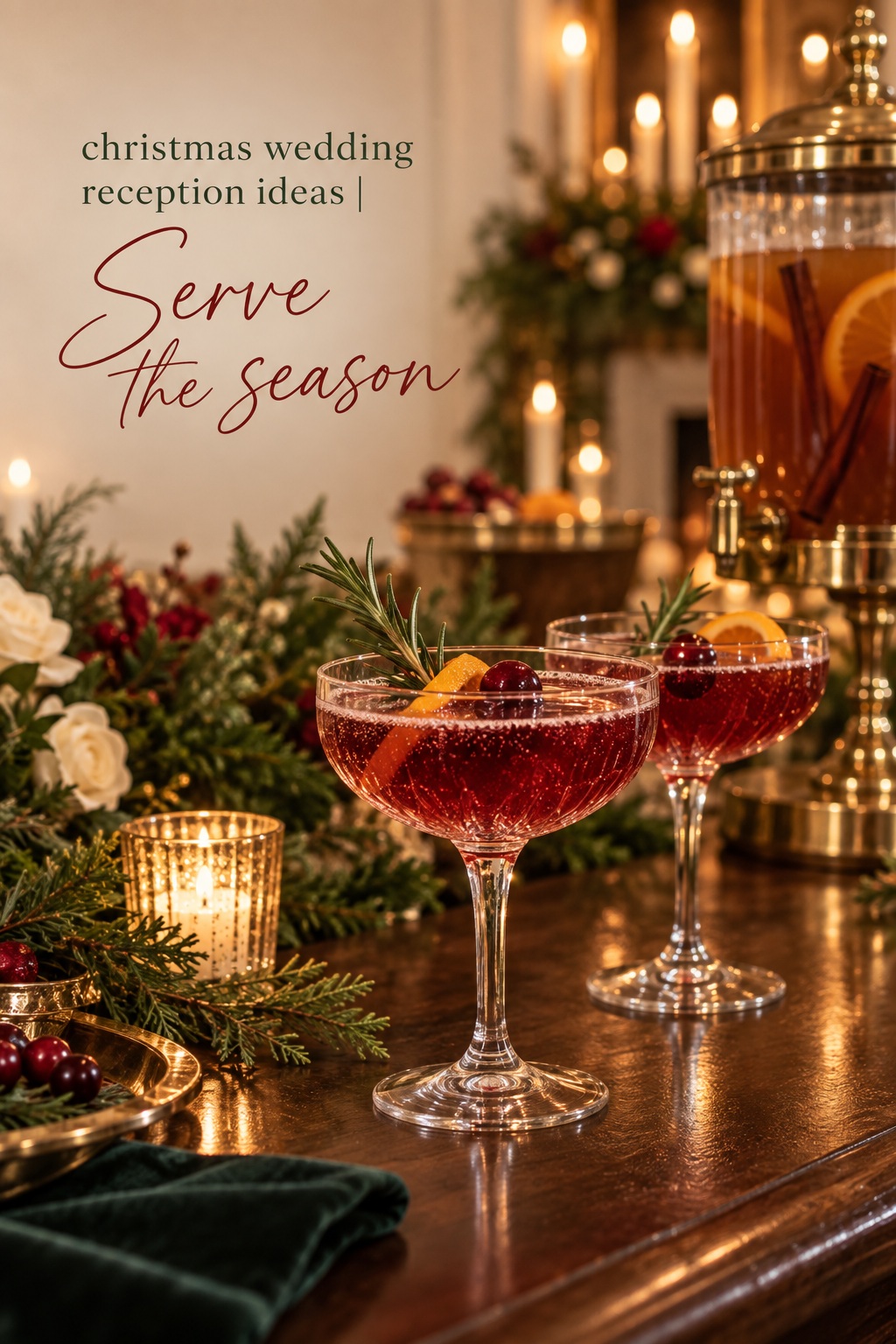
Give the bar its own seasonal language. A wreath, a small arrangement, a menu with two signature drinks, or a bowl of citrus and herbs is usually enough. The bar should remain easy to approach, so avoid a large centerpiece that narrows the service area. A welcome drink can be festive without being sweet: try sparkling wine with cranberry, a rosemary and grapefruit spritz, spiced cider, or a nonalcoholic version served in the same glassware.
Think about the photograph guests will remember. It could be a softly lit sweetheart table, a cake surrounded by cedar, a lounge with velvet pillows, or a portrait corner framed with lights. One intentional photo moment is more effective than several small backdrops that make the room feel like an event rental showroom. Leave enough space for people to stand, move, and take pictures without blocking service.
3. Make the celebration seasonal through food, drinks, and music
Decor announces the season, but hospitality makes guests believe it. Food, drinks, and music are opportunities to create warmth without turning the reception into a themed dinner theater. Start by asking what your guests will actually enjoy after traveling, standing through a ceremony, and spending several hours in formal clothes.
A welcome drink is an easy first cue. Offer one signature cocktail and one equally considered zero-proof drink. Serve them with a small explanation on the menu, such as “apple cider, ginger, and lemon” or “cranberry, rosemary, and sparkling water.” Avoid requiring every guest to choose a complicated drink at once. A batch cocktail, wine, beer, and water station keep the line moving.
- For a formal dinner: pair a sparkling welcome drink with a seasonal course, such as roasted squash, citrus salad, or a carefully plated dessert.
- For a relaxed reception: consider a hot cider station, savory passed bites, soup shooters, or a late-night snack that feels comforting.
- For a dry or mixed crowd: give the zero-proof option the same glassware, garnish, and menu prominence as the cocktail.
- For a destination wedding: add a local ingredient or family recipe so the seasonal menu also reflects place and history.
Warm drinks need thoughtful service. A hot chocolate bar can be charming, but it should be placed where guests can pause without blocking the dance floor or buffet. Offer two or three toppings rather than a chaotic collection: whipped cream, cinnamon, peppermint, toasted marshmallow, or chocolate curls. Label dairy-free, nut-containing, and alcoholic additions clearly. For a more polished version, serve individual cups from staff rather than asking guests to build a drink beside the dinner table.
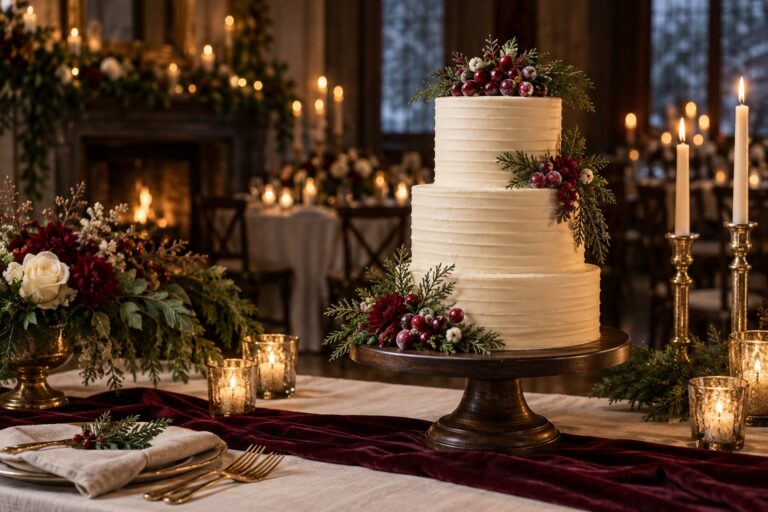
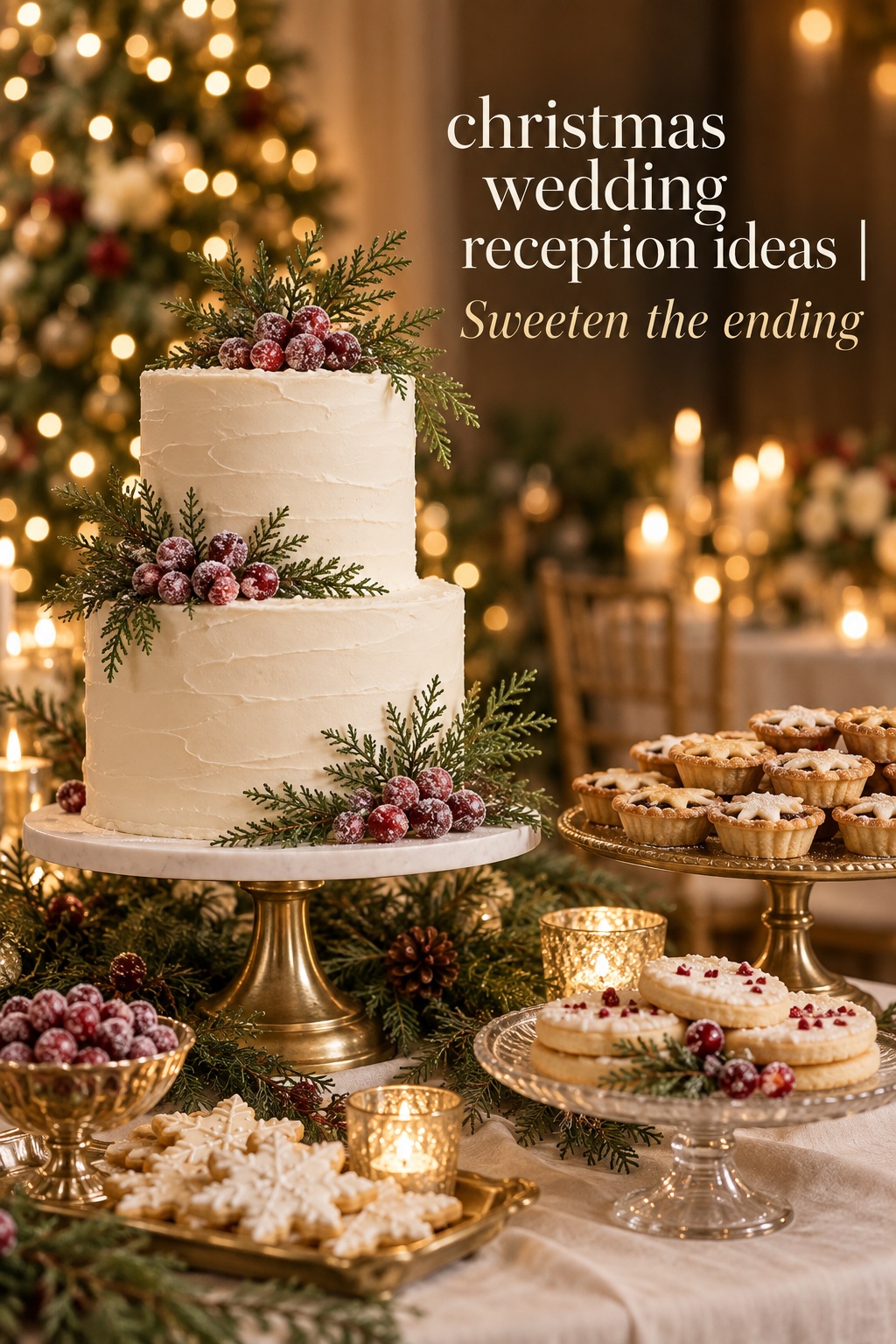
Dessert gives you another way to reference Christmas without making the cake look like a novelty prop. A white cake with sugared berries and delicate greenery can feel seasonal and elegant. A chocolate cake with orange, spice, or cranberry filling brings winter flavor while remaining wedding-focused. Offer cookies, mini pies, or a family dessert alongside the cake if those foods carry real meaning for you. Presentation matters more than quantity.
Music can be festive without filling the evening with carols. Talk with your band or DJ about when seasonal music belongs. Instrumental versions during cocktails, one meaningful processional or dinner song, and a few recognizable choices later in the night may feel more personal than a constant holiday playlist. Include music that represents both of you, then use the season as a gentle accent.
Plan the timing around the realities of December. If sunset is early, schedule portraits and any outdoor photos before the ceremony or during a clearly protected window. Give guests a warm indoor area during transitions. If your date is close to a major holiday, keep the evening schedule clear in the invitation and wedding website so people can plan travel, childcare, and family commitments.
Entertainment can also create connection. Invite guests to write a note for your future Christmas tree, provide a small ornament for each household, or display family recipes on a memory table. These activities work best when they are optional and easy to understand. A single meaningful ritual will land better than a schedule packed with forced participation.
4. Keep the ideas personal, comfortable, and realistic
The most memorable details usually have a reason behind them. Maybe your families exchange handmade cookies every December. Maybe you met at a holiday market. Maybe your first apartment had one small tree and a strand of lights. Bring that story into one or two reception details, then let the rest of the design stay quiet enough for guests to notice the people in the room.
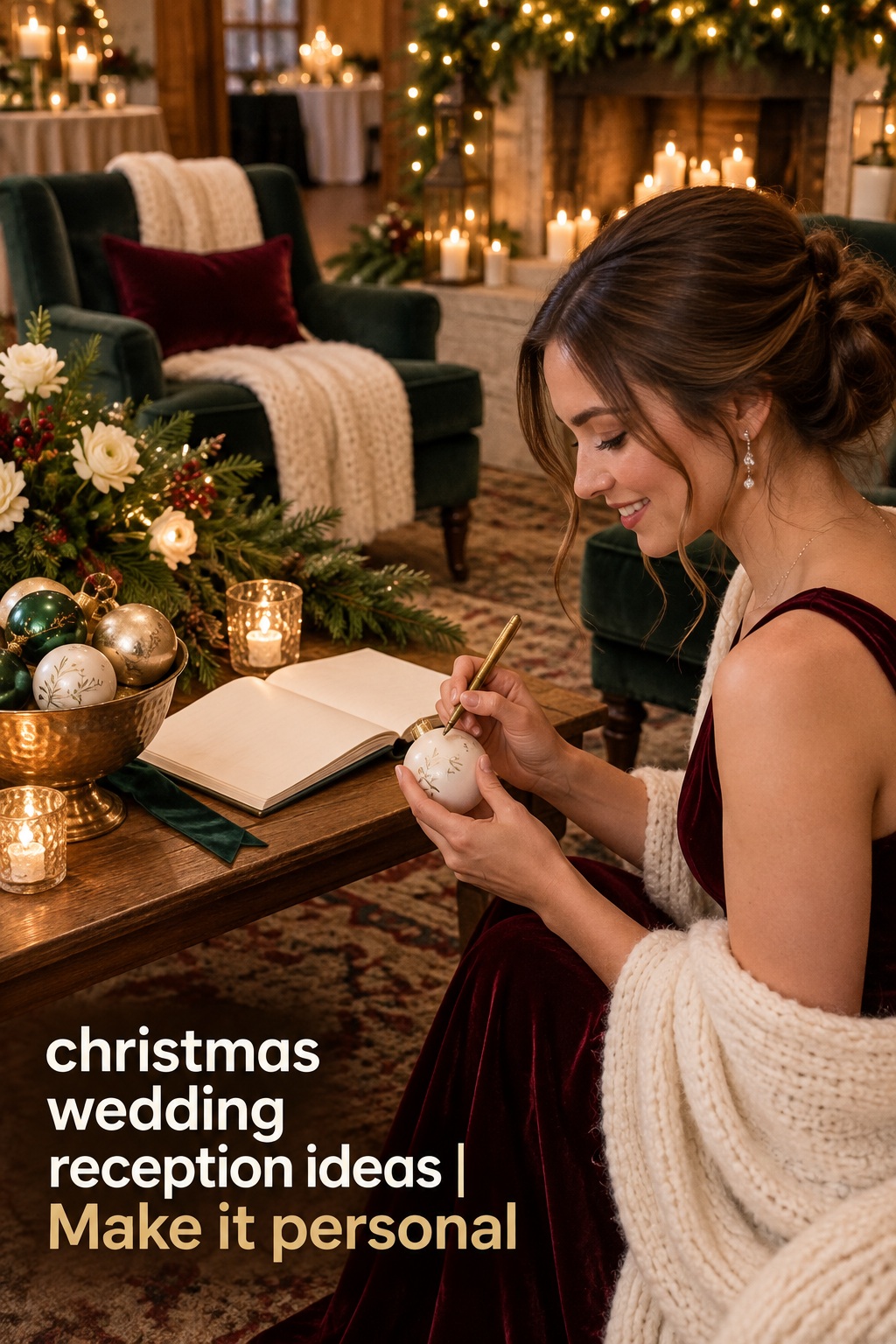
Family ornaments can become place-card keepsakes. A relative’s recipe can appear on the menu or inspire a late-night bite. A collection of vintage silver candlesticks can anchor the sweetheart table. Notes from loved ones can hang on a tree or be tucked into the guest book. These choices feel richer than generic holiday props because they connect the reception to a life you already share.
Set the budget by prioritizing what guests see and use. Lighting, linens, the main floral rhythm, and comfortable service often create more impact than dozens of small favors. If you want a dramatic installation, simplify the tables. If dinner is the priority, use restrained centerpieces and put more attention into the menu. Choose one area for abundance instead of asking every area to perform.
- Rent before buying: candleholders, chargers, specialty glassware, velvet linens, and statement vessels may be more affordable and easier to return.
- Repurpose intentionally: ceremony greenery can move to the bar, cake table, or lounge if the florist and venue can manage the transition.
- Use consumable favors: cookies, tea, cocoa, or a small jar of local honey are useful and less likely to become clutter.
- Choose seasonal materials carefully: ask about shedding, allergies, fragrance, water, and cleanup before ordering fresh greenery or fruit.
- Skip weak extras: a detail that has no story, function, or visual role may not deserve space in the budget.
Safety and venue logistics should shape the final plan. Confirm rules for open flames, hanging installations, adhesives, glitter, confetti, live trees, candles near fabric, and food service. Keep exits, aisles, ramps, and service corridors open. If you are using tapers, ask who monitors them and what happens when they burn down. If you are using a hot beverage station, make sure cups, lids, and spill response are available.
Give your vendors a single visual brief. Include the palette, three or four reference words, the details that must appear, the details that should not appear, and a simple floor plan. Tell the florist which elements may move after the ceremony. Tell the planner who owns the final check. Tell the photographer about the tree, family ornaments, cake, signature drinks, and any detail with a story so those moments do not disappear in the pace of the night.
Finally, review the reception as a guest would experience it. Can someone find their seat? Can they see across the table? Is the menu readable? Is there a nonalcoholic drink? Is there somewhere warm to sit? Does the room still feel like your wedding when the candles are unlit and the music is quiet? If the answer is yes, your Christmas wedding reception ideas are doing their job.
FAQ
What colors work best for a Christmas wedding reception?
Ivory, evergreen, burgundy, red, gold, silver, white, and natural wood can all work well. Choose one base neutral, two main seasonal colors, and no more than one strong metallic. The right palette also depends on the venue’s walls, flooring, furniture, and lighting.
How can I make a Christmas wedding reception feel elegant?
Repeat a few seasonal cues instead of using every holiday symbol. Try evergreen, candlelight, velvet, and one controlled accent color. Keep centerpieces low enough for conversation, use consistent materials, and let your wedding flowers, paper goods, and personal details carry the design.
What drinks are good for a Christmas wedding reception?
Offer a signature cocktail such as cranberry sparkling wine, spiced cider, or a rosemary and citrus spritz, plus a zero-proof version with equal care. Hot cider or hot chocolate can work during cocktails or late night, provided the station is easy to access and clearly labeled.
How do I keep guests comfortable at a December wedding?
Provide a coat check, clear indoor transition spaces, seating for guests who need a break from dancing, and warm drinks if appropriate. Share timing and travel information early. For any outdoor portion, communicate the weather plan and consider wraps, umbrellas, or a shorter exposure to the cold.
What are good Christmas wedding reception centerpiece ideas?
Low evergreen garlands, candle clusters, winter flowers, branches, berries, pinecones, and small groups of ornaments are flexible options. Match the centerpiece to the table shape. Long tables need repeated low moments, while round tables usually work best with one compact central composition.
How can I plan Christmas wedding reception ideas on a budget?
Prioritize lighting, the main table rhythm, guest comfort, and food and drink service. Rent specialty pieces, use greenery strategically, repurpose ceremony flowers, and choose consumable favors. One abundant focal area often has more impact than small decorations spread across the entire venue.
How close to Christmas should a wedding reception be scheduled?
There is no single best date, but dates close to Christmas require extra planning for travel, family commitments, venue availability, and vendor schedules. Give guests information early, avoid assuming everyone is free, and make the reception welcoming for people who celebrate the holiday differently or not at all.