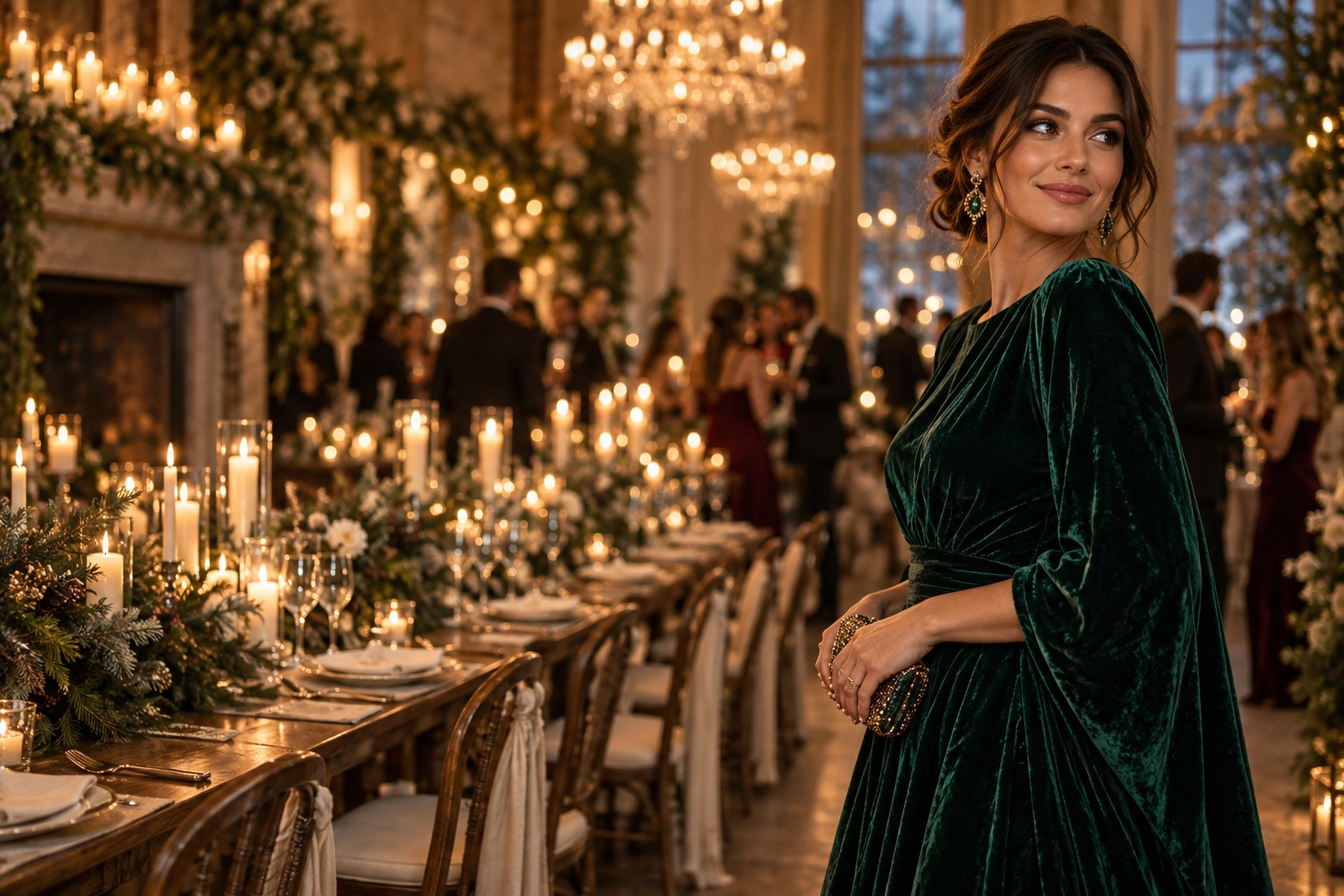
Festive Wedding Attire: Dress With Joy, Not Guesswork
The invitation arrives with one cheerful phrase that can still make your closet go quiet: festive wedding attire. You understand the mood, but not necessarily the boundaries. Is it cocktail with brighter color? Formalwear with a little sparkle? A velvet suit, a sequined dress, or simply your best outfit with more personality?
The most useful answer is that festive is an invitation to celebrate through your clothing, not permission to ignore the event. Start with the stated dress code, then add one or two signals of occasion: saturated color, a beautiful texture, a lustrous fabric, an expressive accessory, or a silhouette that feels more special than your everyday wardrobe. The result should look joyful in photographs, comfortable through the timeline, and clearly chosen for a wedding rather than a club, office party, or costume event.
When festive wedding attire is a mood, not a costume
Festive wedding attire is best understood as a styling layer placed on top of formality. If the invitation says festive cocktail, the foundation is still cocktail attire. If it says festive formal, the foundation is still formal. The word festive tells you that the couple welcomes more color, shine, texture, or personality than a strictly conservative interpretation would require.
This distinction matters because a wedding is a moving social setting. You may be outside for arrival photos, seated for the ceremony, close to the couple during dinner, and dancing under low light later. An outfit that is exciting for one hour can become uncomfortable or distracting by hour five. Festive dressing works when it has a strong visual idea and enough restraint to let you participate in the celebration.
Your wedding look is only the beginning.
Keep your guest list, vendors, timeline, and every important detail together with Zarellea — so your day feels as considered as your style.
Use the invitation as your first styling tool
Read every word around the dress code. A venue, start time, location, wedding website, and even the invitation colors can clarify the intended register. An evening ballroom celebration suggests more depth and shine than a daytime garden ceremony. A rooftop reception may welcome a sharp suit or sleek jumpsuit, while a church ceremony followed by a formal dinner may call for coverage and a longer hemline.
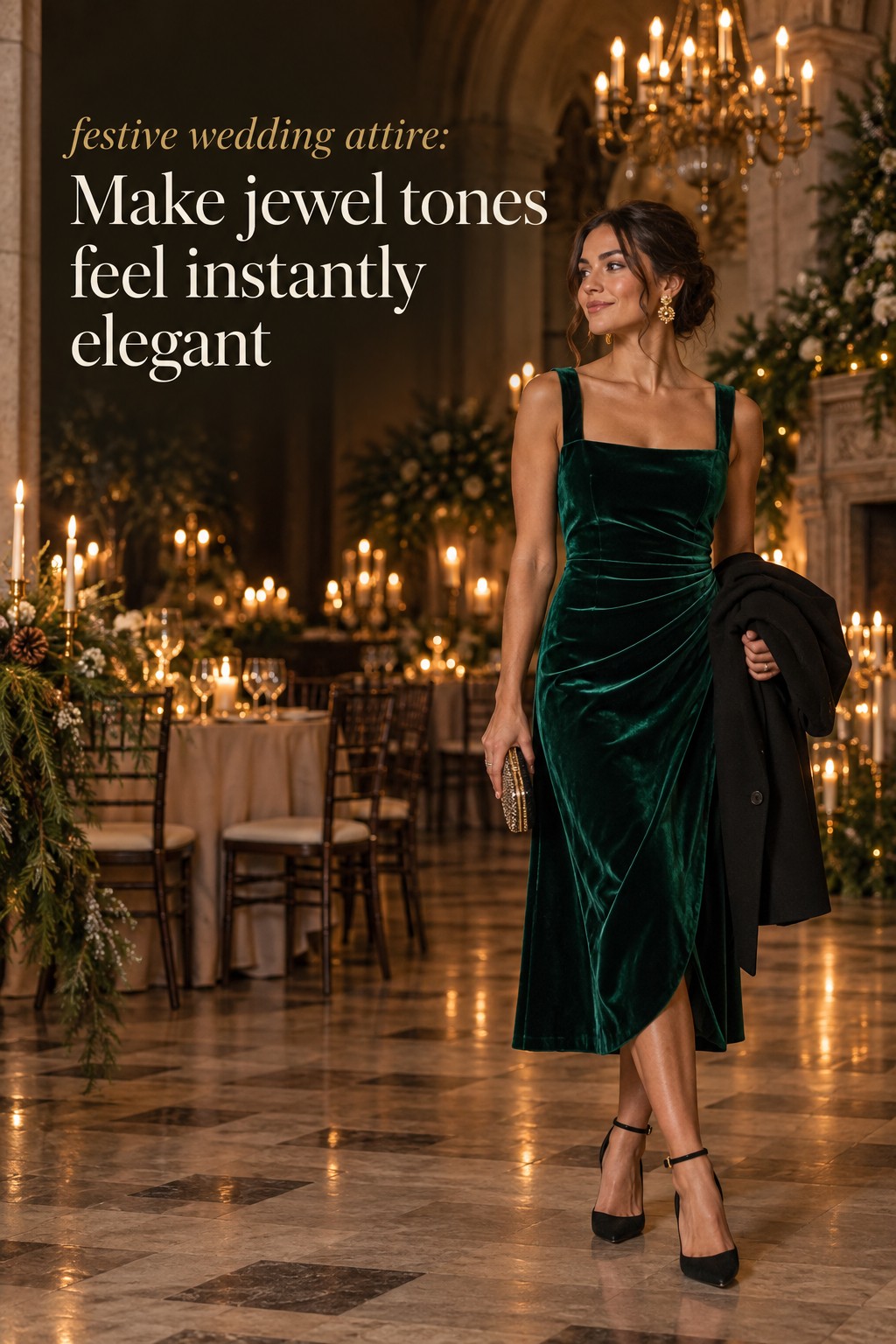
When the wording is vague, use a simple rule: dress one step more polished than the most casual clue in the invitation, then add a festive detail. A midi dress in emerald velvet, a navy suit with a patterned tie, or a tailored jumpsuit with sculptural earrings can all communicate celebration without guessing wildly.
Choose one lead character
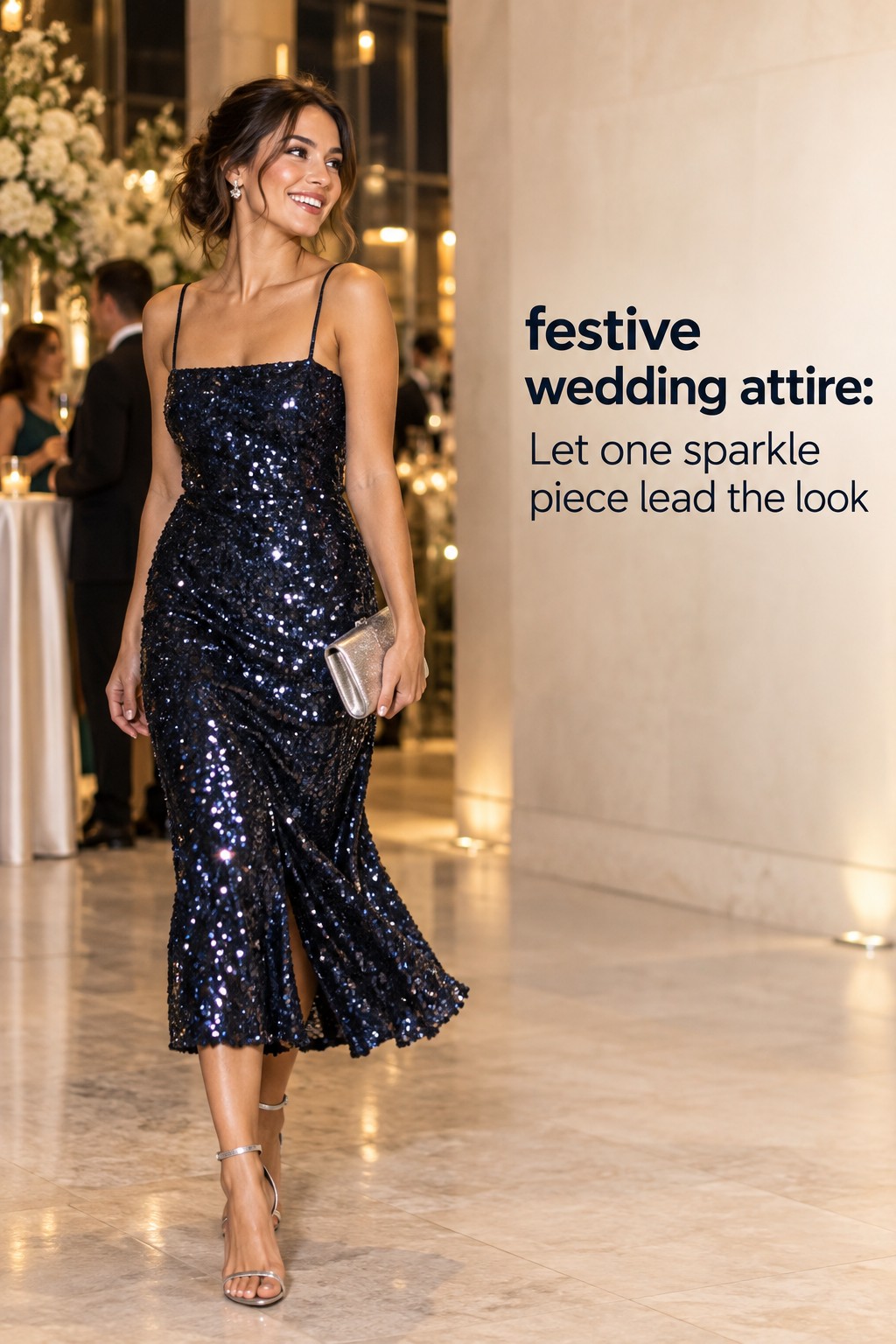
A festive outfit becomes easier to edit when one element leads. It might be a ruby dress, a silver shoe, a brocade jacket, an oversized earring, or a beautiful bow. Let the supporting pieces make the lead look intentional. This is especially useful with sequins and metallics. A sparkling dress with simple shoes and a clean clutch feels considered. The same dress with a glitter bag, rhinestone heels, chandelier earrings, and a dramatic hair ornament can look more like a theme than an outfit.
Color can be the lead character too. Burgundy, emerald, sapphire, plum, deep teal, navy, chocolate brown, and black all carry visual depth. In warm climates, the same idea can appear in tomato red, cobalt, marigold, or a saturated floral. The point is not to make every festive wedding outfit dark. The point is to choose a color that feels deliberate and lets the fabric and silhouette do some of the work.
Translate the dress code, venue, and season before shopping
The best outfit formulas begin with the event rather than the product page. Before you buy anything, answer four questions: How formal is the wedding? Where will you spend the day? What will the weather do to your comfort? Which kind of movement do you need for sitting, walking, and dancing?
- Black tie: Choose a floor-length gown, an elegant evening jumpsuit, or a tuxedo with formal accessories. Festive color, velvet, metallic fabric, or controlled sparkle can express personality.
- Formal: A full-length or elevated midi look can work, depending on the venue and time. Rich color, satin, velvet, brocade, or refined embellishment adds the celebratory note.
- Cocktail: Look for a polished midi, knee-length dress, tailored jumpsuit, or suit with a distinctive shirt, tie, or jewelry detail. This is often the easiest place to use stronger color or sparkle.
- Semi-formal: Use a dress, suit, or coordinated separates with one expressive detail. The finish should be neat, but the outfit does not need the drama of eveningwear.
- Casual: Keep the base relaxed, then make it wedding-ready through fit, fabric, and thoughtful accessories. A knit dress, pressed trousers, or a dressy skirt can work better than novelty holiday pieces.
Season changes the materials, not the basic etiquette. Velvet and heavier crepe feel natural in cold weather, while silk, satin, linen blends, and polished cotton can feel festive in warmer months. In winter, a tailored coat, cape, wrap, or elegant shawl should be considered part of the look from the beginning. In summer, the festive element may be a saturated hue, a sculptural sleeve, a glossy sandal, or a graphic print rather than a heavy texture.
Match your level of shine to the room
Low light welcomes shine because satin, beads, metallic thread, and sequins catch candles and evening photography. That does not mean every nighttime wedding needs head-to-toe shimmer. A dark metallic gown can be more elegant than a pale, highly reflective mini. A velvet jacket can deliver festive richness without any glitter. For daytime, try one glossy surface with matte support, such as a satin skirt with a crepe top or a jewel-toned dress with simple leather accessories.
Also consider the couple’s aesthetic. If the wedding website suggests modern minimalism, choose one controlled festive detail. If it describes a colorful party, you can be more playful with print, jewelry, or a vivid suit. You do not need to match the wedding party, and you should avoid dressing so closely to the bridesmaid palette that you look like an unassigned member of the group.
Curated outfit formulas that make festive dressing easy
You do not need a completely new identity for every invitation. A few reliable formulas can be adapted to your closet, your budget, and your comfort preferences. Think of each one as a starting point, then adjust the color, formality, and finishing pieces to suit the event.
The jewel-tone dress with edited accessories
A jewel-tone dress is the most direct interpretation of festive wedding attire. Choose emerald, ruby, sapphire, amethyst, deep teal, or burgundy in a silhouette that reflects the dress code. A velvet midi feels rich for cocktail attire. A satin column or crepe gown can suit formal eveningwear. A long-sleeve wrap dress is useful when the schedule includes cool travel or outdoor photographs.
Keep the accessories intentional. Gold jewelry can warm emerald or burgundy, while silver and crystal can sharpen navy, plum, or cool metallics. Add one compact clutch and shoes that echo either the color or the formality. If the dress has a dramatic neckline, let the earrings lead. If it has a clean neckline, a necklace may be enough. The more expressive the color, the less you need to decorate it.
The controlled sparkle look
Sequins, beading, and metallics are welcome when they look like eveningwear rather than a party costume. For a cocktail wedding, try a silver-gray sequin midi, a black dress with beaded panels, or a metallic skirt with a simple blouse. For black tie, a deep bronze gown or a midnight-blue dress with a subtle shimmer can feel festive and formal at once.
Use a three-part edit: one shine source, one clean shoe, and one quiet bag. Avoid adding a competing glitter texture unless the invitation clearly invites maximalism. Hair can be sleek, softly waved, or pulled back to keep the outfit visible. If you love bold earrings, choose a dress with a simpler neckline. The goal is visual rhythm, not visual noise.
The festive suit or velvet tailoring
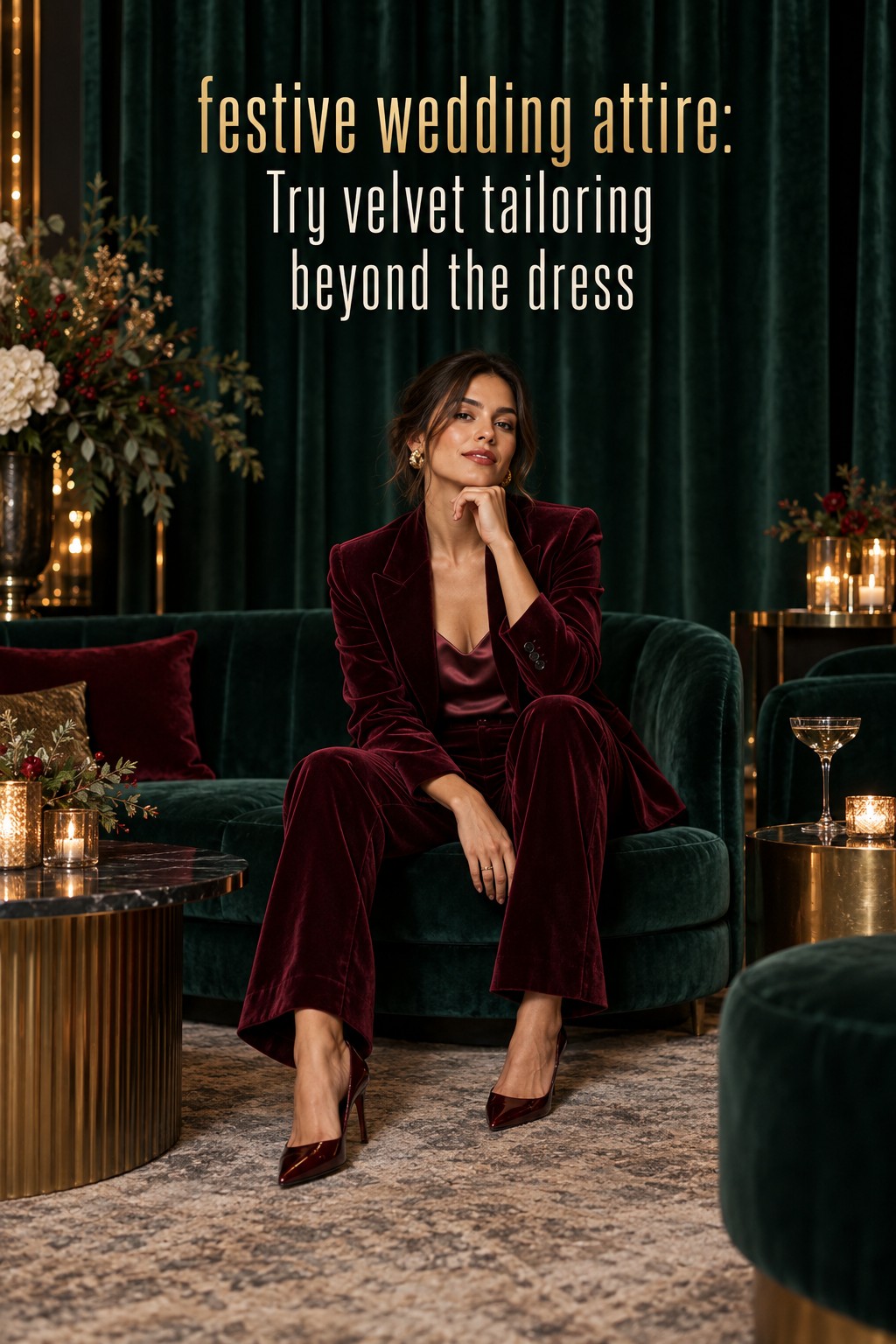
A suit can be one of the most sophisticated answers to festive wedding attire. Start with a precise fit, then choose a fabric or color that gives the outfit occasion energy. A burgundy, forest green, cobalt, plum, or chocolate suit can replace the predictable navy without becoming theatrical. Velvet works beautifully for evening and winter weddings, while a lustrous wool blend or silk-mix jacket can carry the idea in milder weather.
For a more traditional interpretation, wear a dark suit with a festive tie, pocket square, or textured shirt. For a fashion-forward interpretation, use a monochrome suit with a tonal top and expressive jewelry. The same principle applies to tuxedos: keep the base formal, then introduce personality through the jacket texture, a tasteful shirt, or a refined accessory. Polished shoes matter because they anchor the color and prevent the look from drifting into officewear.
The jumpsuit or coordinated separates alternative
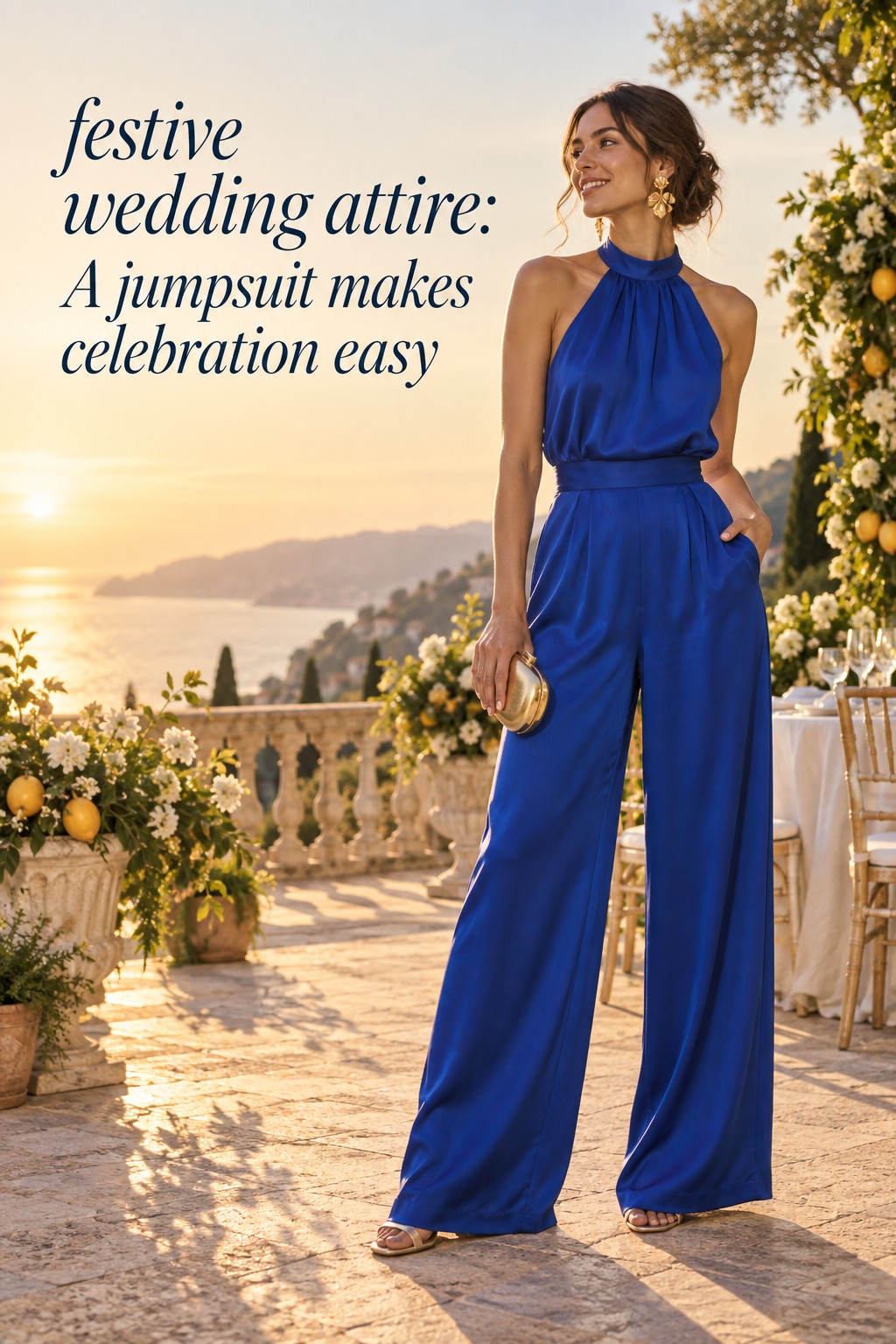
A wide-leg jumpsuit offers the ease of a one-piece outfit with the presence of eveningwear. Look for a defined waist, a fluid leg, and fabric with enough weight to hold its line. Satin, crepe, velvet, and polished jersey can all work. A strong earring and a small bag make the outfit feel finished, while a cropped jacket or cape can provide coverage without interrupting the silhouette.
Separates give you even more flexibility. Try a brocade or satin skirt with a fitted knit, a sequined camisole under a tailored blazer, or wide-leg trousers with a sculptural top. The secret is coordination. Repeat one visual idea in at least two places, such as gold in the buttons and earrings, burgundy in the shoes and clutch, or a matte jacket against a glossy skirt. This makes separate pieces read as an intentional outfit.
Polish the look without losing comfort or good judgment
Festive wedding attire succeeds in the transitions. You should be able to move from car to ceremony, from dinner to dance floor, and from outdoor portrait to indoor celebration without feeling that your outfit is fighting the day. Comfort is not a compromise in this context. It is part of looking composed.
Plan outerwear and footwear as part of the outfit
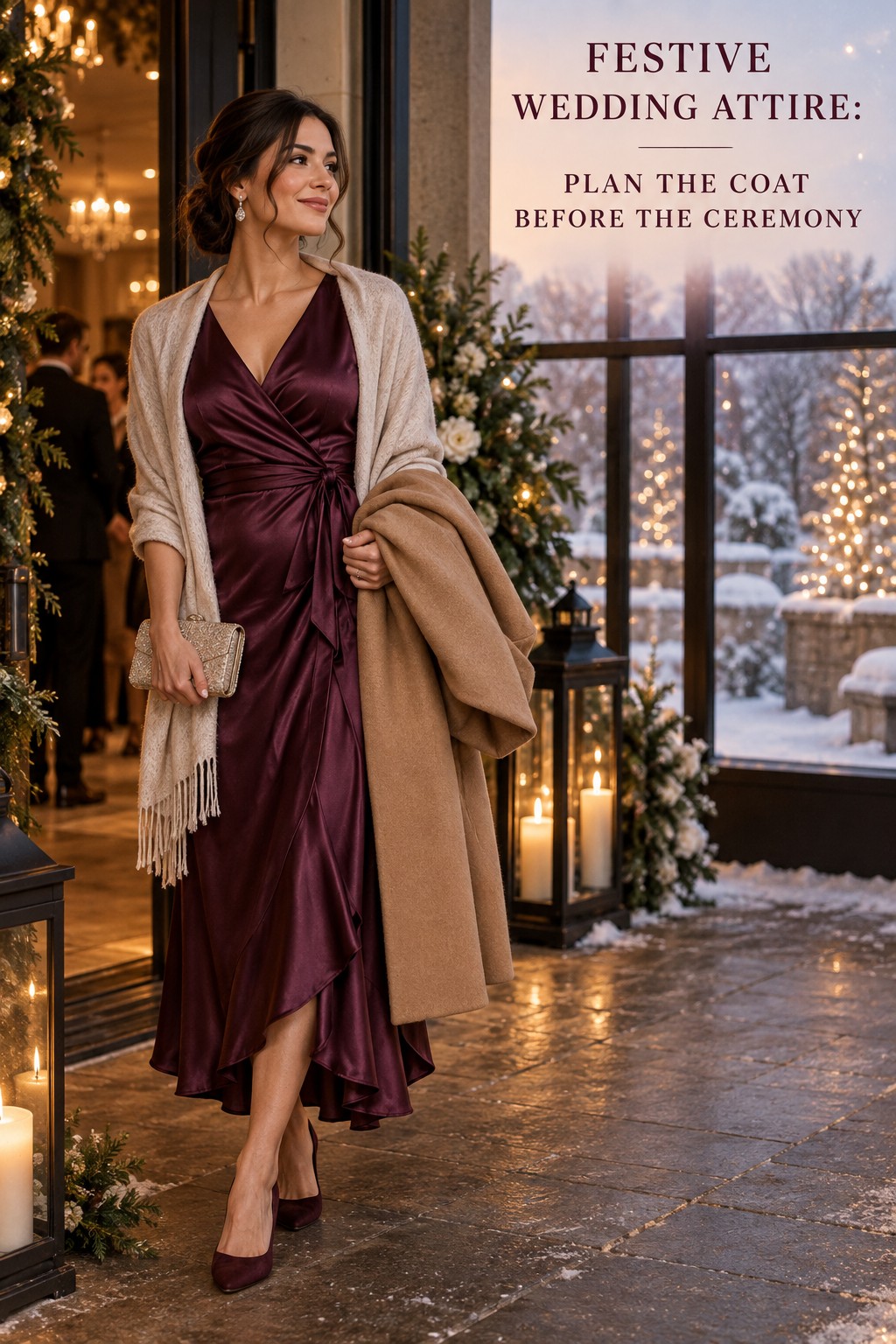
Do not leave the coat decision until the night before. A tailored coat can sharpen a velvet dress or suit. A cape can make a simple gown feel more formal. A wrap or shawl works with satin because it preserves the fluid line. Faux fur can suit a winter evening, but keep its shape and proportion controlled so it does not overwhelm the outfit. In warm climates, a lightweight embellished jacket or elegant blazer may be enough.
Footwear should answer the venue. Closed-toe pumps, polished boots, or block heels can be more useful on cold pavement than delicate sandals. If the reception is on grass, gravel, or uneven stone, choose a heel that will not make you spend the evening watching your feet. Tights can make a midi dress warmer and more finished, especially when they echo the depth of the shoe.
Respect the bride, the culture, and the photographs
White, ivory, cream, and bridal-looking pale champagne are usually best left out unless the couple specifically asks guests to wear them. The same principle applies to cultural expectations. Some weddings invite vibrant traditional clothing, specific levels of coverage, or colors with particular meaning. Read the wedding website and ask a trusted member of the couple’s circle when the wording is unclear. Thoughtful participation is more stylish than confident guessing.
Think about how the outfit behaves in photographs. Very tiny patterns can vibrate on camera, reflective surfaces can catch flash, and a sleeve or hem that needs constant adjustment will show in candid moments. Choose undergarments, tape, and tailoring before the event. Test sitting, walking, raising your arms, and dancing. A festive look should create memories, not require a repair kit every twenty minutes.
Use the repeat-wear test before you buy
Ask whether the main piece can work for at least two other occasions. A burgundy velvet dress might return for a holiday dinner. A jewel-tone suit could work for a graduation, gala, or restaurant celebration. A metallic skirt might become a birthday look with a simple sweater. Repeat wear encourages you to invest in quality fit and fabric instead of novelty, and it makes festive style feel like a real part of your wardrobe.
- Confirm the dress code and ceremony setting.
- Choose your base silhouette before adding festive details.
- Pick one lead element: color, texture, shine, print, or accessory.
- Plan outerwear, shoes, and legwear with the venue in mind.
- Check that the outfit is comfortable for the complete timeline.
- Keep white and bridal-looking shades out unless invited.
- Photograph the finished look and review it for balance.
FAQ
What does festive wedding attire mean?
Festive wedding attire means dressing for the stated level of formality while adding celebratory personality through color, texture, shine, print, or an expressive accessory. It is more playful than strictly conservative attire, but it should still look polished and wedding-appropriate.
Can I wear sequins to a festive wedding?
Yes. Sequins can be excellent for festive cocktail, formal, and black-tie weddings when the silhouette is refined. Let the sparkle lead, then keep shoes, jewelry, bag, and outerwear simple enough that the outfit remains edited.
Is a colorful suit appropriate for festive wedding attire?
A colorful suit can be a strong choice when it fits the dress code and venue. Burgundy, forest green, plum, cobalt, and other saturated shades feel festive without looking like costume clothing. Keep the fit precise and use polished shoes and restrained accessories.
What colors are best for festive wedding attire?
Jewel tones, rich neutrals, tasteful metallics, and seasonally appropriate saturated colors are reliable choices. Emerald, burgundy, navy, plum, deep teal, black, chocolate, and bronze work especially well for evening or winter celebrations. Always avoid white and bridal-looking shades unless the couple requests them.
Can I wear a jumpsuit instead of a dress?
Yes. A well-fitted jumpsuit in crepe, satin, velvet, or another elevated fabric can suit cocktail, formal, and sometimes black-tie celebrations. Choose the length, neckline, and accessories according to the dress code, and make sure the hem works with the shoes you can comfortably wear.
How can I look festive without looking overdressed?
Keep the dress-code foundation simple and add one clear festive detail. Try a jewel-tone dress, a textured jacket, metallic shoes, a beautiful earring, or a patterned tie. If the venue and invitation are understated, choose one statement element and let the rest of the outfit stay clean.
Should festive wedding attire match the season?
Seasonal dressing is helpful, but it does not require a literal holiday theme. Use velvet, heavier crepe, and deeper colors in cold weather, or silk, satin, polished cotton, bright color, and lighter layers in warm weather. Let the venue and climate guide the material choices.