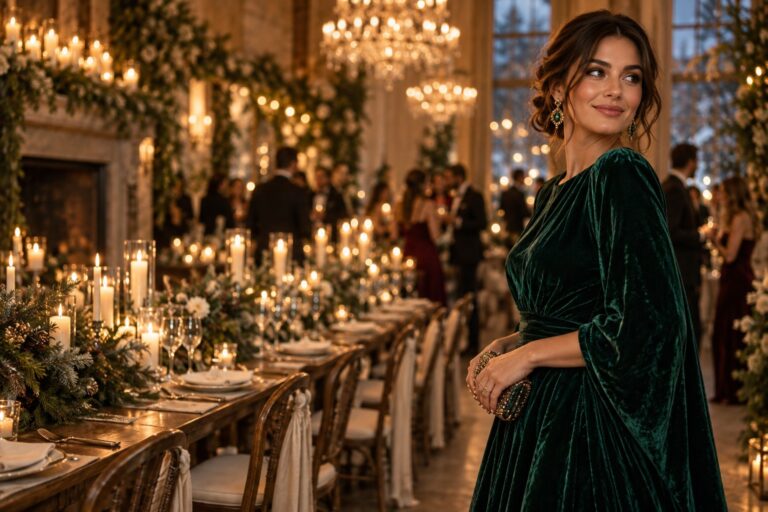

Christmas Wedding Bouquet Ideas That Feel Bridal
A Christmas wedding bouquet can feel festive without looking like a centerpiece borrowed from the reception table. The most successful designs begin with bridal proportions, flattering flowers, and a shape that works with the dress. Seasonal details such as evergreen, berries, velvet ribbon, pinecones, or a little sparkle come second. That order keeps the bouquet personal, elegant, and beautiful in photographs long after the holiday season.
Use this guide to build a bouquet your florist can understand quickly. You will find the flowers that make sense for a December celebration, color formulas for different wedding styles, shape and ribbon ideas, ways to manage winter logistics, and mistakes that can make a holiday bouquet feel too themed. Start with the atmosphere you want, then choose details that support it.

Why a Christmas Wedding Bouquet Works So Well
Winter gives a bouquet a naturally strong point of view. In summer, a florist may need color, movement, or abundant foliage to make a design feel seasonal. In December, the setting already contributes candlelight, dark evenings, wool textures, evergreen fragrance, and a sense of celebration. Your bouquet can therefore be more edited. A small number of intentional ingredients often looks more luxurious than a crowded mix of every flower associated with the holidays.
Color is the first reason the idea works. Deep red flowers create drama against ivory fabric, while white blooms look luminous beside evergreen. Burgundy, plum, rust, and blackberry tones can feel richer than bright red if your wedding is formal or romantic. Soft blush, champagne, taupe, and silvery gray make the holiday mood quieter. You can also use a mostly neutral bouquet with one red accent, so the flowers echo the season without matching every ornament in the room.
Your wedding look is only the beginning.
Keep your guest list, vendors, timeline, and every important detail together with Zarellea — so your day feels as considered as your style.
Texture is the second advantage. Cedar, pine, eucalyptus, juniper, dusty miller, brunia, berries, and pinecones add structure around soft petals. A bouquet with several leaf shapes reads clearly in winter portraits, especially when the background is pale or snowy. Velvet ribbon brings a tactile finish that feels connected to holiday dressing. Satin creates a cleaner, more classic result, while raw silk or torn ribbon suits a relaxed woodland celebration.
Winter also makes fragrance more noticeable. Evergreen, cedar, rosemary, and eucalyptus can give a bouquet a fresh seasonal scent, but ask your florist to test any strongly aromatic ingredients first. The bouquet will be close to your face during portraits and ceremony photos. Fragrance should be pleasant and subtle, never distracting or irritating.
- Choose a bridal silhouette before choosing decorative holiday accents.
- Limit the palette to two or three main colors plus greenery.
- Repeat one seasonal detail, such as berries or velvet, rather than using five competing symbols.
- Ask which flowers are available locally for your exact wedding date.
- Make sure the bouquet can be held comfortably for the ceremony and portraits.

Choose the Building Blocks of Your Bouquet
Think of the bouquet as a small design system. Every ingredient has a job: one flower creates the focal point, another fills the middle, foliage frames the shape, and one or two accents establish the Christmas connection. This approach gives you a clearer conversation with your florist than simply saying that you want something festive.
Start with focal flowers
Roses are dependable for a Christmas wedding bouquet because they are available in a wide range of reds, creams, whites, blushes, and burgundies. Garden roses give a soft, layered appearance, while standard roses create a more tailored form. Amaryllis is a strong seasonal choice when you want sculptural red or white flowers with a modern profile. Anemones bring a graphic center, and calla lilies create a clean, architectural line. Orchids can make a winter bouquet feel glamorous, especially when paired with restrained greenery.
Peonies may be emotionally important to you, but their availability and price can vary in December. If you love the rounded, generous look of peonies, ask about garden roses, ranunculus, or premium roses that can create a similar softness. Your florist can also advise whether a favorite flower will hold well through a cold outdoor portrait session.
Add supporting flowers with movement
Supporting flowers keep the arrangement from looking like a single block of color. Ranunculus add curved petals and a romantic scale. Lisianthus softens a formal design. Spray roses provide smaller repeated blooms, while berries add dots of color that can lead the eye through the bouquet. Amaranthus introduces a trailing line for a cascading shape, but use it selectively if your dress has delicate lace or beading that could catch on the stems.
Use greenery to define the season
Evergreen is not one single look. Cedar can feel soft and feathery, pine creates a more recognizable holiday note, and juniper gives a blue-green, slightly wild texture. Eucalyptus is less overtly seasonal and works well if you want a winter bouquet that can be recreated for a December anniversary. Dusty miller contributes a silvery edge that looks beautiful with white flowers, pale blue ribbon, or a candlelit venue.
Ask for greenery that supports the bouquet’s outline rather than swallowing the flowers. A compact round bouquet may need a neat foliage collar. A loose garden-style bouquet can allow a few stems to move beyond the flower mass. For an armful or presentation bouquet, long foliage can emphasize the vertical shape. The right amount depends on the dress, not only on the season.
Finish with one memorable detail
A velvet ribbon is the easiest way to signal Christmas without making the bouquet literal. Emerald, cranberry, wine, ivory, or antique gold can each change the mood. A vintage brooch can honor a family member. A few pinecones suit a woodland venue. A small amount of silver brunia or metallic thread can echo a formal winter palette. Dried orange, cinnamon, or glitter may be attractive in a styled image, but use food-like or heavily sparkling accents only when they fit the rest of your wedding design.

Match the Bouquet to Your Wedding Style
The same Christmas wedding bouquet keyword can describe very different celebrations. Before you save a dozen inspiration photos, decide whether your wedding feels classic, snowy, woodland, modern, or soft and romantic. Then use the formulas below as starting points rather than fixed recipes.
Classic red and white
For a traditional holiday mood, combine red roses or amaryllis with ivory roses, white anemones, dark greenery, and a red or emerald ribbon. Keep the shape controlled, particularly if the ceremony is in a historic church or formal ballroom. A limited red and white palette photographs clearly and can coordinate with bridesmaid bouquets without making every arrangement identical.
Snowy neutral
An all-white or nearly white design feels refined when the ingredients have different textures. Pair ivory roses, lisianthus, calla lilies, and white ranunculus with dusty miller, silvery foliage, or a few pale berries. Champagne ribbon warms the palette, while soft gray or icy blue creates a cooler effect. This is a good choice if you want winter atmosphere without an obvious Christmas color scheme.
Woodland and natural
Choose garden roses, berries, pine, cedar, eucalyptus, and a few pinecones for an outdoor or lodge setting. Let the bouquet remain slightly asymmetrical, with natural movement and visible stems. Brown silk ribbon, frayed linen, or a muted green wrap can make the design feel collected rather than decorated. Keep the ingredient list edited so the bouquet still looks like a bridal arrangement.
Modern editorial
Use one dramatic flower, a narrow palette, and a clean silhouette. A cluster of deep red amaryllis, a structured calla lily bouquet, or red peonies with an emerald velvet ribbon can look striking without much greenery. The key is negative space and proportion. A modern bouquet does not need extra berries, ornaments, and pinecones to communicate the date.
Soft romantic
Blend blush, cream, dusty rose, burgundy, and muted green. Garden roses, ranunculus, lisianthus, eucalyptus, and trailing amaranthus create a gentle shape with enough depth for evening light. A velvet ribbon in mauve, wine, or antique rose connects the bouquet to the season while keeping the overall feeling tender. This palette works especially well with champagne dresses, warm candlelight, and vintage-inspired details.
When matching the bouquet to your dress, look at scale and surface detail. A heavily beaded gown may call for a cleaner bouquet so the flowers do not compete. A simple satin dress can carry more texture or a stronger color. A full ball gown often looks balanced with a rounded bouquet, while a sleek sheath can pair beautifully with an elongated or cascading shape. Bring a photo of your dress, veil, and shoes to the florist consultation if possible.

Build a Florist-Ready Brief
The best bouquet consultations contain decisions, not just adjectives. Instead of asking for something elegant and festive, describe the result in practical terms. Tell your florist the wedding date, ceremony location, portrait plans, dress silhouette, color palette, bouquet size, preferred shape, must-have flowers, flowers you dislike, and your comfort with seasonal substitutions.
State the visual priority in one sentence. For example: “I want a compact ivory and burgundy bouquet with cedar and a velvet ribbon, refined enough for a black-tie ballroom.” Or: “I want a loose white bouquet with blue-green foliage and minimal red, so it feels wintry rather than Christmas-themed.” A sentence like this helps the florist make consistent choices when a particular flower is unavailable.
Choose the shape before the extras
Round bouquets feel classic and easy to hold. Loose hand-tied bouquets look relaxed and natural. Cascading bouquets create movement and can balance a long, simple dress, but they need careful construction so the lower flowers do not bruise. Presentation bouquets are carried across the arm and suit a fashion-forward or formal mood. Ask your florist to show you a mock-up or examples with a similar scale to your body and dress.
Plan for December conditions
Cold air, heated rooms, wind, and long photography schedules all affect flowers. Ask how the bouquet should be transported and when it will leave refrigeration. If you are taking portraits outdoors, plan short sessions and use a sturdy design. Flowers that are delicate or easily bruised may need protection between locations. Your florist can also suggest a second small arrangement for detail photos if the main bouquet must stay sheltered.
Order early, especially for the weeks around Christmas and New Year’s Eve. Florists, wholesalers, delivery teams, and rental companies can all have holiday schedules. Early planning does not mean every flower must be locked immediately. It means your florist has time to source the palette, explain substitutions, and protect the shape you want.
Spend where the bouquet is most visible
If your floral budget is limited, prioritize the bridal bouquet, ceremony focal point, and one memorable reception area. A professional hand-tied bouquet can be photographed from many angles and may appear in portraits throughout the day. You can simplify bridesmaid bouquets, reuse ceremony arrangements, or choose seasonal foliage to make the overall plan work. Ask for a good, better, and best version of your brief so you understand what changes with each price point.
Decide whether you want a fresh, dried, faux, or mixed bouquet. Fresh flowers have natural variation and fragrance. Dried flowers can provide a lasting keepsake but may be brittle. High-quality faux flowers can help with travel, allergies, or preservation, but texture and shine matter, so request close-up examples. A mixed design can combine fresh focal flowers with durable dried or artificial accents, provided the materials look intentional together.
Mistakes to Avoid with a Christmas Wedding Bouquet
A holiday bouquet usually goes wrong through excess, not lack of ideas. When every seasonal detail appears at once, the flowers can compete with the dress and the wedding may look like a styled Christmas display. Edit the design until the bridal message is clear at a glance.
- Using too many symbols: pinecones, berries, ornaments, ribbon, sparkle, and holly may each be attractive, but together they can overwhelm the flowers. Choose one primary seasonal accent and one supporting texture.
- Ignoring the dress: a bouquet that looks beautiful alone can disappear against lace, clash with beading, or feel too small beside a full skirt. Compare the design with the complete outfit.
- Choosing color without checking the venue: bright red may look different under warm ballroom lights, church lighting, or outdoor shade. Review color samples in the conditions closest to your day.
- Assuming every flower is available: inspiration photos may show imported or out-of-season blooms. Ask your florist for local availability and a substitution plan before signing off.
- Forgetting the handle: the ribbon wrap should be comfortable, secure, and long enough for your hands. Hidden pins, rough materials, or a slippery finish can become irritating during a long ceremony.
- Waiting until the last minute: the holiday calendar is busy for florists and delivery teams. Reserve the date and establish the design direction early.
Before approving the final recipe, ask to see the expected bouquet size in relation to your body. A bouquet should be easy to carry and should not hide the waistline, embroidery, or meaningful details on the front of your dress. If you love a large arrangement, consider carrying it for portraits and using a smaller version for the ceremony if that will be more comfortable.

FAQ
What flowers are best for a Christmas wedding bouquet?
Roses, garden roses, amaryllis, anemones, ranunculus, calla lilies, lisianthus, orchids, and seasonal berries are useful starting points. Availability varies by location and date, so ask your florist for a current list and suitable substitutions.
Does a Christmas wedding bouquet have to be red?
No. Ivory, cream, blush, champagne, silvery gray, icy blue, burgundy, and muted green can all create a winter feeling. You can use one small red detail if you want a seasonal cue without making red the main color.
How can I make my bouquet feel festive but not themed?
Keep the flowers and silhouette bridal first, then add one refined seasonal detail such as evergreen, velvet ribbon, berries, or a brooch. A limited palette and repeated texture usually feel more elegant than several literal Christmas decorations.
When should I order a Christmas wedding bouquet?
Reserve your florist and share the design direction as early as possible, particularly for weddings close to Christmas or New Year’s Eve. Final flower quantities and substitutions can be confirmed later, but early planning gives your florist time to source seasonal ingredients.
What greenery works in a Christmas wedding bouquet?
Cedar, pine, juniper, eucalyptus, dusty miller, and other sturdy seasonal foliage can work well. Choose based on the desired mood and bouquet shape. Ask your florist how each option handles indoor heat, outdoor cold, and a long photography schedule.
Can I use an artificial Christmas wedding bouquet?
Yes. A high-quality faux bouquet can be practical for travel, allergies, unpredictable weather, or a lasting keepsake. Look closely at petal texture, foliage finish, stem quality, and shine. A mixed fresh and faux design can also work when the materials are coordinated carefully.
How do I keep a winter bouquet safe during outdoor photos?
Keep outdoor sessions reasonably short, protect the bouquet between locations, and ask your florist which ingredients are most cold-sensitive. Carry it upright, avoid placing it on wet or heated surfaces, and follow the florist’s instructions for water and transport.