Winter Wedding Themes: 6 Looks That Feel Intentional
A winter wedding can be candlelit and intimate, crisp and modern, playful and festive, or quietly inspired by a snowy landscape. The season gives you a useful starting point, but it does not choose the personality of the celebration for you. That is why the strongest winter wedding themes feel like a point of view rather than a pile of snowflakes, evergreen branches, and metallic tableware.
Before you book rentals or build a Pinterest board, decide what you want guests to feel when they enter the space. Do you want warmth, drama, calm, nostalgia, sparkle, or a sense of escape? This guide compares six distinct directions and shows how to carry one of them from the ceremony to the reception without making every detail look identical. The goal is a wedding that feels seasonal, personal, and visually coherent.
What makes a winter wedding theme feel current
Start by separating three ideas that are often treated as the same. A winter wedding date is simply a calendar fact. A winter aesthetic borrows from the season through light, color, texture, greenery, or weather. A winter wedding theme is a complete creative direction with repeatable rules. It tells you which materials belong together, what kind of lighting supports the mood, and what to leave out when a choice starts pulling the design somewhere else.
A theme also needs room for your real venue and your real priorities. A snowy mountain look may be beautiful in photographs, but it can feel disconnected in a bright coastal ballroom. A holiday-inspired palette may be right for a December celebration, but it should not be forced on a couple who wants a winter wedding without Christmas references. A useful theme works with the architecture, ceremony format, dress code, and guest experience instead of competing with them.
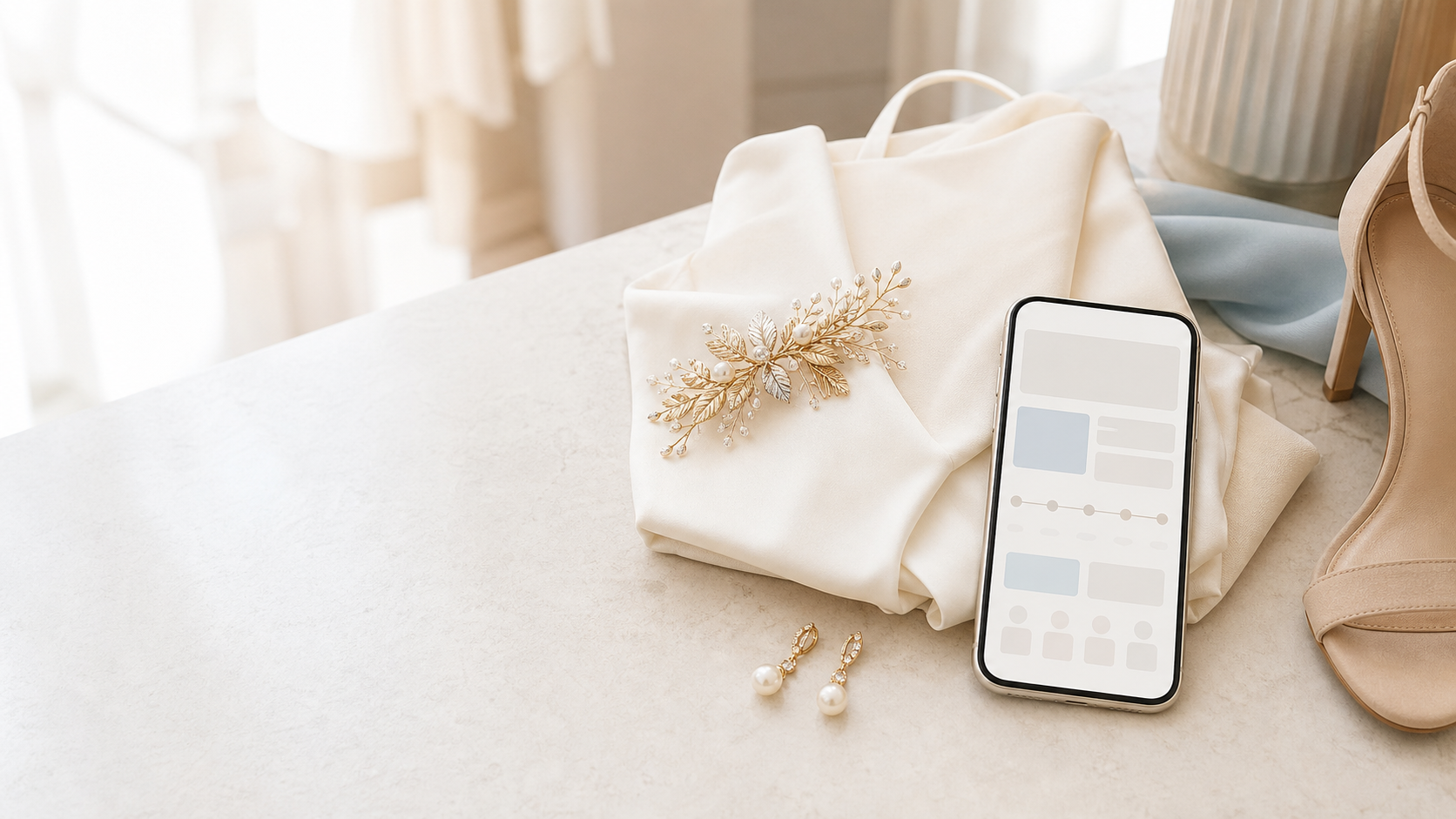
Your wedding look is only the beginning.
Keep your guest list, vendors, timeline, and every important detail together with Zarellea — so your day feels as considered as your style.
Choose an emotional temperature first
Think of emotional temperature as the first filter. Warm themes use candlelight, wood, velvet, amber, deep red, or evergreen to make the room feel close and welcoming. Cool themes use icy white, blue, silver, glass, and clean silhouettes to create distance and clarity. Neither is more winter-like. The choice simply changes how the same season is interpreted.
Then choose a formality level. A black-tie celestial theme needs different proportions from a relaxed lodge gathering. A city hall ceremony can still have a strong theme, but it may need to express itself through one bouquet, a coat, stationery, and a compact reception setup. Establishing those two filters will keep attractive but unrelated ideas from entering the plan.
Use a small set of repeatable signals
The most polished themes repeat a few signals in different ways. You might repeat a palette through ribbon, flowers, and paper rather than placing the same ornament on every table. You might use velvet in the groom’s jacket, the table linen, and a ring box. You might let candlelight connect the ceremony aisle to the dinner tables. Three colors, three textures, and one signature motif are usually enough to make the direction recognizable.
Six winter wedding themes with a clear point of view
These six winter wedding themes are broad enough to personalize but specific enough to guide decisions. Read the descriptions as starting systems, not fixed packages. Each direction includes an atmosphere, a palette, useful materials, and a caution that can help you edit.
1. Candlelit winter romance
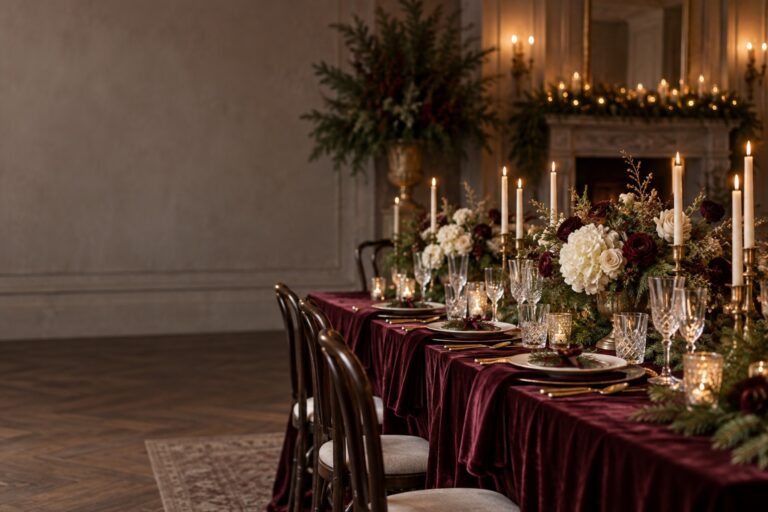
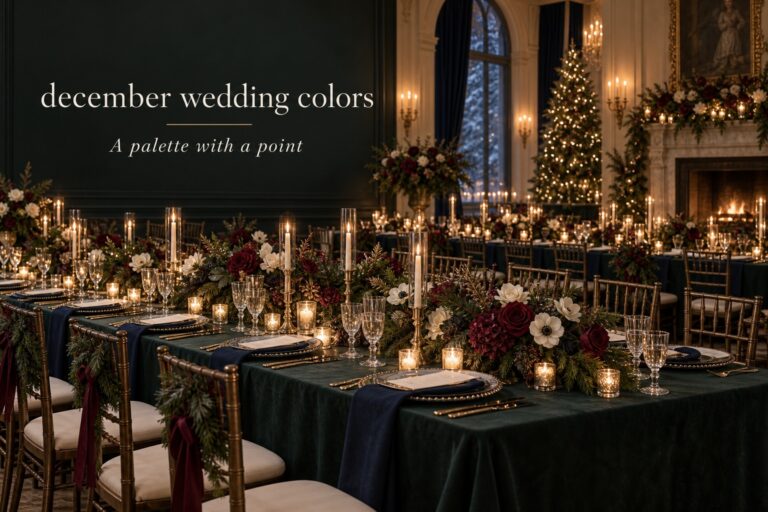
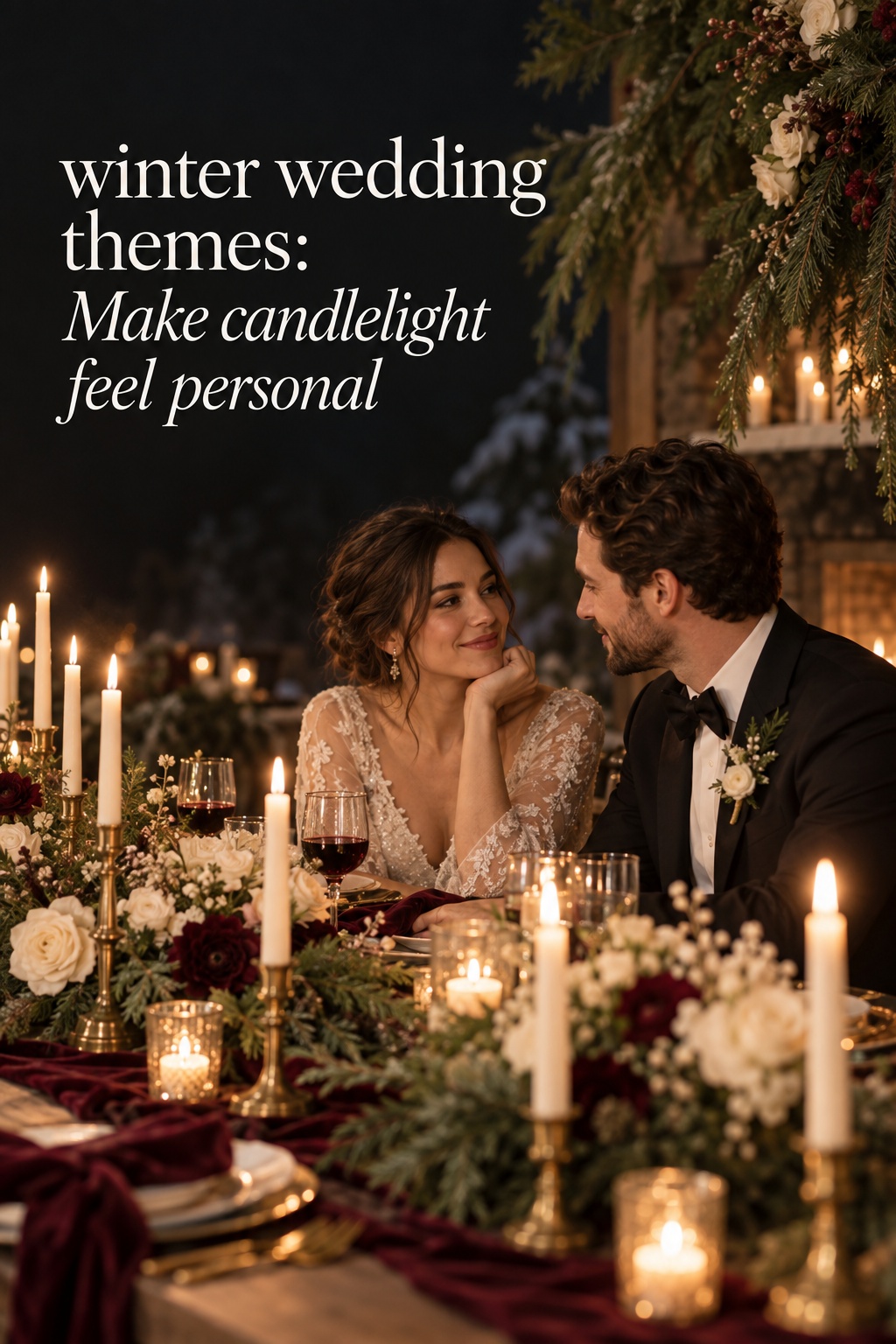
This is the warmest direction in the group. Imagine a historic room, an intimate dinner, soft pools of light, and florals that feel gathered rather than overly polished. The palette can combine ivory, burgundy, forest green, and antique gold, or it can stay quieter with cream, taupe, and muted berry. The point is not to imitate a holiday party. The point is to make the shorter winter daylight feel like an invitation to come closer.
Build the theme with taper candles, low glowing votives, velvet ribbon, worn brass, and foliage with visible shape. Use white flowers if you want the candlelight to stand out, then add berry tones through a few intentional arrangements. A velvet menu cover, a dark wood welcome sign, or a silk bow on the bouquet can do more work than a room full of themed props.
This theme suits an evening ceremony, a restaurant reception, a library, a brick venue, or a room with a fireplace. Its risk is visual heaviness. Keep the tables breathable and balance deep colors with open space, pale linens, or reflective glass.
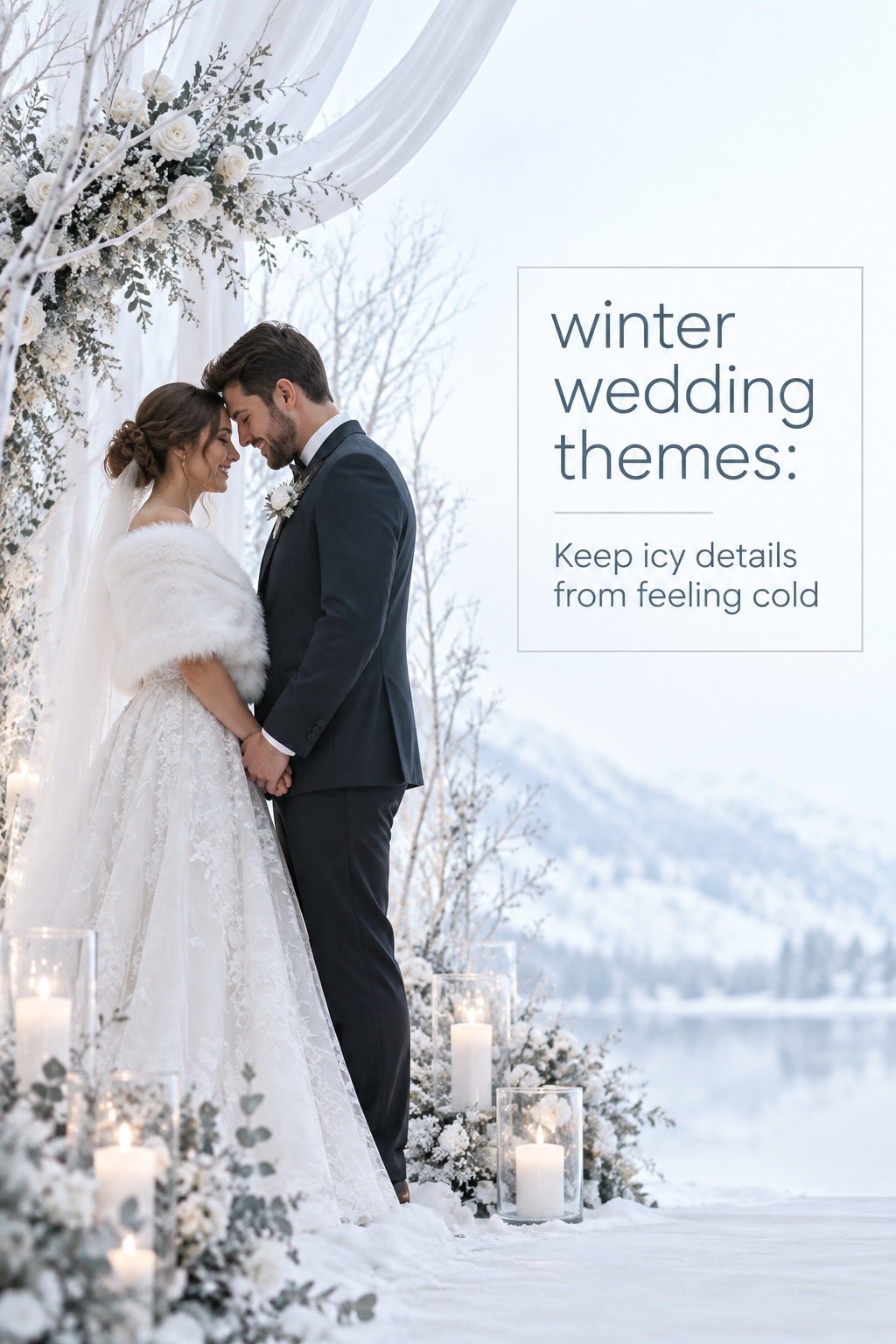
2. Icy winter wonderland
An icy winter wonderland theme is about lightness, reflection, and an almost weightless atmosphere. Use true white, icy blue, soft gray, and silver as the foundation. Clear glass, frosted finishes, white branches, crystal details, and airy fabric can suggest snow without covering the space in literal snowflake decor.
Lighting matters more than novelty. Pinpoint lights, cool white uplighting, and candlelight at a warmer temperature can keep the room from looking flat. For flowers, choose white blooms with interesting silhouettes and let the vessels or ribbons add the cooler note. A silver-gray menu, pale blue escort cards, or a translucent ceremony program can carry the palette quietly.
This direction works especially well in a contemporary venue, an art space, a glass conservatory, or a ballroom with a simple architectural shell. Its risk is feeling sterile. Add one soft element, such as brushed fabric, a textured bouquet, warm candle flames, or a pale gray lounge area, so the design still feels hospitable.
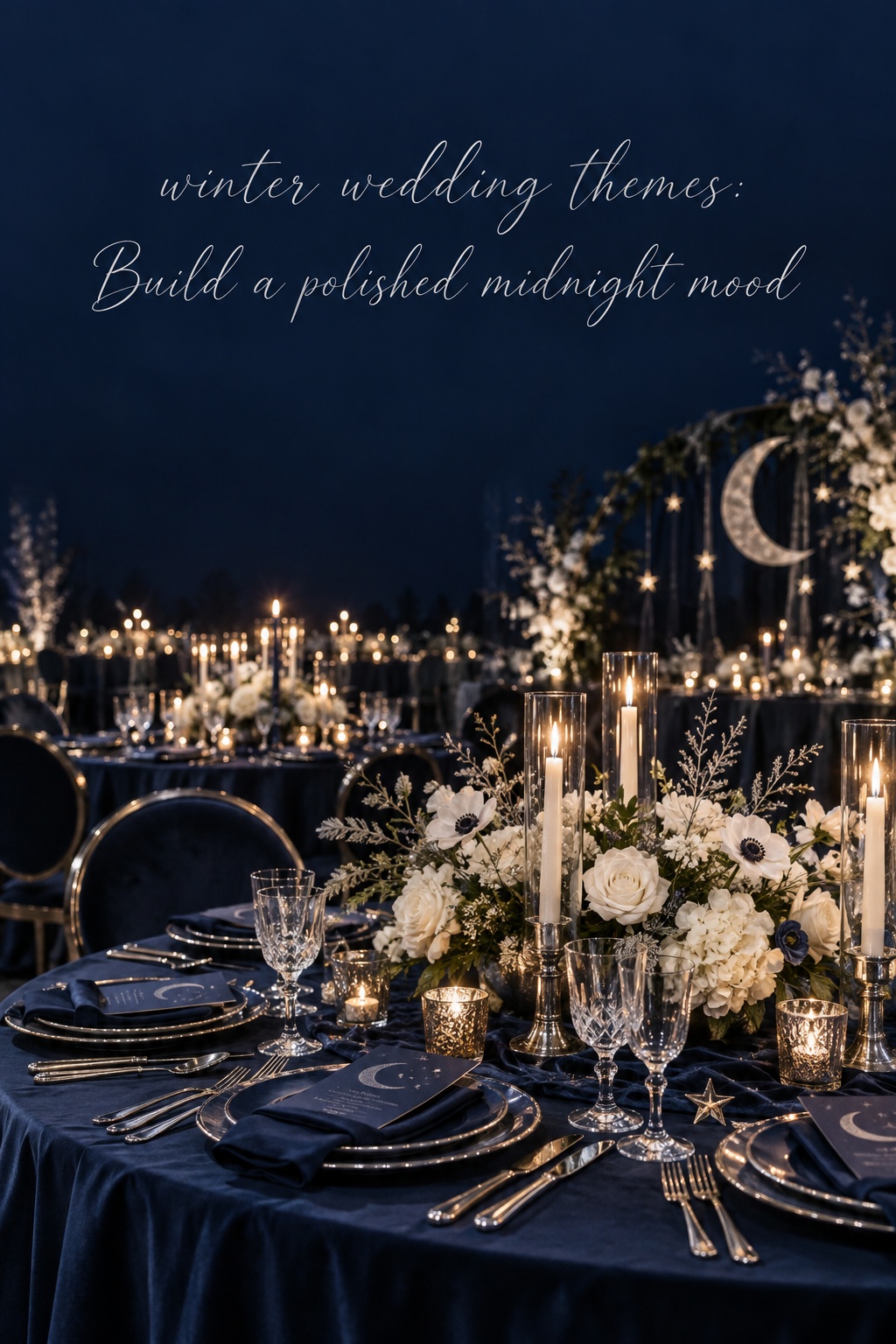
3. Celestial midnight
Celestial midnight takes its cue from the clear winter sky rather than from snow. It is dramatic, elegant, and a little mysterious. Deep navy, charcoal, ink blue, silver, and a small amount of cool berry create the base. Stars, moons, constellations, or a subtle celestial map can appear in stationery or signage, but the theme should not depend on literal galaxy graphics.
Use dark linens as an anchor, then let metallic details catch the light. Silver flatware, a constellation-inspired escort card display, a midnight-blue cake ribbon, or small reflective place cards can make the room feel intentional. White flowers and dark foliage provide contrast. If you want gold, keep it pale or brushed and use it only as a controlled accent so the atmosphere remains nocturnal.
Celestial midnight suits a formal evening wedding, a museum, a hotel ballroom, or a venue with strong architectural lines. Its risk is overstatement. A few precise references will feel more luxurious than star motifs on every surface.
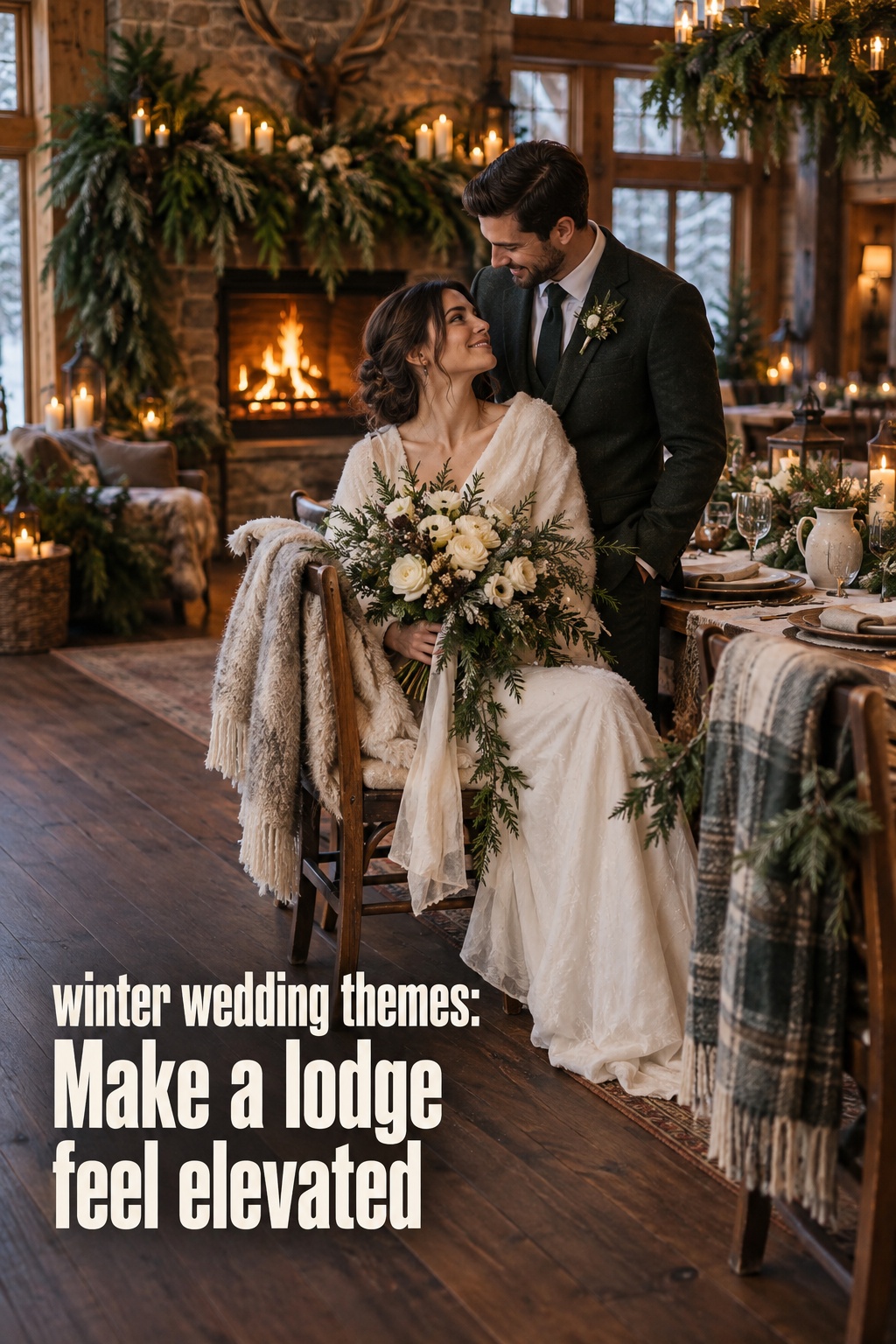
4. Evergreen lodge
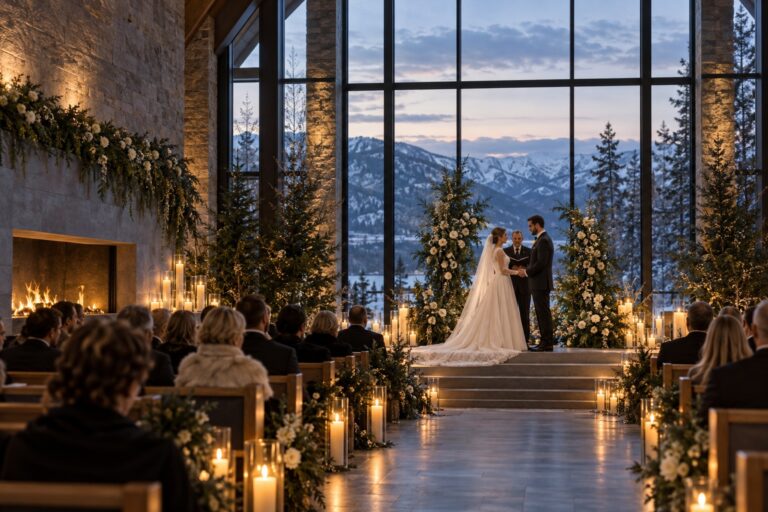
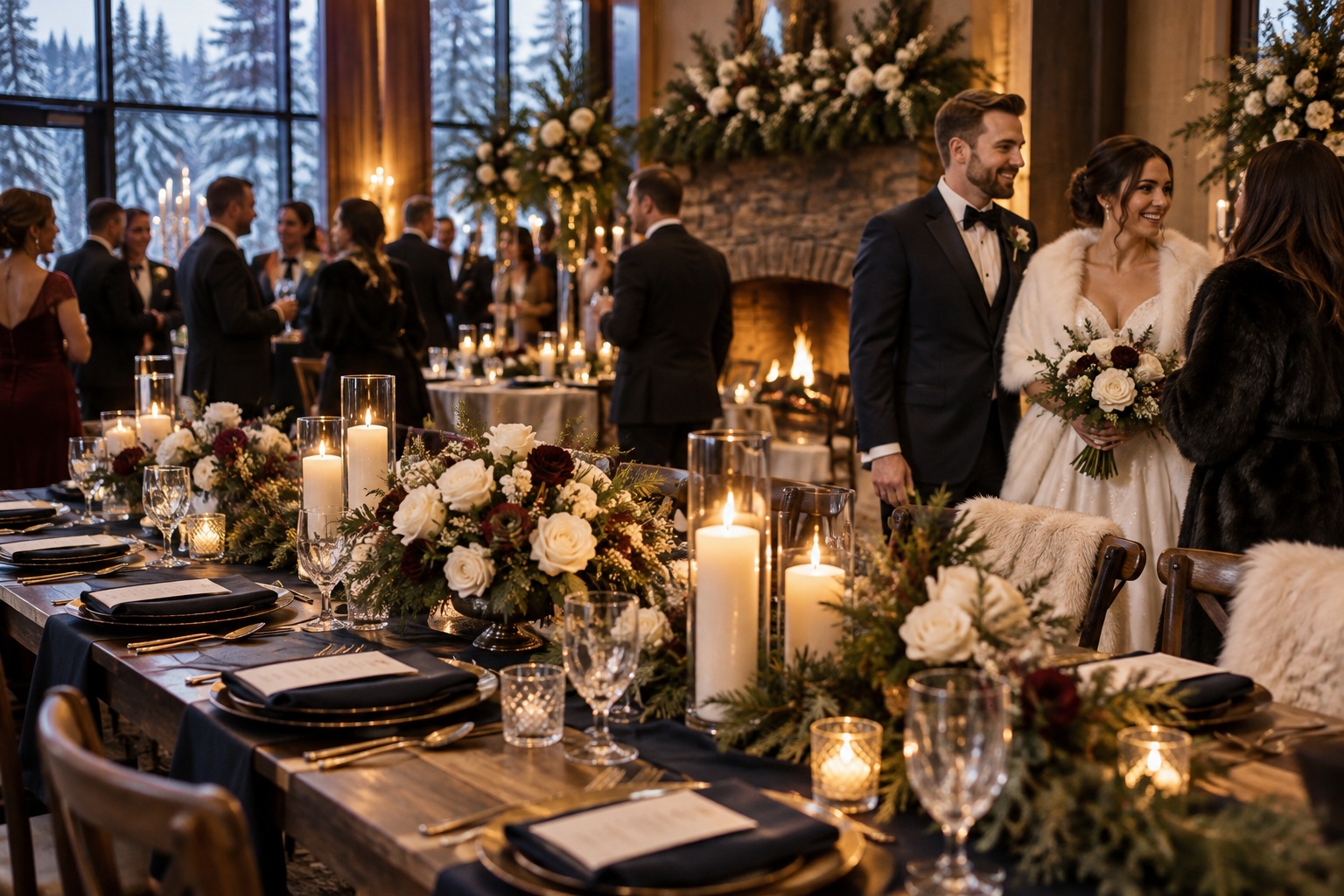
Evergreen lodge is the most natural and relaxed option. It can suggest a mountain retreat, a forest gathering, or simply a warm room filled with greenery and wood. The palette usually starts with forest green, ivory, and brown, then adds black, rust, burgundy, or a muted blue depending on the venue.
Lean into texture: wool-inspired paper, wood signage, ceramic vessels, pine or cedar shapes, cozy blankets, and linen rather than high-shine satin. Flowers can be abundant but should feel connected to foliage. A simple greenery runner, evergreen wreath, or branch installation may establish the mood more effectively than a collection of small novelty objects.
This theme is a natural fit for a barn, cabin, lodge, vineyard, or rustic hall, but it can be adapted indoors almost anywhere. Its risk is becoming too close to a camping motif. Keep the wedding elements refined through tailored attire, elevated paper goods, good candleholders, and a deliberate floral shape.
5. Vintage winter garden
Vintage winter garden combines romance with a slightly collected, old-world feeling. Think faded blue, dusty mauve, ivory, antique rose, or soft plum, supported by brass, ribbon, patterned paper, and flowers with movement. This is a useful direction if you love winter atmosphere but do not want a dark or overtly festive room.
Use one vintage signal at a time. A botanical invitation, a family silver piece, a ribboned bouquet, or a set of mismatched bud vases can give the reception history. Layering all of them at once can make the design look like a themed set. Choose flowers that feel garden-like, then let the winter connection come from the palette, candlelight, branches, or heavier fabric.
This theme works in a manor, greenhouse, restaurant, or historic house. Its risk is drifting into spring. Keep the winter identity through deeper accents, darker greenery, candlelight, and tactile linens.
6. Modern jewel tone winter
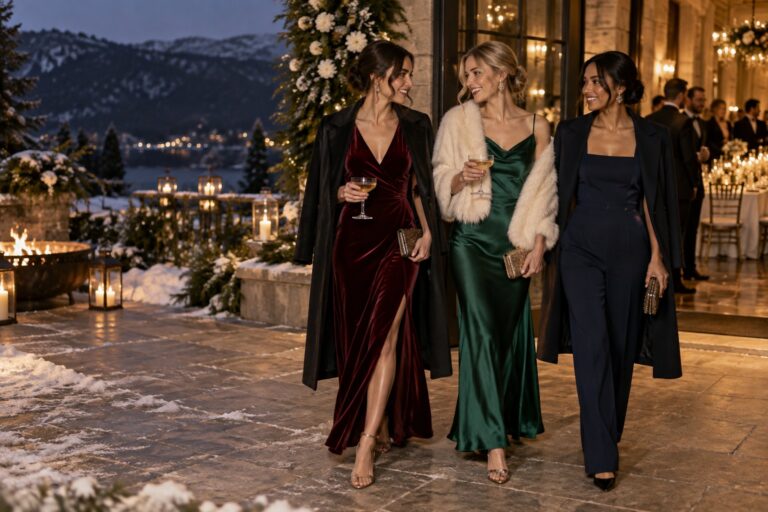
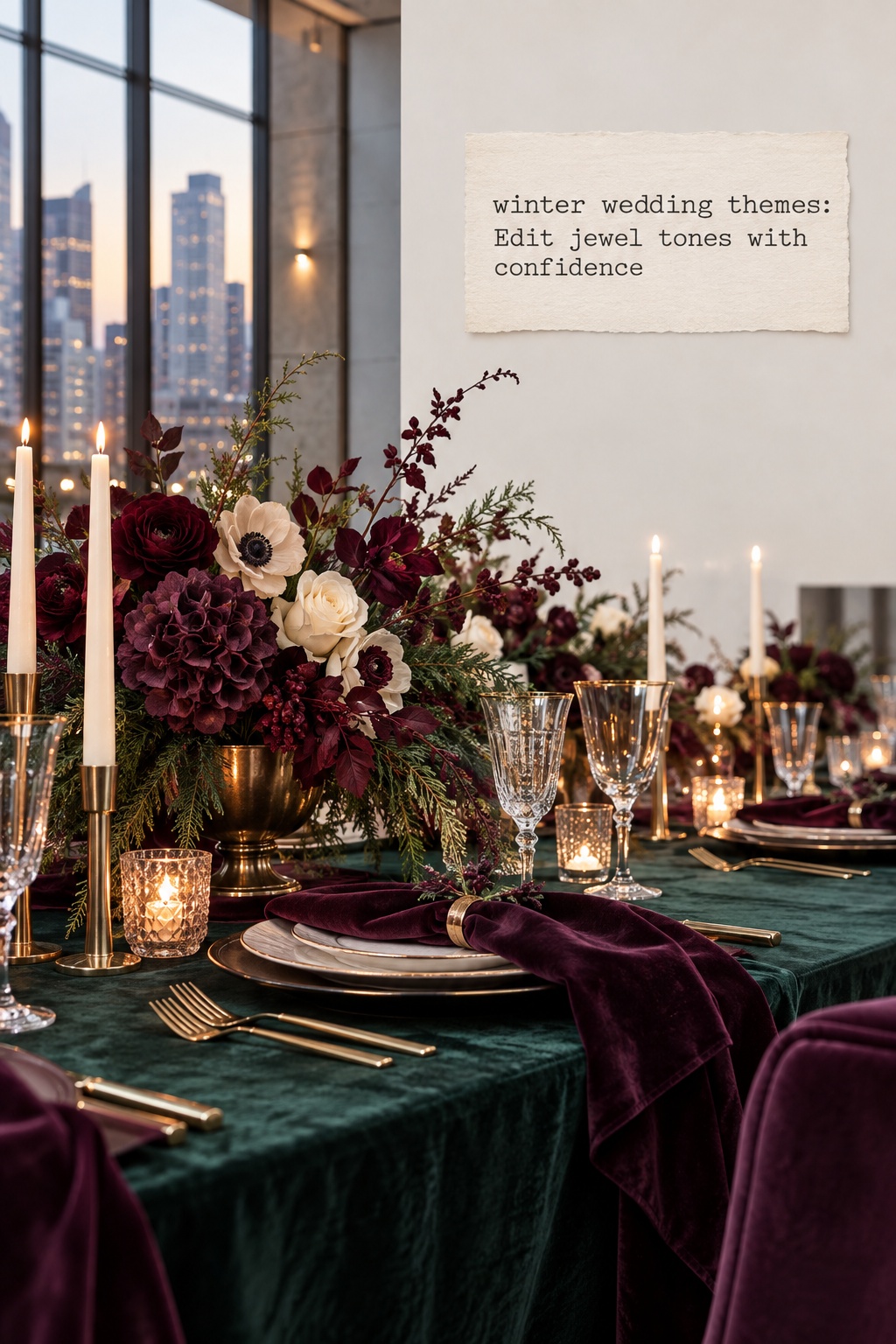
Modern jewel tone winter is confident and colorful. Rather than using red and green as a holiday code, choose two saturated colors and one calm neutral. Emerald and plum with ivory, navy and burgundy with white, or teal and berry with charcoal can all create a rich winter effect. The colors should be repeated with discipline so the room feels edited rather than loud.
Let the palette show up in bridesmaid dresses, napkins, floral accents, menus, and one reception detail. Velvet, satin, lacquered paper, and polished metal can make the colors feel formal. Flowers should not attempt to use every shade. Pick a dominant tone, a supporting tone, and a neutral that gives the eye somewhere to rest.
This theme suits a modern hotel, a gallery, a city venue, or a formal dinner with a strong dress code. Its risk is competing with the couple. Keep silhouettes clean and reduce extra motifs so color remains the main statement.
How to translate one theme into the full wedding day
Once you choose a direction, translate it through the guest journey in the order people experience it. Start at the invitation, continue through arrival and ceremony, then finish with dinner, dancing, and the departure moment. The same theme should be recognizable at each stage, but it should not be repeated mechanically.
Begin with the venue and the first impression
Your venue already has a visual temperature. Stone, dark wood, exposed brick, and low evening light support warm romance or an evergreen lodge. White walls, glass, polished floors, and strong architectural lines support an icy, celestial, or modern jewel tone direction. Work with what is already present. It is usually easier and more elegant to frame a room than to disguise it.
Choose one arrival detail that announces the theme: a candlelit welcome table, a branch installation, a navy escort card wall, a vintage botanical sign, or a simple bowl of warm drinks. One strong first impression gives the rest of the wedding permission to be quieter.
Let attire support the mood without becoming a costume
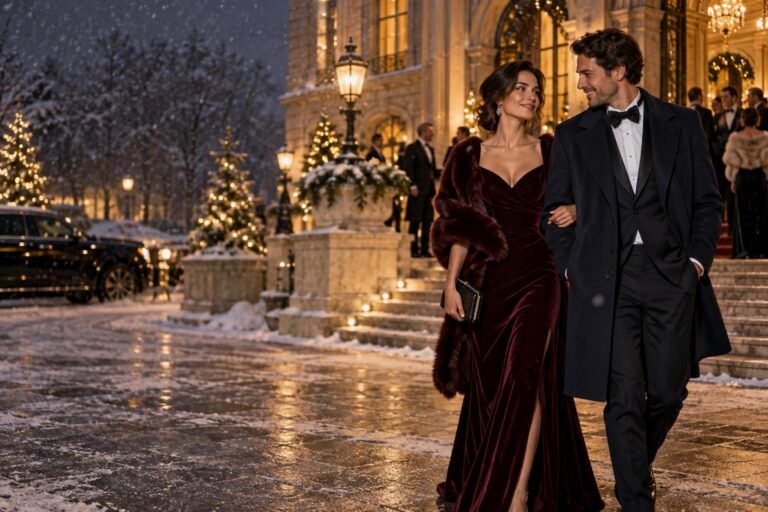
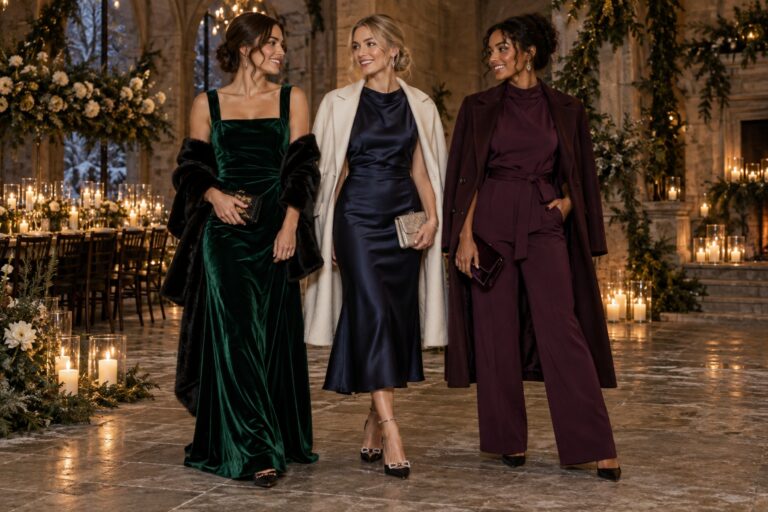
Attire can reinforce the theme through texture and proportion. Velvet, satin, wool, long sleeves, a tailored coat, a cape, or a darker suit can all suggest winter without using seasonal symbols. For a cool theme, silver jewelry, clean lines, and crisp whites may fit. For a warm theme, a textured wrap, antique-inspired earrings, or a deep-toned accessory may do enough.
Ask whether the outfit would still look beautiful if the theme name disappeared. If the answer is no, edit it. The couple should look like themselves in a winter setting, not like actors in a seasonal photo shoot.
Make flowers and lighting do different jobs
Flowers provide shape, color, and organic movement. Lighting controls the emotional temperature of the room. Do not ask the flowers to carry every part of the theme. A simple white arrangement can work in a candlelit romance, a celestial design, or an icy wonderland depending on its container and surrounding light.
Use lighting to solve practical problems as well as aesthetic ones. Guests need to see the meal, read the place cards, and move safely. A visually dramatic room still needs enough layered light to feel comfortable. Test the palette under the actual reception lighting, because a color that looks crisp in daylight may look muddy or overly warm at night.
Carry the theme into guest comfort
Winter styling should not stop at appearance. If guests will wait outdoors, add a clear plan for coats, umbrellas, blankets, transportation, or a warm welcome drink. These practical details can become part of the theme: a cocoa station for an evergreen lodge, a refined hot cider service for candlelit romance, or a sleek coat check for a modern city wedding.
Food and favors can also support the mood without turning into props. A seasonal dessert, a small candle, a warm spice blend, or a useful hand warmer can feel thoughtful. Choose details guests can enjoy rather than objects they must understand as a reference.
How to choose your theme and keep it from becoming costume-like
If two or three themes appeal to you, do not force an early decision based on a single image. Write down the mood, venue, palette, textures, and guest experience for each option. Then compare which direction solves the most real decisions. A theme that only tells you what the centerpieces should look like is not yet doing enough work.
- Choose the emotional temperature: warm, cool, dramatic, playful, quiet, or nostalgic.
- Choose a venue-compatible foundation color and two supporting colors.
- Choose up to three textures that will repeat across paper, attire, flowers, or tables.
- Choose one motif, if you need one, and use it in no more than three visible places.
- Choose the guest-comfort detail that makes the season feel cared for rather than merely decorative.
- Remove any detail that looks attractive alone but does not support the chosen atmosphere.
A mood board should show relationships, not just favorite objects. Put the venue photograph next to the palette, a fabric sample next to the invitation, and a flower reference next to the lighting reference. If the pieces only work when viewed separately, the theme needs editing. If they still work together in a small group, you have probably found a reliable direction.
Finally, do not treat trend language as a deadline. A theme can feel current because it is specific, well-proportioned, and connected to the couple. You do not need to add every new color or motif to make the wedding feel fresh. A disciplined palette, thoughtful texture, and a good plan for light will usually outlast a crowded collection of seasonal references.
Sources and methodology
This guide was developed from a US search review of current winter wedding theme, color, decor, and planning pages. The sources consistently pointed to a few durable building blocks: candlelight, greenery, cool neutrals, jewel tones, metallic accents, velvet, seasonal food, and a clear distinction between winter atmosphere and holiday-specific styling. The original contribution here is the comparison framework, which helps couples choose a complete visual direction before selecting individual details.
FAQ
What are the most popular winter wedding themes?
Common directions include candlelit winter romance, icy winter wonderland, celestial midnight, evergreen lodge, vintage winter garden, and modern jewel tone winter. Holiday-inspired celebrations are another option, but they are only one part of the larger winter theme category. Choose based on the mood, venue, and formality you want rather than popularity alone.
How can I have a winter wedding without making it look like Christmas?
Use winter’s broader visual language instead of relying on holiday symbols. Icy blue and silver, navy and white, candlelight, evergreen, velvet, celestial details, vintage winter florals, or a restrained jewel-tone palette can all feel seasonal without red bows, ornaments, or Christmas motifs.
What colors work best for winter wedding themes?
Strong options include navy and silver, white and gold, burgundy and evergreen, emerald and ivory, icy blue and gray, plum and mauve, or jewel tones balanced with a calm neutral. The best choice depends on the venue lighting and the emotional temperature you want. Limit the main palette so it remains easy to repeat.
What textures make a wedding feel wintery?
Velvet, wool-inspired paper, satin, brushed metal, glass, lace, wood, ceramic, and evergreen foliage can all suggest winter. Use texture to add depth, especially if the palette is quiet. Three related textures are usually enough. Too many can make the reception feel busy instead of layered.
How do I choose between a warm and cool winter wedding theme?
Look at the venue and the feeling you want guests to have. Warm themes use amber light, wood, burgundy, evergreen, and tactile fabric to create closeness. Cool themes use white, blue, silver, glass, and cleaner lines to create an airy or formal mood. Take photographs of the venue at the time of your reception and compare palettes in similar lighting.
Can a small or courthouse wedding still have a winter theme?
Yes. A smaller celebration may express the theme through a bouquet, coat, invitation, ribbon, candle arrangement, signature drink, and one reception detail. Choose a few high-visibility elements instead of trying to decorate every surface. A compact theme can feel especially intentional because each detail has a clear role.
How do I stop multiple winter ideas from clashing?
Choose one primary atmosphere and let the other ideas become small accents. For example, a celestial midnight wedding can borrow evergreen from a lodge theme, but it should keep the navy, silver, and evening-light foundation. Use the emotional temperature, palette, and texture limits as your editing rules whenever a new idea appears.