Cold Weather Wedding Outfit Guest: A Warm Style Checklist
Choosing a cold weather wedding outfit as a guest is not simply a matter of finding a dress with sleeves. You need an outfit that respects the invitation, works with the venue, survives the journey from car to ceremony, and still feels comfortable once the reception room warms up. The strongest look is planned as a small system: a polished base, an intentional layer, suitable shoes, and accessories that make sense for the season.
This checklist helps you make those decisions in the right order. Start with the dress code, then account for the coldest part of the day, the ground you will walk on, and the moments when your coat will appear in photographs. You can use the same method for a formal ballroom wedding, a daytime ceremony, a city reception, or a rustic venue with outdoor transitions.
Prepare the Outfit Around the Invitation and the Weather
Before you shop or pull clothes from your closet, read the invitation as a set of constraints. The dress code tells you how polished the base outfit should be. The venue and schedule tell you how much warmth and mobility you need. A black-tie evening wedding in a heated hotel has different requirements from a semi-formal ceremony at a barn where guests walk across gravel for photographs.
Begin by writing down four details: the dress code, the location, the start and end times, and the longest likely outdoor interval. Include travel between parking and the venue, a receiving line, outdoor portraits, and any ceremony held in a separate building. Even a short cold-weather interval can determine whether you need a proper coat, opaque tights, closed-toe shoes, or a pair of weatherproof boots for the journey.
Your wedding look is only the beginning.
Keep your guest list, vendors, timeline, and every important detail together with Zarellea — so your day feels as considered as your style.
- Black tie: Choose a floor-length gown, a very polished evening dress, or an elegant formal jumpsuit. Add a tailored overcoat, formal wrap, or stole that does not make the look feel casual.
- Formal or black-tie optional: A long dress, refined midi, velvet suit, or wide-leg jumpsuit can work. This is a good place for richer texture and a slightly more individual color choice.
- Cocktail: Think knee-length or midi proportions, a dressy suit, or a sleek jumpsuit. Long sleeves, tights, and a beautiful coat can make the outfit seasonally convincing.
- Semi-formal: Use a polished dress, tailored separates, or a suit without unnecessary evening drama. A refined knit layer may work if the invitation and venue are relaxed.
- Casual or rustic: Keep the outfit neat and occasion-ready, then prioritize terrain, warmth, and ease of movement. A sweater dress, wool skirt, blouse, or dressy trousers can be more practical than a fragile party dress.
For a second opinion on dress-code language, compare your invitation with a reliable guide such as The Knot’s winter wedding guest guidance. Use it as a reference, not as a shopping list. Your venue, the couple’s instructions, and the actual weather should make the final decision.
Next, identify the temperature problem you are solving. If the reception is indoors, you may need warmth only for arrival, ceremony, and photographs. In that case, a removable layer is more useful than an extremely heavy dress. If much of the event takes place outside, warmth needs to be built into the base through sleeves, dense fabric, tights, trousers, and shoes that protect your feet.
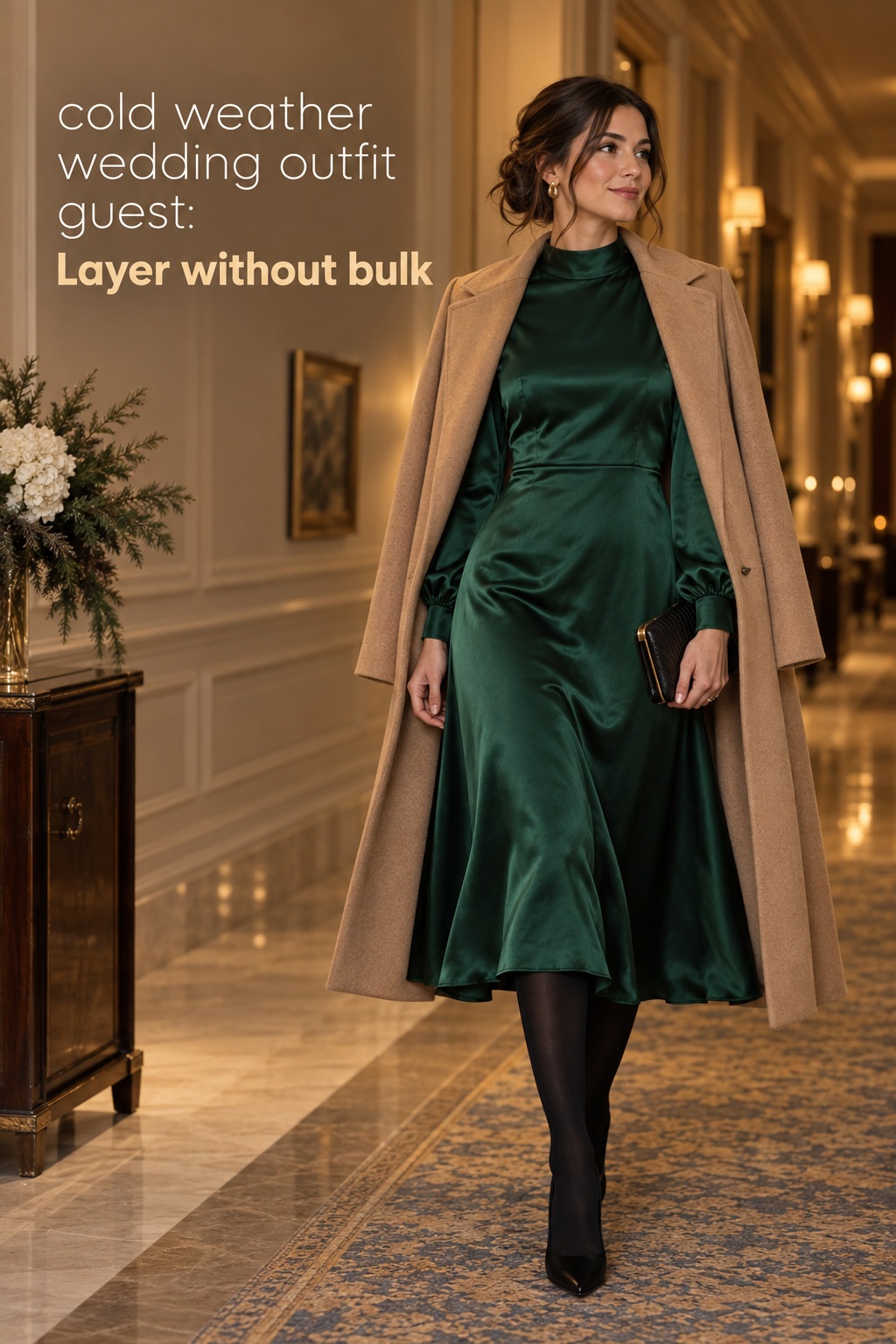
Use a Five-Part Warmth and Polish Checklist
A cold weather wedding outfit guest look works best when every piece has a job. The base outfit creates the required level of formality. The mid-layer provides flexible warmth. The outer layer handles the entrance and photographs. The shoes protect your feet and keep you steady. Accessories finish the outfit while making the cold easier to manage.
1. Choose fabric before decoration
Fabric often creates more warmth than extra decoration. Velvet, heavier crepe, lined satin, wool blends, jacquard, and substantial lace can feel more appropriate in cold weather than a thin summer chiffon. This does not mean every winter outfit must be heavy. A fluid satin dress with a proper coat can be more comfortable than a thick sweater dress inside a warm reception room.
Look for a fabric that drapes well and does not crease immediately under a coat. Test how it feels when you sit, walk, and raise your arms. If the fabric is delicate, plan a smooth layer underneath so your coat does not catch on it. A lining is especially useful for satin, lace, and fitted dresses because it improves comfort and reduces static.
2. Add coverage where you actually feel cold
Coverage should respond to your body and the setting, not to a generic idea of winter. Long sleeves are an obvious choice, but a high neckline, a lined bodice, full-length trousers, or a substantial skirt can matter just as much. If your arms are comfortable but your legs get cold, opaque tights may be the smarter solution than changing the entire dress.
For a shorter cocktail dress, choose tights that look intentional with the shoe. Matte black works with many formal outfits, while a matching deep color can create a longer line. Avoid adding a visibly sporty thermal layer under a sleek dress unless it is fully hidden and does not change the fit. The goal is warmth that looks like part of the outfit.
3. Make the coat part of the outfit
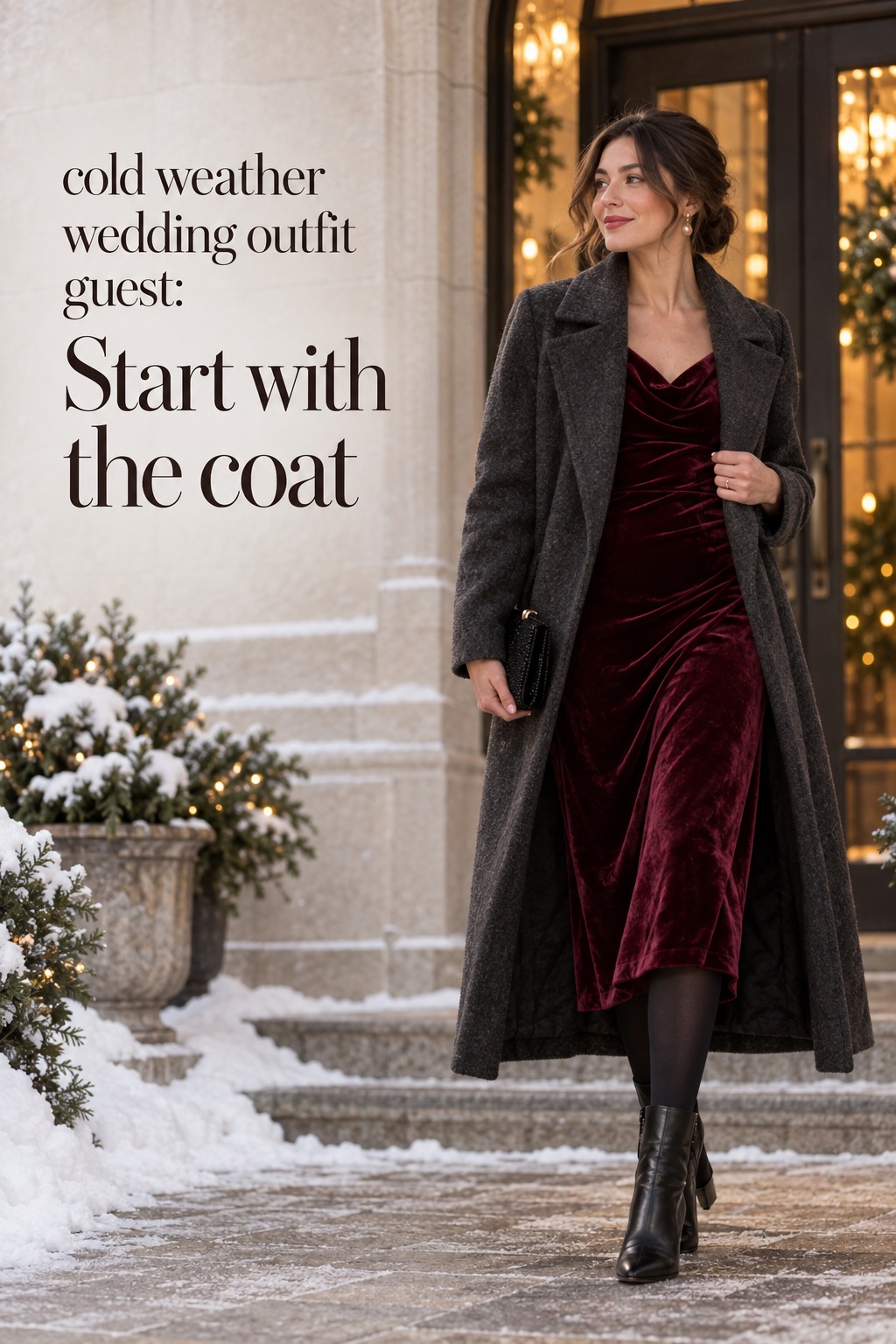
Your coat is not a background item. It appears when you arrive, leave, wait outside, and take many group photographs. A tailored wool coat, long belted coat, dressy cape, elegant opera coat, or refined faux-fur layer can support the formality of the outfit. The best choice closes comfortably over the shoulders and does not crush the sleeves, neckline, or shape beneath it.
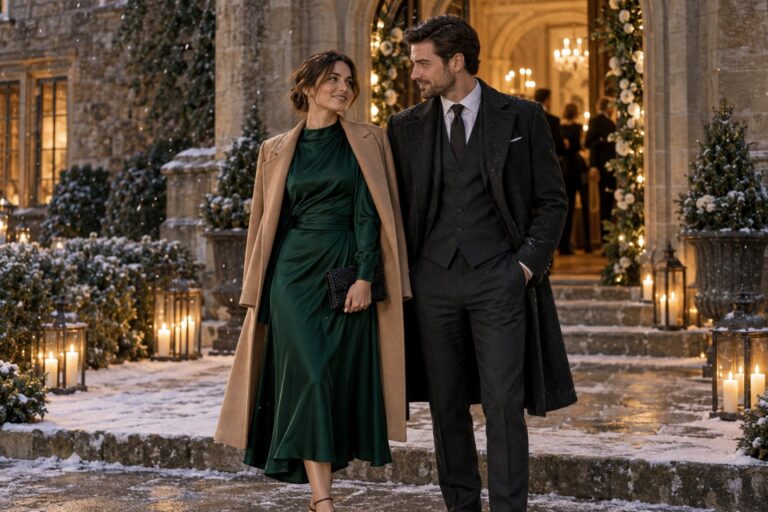
Match the coat to the visual language of the base. A clean black coat can sharpen a jewel-tone dress. A camel or charcoal coat can soften a dark suit. A velvet stole or faux-fur wrap can be beautiful for a formal evening, but it should stay secure when you move. If the venue is casual or rustic, a polished shearling or shorter wool jacket may make more sense than an evening cape.
4. Solve the ground before choosing the shoe
Cold weather often means wet pavement, ice, gravel, mud, or uneven paths. A delicate stiletto may look elegant but become a liability outside. A block heel, low heel, structured flat, polished loafer, or dressy boot can still look formal when its shape and finish are considered carefully. If you love a high heel, carry a practical travel shoe and change once you reach a dry indoor floor.
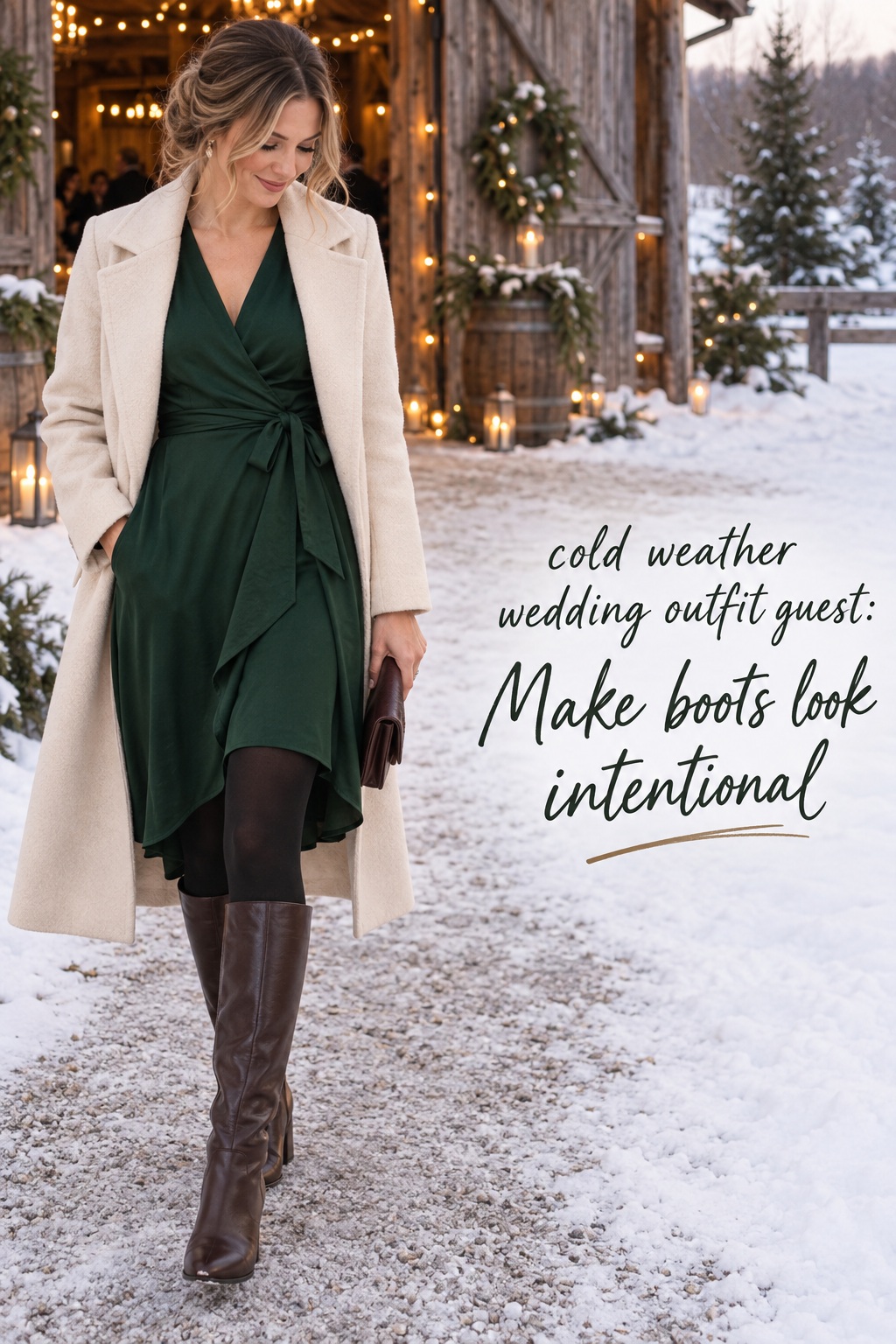
Boots can work with a cold weather wedding outfit guest look when they are sleek, clean, and proportionate to the dress code. Knee-high boots under a midi dress can suit a rustic venue. A refined ankle boot can work with tailored trousers. Snow boots should usually stay in the car or coat check unless the event is genuinely outdoors and the invitation makes practicality clear.
5. Use accessories to finish, not clutter
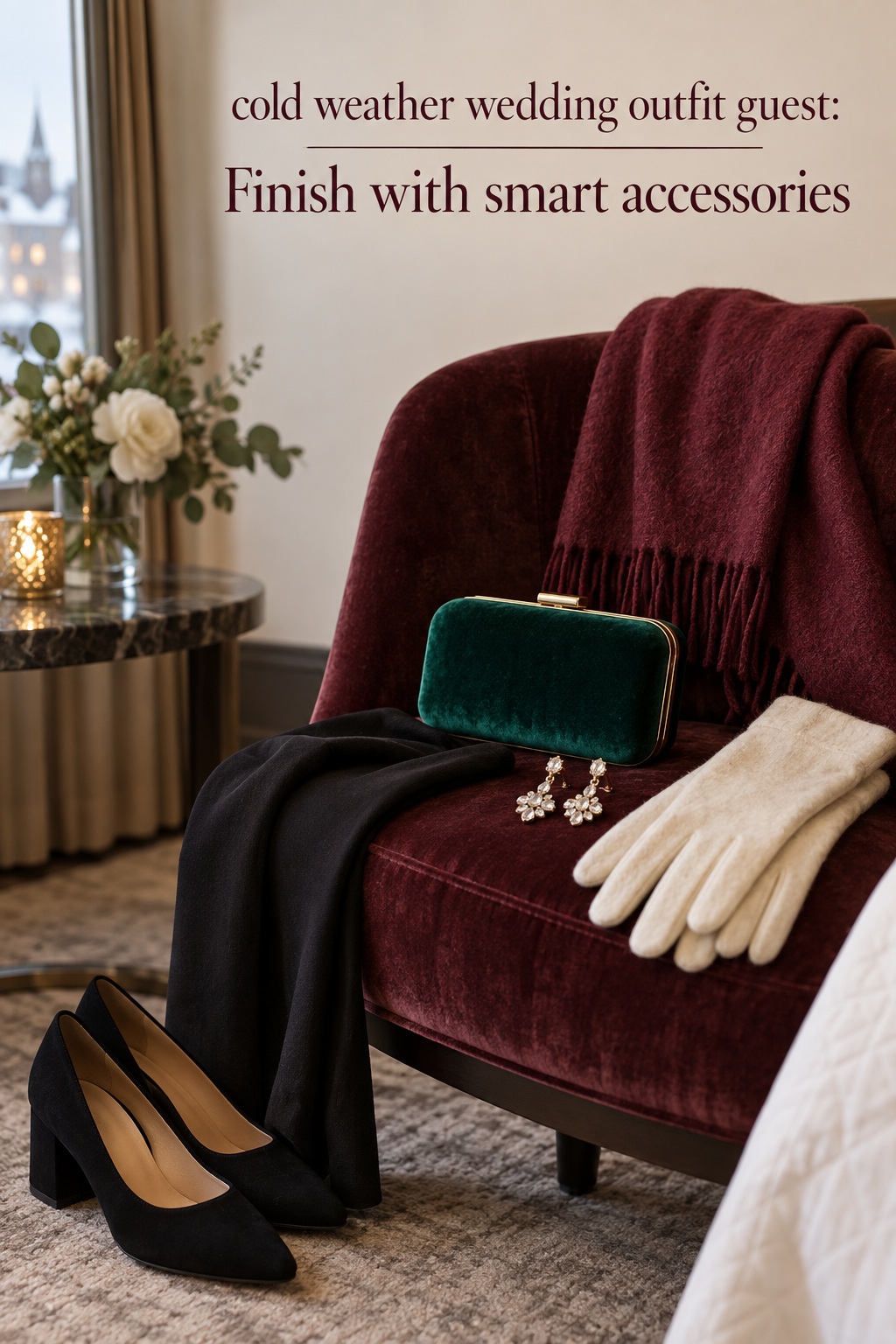
Winter accessories should make the outfit feel complete. Choose earrings, a small clutch, a scarf, gloves, tights, or a hair accessory that supports the color and formality of the base. A satin dress may need matte texture nearby so it does not look overly shiny. Velvet can be balanced with simple metal jewelry. A detailed coat usually works best with a quieter bag.
Keep your practical kit small. Lip color, tissues, blotting papers, a compact mirror, bandages for shoe friction, and a tiny hand warmer can be enough. Avoid carrying a large everyday tote into a formal room. If you need extra shoes, a warm layer, or medication, use a compact evening bag plus a separate travel bag that can be left in the car or checked.
The fabric and styling guidance from Adrianna Papell’s formal winter wedding guide is useful here: richer fabrics, deeper colors, sleeves, and a dressy cover-up can all support a polished winter result. The key is editing the pieces so they work together.
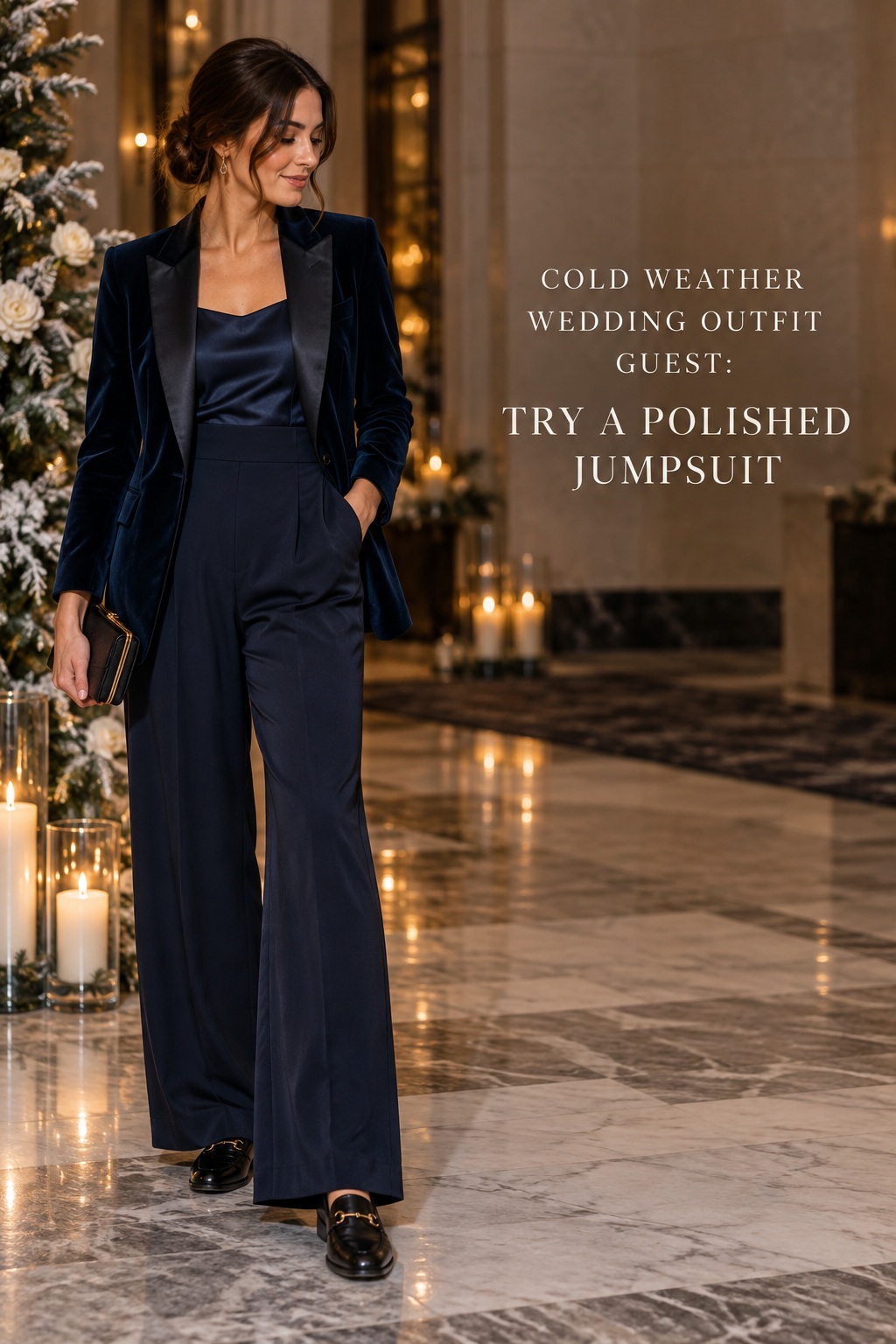
Build the Outfit With One of These Worked Formulas
Once you know the code and the weather problem, use a formula instead of starting from an empty closet. Each formula has a clear base, layer, shoe, and accessory direction. Adapt the color and level of shine to your personal style, but keep the structure intact.
Formal evening: long dress and tailored coat
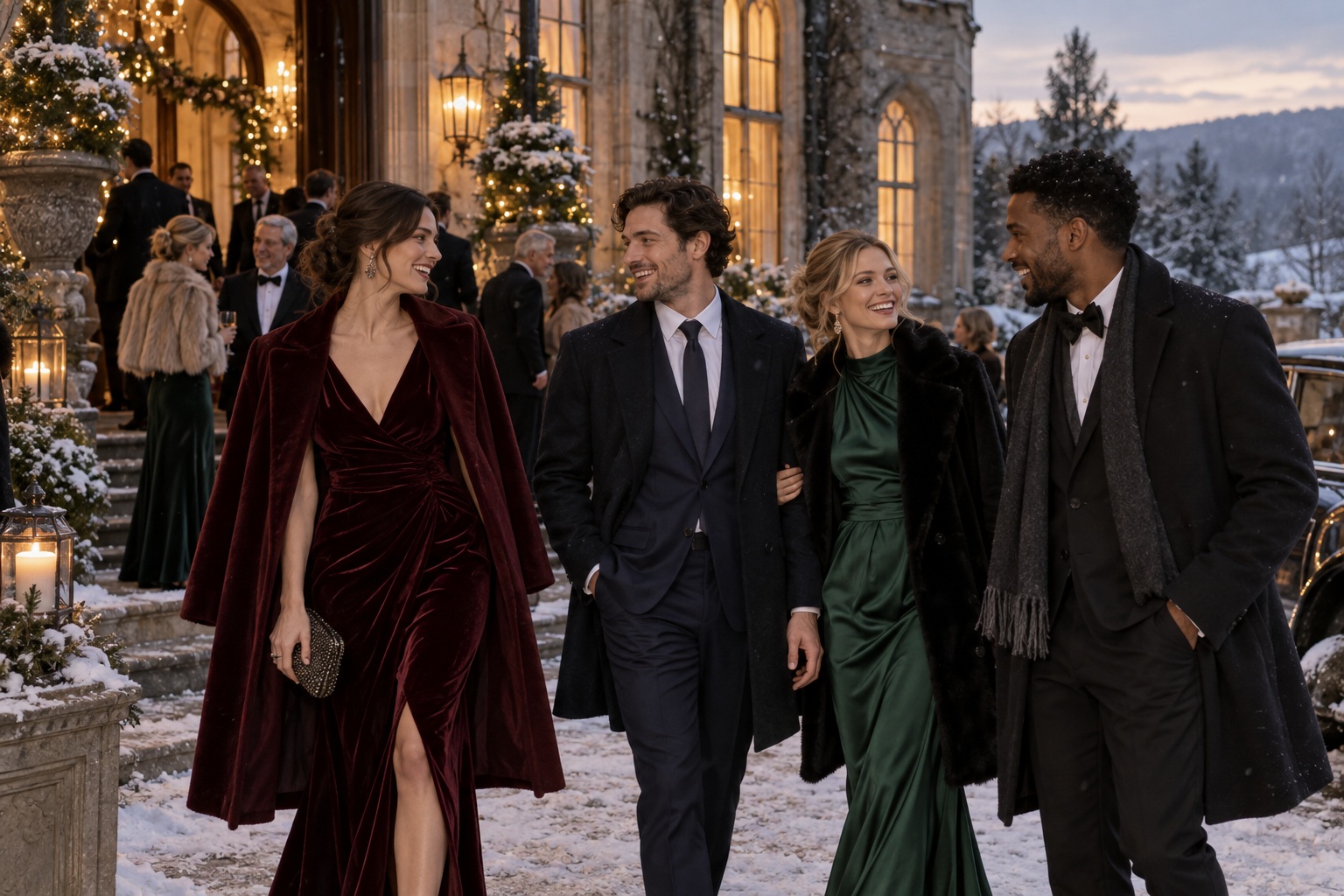
Start with a floor-length dress in velvet, weighted crepe, satin, or a lined fabric. Navy, burgundy, forest green, plum, charcoal, and deep teal give the outfit winter depth without turning it into a costume. Add a tailored full-length coat or a narrow formal wrap. Choose closed-toe heels if the ceremony and reception are indoors, but bring a practical travel shoe for the route between locations.
Keep the accessories focused. One strong earring, a small clutch, and a clean hairstyle may be enough. If the dress has a high neckline or embellishment, do not force a necklace into the outfit. This formula is strongest when the coat and dress share a level of refinement.
Cocktail: velvet midi, tights, and a sharp layer
A velvet midi dress gives you texture, warmth, and an easy evening signal. Add opaque tights, a low or block heel, and a long wool coat. If the dress is simple, use a crystal earring or metallic shoe for light. If it is already textured, choose a smooth clutch and understated jewelry. This is an especially reliable option for a city hotel, restaurant, or cocktail reception.
Check the hem with your coat and shoes before the event. A midi that stops at the widest part of the calf can feel heavy with a flat boot, while a slightly longer hem may work beautifully with a narrow boot. Walk several steps and sit down to make sure the dress does not ride up when you move.
Modern alternative: tailored jumpsuit and statement coat
A wide-leg jumpsuit in velvet, satin, crepe, or a structured knit gives you coverage without looking ordinary. Look for a defined waist, an elegant neckline, and enough room to layer a thin camisole or thermal base underneath if needed. A jewel-tone or black jumpsuit can meet a formal brief when the fabric, tailoring, jewelry, and shoes are elevated.
Choose a coat that does not fight the line of the trousers. A long coat usually looks smoother than a short puffer. If the legs are wide, pick a shoe that remains visible and stable. A pointed flat, low block heel, or polished ankle boot can support the outfit without turning the hem into a hazard.
Daytime or rustic: wool separates and practical boots
For a daytime, lodge, barn, or outdoor-adjacent wedding, build around a wool midi skirt, dressy trousers, a satin blouse, or a refined knit dress. Add a belt, structured bag, and warm coat so the outfit still feels intentional. Tall boots can provide more protection than pumps, especially when the venue has gravel or snow.
Use color to keep the look celebratory. Burgundy, rust, deep green, navy, warm brown, and winter florals can feel festive without requiring sequins. If the invitation is casual, a textured sweater may work, but choose one with a clean shape and pair it with a polished skirt or tailored trousers.
Complete the Final Review Before the Wedding Day
The final review is where an attractive idea becomes a dependable outfit. Wear the full look at home, including the base layer, tights, coat, shoes, bag, and jewelry. Sit in it, walk up stairs, get into a car, raise your arms, and practice removing the coat without disturbing your hair or sleeves.
- Temperature test: Spend a few minutes in a cool hallway or outside entrance, then move into a warm room. Confirm that you can remove or open the outer layer easily.
- Photo test: Take a front, side, and seated photograph in daylight and indoor light. Check whether the coat hides the dress in a way you dislike and whether shiny fabric creates distracting glare.
- Movement test: Walk, sit, dance, hug, and reach for your bag. A wedding outfit should allow normal social movement without constant adjustment.
- Weather test: Look at the route from car to venue. If snow, rain, gravel, or ice is possible, decide exactly when you will change shoes and where wet footwear will go.
- Dress-code test: Read the invitation one more time. Remove anything that could make the outfit seem too casual, too bridal, too revealing for the ceremony, or more dramatic than the requested level.
- Backup test: Pack a small repair kit, lip product, tissues, and bandages. If the event is outdoors, add gloves or a discreet hand warmer that will not interfere with photographs.
Finally, check the balance of the whole image. A successful cold weather wedding outfit guest look should show a clear point of view from coat to shoe. It does not need every seasonal texture at once. One rich fabric, one useful layer, stable footwear, and a thoughtful accessory often look more elegant than a pile of winter references.
FAQ
What should a guest wear to a wedding in very cold weather?
Start with the invitation’s dress code, then choose a warmer fabric, practical coverage, and a proper coat. Velvet, lined satin, heavy crepe, wool blends, long sleeves, opaque tights, and closed-toe shoes can all help. If the event includes a long outdoor interval, use a warm base rather than relying on a thin dress and a decorative wrap alone.
Can I wear a coat over a formal wedding guest dress?
Yes. A tailored wool coat, long belted coat, formal cape, opera coat, or refined wrap can be part of the formal look. Choose a length and shape that protect the dress without crushing it. The coat should be easy to remove at the venue and polished enough for arrival and outdoor photographs.
Are boots appropriate with a winter wedding guest outfit?
Boots can be appropriate when they suit the dress code, venue, and outfit proportions. Sleek knee-high boots can work with a midi dress at a rustic wedding, while a refined ankle boot can pair with tailored trousers. For black tie, use the most formal shoe the weather allows and change from practical travel boots when you arrive.
What colors work best for a cold weather wedding guest outfit?
Deep jewel tones, navy, charcoal, forest green, burgundy, plum, chocolate, and black can all work well in winter. The invitation and venue matter more than a seasonal color rule. Avoid white, ivory, or very pale shades that could be mistaken for bridal clothing unless the couple has specifically requested an all-white dress code.
How can I stay warm without overheating at the reception?
Use removable layers and breathable fabrics. A thin base, a dress or tailored outfit, and a coat you can check is usually more flexible than one extremely heavy garment. Choose a wrap or jacket that can come off easily, and avoid adding bulky layers that change the fit or trap heat once you begin dancing.
Can I wear a jumpsuit instead of a dress to a winter wedding?
Yes, a tailored jumpsuit can be an excellent winter guest option. Choose velvet, satin, crepe, or another dressy fabric, then add formal jewelry, a structured bag, and an elegant coat. Check the invitation first, and make sure the trousers and neckline feel appropriate for the ceremony as well as the reception.