Long Sleeve Winter Wedding Dress: The Choice Guide
A long sleeve winter wedding dress can be wonderfully practical, but sleeves alone do not decide whether a gown will feel warm, comfortable, or right for your day. A sheer lace arm may look covered while leaving your shoulders and back exposed. A heavy fabric may feel cozy outside but too restrictive once the reception heats up. The best choice is the one whose coverage, structure, and adaptability match the full wedding timeline.
Use this guide to compare three routes: a gown made with permanent long sleeves, a strapless or sleeveless gown with detachable sleeves, and a separate topper worn over a simpler dress. Then test the fabric, neckline, silhouette, and movement before you commit. That approach keeps a beautiful inspiration photo from becoming an uncomfortable outfit on the actual day.
Start With the Sleeve Decision, Not the Dress Photo
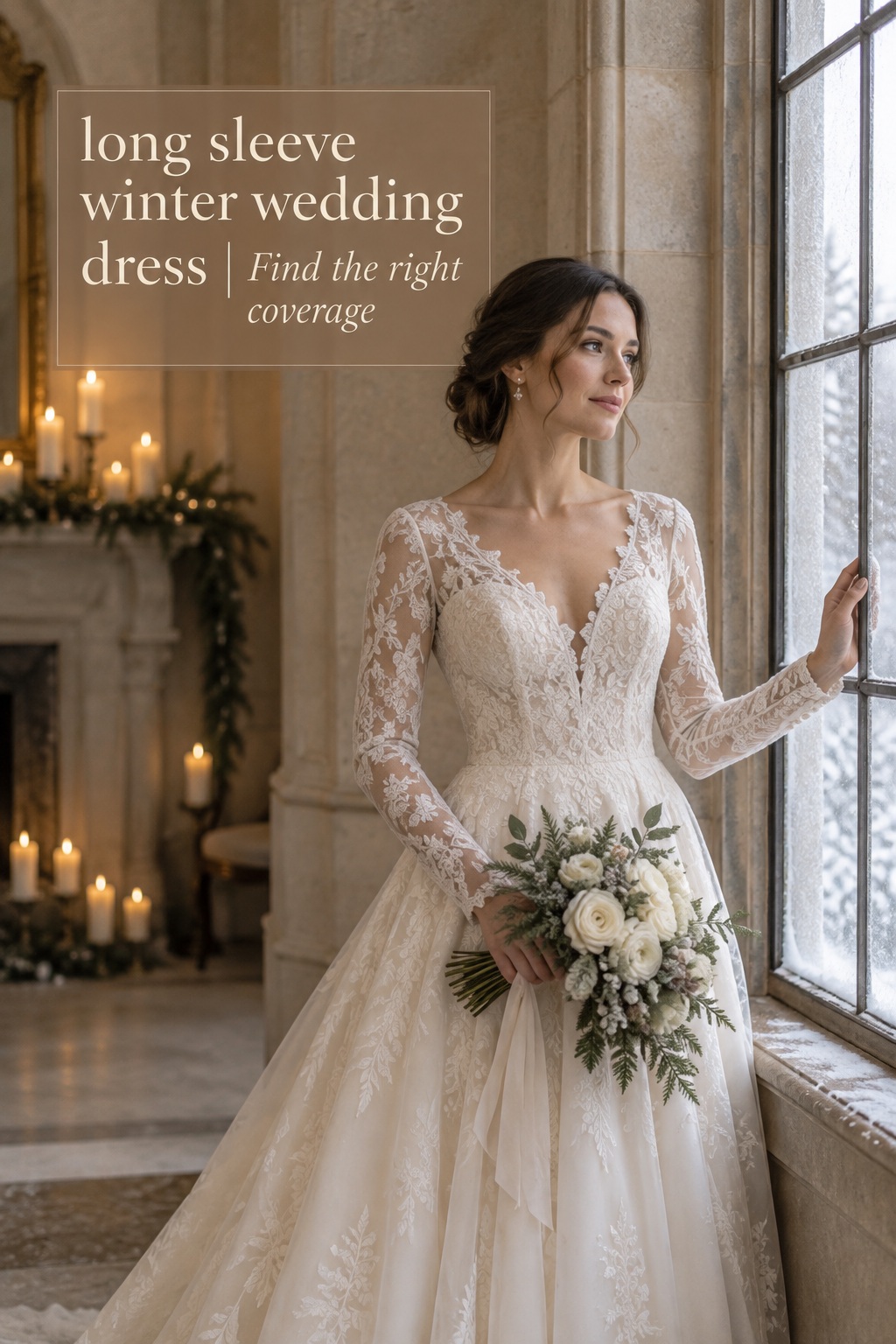
Begin by deciding what you need the sleeve to do. Is it mainly a visual detail, modesty coverage for the ceremony, a way to create a winter mood, or one part of a genuine warmth plan? These are different jobs. A close-fitting lace sleeve can make a gown feel romantic and covered, while a lined crepe sleeve offers more physical protection. A removable sleeve can solve a ceremony requirement without locking the reception look into the same level of coverage.
Permanent long sleeves: the unified look
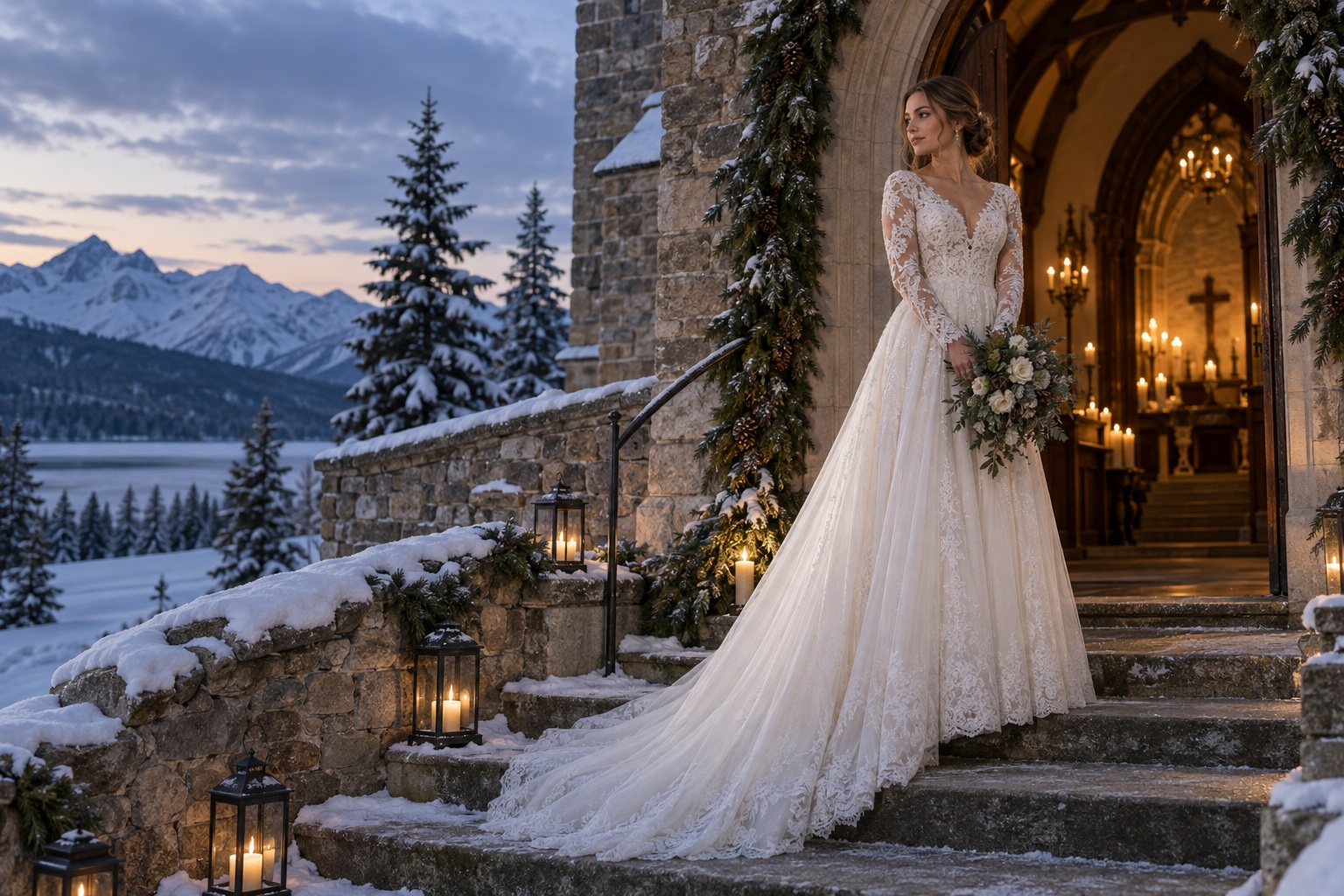
Permanent sleeves are the cleanest choice when you love the gown exactly as shown and expect the same silhouette from ceremony through dancing. They can be cut from the same crepe or satin as the bodice, matched in lace, or built in illusion mesh that creates a floating neckline. The advantage is visual continuity. There is no second piece to fasten, pack, or remove, and the sleeve seam is designed with the bodice from the beginning.
Your wedding look is only the beginning.
Keep your guest list, vendors, timeline, and every important detail together with Zarellea — so your day feels as considered as your style.
The trade-off is flexibility. If the venue is heated, the sleeve remains part of the outfit. Ask whether the fabric has enough stretch for raising your arms, hugging guests, holding a bouquet, and moving through a bustle. A fitted sleeve should feel secure but never make you pull at the shoulder seam. If you are between sizes, the arm and upper-back measurements deserve as much attention as the bust and waist.
Detachable sleeves: two looks from one gown
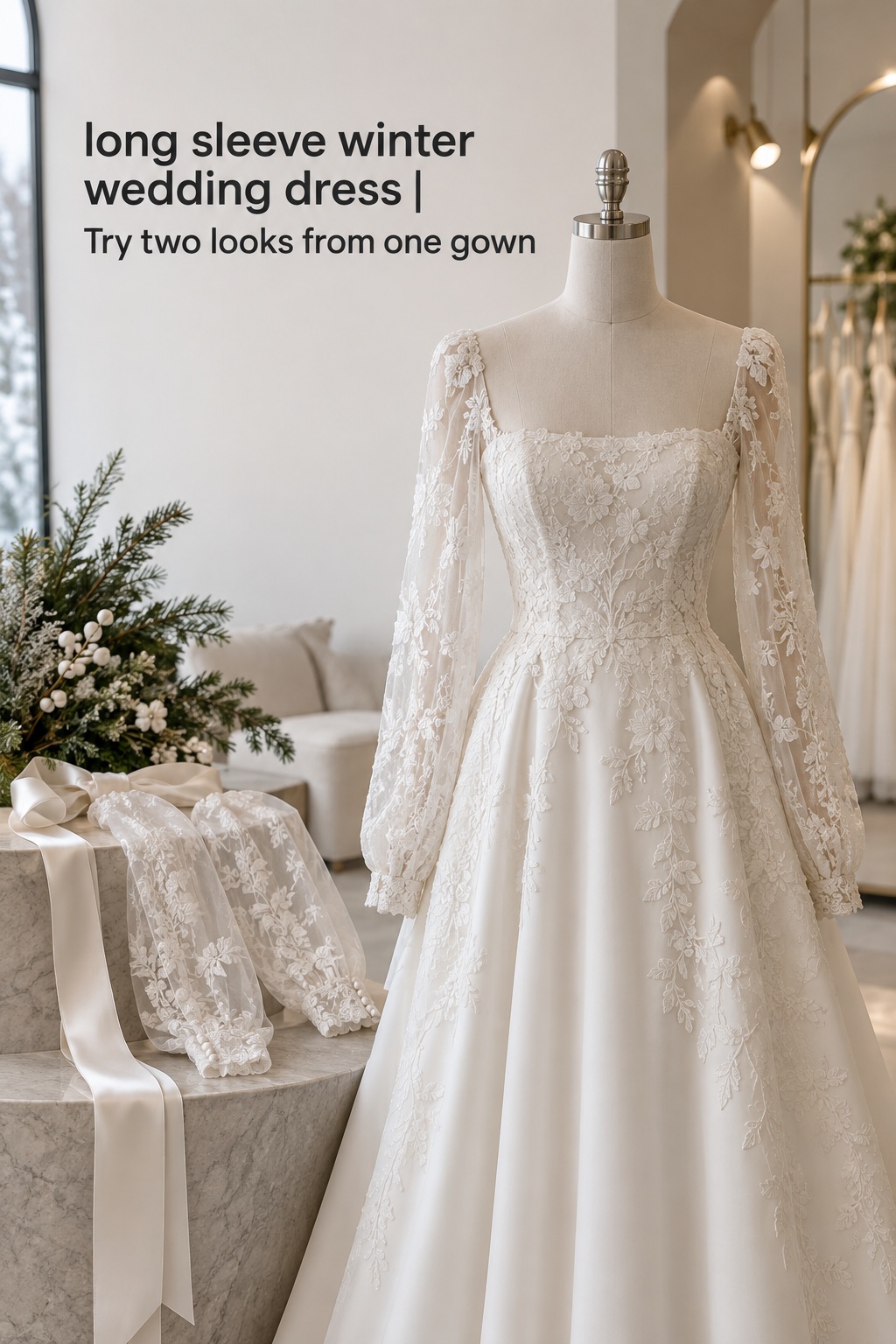
Detachable sleeves are often the most useful compromise for a winter wedding. You can wear them for the ceremony and outdoor portraits, then remove them for dinner and dancing. Some attach at the armhole, while others connect at the shoulder or sit as a bolero-like layer. The difference matters because attachment points can affect the neckline, corset fit, and ease of movement.
Try the gown with and without the sleeves during the same appointment. Look at the back, not just the front. A dress that feels finished with sleeves may reveal an unexpected strap, seam, or unfinished edge when they come off. Confirm that the fastenings will not show in close portraits and that a trusted person can remove the sleeves without disturbing your hair, veil, or makeup.
Separate toppers: the adaptable layer
A separate lace top, fitted bolero, bridal jacket, cape, or knit layer lets you choose the base gown first and solve the weather second. This route works well when you fall in love with a strapless or square-neck dress but want more coverage for the aisle. It is also helpful when your ceremony and reception have noticeably different temperatures or levels of formality.
The main risk is proportion. A topper must meet the neckline and waist cleanly, sit smoothly over the bodice, and leave room for the bouquet and jewelry. Bring a photo or sample of the base gown to the topper fitting. Check whether the layer catches on beading, changes the waistline, or adds bulk beneath a coat. When the two pieces look designed together, the outfit reads intentional. When they fight at the seams, the layer can look like an emergency solution.
Match Fabric and Silhouette to the Cold-Weather Job
Fabric is the part of a long sleeve winter wedding dress that changes comfort most. A sleeve made from a lightweight transparent material may deliver coverage and texture without much insulation. A dense satin, Mikado, crepe, or velvet changes the way the whole gown hangs and moves. Think about the coldest portion of the day, the amount of time you will spend outside, and whether you need the dress to transition into a warm indoor room.
Choose the fabric for the venue, not the calendar
For a mostly indoor wedding, crepe and satin can give a polished long-sleeve line without making the gown feel overly seasonal. Crepe is useful when you want a smooth, modern silhouette, while satin brings a reflective finish that works beautifully under candlelight. Mikado has more body and supports structured A-line, ball gown, and fit-and-flare shapes. Velvet creates the richest winter texture, but a full velvet gown can feel visually and physically heavy, especially during a long reception.
Lace is less a single warmth category than a family of constructions. An open lace over a lined bodice creates texture, while lace over illusion mesh can look delicate and offer arm coverage without a solid visual block. Ask what sits beneath the lace on the sleeves, bodice, and back. The lining pattern may change the perceived neckline and the amount of skin visible in photographs.
Let the silhouette balance the sleeve volume
A close-fitting sleeve usually pairs easily with an A-line, column, sheath, or fit-and-flare gown because the arm line stays clean. If the sleeve is fluted, puffed, bishop-shaped, or finished with a wide cuff, a more controlled bodice can keep the outfit from becoming crowded. A full ball skirt can handle an expressive sleeve, but the waist and neckline need enough definition to preserve shape.
Consider how the gown behaves when you sit. A fitted long sleeve can feel perfect while standing and tight when your elbows bend at dinner. A full sleeve can brush the table, bouquet, or cake when you reach forward. Ask the stylist to let you walk, sit, raise both arms, and hold a bouquet. These small tests reveal more than a mirror pose.
Balance Neckline, Back, and Sleeve Coverage
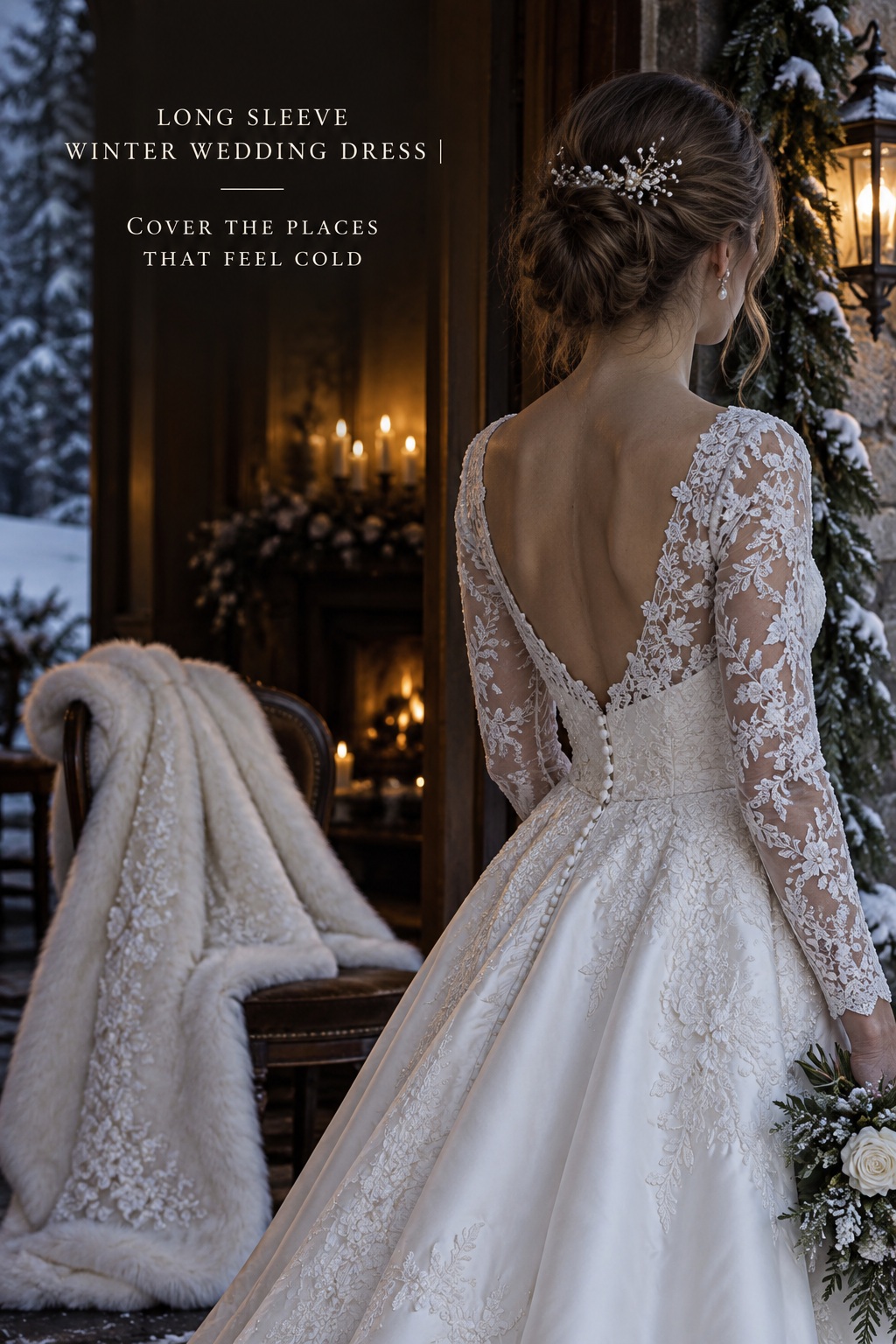
One of the most common winter-dress mistakes is treating long sleeves as complete warmth. Your arms may be covered while your shoulders, chest, spine, or lower back remain exposed. That may be exactly the contrast you want, but it should be a deliberate styling choice. Map the areas that will be outside during the ceremony, portraits, and travel between locations.
A high bateau, jewel, or mock neckline gives a long sleeve dress a more enclosed, formal feeling. A V-neck can keep the front open and lengthen the line, while a square neckline brings structure to lace or satin. An off-the-shoulder sleeve is romantic but leaves the shoulders exposed, so it may need a cape, jacket, or warm coat for outdoor time. A low or open back has the same issue even if the front looks fully covered.
Use contrast to keep coverage from feeling heavy
Long sleeves do not require a high neckline. A fitted crepe sleeve with an open back, a sheer lace sleeve with a clean square neck, or an illusion sleeve with a restrained plunge can create balance. The goal is not to expose skin for its own sake. The goal is to decide where the eye should rest and where you actually need protection.
Jewelry should follow that decision. A high neckline often looks strongest with earrings and a bracelet instead of a necklace. A simpler neckline can support a pendant, but check that the chain will not catch on lace or the sleeve cuff. If the dress already has beading at the wrist or collar, let that detail lead.
Plan the cover-up as part of the dress
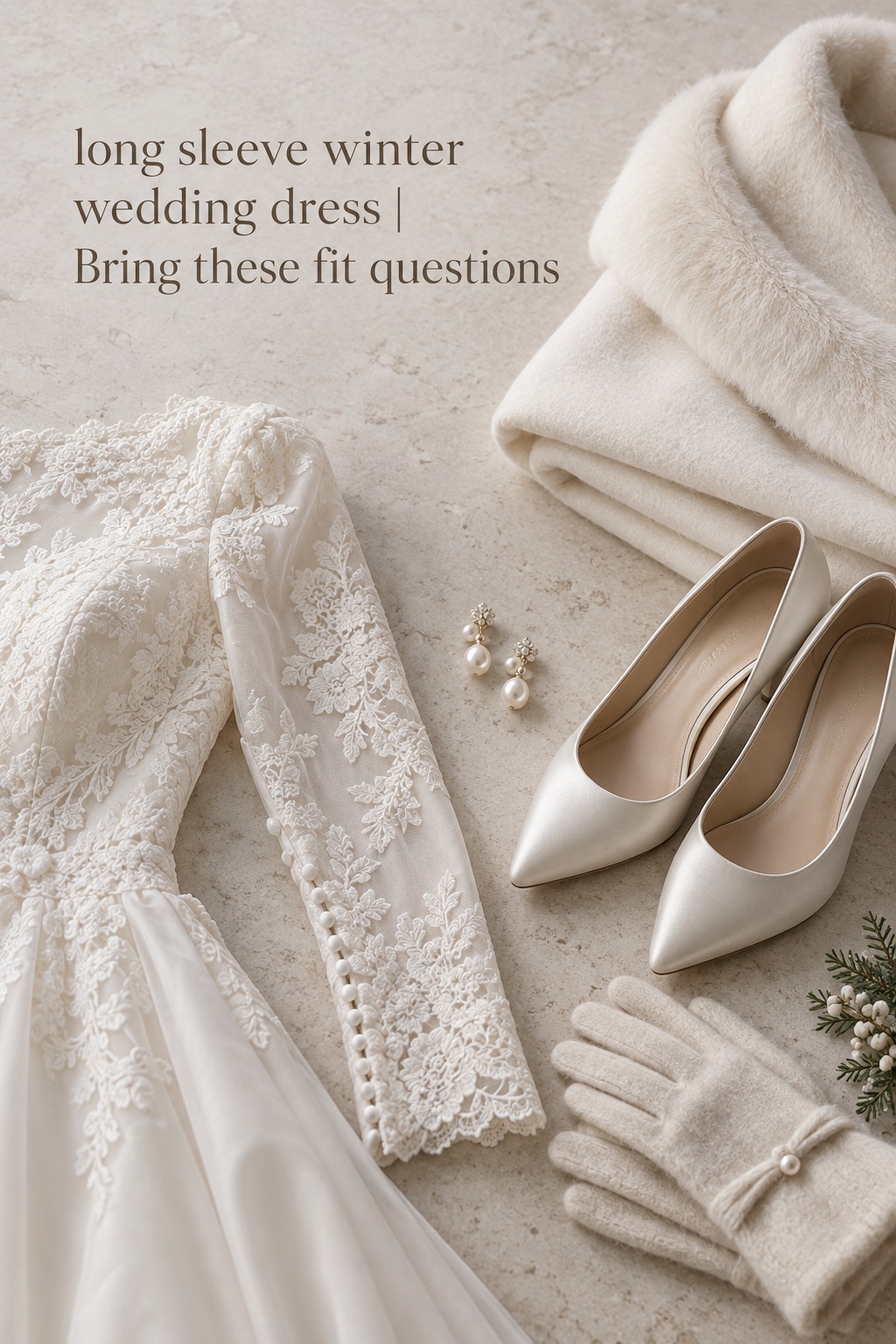
For outdoor ceremonies or snowy portraits, a bridal cape, tailored coat, faux-fur wrap, or lined jacket may do more for warmth than changing from sheer to solid sleeves. Choose the cover-up after you understand the gown’s neckline and train. A clean cape can preserve a fitted sleeve, while a coat needs enough room at the shoulders and should not crush raised lace or three-dimensional flowers.
Test the complete combination while wearing the veil and carrying the bouquet. Check how the cover-up closes, whether the train can move freely, and where it will go once you arrive indoors. If it must be checked, designate one person to manage it. Comfort is easier when the warm layer is treated as part of the plan rather than left in a car.
Choose a Dress Formula for Your Venue and Timeline
The right long sleeve winter wedding dress changes with the job it has to perform. Use the following formulas as starting points, then adjust for your personal style, the ceremony expectations, and how much time you will spend outside.
For a formal ballroom wedding
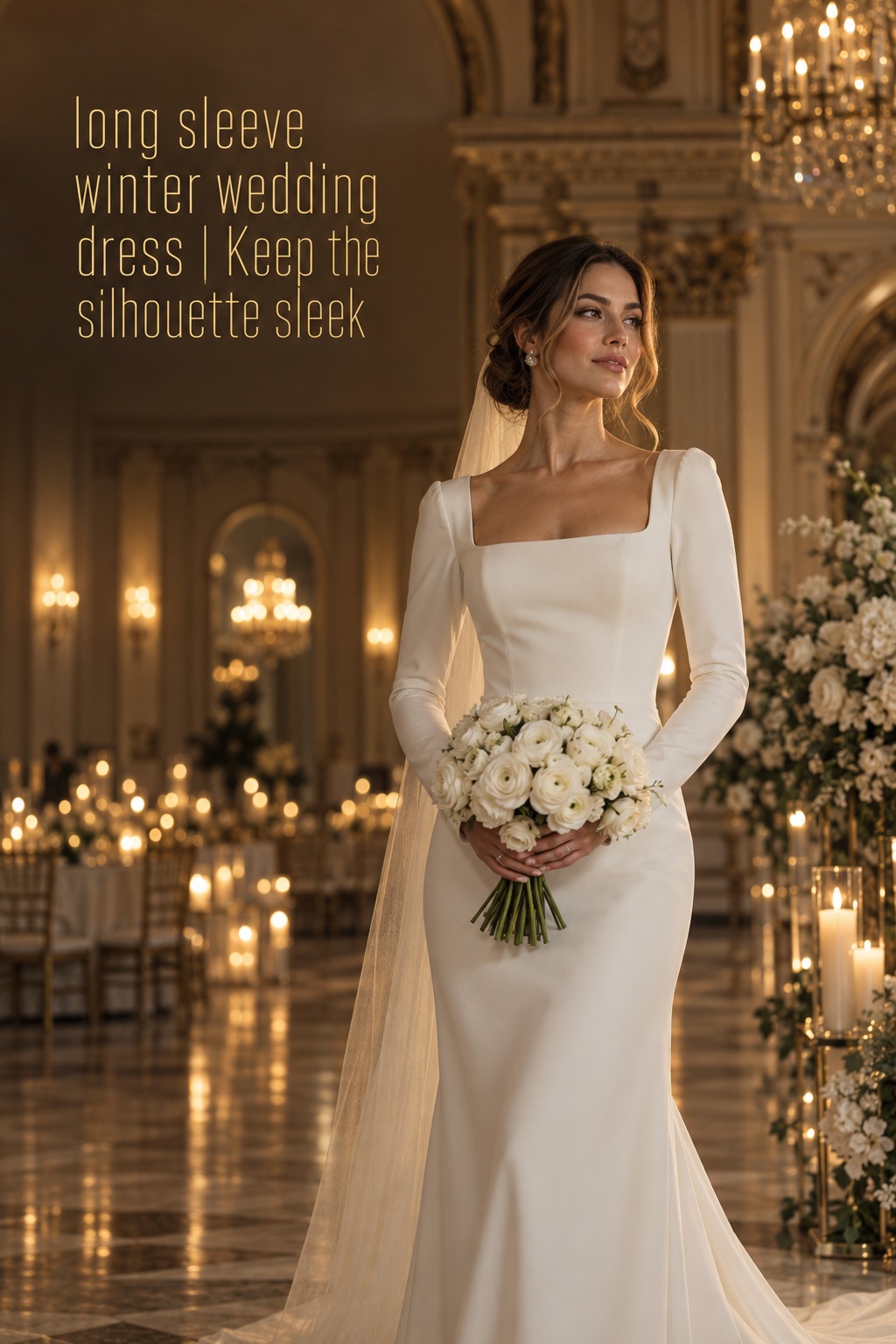
Choose a clean long-sleeve crepe fit-and-flare, a structured Mikado A-line, or a satin ball gown with a defined waist. A high or square neckline can make the sleeve feel architectural rather than merely practical. Keep the accessories focused: polished earrings, a simple veil or hair ornament, and shoes that are easy to walk in across a smooth floor. Because the room may be warm, stretch and underarm ease matter more than maximum fabric weight.
If you want a dramatic winter note, place it in one controlled area: a textured sleeve, a velvet bow, a pearl cuff, or a cape for the entrance. Too many competing winter textures can obscure the gown’s shape. Try the dress under both bright fitting-room light and a lower, warmer light if possible, since satin and beading can read differently in a ballroom.
For a chapel ceremony and indoor reception
A lace long-sleeve gown, illusion neckline, or detachable sleeve over a more open base can offer ceremony coverage while preserving a softer reception look. Confirm any venue-specific expectations before ordering. If the ceremony requires covered shoulders or a higher neckline, the detachable piece must stay secure while you walk, kneel, and exchange rings.
For the reception, remove the sleeve only if the base gown was designed to stand alone. Otherwise keep it on and create change through a veil swap, a belt, a jacket, or a different hair accessory. A reliable plan is better than a complicated transformation that requires a rushed alteration or a helper searching for tiny fasteners.
For snowy portraits or a partially outdoor ceremony
Start with the exposed zones rather than the sleeve label. A long sleeve dress in light lace may still need a lined cape or coat if you will stand in snow. Consider a heavier Mikado, satin, or velvet accent, but protect movement by keeping the skirt and train manageable. A removable outer layer gives you a cleaner indoor silhouette and prevents the gown from becoming overloaded with thick material.
Schedule a short outdoor test before the wedding if the timeline allows. Wear the shoes, layer, and undergarments you expect to use, then practice walking and holding the bouquet. The test is not about proving you can tolerate cold. It is about identifying where you need an extra layer, a warm-up break, a different shoe, or a shorter portrait block.
For a heated venue with a cold commute
Prioritize a dress that remains comfortable indoors and add warmth externally. A fitted crepe or satin gown with detachable sleeves, a cape, or a structured coat can cover the commute without forcing you to wear a dense fabric for hours. Make sure the outer layer accommodates the sleeve attachment or cuff and can be removed without disturbing your hairstyle.
Ask the venue about coat storage and changing space. If the warm layer will be removed in a small room, practice the sequence with your attendant. A gown can be technically beautiful and still fail the timeline if the sleeve, coat, veil, and bustle all require the same two minutes before the reception begins.
Use the Appointment and Alteration Checklist
Bring your wedding date, venue information, ceremony location, expected outdoor moments, and the shoes you are most likely to wear. You do not need to have every accessory selected, but you should know whether the day includes a winter commute, a first look outside, a church, a long aisle, or a reception in a strongly heated room.
- Try the gown with the sleeves attached, removed, or layered, depending on the design.
- Raise both arms, bend your elbows, sit, walk, and hold a bouquet for several minutes.
- Check the sleeve cuff under gloves, bracelets, or a coat sleeve if those pieces are part of your plan.
- Inspect the neckline and back in front, side, and rear views, since winter exposure is not limited to the arms.
- Ask whether the sleeve fabric can be altered and whether the seam will remain comfortable after tailoring.
- Confirm how the bustle works with a full skirt, lace edge, or detachable train.
- Photograph the complete look with your planned veil or topper so you can compare proportions later.
During alterations, ask for a movement fitting rather than a standing-only fitting. The sleeve should not pull when you hug someone or lift your hands. The waist should remain comfortable when you sit. The hem should work with the shoes you will actually wear, including any practical second pair. If you add a lining, thermal layer, bra alternative, or topper, bring it to the fitting because each can change the fit.
Finally, decide what happens if the temperature is lower than expected. Pack a discreet warm layer, hand warmers for an attendant, and a clear timing plan for outdoor portraits. A long sleeve winter wedding dress is one part of the solution. A well-tested dress system lets you enjoy the look without spending the day thinking about the weather.
Sources and methodology
This guide compares recurring design and fit considerations found across current bridal and winter-dressing coverage, including examples from Jenny Yoo’s long-sleeve winter bridal guide and David’s Bridal’s winter wedding dress ideas. Brand examples are used to explain construction choices, not to recommend a specific purchase. Advice about warmth is practical styling guidance, not a guarantee for a particular climate or fabric.
FAQ
Is a long sleeve winter wedding dress actually warmer?
It can be warmer than a sleeveless gown, but the result depends on the sleeve fabric, lining, neckline, back, and time spent outdoors. Sheer lace or illusion mesh provides coverage and texture without the insulation of a dense fabric. For outdoor moments, plan a coat, cape, or other removable layer as well.
Are detachable sleeves a good idea for a winter wedding?
They are a strong option when you want ceremony or portrait coverage and a lighter reception look. Try the gown both ways, check the attachment points in photos, and confirm that the base dress looks finished when the sleeves are removed. Have an attendant practice the change before the wedding.
What fabric is best for a long sleeve winter wedding dress?
There is no single best fabric. Mikado, satin, crepe, and velvet offer different balances of structure, texture, and weight. Lace can be warm or light depending on the lining and construction. Choose based on the coldest part of your timeline, the venue, and how easily you need the gown to move indoors.
Can I wear a low neckline or open back in winter?
Yes, if you treat the exposed area as part of the warmth plan. A bridal cape, coat, jacket, or carefully timed portrait schedule can protect the neckline or back outside. Long sleeves can balance an open detail visually, but they do not replace an outer layer in genuinely cold conditions.
How should long sleeves fit during alterations?
The sleeve should allow you to bend your elbows, raise your arms, hug guests, and hold a bouquet without pulling across the shoulder or underarm. It should sit smoothly at the wrist without pressing into jewelry or a coat cuff. Bring your planned undergarments and accessories to the movement fitting.
What should I wear over a long sleeve wedding dress outside?
Choose a bridal cape, tailored coat, faux-fur wrap, bolero, or other layer that fits the neckline and sleeve volume. The best option protects the exposed zones, accommodates the shoulders, and can be removed cleanly indoors. Test it with the veil, bouquet, train, and shoes before the wedding day.