Wedding Cupcakes Ideas for a Thoughtful Dessert Table
Wedding cupcakes can be more than a row of individual desserts. Their size lets you combine flavors, colors, and display shapes in ways a single large cake cannot, while still giving guests an easy-to-choose treat. The most successful wedding cupcakes ideas begin with one decision: what should the cupcakes do at your reception? They might replace a traditional cake, surround a small cake for the cutting moment, or join a wider dessert table.
Once that role is clear, the design becomes easier to edit. A tall tower creates a focal point; low trays invite guests to browse; a few restrained decorations let the frosting and palette carry the look. Use the ideas below to choose a direction that suits the room, the service plan, and the kind of celebration you want to create.
What wedding cupcake ideas are appearing in dessert displays
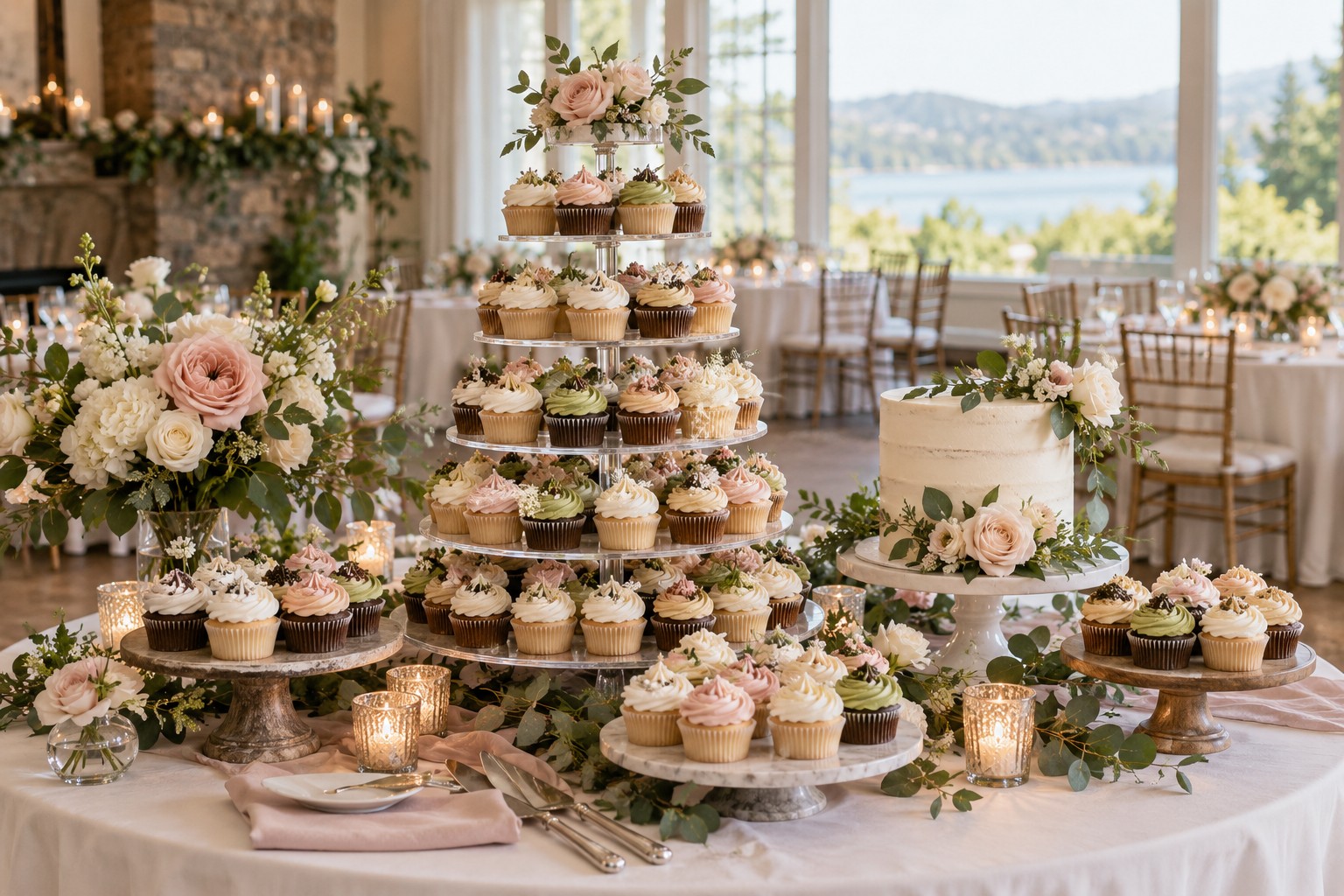
Wedding cupcake inspiration often starts with decoration: a flower piped in buttercream, a dusting of color, a topper, or a finish that catches the light. But looking across editorial galleries reveals another useful way to read the options. The display itself is part of the design. Cupcakes may be gathered into a formal tower, arranged around a small cutting cake, spread along a table, or grouped by flavor. Each arrangement tells guests how to approach the dessert and gives the room a different focal point.
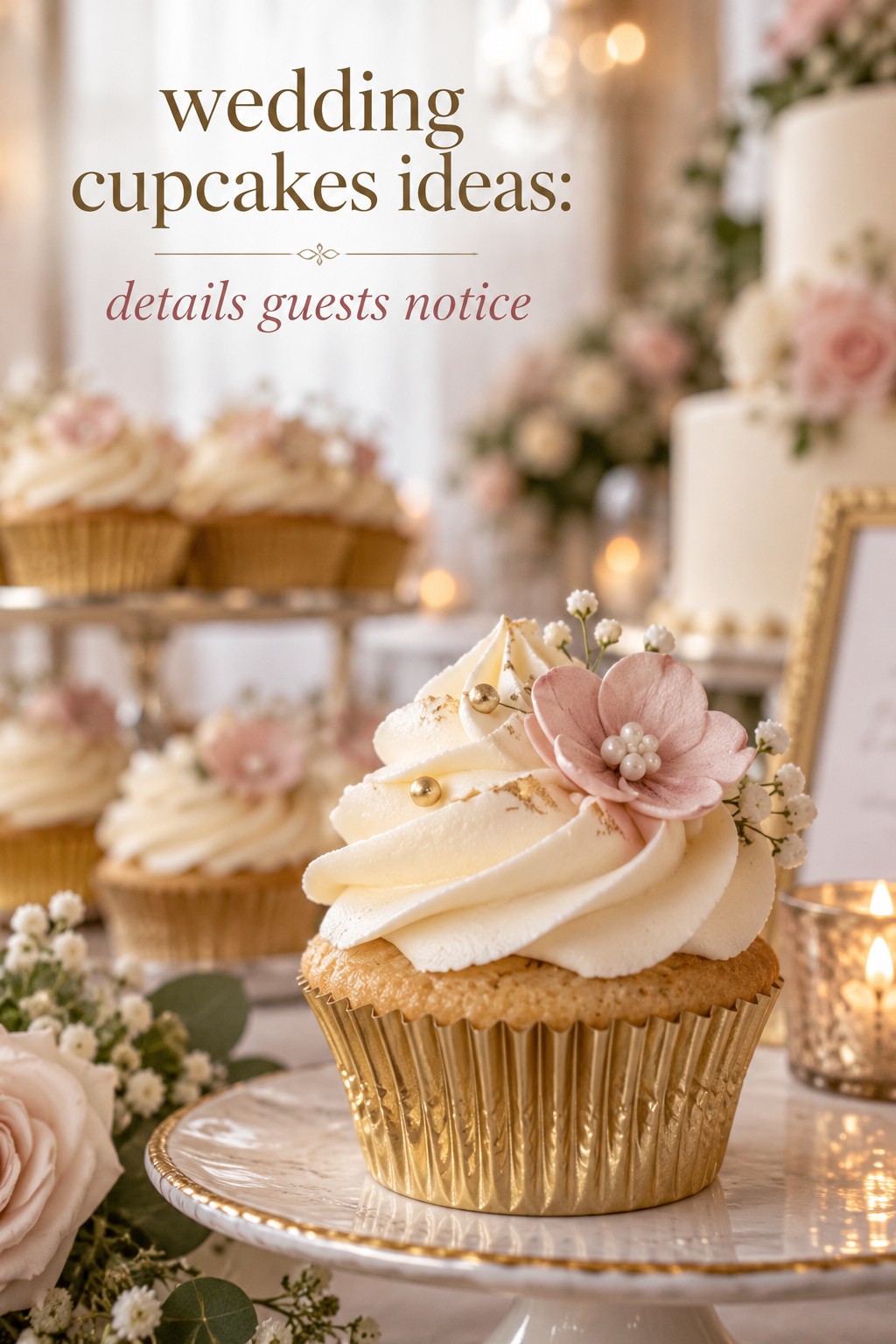
Some examples keep the cakes simple and let height do the work. Others rely on frosting details, edible accents, colored wrappers, or a theme-specific motif. Martha Stewart’s wedding cupcake gallery, for example, includes both gold-leaf finishes and piped floral designs, as well as flavor-grouped tiers and a small cake set above a cupcake tower. These are useful as individual choices rather than a checklist to copy: adding every decorative idea to one table can make the result feel crowded.
Your wedding look is only the beginning.
Keep your guest list, vendors, timeline, and every important detail together with Zarellea — so your day feels as considered as your style.
A second direction pairs cupcakes with a small cutting cake. This gives the couple a cake-cutting moment while keeping individual portions available for guests. The Knot’s examples show how a small cake can sit above a mixed cupcake display. Another direction treats the cupcakes as one station within a wider dessert table, where their wrappers and frosting can echo the table’s colors without requiring each one to carry a large topper.
These formats are not a ranking of what is newest or most popular. They are design tools. A display can feel current to you because it fits the room and has a clear point of view, not because it uses a particular stand or garnish. Start by noticing whether you are drawn to height, variety, clean lines, or a more relaxed spread, then choose details that support that preference.
Why the display format changes the guest experience
A cupcake display has two jobs. It should look considered from across the room, and it should make sense when guests walk up to it. A tall arrangement may be visible above a table setting, while a lower layout can make it easier to see several flavors at once. A small cake adds a ceremonial focal point, but the cupcakes still need a clear place to sit and a route for guests to reach them.
Think about the room before choosing a stand. Where will the dessert table sit? Will guests approach from one side or several? Is there space for a line to form without blocking a doorway, the dance floor, or another service area? These questions often matter more than whether a stand is gold, clear, wood, or ceramic. A visually striking option that crowds the table or is hard to reach will not feel as inviting in use.
Then decide how much choice you want to offer. A single flavor creates a uniform look and a simple display. A short selection gives guests variety while keeping labels and arrangement manageable. A larger variety can be appealing, but it asks more of the display: flavors need visible groupings, signs need to be easy to read, and staff or guests need a way to tell one cupcake from another. Avoid relying on color alone to identify flavors, since frosting shades may be subtle under venue lighting.
Serving style also affects decoration. A cupcake with a tall, delicate topper may photograph well, but it needs enough clearance and careful handling. Loose edible flowers can look soft and natural, yet any edible flower should be confirmed as safe and appropriate for food service with the baker. Small details such as a wrapper, a piped border, or a printed flavor card may give you the same sense of finish with less handling complexity.
For quantity planning, ask your baker or caterer how the cupcake count should change if you are also serving a cutting cake or other desserts. Guest count is a starting point, not a complete formula. The size of the cupcakes, the number of other sweets, the timing of service, and whether guests can take a second serving all affect the plan. Confirm the final number and service responsibilities with the people supplying and serving the food.
Four wedding cupcake display directions to adapt
1. The classic tiered tower
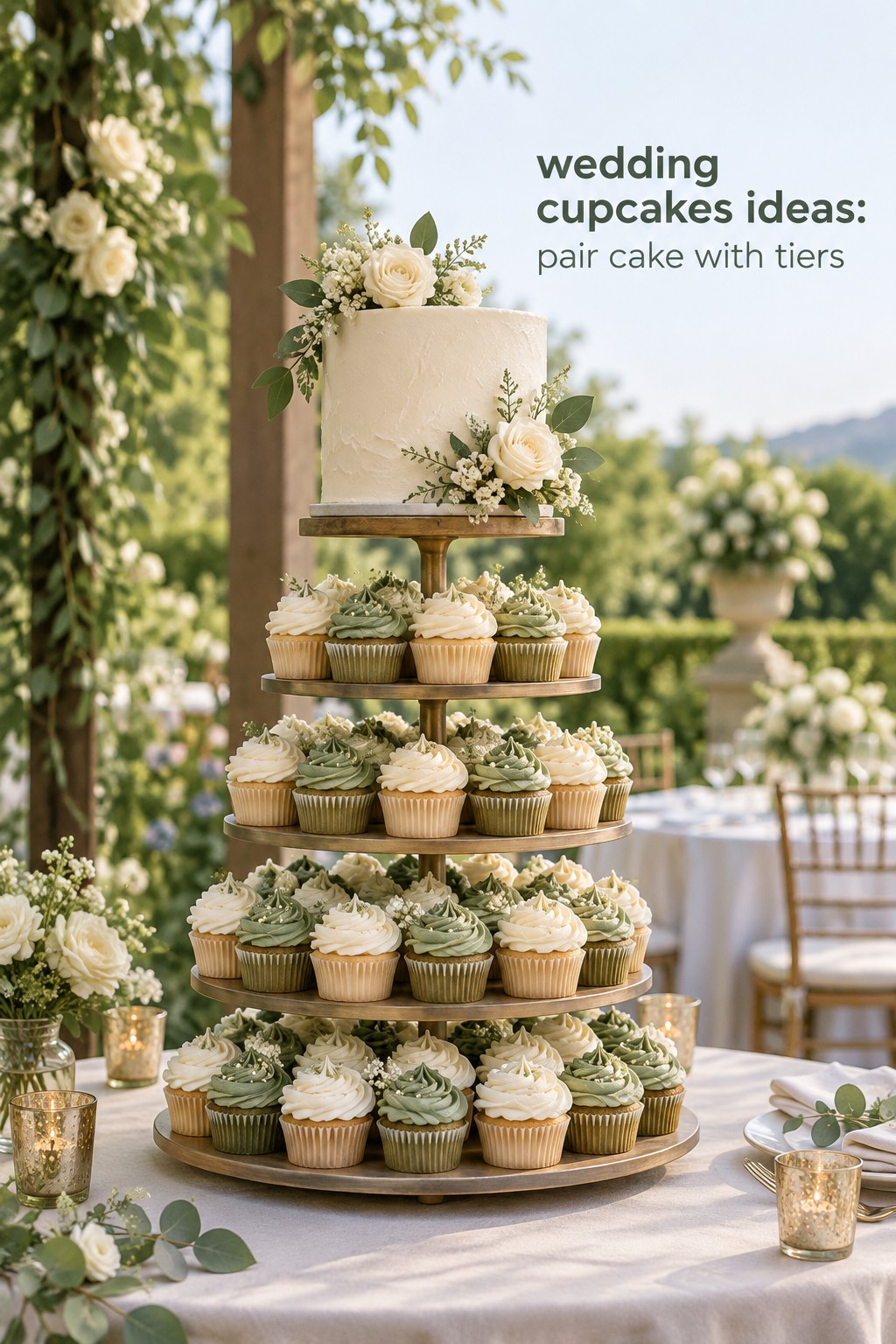
A tiered tower makes cupcakes read as one dessert centerpiece. It works especially well when you want a defined cake table and when the room has a natural focal point where guests can pause. Keep the silhouette simple, then decide whether the cupcakes should match or be grouped by flavor. Matching frosting creates a calm, unified surface. Separate flavor zones create visual variety and help guests scan the options.
If the tower will be tall, discuss stability, setup, and access with the baker or venue team. Reserve the top for a small cake only if the stand is designed to hold it and the team can assemble the display safely. Otherwise, a topper or floral detail can mark the center without adding another tier of cake. Leave enough space around the base for guests to take a cupcake without reaching across the entire arrangement.
2. A small cutting cake with cupcakes around it
This arrangement combines a recognizable cake-cutting moment with individually portioned desserts. Let the small cake be the visual anchor, then use cupcakes to form a deliberate ring, base, or neighboring display. The cupcakes do not have to imitate the cake exactly. They can share one color, piping detail, or flavor family so the combination looks connected without becoming a miniature copy of the centerpiece.
Consider what happens after the cake is cut. If the display will be moved or rearranged, decide who handles that transition and where the cupcakes go next. A small cake can be reserved for the ceremony or for a particular serving purpose, while cupcakes are offered separately. Clarify this plan with the caterer so the table does not become difficult to navigate during service.
3. A low tray or dessert-table spread
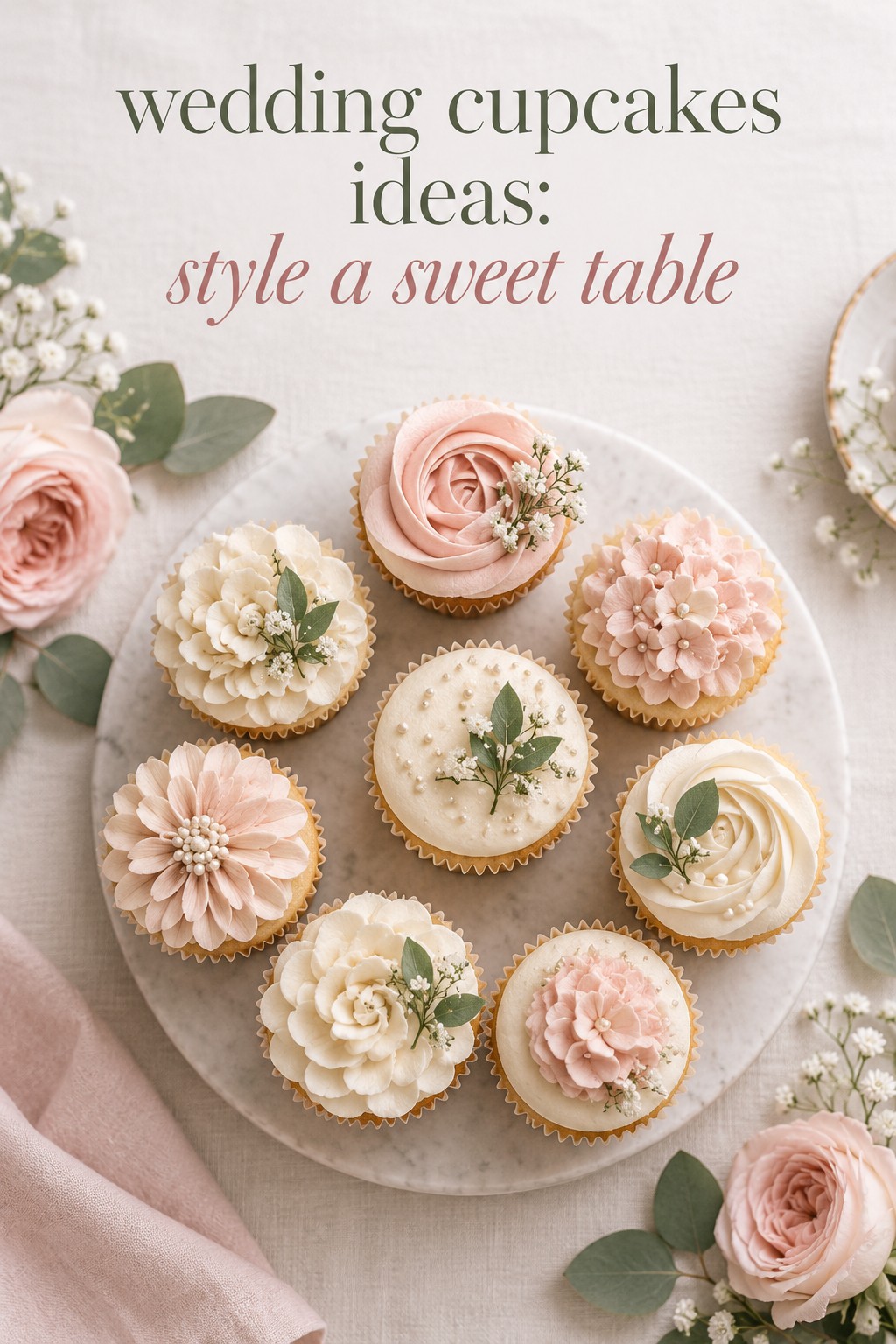
Low trays create a relaxed look and can work when you want cupcakes to sit among other sweets rather than rise above them. Use two or three tray heights or shapes to define the area, but keep the layout open enough that guests can see the options. A marble tray, wood board, or simple ceramic plate changes the mood without changing the dessert itself. If the table already has patterned linens, florals, or signage, choose quieter serving pieces.
A spread needs a clear edge. Without a tower to contain the cupcakes, the arrangement can drift into a cluster of unrelated plates. Use one visual anchor, such as a central tray, a consistent wrapper, or a repeated frosting color. Place labels near the corresponding group rather than at the far end of the table. Leave a small open area for plates or napkins if the venue is not providing a separate service surface.
4. A flavor-zoned station
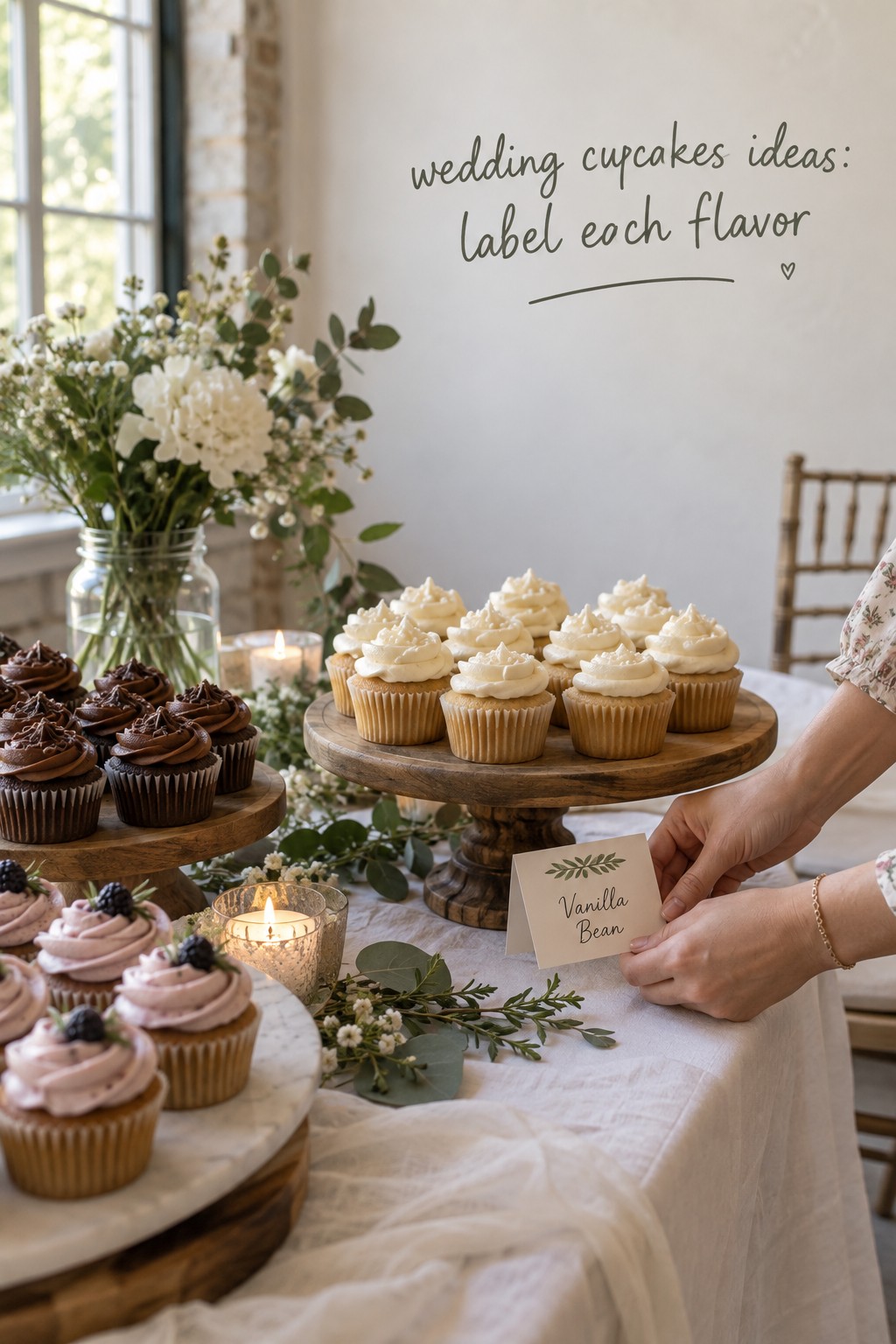
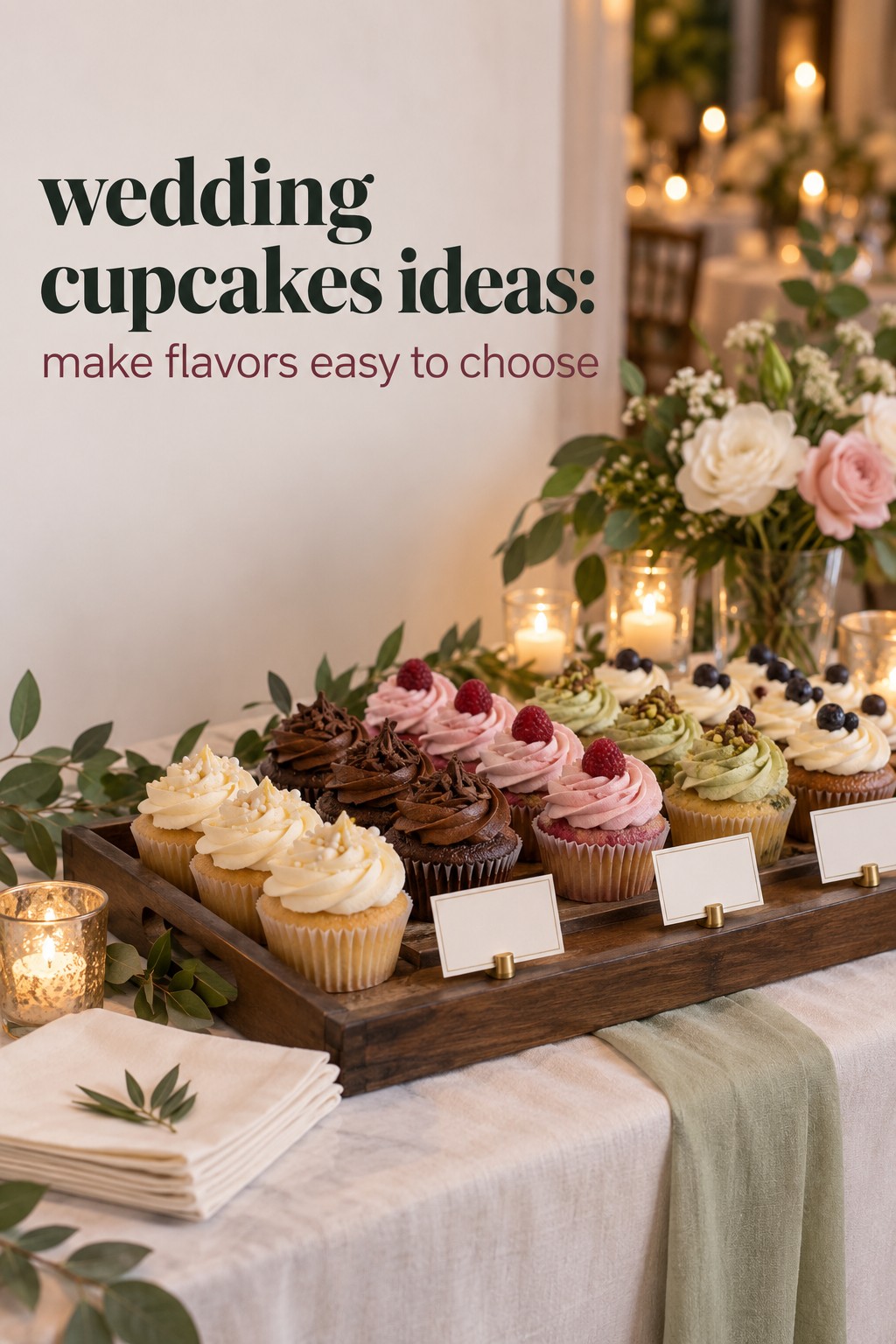
When guests can choose among several flavors, arrange the cupcakes in distinct groups rather than mixing every option together. A tier for each flavor is one possibility, but separate trays or rows can work just as well. Use a small card with the flavor name and any details guests may need to decide. Keep the cards short and readable, and place them where they remain visible after the first few cupcakes are taken.
Flavor zoning can be subtle. Each group might use the same wrapper and stand while the frosting color changes, or the display can stay visually uniform while labels do the identifying. If you want every flavor to have a different look, agree on a shared element such as piping style or wrapper color. That repeated detail keeps the table cohesive even when the cakes themselves vary.
Make flavors, frosting, and labels feel intentional
Build the dessert design from the flavor outward. Choose a short list that offers contrast in a way that makes sense for your celebration, then ask the baker how each flavor will appear once frosted and displayed. A familiar flavor can sit beside a more distinctive option. You do not need a novelty flavor for every group; a balanced selection is easier to label and easier for guests to understand.
Next, choose one visual rule. It might be a shared frosting color, a consistent wrapper, a repeated flower shape, or a simple finish such as a smooth swirl. A second detail can add personality, but too many unrelated finishes can make the cupcakes appear to come from different tables. If your wedding palette has several colors, select one or two for the desserts and let neutral frosting or wrappers provide breathing room.
Decoration should suit the cake and the setting. Buttercream flowers create a sculpted look; a smooth swirl can feel clean and understated; a small amount of metallic detail can add shine. Toppers can signal a theme, but the same message can sometimes be carried by the stand, signage, or table linens instead. Choose the element that will be easiest to see and maintain once the display is in place.
Labels are part of the visual system and part of the service. Give each flavor a clear name, and confirm with the baker or caterer what ingredient or dietary information guests should be able to access. Do not guess at allergy or dietary statements. The people preparing the food should verify what can be stated accurately. If there is not room for detailed cards, ask whether a nearby menu or separate information card can provide the necessary details.
Finally, look at the setup from a guest’s height and from across the room. Can a guest tell where the cupcakes are, see what choices are available, and reach them without moving decor? Does the display still look coherent if a few cupcakes have already been taken? A design that can withstand normal use will feel more complete than one that only works before the reception begins.
How to choose a cupcake look that will hold together
Use this sequence before approving a sketch or order. First, decide the role: cake replacement, companion to a cutting cake, or part of a larger dessert table. Second, choose the display format that fits the venue and guest route. Third, settle the number of flavors and how each one will be identified. Only then select frosting colors, wrappers, toppers, flowers, or serving pieces.
Ask for a simple diagram or written setup plan if several people are involved. It can note which cupcakes go on each tray, where the cutting cake sits, where flavor cards belong, and who places the decorations. This is especially useful if the baker delivers the cupcakes while venue staff style the table. Agree on what arrives assembled and what needs to be arranged on site.
A few common problems are easy to avoid. A stand can be too small for the planned count, so confirm its capacity rather than estimating from a photograph. A tower can hide the flavors on its upper or lower tiers, so test whether each section can be reached. A busy table can make the cupcakes disappear, so edit back ribbons, flowers, signs, and other objects until the cakes are still the focus. And multiple frosting colors should have a purpose, whether that is flavor identification or a deliberate palette.
Keep one or two details personal and let the rest support them. If a family recipe inspires a flavor, name it clearly. If the reception space has a strong architectural feature, let the dessert styling echo its shape or materials. If you love floral piping, make that the hero and simplify the stand. The display feels thoughtful when the details connect to a choice you made, not when every available idea is included.
Before the wedding, confirm delivery timing, display assembly, storage instructions, serving tools, labels, and who will refresh the table if needed. Ask the baker and caterer to coordinate directly on anything involving setup or food handling. That final practical check lets the design work as a real part of the reception, not only as a photograph.
Sources and methodology
This article draws on a page-level review of ten US search results for wedding cupcakes ideas. The reviewed pages include editorial galleries and display-focused inspiration roundups. Their examples informed the display formats and decorative choices discussed here. The recommendations about selecting a layout, keeping labels clear, and coordinating setup are planning guidance synthesized from those examples. They are not claims about a guaranteed trend or personal testing. For visual references, see Martha Stewart’s wedding cupcake gallery and The Knot’s wedding cake and cupcake ideas.
FAQ
How many cupcake flavors should a wedding have?
Choose a number that gives guests meaningful choice while staying manageable for display and service. Ask your baker and caterer to recommend a range based on guest count, other desserts, cupcake size, and how flavors will be labeled.
Can cupcakes replace a traditional wedding cake?
Yes. Cupcakes can be served as the main wedding dessert. If you also want a cake-cutting moment, pair them with a small cake and confirm how both items will be served.
How can a cupcake tower look less formal?
Use a stand that suits the venue, such as a simple wood or clear option, and soften the look with restrained flowers, a relaxed palette, or mixed cupcake sizes. Keep the arrangement stable and easy for guests to reach.
How do you keep wedding cupcakes from looking mismatched?
Repeat one or two design details across every flavor, such as the wrapper, frosting style, or color palette. Let flavor labels explain the differences instead of giving each cupcake an unrelated decoration.
Should wedding cupcakes be labeled by flavor?
When guests can choose among flavors, clear labels make the display easier to use. Confirm names and any ingredient or dietary details with the baker or caterer, and place each label beside the cupcakes it describes.
Can you combine cupcakes with a wedding cake?
Yes. A small cutting cake can sit beside or above a cupcake arrangement. Confirm that the display can support the cake and decide in advance how both desserts will be handled after the cutting moment.
What should go on a wedding cupcake display table?
Keep the essentials close: cupcakes, readable flavor labels, and any serving items the venue requires. Add a stand or a small amount of decor only when it helps define the display without blocking access.
When should the cupcake display be set up?
Coordinate the delivery and setup window with your baker and venue team. Follow the baker’s storage and handling instructions, and confirm who will assemble the display and place labels before guests arrive.