Simple Wedding Ideas: Choose the Celebration That Fits
Simple wedding ideas can point in very different directions. One couple imagines a quiet ceremony and a long dinner with their closest people. Another wants a full guest list but fewer formal moments. A third loves an elegant setting with almost no decoration. All three are asking for simplicity, yet they would make different decisions about the venue, schedule, service, and design.
The useful first step is to choose what you want to make simpler. Is it the number of moving parts, the social pressure of a tightly programmed reception, or the visual look of the day? This guide compares three celebration formats and shows which ideas work inside each. You can borrow individual details, but the clearest result comes from choosing one main direction before collecting more inspiration.
First decide what simple should mean for your wedding
Simplicity is a planning goal, not one fixed aesthetic. A white tablecloth and a single vase may look minimal, while the couple still manages two venues and a long list of vendors. A colorful restaurant dinner may look lively, while the schedule is genuinely easy to follow. Identify the friction you most want to remove before deciding how your wedding should look in photographs.
If your priority is fewer logistics, focus on location changes, setup and cleanup, vendor handoffs, and the number of separate events. One venue for the ceremony and meal may remove a transfer, but only if it can host both comfortably. A restaurant might handle food, tables, and service together, but you still need to ask about ceremony space, privacy, music, timing, and access. The simplest format is the one with fewer unresolved handoffs in your actual circumstances.
Your wedding look is only the beginning.
Keep your guest list, vendors, timeline, and every important detail together with Zarellea — so your day feels as considered as your style.
If your priority is a relaxed atmosphere, look at the social rhythm. You might keep the same number of guests and replace a sequence of introductions, games, and scheduled dances with an unhurried meal and open conversation. That can feel easier for people who dislike performing, but it still needs a clear beginning, food plan, and ending. Guests should not have to guess when the ceremony starts or whether a meal is included.
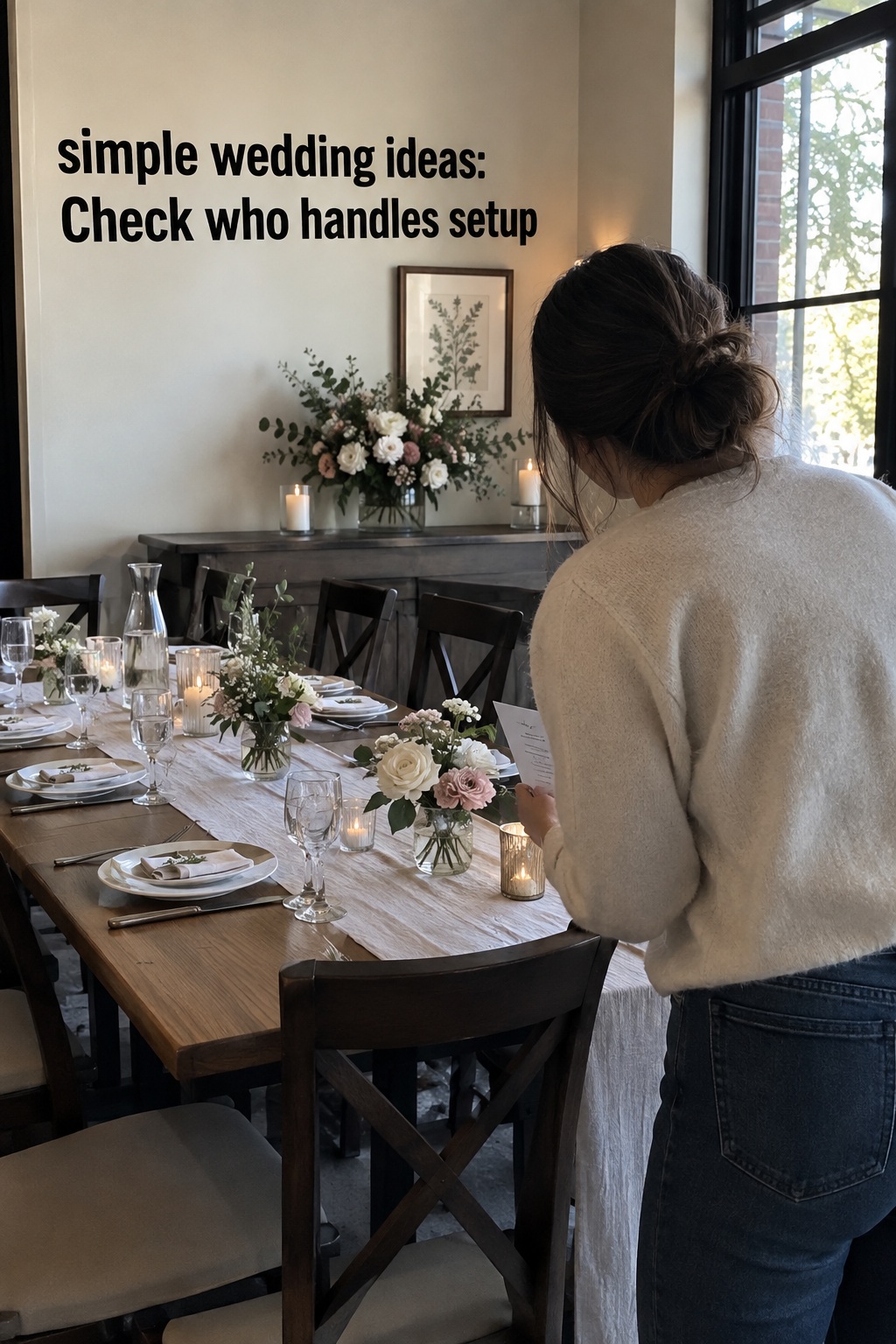
If your priority is a calm visual style, edit the number of competing features. A strong venue, one repeated color, a simple floral shape, and a well-set table can be enough. Visual restraint does not automatically reduce coordination. Someone still needs to arrange flowers, place candles if allowed, check linens, and clear the space. Choose fewer details because you love how they look, not because every small object seems effortless.
Write a one-sentence definition before making more choices: “We want a wedding that feels simple because…” Then finish it with something concrete, such as “all guests stay in one place,” “we have time to talk to everyone,” or “the room feels uncluttered.” Use that sentence to judge every new idea. If an addition does not help that outcome, it can wait.
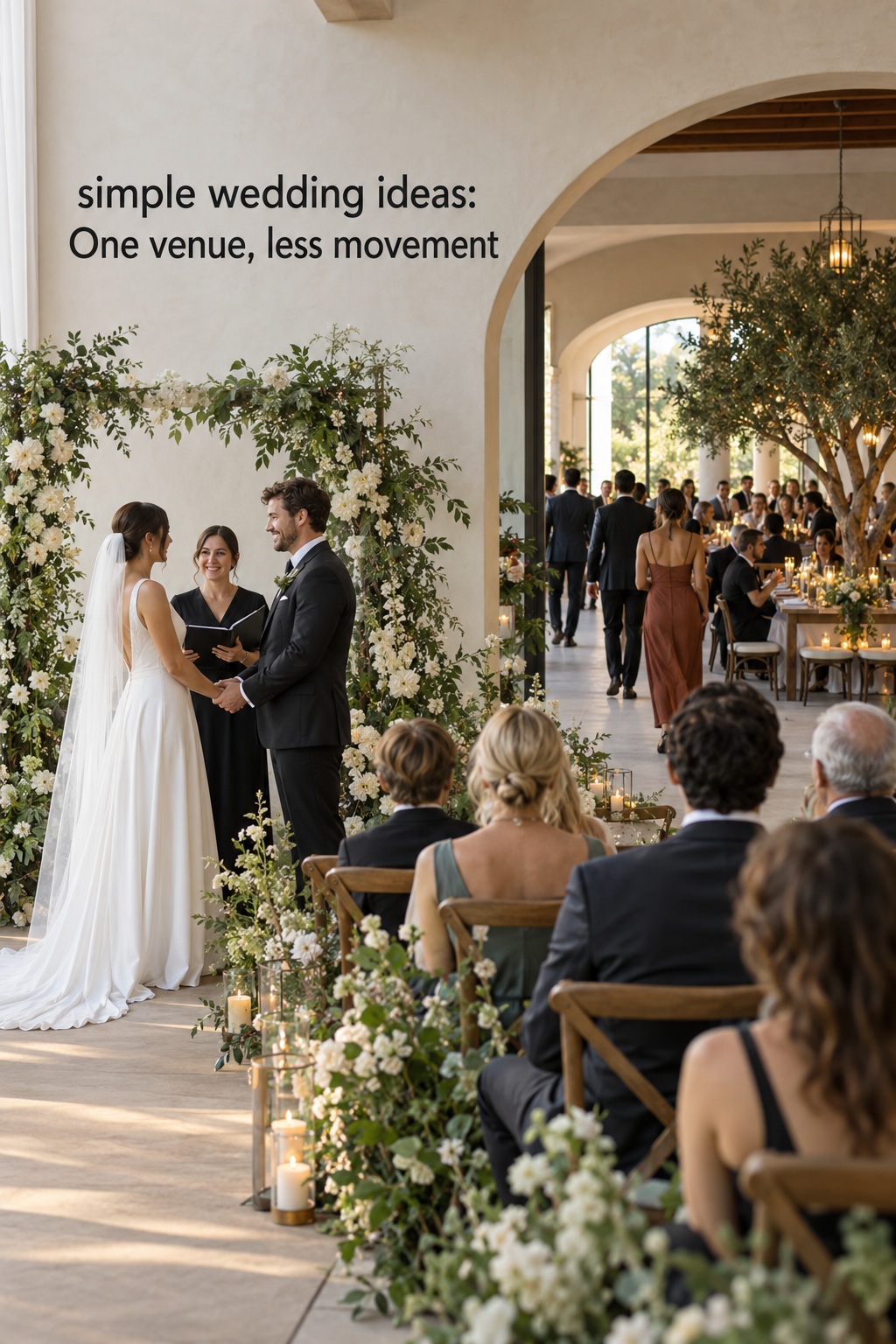
Compare three ways to keep the celebration simple
There is no winner for every couple. These three formats differ in guest count, schedule, setting, and the kind of work they ask you to do. Treat them as complete plans rather than unrelated styling moods. The Knot’s guide to casual weddings shows that an informal gathering can still feel thoughtful and celebratory, which is useful when you are deciding how much tradition to keep.
Option one: A small ceremony and restaurant dinner
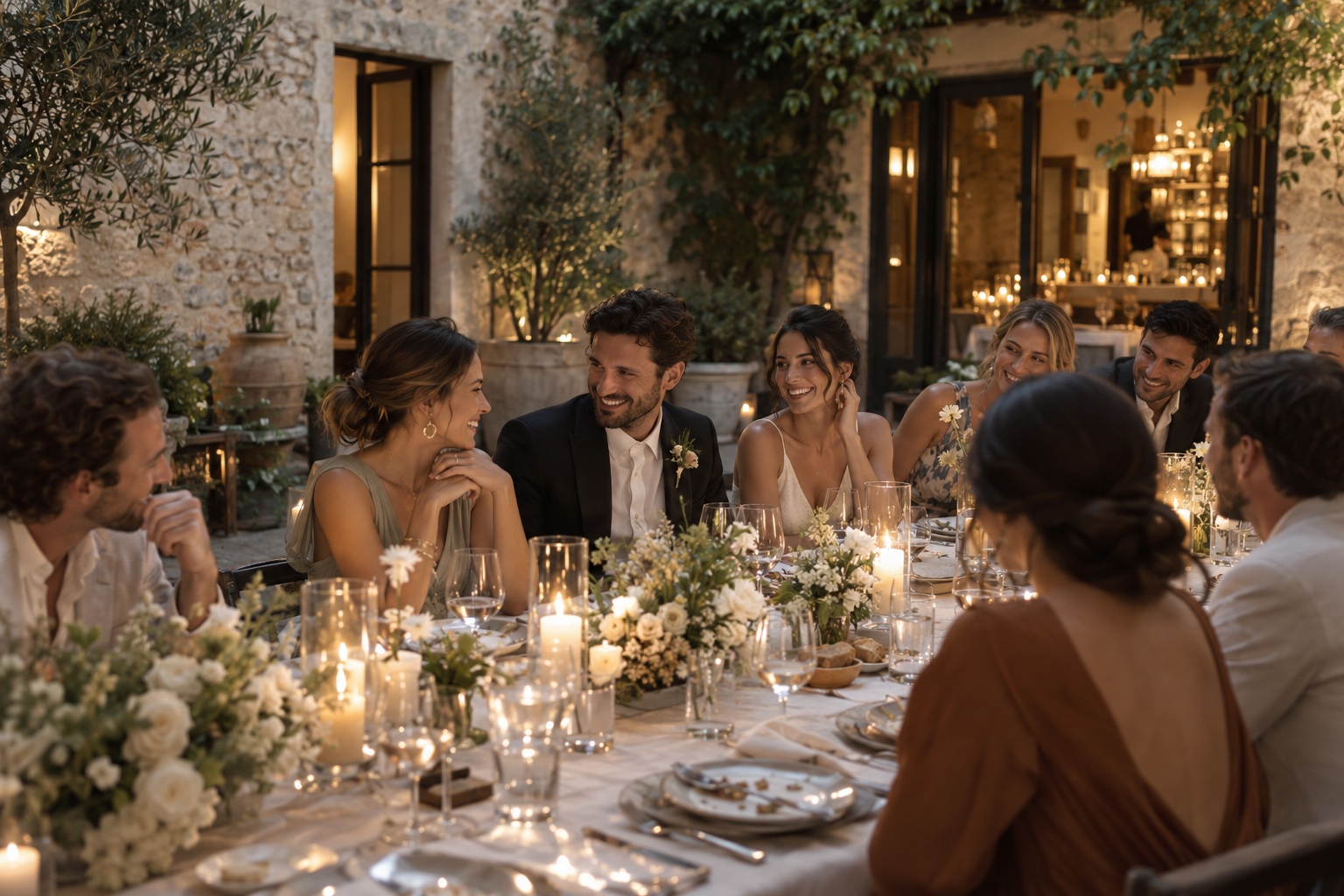
This format gives the day a clear center: vows followed by a meal. It suits couples who want conversation, a familiar social setting, and a short list of people they can actually spend time with. The ceremony might happen at the restaurant if the space allows it, or at a nearby location with one simple transfer. The dinner can use a private room, one long table, or several small tables depending on the group.
The best simple wedding ideas here are tactile rather than theatrical. Put a handwritten note at each place, choose one shared toast, or ask the restaurant to serve a favorite dish. A small cake or dessert can mark the occasion without becoming a separate production. If the room already has character, a few low flowers and candles where permitted may be enough. Let the food, voices, and table setting carry the atmosphere.
The main benefit is concentration. Fewer guests and one meal let you spend attention on the people present. The tradeoff is that a small invitation list requires care. Decide who will attend the ceremony and dinner together, and explain the plan consistently. A later reception for a larger group can be lovely, but it becomes a second event with its own planning and communication. Do not choose this option on the assumption that two celebrations will take less work than one.
Ask the restaurant about the length of the booking, privacy, music, speeches, dessert, and whether the room can be arranged for a ceremony. Check what the service team already provides and what you must bring. If you want photographs before dinner, schedule a short portrait window that does not leave guests waiting without a clear plan. The value of this format is its simple flow, so protect that flow.
Option two: One venue and an edited traditional program
This option keeps a broader guest list and familiar wedding shape, while reducing transitions and optional activities. Guests arrive, attend the ceremony, move into drinks, share dinner, and celebrate in the same property or building. You can keep the parts that matter to you, such as a first dance or family speeches, and skip rituals that feel like obligations. A single venue does not guarantee ease, but it gives the day one operational home.
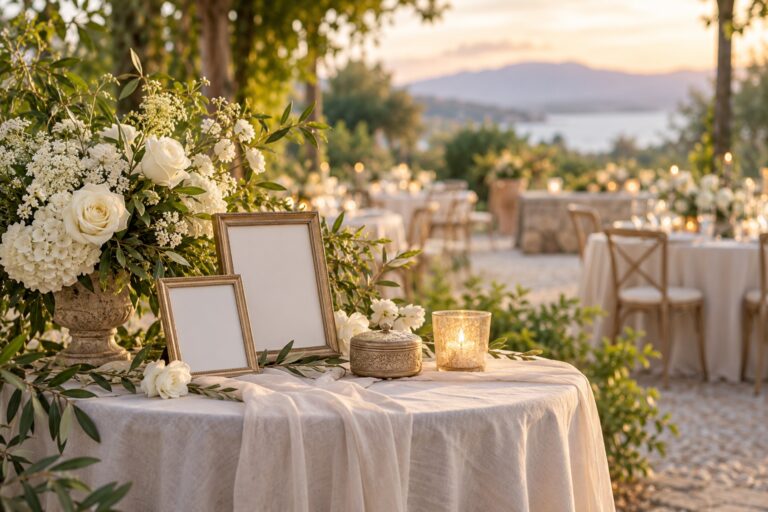
Use design ideas that work across several moments. Ceremony flowers might be moved to the dining area if the florist and venue can do it safely. One clear palette can guide stationery, bouquets, and tables without requiring every object to match. A welcome sign can give guests direction rather than merely repeat a decorative phrase. Each choice should have a purpose or carry a story.
The schedule needs an honest edit. Write down every formal moment you are considering: entrance, toasts, cake cutting, dances, bouquet toss, exit, and any family or cultural tradition. Mark the ones you would miss if they were absent. Keep those, then arrange them in a sequence that lets guests eat and spend time together. You do not need to fill every pause. Conversation is part of the celebration.
The main tradeoff is scale. A larger group still needs seating, food service, clear timing, and someone to coordinate transitions. Fewer decorations will not replace those jobs. This format works best when the venue and vendor team can carry the practical load while the couple makes fewer program decisions. Ask what the venue package actually covers, and confirm who takes responsibility for moving items or cueing each transition.
Option three: A relaxed party with a short ceremony
This direction starts with the feeling of a gathering rather than a formal reception. The ceremony may be brief and personal, followed by a cocktail-style party, a family-style meal, or a casual dinner. It suits couples who want mingling, music at a comfortable level, and fewer staged moments. The clothes and decor can be polished or relaxed; the defining feature is an easy social rhythm.
Give guests enough structure to relax. Tell them when to arrive, where to gather, when vows will happen, and what food to expect. If there is no seated dinner, say so clearly on the invitation or wedding website and make the food plan appropriate for the time of day. If you do not want dancing, choose another natural focus such as a long meal, a toast, a live musician, or simply space to talk. A party is not missing something just because it omits one conventional element.
Simple styling works well when it echoes the venue. A neighborhood restaurant might need only flowers on the bar and a thoughtful table plan. A home gathering may benefit from a clearly marked welcome point and enough seating. A gallery or loft can use its own architecture as the backdrop. Make the guest route and service plan clear before adding a photo corner or extra activity.
The risk is mistaking casual for unplanned. Someone must still manage timing, food, accessibility, vendor arrival, and the change from ceremony to party. Decide who will give cues and solve questions on the day. It may be a coordinator, venue lead, or trusted helper with a narrow role. The couple should not be answering every operational question while greeting guests.
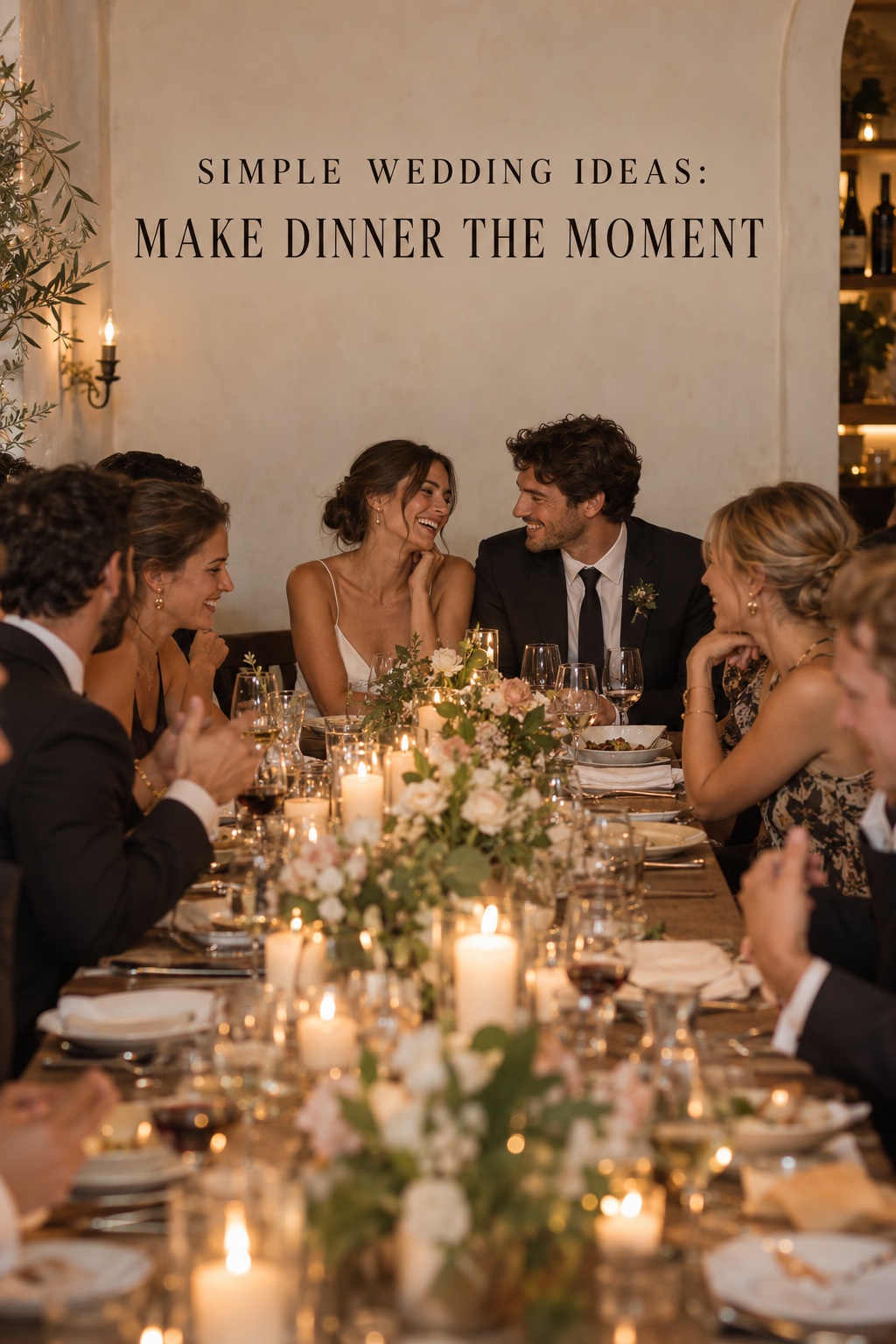
Choose simple wedding ideas by your main priority
Once you pick a format, select ideas that support it. This section is a menu of combinations, not a request to use everything. Choose one or two from the priority that matters most, then check whether each fits your venue, guest group, and people helping with setup.
If you want fewer moving parts
Keep the ceremony and reception close, or choose a venue that can host both. Limit the number of separate setup areas: one welcome point, one ceremony focal point, and one dining space may be enough. Pick a service style the venue already handles well rather than inventing a complex menu. Ask vendors to describe their handoffs in plain language so you know who moves flowers, directs guests, and handles the end of the night.
Avoid turning simplicity into a list of do-it-yourself jobs. Making twenty small favors, assembling flowers the morning of the wedding, or transporting your own furniture can create more work than a single professionally handled detail. If you enjoy a hands-on project, choose one that can be finished ahead of time and delivered as a complete item. A personal printed menu or a meaningful photo display can add character without requiring you to manage the whole room.
If you want more time with your guests
Reduce formal interruptions. Consider one combined toast period rather than speeches scattered through dinner. Keep couple portraits focused, with the photographer’s input, so they do not consume the entire social hour. Seat people in a way that encourages conversation, whether that means one long table for a small group or clear clusters for a larger celebration.
Choose a food plan that matches the interaction you want. A seated meal creates a shared pause; stations allow movement; family-style service can encourage conversation at the table. Each has staffing and venue requirements, so ask what is realistic before deciding from a photograph. If your priority is seeing everyone, build time for that rather than adding an activity that pulls you away from them.
If you want a clean, intentional look
Choose one visual anchor for each main space. At the ceremony, it could be the room’s architecture, a simple floral pair, or the view outside a window. At dinner, it could be the table shape, linen, or one repeated flower. At the welcome point, it could be clear typography and a small arrangement. The goal is to let the eye settle instead of asking every object to be a statement.
For centerpieces, a single flower type, a limited color family, or a few small vessels can create repetition without bulk. Martha Stewart’s simple centerpiece examples show several interpretations of this approach. Discuss scale with the florist and venue so arrangements suit the table and do not block conversation. Keep one element expressive if you like, then let the rest support it.
Your outfits can follow the same idea without forcing everyone into identical styling. Pick a silhouette or detail that feels like you, then make sure it works for the venue and the way you plan to move. A clean dress, tailored suit, or small accessory can look considered without a stack of changes. One comfortable outfit that you enjoy wearing through the meal may be more useful than multiple looks that require a private room and schedule breaks.
If you want the ceremony to feel personal
Keep the structure clear and make one or two elements unmistakably yours. A short reading, a meaningful song, a family object, or vows written in your own voice can carry more feeling than adding several rituals only because they appear on a template. Talk with your officiant about the ceremony length and order, then tell photographers and musicians about any moments that matter especially.
Simplicity also leaves room for guests to understand what is happening. Use a program only if it helps explain a tradition or the sequence. If the ceremony is short and familiar, a welcoming introduction may do the work. Consider whether the first rows have a good view and whether anyone needs seating assistance. A personal ceremony is created through attention, not just fewer words.
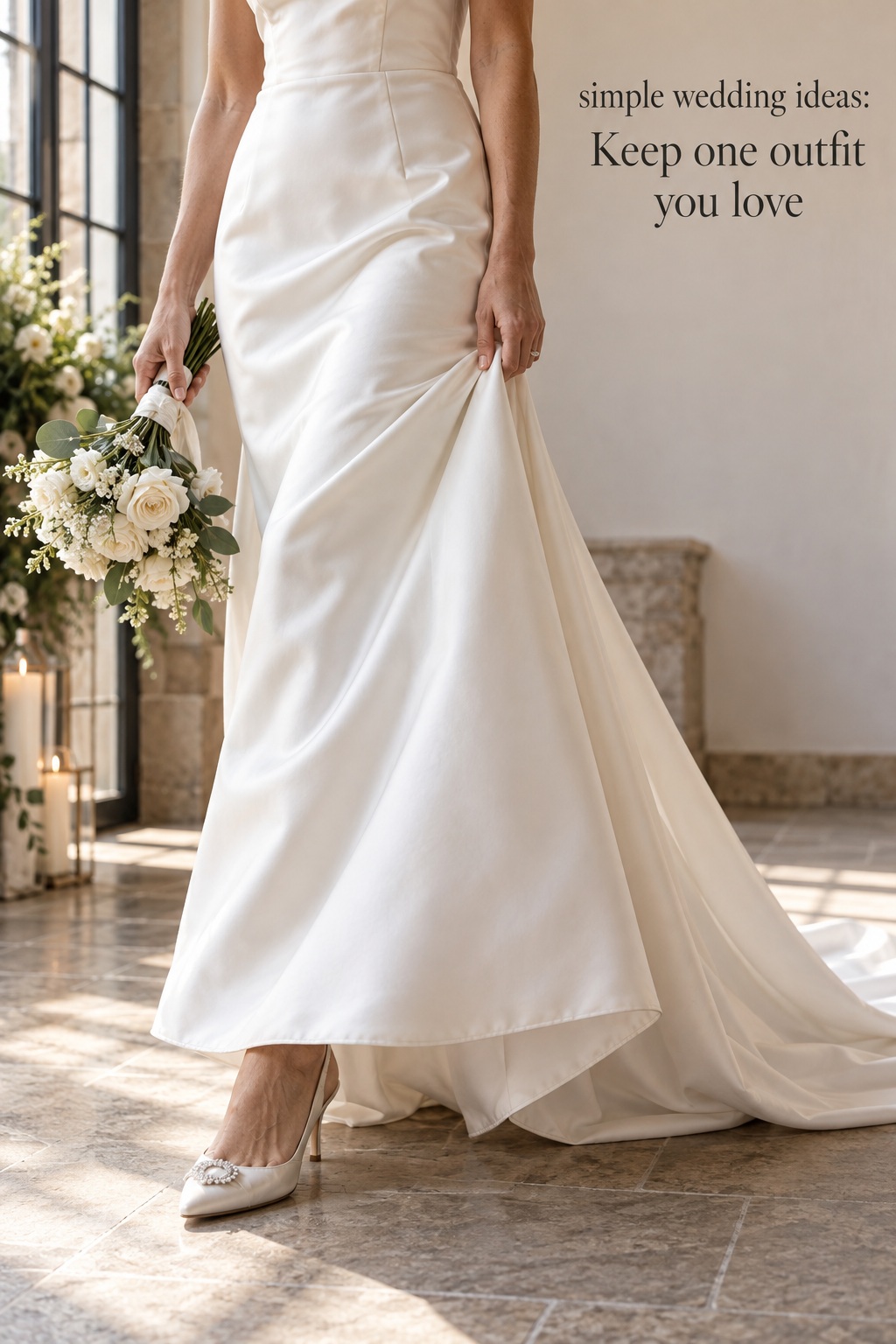
The tradeoffs that make simple weddings less simple
The first common mistake is choosing a small guest list before deciding what “small” means for your relationships. A smaller group may make the room more intimate, but the invitation decisions can be emotionally demanding. Set a clear rule together, then apply it consistently. If you want a separate larger party, plan its date, food, and invitation language as its own event instead of treating it as an afterthought.
The second mistake is using minimal decor to compensate for a poor fit between venue and event. A space with strong character may need little styling. A bare room may need lighting, furniture, or a focal point before one vase can feel intentional. Visit the venue at the time your wedding will happen if possible, and ask what is included. Simple visuals work when the underlying room, seating, and light support them.
The third mistake is leaving out information because the gathering is casual. Guests still need the address, arrival time, dress guidance if the setting is unusual, food expectations, and any transport or accessibility details. If the reception begins after a private ceremony, say exactly which part they are invited to. Clear communication is one of the easiest ways to make a low-key celebration feel welcoming.
The fourth mistake is assuming fewer traditions mean no timeline. A light schedule is still a schedule. It should identify the ceremony, food service, any speeches, and the end of the event, plus who will cue each. Leave generous open time between those anchors. This keeps the day from feeling overproduced while preventing important moments from getting lost.
Finally, do not borrow details from all three formats without checking how they work together. A restaurant dinner, outdoor ceremony, live band, self-service bar, homemade floral design, and large after-party might each be appealing, but together they introduce several locations, teams, and setup jobs. Return to your one-sentence definition of simple. Keep the combination that supports it and release the rest.
The best simple wedding ideas make room for the people and moments you care about. They do not have to produce a plain wedding or a tiny one. Choose a format that matches the scale of your guest group, edit the program with intention, and let a few details carry the visual story. When a decision reduces friction and adds meaning, it belongs. When it only adds another task, it is optional.
Sources and methodology
This article draws on a page-level review of ten US wedding planning and idea pages covering casual celebrations, small weddings, minimalist styling, reception alternatives, and guest communication. The three-format comparison is an editorial synthesis meant to help couples decide which choices fit their own circumstances. Confirm venue services, menu timing, ceremony requirements, accessibility, and vendor responsibilities with the relevant professionals before finalizing a plan.
FAQ
What are the easiest simple wedding ideas to start with?
Choose the ceremony and reception format first, then remove one unnecessary location change or formal activity. Use the venue’s strongest feature as a visual anchor and pick a food plan the service team already knows how to deliver. These choices affect the whole day more than adding or removing tiny decorations.
Does a simple wedding have to be small?
No. A full guest list can still have a simple flow when the ceremony and reception share a venue, the program has only a few formal moments, and responsibilities are clear. A small wedding can also be complicated if it involves several locations or events. Define which kind of simplicity you want.
How can we make a simple wedding feel special?
Choose one or two personal details with a real connection to you, such as a favorite meal, meaningful reading, family object, or distinctive table setting. Give guests a clear welcome and enough time together. A focused detail tends to stand out more than many unrelated additions.
Is a restaurant wedding simpler than a traditional venue?
It can be if the restaurant provides the room, meal, tables, and service you need in one place. Ask about privacy, ceremony space, timing, music, speeches, and decor rules. If those needs require many outside arrangements, another venue may be easier for your particular plan.
Can we skip dancing at a simple wedding?
Yes. Plan another natural rhythm, such as a long dinner, conversation, a short toast, or music that sets the mood without turning into a dance program. Tell the venue and any musicians what you want the reception to feel like, and give guests a clear sense of when the event ends.
What decor has the biggest effect with the fewest pieces?
Start with a strong ceremony focal point, a finished table setting, and clear welcome or direction information. Use one repeated flower, material, or color to connect them. Check the actual space before buying anything because a beautiful room may need very little, while a bare one may need more foundational work.
Should we do the decorations ourselves to keep things simple?
Only if the project is enjoyable and can be finished well before the wedding. Every handmade item needs materials, transport, setup, and cleanup. Choose one manageable project and assign day-of handling to someone who has agreed to it. Do not make the couple the installation team.