Black Dress Wedding Guest Looks for Every Venue
The black dress wedding guest question sounds simple until the invitation arrives with a specific dress code, a venue clue, and a ceremony time that changes everything. A black dress can feel timeless, polished, and easy to style, yet many guests hesitate because they are trying to solve several problems at once: Is black appropriate, will it suit the setting, and how do you make it feel celebratory rather than severe?
That uncertainty is understandable. A candlelit ballroom reception asks for a different kind of black dress than a sunny garden ceremony, and a beach wedding creates different comfort concerns than a church service followed by an evening dinner. Fabric, length, sleeve choice, accessories, and even outerwear all affect whether the final look feels elegant and event-appropriate.
This guide approaches the issue like a wedding stylist would: by solving the outfit challenge through dress code logic, venue awareness, silhouette selection, and practical styling decisions. Whether you are searching for a black maxi, a refined midi, a satin halter dress, or a luxury black lace dress for romantic evening receptions, the goal is the same—looking sophisticated while feeling comfortably dressed for the celebration in front of you.
Why choosing a black dress for a wedding can feel surprisingly complicated
The difficulty usually comes from trying to balance elegance with context. Black is widely used in occasionwear, evening dress, cocktail dress, and formal wear, but weddings are not one-note events. A guest may move from an afternoon ceremony into a late reception, from an outdoor terrace into an air-conditioned ballroom, or from a semi-formal gathering to a clearly stated black-tie wedding.
Your wedding look is only the beginning.
Keep your guest list, vendors, timeline, and every important detail together with Zarellea — so your day feels as considered as your style.
Comfort also matters more than many shoppers expect. The right black dress should photograph well, allow movement through a long day, and suit the season. Chiffon and crepe can feel lighter for warmer settings, while velvet or richer satin textures make more sense when the atmosphere is formal or the weather turns cooler. Practicality enters the picture too: heel choice changes on grass, sleeve length matters in a church or evening venue, and layering can make or break the outfit once the temperature drops after sunset.
The real solution is not simply “wear black” or “don’t wear black.” It is choosing the right black dress for the exact wedding environment.
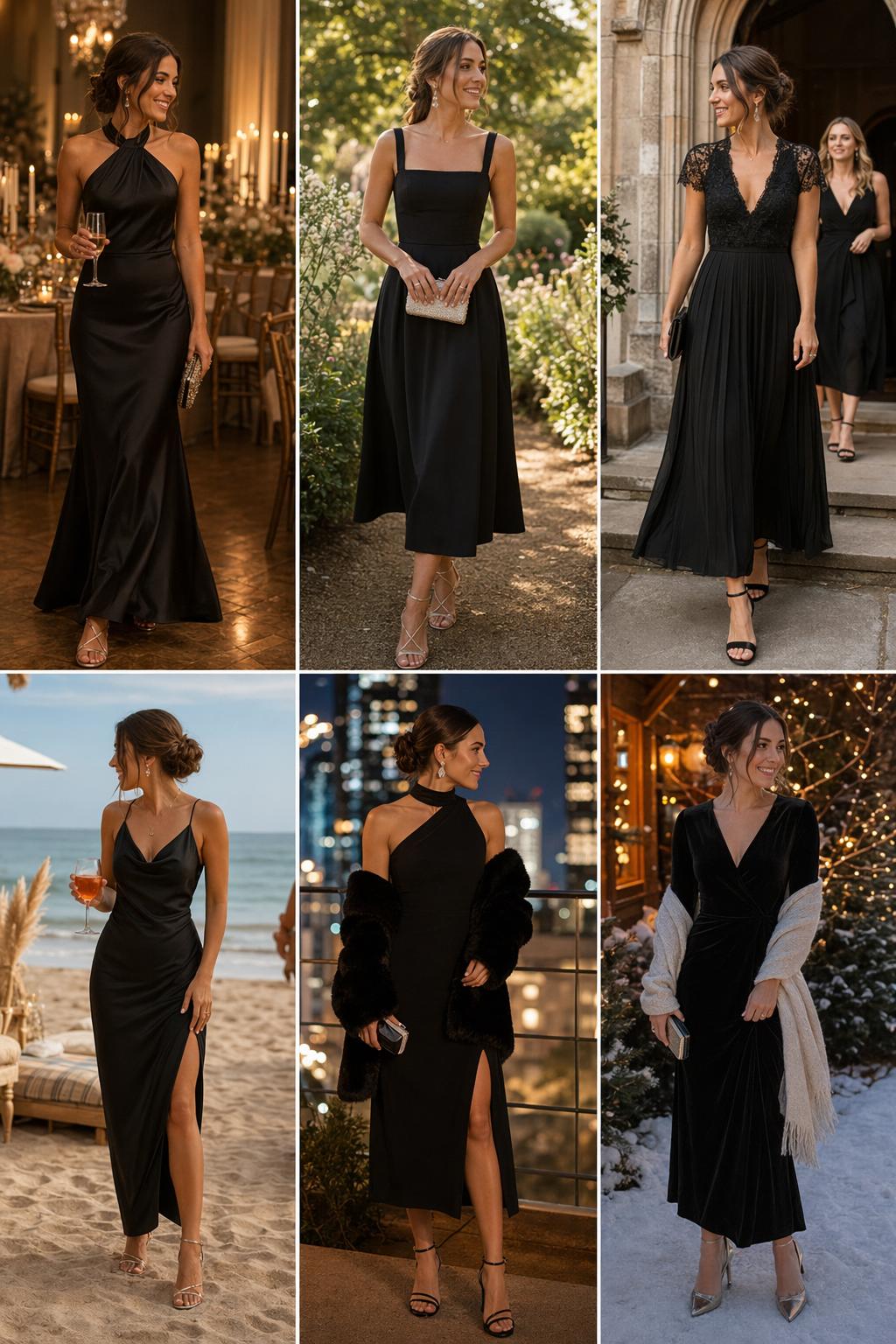
The styling principles that make a black wedding guest dress work
A polished wedding guest look starts with understanding the relationship between dress code, silhouette, fabric, and venue. Black can feel soft and romantic, sleek and modern, or dramatic and formal depending on how those elements come together. The most successful outfits are usually the ones that treat black as a foundation and then adjust the details around it.
- Match the dress length to the event formality: maxi and longer silhouettes generally read more formal, while midi and knee-length styles can bridge cocktail and semi-formal settings.
- Let fabric do some of the work: satin, lace, velvet, crepe, chiffon, and sequin detailing all shift the mood of a black dress.
- Use accessories to soften or elevate the look: metallic jewelry, heels, clutches, and wraps can make black feel festive rather than flat.
- Consider movement and comfort: weddings involve standing, walking, sitting, dining, and dancing, so the dress should function beyond the first impression.
- Read the venue closely: ballroom, garden, beach, church, city wedding, and outdoor terrace settings all ask for slightly different styling choices.
One of the most helpful mindset shifts is to stop treating black as a single aesthetic. A black lace midi in a garden setting, a crepe sheath for a city ceremony, and a velvet maxi at a winter reception are all different answers to the same question.
Dress code first: how to decode the invitation before you shop
Black-tie, formal, and semi-formal do not ask for the same black dress
For a black-tie wedding, black naturally fits the mood. This is where a floor-grazing maxi, a refined gown, or an especially elevated silhouette in satin, velvet, lace, or sequin detail makes sense. Evening reception lighting tends to flatter richer textures, so fabrics with depth and polish feel especially appropriate.
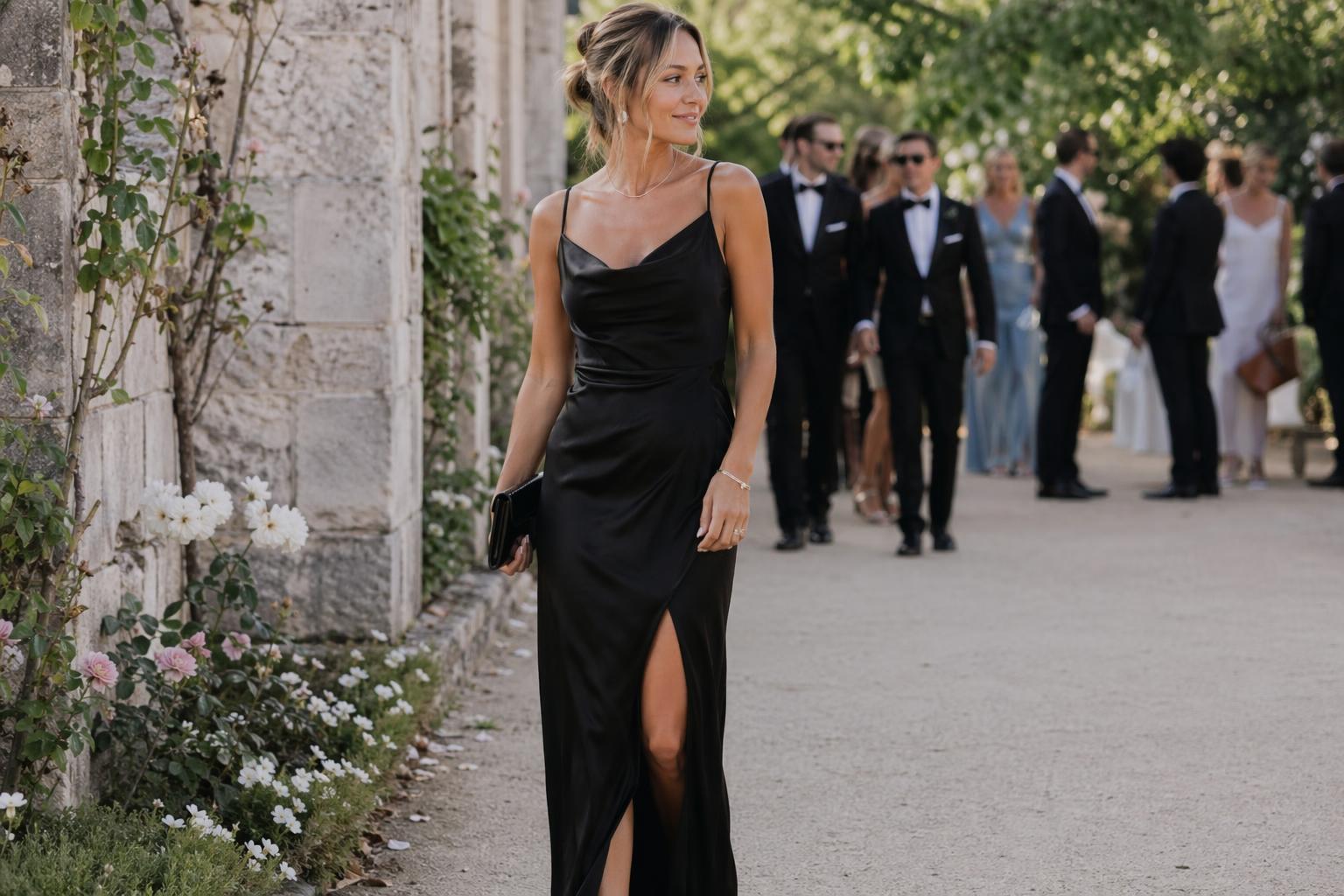
Formal weddings still welcome sophistication, but they leave room for slightly more flexibility. A sleek midi in crepe, a longer cocktail dress, or a minimalist satin halter dress can all work well, especially for a city wedding or a hotel ballroom. The mood should still feel considered and elegant, just not necessarily as dramatic as strict black tie wedding dressing.
Semi-formal celebrations often create the most uncertainty, because guests want to look special without appearing overdressed. Here, a black midi, a knee-length cocktail silhouette, or a softly structured fit-and-flare usually feels balanced. The styling should feel lighter, especially for daytime weddings or outdoor venues.
Venue clues matter as much as the dress code
A hotel ballroom can carry more glamour than a beach ceremony, even if both are technically formal. A church setting may encourage more coverage through sleeve choice, neckline, or a wrap. A garden wedding asks for movement, breathable fabric, and shoes that can handle outdoor ground. An outdoor terrace often needs a layer for the evening, while a city wedding can support sharper lines and modern silhouettes.
If the invitation language feels vague, the venue is often the clearest styling guide you have.
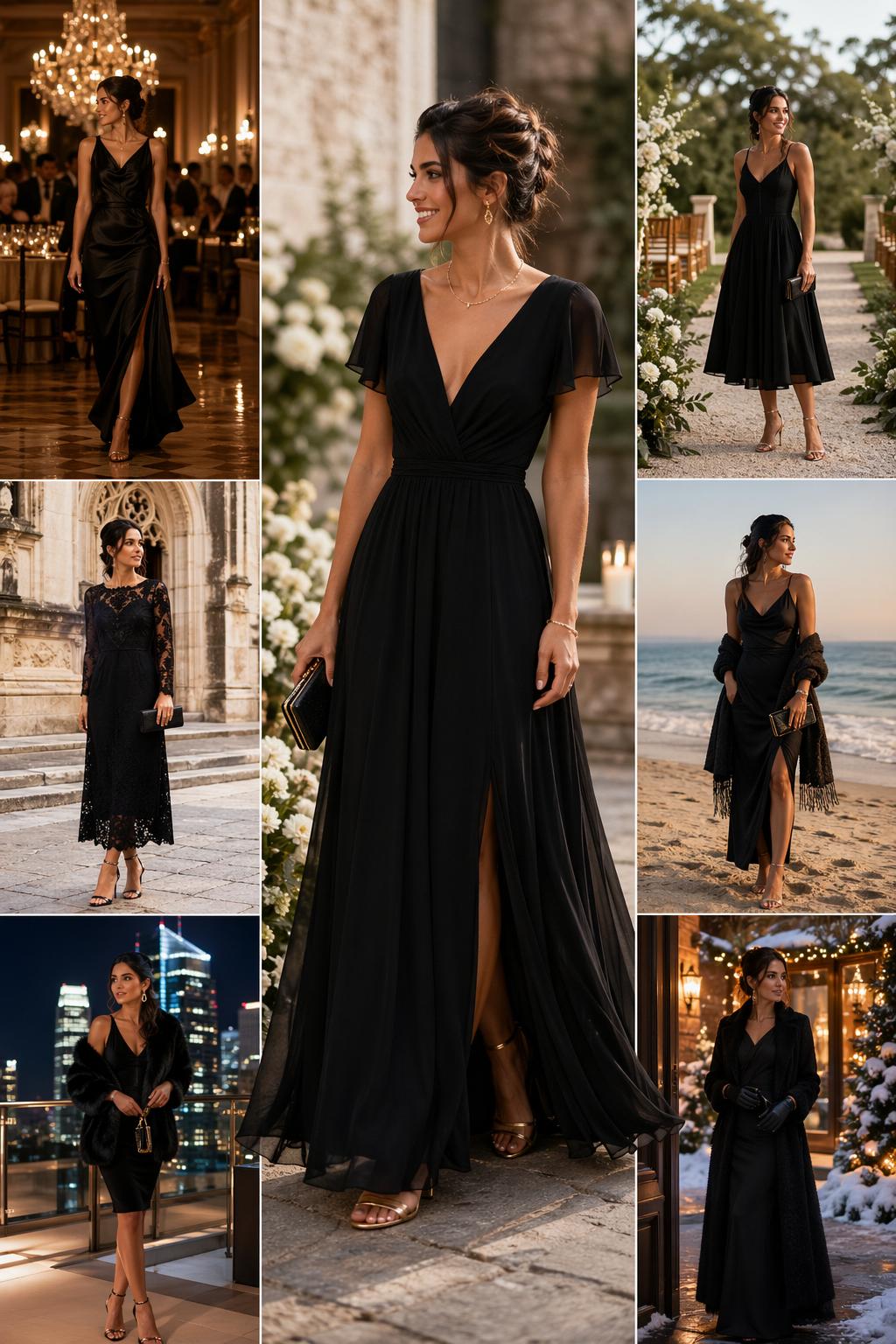
Silhouettes that solve different wedding guest problems
Maxi dresses for evening elegance and black-tie confidence
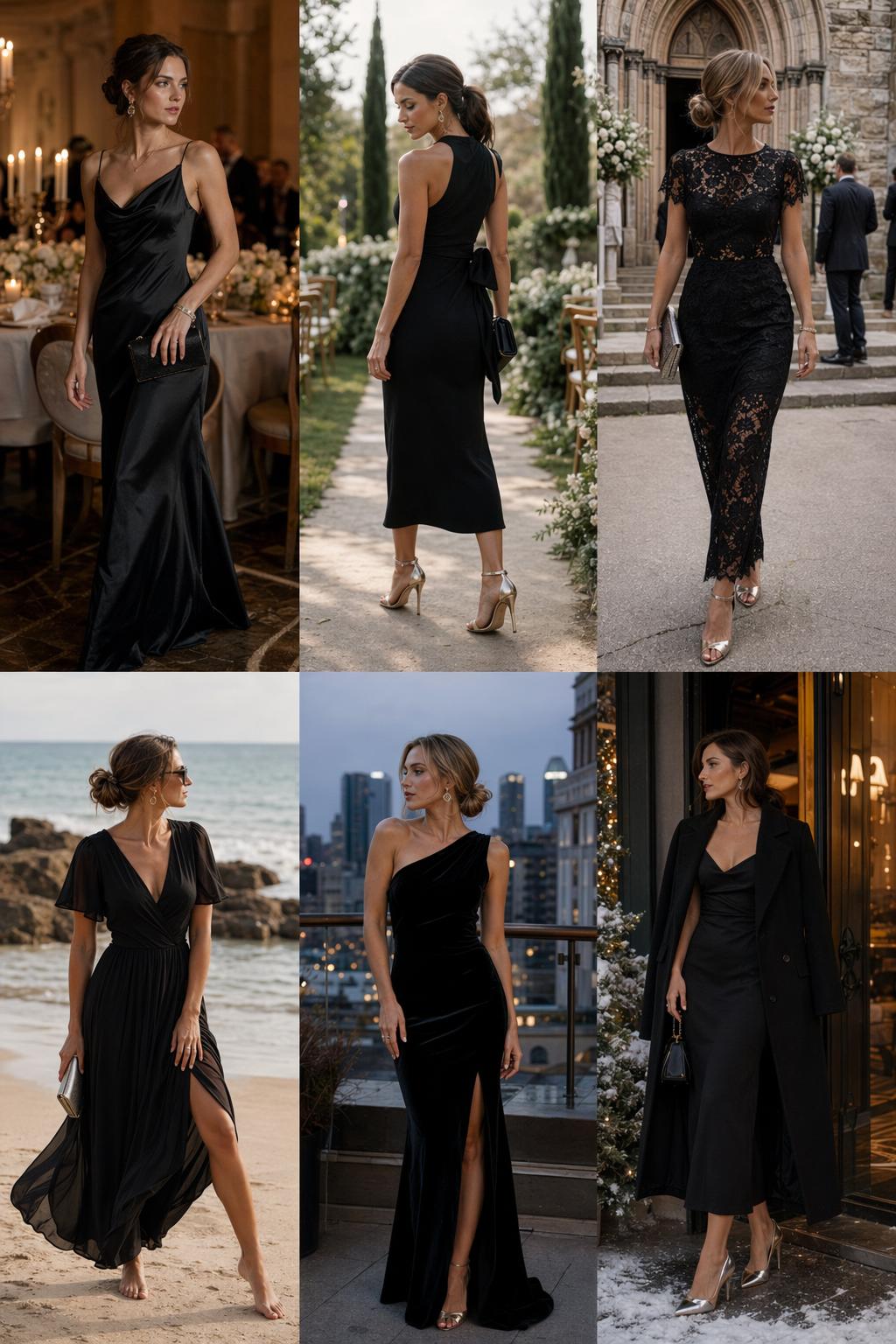
A black maxi dress is often the easiest answer when the wedding leans formal or takes place in the evening. It creates immediate polish and suits venues such as a ballroom, a sophisticated hotel setting, or a candlelit reception. If your concern is underdressing, a maxi silhouette usually solves it.
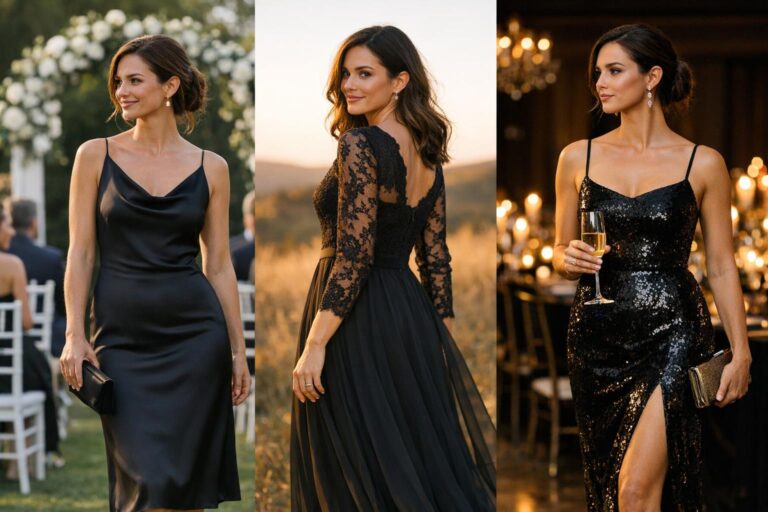
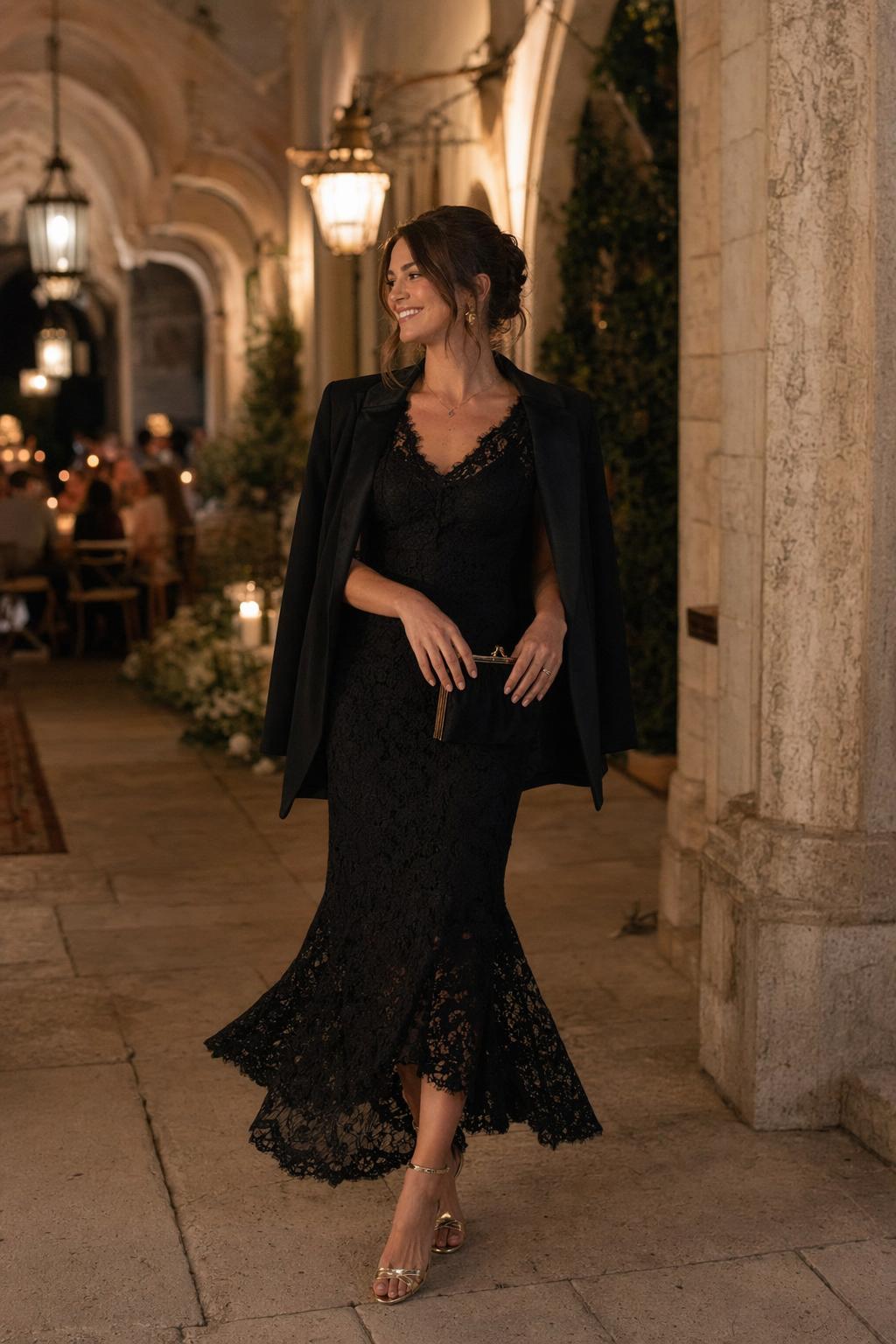
This shape works especially well in satin, velvet, or crepe, where the fabric can carry the simplicity of black without looking plain. A luxury black lace dress for romantic evening celebrations also fits beautifully here, particularly when the event atmosphere is refined and atmospheric rather than casual.
Midi dresses for the guest who needs flexibility
The black midi dress is often the most versatile option in wedding guest dressing. It transitions comfortably from ceremony to reception, works across semi-formal and many formal settings, and adapts well to different sleeve and neckline combinations. For daytime-to-evening weddings, it tends to feel intentional without becoming too heavy.
A midi is particularly useful for guests attending garden weddings, city celebrations, and venues where walking and mingling are part of the experience. It can be styled upward with metallic heels and jewelry or softened with simpler accessories for a quieter event mood.
Knee-length and cocktail silhouettes for lighter wedding settings
For dressy-casual or semi-formal occasions, knee-length and cocktail styles can be the right answer. These are practical when the wedding is daytime, warm-weather, or less ceremonially formal. The challenge is making sure the dress still reads like occasionwear rather than everyday black.
That is where texture, sleeve design, neckline, and accessories become essential. A simple shape can look distinctly wedding-ready when paired with elegant jewelry, a polished clutch, and the right shoe.
Fabrics and textures: what makes black feel wedding-appropriate
When guests worry that black may feel too stark, the issue is often not the color itself but the fabric. Occasion dressing depends heavily on texture. Black in the wrong material can feel flat; black in the right material can feel luxurious, romantic, and event-specific.
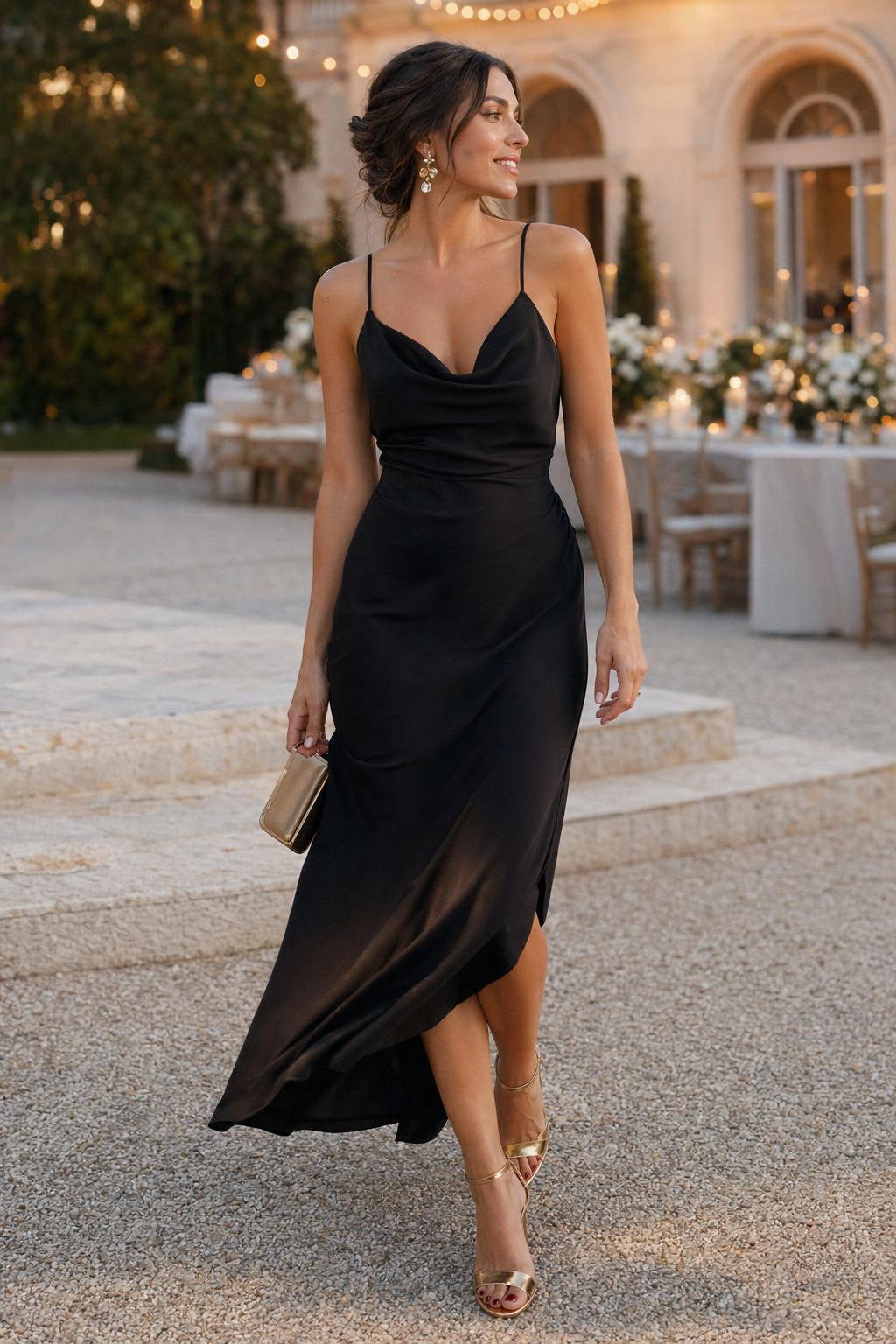
Satin, crepe, lace, chiffon, velvet, and sequin details
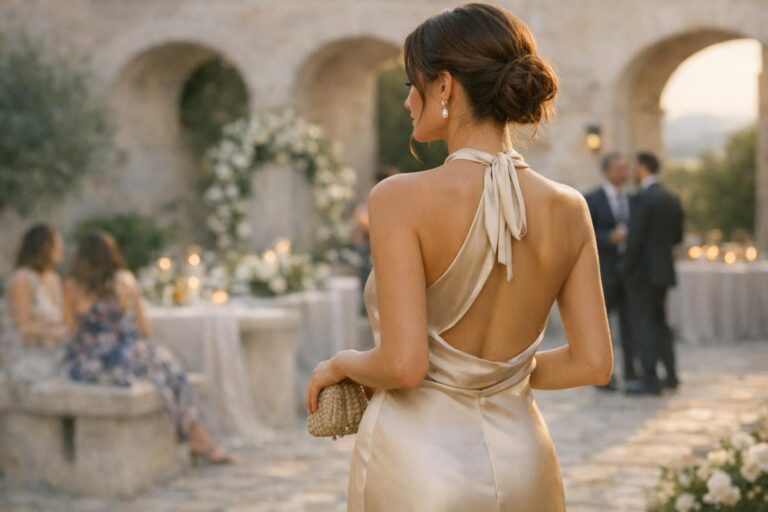
Satin gives black a fluid, elevated quality that works beautifully for evening weddings and modern formal settings. A satin halter dress, for example, can feel sleek and contemporary for a city reception or black-tie adjacent event, especially when the rest of the styling is clean and minimal.
Crepe offers structure and restraint, which makes it a strong choice for guests who prefer a refined silhouette without shine. Lace introduces softness and romance, especially effective for candlelit receptions or more dressed-up venues. Chiffon tends to feel lighter and more breathable, making it useful for warmer seasons and outdoor ceremonies. Velvet belongs naturally to fall and winter styling, where richer texture complements the season and elevates evening formality. Sequin details can work for the most festive formal settings, though they should still feel aligned with the invitation rather than overpowering it.
If you are deciding between silhouettes, let the fabric guide the final call. A simple shape in a beautiful material often looks more sophisticated than a complicated design in a less suitable one.
Necklines, sleeves, and the balance between elegance and ease
Neckline and sleeve choices affect both etiquette and comfort. They also determine how adaptable a black dress feels across venues. Off-shoulder styling can look dramatic and celebratory, while a boat neck often feels more restrained and classic. Long sleeves can be practical for cooler weather or venues where more coverage feels appropriate. Sleeveless and halter styles bring airiness and movement, especially for summer events.
The best decision usually comes down to where the wedding takes place and how long the celebration lasts. A church ceremony followed by an evening dinner may call for either more coverage built into the dress or an elegant outer layer. A beach ceremony may favor lighter sleeves or sleeveless options paired with breathable fabric. For a guest who wants one dress to do several things well, a midi with balanced coverage often proves easiest to style.
Seasonal wedding logic: solving for weather, light, and comfort
Spring and summer ceremonies
Warmer-weather weddings often create hesitation around black because guests worry the color will feel heavy. The practical fix is choosing lighter textures and easier silhouettes. Chiffon, crepe, and lighter satin are more comfortable than denser fabrics, and midi lengths can feel fresher than full dramatic gowns in daytime settings.
At a summer garden ceremony during golden hour, a flowing black midi in chiffon or crepe can look elegant rather than dark, especially with metallic shoes and jewelry that lift the overall palette. If the event moves into evening, a wrap or tailored layer adds function without interrupting the look.
Fall and winter receptions
Cooler seasons are where black truly becomes effortless. Velvet textures, long sleeves, richer satin, and deeper lace treatments feel naturally aligned with the atmosphere of a winter wedding or late-fall celebration. In these settings, black rarely feels out of place; instead, the main challenge is choosing a silhouette that still allows comfort over several hours.
For a winter ballroom reception, a velvet midi or maxi paired with elegant heels and a clutch can feel entirely at home. For a formal evening event, lace and satin combinations can create the kind of depth that suits low lighting and a more polished setting.
Wedding scene styling: outfit solutions by venue
Outfit solution: polished ballroom dressing
In a hotel ballroom or formal reception venue, black benefits from structure and richness. Think a maxi or elongated midi in satin, velvet, or crepe, supported by metallic heels, a compact clutch, and jewelry that reflects the evening light. This combination works because the venue itself can carry elevated fabrics and stronger styling choices.
If the invitation suggests a black tie wedding, this is the moment to lean fully into formal wear logic. A gown-like silhouette or a refined evening dress will look natural in the setting rather than overstated.
Outfit solution: soft structure for a garden wedding
A garden ceremony calls for softness and practicality. A black midi in chiffon, lace, or lighter crepe gives movement, while the shorter length helps with walking on outdoor paths or lawns. Accessories should brighten the look slightly—metallic jewelry, an elegant clutch, and footwear chosen with the ground in mind.
This approach solves a common problem: wanting the sophistication of black without making the outfit feel too severe against a lighter daytime setting.
Outfit solution: composed dressing for a church ceremony
Church weddings often benefit from a little more restraint. A boat-neck midi, a long-sleeve crepe dress, or a lace style with balanced coverage can feel respectful and polished. If the dress is sleeveless, a shrug, bolero, blazer, or wrap provides flexibility for the ceremony and can be removed later for the reception.
The styling logic here is simple: keep the silhouette refined, avoid relying on dramatic details alone, and let the accessories finish the outfit with elegance.
Outfit solution: light movement for a beach or outdoor terrace wedding
Outdoor celebrations need a black dress that moves easily and does not feel too dense. Chiffon and lighter satin are more useful than heavy velvet, and midi or easy maxi silhouettes often perform best. This is also where practical footwear matters most, because the setting can be uneven, breezy, or more relaxed in feel.
A black dress can still work beautifully in these locations, but the mood should feel breezier and less architectural than it would in a city ballroom.
Accessories that make a black dress feel celebratory
Accessories are often the difference between a black dress that feels too plain and one that feels wedding-ready. Because black is neutral and grounding, it responds especially well to metallics, jewelry, and thoughtfully chosen outerwear. These additions do not need to be excessive; they just need to signal occasion dressing.
- Metallic heels can lighten the visual weight of black and make the outfit feel more festive.
- Jewelry adds warmth and polish, particularly when the dress silhouette is minimal.
- A clutch sharpens the overall look more effectively than an everyday bag.
- Wraps, shrugs, capes, and blazers solve both temperature and venue-coverage concerns.
- Color-blocking through accessories can soften the severity of an all-black look while keeping it elegant.
This is also where personal style can come through. A guest who prefers modern minimalism may choose sleek metallic accents and a clean satin halter dress. Someone who wants a more romantic finish might lean toward lace texture, softer jewelry, and a wrap for evening.
Brand pathways: where different black wedding guest styles tend to lead
Different brands speak to different versions of the same styling problem. Rebecca Vallance brings a designer-led, editorial sense of modern elegance, with a focus on sophistication, craftsmanship, and versatility. That makes it especially relevant for guests searching for a more elevated or luxury perspective on black wedding guest dressing.
Lulus, Windsor, and JJ’s House sit more naturally in the accessible and broad-assortment space, where shoppers often want to compare silhouettes, sleeve options, lengths, and details such as sequins or lace. Revolve functions as a curated multi-brand hub, useful when the goal is a trend-conscious black dress that still fits a wedding context. Ever-Pretty and Goddiva add further range, especially for guests looking across styles, sizes, and formality levels.
The practical takeaway is this: if you know whether you want designer polish, affordable variety, or a trend-driven edit, shopping becomes much easier. Instead of searching endlessly for “the right black dress,” you can search within the silhouette, fabric, and brand context that suits your event.
Editorial note: when a prom dress mindset helps—and when it does not
Some guests find useful inspiration in eveningwear categories that overlap with formal occasion dressing, including a prom dress silhouette or vestidos de fiesta largos. That can be helpful when the wedding is very formal, the reception is in the evening, or the invitation clearly points toward black tie. Long, dramatic shapes, satin finishes, and lace can all translate beautifully.
Where caution matters is in scale. A wedding guest outfit should still respect the event and not feel costume-like or excessively theatrical. Borrow the elegance of formal occasionwear, but keep the styling anchored in guest etiquette, venue appropriateness, and comfort over a full celebration.
Real-world styling playbooks for common wedding guest dilemmas
You want to wear black to a daytime wedding without looking too formal
Choose a midi or knee-length silhouette in crepe, chiffon, or lighter lace rather than a dramatic floor-length gown. Keep the neckline and accessories elegant but not heavy. The result feels polished and clearly occasion-ready, while still matching the lighter energy of daytime.
You need one dress that works from ceremony to evening reception
A black midi in satin or crepe is often the most reliable choice. It can handle an afternoon church ceremony, a cocktail hour, and a dinner reception without feeling either underdone or overdone. Add a wrap or blazer for flexibility, then use heels and jewelry to refine the evening look.
You are attending a winter formal wedding and want something richer
Look to velvet, longer sleeves, and a maxi or longer midi silhouette. This combination suits cooler weather and formal settings, while solving the practical issue of warmth. Black in velvet often feels especially natural in low-lit evening venues.
You love romantic styling but still want a modern black dress
A luxury black lace dress for romantic evening settings strikes that balance well, particularly for candlelit receptions or elegant city venues. If you prefer cleaner lines, a satin halter dress can achieve the same sense of occasion with a more contemporary mood.
Practical tips before you commit to the dress
Even the most beautiful black dress can disappoint if it does not solve the practical side of wedding dressing. Before buying, think beyond the product image and imagine the full event timeline.
- Check whether the silhouette allows comfortable sitting, walking, and dancing.
- Think about temperature changes from ceremony to reception and whether you need a layer.
- Use length and fabric filters to narrow your search quickly by formality and season.
- Pay attention to material descriptions such as velvet, satin, lace, crepe, or chiffon because they strongly influence how formal the dress appears.
- Review fit and size guidance carefully for online purchases, especially when choosing a more structured silhouette.
- Consider return flexibility if you are deciding between two lengths or fabrics for a venue-sensitive event.
These details matter because wedding guest dressing is rarely solved by color alone. Fit, movement, and comfort determine whether you actually enjoy wearing the dress through the full celebration.
Common mistakes guests make with black wedding outfits
One of the most common mistakes is choosing black without adjusting for the venue. A heavy velvet dress at a summer outdoor ceremony can feel uncomfortable and visually too dense, just as a very light daytime-style black dress can seem underdressed at a formal evening reception.
Another frequent issue is treating accessories as an afterthought. Because black is so streamlined, unfinished styling can make the whole look appear more ordinary than intended. A thoughtful shoe, jewelry choice, clutch, or wrap often provides the celebratory finish the dress needs.
Guests also sometimes confuse “formal” with “maximum drama.” The more useful approach is proportion and context. Let the event lead. A wedding guest look should feel elegant, not competitive with the occasion itself.
A confident approach to black wedding guest dressing
The strongest black wedding guest outfits are built with clear reasoning: dress code first, venue second, season third, then silhouette and styling details. Once those pieces align, black becomes one of the most versatile and dependable choices in occasionwear. It can feel romantic in lace, sleek in satin, refined in crepe, dramatic in velvet, or festive with subtle sequin detail.
If you remember one principle, let it be this: the right black dress is not just about looking elegant in photographs. It is about wearing a silhouette, fabric, and level of polish that suits the ceremony, the reception, and the way the day will actually unfold. That is what makes the outfit feel effortless.
FAQ
Is black appropriate for a wedding guest?
Yes, black can be appropriate for a wedding guest, especially when the dress fits the event’s dress code, venue, and time of day. The key is choosing a silhouette and fabric that feel celebratory and intentional rather than overly stark or too casual.
What kind of black dress works best for a black-tie wedding?
For a black-tie wedding, a maxi dress or gown-like silhouette in satin, velvet, lace, crepe, or refined sequin detail is usually the strongest choice. Evening settings and formal venues tend to support richer textures and a more elevated finish.
Can I wear a black midi dress to a wedding?
A black midi dress is one of the most versatile wedding guest options because it can work for semi-formal weddings, many formal celebrations, and day-to-evening events. It becomes more or less dressy depending on the fabric, neckline, sleeve style, and accessories.
How do I make a black wedding guest dress feel more festive?
Use accessories to add warmth and occasion-ready polish. Metallic heels, jewelry, a structured clutch, and elegant outerwear such as a wrap or bolero can transform a simple black dress into a look that feels celebratory and complete.
Which fabrics are best for a black wedding guest dress?
The best fabric depends on the season and formality. Satin, lace, velvet, crepe, chiffon, and subtle sequin details all work well for weddings, with lighter fabrics tending to suit warmer or daytime events and richer textures making more sense for formal evening receptions.
What should I wear over a black dress to a wedding?
Useful outer layers include a shrug, bolero, wrap, blazer, or cape, depending on the venue and the season. These options are especially helpful for church ceremonies, outdoor terraces, and weddings that continue into cooler evening temperatures.
Are brands like Rebecca Vallance, Lulus, Windsor, JJ’s House, and Revolve good places to look?
They are all relevant depending on the style and budget you need. Rebecca Vallance suits a more designer-focused, luxury perspective, while Lulus, Windsor, JJ’s House, Ever-Pretty, and Goddiva offer broader assortment and accessibility; Revolve is useful for a curated, trend-aware selection.
How do I choose a black dress for a garden or beach wedding?
For a garden or beach wedding, lighter fabrics such as chiffon, crepe, or lighter satin usually work better than heavy textures. Midi lengths and easy-moving silhouettes are often more practical, and footwear should suit outdoor surfaces rather than just the look of the dress.
Can a satin halter dress work for a wedding guest outfit?
Yes, a satin halter dress can work very well for a wedding guest, especially for formal city weddings, evening receptions, or modern venues. The sleek finish of satin gives black a polished quality, and the halter neckline can feel both current and elegant when the styling remains balanced.