Spring Green Wedding Guest Dress That Feel Fresh and Chic
By the time a wedding invitation arrives, one color often rises quickly to the top of the shortlist: green. A green wedding guest dress feels polished without being predictable, romantic without leaning overly bridal, and versatile enough to move from a breezy garden ceremony to a candlelit evening reception. Yet “green” is never just one look. Emerald, sage, olive, forest, and mint each create a different mood, and they are often discussed together because they all sit within the same elegant color family while serving very different dress codes, venues, and seasons.
That is where many guests hesitate. The question is not simply whether to wear green, but which version of green works best: satin or chiffon, midi or maxi, deep jewel tone or soft muted shade. This comparison breaks down the major green wedding guest dress directions in a practical, style-led way. You will see how the shades differ, how silhouettes change the overall effect, where fabrics matter most, and how to style each option so it feels considered rather than accidental.
The many moods of green at a wedding
Green has become a compelling wedding guest choice because it sits at the intersection of freshness and formality. Softer tones such as sage and mint read light, airy, and seasonally romantic, while deeper shades like emerald and forest feel richer and more evening-oriented. Olive bridges the two, offering a grounded, understated option that can feel especially elegant in a more relaxed or nature-driven setting.
In practical terms, green also adapts well to the common categories guests shop by: formal and semi-formal weddings, spring and summer celebrations, black-tie evenings, and venue-specific dress decisions. Retailers and brands such as Macy’s, Nordstrom, ASOS, Bloomingdale’s, Karen Millen, Windsor, Tobi, Ever-Pretty, and JC Penney all reflect this range by organizing green wedding guest dresses through shade, silhouette, fabric, and occasion.
Your wedding look is only the beginning.
Keep your guest list, vendors, timeline, and every important detail together with Zarellea — so your day feels as considered as your style.
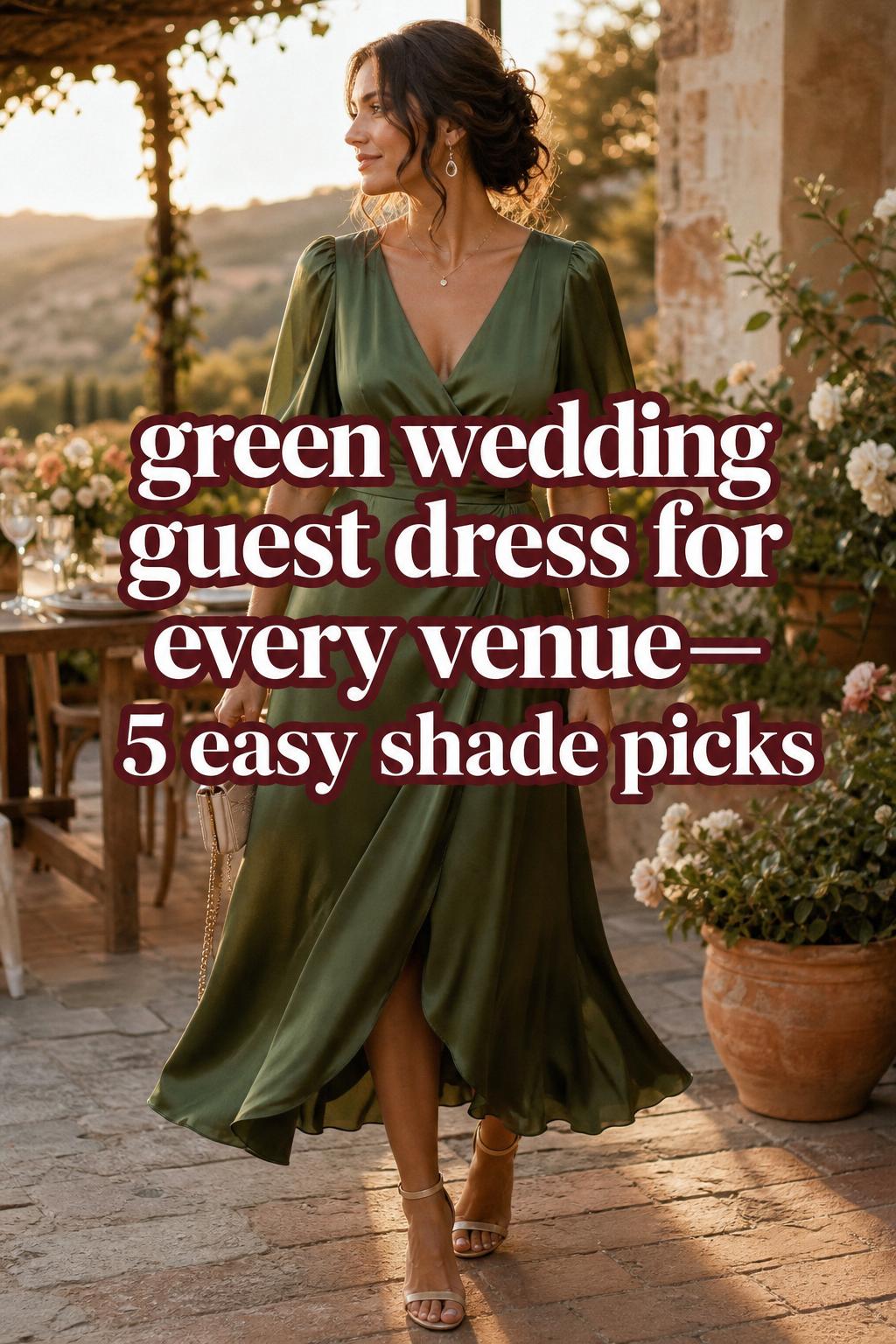
Style overview: emerald and forest green
Emerald and forest green belong to the deeper, more formal side of the spectrum. They are typically associated with stronger visual presence, richer event dressing, and a more elevated finish. If the wedding setting includes an evening reception, a formal venue, or a colder season, these tones often feel immediately appropriate.
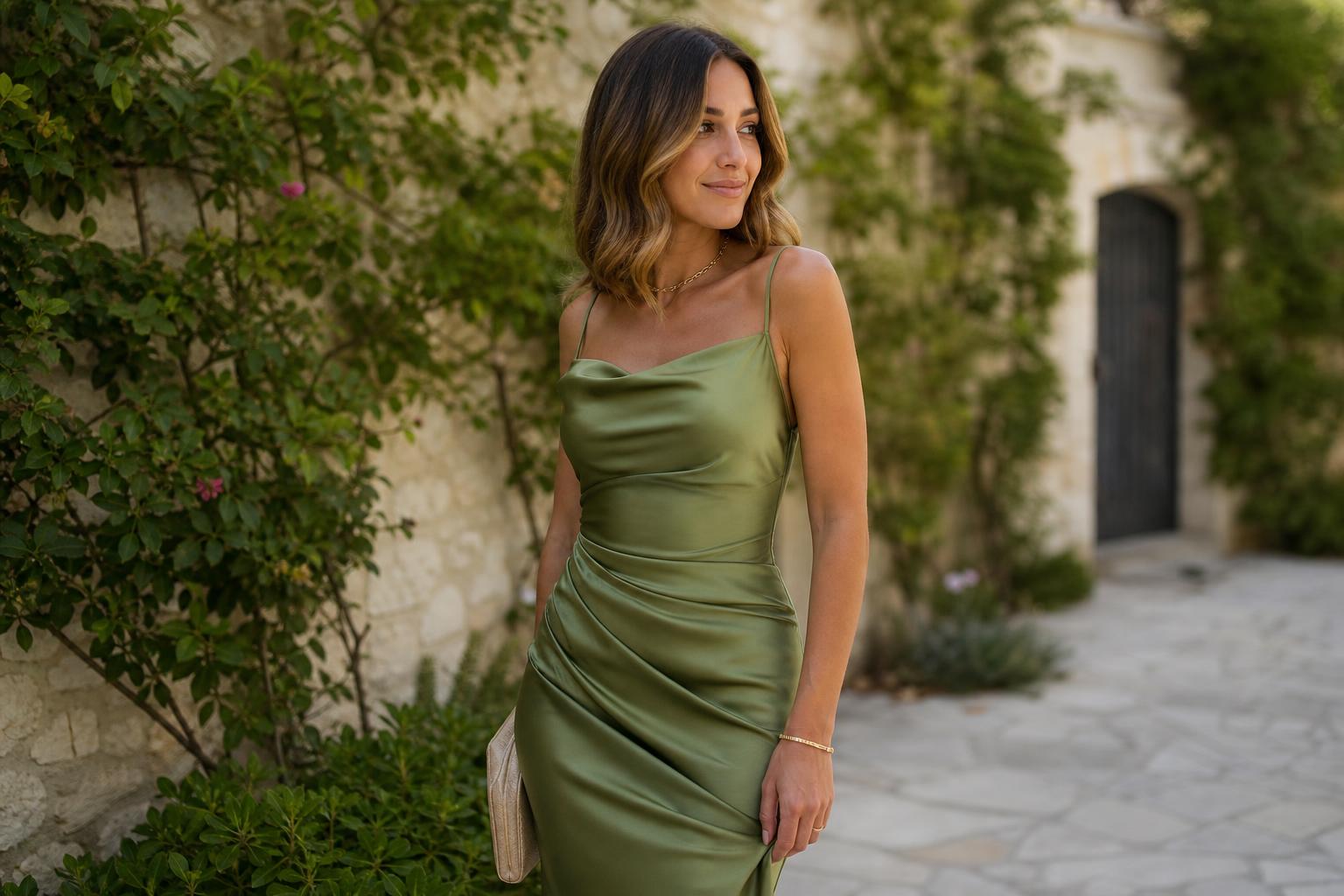
Typical silhouettes in these shades include maxi dresses, midi dresses with more structure, sheath dresses, and sleek A-line shapes. Fabrics such as satin, velvet, and crepe support the mood well because they emphasize depth and movement without losing polish. Visually, emerald tends to feel more vibrant and jewel-like, while forest green leans moodier and quieter.
The overall aesthetic is refined and intentional. An emerald satin dress can feel dramatic under reception lighting, while a forest green velvet or chiffon style offers a more softened version of formal dressing. These shades are especially useful when you want color, but still want the dress to read as occasionwear rather than daytime casual.
Style overview: sage, olive, and mint
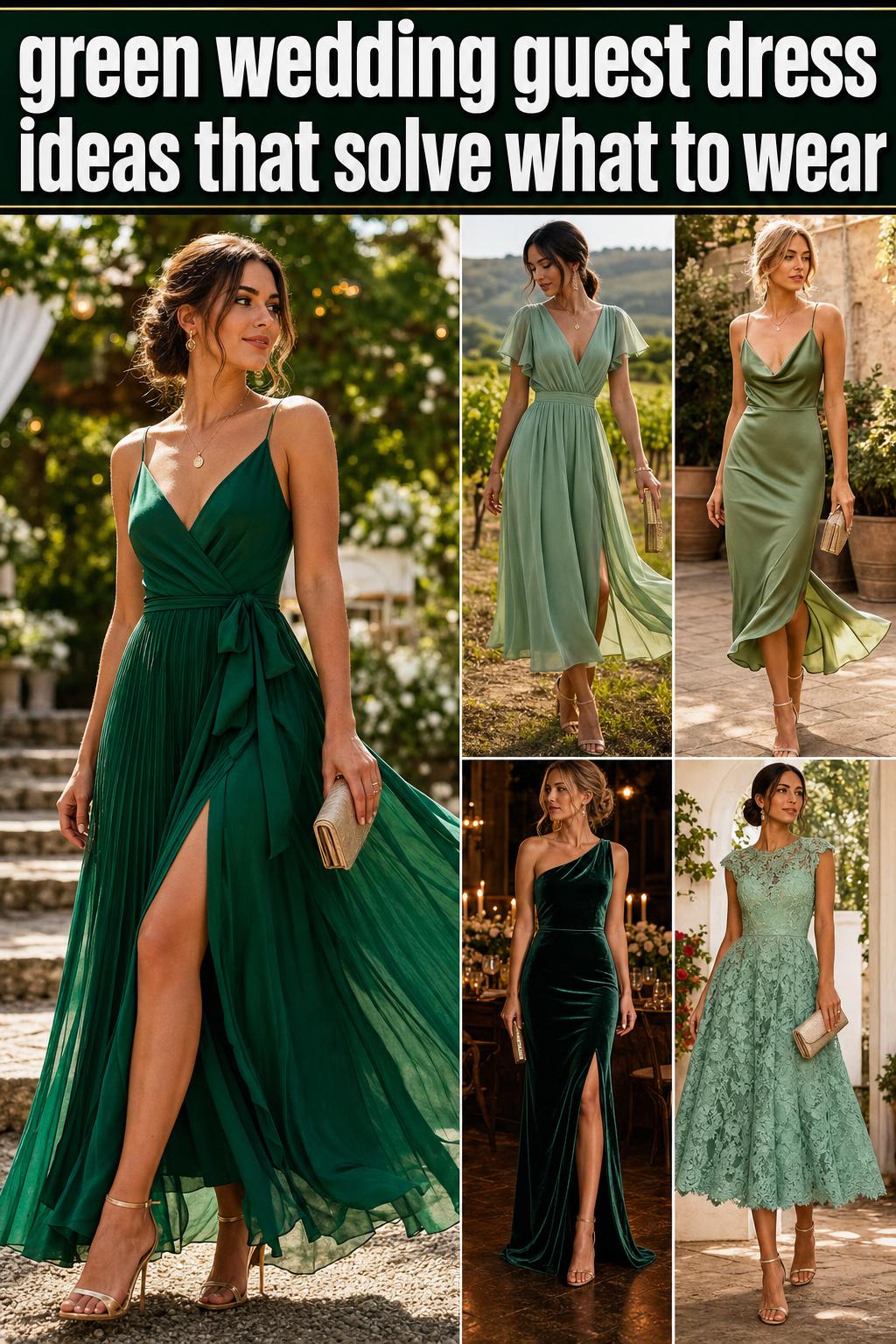
Sage, olive, and mint create a different kind of wedding guest statement. These greens are typically lighter or more muted, and they tend to feel relaxed, romantic, and seasonally responsive. They are often associated with spring and summer weddings, outdoor venues, and celebrations where the dress code calls for elegance with ease rather than strict formality.
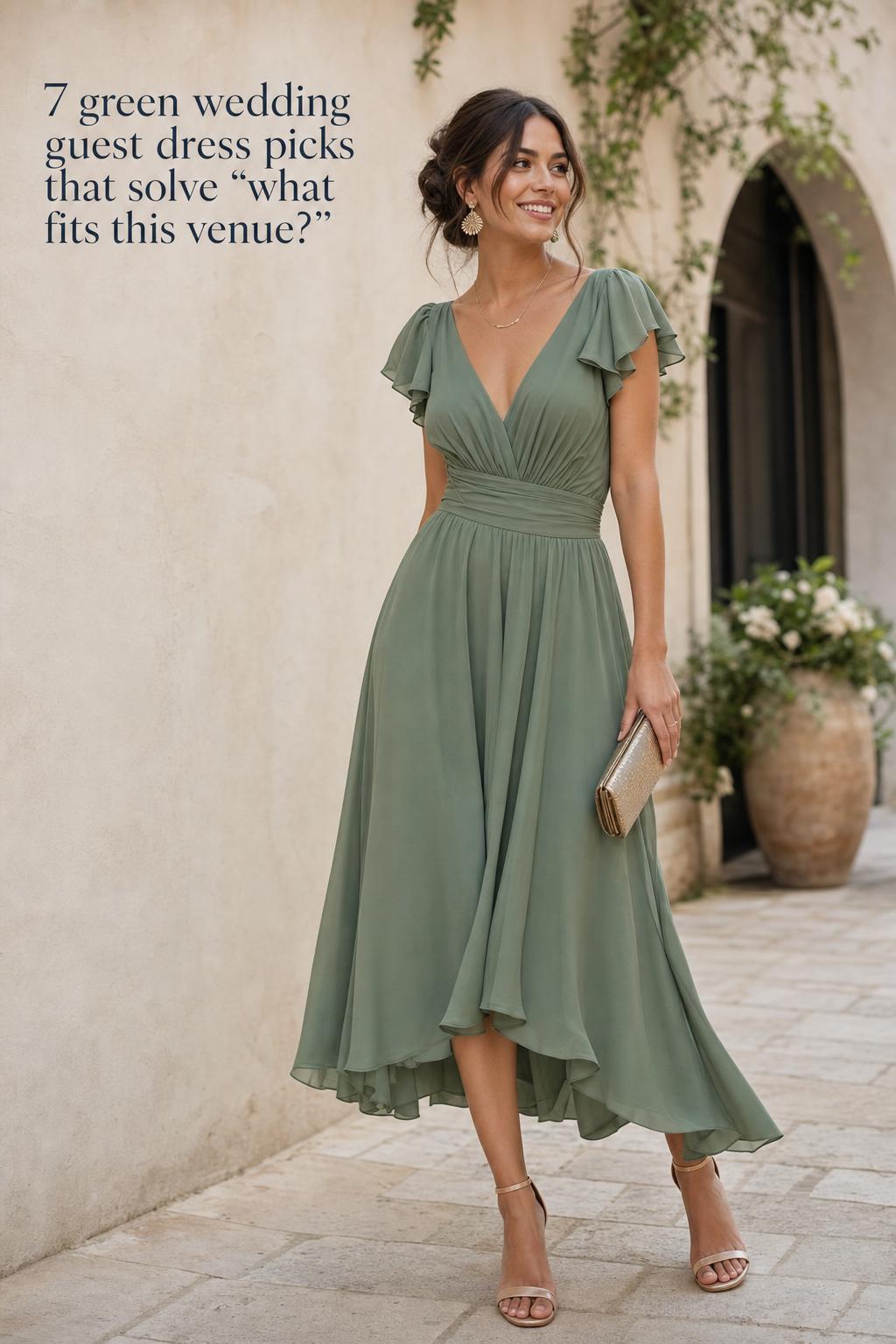
These shades work beautifully in chiffon, lace, lightweight satin, and draped midi silhouettes. Sage is soft and airy, mint feels fresh and bright, and olive carries a more earthy sophistication. A sage green wedding guest dress in chiffon immediately suggests a garden ceremony or vineyard setting, while an olive green midi dress can feel quietly chic at a rustic countryside venue.
The mood here is less about drama and more about harmony. These greens often blend naturally into floral settings, daylight ceremonies, and warm-weather celebrations. They can still feel polished, but the styling approach is generally lighter, softer, and more fluid.
Where the biggest differences appear
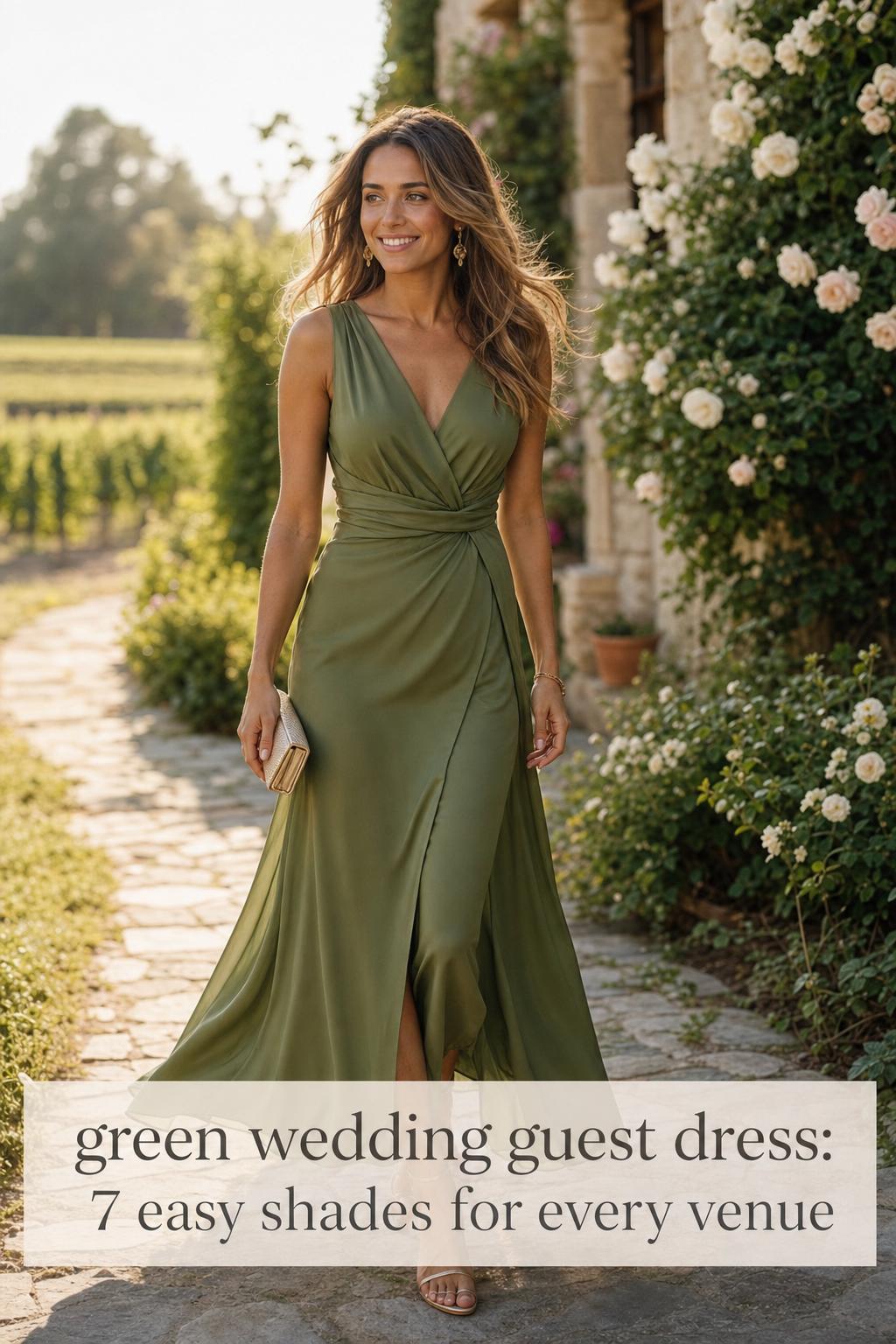
Shade intensity and visual impact
Emerald and forest green draw the eye first. They create stronger contrast, appear more formal, and tend to make even simple silhouettes feel elevated. Sage, olive, and mint are more atmospheric. They usually look subtler in daylight and rely more on drape, fabric, and styling details to create presence.
Formality level
For black-tie weddings or evening receptions, deeper greens usually have the advantage. A maxi emerald formal green dress for wedding guest wear can feel entirely at home in a ballroom or city hotel setting. By contrast, a mint or sage style is often better suited to daytime, semi-formal, beach, or garden events, where softness feels more appropriate than intensity.
Fabric behavior
The same green can change character dramatically depending on fabric. Satin intensifies color and gives green a more liquid, reflective finish. Chiffon softens it. Velvet adds richness and seasonal depth. Lace introduces delicacy. A sage satin dress can look more fashion-forward and modern, while a sage chiffon wedding guest dress feels more romantic and light.
Silhouette compatibility
Deep greens often pair especially well with structured or elongated lines: sheaths, maxis, and sharper midis. Softer greens are particularly effective in flowing shapes, tea-length silhouettes, and A-line cuts that move easily outdoors. This is not a fixed rule, but it explains why certain combinations repeatedly feel natural in wedding guest dressing.
Midi versus maxi: a more useful comparison than many guests expect
While shade gets the most attention, silhouette often determines whether the final look feels right for the invitation. A midi emerald dress and a maxi green wedding guest dress may share the same color family, yet they communicate different things. The midi generally feels more flexible, easier to wear across dress codes, and simpler for outdoor venues where movement matters. The maxi tends to read more formal from the outset.
For a spring wedding at a garden venue, a sage or olive midi dress in chiffon or lace can feel balanced and practical. The hemline avoids dragging, the fabric catches a breeze beautifully, and the overall shape feels polished without becoming too grand. For a formal evening celebration, a floor-length emerald or forest green satin dress immediately creates a stronger occasionwear impression.
This is also where comfort becomes more than a minor detail. Weddings are long events. Guests stand during ceremonies, walk across gravel paths or lawns, sit through dinners, and move into the reception. The right silhouette is not simply flattering; it also supports the reality of the day.
Tips for choosing midi or maxi
- Choose midi for outdoor ceremonies, daytime receptions, and dress codes that sit between polished and relaxed.
- Choose maxi for black-tie settings, evening events, and venues where a longer silhouette feels in step with the atmosphere.
- If the venue includes grass, sand, or uneven paths, a midi often feels easier and more secure.
- If the dress is already bold in color, a simpler silhouette can keep the look balanced.
Satin, chiffon, velvet, and lace: how fabric changes the same color
Fabric is one of the clearest ways to compare green wedding guest dress styles because it controls movement, shine, weight, and mood. In shopping terms, many long-tail searches are really fabric decisions in disguise. Someone looking for a green satin wedding guest dress is usually after a more polished, evening-ready look. Someone seeking green chiffon wedding guest dresses often wants softness, movement, and warm-weather ease.
Satin
Satin makes every shade feel more pronounced. Emerald satin reads sleek and glamorous; sage satin feels more modern and directional; olive satin can look unexpectedly refined. This fabric works especially well in slip-inspired shapes, draped midis, and elegant maxis. The trade-off is that satin tends to show structure more clearly, so fit matters.
Chiffon
Chiffon softens green and gives it movement. It is especially convincing for spring and summer weddings, where a lighter feel is useful both visually and practically. In sage, mint, or softer olive tones, chiffon can look effortless during daylight and still feel dressed for the occasion. It is one of the easiest choices for guests who want romance without too much visual weight.
Velvet
Velvet belongs most naturally with deep greens such as emerald and forest. It is the richest option of the group and generally works best in cooler seasons or evening settings. At a winter reception or formal indoor wedding, velvet can feel especially appropriate because it adds depth without needing heavy embellishment.
Lace and crepe
Lace introduces delicacy, especially in lighter greens and tea-length or midi silhouettes. Crepe offers a more understated structure, ideal for guests who prefer clean lines over overt texture. Both can be elegant alternatives if satin feels too glossy or chiffon too soft.
How these styles read in real wedding settings
A dress never exists in isolation. The venue, the light, the season, and the length of the celebration all influence what feels right. This is why the same color family can look entirely different in a ballroom versus a beach ceremony.
Garden and vineyard weddings
At a garden ceremony under soft afternoon light, sage and mint tend to look especially harmonious. Chiffon, lace, and softer A-line or midi silhouettes feel in tune with flowers, greenery, and open-air settings. Olive also works well here, particularly if the venue has a more natural, rustic atmosphere.
Ballroom and evening receptions
In a formal room with evening lighting, emerald and forest green come into their own. Satin, velvet, and sleek sheath shapes hold their elegance after dark and carry the visual weight needed for a more polished celebration. These are the shades that feel strongest when the invitation signals a more formal event.
Beach and destination settings
For beach ceremonies or destination weddings, lighter greens often make more sense. Mint and sage in airy fabrics feel fresher and less heavy, especially when the event moves from ceremony to reception in warm weather. A structured emerald maxi can still work, but only if the dress code clearly leans formal and the fabric remains comfortable enough for travel and movement.
Visual style breakdown: how the outfits differ at a glance
The visual difference between these green dress styles often comes down to balance. A deep green satin or velvet dress usually asks for restraint elsewhere. The color and fabric already provide drama, so accessories, shoes, and hair often work best when they support rather than compete. By contrast, a softer sage or mint look can accommodate a slightly more delicate, layered styling approach because the dress itself reads gentler.
In everyday outfit terms, emerald and forest green tend to create a cleaner vertical line. They look strongest when the silhouette feels intentional and the accessories are selective. Sage, olive, and mint are often more forgiving visually; they can be styled to feel more relaxed, more romantic, or slightly more playful depending on drape and proportion.
Accessories and overall balance
- Deep emerald or forest green often looks best with a measured accessory approach and a polished bag.
- Sage and mint can handle softer jewelry and lighter styling details without looking overdone.
- Olive works best when the accessories stay refined and slightly understated, matching its quieter mood.
- If the dress includes ruffles, drape, embellishments, or an open back, simplify the rest of the look.
Bloomingdale’s style-guide approach is especially relevant here: curation matters. A green wedding guest dress is rarely only about the dress itself. Color coordination, silhouette, and finishing details are what make the outfit feel considered.
Example comparisons for real wedding scenarios
Golden-hour garden ceremony
A sage green wedding guest dress in chiffon approaches this setting with softness. The movement works with outdoor light, the tone feels naturally romantic, and a midi length keeps the outfit practical across grass and pathways. An emerald version of the same silhouette would appear more formal and more pronounced, which may be beautiful, but less in sync if the wedding mood is airy and relaxed.
Candlelit evening reception
For a formal indoor reception, an emerald green wedding guest dress in satin or velvet often feels stronger than a mint or sage alternative. The depth of color holds under evening lighting, and the richer texture gives the look enough substance for the room. A lighter green could still work, but it would usually need a sharper silhouette or more deliberate styling to feel equally formal.
Rustic countryside celebration
Olive is especially convincing in this setting. It feels grounded, elegant, and less obviously dressed up than emerald, which can be an advantage when the venue is charming rather than grand. A green satin wedding guest dress in olive can feel modern here, while an olive chiffon midi dress leans softer and more pastoral.
Destination wedding with travel involved
In a destination context, practicality quickly becomes part of style. Lighter fabrics such as chiffon and easier silhouettes such as midi or simple A-line shapes generally travel better and adapt more easily to changing temperatures. A mint or sage dress often feels more effortless for these celebrations than a heavy velvet forest green option, even if both are elegant in theory.
What stylists usually weigh before choosing the shade
The best green wedding guest dress is rarely chosen by color alone. Shade is tied to seasonality, venue, and the degree of formality expected. In practice, the decision often starts with three questions: how formal is the event, how much movement will the day require, and should the outfit feel soft and airy or refined and dramatic?
This is where comparison becomes useful. Emerald is often the answer when a guest wants confidence, saturation, and evening polish. Sage is the answer when softness and spring-ready elegance matter more. Olive offers a middle ground for women who want subtlety with depth. Forest is ideal when the event calls for richer, moodier dressing. Mint is the freshest and most daylight-oriented of the group.
Tips for narrowing your choice
- Choose emerald for formal receptions, richer fabrics, and a more statement-making look.
- Choose sage for spring and summer weddings, especially in chiffon or lighter satin.
- Choose olive when you want a quieter, understated green that still feels sophisticated.
- Choose forest for evening and cooler-weather weddings where depth matters.
- Choose mint for fresh, sunny, daytime celebrations and destination settings.
Etiquette, color coordination, and the question of standing out
Wedding guest dressing always involves a degree of etiquette. Green is generally appealing because it offers color without moving too close to obviously bridal territory. Even so, tone and styling still matter. A highly dramatic silhouette with heavy embellishments may feel too attention-grabbing in some settings, while a simpler green midi or chiffon dress often strikes the balance between elegance and respect for the occasion.
Color coordination matters as well. Softer greens tend to blend more easily into spring and summer wedding palettes, while emerald and forest can look especially striking against evening décor. The goal is not to disappear, but to look harmonious within the celebration. This is the difference between dressing beautifully and unintentionally upstaging the mood of the event.
Shopping across brands and retailers: what each approach tends to offer
The major U.S. retailers and brands in this space tend to reflect different shopping priorities. Nordstrom, Macy’s, Bloomingdale’s, ASOS, and JC Penney often provide broad access to multiple brands, price points, lengths, and size options within the green wedding guest category. That makes them useful for comparison shopping when the main goal is to test silhouette, shade, and formality level side by side.
Karen Millen, Windsor, Tobi, and Ever-Pretty offer more concentrated style directions. Karen Millen’s category framing around sage, emerald, and olive points toward a more edited occasionwear perspective. Windsor leans into on-trend party and formal silhouettes. Tobi emphasizes variety across green shades and dress shapes, while Ever-Pretty’s emerald green wedding guest dress focus highlights color-specific shopping with broad style range.
For the guest, the practical lesson is simple: marketplace-style retailers are useful when you are still comparing options, while narrower brand collections can be helpful once you already know whether you want, for example, an emerald formal look or a softer chiffon midi in sage.
An underused angle: sustainable and ethical options in green
One of the clearest distinctions in this category is not only visual but values-based. Sustainable wedding guest dressing remains less developed in many green dress collections, which creates an important comparison point for shoppers. If you are considering an eco-friendly green dress, look beyond color and silhouette to materials and production signals such as organic cotton, recycled polyester, low-impact dyes, and fair labor considerations.
This does not change the core style logic of the dress, but it can influence which fabrics and retailers feel right for you. A sustainable wedding guest dress should still meet the same standards of fit, comfort, movement, and occasion suitability. The difference is that the shopping criteria become slightly broader: not only how the dress looks, but how it is made.
Tips for a more thoughtful purchase
- Check whether the fabric includes recycled polyester or organic cotton where relevant.
- Look for mention of low-impact dyes if sustainability is a priority.
- Balance values with practicality by considering rewear potential after the wedding.
- A versatile olive or emerald midi may offer more repeat wear than a highly specific event dress.
Inclusive fit and real-world wearability
Another important comparison is not between shades, but between dresses that merely photograph well and dresses that actually function through a full celebration. Size inclusivity and fit guidance are especially relevant here. A green dress can be visually beautiful, but if the neckline shifts, the fabric pulls, or the hem becomes difficult to manage, the look loses ease very quickly.
Body-positive dressing in this category often comes down to matching silhouette with comfort. Some guests feel best in an A-line midi that gives freedom of movement; others prefer the clean outline of a sheath or the lengthening effect of a maxi. The right answer is rarely universal. What matters is whether the silhouette supports your body and the event’s demands at once.
When shopping with retailers such as Nordstrom, Macy’s, JC Penney, or Ever-Pretty, broad inventories can help you compare lengths, cuts, and fabric behavior more effectively. This is especially useful if you are deciding between a satin green dress that requires more exact fit and a chiffon option that offers more ease.
When to choose each green dress direction
Not every wedding asks for the same kind of elegance. The strength of green lies in its flexibility, but that flexibility only works when the dress matches the situation.
- Choose emerald when the wedding is formal, the reception runs into the evening, or you want a richer, more polished finish.
- Choose sage for spring and summer celebrations, garden venues, and dress codes that invite a softer look.
- Choose olive for rustic, countryside, or understated weddings where quiet sophistication feels more natural than high glamour.
- Choose forest for cooler seasons and elegant indoor events where texture and depth matter.
- Choose mint for warm-weather ceremonies, destination weddings, and daylight settings that suit a lighter palette.
If you are still unsure, let the venue decide. A beach ceremony usually favors movement and breathability. A ballroom favors structure and deeper tones. A vineyard invites softness. A black-tie city wedding asks for stronger formality. That context often clarifies the best shade more quickly than trend alone.
A practical buying framework: shade, silhouette, then fabric
A useful way to shop for a green wedding guest dress is to decide in sequence rather than all at once. Start with shade because it sets the mood. Then choose silhouette because it determines formality and ease of wear. Finish with fabric because it refines the effect. This order tends to be more efficient than starting with minor details such as ruffles or embellishments.
For example, if the invitation suggests a summer outdoor wedding, the likely path might be sage, then midi, then chiffon. If it is a formal evening event, the path may be emerald, then maxi or sheath, then satin or velvet. Once those choices are clear, accessory and styling decisions become far easier.
It also helps with returns and alterations. A dress may be beautiful in theory, but if the silhouette is wrong for the venue or the fabric is difficult to manage, the issue usually appears before the event. Choosing in this order helps reduce that mismatch.
The final distinction: soft romance versus refined drama
Most green wedding guest dress decisions come down to a core stylistic choice. Do you want the look to feel soft, light, and romantic, or sleek, rich, and dramatic? Sage, mint, and many olive dresses belong to the first category. Emerald and forest often belong to the second. Neither is better. They simply answer different wedding moods.
Once you recognize that distinction, the rest becomes clearer. A flowing chiffon midi in sage belongs to open air, daylight, and gentle movement. A satin emerald maxi belongs to evening light, stronger structure, and more formal elegance. Many guests will find their ideal look somewhere in between, borrowing the softness of one direction and the polish of the other. That blend is often where the most memorable wedding guest style lives.
FAQ
Is green appropriate for a wedding guest dress?
Yes, green is widely suited to wedding guest dressing because it offers color and elegance without feeling overly bridal. The key is choosing the right shade, silhouette, and fabric for the event, so the look feels harmonious with the dress code and setting.
Which green shade works best for a summer wedding?
Sage and mint are often the easiest choices for summer weddings because they feel light, fresh, and seasonally appropriate, especially in chiffon or other airy fabrics. Olive can also work beautifully for outdoor summer venues when you want something slightly more grounded.
What is the most formal green wedding guest dress option?
Emerald is typically the most formal-looking green, especially in satin, velvet, or a longer silhouette such as a maxi or sheath dress. Forest green can offer a similarly formal feel, particularly for evening receptions and cooler-season weddings.
Should I choose satin or chiffon for a green wedding guest dress?
Satin usually feels more polished, sleek, and evening-ready, while chiffon feels softer, lighter, and better suited to spring, summer, and outdoor settings. If you want richer impact, satin often wins; if you want movement and ease, chiffon is usually the better choice.
Is a midi or maxi green dress better for a wedding?
It depends on the venue and dress code. A midi is often more versatile for daytime, garden, beach, or semi-formal weddings because it is easier to move in. A maxi tends to feel more formal and is often better for evening receptions, ballroom settings, or black-tie events.
Can I wear emerald green to a daytime wedding?
Yes, but the styling should remain balanced. An emerald green wedding guest dress can work well for daytime if the silhouette is not too dramatic and the fabric does not feel excessively heavy for the setting. In softer venues, sage or olive may feel more naturally aligned.
What should I consider when shopping online for a green wedding guest dress?
Focus on shade, silhouette, and fabric first, then check sizing details, return policies, and whether the dress suits the venue and season. Retailers such as Nordstrom, Macy’s, ASOS, Bloomingdale’s, JC Penney, Tobi, Windsor, Karen Millen, and Ever-Pretty often make it easier to compare by color and occasion.
Are sustainable green wedding guest dresses easy to find?
They are still less visible than standard occasionwear options, so it helps to look specifically for materials and production details such as recycled polyester, organic cotton, low-impact dyes, and fair labor considerations. A sustainable choice should still meet the same needs for fit, comfort, and occasion appropriateness.
How do I avoid looking like I am trying to upstage the bride in green?
Keep the outfit appropriate to the dress code and avoid combining a highly dramatic silhouette with overly attention-grabbing embellishment. Green is generally a strong guest color, but balance matters; a thoughtful silhouette and well-judged styling will usually feel elegant rather than overpowering.