
Holiday Wedding Capsule: A Chic Plan for Every Detail
A holiday wedding can feel warm, memorable, and beautifully personal without turning your reception into a themed store window. The most successful celebrations usually have a small visual wardrobe: a clear palette, a few tactile materials, and a handful of seasonal details that appear in more than one place. That repetition makes the day feel intentional, while restraint keeps the couple, the ceremony, and the guests at the center.
This holiday wedding capsule is a practical way to plan the look from the invitation to the last dance. Instead of collecting unrelated Christmas wedding ideas, you will choose the building blocks first, combine them across the day, and spend money only where it changes the atmosphere or improves the guest experience. The result can be traditional, modern, glamorous, rustic, or quietly wintery, depending on the choices you make.

Start With the Holiday Identity, Date, Venue, and Guest Reality
Begin by deciding what “holiday” means for your celebration. It may mean a late-November gathering with candlelight and seasonal greenery, a December wedding with an unmistakably festive mood, or a New Year’s Eve party with a polished midnight palette. The word does not require Christmas trees, red bows, or a single religious tradition. Your first decision is whether you want the event to feel holiday-inspired, winter-inspired, or explicitly Christmas-themed.
That choice affects every later decision. A holiday-inspired wedding can use wine, pine, brass, and candlelight from November through January. A Christmas-themed wedding may bring in ornaments, plaid, ribbon, or carols more directly. A winter wedding can stay completely separate from Christmas with icy blue, charcoal, white flowers, and natural branches. Naming the level of seasonal reference prevents you from buying details that later feel too literal.
Your wedding look is only the beginning.
Keep your guest list, vendors, timeline, and every important detail together with Zarellea — so your day feels as considered as your style.
Next, test the date against the people you most want in the room. The holiday period is full of family commitments, school schedules, religious observances, work parties, and expensive travel. Avoid assuming that a festive date is automatically convenient. Before signing, ask close family and essential wedding party members about major conflicts. A date near, rather than directly on, a major holiday often gives guests more breathing room.
- Build in extra arrival time for flights, winter driving, and possible weather delays.
- Share the date and location early, especially when guests need hotels or long-distance transportation.
- Reserve room blocks before nearby holiday events reduce availability.
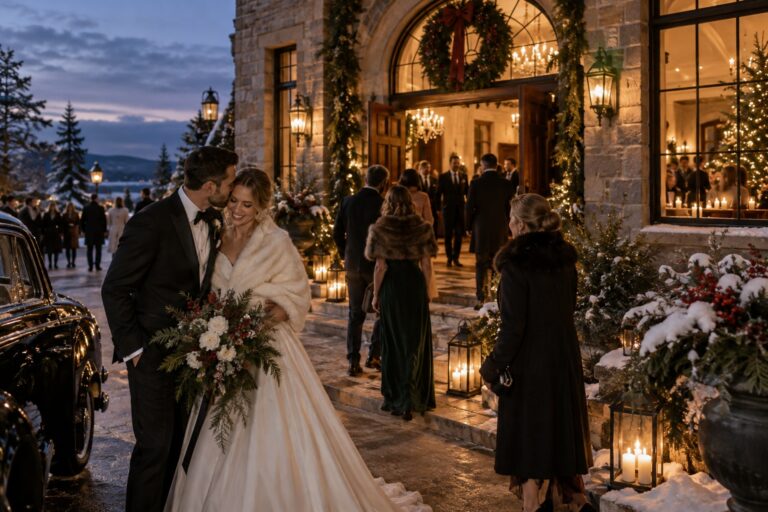
- Offer a warm indoor arrival point, coat storage, and a clear plan for wet or snowy footwear.
- Check whether the venue, church, or city has existing holiday decorations you can use or must work around.
The venue is the next part of the capsule. Look for architectural elements that already create atmosphere: a stone fireplace, dark wood, tall windows, a dramatic staircase, historic trim, evergreen landscaping, or a city view at dusk. A naturally expressive venue can reduce the amount of decor you need. If the room already has trees, garlands, or lights, choose complementary details instead of competing with them.
Finally, write a one-sentence identity statement. For example: “A candlelit city holiday wedding in forest green, warm ivory, and brass, with velvet texture and understated seasonal greenery.” This sentence is your filter. If a proposed detail does not support the palette, material story, guest comfort, or mood, it probably does not belong in the capsule.

Build the Capsule From a Restrained Palette and Three Repeatable Materials
A strong holiday wedding palette normally needs one anchor color, one light neutral, one metallic or reflective accent, and an optional seasonal note. Forest green with warm ivory and brass feels classic. Burgundy with blush, espresso, and antique gold feels intimate. Midnight navy with winter white and silver feels formal. Chocolate brown with cream and copper feels modern and welcoming. Red and green can work, but using several shades instead of one bright red and one bright green keeps the look more sophisticated.
Choose colors by looking at the venue, the time of day, and the photographs you want. Deep colors absorb light, so an evening ballroom may need ivory candles, pale stationery, or reflective tableware to keep the room from becoming heavy. A bright daytime venue can handle richer linens or a darker wedding party palette. In a small room, use the strongest color in controlled doses so the space does not feel visually crowded.
- Anchor color: forest, wine, navy, espresso, or charcoal.
- Light neutral: warm ivory, soft white, stone, blush, or pale blue.
- Accent: brass, gold, silver, copper, or a restrained champagne tone.
- Seasonal note: cranberry, pine, berry, velvet ribbon, citrus, or frosted greenery.
After color, select three materials. Materials make a holiday wedding feel seasonal even when the palette is subtle. Evergreen is a natural choice for garlands, bouquets, escort cards, and ceremony arrangements. Velvet adds depth to ribbons, napkins, bridesmaid dresses, signage, or a lounge chair. Candlelight creates a consistent glow across the ceremony, cocktail hour, and dinner. You might replace one of these with wool, satin, paper, glass, wood, or polished metal if that better suits your venue.
Give every material a job and a limit. Evergreen can soften architecture, but too much greenery can make a table difficult to see across. Velvet looks luxurious, but a velvet tablecloth, velvet napkin, velvet dresses, and velvet lounge furniture all at once can feel dense. Candles are atmospheric, but they still need safe placement, stable vessels, and enough ambient light for guests to move comfortably. A capsule is defined as much by what it excludes as by what it includes.
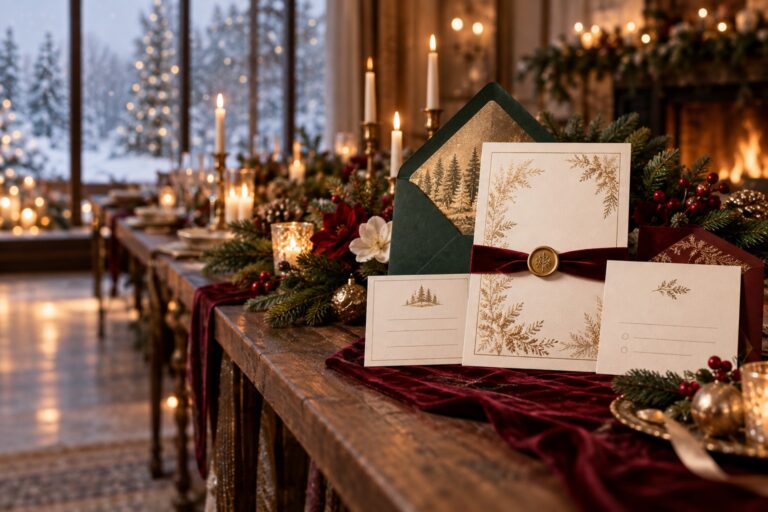
Stationery should introduce the system without explaining it. A warm ivory invitation with forest ink and a brass envelope detail may be enough. If you choose a motif, use one: a tiny pine branch, a simple star, a ribbon edge, or a hand-drawn wreath. Repeat the motif later on the menu, ceremony program, or welcome sign, but do not place every seasonal symbol on every printed piece.
Flowers can follow the same rule. Ask your florist for a limited recipe rather than a new arrangement for every surface. A bouquet might combine white blooms, seasonal foliage, and one berry-toned accent. The ceremony arch can use the same foliage in a larger proportion. The tables can use low clusters or small bud vases that echo the bouquet. This creates visual continuity and makes it easier to compare the cost of each floral decision.

Create Combinations Across Ceremony, Tables, Attire, Stationery, and Food
Once your palette and materials are set, build combinations rather than isolated decorations. A combination is a small group of elements that can travel through the wedding. For example, evergreen, warm ivory, and brass can appear in the invitation border, ceremony aisle, escort card display, bar sign, and dessert table. The objects change, but the visual language stays familiar.
Ceremony combination
Keep the ceremony focus clear. A few lanterns, a simple evergreen arrangement, and warm aisle lighting may do more than a full floral installation. For an outdoor ceremony, place blankets or wraps where guests can reach them without interrupting the process, and provide a sheltered plan for wind or precipitation. For an indoor ceremony, ask whether existing seasonal decor can become part of the backdrop. A first look near a decorated tree or fireplace can also give you a holiday photograph without filling the ceremony space with props.
Reception table combination
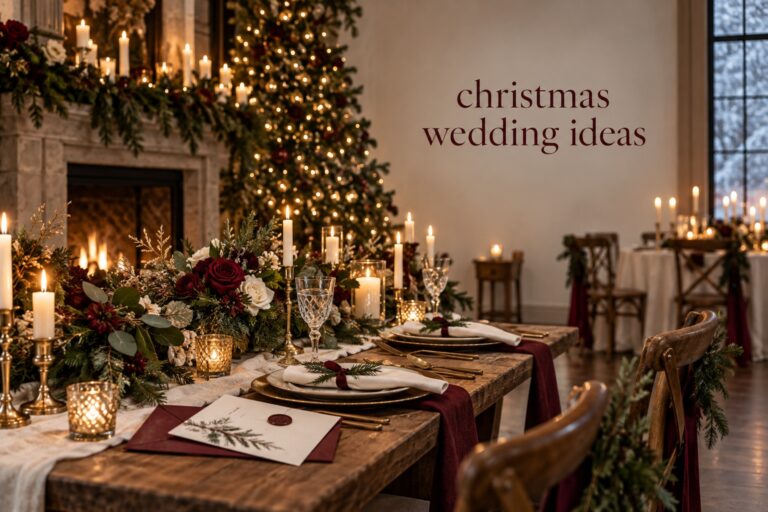
Use one repeatable table formula. A low evergreen runner, ivory napkins, brass flatware, and clusters of candles create a recognizable holiday mood with relatively few components. For a more modern result, replace the runner with single stems in clear vessels and let the linens carry the color. For a rustic room, add wood, pinecones, or plaid in one controlled layer. Keep centerpieces low enough for conversation and leave room for plates, glasses, and menus.
Attire combination
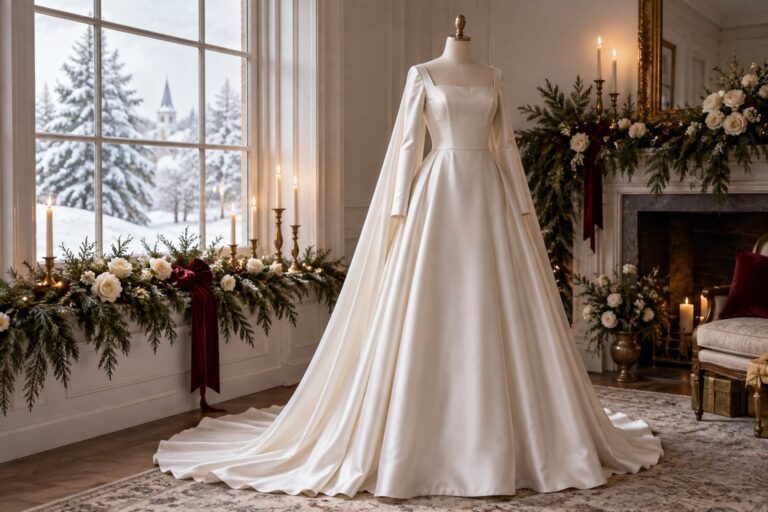
The wedding party is part of the room design, but people should still look like themselves. Velvet dresses in forest, wine, or navy can establish the season without requiring matching silhouettes. A dark suit, a textured tie, a satin lapel, or a metallic accessory can carry the same mood for the groom and attendants. Choose outerwear deliberately for photographs: a tailored wool coat, cape, stole, or structured wrap will look more intentional than a last-minute winter jacket.
Guest communication matters here too. The invitation or wedding website can mention the expected dress code, the likely temperature, and whether any part of the event takes place outdoors. “Formal attire, with warm layers for an outdoor ceremony” is more useful than assuming guests will understand the weather from the month alone. If you are hosting a destination or mountain holiday wedding, explain footwear and transportation details before guests pack.
Stationery and welcome combination
Let the paper goods carry information as well as mood. A welcome sign can point guests toward coat check, restrooms, transportation, and the ceremony room. Escort cards can use a tiny sprig, a ribbon tie, or a warm paper stock instead of a complicated holiday illustration. If the celebration includes multiple events, keep the typography and base color consistent so the rehearsal dinner and wedding day feel related without looking identical.
Food, drink, and favor combination
Seasonal food should feel generous, not gimmicky. A cranberry cocktail, spiced cider, hot chocolate station, roasted vegetables, citrus dessert, or chocolate cake can suggest the season through flavor. Pick one or two signature moments and let the rest of the menu reflect your actual preferences. A drink garnish or dessert detail can echo the berry, citrus, or evergreen note in your palette without turning the reception into a themed tasting room.
Favors work best when they solve a real guest need or offer something people will use. A small candle, local coffee, tea, a packet of warming spices, or a beautifully wrapped edible treat can extend the hospitality of the day. If you use ornaments, make them simple and clearly optional rather than attaching a personalized keepsake to every place setting. The most memorable holiday detail is often the one that makes a cold arrival, long dinner, or late-night departure more comfortable.

Prioritize Purchases, Seasonal Adaptations, and Practical Guest Comfort
Budget the capsule in layers. First protect the decisions guests feel: a reliable venue, weather plan, transportation, heating, food, and a comfortable timeline. Next fund the elements that appear in photographs and shape the room, such as lighting, ceremony focal points, linens, and a cohesive floral recipe. Decorative extras come last. This order keeps the wedding beautiful even if you decide to remove a few smaller holiday details.
- High priority: venue warmth, weather backup, guest transportation, hotel information, lighting, and food service.
- Medium priority: ceremony focal point, table formula, wedding party outerwear, stationery, and one signature drink.
- Optional priority: custom ornaments, large props, elaborate photo booths, specialty rentals, and multiple themed stations.
Use the venue’s existing assets before renting new ones. A church may already have greenery or trees. A hotel ballroom may have candleholders, lounge furniture, or seasonal lighting. A historic inn may only need table linens and flowers. Ask what can remain in place, what can be moved, what is included in the rental fee, and what must be removed after the event. This conversation can prevent you from paying twice for decor that already exists.
Adapt the capsule to your region. A holiday wedding in the Northeast or Midwest needs a serious indoor plan, coat storage, and safe transitions between car and venue. In the Southeast, Southwest, or parts of California, evenings may be mild enough for an outdoor cocktail hour, but guests still appreciate a light layer and a heated or enclosed option. In the Pacific Northwest, rain protection and non-slip paths may matter more than snow. Seasonal styling should respond to the actual place, not an imagined winter postcard.
Keep the schedule realistic. Winter daylight disappears earlier, which affects portraits and outdoor ceremonies. Holiday traffic can lengthen transfers. Guests may have more than one event to attend during the weekend. Leave breathing room between the ceremony, photographs, dinner, and transportation. A short, well-planned outdoor portrait window is better than asking the entire wedding party to stand in the cold while the schedule quietly falls behind.
Do a final edit at the end of planning. Walk through the event in order: invitation, arrival, ceremony, cocktail hour, dinner, dancing, and departure. At each stage, ask what guests need to know, feel, see, and carry. Remove any detail that repeats a message you have already communicated. If the room already has a Christmas tree, you may not need ornament centerpieces. If the dresses are emerald velvet, the linens can be ivory. If the menu is rich and festive, the flowers can stay simple.
The finished holiday wedding should feel like a generous winter gathering shaped around a marriage, not a collection of seasonal references. When a limited palette, three materials, and a few practical comforts appear consistently, the result looks polished because every decision belongs to the same story. That is the real benefit of a capsule system: it gives you freedom within clear boundaries.

FAQ
What is the best month for a holiday wedding?
There is no single best month, but late November, early December, and early January can offer a festive atmosphere with fewer conflicts than the days immediately around Christmas. Check major family commitments, religious holidays, local weather, venue availability, and travel costs before choosing. If many guests are traveling, send save-the-dates early and encourage them to arrive with extra time.
How can I make a holiday wedding feel elegant instead of themed?
Use a restrained palette, rich textures, and one or two seasonal references instead of covering every surface with holiday motifs. Jewel tones, warm neutrals, candlelight, velvet, satin, evergreen, and metallic accents can feel festive without becoming costume-like. Repeat a few materials consistently and remove details that compete with the couple or the venue.
Can I use red and green for a holiday wedding?
Yes, but choose nuanced shades such as burgundy, cranberry, forest, or moss rather than relying only on bright primary red and green. Balance the palette with ivory, charcoal, wood, or antique metal. You can also use one color as the anchor and the other as a small seasonal accent, which keeps the tables and attire more flexible.
What should guests wear to a holiday wedding?
Guests should follow the stated dress code while choosing fabrics and layers that suit the weather. Velvet, satin, lined lace, wool blends, tailored coats, wraps, and dressy closed-toe shoes can work well for cold venues. The couple should mention outdoor portions, expected temperatures, transportation, and footwear concerns on the invitation details or wedding website.
How do I keep guests comfortable at a winter holiday wedding?
Provide a warm indoor option, coat storage, safe paths, clear transportation information, and extra travel time. For outdoor ceremonies, consider blankets, wraps, heaters, or a short ceremony length. Make sure guests know whether they will walk on snow, gravel, grass, or ice. Comfort improves the atmosphere because people can focus on celebrating instead of managing the cold.
How much holiday decor does a wedding need?
It needs enough to establish a consistent mood, not enough to fill every empty surface. Start with lighting, the ceremony focal point, tables, and guest arrival because those areas shape the experience. If the venue already has seasonal decor, use it as a foundation. A limited palette and repeated materials usually look more expensive and intentional than many unrelated decorations.
How can I make a holiday wedding inclusive?
Use language that describes the mood and season rather than assuming every guest celebrates the same holiday. Winter light, candlelit warmth, evergreen, snow, metallics, rich fabrics, and shared hospitality can create a festive atmosphere without centering one tradition. Check the calendar for major observances, ask important guests about conflicts, and let the couple’s own story guide the details.