Graduation Guest Dress Ideas That Stay Polished, Not Flashy
The graduation guest dress dilemma: polished celebration or romantic occasionwear?
Graduation invitations tend to arrive with a deceptively simple dress expectation: look polished, look celebratory, and photograph beautifully—without drifting into “too formal” or “trying to be the main character.” In practice, that’s exactly why choosing a graduation guest dress can feel harder than selecting something for a clearly defined dress code.
The two aesthetics most often weighed against each other are a tailored, daytime-polished approach and a romantic, occasion-forward approach—the same crossroads many guests face when dressing for weddings, bridal showers, and milestone dinners. They’re discussed together because both can be “appropriate,” both can include midi and long dresses, and both can borrow details like sleeves, satin-like shine, or a softer palette. Yet they communicate very different intentions.
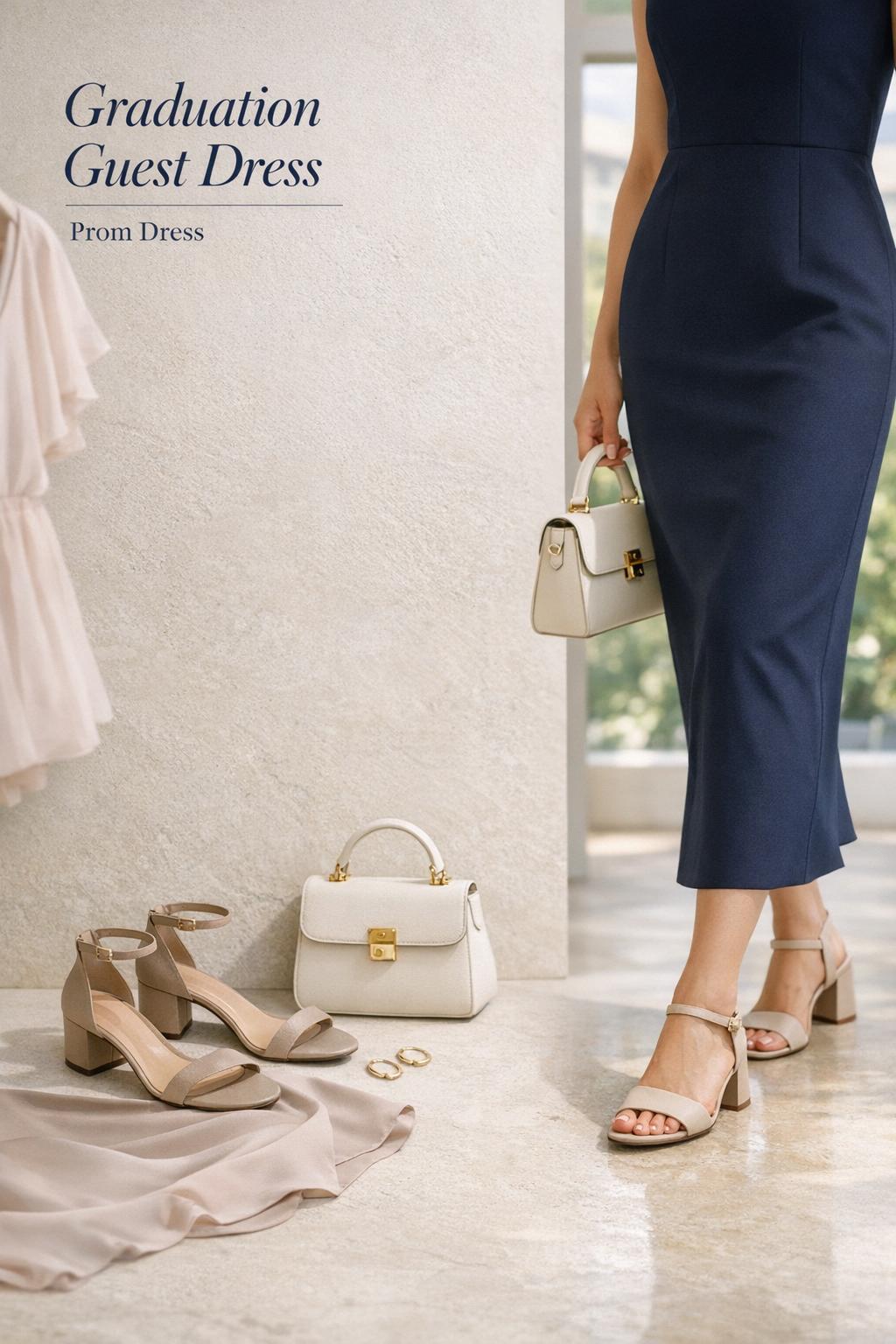
Below, you’ll see a clear style breakdown—what defines each look, how they differ visually, and how to decide which one serves the venue, timing, and your role best. You’ll also find practical, stylist-minded guidance for choosing sleeves (including long dresses with short sleeves), balancing comfort and formality, and borrowing ideas from adjacent categories like grad dresses and even prom dress silhouettes—without letting the outfit wear you.
Style overview: the tailored daytime guest look
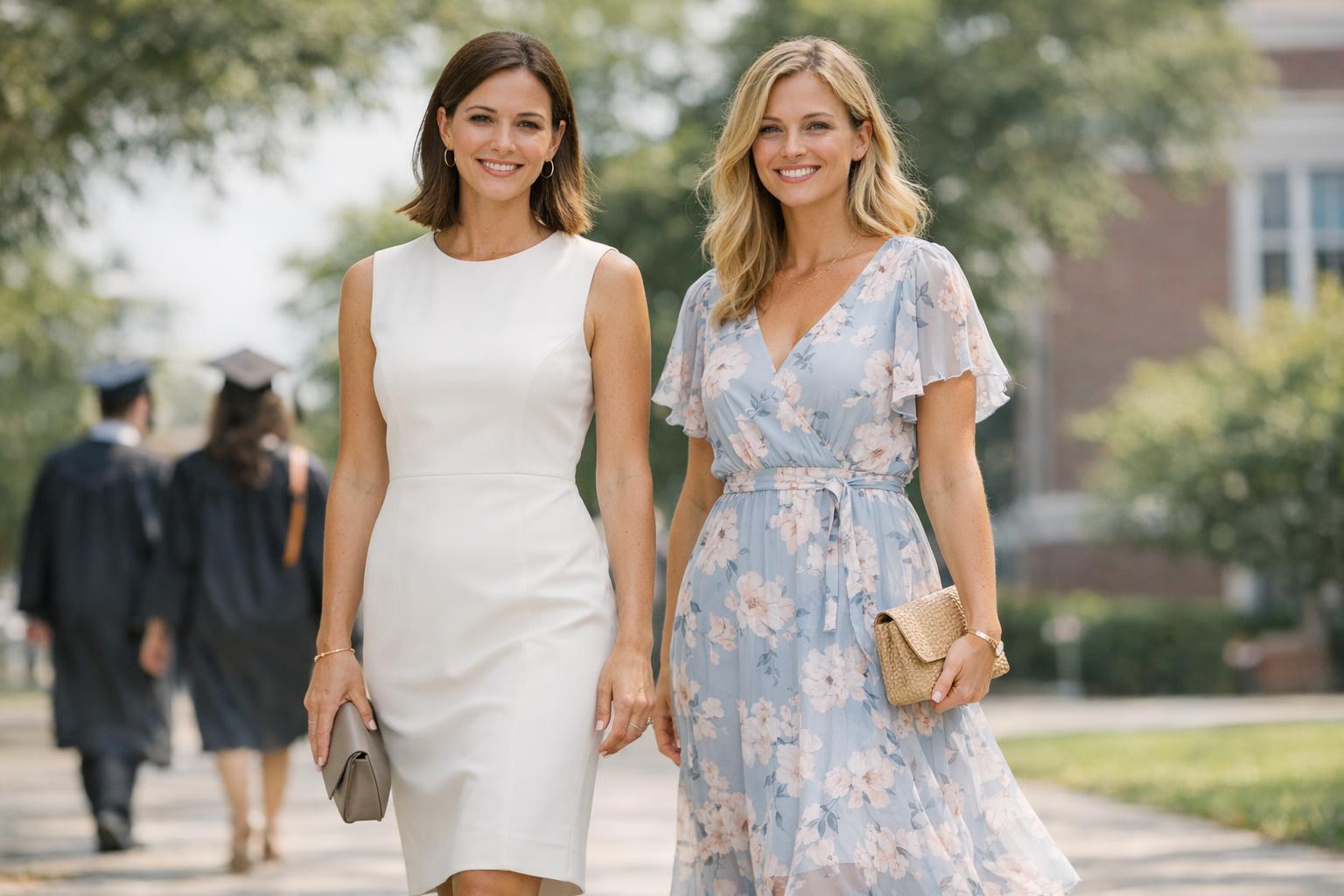
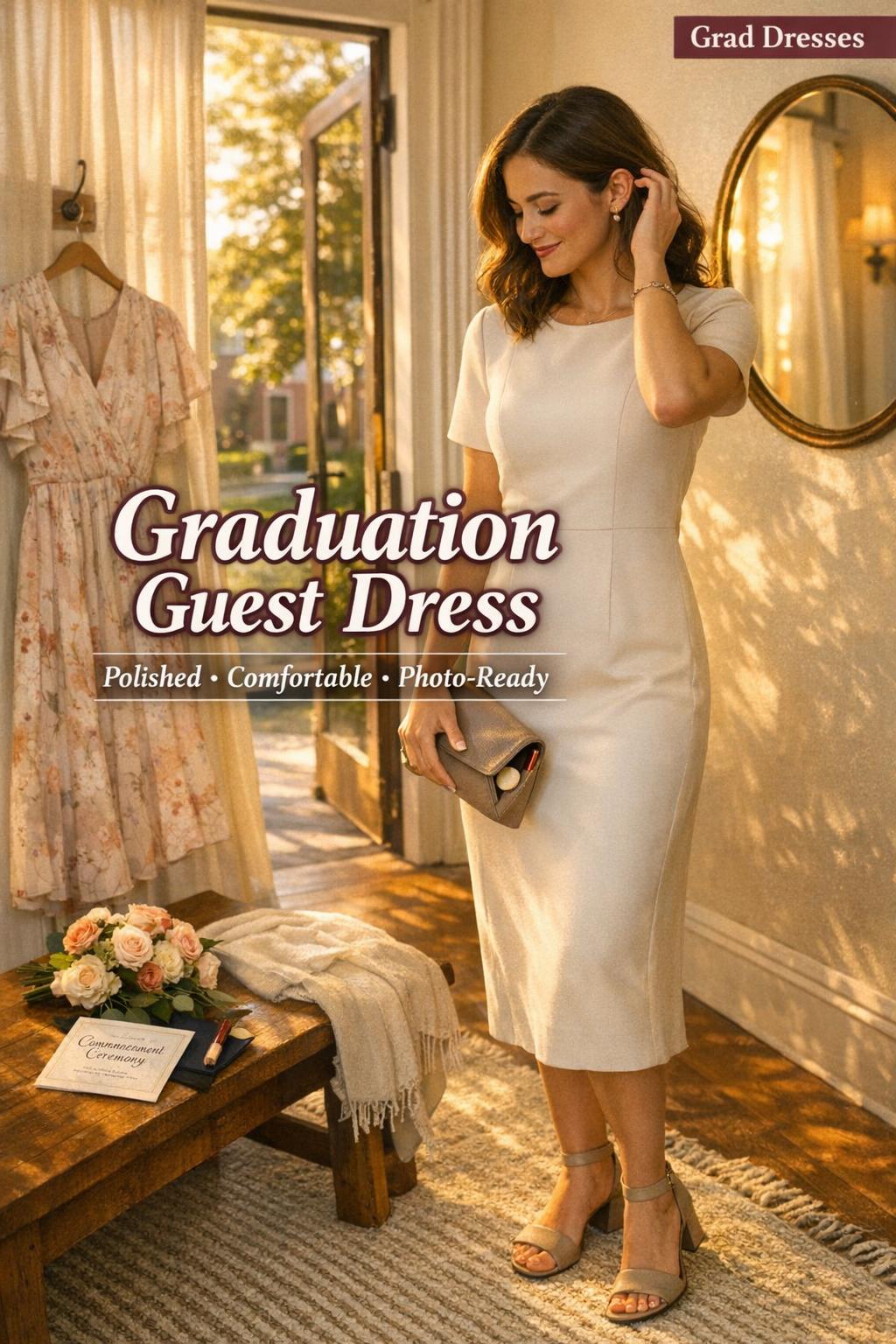
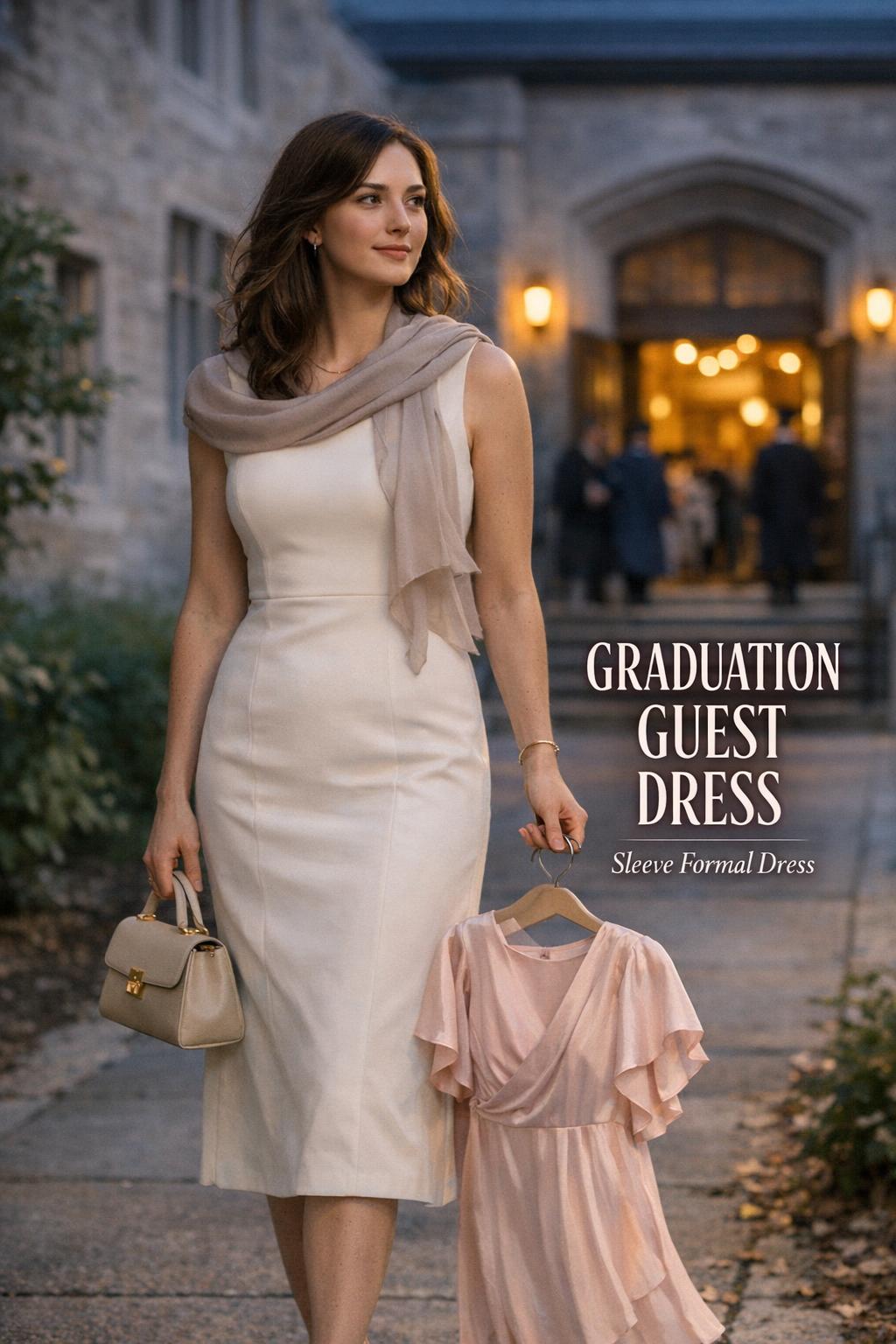
This style is rooted in structure and restraint. Think of it as “ceremony-ready daytime polish”—clean lines, deliberate proportions, and a quiet confidence that reads well in bright auditoriums, campus quads, and post-ceremony brunch settings.
Your wedding look is only the beginning.
Keep your guest list, vendors, timeline, and every important detail together with Zarellea — so your day feels as considered as your style.
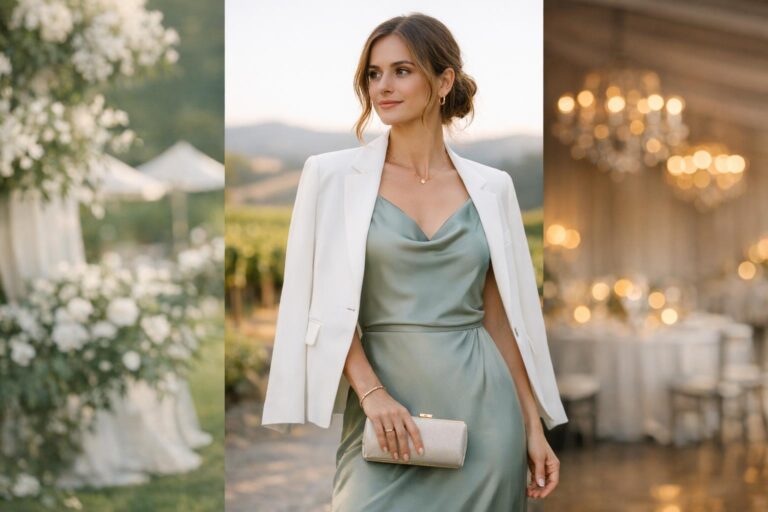
Defining characteristics: streamlined silhouettes (often sheath, column, or gently fitted midi), crisp seams, minimal embellishment, and sleeves used as an elegant framing detail rather than a dramatic statement.
Typical silhouettes: midi lengths dominate because they feel formal enough for the moment but still grounded in daytime reality; however, a sleeve formal dress in a longer length can work when the graduation leans evening or the venue is particularly grand.
Color palette: refined neutrals, soft tones, and saturated hues used sparingly. The goal is a “camera-friendly” look that doesn’t compete with regalia, stage lighting, or family photos.
Fabrics and textures: fabrics with body—anything that holds shape and stays polished while sitting, standing, and walking across campus terrain. Texture is subtle: matte finishes, smooth weaves, and small-scale detailing.
Overall mood: composed, classic, and intentional—ideal for guests who want to look elevated without looking like they dressed for an evening reception.
Style overview: the romantic occasion guest look
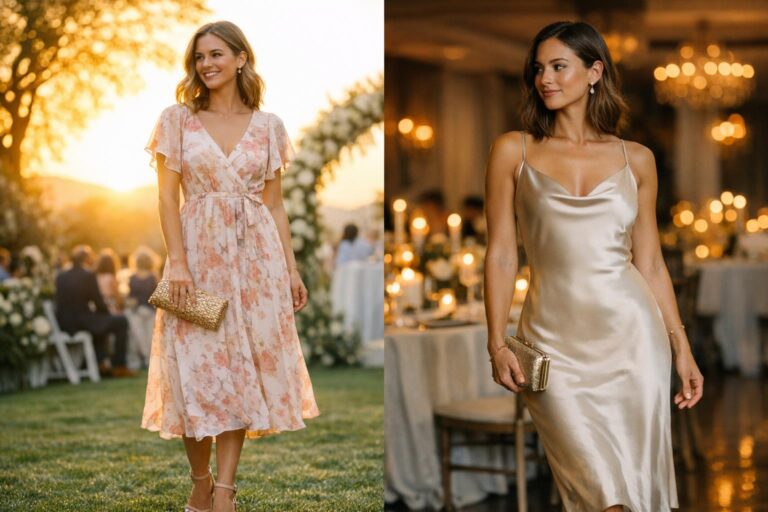
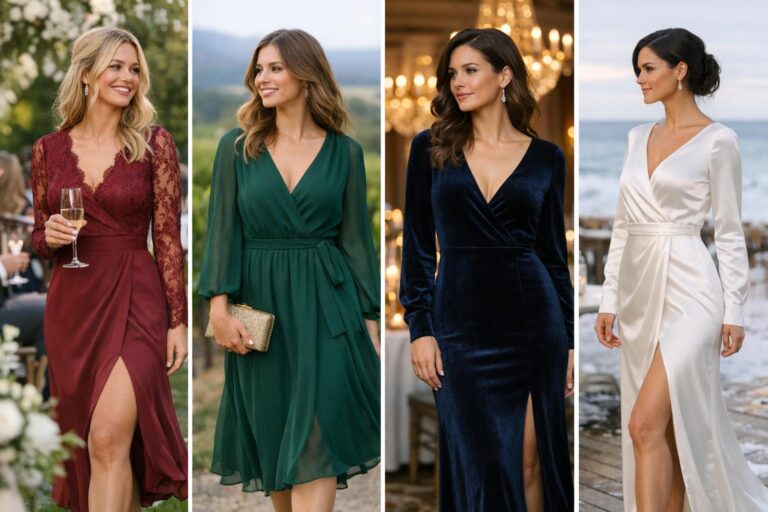
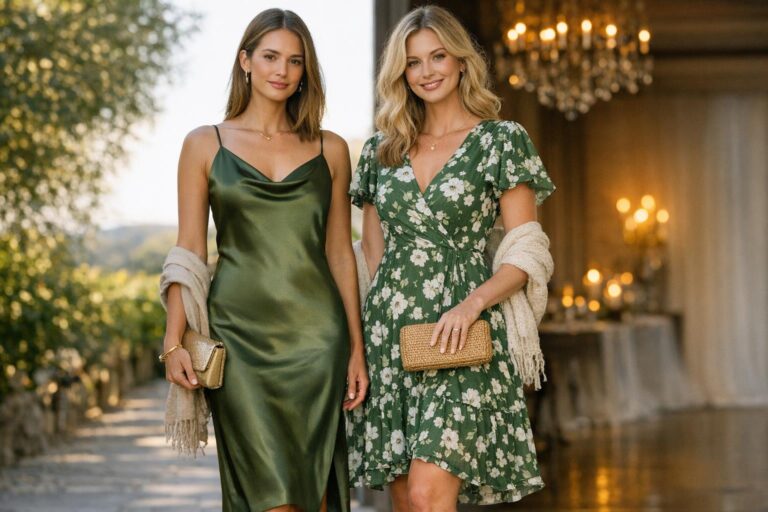
This approach leans into celebration. It’s softer, more atmospheric, and often more openly “event-dressed,” with movement, drape, and detail doing the storytelling. It’s the style that feels natural when the day flows into dinner, a rooftop toast, or a candlelit gathering after the ceremony.
Defining characteristics: fluid lines, gentle volume, and details that read as romantic—draping, fluttering sleeves, soft gathers, or an elegant neckline that frames the collarbone.
Typical silhouettes: floaty midi dresses, elongated maxis, and “special-occasion” shapes that might overlap with grad dresses or even a toned-down prom dress idea—especially when the dress is long, refined, and not overly embellished.
Color palette: more expressive—pastels, floral-inspired tones, and deeper shades that glow in evening light. The color story often feels curated for photos taken at golden hour.
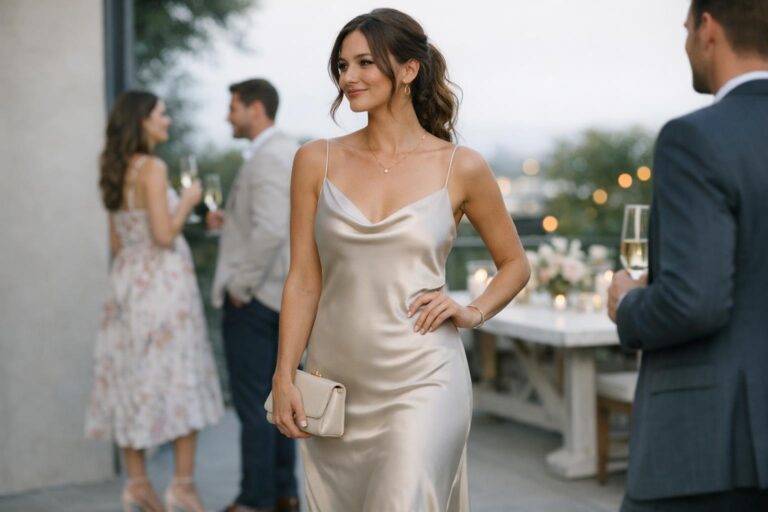
Fabrics and textures: materials that move—drapey weaves, soft shine, and airy textures that create that “walking into a celebration” effect. A night dress with sleeves often lives in this category: it’s not pajamas, it’s that evening-leaning dress you reach for when you want romance and coverage in one.
Overall mood: festive, feminine, and expressive—perfect when the graduation is part of a full day of celebrations and you want your outfit to feel like a moment.
Why these styles get confused (and how to separate them quickly)
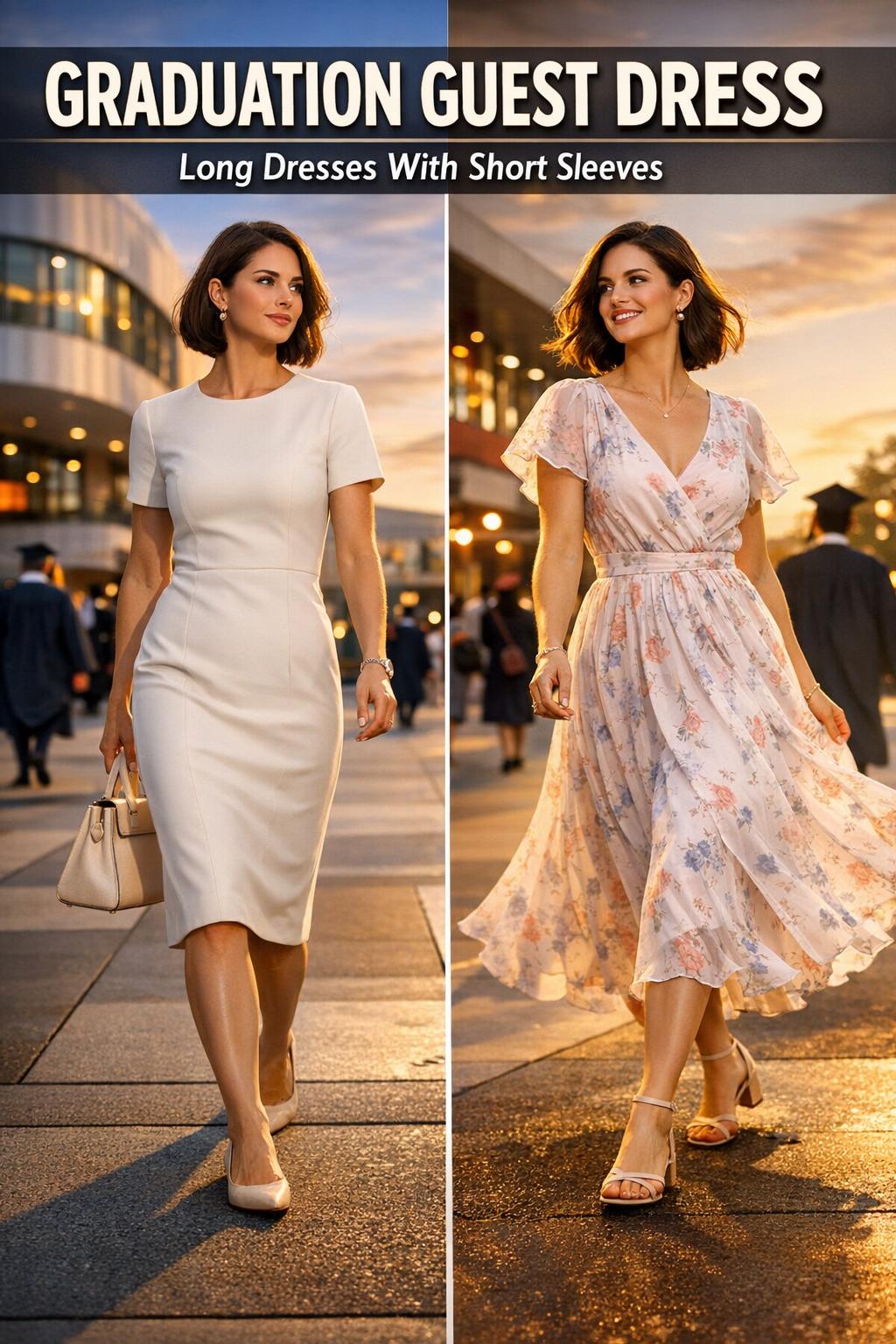
Both styles can include the same “pieces” on paper: a midi dress, a sleeve formal dress, a soft neutral, a low heel. The difference is the intention behind the choices. Tailored daytime polish prioritizes structure and understatement; romantic occasion dressing prioritizes movement and mood.
A quick way to tell them apart is to imagine the dress in motion. If the dress looks best when it’s perfectly still—crisp, smooth, and sharply defined—you’re likely in tailored territory. If it comes alive when you walk—fabric floating, sleeves catching light, skirt moving—you’re likely in romantic territory.
Key differences that matter for a graduation guest dress
Silhouette and structure
Tailored daytime looks rely on shape: a clean waist, a straight skirt, an intentional hemline. Romantic occasion looks rely on drape: gentle volume, softer waist emphasis, and skirts that move. Neither is “better,” but they behave differently when you’re sitting through speeches, standing for photos, and navigating crowds.
Color story and photo impact
Daytime polish often uses controlled color so your outfit doesn’t clash with the visual intensity of the ceremony itself. Romantic looks often choose color for atmosphere—how it reads against greenery outdoors, how it warms under evening lighting, or how it complements a celebratory bouquet in photos.
Level of formality (and where the “prom dress” line actually is)
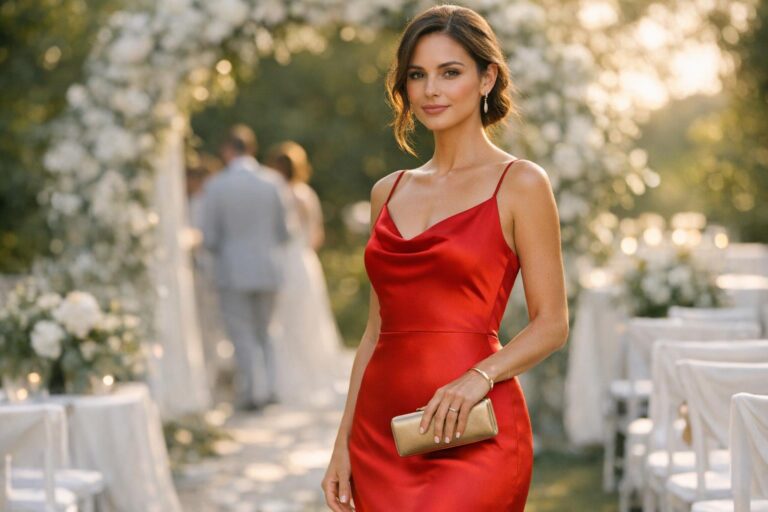
A prom dress silhouette can be graduation-appropriate when it’s edited: minimal embellishment, refined neckline, and a mature fabric finish. In tailored daytime dressing, anything “prom-adjacent” is usually shortened or simplified. In romantic occasion dressing, longer lengths can work—especially if the celebration runs late—but the key is restraint: the dress should feel like an elevated guest look, not a red-carpet statement.
Styling philosophy
Tailored dressing is about editing: fewer elements, more precision. Romantic dressing is about layering mood: softness, movement, and a cohesive palette that feels intentional rather than minimal.
Typical wardrobe pieces
Tailored looks gravitate toward defined midi shapes, clean sleeves, and simple finishing pieces. Romantic looks gravitate toward floaty midis, long dresses with short sleeves, and delicate details that read beautifully when you move from ceremony seating to outdoor photos to dinner.
Visual style breakdown: how the outfits read in real settings
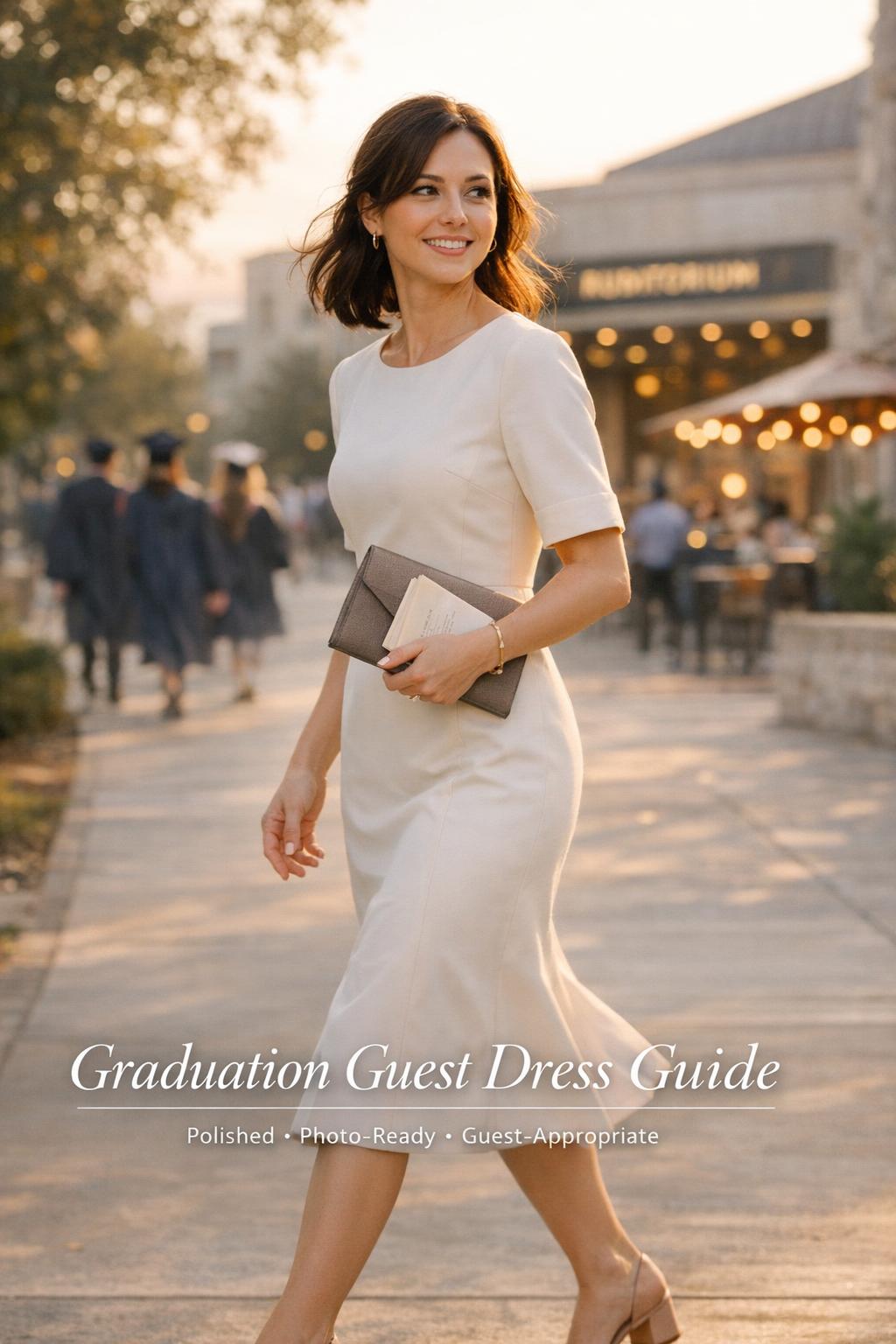
Graduations often unfold across multiple “mini-venues” in a single day: an auditorium with bright stage lighting, an outdoor campus walk, a restaurant reservation, maybe even a family gathering at home. The right graduation guest dress has to look coherent across all of it.
Layering approach: crisp finishing vs soft framing
Tailored daytime looks layer with intention—think a clean outer layer that maintains the lines of the dress and doesn’t overwhelm it. Romantic looks treat layering as framing: a light, soft layer that feels part of the story, especially when the weather shifts from midday sun to cooler evening air.
Garment proportions: hemline logic
A structured midi is the workhorse of the tailored approach because it’s easy to walk in and sits neatly in photos. Romantic looks can go longer, but the hem should feel deliberate. If you’re considering grad dresses in maxi lengths, look for movement and ease—walking up stadium steps or across grass should feel effortless, not fussy.
Accessories: architectural vs delicate
Tailored outfits read best with accessories that feel clean and defined—one statement element at a time. Romantic outfits can carry softer accents that echo the dress’s movement and mood, but should still be edited for a ceremony setting where the graduate remains the focus.
Footwear choices: walking-friendly elegance
Graduation days involve more walking than most guests anticipate—parking, ramps, bleachers, campus paths. Tailored looks pair naturally with stable, minimal footwear. Romantic looks often invite a slightly dressier shoe, but comfort matters just as much: the most elegant outfit loses its charm when you’re limping through family photos.
Overall outfit balance: “event-ready” without overstatement
Tailored outfits balance by reducing visual noise. Romantic outfits balance by keeping one hero element—sleeves, drape, color—while letting everything else stay refined. In both cases, the goal is the same: to look like you understood the moment.
Sleeves as the quiet hero: from long dresses with short sleeves to full coverage
Sleeves solve several real graduation-day problems at once: indoor air conditioning, outdoor sun, and the desire for a polished silhouette in photos. They’re also one of the most meaningful differences between tailored daytime and romantic occasion dressing.
In the tailored camp, sleeves tend to be clean and purposeful—short sleeves with a crisp edge, or a smooth longer sleeve that keeps the line sleek. In the romantic camp, sleeves are often expressive—soft volume, a gentle flutter, or a draped shape that creates movement. Both can read elegant, but they tell different stories.
How to wear long dresses with short sleeves without losing proportion
Long dresses with short sleeves can be a beautiful graduation guest dress choice when the bodice fits well and the waist placement feels intentional. The most common pitfall is a dress that becomes visually “heavy” through the torso. To keep it refined, look for a clean shoulder line and a sleeve length that ends neatly (not cutting at an awkward point), then let the skirt be the movement.
Night dress with sleeves: when the celebration turns evening
A night dress with sleeves is best interpreted as an evening-leaning option—something that still respects the ceremony, but feels ready for a dinner reservation or a more formal gathering afterward. The sleeve makes it feel complete, while the fabric and length can nod to the after-dark portion of the day. The key is to keep the finish refined rather than overly dramatic.
Sleeve formal dress: the most versatile middle ground
If you’re torn between tailored and romantic, a sleeve formal dress often bridges the gap. Choose a silhouette that’s clean enough for daytime and a fabric that still feels special. This is also the most forgiving category for shifting weather—especially when you’ll move between indoor and outdoor settings.
Outfit comparisons: the same scenario, two different style solutions
Rather than treating outfits as a checklist, it helps to style the day. Graduation events can feel like a wedding weekend in miniature: different lighting, different backdrops, and plenty of photos. Here’s how each aesthetic solves the same situations.
Example comparison: midday campus ceremony with outdoor photos
Tailored daytime approach: A refined midi with a clean sleeve and a controlled silhouette reads polished against the formality of regalia and the bright, documentary-style lighting of an auditorium. The look feels composed when you’re seated for long stretches and still crisp when you step outside for photos.
Romantic occasion approach: A floaty midi or soft long dress with short sleeves brings a gentle softness to outdoor photos, especially in greenery or golden hour light. The movement can be stunning—but you’ll want to ensure the dress is secure at the neckline and easy to walk in across uneven paths.
Example comparison: graduation followed by a restaurant dinner
Tailored daytime approach: Keep the same structured dress and elevate it with a slightly more refined finishing touch for dinner—this is where a sleeve formal dress shines, because it stays elegant without needing a full outfit change.
Romantic occasion approach: This is the romantic look’s natural habitat. A night dress with sleeves feels intentional for dinner, especially in lower light. The caution is editing: keep the overall effect celebratory, not costume-like.
Example comparison: family gathering at home after the ceremony
Tailored daytime approach: The structure reads respectful and photo-ready for family portraits, while remaining comfortable enough for a more relaxed setting. If you’re hosting or helping, this approach tends to move with you without constant adjustment.
Romantic occasion approach: Choose romance with practicality—softness without excessive volume. A gentle sleeve and an easy skirt are ideal; anything too long or too sweeping can feel out of place when the celebration shifts to casual comfort.
Prom dress vs grad dresses vs graduation guest dress: how to borrow without overdoing it
It’s common to cross-shop categories, especially when you want something memorable. The trick is understanding what each category is designed to communicate.
- Prom dress energy is typically about spectacle—dramatic length, high-impact shine, or bold detailing. For a guest, it can work only when edited down to elegance: simple lines, minimal embellishment, and a mature, composed finish.
- Grad dresses often sit closer to youthful celebration—playful silhouettes, photo-friendly colors, and a sense of occasion. As a guest, these can translate beautifully when the fit is polished and the styling is refined rather than overly trendy.
- Graduation guest dress is ultimately about supporting the graduate. It should feel elevated and intentional, but never distracting in family photos or at the ceremony itself.
When in doubt, let one “special” element lead—an elegant sleeve, a refined neckline, or a beautifully moving skirt—then keep the rest quiet.
Choosing your style by venue: a wedding-stylist way to read the room
Graduations don’t always state a dress code, so the venue becomes your guide—much like dressing for a wedding when the invitation is light on details. The setting tells you how formal the day will feel, how much walking you’ll do, and what kind of photos you’ll end up treasuring.
Auditorium ceremony: bright lights, close-up photos
Auditoriums can be unforgiving: bright lighting, stage angles, and lots of sitting. Tailored daytime dressing excels here because structure holds up and wrinkles are less noticeable. Romantic looks can work, but choose stability—secure straps or sleeves, a reliable neckline, and fabric that won’t shift while seated.
Outdoor campus or stadium: wind, steps, distance
Outdoor settings call for practicality disguised as elegance. A midi is the easiest solution in either style camp. If you’re leaning romantic with a longer hem, ensure you can navigate steps and walkways without lifting your skirt every few minutes.
Evening reception vibe: softer light, richer mood
If the day ends with a more formal dinner or reception-like gathering, romantic occasion dressing becomes more compelling. This is where a night dress with sleeves or a refined long dress with short sleeves can feel exactly right—still respectful for the ceremony, but aligned with the after-dark atmosphere.
Tips from the styling room: how to look polished for hours
The most successful graduation guest looks are the ones you don’t have to think about once you’re wearing them. Comfort isn’t a bonus—it’s part of the elegance, because a confident guest photographs better and moves through the day with ease.
- Plan for sitting first. If the dress pulls, rides up, or requires constant smoothing when seated, it will become a distraction during the ceremony.
- Assume temperature swings. Indoor spaces can run cold while outdoor photos can feel warm. Sleeves—whether short, three-quarter, or full—often solve this more gracefully than adding and removing layers all day.
- Choose movement you can manage. Romantic skirts should glide, not tangle. Tailored skirts should allow you to walk naturally, especially on steps.
- Edit your “statement.” Pick one focal point: a sleeve detail, a neckline, or a color moment. Let everything else support it.
If you’re unsure between aesthetics, start with a sleeve formal dress in a midi length. It’s the styling equivalent of a well-chosen wedding guest dress: appropriate, adaptable, and consistently photogenic.
Common missteps that make a graduation outfit feel “off”
Most graduation guest outfits miss the mark in predictable ways—not because the dress is wrong, but because the styling doesn’t match the setting. A few small adjustments can instantly restore that composed, celebration-ready feeling.
Leaning too far into evening drama too early
Floor-length, high-shine, or heavily embellished looks can read like prom dress territory in a daytime ceremony. If you love the length, soften the effect: choose clean lines, sleeves for refinement, and keep the overall styling understated.
Choosing a fabric that doesn’t travel through the day
Graduation days are long. If the fabric creases easily, clings uncomfortably after sitting, or feels delicate in a crowd, the outfit can lose its elegance quickly. A graduation guest dress should hold up across photos, seating, and movement.
Ignoring the “walkability” factor
Guests often underestimate distances and terrain. Romantic long dresses with short sleeves can be lovely—until you’re navigating steps and grass. Tailored midis can also be restrictive if the hemline is too narrow. Your best look is the one you can walk in naturally.
When to choose each style (and how to blend them gracefully)
There isn’t a single correct answer—just the right match for your day, your venue, and your comfort.
Choose tailored daytime polish when…
You’ll be in bright indoor lighting, attending a formal ceremony setting, or moving through a schedule that includes long periods of sitting and structured photos. This approach is also ideal if you prefer understated elegance and want your graduation guest dress to feel timeless in family albums.
Choose romantic occasion dressing when…
The day includes an evening celebration, the setting is outdoors with beautiful natural backdrops, or you want your look to feel softly festive—especially in motion. This is a beautiful direction if you’re drawn to grad dresses aesthetics and want something that feels celebratory without going fully into prom dress statement territory.
Blend them when you want the most versatile result
A blended look often means a structured base with one romantic detail: a sleeve that has gentle shape, a skirt that moves without being voluminous, or a refined long silhouette that remains minimal. This is where a sleeve formal dress—and especially a night dress with sleeves that’s edited and refined—can feel perfectly calibrated for graduation.
Final thoughts: the clearest way to identify your best look
The core distinction is simple: tailored daytime dressing is about structure and restraint; romantic occasion dressing is about movement and mood. You can identify the difference by how the dress behaves—crisp and composed versus soft and expressive—and by whether the outfit feels designed for daylight precision or evening atmosphere.
The most memorable graduation guest dress is never the loudest. It’s the one that looks polished through every part of the day, feels comfortable for hours, and honors the celebration without competing with it. And if you’re torn, borrow from both: keep the silhouette clean, add a thoughtful sleeve, and let the finishing choices quietly say, “I showed up with intention.”
FAQ
What should I wear as a graduation guest if there’s no dress code?
Use the venue and timing as your guide: a structured midi or a refined sleeve formal dress reads appropriate for most daytime ceremonies, while a softer, more romantic dress (including a night dress with sleeves) can work beautifully if the celebration continues into the evening.
Is a long dress appropriate for a graduation guest dress?
Yes, especially when the graduation is formal or includes an evening portion, but keep the styling restrained; long dresses with short sleeves tend to feel balanced for graduations because they’re elegant without looking overly dramatic.
Can I wear something that feels like a prom dress to a graduation?
You can borrow a prom dress silhouette if it’s edited for a guest role—minimal embellishment, refined neckline, and a composed overall finish—so the look reads as elevated occasionwear rather than a statement meant to outshine the event.
How do I choose between tailored and romantic styles for graduation?
Choose tailored if you expect bright indoor lighting, lots of sitting, and a more formal ceremony feel; choose romantic if the day includes outdoor photos, a dinner celebration, or you want movement and softness, then keep accessories edited so the outfit stays guest-appropriate.
Are sleeves a good idea for graduation guest outfits?
Sleeves are often ideal because they handle temperature changes and photograph elegantly; a sleeve formal dress is especially versatile, and a night dress with sleeves can be a smart choice when the schedule shifts toward evening.
What’s the easiest “safe” graduation guest dress option that still looks special?
A midi-length sleeve formal dress is typically the safest and most polished choice because it balances ceremony-appropriate structure with comfort and can be styled slightly more romantic or more tailored depending on your accessories and overall mood.
How can I wear grad dresses trends as a guest without looking too youthful?
Choose a grad dresses-inspired silhouette but keep the finish refined—prioritize clean fit, controlled movement, and understated styling—so the look feels celebratory while still reading as composed guest attire.
What should I prioritize for comfort during a long graduation day?
Prioritize a dress you can sit in comfortably, walk in naturally, and wear through temperature shifts; sleeves, stable hemlines, and fabrics that stay polished through hours of movement make the biggest difference in how confident you feel by the final photo.