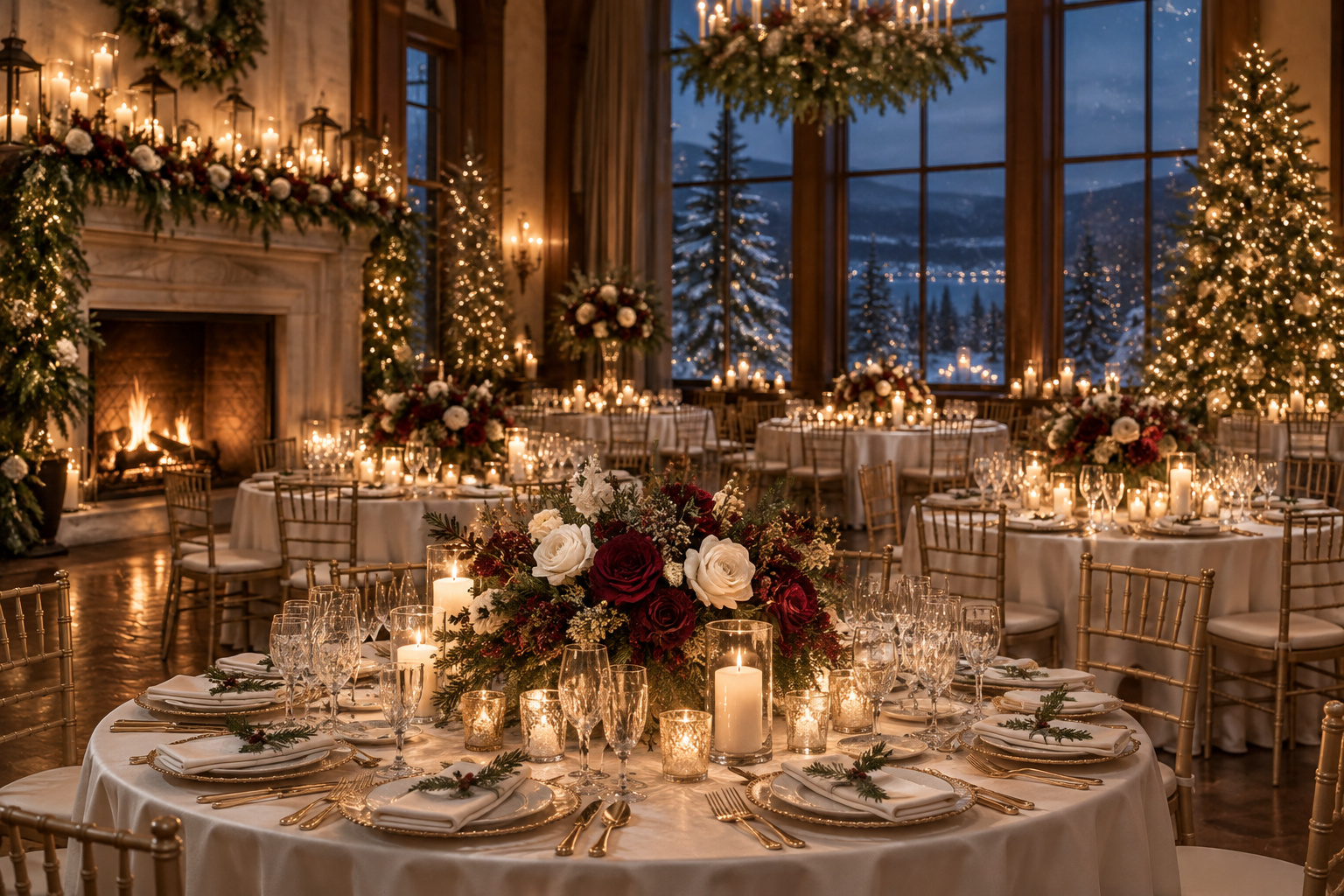
Christmas Wedding Centerpieces: 5 Elegant Directions
By the time guests take their seats at a December reception, the room has already told them what kind of celebration this will be. Candlelight catches on glassware. Evergreen rests along the table without smelling like a craft store. A small arrangement gives the eye somewhere to land, then leaves enough space for conversation, plates, and the people who came to celebrate with you. That is the quiet power of well-chosen Christmas wedding centerpieces.
The most memorable tables do not try to place every Christmas symbol in the same vessel. They choose a point of view. Maybe Christmas means deep green, warm red, and the glow of taper candles. Maybe it means a pale winter palette, polished metal, and one sculptural branch. Maybe the holiday reference is personal, expressed through a family ornament, a miniature tree, or a scent-free arrangement that recalls the place where you grew up. The ideas below are designed to help you make that choice with intention.
Decide What Christmas Should Feel Like at Your Tables
Before you save another centerpiece photograph, describe the mood you want a guest to feel in three or four words. Warm and candlelit is a different brief from crisp and snowy. Old-world and abundant is different from modern and restrained. A useful mood sentence might be, “We want the tables to feel like a candlelit winter garden with a little Christmas color.” That sentence gives a florist more direction than a folder containing fifty unrelated screenshots.
Your wedding look is only the beginning.
Keep your guest list, vendors, timeline, and every important detail together with Zarellea — so your day feels as considered as your style.
Christmas wedding centerpieces usually become cohesive when they repeat a small set of visual signals. Choose one dominant color family, one natural texture, one light source, and one kind of vessel. For example, you might pair forest green, pinecones, warm candlelight, and clear glass. Or you could use ivory, silver branches, reflective glass, and frosted lanterns. The table will feel designed because the elements speak to one another, not because every surface is decorated.
- Color: decide whether red and green lead, support, or stay out of the scheme. Burgundy, plum, blush, navy, ivory, and metallics can still feel seasonal.
- Texture: choose between evergreen, pinecone, velvet ribbon, dried grasses, berries, polished glass, or a smooth ceramic finish.
- Light: decide whether the centerpiece is built around tapers, votives, lanterns, LED candles, or the reflective quality of the vessels.
- Shape: choose a low runner, a compact round arrangement, a tall focal piece, or a group of small objects.
- Emotion: name the quality you want to preserve: cozy, elegant, playful, nostalgic, dramatic, or quietly wintery.
It also helps to separate Christmas from novelty. A centerpiece can use evergreens and candlelight without looking like a retail display. It can include red without becoming a holiday party table. The Knot notes that winter centerpieces do not have to stay inside a red-and-green palette, and that seasonal flowers and the couple’s own style should lead the design. That is a useful permission slip: the holiday should support your wedding, not replace it.
Build the Visual Language With Five Centerpiece Directions
Once the mood is clear, choose a centerpiece family. The following five directions are intentionally distinct. You can use one throughout the reception or create a controlled variation for the sweetheart table, family tables, and guest tables. If you mix them, repeat one anchor such as the same candle color, vessel finish, ribbon, or greenery so the room still feels connected.
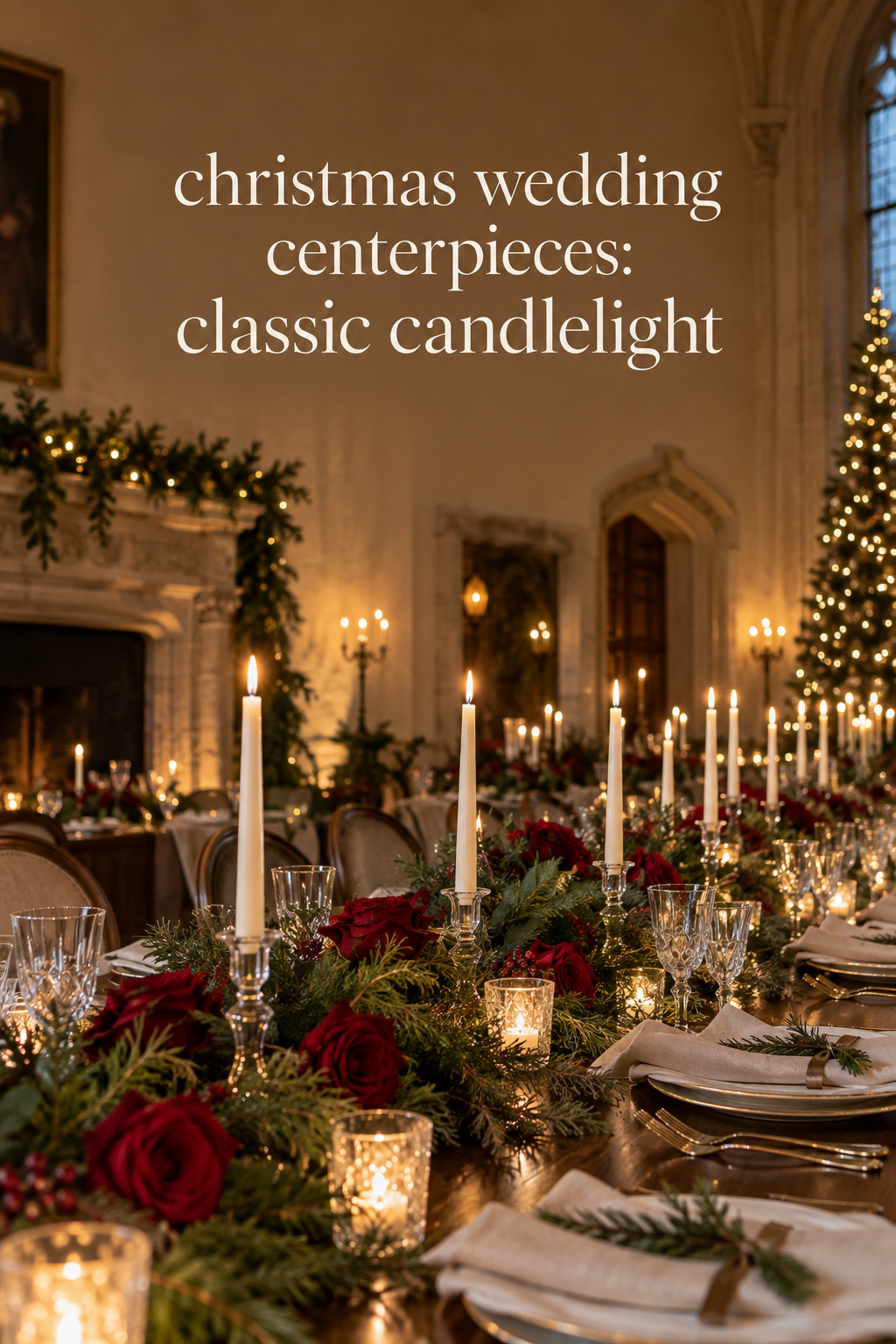
Classic red, green, and candlelight
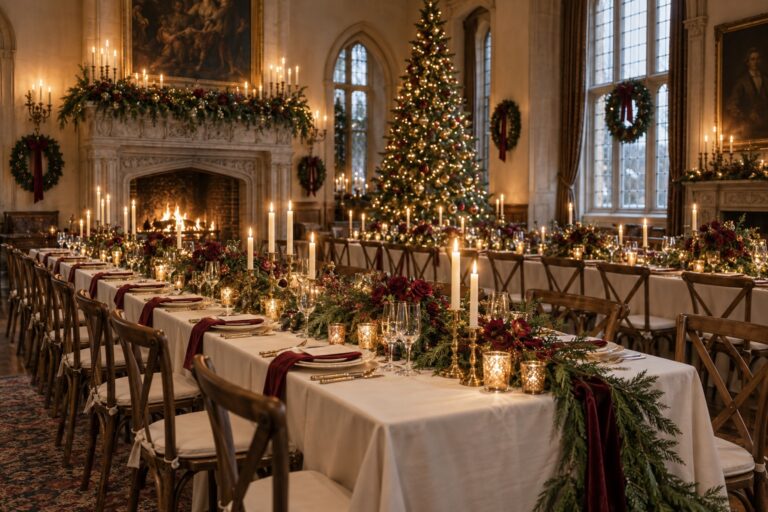
This is the clearest Christmas language, and it can be remarkably elegant when the palette is edited. Start with low evergreen branches or a loose garland. Add red roses, amaryllis, berries, or cranberries in small doses, then place warm ivory or deep red candles among the greenery. A white or natural linen runner keeps the arrangement from becoming visually heavy.
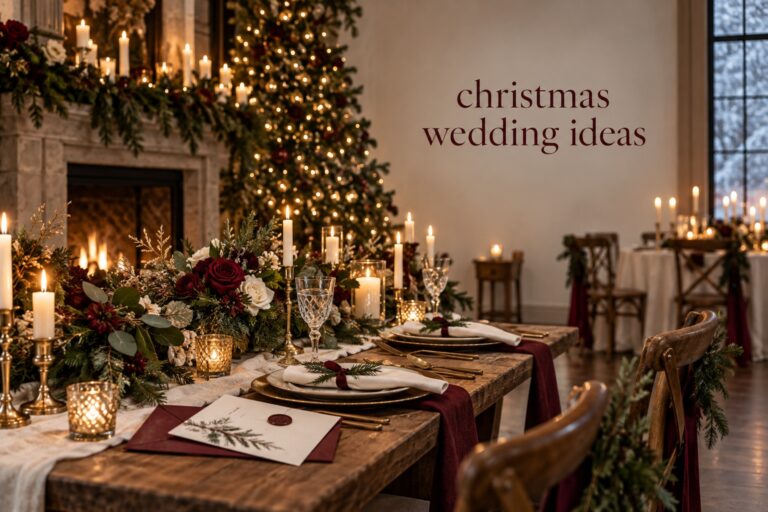
For a more polished result, choose one red rather than collecting every red. Crimson flowers with burgundy ribbon create a richer mood than bright scarlet, cherry, and orange-red together. Gold candlesticks can warm the table, while silver vessels make the same flowers feel cooler and more formal. The Knot’s Christmas-specific examples show how red candles, roses, amaryllis, pine needles, and a simple runner can communicate the season immediately without requiring extra ornaments.
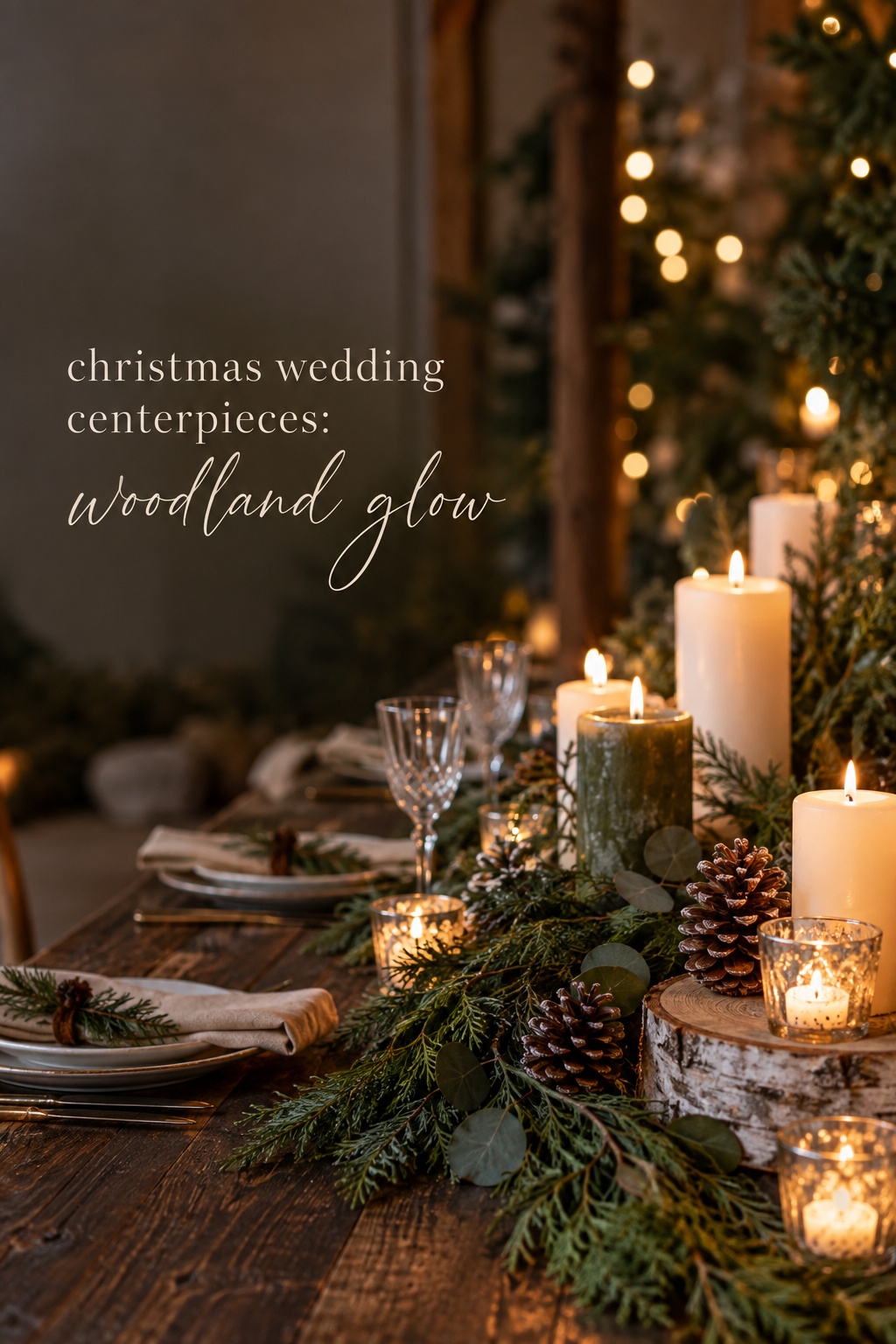
Candlelit woodland with evergreen texture
This direction is less about flowers and more about atmosphere. Picture a long table with a low line of fir, cedar, or eucalyptus, scattered pinecones, and a measured rhythm of pillar candles and votives. Birch slices, moss, nuts, and a few dried elements can give the arrangement a woodland feeling while keeping the color quiet. It works beautifully in a barn, lodge, greenhouse, or dark historic room, but it can also soften a bright modern venue.
Vary candle heights only when the vessels are stable and the view remains open. Food Network’s holiday centerpiece guidance specifically uses layers of pillar and votive candles with natural elements, and recommends unscented candles so fragrance does not compete with dinner. That detail matters at a wedding. Guests may be seated close to the centerpiece for several hours, so the table should look fragrant without actually filling the room with competing scents.
Winter white and reflective metallics
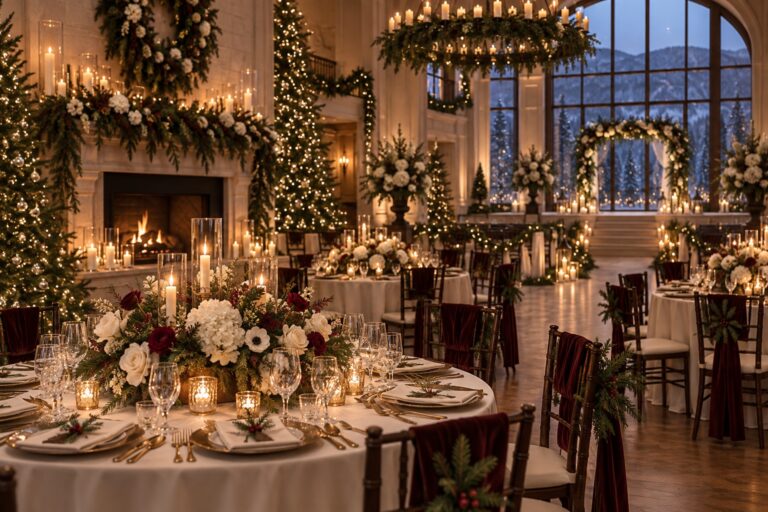
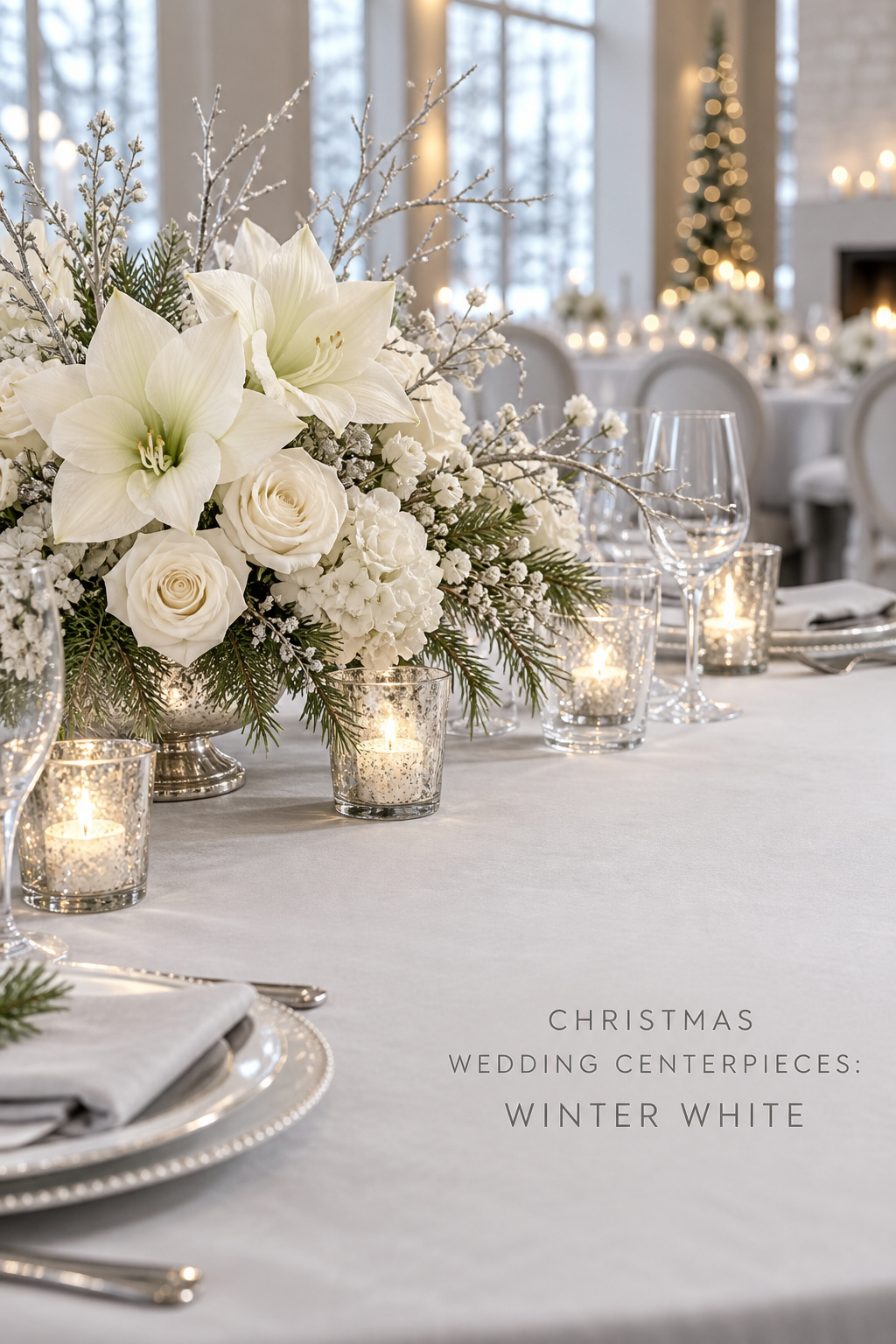
For a more contemporary interpretation, use ivory blooms, silver-painted branches, clear glass, pale greenery, and a small amount of crystal or mercury glass. White roses, amaryllis, ranunculus, anemones, or orchids can provide the floral structure. Frosted pinecones, silver ornaments, and translucent vessels add the feeling of cold air and reflected light without covering the table in glitter.
This style needs contrast so it does not disappear into white linens. Add charcoal stationery, a gray-green napkin, a mirrored base, or a warm candle flame. Keep the metallic finish consistent: silver and pewter feel icy, while brass and antique gold make the same ivory flowers feel warmer. A winter-white table can still be romantic, but it benefits from a few darker lines that define the arrangement in photographs.
Modern single-bloom or single-color arrangements
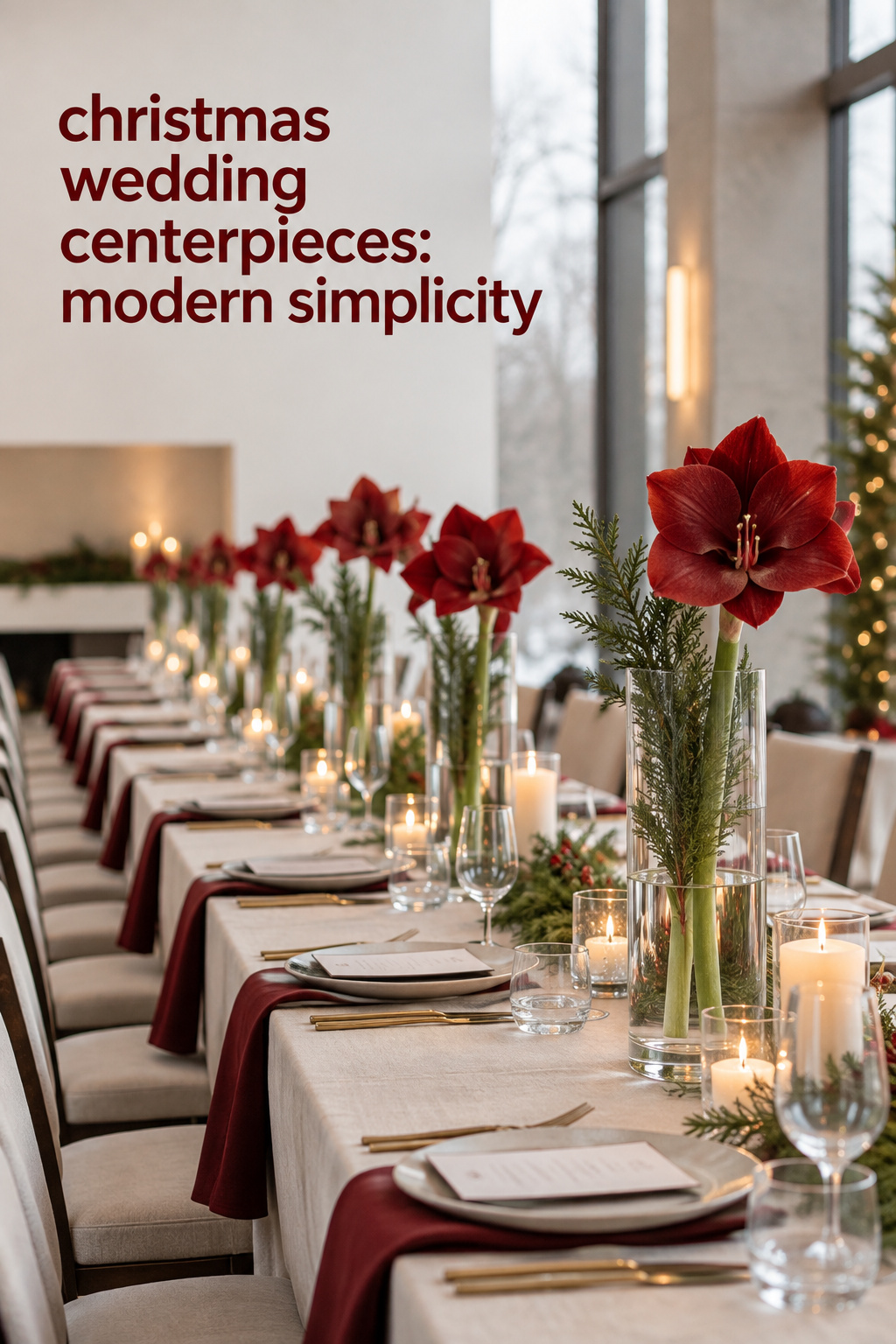
Sometimes the most modern Christmas wedding centerpiece is a decision to do less. Use one flower type in a repeated vessel, such as red amaryllis in slim glass cylinders, white roses in matte ceramic, or burgundy dahlias in low compotes when they are available. Bring in the holiday through color, candlelight, and a few restrained evergreen sprigs rather than a mixed seasonal collection.
Repetition is especially effective on long banquet tables. Several small arrangements can create a more generous visual rhythm than one large piece at the center. The same idea can also help with budget control because the florist is working with fewer flower types and a repeatable recipe. If you love a sculptural statement, place it on the sweetheart table and let guest tables use the smaller version.
Nostalgic and personal holiday details
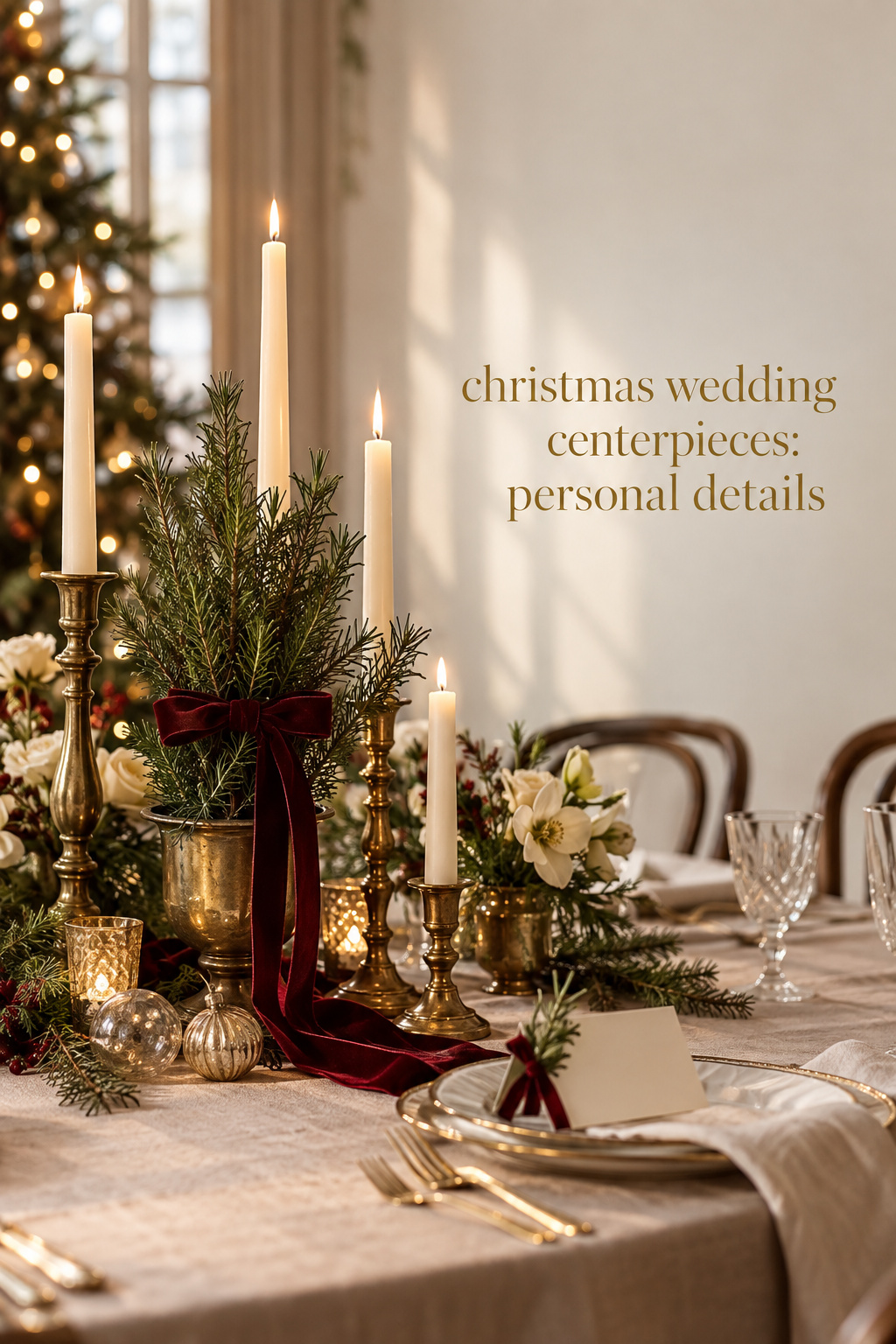
A personal centerpiece works when the object has a reason to be there. A set of family candlesticks, a collection of small glass ornaments, a favorite ceramic vessel, or a miniature evergreen that guests can take home can make the table feel connected to your story. The detail does not have to be expensive. It needs to be legible and repeated with enough consistency that it feels like design rather than storage.
Use nostalgia as an accent, not a demand placed on every guest. A small ornament can sit beside the place card. A family recipe can appear on a tiny menu card while the centerpiece remains simple. A rosemary plant can act as both a green centerpiece and a favor, an idea Food Network highlights for its fragrance and longevity. If you use edible items, candles, or heirlooms, confirm how they will be handled during setup and cleanup.
Match the Centerpiece to Table Shape, Guest Experience, and Venue
A centerpiece is not viewed in isolation. It sits between people who need to see one another, servers who need to reach plates, and photographers who need a clear visual path. Start with the table shape and the guest experience, then choose the arrangement that serves both. A design that looks beautiful in a styled photograph may be awkward when ten people are trying to pass bread around it.
- Round guest tables: use a low, compact arrangement or a small cluster that can be viewed from every seat. If the piece is tall, keep the base narrow and confirm that it does not block faces.
- Long banquet tables: use a low runner, repeated bud vases, or several evenly spaced groupings. Leave clear service lanes and avoid one continuous mass that makes the table feel crowded.
- Farm tables: natural textures such as greenery, wood, ceramic, and candlelight can echo the furniture. Use a protective base if sap, wax, or moisture could mark the surface.
- Sweetheart table: this is a good place for a more expressive arrangement because it is viewed from the room rather than from every seat. Keep it low enough to preserve the couple’s faces in photographs.
- Cocktail-height tables: consider whether the centerpiece will be held or moved. A stable elevated vase or compact lantern is safer than a loose collection of small objects.
Height is often described with a simple rule: keep a centerpiece below the sightline or raise it clearly above it. The practical goal is not a magic measurement. It is uninterrupted conversation. Pix Wedding’s comparison guide uses low arrangements under 14 inches and taller designs above 28 inches as directional categories, along with different DIY and professional cost ranges. Treat those figures as planning examples rather than universal quotes, because flower markets, labor, vessel rental, delivery, and table size change the final number.
Venue rules should shape the brief before you order anything. Ask whether open flames are permitted, whether candles need glass cylinders, whether hanging greenery or fresh moss is allowed, and who is responsible for clearing vessels at the end of the night. If the venue permits only battery candles, design around their light instead of treating them as a disappointing substitute. Lanterns, mirrored bases, pale glass, and reflective ornaments can help LED light feel intentional.
Think about sound, scent, and touch as well as sight. Strongly scented greenery or candles may not suit dinner. Loose glitter can travel onto sleeves and place settings. Thorny branches, sap, and fragile glass need a plan if children, older guests, or crowded service areas are part of the room. A beautiful centerpiece should make the table easier to enjoy, not ask guests to work around it.
Turn Inspiration Into a Florist or DIY Brief
When you are ready to move from inspiration to execution, write the brief as a set of decisions. Include the guest-table count, table shapes, preferred arrangement height, color boundaries, candle policy, vessel plan, and the pieces that must be reused. A florist can then price and adapt the concept. A DIY team can divide the work into shopping, conditioning, arranging, transporting, placing, and clearing rather than discovering those jobs on the wedding morning.
Use a simple centerpiece recipe for each table type. For example: one low ceramic bowl, white blooms, cedar and eucalyptus, three unscented votives in glass, and no loose glitter. Or: five clear bud vases, burgundy flowers, two evergreen sprigs per vase, and a brass candleholder at each end. The exact recipe makes substitutions easier if a flower is unavailable. It also prevents the final room from drifting away from the look you approved.
- List the non-negotiables: name the mood, the dominant color, and the one detail that makes the design feel like your wedding.
- Set the table count: separate guest tables, family tables, sweetheart table, cocktail tables, and any welcome or dessert areas.
- Choose the vessel strategy: rented compotes, owned jars, lanterns, bowls, bud vases, or a mixed collection with one unifying finish.
- Confirm the light: decide on open flame, enclosed flame, or LED candles and ask who supplies, lights, monitors, and removes them.
- Plan transport and setup: note water needs, temperature control, boxes, labels, table maps, and the person authorized to make substitutions.
- Photograph a test: build one complete table at the correct scale and view it from a seated guest’s height before approving the rest.
For DIY arrangements, do not judge the project only by the cost of flowers. Count vessels, floral mechanics, buckets, snips, transport containers, refrigeration or cool storage, candles, batteries, labels, and labor. A design that is inexpensive per table can become stressful when it requires three people to assemble at midnight. If a professional quote is higher than expected, simplify the recipe before replacing the entire concept. Fewer flower types, repeated vessels, seasonal greens, and candlelight can preserve the mood.
Ask your florist about seasonal availability rather than promising one exact bloom from an old photograph. The Knot’s winter flower guidance names amaryllis, anemones, camellias, lilies, tulips, gardenias, orchids, poinsettias, roses, ranunculus, hellebores, and sweet peas among possible winter flowers, while also noting that popular flowers such as peonies and dahlias can be harder to source in winter. Your florist can translate the color and silhouette into what is available for your date and location.
Avoid Common Centerpiece Mistakes and Review the Room
The first mistake is trying to make every table a different idea. Variety can be lovely, but it needs a system. Keep the same palette and switch only the shape, or keep the same vessel and vary the flower. If red-and-green tables, silver winter tables, rustic lanterns, and bright candy ornaments all appear without a shared thread, the reception may feel like several events at once.
The second mistake is designing for an empty room. Put chairs around the table. Place plates, glasses, menus, candles, and flatware where they will actually sit. Walk around the room and view the centerpiece from the entry, the dance floor, the head table, and a seated guest’s eye level. Check the photographer’s likely routes too. A centerpiece may be beautiful from the front and visually messy from the side.
- Blocked sightlines: lower, raise, or narrow the centerpiece so guests can see across the table.
- Too many small objects: place loose ornaments, pinecones, and candles in a defined tray or base so they do not migrate into service areas.
- Competing fragrance: use unscented candles and confirm the natural greenery is comfortable for a long dinner.
- Unsafe flame: follow the venue’s rules, use stable holders, and assign responsibility for lighting and monitoring.
- Unclear cleanup: label rented and personal items, then name the person or team who will pack them after the reception.
- Overpromised flowers: approve a color and shape substitution plan before the wedding week.
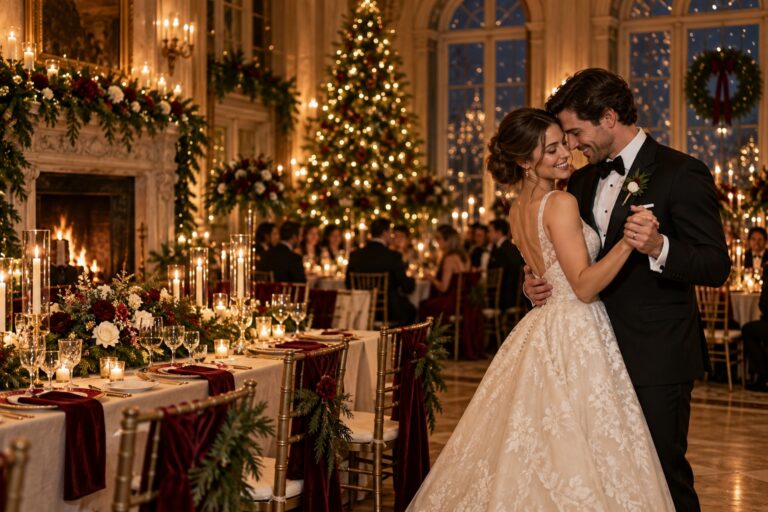
Finally, remember that the centerpiece is one layer of the table story. It should leave room for the menu, place cards, napkins, glassware, and the people seated around it. The strongest Christmas wedding centerpieces often create a pause in the room: a small glow, a little evergreen, a color that recalls the season, and enough restraint for the couple’s own story to remain visible.
Before approving the final design, ask five questions. Can guests see and speak comfortably? Does the arrangement fit the venue’s safety rules? Can the team set it up on time? Does the light work in the actual room? And does the centerpiece still feel like your wedding when the Christmas references are removed? If the answer is yes to all five, you have more than a pretty table. You have a design that can carry the evening.
Sources and Methodology
This article was shaped by opening ten US search results and comparing their examples, categories, and planning guidance. The review included inspiration roundups from Melissa Jane Lee, Weddingomania, Yeah Weddings, Luxe Locks Studio, IdeasToKnow, and Porch Decor Ideas; planning and editorial guidance from The Knot and Food Network; the existing Wedding Look article on polished Christmas table decor; and Pix Wedding’s directional comparison of height, material, assembly, and cost categories. Price figures are not universal quotes, and flower availability, candle permissions, venue rules, and setup responsibilities should be confirmed with the professionals handling the specific wedding.
FAQ
What are the best Christmas wedding centerpieces?
The best Christmas wedding centerpieces match your venue, table shape, and desired mood. Popular directions include red and green flowers with candles, evergreen woodland arrangements, winter-white metallic designs, repeated single-bloom vessels, and personal holiday details such as family candlesticks or take-home plants.
How can I make Christmas wedding centerpieces look elegant?
Limit the palette, repeat a small set of materials, and edit the holiday symbols. One red, one greenery texture, and one metal finish usually look more intentional than many unrelated decorations. Use candlelight, clear vessels, and generous negative space to keep the table polished.
How tall should a Christmas wedding centerpiece be?
Keep it low enough for easy conversation or clearly high enough to pass above the main sightline. The correct height depends on table size, chair height, arrangement spread, and the venue. Test a complete place setting with seated people before ordering every centerpiece.
Can I use candles in Christmas wedding centerpieces?
Often, but the venue must approve the exact type. Ask about open flames, glass cylinders, candle height, fire monitoring, and cleanup. If flames are not allowed, enclosed LED candles, reflective glass, lanterns, and metallic details can create a warm effect without violating the rules.
What flowers work in Christmas wedding centerpieces?
Possible winter choices include amaryllis, roses, anemones, tulips, orchids, poinsettias, ranunculus, hellebores, and sweet peas, depending on availability. Evergreen, berries, pinecones, and branches can provide the seasonal structure. Ask your florist for substitutions based on your date, location, and color palette.
Are Christmas wedding centerpieces expensive?
The cost depends on flowers, labor, vessels, rentals, candles, delivery, and the number and shape of tables. Repeated vessels, seasonal greenery, single-bloom recipes, and candle-focused designs can help control the budget. Compare the complete installed cost rather than only the price of the flowers.
How do I keep Christmas wedding centerpieces from blocking conversation?
Choose low arrangements for round tables, keep long-table runners narrow, and avoid placing tall pieces where guests need to see across the table. Add chairs and place settings to a test table, then check the view from seated eye level before approving the final design.
What should I include in a centerpiece brief for my florist?
Include the mood, palette, table count and shapes, preferred height, vessel plan, candle rules, required flowers or textures, budget boundaries, setup timing, transport needs, and an approved substitution plan. Add one complete table photograph so the scale is clear.