Satin or Florals? Green Dress Wedding Guest Style Guide
Green dress wedding guest style, decoded: satin minimalism vs floral romance
The invitation says “wedding,” and suddenly green feels like a whole wardrobe question instead of a color. In the mirror, a green dress wedding guest look can read modern and restrained in one fabric, then soft and storybook in another—especially once you add wedding lighting, venue textures, and the quiet pressure of looking polished in photos that last forever.
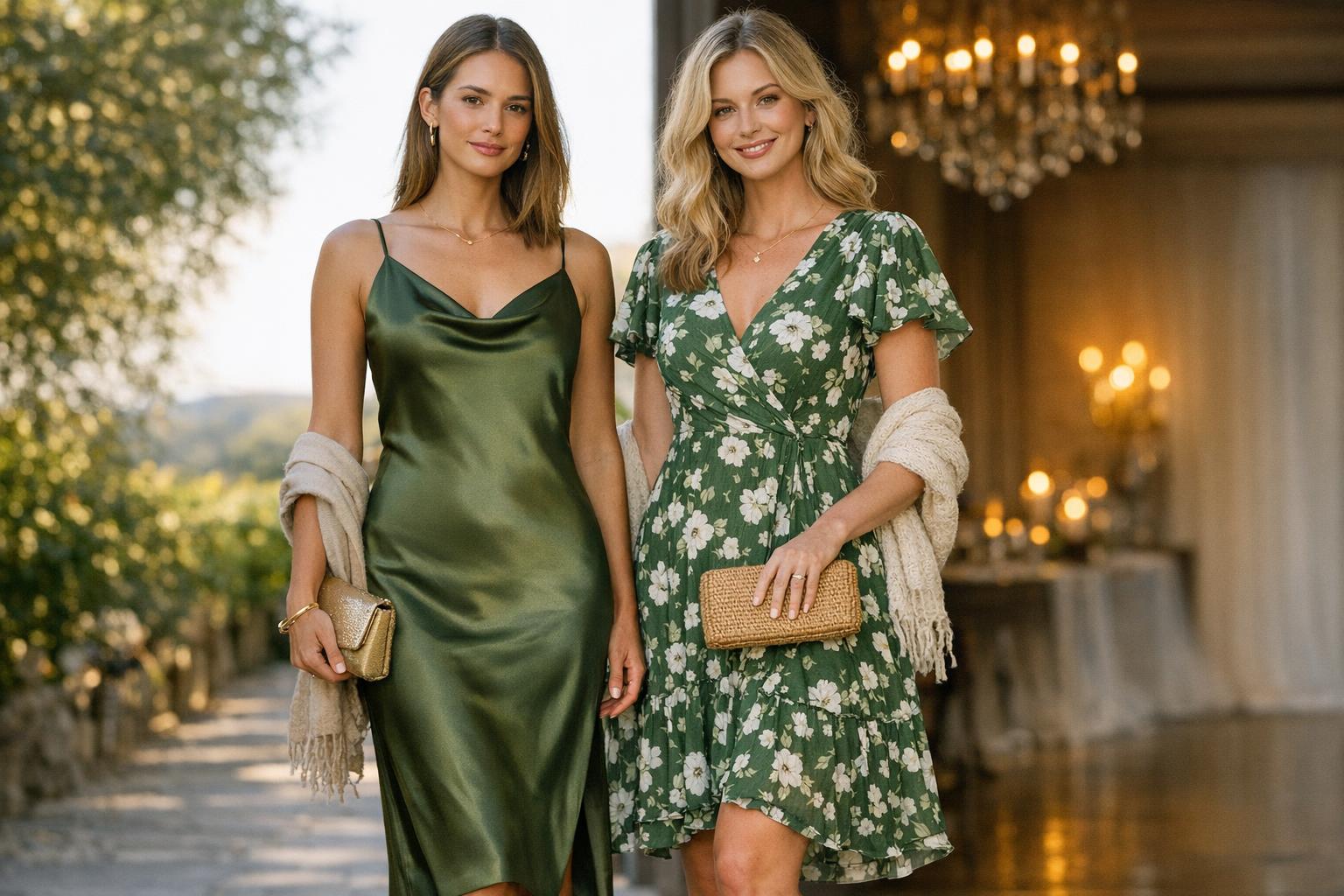
The two aesthetics most often discussed (and confused) are sleek satin minimalism and romantic green floral dressing. Both can be appropriate for ceremonies and receptions, both can feel elevated, and both look beautiful against natural settings like vineyards or garden venues. Yet they behave differently once you move, sit through dinner, and step into golden hour.
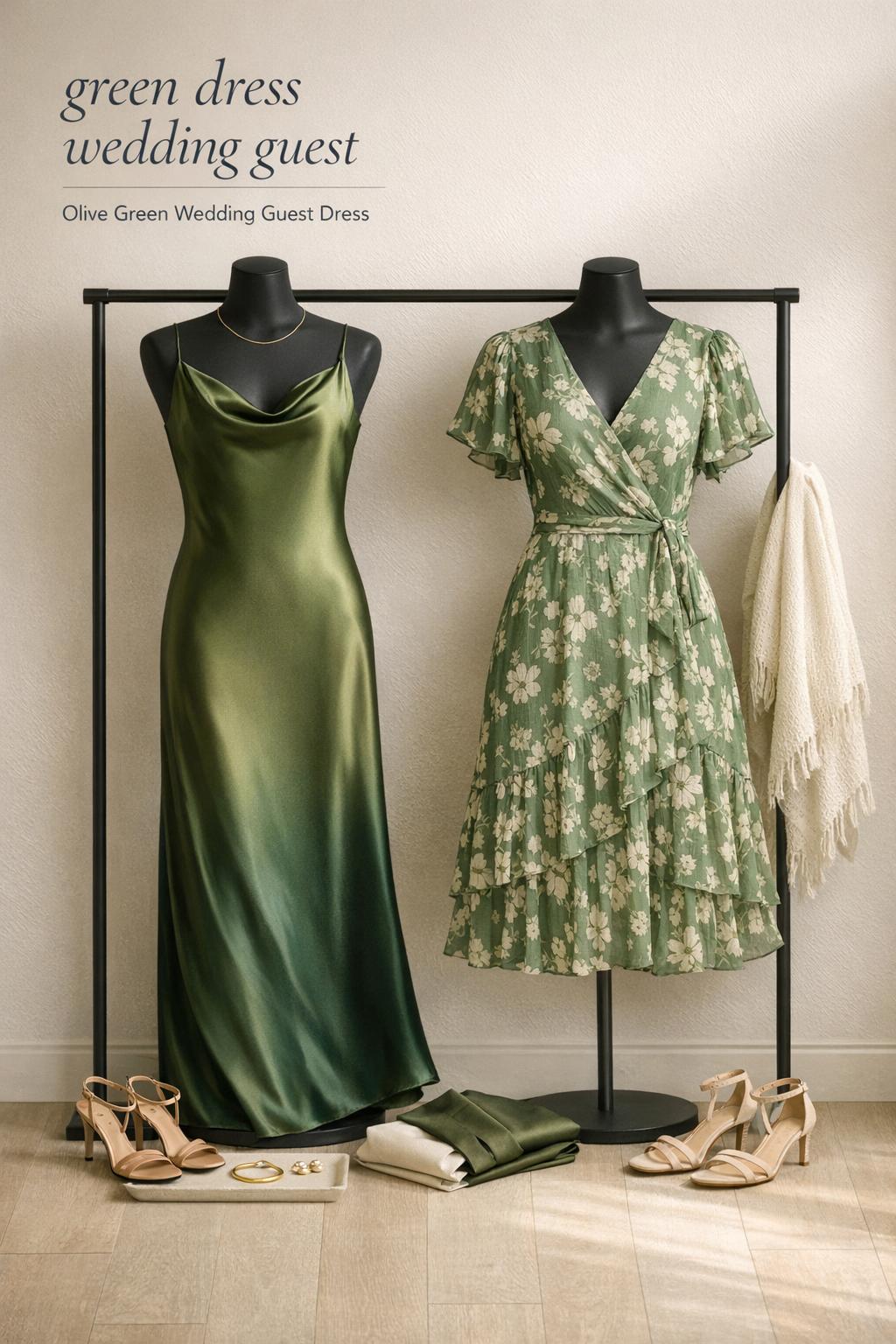
This comparison breaks down how these two approaches differ—visually, practically, and in dress-code language—so you can choose with confidence. Along the way, we’ll anchor the discussion in real wedding scenarios: outdoor ceremonies with breeze, candlelit receptions, and the all-day comfort test. You’ll also find styling logic for an olive green wedding guest dress, an olive formal dress, a satin wedding guest dress, and even the nuanced role a green floral mother of the bride dress can play in the same color family.
Style overview: satin minimalism (the “olive formal dress” approach)
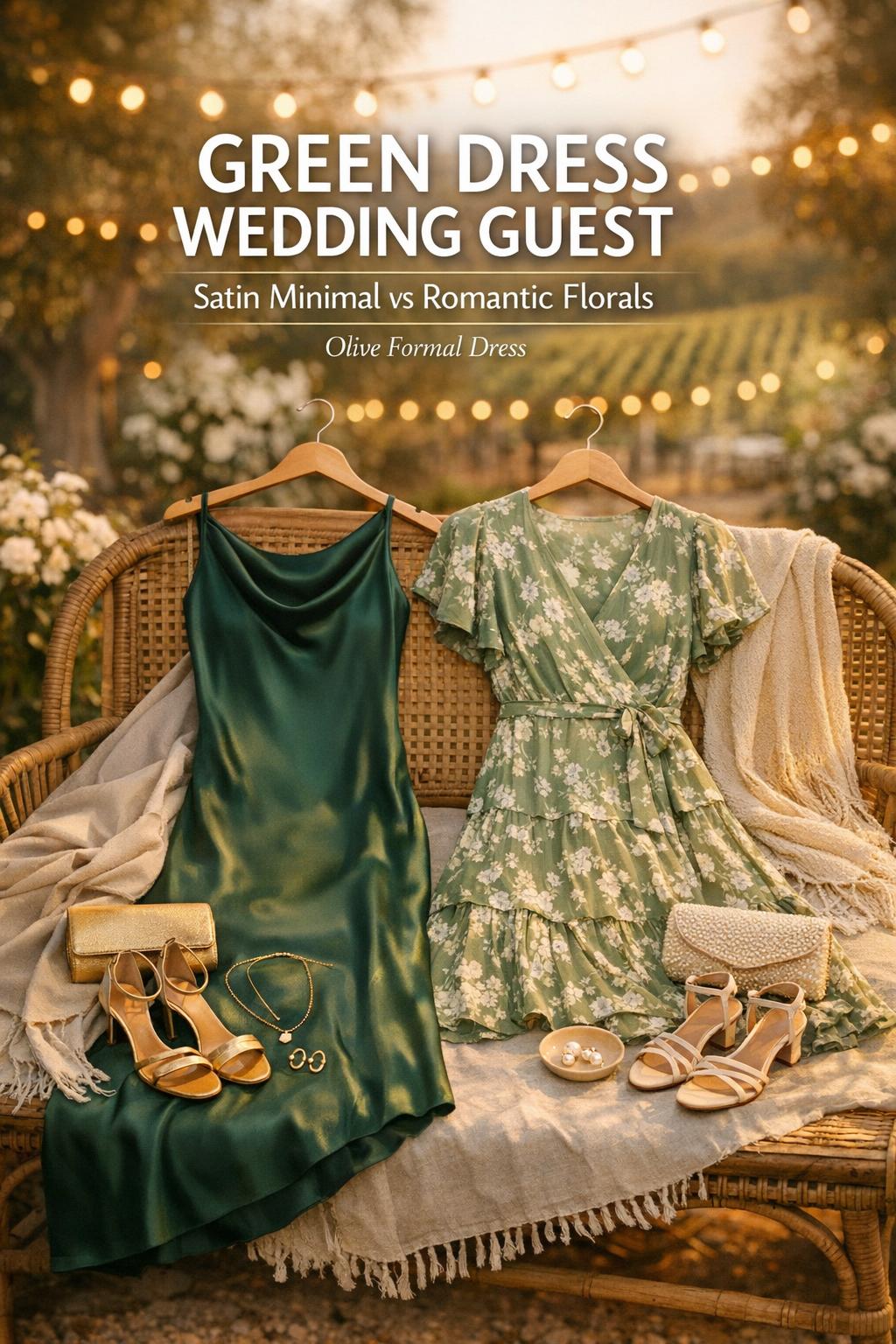
Satin minimalism is the clean, elegant branch of occasionwear—often built around a single, uninterrupted line. Think of a satin wedding guest dress that skims the body rather than clings, with quiet details (a draped neckline, a gentle bias cut, a low back that stays tasteful). This style thrives on restraint: fewer visual elements, more focus on sheen, cut, and proportion.
Your wedding look is only the beginning.
Keep your guest list, vendors, timeline, and every important detail together with Zarellea — so your day feels as considered as your style.
Color is part of the allure. Olive, deep green, and muted botanical tones feel intentional in satin because the fabric catches light and creates dimension without a print. An olive formal dress reads especially refined for evening receptions, where warm lighting makes the green look richer and more editorial.
Silhouette tends to be streamlined: midi to full length, often with a gentle column or slip-like shape. Minimalism can still be romantic, but it’s romance expressed through glow and movement rather than pattern.
Style overview: green floral romance (garden softness with structure)
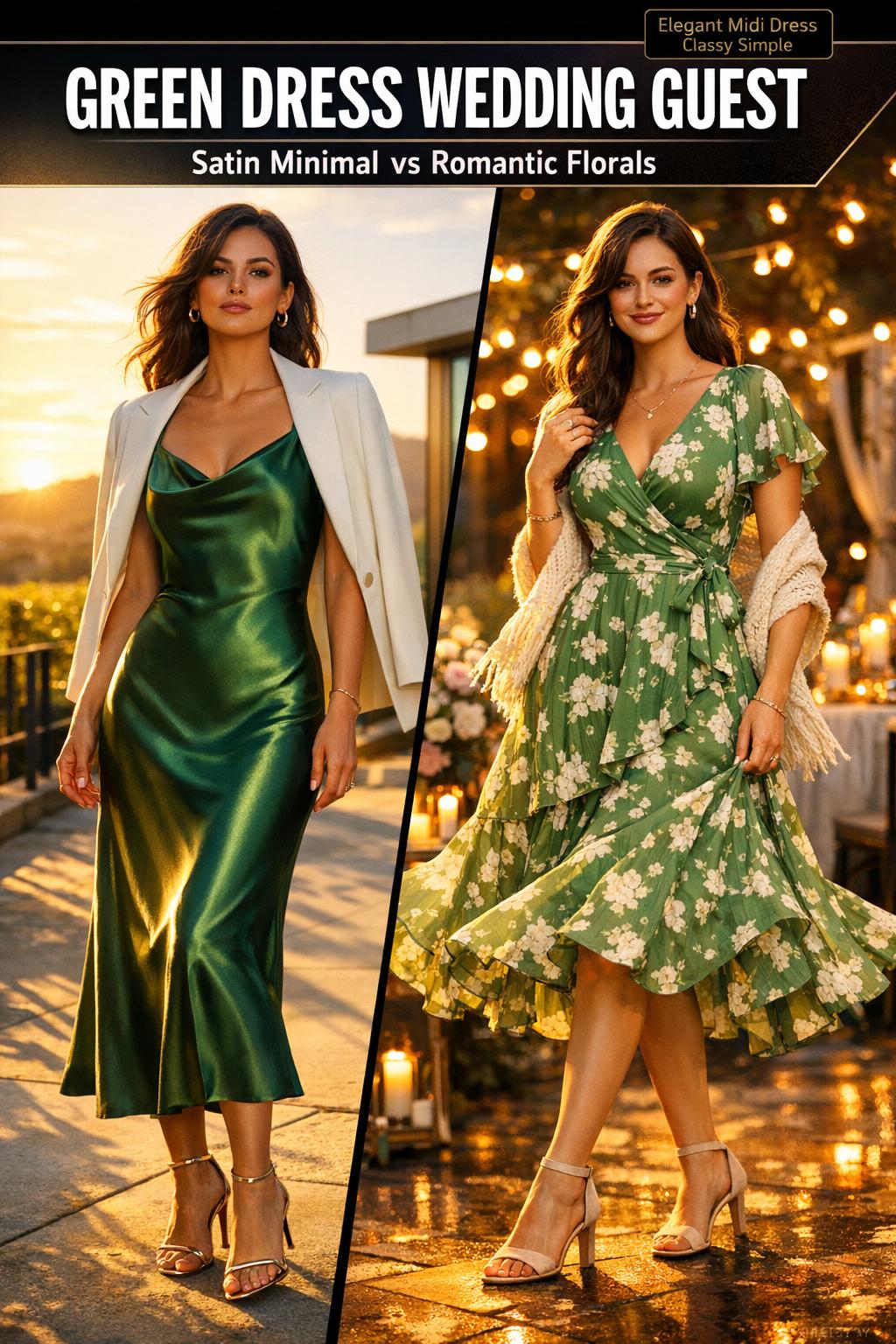
Green floral romance leans into a more expressive visual language. The defining feature is print—florals, botanicals, or leafy motifs—often paired with fabrics that hold a little shape or float with motion. Where satin minimalism relies on shine, floral romance relies on narrative: it looks like it belongs among climbing vines, bouquet textures, and ceremony arches.
Silhouettes are typically more “constructed” in a gentle way: wrap shapes, fit-and-flare midis, flutter sleeves, soft tiers, or subtle ruching. The mood is airy, often with a sense of ease that suits daytime weddings. This is also where you’ll most naturally see a green floral mother of the bride dress—still elegant, but more visually intricate and photographically soft.
The color palette can span from pale green with delicate flowers to deeper greens with brighter botanical accents. The print does the talking, so accessories can stay quieter—or become playful, depending on the dress code and venue.
Why these styles get mixed up in wedding guest dressing
Both aesthetics live comfortably in “wedding guest” territory because they signal effort without stealing focus. A satin wedding guest dress in olive can feel just as romantic as a floral midi when the setting is right; likewise, a green floral dress can look surprisingly formal in elevated styling and a darker base color.
They’re also often shopped for the same reasons: green is flattering, seasonless, and photographs beautifully against both outdoor landscapes and indoor candlelight. The confusion tends to happen when the invite uses broad language—“cocktail attire,” “semi-formal,” “dressy casual”—and you’re deciding which green reads most correct, not just most pretty.
Key differences that matter at real weddings
Silhouette and structure: skim vs shape
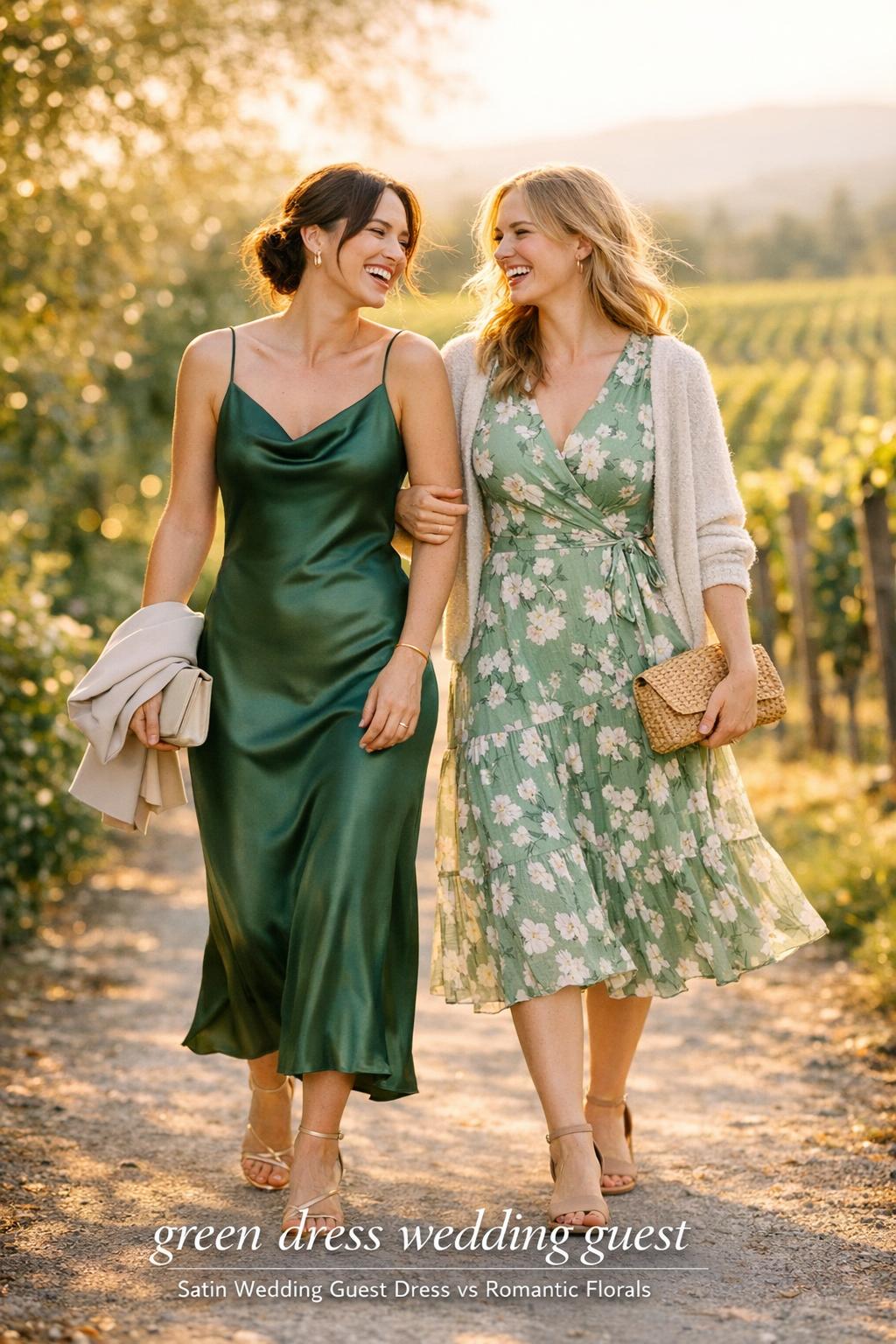
Satin minimalism usually skims. The dress is the line, and the body provides the movement; the goal is an uninterrupted vertical that feels long and calm. Floral romance typically shapes: it defines the waist, adds sleeve volume, or uses skirt movement to create a more “styled” outline. If you prefer a clean, elongating effect, a satin slip or olive formal dress silhouette does the work. If you want more definition or forgiveness through the midsection, a wrap or fit-and-flare floral midi often feels easier over a long ceremony and dinner.
Color behavior: sheen amplifies, print diffuses
In satin, green becomes dimensional. Even an olive green wedding guest dress can shift slightly in different lighting—more gold at sunset, deeper indoors—which reads luxe but also makes undertones important. In florals, the base green is softened by pattern; it’s less about undertone perfection and more about the overall harmony of the print. If you worry that a specific green might wash you out, florals often offer a gentler entry point.
Formality level: minimalist reads “evening” quickly
Satin minimalism tends to climb the formality ladder faster. A simple satin midi with refined accessories can read cocktail; in a longer length it can edge toward black-tie optional, depending on neckline and styling. Floral romance can absolutely be formal, but it often reads more daytime-friendly unless the print is darker, the fabric is elevated, or the cut is especially tailored.
Styling philosophy: “edit” vs “compose”
Minimalism is about editing: one statement (the sheen, the drape, the olive tone) and everything else supports it. Floral romance is about composing: the print, the silhouette, and the accessories can each contribute a note, as long as the overall look stays cohesive. If you love an elegant midi dress classy simple aesthetic, satin minimalism is the natural home base. If you enjoy a little more play—soft earrings, a textured wrap, a romantic shoe—floral makes that feel intuitive.
Visual style breakdown: how they read from ceremony to reception
Layering and outerwear: sleek coverage vs soft framing
For satin minimalism, outerwear should echo the clean lines: a tailored wrap, a structured coat, or a minimalist shawl that doesn’t compete with the shine. For florals, layering can be more textural—soft wraps, light cardigans, or airy toppers that frame the print rather than interrupt it. At outdoor ceremonies where temperatures drop after sunset, this difference matters: satin looks best when the layer feels intentional, not like an afterthought.
Proportions: long line vs balanced volume
Minimal satin looks are often built on a long, clean vertical; adding a bulky layer or overly chunky shoe can break the elegance. Floral dresses can handle more proportion play—sleeves, ruffles, or a fuller skirt—because the eye is already moving across pattern. If you love a statement sleeve, florals typically integrate it more naturally; if you prefer shoulders and collarbones as the focal point, satin does that beautifully.
Accessories: shine needs restraint; print needs clarity
Satin already reflects light, so accessories should feel precise. Florals already carry visual information, so accessories should feel clear and intentional—either minimal to let the print speak, or deliberately chosen to pull out one tone from the pattern. In wedding photos, this is the difference between “styled” and “busy.”
- For satin minimalism: keep shapes streamlined, finishes refined, and details few.
- For floral romance: choose one guiding tone from the print and repeat it subtly (in a shoe, a clutch, or jewelry) to create cohesion.
Footwear: venue practicality shows differently
Both styles can work with the same heel height, but the visual effect changes. Satin minimalism tends to look most polished with a refined shoe line; florals can be charming with softer, more romantic footwear. On grass, gravel, or vineyard paths, comfort becomes non-negotiable—especially if you’ll be standing through a ceremony, walking to photos, then moving into a reception.
Outfit comparisons in real wedding scenarios
Rather than treating wedding guest dressing like a checklist, it helps to picture the day: where you’ll walk, how long you’ll sit, whether you’ll be outdoors at golden hour, and how formal the room will feel when the lights dim. Below are situational comparisons—same wedding context, two different styling philosophies.
Garden ceremony at golden hour: olive satin vs green florals
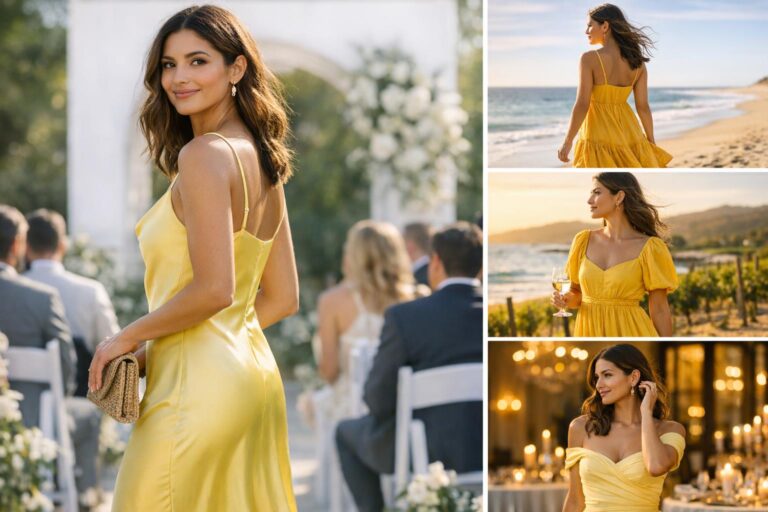
Satin minimalism approach: An olive green wedding guest dress in satin feels luminous as the sun drops. Keep the look clean—think a draped neckline or a simple slip silhouette that moves when you walk between rows of chairs. The styling logic is to let the fabric catch the light while keeping everything else quiet, so the overall impression is effortless and elevated.
Floral romance approach: A green floral midi becomes part of the garden itself, echoing petals and greenery without blending into the background. The styling logic here is “soft structure”—a defined waist, gentle sleeve detail, and a hem that moves in the breeze. You’ll look naturally “in theme” for the venue, especially if the print feels botanical rather than loud.
Candlelit reception in a ballroom: satin wedding guest dress vs printed midi
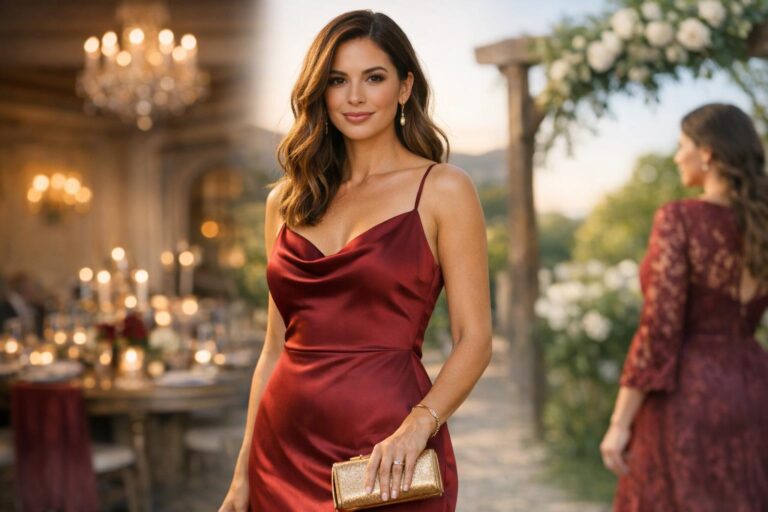
Satin minimalism approach: This is where an olive formal dress truly earns its keep. Satin glows under warm interior lighting, reading instantly dressy without extra effort. The best versions look composed from every angle—important when you’re seated for dinner and photographed mid-laugh. If your goal is sleek sophistication, satin is the direct route.
Floral romance approach: Florals can work beautifully indoors, but the print should feel intentional for evening—often darker, richer, or more refined in scale. The styling logic is to keep accessories tidy so the look doesn’t become visually crowded in low light. If the print is airy and daytime-coded, it may read slightly casual next to more formal guestwear.
Destination wedding with travel day wrinkles: elegant midi dress, classy simple vs romantic print
Satin minimalism approach: Satin can be breathtaking and also less forgiving after hours in a suitcase. If you’re committed to an elegant midi dress classy simple silhouette in satin, plan for real travel logistics: careful packing, immediate steaming, and a strategy for keeping the fabric smooth through the day. The payoff is a refined look that feels elevated even in a pared-back destination setting.
Floral romance approach: Many floral fabrics and silhouettes hide minor creasing more gracefully. A wrap dress or softly structured midi can look intentionally relaxed—perfect for destination ceremonies where the mood is celebratory but not overly formal. The trade-off is that you’ll want to make sure the print doesn’t feel too casual for a wedding that still expects polished attire.
Family-forward roles and formal photos: green floral mother of the bride dress vs sleek satin
Satin minimalism approach: A minimal olive formal dress can be striking in family photos, especially when the wedding party palette includes neutrals, whites, or greenery. The look feels editorial and timeless—but it can also feel a touch severe if the celebration leans very romantic and traditional. Softening details (a gentle neckline, a wrap layer) keeps it wedding-appropriate.
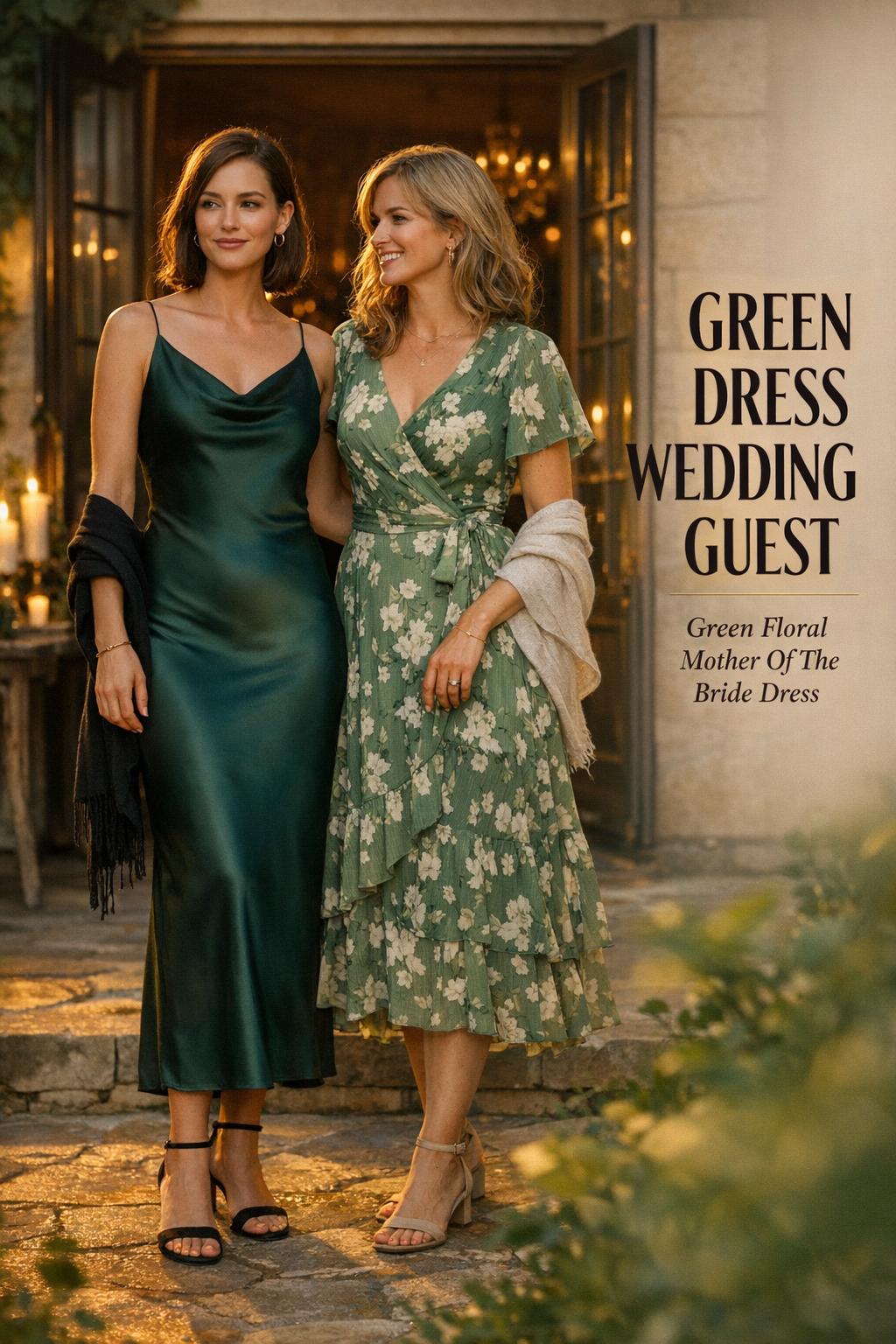
Floral romance approach: A green floral mother of the bride dress often reads warm, celebratory, and photo-friendly without demanding attention. Florals can also bridge generations—romantic without being overly youthful, especially when the silhouette is refined and the print scale is elegant. The key is choosing a dress that photographs cleanly from a distance; overly busy prints can blur in group shots.
The olive question: how olive reads across both aesthetics
Olive deserves its own moment because it’s one of the most requested greens for weddings—and one of the most misunderstood. Olive can read earthy and grounded in matte fabrics, then suddenly feel high-glamour in satin. This duality is exactly why you’ll see it both as an olive green wedding guest dress in minimalist styling and as a base tone in romantic florals.
In satin, olive is sophisticated and quietly bold. It’s less “sweet” than pastel green and often more nuanced than emerald, which helps it feel modern in formal settings. In florals, olive acts like foliage: it supports the print and makes other tones feel natural rather than stark. If you’re trying to choose between an olive formal dress and a green floral option, ask yourself what you want to lead—shine and silhouette, or print and softness.
Tips from a wedding stylist’s fitting room: choosing the right green for the dress code
Dress codes rarely spell out every detail, but they do hint at the level of finish expected. Green works across nearly all wedding dress codes; the difference is in fabric behavior, hemline, and how deliberate the styling looks.
- For “cocktail”: a satin wedding guest dress in midi length often reads instantly correct, especially in olive or deeper green tones.
- For “semi-formal”: both satin minimalism and green florals can work; prioritize a polished fit and avoid anything that looks like daytime casual.
- For “formal” or “black-tie optional”: lean toward an olive formal dress in longer length, or a floral look with darker base tones and refined finishing.
- For “dressy casual” in an outdoor venue: florals often look beautifully aligned with the setting, but keep the silhouette elevated (a midi, a defined waist, intentional accessories).
Tip: If you’re uncertain, let the venue guide you. A garden ceremony naturally supports florals and movement; a city rooftop or candlelit ballroom elevates satin quickly. The most reliable “tell” is not the color—it’s whether the fabric and finish look intentionally occasion-ready.
Comfort, movement, and the long-day test (what looks good at hour six)
Wedding guest style isn’t judged at the mirror—it’s judged at the reception, when you’ve eaten, danced, hugged people, and sat through speeches. Satin minimalism can feel sleek, but it asks for thoughtful fit: too tight, and you’ll feel restricted; too loose, and it can lose its elegant line. Floral romance often offers more built-in comfort through wrap shapes, sleeves, or skirt ease, but it can require a little more attention to proportions so it doesn’t drift into “day dress” territory.
Tip: Sit down in the dress before you commit. Notice where the fabric pulls, where the waist lands, and whether the neckline stays secure. This matters even more with satin, where shifting can be more visible, and with wrap florals, where you want the closure to stay confident through dancing.
Common styling mistakes with green wedding guest dresses (and how to avoid them)
Mistake: confusing “simple” with “unfinished”
An elegant midi dress classy simple should still look intentional. With satin minimalism, that means clean lines, thoughtful underlayers, and accessories that match the dress’s level of polish. With florals, it means ensuring the print and silhouette feel elevated enough for a wedding—especially in photos where casual details stand out.
Mistake: letting the venue win the practicality battle
Grass, sand, and uneven paths change the entire outfit equation. A satin wedding guest dress can look impeccable until the hem brushes damp ground or the shoe sinks. Florals can feel perfect for outdoors until wind turns a lightweight skirt into a constant adjustment. Choose footwear and layers with the venue in mind so you’re present for the celebration, not managing your outfit.
Mistake: over-accessorizing the wrong element
Satin already provides highlight and dimension; adding too many reflective accessories can create visual noise. Florals already provide pattern; adding competing prints or overly ornate pieces can overwhelm the look. In both styles, one focal point is usually enough: shine, print, or a sculptural accessory—choose one.
When to choose satin minimalism vs green floral romance
Both aesthetics can be wedding-appropriate; the best choice depends on what the day asks of you and how you like to feel in your clothes.
Choose satin minimalism when you want sleek polish
Reach for a satin wedding guest dress or olive formal dress when the setting is more evening-oriented, the dress code leans formal, or you simply love that modern, edited feeling. Satin minimalism is also ideal when you want your look to feel timeless in photos—especially in candlelit interiors or elegant venues where shine reads luxurious rather than flashy.
Choose green floral romance when the venue and mood are soft
Florals shine at garden weddings, countryside venues, vineyard ceremonies, and daytime celebrations where the atmosphere is naturally romantic. If you enjoy a slightly more expressive look—or if you want a silhouette with forgiving movement—florals can feel like the easiest “yes.” A green floral mother of the bride dress often lives here too: refined, celebratory, and harmonious with wedding décor.
Choose based on how you want to style, not just what you want to wear
If you prefer a low-decision styling routine, satin minimalism supports that: one dress, clean accessories, and you’re done. If you enjoy building a look—playing with texture, soft layering, and a more romantic finish—floral dressing makes that process feel natural.
Blending the aesthetics: a modern way to wear green without picking sides
The most current wedding guest styling often borrows from both worlds. You might choose a satin olive green wedding guest dress, then soften it with romantic styling choices that feel wedding-specific rather than red-carpet: gentle shapes, delicate accents, and comfort-first finishing. Or you might choose a green floral dress with a more minimal silhouette—less ruffle, more clean midi—and style it with restrained accessories so the look reads elevated.
Tip: When blending styles, keep one element “quiet.” If the dress is shiny, keep accessories understated. If the dress is printed, keep the silhouette clean. This is the simplest formula for looking intentional in photos from ceremony through reception.
The core takeaway: how to identify each style at a glance
Satin minimalism is defined by line and light: a clean silhouette, a refined finish, and a sense of edited elegance—often expressed through an olive formal dress or a satin wedding guest dress that glows under reception lighting. Green floral romance is defined by story and softness: botanical prints, gentle structure, and an ease that feels especially at home in gardens and daytime venues, including the classic role of a green floral mother of the bride dress.
Once you know what each aesthetic prioritizes—shine versus print, skim versus shape, edited versus composed—you can choose the green that matches the wedding’s mood and your own style instincts. And if you love elements of both, the most elegant approach is balance: let one feature lead, and let the rest quietly support.
FAQ
Is a green dress wedding guest look always appropriate, or can it feel too bold?
A green dress wedding guest look is typically appropriate because green reads celebratory and polished, especially in wedding-friendly tones like olive and deeper greens; the key is matching the fabric and silhouette to the dress code so it feels intentional rather than attention-seeking.
What makes an olive green wedding guest dress look more formal?
Formality comes from finish and styling: satin or other refined textures, a longer hemline, a clean silhouette, and restrained accessories push an olive green wedding guest dress toward “formal,” while casual fabrics or overly relaxed shapes can pull it back toward daytime.
How do I choose between a satin wedding guest dress and a green floral dress for a garden wedding?
For a garden wedding, satin feels modern and luminous at golden hour while florals feel naturally aligned with the setting; choose satin if you want sleek polish and choose florals if you want a softer, more romantic mood with built-in movement.
Can an olive formal dress work for a daytime wedding?
Yes, an olive formal dress can work during the day if the silhouette isn’t overly dramatic and the styling stays light—think refined, minimal accessories and a wedding-appropriate finish that feels elevated without looking like evening-only attire.
What does “elegant midi dress classy simple” mean in wedding guest styling?
In wedding guest styling, “elegant midi dress classy simple” describes a midi-length dress with clean lines and minimal detailing that still looks deliberate—often achieved through strong fit, refined fabric, and polished accessories rather than extra embellishment.
Is a green floral mother of the bride dress too close to what a guest might wear?
A green floral mother of the bride dress can overlap with guest styles in color, but it typically distinguishes itself through more refined construction, a more formal finish, and a composed, photo-ready presence; guests can stay respectful by choosing simpler silhouettes or different print intensity.
How can I keep a satin wedding guest dress from looking overly revealing or too “night-out”?
Choose a satin wedding guest dress with a secure neckline and confident fit, then keep styling wedding-appropriate with a refined layer for the ceremony and restrained accessories so the shine reads elegant rather than nightlife-coded.
What’s the easiest way to make a floral green dress look more formal?
To elevate a floral green dress, prioritize a structured or midi silhouette, keep accessories clean and intentional, and avoid adding competing textures or excessive detail so the print looks curated rather than casual.