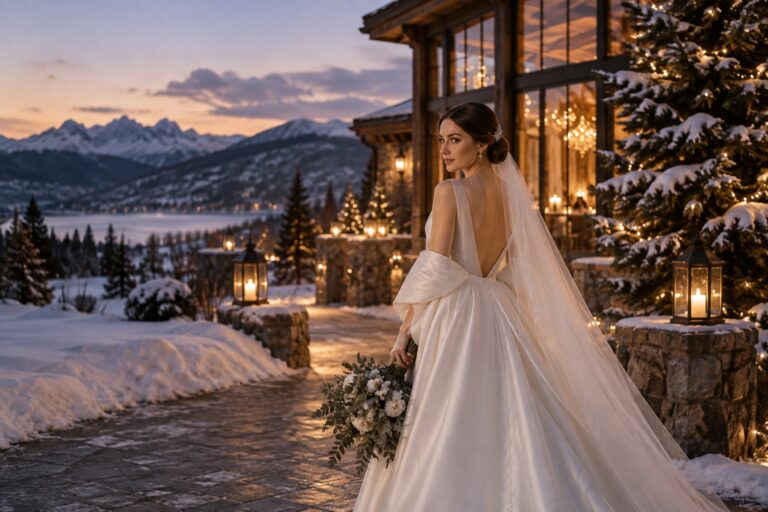
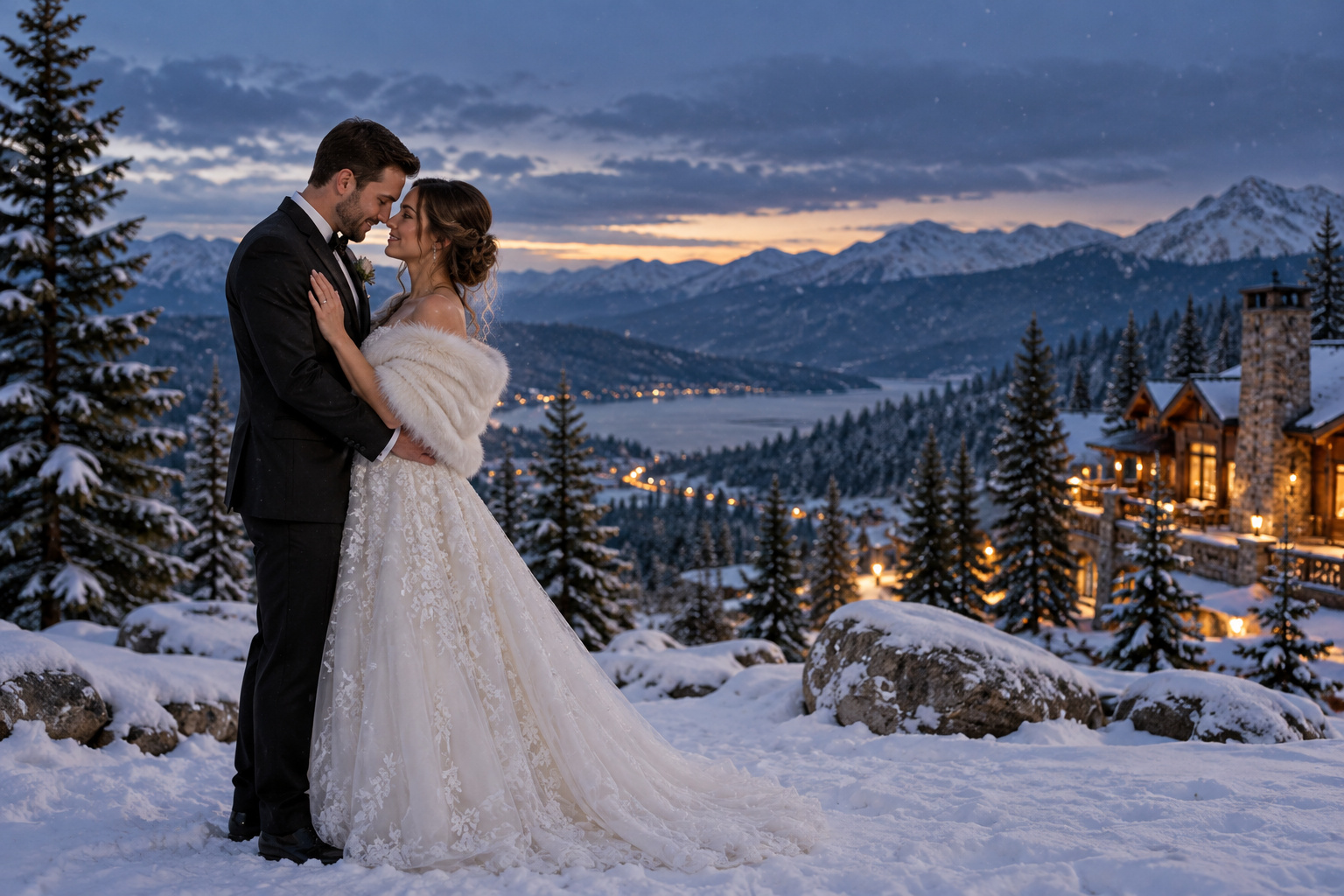
Snowy Wedding Ideas for a Magical, Comfortable Day
A snowy wedding begins with a scene that feels almost too beautiful to be practical: white ground, dark evergreens, quiet air, and two people dressed for a day they will remember forever. The challenge is that snow is not a decoration you can place and leave alone. It changes the route guests take, the time available for portraits, the shoes everyone needs, the way flowers look, and the moment when an outdoor ceremony stops feeling romantic and starts feeling uncomfortable.
The strongest snowy wedding plans treat the day as a sequence. Guests arrive safely, experience the cold-weather setting briefly, move into warmth without losing the visual story, and discover that every practical detail was considered. This guide shows how to build that sequence through setting, schedule, attire, decor, food, and photography. Use it for a mountain celebration, a forest ceremony, or an indoor wedding with one intentional snow-filled portrait window.
When Snow Becomes the Story, Not Just the Backdrop
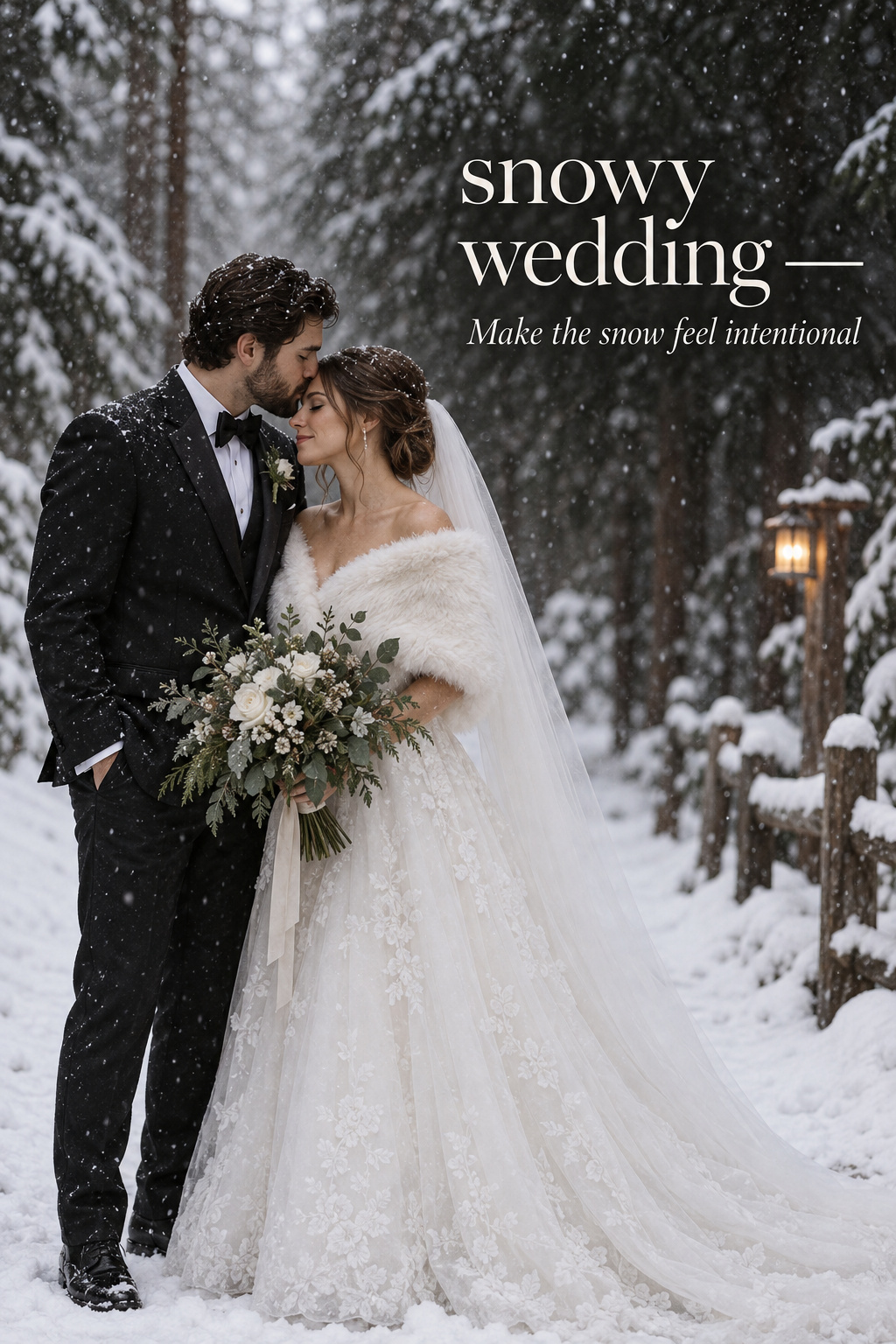
Snow has a strong visual identity, so a snowy wedding rarely needs an elaborate theme layered over it. Begin with the feeling you want guests to remember. It might be quiet and intimate, like a walk through a pine forest. It might be polished and cinematic, with blue-hour portraits, candlelight, and a formal reception. It might be playful, with blankets, warm drinks, and a short sleigh ride between the ceremony and dinner. The decision matters because it tells you which details deserve attention and which seasonal references can stay out.
Instead of collecting every winter symbol, choose a visual sentence. Soft white, evergreen, and candlelight is a sentence. Snowy landscape, burgundy flowers, and warm wood is another. Frost blue, ivory, silver, and deep green can feel like a winter morning. Navy, gold, cream, and velvet can make the same landscape feel like an evening lodge. Winter palettes do not have to become holiday palettes. White, silver, blue, and green are enough to suggest snow without turning the reception into a seasonal store display.

Your wedding look is only the beginning.
Keep your guest list, vendors, timeline, and every important detail together with Zarellea — so your day feels as considered as your style.
- Choose one dominant landscape: forest, mountain, lakeside, garden, or city street. It will guide your photo locations and materials.
- Choose one warming material: wool, velvet, wood, brass, candlelight, or textured paper. Repeat it in small, visible ways.
- Choose one signature contrast: dark suits against white snow, a berry bouquet, blue glass, golden light, or a black ribbon.
- Choose one guest comfort gesture: blankets, a coat check, a warm welcome drink, boot-friendly pathways, or a heated portrait room.
The landscape also needs a practical boundary. Decide how long people will be outside and where they can warm up. A short ceremony can work beautifully if guests know what to expect and can see a heated room waiting nearby. A longer outdoor program needs seating that does not absorb moisture, clear walking surfaces, warm layers, and a plan for wind or falling snow. The exact weather cannot be promised, so the design should still make sense if the snow arrives early, late, or not at all.
Think of the first impression as a promise. A lantern-lit path, a window looking onto the trees, or an attendant offering a warm drink tells guests that the season has been considered. The detail does not need to be expensive. It needs to be located where a guest will actually notice it and supported by a plan for restrooms, coats, transportation, and waiting time.
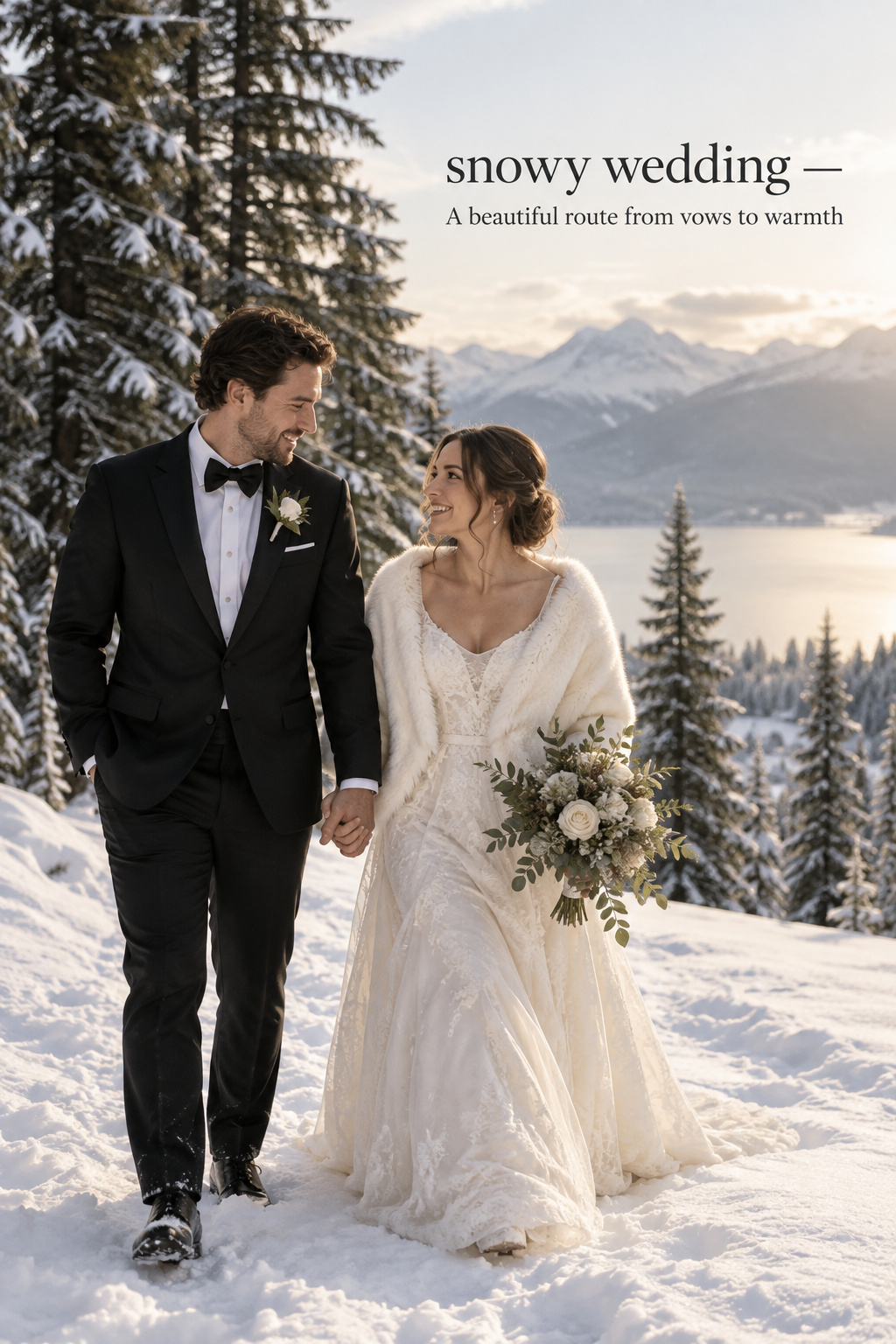
Build the Snowy Setting With a Plan B That Still Looks Intentional
A weather backup is not a secret apology for the day you hoped to have. It is a second version of the same story. If the outdoor ceremony moves indoors, carry one or two recognizable elements with it: the same branches, the same candle color, the same aisle fabric, or the same view through a window. Guests should feel that they entered the warm chapter of the celebration, not that the wedding lost its identity.
Start with access and movement
Before discussing arches or flowers, walk the venue as a guest would. Where will people leave the car? Is the path plowed, salted, or naturally firm? Can a guest in dress shoes reach the ceremony without stepping into deep snow? Is there a covered place to wait? Where will strollers, mobility devices, coats, and umbrellas go? These questions are part of the design because a beautiful snowy wedding can feel stressful if every guest has to solve the route alone.
Use discreet signs, lanterns, rugs, or staff guidance to make the route obvious. If the ceremony is outside, place a warm holding room close enough that older relatives and children do not need to cross the entire property. Tell guests on the wedding website what footwear and outerwear will be useful. A clear note about the surface is more considerate than expecting people to infer it from a photograph.
Give the ceremony one strong focal point
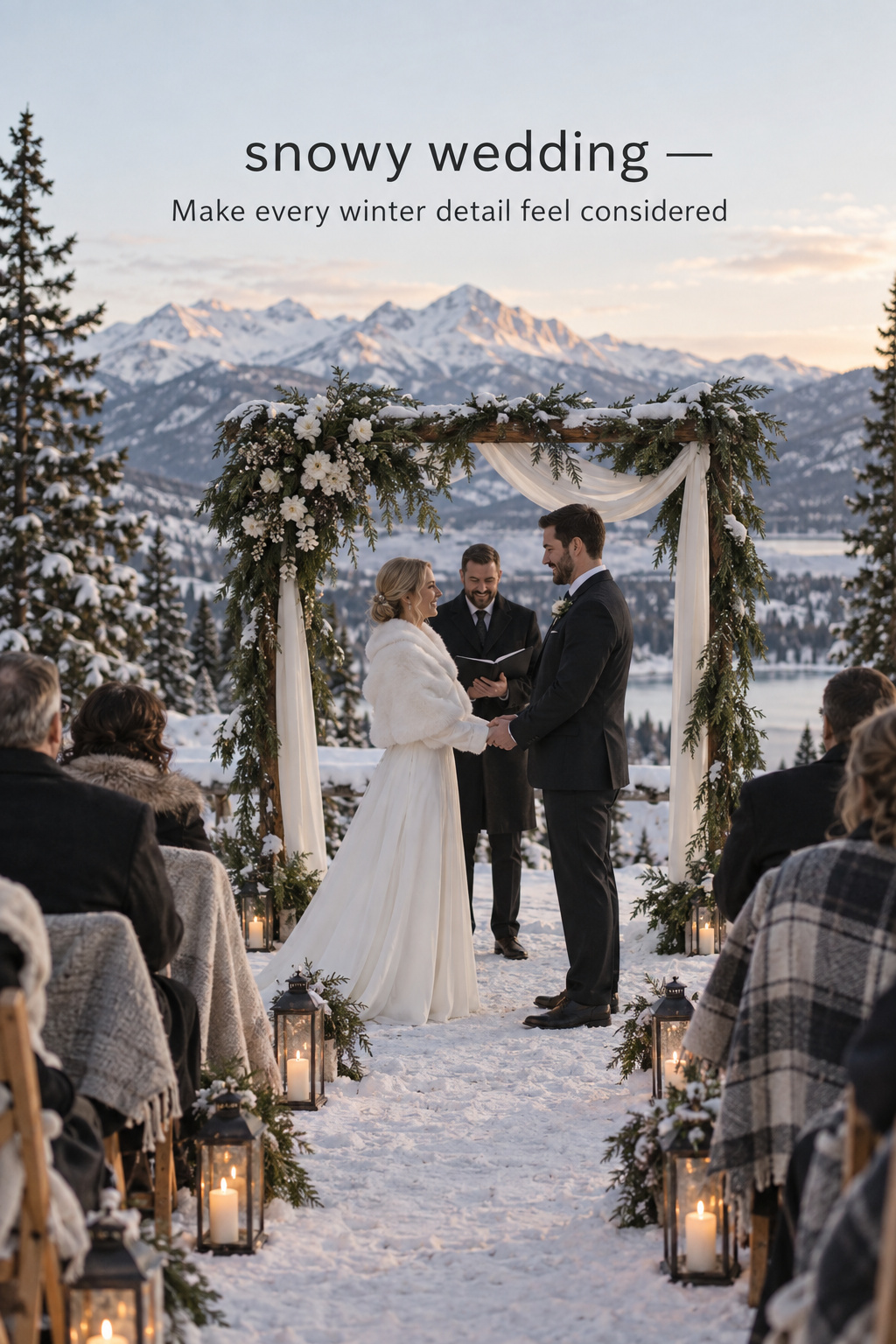
Snow already creates visual space. A ceremony focal point should define the couple without competing with the landscape. A simple evergreen arch, a pair of tall branches, white fabric moving in the wind, or a stone fireplace can be enough. If the trees are beautiful, frame them instead of covering them. If the background is mostly white, add contrast through dark wood, deep green, candle vessels, or a floral accent that can be seen from the last row.
Keep the aisle readable. White flowers in snow can disappear unless they have foliage, shadow, or a darker container around them. A line of evergreen, lanterns, or muted blue ribbon can create rhythm without making the walkway feel crowded. If candles are used outdoors, confirm that the venue allows them and protect flames from wind. The safest decoration is the one that remains beautiful after the practical rules have been checked.
Carry the landscape indoors
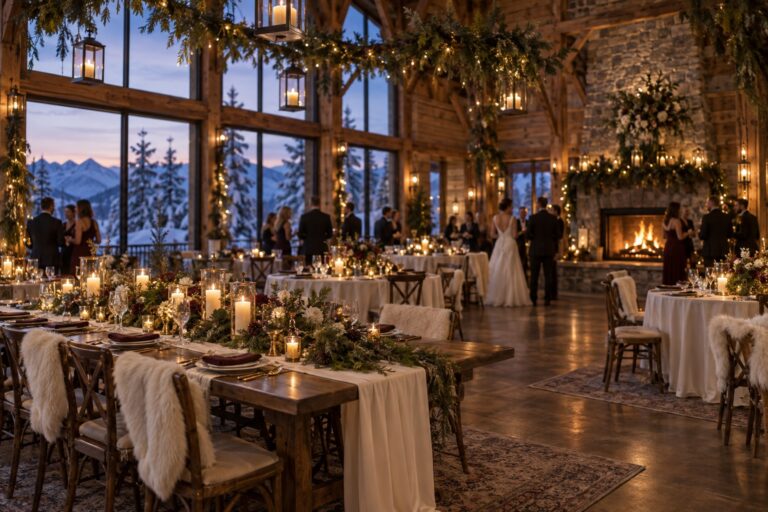
Inside, repeat shapes rather than copying the outdoor scene literally. Branches can become a table installation. A white and green bouquet can echo the snow and evergreens. Silver glass, pale blue stationery, or a velvet runner can translate frost into texture. Candlelight changes the emotional temperature of a room quickly, especially when the exterior is visible through windows. Use it to make the indoor chapter feel like shelter with a view, not a separate wedding.
One large indoor element is usually stronger than many small snowflake accessories. A fireplace arrangement, a statement escort display, a long table framed by greenery, or a lounge with layered textiles can give guests a place to settle. Choose details that can be moved or repeated so the ceremony and reception feel related. Keep exits, aisles, heaters, and service routes clear even when the room is dressed for photographs.
When there is no natural snow, create the feeling through composition rather than pretending. Frosted branches, translucent paper, pale blue glass, white flowers, and reflected light can suggest a snowy landscape without loose artificial snow on every surface. This approach is easier to clean, kinder to formal clothing, and more adaptable if the weather changes after the invitations are sent.
Design the Handoff From Snow to Warmth
The handoff is the part many mood boards skip. A snowy wedding is experienced through temperature as much as color. Guests notice the door opening, the first warm drink, the sound of wet boots, the room light, and whether they can remove a coat without losing their place. These transitions can be elegant when planned as hospitality rather than hidden logistics.
Make attire beautiful in the real weather
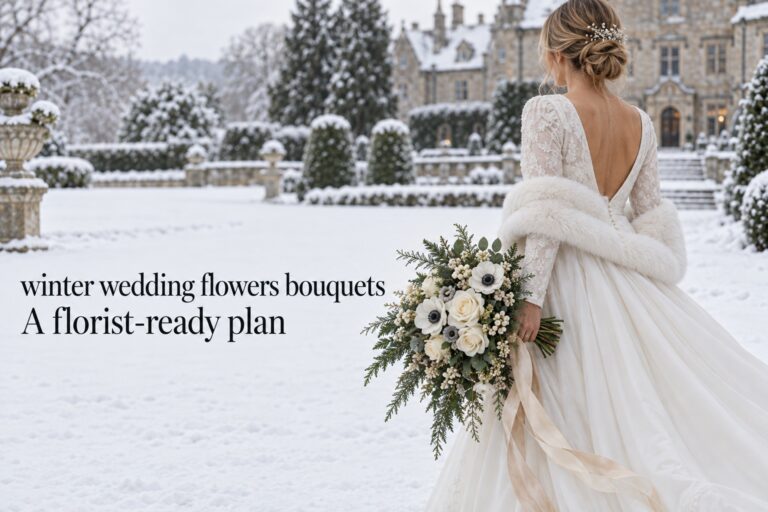
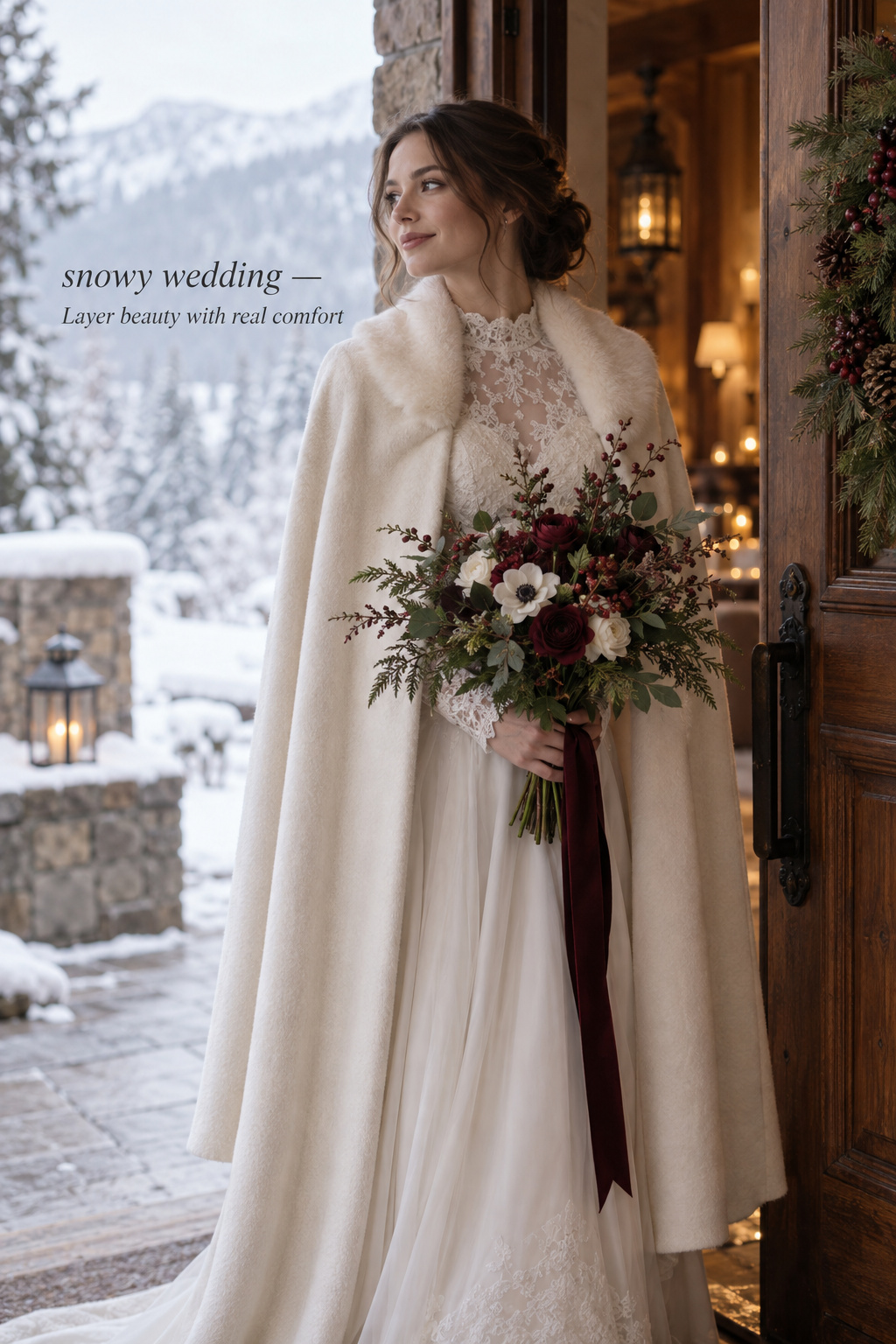
Bridal attire should be chosen with the portrait plan in mind. A long-sleeve gown, a satin cape, a wool coat, a faux fur wrap, or a tailored jacket can become part of the visual story. The outer layer should not be treated as something to throw on only when the photographer calls for it. Choose one that works with the neckline, veil, bouquet, and silhouette, then test the full combination while walking on the surface you expect to use.
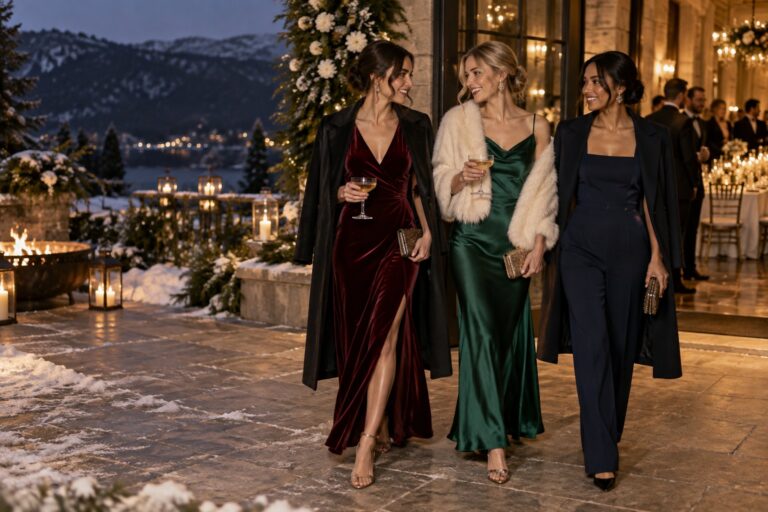
The same principle applies to the wedding party. Dark suits, velvet dresses, full-length silhouettes, and jewel tones can look rich against snow, but the people wearing them still need useful layers and footwear. Ask attendants to bring formal shoes for indoor photos and weather-ready shoes for travel or outdoor portraits. A coordinated boot or hidden warm layer is better than an outfit that looks beautiful for five minutes and becomes uncomfortable for the rest of the day.
Use the coat check as part of the welcome
Guests arrive carrying more than they would for a summer wedding. They may have a long coat, gloves, a scarf, boots, and a bag with indoor shoes. A staffed coat check near the entrance keeps the reception from becoming a pile of outerwear and gives everyone a clear first action. Add a bench, mirror, hangers that can support heavy coats, and a small surface where guests can adjust jewelry or shoes.
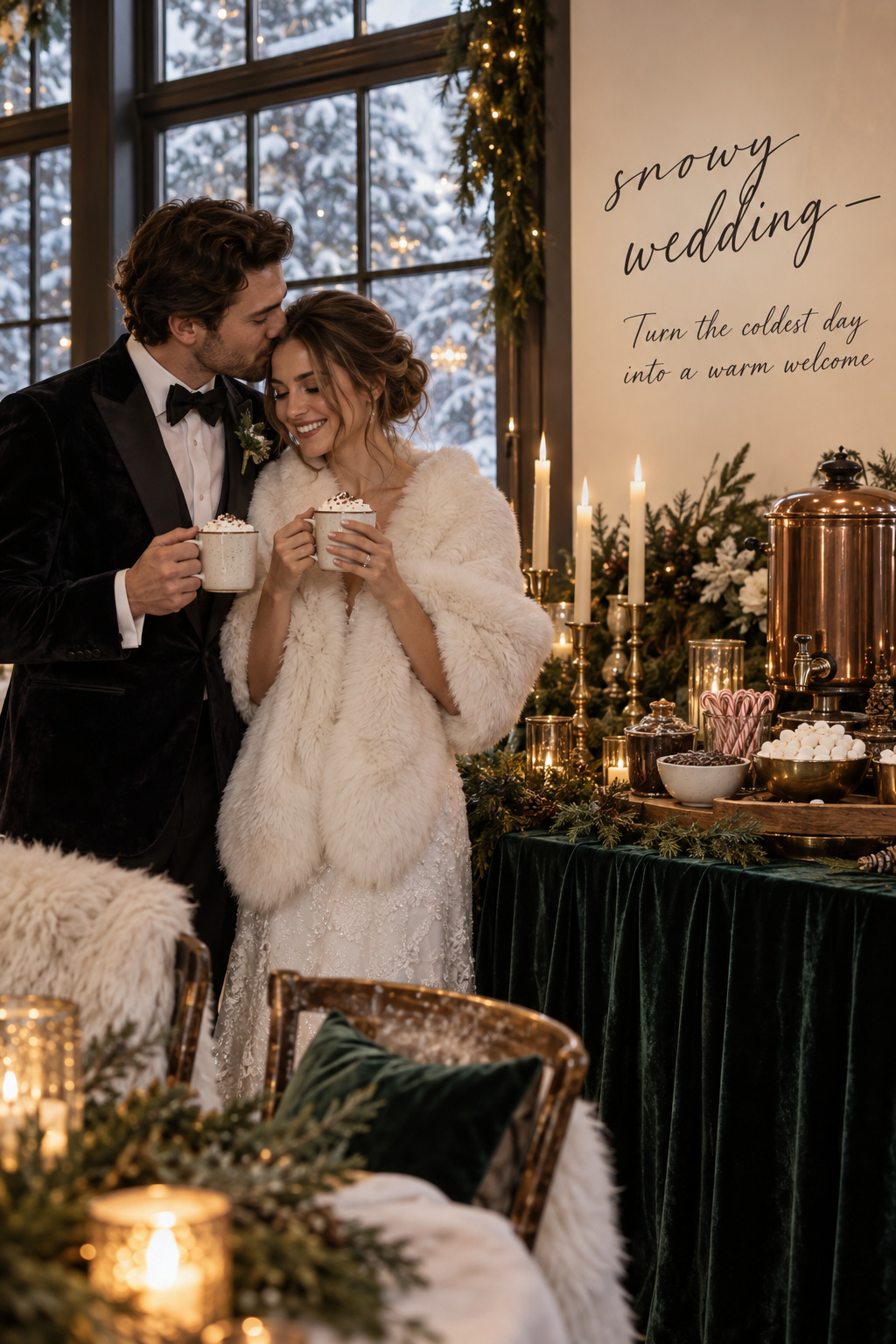
Warmth can begin before the reception meal. A small hot chocolate station, cider, tea, or a warm nonalcoholic drink can make the transition feel immediate. Pair it with a savory bite if guests have been outside. Winter menus often work best when they offer comfort in a polished form: soup in small cups, roasted vegetables, warm bread, a rich grain dish, or a dessert with spice and fruit. The purpose is not to make the wedding rustic. It is to make the room feel generous.
Build a palette that warms the eye
Snow can make pale colors look brighter and cooler. Indoors, bring in one warmer note so the room does not feel washed out. Ivory instead of stark white, amber candlelight instead of blue light, brass instead of only silver, or berry flowers instead of an all-white arrangement can create depth. If you prefer an icy palette, add warmth through wood, candle flame, velvet, or gentle lighting rather than changing the colors.
Flowers should support the palette without pretending every winter bloom is available everywhere. Ivory roses, anemones, hellebores, ranunculus, camellias, berries, dusty miller, and sturdy foliage can all suggest the season, but the florist should confirm what is appropriate for the date and location. A bouquet with a darker ribbon or a few saturated stems can remain visible against snow, while a tonal white bouquet can feel quietly sculptural against a darker coat or forest background.
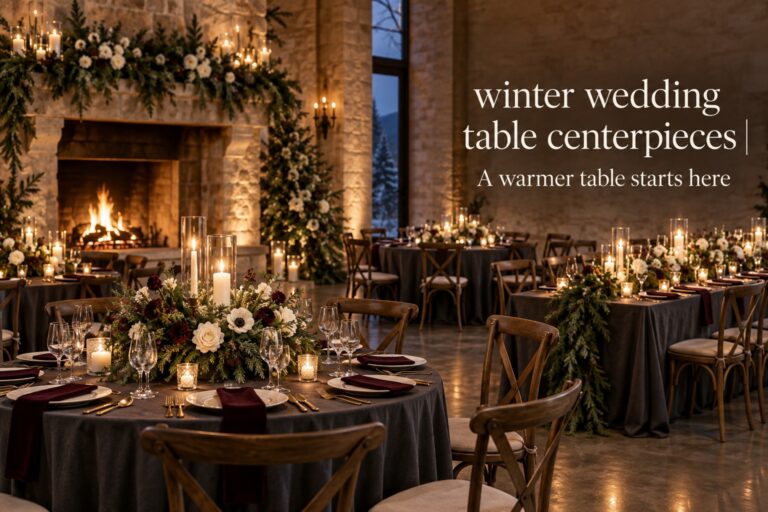
Use tables to slow the transition. A guest who has just come inside does not need a complicated centerpiece blocking conversation. Low greenery, candle clusters, warm linen, and a small seasonal detail at each place can create intimacy without reducing comfort. Keep napkins, menus, and glassware easy to handle for guests who are still warming their hands.
Plan Snowy Wedding Photos Around Light, Comfort, and Variety
The snow portrait is powerful because it simplifies the frame. The couple, the clothing, the trees, and the falling flakes do most of the work. That simplicity also makes small decisions visible. A bouquet color, a lifted veil, a textured coat, or a hand held between two sleeves can give the photograph a sense of life. Ask the photographer to create a short, varied sequence rather than keeping everyone outside until the magic disappears.
Schedule the outdoor window
Winter daylight can change quickly, and the best light may arrive earlier than the couple expects. Build the portrait plan backward from the ceremony and dinner. Decide which photographs require the couple alone, which include the wedding party, and which can be made near the entrance. A ten-minute portrait set can produce variety when the location is chosen in advance. The same amount of time can feel chaotic if the group is searching for a dry path, a missing coat, or a second bouquet.
- First frame: a wide landscape image that establishes the snow, trees, architecture, or mountain line.
- Second frame: a medium portrait showing the couple outer layers, bouquet, and full silhouettes.
- Third frame: a close-up with hands, rings, veil texture, lashes, or falling snow near the face.
- Fourth frame: a movement image such as walking, turning, lifting a hem, or sharing a warm drink.
- Fifth frame: an evening or indoor image where candlelight and the snowy view create contrast.
Photographs with snow should not all be posed in the same direction. Look at each other, look toward the landscape, walk away from the camera, and let the photographer work close enough for expression. If the snow is falling, keep the background simple so the flakes remain visible. If the snow is flat and bright, use darker trees, a stone wall, or a coat with texture to separate the couple from the ground.
Protect the people inside the picture
Comfort is part of photographic quality. Cold hands become stiff, smiles become forced, and wet hems make the couple less willing to move. Keep coats and warm footwear nearby. Give the wedding party a heated waiting space and rotate people through the outdoor set rather than leaving everyone exposed. A helper can carry the bouquet between takes, smooth a train, hold an umbrella, and keep track of the time.
Ask the photographer how they handle mixed light, white snow, and early darkness. The question is not meant to make the images technical. It helps you understand whether the proposed plan matches the location. A photographer who knows the property can often find a sheltered view, a reflective wall, or a covered porch that gives the snowy feeling without requiring a long walk.
Let details remember the weather
Detail photos can keep the snowy story alive after everyone is indoors. Photograph the coat and veil together, the bouquet resting on a wooden chair, boots beneath a formal hem, frost on a window, escort cards beside evergreen, or a warm drink held near a candle. These images explain how the day felt without requiring a dramatic mountain view. They also give the album breathing room between portraits and reception scenes.
The goal is not to prove that the wedding was cold. It is to show that the couple used the season thoughtfully. A hand warmer hidden in a pocket, a blanket folded over a chair, and a clear path through the snow can be as meaningful as a grand snowy vista because they reveal care. When the practical details look intentional, the entire celebration feels more personal.
Before the wedding, write the photo plan in the same order that people will experience it. Note the outdoor meeting point, the person responsible for coats, the indoor backup, the approximate maximum time outside, and the final warm location. This small document helps the photographer, planner, attendants, and couple make the same decision quickly if conditions change.
Sources and Methodology
This guide was shaped by a Google US search review of ten wedding and lifestyle pages covering winter themes, snowy photography, attire, flowers, color palettes, decor, venues, and warm reception menus. The sources were used to compare recurring ideas and identify the missing planning bridge between an outdoor snow moment and an indoor celebration. Recommendations here are editorial planning guidance, not a claim of firsthand testing. Confirm weather, access, venue rules, fire safety, flower availability, and photography timing with the professionals working on your event.
FAQ
How can I plan a snowy wedding if snow is not guaranteed?
Build the design around winter light, evergreen texture, warm materials, and a strong indoor setting rather than depending on snow alone. Choose a venue with attractive interiors and a nearby outdoor location, then create a weather plan that preserves the same palette and focal details if the ceremony or portraits move inside.
What should guests wear to a snowy wedding?
Guests should follow the dress code while adding a formal warm coat, useful layers, and footwear suited to the route between parking, ceremony, and reception. A wedding website note about outdoor surfaces, temperature, and whether guests should bring indoor shoes can prevent confusion.
How long should an outdoor snowy wedding ceremony last?
Keep an outdoor ceremony concise and base the timing on the actual temperature, wind, seating, and access to a heated room. A short ceremony can feel memorable when guests are prepared and the transition indoors is immediate. Ask your planner and venue to set a clear maximum rather than guessing on the day.
What colors look best in snowy wedding photos?
Deep green, navy, burgundy, black, berry, warm brown, and muted blue can create useful contrast against snow. Ivory, silver, and pale blue can also work when they are separated with texture or darker foliage. Choose colors that connect to the indoor reception so the photo gallery feels cohesive.
How do I keep a wedding dress clean in the snow?
Choose a short, planned portrait route and ask a helper to carry or lift the train between locations. Use a clean layer beneath the hem when appropriate, keep towels and a small emergency kit nearby, and confirm the photographer preferred surfaces. You do not need to walk through deep snow to create a snowy image.
What food and drinks suit a snowy wedding?
Offer warm, polished comfort foods such as soup shooters, roasted vegetables, seasonal grains, warm bread, cider, tea, or hot chocolate. A signature cocktail can be included, but make sure nonalcoholic choices are equally considered. Serve the first warm option soon after guests come inside so it feels connected to the outdoor experience.
What is the most important backup plan for a snowy wedding?
Prioritize a safe guest route and a clear decision time for moving activities indoors. Confirm who monitors conditions, how guests will receive updates, where the ceremony will go, how decor will be moved, and which portrait location remains available. A calm, early decision protects the atmosphere better than waiting for perfect weather.