
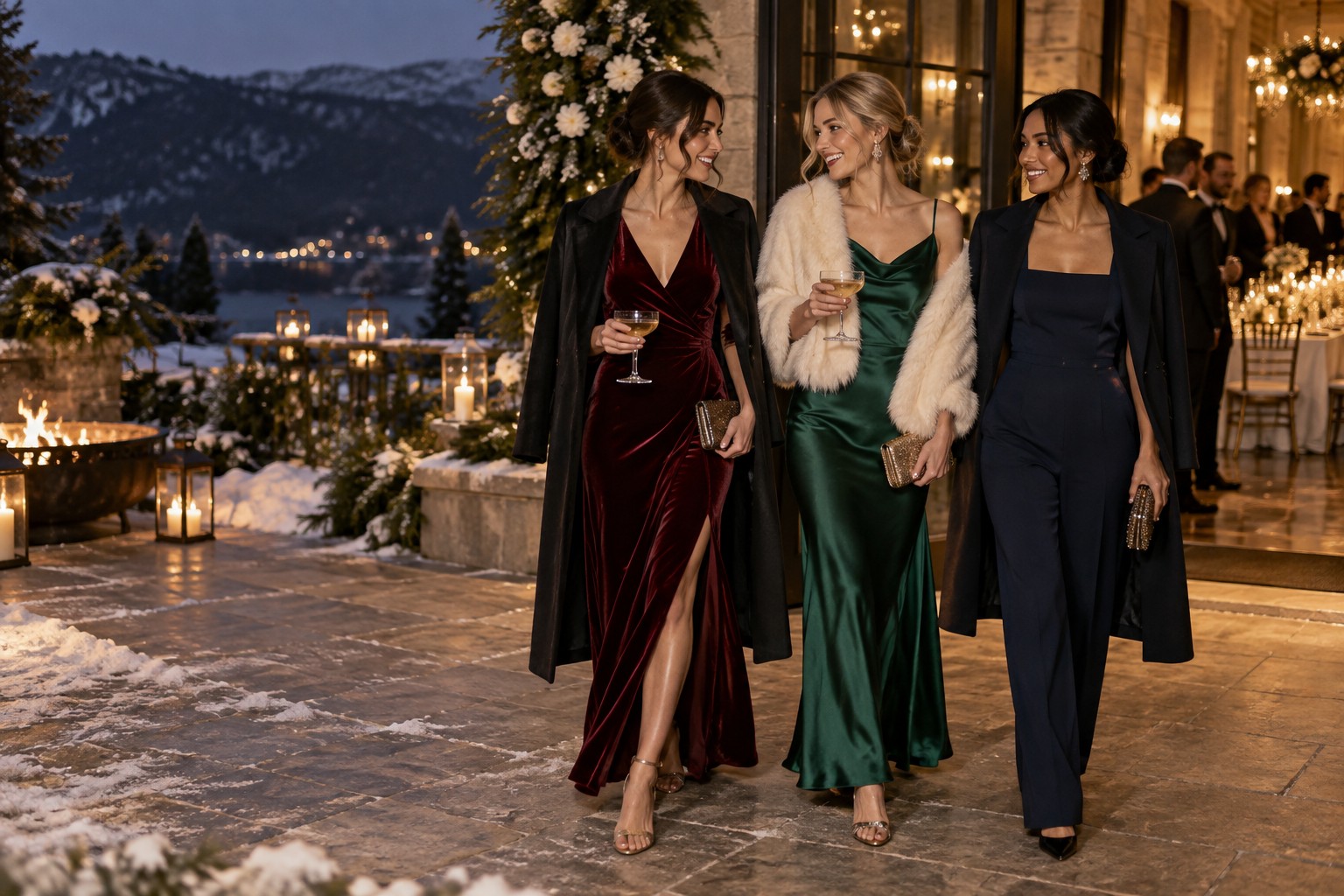
Winter Wedding Outfit: A Practical Guest Guide
A good winter wedding outfit has to solve several problems at once. It should respect the dress code, look right in the venue, keep you comfortable during cold transitions, and remain easy to wear through dinner, photos, and dancing. That is why choosing one attractive dress or suit is only the beginning. The coat, shoes, tights, bag, and layers determine whether the outfit feels finished in real life.
Start with the invitation, then build outward. Read the dress code literally, check the venue and timing, and think about how long you will stand outside or walk on uneven ground. After that, choose a seasonal fabric and a silhouette that gives you room to move. The formulas below work for dresses, jumpsuits, skirts, and tailored trousers, so you can create a winter wedding outfit that feels personal rather than predictable.
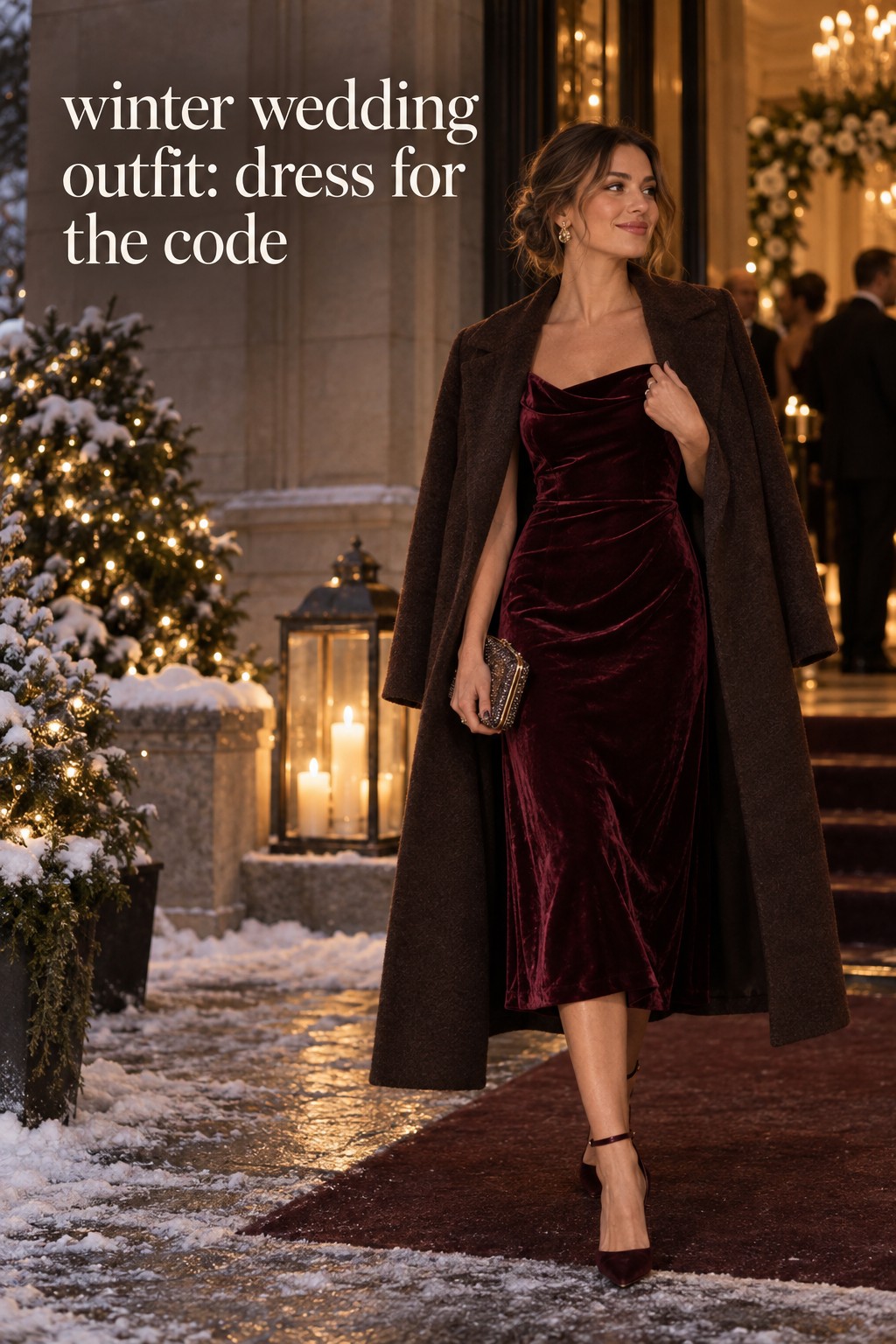
Read the Invitation Before Choosing the Outfit
The dress code is the starting point, not a suggestion to ignore once you see a pretty garment. Black tie, formal, cocktail, semi-formal, festive, and casual each set a different level of polish. Winter changes the materials and coverage that feel comfortable, but it does not erase the formality requested by the couple.
Your wedding look is only the beginning.
Keep your guest list, vendors, timeline, and every important detail together with Zarellea — so your day feels as considered as your style.
Look beyond the dress code for information about the venue, start time, ceremony location, and reception. A formal wedding in a heated hotel ballroom calls for a different layer strategy than a semi-formal ceremony at a barn with a gravel path. If the invitation or wedding website mentions an outdoor ceremony, transportation between locations, or limited coat storage, treat that information as part of the outfit brief.
- Dress code: decide the minimum level of formality before you choose color, hemline, or sparkle.
- Time of day: daytime celebrations usually tolerate lighter tailoring and less shine, while evening events can support richer color and more dramatic texture.
- Venue: a ballroom, restaurant, church, barn, lodge, gallery, and backyard each create different needs for warmth, footwear, and movement.
- Outdoor exposure: estimate the time spent walking, waiting, taking photos, or standing under a tent.
- Seasonal theme: festive does not automatically mean sequins, red, or novelty prints. It can be expressed through velvet, jewel tones, satin, or a refined winter texture.
If the invitation is vague, ask the couple or a member of the wedding party a specific question. You can say, “Would you describe the reception as cocktail or formal, and will guests spend significant time outside?” That is more useful than asking whether an outfit is “okay.” When no answer is available, choose the more polished interpretation and use layers or accessories to soften it if the event turns out to be relaxed.
Also check whether the wedding has a cultural, religious, or venue-specific expectation. A church ceremony may call for a higher neckline or covered shoulders, while a modern city reception may welcome a tailored jumpsuit. The most successful winter wedding outfit reads the room before it tries to stand out.
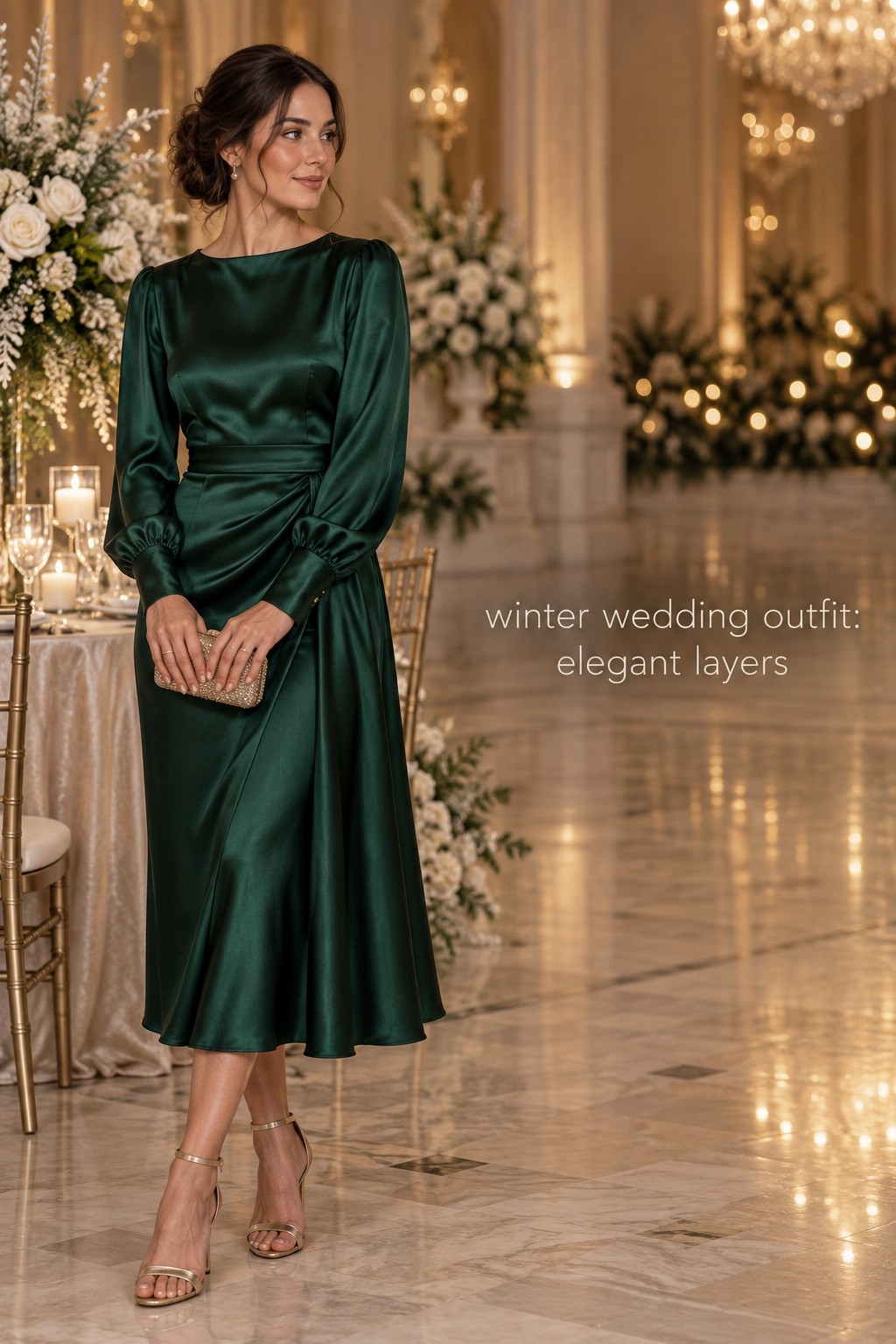
Build the Winter Outfit From Fabric, Silhouette, and Layers
Winter dressing becomes easier when you choose fabric before decoration. Velvet, heavier satin, crepe, wool blends, ponte, and lined lace generally feel more grounded in cold weather than a very thin summer chiffon. That does not mean every piece must be heavy. A fluid dress can work when it has a substantial lining, a warm coat, and shoes that make sense for the route between the car and the venue.
Velvet is a reliable choice for an evening wedding because it adds depth without requiring much jewelry. Satin reflects light and can feel festive, but a slip-style dress benefits from a tailored blazer, velvet jacket, or elegant wrap. Crepe gives a clean line for formal dresses and jumpsuits. Fine-gauge knits and wool blends can work for daytime or semi-formal settings when the cut is structured rather than lounge-like.
- Velvet: choose it for a rich, polished look with warmth and visual texture. Keep the jewelry edited because the fabric already has presence.
- Satin: use it for a fluid or festive finish, then balance it with a structured layer and a secure fit that will not require constant adjustment.
- Crepe: choose it for a smooth, formal silhouette that works with long sleeves, a column shape, a jumpsuit, or tailored trousers.
- Wool blend or ponte: use these for daytime, semi-formal, or outdoor-adjacent weddings when warmth and repeat wear matter.
- Lined lace or chiffon: let the lining provide coverage and substance, then add a coat or wrap so the delicate surface does not carry the whole winter message.
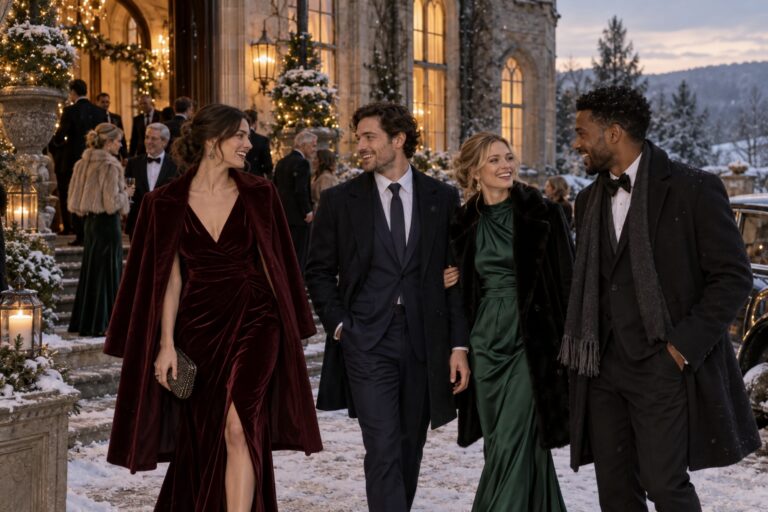
Think of layering as a visible part of the outfit, not emergency equipment. A long wool coat in camel, charcoal, navy, or black can make a cocktail dress look intentional as you arrive. A satin or velvet blazer can bridge a slip dress and a semi-formal reception. A wrap is useful when you want flexibility, but it should stay secure when you are holding a drink, greeting guests, or taking photos.
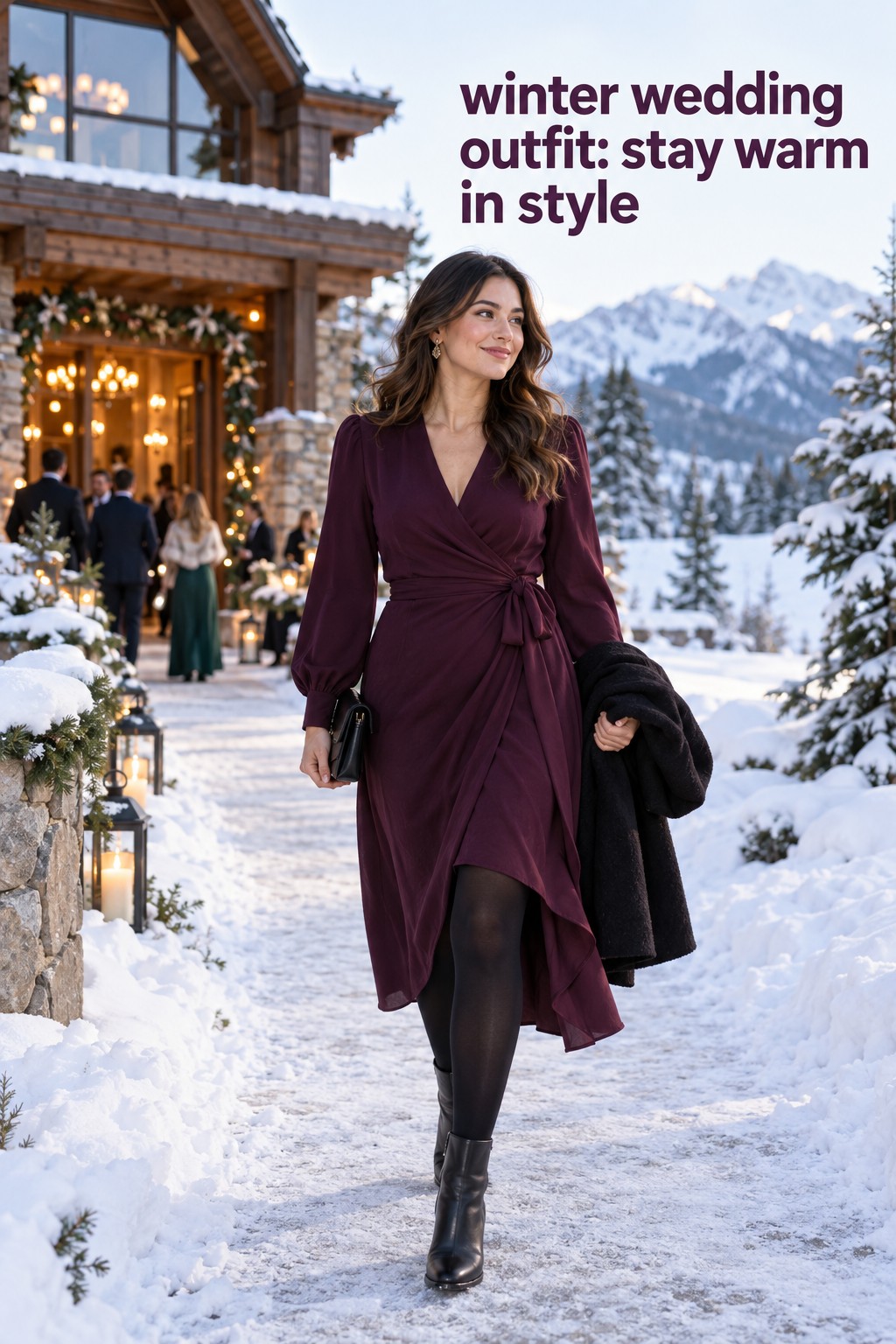
Underlayers should be thin, smooth, and tested with the garment. Thermal pieces can help at an outdoor ceremony, but bulky seams may show under satin or cling to a fitted skirt. Tights can add warmth to a shorter dress, especially with closed-toe shoes or boots. Match the tights to the shoe or hemline when you want a continuous line, and choose a finish that suits the formality rather than defaulting to the thickest option.
Color is another way to make the outfit feel seasonal without looking like a costume. Burgundy, emerald, navy, plum, chocolate, charcoal, black, winter white, and muted metallics are useful starting points. A pale color can work in winter when the fabric and silhouette are formal. If you choose a vivid tone, let it be the main statement and keep the coat and accessories quiet.
Use Reliable Outfit Formulas for Each Dress Code
Once you know the requested formality, use a complete formula instead of shopping by isolated pieces. Each formula below includes the main garment, the layer, and the finishing choices that make it appropriate for winter.
Black tie: full-length polish and a proper coat
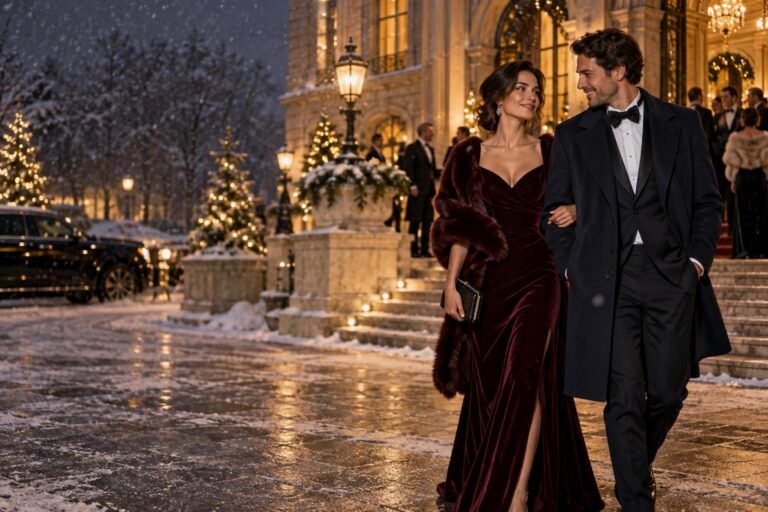
For black tie, start with a floor-length gown or an exceptionally polished formal alternative. Velvet, crepe, satin, and restrained embellishment can all work. Choose a silhouette that allows you to sit and walk comfortably, then add a true evening coat, tailored wool overcoat, or elegant stole. A casual puffer may be warm, but it can undermine the formality as you arrive and appear in photographs.
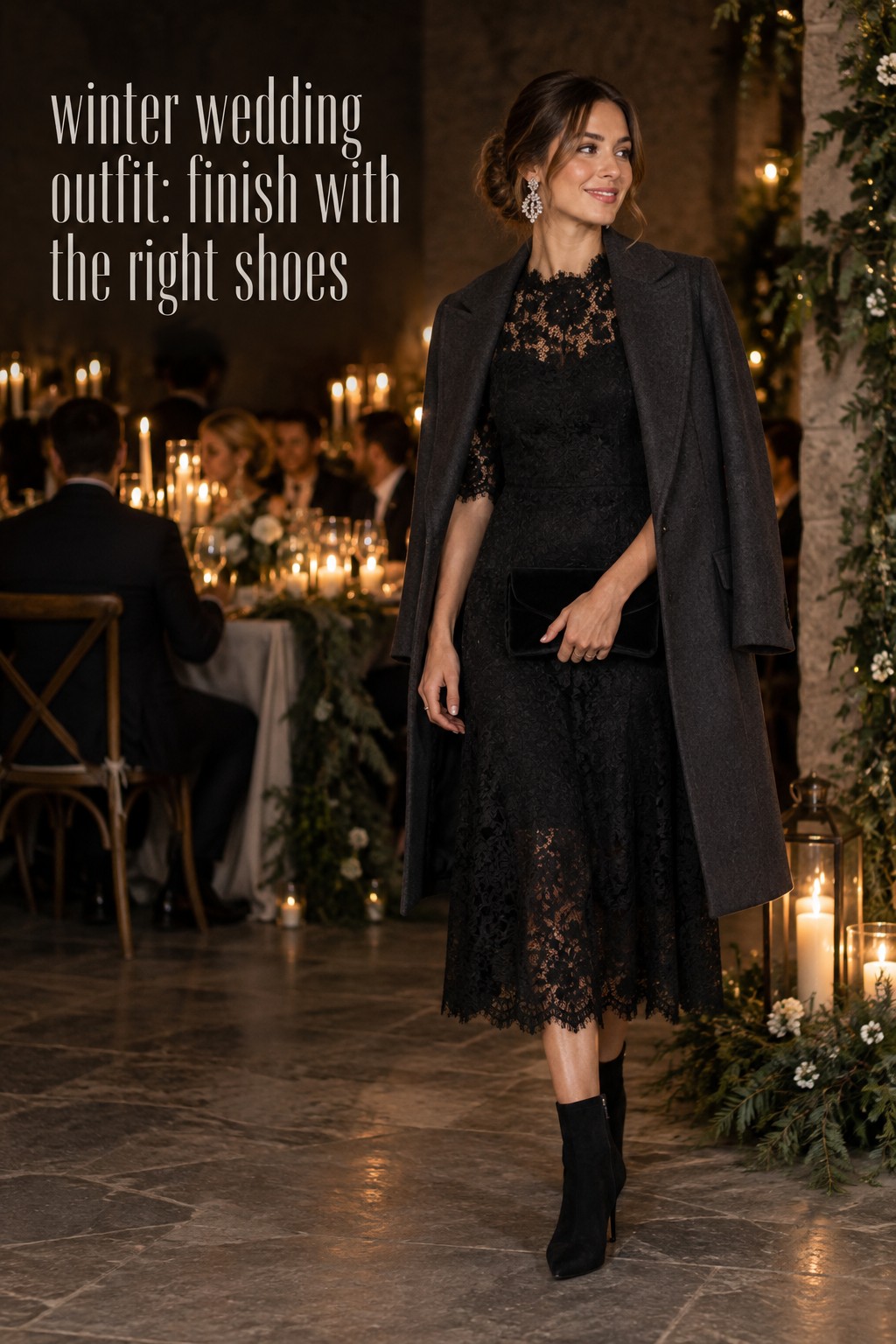
Keep the rest deliberate: closed-toe heels or stable evening shoes, a compact clutch, and jewelry that responds to the neckline. If the gown is heavily embellished, use simpler earrings. If the dress is minimal, a crystal earring or metallic clutch can add light. Test the hem with the coat and shoes before the event, especially if you will walk across wet pavement.
Formal: a long dress, refined midi, or elevated jumpsuit
Formal gives you slightly more flexibility than black tie. A long dress is the safest choice, but a sophisticated midi, dressy suit, or tailored jumpsuit can fit the setting when the fabric and accessories are elevated. Look for clean construction, a defined shape, and enough coverage for the season. A velvet wrap dress, satin column dress, or wide-leg jumpsuit with a formal neckline can all become a strong winter wedding outfit.
Finish with a structured coat, refined heels or dressy boots, and a small bag. Avoid letting the coat look like an afterthought. If you need warmth, select a layer that follows the line of the outfit and does not bunch at the shoulders. A tailored blazer can work with a jumpsuit, while a long coat usually works better over a floor-length dress.
Cocktail: a seasonal midi with controlled shine
Cocktail is an excellent place for a velvet midi, a heavier satin dress, a sequined style with a simple shape, or a dressy skirt and blouse. Knee-length and midi hemlines are common, but the outfit should still look deliberate rather than like a night out at any restaurant. Rich color, texture, or one reflective detail can make a shorter silhouette feel connected to winter.
Pair a midi with closed-toe pumps, pointed ankle boots, or a stable block heel depending on the venue. Add opaque or sheer tights when the temperature calls for them, and choose a wool coat, velvet blazer, or polished wrap. If the dress is already shiny, use a matte bag and understated jewelry so the look remains balanced.
Semi-formal: polished separates and comfortable structure
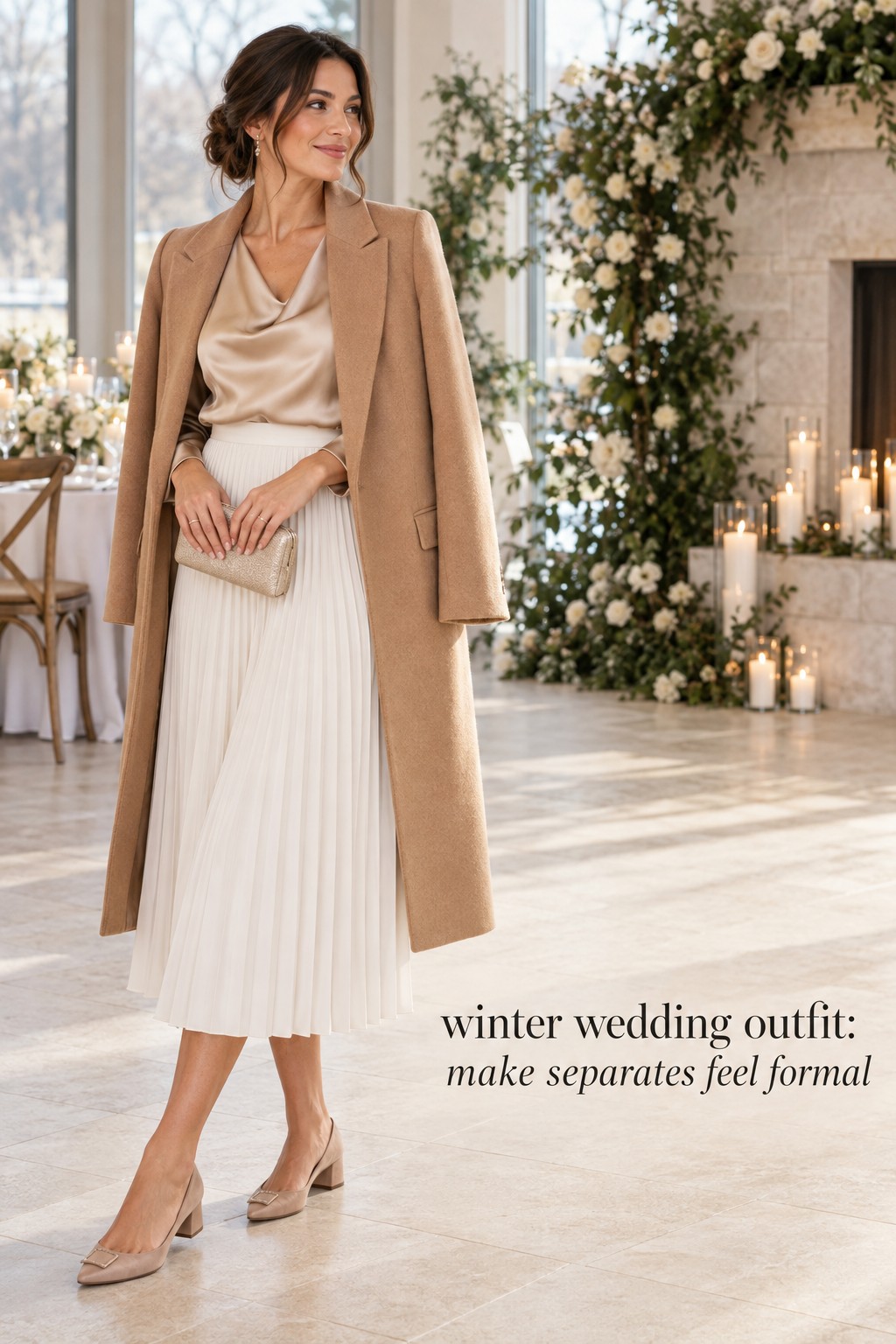
Semi-formal allows you to be more flexible while still looking occasion-ready. Try a long-sleeve wrap dress, a fine-gauge knit midi with a defined waist, a pleated skirt with a fitted knit top, or a satin blouse with tailored trousers. A wool-blend sheath with tights can be especially useful for a daytime wedding. Choose one elevated feature, such as a rich fabric, a graceful neckline, or a beautiful earring.
The best layer is usually a tailored coat or cropped jacket that preserves the shape of the outfit. Dressy ankle boots can work for a barn, lodge, or uneven path, while classic pumps are better for a formal indoor floor. Keep the bag small enough to carry comfortably, and make sure your shoes allow you to stand through the ceremony without distraction.
Casual or festive: relaxed does not mean ordinary
A casual winter wedding still deserves a clear occasion signal. A ribbed knit dress, a long-sleeve midi, a wool skirt with a blouse, or a neat trouser outfit can work. Add a refined boot, low heel, or polished flat rather than everyday sneakers unless the couple specifically invites them. For a festive code, you can introduce a metallic shoe, velvet accessory, subtle sequins, or a jewel-tone knit without turning the outfit into a holiday party costume.
If the wedding is in a barn, lodge, or outdoor-adjacent venue, prioritize a warm coat and shoes that can handle the ground. A simple outfit with excellent fit and thoughtful layers will look more appropriate than a delicate dress that leaves you cold and unstable.
Finish With Shoes, Accessories, Weather Planning, and Trial Checks
Shoes are where many winter outfits fail. The most beautiful heel is not useful if it sinks into grass, slips on wet stone, or becomes painful before dinner. Match the shoe to the route, not only the dress. Closed-toe pumps, block heels, pointed ankle boots, and polished knee-high boots can all work when the silhouette and formality are right.
- For snow, ice, or gravel: choose a stable heel, a sole with grip, and a shoe you can walk in confidently. Bring a practical pair for travel if necessary and change before the ceremony.
- For a midi dress: a pointed pump, sleek ankle boot, or tall boot can maintain a long visual line. Check where the hem lands when you sit.
- For a floor-length dress: select the heel height before hemming and confirm that the fabric does not catch under the shoe.
- For trousers or a jumpsuit: choose a shoe that supports the hem and keeps the leg line clean. A block heel can be easier for long standing.
- For indoor-only celebrations: you have more freedom, but comfort still matters because wedding days involve more standing than a standard dinner.
Accessories should echo the outfit rather than compete with it. Gold can warm burgundy, emerald, chocolate, and ivory. Silver or crystal can sharpen navy, charcoal, black, and cool metallics. A velvet bag can repeat the texture of a dress, while a satin clutch can add light to a matte suit. If you wear a statement earring, let the neckline and hair leave enough space for it to be seen.
Plan for temperature changes with a layer you can remove easily. A wrap is useful during the ceremony but can become inconvenient at the reception, so check whether the venue has coat storage or a place to hang it. Gloves, a scarf, and an umbrella may be necessary for travel, but they do not need to become part of the photographed outfit. Keep a small repair kit with fashion tape, blister protection, a compact mirror, and any makeup essentials you actually use.
Before committing to the look, run a realistic trial. Put on the complete winter wedding outfit, including the coat, tights, shoes, bag, and jewelry. Walk up stairs, sit in a chair, lift your arms, use the restroom, and stand for at least twenty minutes. Photograph the outfit in daylight and indoor light. Check whether the coat crushes the shoulders, the bag catches on the sleeve, the tights show under the hem, or the shoes disappear in the length of the dress.
Finally, check the outfit against the couple’s visual space. Do not wear white or an outfit that could reasonably be mistaken for bridal unless the invitation clearly makes it acceptable. Avoid anything so revealing, noisy, or restrictive that it becomes the focus during the ceremony. Your goal is not to be invisible. It is to look considered, comfortable, and fully present for the celebration.
Sources and Methodology
This guide was shaped by a review of ten opened US search results from fashion and wedding publications, including Adrianna Papell, The Perfect Wedding, Refinery29, Style for Events, Altar’d State, My Wedding Source, Fashion Note, Marie Claire, WeddingWire, and The Knot. The sources were used to compare dress-code guidance, winter fabrics, dress and non-dress outfit formulas, outerwear, tights, footwear, and practical venue considerations.
FAQ
What should I wear to a winter wedding?
Start with the dress code, then choose a seasonal fabric, polished silhouette, warm outer layer, and shoes that suit the venue. Velvet, satin, crepe, wool blends, lined lace, tailored trousers, jumpsuits, and long-sleeve dresses can all work. The complete winter wedding outfit should be tested with the coat and shoes before the event.
What colors are best for a winter wedding guest outfit?
Burgundy, emerald, navy, plum, chocolate, charcoal, black, winter white, and muted metallics are useful choices. Color should follow the dress code and venue, not a strict seasonal rule. A pale shade can work when the fabric and cut feel formal, while a jewel tone can add richness without extra embellishment.
Can I wear a jumpsuit to a winter wedding?
Yes, especially for formal, cocktail, or semi-formal weddings when the jumpsuit has refined tailoring and an appropriate fabric. Choose crepe, satin, velvet, or another substantial material, then add elegant shoes, a small bag, and a structured coat. The neckline, fit, and accessories should communicate the same level of polish as a dress.
Are tights appropriate with a winter wedding dress?
Yes. Tights can make a shorter or midi dress more comfortable in cold weather, particularly with closed-toe shoes or boots. Choose a finish that suits the event and coordinate the color with the shoe or hemline. Test the tights with the dress in advance so the waistband or texture does not show.
What coat should I wear over a formal winter wedding outfit?
A long wool coat, tailored overcoat, dressy cape, elegant stole, or refined wrap can work depending on the dress code and temperature. For black tie, choose a genuinely formal layer rather than a casual puffer if possible. Make sure the coat follows the shape of the outfit and does not crush the shoulders or catch on the hem.
What shoes work for an outdoor winter wedding?
Choose closed-toe shoes, polished ankle boots, tall boots, or block heels with enough stability for the ground. Consider snow, ice, gravel, grass, and the distance between parking, ceremony, and reception. If the dress code is formal, select a dressy shoe for the event and use a practical travel pair only when needed.
How can I stay warm without looking bulky at a wedding?
Use thin, smooth underlayers, a substantial seasonal fabric, and one intentional outer layer. Long sleeves, lined dresses, fine-gauge knits, tights, tailored coats, and secure wraps provide warmth without adding random bulk. Try the complete look while sitting and moving so you can remove or adjust the layer comfortably.
How do I know if my winter wedding outfit is comfortable enough?
Wear the full outfit before the wedding and walk, sit, climb stairs, lift your arms, and stand for at least twenty minutes. Check the coat, tights, shoes, bag, jewelry, and hem together. Photograph the look in more than one type of light and fix any slipping, rubbing, bunching, or temperature problem before the event.

One Comment