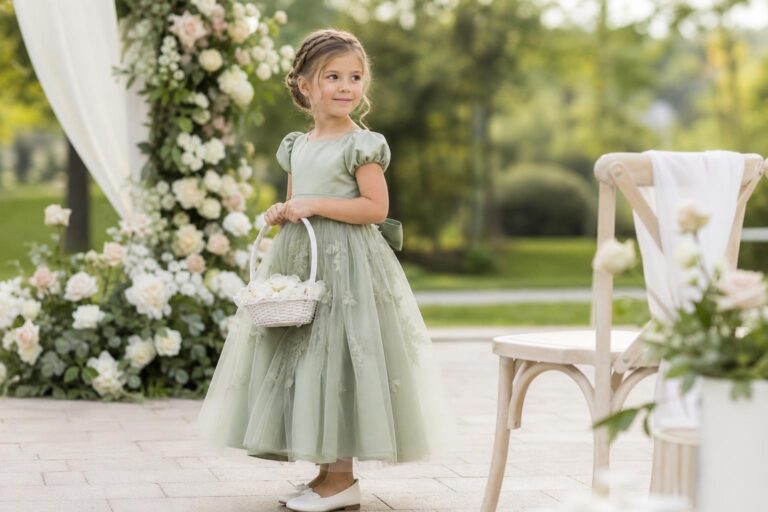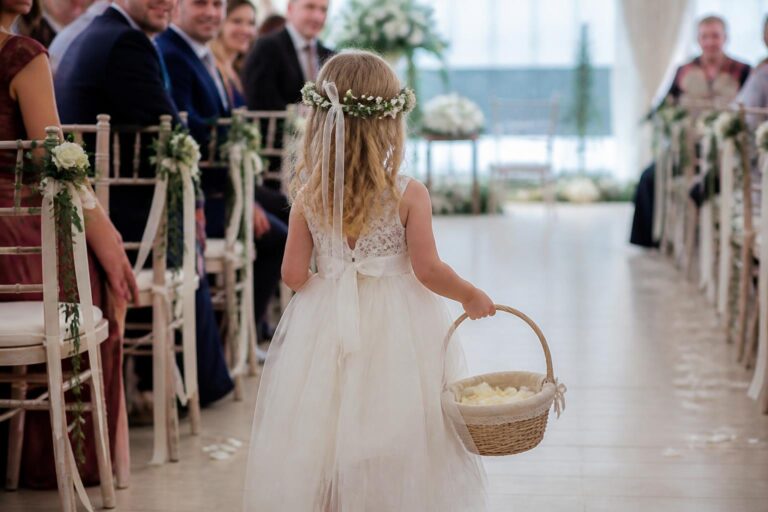
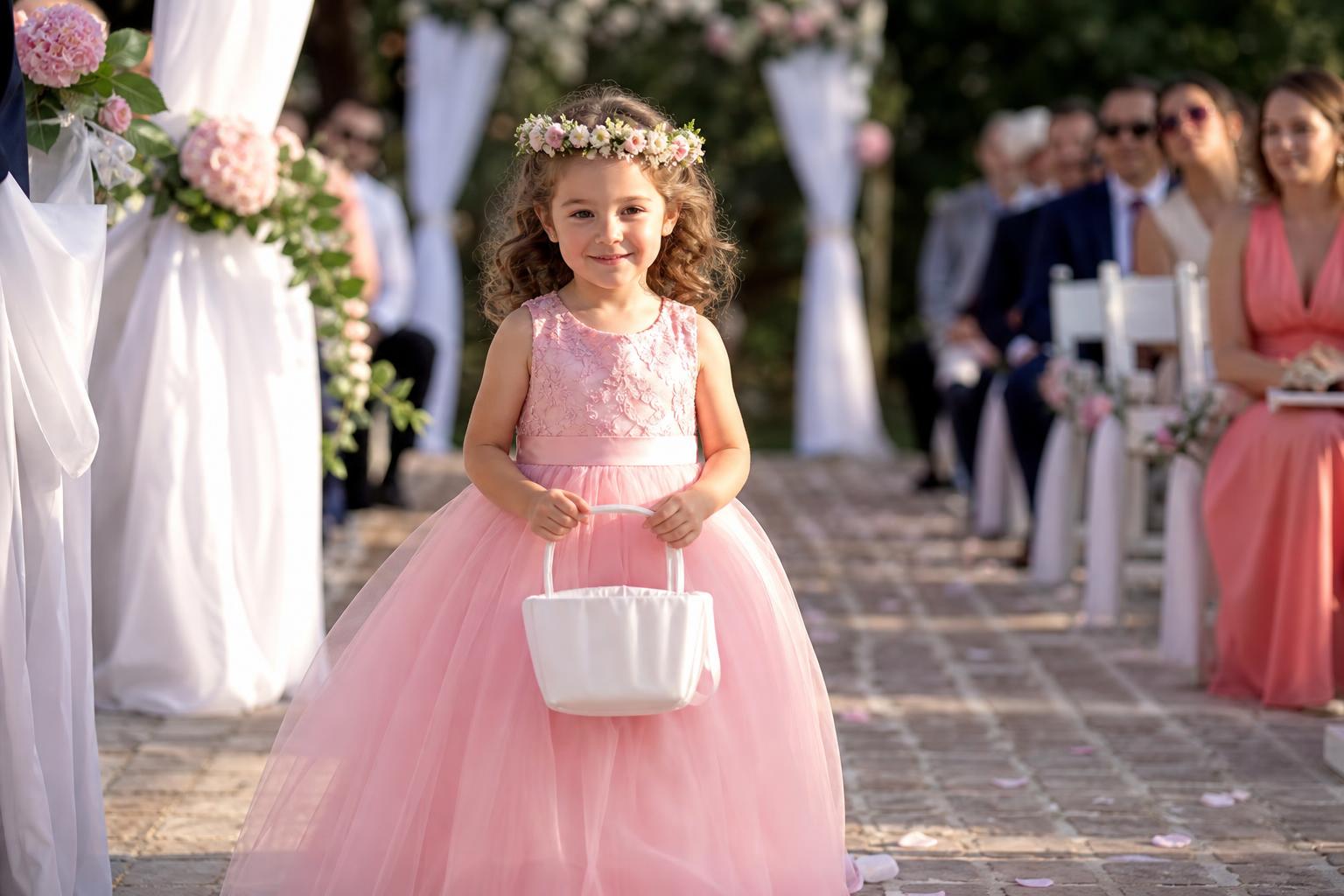
Pink Flower Girl Dresses for Every Wedding Setting
By the time the invitations are sent and the bridal party colors begin to take shape, pink flower girl dresses often emerge as one of the sweetest decisions in the wedding wardrobe. They sit at the intersection of tradition and softness: formal enough for a ceremony, playful enough for a child, and versatile across everything from a garden aisle to a ballroom reception. Yet not all pink dresses create the same effect. A blush tulle ball gown tells a very different story from a satin A-line in a deeper rose tone, even when both belong to the same color family.
That is why pink flower girl dresses are so often discussed together by shade, silhouette, and fabric. Parents and planners may begin with a simple color preference, then quickly find themselves comparing lace against satin, ball gown against empire waist, or a soft ivory-pink palette against a brighter pink statement. The distinctions matter. They influence comfort, formality, photography, and how naturally the dress fits the mood of the wedding day.
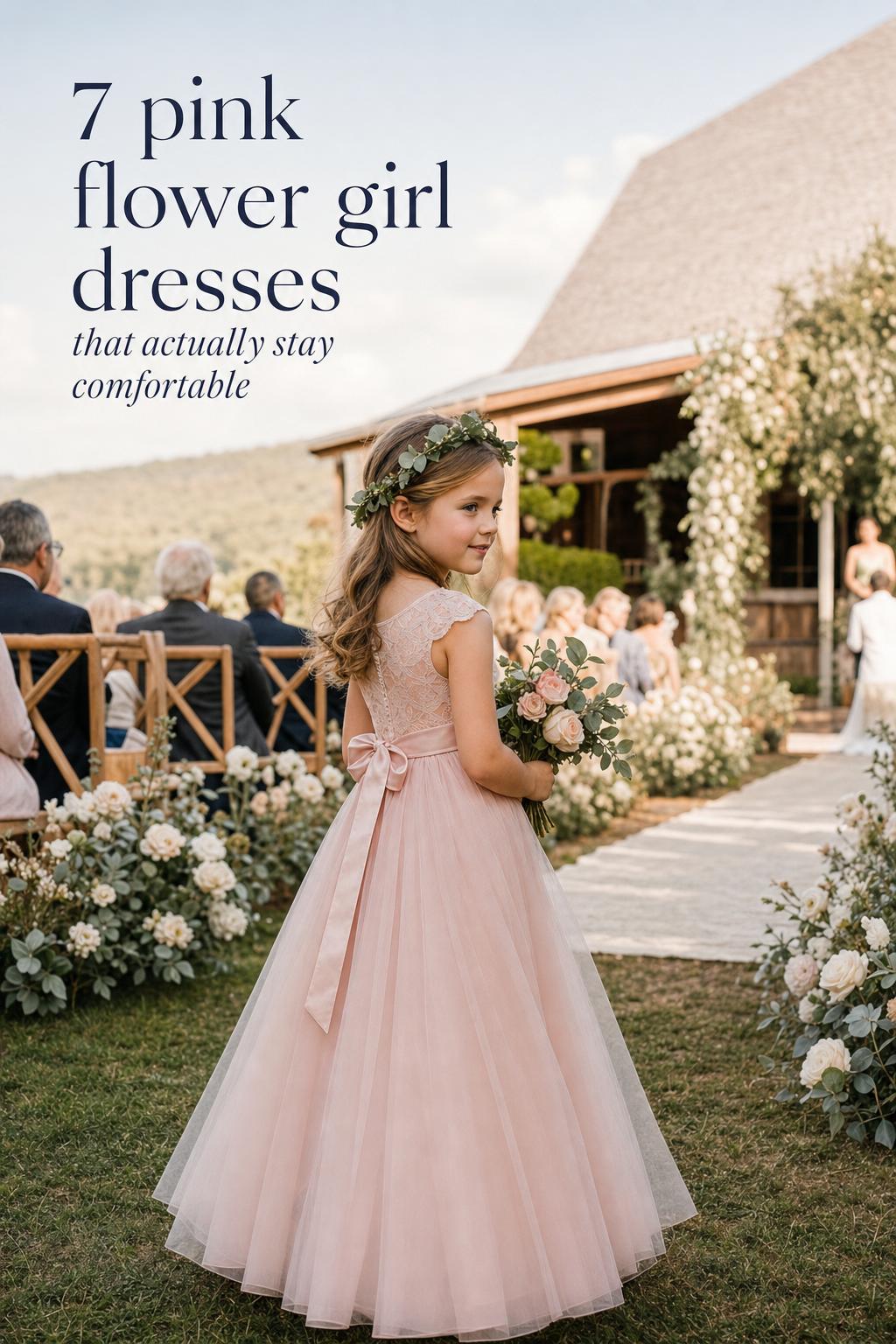
This comparison-style guide breaks down the main pink flower girl dress styles, explains how they differ visually and practically, and looks at the leading U.S.-focused shopping destinations including Azazie, Dessy, Nordstrom, Bloomingdale’s, FlowerGirlDresses.com, Monsoon, FleurKids, Misdress, and Promfy. The goal is not simply to admire pretty dresses, but to understand which approach makes the most sense for a specific celebration.
The romantic appeal of pink in wedding dressing
Pink has unusual range in flower girl attire. In one setting, it reads airy and almost neutral, especially in blush or powder tones paired with ivory. In another, it feels more playful and expressive, particularly when the dress leans toward rose pink or fuchsia. That breadth is one reason the color appears so frequently across major retailers and specialist collections in the United States.
Your wedding look is only the beginning.
Keep your guest list, vendors, timeline, and every important detail together with Zarellea — so your day feels as considered as your style.
For wedding styling, pink also works well because it can move between aesthetics without losing cohesion. A formal ceremony may call for a ball gown with tulle and lace, while a lighter daytime event might feel more natural in a simple A-line silhouette. The shared color family keeps the visual language consistent, even when the structure changes.
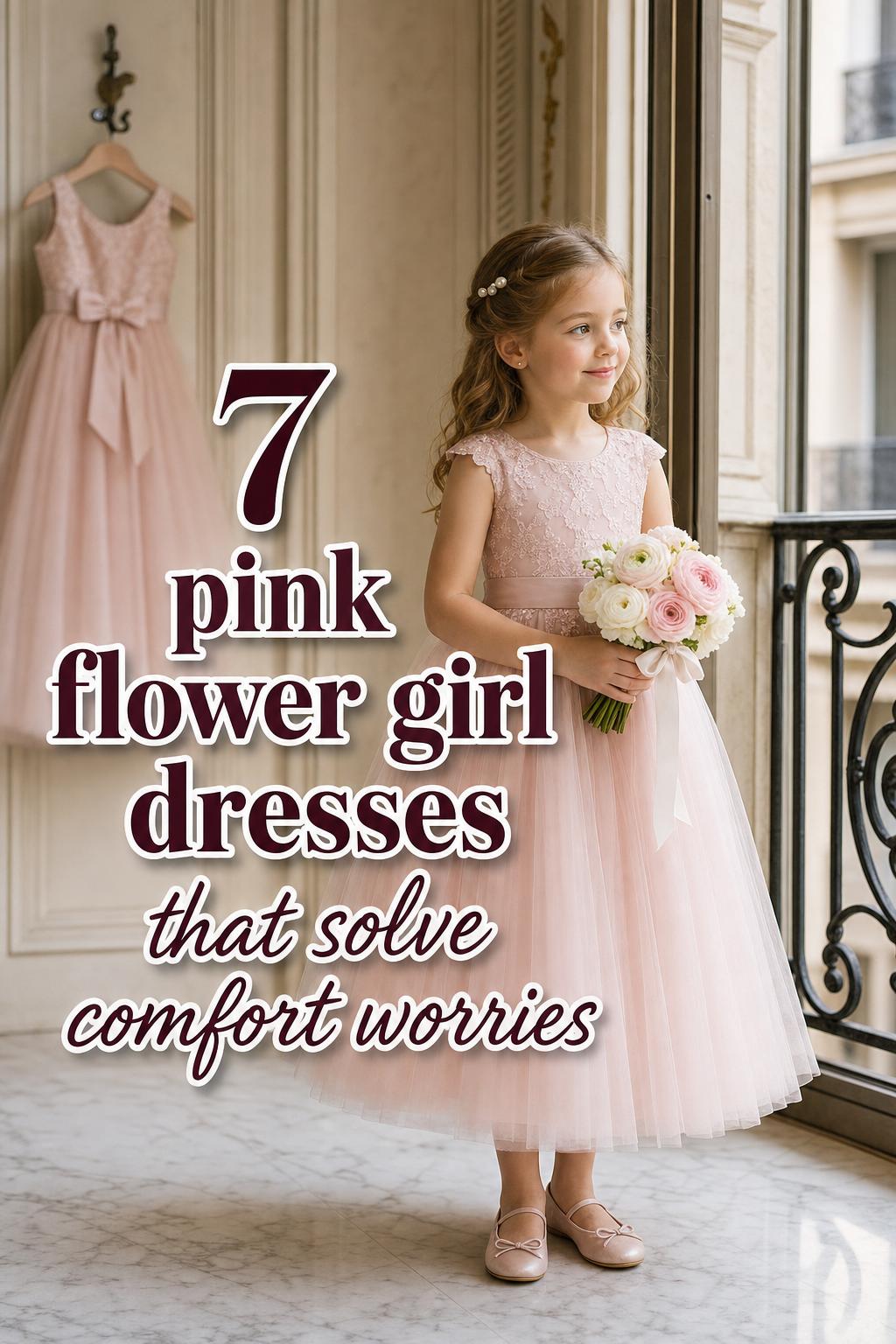
Style overview: the princess-inspired pink ball gown
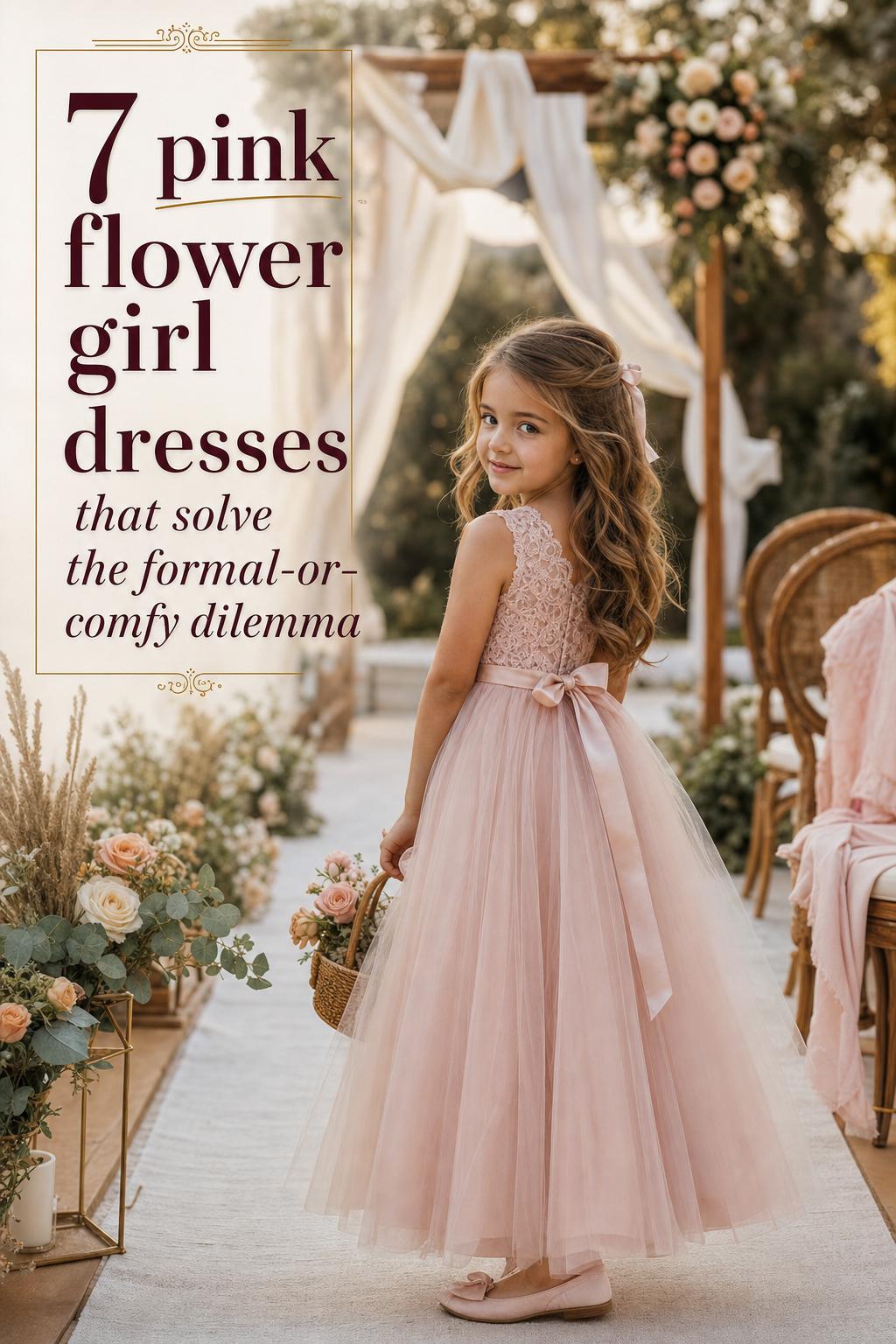
The pink ball gown is the most ceremonial interpretation of flower girl dressing. It is defined by a fuller skirt, a more dramatic sense of volume, and a romantic presence that suits grand entrances. Across collections from Azazie and Monsoon to multi-brand assortments at Nordstrom and Bloomingdale’s, this style often appears in tulle, lace, or satin, sometimes with embroidered or bow details.
Its typical silhouette is structured through the bodice and expansive through the skirt, giving it a princess effect that feels especially suited to formal weddings. Blushing pink and ivory-pink combinations are especially common in this category, as they soften the visual weight of the silhouette and keep the look bridal rather than costume-like.
The overall mood is polished, photogenic, and event-forward. In a ballroom, church, or elegant indoor venue, a pink ball gown creates a clear visual link to the wedding’s formal dress code. It can be beautiful at golden hour in a garden as well, but it is most convincing when the setting supports that level of dressiness.
Style overview: the A-line and empire waist approach
A-line and empire waist pink flower girl dresses offer a gentler kind of formality. They maintain the occasion feel of a wedding dress for children, but with less volume and often more ease of movement. This style appears repeatedly across brand collections and retailers because it bridges ceremonial polish with practicality.
An A-line shape gradually widens from the bodice, creating a balanced silhouette that works in many fabrics, including satin, lace, chiffon, and lighter tulle. An empire waist places the seam higher, often producing a softer drape that can feel especially appropriate for younger children or weddings with a relaxed atmosphere. Dessy’s catalog language around formal flower girl dresses and ready-to-ship options aligns naturally with this category, as do broader marketplace listings where shape and wearability matter as much as decoration.
Visually, these dresses feel less theatrical than a ball gown and more adaptable across ceremony styles. At a vineyard wedding, a countryside celebration, or a daytime reception, they tend to sit comfortably within the setting without looking overbuilt.
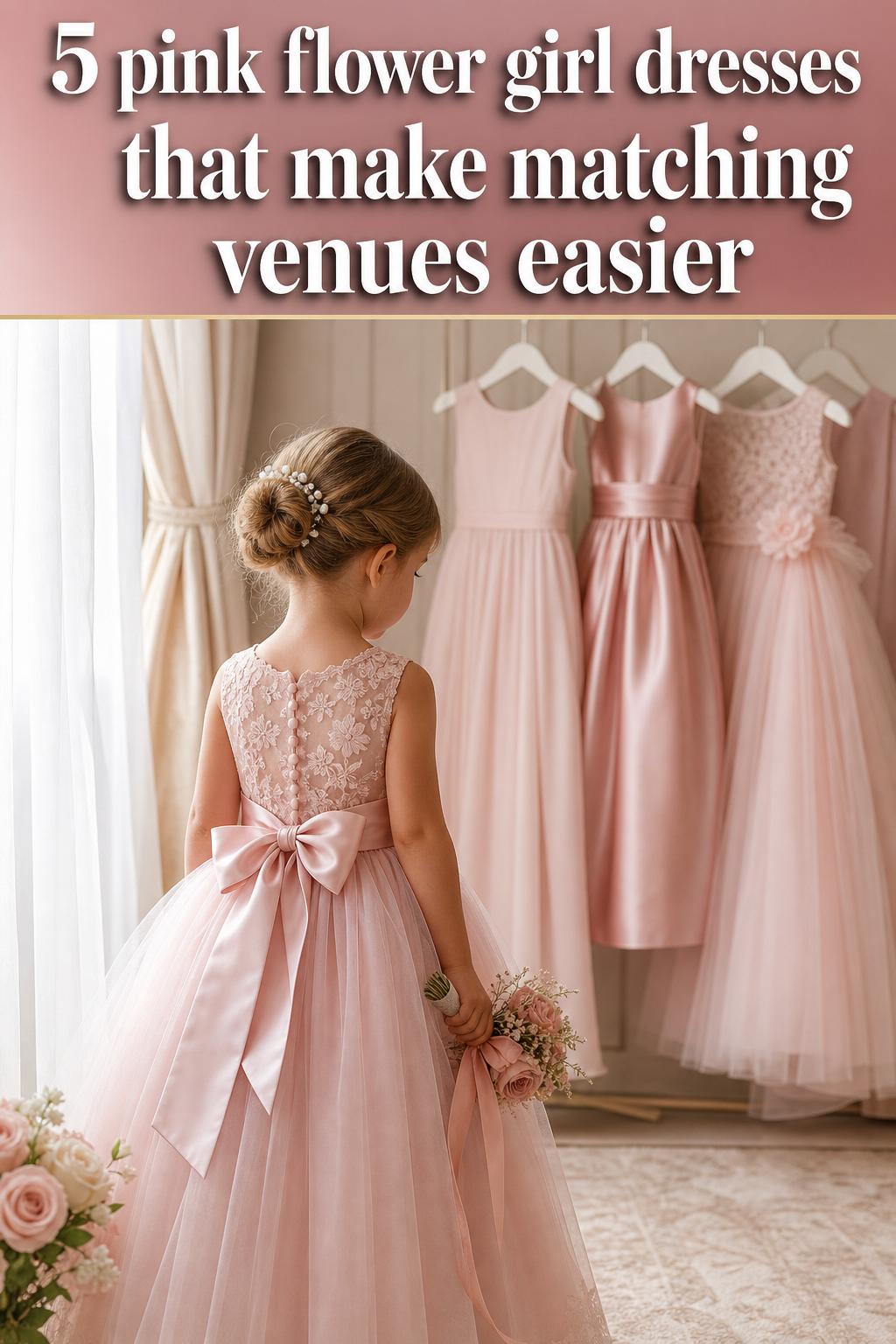
Style overview: lace-led pink flower girl dresses
Some pink flower girl dresses are defined less by silhouette and more by surface. Lace-led designs, including options highlighted by Misdress and seen throughout broader retailer assortments, introduce texture, delicacy, and a slightly more traditional formalwear language. Whether the dress is an A-line, ball gown, or simpler occasion silhouette, lace changes the mood immediately.
These dresses usually feel refined rather than playful. The lace may appear across the bodice, overlay the skirt, or work as a detail alongside tulle. When the pink is pale, lace can create a very soft, almost heirloom impression. When the tone is stronger, the same fabric reads more decorative and defined.
For ceremonies where bridal details matter visually, lace has an advantage. It echoes the language of formal wedding attire without requiring a highly dramatic shape. That makes it especially helpful when families want a flower girl look that feels elegant but not oversized.
Style overview: tulle, satin, and chiffon as distinct aesthetics
Fabric often determines the dress personality as much as the cut. Tulle pink flower girl dresses usually feel airy, romantic, and slightly whimsical. Satin tends to look cleaner and more polished, with a smoother finish and a neater structure. Chiffon, where available in occasion wear collections, suggests movement and lightness, especially for weddings that lean softer or more relaxed.
Azazie’s listings illustrate this distinction clearly through product naming conventions that combine silhouette, fabric, and color, such as lace tulle dresses or stretch satin options in blushing pink. Monsoon also reflects this fabric-driven shopping logic by placing chiffon, lace, and tulle within its wedding and occasion assortment. These details matter because they help shoppers decide not just what color they want, but what mood the dress should create.
A tulle skirt catches movement beautifully during a ceremony walk. Satin photographs with more structure and can feel especially appropriate for evening receptions. Chiffon has a gentler line and may suit weddings where breezier styling is the priority. Rather than treating pink as one style, it is often more useful to ask whether the wedding calls for volume, polish, or fluidity.
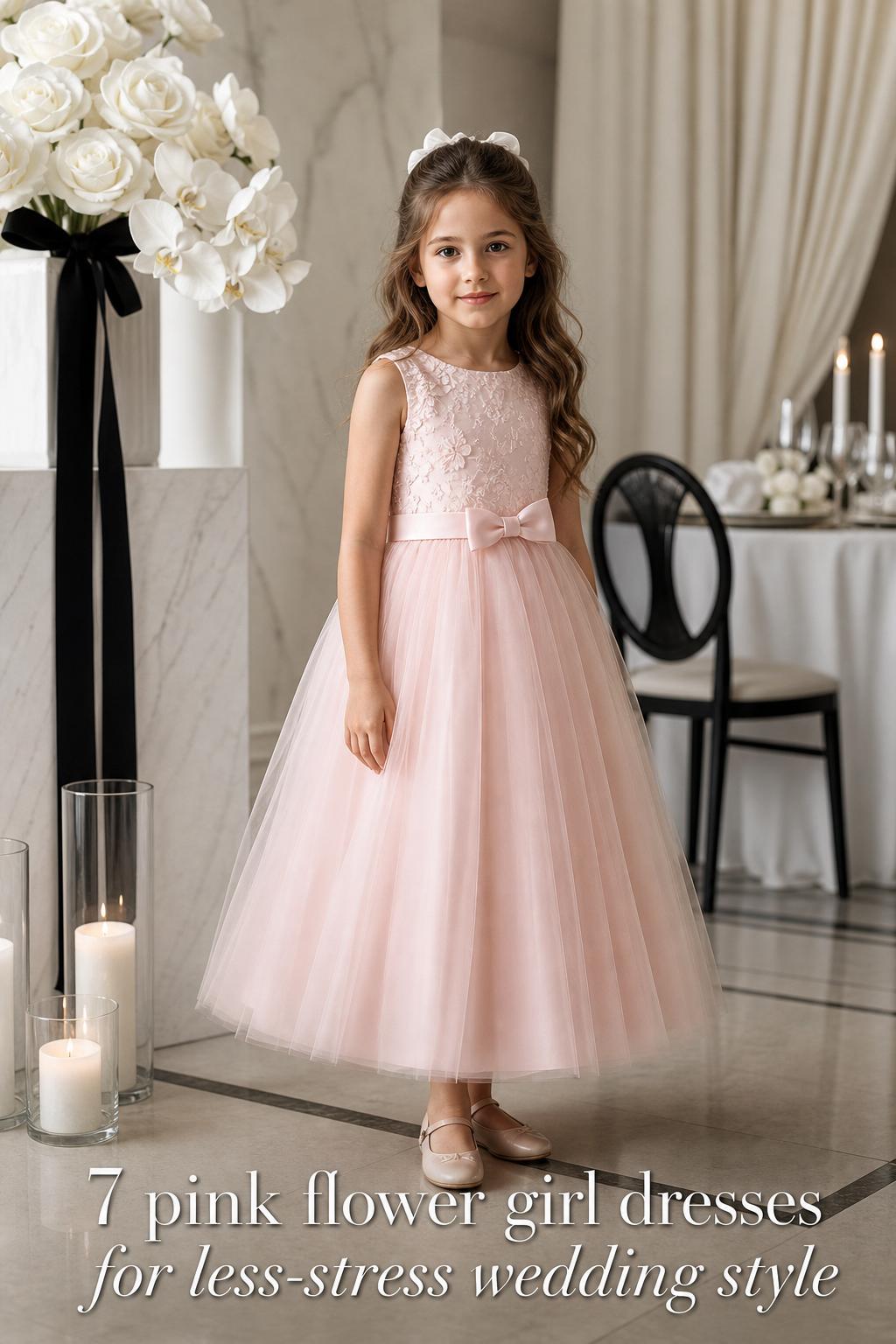
Where the styles diverge most clearly
The easiest way to compare pink flower girl dresses is to look at the core styling decisions each one makes. Color alone does not explain the difference between a dress that feels grand and one that feels effortless. The combination of shape, texture, and finish does.
- Ball gowns emphasize volume, ceremony, and visual impact.
- A-line and empire waist dresses prioritize balance, movement, and flexibility.
- Lace-forward styles highlight texture and traditional elegance.
- Tulle-driven dresses feel soft and airy, while satin-driven dresses feel polished and structured.
- Blush and powder pink shades tend to soften formality, while brighter pinks make the dress feel more expressive.
In practical terms, that means two dresses can both be called pink flower girl dresses and still suit completely different weddings. A child walking down the aisle in a candlelit evening setting may look most at home in satin or a lace-detailed ball gown. At a spring garden ceremony, a lighter tulle A-line in baby pink may feel much more in tune with the atmosphere.
Shades of pink: blush versus baby pink versus rose
The pink family deserves its own comparison because shade changes the styling message before silhouette even enters the conversation. Blush pink is often the most bridal-facing option. It is soft, understated, and easy to pair with ivory or pearl-like accents. Baby pink and powder pink create a similarly gentle effect, though they can feel slightly more youthful and airy.
Rose pink carries more presence. It still belongs comfortably in wedding attire, but it is less whisper-soft and more visible in the overall palette. Fuchsia pink, by contrast, sits at the brighter end of the spectrum and introduces a stronger statement. Collections such as FleurKids, which reference pink options from pastel to bright pink, illustrate how broad the category can be.
If the wedding palette is subtle, blush, baby pink, or powder pink usually blend more naturally. If the celebration is festive and color-driven, a more saturated pink can feel intentional rather than excessive. The best shade is often the one that complements the wedding color story without competing with it.
Tip: use shade to control formality
When choosing between similar dresses, the softer pink usually reads more formal and bridal, while the brighter pink often feels more playful. This is helpful when the silhouette is already dramatic. A full ball gown in blush can feel refined; the same volume in a stronger pink may feel better suited to a party-focused celebration.
Visual style breakdown: how these dresses read in real wedding settings
On a hanger, many flower girl dresses look similarly charming. In a real venue, the differences become more obvious. A fuller skirt expands visually in photographs and in motion, which is why ball gowns stand out in large interiors and along long aisles. They occupy space beautifully, but they can also feel substantial during a long day.
A-line and empire waist dresses tend to look quieter from a distance, yet often feel more graceful in movement. They are easier to imagine at an outdoor ceremony where the child is walking over grass, moving between ceremony and reception spaces, or staying dressed for several hours. Their proportions are generally simpler, so they rarely overpower the setting.
Lace details draw the eye inward, encouraging attention to texture rather than volume. Tulle emphasizes softness and shape. Satin reflects light in a smoother, cleaner way. If a wedding has a romantic, candlelit atmosphere, satin and lace can feel especially resonant. If the celebration is sunlit, pastel, and airy, tulle often photographs with that same softness.
Comparing shopping destinations in the U.S. market
The leading places to shop pink flower girl dresses in the United States fall into a few distinct categories: brand-led specialist collections, department store assortments, and multi-product or aggregated catalogs. Understanding the difference helps narrow the search more efficiently.
Brand-led collections: focused style identities
Azazie, Dessy, Monsoon, FleurKids, and Misdress all approach the category through their own collection lens. Azazie stands out for shade and fabric variety, including blushing pink, ivory-pink combinations, and clearly labeled silhouettes such as ball gowns and A-line dresses. Dessy presents model-based formal options and ready-to-ship appeal, which can be useful when timing matters. Monsoon blends wedding and occasion wear with chiffon, lace, and tulle sensibilities. FleurKids introduces a spectrum from pastel to brighter pink, and Misdress leans into lace and a more luxurious decorative finish.
Retail assortments: breadth across brands
Nordstrom and Bloomingdale’s are especially helpful for shoppers who want to compare multiple brands in one place. Their pink flower girl dress assortments include labels such as Rachel Riley, Popatu, Hope & Henry, and Lola + The Boys, offering more variation in price, detailing, and stylistic direction. This type of shopping is useful when the exact silhouette is still undecided and the goal is comparison rather than brand loyalty.
Specialist marketplaces and aggregators
FlowerGirlDresses.com centers the category itself, with a dedicated pink collection and a design-forward, occasion-specific identity. Promfy functions more as an aggregator, helping shoppers browse pink options across sources. These approaches can be useful when the shopper starts with the category rather than a preferred retailer.
No single destination is automatically best. A parent looking for custom-feeling, designer-leaning formalwear may browse differently from someone who wants a fast comparison of silhouettes and price points. The most efficient route depends on whether color precision, fabric choice, dress shape, or delivery timing is the leading concern.
Example comparison: the garden ceremony dress
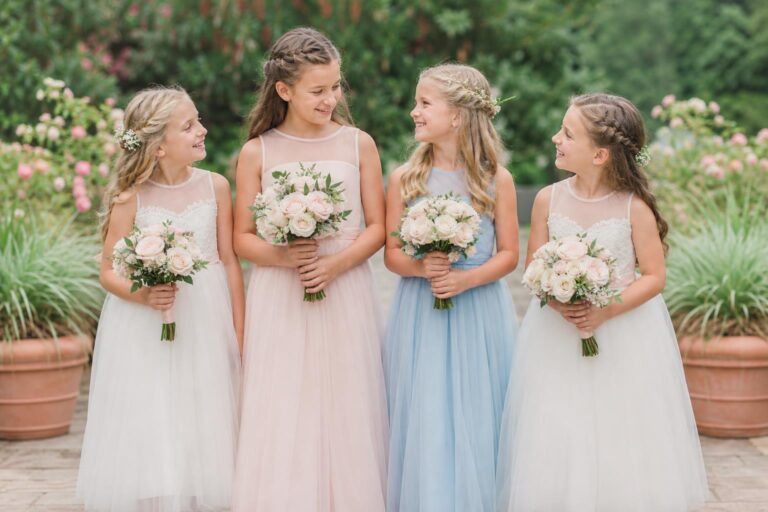
Picture a spring garden ceremony with soft florals, natural light, and an aisle set against green lawns. In this setting, a blush pink tulle A-line or empire waist dress creates a gentle sense of movement and keeps the flower girl visually connected to the setting. The effect is romantic without becoming too formal for daylight.
A ball gown interpretation of the same pink palette would feel more theatrical. It may be beautiful if the wedding itself is quite dressed up, but in a relaxed outdoor atmosphere, it can sometimes feel heavier than the venue requires. This is one of the clearest examples of styling logic: the more natural the surroundings, the more useful a lighter silhouette usually becomes.
Example comparison: the ballroom wedding dress
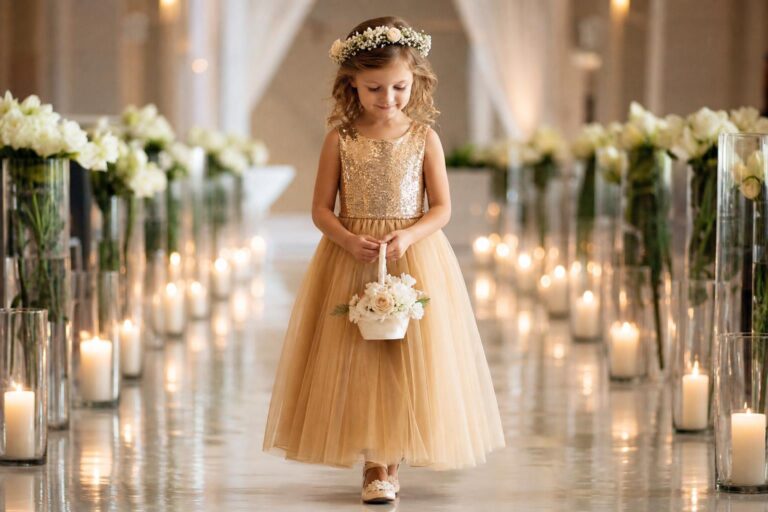
Now shift to a formal ballroom with polished floors, evening lighting, and a clearly elevated dress code. Here, a blushing pink ball gown with lace or satin details makes immediate visual sense. The venue supports volume, and the richer presentation feels aligned with the scale of the celebration.
An A-line dress can still work beautifully in this context, especially if the fabric is satin or the bodice includes lace. But the logic changes slightly: the simpler silhouette becomes a quieter choice within a more formal room. For families who prefer understated elegance, that can be exactly the right answer. For those who want the flower girl look to mirror the grandeur of the setting, the fuller silhouette tends to win.
Example comparison: beach and destination weddings
At a beach ceremony or destination wedding, the priorities usually shift toward lightness, movement, and comfort. Chiffon, soft tulle, or a less structured A-line shape tends to feel more appropriate than a heavily layered ball gown. The atmosphere is usually more relaxed, and the dress benefits from responding to that environment rather than resisting it.
In this context, pale pink shades are often easier to style than brighter ones. Baby pink or powder pink keeps the look airy, especially when the wedding palette is soft. A satin-heavy dress can still be elegant, but it may read more formal than the setting intends. The key is balance: destination weddings reward simplicity that still feels occasion-worthy.
Comfort, fit, and movement: where style decisions become practical
Children’s formalwear always lives in two worlds at once. It must photograph beautifully and function in real life. That is why fabrics such as tulle, lace, satin, and chiffon should be judged not only by appearance, but by how they behave over several hours of ceremony, photos, and reception time.
Tulle can create lovely volume, but more layers usually mean a fuller feel. Satin offers polish and shape, though it can seem more structured and less airy than softer fabrics. Lace introduces texture and formality, but it works best when balanced with a silhouette that still allows easy movement. Chiffon, where offered, tends to support a lighter wearing experience and a softer line.
Size categories such as toddler, little kid, and big kid also matter because proportion changes the visual effect of the same silhouette. A full skirt on a toddler reads very differently than a full skirt on an older child. This is one reason clear sizing guidance and alteration planning are so valuable in flower girl shopping. A beautiful dress that does not fit smoothly through the bodice or length can quickly lose its elegance.
Tip: judge the dress in motion, not just in photos
A pink flower girl dress should look lovely while walking, sitting, and moving between ceremony moments. If the child will be part of photos, processional walking, and a reception, comfort becomes part of the overall styling success. A slightly simpler silhouette often wears better over a full wedding day than a more dramatic design that only shines when standing still.
Common styling mistakes when comparing pink flower girl dresses
One of the most common mistakes is choosing by color alone. Pink is not one aesthetic. A blush satin A-line and a bright pink lace ball gown belong to the same family, but they communicate different levels of formality and different moods.
- Ignoring venue scale and selecting a silhouette that feels too grand or too casual for the ceremony space.
- Choosing heavy embellishment for a wedding that has a lighter, more minimal atmosphere.
- Overlooking fabric behavior and focusing only on the front view of the dress.
- Waiting too late to account for sizing, returns, or alterations.
- Forgetting that the flower girl may need to stay comfortable for much longer than the walk down the aisle.
The strongest styling choices usually come from matching three factors together: the wedding setting, the child’s comfort, and the dress’s visual language. When those align, the result feels thoughtful instead of merely decorative.
When each pink dress style works best
Different wedding formats ask for different interpretations of pink. The most elegant decision is not always the most elaborate one. Often, it is the style that fits the event so naturally that it feels inevitable.
Choose a ball gown when the wedding is highly formal
A ball gown is at its best in grand venues, evening celebrations, and weddings with a strong ceremonial feel. If the bridal party styling is polished and the event leans classic, this silhouette provides a beautiful sense of occasion. Blush, ivory-pink, lace, and satin details tend to keep the look refined.
Choose A-line or empire waist styles for versatility
These are often the easiest dresses to place across multiple wedding settings, from garden ceremonies to indoor receptions. They offer enough structure to feel special, but not so much that the dress dominates the child or the venue. For families unsure where to begin, this is often the safest and most adaptable category.
Choose lace when texture matters more than volume
If the goal is elegance without a large silhouette, lace can provide the right kind of detail. It works especially well in weddings where bridal textures are important and the flower girl look should feel coordinated with the formalwear language of the day.
Choose chiffon or lighter tulle for relaxed celebrations
Beach weddings, destination ceremonies, and softer daytime events often benefit from fabrics that move easily and feel less structured. In these settings, a gentle pink shade and a lighter dress shape can create the most harmonious result.
A practical timeline for buying pink flower girl dresses
Shopping for flower girl attire is partly a style decision and partly a timing decision. Many of the strongest retailers and brand collections emphasize filters, variants, and product-specific attributes, which is helpful, but it also means details such as availability, ready-to-ship status, and return policies deserve early attention.
It helps to begin with the wedding palette and level of formality, then narrow by silhouette, then by fabric. That sequence tends to reduce second-guessing. Once the dress style is chosen, sizing and possible alterations become the next practical step. This is particularly important for children’s formalwear, where length and bodice fit can change the overall finish of the look.
Tip: compare returns and delivery options before falling in love with a dress
Ready-to-ship or quick-delivery availability can be decisive, especially when shopping closer to the wedding date. A dress may be visually perfect, but if the timeline is tight, practical logistics should carry real weight in the final choice. This is where retailers and brand sites differ meaningfully.
How to combine elements from different pink dress aesthetics
The most interesting flower girl styling does not always sit entirely in one category. A dress can borrow the softness of tulle, the polish of satin, and the delicacy of lace without committing fully to a single aesthetic. Many of the strongest catalog pages reflect this blending through product descriptions that pair silhouette with material and shade.
For example, a blush A-line dress with lace detailing can offer the formality of a bridal texture while remaining easier to wear than a full ball gown. An ivory-pink satin dress with a bow may create a polished evening effect without the volume of layers. These hybrid choices are often the most practical because they preserve a wedding-ready finish while reducing the limitations of more extreme designs.
This is also where department store assortments and broad retailer collections are useful. Nordstrom and Bloomingdale’s make it easier to compare how different brands interpret the same pink palette, while specialist brands such as Azazie, Monsoon, FleurKids, or FlowerGirlDresses.com can help refine a more specific aesthetic direction.
The final distinction: not all pink is saying the same thing
Pink flower girl dresses are connected by color, but separated by styling language. Ball gowns speak in volume and ceremony. A-line and empire waist dresses speak in ease and balance. Lace introduces tradition and texture, while tulle, satin, and chiffon shift the mood between airy, polished, and fluid.
The clearest way to identify the right style is to consider where the wedding is taking place, how formal the celebration feels, and what the child can comfortably wear through the rhythm of the day. A garden aisle, a beach ceremony, and a ballroom reception may all welcome pink, but they will not necessarily welcome the same interpretation of it.
Once that distinction becomes clear, the category feels much easier to navigate. Rather than searching for one ideal pink flower girl dress, it becomes possible to choose the exact version of pink that suits the wedding best.
FAQ
What shade of pink is most versatile for flower girl dresses?
Blush pink is generally the most versatile because it feels soft, bridal, and easy to coordinate with ivory-pink combinations and other wedding palettes. Baby pink and powder pink are also flexible, especially for daytime weddings, while rose pink and fuchsia create a stronger statement.
Are ball gown pink flower girl dresses better than A-line styles?
Neither is automatically better; they simply suit different settings. Ball gowns work best for formal weddings and grand venues, while A-line styles are more adaptable for garden ceremonies, daytime events, and celebrations where comfort and movement matter more.
Which fabrics are most common in pink flower girl dresses?
Tulle, lace, satin, and chiffon are the most common fabrics across leading collections and retailers. Tulle gives softness and volume, lace adds texture and formal detail, satin creates a polished structure, and chiffon offers a lighter, more fluid feel.
Where can I shop for pink flower girl dresses in the United States?
Popular U.S.-focused options include Azazie, Dessy, Nordstrom, Bloomingdale’s, FlowerGirlDresses.com, Monsoon, FleurKids, Misdress, and Promfy. Some are brand-led collections, while others are retailers or aggregators that make it easier to compare multiple brands and styles in one place.
How do I choose between lace and tulle for a flower girl dress?
Choose lace when you want more texture and a traditional formalwear feel, especially for elegant ceremonies. Choose tulle when you want softness, movement, and a more airy romantic effect. Many dresses combine both, which can offer a balanced result.
Are brighter pink flower girl dresses appropriate for weddings?
Yes, but they are usually best when the wedding palette is festive or color-forward. Softer shades such as blush, baby pink, and powder pink tend to feel more universally bridal, while brighter pinks create a more playful and visible statement.
What should I prioritize first: color, silhouette, or fabric?
Start with the wedding’s overall formality and color palette, then choose the silhouette, and finally refine by fabric. This order helps ensure the dress fits the event visually before focusing on details such as tulle, satin, lace, or chiffon.
Do pink flower girl dresses work for both indoor and outdoor weddings?
They do, but the style should shift with the setting. Outdoor weddings usually suit lighter silhouettes and softer movement, while indoor formal venues can support fuller skirts, satin finishes, and more decorative lace details.
How important are sizing and alterations for flower girl dresses?
Sizing and alterations are very important because fit affects both comfort and the overall elegance of the dress. A smooth bodice, appropriate length, and easy movement matter just as much as color and style, especially for a child wearing formal clothing throughout a wedding day.