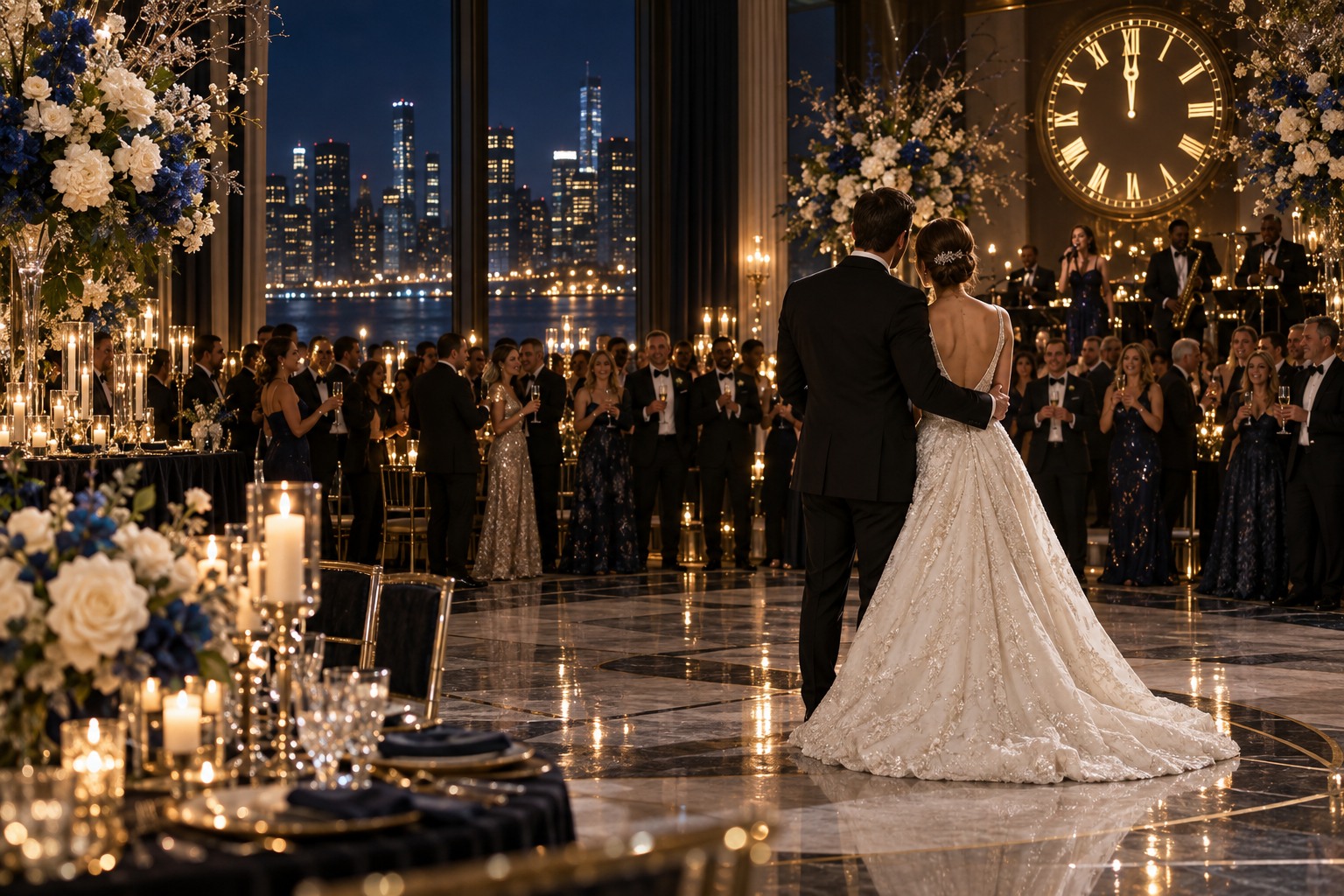
New Year Wedding: Plan a Midnight Celebration
A New Year wedding can feel like two celebrations folded into one: the moment you get married and the moment everyone turns the page to January 1 together. That built-in drama is appealing, but the date also asks more of a couple than a typical winter Saturday. Guests may already have plans, travel can be complicated, vendors may be in high demand, and the night needs a clear rhythm if the countdown is going to feel exciting instead of rushed.
The most successful New Year weddings do not simply cover a reception in glitter. They use the date as a planning principle. The invitation sets expectations, the timeline protects the midnight moment, the visual design chooses a few deliberate signals, and guest comfort is treated as part of the celebration. Recent wedding guidance from WeddingWire, Zola, and The Knot all point toward early communication and a strong party plan. Here is how to turn that broad inspiration into a wedding that feels intentional.
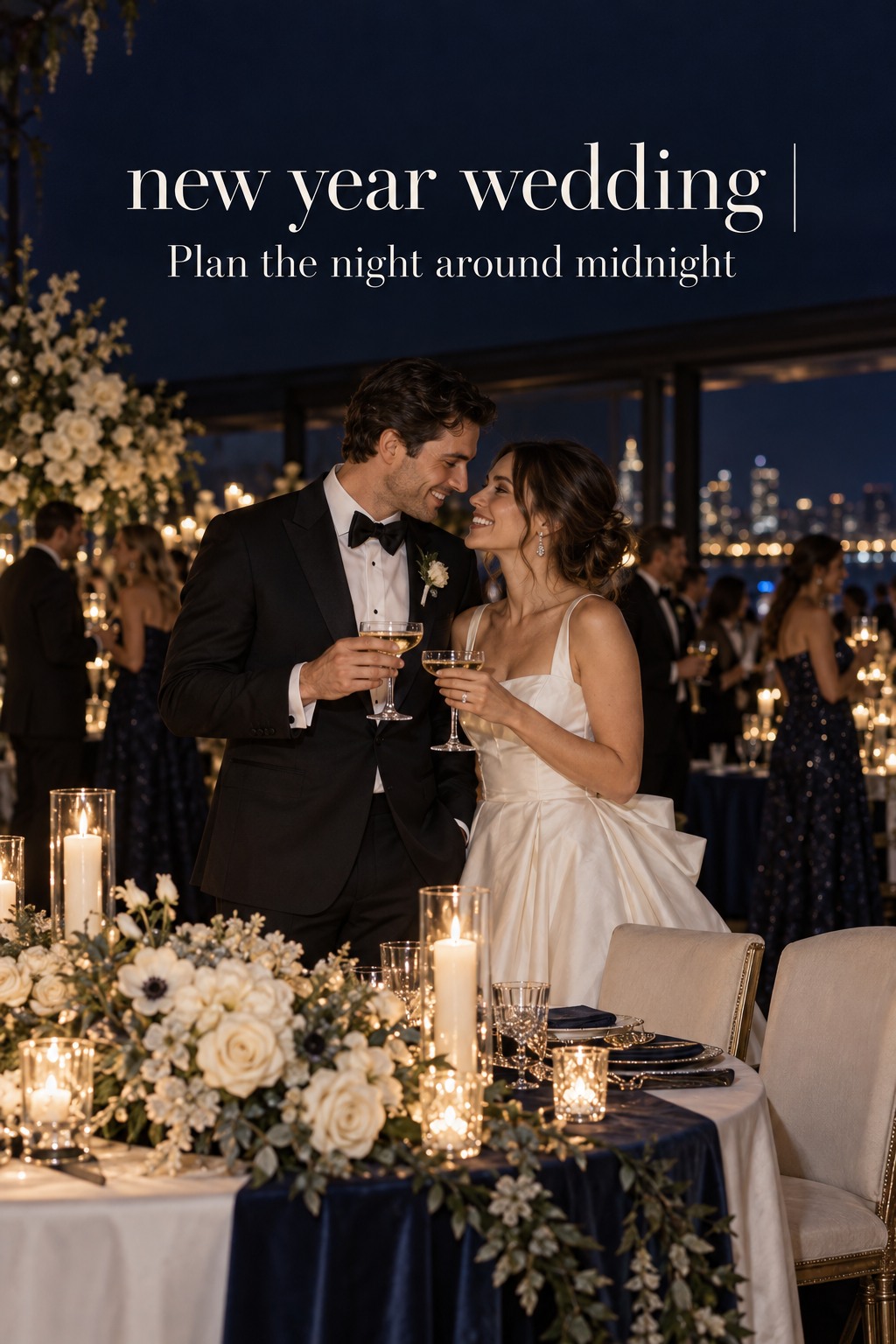
What Makes a New Year Wedding Different
A December 31 wedding is not only a winter wedding with a different color palette. It shares a date with a public celebration that already has emotional meaning, social competition, transportation pressure, and its own traditions. That can work beautifully for a couple who wants a lively reception, but it deserves an honest decision before you start collecting clock motifs and Champagne tower ideas.
The biggest advantage is atmosphere. Guests understand that the night is meant to be festive, dressy, and awake late. A countdown, a toast, a late-night snack, and a dance floor can all feel natural rather than added on. The date is also memorable. A couple married on December 31 can celebrate an anniversary while the world is already thinking about new beginnings.
Your wedding look is only the beginning.
Keep your guest list, vendors, timeline, and every important detail together with Zarellea — so your day feels as considered as your style.
The main challenge is that the date belongs to your guests as well as to you. Some people may have family traditions, travel plans, religious observances, childcare concerns, or work schedules that make attendance difficult. WeddingWire specifically recommends early save-the-dates for this reason. Treat that advice as a courtesy, not merely as an invitation tactic. Give guests enough information to decide realistically.
- Choose the date for the experience: you want a shared countdown, a glamorous party, and a night that naturally extends past dinner.
- Choose a different date for flexibility: you want maximum attendance, lower holiday pressure, or a quieter celebration with more scheduling options.
- Ask your essential guests early: parents, siblings, wedding party members, and anyone traveling from far away should know before you commit to a venue.
- Check the venue’s actual policy: ask about holiday staffing, overtime, noise limits, transportation, fireworks, confetti, bar service, and the latest permitted end time.
Budget questions also belong at the beginning. Do not assume that every New Year wedding costs more or that every winter date is a bargain. Holiday pricing, minimums, staffing, room blocks, and local demand vary by market and venue. Ask vendors how the date changes their availability, service charge, overtime, and cancellation terms. A clear quote is more useful than a general rule.
It helps to decide what the holiday should add. Maybe the answer is the countdown only. Maybe it is a full black-tie party with a midnight toast. Maybe it is an intimate ceremony followed by a restaurant dinner, then a small after-party for the people who want to stay awake. You do not have to recreate a public New Year’s Eve event. Your wedding can borrow the energy and leave the rest behind.
Build the Evening Around Midnight
Midnight should be a structural anchor, not a surprise announcement added when the DJ notices the clock. Start by deciding what you want guests to be doing at 11:50 p.m. They might be on the dance floor with a drink in hand, seated for a short toast, outside for a permitted sparkler moment, or gathered in a lounge for a more intimate countdown. The answer determines the timing of dinner, speeches, dessert, and entertainment.
Model one: ceremony at 5:30, midnight reception
This is the classic evening structure. Guests arrive for a 5:30 or 6 p.m. ceremony, move directly into cocktails, eat dinner, hear the key speeches, and dance before the countdown. A sample sequence might include a short ceremony, one hour of cocktails, dinner from 7 to 8:30, formal dances and speeches before 9, open dancing from 9:15, a countdown pause at 11:55, and a late-night snack after midnight.
The advantage is clarity. Guests know the night has one continuous arc, and the ceremony does not feel detached from the party. The risk is energy management. If dinner begins too late or speeches expand, the dance floor may not have enough time to build. Keep the formal program focused and tell the emcee exactly when the countdown begins.
Model two: earlier ceremony, separate after-party
An earlier ceremony can make the wedding easier for older guests, families, and anyone who does not want to stay until midnight. The reception can run through dinner and dancing, then transition into an optional after-party from 11 p.m. to 1 a.m. A public Zola wedding schedule shows how a separate after-party can create a clear second phase without forcing the entire guest list to follow the same energy level.
Use this model when the guest list includes different age groups or when the venue has a flexible lounge, hotel room, or second space. Make the invitation and signage explicit. Guests should know whether the after-party is open to everyone, whether transportation continues, and whether the midnight toast happens in the main reception room or the later space.
Model three: intimate daytime wedding, evening celebration
A daytime ceremony and dinner can work if you want to marry on December 31 without asking every guest to sacrifice the full holiday night. You might host a late-morning ceremony, a generous lunch, and a shorter reception, then invite a smaller group to a private evening countdown. This is especially useful when a couple wants meaningful vows and portraits in daylight but still wants the date to end with a New Year moment.
The trade-off is that the date may not feel like a single all-night party. That is not a flaw. It simply means the design needs to explain the two chapters. Use a daytime stationery style and a separate evening invitation or card only if the guest experience truly changes. Keep transportation and accommodation information together so guests do not have to decode the plan.
- At 10 to 12 weeks out: confirm the exact end time, countdown location, transportation plan, bar close, late-night food, and venue rules for candles, sparklers, confetti, or balloons.
- At 6 to 8 weeks out: send the final schedule to the wedding party and essential vendors, including the person responsible for cueing music, lights, service, and the toast.
- At the final meeting: rehearse the five minutes before midnight. Decide who announces the countdown, who carries the Champagne, where guests stand, and how the photographer reaches the couple.
- On the night: protect the countdown from speeches, service resets, and a surprise cake cut. The last ten minutes should feel prepared but not overproduced.
Late-night food is one of the easiest ways to make the celebration feel generous. Pizza, fries, sliders, grilled cheese, soup, cookies, or a favorite regional snack can arrive after midnight, when guests have been dancing for hours. Tell the caterer whether the food is meant to be a seated course, a passed bite, or a self-serve station. Keep the menu easy to eat while standing and offer at least one substantial non-alcoholic option.
A countdown also needs a transportation decision. If guests are drinking, dancing, or staying in a hotel, arrange rides that still operate after midnight. Confirm the final pickup rather than assuming a standard shuttle schedule will extend. Put the information on the wedding website and repeat it on a reception card or sign. A beautiful midnight exit is less successful if half the room is watching the clock because they do not know how they are getting home.
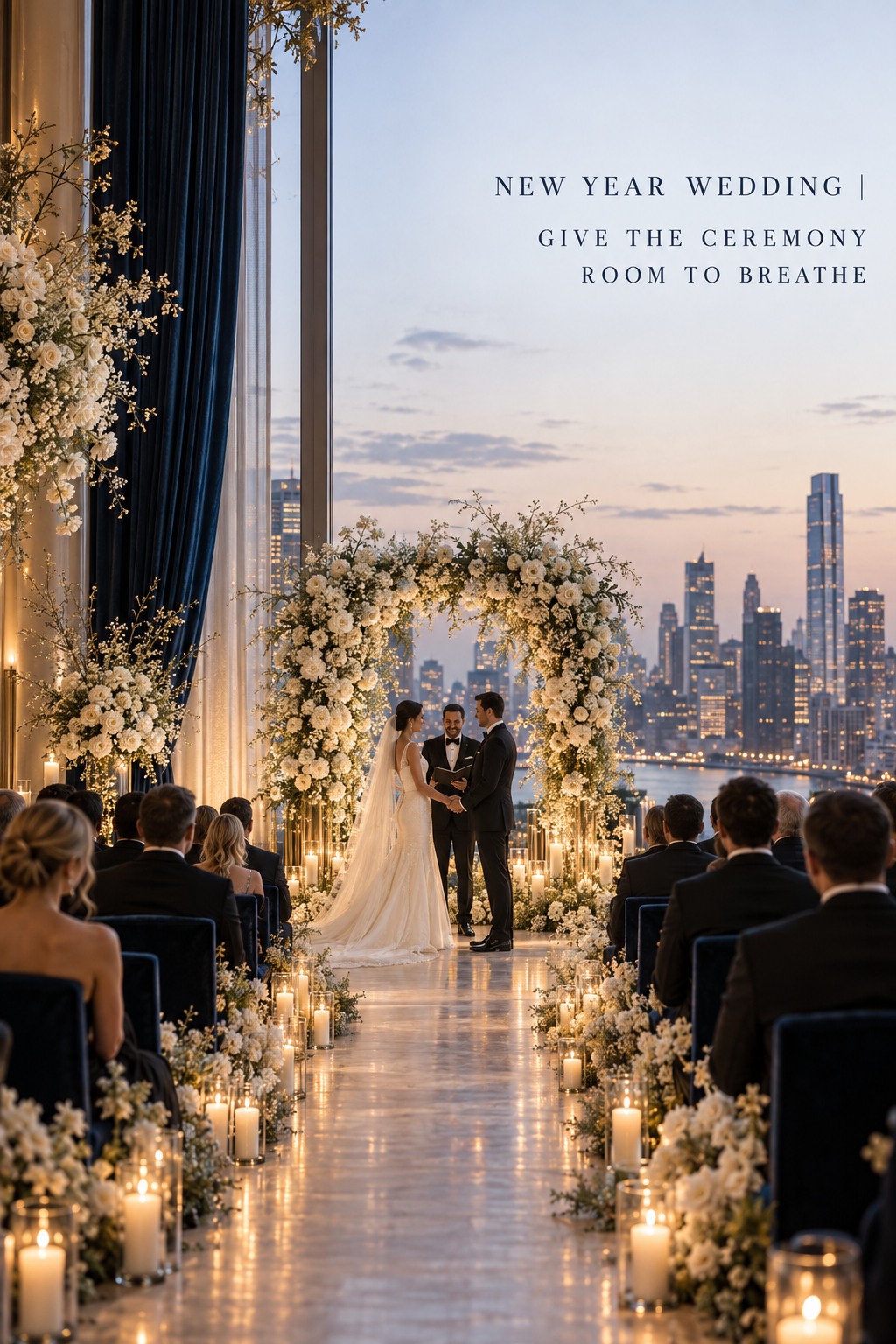
Choose a New Year Wedding Look That Feels Intentional
The visual temptation is obvious: add gold, silver, black, sequins, balloons, clocks, fireworks, and confetti until the room announces the date from every direction. A more lasting approach is to select one dominant mood and two or three supporting signals. New Year style can be glamorous, modern, romantic, playful, or quietly celebratory. The date does not require a costume.
Start with one visual hierarchy
Choose the surface that carries the most drama. It might be the couple’s attire, a candlelit head table, a graphic invitation, a midnight installation, or the dance floor lighting. Keep nearby details quieter. For example, a black and winter-white room with warm brass candleholders can feel more considered than a room where every object is metallic. The WeddingWire color guide offers black, gold, and silver as a New Year’s Eve combination, but the useful lesson is balance rather than a mandatory palette.
Separate New Year cues from Christmas cues
December weddings do not have to look like Christmas weddings. New Year cues include clocks, numbers, stars, champagne coupes, sleek ribbons, art deco lines, a midnight blue ground, reflective glass, and a clear countdown. Winter cues include candles, bare branches, velvet, white flowers, and soft texture. Use whichever family fits your story. A few evergreen branches may be beautiful, but they should not appear only because the calendar is late December.
Let attire do part of the work
A New Year wedding can support a more expressive dress code. A bride might add a beaded overskirt, a velvet bow, a crystal hair accessory, or a second look for dancing. A groom or partner might wear a velvet dinner jacket, a midnight-blue tuxedo, a metallic tie, or a sharp white shirt under a dark jacket. Guests can be invited to wear black tie, black-tie optional, or festive formal attire, but define those words in plain language.
Make the dress code compatible with the venue and weather. Guests walking across snow or wet pavement need realistic shoe and coat advice. Anyone wearing a sequined dress may appreciate a note about the temperature between the ceremony and the reception. If the event is adults-only, say so directly and kindly. If children are welcome, explain whether the countdown will have a quiet room, an earlier activity, or a family-friendly snack.
Use lighting instead of more stuff
Lighting can communicate midnight glamour with less visual clutter. Clusters of candles, pin spots over the dance floor, a softly lit bar, reflective glassware, and a controlled wash in midnight blue or warm amber may do more than piles of glitter. Winter wedding guidance from WeddingWire also highlights candles, string lights, metallic vessels, and crystal details as ways to create evening atmosphere.
- Modern midnight: black, ivory, brushed silver, clean typography, glass, and focused lighting.
- Old Hollywood: champagne, warm gold, satin, velvet, a lounge corner, and a dress code that encourages formal polish.
- Winter night: midnight blue, white flowers, candles, soft branches, and a restrained silver accent.
- Playful countdown: bold numbers, a favorite color, a photo moment, late-night snacks, and simple party favors that guests can actually use.
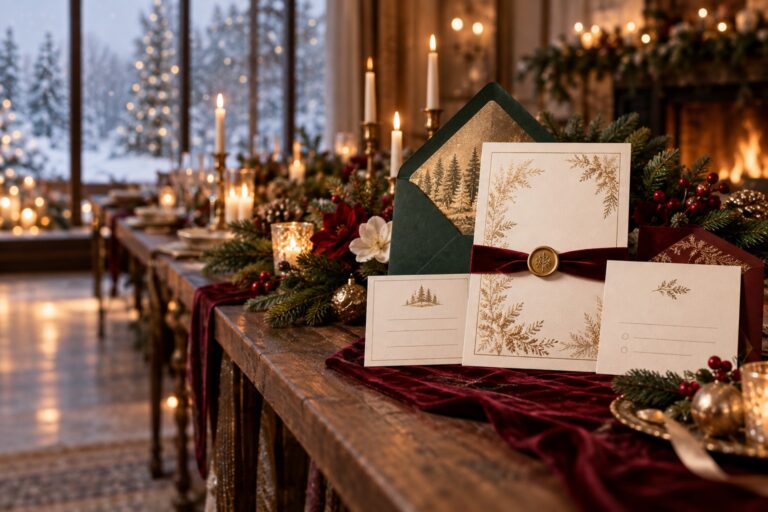
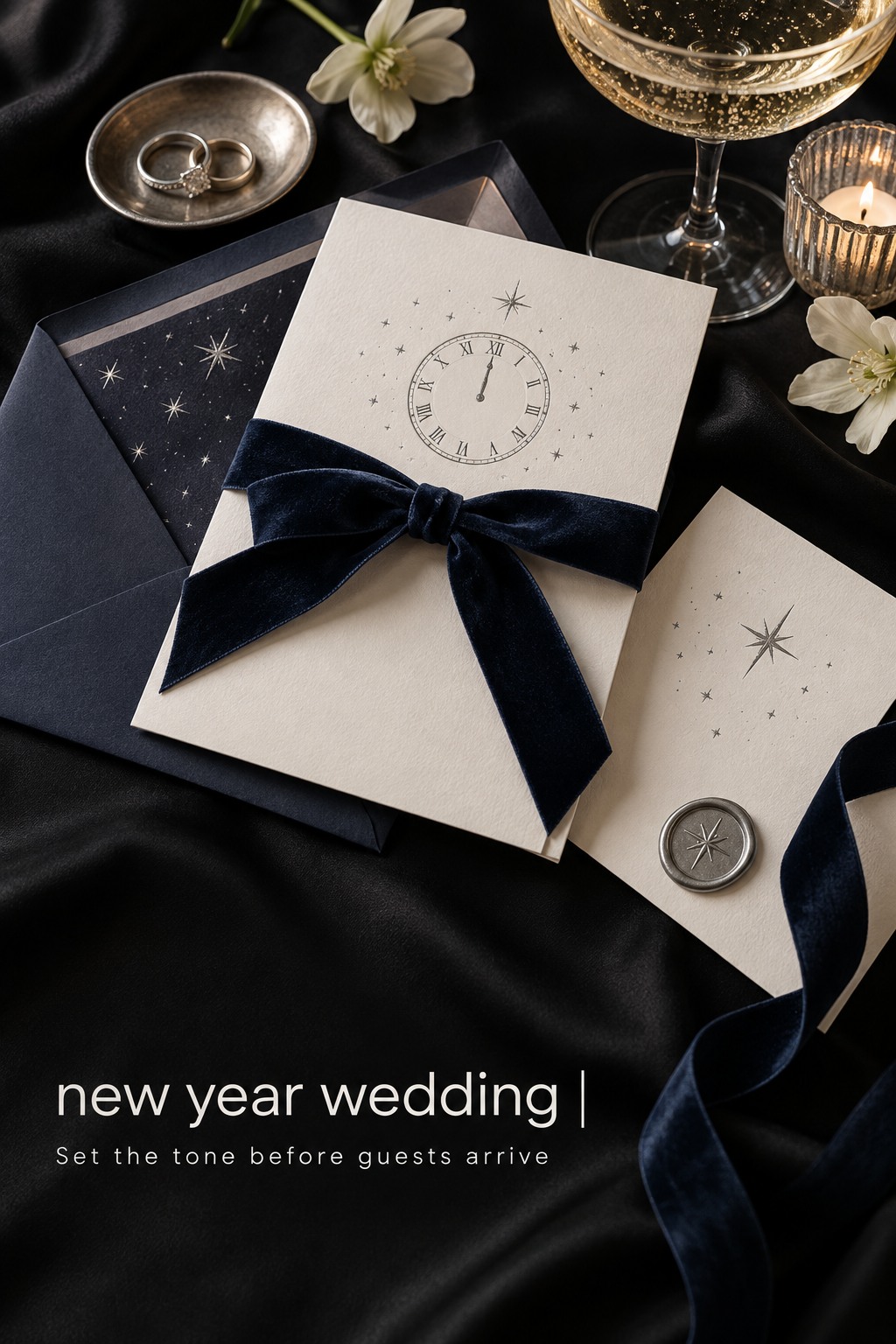
Stationery should prepare guests for the tone. The save-the-date needs the exact date and location context early. The invitation should make the start time, dress code, adult-only policy, hotel information, and transportation easy to find. If the countdown is central, say so. Guests should not wonder whether they are attending a conventional reception that ends at 10 p.m. or a party that welcomes the new year together.
Favors can be useful rather than decorative. A printed midnight timeline, a small packet of breakfast pastries for hotel rooms, a matchbook for candles, a personalized snack bag, or a note about the couple’s new-year wish can feel more connected to the date than a generic ornament. If you provide noisemakers, choose versions that fit the venue’s cleanup and noise policies.
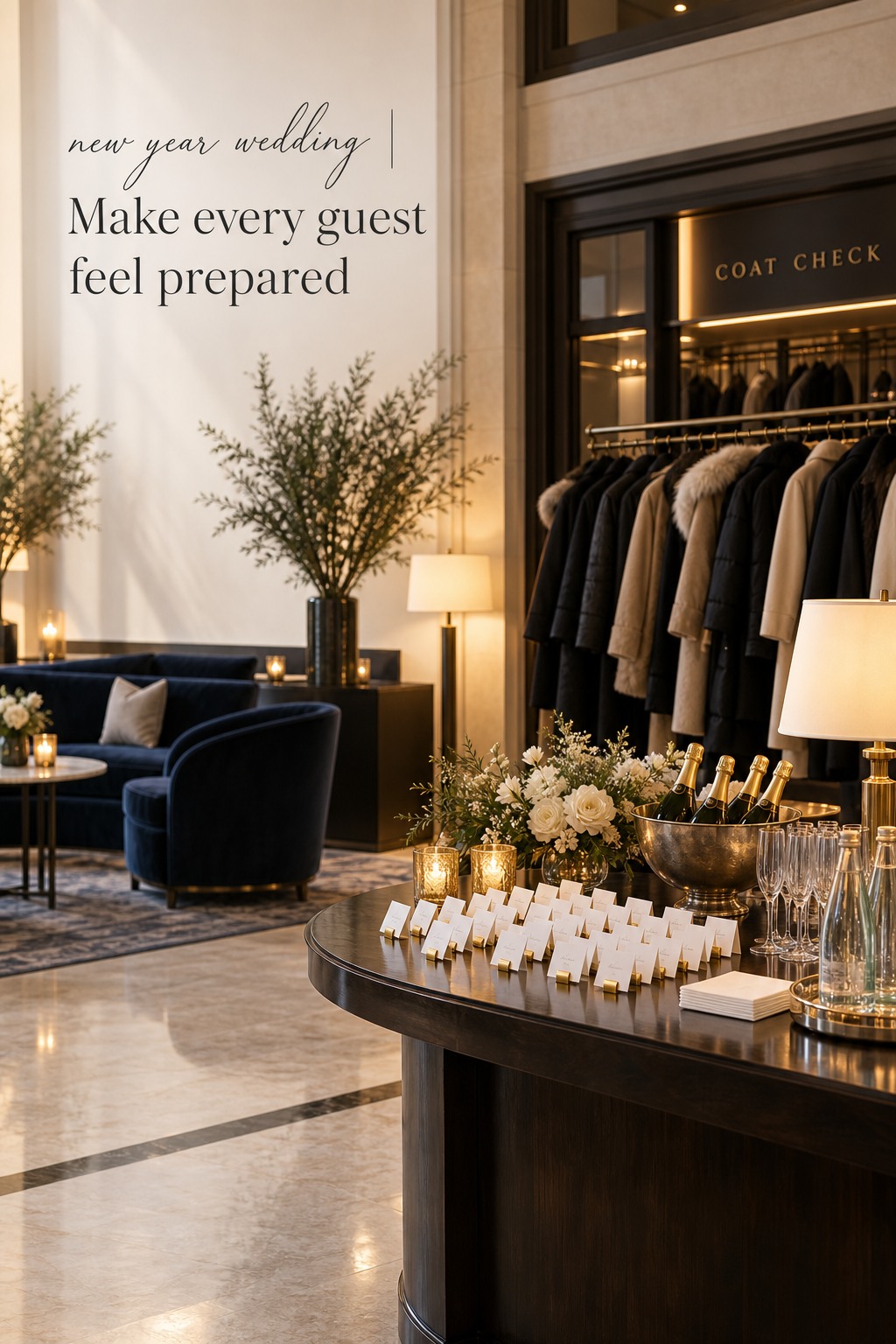
Make the Celebration Easy for Guests to Join
Guest comfort is not a practical footnote to a New Year wedding. It is the difference between a room that feels eager to celebrate and a room that is quietly calculating how to leave. Holiday dates ask people to rearrange traditions, travel in winter, book childcare, and possibly pay higher accommodation rates. Your job is not to remove every inconvenience, but to make the choice transparent and the night worth the effort.
Start with the wedding website. Add a clear schedule, the dress code, hotel blocks, parking, shuttle times, local weather expectations, airport or train information, childcare guidance, and whether the ceremony and reception are in the same building. Tell guests what happens after midnight. If there is an optional after-party, say whether it is hosted, cash, adults-only, or open to everyone.
Room blocks are especially useful when the celebration ends after midnight. Ask the hotel about late-night food, transportation, accessibility, early breakfast, and checkout. If the hotel is also the venue, explain whether guests can move between spaces without going outside. If it is not, publish the exact travel time and backup ride options. Do not make every guest research the route while dressed for a formal event.
- Invitation language: name the date clearly and avoid vague phrases such as “holiday celebration” that hide the December 31 commitment.
- Dress code: offer a formal label plus a short description of acceptable fabrics, colors, shoes, outerwear, and the expected level of sparkle.
- Food and drink: plan a filling dinner, water at the bar, an attractive non-alcoholic toast, and food after midnight.
- Accessibility: confirm step-free routes, seating, restroom access, lighting levels, and a quieter place for guests who need a break from the dance floor.
- Children and caregivers: state the policy early and share any local childcare resources without implying that guests must use them.
- Transportation: keep rides operating after the countdown and tell guests who to contact if the plan changes.
The midnight toast should include people who do not drink alcohol. Sparkling water, cider, a citrus spritz, or another thoughtfully presented option can make the moment feel shared. Ask the bar team to pour early enough that guests are not still waiting in line at 11:59. If the venue has a champagne tower, treat it as a visual feature and still provide a practical glass for anyone who would rather not use the tower.
Sound and pacing matter. A DJ or band should know which songs are reserved for the countdown, when the music drops, and when it returns. Give the photographer a route to the couple and a protected position for the toast. If fireworks are under consideration, verify local rules, venue approval, animal concerns, and the cleanup plan. Zola’s New Year’s Eve guide specifically advises checking location and venue rules before committing to fireworks or confetti.
After midnight, give guests a reason to stay or a graceful way to leave. A late-night snack, a final dance set, a breakfast delivery card, or a quiet lounge can close the event with care. If the reception ends immediately after the kiss, announce that clearly so transportation is ready. The end of the night should feel like a planned chapter, not an abrupt loss of power.
Finally, remember that the most memorable New Year wedding detail may not be a centerpiece. It may be the feeling that every person in the room knew what was happening and had a comfortable way to participate. That is the real design opportunity of December 31. Let the holiday supply energy, then use planning to give that energy shape.

FAQ
Is a New Year wedding a good idea for every couple?
It is a strong choice for couples who want a late, energetic celebration and are comfortable asking guests to plan around a major holiday. It may be less suitable if maximum attendance, flexible vendor availability, or a quiet early finish matters most.
When should guests receive notice for a New Year wedding?
Send save-the-dates earlier than you would for a typical local date, especially if guests will travel or need childcare. Include the December 31 date, city, and a clear signal that the celebration may run through midnight.
What is the best ceremony time for a midnight wedding?
A ceremony around 5:30 or 6 p.m. gives most couples enough time for cocktails, dinner, formalities, dancing, and a midnight countdown. Earlier or later schedules can work, but protect the final ten minutes and confirm the venue’s end time.
Does a New Year wedding have to use black, gold, or glitter?
No. Midnight blue, ivory, silver, jewel tones, warm neutrals, or a favorite bold color can all feel celebratory. Choose a visual hierarchy and a few date-specific details rather than adding sparkle to every surface.
How can we make a New Year wedding easier for guests?
Share the schedule early, offer hotel and transportation information, explain the dress code, provide filling food and non-alcoholic drinks, plan for children and accessibility, and keep rides available after midnight.
What should happen immediately after the countdown?
Choose one clear next beat, such as a first dance, a late-night snack, a short dance set, a sparkler exit, or an after-party. Tell the emcee and vendors in advance so the moment feels celebratory rather than improvised.
Should we provide a hotel room block for a New Year wedding?
A room block is especially helpful when guests are drinking, traveling, or staying beyond midnight. Compare the hotel’s rate, distance, transportation, accessibility, breakfast options, and cancellation terms before advertising it to guests.