Winter Wedding Table Ideas That Feel Warm and Elevated
A winter wedding table should make guests want to sit down and stay awhile. The best tables feel seasonal through texture, light, and color, yet leave room for plates, glasses, conversation, and the people who brought the celebration to life. That balance matters more than collecting every winter decoration you can find.
Use this guide to build a winter wedding table from the mood outward. Choose a visual direction, adapt it to your table shape, write a clear florist or DIY brief, and review the finished room before the wedding day. The result can be candlelit and romantic, modern and restrained, rustic and tactile, or personal without becoming a holiday display.
Why a Winter Wedding Table Works When It Balances Mood and Function
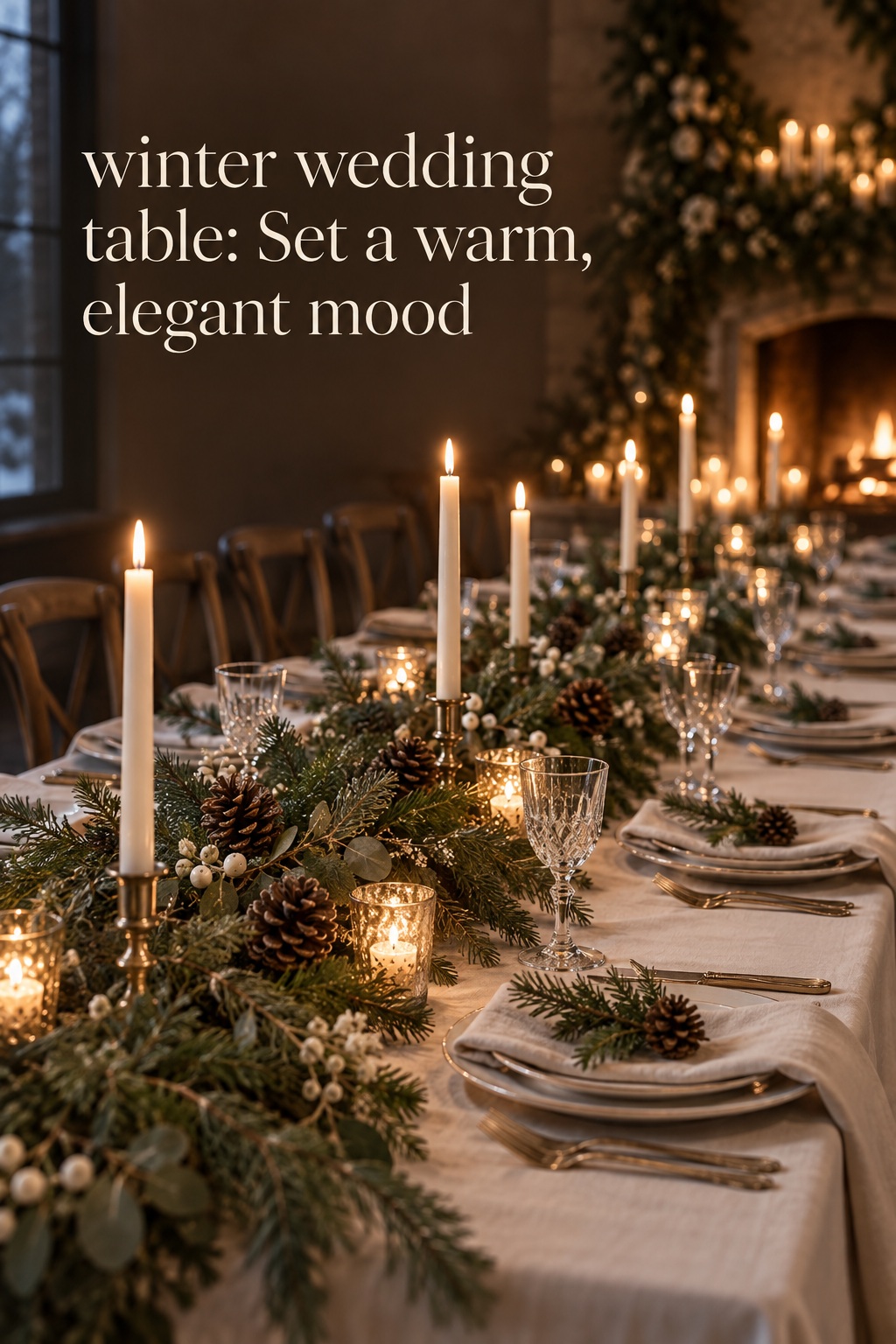
Winter gives a table a strong natural design language. Evergreen branches, bare twigs, berries, candlelight, reflective glass, velvet, and deep color all suggest the season without requiring snowflakes or Christmas ornaments. The strongest combinations use two or three of these cues, then allow the couple’s usual style to lead.
Your wedding look is only the beginning.
Keep your guest list, vendors, timeline, and every important detail together with Zarellea — so your day feels as considered as your style.
Start with a mood sentence instead of a shopping list. “Warm woodland dinner with soft candlelight” leads to a different table from “clean winter white with silver details.” A mood sentence keeps the palette and materials focused when you compare flowers, linens, chargers, vessels, and rentals. It also gives your florist a usable brief rather than a folder of unrelated screenshots.
- Choose a feeling: cozy, elegant, dramatic, quiet, nostalgic, or modern.
- Pick one texture: evergreen, velvet, glass, wood, dried branches, or a soft textile.
- Choose the light: taper candles, votives, lanterns, enclosed flames, or intentional LED candlelight.
- Set one palette boundary: ivory and green with brass, or burgundy and blush with black.
- Protect the guest experience: keep faces visible, plates accessible, and the table easy to read.
Think about winter as atmosphere, not a costume. A table can feel wintry with charcoal linen, pale flowers, and glass. It can feel festive with red velvet and greenery. It can feel personal with family candlesticks or handwritten place cards. A restrained design often looks more expensive because each material has room to register.
Function should be decided at the same time as style. Ask where food will pass, whether servers need a clear lane, whether guests can see over the centerpiece, and whether the venue permits open flame. If the design works only on an empty table, it is not ready. Add the actual plates, glasses, napkins, menus, and chairs before making the final decision.
Choose a Winter Table Direction Before You Buy Decor
Choose one of these directions as your base recipe. They are deliberately different, so you can compare visual effect and workload. If you want variety across the reception, keep one anchor consistent, such as the same candle color, vessel finish, napkin tone, or greenery.
Evergreen and warm candlelight
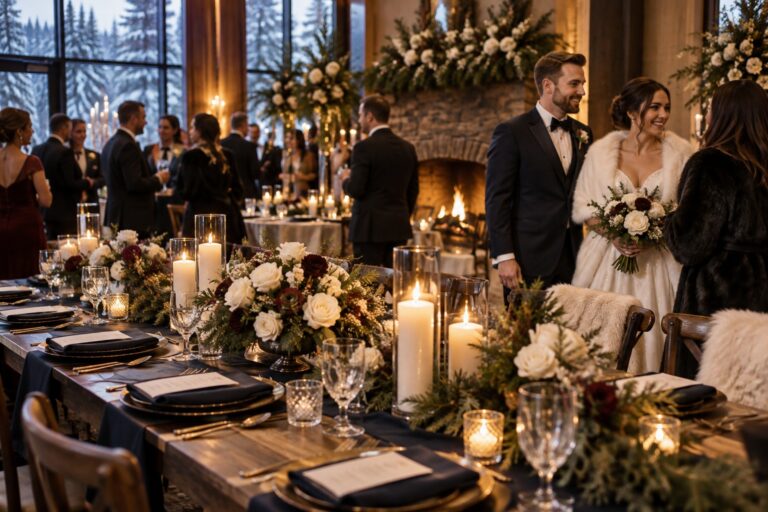
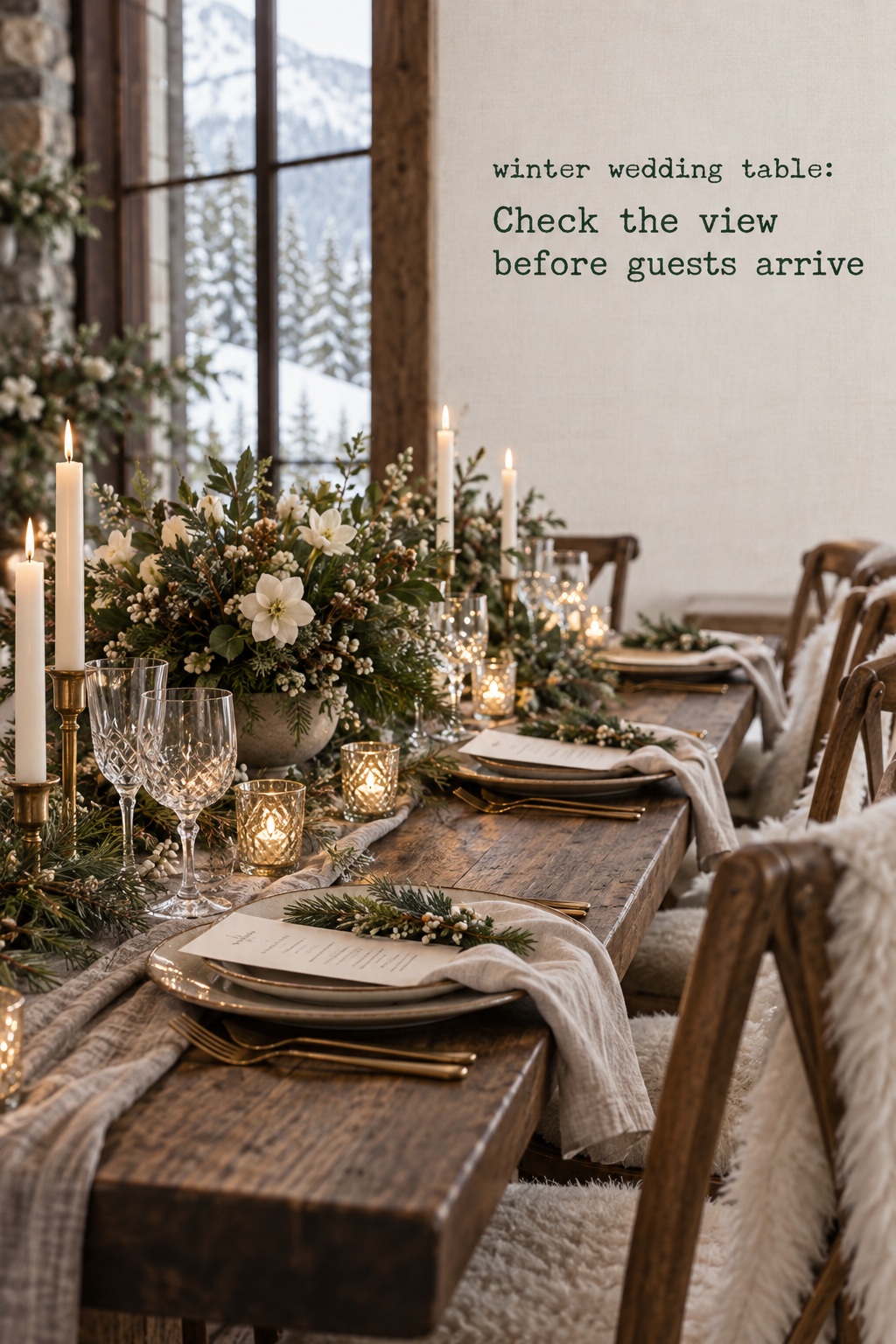
Use a low garland of cedar, fir, pine, or eucalyptus as the table’s long line. Place ivory taper candles or a measured group of votives through the greenery, then add a few pinecones or berries. This direction works especially well on a wood or farm table because foliage connects the centerpiece to the surface.
Keep the color edited. Evergreen with ivory and brass feels classic. Evergreen with burgundy and black feels dramatic. Evergreen with blush and dusty blue feels softer. Avoid mixing several shades of red unless you want a deliberately abundant holiday look.
Winter white with reflective details
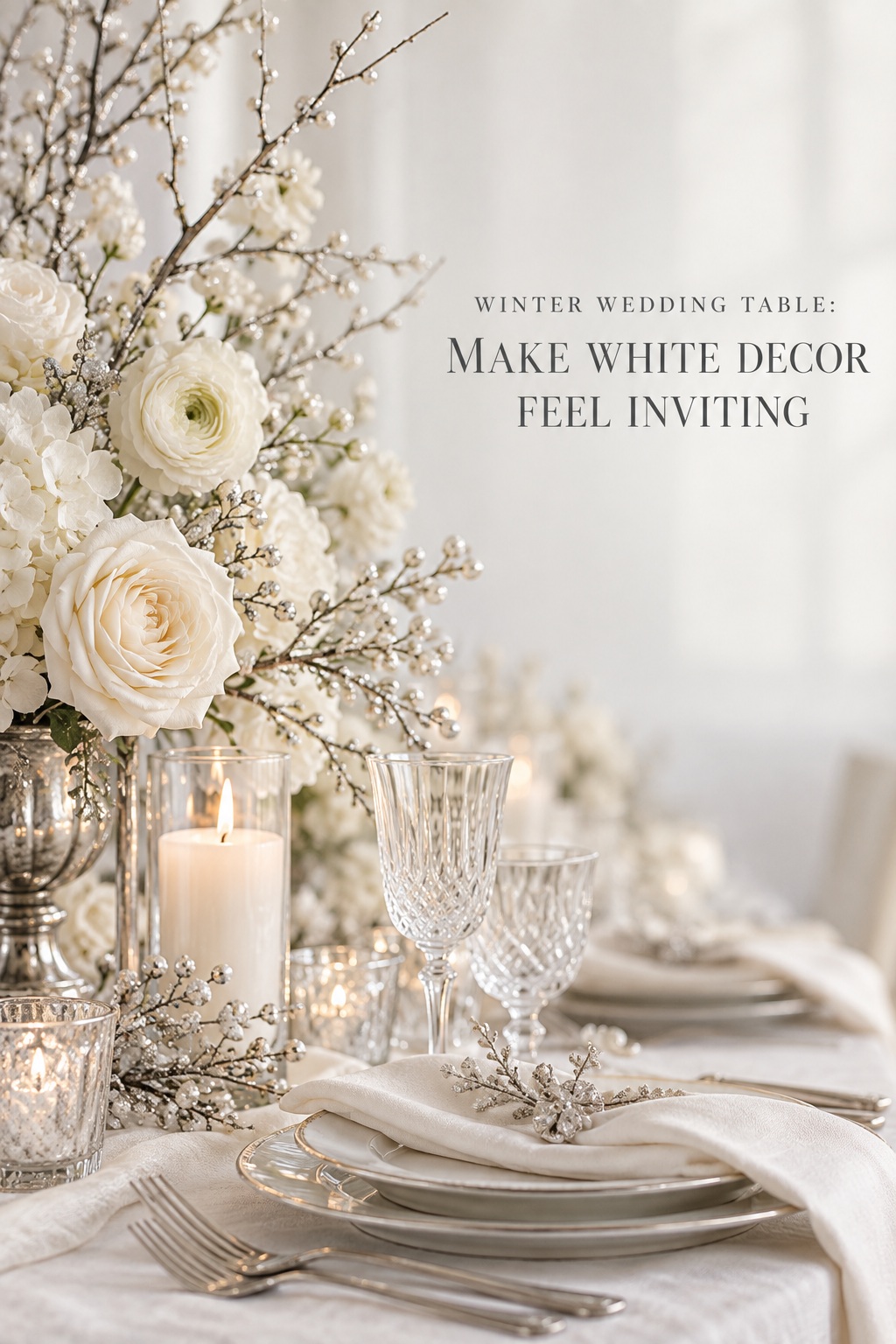
Build a pale table from ivory flowers, white candles, clear glass, silver branches, and a small amount of crystal or mercury glass. White roses, orchids, anemones, amaryllis, and other blooms can create structure while pale greenery adds softness. The effect is elegant rather than themed when the vessels and stationery stay simple.
White needs contrast to remain visible in photographs. Add a gray-green napkin, charcoal menu, dark wood base, or warm flame. Choose either cool silver and pewter or warm brass and antique gold as the main metal family. Mixing every reflective finish can make the table look busy.
Burgundy, blush, and textured linen
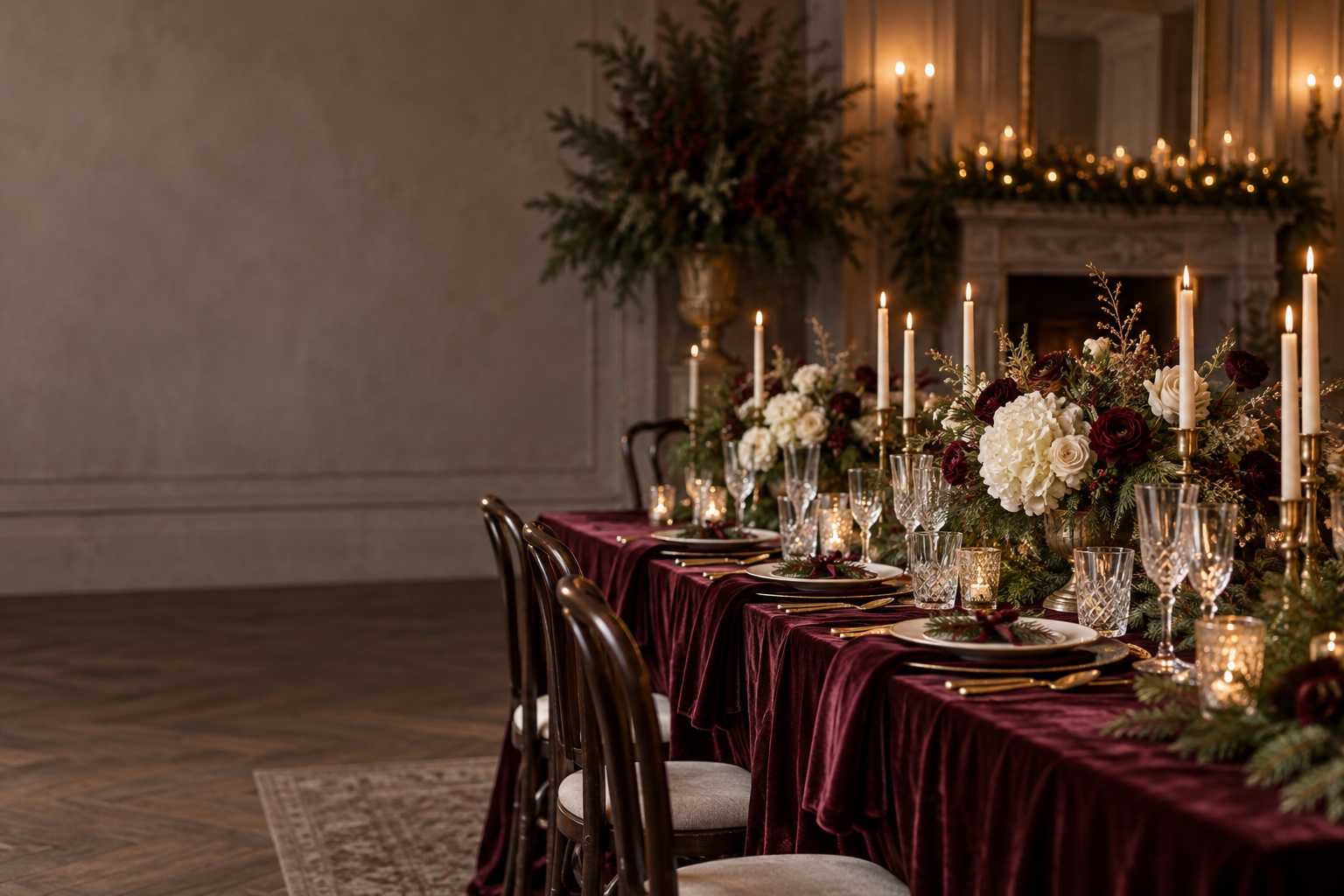
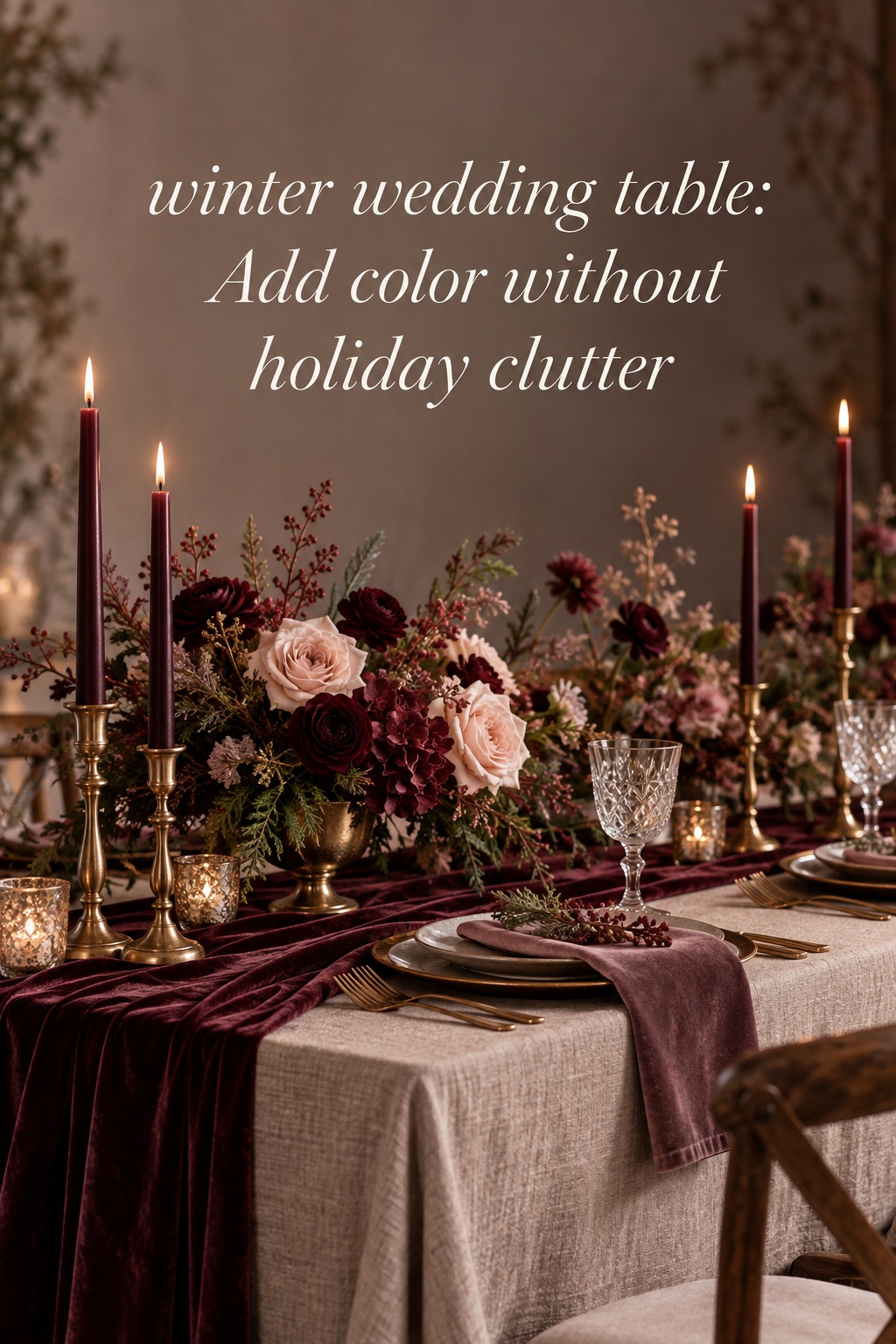
For a richer table, pair one deep flower color with a lighter neutral. Burgundy roses or anemones can sit beside blush blooms, ivory candles, and a velvet or brushed linen runner. This palette feels seasonal without relying on a Christmas red-and-green formula. Natural wood or clear glass can soften it.
Let the linen do some visual work. A velvet runner can make a simple arrangement feel generous, while a patterned cloth may need only bud vases and candles. If the textile is the statement, keep the centerpiece low and repeat the same napkin color so the table feels intentional.
Modern repeated vessels
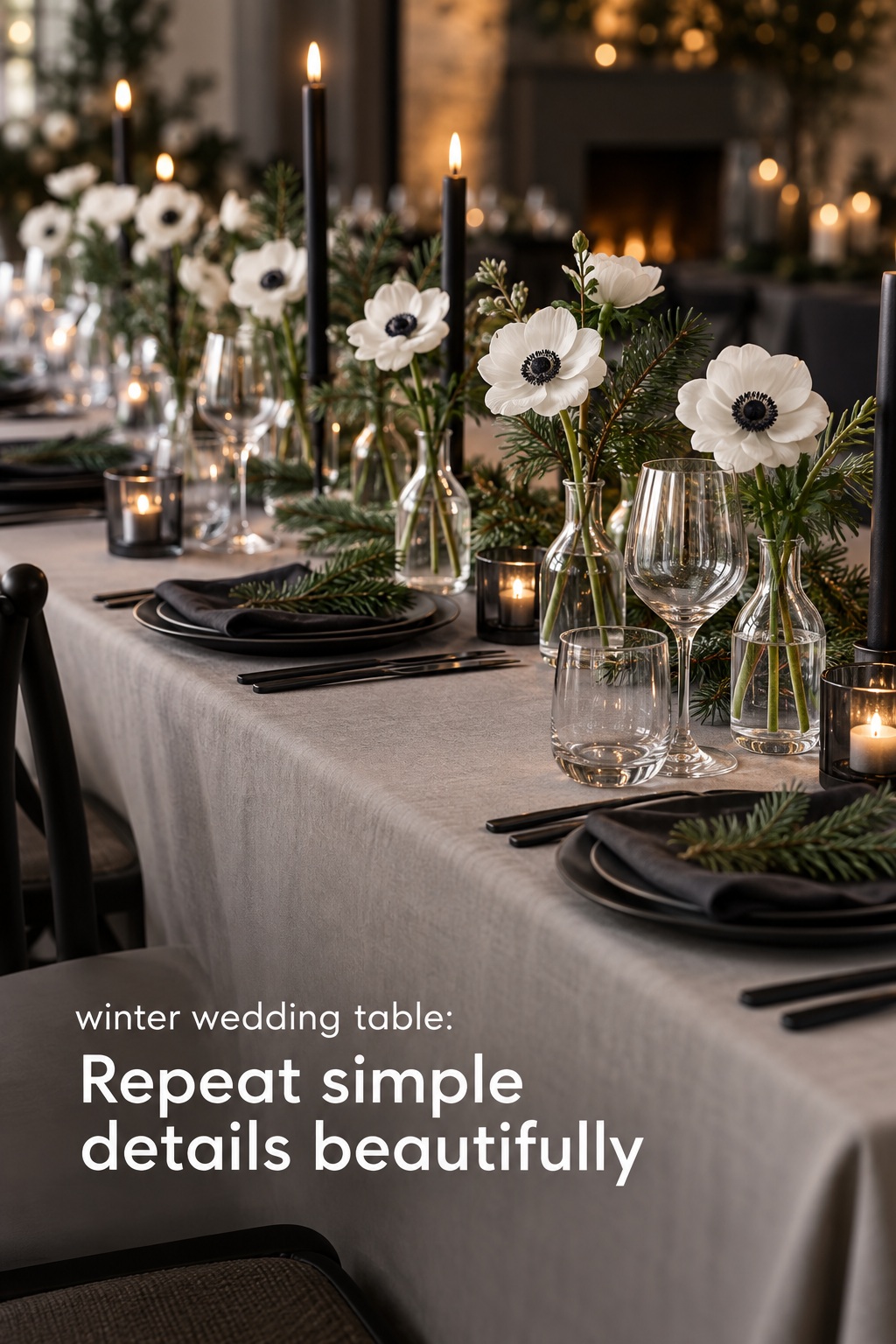
Use several small arrangements instead of one large centerpiece. Repeated clear cylinders, matte ceramic bowls, bud vases, or black compotes can create a clean rhythm along a long table. Choose one flower family or color and repeat it. A few evergreen sprigs or bare branches can signal winter without making the table rustic.
This system is useful when you want a polished look that scales. The florist can make a repeatable recipe, and a DIY team can label each vessel group. Small pieces are also easier to keep below the sightline.
Personal winter details
Add one detail that belongs to your story: family candlesticks, a small ceramic collection, place cards on pomegranates, miniature evergreen favors, or a recipe card from a winter tradition. Repeat it or place it with purpose so it reads as design rather than leftover objects from home.
Personal pieces work best as accents. Let flowers, linens, and light carry the composition, then give the meaningful object a clear position near the place setting or centerpiece. Photograph one finished table before ordering the full quantity.
Match the Centerpiece to Table Shape and Guest Experience
The same winter wedding table concept can look completely different on a round table, long banquet table, or sweetheart table. Choose the arrangement after you know the shape, number of guests, table width, and serving plan. The goal is an open view across the table and enough space for the meal to function.
- Round guest tables: choose a compact low arrangement that looks balanced from every seat. A small cluster can be more useful than a long runner.
- Long banquet tables: use a low garland, repeated bud vases, or evenly spaced groups. Leave breaks so the table does not become one solid mass.
- Farm tables: echo the wood with greenery, ceramic, linen, or candles. Use a protective base if water, wax, or sap could mark the surface.
- Sweetheart tables: allow a more expressive arrangement, but keep the couple’s faces clear for photographs.
- Cocktail-height tables: use stable vessels or lanterns that will not be knocked over when guests are standing.
There are two safe visual approaches to height. Keep the centerpiece clearly below the line of sight, or raise it clearly above the line of sight with a narrow base. The awkward middle zone blocks faces and makes conversation harder. Do not rely on a measurement from a styled photograph because chair height, table width, and guest height change the result.
Review venue rules before finalizing candles, suspended branches, moss, or fragile glass. If open flames are not allowed, use enclosed candles or battery candles as a designed feature. Lanterns, mirrored bases, frosted vessels, and reflective place settings can make low-flame light feel deliberate.
Also consider scent and touch. Strongly scented candles can compete with dinner, while loose glitter, thorny branches, sap, or unstable ornaments can create problems around place settings. Use unscented candles, secure small objects in a tray, and tell the florist about guests who may need extra clearance.
Turn Inspiration Into a Florist or DIY Brief
A clear brief turns a beautiful idea into something another person can build. Write down the mood, palette, table types, arrangement height, flower preferences, vessel plan, candle policy, and what must be reused. Add a photograph or sketch of one complete place setting so everyone understands the scale.
Write a repeatable centerpiece recipe
Use quantities and categories instead of vague adjectives. A recipe might say: one low ceramic bowl, white flowers, cedar and eucalyptus, three unscented votives in glass, one charcoal menu, and no loose glitter. Another might say: five clear bud vases, burgundy flowers, two evergreen sprigs per vase, and one brass holder at each end.
A recipe makes substitutions easier. Ask your florist to match color, shape, and texture if a particular flower is unavailable. Seasonal availability can vary by date and location, so approve a substitution plan before the final week. Preserve the mood even when the exact bloom changes.
Separate design, setup, and cleanup
For a florist, confirm delivery windows, room access, water needs, candle responsibility, rental returns, and the person who approves substitutions. For a DIY team, assign shopping, flower conditioning, arranging, transport, table placement, lighting, and cleanup to named people. An inexpensive centerpiece that requires an exhausted team at midnight may not be the right choice.
- Build one full test table: include chairs, plates, glasses, napkins, menus, candles, and the actual centerpiece.
- Check several angles: stand at the entrance, sit at the table, walk beside it, and view it from the photographer’s path.
- Label every item: mark rented pieces, personal pieces, table numbers, and the destination of each arrangement.
- Prepare a substitution rule: define acceptable changes to flower color, foliage, vessel, and candle type.
- Plan transport: use boxes, trays, water-safe containers, and a table map rather than loose objects in a car.
- Time the setup: include lighting, place cards, final watering, and a room-wide walk-through.
Budget the entire system, not only the flowers. Count vessels, mechanics, buckets, snips, transport containers, candles, batteries, labels, rental delivery, and labor. If the total is too high, simplify the recipe before changing the mood. Fewer flower types, repeated vessels, seasonal greenery, and strategic candlelight can preserve the visual effect.
Photograph the test table in the venue’s actual light if possible. A centerpiece that feels airy at noon may disappear in a dark room, while reflective glass may become too bright under flash. The test is where you discover blocked menus, unstable candles, crowded place settings, or a runner that catches on chairs.
Avoid Common Winter Wedding Table Mistakes
The first mistake is mixing too many directions. Red and green holiday decor, silver winter white, rustic wood, bright ornaments, and tropical greenery can each be attractive, but they need a shared anchor. Keep the palette, metal, vessel, or candle style consistent when you introduce variety.
The second mistake is designing for an empty room. Put chairs around the table and place every object where it will actually sit. Check whether guests can pass bread, see one another, read the menu, and reach the center. The table should support the celebration, not become an obstacle course.
- Blocked sightlines: lower, raise, narrow, or separate the centerpiece.
- Too much scent: choose unscented candles and ask about the natural fragrance of greenery.
- Unsafe flame: follow venue rules, use stable holders, and assign monitoring responsibility.
- Loose clutter: contain pinecones, berries, ornaments, and small candles on a tray or defined base.
- Unclear cleanup: label personal and rented pieces and name the person responsible for packing them.
- Unrealistic DIY: simplify the recipe if setup requires more people or hours than you have.
Do not treat winter as a reason to make every surface dark or heavy. A pale table can feel warm with candlelight and textured linen. A colorful table can feel wintery with evergreen and glass. Let the room, the meal, and the couple’s style determine how much seasonal detail is enough.
Before approving the final design, ask five questions. Can guests see and speak comfortably? Does the plan follow venue safety rules? Can the team install it on time? Does it photograph well in the actual light? And would the table still feel like your wedding if the winter references were removed? If the answer is yes, the design is doing its job.
FAQ
What makes a wedding table feel wintery?
Use a focused combination of evergreen, candlelight, reflective glass, winter color, velvet, bare branches, berries, or textured linen. You do not need every element. Two or three seasonal signals, repeated consistently, usually create a stronger result than a table covered in themed objects.
What is the best centerpiece for a long winter wedding table?
A low greenery runner, repeated bud vases, or several evenly spaced centerpiece groups usually work well. They create rhythm without blocking guests across the table. Leave clear spaces for service and include the actual place settings in your test before approving the arrangement.
How can I make a winter wedding table feel elegant instead of Christmas-themed?
Limit holiday symbols and choose a refined palette such as ivory with silver, burgundy with blush, or evergreen with brass. Let texture and light communicate the season. A velvet runner, quiet greenery, candlelight, and polished glass can feel wintery without ornaments or a full red-and-green scheme.
Are candles safe for a winter wedding table?
They can be safe when the venue permits them and the candles are placed in stable holders with clear space around the flame. Confirm whether glass cylinders or enclosed vessels are required, then assign someone to light, monitor, and remove them. If open flame is not permitted, design around enclosed or battery candles from the beginning.
How do I keep a winter centerpiece from blocking conversation?
Choose a low arrangement or a clearly elevated design with a narrow base. Test it while seated, not only while standing. Add chairs and place settings, then check views from each side of the table. If guests have to lean around the flowers to speak, lower, separate, or reduce the centerpiece.
What should I ask a florist about winter wedding table flowers?
Ask what is available for your date and location, which flowers or greenery will provide the color and shape you want, and what substitutions are acceptable. Also discuss vessel size, delivery, room temperature, water, candle safety, setup timing, and cleanup. Approve the visual principle rather than insisting on one difficult-to-source flower.
How do I plan a DIY winter wedding table?
Create one repeatable recipe, build a full test table, label every item, and assign setup and cleanup roles. Include transport, water, candles, batteries, tools, and rental returns. If the recipe takes too long, reduce the number of flower types or use repeated vessels and greenery.