Winter Bouquet Wedding Ideas That Feel Elegant
A winter bouquet wedding does not have to look like a Christmas display. The strongest bouquets borrow from the season through texture, light, shape, and atmosphere, then adapt those cues to the couple’s actual style. White roses with pine can feel formal, burgundy flowers with velvet ribbon can feel rich, and a small bouquet of pale pink roses can feel romantic without using a single holiday symbol.
The easiest way to choose is to stop collecting random bouquet photos and decide what you want the flowers to do. Should the bouquet brighten a dark coat, echo icy outdoor scenery, soften a modern gown, or add color to a candlelit room? This guide gives you a practical framework for choosing the palette, texture, focal flower, and silhouette, then turns that decision into a florist brief you can actually use.
Why a Winter Bouquet Needs a Design Brief, Not a Holiday Theme
Winter is an atmosphere, not a fixed color scheme. Evergreen, berries, pinecones, velvet, silver foliage, and deep red flowers can suggest the season, but you do not need to use all of them together. A winter bouquet can be airy and white, soft and blush, architectural and modern, moody and jewel-toned, or almost entirely textural.
Start with the mood you want guests to feel when they see the bouquet in your hands. “Snowy and quiet” may lead to white flowers, silvery foliage, and a compact rounded shape. “Warm and candlelit” may lead to cream, peach, caramel, and a trailing ribbon. “Formal and dramatic” may point to burgundy, plum, black-green foliage, and a structured cascade. These descriptions are more useful than asking for a generic winter bouquet.
Your wedding look is only the beginning.
Keep your guest list, vendors, timeline, and every important detail together with Zarellea — so your day feels as considered as your style.
Choose one seasonal cue and one personal cue
A seasonal cue might be pine, cedar, berries, a frosted palette, or a branch-like texture. Your personal cue might be a favorite flower, a family ribbon, a color from the invitation, or the clean shape of your dress. Combining one of each keeps the bouquet connected to the date without making it feel like a prop.
For example, a bride who loves garden roses but wants a winter feeling could use creamy roses with cedar and a deep green ribbon. A couple planning a black-tie reception might choose white calla lilies with a narrow black satin wrap and a few silver-green leaves. Someone who dislikes traditional holiday red could use dusty blue, pale gray, and white with a small amount of pine.
Let the bouquet belong to the full frame
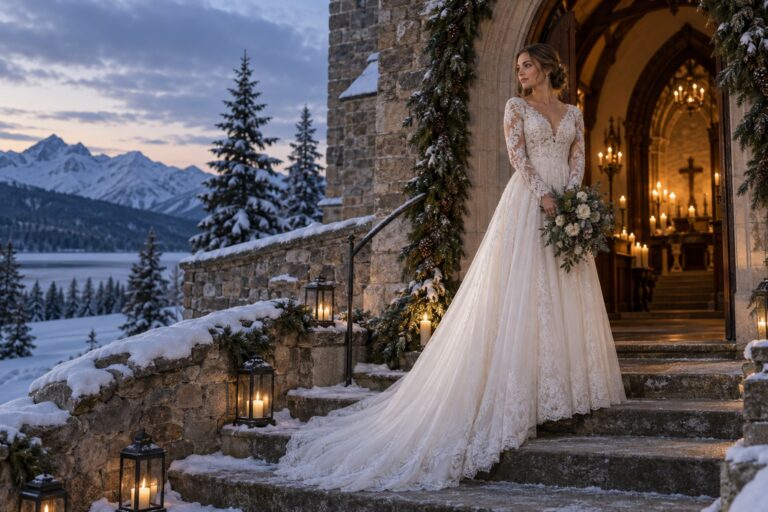
Look at the dress, coat, veil, jewelry, ceremony backdrop, and reception lighting together. A large bouquet with dark flowers can overwhelm a delicate dress. A tiny pale posy may disappear beside a dramatic gown or a snowy outdoor setting. The bouquet should have enough contrast to read in photographs while leaving room for your face, clothing, and movement to remain the focus.
- Minimal gown: use shape, texture, or one strong color to give the bouquet presence.
- Detailed gown: keep the palette edited so the flowers do not compete with lace, beading, or embroidery.
- Winter coat or cape: choose a bouquet with clear outer edges and a ribbon that does not disappear into the fabric.
- Dark venue: include pale flowers or reflective foliage that will remain visible in warm, low light.
- Snowy portraits: use enough color or greenery to separate the bouquet from a pale background.
Build the Bouquet From Four Decisions
Once the mood is clear, make four decisions in order: palette, texture, focal flower, and silhouette. This sequence prevents a common problem where a couple chooses beautiful individual flowers but ends up with a bouquet that has no visual hierarchy.
1. Set the palette before naming every flower
Choose one dominant color family, one supporting neutral, and one accent if needed. Winter palettes can include ivory and evergreen, white and icy blue, cream and taupe, blush and burgundy, plum and black-green, or dusty rose with gray-green foliage. A limited palette usually looks more intentional than a bouquet that tries to represent every winter color at once.
Pay attention to undertones. Ivory, cream, and warm blush sit comfortably together, while true white, icy blue, and cool lavender create a cleaner winter effect. Burgundy can lean warm, purple, or almost black, so bring fabric swatches or screenshots with the exact mood you want. If your dress is a soft ivory, very bright white flowers may look deliberately crisp, but they can also make the dress appear more yellow by contrast.
2. Add texture that earns its place
Texture is often what makes a bouquet feel wintery without adding a literal snowflake or ornament. Pine, cedar, spruce, berries, branches, dusty miller, magnolia leaves, pinecones, dried seed heads, and velvet ribbon each create a different kind of surface. Use them as structure, rhythm, or a small accent rather than filling every gap.
Mix texture by scale. A broad magnolia leaf can anchor a rounded bouquet, fine cedar can soften the edge, and a few berries can create small points of color. If every element is spiky, glossy, or highly detailed, the bouquet may look busy. Balance rough materials with soft petals and one calm area where the eye can rest.
3. Choose a focal flower and supporting flowers
Your focal flower carries the emotional message. Garden roses and ranunculus feel romantic and layered. Calla lilies feel clean and sculptural. Amaryllis can look bold and architectural. Anemones bring graphic contrast. A simple white bouquet may use only one focal bloom and let shape do the work.
Supporting flowers should help the focal flower look deliberate. If the main bloom is soft and rounded, use a linear stem or airy filler for movement. If the main flower is strong and sculptural, choose quieter foliage and a restrained ribbon. Ask your florist which substitutions preserve the silhouette and color story if a particular flower is unavailable.
4. Decide on the silhouette
A compact posy looks controlled and intimate. A rounded hand-tied bouquet feels classic and easy to carry. A loose garden shape feels organic and generous. A cascading bouquet creates drama through downward movement, while a structured arrangement with exposed stems feels modern. The same flowers can look completely different when the silhouette changes.
Choose the shape according to your proportions and the way you will carry it. Ask for the bouquet to be photographed from the front, three-quarter angle, and side. A cascade that looks beautiful on a table may hide the dress when held too low. A very wide bouquet may be difficult to manage with a coat, gloves, or a long veil.
For more winter palette and texture references, compare the practical combinations in Fiore Designs’ winter wedding flower guide with your own clothing and venue rather than copying a color list exactly.
Five Winter Bouquet Directions to Borrow
These five directions are starting points, not rigid recipes. Give your florist the mood, the colors you want to keep, and the elements you want to avoid. Then let the available flowers and the design scale guide the final recipe.
Frosted white with evergreen structure
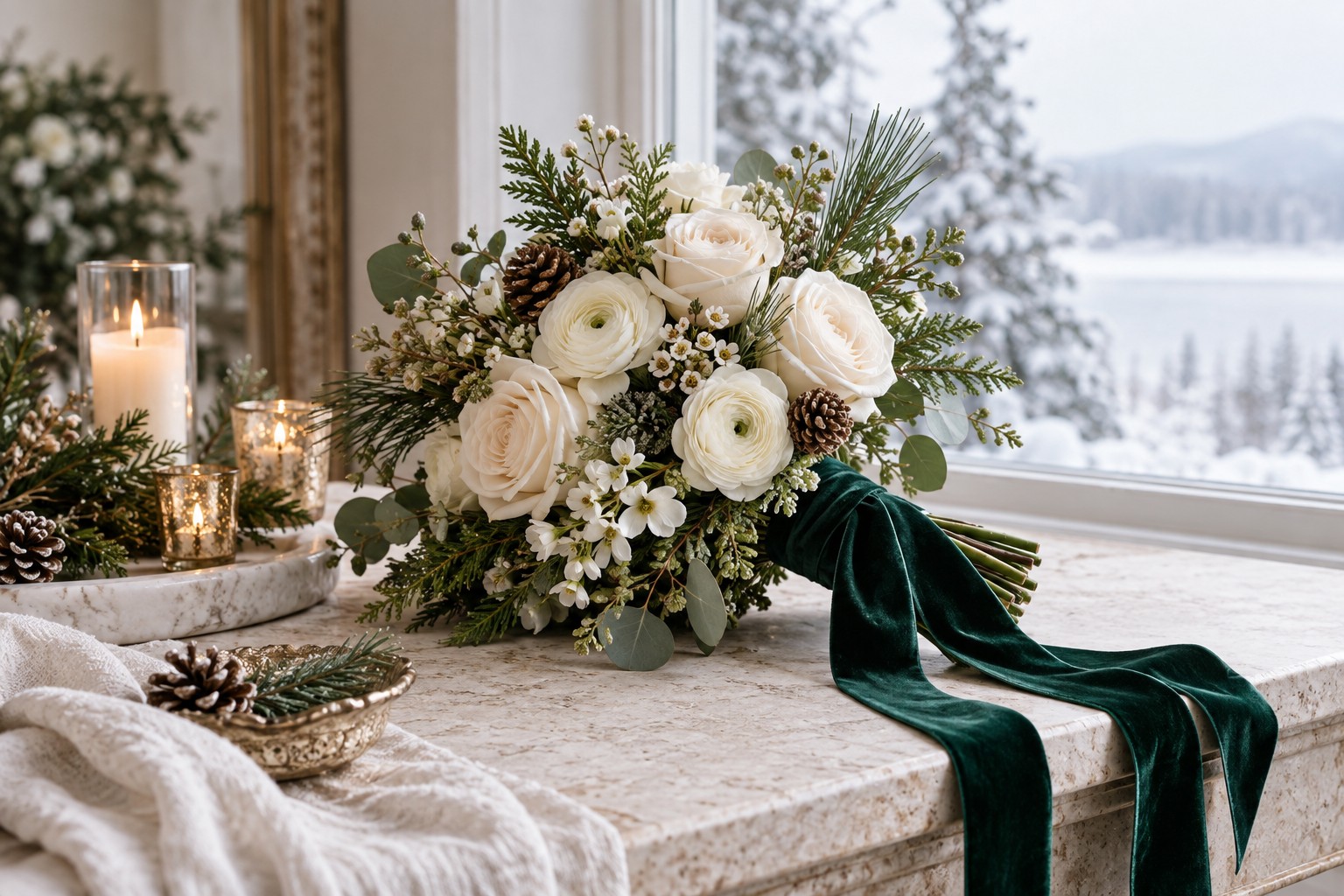
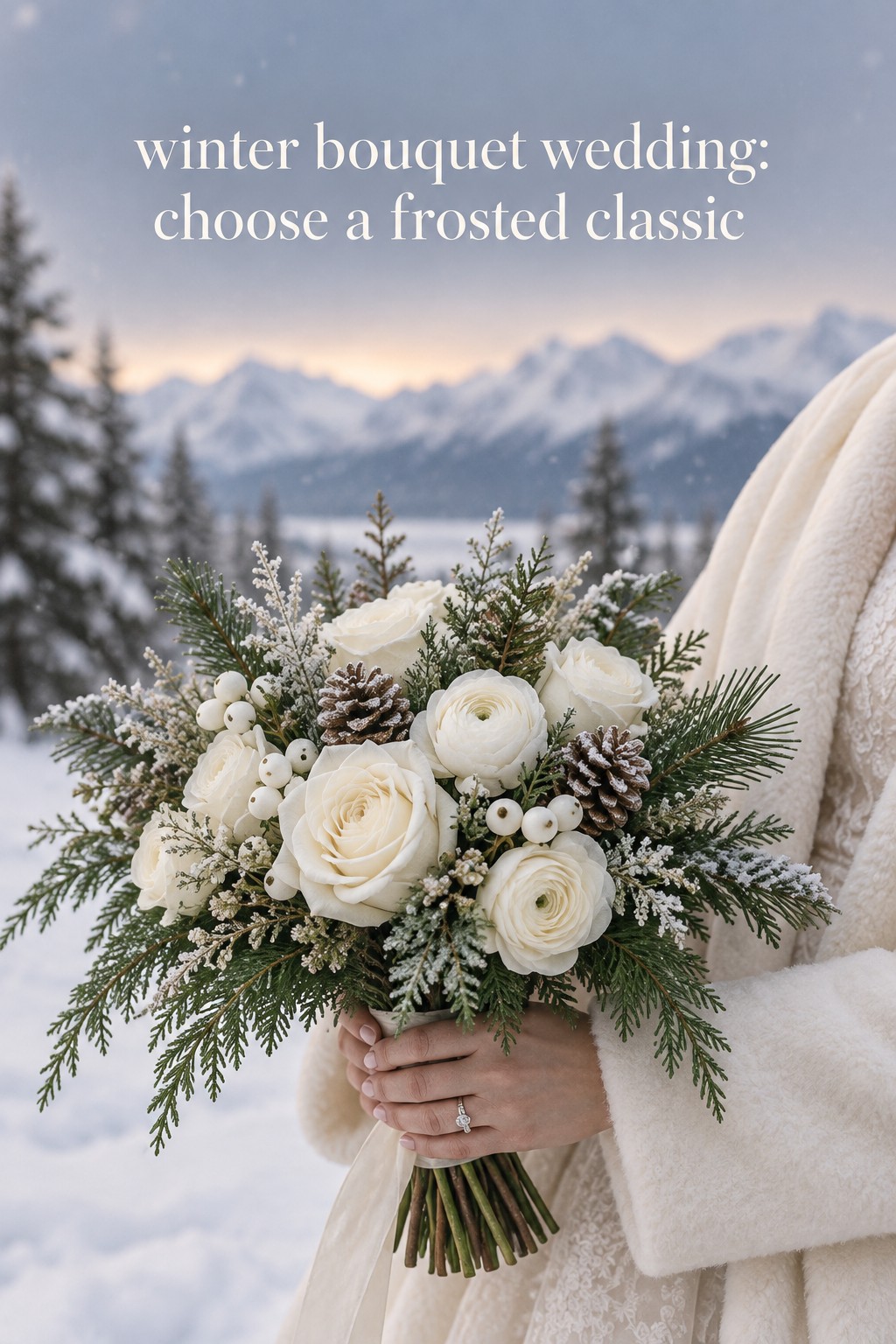
Use white or ivory roses, ranunculus, anemones, or calla lilies with pine, cedar, dusty miller, or silvery leaves. The result can be formal, modern, or woodland depending on the silhouette. Keep the greenery concentrated around the outer edge if you want the flowers to remain the hero. Add a narrow satin or velvet ribbon in ivory, forest green, or charcoal.
This direction works especially well for a simple dress, a snowy portrait location, or a venue with dark wood. To keep it from reading as Christmas, avoid using bright red berries, tartan, metallic ornaments, and several holiday cues at once. Let the contrast come from foliage shape and the difference between soft petals and firm evergreen.
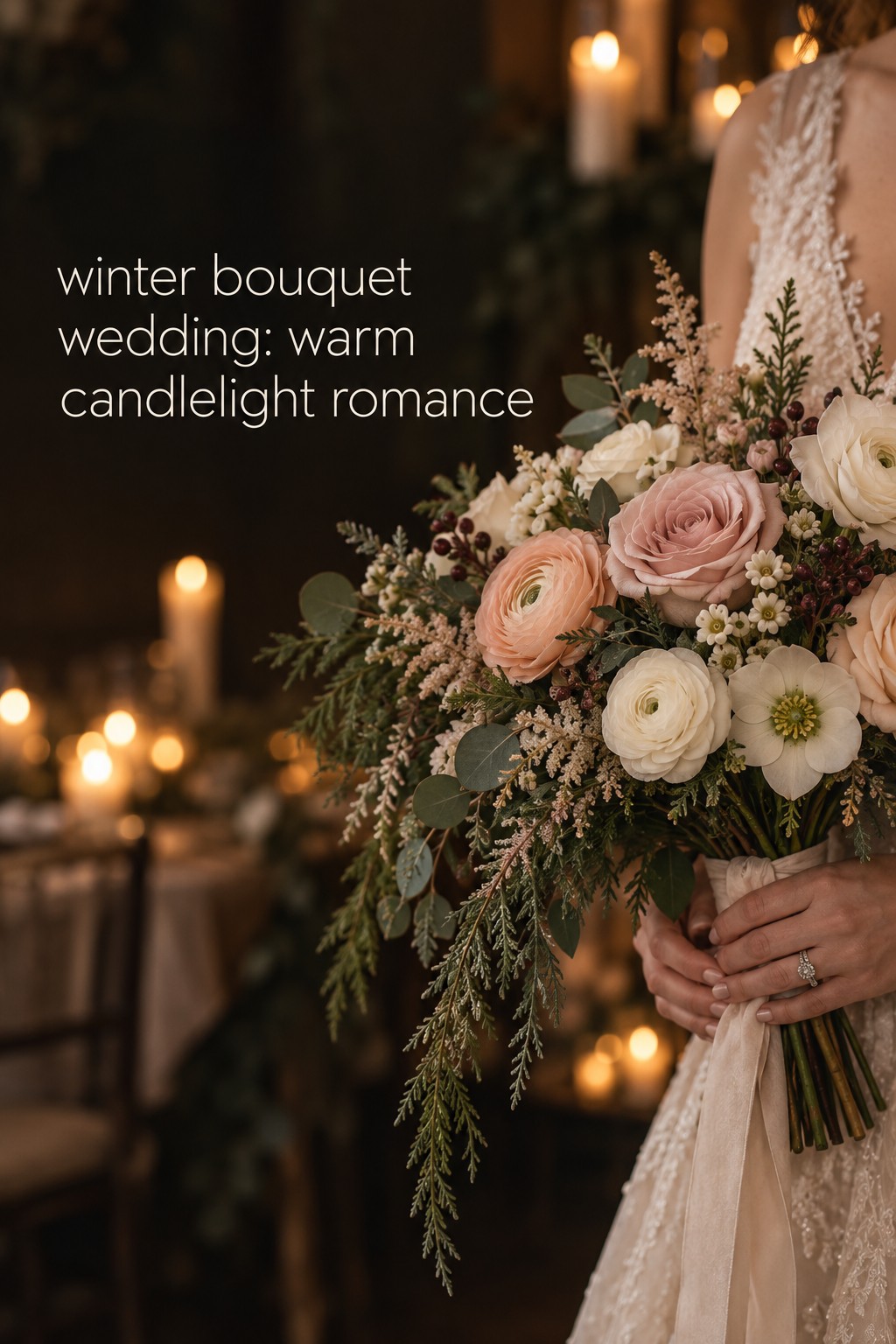
Blush, cream, and candlelight romance
Layer blush roses, pale peach ranunculus, cream flowers, and soft green foliage for a warmer winter bouquet. This palette feels romantic in a candlelit room and can complement champagne satin, warm ivory, or a blush accessory. A few trailing stems or a long ribbon keep the arrangement from becoming too round and formal.
The key is to keep the pinks related. A dusty rose and a pale peach can work together when cream provides a bridge. A bright bubblegum pink beside orange peach may create a spring feeling instead. Ask your florist to show the proposed palette beside the dress fabric and the room’s lighting before approving the final flowers.
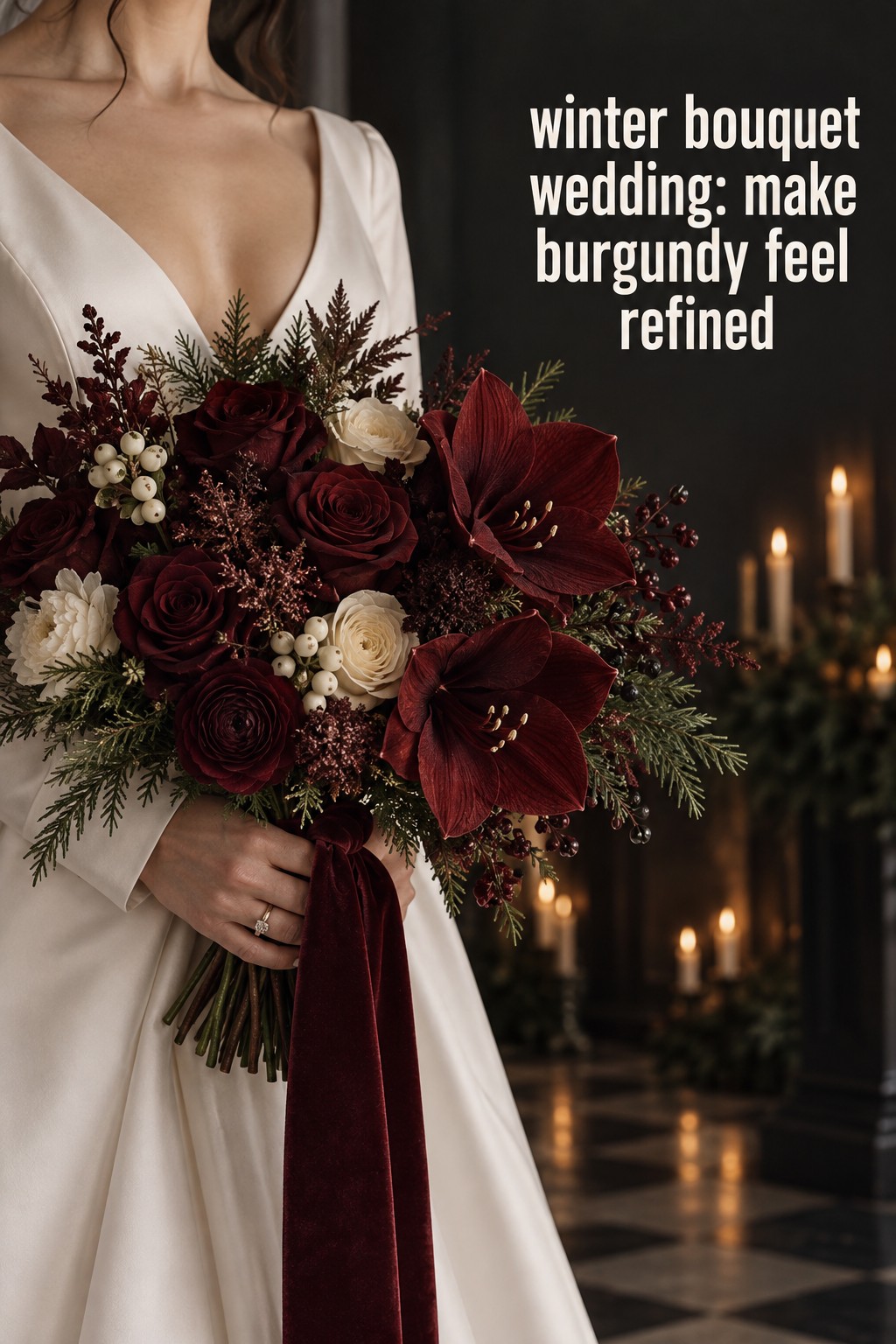
Burgundy with restrained greenery
For a richer direction, combine burgundy or wine-colored blooms with cream, dusty rose, or deep green. Garden roses, dahlias, amaryllis, anemones, or berries can create depth, while eucalyptus, fern, bay leaf, or evergreen keeps the bouquet from becoming a solid dark mass. A velvet ribbon in burgundy, emerald, or midnight blue completes the mood.
This bouquet looks strongest when the dark color has one clear job. It can be the focal flower, a small cluster near the center, or a repeated accent across the arrangement. If every flower is deep red, the bouquet may lose detail in indoor photographs. Use pale flowers or silvery foliage to create breathing room.
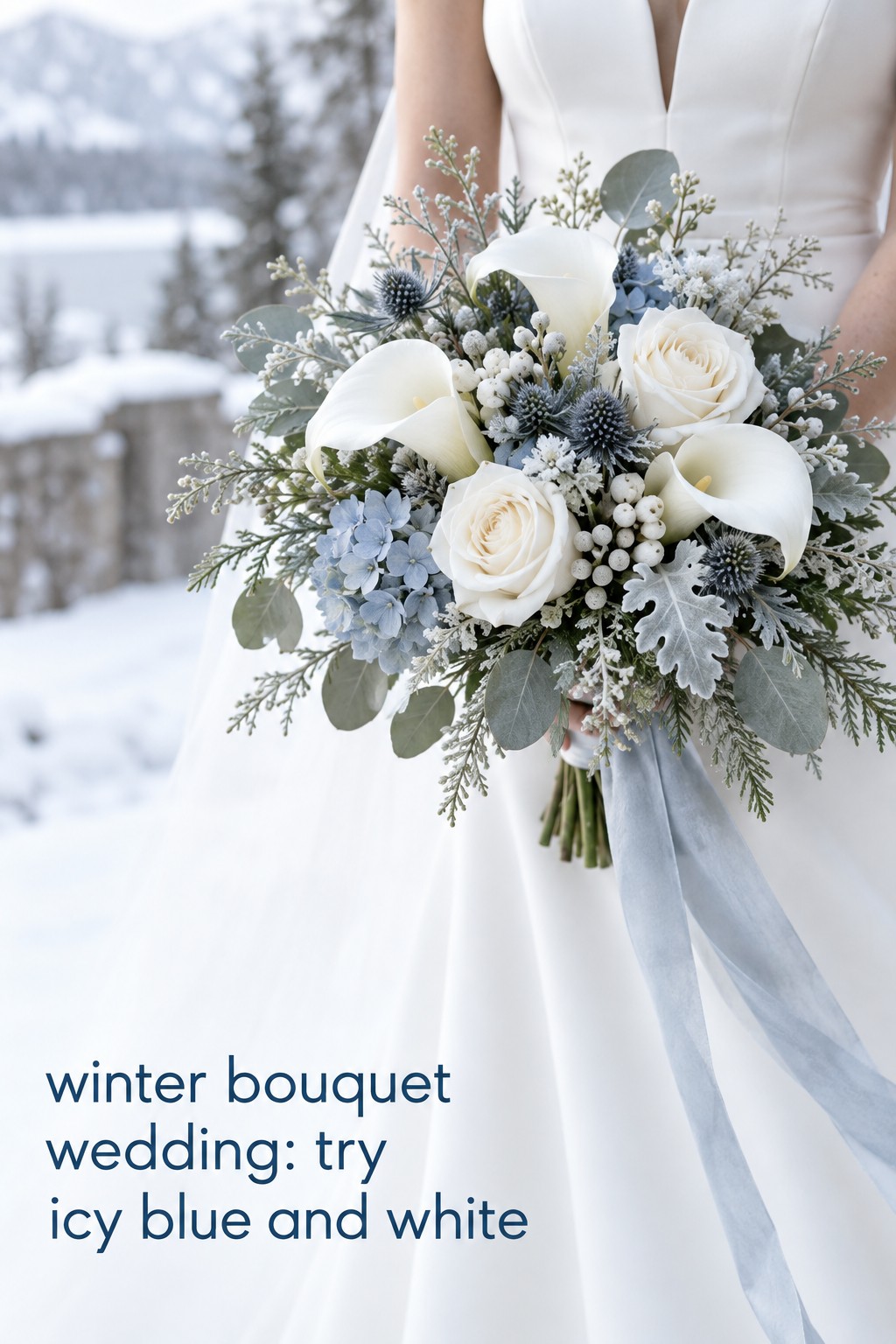
Icy blue and white with silver-green detail
Blue can make a winter bouquet feel crisp without becoming nautical. Pair dusty blue, pale lavender, or blue-gray accents with true white flowers, silver brunia, dusty miller, or cool green foliage. Keep the blue tonal and limited. One blue flower family, a ribbon, or a few berries may be enough.
This direction suits a clean-lined gown, a snowy landscape, or a palette that already includes blue stationery or bridesmaid attire. If the bouquet begins to feel cold, add a cream flower or warm wood-toned ribbon. If it feels too soft, use a more architectural flower such as a calla lily or anemone for definition.
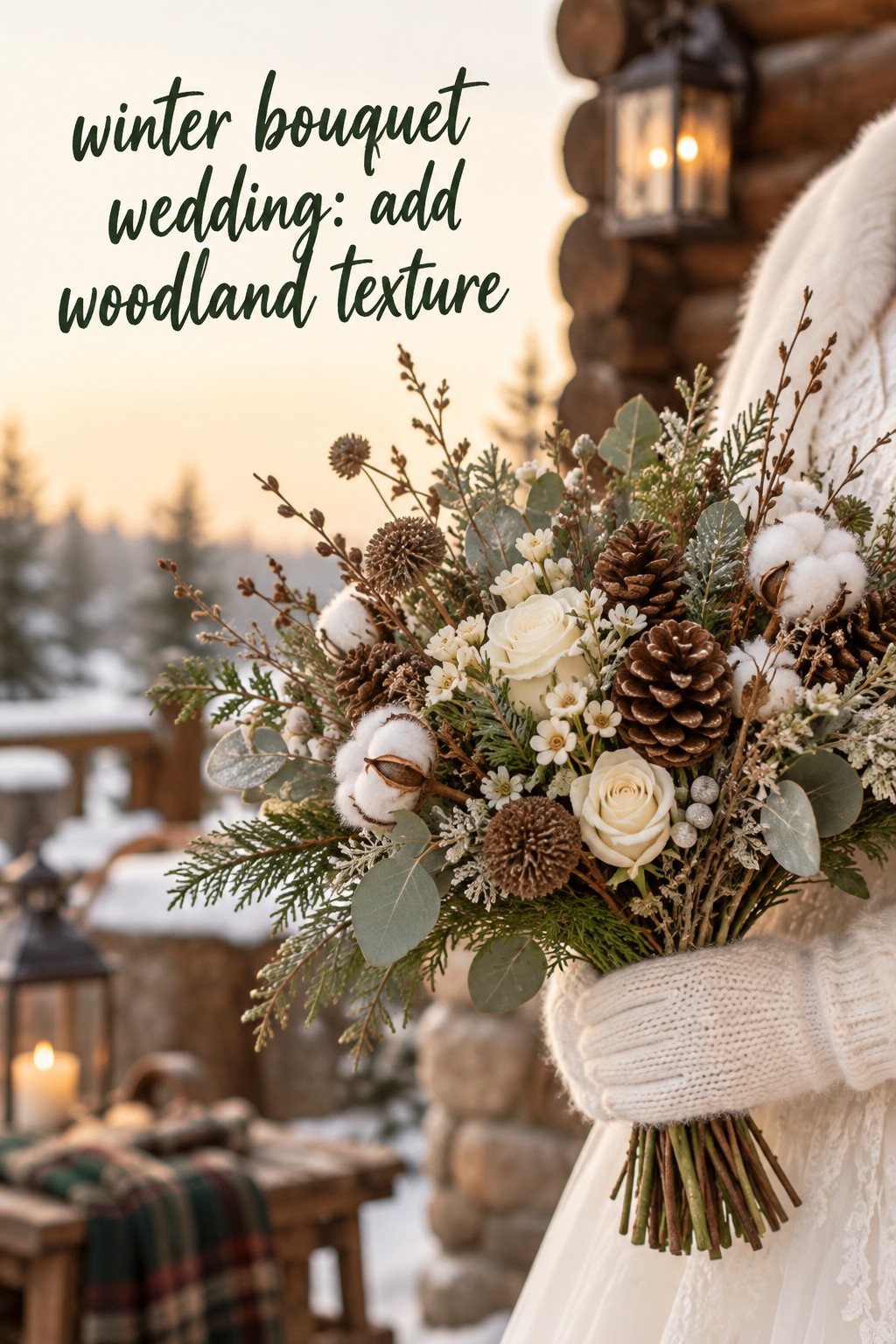
Textural woodland with dried accents
Combine a few fresh flowers with pinecones, dried seed heads, cotton, berries, branches, grasses, or muted foliage. This can create a rustic, artistic, or relaxed bouquet, especially for a lodge, barn, forest, or intimate outdoor ceremony. Keep the fresh flowers in a controlled palette so the dried materials look designed rather than leftover.
Dried elements can be stiff, sharp, or fragile, so check how the bouquet feels in your hands. Ask whether any pieces can snag a veil, scratch a sleeve, or shed during movement. A smaller textural bouquet may be more comfortable than a large one packed with brittle accents.
Turn the Idea Into a Florist Brief
A good florist brief does not need every flower named. It needs a clear outcome, useful constraints, and permission to substitute intelligently. Send a short paragraph before the consultation, then bring the same information to the meeting.
Use this five-line brief
- Date and setting: state the month, ceremony location, indoor or outdoor conditions, and whether the bouquet will move through snow, wind, or heated rooms.
- Visual mood: choose three words such as frosted, romantic, sculptural, woodland, refined, or candlelit.
- Palette: name the colors to include, the colors to avoid, and whether the final balance should be warm, cool, or neutral.
- Shape and scale: describe compact, rounded, loose, cascading, or structured, and show the dress or a similar silhouette.
- Non-negotiables: list a favorite flower, a family element, a no-red rule, a fragrance sensitivity, or any texture that must not be used.
A sample brief could read: “I am planning a January indoor ceremony with outdoor portraits. I want a refined, frosted, slightly romantic winter bouquet wedding look. Please use ivory and cool green with a small amount of dusty blue, a rounded hand-tied shape, and enough contrast to read against a white coat. I like roses and ranunculus, but I do not want the bouquet to feel Christmas-themed. Please avoid tartan, bright red berries, and anything that may snag my veil.”
Ask about substitutions and sourcing
Flower availability changes by region, supplier, growing conditions, and the exact week of the event. Instead of insisting on one fragile screenshot match, ask your florist which three elements must stay constant: color, silhouette, or texture. If the exact flower is unavailable, a substitute that preserves the shape may be more successful than a substitute with the same name but a different habit.
Ask these questions: Which flowers will be reliably available for my date? What can replace the focal bloom without changing the mood? Which greenery will hold its shape? Will the ribbon color change how the bouquet photographs? Can you make the bouquet lighter if I will carry it for several hours? What is the plan if outdoor temperatures drop sharply?
Protect the bouquet across temperature changes
Cold weather can make handling more complicated because the bouquet may move from a cool vehicle or outdoor portrait session into a warm ceremony or reception room. Keep the design with the florist’s care instructions, avoid placing it directly beside a heater, and ask who will return it to water or a suitable holding area between photographs.
For general cut-flower handling, the AP’s care guidance recommends avoiding drafts, direct sun, heaters, air conditioning, and ripening fruit. Your florist’s instructions take priority because a hand-tied bridal bouquet may include materials that should not be treated like a vase arrangement.
Mistakes That Make a Winter Bouquet Feel Themed
The first mistake is using every seasonal symbol at once. Pine, red berries, pinecones, velvet, tartan, gold, and a holiday ribbon can each work alone, but together they may turn a bridal bouquet into a Christmas centerpiece. Choose one or two strong cues and let the flowers, shape, and fabric do the rest.
The second mistake is treating winter as an excuse to use only dark colors. A winter bouquet can be pale, airy, or almost monochrome. If you love burgundy, balance it with cream, blush, or silvery foliage. If you love white, use greenery, ribbon, or silhouette to keep the bouquet visible and dimensional.
The third mistake is choosing flowers without checking scale. A bouquet can look beautiful in a close-up image but become too small beside a full skirt or too wide for a narrow aisle. Hold a paper mock-up or ask your florist to show the approximate dimensions from the front. Consider how much of the bouquet will be visible behind a coat, bouquet wrap, or long sleeve.
- Do not approve a color palette only from a phone screen. Compare it with fabric and venue lighting.
- Do not assume evergreen always means the same thing. Pine, cedar, eucalyptus, and silvery foliage create different silhouettes and moods.
- Do not add fragile dried elements without testing movement, touch, and contact with the veil.
- Do not forget the ribbon. It affects the bouquet’s finish, hand comfort, and visibility in photographs.
- Do not let a seasonal flower list override the bouquet shape you actually want to carry.
The best final test is simple: hold the bouquet beside your dress, stand where the ceremony photos will happen, and look at it from a normal distance. Does it still feel like your wedding? Does it read clearly without looking busy? Can you carry it comfortably? If the answer is yes, the bouquet has done its job.
FAQ
What flowers are best for a winter bouquet wedding?
There is no single best list because availability depends on the date and region. Popular winter directions include roses, ranunculus, calla lilies, anemones, amaryllis, berries, pine, cedar, dusty miller, and magnolia leaves. Ask your florist which options are reliable for your week and which substitutions preserve your chosen palette and shape.
How can I make a winter bouquet look elegant instead of Christmas-themed?
Use one or two seasonal cues rather than combining every holiday symbol. Edit the palette, keep the silhouette intentional, and balance evergreen or berries with calm flowers. White and blue, cream and taupe, blush and burgundy, or white with silver-green foliage can feel wintry without looking like a holiday centerpiece.
Can I have a colorful bouquet for a winter wedding?
Yes. Burgundy, plum, dusty blue, mauve, blush, deep red, and even carefully chosen yellow can work in winter. Keep the colors connected through undertone and use greenery or a neutral flower to create breathing room. Test the full palette beside your dress and under the venue lighting.
Should a winter wedding bouquet include pine or cedar?
Only if you like the texture and fragrance. Pine and cedar can create a clear winter reference, but they are not required. Eucalyptus, dusty miller, magnolia leaves, bare branches, silvery foliage, berries, or a cool palette can communicate the season in a different way. Ask your florist which greenery will hold its shape and suit your bouquet style.
How do I keep my bouquet safe during winter portraits?
Follow the florist’s specific care plan, limit the time outdoors, and keep the bouquet away from heaters, direct sun, drafts, and rough surfaces. Assign someone to hold it when you are not being photographed. If the bouquet returns indoors between locations, ask where it should rest so the stems and delicate elements stay protected.
How far in advance should I choose my winter bouquet?
Start with your mood, palette, dress, and venue early enough to compare florists and test the scale. The final flower selection can remain flexible until your florist confirms availability for the wedding week. A strong brief gives the designer room to make thoughtful substitutions without losing the look you approved.