Rustic Winter Wedding Ideas: Choose Your Best Style
Rustic winter wedding ideas work best when they solve two problems at once: they create a warm, memorable atmosphere, and they make sense for the venue and the people moving through it. A barn, a family farm, a mountain lodge, and a small cabin can all feel rustic in winter, but they do not need the same colors, lighting, table scale, or guest comforts.
Use this guide as a decision tool rather than a shopping list. Start with the setting that already gives you the strongest visual foundation, then choose a controlled group of materials and details. The result can feel natural and inviting without becoming a holiday display or a collection of unrelated woodland props.
Choose the Rustic Winter Direction Before You Shop
The most useful first choice is not between pinecones and berries. It is between the kind of experience you want your venue to create. Rustic style is broad enough to cover relaxed farm dinners, elegant lodge celebrations, candlelit barn receptions, and intimate cabin gatherings. Naming the direction early prevents every appealing detail from entering the plan.
Think of the four directions below as starting points. You can borrow details from another style, but one should lead. A clear lead makes decisions about stationery, attire, flowers, rentals, and photography much easier.
Your wedding look is only the beginning.
Keep your guest list, vendors, timeline, and every important detail together with Zarellea — so your day feels as considered as your style.
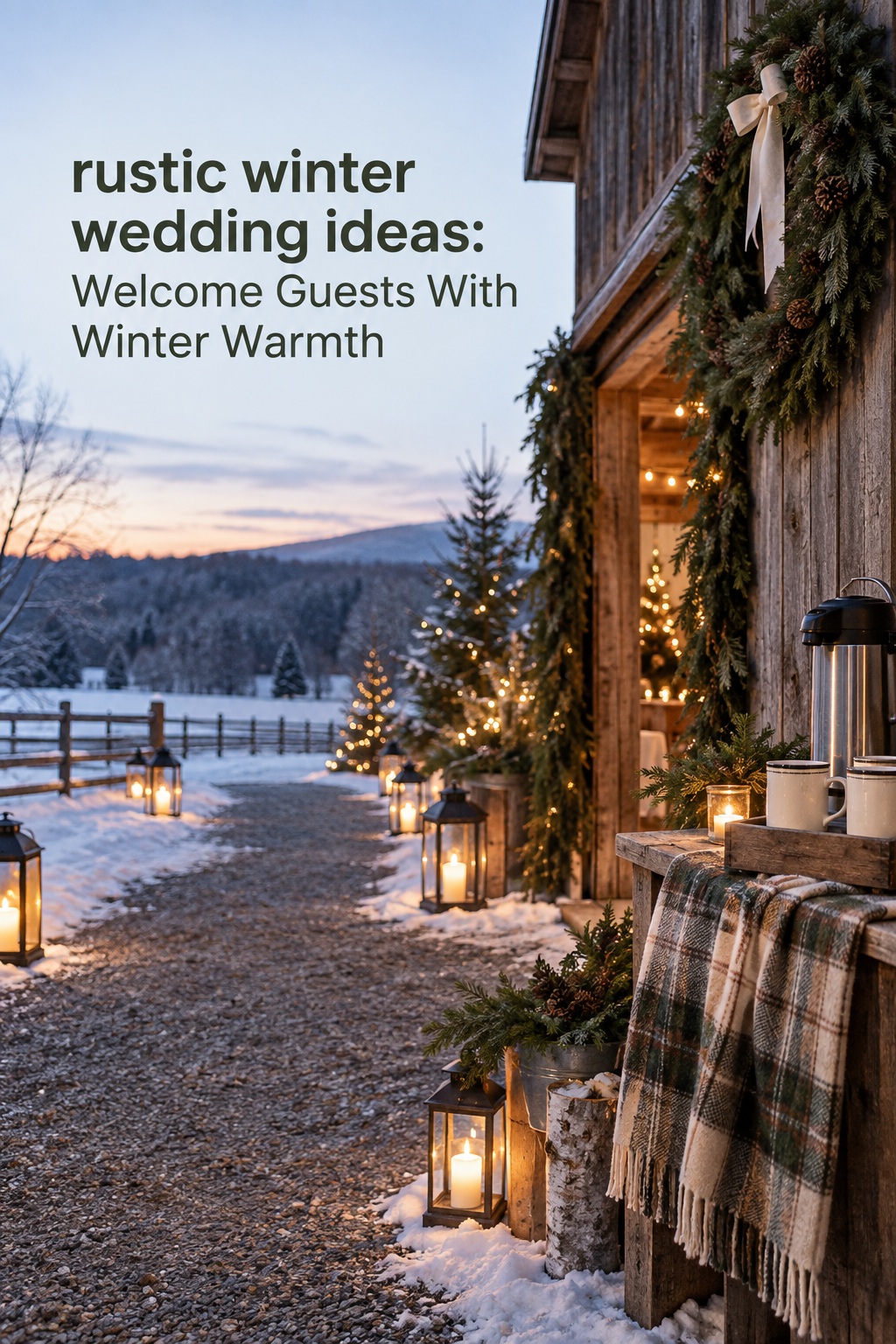
Barn: Make Texture Do the Decorating
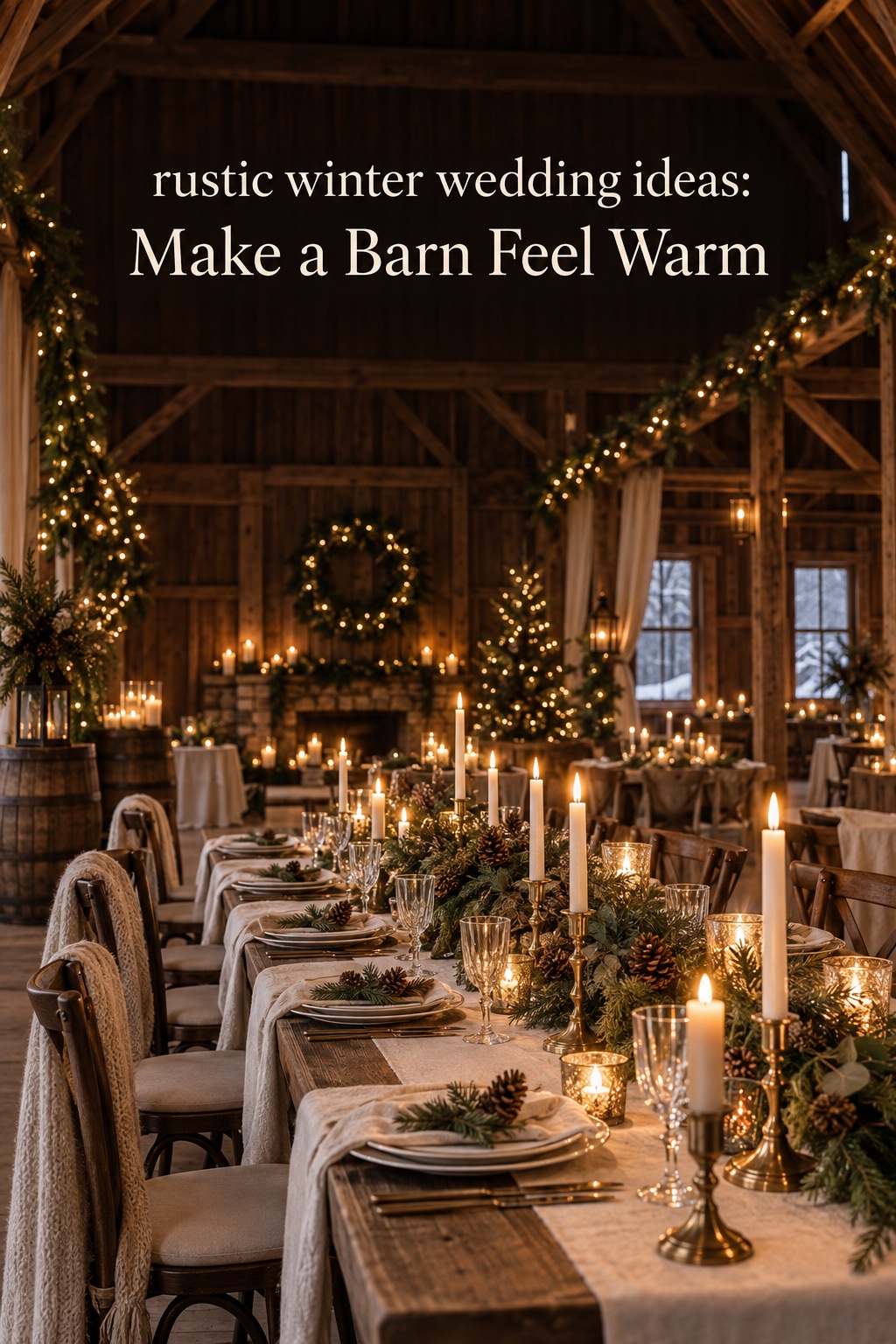
A barn already supplies visual texture through timber, beams, stone, metal hardware, or a large open volume. That means your design does not need to add rustic signals everywhere. Let the architecture carry the roughness and add softness through warm lighting, low greenery, linen, and comfortable seating.
- Choose a restrained palette such as ivory, evergreen, charcoal, and a small amount of brass or burgundy.
- Use candle clusters, lanterns, or warm string lights to make a large room feel intimate.
- Keep tables legible. A simple runner, low greenery, and varied candle heights may be enough.
- Use velvet, wool, or brushed cotton in one or two places so the room feels warm rather than rough.
Barn style suits couples who want a relaxed setting with an elevated dinner-party finish. It can support formal attire if the lighting and tabletop details are polished. It can also support a casual celebration if you use more natural wood, simple florals, and practical lounge areas. The key is to avoid adding burlap, plaid, chalkboard signs, barrels, and mason jars simply because the building is a barn. Those details can compete with the architecture instead of completing it.
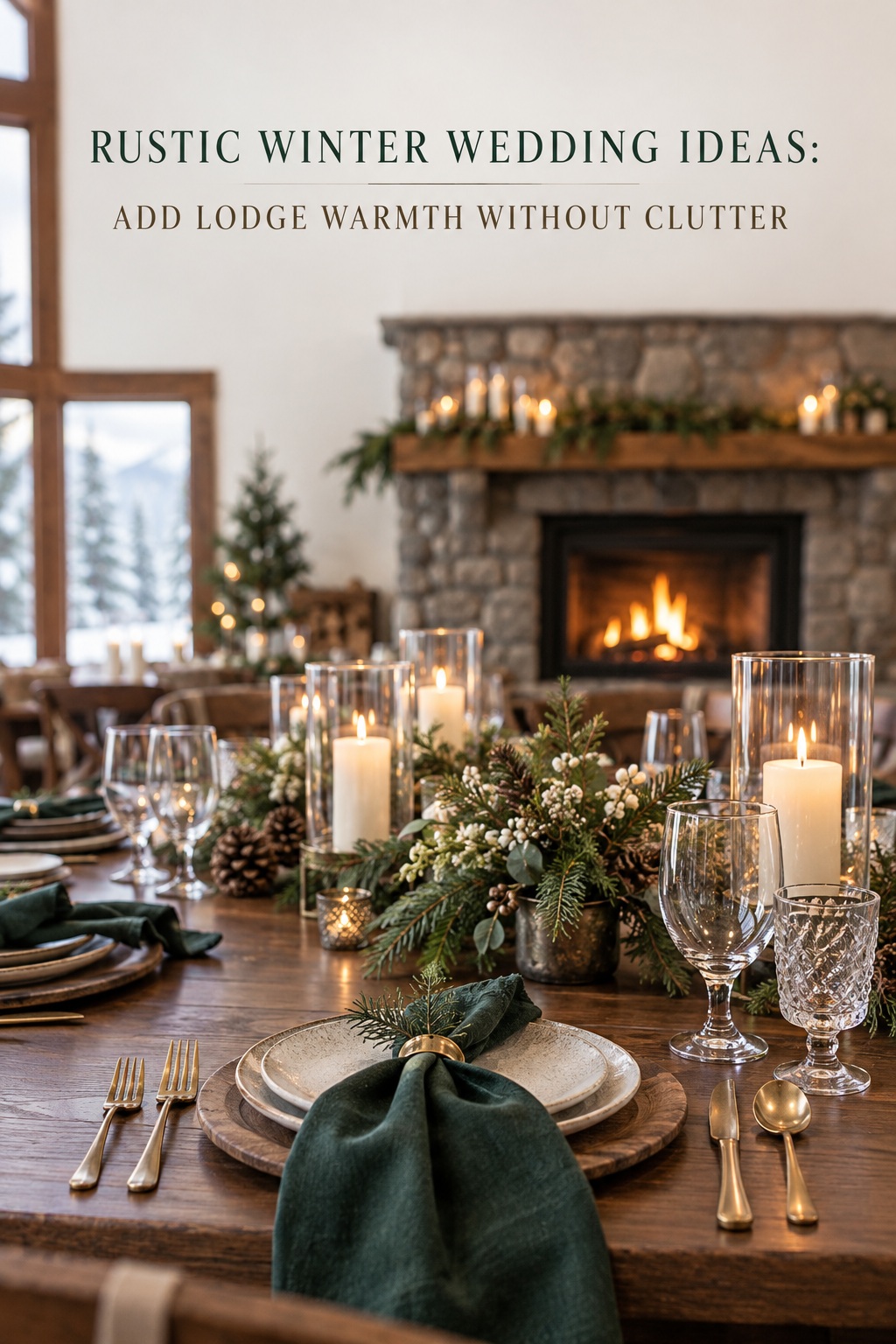
Farm: Keep the Winter Story Natural and Open
A farm setting feels best when the winter landscape remains part of the story. Bare trees, fields, fences, gravel paths, and outbuildings can be more convincing than a room filled with themed objects. A farm direction is a strong choice for a daytime ceremony, a long-table dinner, or a celebration that moves between a covered outdoor area and a heated interior.
- Build around cream, soft brown, olive, muted cranberry, and weathered gray.
- Use seasonal branches, cedar, dried grasses, and a few berry accents instead of a dense wall of greenery.
- Plan a clear welcome point with a sign, coat storage, blankets, and a warm drink before guests travel across the property.
- Use plaid as a small accent on napkins, wraps, or lounge throws instead of covering every table.
The farm direction is practical when the couple wants a genuine sense of place. It also rewards simple styling because the surrounding land provides scale and texture. Keep the ceremony and reception connected through one repeated detail, such as the same evergreen species, a shared ribbon color, or matching lanterns. Avoid treating the outdoor space as a photo backdrop only. If guests must cross cold ground, the path, lighting, footwear advice, and timing are part of the design.
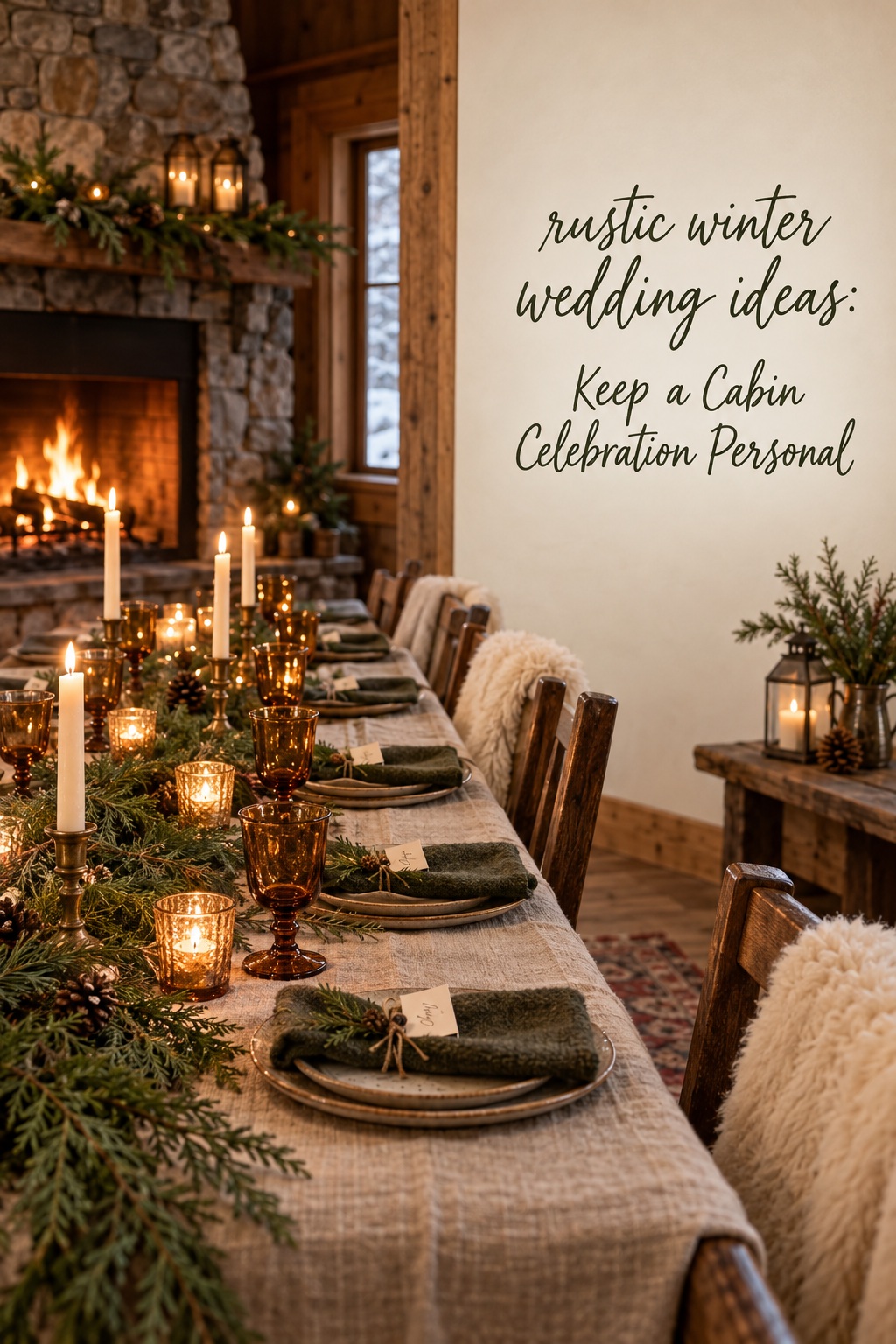
Lodge: Choose Warmth With a Polished Finish
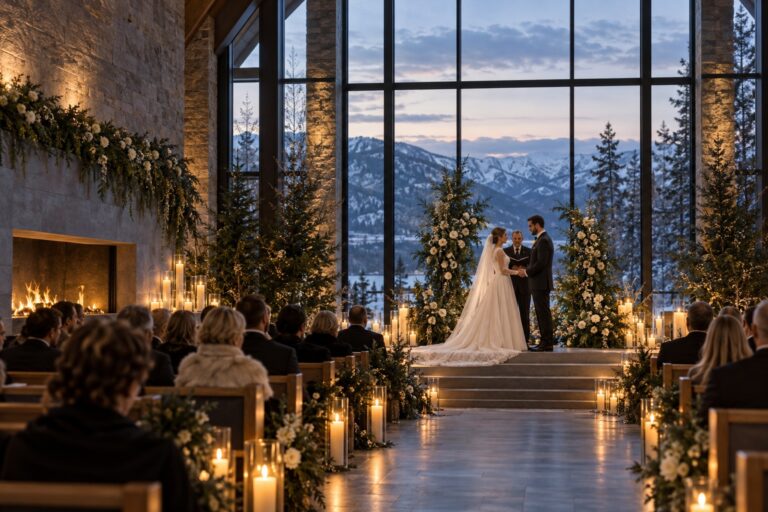
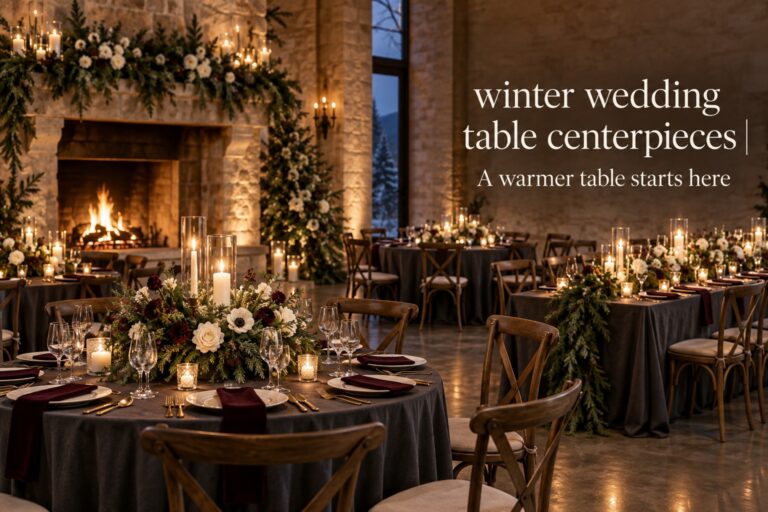
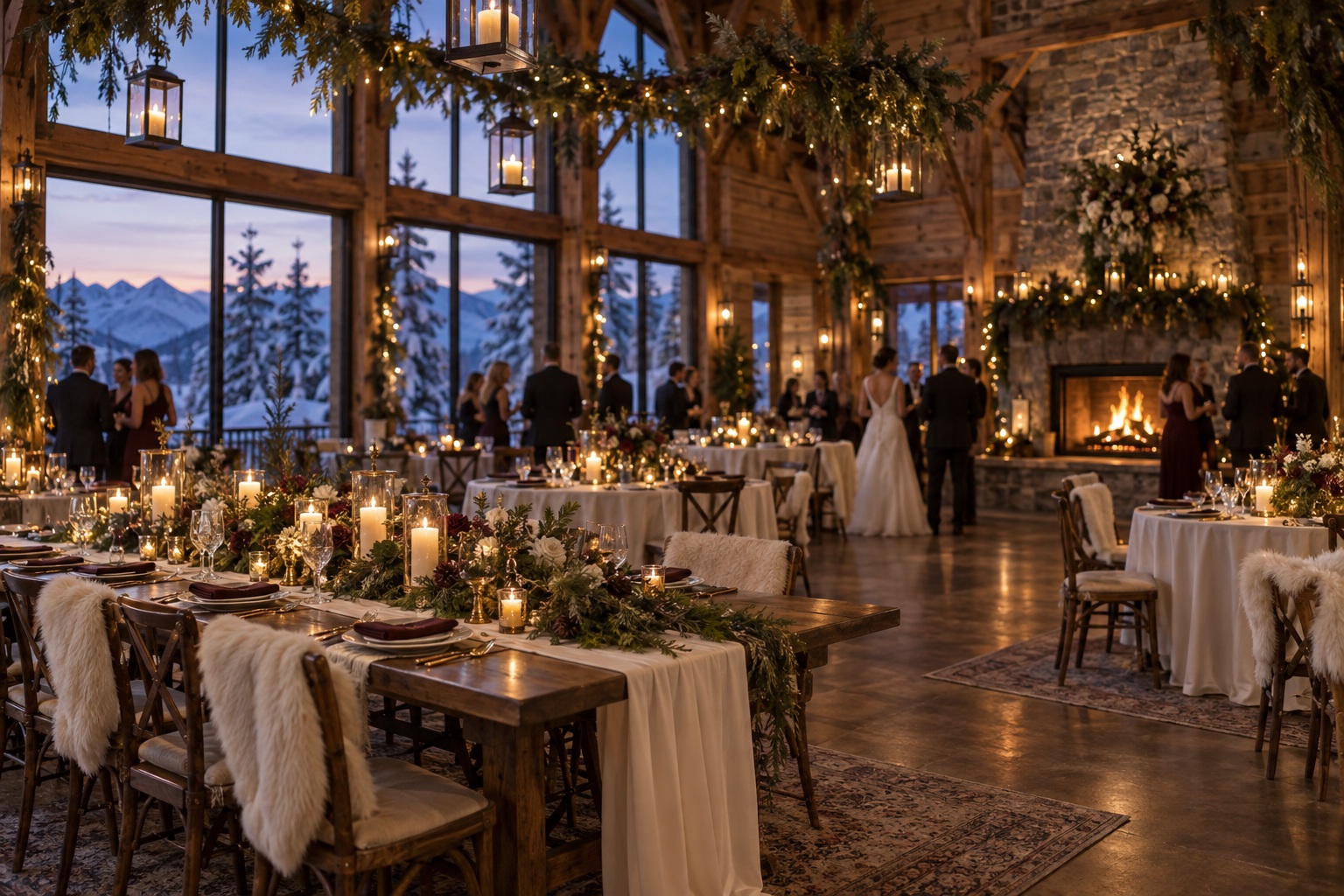
A lodge direction is ideal when the venue already offers stone, fireplaces, leather, timber, large windows, or mountain views. Its rustic character can be made more refined through a darker palette, tailored textiles, metallic accents, and carefully edited florals. The goal is not to make the room look like a store display. It is to make the existing materials feel intentional.
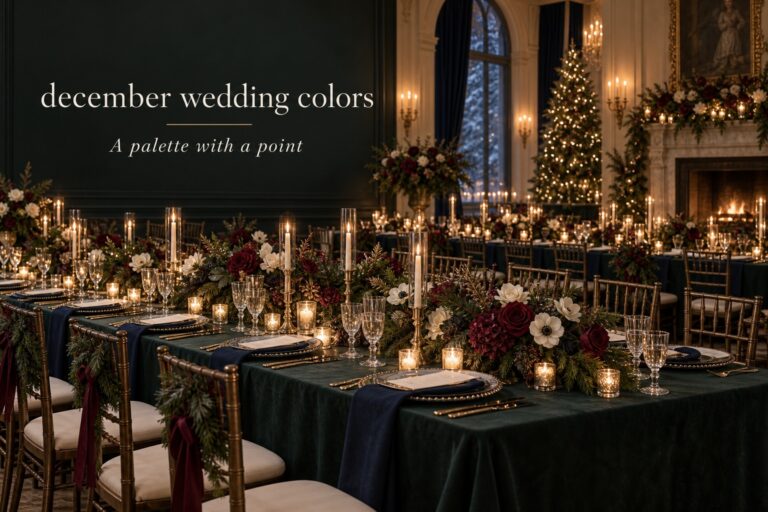
- Try forest green, warm white, walnut, black, and antique brass, with burgundy or oxblood as an optional accent.
- Use glass hurricanes, tapered candles, and evergreen arrangements with visible negative space.
- Choose place settings that bring a little polish, such as stoneware, smoked glass, or simple metallic flatware.
- Add throws or a small lounge area near the fireplace, but keep the dining area clear for service and conversation.
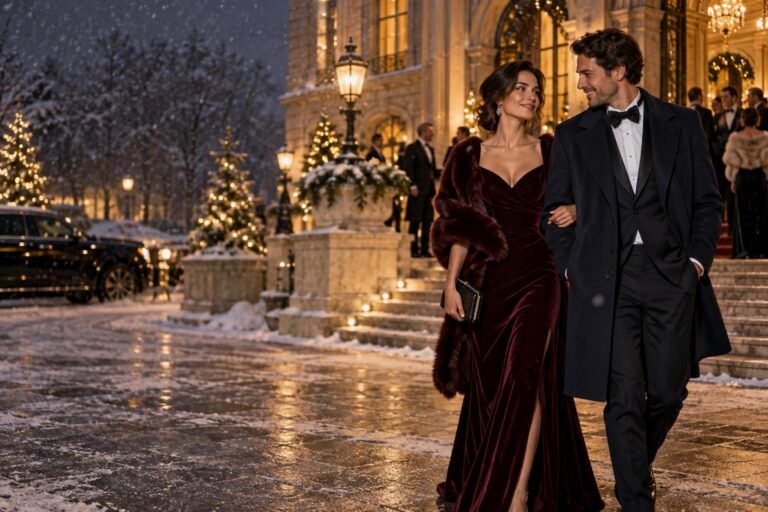
Lodge styling can hold a more formal dress code than a typical farm plan. A velvet dinner jacket, a long-sleeved satin dress, or a tailored wool coat can belong naturally in the setting. To keep the room from becoming visually heavy, alternate dense elements with quiet ones. If the fireplace is the main focal point, use smaller arrangements nearby rather than competing installations at every corner.
Cabin: Make Intimacy the Main Feature
A cabin celebration works through closeness. It is less about filling a large room and more about making a small group feel gathered. This direction suits a guest list that can share one long table, a ceremony near a fireplace, or a weekend where the setting and the time together matter as much as the reception itself.
- Use a small palette of oat, cream, pine, cedar, and one deep accent such as rust or plum.
- Repeat tactile details through wool napkins, knitted throws, wood serving pieces, and soft candlelight.
- Choose compact arrangements that do not crowd a narrow table or block the view across it.
- Make the entry useful with hooks, baskets, slippers, hand warmers, or a clearly marked place for wet outer layers.
Cabin style can quickly become overly literal. You do not need antlers, faux snow, miniature trees, and plaid in every room to communicate the idea. One strong material, one warm lighting plan, and a few winter branches will usually say more. Keep the couple’s personal details visible, because intimacy disappears when every surface is covered by decor.
Build the Look With Five Coordinated Decisions
Once the direction is chosen, make five decisions in order. This sequence keeps the look cohesive and protects the budget from small purchases that do not connect to the main experience.
1. Pick a Palette With One Quiet Base
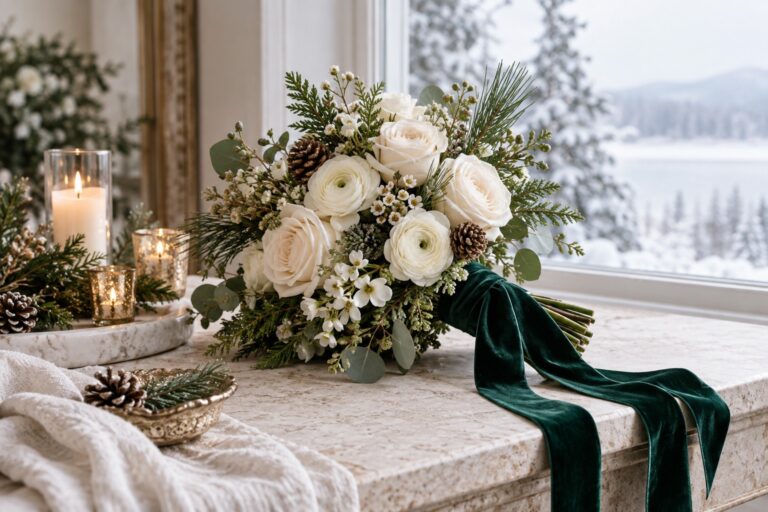
Start with a quiet base color that can appear in linens, paper, flowers, or attire. Ivory, oat, stone, soft gray, and warm white are flexible choices. Add one natural dark, such as evergreen, walnut, charcoal, or espresso, then choose one accent. Burgundy, rust, muted blue, plum, brass, or cranberry can work, but the accent should have a clear job.
If the venue is visually busy, use fewer colors. If the venue is plain, the accent can do more work through napkins, ribbons, stationery, or flowers. The palette does not need to match every object exactly. It needs to repeat enough that the ceremony, dinner, and portraits feel like parts of one day.
2. Balance Rough, Soft, and Reflective Textures
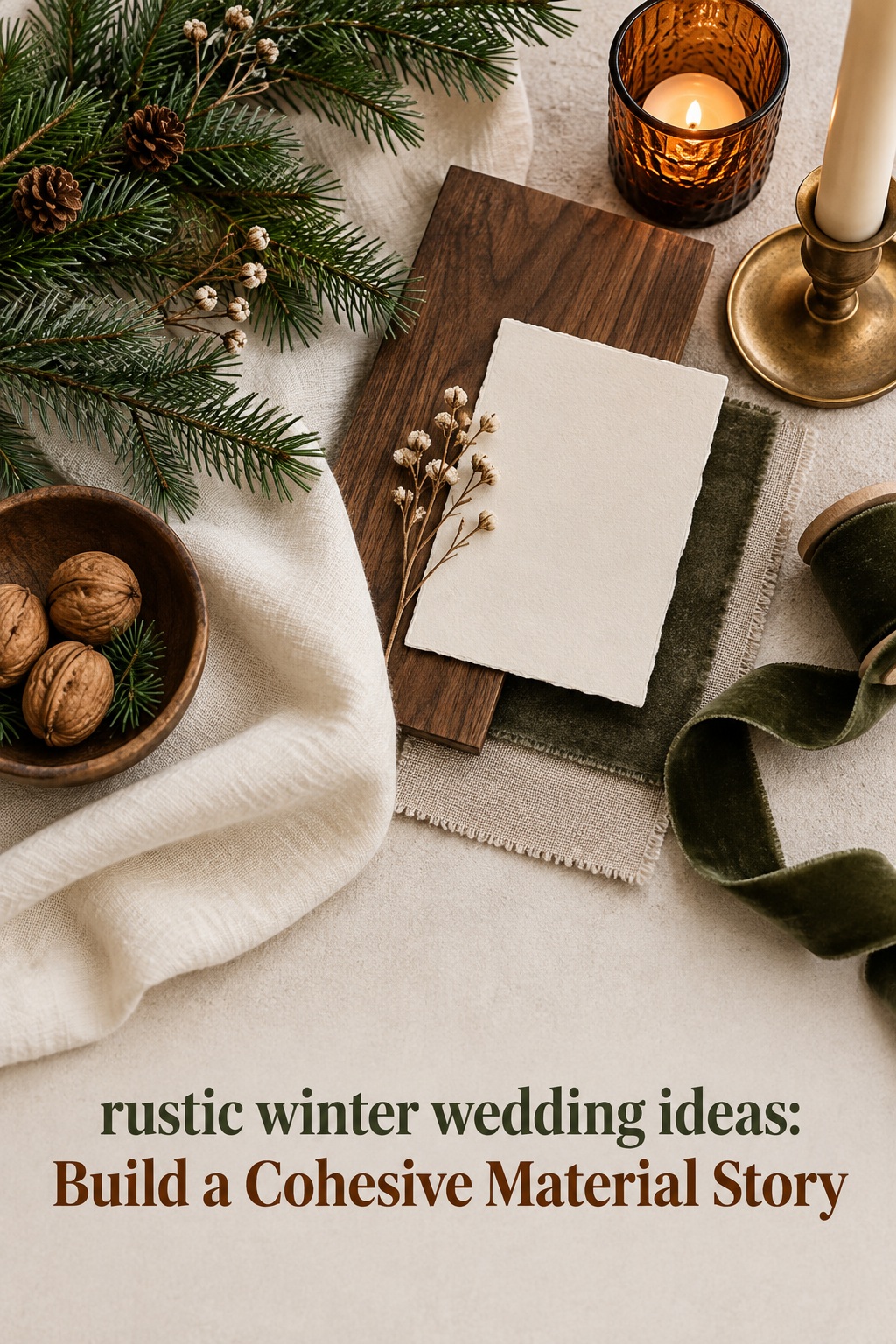
Rustic winter style is strongest when three texture families are present. Rough materials include wood, stone, bark, dried branches, and woven fibers. Soft materials include velvet, wool, brushed cotton, faux fur, and linen. Reflective materials include glass, candlelight, ceramic glaze, satin ribbon, and small metallic accents.
Use the ratio that fits your direction. A barn might need more soft and reflective texture to feel finished. A lodge might need more quiet surfaces so stone and timber do not become overwhelming. A cabin might use rough and soft materials, then add just enough glass or candlelight to keep the tables from feeling flat.
3. Let Lighting Set the Temperature
Winter darkness arrives early, so lighting changes how every material reads. Candlelight, lanterns, warm bulbs, and fireplaces can make wood and greenery feel inviting. Cool white light can make the same room feel stark, especially when paired with pale linens and gray stone.
Make a simple lighting map before ordering decor. Mark the entrance, ceremony focal point, dinner tables, bar, restroom path, coat area, and any outdoor transition. Decorative light should support safe movement. Use unscented candles when food is nearby, follow the venue’s flame policy, and keep tall pieces away from guests reaching across the table. The winter decor guidance from ThePerfectWedding.com similarly treats candlelight and layered texture as atmosphere-building tools rather than isolated props.
4. Choose Greenery for Shape, Not Just Season
Greenery can create a winter feeling, but the important choice is its shape. A low garland stretches a long table. Upright branches add height to a ceremony backdrop. Loose sprigs soften a place setting. A wreath gives a welcome sign or doorway a clear silhouette. Use one or two shapes repeatedly instead of buying every seasonal stem available.
Ask your florist or rental team how the greenery will travel, how long it must remain fresh, and what substitutions preserve the intended shape. If a ceremony and reception are in different rooms, choose pieces that can be moved quickly or use a smaller set of reusable accents. A design that looks beautiful only before setup is not a practical wedding design.
5. Select One Signature Material
The signature material is the detail guests remember. It might be dark wood, amber glass, velvet ribbon, a particular plaid, stoneware, or hand-torn paper. Use it in three places with different levels of intensity. For example, amber glass can appear in candle vessels, barware, and a small detail on the stationery. This creates continuity without making every object identical.
One signature material also helps with spending. When you are deciding whether to add a new item, ask whether it strengthens the chosen material system or introduces another visual language. If it does neither, leave it out. Rustic elegance is often the result of editing rather than adding.
Match the Details to Your Venue and Guest Experience
Use the formulas below as planning briefs. Each one connects a visual idea to a practical guest need. You can hand the selected formula to a florist, planner, rental company, or trusted DIY team and then adapt the quantities to your guest count.
Barn formula: candlelit timber and soft winter layers
Pair warm white, evergreen, walnut, and brass with low greenery, mixed candle heights, linen napkins, and a few velvet accents. Keep the ceremony installation simple if the beams or wood walls are already dramatic. Add a coat area and a warm welcome drink near the entrance so the first impression is comfortable, not chilly. For photos, plan one portrait near the strongest architectural feature and one near the warmest light source.
Farm formula: open landscape and useful warmth
Pair cream, olive, weathered gray, and muted cranberry with seasonal branches, a narrow plaid accent, and lanterns along the paths guests actually use. Put blankets, hand warmers, or a hot drink station where guests can reach them without crossing the ceremony aisle. Keep centerpieces low if the meal is family-style, and use a repeated branch or ribbon detail to connect the outdoor ceremony to the indoor dinner.
Lodge formula: forest green with edited shine
Pair forest green, black, warm white, walnut, and antique brass with clear glass, tailored menus, tapered candles, and restrained floral color. Let a stone fireplace or mountain view remain the focal point. Use a lounge area for warmth, but do not crowd guest circulation with too much furniture. If the reception is formal, make the polish visible through place settings and stationery rather than adding more decor.
Cabin formula: intimate table and personal details
Pair oat, cream, cedar, and one deep accent with knitted or wool textures, compact candlelight, handwritten place cards, and a single family or local detail. It might be a favorite recipe, a small photo display, or a meaningful wood object. Keep the table comfortable for conversation and avoid tall arrangements. In a small setting, a few details that invite guests to linger are more valuable than a large installation.
Whichever formula you choose, test one complete table or one ceremony corner before final ordering. Look at it in daylight and after dark. Sit across from another person and check the sightline. Move around it wearing the shoes and coat you expect to use. These small tests reveal problems that a mood board cannot.
Avoid the Rustic Winter Mistakes That Flatten the Design
The most common mistake is treating rustic winter as a list of mandatory symbols. Wood, pine, candles, plaid, berries, and lanterns can all be useful, but they do not all belong in the same proportion. Choose a lead material and let the others support it.
- Too much visual weight: If every surface is dark, rough, or dense, add ivory linen, clear glass, pale flowers, or open space.
- Holiday drift: Remove ornaments, novelty signs, and red-green repetition unless the couple intentionally wants a Christmas wedding.
- Blocked conversation: Keep floral and candle height below the seated eye line on dinner tables, or use clearly open arrangements.
- Cold transitions: Treat paths, coats, footwear, seating, and warm drinks as part of the plan, not as last-minute favors.
- Unsafe candle design: Confirm the venue rule, use stable holders, protect linens, and keep flames away from sleeves, greenery, and crowded service areas.
- Mismatched formality: If the invitation is formal, refine the rustic materials through glass, tailoring, quality paper, and restrained color rather than abandoning the venue character.
- Too many unrelated rentals: Choose a short material list and repeat it. A coherent small plan will photograph better than a large collection of one-off props.
A useful final check is to describe the wedding in one sentence without naming individual products. For example: “An intimate lodge dinner with forest green, warm candlelight, walnut, and polished glass.” If your sentence is clear, your styling decisions will usually be clear too. If it sounds like a catalog of objects, edit the plan until the experience comes first.
For additional winter planning context, The Knot’s winter wedding guidance also emphasizes pairing seasonal atmosphere with guest-ready comforts. That is the right standard for rustic design: it should look inviting because it is genuinely easy to use, not because it is covered in props.
FAQ
What colors work best for rustic winter wedding ideas?
Start with ivory, oat, stone, or warm white, add a natural dark such as evergreen or walnut, and choose one accent like burgundy, rust, muted blue, plum, or brass. A small palette gives wood, greenery, flowers, and stationery room to relate without making the room feel busy.
How can a rustic winter wedding feel elegant?
Keep the rustic foundation, then refine it with tailored attire, quality paper, clear glass, controlled candlelight, polished place settings, and restrained arrangements. Elegance comes from proportion and editing. It does not require removing every natural material.
How do we keep the style from looking like Christmas?
Use winter textures and greenery without relying on ornaments, novelty signs, or a strict red-and-green palette. Ivory, evergreen, charcoal, wood, candlelight, muted blue, and burgundy can feel seasonal while remaining appropriate beyond the holidays.
What greenery is practical for a rustic winter wedding?
Choose greenery based on the shape you need and the time it must remain in place. Garlands suit long tables, branches add height, sprigs soften place settings, and wreaths define doors or signs. Ask the florist about transport, hydration, substitutions, and whether ceremony pieces can be reused.
Is plaid a good choice for a rustic winter wedding?
Yes, when it is used as an accent. Try plaid on napkins, a welcome table, a lounge throw, or a wrap rather than repeating it across linens, stationery, and attire. Choose a color combination that supports the main palette and let the pattern appear in two or three intentional places.
How can we control the budget without losing the rustic feeling?
Let the venue provide as much character as possible, then invest in one visible system such as lighting, greenery, or tabletop texture. Repeat a signature material instead of buying many props, and test one complete area before ordering for the whole event. A focused plan usually feels more considered than a larger mix of unrelated rentals.