Bridal Shower Ideas Without Gift-Opening Pressure
Bridal shower ideas often arrive with an unspoken assumption: gifts will be opened in front of everyone. That familiar scene can be fun for some honorees, but it is not the only gracious way to celebrate. A couple may appreciate gifts and prefer to open them privately. Another may want a gathering with no gifts at all. Those are different choices, and guests need clear wording to understand which one the host means.
Start by deciding what the invitation should communicate, rather than choosing a game or a decorative theme. If gifts are welcome but the honoree would rather not unwrap them publicly, say so plainly and explain how they will be received. If gifts are not part of the event, make that expectation explicit and consider whether a luncheon or another celebration name better describes the gathering. Thoughtful clarity gives guests room to plan and lets the honoree focus on the people in the room.

The ideas in this guide are designed around that decision. They help a host protect the honoree’s comfort, make the invitation easy to understand, and acknowledge generosity without creating an awkward moment at the party.
Which Bridal Shower Ideas Fit Your Gift Preference?
Before writing invitation copy, settle the policy with the person being celebrated. Ask privately what would feel comfortable: opening gifts one at a time, receiving gifts without opening them at the event, or having a gathering where gifts are not expected. Avoid asking the honoree to decide in front of relatives or guests, where declining a tradition may feel harder. A brief one-to-one conversation is enough; the point is to make an informed choice, not to make the person defend it.
Your wedding look is only the beginning.
Keep your guest list, vendors, timeline, and every important detail together with Zarellea — so your day feels as considered as your style.
The distinction between “no public opening” and “no gifts” matters. A host who says “gifts will be opened later” is still welcoming presents. Guests can bring a wrapped item or send a gift from the registry, and the host should plan a secure, discreet place to collect each one. A host who says “no gifts, please” is communicating that attendance is the contribution. These policies are not interchangeable, so avoid wording that leaves guests guessing.
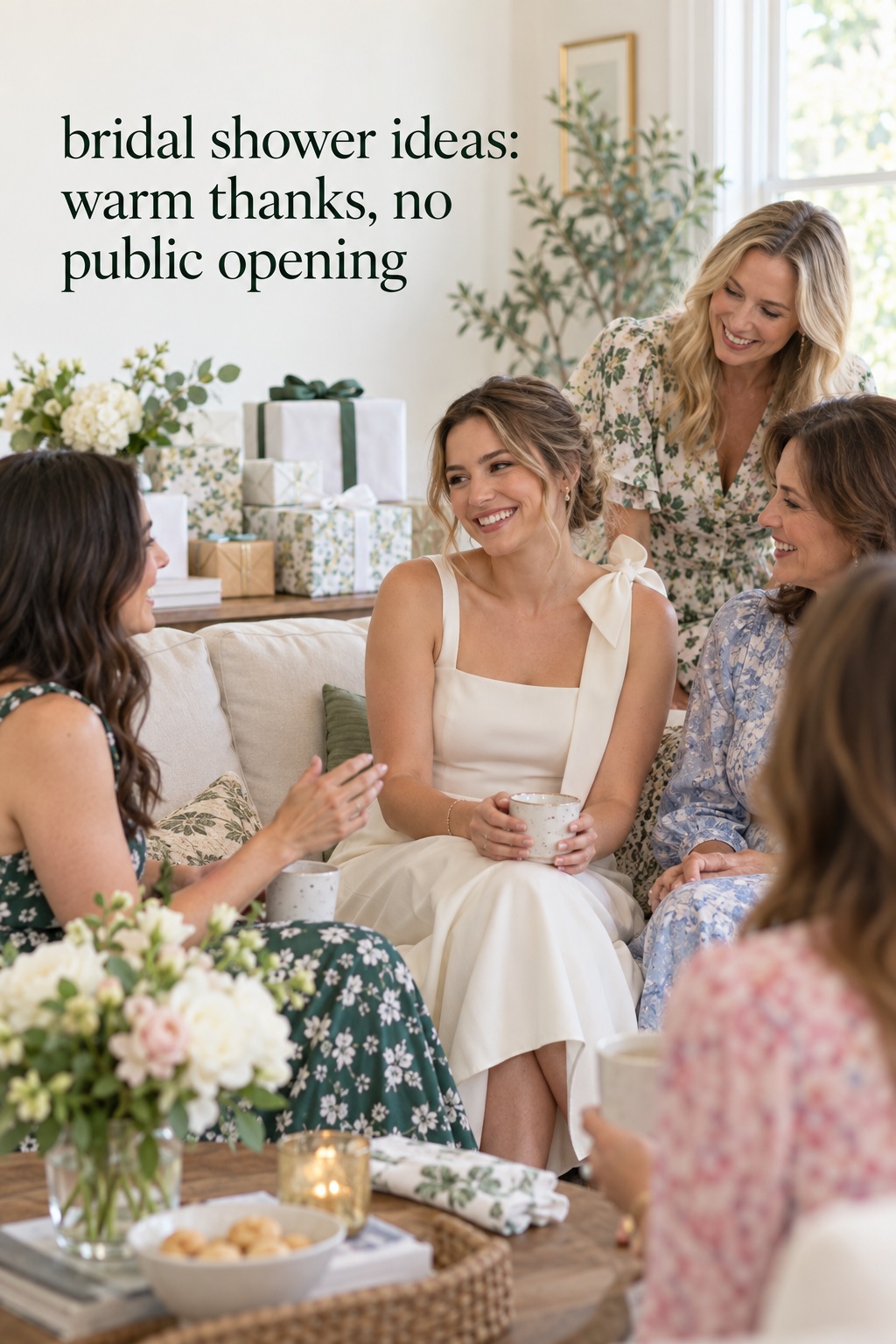
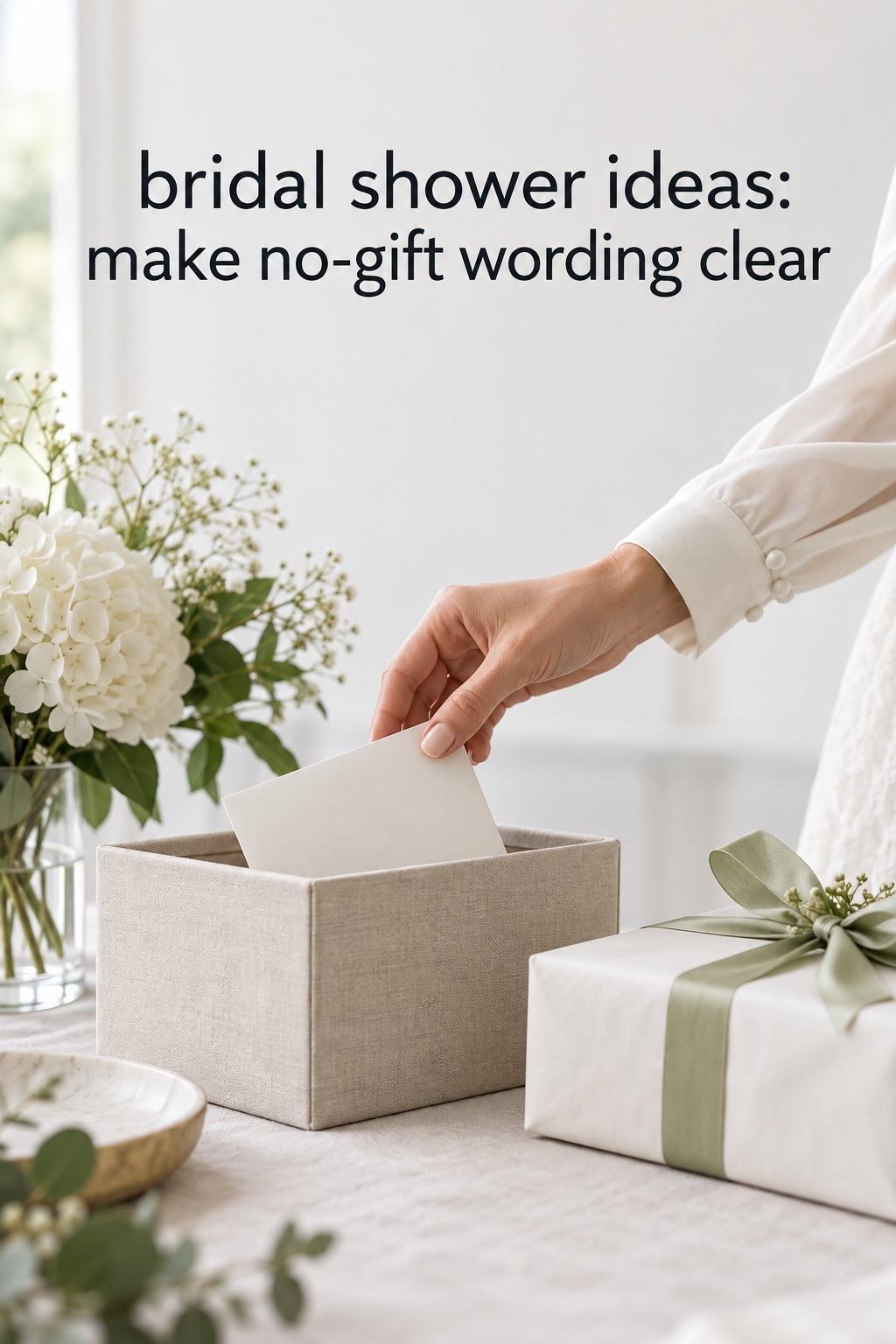
If the honoree likes gifts but not the spotlight, a private opening after the gathering is a straightforward solution. The host can collect each package, keep cards attached, and give everything to the honoree at the end or deliver it to the home. A small card basket can be kept beside the gift table so notes stay with their gifts. The host can still offer a warm general thank-you during the event without turning the room into an audience.
If the honoree does not want gifts, discuss whether a shower is the right label. In common etiquette guidance, showers are associated with giving gifts to the guest of honor. A no-gift brunch or luncheon can make the purpose clearer and avoid suggesting that guests should arrive with presents. The name alone does not solve the problem, however: the invitation should still say that gifts are not expected.
There are also practical reasons to choose one policy over the other. Consider whether the guest list already includes people invited to another shower, whether travel makes packages inconvenient, and whether the couple has clearly shared a registry. Do not assume that every guest knows the couple’s preferences or has seen a registry page. Use the event invitation as the dependable source of information.
- Choose private opening when gifts are welcome and the honoree wants a quieter moment.
- Choose a clear no-gift gathering when the honoree does not want presents.
- Use a luncheon or celebration description when a shower label would imply gifts.
- Ask the honoree first, then make the invitation match the agreed choice.
A useful test is to read the invitation as someone who has not heard any side conversation. Would that guest know whether to bring a gift, whether it will be opened during the party, and whom to ask if a question remains? If not, adjust the wording before invitations go out. Guests should not have to infer a policy from the menu, venue, registry, or family tradition.

How to Write Invitation Wording Guests Can Understand
Gift expectations belong in the invitation or a clearly linked details page, not in an afterthought sent only to a few relatives. Include the policy in the same place as the date, location, and RSVP details. A guest who is invited through a printed card should not be expected to find an update in a group chat. If the invitation is digital, put the note where it is easy to see on a phone.
For gifts that are welcome but will be opened later, keep the wording warm and direct. For example: “Your presence is the best gift. If you would like to bring a present, [Name] will open gifts privately after the celebration.” If a registry is available, include it as an optional detail rather than implying a purchase is required. Another version is: “Gifts are welcome, but we will not be opening them during the gathering. Thank you for understanding.” The host can adapt the tone, but the core information should remain.
For a genuinely no-gift event, say “No gifts, please. We are looking forward to celebrating with you.” That sentence is often clearer than elaborate explanations or jokes about being “gifted out.” Avoid phrases such as “your presence is your present” if the rest of the invitation also includes a registry link; the two signals conflict. If a couple prefers charitable giving, mention it only when the honoree requested that option and provide a specific, simple way to participate. Do not replace one expectation with another without agreement.
The wording should speak for the hosts, not pressure guests. Avoid adding “but if you insist,” which reopens a decision the invitation is trying to settle. Do not single out guests who may have already purchased something. If a guest asks privately, respond consistently: “We are so glad you can come. We are not expecting gifts,” or “She would love to receive a gift, but she plans to open everything at home.” A short answer is kinder than a long defense.
If the party is a surprise, coordinate the policy with whoever knows the honoree’s preference. Do not announce a gift rule that the guest of honor would find uncomfortable. Where family members disagree, the person being celebrated should have the deciding voice, and the invitation should reflect the final decision rather than the loudest relative’s preference.
It also helps to separate the invitation from registry mechanics. A registry can be shared when gifts are welcome, but it should not carry the sole explanation that gifts will remain unopened. Conversely, omitting a registry does not automatically tell guests that gifts are discouraged. Put the expectation in ordinary language so guests who do not use registry sites receive the same message.
- Keep the note near the event details, where every invitee can find it.
- Name whether gifts are welcome and whether they will be opened at the event.
- Do not pair “no gifts” wording with a registry link unless the couple clearly intends both.
- Give the same answer to guests who ask by text, phone, or email.
Clear invitation language is a form of hospitality. It saves guests from worrying about whether they have misunderstood, and it protects the honoree from having to explain a personal preference repeatedly. The host does not need to turn the note into a formal policy statement. One or two friendly sentences are usually enough.
Ways to Receive Gifts Without Making Them the Main Event
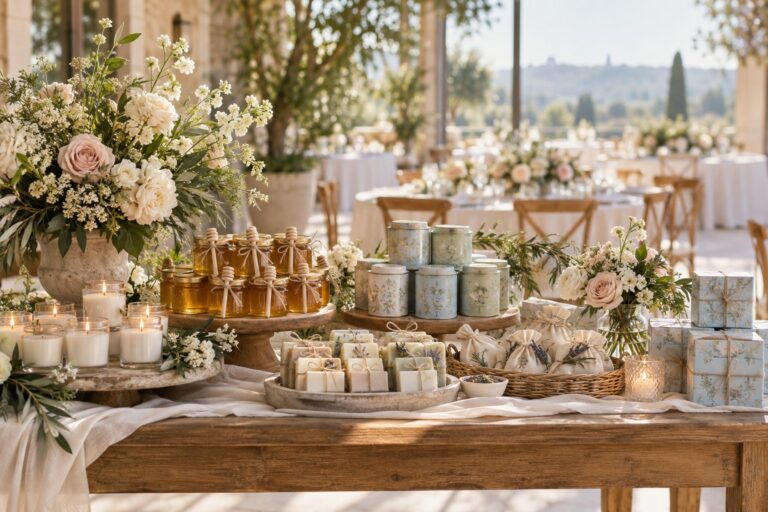
When the couple welcomes gifts but prefers not to open them publicly, the host can make receiving them feel calm and organized. Place a modest table or basket in a visible but low-traffic area, away from the entrance bottleneck and the food line. A small sign can say “Cards and gifts” without turning the display into a focal point. Avoid arranging the packages as a photo backdrop unless the honoree wants them featured.
Ask one trusted helper to keep cards with their packages. The simplest system is a numbered note on each gift and a matching list with the giver’s name, if known. Do not write on gift wrap or use labels that may come off. The list helps the honoree prepare thank-you notes later, especially if several packages look alike. A host can also keep a separate envelope or box for cards, then check it against the gift list before everything leaves the venue.
Give the honoree an easy way to acknowledge the gifts without opening them. The host might say, “Thank you for bringing so much care to today. She is looking forward to opening your gifts at home.” If the honoree wants to speak, offer a short toast or a moment of thanks that recognizes the guests collectively. Do not ask the honoree to improvise while everyone watches, and do not call out individual gift-givers one by one unless that is a tradition the honoree enjoys.
The practical handoff matters. Confirm who will carry the gifts, whether the venue permits them to be stored safely, and where they should go after the party. A host who assumes someone else will transport them can leave the honoree managing boxes at the end of the event. If gifts are mailed to the couple’s home, make sure the invitation gives correct shipping information and that the couple is comfortable with that arrangement.
For a no-gift celebration, make the gift table unnecessary. A welcome card or guest book can still give people a way to leave a note, but avoid setting out a decorative box that looks like a place for cards or envelopes unless the invitation explains its purpose. If a guest arrives with a present despite the note, receive it graciously and quietly. The host can thank the guest and arrange a private handoff rather than correcting them in front of the group.
Do not create a replacement activity that puts gifts back at the center. For example, a “guess what is in the package” moment still spotlights presents even if nothing is unwrapped. Likewise, a display of wrapped gifts can feel like an invitation to comment on each one. If the purpose is to let the couple relax, keep the gift logistics short and let conversation, food, and the people present carry the celebration.
A thank-you plan can be small. Give the honoree the guest list and the gift record afterward, with cards attached. A co-host may offer to help organize addresses or note who gave what, but thank-you messages should reflect the honoree’s own appreciation. Avoid promising that one person will write the notes on the honoree’s behalf unless that arrangement has been explicitly agreed.
The goal is not to hide generosity or make guests feel awkward. It is to receive generosity in a way that suits the couple. A discreet table, careful card handling, and one clear thank-you can preserve warmth while removing the pressure of a public performance.
When a No-Gift Luncheon Is a Better Fit
Sometimes the best answer is not to redesign the gift-opening moment, but to host a different kind of gathering. If the honoree has already attended several showers, dislikes receiving presents, or wants to spend time with loved ones without a gift expectation, a luncheon or simple celebration may be a better fit. The host can keep the event meaningful without calling it a shower and then asking guests to ignore the usual association with gifts.
This choice does not require an elaborate alternative program. A meal, a comfortable setting, a few words from the host, and time to visit can be enough. Choose a format that suits the guest list and the honoree’s energy. A weekday lunch may work for nearby family, while an afternoon gathering may be easier for guests with children. These are practical decisions about access and timing, not signals that guests should bring something.
If the couple would like a small ritual, keep it optional and brief. Guests can write a note for the couple, share a favorite memory if they volunteer, or simply take part in a toast. Offer a way to participate without placing anyone on the spot. A quiet note station should be clearly labeled as messages rather than cards for gifts, especially when the invitation says no gifts.
Be careful with requests that sound like a no-gift policy but still ask guests to contribute. “No gifts, but please bring a recipe,” “donate to this fund,” or “bring a bottle for the couple” are still requests. They may be welcome if the honoree wants them, but they should be described accurately and presented as optional. If the couple wants a true no-gift event, the invitation should not contain a substitute obligation.
Hosts may also decide to skip a pre-wedding gathering entirely. That is a valid option. A couple can celebrate with a casual dinner, a family visit, or no additional event if schedules and preferences point that way. The people close to them can still offer congratulations in ways that feel natural. Wedding planning does not require a shower, and no one should have to host an event simply to satisfy an assumed calendar tradition.
Before settling the alternative, consider the guest list and the invitation route. If the event is meant to include people who do not know one another, an informal meal can give them a natural reason to sit together, but it need not be engineered into a networking exercise. If the honoree prefers a very small gathering, do not expand it into a larger event just to make the format seem more conventional. The right size is the one the couple actually wants.
A no-gift invitation can be gracious without overexplaining: “Please join us for lunch as we celebrate [Name]. No gifts, please. We are simply looking forward to spending time together.” If the host wants to mention the change from a traditional shower, a simple line is enough: “We are hosting a celebratory luncheon instead of a shower, and gifts are not expected.” There is no need to apologize for choosing a format that fits the honoree.
If relatives question the choice, keep the explanation centered on the couple. “This is the kind of gathering she asked for” is usually more useful than debating etiquette in a family thread. The host can repeat the invitation wording and avoid comparing guests or households. A calm, consistent message leaves less room for a second gift rule to emerge by word of mouth.
The best bridal shower ideas are not measured by how much the honoree unwraps or how elaborate the event looks. They are measured by whether the gathering reflects the person it celebrates and whether guests can participate comfortably. Choose one policy, state it before the event, and arrange the practical details around it. Then let the celebration be about the people who came.
Sources and Editorial Notes
This guide draws on etiquette and planning guidance from The Knot’s discussion of opening shower gifts and its guidance on bridal shower registry and invitation wording. These sources support distinguishing between receiving gifts and opening them in public, and communicating expectations clearly. Recommendations here are framed as practical options because family customs and the honoree’s preferences vary.
FAQ
Is it rude not to open bridal shower gifts in front of guests?
Not necessarily. A host can explain in advance that gifts are welcome but will be opened privately later. The honoree should still receive each item and card, and the couple should plan to thank the giver afterward. Clear wording prevents guests from expecting a public opening.
How do you say gifts are welcome but will not be opened at the shower?
Add a short note to the invitation: “Gifts are welcome, but [Name] will open them privately after the celebration.” If a registry is shared, treat it as optional information and keep the opening policy visible in the invitation details.
What should an invitation say for a no-gift bridal celebration?
Use direct wording such as “No gifts, please. We are looking forward to celebrating with you.” Consider calling the event a luncheon or celebration if you want to avoid implying that guests should bring shower gifts.
Can a bridal shower be hosted without gifts?
Hosts can choose the format that suits the honoree, but guests commonly associate a shower with gifts. If there should be no gift expectation, a no-gift luncheon or celebration may communicate the intent more clearly. State the policy explicitly either way.
What if a guest brings a gift after the invitation says no gifts?
Thank the guest privately and receive the gift without correcting them in front of others. The host can arrange a discreet handoff to the honoree. Do not ask the guest to take the gift back during the event.
Should you still send thank-you notes if gifts are not opened at the shower?
Yes. Keeping gifts closed during the event does not remove the need to acknowledge them. Keep each card with its gift, record the giver’s name, and give the honoree the information needed to send personal thanks.
Is it better to call a no-gift event a bridal luncheon?
A luncheon can be a clearer name when the purpose is simply to gather and celebrate without gifts. The label is less important than stating the expectation plainly in the invitation and checking that the honoree likes the format.