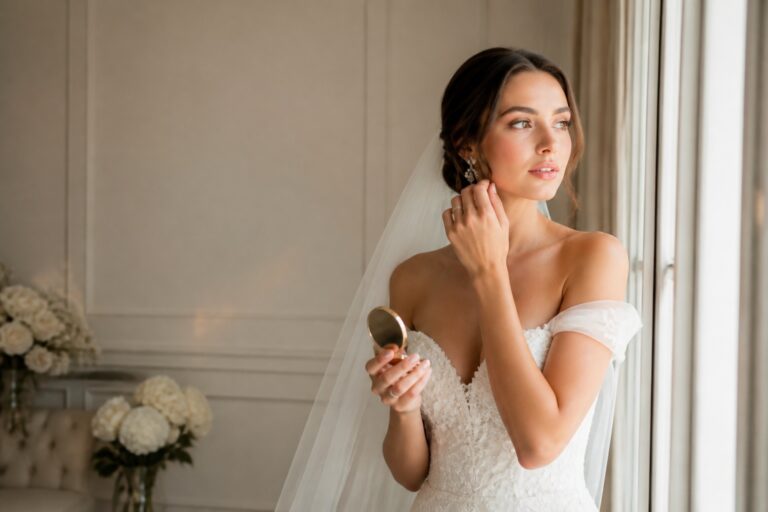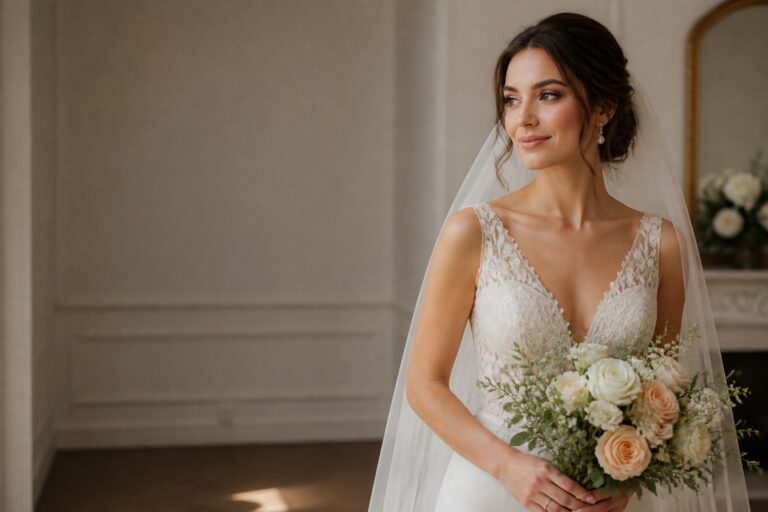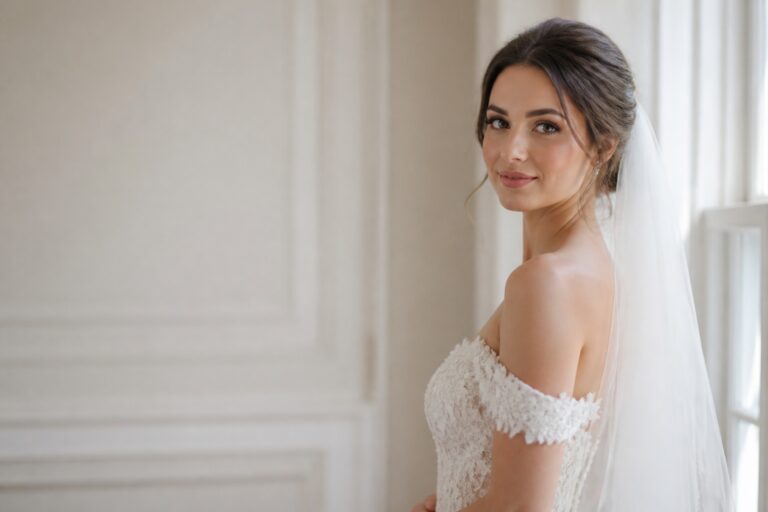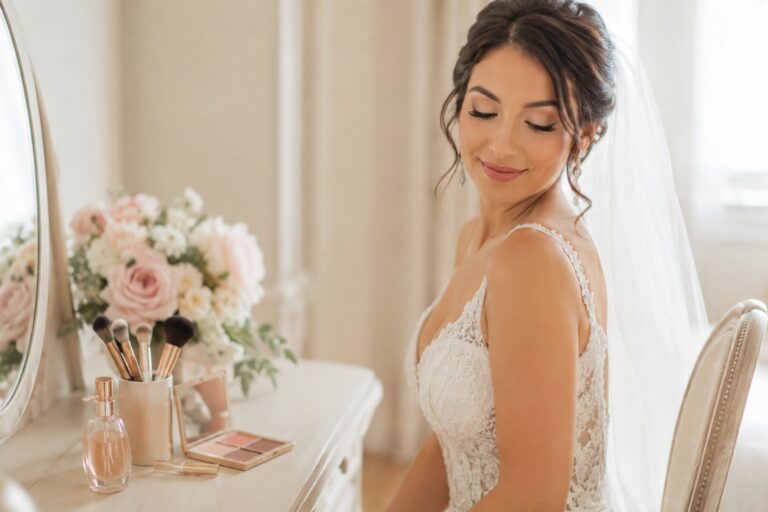
Clean Bridal Makeup: 3 Looks to Compare
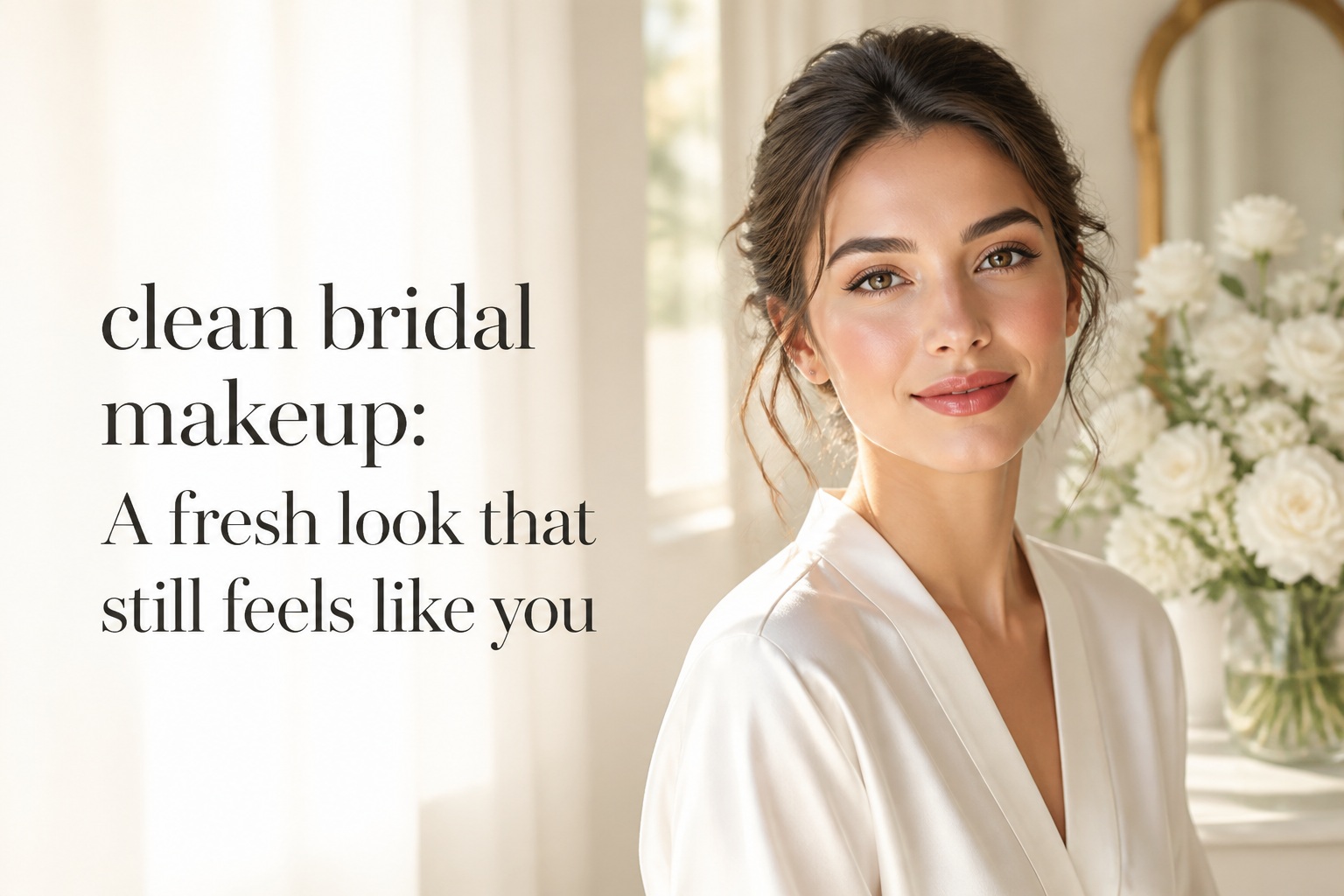
Clean bridal makeup is not one fixed face. It is a visual direction built around fresh-looking skin, controlled definition, and features that still look like you when you walk down the aisle. The best version is not necessarily the sheerest one. It is the version that matches your skin, venue, dress, lighting, comfort level, and timeline.
Before your trial, compare three useful approaches: sheer skin-first, balanced soft definition, and polished camera-ready clean glam. All three can look modern and natural. The difference is how much coverage, structure, contrast, and staying power each one uses. That comparison makes it easier to show a makeup artist what you mean by clean instead of relying on a vague reference image.
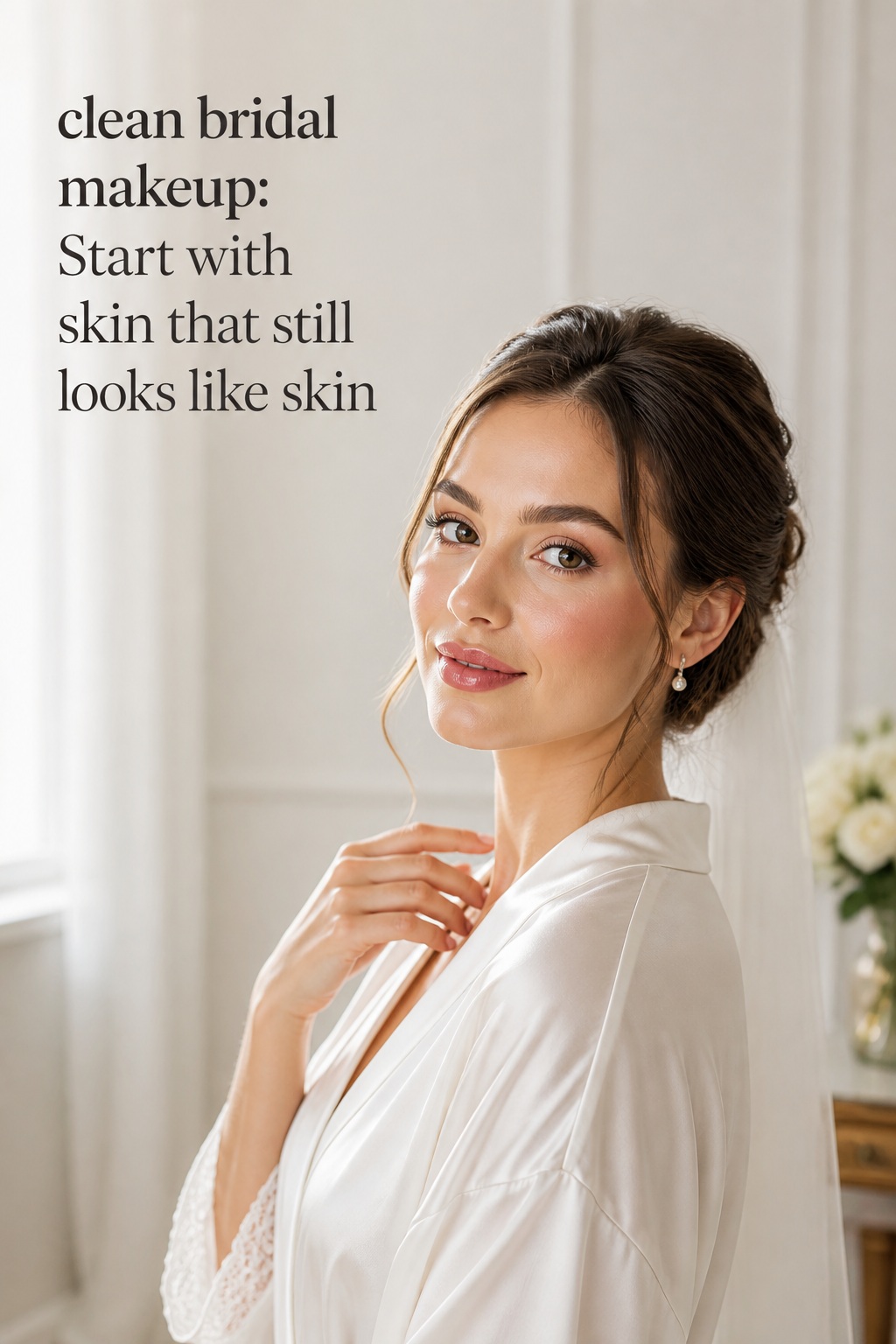
One important clarification: clean bridal makeup usually describes the appearance, not a regulated ingredient category. Terms such as clean, natural, and non-toxic are not used consistently across the beauty industry. For a wedding, focus first on the finish, comfort, tested wear, and photography result. If ingredient standards matter to you, discuss your personal preferences with your artist and patch test new products well before the event.
Your wedding look is only the beginning.
Keep your guest list, vendors, timeline, and every important detail together with Zarellea — so your day feels as considered as your style.
What clean bridal makeup should look and feel like
Fresh skin with selective coverage
The foundation of the look is skin that appears even, comfortable, and alive rather than heavily masked. That may mean a skin tint across the face, a light foundation only where needed, or a thin layer of a more durable base with strategic concealer. The goal is not to erase every pore or freckle. It is to reduce distracting redness and unevenness while letting the natural dimension of the face remain visible.
Coverage should follow the places that need support. A little more product around the nose, chin, or areas of redness can be more convincing than applying a thick layer everywhere. Ask your artist to check the base in window light, indoor light, and a phone photograph. A finish that looks beautifully bare in person can look flat in images if it has no tonal variation.
Soft structure instead of sharp contour
Clean bridal makeup still needs shape. Brows frame the face, blush gives the complexion life, and soft bronzer or contour prevents a pale dress from washing out your features. The difference is in the edges. Cream and powder products should melt into the skin, with the strongest placement kept close to the natural architecture of the face.
Think softly lifted blush, a gentle warmth around the perimeter, and a small amount of light on the high points. If you love a sculpted look, you do not have to abandon it. Ask for diffused definition rather than a graphic stripe. This preserves the clean impression while giving the photographer enough shape to capture from a distance.
Polished features that remain recognizable
Eyes, brows, lashes, and lips should be intentional even when the overall makeup is understated. Brushed brows can be softly filled where needed. A neutral wash, tightline, or small outer-corner shadow can add dimension without turning the look into a dramatic evening eye. Waterproof mascara, carefully selected individual lashes, or a subtle lash cluster may provide enough definition for emotional moments and long-distance photographs.
Lips can stay close to your natural color, move toward rosy pink or peach, or use a muted nude with a satin or glossy finish. The most practical choice is one you can refresh without a mirror for every sip of water. Bring the exact lip products from your trial, including the liner, color, and balm or gloss, so the formula is not a last-minute guess.
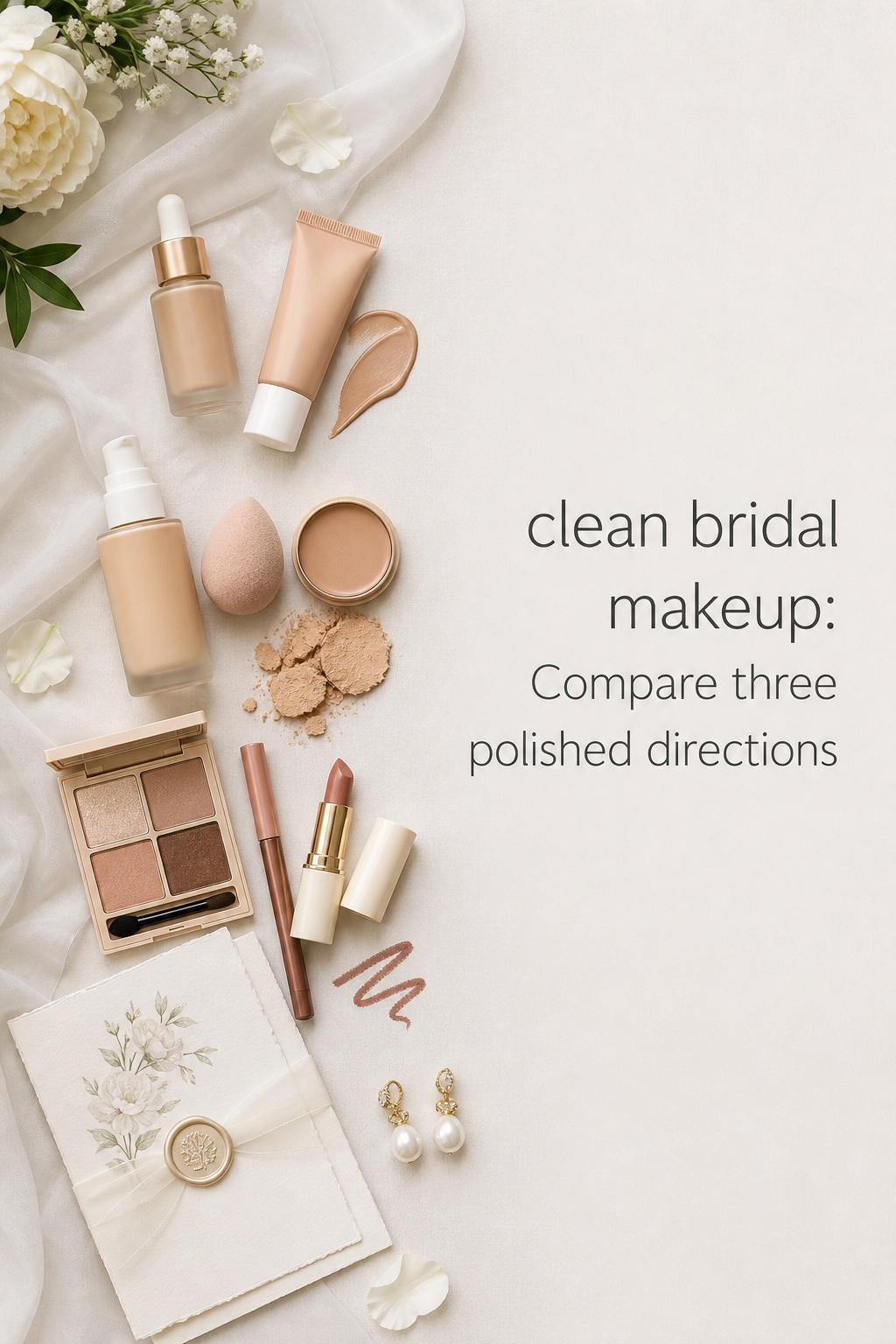
Compare three clean bridal makeup directions
Option one: sheer skin-first clean bridal makeup
This is the lightest direction. It usually combines thoughtful skin preparation, a sheer base or skin tint, targeted concealer, cream blush, soft bronzer, brushed brows, curled lashes, and a tinted balm or gloss. It suits brides who rarely wear foundation and want their freckles, natural skin texture, or distinctive features to remain part of the final look.
Choose this option when your ceremony is intimate, your venue has generous natural light, and you feel most confident with very little product. It can be beautiful for a courthouse ceremony, a garden elopement, or a relaxed daytime wedding. The trade-off is that sheer formulas may need more careful placement and touch-ups, especially around the nose, under-eyes, and center of the face.
For photography, add enough brow, lash, blush, and lip contrast to keep the face from disappearing. Clean does not have to mean colorless. A softly rosy cheek and a defined lash line often make the difference between a fresh photograph and one that looks unfinished.
Option two: balanced soft-definition clean bridal makeup
This is the most adaptable middle ground. It uses a natural-looking foundation or buildable base, medium targeted concealer, diffused bronzer, cream or powder blush, softly shaped brows, neutral eye definition, and a defined lip that can be softened with balm. The skin still looks skin-like, but the face has enough contrast for family portraits, indoor ceremonies, and a full reception schedule.
Balanced definition is often the safest trial starting point because it can move lighter or stronger after you see the photographs. If you feel overdone, your artist can reduce contour, soften the lip, or switch to a lighter base. If you feel washed out, adding blush, a little outer-corner depth, or a fuller lash is straightforward.
Choose this direction if your everyday makeup varies, if your venue includes both daylight and evening lighting, or if you want a polished result without committing to a distinctly glamorous style. It also works well when the dress has noticeable lace, beading, or structure and your face needs enough definition to stay balanced beside it.
Option three: polished camera-ready clean glam
This is the most defined interpretation while keeping the palette restrained. It may include a longer-wearing base, precise spot concealing, softly sculpted cheeks, luminous but controlled highlight, shaped brows, a neutral smoky eye, individual lashes, and a lip with clear edges. The effect is clean because the color story and blending are refined, not because the product amount is minimal.
Consider this option for a large venue, an evening reception, strong professional lighting, or a dress with a dramatic silhouette. It is also helpful if you want your features to read clearly in group photographs while still avoiding a heavy, cut-crease, or strongly contoured finish.
The trade-off is sensory. More definition can mean more layers, powder, lash weight, or lip maintenance. During your trial, wear the look for several hours and notice whether you still feel comfortable smiling, eating, hugging, and looking at yourself closely. A camera-ready face should not require you to feel disguised.
Choose the right version for your wedding
Match the finish to your skin type and climate
Dry or dehydrated skin often benefits from lighter layers, flexible hydration, and cream textures that do not emphasize flaking. That does not mean covering the face in a rich product immediately before makeup. Too much skincare can cause pilling or sliding. Test the exact prep routine at your trial and let each layer settle before adding the next.
Oily or combination skin may need a balanced approach rather than a completely matte one. Use hydration where the skin needs it, then control shine selectively around the forehead, nose, and chin. A light veil of powder in those areas can preserve a fresh finish elsewhere. In humid weather, prioritize thin layers, waterproof eye products, and a reliable setting method over extra glow products.
Cold, dry weather can make a powder-heavy look appear tight, while heat can turn a dewy finish into unwanted shine. Take a photo after a few hours at your trial. Check the center of the face, under-eyes, smile lines, and lip edges. That evidence is more useful than deciding from the first ten minutes in the chair.
Match definition to venue, time, and photography
A morning garden ceremony may need less overall contrast than an evening ballroom reception, but natural light can reveal texture more clearly. An indoor venue with warm bulbs can make neutral makeup look dull or overly yellow. A beach wedding brings wind, humidity, and reflected light. A courthouse ceremony may reward a very fresh base, while a large church or formal hall may need stronger eyes and cheeks so your expression carries across the room.
Ask your photographer how they typically light portraits and whether flash will be used. Then test your base under similar conditions. Avoid introducing a completely new sunscreen, illuminating product, or complexion formula right before the wedding. Some products can reflect light in ways that are difficult to predict, so the trial is the place to test the complete combination.
Match the color story to your dress and jewelry
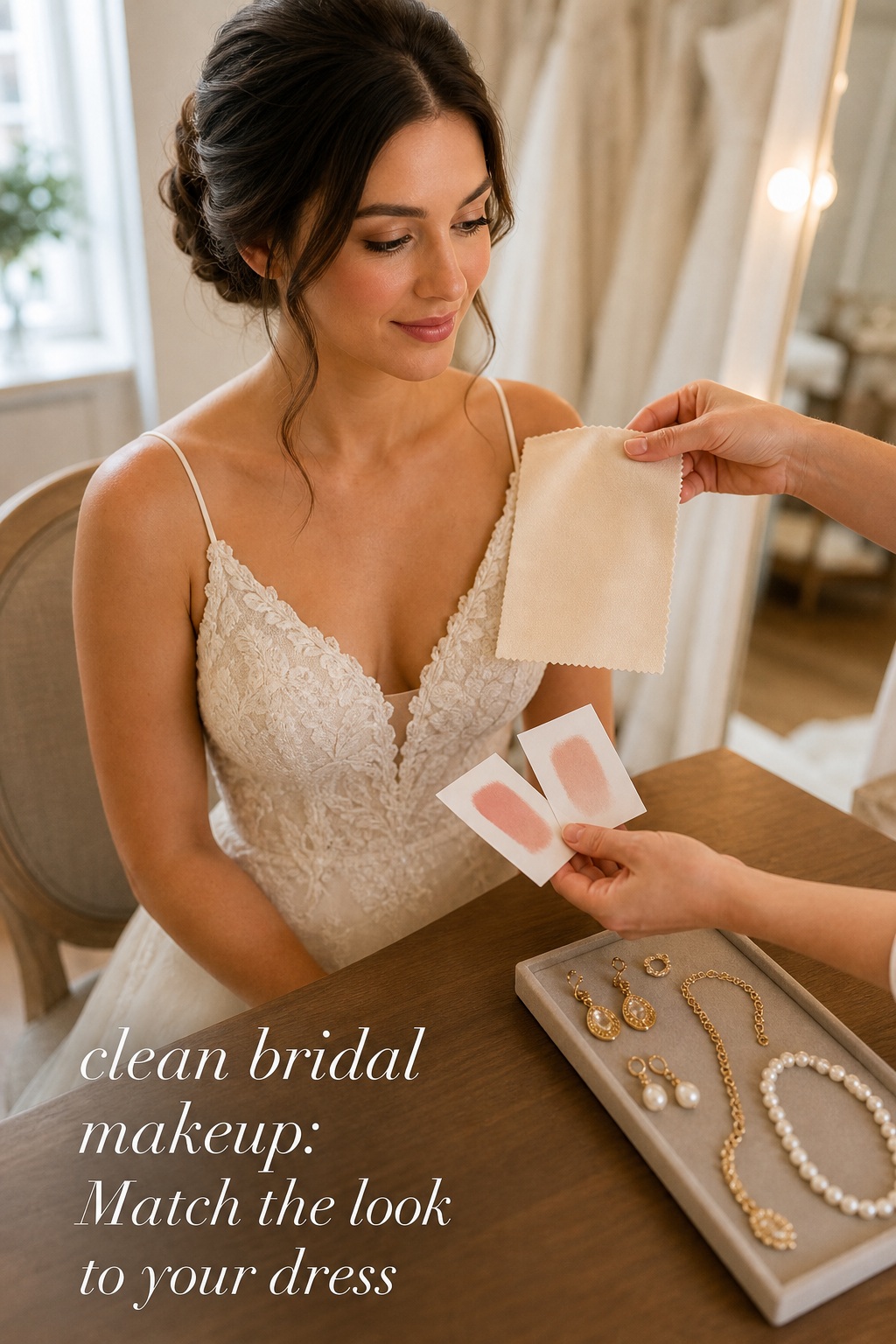
Clean bridal makeup does not have to be beige. Blush, lip, and eye tones should work with the temperature of your dress, flowers, and jewelry. Ivory, champagne, and warm gold can support peach, apricot, bronze, or warm rose. Bright white, silver, and cool pearl may pair well with pink, mauve, taupe, or a neutral rose. These are starting points, not rules. Your undertone and personal preferences matter more than a formula.
Bring a fabric swatch, a photo of the dress, and a jewelry reference to the trial. Check the makeup next to the actual colors rather than judging it in isolation. A lip that looks like a perfect nude on a makeup board can appear gray beside a warm ivory dress. A peach blush may look lively with gold jewelry but too orange with cool silver.
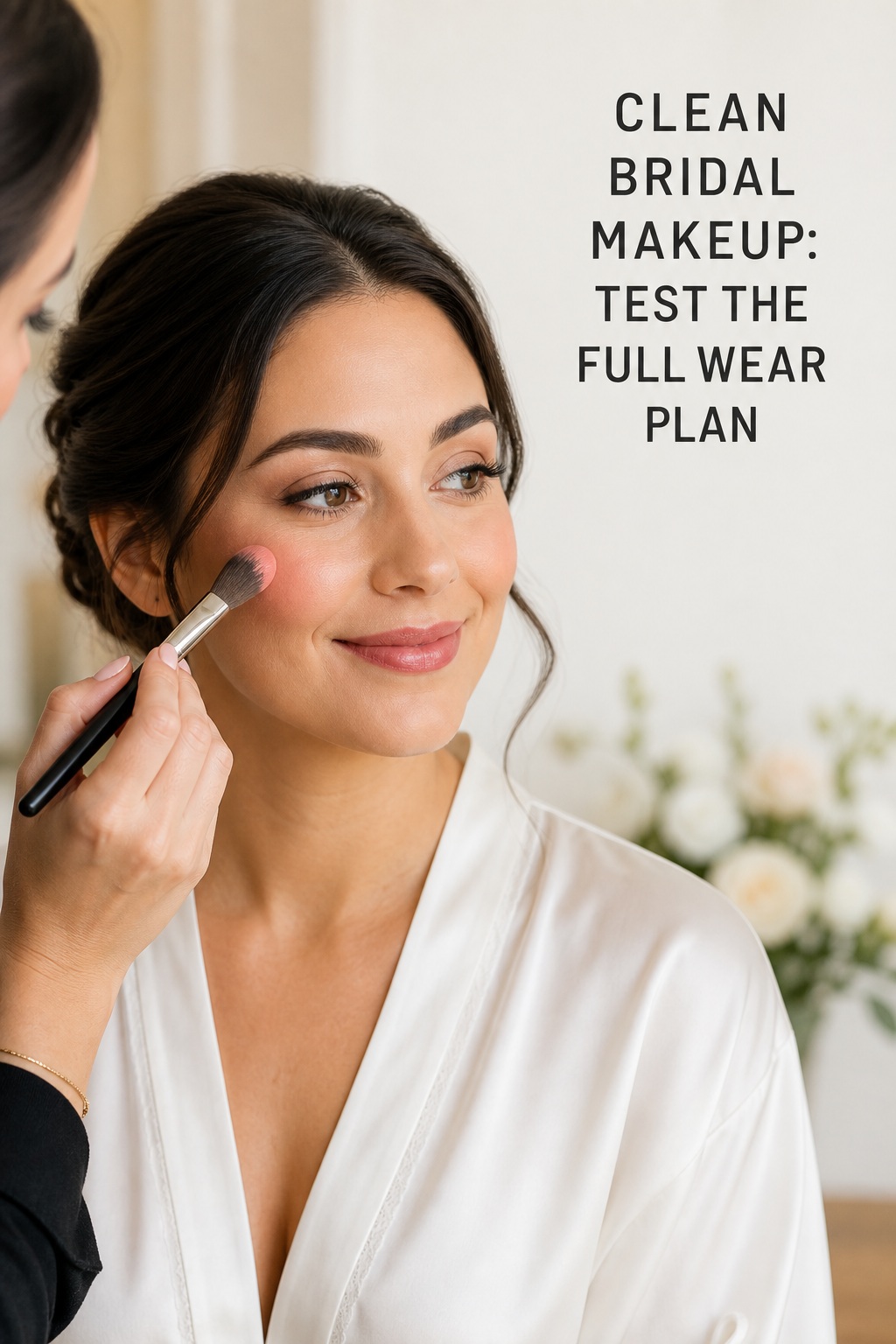
Build and test your clean bridal makeup trial
Start with a reference that names the finish
Save two or three reference images that show the skin, eyes, cheeks, and lips clearly. Avoid sending only heavily edited close-ups. Tell your artist what you like in each image: visible skin, soft blush, a straight brow, a glossy lip, delicate lashes, or a defined eye. Then describe what you do not want, such as heavy contour, thick foundation, glitter, or a matte finish.
Use the phrase clean bridal makeup together with a measurable request. For example, ask for sheer coverage with defined brows, balanced coverage with a satin finish, or camera-ready definition with soft neutral eyes. This gives your artist a direction that can be adjusted rather than a trend label that means different things to different people.
Test the full wear plan, not only the first impression
Keep the makeup on for at least four to six hours if your schedule allows. Eat, drink, talk, smile, and check how it feels under your hairstyle or veil. Take photos from close, medium, and full-body distances. Look at the images in color and black and white. The purpose is not to chase perfection. It is to see whether the level of contrast, texture, and shine still feels like you as the day progresses.
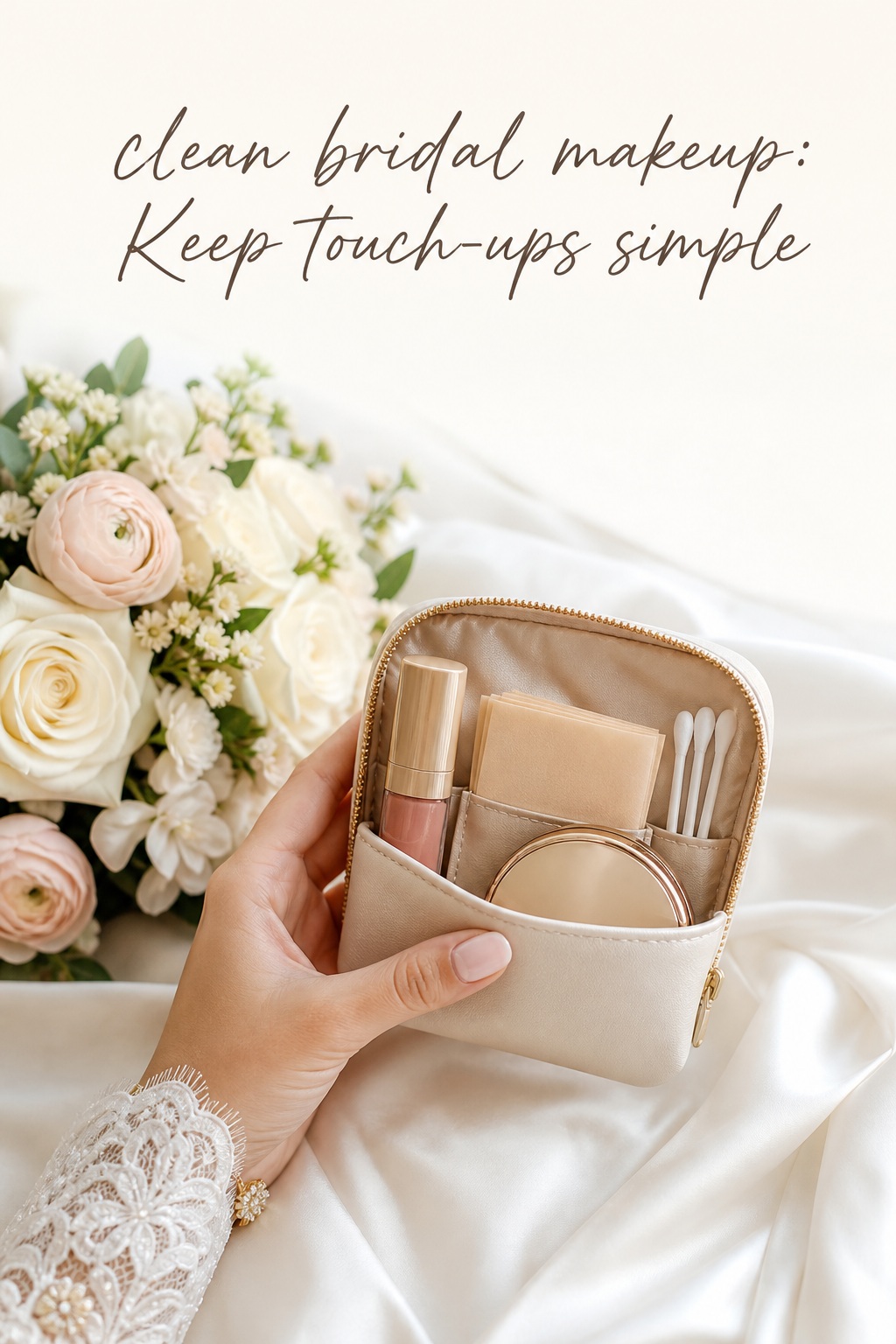
Test the touch-up routine as well. Know which areas need blotting, which areas need powder, how the lip is refreshed, and whether a lash corner needs adhesive. Put the essentials into a small kit: lip color, cotton swabs, blotting papers, a compact, tissues, and any approved product your artist recommends. A short plan reduces stress more effectively than carrying every product you own.
Avoid the mistakes that make the look feel unfinished
- Choosing a finish only because it looks dewy in a reference image, without testing it against your climate and wear time.
- Using the word clean to mean no definition at all, then discovering that brows, lashes, and blush disappear in portraits.
- Trying new skincare, foundation, or active ingredients close to the wedding date.
- Applying thick base layers to cover every detail instead of spot concealing and correcting strategically.
- Skipping the lip liner or touch-up plan because the initial color looks perfect in the chair.
- Checking the result only in a mirror and never taking photographs under the lighting you will actually use.
The most convincing clean bridal makeup looks edited, not empty. Each product has a job, the transitions are soft, and the face has enough contrast to stay expressive. When you compare the three directions before your trial, you can decide exactly how much of that editing feels right for you.
FAQ
What is clean bridal makeup?
Clean bridal makeup is a fresh, refined wedding makeup style with skin-like coverage, soft structure, restrained color, and recognizable features. It can be sheer or more defined. The shared qualities are controlled blending, a modern finish, and an intentional result that does not feel heavily transformed.
Is clean bridal makeup the same as no-makeup makeup?
No. No-makeup makeup usually aims to look extremely subtle in person. Clean bridal makeup must also work for ceremony distance, portraits, tears, hugs, and many hours of wear. It may use more brow, lash, blush, lip, or setting definition than an everyday no-makeup look.
Will clean bridal makeup photograph well?
Yes, when the look includes enough contrast and is tested in photography. Ask for strategic coverage, softly defined brows and eyes, visible blush, and a lip that does not vanish in images. Take trial photos in the lighting and distance that resemble your wedding portraits.
What clean bridal makeup works for oily skin?
A thin, balanced base with hydration where needed and selective powder through the center of the face usually works better than making the entire complexion flat. Use waterproof eye products and test the finish for several hours in similar weather. Your artist can adjust primer, foundation, powder, and setting spray as a complete system.
Can clean bridal makeup work for dry skin?
Yes. A tested, comfortable prep routine, flexible complexion layers, and cream blush can keep the skin looking fresh. Avoid adding too many rich products at once, because excess skincare can cause makeup to pill or slide. Check the finish after several hours, especially around the nose and under-eyes.
Should I wear false lashes with clean bridal makeup?
You can, but they do not need to look dramatic. Individual lashes or a lightweight cluster can add definition while keeping the eye soft. If you usually wear no lashes, test the weight and shape at your trial. Comfort matters because you will be wearing them through the ceremony, portraits, and reception.
How do I make clean bridal makeup last all day?
Build thin layers, use products suited to your skin, waterproof the eyes, set only where needed, and test the complete routine before the wedding. Prepare a small touch-up kit and ask your artist to write down the exact lip and complexion products. Long wear comes from the whole system, not one miracle product.